After big drop in ISP competition, Canada mandates fiber-network sharing

After big drop in ISP competition, Canada mandates fiber-network sharing
Getty Images | Yuichiro Chino

In an attempt to boost broadband competition, Canada’s telecom regulator is forcing large phone companies to open their fiber networks to competitors. Smaller companies will be allowed to buy network capacity and use it to offer competing broadband plans to consumers.

Evidence received during a comment period “shows that competition in the Internet services market is declining,” the Canadian Radio-television and Telecommunications Commission (CRTC) said in its announcement Monday. The CRTC said the “decrease is most significant in Ontario and Quebec, where independent competitors now serve 47 percent fewer customers than they did just two years ago. At the same time, several competitors have been bought out by larger Internet providers. This has left many Canadians with fewer options for high-speed Internet services.”

The CRTC hasn’t made a final decision on fiber resale. But in the meantime, until a more permanent ruling is made, large telcos in Ontario and Quebec will be “required to provide competitors with access to their fibre-to-the-home networks within six months,” the CRTC said. The six-month period is intended to give companies time to prepare their networks and develop information technology and billing systems, the agency said.

“On a temporary and expedited basis, the CRTC is providing competitors with a workable way to sell Internet services using the fibre-to-the-home networks of large telephone companies in Ontario and Quebec, where competition has declined most significantly,” the agency said. “The CRTC is also setting the interim rates that competitors will pay when selling services over these fibre-to-the-home networks. These rates were chosen to allow Canada’s large Internet companies to continue investing in their networks to deliver high-quality services to Canadians.”

Advocates for wholesale fiber access welcomed the interim ruling but said that Canada’s regulator should have acted more quickly and forcefully to preserve competition.

Bell protests, says it will cut fiber spending

Fiber-provider Bell protested the ruling by announcing “its intention to reduce capital expenditures by over $1 billion in 2024-25, including a minimum of $500 to $600 million in 2024, money the company had planned to invest in bringing high-speed fibre Internet to hundreds of thousands of additional homes and businesses in rural, suburban and urban communities.”

“Rolling back fibre network expansion is a direct result of the CRTC’s decision,” Bell claimed. The telco said the CRTC’s decision “is arbitrary and capricious” because it doesn’t apply outside Ontario and Quebec.

Telus, another major fiber provider, “said the company is reviewing the interim decision and looking forward to participating in the remainder of the CRTC proceeding,” according to The Globe and Mail.

For over 20 years, the CRTC has “required large incumbent telephone and cable companies to sell access to their networks under specific rates, terms, and conditions,” the agency said. But fiber access wasn’t previously included.

“In 2015, the CRTC set out separate rules for accessing fibre, which have been so unworkable that 8 years later we still don’t have wholesale access to fibre,” according to an April 2023 post by OpenMedia, a nonprofit that advocates for open and affordable networks.

https://arstechnica.com/?p=1982034



100+ researchers say they stopped studying X, fearing Elon Musk might sue them

100+ researchers say they stopped studying X, fearing Elon Musk might sue them

At a moment when misinformation about the Israel-Hamas war is rapidly spreading on X (formerly Twitter)—mostly by verified X users—many researchers have given up hope that it will be possible to closely monitor this kind of misinformation on the platform, Reuters reported.

According to a “survey of 167 academic and civil society researchers conducted at Reuters’ request by the Coalition for Independent Technology Research” (CITR) in September, more than 100 studies about X have been canceled, suspended, or switched to focus on another platform since Elon Musk began limiting researchers’ access to X data last February. Researchers told Reuters that includes studies on hate speech and child safety, as well as research tracking the “spread of false information during real-time events, such as Hamas’ attack on Israel and the Israeli airstrikes in Gaza.”

The European Union has already threatened X with fines if the platform fails to stop the spread of Israel/Hamas disinformation. In response, X has reported taking actions to curb misinformation, like removing newly created Hamas-affiliated accounts and accounts manipulating trending topics, working with partner organizations to flag terrorist content, actioning “tens of thousands of posts,” and proactively monitoring for antisemitic speech.

But it’s not immediately clear if X is doing enough to reduce potential risks. External social media researchers have typically depended on crunching X’s real-time data to assess growing threats on the platform, and Reuters’ survey shows how much harder it has become for some researchers to continue doing that work. Researchers also told Reuters that another factor hampering research was Musk’s lawsuit against the Center for Countering Digital Hate. “The majority of survey respondents”—104 out of 167—told Reuters they fear “being sued by X over their findings or use of data.”

Meanwhile, X’s content moderation efforts have continued to be heavily scrutinized as X struggles to prove that it’s containing the spread of misinformation and hate speech under Musk’s new policies.

Most recently, X CEO Linda Yaccarino had to step in—amid outcry from X advertisers and staff—to remove a pro-Hitler post that went viral on the platform, The Information reported. X later claimed that the post was removed because it broke platform rules, not because of the backlash, but X’s efforts to proactively monitor antisemitic speech seemingly failed there. And nobody’s sure why X’s global escalation team delayed action, although it’s possible that they feared that removing the post might be considered censorship and incite the ire of Musk, the “free speech absolutist.”

In February, the CITR published a letter, warning that Musk charging high fees for access to Twitter data that was previously free “will disrupt critical projects from thousands of journalists, academics, and civil society actors worldwide who study some of the most important issues impacting our societies today.” Currently, X offers three paid tiers for researchers to access data, costing between $100 and $42,000 per month. Reuters reported that CITR’s survey, “for the first time,” importantly quantifies the number of studies canceled since these fees were imposed.

https://arstechnica.com/?p=1981705


Google ends deal to build 15,000 Bay Area homes due to “market conditions”

Illustration of a housing development with apartments and a park area with benches, sidewalks, and a bike lane.
Enlarge / Google’s conceptual rendering of its housing plan.

Google has ended an agreement with a developer to build 15,000 homes in the San Francisco Bay Area, including affordable housing, as it continues a string of cost-cutting moves to reduce real estate costs. Google said it is “looking at a variety of options” to provide housing despite ending the development deal but didn’t offer specific details on its plans.

Google partnered with the Australian company Lendlease in 2019 on a $15 billion plan for “residential, retail, hospitality, and community development space,” with an expected completion date of 2038. Lendlease was to be the developer, builder, and owner of the residential, retail, hospitality, and community components, while Google also planned a related office expansion. Including office space, the developments could have covered 15 million square feet.

But on Friday, Lendlease and Google announced that they “mutually reached an agreement to end the Development Services Agreements of the four master-planned districts in San Jose (Downtown West), Sunnyvale (Moffett Park), and Mountain View (Middlefield Park and North Bayshore) in the San Francisco Bay area in California, collectively referred to as the San Francisco Bay Project.” Google is making a payment to Lendlease as part of the agreement to part ways.

The Google plan that Lendlease was involved in calls for up to 7,000 homes in North Bayshore, including 1,050 affordable units; 4,000 homes in Downtown West, including 1,000 affordable units; and 1,900 homes in Middlefield Park, including 380 affordable units. That would presumably leave 2,100 homes for Sunnyvale, but Google’s description of the project doesn’t specify the number of homes in that city.

A Google spokesperson told us today that the company will work with developers and capital partners to move its Bay Area developments forward, despite ending the Lendlease deal. But Google declined to answer our specific questions about the number of homes that will be built now that the original partnership has been scrapped.

“The decision to end these agreements followed a comprehensive review by Google of its real estate investments, and a determination by both organizations that the existing agreements are no longer mutually beneficial given current market conditions… Lendlease will remove the San Francisco Bay Project, which was expected to commence construction in FY26, from its development pipeline,” the Lendlease announcement said.

Project was still on track in June

Lendlease was not the developer or builder in Google’s related plan for new office buildings on a “megacampus” in San Jose. Google put the office-building plan on hold earlier this year, reports in April said.

In June 2019, Google CEO Sundar Pichai announced a plan to rezone a large part of Google’s commercial and office land for residential housing and build “at least 15,000 new homes at all income levels in the Bay Area, including housing options for middle and low-income families.” Pichai also announced a $250 million investment fund to “provide incentives to enable developers to build at least 5,000 affordable housing units across the market.”

A June 2023 update from Google said the company still planned “to support the creation or preservation of 20,000 homes.” Google said its “work with local elected officials and residents to rezone $750 million worth of our land has paved the way for up to 12,900 units to be built in Mountain View and San Jose as part of our mixed-use development plans.” Google also said it had allocated over $133 million of the $250 million fund to “more than 3,800 units across 29 affordable housing projects.”

Exactly how many of the 20,000 planned homes could still be built is unclear. “As we’ve shared before, we’ve been optimizing our real estate investments in the Bay Area, and part of that work is looking at a variety of options to move our development projects forward and deliver on our housing commitment. We appreciate Lendlease and the work the team has done to get us to this point,” Alexa Arena, senior director of development at Google, said in a statement provided to Ars today.

Google’s pullback comes amid a rise in surplus office space.

“Silicon Valley companies are dumping office space at an accelerating pace, as tech leaders such as Google and Facebook parent Meta Platforms close locations and reassess their commitments to the workplace,” The Wall Street Journal wrote in June. “Office-vacancy rates in Silicon Valley, which includes the Northern California communities of San Jose, Palo Alto and Sunnyvale, were up to 17 percent in June from 11 percent in 2019, according to data firm CoStar Group.” The vacancy rate had surpassed 20 percent in Menlo Park and Mountain View.

https://arstechnica.com/?p=1981687


Artists may “poison” AI models before Copyright Office can issue guidance

An image OpenAI created using DALL-E 3.

Enlarge / An image OpenAI created using DALL-E 3. (credit: OpenAI)

Artists have spent the past year fighting companies that have been training AI image generators—including popular tools like the impressively photorealistic Midjourney or the ultra-sophisticated DALL-E 3—on their original works without consent or compensation. Now, the United States has promised to finally get serious about addressing their copyright concerns raised by AI, President Joe Biden said in his much-anticipated executive order on AI, which was signed this week.

The US Copyright Office had already been seeking public input on AI concerns over the past few months through a comment period ending on November 15. Biden’s executive order has clarified that following this comment period, the Copyright Office will publish the results of its study. And then, within 180 days of that publication—or within 270 days of Biden’s order, “whichever comes later”—the Copyright Office’s director will consult with Biden to “issue recommendations to the President on potential executive actions relating to copyright and AI.”

“The recommendations shall address any copyright and related issues discussed in the United States Copyright Office’s study, including the scope of protection for works produced using AI and the treatment of copyrighted works in AI training,” Biden’s order said.

Read 18 remaining paragraphs | Comments

https://arstechnica.com/?p=1981015


Elon Musk tries to avoid testifying in Twitter-stock probe, asks court for help

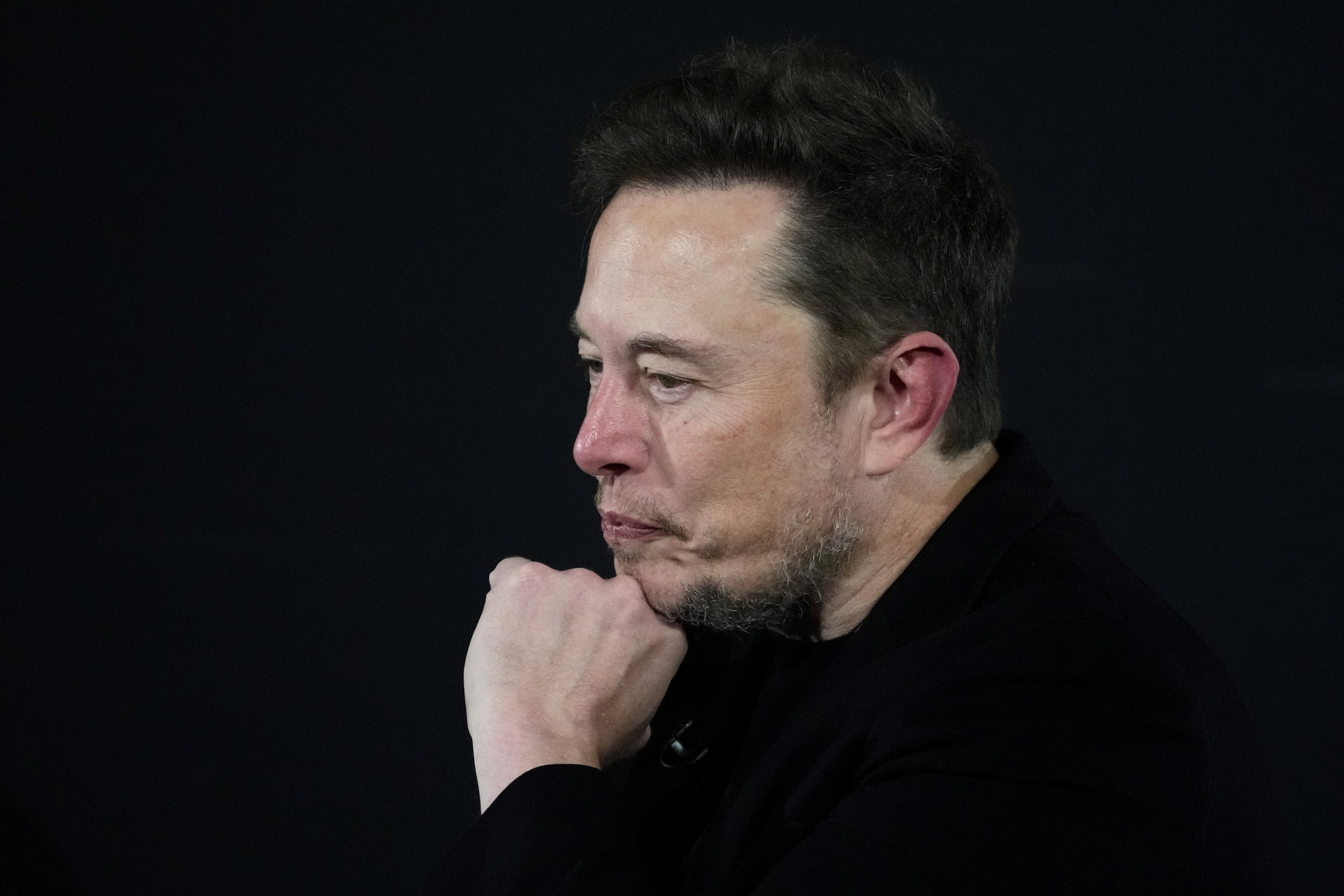
Elon Musk on stage at an event, resting his chin on his hand

Enlarge / Elon Musk at an AI event with Britain Prime Minister Rishi Sunak in London on Thursday, Nov. 2, 2023. (credit: Getty Images | WPA Pool )

Elon Musk’s attempt to avoid testifying in a Twitter stock-purchase investigation continued yesterday with Musk asking a court to block a subpoena issued by the Securities and Exchange Commission.

Musk’s filing in US District Court for the Northern District of California claimed the SEC is “harassing” him, exceeding its authority to investigate, and making “overly burdensome” demands for “irrelevant evidence.” The filing comes about a month after the SEC sued Musk to force him to testify. Musk provided testimony twice in July 2022 but is resisting the SEC’s attempt to question him a third time.

The SEC is investigating the purchases of Twitter’s stock that Musk made in the months before he bought the company outright. The agency began its investigation in April 2022 after Musk acquired a 9 percent stake in Twitter and failed to disclose it within 10 days as required under US law.

Read 13 remaining paragraphs | Comments

https://arstechnica.com/?p=1980989


Once valued at $47 billion, coworking-space provider WeWork nears bankruptcy

A man wearing a bicycle helmet walks out of a building that has a WeWork logo on its front.
Getty Images | Justin Sullivan

WeWork stock fell about 50 percent today as the business once valued at $47 billion reportedly plans to file for bankruptcy.

WeWork was founded in 2010 and provides coworking spaces in office buildings as an alternative to traditional offices and work-from-home arrangements. WeWork gained some high-profile customers like IBM and Microsoft but has consistently lost money. WeWork’s net losses have been getting smaller but are still substantial: A net loss of $2.3 billion in 2022 was followed by a loss of $696 million in the first six months of 2023.

“WeWork is planning to file for bankruptcy as early as next week,” The Wall Street Journal reported yesterday, citing people familiar with the matter.

As Business Insider wrote today, “WeWork reached a peak valuation of $47 billion back in January 2019, after netting $5 billion worth of direct investment from SoftBank. That was followed by a disastrous attempt to go public that eventually led to the exit of the company’s controversial founder, Adam Neumann.”

WeWork filed an IPO form in August 2019 but didn’t go public until October 2021, when it merged with a special purpose acquisition company in a deal that valued it at about $9 billion. WeWork’s market capitalization was about $120 million when the market closed yesterday and was down to about $60 million during trading today.

WeWork, based in New York, has been “struggling with a heavy debt load and hefty losses for a few years now,” Reuters wrote.

The latest trouble resulted in WeWork failing to make interest payments. “WeWork missed interest payments owed to its bondholders on Oct. 2, kicking off a 30-day grace period in which it needs to make the payments. Failing to do so would be considered an event of default. On Tuesday, the company said it has struck an agreement with the bondholders to allow it another seven days to negotiate with the stakeholders before a default is triggered,” the WSJ report said.

A WeWork regulatory filing yesterday said that “lease renegotiations and the active discussions with key certain stakeholders in the Company’s capital structure are still ongoing,” necessitating the seven-day extension. Reuters quoted CI Roosevelt Private Wealth Senior Portfolio Manager Jason Benowitz as saying, “Whether or not WeWork can reach a short-term accommodation with bondholders to stave off a near-term bankruptcy, it likely holds many long-term office leases that will need to be restructured or written off.”

WeWork recently said it may fold

WeWork warned in August that the company may not survive for long. Because of WeWork’s “losses and projected cash needs, combined with increased member churn and current liquidity levels, substantial doubt exists about the Company’s ability to continue as a going concern,” the company said in an earnings announcement.

“Excess supply in commercial real estate, increasing competition in flexible space and macroeconomic volatility drove higher member churn and softer demand than we anticipated, resulting in a slight decline in memberships,” CEO David Tolley said.

WeWork said at the time that its “ability to continue as a going concern is contingent upon successful execution of management’s plan to improve liquidity and profitability over the next 12 months.” The plan includes “reducing rent and tenancy costs via restructuring actions and negotiation of more favorable lease terms; increasing revenue by reducing member churn and increasing new sales; controlling expenses and limiting capital expenditures; and seeking additional capital via issuance of debt or equity securities or asset sales.”

WeWork reported that it had 777 locations in 39 countries as of June 30, with “906,000 workstations and 653,000 physical memberships, equating to physical occupancy of 72 percent, and a decrease in physical memberships of 1 percent year-over-year.” It had $205 million of cash on hand.

“WeWork has an estimated $10 billion in lease obligations due starting from the second half of this year through the end of 2027 and an additional $15 billion starting in 2028, according to public filings,” the WSJ article said.

WeWork declined to comment to the WSJ on the bankruptcy report, telling the newspaper that it is “speculation.” WeWork told the paper that the seven-day extension “provides time to continue in the positive conversations with our key financial stakeholders and engage with them to implement our ongoing strategic efforts to enhance our capital structure.”

We contacted WeWork today and will update this article if we get a response.

https://arstechnica.com/?p=1980353


Major critic of X sues after being banned from platform

X with a dart through it
Tooga/Getty Images

X has banned the account of a prominent critic after he published data that he claims exposed the site’s embrace of the far-right after Elon Musk’s takeover last year.

Travis Brown, a software developer based in Berlin, alleges his account was first suspended on July 1 this year, several months after his data formed the basis of New York Times and CNN reports claiming that far-right influencers featured prominently among Twitter Blue subscribers, and how thousands of previously banned X accounts, including members of the far-right, were being reinstated on the site.

On Tuesday, Brown announced his decision to challenge his account’s suspension in court in Berlin. “This is a matter of principle,” he says. “I think it is important that platforms like Twitter are not allowed to shut down criticism arbitrarily.” X did not reply to repeated requests for comment.

X has been accused of attempting to silence its critics several times since Elon Musk acquired the platform in October 2022. In July, X sued the Center for Countering Digital Hate (CCDH) after the nonprofit published research suggesting that problematic content on the platform, such as hate and disinformation, was becoming more widespread. In December 2022, X suspended the account ElonJet, which tracked the movement of Musk’s private jet.

“Elon Musk likes to pretend he cares about free speech, but this case exposes that commitment as little more than window dressing,” claims Tiemo Wölken, a German politician who represents the Socialists and Democrats group in the European Parliament. “Someone who silences critics and researchers by kicking them off their platform isn’t a free speech advocate.”

Brown says he worked for X for one year, leaving in 2015 when his team was shut down. In 2022, he received a grant from the Open Knowledge Foundation, a nonprofit, to build software that would enable him to trace the history of accounts engaging in disinformation and hate speech. That tool, which focused on the company then known as Twitter, enabled him to identify which social media accounts posting about Russia’s invasion of Ukraine had a history of posting spam. But it also meant he could identify, almost in real time, which previously banned accounts were being reinstated on X, he says.

“After Musk took over, you did see a very strong turn toward the far right, in terms of which accounts were being amplified, which accounts were building followings more quickly,” he claims.

Brown received no warning before his account was initially banned in July, the developer says. He says his account was restored in September, after a court order. But later that same month, Twitter informed Brown that his account would be banned again, with X justifying its decision to the court in a 36-page letter. X argued that Brown was using the platform’s data in a way that violated its terms of service. A similar argument was used in the case against the CCDH. X’s terms of service were updated in September 2023 to prohibit crawling or scraping in any form.

According to Brown, he has developed many small applications that draw on different data sources and are used by different researchers. But the tool he used to trace the history of X accounts relied on data from the Internet Archive, as well as data gathered from X’s API, he says, adding that this was done in a way he believed to be in compliance with the developer agreement at the time.

“What is at stake here is the freedom of researchers on social media platforms,” says Josephine Ballon, spokesperson for HateAid, a German nonprofit that campaigns against online hate speech and is helping Brown with his case. “Travis did not even publish this information on his own. He only contributed to press publications.”

The legal proceedings in Germany are ongoing. For Ballon, the best case scenario would be if the court reinstates Brown’s account again or rules the block to be unlawful. The worst outcome would be if the court declines to rule on the case because X’s European Union headquarters are based in Ireland. HateAid is asking the European Commission to intervene using the Digital Services Act, a new rulebook that went into effect in August and is designed to protect freedom of expression online.

“Even if we lose it, I think this case really shows how a huge social media company is going after a single person with really expensive lawyers and hundreds of pages of written documents,” says Ballon. “That really shows how aggressively they are behaving toward their critics.”

This story originally appeared on wired.com.

https://arstechnica.com/?p=1980304


Two artists suing AI image makers never registered works with Copyright Office

Two artists suing AI image makers never registered works with Copyright Office

Artists suing Stability AI, Deviant Art, and Midjourney hit a roadblock this week in their quest to prove allegations that AI image generators illegally use copyrighted works to mimic unique artistic styles without compensation or consent.

On Monday, US district Judge William H. Orrick dismissed many of the artists’ claims after finding that the proposed class-action complaint “is defective in numerous respects.” Perhaps most notably, two of the three named plaintiffs—independent artist Kelly McKernan and concept artist/professional illustrator Karla Ortiz—had apparently never registered any of their disputed works with the Copyright Office. Orrick dismissed their claims with prejudice, dropping them from the suit.

But while McKernan and Ortiz can no longer advance their claims, the lawsuit is far from over. The lead plaintiff, cartoonist and illustrator Sarah Andersen, will have the next 30 days to amend her complaint and keep the copyright dispute alive.

Lawyers representing the artists suing, Matthew Butterick and Joseph Saveri, confirmed in a statement to Ars that the artists will file an amended complaint next month, noting that in the meantime, discovery in the case is proceeding. They also told Ars that nothing in Monday’s order was surprising, because it was “consistent with the views” expressed by Orrick during an earlier hearing.

“Judge Orrick sustained the plaintiffs’ core claim pertaining to direct copyright infringement by Stability AI, so that claim is now on a path to trial,” the lawyers’ statement said. “As is common in a complex case, Judge Orrick granted the plaintiffs permission to amend most of their other claims. We’re confident that we can address the court’s concerns.”

Stability AI, Deviant Art, and Midjourney did not immediately respond to Ars’ request for comment.

Judge “largely” grants motion to dismiss

Artists suing have alleged that companies behind popular AI image generators are guilty of direct and vicarious copyright infringement, as well as violations of the Digital Millennium Copyright Act and California laws regarding unfair competition and rights to publicity. They argued that since text prompts can generate images “in the style of” their works, every image generated should be considered a “derivative work”—based on various artists’ copyrighted works—that could potentially be “misconstrued as fakes.”

Orrick considered the complaint flawed, agreeing with the defendants that artists seemed somewhat confused about how image generators actually work. Their complaint alleged that Stable Diffusion ran off “compressed copies” of images, which defendants said “contradicted” how plaintiffs described the diffusion process as “an alternative way of storing a copy of those images” by using “statistical and mathematical methods to store these images in an even more efficient and compressed manner.” In his order, Orrick demanded clarity on this, writing:

Plaintiffs will be required to amend to clarify their theory with respect to compressed copies of Training Images and to state facts in support of how Stable Diffusion—a program that is open source, at least in part—operates with respect to the Training Images. If plaintiffs contend Stable Diffusion contains “compressed copies” of the Training Images, they need to define “compressed copies” and explain plausible facts in support. And if plaintiffs’ compressed copies theory is based on a contention that Stable Diffusion contains mathematical or statistical methods that can be carried out through algorithms or instructions in order to reconstruct the Training Images in whole or in part to create the new Output Images, they need to clarify that and provide plausible facts in support.

Andersen’s core claim of direct copyright infringement will be allowed to proceed against Stability AI, as the maker of the open source image synthesis model Stable Diffusion, but not against DeviantArt and Midjourney, which built tools using that model but had nothing to do with training it. (DeviantArt and Midjourney remain on the hook for other claims that could be amended, however.)

https://arstechnica.com/?p=1980244


SEC sues SolarWinds and CISO, says they ignored flaws that led to major hack

Illustration of a padlock symbol on a smashed computer screen.
Getty Images | Sean Gladwell

The US Securities and Exchange Commission sued SolarWinds Corp. and Chief Information Security Officer Timothy Brown yesterday, alleging that they concealed security failures that led to a nearly two-yearlong cyberattack known as “Sunburst.” The attack, reportedly carried out by Russian hackers, inserted malicious code into SolarWinds network-management software used by thousands of customers, including US government agencies and private companies.

From the time of its initial public offering in October 2018 until January 2021, SolarWinds and Brown “defrauded SolarWinds’ investors and customers through misstatements, omissions, and schemes that concealed both the Company’s poor cybersecurity practices and its heightened—and increasing—cybersecurity risks,” the SEC lawsuit said. “SolarWinds’ public statements about its cybersecurity practices and risks painted a starkly different picture from internal discussions and assessments about the Company’s cybersecurity policy violations, vulnerabilities, and cyberattack.”

The SEC sued the company and Brown in US District Court for the Southern District of New York. The SEC is seeking disgorgement of “ill-gotten gains,” civil monetary penalties, and a permanent ban on Brown from acting as an officer or director for any company that issues securities.

“We allege that, for years, SolarWinds and Brown ignored repeated red flags about SolarWinds’ cyber risks, which were well-known throughout the company and led one of Brown’s subordinates to conclude: ‘We’re so far from being a security-minded company,'” SEC Division of Enforcement Director Gurbir Grewal said in a press release. “Rather than address these vulnerabilities, SolarWinds and Brown engaged in a campaign to paint a false picture of the company’s cyber controls environment, thereby depriving investors of accurate material information.”

Firm delivered compromised software to 18,000 customers

The SEC alleged that “SolarWinds and Brown violated the antifraud provisions of the Securities Act of 1933 and of the Securities Exchange Act of 1934; SolarWinds violated reporting and internal controls provisions of the Exchange Act; and Brown aided and abetted the company’s violations.” Brown was SolarWinds’ VP of Security and Architecture and head of its Information Security group between July 2017 and December 2020, and has been the Texas-based company’s CISO since January 2021.

SolarWinds acknowledged in a December 2020 filing with the SEC that it was made aware of a cyberattack that inserted a vulnerability into its Orion monitoring software, a line of products that accounted for 45 percent of the company’s revenue. The attack was ongoing in January 2019 when “threat actors accessed SolarWinds’ systems through the VPN using an unmanaged device,” giving them “broad, undetected access to SolarWinds’ systems,” the SEC lawsuit said. It isn’t known whether the attackers had access before January 2019.

“Using their access, the threat actors inserted malicious code into three software builds for SolarWinds’ Orion products,” the SEC lawsuit said. “SolarWinds then delivered these compromised products to more than 18,000 customers across the globe. The malicious code provided the threat actors with the ability to access the systems of these compromised customers, provided certain other conditions were met, and became known as the Sunburst attack.”

The SEC press release summarizing the lawsuit said that SolarWinds’ SEC filings “misled investors by disclosing only generic and hypothetical risks at a time when the company and Brown knew of specific deficiencies in SolarWinds’ cybersecurity practices as well as the increasingly elevated risks the company faced at the same time.”

https://arstechnica.com/?p=1980175


The UK’s problematic Online Safety Act is now law

The UK’s problematic Online Safety Act is now law
panorios/Getty Images

Jeremy Wright was the first of five UK ministers charged with pushing through the British government’s landmark legislation on regulating the Internet, the Online Safety Bill. The current UK government likes to brand its initiatives as “world-beating,” but for a brief period in 2019 that might have been right. Back then, three prime ministers ago, the bill—or at least the white paper that would form its basis—outlined an approach that recognized that social media platforms were already de facto arbiters of what was acceptable speech on large parts of the Internet, but that this was a responsibility they didn’t necessarily want and weren’t always capable of discharging. Tech companies were pilloried for things that they missed, but also, by free speech advocates, for those they took down. “There was a sort of emerging realization that self-regulation wasn’t going to be viable for very much longer,” Wright says. “And therefore, governments needed to be involved.”

The bill set out to define a way to handle “legal but harmful” content—material that wasn’t explicitly against the law but which, individually or in aggregate, posed a risk, such as health care disinformation, posts encouraging suicide or eating disorders, or political disinformation with the potential to undermine democracy or create panic. The bill had its critics—notably, those who worried it gave Big Tech too much power. But it was widely praised as a thoughtful attempt to deal with a problem that was growing and evolving faster than politics and society were able to adapt. Of his 17 years in parliament, Wright says, “I’m not sure I’ve seen anything by way of potential legislation that’s had as broadly based a political consensus behind it.”

Having passed, eventually, through the UK’s two houses of Parliament, the bill received royal assent this week. It is no longer world-beating—the European Union’s competing Digital Services Act came into force in August. And the Online Safety Act enters into law as a broader, more controversial piece of legislation than the one that Wright championed. The act’s more than 200 clauses cover a wide spectrum of illegal content that platforms will be required to address and give platforms a “duty of care” over what their users—particularly children—see online. Some of the more nuanced principles around the harms caused by legal but harmful content have been watered down, and added in is a highly divisive requirement for messaging platforms to scan users’ messages for illegal material, such as child sexual abuse material, which tech companies and privacy campaigners say is an unwarranted attack on encryption.

Companies, from Big Tech down to smaller platforms and messaging apps, will need to comply with a long list of new requirements, starting with age verification for their users. (Wikipedia, the eighth-most-visited website in the UK, has said it won’t be able to comply with the rule because it violates the Wikimedia Foundation’s principles on collecting data about its users.) Platforms will have to prevent younger users from seeing age-inappropriate content, such as pornography, cyberbullying, and harassment; release risk assessments on potential dangers to children on their services; and give parents easy pathways to report concerns. Sending threats of violence, including rape, online will now be illegal, as will assisting or encouraging self-harm online or transmitting deepfake pornography, and companies will need to quickly act to remove them from their platforms, along with scam adverts.

In a statement, UK Technology Secretary Michelle Donelan said: “The Bill protects free speech, empowers adults and will ensure that platforms remove illegal content. At the heart of this Bill, however, is the protection of children. I would like to thank the campaigners, parliamentarians, survivors of abuse and charities that have worked tirelessly, not only to get this Act over the finishing line, but to ensure that it will make the UK the safest place to be online in the world.”

Enforcement of the act will be left to the UK’s telecommunications regulator, Ofcom, which said in June that it would begin consultations with industry after royal assent was granted. It’s unlikely that enforcement will begin immediately, but the law will apply to any platform with a significant number of users in the UK. Companies that fail to comply with the new rules face fines of up to £18 million ($21.9 million) or 10 percent of their annual revenue, whichever is larger.

Some of the controversy around the act is less about what is in it and more about what isn’t. The long passage of the legislation means that its development straddled the Covid-19 pandemic, giving legislators a live view of the social impact of mis- and disinformation. The spread of anti-vaccination and anti-lockdown messages became an impediment to public health initiatives. After the worst of the pandemic was over, those same falsehoods fed into other conspiracy theories that continue to disrupt society. The original white paper that was the bill’s foundation included proposals for compelling platforms to tackle this kind of content—which individually might not be illegal but which en masse creates dangers. That’s not in the final legislation, although the act does create a new offense of “false communications,” criminalizing deliberately causing harm by communicating something the sender knows to be untrue.

https://arstechnica.com/?p=1979426