Sam Bankman-Fried repeatedly told to “stop talking” during rambling testimony

Sam Bankman-Fried repeatedly told to “stop talking” during rambling testimony

On Friday, Sam Bankman-Fried began his first day testifying before a jury with a loss. The FTX co-founder had intended to explain exactly how much he relied on lawyers to steer his decision-making amid the cryptocurrency exchange’s rise and collapse, but US District Judge Lewis Kaplan ruled that particular part of his proposed testimony could not be heard by the jury, The Wall Street Journal reported.

Bankman-Fried had testified on Thursday that his in-house legal team oversaw paperwork for “hundreds of millions of dollars in personal loans to himself and other founders of the platform,” CNBC reported. He told the court that having his legal team’s blessing was something that he “took comfort in.”

“That evidence would in my judgment be confusing and prejudicial,” Kaplan said, dealing what many outlets considered a serious blow to Bankman-Fried’s defense.

Bankman-Fried’s defense started Thursday with the testimony of two other witnesses, CNBC reported. But winning hinges largely on Bankman-Fried’s testimony, which could be critical to convince a jury that FTX’s demise could be chalked up to a businessman making mistakes, not—as the government contends—to a “mastermind” scheming to misappropriate customer funds. According to The New York Times, Bankman-Fried has been accused of investing $10 billion in customer funds to finance his “lavish spending.”

Bankman-Fried faces seven criminal charges, including felony counts of wire fraud and conspiracy to launder money, and could face decades in prison if he’s found guilty. He has pleaded not guilty, and on the stand Friday, when he was asked if he defrauded anyone or used customer funds, he told the jury that the answer to both questions was “no,” CNBC reported. He also pleaded ignorance several times, testifying that, at times, he had no knowledge of how Alameda Research was managing customer funds.

Since the trial started, the jury has spent weeks weighing what CNBC described as a “mountain of damning evidence,” painting Bankman-Fried as the key figure “orchestrating the spending of FTX customer money.”

On Friday, Bankman-Fried testified that his biggest mistake was not investing in risk management, the WSJ reported, admitting to “significant oversights” that triggered the collapse, allegedly occurring without any malicious or nefarious intent. Because he did not hire a dedicated risk management team and a chief risk manager at FTX, he said that FTX ultimately lacked appropriate oversight while experiencing rapid growth—a recipe for its collapse.

Bankman-Fried said that he’d initially intended for Sam Trabucco, former co-CEO of Alameda Research, to serve as a risk manager, but after Trabucco left for “early retirement,” the other co-CEO Caroline Ellison was stuck juggling Trabucco’s responsibilities with her duties as the “people manager,” The Washington Post reported. Some of this testimony was refuted by Ellison, who is serving as a witness cooperating with the government. At least three cooperating witnesses have testified that “Bankman-Fried had directed them to engage in a scheme to misappropriate FTX customer money and conceal it,” The Times reported.

Legal experts have said that Bankman-Fried’s testimony could be a disaster for his defense, unintentionally convincing the jury that he is the criminal mastermind and fraudster he insists that he is not. It’s clear from today’s testimony that he intends to counter that narrative by portraying himself as someone who made mistakes while acting in good faith. Despite analysts’ predictions that Bankman-Fried might dig his own grave, the WSJ reported that on Friday, Bankman-Fried appeared “confident” in building his defense before the jury.

However, not everyone was as confident in the answers that Bankman-Fried gave on the stand, and it seems likely that the jury may have occasionally grown frustrated with Bankman-Fried during his time on the stand. According to The Post, the first three hours of Bankman-Fried’s testimony contained “no revelations,” and the judge repeatedly grew impatient whenever Bankman-Fried gave “long, rambling answers.”

On “multiple occasions,” Kaplan asked Bankman-Fried “to stop talking” and eventually “admonished Bankman-Fried for trying to provide his own definition of market manipulation.”

“You will take what I say manipulation means,” Kaplan instructed Bankman-Fried and the jury.

Bankman-Fried’s testimony is expected to continue on Monday, when the government’s cross-examination will likely start early in the morning.

While Bankman-Fried will not necessarily be able to blame FTX lawyers for steering him wrong, he will be able to argue that lawyers influenced his decisions about FTX’s document retention policies, The Post reported.

At the trial’s conclusion, if Bankman-Fried is found guilty, Kaplan will issue sentences for both Bankman-Fried and witnesses cooperating with the prosecution, the WSJ reported. The cooperating witnesses likely expect reduced sentences, hoping to escape jail time. Bankman-Fried could receive a maximum sentence of 110 years, Reuters reported.

https://arstechnica.com/?p=1979427


Google loses fight to hide 2021 money pit: $26B in default contracts

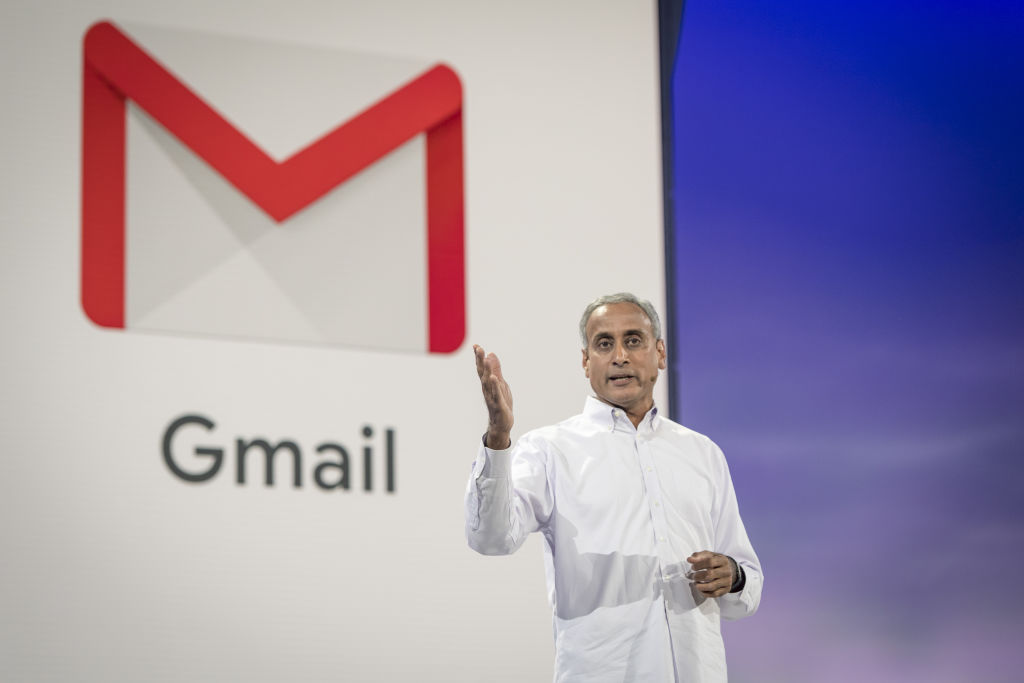
Prabhakar Raghavan, a senior vice president at Google (where he is responsible for Google Search, Assistant, Geo, Ads, Commerce, and Payments products), speaks during a 2018 event.
Enlarge / Prabhakar Raghavan, a senior vice president at Google (where he is responsible for Google Search, Assistant, Geo, Ads, Commerce, and Payments products), speaks during a 2018 event.

On Friday, Google started defending its search business during the Justice Department’s monopoly trial. Among the first witnesses called was Google’s senior vice president responsible for search, Prabhakar Raghavan, who testified that Google’s default agreements with makers of popular mobile phones and web browsers were “the company’s biggest cost” in 2021, Bloomberg Law reported.

Raghavan’s testimony for the first time revealed that Google paid $26.3 billion in 2021 for default agreements, seemingly investing in default status for its search engine while raking in $146.4 billion in revenue from search advertising that year. Those numbers had increased “significantly” since 2014, Big Tech on Trial reported, when Google’s search ad revenue was approximately 46 billion and traffic acquisition cost was approximately $7.1 billion.

Prior to Raghavan’s testimony, Google had been carefully guarding this information. According to Bloomberg, Judge Amit Mehta overruled Google’s objections to revealing the numbers, despite Google’s claims that such transparency could harm future deals.

Raghavan’s testimony was supposed to help Google counter the DOJ’s claims that it had achieved dominance in search through default agreements the DOJ suggests may be illegal. Google contends that the agreements are legal, and Raghavan testified that Google’s dominance is not due to those agreements but to Google’s constant investments in product improvements and innovation, The New York Times reported.

Rather than seeing itself as above all competition, Raghavan told the court, Google is forced to invest and innovate to avoid losing relevancy.

“I feel a keen sense not to become the next roadkill,” Raghavan testified. “If we become second class, we become irrelevant over time.”

According to Raghavan, Google faces competition from a wide range of rivals beyond just other search engines, viewing Amazon and TikTok as top competitors, not Bing. Particularly with younger users—some of whom Raghavan said refer to the search engine by a derogatory nickname, “Grandpa Google”—Google allegedly faces stiff competition. Raghavan cited research “that found that Americans spend about 23 minutes a day surfing the web, versus almost four hours using applications,” The Times reported, and noted that if Google loses young users, research showed the threat gets bigger.

“Where young people go, older people follow,” Raghavan said.

Google has planned a three-week presentation of its defense, The New York Times reported, and Raghavan’s testimony has set the stage for Google CEO Sundar Pichai, who will testify on Monday.

Pichai will likely provide additional insights into how Google’s smart investments are responsible for creating the search empire it maintains today, Reuters reported. But he will also likely face the DOJ’s inquiries into why Google invests so much in default agreements if it’s not a critical part of the tech giant’s strategy to stay ahead of the competition.

The DOJ is not likely to back down from its case that default agreements unfairly secured Google’s search market dominance. On Friday, Big Tech on Trial reporter Yosef Weitzman—who has been posting updates from the trial on X—suggested that things have gotten tense in the courtroom now that the “DOJ seems emboldened to push for more information to be public after Judge Mehta’s comments yesterday that not all numbers need to remain redacted.”

According to Weitzman, the DOJ today pushed to “make public the 20 search queries Google makes the most revenue off of, as well as Google’s traffic acquisition costs related to search (the total amount of money Google paid to partners in search distribution revenue shares).”

https://arstechnica.com/?p=1979346


Apple Watch facing potential ban after losing Masimo patent case

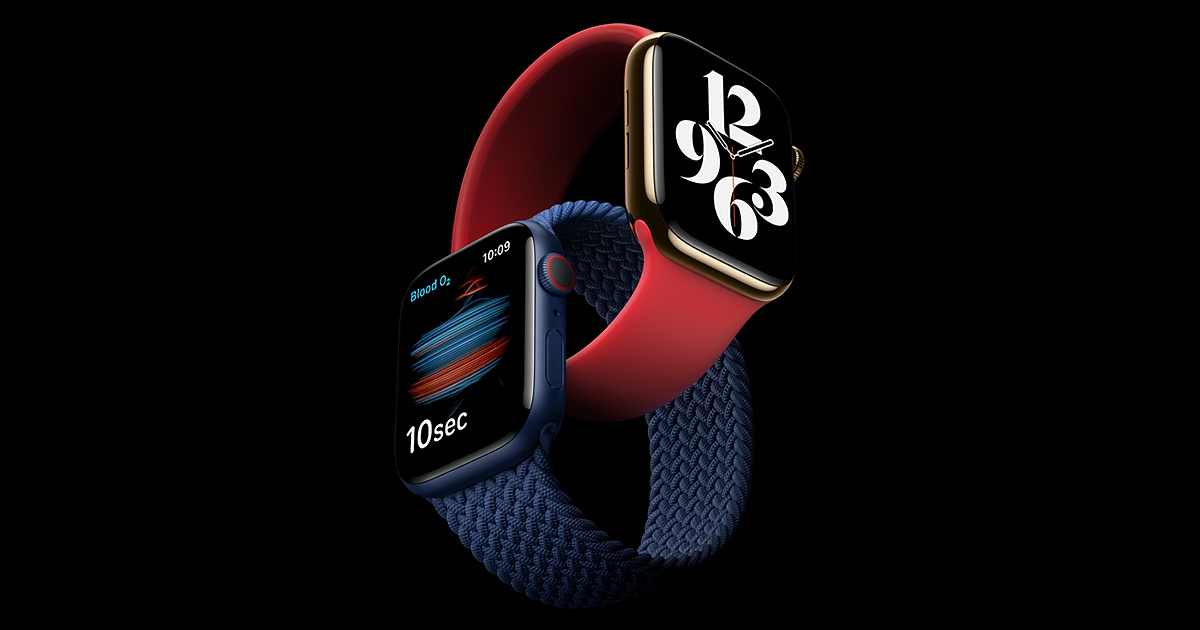
Two smartwatches are intertwined in this promotional image.
Enlarge / The Apple Watch Series 6.

The Apple Watch violates patents owned by California-based Masimo, the US International Trade Commission (ITC) ruled on Thursday [PDF]. The federal agency issued a limited exclusion order for the smartwatches, meaning the Apple Watch is in jeopardy of an import ban.

The ITC’s ruling upholds a January ruling that found that the Apple Watch infringed on a Masimo patent. The exclusion period recommended on Thursday is supposed to go into effect after 60 days, during which time President Joe Biden can overturn the ruling. Biden previously declined to veto an ITC ruling that found the Apple Watch violated patents of a different company, AliveCor.

The debate is over Masimo’s light-based pulse oximetry. The ITC’s ruling doesn’t specify which watches are affected. But the first Apple Watch to feature blood oxygen monitoring was the Apple Watch Series 6, which came out in 2020.

Masimo has accused Apple of entering discussions with it for a potential partnership, including a potential acquisition, in 2013, only to steal Masimo’s idea and poach some of Masimo’s engineers to implement it.

In a statement quoted by The Wall Street Journal this week, however, an Apple representative said that Masimo was just “one of many medical-technology companies” Apple held meetings with during that time period. The tech giant also claimed that it declined working with Masimo because it’s not a consumer-focused company.

Reuters quoted an Apple spokesperson as saying:

Masimo has wrongly attempted to use the ITC to keep a potentially lifesaving product from millions of US consumers while making way for their own watch that copies Apple. While today’s decision has no immediate impact on sales of Apple Watch, we believe it should be reversed and will continue our efforts to appeal.

At this point, it’s unlikely that the Apple Watch will be outright banned. As stated above, Apple may appeal the ITC’s ruling via the US Court of Appeals for the Federal Circuit after the presidential review period. The company could also change the Apple Watch or try to reach a settlement with Masimo to avoid a ban.

According to a press release from Masimo Thursday, comments from 24 “academic institutions, leading antitrust and intellectual property scholars, physicians, investors, nonprofits, and members of Congress were filed in support of the public’s interest in the exclusion order.”

Joe Kiani, founder, chairman, and CEO of Masimo, in a statement said:

Today’s ruling by the USITC sends a powerful message that even the world’s largest company is not above the law. This important determination is a strong validation of our efforts to hold Apple accountable for unlawfully misappropriating our patented technology.

Other Apple Watch patent disputes

As noted by Reuters, Apple and Masimo’s legal battles are ongoing. In May, Masimo’s lawsuit against Apple in California federal court ended in a mistrial, and Apple has also sued Masimo in Delaware. Flipping the script, Apple has accused [PDF] Masimo’s W1 smartwatches of violating Apple Watch patents.

Meanwhile, Apple is also in an Apple Watch patent battle with California-based AliveCor. AliveCor is currently appealing the revocation of three patents that it claims the Apple Watch infringes upon. Before then, the ITC ruled that the Apple Watch infringes [PDF] on electrocardiogram sensor-related patents. But there’s no import ban in effect because the US Patent and Trademark Office revoked the patents in question. Like Masimo, AliveCor has accused Apple of initiating a potential partnership but ultimately poaching AliveCor workers and infringing on its patents instead.

https://arstechnica.com/?p=1979313


Elon Musk wants your “entire financial life” on X by 2024

Elon Musk wants your “entire financial life” on X by 2024

One year into Elon Musk’s ownership of X, the finances of the platform formerly known as Twitter remain shaky. But the ongoing money troubles haven’t stopped Musk from forging ahead with his plan to turn X into a bank, a move he said last November would be key to helping the platform avoid bankruptcy. On an earnings call yesterday, Musk told X employees that he predicts X’s payments system will launch by the end of 2024, The Verge reported.

“It would blow my mind if we don’t have that rolled out by the end of next year,” Musk said, confirming that “when I say payments, I actually mean someone’s entire financial life. If it involves money, it’ll be on our platform. Money or securities or whatever. So it’s not just like ‘send $20 to my friend.’ I’m talking about, like, you won’t need a bank account.”

In January, Musk took his first steps toward this ambitious goal by registering Twitter Payments LLC with the US Treasury Department’s Financial Crimes Enforcement Network. This was a necessary step for Twitter to start transmitting money between users in all states and US territories, and according to The Verge, Musk confirmed that he expects to get the rest of the money-transmitting licenses “in the next few months.”

But Musk’s vision goes beyond enabling payments within the US. X CEO Linda Yaccarino confirmed in a blog post yesterday that while X has already secured money-transmitter licenses “in several states,” X is “moving toward launching a global payment system.”

“More soon!” Yaccarino’s blog promised.

When Musk announced his vision to turn X into an “everything app” where users go to text, call, pay, shop, bank, and post online, financial services experts told Ars that the hurdles Musk would face were “pretty high.” X would need to earn trust from both users and regulators, with the former already having plenty of banking solutions to choose from and the latter becoming increasingly critical of novel digital payment entities.

Experts predicted that “the choke points of finance might restrict” Musk from achieving his dream of turning X into what he described at a November conference last year as “the most valuable financial institution in the world.”

But one way to win over users, experts said, was to monetize activity on X and then incentivize users to keep their funds on the platform by turning their user account into what Musk described last year as “a high-yield money market account, so that having a Twitter balance is the highest-yield thing that you can do.”

Half of that plan is already in motion, as X began paying creators on the platform last year. Yaccarino’s blog post said that so far, X has “paid out more than $20 million to our creator community,” and a post from the X account said that “maximizing prosperity for content creators” remained among the platform’s primary goals heading into 2024.

On the earnings call, Musk reiterated that his plan for X was to fully realize the roadmap that he and David Sacks initially wrote for PayPal in 2000. Musk told X employees that he remained baffled that PayPal never completed that roadmap, saying that he thinks people will be surprised “just how powerful it is” once X picks up the ball that PayPal dropped.

https://arstechnica.com/?p=1979201


Sam Bankman-Fried testifies, says he “skimmed over” FTX terms of service

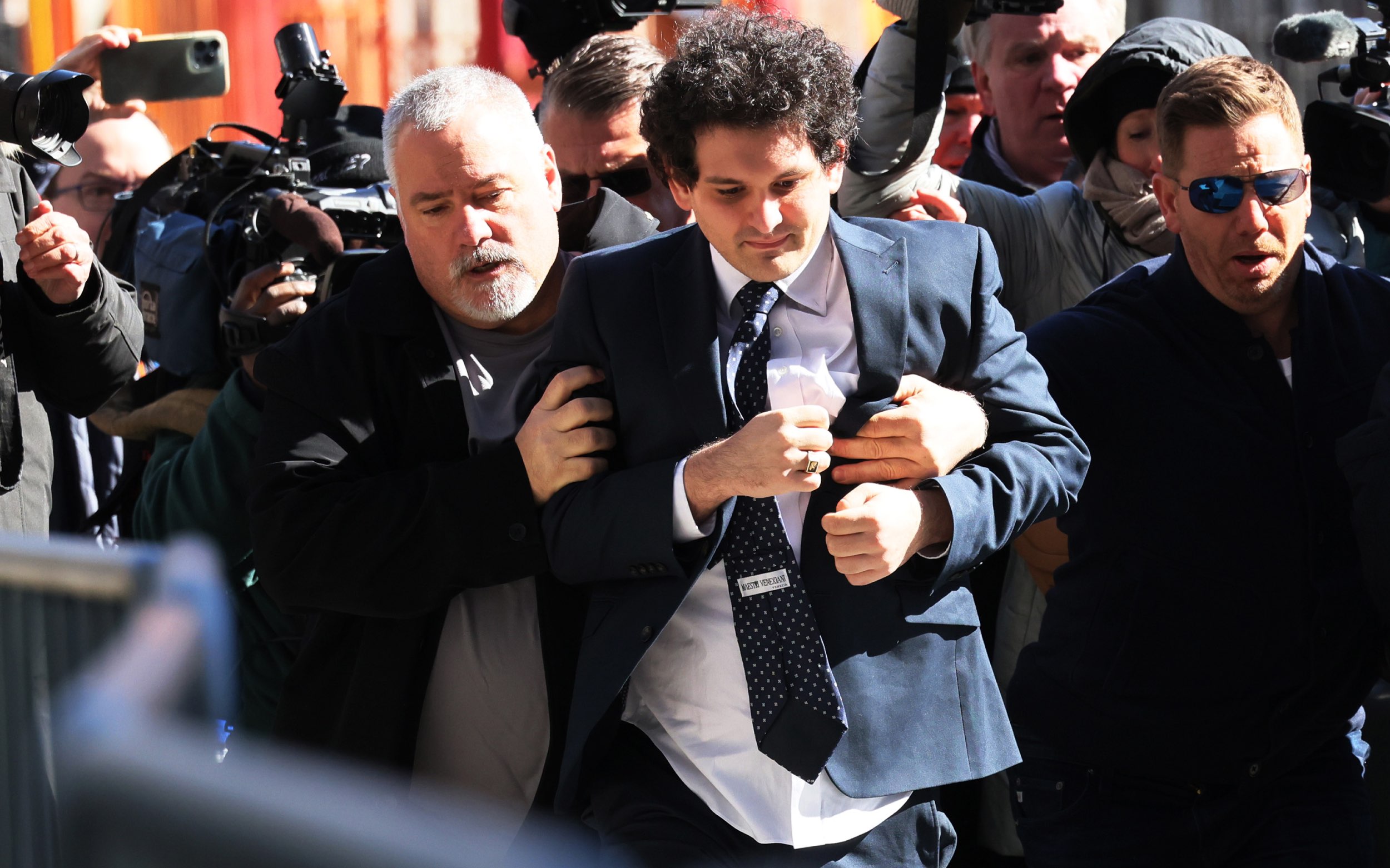
FTX Founder Sam Bankman-Fried arrives at court, surrounded by photographers and other people. One man appears to be holding Bankman-Fried around the torso and escorting him.
Enlarge / FTX Founder Sam Bankman-Fried arrives at US District Court on March 30, 2023, in New York City after being hit with a criminal charge for allegedly authorizing a bribe of at least $40 million to one or more Chinese government officials.
Getty Images | Michael Santiago

Sam Bankman-Fried took the stand in his criminal trial today in an attempt to avoid decades in prison for alleged fraud at cryptocurrency exchange FTX and its affiliate Alameda Research.

Providing testimony has been called a risky move for Bankman-Fried by many legal observers. After answering questions posted by his own lawyers, Bankman-Fried will have to face cross-examination from federal prosecutors. But after three weeks in which US government attorneys laid out their case, including testimony from former FTX and Alameda executives, Bankman-Fried’s legal team announced yesterday that he would take the stand.

Today’s testimony was unusual because US District Judge Lewis Kaplan sent the jury home for the day to conduct a hearing on whether certain parts of his testimony are admissible. “That means Bankman-Fried will give some of his testimony to the judge without the jury present. The judge will then decide whether Bankman-Fried is allowed to say the same testimony in front of a jury,” The Wall Street Journal wrote in its live coverage. The trial is not being streamed via audio or video.

In today’s jury-less proceeding, Bankman-Fried answered questions from both his own lawyer and a government prosecutor. The current Bankman-Fried trial involves seven criminal charges with maximum sentences adding up to 110 years. He faces another five criminal charges in a related trial expected to begin in March 2024.

Bankman-Fried reportedly struggled in his initial testimony today. Kaplan instructed the defendant to stop being evasive during questioning by Assistant US Attorney Danielle Sassoon, telling him to “listen to the question and answer the question directly.”

SBF “skimmed over” FTX terms of service

Some of the alleged fraud relates to how Alameda borrowed money from FTX. In testimony today, “Bankman-Fried said he believed that under FTX’s terms of service, sister firm Alameda was allowed in many circumstances to borrow funds from the exchange,” the WSJ wrote. Bankman-Fried reportedly said the terms of service were written by FTX lawyers and that he only “skimmed” certain parts.

“I read parts in depth. Parts I skimmed over,” Bankman-Fried reportedly said after Kaplan asked if he read the entire terms of service document.

Sassoon asked Bankman-Fried if he had “any conversations with lawyers about Alameda spending customer money that was deposited into FTX bank accounts,” according to Bloomberg’s live coverage. “I don’t recall any conversations that were contemporaneous and phrased that way,” Bankman-Fried answered.

“I had so many conversations with lawyers later when we were trying to reconcile things in November 2022,” Bankman-Fried also said. “There were conversations around Alameda being used as a payment processor, a payment agent for FTX. I frankly don’t recall conversations with lawyers or otherwise about the usage of the funds or the North Dimension accounts.” North Dimension was an Alameda subsidiary. The Securities and Exchange Commission has alleged that “Bankman-Fried directed FTX to have customers send funds to North Dimension in an effort to hide the fact that the funds were being sent to an account controlled by Alameda.”

One decision for Kaplan is whether Bankman-Fried will be allowed to blame FTX lawyers when the jury is back in the courtroom. As we previously wrote, this is called an “advice-of-counsel defense” in which SBF could argue that he sought advice from company lawyers, received advice that his conduct was legal, and “relied on that advice in good faith.”

Before the trial began, Kaplan issued an order that prohibited Bankman-Fried from using the advice-of-counsel defense in opening statements. But Kaplan left the door open for SBF to use the advice-of-counsel defense “on a case-by-case basis” as the trial continues.

https://arstechnica.com/?p=1979088


Media outlets win fight to gain faster access to Google trial evidence

Media outlets win fight to gain faster access to Google trial evidence

Slowly but surely, the public will start gaining more access to evidence shared in the Department of Justice’s antitrust trial probing Google’s search business, following an intervention by press outlets. In a motion to intervene, outlets earlier this month told the court that they were struggling to cover the trial because much of the evidence and proceedings has been withheld, redacted, or closed off entirely to protect industry trade secrets.

Yesterday, Judge Amit Mehta granted some of the demands of outlets—including The New York Times, The Wall Street Journal, Bloomberg, MLex, and Law360—which, among other requests, had asked the court to mandate the sharing of dozens of exhibits that the public has so far been denied access to despite pending press requests.

Mehta said that the supplemental order and other recent orders would allow the court to “continue facilitating public access to the trial and minimizing the need to close the courtroom while providing for the protection of confidential information.”

Mehta’s order—which does not replace but supplements a prior agreement stipulating how the DOJ, state plaintiffs, and Google “may” share trial documents online—requires that all press outlets designate a single representative to submit document requests on behalf of all outlets. Requests must be submitted by 7 pm ET on the day that evidence is shared in court for outlets to gain the fastest access. The order also says that requests for more than 10 documents in a single day could trigger delays. This daily limit, which outlets had opposed, essentially requires that outlets coordinate and prioritize requests to ensure timely access to the most sensitive information shared in the trial.

Perhaps most notably, Mehta declined to update the court-ordered prior agreement that requires that parties “may” publicly post trial documents to instead stipulate that parties “must” post all evidence cleared as not confidential. But despite not meeting all of the outlets’ demands, Mehta’s order was still largely considered a win for the media.

“Not exactly what we asked for but a great outcome for press freedom,” Bloomberg reporter Leah Nylen posted on X, celebrating the order.

For the public, perhaps the best outcome of the press outlets’ intervention is that it prompted much more coordination between outlets, including the development of a new public resource that has already made it easier for anyone to monitor what evidence has been unlocked by the media.

In another X post, Nylen shared a “handy” Google Drive link where outlets will make all the unsealed testimony and evidence that the press receives available to the public. The link will also provide information for the public to track the progress of pending press trial exhibit requests—and thus better understand what evidence is still being withheld.

Google did not immediately respond to Ars’ request to comment.

Process for press to access Google trial docs

Mehta’s supplemental order sets specific timeframes for the expected turnaround of press requests for various trial exhibits, depending on how much confidential information the requested documents contain.

Moving forward, parties must respond within two business days to requests for exhibits containing no confidential information. Any exhibits that contain Google’s confidential information must be cleared to be shared within three business days, and documents containing third-party confidential information—including trade secrets of tech giants like Apple, Microsoft, and Samsung—must be shared within four business days.

Third parties will be given two business days to respond to requests for exhibits containing their confidential information, otherwise the documents will be cleared to be shared without their input.

Press outlets had initially asked the court to order even shorter turnarounds, arguing that there was no reason why exhibits containing no confidential information couldn’t be produced within one business day. But largely, the court seemed to defer to timelines suggested by the parties.

That doesn’t mean that Mehta was completely swayed by Google or the DOJ, though. All parties had initially asked the court to limit press requests to only five exhibits per day and provided no stipulations on how to handle the backlog of press requests, which Google spanned dozens of trial exhibits.

https://arstechnica.com/?p=1979014


Backlash forces T-Mobile to cancel automatic migrations to pricier plans

T-Mobile log on the outside of a store
Enlarge / A T-Mobile store on August 24, 2023 in Washington, DC.
Getty Images | Anna Moneymaker

T-Mobile has scrapped a plan to automatically switch users to newer, more expensive packages after hearing loads of criticism from customers.

The plan became public knowledge two weeks ago with the leak of internal documents that said customers would be switched to pricier tiers starting with the November bill cycle unless they contacted T-Mobile to opt out. Documents showed that T-Mobile customer service reps were trained to tell users who complained, “We are not raising the price of any of our plans; we are moving you to a newer plan with more benefits at a different cost.”

But in an earnings call yesterday (see transcript), T-Mobile CEO Mike Sievert said it’s no longer happening because feedback from angry subscribers showed it “isn’t something that our customers are going to love.”

Sievert claimed in a leaked email to staff last week that media reports on the plan were “largely inaccurate and caused a lot of confusion for our customers.” But T-Mobile’s public relations department previously confirmed the plan to Ars and other news outlets.

“We have identified customers we think will benefit from the additional features of our newer plan options,” T-Mobile told us on October 13. “We are communicating to those customers our plans to move them to those newer plans and are sharing the benefits that come with the plan, the per line price impact and when the change will take place. Those customers will have the choice of moving to the new plan, another available rate plan at T-Mobile or in this case, opting out and remaining on their current plan.”

CEO: “That was sort of not very accurately reported”

The leaked documents published by The Mobile Report showed that at least some customers would be switched to a newer plan if they were on any of the following packages offered in previous years: Simple Choice/Select Choice, Magenta, Magenta 55, ONE Plan, and Simple Choice Business. T-Mobile’s statement to Ars noted that not all customers would be affected but didn’t say how many people would have their plans changed.

Sievert’s point about what he calls “inaccurate” news reports is that the automatic plan migrations were part of a test and weren’t going to affect most customers. In response to a question from an analyst on yesterday’s earnings call, Sievert said, “By the way, that was sort of not very accurately reported.”

“We tend to do tests and pilots of things quite a bit to try to figure out what’s the right answer,” Sievert said. “In this case, we had a test cell to try to understand customer interest in and acceptance of migrating off old legacy rate plans to something that’s higher value for them and for us. And we had planned to test and did some training around that. And then it leaked. And it leaked as if it was a broad national thing, and it kind of wasn’t.”

Sievert went on to say that “we did get plenty of feedback thanks to the erroneous context of the leak. And I think we’ve learned that particular test cell isn’t something that our customers are going to love. Now exactly none [of the plan changes] have rolled out… We had planned it. We had planned it as a test cell, and then we aren’t doing it because I think we’ve got plenty of feedback.”

T-Mobile’s current plans range from $60 to $100 a month for a single line or $5 more if you don’t enroll in the AutoPay discount. The automatic upgrades that are now canceled would have raised prices by $5 or $10 per line each month, depending on which plan customers had.

T-Mobile still aims to move users “up our price card”

Despite canceling this test, there may be other similar ones in the future, T-Mobile President of Marketing Mike Katz said. “I would expect to see more of those kinds of tests from us because it’s been a consistent practice throughout the entire Un-carrier journey so that we get it right for the experience for our customers,” Katz said.

As always, T-Mobile wants to increase the amount people pay as measured by the average revenue per user (ARPU), which boosts profits even when overall customer numbers aren’t increasing. Katz said T-Mobile’s newer Go5G plans “really create the platform for our core pricing strategy, which is how can we give customers more and more value and allow them to move up our price card because they feel like they’re getting something additional from us. So that is the foundation of our core pricing value.”

Sievert then discussed T-Mobile’s desire to move customers off “legacy rate plans.”

“Although that particular test cell doesn’t need to be executed now, we remain very interested in rationalizing our legacy rate plans for IT purposes, simplification purposes, revenue realization purposes, customer satisfaction, and retention purposes,” he said. “So we’re going to stay at it. But that particular idea is—we’ll probably do something different.”

https://arstechnica.com/?p=1979010


Elon Musk’s chaotic first year at Twitter leaves X Corp. with shaky finances

Elon Musk’s chaotic first year at Twitter leaves X Corp. with shaky finances
Aurich Lawson | Getty Images

One year after Elon Musk’s $44 billion purchase of Twitter, which he completed on October 27, 2022, after months of legal drama, the social media firm that Musk renamed “X” is on shaky financial ground.

Musk has expressed ambitions to transform X into an “everything app” that includes a digital payments platform and audio and video calling. He told employees that, despite massive cuts eliminating most of Twitter’s pre-Musk workforce, he sees “a clear but difficult path” to a future valuation of more than $250 billion.

X doesn’t provide detailed financial statements or user numbers because Musk took the company private when he bought Twitter. But data leaked to news media and third-party research depicts a platform in decline, which might not be exactly what Musk meant when he called the firm “an inverse startup.”

Usage of X—which still lives at the twitter.com domain—has dropped under Musk’s leadership. But by at least one measure, the number of users isn’t far off from the pre-Musk era. A report in early October by The Information said that “X’s daily active users have dropped 3.7 percent to 245 million” since Musk’s purchase.

Many users were put off by highly controversial moves like reducing moderation teams and charging for blue checkmarks that used to denote that a Twitter account was notable and authentic. While other estimates suggest the drop in users and usage may be significantly higher than 3.7 percent, it seems most pre-Musk users stayed on the platform and that Musk may have attracted some new ones to partially offset those who left.

But the drop in users is coupled with big drops in advertising revenue, spurred largely by concerns about the risk of advertising on a platform that isn’t moderated as heavily as it used to be. Through a combination of layoffs and actions that caused workers to resign, Musk reduced the social network’s employee count from about 7,500 people to around 1,500.

Ad firms recommended that clients pause spending on Twitter shortly after Musk bought it. Many advertisers continued to stay away despite Musk’s promise that the platform wouldn’t become a “free-for-all hellscape.” The spread of Israel/Hamas misinformation, notably amplified by users who purchased blue checkmarks under Musk’s paid “verification” system, helps illustrate why brands are reluctant to advertise on X.

While X CEO Linda Yaccarino tried to reassure European regulators about its compliance with moderation rules, Musk publicly argued with a key European Union commissioner on the same topic. And despite promising to expand safety and election groups in late August, Musk later cut about half of the company’s election integrity team and accused them of “undermining election integrity.”

Time spent on X keeps falling

Some research indicates that the decline in time spent using X has been more severe than the decline in total users, widening the usage gap between X and other social platforms like Facebook. According to market research firm Sensor Tower, “X was the sole social media app to exhibit a material decline” as measured by total hours of usage in August 2023 compared to August 2022.

Sensor Tower provided the report to Ars, and a summary was posted on the firm’s website. X’s usage drop occurred “as it grappled with user dissatisfaction over the rebranding and flagrant content in the post-acquisition era,” Sensor Tower said. Data for September 2023 was not yet available from Sensor Tower this week.

X’s August 2023 usage was 91 million hours per day, down 13 percent year over year, according to the Sensor Tower report. X’s August 2023 usage was also down 6 percent since July 2023.

By contrast, Sensor Tower said Facebook’s August 2023 usage was 1.31 billion hours per day, up 10 percent compared to August 2023. Unlike X’s performance from July to August, Facebook usage did not drop month over month, according to Sensor Tower.

On the plus side for X, the Threads app launched in July by Facebook owner Meta doesn’t seem ready to surpass X any time soon, if ever. Threads’ August 2023 usage was 500,000 hours per day, down 62 percent month over month, according to Sensor Tower.

X’s daily active users were down 9 percent in August 2023 when compared to August 2022, according to Sensor Tower. It was the ninth consecutive month of year-over-year declines in that statistic.

https://arstechnica.com/?p=1978912


US surprises Nvidia by speeding up new AI chip export ban

The Nvidia H100 Tensor Core GPU
Enlarge / A press photo of the Nvidia H100 Tensor Core GPU.

On Tuesday, chip designer Nvidia announced in an SEC filing that new US export restrictions on its high-end AI GPU chips to China are now in effect sooner than expected, according to a report from Reuters. The curbs were initially scheduled to take effect 30 days after their announcement on October 17 and are designed to prevent China, Iran, and Russia from acquiring advanced AI chips.

The banned chips are advanced graphics processing units (GPUs) that are commonly used for training and running deep learning AI applications similar to ChatGPT and AI image generators, among other uses. GPUs are well-suited for neural networks because their massively parallel architecture performs the necessary matrix multiplications involved in running neural networks faster than conventional processors.

The Biden administration initially announced an advanced AI chip export ban in September 2022, and in reaction, Nvidia designed and released new chips, the A800 and H800, to comply with those export rules for the Chinese market. In November 2022, Nvidia told The Verge that the A800 “meets the US Government’s clear test for reduced export control and cannot be programmed to exceed it.” However, the new curbs enacted Monday specifically halt the exports of these modified Nvidia AI chips. The Nvidia A100, H100, and L40S chips are also included in the export restrictions.

Nvidia mentioned in its Tuesday filing that it does not anticipate a near-term financial impact from the move. “Given the strength of demand for the Company’s products worldwide, the Company does not anticipate that the accelerated timing of the licensing requirements will have a near-term meaningful impact on its financial results,” it wrote.

Advanced Micro Devices (AMD), another company affected by these curbs, did not comment to Reuters on the matter. Intel, which started selling its Gaudi 2 chips in China in July, said it is “reviewing the regulations and assessing the potential impact.”

To help mitigate the effects of last year’s chip bans, the US Commerce Department has extended special authorizations for major foreign chip makers, such as SK Hynix, Samsung, and TSMC, to receive crucial US chipmaking tools for their plants in China. TSMC is now seeking permanent US authorization for its China operations through the “validated end-user” process, while South Korean giants Samsung and SK Hynix can indefinitely supply US chip equipment to their China plants without separate US approvals.

https://arstechnica.com/?p=1978300


41 states sue Meta for allegedly addicting kids to Facebook and Instagram

41 states sue Meta for allegedly addicting kids to Facebook and Instagram

State attorneys general in 41 states and the District of Columbia sued Meta today. The move comes after the conclusion of a multistate probe launched in 2021, where a bipartisan coalition of state enforcers began examining how Facebook and Instagram features are designed to allegedly addict and harm kids.

Back in 2021, the Massachusetts attorney general’s office led the multistate probe investigating “Instagram’s impacts on young people” after Facebook whistleblower Frances Haugen revealed that Facebook knew Instagram was “toxic” to teen girls but downplayed risks to the public. In a press release today, Massachusetts Attorney General Andrea Joy Campbell accused Meta of “deliberately” exploiting “young users’ vulnerabilities for profit.”

Eight states and Washington, DC, filed lawsuits against Meta in state and local courts, while 33 states filed a joint lawsuit in a federal court in California, The Washington Post reported.

According to the Post, these lawsuits together mark the “most significant effort” yet by states to force social media platforms to carefully weigh potential harms to children when designing product features.

Ahead of states’ announcement, a Meta spokesperson told Reuters that Meta is “disappointed that instead of working productively with companies across the industry to create clear, age-appropriate standards for the many apps teens use, the attorneys general have chosen this path.”

Campbell’s office said that Meta left states no choice but to sue, “because Meta has shown that it will not act responsibly unless it is required to do so by courts of law.”

In addition to accusing Meta of harming kids, Campbell’s office alleged that Meta’s defective product designs have placed an “undue burden” on state school systems, which have allegedly had to increase mental health expenditures to “address the mental and physical health harms that Meta has contributed to” in youths.

“Meta preys on our young people and has chosen to profit by knowingly targeting and exploiting their vulnerabilities,” Campbell said. “In doing so, Meta has significantly contributed to the ongoing mental health crisis among our children and teenagers.”

Meta has argued that research is mixed when it comes to measuring the alleged harmful effects of social media on young users. The Post noted that the American Psychological Association released a report in May, concluding that “using social media is not inherently beneficial or harmful to young people.”

But state enforcers seem convinced by research that they say shows steep declines in mental health for teens after just one hour of social media use per day, including decreases in happiness and self-esteem, and increases of self-harm, depression, and behavioral challenges. Massachusetts’ complaint also points to long-term psychological risks.

Massachusetts plans to argue that “Meta secretly utilizes design features that deliberately exploit and capitalize off young users’ unique vulnerabilities and overcome young people’s ability to self-regulate their time spent on its platform.” Those features include everything from notifications to “infinite scroll”—which keep the user engaged—as well as auto-playing Reels to disappearing Stories—which Massachusetts has claimed “create a sense of ‘FOMO’ (fear of missing out).”

“These features were designed and deployed with the intent of hooking young users into spending as much time as possible on the platform, to lure them back when they try to stop, and to overwhelm their ability to control or regulate their own use, with significant and concerning negative impacts on the brain development and mental health of teen users,” Campbell’s press release said.

Since 2021, Meta has made changes to address feedback that its platforms may be harmful to kids. Parents now have tools to monitor their kids’ activity, and young users are better protected with stronger default privacy settings and alerts nudging them to stop scrolling. But for states—which have largely failed in efforts to pass laws to require social media platforms to design products responsibly for kids—these efforts have not been enough.

“Instead of prioritizing young users’ well-being—as it publicly claimed—Meta repeatedly and deliberately chose not to implement measures and design changes it knew could reduce harms and improve young users’ well-being,” Campbell’s press release alleged.

Campbell said that until Facebook and Instagram are deemed safer for kids, states “will continue to push for meaningful changes to Meta’s platforms that protect our young people.”

https://arstechnica.com/?p=1978291