FCC robocall enforcement does little to stop illegal calls, Senate hears

Over the shoulder view of young Asian woman receiving a suspected spam call on her smartphone
Getty Images | d3sign

The Federal Communications Commission’s attempts to stop robocalls have failed to make a big dent in the problem, according to testimony at a Senate subcommittee hearing today.

The FCC “has been trying to address the problems, but, to date, its methods have not succeeded in achieving a meaningful reduction in these unwanted and illegal calls. Either the FCC does not have sufficient legal tools to stop these unwanted and illegal calls, or it has not yet determined how to deploy those tools effectively,” said Margot Freeman Saunders, senior counsel for the National Consumer Law Center.

The hearing on robocalls was held by the Commerce Committee’s Subcommittee on Communications, Media, and Broadband. Senator Ben Ray Luján (D-N.M.), the subcommittee chair, said that FCC enforcement is ineffective and that Congress should give the agency more power. He mentioned the long-standing problem that the FCC is unable to collect on most of the robocall fines it issues.

“Scammers and fly-by-night companies are stealing American families’ hard-earned dollars—using our telecom networks to do so—and don’t face any consequences,” Luján said. “The FCC levies fines, but fines go uncollected, and the company dissolves and moves assets elsewhere. Congress must empower our regulators and enforcement agencies to ensure that when an individual or a company breaks the law, they are held to account.”

“Every month, Americans receive roughly 1.5 billion to 3 billion scam calls and likely illegal telemarketing calls,” Luján said.

Luján said that technology used to trick consumers and evade enforcement “is constantly evolving. We will hear testimony that suggests consumer consent for telemarketing is increasingly falsified. Automated bots and other artificial intelligence systems are using public data to consent on behalf of a consumer for calls they never asked for and do not want. Automated robocalls and robotexts are using chatbots and generative artificial intelligence to impersonate a real, live person, lulling the recipient into a false sense of security by mimicking voices and mannerisms.”

Saunders told senators that robocall numbers remain high “despite the dozens of new regulations and rulings” issued by the FCC to deploy STIR/SHAKEN Caller ID authentication technology and implement other congressional mandates, and despite “the enforcement actions it has brought against VoIP providers and illegal callers.”

FCC wants authority to collect fines

FCC Enforcement Bureau Chief Loyaan Egal provided the subcommittee with a statement for today’s hearing. He said the FCC’s enforcement efforts include $500 million in fines against robocallers issued this year, and orders that require phone companies to block calls sent by other telcos that don’t follow the rules. He said the FCC moves have reduced robocalls, citing a study by the vendor Robokiller that said robocalls to Americans were down by 21 percent year over year in the first half of 2023.

But the FCC says it can do more if given additional authority from lawmakers. Despite increased enforcement power from the TRACED Act approved by Congress in 2019, Egal wrote that Chairwoman Jessica Rosenworcel “has identified two additional fronts where Congress can help the Commission’s enforcement efforts.”

Rosenworcel wants authority to collect fines without needing to involve the Department of Justice. Egal wrote:

The Commission has the authority to issue a Forfeiture Order for violations of the Communications Act and its rules, but it lacks the authority to pursue collection without involvement from the Department of Justice (DOJ). Since 2018, the Commission has referred eight robocalling forfeiture orders to the DOJ for collection, of which the DOJ is currently pursuing collection for two. The result is that significant sums of ill-gotten gains are potentially left in the pockets of bad actors. With its own authority to collect its fines, the Commission would pursue these cases promptly and aggressively.

The FCC also wants Congress to expand the definition of “automatic telephone dialing system” in the Telephone Consumer Protection Act (TCPA), which protects consumers from calls made using an “automatic telephone dialing system or an artificial or prerecorded voice.” Egal wrote:

The TCPA’s definition of automatic telephone dialing system has been unaltered since 1991 and needs adjustments to keep pace with the way technology has developed over the last thirty years. Further, in Facebook v. Duguid, the Supreme Court narrowly interpreted “automatic telephone dialing system” to mean equipment that stores or generates numbers randomly or sequentially. Consequently, equipment that simply stores non-random and non-sequential lists of numbers may fall outside the statute. This interpretation makes it harder for the Commission to regulate bad actors manipulating technology to reach massive volumes of consumers, particularly with regards to sending unwanted text messages.

https://arstechnica.com/?p=1978233


Tesla’s misleading driving range claims trigger DOJ probe

Tesla’s misleading driving range claims trigger DOJ probe

The United States Department of Justice is investigating Tesla after a Reuters report revealed in July that the EV maker secretly created a team to divert customer complaints because it had grossly exaggerated its vehicles’ driving range. Reuters’ source confirmed that “the directive to present the optimistic range estimates came from Tesla Chief Executive Elon Musk.”

The driving range was so far below company estimates that many customers assumed their cars were defective. Three customers launched a class-action suit, alleging fraud and false advertising. This mounting backlash over Tesla’s overly optimistic driving range estimates came at a tense time for Tesla following an unsuccessful launch of Tesla’s Full Self Driving (FSD) Beta—a feature deemed so dangerous that Tesla had to recall 362,758 cars—and a criminal investigation into its Autopilot claims.

The DOJ appears to now be probing all of Tesla’s recent missteps. According to a US Securities and Exchange Commission (SEC) filing from Tesla on Monday, the DOJ has sent requests for information and subpoenaed Tesla for documents related to Tesla’s Autopilot and FSD features, as well as documents “regarding certain matters associated with personal benefits, related parties, vehicle range, and personnel decisions.”

Tesla’s SEC filing also indicated that the company would exceed a $7 billion to $9 billion target for capital expenditures this year. Tesla hopes to return to that target in two years after a push to roll out new vehicle models, Reuters reported, including finally fulfilling shipments of its Cybertruck, which will likely happen by the end of November.

With spending up and prices down, Tesla is in a scramble to maintain its dominance in the EV industry. Earlier this month, Business Insider reported that Tesla’s dominance was fading and predicted that reversing that trend would “hinge” upon the success of the Cybertruck. Now we know that the Cybertruck’s outlook is not looking so great, as Musk said on an earnings call this month that he expected that the company would struggle “reaching volume production with the Cybertruck and then making the Cybertruck cashflow positive.”

Tesla “dug our own grave with the Cybertruck,” Musk said.

According to Reuters, demand for Tesla vehicles could drop if interest rates keep rising, and Tesla could incur further losses if pressure remains to decrease prices to remain competitive. That’s partly why Tesla shareholders have pushed Musk to consider investing more in advertising efforts that could spike demand.

Tesla has historically avoided advertising but launched some of its only campaigns earlier this year. On Monday, Musk confirmed in a post on X that Tesla would start advertising at a “larger scale as we figure what works best.”

As Tesla expands its advertising, the DOJ will likely be watching while taking a closer look at how Tesla has handled customer complaints about false claims in the past.

The Verge noted that the DOJ’s probe into Tesla’s driving range claims is not the first time Tesla has been called out for overestimating driving ranges. Car and Driver reported in April that while Tesla advertises “an impressive” driving range “figure for its window stickers,” vehicles end up “returning real-world results that are on average two times as far off the label value as most EVs.” In January, South Korea fined Tesla $2.2 million, finding that Tesla had exaggerated cars’ driving ranges, Reuters reported.

Tesla’s large-scale advertising efforts could attract additional regulatory scrutiny. On its website, the Federal Trade Commission says that it looks “especially closely” at consumer claims of deceptive advertising “on conduct related to high-tech products.” And customers have been vocal about frustrations with Tesla’s driving range claims. Some customers who reported feeling satisfied driving off the Tesla lot, expecting a driving range of more than 300 miles, told Reuters and other outlets that sometimes they only got 150 miles out of a full battery charge. One Tesla Model 3 driver, Nick Caraciolo, told Business Insider that “300 miles of range can quickly become 100 miles of range if you’re speeding or it’s hot outside or too cold. It can be very deceptive and a gas-powered car can seem more accurate in that way.”

https://arstechnica.com/?p=1978067


Reddit finally takes its API war where it belongs: to AI companies

Business person searching browsing internet data information networking concept.

Reddit ignited a war this year. Dramatic changes in API access pricing (from free to unaffordable) was one of its most polarizing moves ever. It resulted in apps beloved by long-time Reddit users, including moderators and people with accessibility needs, closing shop. Community trust was sacrificed, too. Disgusted with Reddit for how it handled third-party apps, abruptly ushered in pricing changes, and treated moderators who protested, numerous valuable, knowledgeable users quit the platform.

Originally, Reddit framed its API pricing changes as a way to prevent generative AI companies from using Reddit data to train large language models (LLMs) without Reddit getting anything in return. With Reddit no longer dealing with small third-party developers—all of which are now either paying Reddit or getting some sort of exemption—Reddit is reportedly taking the fight to where it should have been focused the entire time: generative AI firms.

Can Reddit survive without search?

On Friday, The Washington Post, as spotted by The Verge, said Reddit “has met with top generative AI companies about being paid for its data,” citing an anonymous source.

Going further, The Washington Post reported that Reddit is ready to play hard ball:

If a deal can’t be reached, Reddit is considering blocking search crawlers from Google and Bing, which would prevent the forum from being discovered in searches and reduce the number of visitors to the site. But the company believes the trade-off would be worth it, the person said, adding: “Reddit can survive without search.”

It sounds like a drastic, if not unrealistic, move, but these are drastic, if not surreal, times. The generative AI boom has been so breakneck that companies everywhere are now scrambling to figure out how the technology can best be monetized to favor their best interests.

At first, we might have thought that Reddit would only consider blocking AI crawlers, but The Washington Post’s report specifically states “search crawlers.” And Google and OpenAI have already released ways to block their AI data crawlers.

This suggests that Reddit’s reported threat to block Google and Bing isn’t just about protecting Reddit data from being used freely to train AI, but also about giving Reddit an advantage in the overall negotiations.

Google has already had a taste of what a Reddit-free Google might look like. In June, thousands of subreddits went dark, read-only, or only allowed joke posts that included but were not limited to John Oliver. This made the strategy of appending “Reddit” to Google search terms useless, and this was reportedly noticed by Google.

That month, CNBC cited an audio recording of a company meeting where Google SVP Prabhakar Raghavan was asked about Reddit protests impacting search results. The executive reportedly conceded that Google users were unhappy.

“Many of you may wonder how we have a search team that’s iterating and building all this new stuff and yet somehow, users are still not quite happy,” Raghavan said at the time, according to CNBC.

Google seemingly knows that its users are interested in Reddit results because they provide real human answers and insight. This has become particularly valuable as Google’s search results have become more sponsor-driven over the years and as unreliable sites game SEO. Demand for real human voices is why Google launched the Perspectives tab on its search engine, but that also brings up the likes of TikTok and YouTube influencers and sponsored posts. That’s different from a passionate discussion giving you rare insight based on real-life experiences.

Of course, blocking search could be a bluff from Reddit. It’s hard to imagine a world where Reddit’s relevance remains as strong if it requires users to visit its homepage. In June, Digiday cited Similarweb as saying 49 percent of Reddit’s traffic comes from search engines. That’s not an unrealistic number for a modern website, but Reddit hasn’t confirmed this data.

That said, Reddit has made some dire moves before. The social media firm is said to be considering an IPO this year and has been relentless lately in its pursuit to become profitable and to diversify revenue streams beyond ads. Besides forcing the closure of some of the most popular ways to access Reddit, the company recently forced personalized ads and started a user payment program similar to what social media site X (formerly Twitter) has implemented.

https://arstechnica.com/?p=1977935


Carbon capture pipeline nixed after widespread opposition

protest sign
Enlarge / A sign against a proposed carbon dioxide pipeline outside a home in New Liberty, Iowa, on June 4, 2023.

A company backed by BlackRock has abandoned plans to build a 1,300-mile pipeline across the US Midwest to collect and store carbon emissions from the corn ethanol industry following opposition from landowners and some environmental campaigners.

Navigator CO₂ on Friday said developing its carbon capture and storage (CCS) project called Heartland Greenway had been “challenging” because of the unpredictable nature of regulatory and government processes in South Dakota and Iowa.

Navigator’s decision to scrap its flagship $3.1 billion project—one of the biggest of its kind in the US—is a blow for a fledgling industry that is an important part of President Joe Biden’s climate strategy. CCS projects attempt to lock carbon underground for decades, preventing it from adding to heat-trapping gasses in the atmosphere.

It also represents a setback for the carbon-intensive corn ethanol refining industry, a pillar of the rural Midwestern economy which is targeting industry-scale CCS as a way to reduce emissions.

Navigator’s project would have laid pipelines across five US states—South Dakota, Nebraska, Minnesota, Iowa, and Illinois—to collect CO₂ from ethanol and fertilizer plants and pipe the gas to an underground storage site in Illinois.

It was backed by several deep-pocketed investors, including BlackRock, US oil refiner Valero Energy and Poet, a top US biofuel refiner.

Matt Vining, Navigator’s chief executive, said: “As good stewards of capital and responsible managers of people, we have made the difficult decision to cancel the Heartland Greenway project.”

Heartland Greenway is part of a wave of CCS projects aiming to tap into billions of dollars in tax breaks available under the Inflation Reduction Act, the landmark climate law signed by Biden last year. The incentives aim to help companies build carbon capture infrastructure, which has not yet proven it is commercially viable on a large scale.

The project faced opposition from local landowners, who expressed concerns about safety and property seizures, and some environmentalists who describe CO₂ pipelines as dangerous and a way to prop up the fossil fuels industry, which already has a network of such infrastructure.

Addressing the decision by Navigator, the Coalition To Stop CO₂ Pipelines said it “celebrates this victory,” but added: “we also know that the tax incentives made available by the federal government for carbon capture, transport and storage likely mean another entity will pick up Navigator’s project, or find a different route through Illinois.”

The Renewable Fuels Association, a lobby group for the ethanol industry, said it was disappointed by Navigator’s decision but would continue to pursue a goal of producing ethanol with net zero emissions by 2050 or sooner.

Geoff Cooper, chief executive of the Renewable Fuels Association, said: “We will continue working with the agricultural community to emphasize the vital importance of [carbon capture] to the future of both the renewable fuels industry and rural America.”

Summit Carbon Solutions, which is planning to build an even larger CO₂ pipeline network throughout the Midwest, said this week that its project will not now become operational until early 2026 because of permitting issues. It was initially planned to become operational in 2024.

Peter Findlay, analyst at Wood Mackenzie, said opposition by landowners and campaigners was a headwind for CCS pipeline projects, particularly given their length and the fact they cut across several states with different permitting regimes.

He said Summit’s project could benefit from the cancellation of Navigator’s pipeline as many of the ethanol plants initially contracted to this project could now approach Summit, or another rival project proposed by Wolf Carbon Solutions.

© 2023 The Financial Times Ltd. All rights reserved. Not to be redistributed, copied, or modified in any way.

https://arstechnica.com/?p=1977635


Instagram sorry for translation error that put “terrorist” in Palestinian bios

Palestine's flag.
Enlarge / Palestine’s flag.

Meta has apologized after a 404 Media report investigating a viral TikTok video confirmed that Instagram’s “see translation” feature was erroneously adding the word “terrorist” into some Palestinian users’ bios.

Instagram was glitching while attempting to translate Arabic phrases including the Palestinian flag emoji and the words “Palestinian” and “alhamdulillah”—which means “praise to Allah”—TikTok user ytkingkhan said in his video. Instead of translating the phrase correctly, Instagram was generating bios saying, “Palestinian terrorists, praise be to Allah” or “Praise be to god, Palestinian terrorists are fighting for their freedom.”

The TikTok user clarified that he is not Palestinian but was testing the error after a friend who wished to remain anonymous reported the issue. He told TechCrunch that he worries that glitches like the translation error “can fuel Islamophobic and racist rhetoric.” It’s unclear how many users were affected by the error. In statements, Meta has only claimed that the problem was “brief.”

“Last week, we fixed a problem that briefly caused inappropriate Arabic translations in some of our products,” Meta’s spokesperson told Ars. “We sincerely apologize that this happened.”

Not everyone has accepted Meta’s apology. Director of Amnesty Tech—a branch of Amnesty International that advocates for tech companies to put human rights first—Rasha Abdul-Rahim, said on X that Meta apologizing is “not good enough.”

Abdul-Rahim said that the fact that “Palestinian,” the Palestinian flag emoji, and “alhamdulillah” were translated as “Palestinian terrorist” is “not a bug,” but “a feature” of Meta’s systems. Abdul-Rahim told Ars that the translation error is part of a larger systemic issue with Meta platforms, which for years have allegedly continually censored and misclassified Palestinian content.

Amnesty International began monitoring these issues in 2021 when the organization began receiving reports of content and account takedowns on Facebook and Instagram after Israeli police attacked Palestinian protestors in Sheikh Jarrah, a predominantly Palestinian neighborhood in East Jerusalem. Amnesty International and several Palestinian civil society organizations soon found that hundreds of pro-Palestinian accounts were being blocked from livestreaming or having posts’ views restricted or posts removed entirely. Some users’ accounts were being flagged for “content simply sharing information about events in Sheikh Jarrah,” or recommending things like “people to follow and information resources,” Abdul-Rahim told Ars, while other content was “getting labeled as ‘sensitive’ and potentially upsetting.”

After that 2021 controversy, Meta commissioned a report by a third party that “concluded that the company’s actions had an ‘adverse human rights impact’ on Palestinian users’ right to freedom of expression and political participation,” TechCrunch reported.

Abdul-Rahim told Ars that it’s clear that Meta did not take enough steps to adequately fix the issues reported then, which seem to mirror issues still being reported today.

“Now fast-forward to the current context of the Israel-Gaza conflict, we are seeing the same issues,” Abdul-Rahim told Ars. The New York Times recently reported claims from thousands of Palestinian supporters, saying that “their posts have been suppressed or removed from Facebook and Instagram, even if the messages do not break the platforms’ rules.” Agreeing with Abdul-Rahim, experts told TechCrunch that the problem wasn’t a bug but a “moderation bias problem,” labeling Meta the “most restrictive” platform that’s historically been guilty of “systemic censorship of Palestinian voices.”

Meta denied censoring Palestinian supporters

In a blog, Meta denied that the company was restricting pro-Palestinian content. The company—which, like most platforms, has banned content supporting Hamas, a globally recognized terrorist organization—said that platforms have recently “introduced a series of measures to address the spike in harmful and potentially harmful content spreading on our platforms,” but promised that platforms “apply these policies equally around the world” and insisted that “there is no truth to the suggestion that we are deliberately suppressing voice.”

The blog reported two bugs that Meta said have now been fixed. One stopped some accounts’ posts and Reels that were shared as Stories from “showing up properly,” which led “to significantly reduced reach” of posts. Another bug “prevented people from going Live on Facebook for a short time.”

The blog discussed other reasons pro-Palestinian content might have reduced reach on platforms, including Meta’s reliance on technology “to avoid recommending potentially violating and borderline content across Facebook, Instagram, and Threads.” Meta noted that any content that “clearly identifies hostages” is also being removed, “even if” it’s being shared “to condemn or raise awareness” of the hostage situation. Platforms are also blocking hashtags when they are overrun by violative content, which could reduce the reach of non-violative content attempting to use the same hashtags. It’s also possible that many users have used controls to see less sensitive content.

https://arstechnica.com/?p=1977636


Top Israel/Hamas misinformation spreaders use Elon Musk’s paid “verification”

Elon Musk's account on X (formerly Twitter) displayed on a smartphone next to a large X logo.
Getty Images | Nathan Stirk

“Verified” accounts on Elon Musk’s X platform spread nearly three-quarters of the 250 most viral posts containing commonly shared misinformation about the Israel-Hamas war, according to a study released yesterday by NewsGuard, a company that has worked with the European Commission on misinformation initiatives.

After buying Twitter nearly a year ago, Musk overhauled the system for doling out blue checkmarks so that anyone who pays $8 a month can be “verified.” Accounts verified as being notable and authentic under the pre-Musk system had their checkmarks removed.

“A NewsGuard analysis found that ‘verified’ accounts on X are superspreaders of misinformation about the conflict, boosting falsehoods while displaying a ‘verification’ blue checkmark that verifies nothing,” the report said.

NewsGuard described its research as follows:

During the first week of the conflict (Oct. 7-Oct. 14), NewsGuard analyzed the 250 most-engaged posts (likes, reposts, replies, and bookmarks) that promoted one of 10 prominent false or unsubstantiated narratives relating to the war, derived from NewsGuard’s Misinformation Fingerprints, its proprietary database of prominent false narratives. The results revealed that 186 out of these 250 posts—74 percent—were posted by accounts verified by X.

NewsGuard said the 10 false or unsubstantiated claims spread by these accounts are that “Ukraine sold weapons to Hamas,” that “Israel has killed 33,000 Palestinian children since 2008,” that “a video shows Israeli or Palestinian children in cages,” that “a video shows Israeli senior officials captured by Hamas,” that “the Saint Porphyrios Orthodox Church in Gaza was destroyed by Israeli bombing,” that “a video shows Hamas fighters celebrating the abduction of an Israeli toddler,” that “CNN staged footage of its news crew under attack in Israel,” that “a White House memo shows that the US approved $8 billion in aid for Israel,” that “Israel staged footage showing the death of a child killed by a Hamas strike,” and that “the Hamas terrorist attack was a ‘false flag’ carried out by Israel or the West.”

“Collectively, posts advancing these myths received 1,349,979 engagements and were cumulatively viewed more than 100 million times globally in just one week,” the report said.

Musk calls group an Orwellian scam

Musk railed against NewsGuard in a few posts yesterday, calling it a “scam” that “should be disbanded immediately.”

“Anything with a name that sounds like it came out of an Orwell novel should never be trusted,” Musk wrote on X, the current name for the platform that is still accessed at twitter.com.

NewsGuard worked with the European Commission on the EU’s Code of Practice on Disinformation, a voluntary system that Twitter joined before Musk bought the company. Musk pulled his platform out of the disinformation pact in May 2023. A Code of Practice study conducted for the EU by analytics firm TrustLab found that disinformation is more prevalent on X than on Facebook and other social networks.

NewsGuard, founded in 2018, is also providing data on misinformation to Europe’s Joint Research Centre.

European Commissioner for Internal Market Thierry Breton warned Musk last week that X faces penalties under the new Digital Services Act if it doesn’t take action to stop the spread of Israel/Hamas disinformation. The EC is investigating X’s compliance with the new law and sent similar requests for information to Meta and TikTok.

X CEO Linda Yaccarino’s response to Breton said the platform removed or labeled “tens of thousands of pieces of content” and that Community Notes providing additional context “are visible on thousands of posts, generating millions of impressions.”

https://arstechnica.com/?p=1977478


Amazon drivers’ urine packaged as energy drink, sold on Amazon

Screenshot from documentary
Enlarge / Oobah Butler in The Great Amazon Heist.
Courtesy of Channel 4

The drink had all the hallmarks of a beverage sensation. Striking design, bold font, and the punchy name Release. But inside, each bottle was filled with urine allegedly discarded by Amazon delivery drivers and collected from plastic bottles by the side of the road.

That didn’t stop Amazon from listing it for sale, though. Release even attained No. 1 bestseller status in the “Bitter Lemon” category. It was created by Oobah Butler for a new documentary, The Great Amazon Heist, which airs on Channel 4 in the UK today.

Butler is a journalist, presenter, and renowned puller of stunts—he’s probably most famous for turning his shed in a London garden into the number one ranked restaurant on Tripadvisor. The Great Amazon Heist begins with him infiltrating an Amazon distribution center in Coventry with a hidden camera and speaking to workers who complain of foot and back pain, potentially dangerous working conditions, and near-constant surveillance. Butler spends his first day unloading a baking-hot truck with no working fan or air conditioning.

Amazon spokesperson James Drummond says “nothing is more important” than employee safety and well-being and that the company provides protective clothing and footwear and has “dedicated health and safety teams on site.”

Butler happens to be present during a hiring spree at the Coventry warehouse. At the time, workers were trying to gain union recognition, and the GMB union has since accused Amazon of deliberately hiring hundreds of extra staff to scupper the vote. Amazon denies this.

He is recognized within days and so resorts to interviewing delivery drivers, who tell him that they’re penalized for slow deliveries to the extent that they have to urinate in bottles because they don’t have time to find anywhere to stop for bathroom breaks.

Drivers urinating in bottles has been reported in the past, but what wasn’t known is that some claim they also get penalized for having those urine-filled bottles in their truck when they return to the warehouse. (Drummond denies this and says Amazon drivers receive reminders to take regular breaks on the Amazon Delivery app). To avoid penalties, they end up discarding the bottles by the side of the road. Butler searches the roadsides near Amazon warehouses from Coventry to New York to Los Angeles and more often than not strikes liquid gold.

From there, it’s laughably straightforward for Butler to get Release listed for sale on Amazon, with very few checks and balances in place to ensure the product he’s selling is safe and legal. “Releasing the drink was surprisingly easy,” Butler told WIRED. “I thought that the food and drinks licensing would stop me from listing it, so I started it out in this Refillable Pump Dispenser category. Then the algorithm moved it into drinks.”

At one point, he’s even contacted by an Amazon representative ready to handle the packaging, shipping, and logistics through the Fulfillment by Amazon program. (No members of the public were actually sent driver urine; instead Butler corralled a group of friends into making the purchases.) When he saw the product listed for sale, Butler felt “initially really excited and found it very funny,” he says. “Then when real people started trying to buy the product, I felt a bit scared.”

Butler and his nieces.
Enlarge / Butler and his nieces.
Courtesy of Channel 4

Drummond says this was a “crude stunt” and that the company has “industry-leading tools to prevent genuinely unsafe products being listed.”

If there’s a theme to the documentary, it’s that it’s remarkably simple to outwit one of the world’s biggest companies. For his next trick, Butler gets his nieces—aged 4 and 6—to purchase products that are only intended to be sold to adults. In at least four cases, legally required age verification measures were not in place at either the point of sale or delivery. By placing orders with voice control through Alexa, the girls were able to order knives, saws, and rat poison to their front door. Some of these packages were delivered to Amazon lockers, making it physically impossible for the delivery driver to check whether the person receiving the item was an adult.

“Customers must be 18 and over to use Amazon services unless a parent or guardian is involved,” says Drummond. “The majority of products purchased by Channel 4 do not legally require age verification, either at the point of purchase or delivery. Four products were categorized incorrectly, and we have now addressed this.” He says Amazon takes its age verification responsibility “extremely seriously” and that it uses trusted global ID verification systems for bladed items and verifies age on delivery.

The final part of the program turns its attention to Amazon’s taxes—the company has been criticized for using complex but legal arrangements to reduce its overall tax liability, such as running sales through a subsidiary in Luxembourg. Butler interviews Labour MP Nadia Whittome, who argues that Amazon benefits from public infrastructure and should therefore pay its fair share to fix Britain’s crumbling roads. Butler buys pothole filler on Amazon. Knowing that Amazon processes returns based on the weight of the incoming packages, he sends back buckets of sand to get his money back—attempting to shield himself from legal liability for fraud by running everything through a shell company in Belize.

The Great Amazon Heist doesn’t tell us anything particularly new. (Drummond says the documentary is a “heavily distorted picture of our processes and operations that do not reflect the realities of shopping with or working for Amazon.”) But placing all of these elements alongside each other in an hour of television paints a stark picture. Drivers and warehouse workers put up with the conditions because they have no choice. Dangerous products were listed and sold to children with no checks in place. Byzantine structures shield the company from local authorities. According to Amazon’s mission statement, it “strives to be Earth’s most customer-centric company, Earth’s best employer, and Earth’s safest place to work.” The Great Amazon Heist portrays a company that simply doesn’t seem to care.

This story originally appeared on wired.com.

https://arstechnica.com/?p=1977406


Google’s 21-year deal with Apple is the “heart” of monopoly case, judge says

Pandu Nayak, Google's vice president of search, was Google's first witness called after the Department of Justice rested its case in historic monopoly trial.
Enlarge / Pandu Nayak, Google’s vice president of search, was Google’s first witness called after the Department of Justice rested its case in historic monopoly trial.

The Department of Justice called its last witness this week, resting its case in a blockbuster antitrust trial probing Google’s alleged monopoly over search. Over the next five weeks, Google will do everything in its power to defend against those allegations—or else risk a potential breakup of its lucrative, industry-dominating search business—including likely calling Google CEO Sundar Pichai and other top executives as witnesses.

Since the trial began on September 12, Judge Amit Mehta has heard testimony from 29 witnesses, Bloomberg reported, including leading economists and senior executives from Google, Apple, Microsoft, Samsung, and other tech companies either partnering with or rivaling Google over the years.

Much of this testimony was closed to protect tech companies’ trade secrets, but news outlets have since filed a motion hoping to unseal testimony and access more trial documents sooner, hoping to share more details with the public about the case the DOJ made.

Witnesses introduced by the DOJ helped build its case against Google, alleging that Google pays billions for default contracts with browsers and mobile phone makers to block out rivals from gathering enough data to compete for users and market share. This, DOJ alleged, harms consumers by preventing innovation in search.

Likely the testimony that interested Mehta most came from witnesses highlighting alleged anticompetitive effects of Google’s default contracts with Apple. Testimony introduced by the DOJ revealed that Apple was initially hesitant to set a default search engine, and at one point considered creating its own search engine, but only if an appealing revenue-sharing deal couldn’t be struck with Google. The DOJ argued that Apple’s deal with Google prevented one of its biggest rivals in the mobile phone industry from competing against Google in search.

Blocking a major rival from entering the market would seemingly easily be considered an anticompetitive effect of Google’s default contracts, and Mehta has proclaimed that “the heart” of the DOJ’s case rests on whether Google’s 21-year partnership with Apple gave Google monopoly powers over search, Bloomberg reported.

Testimony from Google’s rivals that claimed that Google’s default contracts made it impossible to compete also bolstered the DOJ’s case. Microsoft CEO Satya Nadella testified that Google’s claim that search users have choice is “bogus,” while confirming that efforts to compete for default status for Bing failed, despite Microsoft being willing to take billions in losses. At one point, Microsoft even offered to sell Bing to Apple, but Apple rejected that deal, allegedly because the deal it had with Google was just too good to let go.

It’s estimated that Google most recently has been paying Apple as much as $20 billion annually to maintain those default contracts. The DOJ alleged that Google pays this high price because Google knows that users rarely swap out default search engines. Google has argued that switching search engines is just a click away and that people use Google because it’s the superior search engine. Google also argued at trial that Microsoft’s failures with Bing are “a direct result of Microsoft’s missteps in Internet search.”

The DOJ’s final witness was economist Michael Whinston, who testified on Monday that “the power of the defaults is very significant,” according to a press release provided to Ars from the American Economic Liberties Project (AELP)—which formed a coalition of 20 civil society and advocacy groups for the purpose of monitoring the trial. Previously, Whinston testified that “when you see Google paying billions and billions and billions, there has to be a reason.”

“That’s the first thing that, as an economist, slaps me in the face,” Whinston testified.

According to Lee Hepner, AELP’s legal counsel, the DOJ has made “a very compelling case” in its efforts to prove that “Google’s defaults blocked competition and illegally maintained its monopoly.” Similarly, a Bloomberg Intelligence analyst tracking the trial, Jennifer Rie, credited the government with doing a “solid job.”

“One of the toughest hurdles for Google, once it starts its case-in-chief, is reconciling why it pays so much,” Rie told Bloomberg.

https://arstechnica.com/?p=1977224


FCC moves ahead with Title II net neutrality rules in 3-2 party-line vote

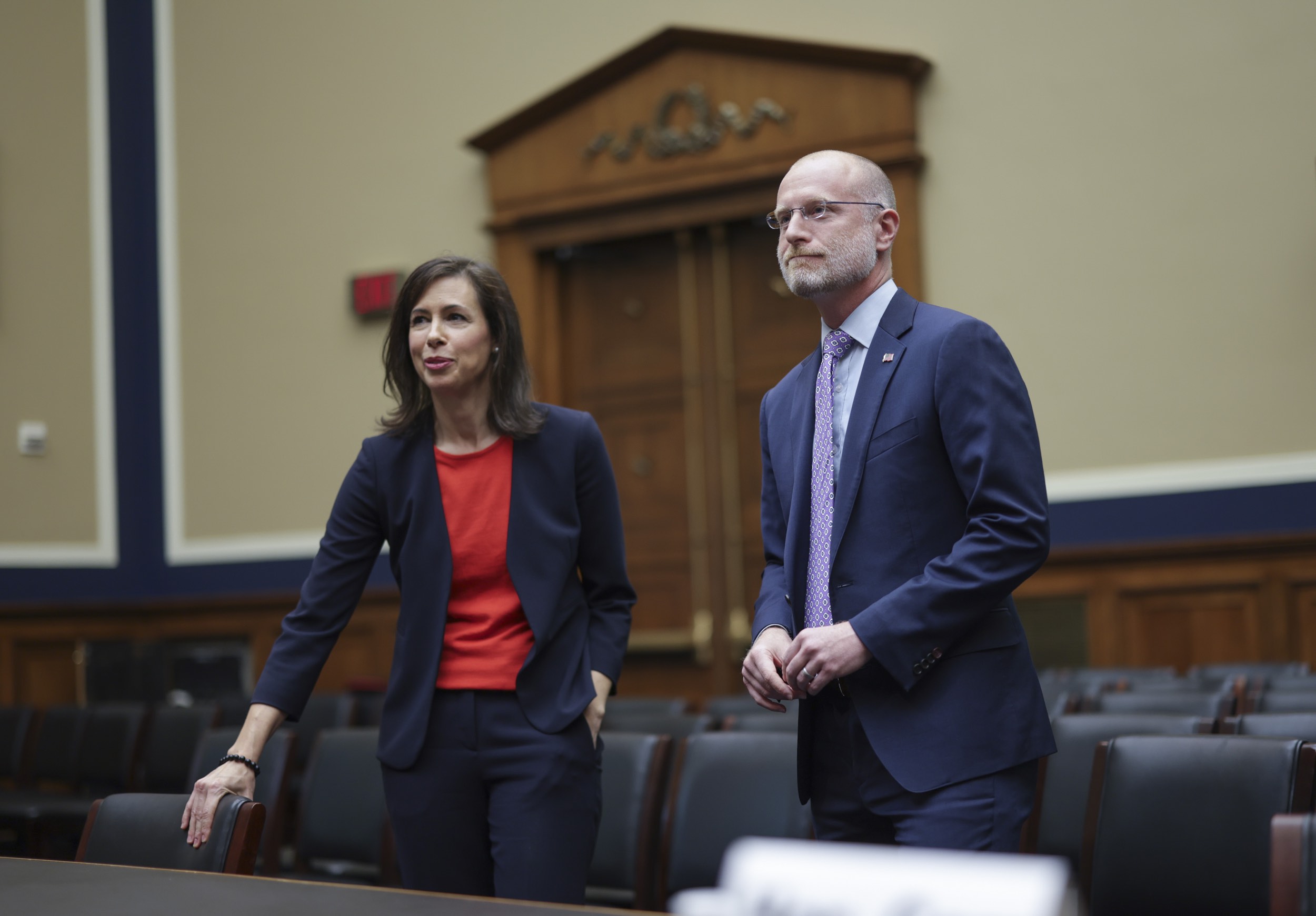
FCC Chairwoman Jessica Rosenworcel and FCC Commissioner Brendan Carr stand next to each other in a Congressional hearing room before a hearing.
Enlarge / FCC Chairwoman Jessica Rosenworcel and FCC Commissioner Brendan Carr arrive to testify during a House committee hearing on March 31, 2022 in Washington, DC.
Getty Images | Kevin Dietsch

The Federal Communications Commission today voted to move ahead with a plan that would restore net neutrality rules and common-carrier regulation of Internet service providers.

In a 3-2 party-line vote, the FCC approved Chairwoman Jessica Rosenworcel’s Notice of Proposed Rulemaking (NPRM), which seeks public comment on the broadband regulation plan. The comment period will officially open after the proposal is published in the Federal Register, but the docket is already active and can be found here.

The proposal would reclassify broadband as a telecommunications service, a designation that allows the FCC to regulate ISPs under the common-carrier provisions in Title II of the Communications Act. The plan is essentially the same as what the FCC did in 2015 when it used Title II to prohibit fixed and mobile Internet providers from blocking or throttling traffic or giving priority to Web services in exchange for payment.

The Obama-era net neutrality rules were eliminated during Trump’s presidency when then-Chairman Ajit Pai led a repeal that reclassified broadband as an information service, returning it to the less strict regulatory regime of Title I. The current FCC likely would have acted much sooner but there was a 2-2 deadlock until last month when the Senate confirmed Biden nominee Anna Gomez to fill the empty spot.

After the comment period, the FCC is likely to finalize the rulemaking and put the 2015 rules back in place. The broadband industry will likely then sue the FCC in an attempt to nullify the rulemaking.

Chair: Broadband needs “expert agency”

“Today, there is no expert agency ensuring that the Internet is fast, open, and fair… Today, we begin a process to make this right. We propose to reinstate enforceable, bright-line rules to prevent blocking, throttling, and paid prioritization,” Rosenworcel said at the commission meeting.

Title II regulation isn’t just about net neutrality, Rosenworcel said, arguing that the reclassification will give the FCC more authority to protect national security on broadband networks. “When we stripped state-affiliated companies from China of their authority to operate in the United States, that action did not extend to broadband services, thanks to the retreat from Title II. This is a national security loophole that needs to be addressed,” she said.

Without Title II, the FCC has “limited authority to incorporate updated cybersecurity standards into our network policies,” she said. The same is true of protecting privacy on broadband networks, she said.

“The law requires telecommunications providers to protect the confidentiality of the proprietary information of their customers,” Rosenworcel said. “That means that these providers cannot sell your location data, among other sensitive information. Those privacy protections currently extend to voice customers but not broadband subscribers. Does that really make sense? Do we want our broadband providers selling what we do online? Scraping our service for a payday from new artificial intelligence models? Doing any of this without our permission?”

Disputing claims that the FCC is overstepping its authority, Rosenworcel said the “rules are legally sustainable because they track those that were upheld in court in 2016—from front to back.”

https://arstechnica.com/?p=1977192


Rapper Pras’ lawyer used AI to defend him in criminal case—it did not go well

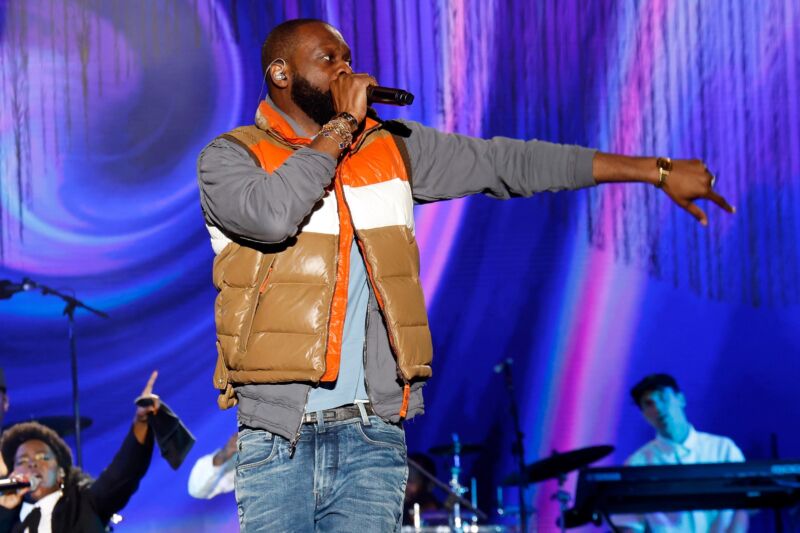
Rapper Pras Michel performing on stage while holding a microphone.
Enlarge / Pras Michel performs during the Roots Picnic at The Mann on June 3, 2023, in Philadelphia.
Getty Images | Taylor Hill

After being convicted of federal crimes related to a foreign influence campaign, rapper Prakazrel “Pras” Michel says he should get a new trial because his lawyer “used an experimental AI program to write his closing argument.” In a motion for a new trial filed Monday, the Fugees rapper’s new lawyers say Michel’s previous representation used “an experimental AI program in which they had a financial stake to write the closing argument, resulting in a frivolous and ineffectual closing argument.”

Michel was represented at trial by defense counsel David Kenner, who is accused of failing to provide a cogent defense and misattributing two songs to the Fugees. The allegations about Kenner’s use of AI are reminiscent of a previous incident in which a lawyer admitted using ChatGPT to help write court filings that cited six nonexistent cases invented by the artificial intelligence tool.

According to the motion for a new trial, “Kenner failed to familiarize himself with the charged statutes, causing him to overlook critical weaknesses in the Government’s case,” and he “did not understand the facts or allegations.”

Kenner “outsourced trial preparations to inexperienced contract attorneys who worked for an e-discovery vendor, Business Intelligence Associates, Inc. (BIA),” the motion said. His trial team included BIA co-founder Alon Israely, “a non-practicing attorney with no white collar or even litigation experience.” The motion said that Kenner generated his closing argument “using a proprietary prototype AI program in which he and Alon Israely appear to have had an undisclosed financial stake.”

“Far from hiding this fact, Kenner boasted about it after Michel was convicted, stating; ‘The system turned hours or days of legal work into seconds,'” the motion said. “The AI company touted it as the first use of ‘generative AI in a federal trial.’ It showed. Kenner’s closing argument made frivolous arguments, misapprehended the required elements, conflated the schemes, and ignored critical weaknesses in the Government’s case. The closing was damaging to the defense.”

EyeLevel.AI said it “made history”

The court filing points to a May 2023 press release from EyeLevel.AI, which boasted that its Lit Assist “litigation assistance technology made history” when it was used by the defense in the Michel trial. “EyeLevel’s Lit Assist offers critical insights faster than human efforts and conventional technologies alone,” the press release said. “From motion drafting and early case assessment to M&A due diligence and appeals work, EyeLevel’s legal intelligence system is engineered to excel in the legal domain.”

Kenner was quoted in the press release as saying the tool “is an absolute game changer for complex litigation… This is a look into the future of how cases will be conducted.”

Michel’s current legal team alleges that Kenner and Israely “wanted to use Michel’s trial as a test case to promote the program and their financial interests… even though this experiment adversely affected Michel’s defense at trial, creating an extraordinary conflict of interest.”

EyeLevel’s press release said its Lit Assist tool was “launched with technology partner CaseFile Connect,” which Michel’s new lawyers believe is tied to Kenner’s law firm.

“The CaseFile Connect website does not identify its owners, but it lists its principal office address as 16633 Ventura Blvd., Suite 735, which the California Bar website indicates is the office address for Kenner’s law firm,” the motion for a new trial said. Another office address listed on the CaseFile Connect site “is associated with Kenner’s co-counsel and friend, Israely,” the brief said.

Michel faces a maximum of 20 years in prison after a jury convicted him in April of conspiracy, concealment of material facts, making false entries in records, witness tampering, and serving as an unregistered agent of a foreign power. Three alleged conspirators pleaded guilty in 2018 and 2020. A fourth, Jho Low of Malaysia, was indicted and is a fugitive.

https://arstechnica.com/?p=1977018