Elon Musk launches test to see if users are willing to pay $1 a year for X

Elon Musk launches test to see if users are willing to pay $1 a year for X

X has confirmed a Fortune report revealing that the platform formerly known as Twitter has begun charging a $1 annual fee to new users in New Zealand and the Philippines. Unless new users in these locations cough up the dollar, they’ll be blocked from accessing basic platform features, including posting, replying, or quoting posts.

The new fee kicked in yesterday, X Support posted on X.

“Starting today, we’re testing a new program (Not-a-Bot) in New Zealand and the Philippines,” X Support said. “New, unverified accounts will be required to sign up for a $1 annual subscription to be able to post and interact with other posts. Within this test, existing users are not affected.”

Earlier this year, outlets speculated that X-owner Elon Musk might implement a small fee to access the platform, and Fortune’s report seemed to confirm that change could be coming soon globally, assuming that X’s “test” goes well. X Support directly stated that the move was not intended to drive X profits despite the urgent situation of the company being $13 billion in debt.

According to X, this “test was developed to bolster our already successful efforts to reduce spam, manipulation of our platform, and bot activity, while balancing platform accessibility with the small fee amount. It is not a profit driver.”

Musk has been concerned about bot activity on the platform since before he purchased Twitter, even attempting to cancel or renegotiate the deal over suspicions about high numbers of bots. Since his purchase, he has rebranded the platform into X and repeatedly claimed that charging subscription fees could be the only meaningful way to reduce bot activity on the platform. Musk seems particularly motivated to move to a subscription model to get ahead of what could become a crushing new wave of bot activity supercharged by AI.

Yesterday, Musk again posted on X that subscriptions are “the only way to fight bots without blocking real users.” He admitted that “this won’t stop bots completely” but claimed that charging the $1 annual fee means that “it will be 1000X harder to manipulate the platform.”

X Support’s post unsurprisingly supports Musk’s statements about subscriptions successfully reducing bot activity on X, writing, “So far, subscription options have proven to be the main solution that works at scale.”

Fans of games like World of Warcraft—which have historically been overrun by bots—have complained that subscription fees have not limited bot activity. In June, The Wall Street Journal reported that “fake and spam accounts remain plentiful,” according to researchers who claimed that, despite the platform implementing the Twitter Blue subscription service, bots remained pervasive. Twitter Blue may have even made it harder to detect bots, experts told WSJ, by changing the verification process.

Worse, experts told WSJ that Musk may have incentivized some spammers to purchase subscriptions because, “while the cost of signing up might be an obstacle for some, well-funded scammers might be willing to pay because a perk for subscribers is that their tweets get more exposure, which is often the ultimate goal anyway.”

X Support’s post linked to a blog that provided more details about Musk’s test, which has been dubbed the “Not-a-Bot” test.

According to the blog, new users in the Philippines and New Zealand will be prompted to verify their phone number and then charged a $1 annual fee at sign-up. Any users who opt out of payment will have access to X for reading purposes only, limiting features to seeing tweets, watching videos, and following accounts.

It’s unclear how long X will run the test, but it’s possible it may end abruptly at any point. X’s Not-a-Bot terms and conditions say that “X may modify, pause, or discontinue the Program at any time with no refund to you.”

https://arstechnica.com/?p=1976881


IRS to offer free tax filing in competition against much-criticized TurboTax

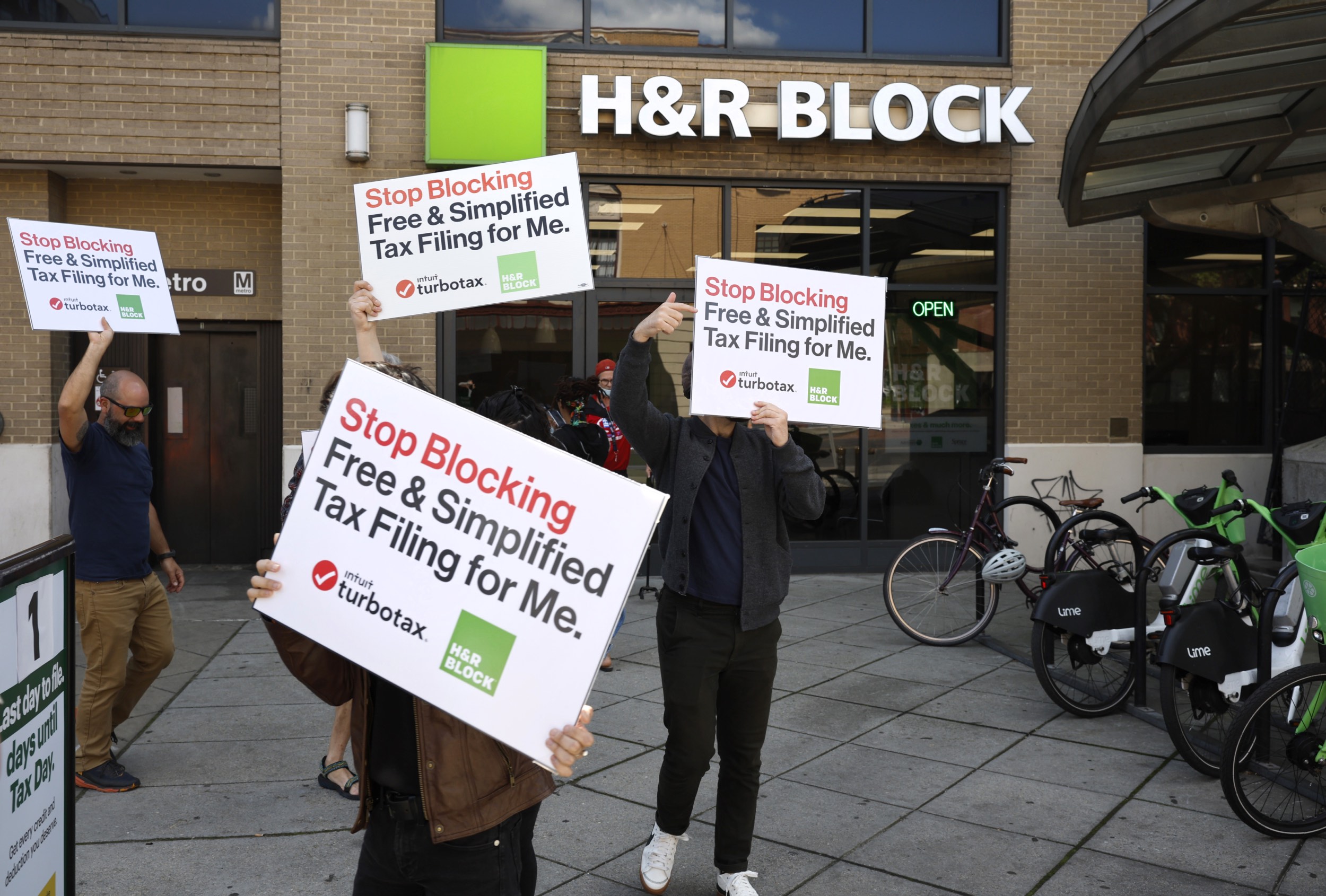
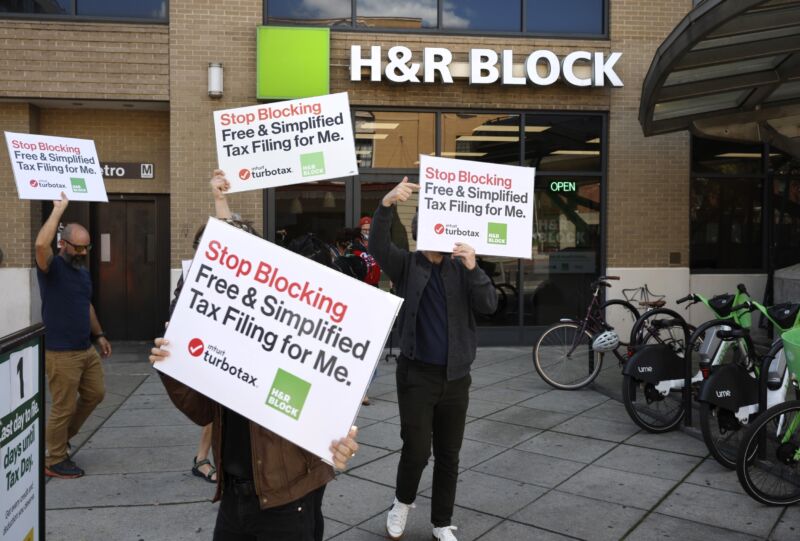
Advocates in front of an H&R Block building hold signs that tell TurboTax and H&R Block to
Enlarge / Advocates gather on April 17, 2023, in Washington, DC, to call out tax prep firms like TurboTax-maker Intuit and H&R Block, and to support the Internal Revenue Service’s exploration of free tax filing.
Getty Images | Tasos Katopodis

The Internal Revenue Service yesterday announced details for a pilot of its free filing program for the 2024 tax season. People in 13 states “may be eligible to participate in the 2024 Direct File pilot, a new service that will provide taxpayers with the choice to electronically file their federal tax return directly with the IRS for free,” the IRS said.

The pilot “will allow the IRS to identify issues and make changes prior to any potential large-scale launch in the future,” the agency said. It will assess customer support and technology needs, and help “evaluate the costs, benefits and operational challenges associated with providing a voluntary Direct File option to taxpayers.” That includes testing fraud detection and integration with state systems.

Pilot eligibility is for those with “relatively simple returns” because it “is limited by the types of income, tax credits and deductions that the product can initially support.” The IRS said it invited all 50 states, but only some are participating at first:

Arizona, California, Massachusetts and New York have decided to work with the IRS to integrate their state taxes into the Direct File pilot for filing season 2024. Taxpayers in nine other states without an income tax—Alaska, Florida, New Hampshire, Nevada, South Dakota, Tennessee, Texas, Washington and Wyoming—may also be eligible to participate in the pilot. Washington has also chosen to join the integration effort for the state’s application of the Working Families Tax Credit. All states were invited to join the pilot, but not all states were in a position to join the pilot at this time.

To ensure that the program works effectively, Direct File will initially be available only “to a small group of eligible taxpayers in filing season 2024. As the filing season progresses, more and more eligible taxpayers will be able to access the service to file their 2023 tax returns,” the IRS said.

The pilot will cover W-2 wage income, Social Security and railroad retirement income, unemployment compensation, interest of $1,500 or less, the Earned Income Tax Credit, the Child Tax Credit, and the Credit for Other Dependents. It will also cover the standard deduction and deductions for student loan interest and educator expenses.

The free Direct File pilot will be available in English and Spanish as “a mobile-friendly, interview-based service that will work as well on a mobile phone as it does on a laptop, tablet or desktop computer.”

TurboTax under fire for “free” promises

The IRS pilot is several years in the making. The agency dropped its longstanding promise not to compete against TurboTax-maker Intuit and other private companies in December 2019.

Under the previous Free File deal, the industry agreed to offer free tax services to people with low and moderate incomes. In exchange, the IRS promised not to compete against the private companies. Intuit left the Free File consortium in July 2021, while H&R Block left in 2020.

The Inflation Reduction Act of 2022 gave the IRS $15 million to study the cost of “developing and running a free direct efile tax return system.” The IRS delivered its report to Congress in May 2023 and started working on the pilot project for the 2024 tax filing season.

https://arstechnica.com/?p=1976855


Comcast should stop advertising slower speeds as “10G,” industry group says

A Comcast Xfinity logo displayed on a smartphone. A stock exchange graph is shown in the background behind the phone.
Getty Images | SOPA Images

An advertising industry group urged Comcast to stop its “10G” ads or modify them to state that 10G is an “aspirational” technology rather than something the company actually provides on its cable network today. The National Advertising Division (NAD), part of the advertising industry’s self-regulatory system run by BBB National Programs, ruled against Comcast after a challenge lodged by T-Mobile.

In its decision announced Thursday, the NAD recommended that Comcast “discontinue its ’10G’ claims” or “modify its advertising to (a) make clear that it is implementing improvements that will enable it to achieve ’10G’ and that it is aspirational or (b) use ’10G’ in a manner that is not false or misleading, consistent with this decision.”

Comcast plans to appeal the decision, so it won’t make any changes to marketing immediately. If Comcast loses the appeal and agrees to change its practices, it would affect more than just a few ads because Comcast now calls its entire broadband network “10G.”

“In February 2023, Comcast rebranded its fixed Internet network as ‘Xfinity 10G Network’ to signify technological upgrades to its network that are continuing to be implemented,” the NAD said.

Comcast’s website claims that the “Xfinity 10G Network is already here! You’ll see continual increases in network speed and reliability. No action is required on your part to join the Xfinity 10G Network.” It also claims that 10G is “complementary” to the 5G mobile network.

Confusing cable marketing

Comcast isn’t alone in its use of the 10G term, which was unveiled in January 2019 by cable industry trade group NCTA-The Internet & Television Association. We wrote at the time that 10G marketing was likely to confuse consumers and that it indicated cable companies were envious of the 5G hype generated by the wireless industry.

While 5G refers to the fifth generation of cellular services, the cable industry’s 10G term referred to the long-term goal of providing 10Gbps broadband speeds over cable wires through upgrades to DOCSIS, the Data Over Cable Service Interface Specification. The NCTA explicitly acknowledged that in its 2019 announcement, saying that 10G is all about delivering 10Gbps speeds over cable.

But if you want 10Gbps wired broadband today—especially if you want it for both uploads and downloads—you need fiber, not cable. Comcast sort of admits that on its website, acknowledging that what it calls “the Xfinity 10G Network is different from 10Gbps.” 10G, according to Comcast, is “a holistic combination of its reliability, security, power, resilience and speed.”

The NAD was not convinced by the distinctions Comcast draws between 10G and 10Gbps and between 10G and 5G. The industry group said it “concluded that ’10G’ as used in the name ‘Xfinity 10G Network’ and ‘Xfinity 10G’ is an express claim that means 10Gbps or 10th Generation.” The NAD continued:

In evaluating support for this claim, NAD found that Comcast’s description of its entire network as “10G” conveys the message that all consumers on the network will receive a significant increase in speed up to 10Gbps speeds. However, only one of Xfinity’s many plans (Gigabit Pro) can reach 10Gbps, and to access that service tier requires the installation of fiber to the premises. Further, NAD determined that the evidence in the record was insufficient to support the broad, unqualified message that the “Xfinity 10G Network” is vastly superior to 5G.

The NAD said it “concluded that Comcast did not provide a reasonable basis for its 10G claims” and recommended that Comcast discontinue or modify how it uses the marketing terms “10G,” “Xfinity 10G,” and “Xfinity 10G Network.”

Comcast disagrees with ad group

Comcast said it will file an appeal with the National Advertising Review Board because it “disagrees with NAD’s decision, including NAD’s determination that the Xfinity 10G Network brand name constitutes an ‘express claim.'” Comcast declined to provide any further comment when contacted by Ars today.

Comcast announced in June that it upgraded the Gigabit Pro fiber-to-the-home service to 10Gbps for both downloads and uploads. But a Gigabit Pro fiber connection is not available to all homes in Comcast’s cable territory, and it costs $299.95 a month plus a $19.95 modem lease fee. It also requires a $500 installation charge and a $500 activation charge.

For its asymmetrical cable service, Comcast prominently advertises download speeds but makes it difficult for customers to even figure out what upload speeds are before deciding on a plan. For many years, Comcast’s cable upload speeds topped out at 35Mbps even if you bought gigabit download speeds.

Comcast started offering cable upload speeds as high as 200Mbps late last year, but only if you bought the $25 per-month “xFi Complete” add-on that included a gateway rental. Comcast notified customers a few months ago that it was removing the xFi Complete requirement for higher uploads as long as you have a compatible Xfinity gateway or third-party modem.

It is now possible for some Comcast customers to obtain multi-gigabit upload speeds over cable, though not the 10Gbps suggested by Comcast’s 10G marketing. Last week, Comcast announced that “select neighborhoods” in a few markets are getting 2Gbps upload and download speeds over cable via DOCSIS 4.0.

https://arstechnica.com/?p=1976276


Bankman-Fried didn’t believe in rules like “don’t steal,” star witness says

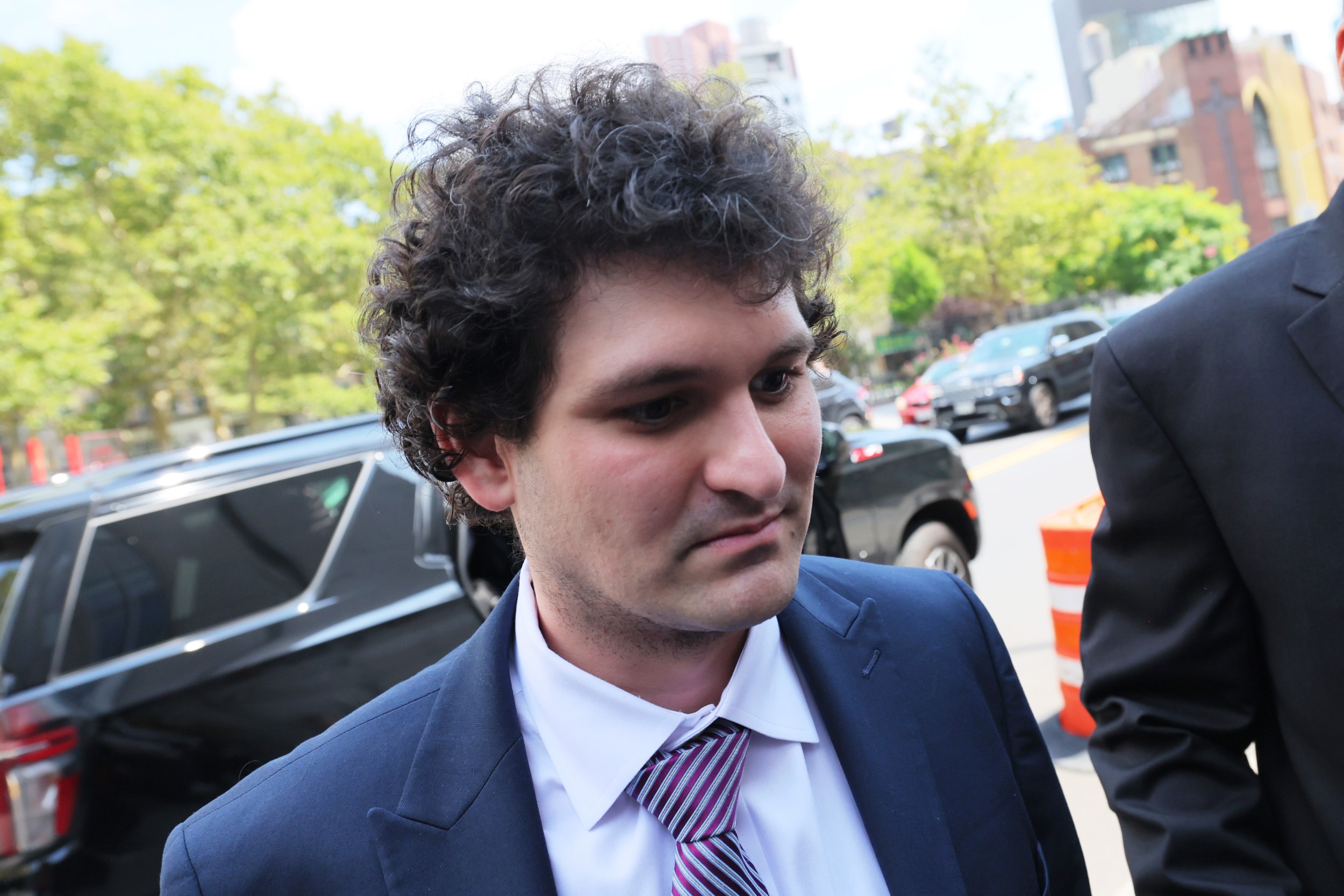
Former FTX CEO Sam Bankman-Fried walking toward a courthouse.
Enlarge / Former FTX CEO Sam Bankman-Fried arrives for a bail hearing at US District Court on August 11, 2023, in New York City.
Getty Images | Michael Santiago

Over three days of testimony in Sam Bankman-Fried’s criminal trial, Caroline Ellison provided revealing glimpses from the years in which she was SBF’s on-and-off girlfriend and one of his top executives.

Ellison’s testimony described Bankman-Fried’s belief that he could become US president, and his belief that his hair “was an important part of FTX’s narrative and image.” She offered details on a failed attempt to use prostitutes’ identities to unlock funds frozen by the Chinese government, and on Bankman-Fried’s habit of describing hypothetical coin flips in which everything—even the fate of the whole world—would be put at risk.

She also described how Bankman-Fried had a “utilitarian” philosophy in which rules like “don’t lie” and “don’t steal” did not fit into his moral framework.

Testifying at a federal court in New York, Ellison reportedly said Bankman-Fried was “very ambitious” and that he “thought there was a 5 percent chance he would become president some day.” And by “president,” he did mean president of the United States, according to a courtroom exchange reported by the Associated Press:

“When you say president, what are you referring to?” asked Assistant US Attorney Danielle Sassoon.

“Of the United States,” Ellison answered.

SBF’s money-making hair

Bankman-Fried believed that his unkempt head of hair was valuable to him and FTX financially, Ellison testified. “He said he thought his hair had been very valuable,” she said, according to The Guardian. “He said ever since Jane Street [a hedge fund they both worked at], he thought he had gotten higher bonuses because of his hair and that it was an important part of FTX’s narrative and image.”

Ellison said that Bankman-Fried tried to cultivate an image as a “smart, competent, somewhat eccentric founder,” according to Reuters. For a time he drove a company-owned luxury car in the Bahamas but switched to a Toyota Corolla. “He said he thought it was better for his image,” Ellison said.

“I would say he looked like he didn’t put a lot of effort into his personal appearance. He dressed sort of sloppily and didn’t cut his hair often,” she also said. Bankman-Fried did get a haircut before the trial began.

Bankman-Fried is facing six charges for defrauding FTX’s and Alameda’s customers and investors, and one charge for conspiracy to commit money laundering. The seven charges’ maximum sentences add up to 110 years. He faces five additional criminal charges in a separate trial scheduled for April 2024.

Ellison was CEO of Alameda Research, a crypto hedge fund and affiliate of cryptocurrency exchange FTX, but she testified that all major decisions were ultimately made by Bankman-Fried. Ellison admitted to committing fraud and said that Bankman-Fried “directed me to commit these crimes.”

FTX went bankrupt in November 2022. An indictment alleges that Bankman-Fried “misappropriated and embezzled FTX customer deposits and used billions of dollars in stolen funds… to enrich himself; to support the operations of FTX; to fund speculative venture investments; to help fund over a hundred million dollars in campaign contributions to Democrats and Republicans to seek to influence cryptocurrency regulation; and to pay for Alameda’s operating costs.” He was also accused of making “false and fraudulent statements and representations to FTX’s investors and Alameda’s lenders.”

https://arstechnica.com/?p=1976062


TSMC, Samsung seeking permanent US licenses to operate China chip plants

Aerial photo taken at night shows the TSMC plant area in Nanjing, Jiangsu province.
Enlarge / Aerial photo taken at night shows the TSMC plant area in Nanjing, Jiangsu province.

The US Commerce Department announced today that key foreign chipmakers can continue receiving critical US chipmaking tools at China-based plants, Reuters reported.

This decision extends special authorizations that were granted to foreign chipmakers—including South Korea’s SK Hynix and Samsung, as well as the Taiwan Semiconductor Manufacturing Co (TSMC)—after the Biden administration curbed shipments of advanced chips and chipmaking equipment to China last October.

Those export controls were intended to slow down China’s rapid advancement of AI and military technologies, but the new rules also negatively impacted US chip production. To overcome those inadvertent impacts on US chip supplies, the Biden administration granted limited special authorizations to allow some chipmakers to continue shipping equipment into China. Now, those chipmakers will be able to continue operating Chinese plants “without the headache of applying for US licenses,” Reuters reported.

In a separate report, TSMC—which the US depends on as a supplier of chips for AI and military defense systems, the Center for Strategic and International Studies reported in 2022—told Reuters that “it expects to receive permanent US authorization for China operations.”

According to TSMC, the US Bureau of Industry and Security advised the leading global chip supplier to apply for the first time for a “validated end-user” (VEU) authorization to ensure that TSMC always has US approvals for its China-based operations.

“We expect to receive a permanent authorization through the VEU process,” TSMC’s spokesperson told Reuters.

South Korea’s government also confirmed that Samsung Electronics and SK Hynix “will be allowed to supply US chip equipment to their China factories indefinitely without separate US approvals,” Reuters reported.

The Commerce Department’s announcement comes as the Biden administration continues to struggle to cut off China from AI chips, Reuters reported. Four people familiar with the matter told Reuters that President Joe Biden is considering expanding export controls to close “a loophole that gives Chinese companies access to American artificial intelligence (AI) chips through units located overseas,” which have proven difficult for the US to police.

Sources told Reuters that this loophole allowed “overseas subsidiaries of Chinese companies… unfettered access” to restricted semiconductors that were “easily” being “smuggled into China or accessed remotely by China-based users.”

To address this, the next round of export controls would likely be similar to controls that the Biden administration implemented in August, sources told Reuters, which restrict shipments of AI chips and chipmaking tools to some countries in the Middle East, as well as other regions outside China. However, it’s unclear if that will help the US achieve its goal of fully cutting off China from US chipmaking tools. Experts told Reuters that even these extended restrictions seem to ignore how easy it is for Chinese parties to access AI capabilities remotely through cloud providers like Amazon Web Services.

In the past year, China’s Ministry of Commerce has protested Biden’s increasingly restrictive export controls, describing them as “unreasonable suppression of Chinese companies,” Reuters reported.

https://arstechnica.com/?p=1976032


Apple AirTags stalking led to ruin and murders, lawsuit says

Apple AirTags stalking led to ruin and murders, lawsuit says

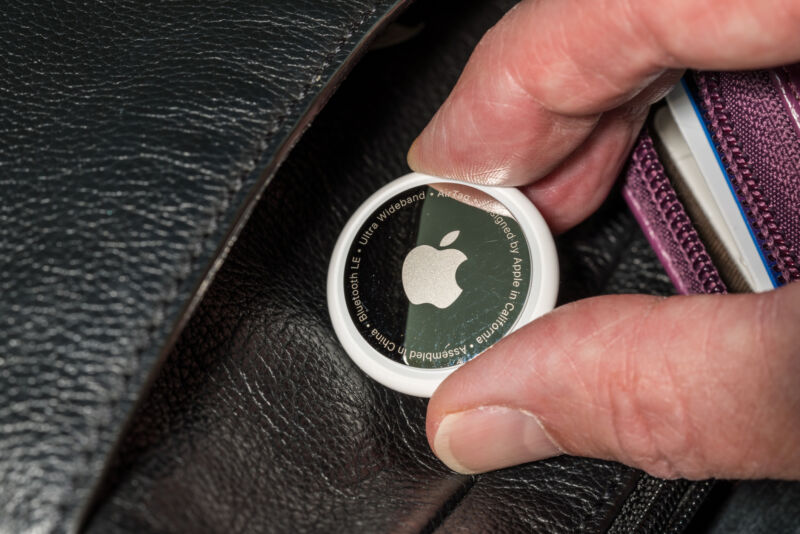
This month, more than three dozen victims allegedly terrorized by stalkers using Apple AirTags have joined a class-action lawsuit filed in a California court last December against Apple. They alleged in an amended complaint that, partly due to Apple’s negligence, AirTags have become “one of the most dangerous and frightening technologies employed by stalkers” because they can be easily, cheaply, and covertly used to determine “real-time location information to track victims.”

Since the lawsuit was initially filed in 2022, plaintiffs have alleged that there has been an “explosion of reporting” showing that AirTags are frequently being used for stalking, including a spike in international AirTags stalking cases and more than 150 police reports in the US as of April 2022. More recently, there were 19 AirTags stalking cases in one US metropolitan area—Tulsa, Oklahoma—alone, the complaint said.

This seeming escalation is concerning, plaintiffs say, because Apple allegedly has not done enough to mitigate harms, and AirTags stalking can lead to financial ruin, as victims bear significant costs like hiring mechanics to strip their cars to locate AirTags or repeatedly relocating their homes. AirTags stalking can also end in violence, including murder, plaintiffs alleged, and the problem is likely bigger than anyone knows, because stalking is historically underreported.

“Consequences have been as severe as possible: multiple murders have occurred in which the murderer used an AirTag to track the victim,” their complaint alleged. One plaintiff from Indiana, LaPrecia Sanders, lost her son after his girlfriend allegedly used an AirTag to track his movements and then “followed him to a bar and ran him over with her car, killing him at the scene.”

Most of the plaintiffs reside in the US, alleging significant costs and harms incurred from alleged AirTags stalking in 20 states. Two plaintiffs reside in Canada—including a recent high school graduate—and one plaintiff currently lives in Ireland. Many report that stalkers using AirTags are abusive partners or exes—hiding AirTags in linings of purses, car wheel wells, or even stitched inside a child’s teddy bear—but others report being stalked by a “mystery person” with unknown motives.

According to their complaint, tracker technologies like AirTags—which are designed to help people locate lost or stolen items—”allow stalkers to follow their victims’ movements in real time and to undo any attempt on the part of the victim to evade or hide from the stalker.” Plaintiffs claimed that AirTags are among products that have “revolutionized the scope, breadth, and ease of location-based stalking” because every Apple device is part of the company’s expansive tracking network that’s being abused by stalkers.

“What separates the AirTag from any competitor product is its unparalleled accuracy, ease of use (it fits seamlessly into Apple’s existing suite of products), and affordability,” their complaint said. “With a price point of just $29, it has become the weapon of choice of stalkers and abusers.”

Victims suing alleged that Apple knew that AirTags could be used by stalkers but advertised them as “stalker-proof” anyway. Then, when its “stalker-proof” protections were “exposed as totally inadequate,” Apple had to scramble for the past two and a half years to “address its failures in protecting people from unwanted, dangerous tracking,” their complaint said.

Despite Apple’s steps to enhance safety features—including adding iOS alerts when AirTags are nearby, chimes installed in AirTags that help victims detect and locate hidden AirTags, and an app called “Tracker Detect” that victims with Android phones can use to scan for AirTags—plaintiffs have alleged that AirTags remain dangerous.

One plaintiff, Georgia resident Brittany Alowonle, reported that she and her daughter were being stalked by someone using AirTags within the past two weeks “without knowing by whom or why.” Although she cannot locate the AirTags, she receives daily alerts from Apple and chimes from the AirTags that confirm that the AirTags are still there. These chimes, to Alowonle, only signal that she’s being perpetually watched.

“Every day, I am reminded that me and my daughter are not safe,” Alowonle said in the complaint, which noted, “if one’s location is constantly being transmitted to an abuser, there is no place to run.”

One Irish national, Àine O’Neill, had been living in California while launching a Hollywood career that was just taking off when she found AirTags inexplicably being used to monitor her every move. She gave up her career and moved back to Ireland, feeling that she had “no way of revealing the identity of her stalker or properly gauging the level of danger she was in.”

“While she is now 5,157 miles away from her unknown stalker, she is that same distance away from her lifelong dream,” the complaint said.

Victims have alleged that Apple’s acts and practices violate federal and state laws, claiming that Apple negligently released a defective product and was unjustly enriched while invading the privacy of every victim unwittingly being tracked on its expansive network of devices. They’ve asked the court to award damages to all persons in the US who own iOS or Android devices, which includes classes of users who were stalked, as well as those who were allegedly at risk of stalking. They also seek a court order “enjoining Apple from further unlawful, unfair, and/or fraudulent practices with respect to the design, manufacture, and release into the market of its AirTags.”

Apple did not respond to Ars’ request to comment. Court filings show that Apple is expected to move to dismiss the lawsuit by October 27, when the company is required to respond to the amended complaint.

https://arstechnica.com/?p=1975778


Microsoft disputes $29B tax bill after “one of the largest” audits in IRS history

A building on the Microsoft Headquarters campus is pictured July 17, 2014 in Redmond, Washington.

On Wednesday, Microsoft revealed in a Securities and Exchange Commission filing and blog post that the Internal Revenue Service says the company owes the US Treasury $28.9 billion in back taxes, plus penalties and interest, reports the Associated Press. The claim comes as a result of a lengthy IRS audit that examined how Microsoft distributed its profits across different countries from 2004 to 2013. Microsoft disagrees with the IRS’s claim and intends to appeal the decision.

According to the AP, the ongoing IRS probe began in 2007 and is described as “one of the largest in the Service’s history” in court documents released last year. Recently, Microsoft received notification that the audit phase has concluded, triggering the next steps for settling the dispute. At the core of the IRS investigation is the practice known as “transfer pricing,” which some critics argue allows companies to report lower profits in countries with higher taxes and vice versa, minimizing their overall tax obligations.

Microsoft maintains that it has complied with IRS rules all along and will proceed to appeal the agency’s decision—a process expected to last for years. Here’s how the company described the episode in Section 8.01 of its SEC filing:

On October 11, 2023, Microsoft Corporation announced the receipt of Notices of Proposed Adjustment (“NOPAs”) from the Internal Revenue Service (the “IRS”) for the tax years 2004 to 2013. The NOPAs were received on September 26, 2023. The primary issues in the NOPAs relate to intercompany transfer pricing. In the NOPAs, the IRS is seeking an additional tax payment of $28.9 billion plus penalties and interest. As of September 30, 2023, we believe our allowances for income tax contingencies are adequate. We disagree with the proposed adjustments and will vigorously contest the NOPAs through the IRS’s administrative appeals office and, if necessary, judicial proceedings. We do not expect a final resolution of these issues in the next 12 months. Based on the information currently available, we do not anticipate a significant increase or decrease to our tax contingencies for these issues within the next 12 months.

Per the Associated Press, part of the longstanding IRS inquiry focused on a manufacturing facility that Microsoft established in Puerto Rico in 2005. According to the IRS, Microsoft employed accounting firm KPMG to create a cost-sharing arrangement with its Puerto Rican affiliate, which effectively shifted taxable revenue out of the US. The IRS also examined other Microsoft affiliates, including one connected to retail sales in Asia.

In a Microsoft blog post on Wednesday, Microsoft’s corporate vice president for worldwide tax and customs, Daniel Goff, acknowledged that Microsoft has since changed its corporate structure and practices but defended the use of cost-sharing arrangements. According to Goff, since Microsoft’s subsidiaries shared the costs of developing some intellectual property, they were also entitled to a share of the related profits. Goff added that the sum the IRS is seeking could potentially be reduced by up to $10 billion due to taxes already paid under a 2017 tax law called the Tax Cuts and Jobs Act (TCJA) signed by then-President Trump.

As Microsoft detailed in its SEC filing listed above, the firm says it will “vigorously contest” the Notices of Proposed Adjustment (NOPAs) through administrative appeals and judicial proceedings if necessary. Microsoft doesn’t expect a final decision about its tax dispute to come within the next year, and it also doesn’t foresee the amount it has set aside for possible future tax bills changing significantly during that time.

If forced to pay the nearly $29 billion in back taxes plus penalties, Microsoft would likely be able to come up with the money. As of June 2023, the firm had saved over $111 billion in cash equivalents that it keeps on hand. The corporation reported annual revenue of $211.9 billion in 2023.

https://arstechnica.com/?p=1975702


T-Mobile switches users to pricier plans and tells them it’s not a price hike

The T-Mobile logo on the doors of a T-Mobile store.
Enlarge / A T-Mobile store on April 3, 2020, in Zutphen, Netherlands.

T-Mobile is moving people to newer, more expensive plans starting with the November bill cycle unless customers call the company to opt out, according to multiple reports.

The forced migration surfaced on Reddit two days ago and was confirmed by The Mobile Report, which published portions of leaked documents indicating how the plan changes will be implemented. T-Mobile also confirmed the change to CNET, telling the news site that “there will be an increase of approximately $10 per line with the migration.”

“We’re always looking for ways to give our customers more from our services so we’re moving a small number who were on older rate plans to newer plans that will deliver them enhanced features,” T-Mobile told CNET.

The Mobile Report article said that users “can contact support upon notification of the pending changes and, after listening to a pitch on why they should migrate anyway, be allowed to opt out of the migration.” Consumers will be moved to plans such as Go5G or Essentials, depending on what they have now.

Users who want to keep their current plan should call T-Mobile after receiving the notification that will be sent starting on Tuesday next week.

T-Mobile: It’s not a price hike, just “a different cost”

The leaked documents show what customer service reps are being trained to tell users. Instead of saying the price is going up, reps will say, “We are not raising the price of any of our plans; we are moving you to a newer plan with more benefits at a different cost.” That’s the talking point customer service reps are supposed to use if a customer mentions that they saw commercials “about how T-Mobile won’t raise the price of my plan.”

Customers will be switched to a newer plan if they’re on any of the following packages offered in previous years: Simple Choice/Select Choice, Magenta, Magenta 55, ONE Plan, and Simple Choice Business.

Something a bit strange is going on with the Magenta plan. A T-Mobile document shown in The Mobile Report’s article says that Magenta customers will be migrated to Go5G. But it also says that some Simple Choice and Select Choice customers will be migrated to Magenta. T-Mobile’s list of current plans includes Magenta, so it isn’t clear why anyone with that plan would be automatically migrated.

In 2015, then-CEO John Legere unveiled the “Un-Contract” in which Simple Choice customers could keep their plans at the same price “for as long as you’re a customer.” T-Mobile currently has a “price lock” but only for customers on certain plans who activated their accounts after April 28, 2022.

Customers who activated accounts before April 28, 2022, had the Un-Contract guarantee, which no longer guarantees that rates won’t be raised. T-Mobile’s price lock page says, “we have committed to pay your final month’s recurring service charge if we were to raise prices and you choose to leave. Just let us know within 60 days.”

T-Mobile’s current plans range from $60 to $100 a month for a single line or $5 more if you don’t enroll in the AutoPay discount. T-Mobile recently started requiring a debit card or linked bank account to get the AutoPay discount, which may be concerning to users because of the company’s history of data breaches and leaks.

$5 or $10 per-line increases

One of the leaked documents says that customers will see $5 or $10 per-line monthly increases depending on which plan they have now. The document says the increase can be offset with the $5 AutoPay discount, but that discount has been available for years.

Customers whose plans are set to change should receive notifications via email and SMS starting October 17, though a document said that “timing will vary depending on the customer’s bill cycle.” The notifications will “include a link to a landing page with plan details and an option to call Care to opt out of this plan migration,” the document said.

It will be possible to move back to an old plan for at least a little while, even if customers don’t opt out in time. A document that describes a few customer service scenarios tells reps how to respond if a user says, “I just got my new bill, and you changed my plan without telling me.”

Reps are supposed to tell customers, “We recently notified you of a change to your plan,” and that if the plan “doesn’t suit your needs, I can help you with the opt out request to keep your current plan.”

We contacted T-Mobile today and will update this article if we get more details.

T-Mobile was once a smaller wireless company fighting behemoths AT&T and Verizon but is now one of three major national carriers after acquiring Sprint in 2020. Critics of the merger predicted it would result in higher prices.

On Reddit, T-Mobile users called the change a “shady” and “money-grubbing” move. “We are slowly turning into the Canada wireless industry with high prices everywhere,” one person wrote. Another wrote, “How long until they just force you off without a choice? 1 year? 2? Pulling a VZW/ATT seems inevitable at this point.”

https://arstechnica.com/?p=1975700


SBF’s ex-girlfriend Ellison testifies: “He directed me to commit these crimes”

Caroline Ellison walks toward a courthouse wearing a baseball cap and carrying a thermos.
Enlarge / Caroline Ellison, former CEO of Alameda Research, arrives at court in New York on Tuesday, Oct. 10, 2023.
Getty Images | Bloomberg

Caroline Ellison, the former Alameda Research CEO who dated Sam Bankman-Fried, testified against her former partner today in his criminal trial. “In the trial’s second week, Ellison said she committed fraud, conspiracy to commit fraud and money laundering along with Bankman-Fried and others,” the Associated Press reported.

“He was originally the CEO of Alameda and the owner of Alameda and he directed me to commit these crimes,” Ellison said today, according to a Bloomberg article. She added that “Alameda took several billion dollars from FTX customers and used it for its own investments” and to pay off lenders.

Ellison’s testimony began shortly before the court took a break for a lunch. The trial is in US District Court for the Southern District of New York, located in Manhattan.

According to a New York Times article, Ellison “testified that [Bankman-Fried] instructed her to draw from FTX customer funds to finance venture investments and loan repayments by Alameda Research, a crypto hedge fund that she oversaw for him. She said Alameda took around $14 billion, only some of which it was able to repay.”

Bankman-Fried is accused of defrauding customers and lenders while operating the cryptocurrency exchange FTX and its affiliate Alameda. Ellison pleaded guilty to fraud and money laundering charges and agreed to cooperate with prosecutors.

SBF imagined coin flip that could end the world

The AP report said Ellison testified that she met Bankman-Fried “at Jane Street, a hedge fund, where she worked as an intern before joining his company after he formed Alameda Research in 2017.” She also said they “dated a couple years.”

“The whole time that we were dating, he was also my boss at work, which created some awkward situations,” she testified, according to The Wall Street Journal. Describing Bankman-Fried’s attitude toward risk-taking, “Ellison recalled on the witness stand how Bankman-Fried once spoke of a coin-flip scenario where if the coin landed on tails, the world would end. But if the coin landed on heads, ‘the world would be twice as good.’ Bankman-Fried [said] he would take the bet if there were a chance of making the world better, Ellison said.”

Several news reports remarked on Ellison taking a little while to point out Bankman-Fried in court. “When she was asked to identify Bankman-Fried in the courtroom, Ellison stood at the witness stand as she scanned the courtroom for a long minute, at first unable to find him, before gesturing his way with a flip of her hand and saying he was ‘over there wearing a suit,'” the AP story said.

Ellison testified that Bankman-Fried thought there was a “5 percent chance he would become president,” according to ABC News. She was also quoted by ABC News as saying that she and Bankman-Fried “started sleeping together on and off” in 2018 and that they dated on and off in subsequent years. The romantic relationship ended for good in 2022, she testified.

https://arstechnica.com/?p=1974981


Facebook’s sexist, ageist ad-targeting violates Calif. law, court finds

Facebook’s sexist, ageist ad-targeting violates Calif. law, court finds

Facebook may have to overhaul its entire ad-targeting system after a California court ruled last month that the platform’s practice of routinely targeting ads by age, gender, and other protected categories violates a state anti-discrimination law.

The decision came after a 48-year-old Facebook user, Samantha Liapes, fought for years to prove that Facebook had discriminated against her as an older woman using the platform’s ad-targeting system to shop for life insurance policies.

Liapes filed a class-action lawsuit against Facebook in 2020. In her complaint, Liapes alleged that “Facebook requires all advertisers to choose the age and gender of its users who will receive ads, and companies offering insurance products routinely tell it to not send their ads to women or older people.” Further, she alleged that Facebook’s ad-delivery algorithm magnifies the problem by using these required inputs to serve the ads to “lookalike audiences.” Through its algorithm, Liapes alleged that she found that Facebook “discriminates against women and older people,” by intentionally excluding them from seeing certain life insurance ads.

This, Liapes alleged, caused harm by preventing her from signing up for deals that “often change and may expire”—deals which she said were disproportionately being advertised on Facebook to younger and/or male audiences. As evidence, Liapes pointed to ads that Facebook did not serve to her—allegedly because advertisers used the platform’s Audience Selection and Lookalike Audience tools to exclude her—as an older woman:

Liapes identified a life insurance ad that was only sent to males ages 30 to 49 because the advertiser used the Audience Selection tool. In another instance, a life insurance ad was not shown to her because it was only sent to people ages 25 to 45—based on the advertiser’s use of the Audience Selection tool—and because the advertiser wanted to reach people similar to its customers—based on the advertiser’s use of the Lookalike Audience tool.

“As a result, she had a harder time learning about those products or services,” Liapes’ complaint alleged.

Facebook argued that its tools are neutral and claimed that Liapes’ complaint omitted evidence showing all the ads that she was served—suggesting that Liapes may have been shown different versions of ads that she claimed the platform had excluded her from seeing. Facebook also claimed it was possible Liapes was shown ads advertising better deals, negating any harm caused. But the court in September disagreed with Facebook’s arguments, finding that Liapes sufficiently stated a valid discrimination claim.

Liapes had asked the court to find that Facebook’s tools violate California’s Unruh Civil Rights Act, which prohibits “businesses from discriminating against people with protected characteristics, such as gender and age.” The law “is intended to eradicate arbitrary, invidious discrimination in business establishments” by “protecting each person’s inherent right to ‘full and equal’ access to ‘all business establishments,'” the court’s ruling said.

“Construing the complaint liberally and drawing all reasonable inferences in favor of the asserted claims, Liapes has stated an Unruh Civil Rights Act claim,” the court ruled. “Facebook qualifies as a business establishment. And it does not dispute women and older people were categorically excluded from receiving various insurance ads—an admitted service of Facebook—on its platform.”

Liapes’ lawyer and Facebook did not immediately respond to Ars’ request to comment.

https://arstechnica.com/?p=1974917