Amazon’s Project Kuiper satellites add to astronomers’ light-pollution woes

satellite streaks
Alan Dyer/Getty Images

Amazon is set to launch two satellite prototypes for its Project Kuiper network, which will eventually number more than 3,200 orbiters. Project Kuiper could become a rival to SpaceX’s Starlink constellation, which is now nearly 4,800 strong. Amazon’s launch is planned for 2 pm Eastern time today, with a backup launch window tomorrow. This rapid growth of the satellite industry has come at a cost for astronomers and fans of the night sky, as two new studies and panels at an international astronomy conference stressed this week.

All spacecraft in low-Earth orbit reflect sunlight, and some glint enough to be visible to the naked eye—artificial constellations that compete with stellar ones. Satellites can cause problems for astronomers when they streak across images, interfere with radio observations, or make hard-earned data less scientifically useful. By one estimate, there could be some 100,000 satellites swarming the skies in the 2030s. While scientists are mainly concerned about this aggregate effect, some individual satellites are very bright indeed. A study published in the journal Nature this week shows that a prototype of AST SpaceMobile’s BlueBird swarm has become one of the brightest objects in the heavens. Another study documents how even deliberately darkened satellites are still twice as bright—if not more—than the limit astronomers have called for to minimize effects on space science.

Such concerns prompted a major conference this week, organized by the International Astronomical Union’s Centre for the Protection of the Dark and Quiet Sky from Satellite Constellation Interference, known as CPS. It’s being held in the Canary Islands, where there are several observatories. It’s the first in-person meeting of its kind, bringing together scores of astronomers, as well as satellite industry representatives, advocates of Indigenous and environmental perspectives, and policy experts.

“We’re on the cusp of a new era with a crowded, large zoo of satellites. Having a bunch of bright satellites in the sky will be very disruptive to astronomy,” says Aparna Venkatesan, an astrophysicist at the University of San Francisco who spoke at the meeting about environmental and cultural views of the night sky. She coauthored an earlier study about how satellite proliferation boosts the risks of collisions in low-Earth orbit and increases the amount of space junk. The CPS meeting was delayed multiple times because of COVID and a volcano eruption, so it’s long overdue, Venkatesan says. “But in a way, waiting has been a gift, because the astronomers and modelers and data takers have been able to organize.”

The United Launch Alliance Atlas V rocket is transported from the Vertical Integration Facility to Space Launch Complex-41 at Cape Canaveral, Florida, in preparation to launch Amazon's Project Kuiper Protoflight mission.
Enlarge / The United Launch Alliance Atlas V rocket is transported from the Vertical Integration Facility to Space Launch Complex-41 at Cape Canaveral, Florida, in preparation to launch Amazon’s Project Kuiper Protoflight mission.
United Launch Alliance

Astronomers are concerned that bright satellites can photobomb images and interfere with radio receivers, degrading astronomical data. A team working on the Vera Rubin Observatory in the Chilean Andes, which will become one of the most powerful telescopes on Earth when it opens next year, has proposed a brightness limit of apparent magnitude 7. (Apparent magnitudes describe how bright something appears on Earth, not its absolute brightness. A distant galaxy can have a fainter magnitude than a nearby star or a much closer satellite.) But most members of satellite constellations glow much brighter than that, at least part of the time.

Satellite networks also create a diffuse light in the night sky, even from orbiters that aren’t individually visible. That light will only brighten if satellites collide, creating reflective bits of flying junk that can’t be masked in images. Starlink satellites have been involved in many near misses, including flying near China’s Tiangong space station.

While ground telescopes are the most impaired, a few space telescopes, especially Hubble, have been affected too. Since Hubble orbits slightly below some networks of satellites, a small but increasing percentage of its images have streaks in them.

The conference organizers emphasize that astronomers generally don’t oppose satellite constellations, which can deliver broadband access, navigation, and other important services. “The potential benefits to humanity are great, but so are the associated concerns. Creative solutions and technological innovation are needed to confront and solve these problems,” the conference’s website states. But the attendees are struggling to address interference thanks to satellites’ growing numbers. “From the astronomy point of view, there’s nothing we can do to stop this. It’s time to mitigate the effects and reduce the impacts,” says Mike Peel, an astronomer at the Instituto de Astrofísica de Canarias, who co-leads the CPS’s group focused on adapting observation strategies.

https://arstechnica.com/?p=1974159


4chan users manipulate AI tools to unleash torrent of racist images

4chan users manipulate AI tools to unleash torrent of racist images
Aurich Lawson | Getty Images

Despite leading AI companies’ attempts to block users from turning AI image generators into engines of racist content, many 4chan users are still turning to these tools to “quickly flood the Internet with racist garbage,” 404 Media reported.

404 Media uncovered one 4chan thread where users recommended various AI tools, including Stable Diffusion and DALL-E, but specifically linked to Bing AI’s text-to-image generator (which is powered by DALL-E 3) as a “quick method.” After finding the right tool—which could also be a more old-school photo-editing tool like Photoshop—users are instructed to add incendiary captions and share the images on social media to create a blitz of racist images online.

Make captions “funny, provocative,” the thread instructs users. Use “redpilling message (Jews involved in 9/11)” that are “easy to understand.”

404 Media cited examples used in a visual guide posted in the 4chan thread that is hosted by Imgur. One featured an “image that shows a crying Pepe the frog with a needle next to its arm and a gun pointed to his head,” where the guide suggested the caption, “vaccines enforced by violence.” Another generated an image of “two Black men with gold chains chasing a white woman,” recommending that the user add a “redpilling message.”

Perhaps because Bing AI’s tool has seemingly been deemed the quickest method, it’s potentially become the most popular tool in the thread. 404 Media concluded that—”judging by the images’ default square format, the uniform 1024 x 1024 resolution”—”most of the images in the thread appear to be generated with Bing,” then spread on social media platforms, including Telegram, X (formerly Twitter), and Instagram.

Makers of the AI image generators seemingly favored by 4chan users, including Microsoft and Stability AI, did not immediately respond to Ars’ request to comment on efforts to block methods 404 Media said were used to circumvent filters. An OpenAI spokesperson told Ars that the company prioritizes safety and has taken steps to limit DALL-E outputs, including efforts to limit tools from generating harmful content or images for requests that ask for a public figure by name. OpenAI’s spokesperson also confirmed that Microsoft implements its own safeguards for DALL-E 3.

In one of 404 Media’s tests attempting to replicate one of the examples from the 4chan thread’s visual guide, 404 Media found that Bing rejected the prompt “two angry Black men chasing a white woman,” but accepted “photorealistic two angry Black rappers chasing woman.”

Much of the earliest reporting on AI image generators criticized racist and sexist biases in image generators’ algorithms, with AI makers quickly vowing to detect and eliminate those biases. When Vice discovered that DALL-E could be used to generate “predictably racist and sexist results” during a limited research release of the AI tool, an OpenAI spokesperson told Motherboard that the company had implemented safeguards for the DALL-E system that would be fine-tuned in the future.

“Our team built in mitigations to prevent harmful outputs, curating the pretraining data, developing filters, and implementing both human- and automated monitoring of generated images,” OpenAI’s spokesperson told Vice in 2022. “Moving forward, we’re working to measure how our models might pick up biases in the training data and explore how tools like fine-tuning and our Alignment techniques may be able to help address particular biases, among other areas of research in this space.”

404 Media’s report shows what can happen when racists manipulate an already biased algorithm. The results can be a torrent of offensive images unleashed online—perhaps more quickly generated by AI than ever before and potentially allowing 4chan’s darkest content to spill out more often onto the most popular platforms.

It’s unclear how AI leaders like Microsoft and OpenAI will respond, but according to 404 Media, “this means we are currently getting the worst of both worlds from Bing, an AI tool that will refuse to generate a nipple but is supercharging 4chan racists.”

This story has been updated to include comment from OpenAI’s spokesperson.

https://arstechnica.com/?p=1973737


Report: Amazon made $1B with secret algorithm for spiking prices Internet-wide

Report: Amazon made $1B with secret algorithm for spiking prices Internet-wide

Last week, the Federal Trade Commission sued Amazon, alleging that the online retailer was illegally maintaining a monopoly. Much of the FTC’s complaint against Amazon was redacted, but The Wall Street Journal yesterday revealed key details obscured in the complaint regarding a secret algorithm. The FTC alleged that Amazon once used the algorithm to raise prices across the most popular online shopping destinations.

People familiar with the FTC’s allegations in the complaint told the Journal that it all started when Amazon developed an algorithm code-named “Project Nessie.” It allegedly works by manipulating rivals’ weaker pricing algorithms and locking competitors into higher prices. The controversial algorithm was allegedly used for years and helped Amazon to “improve its profits on items across shopping categories” and “led competitors to raise their prices and charge customers more,” the WSJ reported.

The FTC’s complaint said:

Amazon uses its extensive surveillance network to block price competition by detecting and deterring discounting, artificially inflating prices on and off Amazon, and depriving rivals of the ability to gain scale by offering lower prices.

The FTC complaint redacted this information, but sources told the WSJ that Amazon made “more than $1 billion in revenue” by using Project Nessie, while competitors learned that “price cuts do not result in greater market share or scale, only lower margins,” the FTC’s complaint said.

“As a result, Amazon has successfully taught its rivals that lower prices are unlikely to result in increased sales—the opposite of what should happen in a well-functioning market,” the FTC alleged.

Amazon stopped using the algorithm in 2019—for no clear reason, sources told the WSJ.

FTC spokesman Douglas Farrar told the WSJ that the agency wants more public access to redacted information in the complaint and continues to “call on Amazon to move swiftly to remove the redactions and allow the American public to see the full scope of what we allege are their illegal monopolistic practices.”

Amazon’s spokesperson Tim Doyle told Ars that “the FTC’s allegations grossly mischaracterize this tool.”

“‘Project Nessie’ was a project with a simple purpose—to try to stop our price matching from resulting in unusual outcomes where prices became so low that they were unsustainable,” Doyle said. “The project ran for a few years on a subset of products, but didn’t work as intended, so we scrapped it several years ago.”

In a blog responding to the FTC’s lawsuit, David Zapolsky—Amazon’s senior vice president of global public policy and general counsel—wrote that the FTC fundamentally misunderstands how retail markets work. Zapolsky said that “matching low prices offered by other retailers” has not “somehow” led “to higher prices.”

“That’s not how competition works,” Zapolsky wrote. “The FTC has it backwards and if they were successful in this lawsuit, the result would be anticompetitive and anti-consumer because we’d have to stop many of the things we do to offer and highlight low prices—a perverse result that would be directly opposed to the goals of antitrust law.

According to the FTC’s complaint, “Amazon recognizes the importance of maintaining the perception that it has lower prices than competitors,” but that Amazon designed Project Nessie specifically “to deter other online stores from offering lower prices than those of Amazon.”

In a press release, the FTC confirmed that it intends to prove that Amazon is “stifling competition on price,” among other alleged consumer harms.

“Amazon’s far-reaching schemes impact hundreds of billions of dollars in retail sales every year, touch hundreds of thousands of products sold by businesses big and small, and affect over a hundred million shoppers,” the FTC’s press release said.

“Seldom in the history of US antitrust law has one case had the potential to do so much good for so many people,” John Newman, the deputy director of the FTC’s Bureau of Competition, said.

https://arstechnica.com/?p=1973347


Sam Bankman-Fried lawyer complains US portrays him as “cartoon villain”

Courtroom sketch
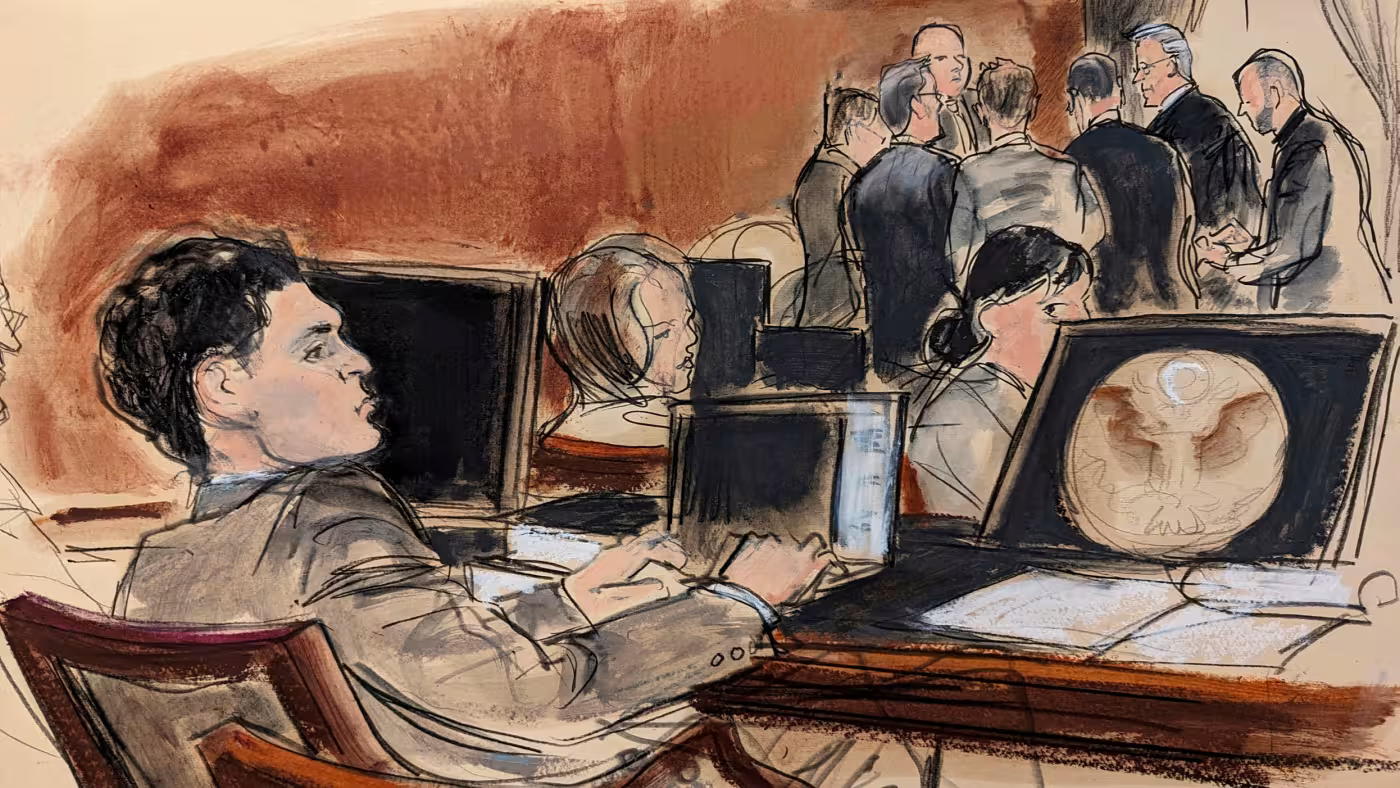
Enlarge / A courtroom sketch of Sam Bankman-Fried in Manhattan federal court on Wednesday.

Sam Bankman-Fried has been painted as a “cartoon villain” by prosecutors whose case depends largely on hindsight, the former crypto tycoon’s lawyers told a Manhattan jury on Wednesday as they laid out their defense at the start of the hotly anticipated criminal trial.

In opening arguments earlier on Wednesday, US prosecutors had accused Bankman-Fried of committing “fraud on a massive scale,” lying to investors, lenders and customers of his FTX cryptocurrency exchanges.

“This man stole billions of dollars from thousands of people,” assistant US attorney Thane Rehn told jurors, pointing forcefully at Bankman-Fried, who sat impassively at the defense table.

Bankman-Fried used the proceeds of a crypto empire “built on lies” to buy lavish houses and court celebrities such as Tom Brady, as well as politicians including former Democratic president Bill Clinton, Rehn said.

But Mark Cohen, a lawyer for Bankman-Fried, responded in a soft-spoken opening that his client — whom he addressed as “Sam” — was the victim of a “hindsight case” and had acted in good faith.

“He was a math nerd who didn’t drink or party,” Cohen told the jury. “Taking something out of context and in hindsight and calling it improper is not proof beyond a reasonable doubt.”

The dueling statements kicked off what is expected to be a six-week trial to decide the fate of the 31-year-old former billionaire, who was until last year one of the leading figures in the freewheeling world of cryptocurrency trading.

Bankman-Fried, who sat in court wearing a gray suit, has formally denied the charges and maintained his innocence in numerous media interviews given before he was jailed in August for allegedly attempting to intimidate witnesses. Prosecutors confirmed on Tuesday that they had not at any time offered Bankman-Fried a plea deal.

His parents, law professors Joe Bankman and Barbara Fried, stared at the floor in the packed courtroom as the government laid out the case against their son.

The prosecutors’ case rests heavily on the testimony of three central witnesses, former lieutenants to Bankman-Fried who agreed to cooperate with the government and are expected to take the stand in the coming days.

Rehn told the jury the witnesses “will give you an insider view of how the defendant’s crimes occurred.” He said Bankman-Fried used his former “girlfriend” Caroline Ellison—the chief executive of FTX’s sister firm, crypto hedge fund Alameda—“as a front” to help conceal his control of the company.

The trial will hinge on the credibility of these witnesses. “Be careful as you hear from them,” Cohen told the jurors, saying their hopes of receiving lighter sentences gave them an incentive to confirm the government’s story.

Cohen said Bankman-Fried had urged Ellison to hedge Alameda’s risky cryptocurrency investments in early 2022, but she did not, worsening the financial crunch when crypto prices collapsed later in the year.

“He relied on her and he trusted her,” Cohen said. As a busy chief executive, Bankman-Fried “could [not] be everywhere and do everything.”

Ellison is expected to take the stand in the coming days. Prosecutors said they will also call FTX investors to testify, as well as customers who suffered from the company’s bankruptcy.

A who’s who of top Silicon Valley and Wall Street investors backed FTX with about $1.8 billion before its collapse. The government’s opening included screenshots of tweets in which Bankman-Fried reassured FTX customers that their money was safe, and referred to congressional testimony that will be introduced as evidence.

The case is being heard by a jury of 12 members and six alternates, whittled down from a group of almost 50. The judge quizzed would-be jurors on their experiences with cryptocurrencies and prior knowledge of the case. The selected jury comprises three men and nine women, including a social worker, a high school librarian and a retired corrections officer.

Judge Lewis Kaplan asked the jurors if they had watched a Sunday interview with author Michael Lewis, who had shadowed Bankman-Fried for months before and during his fall from grace for his latest book, which was published on Tuesday. Lewis, who said FTX had “a great real business” told CBS News the book was intended to be a “kind of letter to the jury.”

© 2023 The Financial Times Ltd. All rights reserved. Not to be redistributed, copied, or modified in any way.

https://arstechnica.com/?p=1973356


Google’s claim that search users have choice is “bogus,” Microsoft CEO tells judge

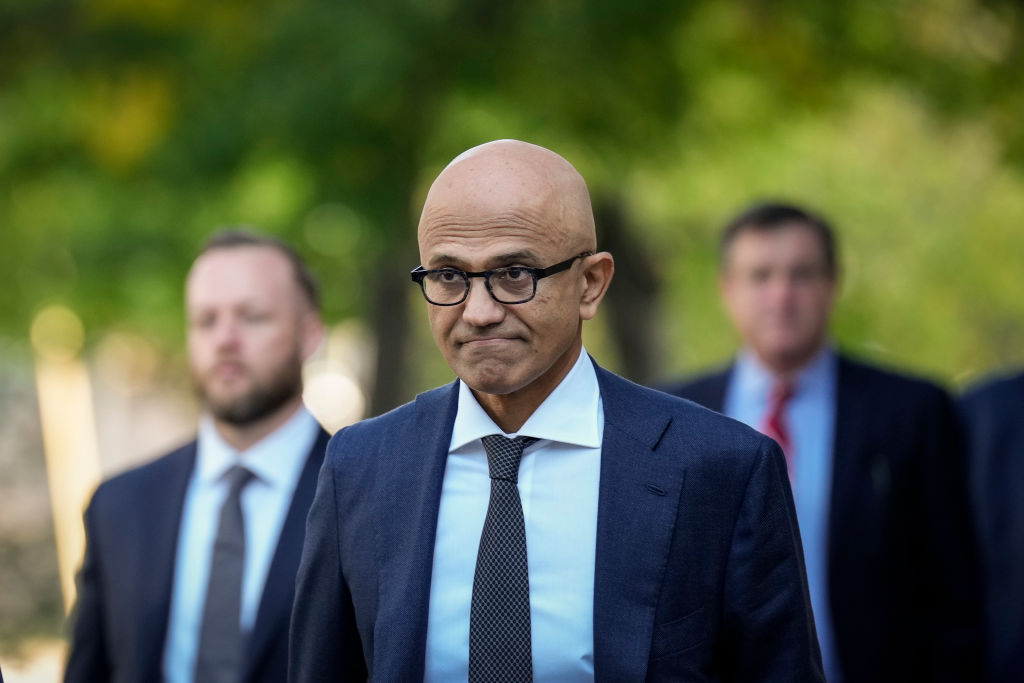
Microsoft CEO Satya Nadella arrives at federal court on October 2, 2023 in Washington, DC. Nadella is testifying in the antitrust trial to determine if Alphabet Inc.'s Google maintains a monopoly in the online search business.
Enlarge / Microsoft CEO Satya Nadella arrives at federal court on October 2, 2023 in Washington, DC. Nadella is testifying in the antitrust trial to determine if Alphabet Inc.’s Google maintains a monopoly in the online search business.

On Monday, Microsoft CEO Satya Nadella showed up at the Google antitrust trial to back the Department of Justice’s argument that “Google used unfair tactics”—most significantly, default search contracts—to block opportunities for search competitors like Bing, The Wall Street Journal reported.

A Microsoft spokesperson provided Ars with a transcript of Nadella’s morning testimony. It excludes approximately an hour’s worth of testimony from the afternoon session (that transcript is not yet available). But it includes about an hour of questioning from DOJ lawyer Adam Severt, during which Nadella said that due to Google’s grip on mobile providers and browsers’ default search placements, the idea that users have real choices when selecting a search engine is “bogus.”

However, Nadella’s efforts to back the DOJ seemingly required that the CEO walk back some of his earliest remarks hyping AI-powered Bing as potentially giving Microsoft a long-sought-after competitive advantage over Google.

At the trial, Nadella said that in Silicon Valley, Internet search is “the biggest no-fly zone,” which the Journal characterized as “the hardest market to crack.” Nadella said that even Microsoft’s seeming lead in artificial intelligence—it invested billions into OpenAI—likely won’t be enough to change that due to the “limits to how much artificial intelligence can reshape the market as it exists today,” the WSJ reported.

While Nadella—during Bing’s rollout earlier this year—had once suggested that the technology represented a “new day” in search, at trial, Nadella attributed his “exuberance” during that rollout to being “someone who has like 3 percent share” of search who started thinking “that maybe I’ll have 3.5 percent share.”

According to the WSJ, as of August, even that modest goal hasn’t happened. Third-party data showed that “Microsoft’s share of the search market has hardly budged” since adding AI features to Bing, but Google’s lead trial counsel, John Schmidtlein, argued that this was “a direct result of Microsoft’s missteps in Internet search,” not due to Google’s command of the market.

Nadella disputed this, telling the court that even ChatGPT isn’t well-positioned to overtake Google in search markets because, for most users, Google is the most readily accessible and obvious choice.

“You get up in the morning, you brush your teeth, and you search on Google,” Nadella said. “With that level of habit forming, the only way to change is by changing defaults.”

Nadella also expressed significant concern that emerging AI technology—rather than providing opportunities for competitors like Bing—could ultimately further entrench Google’s dominance in search without the court’s interference.

“The distribution advantage Google has today doesn’t go away,” Nadella said on the stand. “In fact, if anything, I worry a lot that—even in spite of my enthusiasm that there is a new angle with AI—this vicious cycle that I’m trapped in could even become even more vicious because the defaults get reinforced.” He added: “This going to be even worse of a nightmare to make progress in search, because there’s a new avenue” for Google to “lock up essentially” the “thing that feeds” AI models, “which is content.”

For the DOJ, Nadella’s testimony was meant to show that Google’s dominance in the market is so insurmountable that a company as big as Microsoft, even by investing potentially more than Google, can’t compete.

But that doesn’t stop Microsoft from trying. Nadella told the court that to Microsoft, search is “a hard game to make any breakthroughs, but no one can accuse us of not being persistent.”

“I see search or Internet search as the largest software category out there,” Nadella testified. “We are a very, very low-share player. But we continue to persist in it because we think of it as a software category we can contribute to.”

Google did not immediately respond to Ars’ request for comment.

https://arstechnica.com/?p=1972905


College student sues Musk for falsely calling him a “psyop” in neo-Nazi brawl

College student sues Musk for falsely calling him a “psyop” in neo-Nazi brawl

On Wednesday, a Los Angeles-based 22-year-old college graduate, Ben Brody, sued Elon Musk for more than $1 million. Brody’s lawsuit alleged that over a series of social media posts, the X (formerly Twitter) owner falsely identified Brody—described as a “shy young man”—as a participant “in a violent street brawl on behalf of a neo-Nazi extremist group” near Portland, Oregon, this summer.

Perhaps even worse, according to Brody’s complaint, one of Musk’s X posts also allegedly amplified conspiracy theories that “Ben Brody’s alleged participation in the extremist brawl meant the incident was probably a ‘false flag’ operation to deceive the American public.”

The lawsuit defined a “false flag” as a term that’s been “popularized among conspiracy theory media figures to mean a hostile or harmful action (typically an attack or other act of violence) that is designed to look like it was perpetrated by someone other than the person or group responsible for it.” It also noted that a “false flag” is a “type of ‘psyop’ or ‘psychological operation,'” which the lawsuit alleged is “a concept which Musk has fixated on for several months.”

“Musk made these ridiculously false and damaging accusations based on a tweet he had seen from an anonymous far-right extremist Twitter account,” the lawsuit said. “After amplifying the claim for two days, Musk personally leveled these accusations against Ben Brody, and it has led to severe personal harassment and permanent damage to his reputation.”

Over 60 pages, the complaint dedicated substantial time to documenting Musk’s recent history of allegedly spreading misinformation and slandering people since buying X. The lawsuit alleged that these cases and Brody’s experience reveal a pattern showing that Musk’s spiral toward seemingly embracing right-wing conspiracies appears “to be fueled” not just by financial greed but also “by his ever-growing addiction” to X.

“Musk’s personal endorsement of the false accusation against Ben Brody reverberated across the Internet, transforming the accusation from anonymous rumor to gospel truth for many individuals, and causing others to use Musk’s endorsement to justify their desire to harass Ben Brody and his family,” the lawsuit said.

The complaint alleged that Musk is financially motivated to promote accounts “publishing hateful content and dangerous conspiracies,” which the lawsuit described as “the monetization of low-effort garbage masquerading as information.”

The lawsuit cited a report published by the Center for Countering Digital Hate—a group of hate researchers that Musk sued—which noted that Musk’s decision to reinstate just 10 previously banned Twitter accounts peddling conspiracies and hate would “generate up to $19 million a year in advertising revenue for Twitter.”

Brody has demanded a jury trial where the court will assess actual damages, but Brody will likely seek more than $1 million, the lawsuit said. Musk could end up owing more, the lawsuit said, partly “because Musk failed to make a timely and sufficient correction, clarification, or retraction.”

“Utterly profane and blasphemous”

Since Musk’s posts, Brody’s complaint said that he has suffered emotional distress, “including difficulty sleeping, panic attacks, headaches, and fatigue which disrupted his daily life and severely impacted his sense of wellbeing.” He also alleged that he and his family have been “repeatedly doxed and suffered an enormous wave of harassment from belligerent strangers.” For Brody, gaining a false reputation for “donning neo-Nazi regalia” at the brawl is especially horrifying, “given his Jewish heritage,” his lawsuit said, because, to him, it would be “an act that would be utterly profane and blasphemous if it were true.”

Today, X users “continue their attacks and harassment, as well as post accusations against Ben that will remain online forever,” the lawsuit said. On top of fearing that these posts may one day escalate into a real-world confrontation, Brody’s complaint alleged that he is “mentally distraught right at the crucial personal moment when he exits college and enters his career path.” He’s most worried about “what jobs he might lose to other candidates due to the controversy or a misunderstanding.” The lawsuit explained:

Ben is fearful about the future consequences of forever having this event tied to his name and photograph on the Internet. Ben worries that future employers may decide that it’s simply not worth it to hire an employee in a public-facing position who is connected to a bizarre controversy involving a neo-Nazi group. Ben fears his applications for top-tier positions may get passed over in favor of applicants with unblemished personal histories. He fears he will always worry whether his life might have taken a more productive path without the reckless interference of Elon Musk.

X did not respond to Ars’ request to comment.

Mark Bankston—a lawyer representing Brody, who is likely most famous for representing the parents of children killed in Sandy Hook who successfully sued Alex Jones—told Vice that he is “honored to be assisting this brave young man in standing up against yet another one of Elon Musk’s reckless smears.”

“We look forward to restoring Ben’s good name and sending a message that Musk’s conduct is unacceptable,” Bankston told Vice.

Bankston told Ars that he has no additional comments at this time.

https://arstechnica.com/?p=1972693


Judge upholds Tesla arbitration agreement that drivers called “unconscionable”

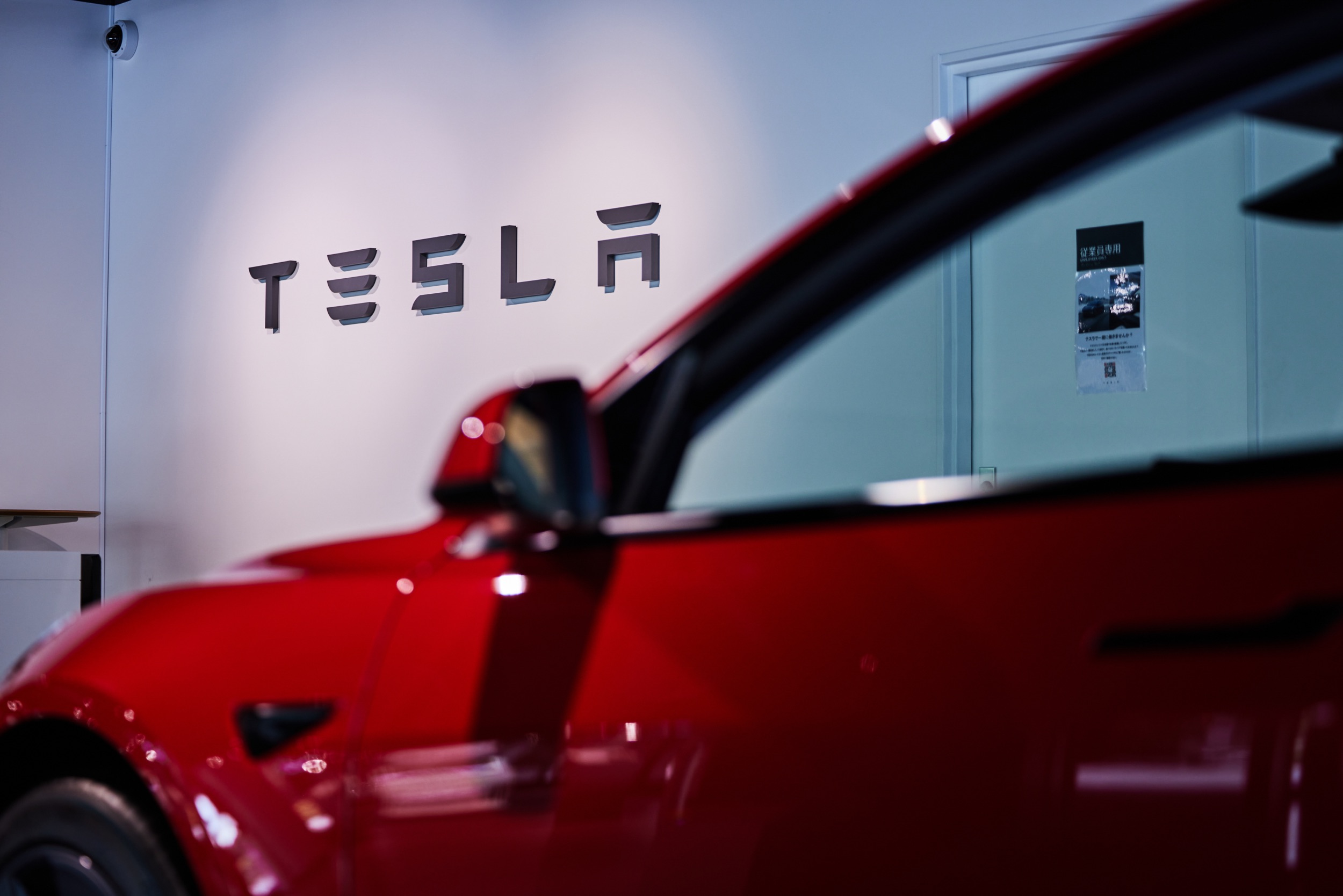
A Tesla car is viewed from the side inside a store. A Tesla logo is on the wall behind the car.
Enlarge / Tesla Motors store in Tokyo, Japan, on Friday, Aug. 18, 2023.
Getty Images | Bloomberg

Four Tesla drivers who sued the company over its allegedly deceptive “self-driving” claims will have to go to arbitration instead of pursuing a class action, a judge ruled.

The complaint sought class-action status on behalf of “consumers who purchased or leased a new Tesla vehicle with Tesla’s ADAS [Advanced Driver Assistance Systems] technology but never received the self-driving car that Tesla promised them.” Self-driving claims made by Tesla and CEO Elon Musk “have proven false time and time again,” the lawsuit said.

While the plaintiffs agreed to terms including an arbitration clause when they purchased cars, they argued that “Tesla’s arbitration agreement is unconscionable, and thus [un]enforceable.” They said the arbitration agreement “is not referenced on the Order page” and “is buried in small font in the middle of an Order Agreement, which is only accessible through an inconspicuous hyperlink.”

Judge Haywood Gilliam Jr. of US District Court for the Northern District of California did not agree. Gilliam issued an order on Saturday granting Tesla’s motion to compel arbitration and denied the plaintiffs’ motion for a preliminary injunction.

Judge: Tesla “provided conspicuous notice”

Gilliam said the Tesla website offers “a type of hybrid browsewrap agreement where the terms of the agreement are hyperlinked above the ‘Place Order’ button.” Contrary to plaintiffs’ claims, Gilliam did not think that Tesla’s references to the arbitration agreement were too inconspicuous:

As explained above, the text reads: “By placing this order, I agree to the Model [3 or Y] Order Agreement,” and the agreement is hyperlinked. Despite Plaintiffs’ urging, the text of this sentence was the same size as the “Place Order” button text below it, and was the same size as other text on the webpage. The hyperlinked agreement was highlighted in blue, which courts have routinely found indicates to a user that there is a hyperlink. And this blue text is some of the only colored text on the screen. There are no other distracting details on the webpage, and the relevant language about the order agreement is therefore conspicuous. It also clearly indicates that clicking the “Place Order” button will manifest the customer’s consent to the agreement.

Gilliam decided that Tesla’s “order payment screens provided conspicuous notice of the order agreements.”

Plaintiffs also argued that the agreement’s 30-day opt-out clause is “illusory” because it “typically takes much more than 30 days for Tesla to configure and deliver a car, which deprives customers of any opportunity to inspect before the 30 days expire.” The agreement also “compels consumers to waive their right to participate in class arbitration,” a factor that “weighs in favor of substantive unconscionability,” they said.

But Gilliam didn’t find the 30-day opt-out clause or other parts of the agreement to be unconscionable. He noted that “the order agreements themselves are just a few pages long, and the arbitration provisions within them are offset from the rest of the agreement with a large text box.” The text included the provision that customers “may opt out of arbitration within 30 days after signing this Agreement by sending a letter” to Tesla.

Gilliam also rejected plaintiffs’ claims that the arbitration agreement violates California’s McGill rule, a precedent in which arbitration provisions are unenforceable if they waive a plaintiff’s right to seek public injunctive relief.

“Plaintiffs do not explain how the [Tesla] arbitration agreement at issue here waives their right to pursue public injunctive relief through arbitration and the Court sees no indication that it does. The Court therefore finds that the arbitration agreements are enforceable,” he wrote.

https://arstechnica.com/?p=1972657


SBF trial to begin as judge says he faces “very long sentence” if convicted

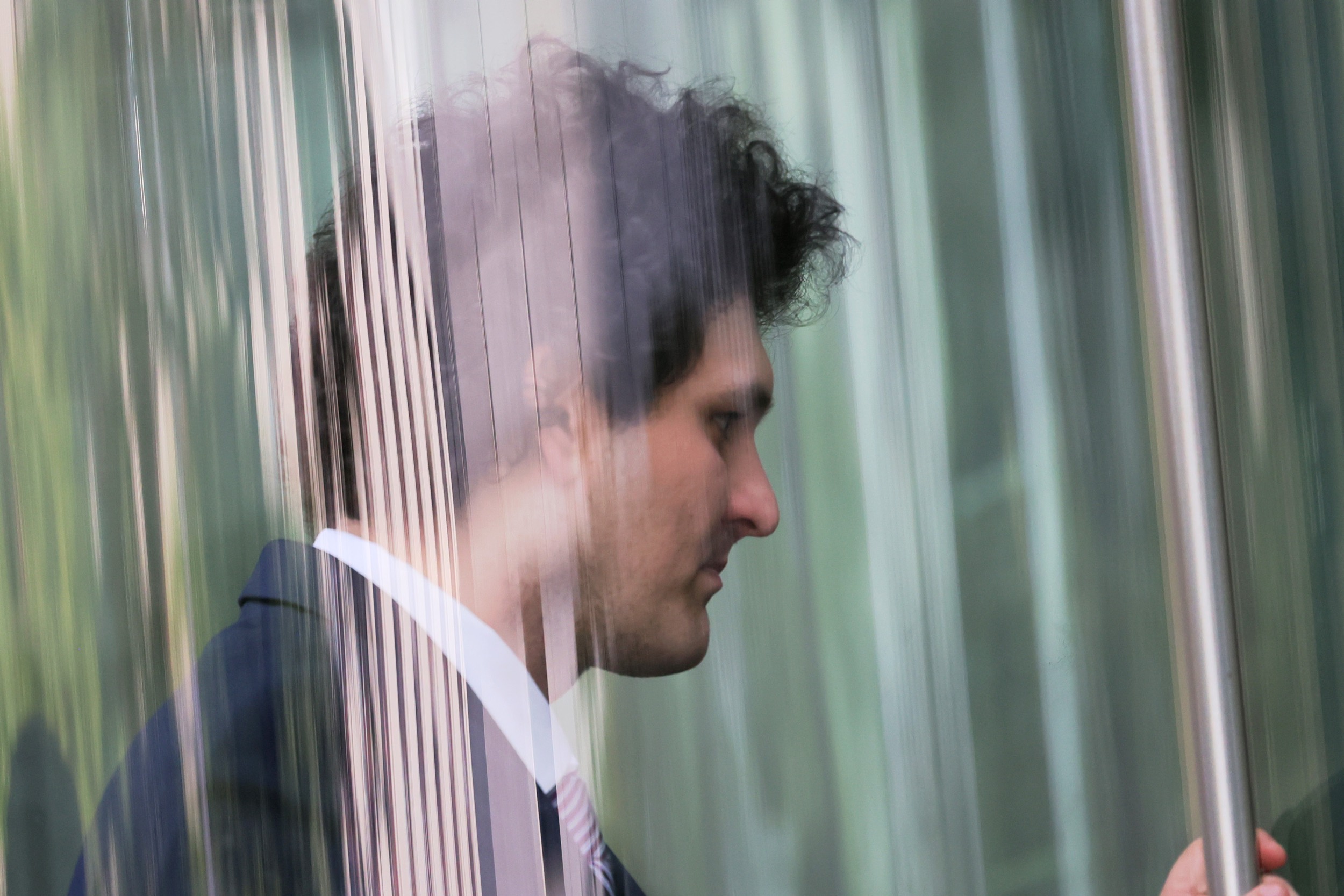
Wearing a suit, former FTX CEO Sam Bankman-Fried pictured from the side as he arrives at court.
Enlarge / Former FTX CEO Sam Bankman-Fried arrives for a bail revocation hearing at US District Court on August 11, 2023, in New York City.
Getty Images | Michael Santiago

Sam Bankman-Fried’s criminal trial is beginning this week with jury selection on Tuesday morning. SBF, the 31-year-old man behind bankrupt cryptocurrency exchange FTX, is facing seven criminal charges with maximum sentences adding up to 110 years.

“Your client in the event of conviction could be looking at a very long sentence,” US District Judge Lewis Kaplan told SBF’s lawyers in a hearing on Thursday while rejecting the defense’s request for a temporary release from jail. “If things begin to look bleak… maybe the time would come when he would seek to flee,” Kaplan said, according to a Reuters article.

Bankman-Fried was previously under house arrest but was sent to jail in August after his bail was revoked. In their request for a temporary release, SBF’s lawyers said the “case is highly technical and complex, and we need our client to help us understand the facts and explain many of the issues. He alone knows the facts which are also critical in preparing his defense.”

Arguing that he isn’t a flight risk, Bankman-Fried lawyer Mark Cohen “said there was ‘nothing in the record’ to suggest that his client would try to flee,” Reuters wrote. “He said Bankman-Fried had voluntarily consented to extradition from the Bahamas—where FTX was based—to the United States after his December 2022 arrest.”

Jury selection is scheduled to begin at 9:30 am ET tomorrow in US District Court for the Southern District of New York, located in Manhattan. Opening arguments in the trial are scheduled to begin Wednesday.

7 charges now, 5 more in March 2024 trial

The seven charges in this trial are wire fraud on customers of FTX, conspiracy to commit wire fraud on customers of FTX, wire fraud on lenders to Alameda Research, conspiracy to commit wire fraud on lenders to Alameda Research, conspiracy to commit securities fraud on investors in FTX, conspiracy to commit commodities fraud on customers of FTX in connection with purchases and sales of cryptocurrency and swaps, and conspiracy to commit money laundering.

The five charges related to wire fraud and money laundering carry maximum sentences of 20 years each, while the two securities and commodities fraud charges have maximum sentences of five years each. Kaplan will determine the actual sentence if the jury convicts SBF.

It’s possible that SBF could be convicted, sentenced, and then get more years tacked onto his sentence next year. That’s because the current trial doesn’t cover all 12 charges against him. Some of the charges were severed and scheduled for a separate trial expected to begin in March 2024.

The five additional counts in the March 2024 trial are for fraud on customers of FTX in connection with the purchase and sales of derivatives, securities fraud on investors in FTX, conspiracy to commit bank fraud, conspiracy to operate an unlicensed money-transmitting business, and conspiracy to violate the anti-bribery provisions of the Foreign Corrupt Practices Act.

The indictment’s bribery charge said the bribe’s purpose “was to influence and induce one or more Chinese government officials to unfreeze certain Alameda trading accounts containing over $1 billion in cryptocurrency, which had been frozen by Chinese authorities.”

One charge for conspiracy to make unlawful campaign contributions and defraud the US Federal Election Commission was dropped.

https://arstechnica.com/?p=1972532


Tux the cat found after Lyft fiasco dragged on for days, Lyft to pay vet bills

Tux the cat found after Lyft fiasco dragged on for days, Lyft to pay vet bills
Aurich Lawson | Getty Images

Tux the cat has been found, and Lyft has agreed to cover “all of her veterinary bills,” after a Lyft driver zoomed away with the sick cat still in the car, a Lyft spokesperson told Ars.

“We’re so happy to report that Tux has been reunited with her owner, and we are focused on ensuring Tux has everything she needs right now, including covering all of her veterinary bills,” Lyft’s spokesperson told Ars.

Tux’s story went viral online after the cat’s owner, Palash Pandey, posted on X, detailing his attempts to recover his lost cat. The cat went missing on Saturday, and millions of concerned online onlookers worried she might not be recovered. But Pandey posted today that Lyft investigators helped retrieve the cat, which was found at a real estate agency in Austin, Texas.

“The investigators from Lyft found Tux!” Pandey posted. “She looks very tired, is covered in fleas and dehydrated. She started eating wet food again which is a good sign, but I’ll monitor her and take her to the vet as soon as she calms down and stabilizes a bit. I would update again once I hear from the vet.”

Ars could not immediately reach Pandey for comment.

According to Pandey’s thread, the incident happened as he was taking Tux to see the vet. He had the cat in a carrier that he’d placed on the floor of the passenger-side backseat during the ride. When Pandey exited the Lyft, he intended to walk around to open the passenger-side door to get Tux, but the Lyft driver pulled away before he could.

“I banged on the back and passenger windows and screamed, running behind him, but he drove off,” Pandey said on X.

Distressed, Pandey attempted to contact the driver—offering to pay for the driver to return or meet the driver to pick up the cat—reportedly for hours, with no response. When the driver finally responded, the driver ultimately told Pandey that the cat was no longer in the car.

“They were not helpful at all,” Pandey said.

Six hours after the cat went missing, Lyft responded to Pandey’s pleas for help, telling Pandey that they were “sorry to hear that your cat was still in the vehicle when the driver drove off.”

“I can only imagine the anger and sadness you are feeling right now, as a cat owner myself,” Lyft’s representative, Yasmine, told Pandey.

Yasmine assured Pandey that Lyft had contacted the driver about “the urgent situation” and noted that if Pandey’s “item” was “returned by the driver,” he would see a “standard return fee of $20 for their time and effort.”

This only upset Pandey more, who swore, “I’m never using” this “godforsaken app again and advise everyone to do the same.”

Lyft promises to review policy

Lyft’s spokesperson did not directly respond to Ars’ request to comment on whether the driver or Yasmine responded appropriately to the situation but told Ars that Lyft would “continue to work directly with Palash to provide the support that they both need.”

“We are actively working with all involved to fully understand the situation—to help prevent it from happening again,” Lyft’s spokesperson told Ars. ” We’re evaluating our policies to improve support for our community, including in cases like this.”

Lyft’s pet policy for non-service animals says that passengers can request to bring pets on rides, but they must call for the driver’s permission ahead of the ride, and “it’s up to the driver to allow the passenger’s pet into their car.”

“If your driver doesn’t feel comfortable with having a pet in their car, you should cancel the ride and request a new one,” Lyft’s policy says. “If you’re charged a cancellation fee, contact us below, and we’ll take care of it.”

Pandey said in his X thread that the Lyft driver eventually told him that “he is allergic to cats and ‘would have canceled the ride if he knew I had a cat in the carrier.'”

“He said that he drove off quickly because he got startled,” Pandey wrote. “I am very doubtful.”

Of the millions of X users who saw Pandey’s story, many expressed support and attempted to join his quest to find his lost cat. As Tux’s story went viral and Pandey continued tagging @AskLyft for help, Lyft investigators got involved and found the cat approximately 1.2 miles from where Pandey was dropped off. Lyft’s team was able to catch the cat by cornering Tux on a staircase, wrapping the cat in a T-shirt, and then transferring Tux to a new cat carrier.

Pandey’s cat carrier was never found, and it’s still unclear if the Lyft driver or subsequent Lyft passengers removed the cat from the vehicle. For Pandey, the outpouring of support from X users helped him hold out hope that Tux would eventually be found.

“You guys have restored my faith in the community,” Pandey wrote.

https://arstechnica.com/?p=1972519


DOJ finally posted that “embarrassing” court doc Google wanted to hide

DOJ finally posted that “embarrassing” court doc Google wanted to hide

The US Department of Justice has finally posted what judge Amit Mehta described at the Google search antitrust trial as an “embarrassing” exhibit that Google tried to hide from the public.

The document in question contains meeting notes that Google’s vice president for finance, Michael Roszak, “created for a course on communications,” Bloomberg reported. In his notes, Roszak wrote that Google’s search advertising “is one of the world’s greatest business models ever created” with economics that only certain “illicit businesses” selling “cigarettes or drugs” “could rival.”

At trial, Roszak told the court that he didn’t recall if he ever gave the presentation. He said that the course required that he tell students “things I don’t believe as part of the presentation.” He also claimed that the notes were “full of hyperbole and exaggeration” and did not reflect his true beliefs, “because there was no business purpose associated with it.”

According to Bloomberg, Google repeatedly objected to the document being shared in court, claiming it was irrelevant to the DOJ’s case. Then, after Mehta allowed the DOJ to present the document as evidence, Google tried to seal off Roszak’s testimony on the document, which Mehta granted, but later said that Google’s request put him “in a pickle.”

“This doesn’t contain anything confidential,” Mehta told Google. “I understand it’s somewhat embarrassing for the witness.”

Sealing Roszak’s testimony made it harder for the public to understand the context of the document, Mehta worried. Ultimately, Mehta not only denied Google’s request to redact portions of the document but also “said he would unseal the portion of Roszak’s testimony related to it,” Bloomberg reported.

Beyond likening Google’s search advertising business to illicit drug markets, Roszak’s notes also said that because users got hooked on Google’s search engine, Google was able to “mostly ignore the demand side” of “fundamental laws of economics” and “only focus on the supply side of advertisers, ad formats, and sales.” This was likely the bit that actually interested the DOJ.

“We could essentially tear the economics textbook in half,” Roszak’s notes said.

Part of the DOJ’s case argues that because Google has a monopoly over search, it’s less incentivized to innovate products that protect consumers from harm like invasive data collection.

A Google spokesman told Bloomberg that Roszak’s statements “don’t reflect the company’s opinion” and “were drafted for a public speaking class in which the instructions were to say something hyperbolic and attention-grabbing.” The spokesman also noted that Roszak “testified he didn’t believe the statements to be true.”

According to Bloomberg, Google lawyer Edward Bennett told the court that Roszak’s notes suggest that the senior executive’s plan for his presentation was essentially “cosplaying Gordon Gekko”—a movie villain who symbolizes corporate greed from 1987’s Wall Street.

The debate over how much of Roszak’s notes could be shared with the public ended with an agreement between the DOJ and Google on all trial exhibits. By 9 pm every trial day, Google or other third parties can object to the DOJ posting trial exhibits like Roszak’s notes online. Otherwise, the DOJ can post trial exhibits “as soon as it is reasonable to do so,” Mehta ruled.

The DOJ posted the trial exhibit yesterday, so now you can read Roszak’s “embarrassing” notes here.

https://arstechnica.com/?p=1972364