SCOTUS to decide if Florida and Texas social media laws violate 1st Amendment

SCOTUS to decide if Florida and Texas social media laws violate 1st Amendment

On Friday, the Supreme Court agreed to decide if two laws crafted by Republicans in Florida and Texas run afoul of the First Amendment because the laws force platforms to explain all their content moderation decisions to users.

Both laws, passed in 2021 after several major platforms banned Donald Trump, seemingly were a way for Republicans to fight back and prevent supposedly liberal-leaning platforms from allegedly censoring conservative viewpoints.

The laws are designed to stop the most popular platforms from inconsistently censoring content by requiring platforms to provide detailed explanations to users whenever their posts are removed or their accounts are banned or “shadowbanned” (deprioritized or restricted from feeds by platforms’ algorithms). The Texas law also requires platforms to provide clear paths to timely appeal censored content, and both laws require platforms to publicly disclose standards for when and why they censor users.

NetChoice—a trade group representing companies operating major platforms, including X and Facebook—sued to block the laws, citing First Amendment concerns. According to NetChoice, states are attempting to censor platforms by passing these laws, potentially preventing platforms from making editorial decisions on content that they’re entitled to make.

In a statement provided to Ars, NetChoice litigation director Chris Marchese said that the trade group’s lawsuits were “landmark cases” giving SCOTUS the opportunity to clarify platforms’ “well-established First Amendment right to host, curate, and share content as they see fit.” NetChoice has argued that rather than restricting censorship, Florida and Texas have passed “unconstitutional laws empowering the government to choose what speech appears online.”

“The Internet is a vital platform for free expression, and it must remain free from government censorship,” Marchese said. “We are confident the Court will agree.”

One of NetChoice’s lawsuits resulted in a preliminary injunction blocking parts of Florida’s law—with one court agreeing that the Florida law likely violated the First Amendment. But a divided court in Texas reversed a preliminary injunction that NetChoice initially won blocking Texas’ law—departing from the court’s logic in the Florida case and finding that NetChoice would not likely succeed in constitutional challenges to the very similar Texas law.

The Supreme Court’s ruling is expected to settle the matter and will likely come next year, NBC News projected.

Trump urged SCOTUS review of “unfair” platforms

Much has changed on social media since 2021. Donald Trump’s account was reinstated on major platforms, including X (formerly Twitter) and Facebook, before next year’s presidential election. And Facebook and X relaxed policies preventing political ads, potentially enabling more divisive political content on the platforms to target more users than ever.

But that doesn’t mean that conservatives, including Trump, have stopped claiming that platforms are censoring right-leaning viewpoints. In a brief urging SCOTUS to review the social media laws in Texas and Florida, Trump claimed that the laws were necessary because “platforms often shroud decisions to exclude certain users and viewpoints in secrecy, giving no meaningful explanation as to why certain users are excluded while others posting equivalent content are tolerated.”

https://arstechnica.com/?p=1972299


US agency sues Tesla as Black workers report “swastikas, threats, and nooses”

Aerial view shows cars parked at the Tesla factory in Fremont, California.
Enlarge / Cars parked at the Tesla factory in Fremont, California, on February 10, 2022.
Getty Images | Josh Edelson

The US Equal Employment Opportunity Commission (EEOC) sued Tesla yesterday, alleging that the electric carmaker violated the Civil Rights Act of 1964 by subjecting Black employees at its manufacturing facilities in Fremont, California, “to severe or pervasive racial harassment and created and maintained a hostile work environment because of their race.”

The US agency also alleged that Tesla “unlawfully retaliated against Black employees who opposed actions they perceived to constitute unlawful employment discrimination.” The lawsuit was filed in US District Court for the Northern District of California and alleges that the discrimination has been ongoing since May 2015.

“Throughout the Relevant Period, racial slurs, chief among them, [different variations of the N-word] as well as racist epithets and race-based stereotyping permeated Tesla’s Fremont Factory subjecting Black employees to racial hostility and offenses,” the lawsuit said. “Non-Black perpetrators of the racial misconduct have worked in a variety of positions at Tesla, including as managers, supervisors, line leads, production leads, production associates, and temporary workers.”

The agency alleged that throughout the period since 2015, “Black employees also encountered displays of racist graffiti, including swastikas, threats, and nooses. They found such graffiti on a variety of surfaces, including on desks, in elevators, and on equipment, including vehicles rolling off the production lines. Black employees have described the prevalence of racist imagery as ‘frequent,’ ‘constant,’ ‘a regular thing,’ and occurring ‘too many times to count.'”

We contacted Tesla today and will update this article if we get a response.

“I saw KKK epithets, a swastika, and the N-word”

At the factory, there were allegedly racist slurs and references to the KKK “all over the walls.” The lawsuit quotes one Black worker as saying:

I saw KKK epithets, a swastika, and the N-word all over the bathroom. It was so gross and racist I don’t want to discuss it. It would say ‘kill black people,’ ‘kill N-words,’ ‘hang black people,’ ‘hang N-words.’

Describing retaliation, the US agency alleged that “Tesla has fired Black employees within weeks of them reporting or opposing racial harassment. Tesla fired one Black employee who had opposed harassment right after advising her of Tesla’s policy not to retaliate.”

After Black employees complained about racism, “Tesla’s supervisors and human resources officials retaliated against them through schedule changes, less desirable duties, reassignments, unjustified write-ups, and discharge,” the US agency said.

The agency is seeking back pay with interest and reinstatement for harmed employees, as well as punitive damages for those employees. It’s also seeking a permanent injunction to prohibit the alleged discriminatory practices and an order to “carry out policies, practices, and programs to ensure equal employment opportunities for Black employees.”

In June 2022, the EEOC issued a Letter of Determination to Tesla stating that it found “reasonable cause to believe” that Tesla had been violating the Civil Rights Act since May 29, 2015, “by subjecting Black employees who worked at its Fremont, California, facilities to a hostile work environment and by retaliating against Black employees who engaged in protected activity,” according to the lawsuit.

The EEOC said it invited Tesla to join “in informal methods of conciliation to endeavor to eliminate the unlawful employment practices and provide appropriate relief,” and provided the company an “opportunity to remedy the discriminatory practices.” But the EEOC said that Tesla would not agree to “a conciliation agreement acceptable to the Commission.”

https://arstechnica.com/?p=1972215


Losing subscribers, Disney+ starts fighting password sharing, too

TV remote control is seen with Disney+ logo displayed on a screen

Like Netflix, Disney+ is getting more stringent about sharing account login information. Disney+’s subscriber agreement already says users can’t share account information, but the streaming service on Tuesday informed its Canadian users that it is “implementing restrictions on account sharing.”

As spotted by MobileSyrup Wednesday, Disney+ emailed Canadian subscribers informing them of updates to the subscriber agreement as of November 1, including the addition of an “account sharing” section. Although the rules seem to be launching with Canada first, it’s likely they’ll eventually roll out to other geographies, like the US. Netflix initially tested its password-sharing crackdown in other countries before bringing it to the US.

MobileSyrup reported the update to Disney+’s Canadian agreement as saying;

Unless otherwise permitted by your Service Tier, you may not share your subscription outside of your household. “Household” means the collection of devices associated with your primary personal residence that are used by the individuals who reside therein. Additional usage rules may apply for certain Service Tiers.

Disney+ reportedly goes on to say that it may opt to analyze subscriber accounts to ensure they’re being compliant. Enforcement can include cutting off access to Disney+.

During Disney’s Q3 2023 earnings call in August, CEO Bob Iger pointed to “significant” password sharing among its streaming services, which also includes two-thirds ownership of Hulu, while declining to provide an exact number. At the time, Iger said Disney had the “technical capability” to monitor password sharing. He added that the company believed the move would result in some new subscribers but was unsure of how many. It’s possible that anti-account-sharing rules could trickle over to Hulu, too.

As revealed in Disney’s Q3 2023 earnings report, Disney+ lost 11.7 million subscribers during the quarter, (largely due to losing the rights to the Indian Premier League cricket tournament). Disney’s overall streaming services losses were $512 million that quarter, which is a decrease from $1.06 billion in Q3 2022.

Disney Plus Subscription

(Ars Technica may earn compensation for sales from links on this post through affiliate programs.)

Netflix enacted its own password crackdown in the US in May. It now charges US users $8 for every user outside of the household by using information like IP addresses, device IDs, and account activity. In August, Netflix said that its annealing on account sharing has helped drive revenue and more new subscriptions than cancellations. Unlike Disney+, Netflix’s new rules came after years of account-sharing leniency. Disney+ launched in November 2019, and Disney’s total streaming losses since then have surpassed $11 billion, The New York Times reported in August.

But as streaming services battle for more subscribers, viewers are challenged by streaming services cutting content budgets and raising prices. Like rivals, Disney is set to introduce an ad-supported tier in an attempt to increase subscribers, as well.

However, with Disney slashing content spend by $3 billion over the next few years, it may have to do better than sell ads and surveil password sharing to increase interest in its streaming services.

https://arstechnica.com/?p=1971954


“Unprecedented” youth climate trial demands action from 32 European governments

Firefighters tackle a wildfire at Vale de Abelha village in Macao, Portugal, on August 16, 2017.
Enlarge / Firefighters tackle a wildfire at Vale de Abelha village in Macao, Portugal, on August 16, 2017.

The largest climate case ever raised before the European Court of Human Rights (ECHR) kicked off Wednesday in Strasbourg, France, Reuters reported. It’s an “unprecedented” effort from six young Portuguese people—ages 11 to 24—who allege that 32 European governments have failed to honor the Paris Agreement to mitigate climate change impacts, causing significant harms and violating their human rights.

Filed in 2020 after a devastating 2017 Portuguese wildfire that killed 120, the complaint alleged that inadequate state measures to reverse climate change have resulted in more frequent heatwaves and wildfires, increasing the risks of heat-related morbidity and fatal illnesses. The plaintiffs also argued that their rights to life, privacy, and family life are being violated, as well as their rights to a life free of discrimination. And because states are unlikely to act fast enough, they’ve alleged that any current risks are “set to increase significantly over the course of their lifetimes and will also affect any children they may have.”

A victory in the ECHR could lead to a ruling forcing European governments to act faster to meet ambitious climate goals—likely by phasing out fossil fuels, reducing emissions, restricting companies from contributing to emissions released overseas, and limiting imports of goods produced by releasing emissions.

More than 80 lawyers represent the accused countries, Reuters reported, and the plaintiffs are represented by six lawyers. During today’s hearing, countries argued that the plaintiffs have not shown evidence of harms caused. Representing Portugal, Ricardo Matos even questioned the “victim status” of the young people suing, AP News reported. Greece argued that “effects of climate change, as recorded so far, do not seem to directly affect human life or human health,” while a lawyer representing Britain argued that the case should be rejected because climate harms are “global.”

The court is not expected to rule on the case until early 2024, Reuters reported. To win, the plaintiffs need “to convince judges that they have been sufficiently affected to be considered as victims,” AP reported. During Wednesday’s proceedings, one judge asked plaintiffs “to provide more details about how their quality of life has been affected,” AP reported. Some of the young people suing claimed in their complaint that they currently suffer from “reduced energy levels, difficulty sleeping, and a curtailment of their ability to spend time or exercise outdoors during recent heatwaves.”

“Due to heat extremes, I’m limited in how I exercise and how much time I can spend outdoors,” Andre Oliveira, a 15-year-old among those suing, said outside court Wednesday, according to Reuters. “I’m forced to stay inside, I struggle to sleep, and thanks to the weak climate policies of these governments, things are getting worse.”

Governments deny young people are victims

On Wednesday, the director of the European Commission legal service, Daniel Calleja Crespo, tried to push back on claims that countries weren’t taking climate change seriously, arguing that “the EU is going beyond the obligations of the Paris Agreement,” which aims for under 2° C warming.

However, a lawyer representing the plaintiffs, Gerry Liston, told the court that there’s evidence that governments have not done enough to comply with the Paris Agreement.

“We have put forward evidence before the court that all of the respondents’ state climate policies are aligned to 3° (Celsius) of warming within the lifetime of the applicants, or in the case of some states, worse than that,” Liston said. “No state has put forward evidence to counter that position.”

Any decision that the court makes in this case would be legally binding for all 32 countries, which could face “hefty fines decided by the court” for any failure to comply, AP reported.

Around the world, people young and old have attempted to convince courts to pressure officials into taking climate action, as progress toward reversing impacts globally has been slow.

In the US, climate lawsuits have had some success. Earlier this year, youths won a landmark climate inaction lawsuit against the state of Montana, and young people in Hawaii and Oregon have filed similar lawsuits in their states.

In Europe, the ECHR is currently considering multiple complaints. Shortly after the plaintiffs filed their lawsuit, an association of senior Swiss women filed a complaint against Switzerland with the ECHR. As did a French lawmaker against France, AP reported. It’s possible that the ECHR will rule on all three cases at once, AP reported. As the youth climate trial began Wednesday, a co-president of the Swiss association, Anne Mahrer, traveled with other members to support activists, saying, “I wish them a future, because they are very young. We probably won’t be there to see it, but if we win, everybody wins.”

Another lawyer representing young people suing, Alison Macdonald, told the court that this case is about “the price” that young people “are paying for the failure of states to tackle the climate emergency. It is about the harm that they will suffer during their lifetimes unless states step up to their responsibilities.”

During the hearing, Oliveira said that he remains “hopeful that the court will understand the urgency of this situation and will side in favor of our case,” AP reported.

https://arstechnica.com/?p=1971711


Musk’s X spreads more disinformation than rival social networks, EU says

Twitter's old bird logo next to the X logo that replaced it.
Getty Images | NurPhoto

Disinformation is more prevalent on Twitter (aka X) than on Facebook and other social networks, according to a European Union report.

The report released yesterday is a pilot study conducted as part of the voluntary Code of Practice on Disinformation that was created before Elon Musk bought Twitter, which he renamed to X. Musk pulled his social network firm out of the voluntary disinformation pact in May 2023, but it was still included in the pilot study.

“Partway through the study, X withdrew from the Code of Practice on disinformation,” the report said. Twitter also changed its name during the study period; aside from a few X mentions, the 72-page report refers to the social network as Twitter throughout.

The Code of Practice study was conducted for the EU by analytics firm TrustLab and analyzed six platforms: Facebook, Instagram, LinkedIn, TikTok, Twitter, and YouTube. The report is based on social media activity in Poland, Slovakia, and Spain. The pilot study “establishes an initial benchmark,” and future studies are expected to be more detailed.

European Commission VP for Values and Transparency Věra Jourová called out Twitter’s performance in a statement yesterday, saying it is “the platform with the largest ratio of mis/disinformation posts.” She urged social networks to do more, saying that “Russian propaganda and disinformation is still very present on online platforms.”

“Mr. Musk knows he is not off the hook by leaving the Code of Practice,” Jourová also said, according to The Guardian. “There are obligations under the hard law [the Digital Services Act]. So my message for Twitter/X is you have to comply. We will be watching what you do.”

Tracking disinformation keywords

TrustLab searched for “disinformation keywords” on each platform and then analyzed how many of the posts containing those keywords spread misinformation or disinformation.

To choose keywords for the study, TrustLab said it analyzed “popular mis/disinformation claims” that reference “a mis/disinformation narrative (factually inaccurate claims based on current fact check articles or other strong evidence presented by a trusted source)” and are “harmful (focused on mis/disinformation claims in critical topics such as elections, politics, COVID-19, and the Russo-Ukrainian war).”

The keyword search resulted in an analysis of 6,155 social media posts and 4,460 accounts across the six platforms, the report said. On Twitter, nearly 43 percent of posts containing the keywords were classified as mis- or disinformation.

The report calls this “discoverability,” or “the ratio of mis/disinformation posts among sensitive content. The platform with the largest discoverability was Twitter (0.428), followed by Facebook (0.313). YouTube had the lowest ratio of discoverability (0.082).”

The ratio of “disinformation actors relative to the total accounts sampled on a platform” was almost 9 percent on Twitter, slightly higher than on Facebook. “The ratios of disinformation actors on Twitter and Facebook are the largest and of similar size (8-9 percent), whereas YouTube had the smallest ratio at 0.8 percent,” the report said.

https://arstechnica.com/?p=1971598


FCC details plan to restore the net neutrality rules repealed by Ajit Pai

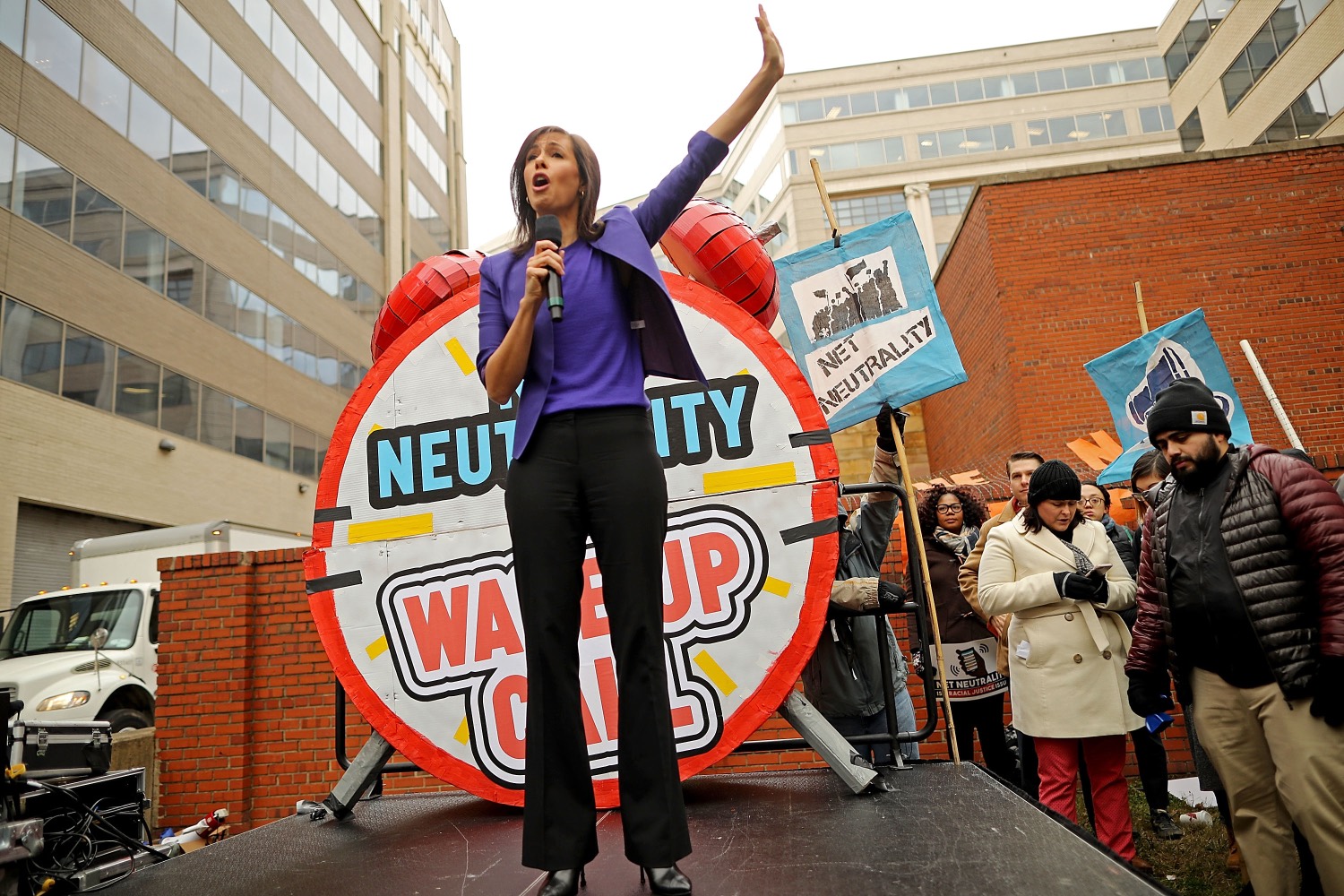
FCC Commissioner Jessica Rosenworcel speaks outside in front of a sign that says
Enlarge / Federal Communication Commission Chairwoman Jessica Rosenworcel, then a commissioner, rallies against repeal of net neutrality rules in December 2017.
Getty Images | Chip Somodevilla

Federal Communications Commission Chairwoman Jessica Rosenworcel today announced plans to restore net neutrality rules similar to those that were adopted during the Obama era and then repealed by the FCC when Donald Trump was president.

Rosenworcel announced her plans in a speech today, one day after the FCC gained a 3-2 Democratic majority with the swearing-in of Commissioner Anna Gomez. The FCC previously operated with a 2-2 partisan deadlock because the US Senate never voted on whether to confirm President Biden’s first nominee, Gigi Sohn.

“This afternoon, I’m sharing with my colleagues a rulemaking that proposes to reinstate net neutrality,” Rosenworcel said.

The net neutrality rules would prohibit Internet service providers from blocking or throttling lawful Internet traffic and from selling “fast lanes” that prioritize some traffic over others in exchange for payment. Similar to the previous rules, FCC officials said they don’t plan to impose rate regulation or “unbundling” requirements that would force broadband providers to share networks with other companies.

In a fact sheet, the FCC said the proposal would “establish basic rules for Internet Service Providers that prevent them from blocking legal content, throttling your speeds, and creating fast lanes that favor those who can pay for access.”

Vote next month

The first step for the FCC is to vote on a Notice of Proposed Rulemaking (NPRM) that will seek public comment on the rules. The vote on the NPRM is scheduled for October 19. Based on past practice, it will take at least a few months to gather public comments, analyze them, and then propose and adopt final rules.

“We will need to develop an updated record to identify the best way to restore these policies and have a uniform, national open Internet standard,” Rosenworcel said.

Rosenworcel, a commissioner since 2012, criticized the Trump-era FCC’s decision to stop regulating broadband as a common carrier service. She pointed out that the rules were upheld in court and popular with the public, and that the repeal was met with an overwhelming public backlash.

“As a result of the previous FCC’s decision to abdicate authority, the agency charged with overseeing communications has limited ability to oversee these indispensable networks and make sure that for every consumer, their access is fast, open, and fair,” she said.

Just like the Obama-era rules

Rosenworcel’s proposed rules will mostly mirror those approved under then-Chairman Tom Wheeler in 2015, senior FCC officials said in a call with reporters today. The proposal would classify broadband providers as common carriers under Title II of the Communications Act, providing the legal authority to impose net neutrality rules and other regulations.

Broadband providers are likely to argue that rules aren’t necessary because they’ve behaved themselves in the five years since the previous net neutrality order was repealed in 2018. To counter that argument, FCC officials today pointed out that ISPs are required to follow net neutrality rules in individual states even though the federal government doesn’t have uniform rules for the whole country.

Then-Chairman Ajit Pai’s attempt to preempt all state net neutrality rules was rejected in court. California enforces net neutrality rules that mirror what the FCC adopted in 2015 and beat industry attempts to get the state law overturned.

FCC officials said today that nearly a dozen states enforce net neutrality through state laws, government contracting policies, or executive orders. While they stressed the importance of having a strong set of rules for the entire US, they said ISPs are already subject to a “patchwork” of state laws.

FCC officials today said the reclassification of broadband will close a national security “loophole.” They said the FCC relies on its authority over voice service to keep hostile foreign actors from compromising networks and that regulating broadband under Title II will provide additional power to impose cybersecurity requirements on network operators. That includes blocking authorizations of companies controlled by adversarial governments, they said.

More than just net neutrality

Rosenworcel stressed that placing broadband under Title II classification will give the FCC stronger authority over more than just net neutrality. For example, the FCC can use Title II to require Internet providers to address long outages and report detailed data on outages, she said.

The FCC fact sheet said Rosenworcel’s plan will let the agency “enhance the resiliency of broadband networks and bolster efforts to require providers to notify the FCC and consumers of Internet outages.”

Rosenworcel also pointed to the 2018 incident in which Verizon throttled a fire department’s “unlimited” data during California wildfires. “As a result of the Title II repeal, the FCC didn’t have any authority to intervene and fix it,” Rosenworcel said.

Rosenworcel said that because FCC authority is generally centered on phone systems instead of broadband, the commission often needs “duct tape and baling wire” to provide legal justification for its rules. Among other things, Title II would give the FCC stronger authority to fight robotexts in the same way it fights robocalls, she said.

Title II also has benefits for broadband providers, like giving cable companies rights to attach wires to telephone poles, she said. The FCC’s Title II repeal “eliminated the pole-attachment rights of broadband-only providers,” she said.

https://arstechnica.com/?p=1971168


SEC obtains Wall Street firms’ private chats in probe of WhatsApp, Signal use

A logo for the chat application WhatsApp depicts a telephone handset inside a chat bubble.
Getty Images | NurPhoto

The US Securities and Exchange Commission has “collected thousands of staff messages from more than a dozen major investment companies” as it expands a probe into how employees and executives at Wall Street firms use private messaging platforms such as WhatsApp and Signal, Reuters reported today, citing “four people with direct knowledge of the matter.”

Firms being investigated include Carlyle Group, Apollo Global Management, KKR & Co., TPG, Blackstone, and hedge fund companies including Citadel, Reuters wrote. Senior executives are among the employees whose messages were reportedly collected.

“The executives gave their personal phones and other devices to their employers or lawyers to be copied, and messages discussing business have been handed to the SEC, three people said,” according to Reuters.

The SEC is apparently collecting more messages in this probe of investment advisers than it did in previous probes targeting broker-dealers. In the earlier broker-dealer investigations, “the SEC asked companies to review staff messages and report to the agency how many discussed work,” Reuters wrote. “SEC staff reviewed only a sample of messages themselves, according to three sources with knowledge of the previous investigations.”

The SEC declined to comment when contacted by Ars today. The government has been investigating how Wall Street firms keep track of employee communications for about two years, and the probes have already resulted in over $2 billion in fines for recordkeeping failures and use of unapproved communication methods.

As Reuters noted, the use of private messaging services that aren’t monitored by employers “has dogged Wall Street compliance departments for years. Because companies do not surveil personal messaging channels, using them to discuss business puts SEC-regulated employers in breach of requirements to record all business communications.”

Investment advisory firms have criticized the SEC demands, “arguing their recordkeeping requirements are narrower than broker-dealers’,” Reuters wrote. The Managed Funds Association industry group was quoted as saying that “unilaterally expanding the rules by enforcement actions sidesteps due process and creates a dangerous precedent.”

11 companies fined last month

On August 8, the SEC said it charged 11 Wall Street firms with “widespread recordkeeping failures” related to the use of messaging platforms on personal devices. The firms “acknowledged that their conduct violated recordkeeping provisions of the federal securities laws” and “agreed to pay combined penalties of $289 million,” the SEC said.

“Today’s actions stem from our continuing sweep to ensure that regulated entities, including broker-dealers and investment advisers, comply with their recordkeeping requirements, which are essential for us to monitor and enforce compliance with the federal securities laws,” SEC Deputy Director of Enforcement Sanjay Wadhwa said at the time. “Recordkeeping failures such as those here undermine our ability to exercise effective regulatory oversight, often at the expense of investors.”

In the August 2023 case, Wells Fargo agreed to pay the biggest fine of $125 million. The firms also agreed to “improvements to their compliance policies and procedures to address these violations,” the SEC said. The SEC summarized its findings as follows:

[T]he firms admitted that from at least 2019, their employees often communicated through various messaging platforms on their personal devices, including iMessage, WhatsApp, and Signal, about the business of their employers. The firms did not maintain or preserve the substantial majority of these off-channel communications, in violation of the federal securities laws. By failing to maintain and preserve required records, certain of the firms likely deprived the Commission of these off-channel communications in various SEC investigations. The failures involved employees at multiple levels of authority, including supervisors and senior executives.

In separate actions also announced on August 8, the Commodity Futures Trading Commission (CFTC) ordered four firms to pay $260 million in fines for recordkeeping and supervision failures related to “widespread use of unapproved communication methods.” That included $75 million fines each for Wells Fargo, BNP Paribas, and Société Générale. A $35 million fine was issued to the Bank of Montreal.

In September 2022, the SEC announced fines totaling $1.1 billion against 10 firms, including Barclays, BofA Securities (formerly Bank of America Merrill Lynch), Citigroup Global Markets, Credit Suisse Securities, Deutsche Bank Securities, Goldman Sachs, Morgan Stanley, and UBS Securities. Also in September 2022, the CFTC ordered 11 companies to pay over $710 million in fines.

https://arstechnica.com/?p=1970944


Supreme Court considers limits on White House contacts with social media

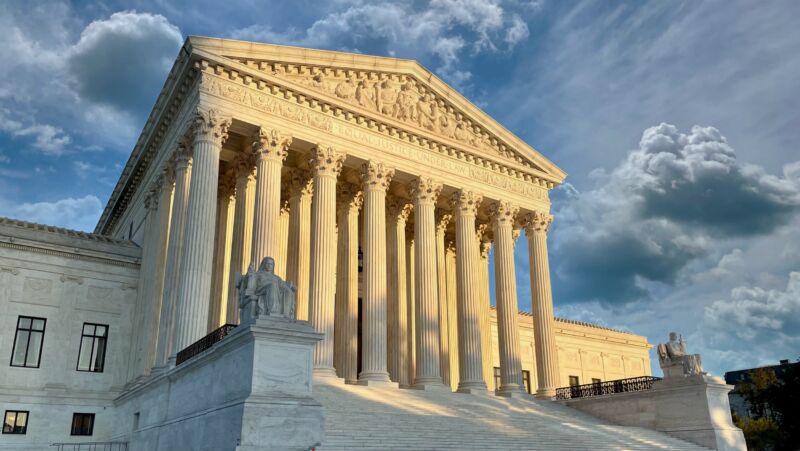
The United States Supreme Court building seen during daytime.
Enlarge / The Supreme Court.
Getty Images | Douglas Rissing

The Supreme Court on Friday extended a stay of a lower-court order that would limit the Biden administration’s contacts with social media firms, giving justices a few more days to consider whether to block the ruling entirely. The court could rule by the middle of this week on the Biden administration motion in a case in which the states of Missouri and Louisiana allege that speech related to COVID-19 and other topics was illegally suppressed at the behest of government officials.

A stay issued September 14 was scheduled to expire on Friday, but Justice Samuel Alito ordered that it be extended until Wednesday, September 27, at 11:59 pm ET. Alito is the justice assigned to the 5th Circuit, the circuit in which an appeals court ruled that the White House and FBI likely violated the First Amendment by coercing social media platforms into moderating content and changing their moderation policies.

The 5th Circuit appeals court ruling wasn’t a total loss for the Biden administration. Appeals court judges threw out the majority of a district judge’s preliminary injunction that ordered the Biden administration to halt a wide range of communications with social media companies.

While most of the original injunction’s restrictions were eliminated, the Biden administration asked the Supreme Court to block the one surviving prohibition. Under the recently revised injunction, Biden administration officials would be barred from taking any action to directly or indirectly “coerce or significantly encourage social-media companies to remove, delete, suppress, or reduce, including through altering their algorithms, posted social-media content containing protected free speech.”

“That includes, but is not limited to, compelling the platforms to act, such as by intimating that some form of punishment will follow a failure to comply with any request, or supervising, directing, or otherwise meaningfully controlling the social-media companies’ decision-making processes,” the injunction says.

US: We were persuading, not coercing

The US motion for a stay pending resolution of the lawsuit contends that the Supreme Court is likely to grant certiorari and then reverse the injunction after hearing the case. The 5th Circuit appeals court “held that federal officials’ interactions with private social-media platforms transformed a broad swath of the platforms’ content-moderation decisions into state action subject to the First Amendment,” the US motion said. “That holding has significant implications for officials at all levels of government, many of whom routinely engage with or speak about social-media platforms. It also has grave implications for the platforms themselves, which on the Fifth Circuit’s logic are state actors subject to suits for violating the First Amendment.”

The US argues that it was merely “urging platforms to remove COVID-19 misinformation, highlighting the risk of disinformation from foreign actors, and responding to the platforms’ inquiries about matters of public health.” Administration officials’ attempts to influence content moderation were persuasion, not coercion, the US told the Supreme Court.

The 5th Circuit appeals court saw things differently, finding that Biden administration “officials made express threats and, at the very least, leaned into the inherent authority of the President’s office. The officials made inflammatory accusations, such as saying that the platforms were ‘poison[ing]’ the public, and ‘killing people.’ The platforms were told they needed to take greater responsibility and action. Then, they followed their statements with threats of ‘fundamental reforms’ like regulatory changes and increased enforcement actions that would ensure the platforms were ‘held accountable.’… Given all of the above, we are left only with the conclusion that the officials’ statements were coercive.”

The appeals court decided that the White House and FBI likely violated the First Amendment by coercing social media platforms into moderating content and changing their moderation policies, and that the Centers for Disease Control and Prevention also acted improperly but did not “coerce” social networks.

While the underlying lawsuit was filed by Missouri and Louisiana along with several private plaintiffs, the state of Ohio has joined the fight against the Biden administration. In a Supreme Court filing, Ohio Attorney General Dave Yost argued that the preliminary injunction should take effect. Blocking the injunction “would empower the government to resume censoring—or, at minimum, encouraging the censoring—of speech on matters of immense public import,” the Ohio filing said.

https://arstechnica.com/?p=1970846


FCC closing loophole that gave robocallers easy access to US phone numbers

Illustration of robots wearing phone headsets and sitting in front of laptop computers.

In one of its many attempts to curb robocalls, the Federal Communications Commission said it is making it harder for Voice over Internet Protocol (VoIP) providers to obtain direct access to US telephone numbers.

Robocallers make heavy use of VoIP providers to bombard US residents with junk calls, often from spoofed phone numbers. Under the rules in place for most of the past decade, VoIP providers could easily gain access to US phone numbers.

“This VoIP technology can allow bad actors to make spoofed robocalls with minimal technical experience and cost,” the FCC said.

But under rules adopted by the FCC yesterday, VoIP providers will face some extra hurdles. They will have to “make robocall-related certifications to help ensure compliance with the Commission’s rules targeting illegal robocalls,” and “disclose and keep current information about their ownership, including foreign ownership, to mitigate the risk of providing bad actors abroad with access to US numbering resources,” the FCC said.

The FCC order will take effect 30 days after it’s published in the Federal Register. A public draft of the order was released ahead of the FCC meeting.

Current system provides easy access

“It was eight years ago that this agency decided to allow interconnected VoIP providers to obtain telephone numbers directly from our numbering administrator. Before that, they could only get numbers by making a request through a traditional carrier,” FCC Chairwoman Jessica Rosenworcel said in a statement for yesterday’s commission meeting.

Simplifying the system had benefits but also unintended consequences, Rosenworcel said:

Too often the providers picking up these numbers en masse are the same folks using VoIP technology to facilitate robocalls. So in the interest of curbing these bad actors, we are adopting new guardrails. We are putting conditions on direct access to numbering resources to make sure we do not hand out numbers to perpetrators of illegal robocalls. This will safeguard our numbering resources, make life harder for those who want to send us junk calls and a little easier for all of us who don’t like getting them.

The current rules that will be replaced “do not require interconnected VoIP providers to disclose any information about their ownership or affiliation, nor do they specify a process to evaluate applications with substantial foreign ownership,” the FCC said. The new ownership disclosure rule “will assist Bureau staff in their existing practice of identifying applications that require further review to determine whether the direct access applicant’s ownership, control, or affiliation raises national security and/or law enforcement concerns,” according to the order.

The FCC said applicants must also certify to their compliance with other rules applicable to interconnected VoIP providers and “comply with state laws and registration requirements that are applicable to businesses in each state in which numbers are requested.”

While the rule change applies to new applicants seeking direct access to numbering resources, the FCC is also taking public comment on a proposal that would “requir[e] existing direct access authorization holders whose authorizations predate the new application requirements to submit the new certifications, acknowledgments, and disclosure.” The FCC adopted yesterday’s order unanimously, saying that it is consistent with requirements in the TRACED Act (Telephone Robocall Abuse Criminal Enforcement and Deterrence) adopted by Congress in 2019.

Bad actors “set up shop under a new name”

Yesterday’s order came two days after the FCC took action against a gateway phone company accused of routing many illegal robocalls from outside the US to consumer phone companies like Verizon. The company, One Owl Telecom, is on the verge of having all its calls blocked by US-based telcos after being accused of ignoring orders to investigate and block the robocalls.

One Owl’s operators were connected with two previous companies that were punished by the FCC for similar offenses. The case illustrates challenges faced by the FCC when enforcing robocall rules against companies with foreign operators and opaque structures. Describing One Owl, the FCC said the company’s efforts “to operate under the cloak of ever-changing corporate formations to serve the same dubious clientele demonstrate willful attempts to circumvent the law to originate and carry illegal traffic.”

“Right now, it is very easy for bad actors who get caught facilitating illegal robocalls to set up shop under a new name and carry on with business as usual, and these rules will make it harder to do that,” Nicholas Garcia, policy counsel for consumer-advocacy group Public Knowledge, told Ars.

Garcia noted that “false or fraudulent registration and compliance reports would be an obvious way for the most dedicated bad actors to circumvent these new rules. But that itself may provide new avenues for enforcement, and more requirements and friction raise the cost and risks” for VoIP operators that don’t follow the rules.

https://arstechnica.com/?p=1970496


Law geeks shine a light on secretive Google antitrust trial

Law geeks shine a light on secretive Google antitrust trial
Shutterstock

Months out of law school, Yosef Weitzman already has a huge courtroom role in the biggest antitrust trial of the century. In a US federal trial that started last week, Google is accused of unlawfully monopolizing online search and search ads. The company’s self-defined mission is to make the world’s information universally accessible, yet Google successfully opposed livestreaming the trial and keeping the proceedings wholly open to the public. Enter Weitzman.

The fresh law graduate is among a handful of legal or antitrust geeks trying to attend most, if not all, of the public portions of the trial, fearing a historic moment of tech giant accountability will escape public notice. Some have pushed off day jobs or moved near to the Washington, DC, courthouse. All are obsessively documenting their observations through social media and daily email newsletters.

The trial is scheduled to run near-daily through November, and few news outlets can dedicate a reporter to a courtroom seat for eight hours a day for the duration. Most reporters focused on Google are based in San Francisco. Legal and regulatory publications that can commit charge hundreds of dollars for content subscriptions. Any antitrust junkie—or frustrated Google Search user—wanting an affordable readout from the sparsely attended, era-defining trial, must rely on Weitzman, or a handful of others firing off tweets, skeets, and Substacks. “Regardless of your view on this trial and Big Tech, it will affect everyone, so it’s important that the public is aware of what’s going on as the trial unfolds and to record what happens,” Weitzman says.

Megan Gray, an attorney who has sparred with Google in various legal proceedings over two decades but isn’t involved in this case, has felt compelled to take the 30-minute train ride to the courthouse to capture nuances that don’t come through in summaries or transcripts. She has attended all but one day of the trial so far, pushing her legal work into the evenings. “We’ll see if I can go the whole 10 weeks,” she says.

Tim Wu, a Columbia University law professor and a former tech antitrust policy adviser to President Biden, stopped by the first day of the trial but like other interested scholars is otherwise stuck at his distant day job. “It seems obvious that the trial should be easier for the public to follow,” Wu says. “Unlike, say, the trial of a celebrity, there’s no serious danger of something like this becoming a circus.”

Weitzman got his gig after Matthew Stoller, a noted critic of Google’s power, decided to hire someone to attend every day of the trial and write about it for his email newsletter Big, which focuses on monopoly issues in tech and beyond and has about 100,000 subscribers. “You can’t cover anti-monopoly politics without recognizing how important this case is,” Stoller says.

A rare combination of experience as a sports section editor of his school paper at the University of Pennsylvania and a fascination with antitrust law helped Weitzman secure the gig. He packed up in Philadelphia and has signed a monthlong sublet within walking distance of the court, but has not figured out where exactly he’ll live for the remainder of the trial. Some new law graduates travel the world in the few months before starting their first job. Weitzman is making a muggy commute to an uncomfortable bench in the courtroom’s public gallery, working up to a dozen hours a day. “I’m not complaining at all,” he says.

Weitzman’s write-up is summarized in Big occasionally and sent out in full each day in a temporary offshoot newsletter on Substack, Big Tech on Trial, which had about 2,700 subscribers after the trial’s first week. He is being paid by Stoller and the American Economic Liberties Project, a nonpartisan anti-monopoly advocacy group where Stoller is director of research.

The last major Big Tech antitrust trial, against Microsoft beginning in 1998, helped open the door to Google amassing the power it now holds over online search and ads. In the current trial, Google’s attorneys argue that the company became the dominant search engine because consumers prefer it—not because they are forced to use it by deals in which Google pays to be the default on phones and browsers, as the US Department of Justice alleges. Attorneys general for every state except Alabama are also involved in bringing the case.

https://arstechnica.com/?p=1970396