Opinion: The Copyright Office is making a mistake on AI-generated art
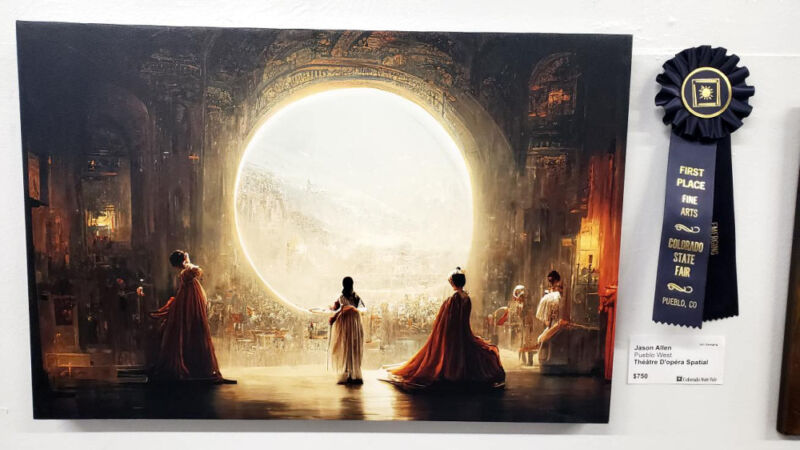
An AI-generated image that won a prize at the Colorado State Fair

Two weeks ago, the US Copyright Office refused to register a copyright for Théâtre D’opéra Spatial, an AI-generated image that got widespread media attention last year after it won an art competition. It’s at least the third time the Copyright Office has ruled that AI-generated art cannot be copyrighted.

The Copyright Office first ruled on this issue in 2019. Artist Stephen Thaler tried to register an image that he said had been created entirely by a computer program. The Copyright Office rejected the application because copyright protection is only available for works created by human beings—not supernatural beings (like the Holy Spirit), not animals (like this now-famous monkey), and not computer programs.

The ruling raised an important question: Was the issue just that Thaler should have listed himself, rather than his AI system, as the image’s creator? Or is AI-generated art categorically excluded from copyright protection?

In recent months, the Copyright Office has endorsed this second view. In February, it canceled the registration of a comic book called Zarya of the Dawn that contained AI-generated images. Then on September 5, the office rejected the copyright for Théâtre D’opéra Spatial, holding that it “was not the product of human authorship” because it had been created by the AI software Midjourney.

I don’t think these more recent decisions are going to age well.

“The copyright office’s position follows fairly logically from what they’ve staked out,” Cornell University copyright scholar James Grimmelmann told me. “And that follows fairly logically from existing copyright doctrine or theory.”

At the same time, Grimmelmann said, “I don’t see this approach being scalable. It seems like a quagmire.”

Lessons from photography

In the 1880s, courts were deciding how copyright law should handle the then-new technology of photography. Some people argued that photographs shouldn’t receive copyright protection at all. Copyright is supposed to cover creative works, and a camera just mechanically captures images of whatever it’s pointed at.

A photographer named Napoleon Sarony took a photo of Oscar Wilde and later sued a company that republished it without permission. The case went all the way to the US Supreme Court, which ruled in 1884.

The nation’s highest court acknowledged that “ordinary” photographs may not merit copyright protection because they may be a “mere mechanical reproduction” of some scene.

By contrast, the court said the Wilde photograph reflected Sarony’s “original mental conception,” which he had brought to life by “posing Oscar Wilde in front of the camera, selecting and arranging the costume, draperies, and other various accessories in said photograph, arranging the subject so as to present graceful outlines, arranging and disposing the light and shade, suggesting and evoking the desired expression.”

So even though a mechanical process captured the image, it nevertheless reflected creative choices by the photographer, and therefore deserved copyright protection.

This ruling is still good law today, and the Copyright Office cited it in its February ruling rescinding copyright protection for Zarya of the Dawn. But there are two different ways to read this century-old precedent. And in my view, the Copyright Office picked the wrong reading.

The Copyright Office concluded that using AI to generate art was a “merely mechanical” process with “no place for novelty, invention, or originality”—and hence not worthy of copyright protection. But I don’t think this makes sense given how copyright law has treated photographs over the last 130 years.

After all, if you read the Sarony ruling literally, it suggests that many photographs shouldn’t get copyright protection. Landscape photographers, for example, don’t decide the position of the sun, the shape of clouds, or the color of trees. Yet landscape photos can be copyrighted.

Or consider the time an Associated Press photographer, Mannie Garcia, snapped a photo of then-Sen. Barack Obama listening to George Clooney during a 2006 panel discussion. Two years later, artist Shepard Fairey used Garcia’s photo as the basis for an illustration called “Obama Hope” that was ubiquitous during the 2008 presidential campaign.

When the AP learned Fairey had based his work on an AP photo, it demanded compensation. Fairey sued the AP, asking for a ruling that he had not infringed the photo. The lawsuit argued that Fairey’s use of the photo was allowed under copyright’s fair use doctrine.

But notably, Fairey didn’t argue that the photograph wasn’t eligible for copyright at all—probably because that argument would have been laughed out of court. Everyone agrees that a photograph like Garcia’s is eligible for copyright—even though Garcia did not pose Obama in front of the camera, select or arrange Obama’s clothes, set up the background or lighting, or suggest what expressions Obama should make.

Garcia just recognized a compelling shot of Obama and captured a high-quality image. And under US copyright law, that’s enough creativity to merit copyright protection.

Photographers “choose where to point the camera, when to snap the image, and how to adjust a bunch of camera settings,” Grimmelmann told me. “We settled into the idea that a photographer owns the copyright in the resulting photograph.”

https://arstechnica.com/?p=1969880


Yelp names and shames businesses paying for 5-star reviews

Yelp names and shames businesses paying for 5-star reviews

Yelp has started publicly naming and shaming businesses that pay for reviews. The review site’s new index documents businesses offering everything from a crisp $100 bill for leaving the best review to a $400 Home Depot gift card for a five-star review. It also lists every business whose reviews have ever been suspected of suspicious activity, like spamming the site with multiple reviews from a single IP address.

Engadget dubbed Yelp’s new index a “wall of shame,” suggesting that the information may be used by federal agencies who have spent the past few years cracking down on paid fake reviews. This year, the Federal Trade Commission proposed a ban on “the use of deceptive reviews and testimonials,” with penalties up to $50,000 for businesses “caught buying, selling or manipulating online reviews,” Engadget reported.

Yelp wants to see the Federal Trade Commission enact the ban, Yelp’s head of user operations, Noorie Malik, told Engadget. The FTC noted that Yelp reported 950 suspicious posts, users, or groups facilitating fake reviews in 2021 alone.

Of course, the fake review problem goes beyond Yelp. The FTC reported that earlier this year, academic researchers infiltrated “incentivized review services geared toward Amazon” that solicited five-star reviews for more than 240,000 products. On Facebook, 250 groups were discovered brokering paid reviews of Amazon products—some with more than 500,000 members. The FTC noted that while Amazon claims to delist products soliciting incentivized reviews, only 25 of 1,600 products tracked by researchers were removed within a six-week period.

Amazon declined to comment. Yelp did not immediately respond to Ars’ request to comment.

Malik told Engadget that Yelp also hopes that users will visit the index to make “educated decisions” when choosing which businesses to support. Malik noted that people may not care about juice bars offering 15 percent off drinks for a five-star review, but they might be more hesitant to hire a construction company to do home repairs if they know they paid for all those five-star reviews that lure trusting customers to check out the business.

Though the list has only just begun indexing Yelp’s bad actors, Yelp plans to keep growing the index into a robust resource.

“We’d love to get to a place where this new index develops into a regular resource for others, whether it’s FTC, consumers, regulators, or other sites,” Malik told Engadget.

Amazon assists in arrest of fake review brokers

The consequences of paying for fake reviews could go beyond getting listed on Yelp’s “wall of shame,” though. Just last week, Amazon announced that two China-based review brokers were sentenced to 2.5 years after facilitating fake reviews in Amazon’s store between March 2021 and March 2022. It was only the second time that Amazon had ever helped law enforcement arrest review brokers, the company said.

“Two individual fake review brokers were found guilty of illegal business operations intended to deceive Amazon customers and harm Amazon selling partners through the facilitation of fake reviews,” Amazon’s blog said. “These verdicts are the result of local law enforcement’s investigation and a criminal referral supported by Amazon.”

Unlike many of the businesses that Yelp has indexed—which seem to mostly commission positive reviews—the review brokers working on Amazon would accept payment both to “boost a bad actor’s product ranking” or to leave “fake negative reviews to lower the ranking of a competitor’s product.”

Malik told Engadget that Yelp hopes that other platforms will start holding businesses that pay for reviews accountable. Engadget noted that Yelp had “previously worked with the FTC to notify them when it discovers fake reviews and the sometimes complex operations behind them.” Similarly, Amazon vowed to continue working with law enforcement to crack down on paid fake reviews.

“Amazon is pleased to see that these fraudsters are being held accountable for their actions,” David Montague, Amazon’s vice president of Selling Partner Risk, said in the blog. “The verdicts are a testament to the partnership of local officials in bringing down those who attempt to deceive our customers and harm our selling partners. We look forward to continuing to partner with law enforcement toward the mutual goal of bringing fake review brokers to justice.”

https://arstechnica.com/?p=1970279


Google sued over fatal Google Maps error after man drove off broken bridge

A collapsed bridge on a small road without any lights or barriers to protect drivers.
The collapsed bridge that Philip Paxson drove off of.
Saltz Mongeluzzi Bendesky

Google is being sued by a widow who says her husband drowned in September 2022 after Google Maps directed him over a collapsed bridge in Hickory, North Carolina.

Google failed to correct its map service despite warnings about the broken bridge two years before the accident, according to the lawsuit filed Tuesday by Alicia Paxson in Wake County Superior Court. Philip Paxson “died tragically while driving home from his daughter’s ninth birthday party, when he drove off of an unmarked, unbarricaded collapsed bridge in Hickory, North Carolina while following GPS directions,” the complaint said.

The Snow Creek Bridge reportedly collapsed in 2013 and wasn’t repaired. Barricades were typically in place but “were removed after being vandalized and were missing at the time of Paxson’s wreck,” according to The Charlotte Observer. The lawsuit has five defendants, including Google and its owner Alphabet.

The other defendants are James Tarlton and two local business entities called Tarde, LLC and Hinckley Gauvain, LLC. Tarlton and the two businesses “owned, controlled, and/or were otherwise responsible for the land” containing the bridge, the lawsuit said.

“The Bridge Defendants refused to properly maintain the bridge, leaving it in a horrendously dangerous state of disrepair for years,” the lawsuit said. “The Bridge Defendants refused to place reasonable and proper barricades in front of the hazard to alert drivers of the deadly drop and failed to enact inspection measures to ensure that barricades remained in front of the hazard until necessary repairs occurred.”

The Paxson family.
Enlarge / The Paxson family.
Saltz Mongeluzzi Bendesky

Lawsuit: Google failed to make suggested edits

Pictures provided by the law firm indicate that “Road Closed” signs and barriers were placed on either side of the bridge, though those barriers were not there at the time of the accident.

In September 2020, “Hickory resident Kim Ellis used the ‘Suggest An Edit’ feature on Google Maps to place the Google Maps Defendants on notice that the Snow Creek Bridge had washed away,” the lawsuit said. In November 2020, after Google took no action, “Ellis again contacted the Google Maps Defendants via the ‘Suggest An Edit’ feature pleading for Google Maps to update its navigation system,” the lawsuit said.

The lawsuit provides the confirmation emails Ellis received from Google after both of her reports and says that she “was not the only citizen who notified Google of the dangerous condition.”

“As of April 6, 2023, and upon information and belief at other times thereafter, the collapsed bridge unbelievably was still depicted as a passable road on Google Maps when routing from [the birthday party site] to the Paxson’s home, despite the Google Map Defendants having been placed on notice yet again of the danger,” the lawsuit said.

The family learned after the accident that residents called it the “Bridge to Nowhere,” according to law firm Saltz Mongeluzzi Bendesky’s press release. “We’ve discovered that Google Maps misdirected motorists like Mr. Paxson onto this collapsed road for years, despite receiving complaints from the public demanding that Google fix its map and directions to mark the road as closed,” attorney Robert Zimmerman said in the press release. He said that Google “refused to correct its mapping algorithms despite repeated pleas” from residents.

https://arstechnica.com/?p=1970129


T-Mobile users saw other customers’ personal data due to “system glitch”

A T-Mobile sign consisting of a large T hangs on a storefront.
Enlarge / A T-Mobile sign on a storefront on August 24, 2023 in Washington, DC.
Getty Images | Anna Moneymaker

A T-Mobile mistake during an overnight technology update resulted in some customers seeing the private information of other users today. T-Mobile users posting on social media said they saw other customers’ billing details instead of their own during the incident that reportedly lasted for three hours or so this morning.

When contacted by Ars today, T-Mobile confirmed the problem and said it was caused by a faulty update. “There was no cyberattack or breach at T-Mobile,” a company spokesperson said. “This was a temporary system glitch related to a planned overnight technology update involving limited account information for fewer than 100 customers, which was quickly resolved.”

As The Verge wrote, T-Mobile customers “reported that they’re able to see other users’ account data—including their current credit balance, purchase history, credit card information, and home address—when signing into their own T-Mobile accounts.”

A subreddit dedicated to discussing T-Mobile set up a megathread for discussions on the matter. “I got not one but two people’s info when accessing my account through the app last night. Seemingly back to normal when I checked this morning,” one person wrote.

Fierce Wireless spoke to a T-Mobile user who saw other people’s private information. “A source told Fierce Wireless that when he logged into his T-Mobile account, he saw other people’s names, lines, billing history, addresses, call logs, and saved payment methods,” the news site reported.

T-Mobile users have reason to worry

Today’s data leak appears to be a minor problem compared to T-Mobile’s history of data breaches. In addition to breaches earlier this year, T-Mobile admitted in 2021 that attackers stole personal information on nearly 49 million accounts.

But even though today’s problem seems to have been small and fixed quickly, it’s another reason for cell phone users to be wary of T-Mobile’s ability to safeguard personal information.

In the Reddit thread, users expressed concern about their data and pointed out that T-Mobile now requires a debit card or linked bank account to set up automatic payments and receive the company’s AutoPay discount. T-Mobile stopped accepting credit cards for automatic payments a few months ago.

“And they want me to attach my banking information to get Auto Pay. It’ll never happen,” one person wrote.

https://arstechnica.com/?p=1969887


Grisham, Martin join authors suing OpenAI: “There is nothing fair about this” [Updated]

George R.R. Martin at an HBO Max screening.
Enlarge / George R.R. Martin at an HBO Max screening.

Yesterday, popular authors including John Grisham, Jonathan Franzen, George R.R. Martin, Jodi Picoult, and George Saunders joined the Authors Guild in suing OpenAI, alleging that training the company’s large language models (LLMs) used to power AI tools like ChatGPT on pirated versions of their books violates copyright laws and is “systematic theft on a mass scale.”

“Generative AI is a vast new field for Silicon Valley’s longstanding exploitation of content providers,” Franzen said in a statement provided to Ars. “Authors should have the right to decide when their works are used to ‘train’ AI. If they choose to opt in, they should be appropriately compensated.”

OpenAI has previously argued against two lawsuits filed earlier this year by authors making similar claims that authors suing “misconceive the scope of copyright, failing to take into account the limitations and exceptions (including fair use) that properly leave room for innovations like the large language models now at the forefront of artificial intelligence.”

This latest complaint argued that OpenAI’s “LLMs endanger fiction writers’ ability to make a living, in that the LLMs allow anyone to generate—automatically and freely (or very cheaply)—texts that they would otherwise pay writers to create.”

Authors are also concerned that the LLMs fuel AI tools that “can spit out derivative works: material that is based on, mimics, summarizes, or paraphrases” their works, allegedly turning their works into “engines of” authors’ “own destruction” by harming the book market for them. Even worse, the complaint alleged, businesses are being built around opportunities to create allegedly derivative works:

Businesses are sprouting up to sell prompts that allow users to enter the world of an author’s books and create derivative stories within that world. For example, a business called Socialdraft offers long prompts that lead ChatGPT to engage in ‘conversations’ with popular fiction authors like Plaintiff Grisham, Plaintiff Martin, Margaret Atwood, Dan Brown, and others about their works, as well as prompts that promise to help customers ‘Craft Bestselling Books with AI.’

They claimed that OpenAI could have trained their LLMs exclusively on works in the public domain or paid authors “a reasonable licensing fee” but chose not to. Authors feel that without their copyrighted works, OpenAI “would have no commercial product with which to damage—if not usurp—the market for these professional authors’ works.”

“There is nothing fair about this,” the authors’ complaint said.

Their complaint noted that OpenAI chief executive Sam Altman claims that he shares their concerns, telling Congress that “creators deserve control over how their creations are used” and deserve to “benefit from this technology.” But, the claim adds, so far, Altman and OpenAI—which, claimants allege, “intend to earn billions of dollars” from their LLMs—have “proved unwilling to turn these words into actions.”

Saunders said that the lawsuit—which is a proposed class action estimated to include tens of thousands of authors, some of multiple works, where OpenAI could owe $150,000 per infringed work—was an “effort to nudge the tech world to make good on its frequent declarations that it is on the side of creativity.” He also said that stakes went beyond protecting authors’ works.

“Writers should be fairly compensated for their work,” Saunders said. “Fair compensation means that a person’s work is valued, plain and simple. This, in turn, tells the culture what to think of that work and the people who do it. And the work of the writer—the human imagination, struggling with reality, trying to discern virtue and responsibility within it—is essential to a functioning democracy.”

The authors’ complaint said that as more writers have reported being replaced by AI content-writing tools, more authors feel entitled to compensation from OpenAI. The Authors Guild told the court that 90 percent of authors responding to an internal survey from March 2023 “believe that writers should be compensated for the use of their work in ‘training’ AI.” On top of this, there are other threats, their complaint said, including that “ChatGPT is being used to generate low-quality ebooks, impersonating authors, and displacing human-authored books.”

Authors claimed that despite Altman’s public support for creators, OpenAI is intentionally harming creators, noting that OpenAI has admitted to training LLMs on copyrighted works and claiming that there’s evidence that OpenAI’s LLMs “ingested” their books “in their entireties.”

“Until very recently, ChatGPT could be prompted to return quotations of text from copyrighted books with a good degree of accuracy,” the complaint said. “Now, however, ChatGPT generally responds to such prompts with the statement, ‘I can’t provide verbatim excerpts from copyrighted texts.'”

To authors, this suggests that OpenAI is exercising more caution in the face of authors’ growing complaints, perhaps since authors have alleged that the LLMs were trained on pirated copies of their books. They’ve accused OpenAI of being “opaque” and refusing to discuss the sources of their LLMs’ data sets.

Authors have demanded a jury trial and asked a US district court in New York for a permanent injunction to prevent OpenAI’s alleged copyright infringement, claiming that if OpenAI’s LLMs continue to illegally leverage their works, they will lose licensing opportunities and risk being usurped in the book market.

Ars could not immediately reach OpenAI for comment. [Update: OpenAI’s spokesperson told Ars that “creative professionals around the world use ChatGPT as a part of their creative process. We respect the rights of writers and authors, and believe they should benefit from AI technology. We’re having productive conversations with many creators around the world, including the Authors Guild, and have been working cooperatively to understand and discuss their concerns about AI. We’re optimistic we will continue to find mutually beneficial ways to work together to help people utilize new technology in a rich content ecosystem.”]

Rachel Geman, a partner with Lieff Cabraser and co-counsel for the authors, said that OpenAI’s “decision to copy authors’ works, done without offering any choices or providing any compensation, threatens the role and livelihood of writers as a whole.” She told Ars that “this is in no way a case against technology. This is a case against a corporation to vindicate the important rights of writers.”

https://arstechnica.com/?p=1969827


FCC plays whack-a-mole with telcos accused of profiting from robocalls

Illustration of a robot wearing a headset for talking on the phone.
Getty Images | Thamrongpat Theerathammakorn

A suspicious phone company is on the verge of having all its calls blocked by US-based telcos after being accused of ignoring orders to investigate and block robocalls.

One Owl Telecom is a US-based gateway provider that routes phone calls from outside the US to consumer phone companies such as Verizon. “Robocalls on One Owl’s network apparently bombarded consumers without their consent with prerecorded messages about fictitious orders,” the Federal Communications Commission said yesterday.

On August 1, the FCC sent One Owl a Notification of Suspected Illegal Robocall Traffic ordering it to investigate robocall traffic identified by USTelecom’s Industry Traceback Group, block all of the identified traffic within 14 days, and “continue to block the identified gateway traffic as well as substantially similar traffic on an ongoing basis.”

One Owl apparently hasn’t taken any of the required steps, the FCC said yesterday. “One Owl never responded, and the [FCC Enforcement] Bureau is not aware of any measures One Owl has taken to comply with the Notice,” an FCC order said.

Robocall whack-a-mole

Blocking robocall traffic from companies like One Owl is a bit like playing whack-a-mole. The FCC said it previously took enforcement actions “against two other entities to whom One Owl is closely related: Illum Telecommunication Limited and One Eye LLC. While operating under different corporate names, these entities have shared personnel, IP addresses, customers, and a penchant for disregarding FCC rules.”

If One Owl doesn’t provide an adequate response within 14 days, all phone companies receiving calls from it “will then be required to block and cease accepting all traffic received from One Owl beginning 30 days after release of the Final Determination Order,” the FCC said.

“One Owl faces a simple choice—comply or lose access to US communications networks,” FCC Enforcement Bureau Chief Loyaan Egal said in a press release.

The Industry Traceback Group investigated robocalls sent through One Owl between February and May of this year, the FCC said. “Some calls purported to be from ‘AMC Trading LLC’ and stated that ‘your product is ready to ship.’ The calls asked consumers to confirm the order. Other calls stated that a ‘pre-authorized order’ had been ‘placed on your name.’ The calls did not state what the order was for or where the order was placed,” the FCC said.

The FCC said One Owl’s CEO is Aashay Khandelwal, and that he is a resident of Maryland who also has a presence in Las Vegas and Mumbai, India. He was listed as a human resources representative at Illum.

Illum’s CEO was a person named Prince Anand, “who sometimes uses the alias ‘Frank Murphy,'” the FCC said. Anand created One Eye after the FCC issued an enforcement action against Illum in October 2021.

“To deflect the FCC’s scrutiny, Anand intended to keep his name off One Eye’s corporate documents,” the FCC’s August 2023 letter said. “Kaushal Bhavsar, a director of Illum, became One Eye’s CEO. Aashay Khandelwal, the Human Resource Representative for Illum, subsequently formed One Owl and became the CEO.”

Successor company faces same fate

The FCC ordered all voice service providers to block One Eye traffic in May 2023. Now its successor company, One Owl, faces the same outcome.

One Owl and One Eye used the same IP address and email domain to conduct their business and “shared customers that the FCC has explicitly identified as the source of illegal traffic,” the FCC said.

The history of the FCC’s actions against One Owl, One Eye, and Illum suggests that the fight against the group of people behind the robocall senders is not over. The FCC seemed to acknowledge that in its press release, saying the Enforcement Bureau “will continue to closely monitor One Owl and any related entities.”

Anand is said to have a presence in Mumbai and Dubai. Bhavsar is a resident of Ahmedabad in India and has a presence in Delaware, the FCC said. Another key figure, One Owl VP of Sales and Marketing Julya Barros, is listed as a resident of Mumbai and Dubai.

While One Owl has foreign ties, the FCC classifies it as US-based because it has US-based facilities that are used to process calls from foreign providers.

“Efforts to operate under the cloak of ever-changing corporate formations to serve the same dubious clientele demonstrate willful attempts to circumvent the law to originate and carry illegal traffic,” the FCC’s August 1 letter said.

https://arstechnica.com/?p=1969755


SBF’s parents were given $16.4M house paid for entirely by FTX, lawsuit says

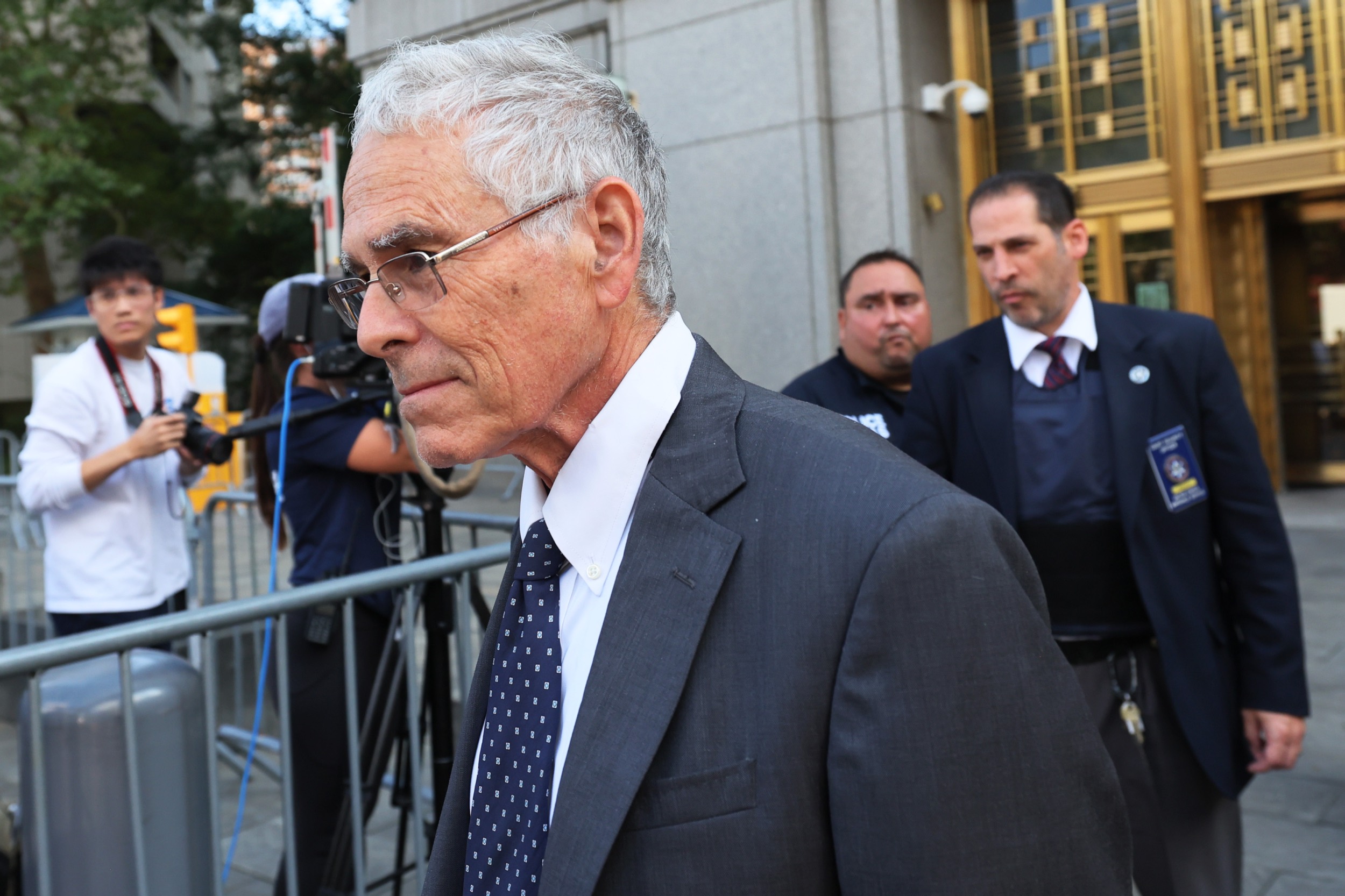
Joseph Bankman, father of former FTX CEO Sam Bankman-Fried, walks out of a courthouse.
Enlarge / Joseph Bankman, father of former FTX CEO Sam Bankman-Fried, leaves after a bail hearing for his son at US District Court on August 11, 2023 in New York City.

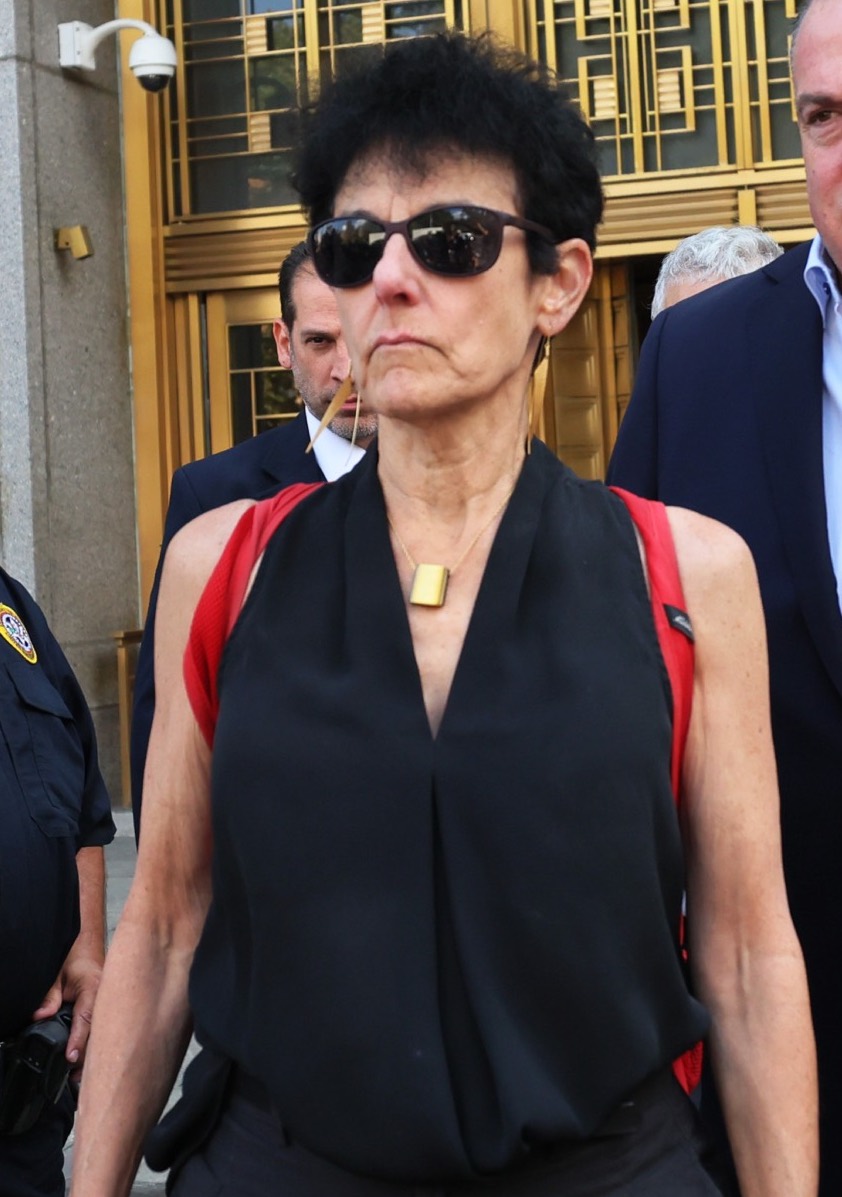
Barbara Fried, mother of former FTX CEO Sam Bankman-Fried.
Enlarge / Barbara Fried, mother of former FTX CEO Sam Bankman-Fried.
Getty Images | Michael M. Santiago

FTX yesterday sued Sam Bankman-Fried’s parents, alleging that Joseph Bankman and Barbara Fried “exploited their access and influence within the FTX enterprise to enrich themselves” at the expense of FTX customers.

FTX’s lawsuit against Bankman and Fried was filed in US Bankruptcy Court for the District of Delaware as part of bankruptcy proceedings involving FTX and Alameda Research. “Bankman and Fried siphoned millions of dollars out of the FTX Group for their own personal benefit and their chosen pet causes. This action seeks to hold them accountable for their misconduct and recover assets for the Debtors’ creditors,” the lawsuit claimed.

The civil lawsuit was filed about two weeks before Bankman-Fried’s criminal trial, which is scheduled to begin on October 3. Four former FTX executives already pleaded guilty to criminal charges.

In February 2022, Bankman and Fried were deeded “a $16.4 million luxury residence in The Bahamas,” a 30,000-square-foot property referred to as “Blue Water,” the lawsuit said.

“The total cash payment for Blue Water amounted to $18,914,327.82, inclusive of all costs, taxes, and fees. Neither Bankman nor Fried contributed any money of their own towards the purchase of Blue Water,” the lawsuit said. The property was allegedly “paid for with funds ultimately provided by FTX Trading,” while “Bankman and Fried enjoyed the benefits of more than $90,000 in expenses, paid for by FTX Trading, for their Bahamas residence.”

Bankman additionally received a $10 million gift of Alameda funds, FTX said. Nearly $6.8 million of that was transferred to the couple’s joint bank accounts, FTX said. “Bankman’s command of tax law and unique understanding of the FTX Group’s muddled corporate structure allowed him to facilitate the transfer of a cash gift totaling $10 million to himself and Fried consisting of Alameda Ltd. funds,” the lawsuit said.

Parents “knew or ignored bright red flags”

“Bankman and Fried also pushed for tens of millions of dollars in political and charitable contributions, including to Stanford University, which were seemingly designed to boost Bankman’s and Fried’s professional and social status at the expense of the FTX Group, and by extension, its customers and other creditors,” the lawsuit said.

Bankman and Fried “either knew—or ignored bright red flags revealing—that their son, Bankman-Fried, and other FTX Insiders were orchestrating a vast fraudulent scheme to profit and promote their personal and charitable agendas at the Debtors’ expense,” FTX alleged. The couple’s “influence and control over FTX Group funds expanded as the FTX Group plunged deeper into insolvency,” the lawsuit said.

FTX is seeking compensatory and punitive damages, disgorgement of the compensation Bankman received from FTX, and the return of “transferred property and related expenses or the value thereof.” The lawsuit also asked for an accounting “related to Defendants’ use and possession of Blue Water, and any profits realized therefrom.”

Lawyers for Bankman and Fried called the lawsuit’s claims “completely false.”

“This is a dangerous attempt to intimidate Joe and Barbara and undermine the jury process just days before their child’s trial begins,” attorneys for Bankman and Fried wrote in a statement quoted by the Associated Press. “These claims are completely false. [FTX CEO John] Ray and his massive team of lawyers, who are collectively running up countless millions of dollars in fees while returning relatively little to FTX clients, know better.”

https://arstechnica.com/?p=1969483


Online child safety law blocked after Calif. argued face scans not that invasive

Online child safety law blocked after Calif. argued face scans not that invasive

A California law requiring a wide range of platforms to estimate ages of users and protect minors from accessing harmful content appears to be just as unconstitutional as a recently blocked law in Texas requiring age verification to access adult content.

Yesterday, US District Judge Beth Labson Freeman ordered a preliminary injunction stopping California Attorney General Rob Bonta from enforcing the state’s Age-Appropriate Design Code Act (CAADCA), finding that the law likely violates the First Amendment.

“The Court finds that although the stated purpose of the Act—protecting children when they are online—clearly is important,” Freeman wrote, “the CAADCA likely violates the First Amendment.”

“Specifically,” Freeman said, “the age estimation and privacy provisions thus appear likely to impede the ‘availability and use’ of information and accordingly to regulate speech,” and “the steps a business would need to take to sufficiently estimate the age of child users would likely prevent both children and adults from accessing certain content.”

Netchoice—a trade group whose members include tech giants like Meta, TikTok, Google, and Amazon—filed a lawsuit requesting the preliminary injunction last December. Yesterday, Chris Marchese, the director of the NetChoice Litigation Center, celebrated the court’s decision to grant the injunction.

“We appreciate the district court’s thoughtful analysis of the First Amendment and decision to prevent regulators from violating the free speech and online privacy rights of Californians, their families, and their businesses as our case proceeds,” Marchese said. “We look forward to seeing the law permanently struck down and online speech and privacy fully protected.”

A group of civil society organizations, legal scholars, parents, and youth advocates known as the Kids Code coalition expressed disappointment in Freeman’s decision. They felt the court blocked “a road to accountability for tech companies” and gave “tech companies a free pass to put profit over kids’ safety online.”

As California argued, the Kids Code coalition contends that the CAADCA “is not about speech or content,” but “about designing safe products.” The coalition argued that “the First Amendment does not shield corporations from accountability for their profit-motivated design decisions that endanger kids’ well-being” and “strongly support an appeal of this ruling.”

“Almost every product children use from cribs to car seats is regulated so that they will be safe for children,” the Kids Code coalition said. “Yet social media companies design their products with little regulation, and children are hurt and even die because these products are not required to be designed for the safety of young users. As Big Tech has shown time and again, they will pull out all the stops to continue to profit off of significant harm to kids and teens with impunity.”

Bonta’s press office told Ars that the state has no comment beyond: “We are disappointed by the decision and will respond in court as appropriate.”

https://arstechnica.com/?p=1969388


SpaceX sues US attorney general in bid to stop hiring-discrimination case

A pen and book resting atop a paper copy of a lawsuit.

SpaceX has sued US Attorney General Merrick Garland and two other Department of Justice officials in response to the government’s allegations that SpaceX discriminated against asylees and refugees in hiring. SpaceX denied the hiring discrimination claims and alleged that the DOJ’s administrative process for handling the discrimination complaint is unconstitutional.

The Justice Department filed an administrative complaint against SpaceX on August 24 alleging that from at least September 2018 to at least May 2022, Elon Musk’s space company “discriminated against asylees and refugees throughout its hiring process, including during recruiting, screening, and selection, in violation of the Immigration and Nationality Act.”

The DOJ suit alleged that “asylees and refugees had virtually no chance of being fairly considered for or hired for a job at SpaceX.” The DOJ complaint was filed through its own administrative hearing office in which cases are heard by administrative law judges. SpaceX is trying to stop that process by filing a lawsuit in US District Court for the Southern District of Texas.

SpaceX’s lawsuit names as defendants Garland, Administrative Law Judge Carol Bell, and Chief Administrative Hearing Officer James McHenry. SpaceX asked the court for an injunction that would block the administrative proceedings, “declare them unlawful, [and] instruct the ALJ to dismiss the case.”

SpaceX’s lawsuit claimed:

SpaceX has not engaged in any practice or pattern of discriminating against anyone, including asylees or refugees. To the contrary, SpaceX wants to hire the very best candidates for every job regardless of their citizenship status, and in fact has hired hundreds of noncitizens.

But aside from being factually and legally insupportable, the government’s proceedings are unconstitutional for at least four reasons: (1) the administrative law judge (ALJ) adjudicating the government’s complaint was unconstitutionally appointed; (2) the ALJ is unconstitutionally insulated from Presidential authority because she is protected by two layers of for-cause removal protections; (3) the ALJ is unconstitutionally purporting to adjudicate SpaceX’s rights in an administrative proceeding rather than in federal court; and (4) the ALJ is unconstitutionally denying SpaceX its Seventh Amendment right to a jury trial.

SpaceX isn’t the only Musk-led company trying to block a federal investigation. In July, Musk’s X Corp. asked a court to stop a Federal Trade Commission investigation, prevent the FTC from deposing Musk, and terminate a privacy settlement that Twitter agreed to before Musk bought the social network. DOJ lawyers defended the FTC’s investigation in a response last week.

SpaceX pins hopes on SCOTUS ruling

SpaceX is trying to take advantage of a recent Supreme Court ruling in two cases against the FTC and Securities and Exchange Commission. As Columbia Law Professor Ronald Mann explained on SCOTUSblog, the unanimous April 2023 ruling “allows the defendants in both cases to short-circuit the administrative process and go directly to a district court to challenge the proceedings up front.”

The SCOTUS ruling wasn’t surprising, but it “confirmed a new avenue for pre-enforcement challenges to the administrative proceedings of federal agencies,” Mann wrote. He added that “the prominence of a Supreme Court decision directly validating an end run around agency proceedings of two of the largest federal commissions—the FTC and the SEC—is likely to spur an uptick in cases trying to forestall commission enforcement proceedings.”

SpaceX, pointing to this ruling, said in its lawsuit against the DOJ that the “Supreme Court has recently emphasized that federal courts should adjudicate structural constitutional claims like those presented here without waiting for agency proceedings to conclude. That is because the proceedings themselves impose a ‘here-and-now injury’ that ‘cannot be undone’ with appellate review.”

The DOJ’s Immigrant and Employee Rights (IER) Section opened an investigation into SpaceX in May 2020. The DOJ said that “SpaceX failed to provide documents responsive to IER’s investigative requests” until the IER obtained a federal court order that required SpaceX to comply with a subpoena.

“In job postings and public statements over several years, SpaceX wrongly claimed that under federal regulations known as ‘export control laws,’ SpaceX could hire only US citizens and lawful permanent residents, sometimes referred to as ‘green card holders.’ Export control laws impose no such hiring restrictions,” the DOJ said.

Out of 10,000 SpaceX hires between September 2018 and May 2022, only one was an asylee and zero were refugees, according to SpaceX data cited by the DOJ. The one asylee was hired about four months after the DOJ’s IER Section notified SpaceX of its investigation.

The DOJ noted that SpaceX employees include “welders, cooks, crane operators, baristas and dishwashers, as well as information technology specialists, software engineers, business analysts, rocket engineers and marketing professionals,” and said the “jobs at issue in the lawsuit are not limited to those that require advanced degrees.”

https://arstechnica.com/?p=1969341


Musk and Netanyahu blame “armies of bots” for spreading antisemitism on X

Musk and Netanyahu blame “armies of bots” for spreading antisemitism on X

Today, Elon Musk and Israeli Prime Minister Benjamin Netanyahu livestreamed a discussion largely focused on the future of AI on Musk’s platform X, formerly known as Twitter.

According to The New York Times, the talk was arranged at Musk’s suggestion, and some perceived it as an attempt by Musk to seek “political cover at a time of rising antisemitism on X.” In return, for Netanyahu, the talk seemingly provided an opportunity to deflect from mass protests against Netanyahu’s attempts to weaken Israel’s Supreme Court. Instead he could be seen promoting his dedication to turning Israel into a tech leader—and possibly even signal that Musk may consider investing in the country’s tech, The Times reported.

The livestreamed event kicked off with a one-on-one between Musk and Netanyahu that attracted more than 735,000 views. While much of the one-on-one did focus on AI—which Musk claimed was “potentially the biggest civilizational threat” and Netanyahu called “a blessing and a curse”—the men also made time to discuss their views on antisemitism and how Musk deals with hate speech on X.

“I know your commitment to free speech,” Netanyahu said about 20 minutes into the talk. “But I also know your opposition to antisemitism. You’ve spoken about it. You’ve tweeted about it. And all I could say is, I hope you find within the confines of the First Amendment the ability to stop not only antisemitism, or roll it back as best you can, but any collective hatred of people.”

Musk said that he was “sort of against attacking any group” but that defending free speech “does at times mean that there’s someone you don’t like who’s saying something you don’t like.” However, “that doesn’t mean, some sort of negativity should be pushed upon people,” Musk said, noting that X couldn’t afford to let the platform become “unpleasant,” because it would lose users. He said that’s why his platform works to de-amplify hate speech when it’s detected—”because we think probably that’s not what people want to hear.”

“Obviously, I’m against antisemitism,” Musk said. “I’m against anti-really anything that promotes hate and conflict.”

Netanyahu noted that X’s policy didn’t stop Musk from condemning antisemitism every chance he got. The entire conversation remained strictly agreeable, with Netanyahu’s only pushback coming about 25 minutes in. The prime minister asked Musk if it was “technically possible” to limit “armies of bots” from amplifying hate speech on X.

“So at least if you get a crazy guy and a hateful guy, let him be speaking for one voice rather than arming an army of fake millions,” Netanyahu suggested.

https://arstechnica.com/?p=1969096