States’ attempts to age-gate the Internet blocked by constitutional hurdles

States’ attempts to age-gate the Internet blocked by constitutional hurdles

Courts have started blocking some US states’ earliest attempts to age-gate the Internet. Yesterday, courts ordered preliminary injunctions blocking a Texas law requiring ID to access websites featuring adult entertainment, as well as an Arkansas law requiring ID to access some social media platforms. Both laws otherwise would’ve taken effect today.

While the Texas law was more narrowly aimed at restricting minors from accessing specific content that’s not age-appropriate, Arkansas’ law—the Social Media Safety Act—was much broader, stopping minors from creating accounts without parental permission on social media platforms that generate more than $100 million annually. It was also, according to the court, poorly researched, vaguely defined, and likely unconstitutional.

Bizarrely, Arkansas’ Social Media Safety Act would apply to some obvious platforms, like Facebook or TikTok, but not to other more popular platforms for kids, like YouTube. Netchoice, a trade group representing platforms likely impacted by the law—including Facebook, Instagram, Twitter, TikTok, Snapchat, Pinterest, and Nextdoor—sued to block the law, partly because the law was too vague. Some platforms, like Snapchat, weren’t even sure if the law applied to them, Netchoice argued.

Ultimately, US district judge Timothy Brooks granted the preliminary injunction to temporarily stop Arkansas Attorney General Tim Griffin from enforcing the law—finding that it was unconstitutionally vague and perhaps violating the First Amendment by restricting access to speech. In his opinion, Brooks wrote that the state itself wasn’t even sure if the law applied to Snapchat.

That ambiguity poses a problem for platforms since they could face a $2,500 fine for each violation, and compliance costs were equally steep. Nextdoor, which must comply with the law, told the court that compliance would raise its costs by up to 3,000 percent.

Confusion arose when the state’s witness, Tony Allen—an expert in age-verification standards for the United Kingdom who worked on the UK’s Online Safety Bill—testified that the Social Media Safety Act applied to Snapchat, then the state’s attorney later contradicted Allen. Neither could agree on Snapchat’s primary purpose. Was the app primarily for “interacting socially with other profiles and accounts”—as a covered social media platform under the law—or was it primarily for direct-messaging, which the law exempts? Nobody knew for sure.

Partly because of this exchange, Brooks ruled that Arkansas’ law “is unconstitutionally vague because it fails to adequately define which entities are subject to its requirements.” And because the law could potentially deter free speech, Brooks wrote that the court’s duty to block enforcement was greater because it “is critical ‘to ensure that ambiguity does not chill protected speech.’”

Arkansas’ AG Griffin’s statement said that he was “disappointed” in the ruling and planned to “continue to vigorously defend the law and protect our children.”

Netchoice has argued that parental consent laws like Arkansas’ law—which some states like Georgia are currently weighing and other states like Texas and Utah have already passed—unconstitutionally burden Internet users’ First Amendment rights. These laws require all Internet users to provide identifying information to access platforms—either by uploading official government documents or submitting to biometric scans—which would likely discourage many users who value their privacy from using sites.

“The Court agrees,” Brooks wrote. “It is likely that many adults who otherwise would be interested in becoming account holders on regulated social media platforms will be deterred—and their speech chilled—as a result of the age-verification requirements.” It also follows, Brook wrote, that the law would “obviously burdens minors’ First Amendment rights.”

The preliminary injunction will stop Arkansas from enforcing the law until the case is litigated. Based on Brooks’ opinion, Arkansas will likely struggle to defeat claims of unconstitutionality, as Brooks wrote that, as currently written, the law “is not targeted to address the harms it has identified, and further research is necessary before the State may begin to construct a regulation that is narrowly tailored to address the harms that minors face due to prolonged use of certain social media.”

“We’re pleased the court sided with the First Amendment and stopped Arkansas’ unconstitutional law from censoring free speech online and undermining the privacy of Arkansans, their families, and their businesses as our case proceeds,” Chris Marchese, director of the NetChoice Litigation Center, said in a statement. “We look forward to seeing the law struck down permanently.”

https://arstechnica.com/?p=1965092



NYPD using drones to check out noisy backyard parties over Labor Day weekend

A drone equipped with a camera hovers in the air
Getty Images | Richard Newstead

The New York City Police Department said it will use drones to check out backyard parties when neighbors call to complain about large crowds this weekend.

“The drones are going to be responding to non-priority calls and priority calls,” NYPD Assistant Commissioner Kaz Daughtry said at a press conference yesterday. “For example, if we have any 311 calls on our non-emergency line where if a caller states there’s a large crowd, a large party in the backyard, we’re going to be utilizing our assets to go up, to go check on the party, to make sure if the call is founded or not, and we’ll be able to determine how many resources we need to send to that location for this weekend. So we will have our drone teams out there starting tonight, all the way into Monday morning.”

Daughtry spoke near the end of a press conference (see video) about safety and security measures for J’Ouvert, a “traditional street festival honoring the vast heritage and culture of the Caribbean diaspora,” and the West Indian Day Parade.

The drone plan “drew immediate backlash from privacy and civil liberties advocates, raising questions about whether such drone use violated existing laws for police surveillance,” an Associated Press report said. A privacy advocate said using drones to examine backyard parties appears to violate a New York City law called the Public Oversight of Surveillance Technology (POST) Act.

“It’s a troubling announcement and it flies in the face of the POST Act… deploying drones in this way is a sci-fi inspired scenario,” New York Civil Liberties Union privacy and technology strategist Daniel Schwarz said, according to the AP.

NYPD policy doesn’t mention parties

The POST Act requires the NYPD to publish impact and use policies for the surveillance technologies it uses. As The Verge pointed out, the NYPD’s impact and use policy for drones doesn’t mention using the devices to examine backyard parties. The NYPD document says that “a UAS [Unmanned Aircraft System] will not be used in areas where there is a reasonable expectation of privacy without NYPD personnel first obtaining a search warrant that explicitly authorizes the use of a UAS,” except in “exigent circumstances.”

The policy says the NYPD may use drones for “search and rescue operations, documentation of collisions and crimes scenes, evidence searches at large inaccessible scenes, hazardous material incidents, monitoring vehicular traffic and pedestrian congestion at large scale events, visual assistance at hostage/barricaded suspect situations, rooftop security observations at shooting or large scale events, public safety, emergency, and other situations with the approval of the Chief of Department.”

“In situations where deployment of NYPD UAS has not been foreseen or prescribed in policy, the highest uniformed member of the NYPD, the Chief of Department, will decide if deployment is appropriate and lawful,” the document says. “In accordance with the Public Oversight of Surveillance Technology Act, an addendum to this impact and use policy will be prepared as necessary to describe any additional uses of UAS.”

We asked the NYPD today how using drones to check out backyard parties would fit into the required impact and use policy. An NYPD spokesperson responded to our email but didn’t answer the question.

The AP reported that when it contacted Mayor Eric Adams’ office, a spokesperson “shared a link to new guidelines that make it easier for private drone operators to fly in the city, but which do not address whether the NYPD has any policies for drone surveillance.”

Albert Fox Cahn, founder and executive director of the Surveillance Technology Oversight Project, told the AP that “one of the biggest concerns with the rush to roll out new forms of aerial surveillance is how few protections we have against seeing these cameras aimed at our backyards or even our bedrooms.” Cahn called for more transparency and guard rails on drone use and said that “flying a drone over a backyard barbecue is a step too far for many New Yorkers.”

https://arstechnica.com/?p=1965087


Texas law requiring age verification on porn sites ruled unconstitutional [Updated]

Texas law requiring age verification on porn sites ruled unconstitutional [Updated]
Aurich Lawson | Getty Images

The day before a Texas antiporn law that requires age verification to access adult websites was set to take effect, the state’s attorney general, Angela Colmenero, has been at least temporarily blocked from enforcing the law.

US District Judge David Alan Ezra granted a preliminary injunction temporarily blocking enforcement after the Free Speech Coalition (FSC) joined adult performers and sites like Pornhub in a lawsuit opposing the law. Today, they convinced Ezra that Texas’ law violates the First Amendment and would have “a chilling effect on legally-protected speech,” FSC said in a press release.

“This is a huge and important victory against the rising tide of censorship online,” Alison Boden, FSC’s executive director, said. “From the beginning, we have argued that the Texas law, and those like it, are both dangerous and unconstitutional. We’re pleased that the court agreed with our view that [the law’s] true purpose is not to protect young people, but to prevent Texans from enjoying First Amendment protected expression. The state’s defense of the law was not based in science or technology, but ideology and politics.”

Now, Texas will have to wait until this lawsuit is litigated to enforce the law.

Ars could not immediately reach FSC, Pornhub, or Colmenero for comment. [Update: A spokesperson for Pornhub’s parent company Aylo told Ars, “We are pleased with the court’s decision today, which reaffirms our position that the age verification law implemented in Texas is unconstitutional. We have publicly supported mandatory age verification of viewers of adult content for years, but any method of age verification must preserve user privacy and safety.

“The only solution that makes the Internet safer, preserves user privacy, and stands to prevent children from accessing age-inappropriate content is performing age verification at the device level,” Aylo’s spokesperson said. “We are pleased that the court recognizes the severity of compelled speech and its presence in this law that Texas has implemented. We are proud to fight for our industry and the performers that use it to legally earn a living, and we are glad to see the court recognize that this law is unconstitutional and would have required adult entertainers to falsely imply that their content poses health risks.”

The Texas Office of the Attorney General’s director of communications, Paige Willey, told Ars, “The Office of the Attorney General will move to stay the injunction and will appeal this decision.”]

According to FSC, in addition to free speech concerns, the law needed to be blocked because it would have exposed consumers to “significant privacy risks” by forcing adult-website visitors to show digital IDs.

Pornhub has been protesting similar laws in Louisiana and even took the unexpected step of blocking access to its website when Utah, Mississippi, and Virginia passed age-verification laws. Earlier this year, Pornhub posted a long statement on X, formerly Twitter, explaining that while US officials acting to prevent children from accessing adult content is “great,” the way that “many elected officials have chosen to implement these laws is haphazard and dangerous.”

SC’s Boden previously warned that these laws give states “the power to harass and censor legal businesses” and that allowing states “to suppress certain speech by requiring invasive and burdensome systems that consumers refuse to engage with is simply state censorship.” The cost to adult sites in Texas found violating age-verification laws could be significant, FSC said.

“The law, set to take effect September 1, would have given the Attorney General the power to fine a site with adult content more than $3 million per year if it did not require visitors to present a digital ID or undergo background checks to establish age,” FSC’s press release said.

In his Texas order today, Ezra wrote that “the state has a legitimate goal in protecting children from sexually explicit material online,” but that “does not negate this Court’s burden to ensure that the laws passed in its pursuit comport with established First Amendment doctrine.” Ezra said that while a “preliminary injunction is an extraordinary remedy,” it was necessary because the court found the law unconstitutional.

Further, Ezra agreed with FSC and Pornhub that Texas could achieve its goal of protecting children from adult content by other means. FSC recommended that “parental filters are a less restrictive and more effective method of protecting minors.”

“There are viable and constitutional means to achieve Texas’ goal, and nothing in this order prevents the state from pursuing those means,” Ezra wrote.

FSC said it’s encouraged by the finding that Texas’ law was unconstitutional but that plaintiffs had predicted that the Texas challenge might present “the most straightforward path to securing a ruling like this.” Securing similar rulings in other states may not be as easy, but “the issues are the same whether in Utah, Louisiana or Virginia,” FSC said.

“Anyone who attempts to bring a case in those jurisdictions faces little hope of success,” FSC predicted, and as for Texas, FSC is “confident that the law will ultimately be struck down permanently.”

https://arstechnica.com/?p=1964840


Thorny AI ownership questions have Copyright Office seeking public input

An enthusiastic elementary school pupil studying a robot.

On Wednesday, the US Copyright Office began seeking public comment on issues surrounding generative AI systems and copyright. The public comment period, which starts on August 30, aims to explore the complex intersection of AI technology with copyright laws, and it closes on November 15. The comments could inform how the agency decides to grant copyrights in the future.

Outlined in a 24-page document published as a PDF file by the Federal Register, the “Notice of inquiry and request for comments” asks questions with far-reaching consequences for intellectual property in America.

Specifically, the Office is interested in four main areas: the use of copyrighted materials to train AI models and whether this constitutes infringement; the extent to which AI-generated content should or could be copyrighted, particularly when a human has exercised some degree of control over the AI model’s operations; how liability should be applied if AI-generated content infringes on existing copyrights; and the impact of AI mimicking voices or styles of human artists, which, while not strictly copyright issues, may engage state laws related to publicity rights and unfair competition.

Comments are sought to address these concerns because, in a relatively short period, we’ve seen the arrival of generative AI tools with surprising capabilities that can render images and video, imitate voices, answer questions, and compose text on demand. AI models have spawned hype and backlash, heavy corporate investment, and lawsuits. Those instances have put the Copyright Office on high alert as the frequency of AI-related copyright incidents increases:

Over the past several years, the Office has begun to receive applications to register works containing AI-generated material, some of which name AI systems as an author or co-author. At the same time, copyright owners have brought infringement claims against AI companies based on the training process for, and outputs derived from, generative AI systems.

As concerns and uncertainties mount, Congress and the Copyright Office have been contacted by many stakeholders with diverse views. The Office has publicly announced a broad initiative earlier this year to explore these issues. This Notice is part of that initiative and builds on the Office’s research, expertise, and prior work, as well as information that stakeholders have provided to the Office.

Listed among the incidents noted in the Copyright Office document are stories we’ve reported on in the past, including the first registration of latent diffusion artwork to Kris Kashtanova, which was granted in September and conditionally revoked in February; an attempt to register an AI-created artwork solely to a machine by Stephen Thaler (who has attempted similar things with patents), which a judge declined this month; and a copyright lawsuit against OpenAI on behalf of Sarah Silverman regarding the company’s use of her copyrighted works in ChatGPT training data. Additionally, artists sued Stability AI, Midjourney, and DeviantArt as a class action in January for alleged copyright violations.

In response to similar copyright concerns, several news organizations (including Ars Technica’s parent company, Conde Nast) recently took steps to block OpenAI’s web crawler, hoping it will prevent OpenAI from scraping data used to train future AI models. Most large language models, such as the ones that power ChatGPT, learned about the world by absorbing billions of documents found openly online—typically without consulting copyright holders.

The flexible arm of the law

The cover of "Zarya of the Dawn," a comic book created using Midjourney AI image synthesis in 2022 and subject to a copyright dispute.
Enlarge / The cover of “Zarya of the Dawn,” a comic book created using Midjourney AI image synthesis in 2022 and subject to a copyright dispute.
Kris Kashtanova

While US copyright law is fixed, its interpretation of emerging technology is nuanced and can change depending on how regulators (and judges) feel about the topic, which depends partially on public sentiment.

As the interpretation stands, AI artwork may be copyrighted in the US as part of a larger, human-authored work, but not individually. And we’ve seen that copyright does not extend to creative works without any human authorship. However, there are still unresolved questions about what degree of human involvement would trigger the threshold for copyright registration, similar to questions that arose upon the invention of the camera in the 19th century.

In 1884, the defendant in Burrow-Giles Lithographic Co. v. Sarony claimed that photographs could not be subject to copyright because a photo is “a reproduction on paper of the exact features of some natural object or of some person.” They argued that a photo is the work of a machine and not a creative expression. But the court ruled that photos can be copyrighted because they are “representatives of original intellectual conceptions of [an] author.”

The question today is: What action in using a machine learning tool counts as the “original intellectual conception of an author?” Is it the selection of the particular AI tool? The input of a prompt? The curation or editing of the resulting machine-generated output? While current US copyright guidelines seem to sidestep these questions, the Copyright Office is open to hearing the public’s opinions.

Also, the Copyright Office would like to hear opinions about the unsettled issue over the inclusion of copyrighted material in training data sets, notably writing, “the Office is aware that there is disagreement about whether or when the use of copyrighted works to develop datasets for training AI models (in both generative and non-generative systems) is infringing.”

But that’s not all. The original 24-page request document is a fascinating look into the minds of current US copyright regulators, and it includes 34 multi-part questions of interest for the Copyright Office that would take another 24-page document to straighten out in detail.

The deadline for written comments is October 18, and they can be submitted online through a Regulations.gov form. Reply comments must be submitted to the Copyright Office by November 15.

https://arstechnica.com/?p=1964248


FCC says “too bad” to ISPs complaining that listing every fee is too hard

Illustration of US paper currency and binary data to represent Internet connectivity.
Getty Images | imagedepotpro

The Federal Communications Commission yesterday rejected requests to eliminate an upcoming requirement that Internet service providers list all of their monthly fees.

Five major trade groups representing US broadband providers petitioned the FCC in January to scrap the requirement before it takes effect. In June, Comcast told the FCC that the listing-every-fee rule “impose[s] significant administrative burdens and unnecessary complexity in complying with the broadband label requirements.”

The five trade groups kept up the pressure earlier this month in a meeting with FCC officials and in a filing that complained that listing every fee is too hard. The FCC refused to bend, announcing yesterday that the rules will take effect without major changes.

“Every consumer needs transparent information when making decisions about what Internet service offering makes the most sense for their family or household. No one wants to be hit with charges they didn’t ask for or they did not expect,” FCC Chairwoman Jessica Rosenworcel said.

Yesterday’s order “largely affirms the rules… while making some revisions and clarifications such as modifying provider record-keeping requirements when directing consumers to a label on an alternative sales channel and confirming that providers may state ‘taxes included’ when their price already incorporates taxes,” the FCC said.

ISPs don’t want to list all fees

Comcast and other ISPs objected to a requirement that ISPs “list all recurring monthly fees” including “all charges that providers impose at their discretion, i.e., charges not mandated by a government.” They complained that the rule will force them “to display the pass-through of fees imposed by federal, state, or local government agencies on the consumer broadband label.”

As we’ve previously written, ISPs could simplify billing and comply with the new broadband-labeling rules by including all costs in their advertised rates. That would give potential customers a clearer idea of how much they have to pay each month and save ISPs the trouble of listing every charge that they currently choose to break out separately.

Rejecting the broadband industry’s request, the FCC order yesterday said:

[W]e affirm our requirement that providers display all monthly fees with respect to broadband service on the label to provide consumers with clear and accurate information about the cost of their broadband service. We thus decline providers’ request that they not disclose those fees or that they instead display an “up to” price for certain fees they choose to pass through to consumers.

Specifically, “providers must itemize the fees they add to base monthly prices, including fees related to government programs they choose to ‘pass through’ to consumers, such as fees related to universal service or regulatory fees,” the FCC said.

The FCC was ordered by Congress to implement broadband-label rules. The FCC is requiring ISPs to display the labels to consumers at the point of sale and include information such as the monthly price, additional fees, introductory rates, data caps, charges for data overages, and performance metrics. The FCC rules aren’t in force yet because they are subject to a federal Office of Management and Budget (OMB) review under the US Paperwork Reduction Act.

https://arstechnica.com/?p=1964377


OpenAI disputes authors’ claims that every ChatGPT response is a derivative work

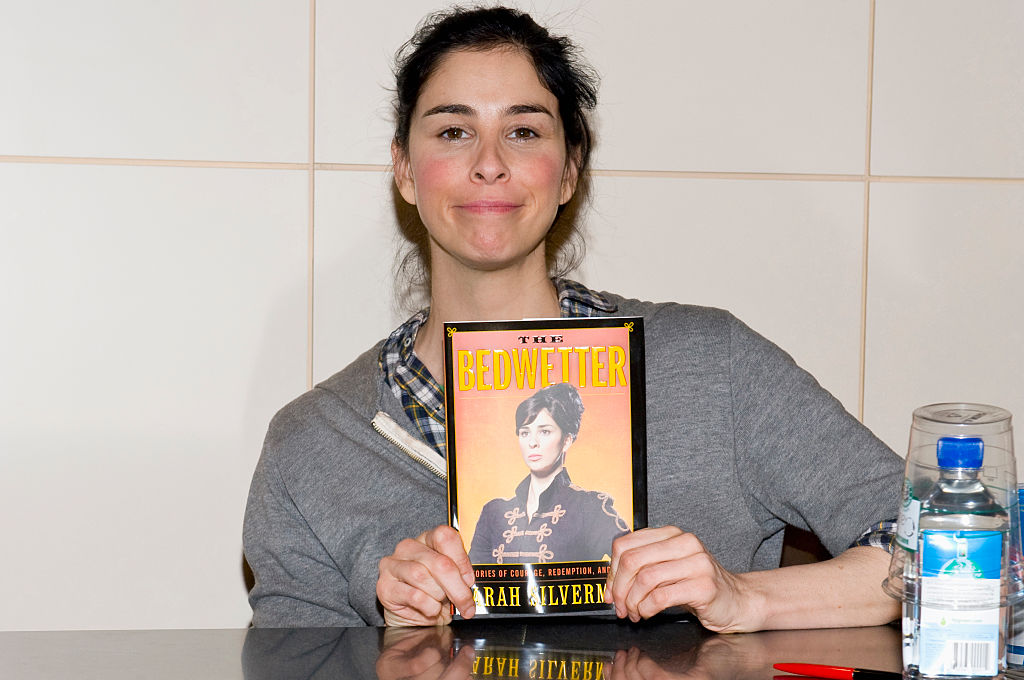
<img src="https://rassegna.lbit-solution.it/wp-content/uploads/2023/08/openai-disputes-authors-claims-that-every-chatgpt-response-is-a-derivative-work.jpg" alt="Sarah Silverman attends The Bedwetter book signing at the Barnes and Noble Union Square in New York City.”>
Enlarge / Sarah Silverman attends The Bedwetter book signing at the Barnes and Noble Union Square in New York City.

This week, OpenAI finally responded to a pair of nearly identical class-action lawsuits from book authors—including Sarah Silverman, Paul Tremblay, Mona Awad, Chris Golden, and Richard Kadrey—who earlier this summer alleged that ChatGPT was illegally trained on pirated copies of their books.

In OpenAI’s motion to dismiss (filed in both lawsuits), the company asked a US district court in California to toss all but one claim alleging direct copyright infringement, which OpenAI hopes to defeat at “a later stage of the case.”

The authors’ other claims—alleging vicarious copyright infringement, violation of the Digital Millennium Copyright Act (DMCA), unfair competition, negligence, and unjust enrichment—need to be “trimmed” from the lawsuits “so that these cases do not proceed to discovery and beyond with legally infirm theories of liability,” OpenAI argued.

OpenAI claimed that the authors “misconceive the scope of copyright, failing to take into account the limitations and exceptions (including fair use) that properly leave room for innovations like the large language models now at the forefront of artificial intelligence.”

According to OpenAI, even if the authors’ books were a “tiny part” of ChatGPT’s massive data set, “the use of copyrighted materials by innovators in transformative ways does not violate copyright.” Unlike plagiarists who seek to directly profit off distributing copyrighted materials, OpenAI argued that its goal was “to teach its models to derive the rules underlying human language” to do things like help people “save time at work,” “make daily life easier,” or simply entertain themselves by typing prompts into ChatGPT.

The purpose of copyright law, OpenAI argued, is “to promote the Progress of Science and useful Arts” by protecting the way authors express ideas, but “not the underlying idea itself, facts embodied within the author’s articulated message, or other building blocks of creative,” which are arguably the elements of authors’ works that would be useful to ChatGPT’s training model. Citing a notable copyright case involving Google Books, OpenAI reminded the court that “while an author may register a copyright in her book, the ‘statistical information’ pertaining to ‘word frequencies, syntactic patterns, and thematic markers’ in that book are beyond the scope of copyright protection.”

“Under the resulting judicial precedent, it is not an infringement to create ‘wholesale cop[ies] of [a work] as a preliminary step’ to develop a new, non-infringing product, even if the new product competes with the original,” OpenAI wrote.

In particular, OpenAI hopes to convince the court that the authors’ vicarious copyright infringement claim—which alleges that every ChatGPT output represents a derivative work, “regardless of whether there are any similarities between the output and the training works”— is an “erroneous legal conclusion.”

The company’s motion to dismiss cited “a simple response to a question (e.g., ‘Yes’),” or responding with “the name of the President of the United States” or with “a paragraph describing the plot, themes, and significance of Homer’s The Iliad” as examples of why every single ChatGPT output cannot seriously be considered a derivative work under authors’ “legally infirm” theory.

“That is not how copyright law works,” OpenAI argued, while claiming that any ChatGPT outputs that do connect to authors’ works are similar to “book reports or reviews.”

Further, OpenAI argued that the authors have failed to show that the company has a “direct financial interest” in allegedly infringing the copyrights of their works.

“It is not enough that the challenged activity is carried out by users of tools offered for profit by a technology company: rather, to satisfy the ‘direct financial interest’ prong” of copyright infringement, the material that infringes the plaintiff’s works must ‘act as a draw for [defendant’s] customers’ such that there is a direct ‘causal link between the infringement of the plaintiff’s own copyrighted works and any profit to the [defendant],’” OpenAI wrote.

Neither OpenAI nor lawyers representing the authors suing from the Joseph Saveri Law Firm immediately responded to Ars’ request to comment.

https://arstechnica.com/?p=1964348


Google escapes Play Store class action after finding more persuasive expert

Google escapes Play Store class action after finding more persuasive expert

A US district judge has reversed course, revoking a 2022 class-action status order for 21 million Google Play Store customers who alleged that Google “artificially inflated” prices for Android apps that could have been downloaded cheaper outside the Play Store.

Yesterday, Judge James Donato ordered the class action canceled after he said that new evidence showed that key expert testimony that plaintiffs relied on to claim that prices were inflated was “based on assumptions about the Play Store apps that are not supported by the evidence.”

Because the expert testimony—which came from antitrust expert Hal J. Singer—failed a reliability test, it must be excluded, Donato said. Now it seems likely that plaintiffs may have to “dramatically reduce potential damages” in the case, which Singer had previously estimated could amount to billions, Bloomberg reported.

Singer told Ars that he cannot comment on the decision to exclude his testimony because “the matter is still ongoing.”

Donato’s order has not yet been finalized because a federal court is currently weighing a separate appeal on the class action certification. In the coming weeks, both parties have been directed to meet and find a solution to resolve that separate appeal before a September 7 hearing.

A Google spokesperson told Ars that the company appreciates “the court’s careful consideration of this issue” because contrary to consumers’ claims, “Android increases openness and choice to the benefit of consumers.”

“We look forward to continuing to make our case,” Google’s spokesperson told Ars.

Google swapped experts to fight class action

A court filing discussing the merits of Singer’s expert testimony revealed that Google succeeded in excluding Singer from the record by swapping in a new expert.

Economist Gregory K. Leonard was able to more strongly dispute Singer’s testimony than Google’s previous expert, economist Michelle Burtis—whose testimony failed to stop the class action status from being certified initially.

Burtis seemingly failed because she did not label the model that Singer used to estimate Google’s alleged overcharges to consumers as “junk science.” Instead, Burtis acknowledged that Singer’s model “exists in the literature” and was a model that economists used, convincing the court that Singer’s testimony was admissible.

“Regarding this model, I would say, I don’t think this model itself is junk science,” Burtis told the court during the initial class action certification hearing. “I wouldn’t say that. All I’m saying here is that, you know, Dr. Singer, he didn’t try to adapt the model, to really test the issue of common impact here. He didn’t do anything to test.”

Donato said that Burtis only offered criticisms of Singer’s testimony “that went to the weight of his opinions, and not to admissibility.” Leonard, on the other hand, “took a fresh look” at Singer’s opinions and told the court that they make “no economic sense at all.”

According to Leonard, Singer’s model for estimating price inflation yields “unreliable results” because Singer’s model assumed that all of the apps listed within Google Play Store categories are suitable substitutes for each other.

Leonard used an example of three apps listed in the Education category—Rosetta Stone, Duolingo, and Picture This–Plant Identifier—to demonstrate why Singer’s testimony should be excluded. He said that according to Singer’s logic, if an app with a large category share raised its price, some customers would simply substitute it with another app in the category with a larger category share.

This model, Leonard said, did not necessarily reflect the real world and made “no economic sense,” because it suggested that if a language app like Duolingo—which has a 15 percent category share—raised its price, customers would substitute it with another popular app like Picture This–Plant Identifier—which has a 20 percent category share—just because it has a larger category share. To Leonard, it seems much more likely that customers would substitute another language app like Rosetta Stone—which has a less than 5 percent category share. Because of this problem with Singer’s logic, Leonard said the entire model was unreliable, calling into question Singer’s estimates for alleged app overcharges.

Donato agreed that Leonard highlighted “a fundamental problem” that a jury would have if Singer were allowed to testify at trial.

“It may be possible for a jury to make reasonable decisions about the substitutability of certain apps at a very high and general level, but Dr. Singer’s analysis does not provide usable guidance on what to do with the myriad of differences and distinctions between apps within the Google Play Store categories,” Donato wrote. “He does not provide any boundaries on substitution in broad app categories that contain many unlike products. This would create a serious risk of the jury simply guessing about proportionate substitution and ultimately the… fees to consumers.”

While Donate wrote that the court had “some misgivings about Google taking a second shot at Dr. Singer’s testimony with a new witness,” he pointed out that Singer did not “seriously dispute” Leonard’s testimony.

“The path to a fair result often has some turns, particularly as the record develops in a complex antitrust dispute such as this one,” Donato said.

https://arstechnica.com/?p=1964097


Sports leagues ask US for “instantaneous” DMCA takedowns and website blocking

A basketball falling through the net of a basketball hoop
Getty Images | David Madison

Sports leagues are urging the US to require “instantaneous” takedowns of pirated livestreams and new requirements for Internet service providers to block pirate websites.

The Digital Millennium Copyright Act of 1998 requires websites to “expeditiously” remove infringing material upon being notified of its existence. But pirated livestreams of sports events often aren’t taken down while the events are ongoing, said comments submitted last week by Ultimate Fighting Championship, the National Basketball Association, and National Football League.

The “DMCA does not define ‘expeditiously,’ and OSPs [online service providers] have exploited this ambiguity in the statutory language to delay removing content in response to takedown requests,” the leagues told the US Patent and Trademark Office in response to a request for comments on addressing counterfeiting and piracy.

The leagues urged the US “to establish that, in the case of live content, the requirement to ‘expeditiously’ remove infringing content means that content must be removed ‘instantaneously or near-instantaneously’ in response to a takedown request.” The leagues claimed the change “would be a relatively modest and non-controversial update to the DMCA that could be included in the broader reforms being considered by Congress or could be addressed separately.” They also want stricter “verification measures before a user is permitted to livestream.”

The UFC separately submitted comments on its own, urging the US to require that ISPs block pirate sites. The UFC said that a “significant and growing” number of websites, typically operated from outside the US, don’t respond to takedown requests and thus should be blocked by broadband network operators. The UFC wrote:

Unlike many other jurisdictions around the world, the US lacks a “site-blocking” regime whereby copyright owners may obtain no-fault injunctions requiring domestic Internet service providers to block websites that are primarily geared at infringing activity. A “site-blocking” regime, with appropriate safeguards to prevent abuse, would substantially facilitate all copyright owners’ ability to address piracy, including UFC’s.

Website-blocking is bound to be a controversial topic, although the Federal Communications Commission’s now-repeated net neutrality rules only prohibited blocking of “lawful Internet traffic.” While the UFC said it just wants “websites that are primarily geared at infringing activity” to be blocked, a site-blocking regime could be used more expansively if there aren’t strict limits.

Big Tech opposes major changes

A Big Tech lobby group urged the US to avoid requiring more onerous enforcement obligations. The Computer & Communications Industry Association (CCIA) said the current notice-and-takedown legal framework provides “an efficient way to expeditiously remove allegedly infringing content from Internet services, while fostering cooperation between relevant stakeholders.”

The CCIA continued:

Under both existing copyright law and trademark law, there is no obligation on the part of online service providers to proactively monitor or enforce infringements. Rather, this is a matter of discretion and policy for each service, and should remain that way. The imposition of proactive enforcement obligations would be less effective, would inevitably negatively impact free speech and legitimate trade, and would introduce untold unintended consequences—digital services would be disincentivized from innovating and would do only what the law required, benefiting no one.

The CCIA also told the US that “the most effective way to prevent infringement is to ensure that members of the public, most of whom want to pay for content, can lawfully consume works digitally whenever and wherever they want.”

Google submitted comments touting its anti-piracy systems while pointing out that the takedown process is too easily abused. “Unfortunately, we have seen certain actors abuse our takedown system as a pretext for censorship and anticompetitive behavior,” Google said. “We are committed to ensuring that we detect and reject bogus infringement allegations, such as removals for political or competitive reasons, even as we battle online piracy.”

Premier League wants “live takedown tool”

The US received comments about Automated Content Recognition (ACR) systems from England’s Premier League. ACR systems can “prevent unauthorized streams being uploaded onto the Internet,” the league said.

YouTube and Facebook already have such systems, the Premier League said. But for platforms without ACR, the Premier League said it wants live takedown tools that rights owners would operate themselves.

“The Premier League understands that not all intermediaries are able to develop and provide ACR systems,” the league said. “In such cases, a live takedown tool, to be operated by the rightsowners, is a technologically simple and low-cost alternative. Such tools need to be easy to use, and a rebuttable presumption should be applied in favour of the rightsowner rather than the streamer.”

https://arstechnica.com/?p=1964033


Too many users abused unlimited Dropbox plans, so they’re getting limits

Too many users abused unlimited Dropbox plans, so they’re getting limits

Sometimes the honor system just doesn’t work.

Up until yesterday, Dropbox offered an unlimited $24-per-user-per-month plan for businesses called Dropbox Advanced that came with an “as much as you need” storage cap. This was intended to free business users from needing to worry about quotas.

But as with unlimited cell phone data plans, the bad behavior of a small group of users is apparently ruining unlimited Dropbox storage for everybody. The company said in a blog post yesterday that it was retiring its unlimited storage policy specifically because people were buying Dropbox Advanced accounts “for purposes like crypto and Chia mining, unrelated individuals pooling storage for personal use cases, or even instances of reselling storage.” Dropbox says that these users were using “thousands of times more storage than [Dropbox’s] genuine business customers.”

Dropbox also says that this behavior has been getting worse recently because other services have also been placing caps on their storage plans—at some point within the last year, Google also removed similar “as much as you need” language from its Google Workspace plans.

Rather than attempting to police behavior or play whack-a-mole with the people abusing the service, Dropbox has imposed a 15TB cap on organizations with three or fewer users. An additional 5TB per user can be added on top of that, with a maximum cap of 1,000TB per organization.

To help legitimate business users transition, Dropbox says that “customers using less than 35TB of storage per license” can keep however much they’re using plus an additional 5TB for five years “at no additional charge.” Organizations using more than 35TB will get the same deal for one year, but they’ll need to deal with Dropbox directly to work out pricing. As a baseline, adding 1TB of storage without adding additional users will cost either $10 a month or $96 a year.

New customers will be affected by this policy change immediately, as you’ll see if you check the current pricing for Dropbox Advanced plans. Existing users will be “gradually migrated” to the new plans starting on November 1, and they’ll be notified at least 30 days before the migration happens.

https://arstechnica.com/?p=1963405


Judge tears apart Republican lawsuit alleging bias in Gmail spam filter

Illustration of an envelope stamped with the word
Getty Images | pagadesign

A federal judge yesterday granted Google’s motion to dismiss a lawsuit filed by the Republican National Committee (RNC), which claims that Google intentionally used Gmail’s spam filter to suppress Republicans’ fundraising emails. An order dismissing the lawsuit was issued yesterday by US District Judge Daniel Calabretta.

The RNC is seeking “recovery for donations it allegedly lost as a result of its emails not being delivered to its supporters’ inboxes,” Calabretta noted. But Google correctly argued that the lawsuit claims are barred by Section 230 of the Communications Decency Act, the judge wrote. The RNC lawsuit was filed in October 2022 in US District Court for the Eastern District of California.

“While it is a close case, the Court concludes that… the RNC has not sufficiently pled that Google acted in bad faith in filtering the RNC’s messages into Gmail users’ spam folders, and that doing so was protected by Section 230. On the merits, the Court concludes that each of the RNC’s claims fail as a matter of law for the reasons described below,” he wrote.

Calabretta, a Biden appointee, called it “concerning that Gmail’s spam filter has a disparate impact on the emails of one political party, and that Google is aware of and has not yet been able to correct this bias.” But he noted that “other large email providers have exhibited some sort of political bias” and that if Google did not filter spam, it would harm its users by subjecting them “to harmful malware or harassing messages. On the whole, Google’s spam filter, though in this instance imperfect, is not morally blameworthy.”

Calabretta gave the RNC partial leave to amend its complaint, but any new version of the lawsuit will have to be very different to move forward. “The Court grants Defendant’s Motion to Dismiss in full on the ground that it is immune from suit on these facts under Section 230 with leave to amend to establish a lack of good faith,” the order said.

Judge: Gmail isn’t a common carrier

In January, the Federal Election Commission rejected a related RNC complaint that alleged Gmail’s spam filtering amounted to “illegal in-kind contributions made by Google to Biden For President and other Democrat candidates.” The federal commission found “no reason to believe” that Google made prohibited in-kind corporate contributions and said that a study cited by Republicans “does not make any findings as to the reasons why Google’s spam filter appears to treat Republican and Democratic campaign emails differently.”

The lawsuit in the US District Court “is not over” despite yesterday’s ruling, RNC Chairwoman Ronna McDaniel said in a statement quoted by Courthouse News Service. “The judge has given us leave to amend and re-file our complaint. This suit represents a crucial action against Big Tech’s anti-conservative bias. We look forward to filing our amended complaint and continuing this fight.”

While the RNC could eventually take this to a higher court, it faces a tough road in Calabretta’s courtroom. Even if Google weren’t entitled to Section 230 immunity, all of the RNC’s “claims would still be subject to dismissal because they are either not a claim upon which relief can be granted, or because Plaintiff has failed to establish it is entitled to relief,” Calabretta’s order said.

The RNC, which argued that Gmail should be treated as a common carrier, conceded that its common carrier claim is barred by federal law but asked the court to apply California common carrier law to Google. “However, no court, much less a court interpreting California’s common carrier law, has found an email service provider to be a common carrier. This Court declines to be the first,” Calabretta wrote.

If the Republican group “were to amend its Complaint to seek injunctive relief only, the Court would likely dismiss the entire action for lack of subject matter jurisdiction,” the order said. “As Plaintiff has conceded, its only federal claim is not viable, and if Plaintiff proceeded only on its claims for injunctive relief, the monetary hook required for diversity jurisdiction would not be met. In that event, the state law claims would be subject to dismissal.”

https://arstechnica.com/?p=1963275