Zoom’s CEO thinks Zoom sucks for building trust, leaked audio reveals

Zoom’s CEO thinks Zoom sucks for building trust, leaked audio reveals

Earlier this month, Zoom announced a surprising decision to require some of its employees to return to the office, where they were expected to work more effectively. Now, leaked audio from an internal Zoom meeting shared with Business Insider has revealed that Zoom CEO Eric Yuan called employees back to the office because he believes that “remote work didn’t allow people to build as much trust or be as innovative.”

None of this seems to jibe with Zoom’s brand, which provides video-conferencing technology that the company promises enables “immersive in-office collaboration right from home.”

Yuan’s comments came in a company meeting held on August 3, where he told employees that the top reason for the return-to-office mandate was to build more trust among employees.

“Over the past several years, we’ve hired so many new ‘Zoomies’ that it’s really hard to build trust,” Yuan said, describing a situation that many companies that continued hiring through the pandemic can likely find relatable. In 2022, Yuan told the Stanford Business School that Zoom’s employees tripled during the pandemic, from 2,000 to 6,000.

But Zoom is supposed to be the product that makes it possible to build trust and relationships with remote employees. Its homepage boasts that Zoom helps teams become “more connected, more collaborative, more intelligent” and “do more.”

On a page promoting Zoom’s Meetings feature, the company said that 95 percent of “customers who switch to Zoom report an increase” in performance and trust among team members. Now it seems that Yuan has revealed that Zoom as a company found that that promise did not bear out.

“Trust is a foundation for everything,” Yuan said. “Without trust, we will be slow.”

Another reason why Yuan wanted to get employees back together in the office was to drive innovation that he claimed results from having more heated conversations and debates that just don’t happen as often over Zoom. Yuan said that instead, to the seeming detriment of the company’s ability to generate new ideas, “everyone tends to be very friendly when you join a Zoom call.”

To remedy what Yuan described as a less desirable work environment for his team, Zoom is requiring employees who live within 50 miles of an office to show up in person at least two days a week. Any employees who are resistant to accepting the policy can apply for an exception, Insider reported.

For Zoom employees clinging to remote work, there may be reason to hold out hope that Yuan will be sympathetic. In 2022, Yuan told Stanford’s Business School students that after many of his engineers joined him in working late nights to keep Zoom operating while popularity peaked during the pandemic, his “No. 1 priority is to make sure Zoom employees are happy.”

But Yuan has big ideas about Zoom’s future, and it seems like he’s calling for all hands on deck to help him reimagine what video conferencing looks like and develop what he calls Zoom 2.0 in the next five years.

“From our perspective, we truly believe in the future, from a technology perspective, Zoom can deliver a much better experience,” Yuan told Stanford. “You and I can sit at home. I can sit anywhere. Let’s say at the local Starbucks coffee. I shake your hands. You feel my hand shaking. I give you a hug, and you feel my intimacy. And even if we speak a different language, we can understand each other. And get a cup of coffee, enjoy the smell remotely. All those technologies will be part of our offering in the future.”

Perhaps this futuristic version of Zoom would be better for building trust with remote workers than the current version? We’ll see if Yuan bringing his Zoom teams back to the office will allow new levels of creativity as Yuan strives to increase revenues during a challenging year, where Reuters reported that Zoom’s growth has slowed.

Zoom did not immediately respond to Ars’ request to comment.

https://arstechnica.com/?p=1963065



YouTube may face billions in fines if FTC confirms child privacy violations

YouTube may face billions in fines if FTC confirms child privacy violations

Four nonprofit groups seeking to protect kids’ privacy online asked the Federal Trade Commission (FTC) to investigate YouTube today, after back-to-back reports allegedly showed that YouTube is still targeting personalized ads on videos “made for kids.”

Now it has become urgent that the FTC probe YouTube’s data and advertising practices, the groups’ letter said, and potentially intervene. Otherwise, it’s possible that YouTube could continue to allegedly harvest data on millions of kids, seemingly in violation of the Children’s Online Privacy Protection Act (COPPA) and the FTC Act.

The first report alleging YouTube’s noncompliance with federal laws came last week from Adalytics and was quickly corroborated by research from Fairplay, one of the groups behind the FTC letter, The New York Times reported. Both groups ran ad campaigns to test if YouTube was really blocking all personalized ads from appearing in children’s channels, as YouTube said it was. Both found that “Google and YouTube permit and report on behavioral ad targeting on ‘made-for-kids’ videos, even though neither should be possible under COPPA.”

Google spokesperson Michael Aciman told The New York Times that these reports “point to a fundamental misunderstanding of how advertising works on made-for-kids content.”

“We do not allow ads personalization on made-for-kids content, and we do not allow advertisers to target children with ads across any of our products,” Aciman told The Times.

But in their letter, child advocates told FTC Chair Lina Khan that they have “serious questions” about whether Google is being honest about ad targeting. After running targeted ad campaigns, Fairplay reported that YouTube placed its behavioral ads on children’s channels 1,446 times. If YouTube was operating in compliance with COPPA as it claimed, Fairplay said that these campaigns would have resulted in zero ad placements.

These impressions gleaned from Fairplay’s ads represent only a small sliver of what groups—including Fairplay, the Center for Digital Democracy, Common Sense Media, and the Electronic Privacy Information Center—told the FTC that they see as a huge child privacy problem on YouTube in need of “robust remedies.”

Currently, YouTube is under an FTC consent decree requiring COPPA compliance after already being hit with a $170 million penalty in 2019 for violating the child privacy law. This penalty was “the largest amount the FTC has ever obtained in a COPPA case since Congress enacted the law in 1998,” the FTC said in 2019. But child advocacy groups now suspect that a second FTC probe into YouTube could result in a fine that dwarfs that 2019 record penalty. Their letter suggested that if millions of COPPA violations are discovered through the FTC probe, “the Commission should seek civil penalties upwards of tens of billions of dollars.”

“If Google and YouTube are violating COPPA and flouting their settlement agreement with the Commission, the FTC should seek the maximum fine for every single violation of COPPA and injunctive relief befitting a repeat offender,” Josh Golin, Fairplay’s executive director, told Forbes.

Golin told Ars that when Adalytics released its report last week, he was surprised to see YouTube seemingly willing to “get its hand caught in the COPPA cookie jar again.”

Golin told Ars that heftier fines may be needed to motivate YouTube to take more steps to protect kids on its platform. He recommended that instead of trusting YouTube to limit data collection, YouTube should be required to secure parental consent for all youth data collection—or cease monetizing youth data entirely.

Google did not immediately respond to Ars’ request to comment.

https://arstechnica.com/?p=1962721


Amazon tries to take over pirate sites that sold DVD copies of Rings of Power

Rings of Power promotional art with pictures of the main characters

Amazon yesterday sued the alleged operators of websites that sell pirated DVD copies of The Lord of the Rings: The Rings of Power and other Amazon-made streaming series that haven’t been officially released on discs. People who bought the show on DVD ended up receiving low-quality pirated copies, Amazon said.

<a href="https://cdn.arstechnica.net/wp-content/uploads/2023/08/rings-of-power-pirate-dvd.jpg" class="enlarge" data-height="1536" data-width="1208" alt="Screenshot from Amazon's lawsuit shows a listing for pirated Rings of Power DVDs.”><img alt="Screenshot from Amazon's lawsuit shows a listing for pirated Rings of Power DVDs.” src=”https://rassegna.lbit-solution.it/wp-content/uploads/2023/08/amazon-tries-to-take-over-pirate-sites-that-sold-dvd-copies-of-rings-of-power-1.jpg” width=”300″ height=”381″ srcset=”https://rassegna.lbit-solution.it/wp-content/uploads/2023/08/amazon-tries-to-take-over-pirate-sites-that-sold-dvd-copies-of-rings-of-power-2.jpg 2x”>
Enlarge / Screenshot from Amazon’s lawsuit shows a listing for pirated Rings of Power DVDs.

The lawsuit filed in US District Court for the Central District of California named the China-based individual Yangchun Zhang as a defendant. Other defendants include DVDShelf and Media Wholesale UK, which are referred to as “unknown business entities,” and seven websites connected to the DVD sales.

“Defendants openly sell pirated and infringing DVDs containing unauthorized copies of the Amazon Series,” the lawsuit said. “To date, Amazon has not released for sale or distribution the Amazon Series on DVD, and instead exclusively distributes such content via… Amazon Prime Video. In addition to illegally reproducing and distributing Amazon’s copyrighted content, Defendants’ scheme infringes numerous other aspects of Amazon’s intellectual property, including the use of Amazon’s registered trademarks and artwork on their pirated DVDs.”

Pirated versions were sold on dvd-wholesale.com, bilidvd.com, dvdshelf.com.au, ddddd.com.au, buydvds.com.au, dvds.trade, and dvdwholesale.co.uk, according to Amazon’s lawsuit. All seven websites were still active as of today, but listings for The Rings of Power appear to have been removed. A screenshot in the lawsuit showed a DVD set of Rings of Power season 1 being sold for $29.95.

Amazon is seeking financial damages and wants to take over the websites. The lawsuit requests a permanent injunction against the defendants and a court order requiring domain registrars “to transfer these domain names and any additional domain names found to be associated with Defendants’ operation of the Piracy Websites to a registrar to be appointed by Plaintiffs to re-register the domain names in Plaintiffs’ names.”

Amazon also wants a court order requiring PayPal and other financial institutions to “transfer to Plaintiffs all amounts arising from Defendants’ unlawful counterfeiting and infringing activities.”

Amazon’s big-budget Rings of Power series

Amazon reportedly spent a combined $715 million for the Rings of Power first-season budget and rights agreement with the J.R.R. Tolkien estate, apparently making it the most expensive TV show ever. It received generally favorable reviews from critics but extremely low ratings from the audience, according to scores on both Metacritic and RottenTomatoes.

Amazon’s lawsuit boasted that Rings of Power “attracted more than 25 million viewers on its first day streaming on Prime Video, breaking all previous records.” But the show reportedly had a low completion rate, with just 37 percent of US-based viewers and 45 percent of overseas viewers finishing the season. In addition to The Rings of Power, an Amazon exhibit lists other pirated series, including The Peripheral and The Boys.

Some people who bought the DVDs may have been fooled into thinking they were genuine or simply lacked access to Amazon Prime streaming. But Amazon’s lawsuit said buyers ended up with poor-quality copies.

Amazon has a “Counterfeit Crimes Unit” that “conducted multiple test purchases to confirm that the DVDs were pirated and bore infringing Amazon registered trademarks and artwork,” Amazon said in a press release. Amazon said it also worked with the Motion Picture Association (MPA) to confirm that the purchased DVDs were pirated versions.

Amazon said the pirated DVDs “jeopardize Amazon’s reputation for quality and unsurpassed customer service,” and that the “threat is underscored by customer complaints concerning Defendants’ DVDs and their poor quality. For instance, a customer left a one-star review of DVD Shelf’s website in 2021 stating that despite the company’s ‘claim[] to only sell genuine products,’ the customer found the DVDs were ‘of EXTREMELY poor quality’ and are ‘absolutely pirated copies,’ with, among other issues, episodes missing, sync problems, editing issues, and faulty discs.”

Another user complained about purchasing two faulty disc sets from DVD Shelf, the lawsuit said. It’s not clear whether these customers purchased Rings of Power or something else.

As of November 2022, DVD Wholesale’s FAQ section instructed customers to “submit a customer complaint to us before [contacting] FTC [the Federal Trade Commission]” if they experienced problems with the DVDs, according to Amazon’s lawsuit.

Pirate-DVD sellers “target US companies and their IP”

Amazon said its test purchases covered more than 20 works whose copyrights were infringed by the defendants. The websites also offer DVD copies of many non-Amazon series.

“Defendants’ Piracy Websites target US companies and their IP, as the vast majority of film and television series that are offered for purchase on the websites are titles for an American audience offered by studios based in the US,” Amazon’s lawsuit said.

The Lord of the Rings: The Rings of Power

(Ars Technica may earn compensation for sales from links on this post through affiliate programs.)

Zhang owns a trademark registration for DVD Shelf in Australia, according to Amazon. Amazon said registration information shows that six of the seven pirate websites were “clearly affiliated with Defendant DVD Shelf or Defendant Zhang.”

Amazon’s lawsuit includes claims for copyright infringement, trademark counterfeiting and trademark infringement, false designation of origin, and false advertising.

“By selling pirated DVDs that infringe every aspect of Amazon’s IP, from the Amazon Copyrights to the Amazon Trademarks, Defendants illegally and unfairly compete with Amazon, divert sales and subscriptions from Prime Video, and usurp Amazon’s control over the Amazon Copyrights and Amazon Trademarks,” the lawsuit said.

https://arstechnica.com/?p=1962603


Montana’s best defense of TikTok ban is deeply flawed, experts say

Montana’s best defense of TikTok ban is deeply flawed, experts say

Over the next few months, Montana must prove that it has the power to do what the federal government has so far only tried and failed to do: ban TikTok.

While TikTok and several state-based app users have claimed that the state’s TikTok ban is unconstitutional and improperly attempts to regulate US-China foreign relations, Montana recently raised its best arguments to uphold the ban. In a court filing last week, Montana sought to convince a US district court to reject TikTok’s motion to delay the statewide ban from taking effect on January 1, 2024, until the federal case is resolved. Beyond disputing the relevance of constitutional concerns, Montana took a seemingly hostile stance, calling out TikTok for alleged “hypocrisy” and evasiveness of US authorities attempting to protect Americans’ data from foreign spying.

“TikTok’s apparent position is it cannot be regulated—by anyone,” Montana argued, accusing TikTok of playing “fast and loose” with courts and improperly shifting away from an argument that TikTok made that got Donald Trump’s ban overturned.

“When President Trump attempted to regulate TikTok under the International Emergency Economic Power Act, it argued that the President didn’t have the authority to do so,” Montana argued. “Now, when the State of Montana is regulating TikTok, the company makes the claim it cannot do so because that power is reserved for the federal government.”

Accusing TikTok of capturing “reams of personal, private data from every Montana TikTok user” which can allegedly be accessed by members of the Chinese Communist Party (CCP) at “any time—without asking TikTok,” Montana argued that courts should respect that “the State of Montana has the power to regulate products or practices that in its judgment impose unjustifiable consumer harms.”

Montana’s argument hinges partly on convincing courts that blocking one social media platform doesn’t violate TikTok users’ First Amendment rights because there are plenty of other short-video platforms where they can post the same content.

“Despite the company’s allegations that Montana’s law implicates First Amendment rights, the law is a content-neutral and narrowly tailored law that serves a significant government interest in furthering its consumer protection laws and content-neutral policy that “regulates one channel of Internet expression but leaves all others untouched,’” Montana said in a statement provided to Ars.

Experts dispute Montana’s claims

However, the Electronic Frontier Foundation (EFF) civil liberties director, David Greene, told Ars that TikTok does not appear hypocritical in its arguments. He also noted that it’s “the very fact” that Montana’s TikTok ban is “only targeting one channel of expression that makes it not content-neutral.”

According to Greene, courts define “content-neutral” laws as treating all speakers equally, and Montana must consider not only that TikTok is a platform for speakers but that the platform is a protected speaker sharing content with Montanans.

By singling out the app, the state ban by that logic is seemingly inherently not content-neutral, Greene told Ars, and this is likely why Montana governor Greg Gianforte attempted to revise the law to cover all apps owned by foreign adversaries before he signed it. The governor was seemingly concerned that the ban would not survive strict constitutional scrutiny. However, his suggestion was rejected by state lawmakers, and Greene said that, ultimately, focusing on TikTok could undermine the state’s content-neutral argument.

“The governor tried to make it a neutral law by saying it would apply to any platform,” Greene told Ars. “And the legislature rejected that and said, ‘No, no, we only care about TikTok.'”

The deputy director of the ACLU’s National Security Project, Patrick Toomey, agreed with Greene.

“The Supreme Court has been clear that when a law has the inevitable effect of singling out and suppressing a particular means of expression, the First Amendment’s protections apply in full force,” Toomey said in a statement provided to Ars. “The state can’t evade the First Amendment just by claiming it has another purpose.”

https://arstechnica.com/?p=1962395


China keeps buying hobbled Nvidia cards to train its AI models

The Nvidia H100 Tensor Core GPU
Enlarge / A press photo of the Nvidia H100 Tensor Core GPU.

The US acted aggressively last year to limit China’s ability to develop artificial intelligence for military purposes, blocking the sale there of the most advanced US chips used to train AI systems.

Big advances in the chips used to develop generative AI have meant that the latest US technology on sale in China is more powerful than anything available before. That is despite the fact that the chips have been deliberately hobbled for the Chinese market to limit their capabilities, making them less effective than products available elsewhere in the world.

The result has been soaring Chinese orders for the latest advanced US processors. China’s leading Internet companies have placed orders for $5 billion worth of chips from Nvidia, whose graphical processing units have become the workhorse for training large AI models.

The impact of soaring global demand for Nvidia’s products is likely to underpin the chipmaker’s second-quarter financial results due to be announced on Wednesday.

Besides reflecting demand for improved chips to train the Internet companies’ latest large language models, the rush has also been prompted by worries that the US might tighten its export controls further, making even these limited products unavailable in the future.

However, Bill Dally, Nvidia’s chief scientist, suggested that the US export controls would have greater impact in the future.

“As training requirements [for the most advanced AI systems] continue to double every six to 12 months,” the gap between chips sold in China and those available in the rest of the world “will grow quickly,” he said.

Capping processing speeds

Last year’s US export controls on chips were part of a package that included preventing Chinese customers from buying the equipment needed to make advanced chips.

Washington set a cap on the maximum processing speed of chips that could be sold in China, as well as the rate at which the chips can transfer data—a critical factor when it comes to training large AI models, a data-intensive job that requires connecting large numbers of chips together.

Nvidia responded by cutting the data transfer rate on its A100 processors, at the time its top-of-the-line GPUs, creating a new product for China called the A800 that satisfied the export controls.

This year, it has followed with data transfer limits on its H100, a new and far more powerful processor that was specially designed to train large language models, creating a version called the H800 for the Chinese market.

The chipmaker has not disclosed the technical capabilities of the made-for-China processors, but computer makers have been open about the details. Lenovo, for instance, advertises servers containing H800 chips that it says are identical in every way to H100s sold elsewhere in the world, except that they have a transfer rate of only 400 gigabytes per second.

That is below the 600GB/s limit the US has set for chip exports to China. By comparison, Nvidia has said its H100, which it began shipping to customers earlier this year, has a transfer rate of 900GB/s.

The lower transfer rate in China means that users of the chips there face longer training times for their AI systems than Nvidia’s customers elsewhere in the world—an important limitation as the models have grown in size.

The longer training times raise costs since chips will need to consume more power, one of the biggest expenses with large models.

However, even with these limits, the H800 chips on sale in China are more powerful than anything available anywhere else before this year, leading to the huge demand.

The H800 chips are five times faster than the A100 chips that had been Nvidia’s most powerful GPUs, according to Patrick Moorhead, a US chip analyst at Moor Insights & Strategy.

That means that Chinese Internet companies that trained their AI models using top-of-the-line chips bought before the US export controls can still expect big improvements by buying the latest semiconductors, he said.

“It appears the US government wants to not shut down China’s AI effort, but make it harder,” said Moorhead.

Cost-benefit

Many Chinese tech companies are still at the stage of pre-training large language models, which burns a lot of performance from individual GPU chips and demands a high degree of data transfer capability.

Only Nvidia’s chips can provide the efficiency needed for pre-training, say Chinese AI engineers. The individual chip performance of the 800 series, despite the weakened transfer speeds, is still ahead of others on the market.

“Nvidia’s GPUs may seem expensive but are, in fact, the most cost-effective option,” said one AI engineer at a leading Chinese Internet company.

Other GPU vendors quoted lower prices with more timely service, the engineer said, but the company judged that the training and development costs would rack up and that it would have the extra burden of uncertainty.

Nvidia’s offering includes the software ecosystem, with its computing platform Compute Unified Device Architecture, or Cuda, that it set up in 2006 and that has become part of the AI infrastructure.

Industry analysts believe that Chinese companies may soon face limitations in the speed of interconnections between the 800-series chips. This could hinder their ability to deal with the increasing amount of data required for AI training, and they will be hampered as they delve deeper into researching and developing large language models.

Charlie Chai, a Shanghai-based analyst at 86Research, compared the situation with building many factories with congested motorways between them. Even companies that can accommodate the weakened chips might face problems within the next two or three years, he added.

© 2023 The Financial Times Ltd. All rights reserved. Please do not copy and paste FT articles and redistribute by email or post to the web.

https://arstechnica.com/?p=1962036


US judge: Art created solely by artificial intelligence cannot be copyrighted

AI-generated image looks like a painting of a train track running through a tunnel overgrown with flowers.
Enlarge / AI-generated art titled, “A Recent Entrance to Paradise.” The image cannot be copyrighted, a judge ruled.

Art generated entirely by artificial intelligence cannot be copyrighted because “human authorship is an essential part of a valid copyright claim,” a federal judge ruled on Friday.

The US Copyright Office previously rejected plaintiff Stephen Thaler’s application for a copyright because the work lacked human authorship, and he challenged the decision in US District Court for the District of Columbia. Thaler and the Copyright Office both moved for summary judgment in motions that “present the sole issue of whether a work generated entirely by an artificial system absent human involvement should be eligible for copyright,” Judge Beryl Howell’s memorandum opinion issued Friday noted.

Howell denied Thaler’s motion for summary judgment, granted the Copyright Office’s motion, and ordered that the case be closed.

Thaler sought a copyright for an image titled, “A Recent Entrance to Paradise,” which was produced by a computer program that he developed, the ruling said. In his application for a copyright, he identified the author as the Creativity Machine, the name of his software.

Image “created by a computer algorithm”

Thaler’s application “explained the work had been ‘autonomously created by a computer algorithm running on a machine,’ but that plaintiff sought to claim the copyright of the ‘computer-generated work’ himself ‘as a work-for-hire to the owner of the Creativity Machine,'” Howell wrote. “The Copyright Office denied the application on the basis that the work ‘lack[ed] the human authorship necessary to support a copyright claim,’ noting that copyright law only extends to works created by human beings.”

The denial was in August 2019. Howell petitioned the Copyright Office again, saying that AI should be “acknowledge[d]… as an author where it otherwise meets authorship criteria, with any copyright ownership vesting in the AI’s owner.” The Copyright Office again refused to register the work in 2020 and 2022.

“Because copyright law is limited to ‘original intellectual conceptions of the author,’ the Office will refuse to register a claim if it determines that a human being did not create the work,” the second refusal letter in March 2020 said.

Thaler last year lost a different case over whether AI software can be the registered inventor on a patent. US patent law requires inventors to be human, a federal appeals court ruled in the August 2022 ruling against Thaler.

Plaintiff “put cart before the horse”

In the Friday ruling on copyright of an AI-generated image, Judge Howell wrote that Thaler attempted “to complicate the issues presented by devoting a substantial portion of his briefing to the viability of various legal theories under which a copyright in the computer’s work would transfer to him, as the computer’s owner; for example, by operation of common law property principles or the work-for-hire doctrine.” But these arguments “put the cart before the horse” because they only address “to whom a valid copyright should have been registered,” not whether a copyright can be granted for a work generated without human involvement, Howell wrote.

“United States copyright law protects only works of human creation,” Howell wrote.

Thaler “correctly observes” that “copyright law has proven malleable enough to cover works created with or involving technologies developed long after traditional media of writings memorialized on paper,” the ruling said. The US Copyright Act of 1976 says that copyright attaches to “original works of authorship fixed in any tangible medium of expression, now known or later developed… either directly or with the aid of a machine or device.”

“Underlying that adaptability, however, has been a consistent understanding that human creativity is the sine qua non at the core of copyrightability, even as that human creativity is channeled through new tools or into new media,” Howell wrote.

Thaler pointed out that the Copyright Act does not define the word “author.” But Howell wrote that the law’s “‘authorship’ requirement as presumptively being human rests on centuries of settled understanding.”

https://arstechnica.com/?p=1962023


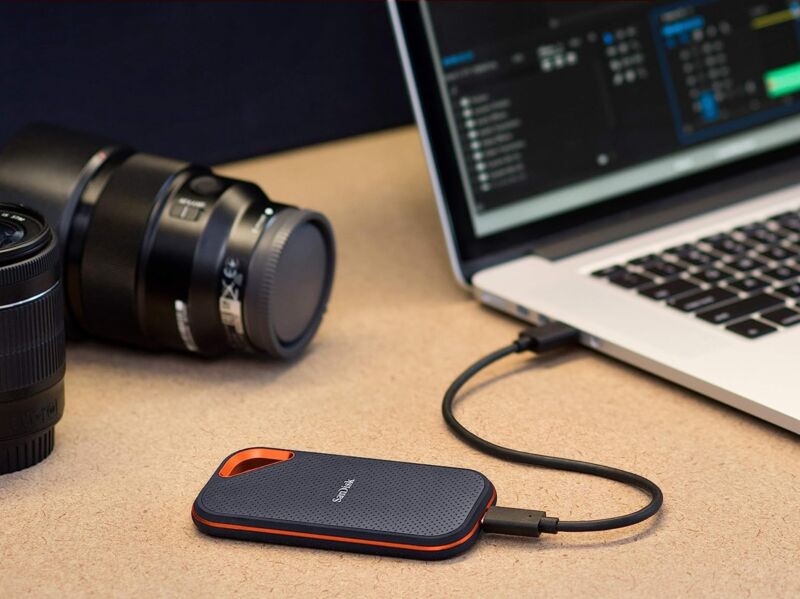
SanDisk Extreme SSDs are “worthless,” multiple lawsuits against WD say

SanDisk Extreme SSDs are “worthless,” multiple lawsuits against WD say

On Thursday, two more lawsuits were filed against Western Digital over its SanDisk Extreme series and My Passport portable SSDs. That brings the number of class-action complaints filed against Western Digital to three in two days.

In May, Ars Technica reported about customer complaints that claimed SanDisk Extreme SSDs were abruptly wiping data and becoming unmountable. Ars senior editor Lee Hutchinson also experienced this problem with two Extreme SSDs. Western Digital, which owns SanDisk, released a firmware update in late May, saying that currently shipping products weren’t impacted. But the company didn’t mention customer complaints of lost data, only that drives could “unexpectedly disconnect from a computer.”

Further, last week The Verge claimed a replacement drive it received after the firmware update still wiped its data and became unreadable, and there are some complaints on Reddit pointing to recent problems with Extreme drives.

All three cases (one, two, and three) filed against Western Digital this week seek class-action certification (Ars was told it can take years for a judge to officially state certification and that cases may proceed with class-wide resolutions possibly occurring before official certification). Ian Sloss, one of the lawyers representing Matthew Perrin and Brian Bayerl in a complaint filed yesterday, told Ars he doesn’t believe class-action certification will be a major barrier in a case “where there is a common defect in the firmware that is consistent in all devices.” He added that defect cases are “ripe for class treatment.”

Familiar stories

Both complaints filed yesterday reference Lee’s ordeal and Ars’ reporting on the matter, and they share new accounts that sound similar to complaints we’ve seen reported online.

Perrin and Bayerl’s complaint says Perrin bought “at least” eight SanDisk Extreme SSDs off Amazon, including 2TB and 4TB Extreme and 4TB Extreme Pro models, and that Perrin “lost all data stored on several SanDisk SSDs.”

Similarly, Bayerl reportedly bought “at least two” Extreme SSDs, including a 4TB Extreme, off Amazon. The complaint claims the drives still had busted firmware:

Plaintiff Bayerl has experienced the failure of two drives within minutes of each other and is now reluctant to use SanDisk Extreme products. Due to the nature of his work and the data on the devices, Plaintiff Bayerl spent nearly $8,000 on only partially successful efforts to retrieve the data from the failed drives through various data recovery third parties. These efforts also determined that the issue was caused by faulty internal firmware on the drives.

Perrin and Bayerl’s complaint mentions the 2TB Extreme, which Western Digital hasn’t officially confirmed as an affected device. A separate complaint filed on Wednesday mentions the 500GB and 1TB Extreme-series and My Passport models, which Western Digital hasn’t said are affected.

Here are the drives Western Digital has said are affected:

  • SanDisk Extreme Portable 4TB (SDSSDE61-4T00)
  • SanDisk Extreme Pro Portable 4TB (SDSSDE81-4T00)
  • SanDisk Extreme Pro Portable 2TB (SDSSDE81-2T00)
  • SanDisk Extreme Pro Portable 1TB (SDSSDE81-1T00)
  • Western Digital My Passport 4TB (WDBAGF0040BGY).

Perrin and Bayerl’s complaint says that “the now-known issues with the defective SanDisk SSDs and significant risk of permanent data loss, has rendered the SanDisk SSDs worthless to individuals seeking reliable data storage.”

“Worthless” is also used in the complaint filed Wednesday by Nathan Krum. The complaint filed Thursday on behalf of Saif Jafri also dubbed drives Western Digital named in its firmware update page, as well as the SanDisk Pro-G40 (PetaPixel recently claimed this drive broke after less than a month, but Ars has been unable to determine if the drive has a widespread problem), as “worthless.”

Jafri’s complaint says he bought an Extreme Pro (capacity not specified) because he was on an extended van trip and needed storage for drone footage, photos, and travel mementos. The drive reportedly “failed only a few weeks after” purchase.

“He had written data to the Drive no more than a handful of times, yet he nonetheless lost precious personal data,” the complaint says.

The complaints also note that Western Digital’s 30-day return and five-year warranty policies don’t remedy lost data. The cases seek restitution, including damages, and for Western Digital to stop selling the affected drives until they’re fixed or the problems are fully disclosed on all labels, packaging, and advertising.

Sloss told Ars that challenges of the case might include establishing how frequently drives failed after Western Digital shared its May firmware update.

“We believe the case is strong, that Western Digital’s response to the issue has been delayed, inadequate, and incomplete, and we believe people are continuing to purchase defective SSDs based on misleading information Western Digital has provided,” Sloss said.

Sloss said that firms frequently agree to prosecute similar cases together, with one firm leading. He believes there could be even more law firms investigating claims that may file complaints against Western Digital.

Western Digital told Ars yesterday that it “does not comment on pending litigation.”

https://arstechnica.com/?p=1961790


X suspends pro-Nazi account after two brands halt advertising

X suspends pro-Nazi account after two brands halt advertising

Throughout Twitter’s rebrand into X, advertisers have started becoming more confident using the platform, CEO Linda Yaccarino recently told CNBC. To bring more advertisers back, X has added new brand safety controls to stop ads from appearing where advertisers don’t want them to appear. However, amid these improvements, at least two brands have once again suspended advertising on X, CNN reported—after a Media Matters report shared screenshots of their ads appearing next to posts from a verified pro-Nazi account.

According to CNN, the pharmaceutical company Gilead Sciences and NCTA-The Internet and Television Association “immediately paused their ad spending on X after CNN flagged their ads on the pro-Nazi account.” This account—which was verified in April and has now been suspended—”shared content celebrating Hitler and the Nazi Party,” with some posts garnering “hundreds of thousands of views,” CNN reported.

Before its suspension, other brands appeared in this account’s feed, including The Athletic, MLB, the Atlanta Falcons, Sports Illustrated, USA Today, Amazon, and Office Depot, Media Matters reported.

On X, some accounts violating community guidelines get suspended, while others posting so-called “lawful but awful” content get marked as Not Suitable For Advertising. This pro-Nazi account should have been suspended but had not yet been caught by X. By delaying action on the account for months, every unique visit to the profile generated different ads from a variety of brands, so it’s unclear just how many brands had ads placed next to the account’s offensive posts.

According to X, ad impressions on this account were very low, though, registering far less than 1 percent before the account was suspended. Media Matters’ report suggests that even this low amount of impressions is still too much, given that X had verified the account months ago and acknowledged that it was posting antisemitic content.

“The suspension came only after the company verified the account; allowed it to repeatedly post antisemitic content; and monetized it by placing advertisements for major brands on the account,” Media Matters reported. “X’s monetization of the account also happened even though the company had reportedly acknowledged that the antisemitic account engaged in ‘violent speech.’”

X adds brand safety controls

Reacting to concerns over ad placements in the pro-Nazi feed, X emailed advertisers that the company is ramping up efforts to give advertisers more brand safety controls.

Recently, the company announced adjacency controls to stop ads from appearing next to posts containing certain keywords, as well as new sensitivity settings that allow brands to limit or maximize the reach of ads according to their brand’s identity.

“Your ads will only air next to content that is appropriate for you,” Yaccarino said on CNBC.

https://arstechnica.com/?p=1961835


Wi-Fi sniffers strapped to drones—Mike Lindell’s odd plan to stop election fraud

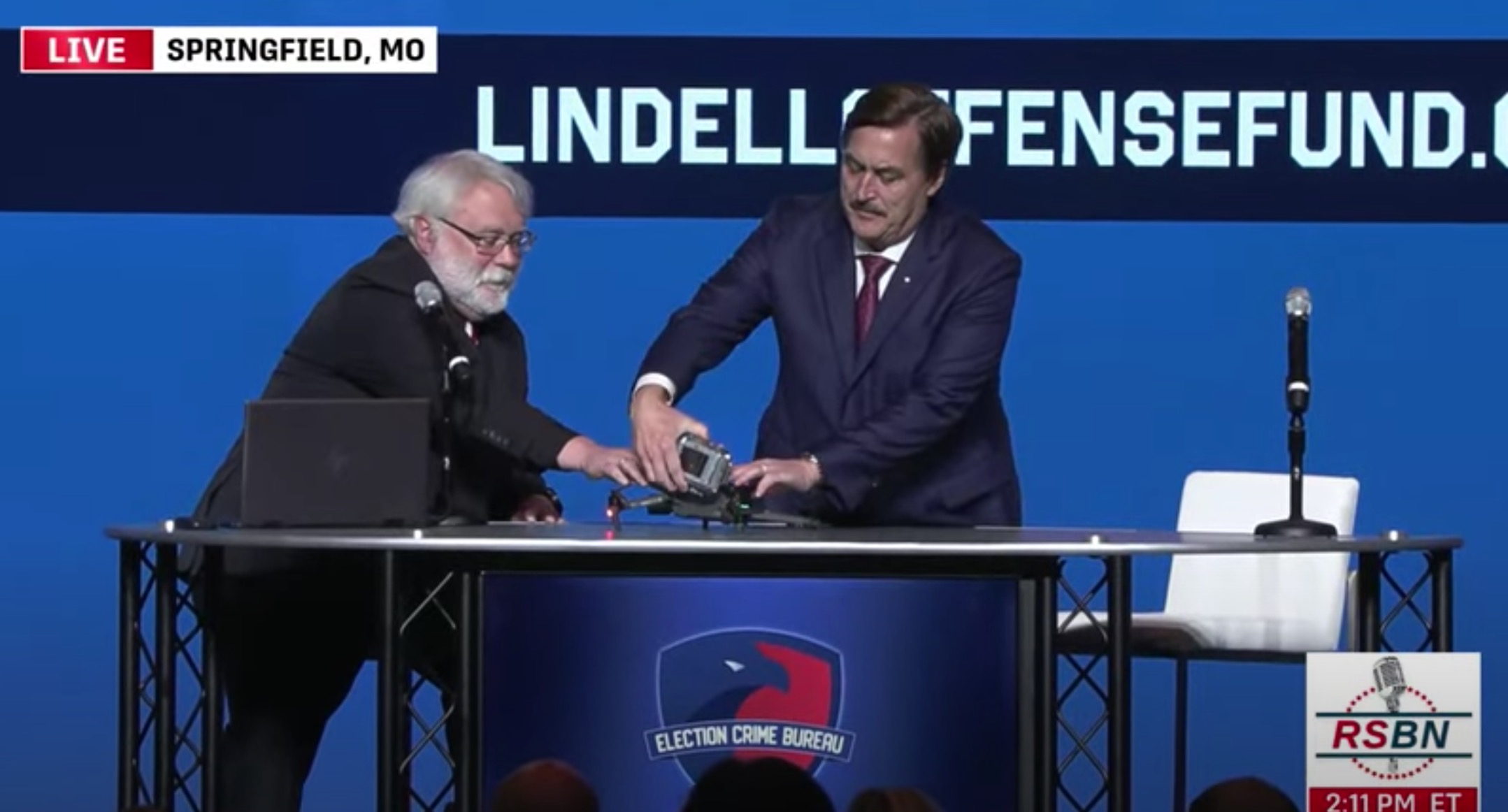
Mike Lindell on stage, pulling a wireless monitoring device off a drone that it was strapped onto.
Enlarge / Mike Lindell pulls a wireless sniffing device off a drone.

Election conspiracy theorist Mike Lindell claims he’s going to stop voting fraud by flying drones near polling places to determine whether voting machines are connected to the Internet.

Lindell, the My Pillow CEO who helped finance Donald Trump’s baseless election protests, “demonstrated” the technology at an event he hosted in Missouri this week (see video). Lindell’s innovation appears to be a wireless sniffing device mounted on a drone, apparently attached with velcro.

“This was the lie that’s been told to every person in our country… these electronic voting machines—from routers to printers to polling books—they’re not online. Well, what if I told you there was a device that’s been made for the first time in history that can tell you that that machine was online?”

The drone flew into the building and onto the stage, with Lindell pulling the device off the drone and telling the audience, “This wireless monitoring device, it just grabbed all of your cell phones, everybody in this room, every device that’s on the Internet right now.”

The flying wireless monitor may have impressed Lindell’s audience, but there doesn’t appear to be any major advance in network monitoring technology here. Lindell said the gadget, which he calls a “WMD” for “Wireless Monitoring Device,” detects nearby Wi-Fi networks and MAC addresses.

“Now we’ve got a way to monitor; we’ve never had this before in history. They can’t lie to us anymore,” Lindell said. “For this fall’s election, we want to get every single parish in Louisiana covered, we’re doing this right now.” A Daily Beast article said Lindell’s plan might violate Louisiana state laws on criminal trespassing and the use of unmanned aircraft to conduct surveillance. Lindell claimed he’s already used the device in Florida.

Red alert: “Router just went online”

“There’s a command center where this information goes down and flashes, it’ll go—’router online,'” Lindell said. It’s not clear why a router connecting to the Internet would be evidence of election fraud, but Lindell provided that as an example multiple times. “If you’re in this room and this is an election room, beep beep beep, router just went online, this red alert goes out there,” he said.

A voiceover in a video shown to Lindell’s audience described the system as follows:

We have been told that our election computers are never connected to the Internet. The WMD will put that to the test by detecting and reporting in real time Wi-Fi connections in county and state election offices. All Internet routers and access points will be reported as well as any devices to which they connect. The WMD incorporates many years of research and state-of-the-art development. It is a low-weight, low-power device that uses only passive signal detection to detect online systems and it will never interfere with any normal network operations. When an online connection is detected the Election Crime Bureau master alert system will be quickly notified and the alert will be displayed on the alert webpage.

This would, of course, gather information on many devices that have nothing to do with voting machines, like the cell phones in Lindell’s audience. “We could have gotten some actual election voting machines in here” for the demonstration, Lindell said. But Lindell said he didn’t want to do that because of “what happened in Michigan when they went after Matt DePerno for having a machine.”

DePerno is facing criminal charges for an alleged attempt to illegally access and tamper with voting machines. “I didn’t want to take that chance; this is too important for the world,” Lindell said. “I have a command center” that alerts will be sent to, but “I’m not going to say what state” the command center is in.

The video shown to Lindell’s audience said the scanning system currently provides “the MAC address, the hardware vendor, and the first time the device was detected,” and that “additional information will be continually added… all information is securely archived for later analysis. The Wireless Monitoring Device is ready to be deployed in any election from local to presidential.”

https://arstechnica.com/?p=1961867


Buyers of Bored Ape NFTs sue after digital apes turn out to be bad investment

Collage of illustrations of apes from the
Enlarge / Bored Ape NFTs can now be purchased for just $50,000 each.

The Sotheby’s auction house has been named as a defendant in a lawsuit filed by investors who regret buying Bored Ape Yacht Club NFTs that sold for highly inflated prices during the NFT craze in 2021. A Sotheby’s auction duped investors by giving the Bored Ape NFTs “an air of legitimacy… to generate investors’ interest and hype around the Bored Ape brand,” the class-action lawsuit claims.

The boost to Bored Ape NFT prices provided by the auction “was rooted in deception,” said the lawsuit filed in US District Court for the Central District of California. It wasn’t revealed at the time of the auction that the buyer was the now-disgraced FTX, the lawsuit said.

“Sotheby’s representations that the undisclosed buyer was a ‘traditional’ collector had misleadingly created the impression that the market for BAYC NFTs had crossed over to a mainstream audience,” the lawsuit claimed. Lawsuit plaintiffs say that harmed investors bought the NFTs “with a reasonable expectation of profit from owning them.”

Sotheby’s sold a lot of 101 Bored Ape NFTs for $24.4 million at its “Ape In!” auction in September 2021, well above the pre-auction estimates of $12 million to $18 million. That’s an average price of over $241,000, but Bored Ape NFTs now sell for a floor price of about $50,000 worth of ether cryptocrurrency, according to CoinGecko data accessed today.

Investors previously sued Bored Ape creator Yuga Labs, four company executives, and various celebrity promoters including Paris Hilton, Gwyneth Paltrow, Kevin Hart, Snoop Dogg, Serena Williams, Madonna, Jimmy Fallon, Steph Curry, and Justin Bieber. The original class-action was filed in December 2022, and Sotheby’s was added as a defendant in an amended complaint submitted on August 4.

Yuga describes its collection of 10,000 Bored Ape NFTs as “unique digital collectibles living on the Ethereum blockchain” that double as a “Yacht Club membership card.” The website has some “members-only” areas. “When you buy a Bored Ape, you’re not simply buying an avatar or a provably rare piece of art,” the NFT collection’s website says. “You are gaining membership access to a club whose benefits and offerings will increase over time. Your Bored Ape can serve as your digital identity, and open digital doors for you.”

Lawsuit: Yuga “colluded” with Sotheby’s

The amended lawsuit alleges that “Yuga colluded with fine arts broker, Defendant Sotheby’s, to run a deceptive auction.” After the sale, a Sotheby’s representative described the winning bidder during a Twitter Spaces event as a “traditional” collector, the lawsuit said.

The lawsuit said it turned out the auction buyer was now-bankrupt crypto exchange FTX, whose founder Sam Bankman-Fried is in jail awaiting trial on criminal charges. Ethereum blockchain transaction data shows that after the auction, “Sotheby’s transferred the lot of BAYC NFTs to wallet address 0xf8e0C93Fd48B4C34A4194d3AF436b13032E641F3,77 which, upon information and belief, is owned/controlled by FTX,” the complaint said. Speculation that FTX was the buyer had been percolating since at least January 2023.

The lawsuit alleges that Yuga Labs and Sotheby’s violated the California Unfair Competition Law, the California Corporate Securities Law, the US Securities Exchange Act, and the California Corporations Code. The plaintiffs also claim that Sotheby’s Metaverse, an NFT trading platform opened after the auction, “operated (or attempted to operate) as an unregistered broker of securities.”

“FTX has several deep ties to Yuga such that it would be mutually beneficial for both Yuga and FTX (as well as Sotheby’s) if the BAYC NFT collection were to rise in price and trading volume activity. Upon information and belief, given the extensive financial interests shared by Yuga, Sotheby’s and FTX, each knew that FTX was the real buyer of the lot of BAYC NFTs at the Sotheby’s auction at the time that Sotheby’s representatives were publicly representing that a ‘traditional’ buyer had made the purchase,” the lawsuit said. FTX is not named as a defendant.

Ape prices soared, then plummeted

After the auction, the price of Bored Ape digital assets hit a new high and kept rising for months. It peaked at over $420,000 in April 2022 but plummeted to about $90,000 six weeks later, according to CoinGecko.

The class action lawsuit’s named plaintiffs are Johnny Johnson, Ezra Boekweg, Mario Palombini, and Adam Titcher. They are trying to get certification of a class consisting of “all investors who purchased Yuga’s non-fungible tokens (‘NFTs’) or ApeCoin tokens (‘ApeCoin’) between April 23, 2021 and the present.” There were over 103,000 account holders of Yuga securities as of December 1, 2022, the lawsuit said.

“While the Executive Defendants made hundreds of millions of dollars, investors were left with NFTs worth a fraction of their artificially inflated value,” the original version of the complaint in December said.

Yuga and other defendants have a September 12 deadline to file motions to dismiss the complaint. Sotheby’s told CNN this week that the “allegations in this suit are baseless, and Sotheby’s is prepared to vigorously defend itself.” Yuga Labs similarly called the allegations “completely without merit or factual basis.”

https://arstechnica.com/?p=1961571