Report: Potential NYT lawsuit could force OpenAI to wipe ChatGPT and start over

An illustration of a cartoon worker wiping a hard drive.
Benj Edwards / Getty Images

Weeks after The New York Times updated its terms of service (TOS) to prohibit AI companies from scraping its articles and images to train AI models, it appears that the Times may be preparing to sue OpenAI. The result, experts speculate, could be devastating to OpenAI, including the destruction of ChatGPT’s dataset and fines up to $150,000 per infringing piece of content.

NPR spoke to two people “with direct knowledge” who confirmed that the Times’ lawyers were mulling whether a lawsuit might be necessary “to protect the intellectual property rights” of the Times’ reporting.

Neither OpenAI nor the Times immediately responded to Ars’ request to comment.

If the Times were to follow through and sue ChatGPT-maker OpenAI, NPR suggested that the lawsuit could become “the most high-profile” legal battle yet over copyright protection since ChatGPT’s explosively popular launch. This speculation comes a month after Sarah Silverman joined other popular authors suing OpenAI over similar concerns, seeking to protect the copyright of their books.

Of course, ChatGPT isn’t the only generative AI tool drawing legal challenges over copyright claims. In April, experts told Ars that image-generator Stable Diffusion could be a “legal earthquake” due to copyright concerns.

But OpenAI seems to be a prime target for early lawsuits, and NPR reported that OpenAI risks a federal judge ordering ChatGPT’s entire data set to be completely rebuilt—if the Times successfully proves the company copied its content illegally and the court restricts OpenAI training models to only include explicitly authorized data. OpenAI could face huge fines for each piece of infringing content, dealing OpenAI a massive financial blow just months after The Washington Post reported that ChatGPT has begun shedding users, “shaking faith in AI revolution.” Beyond that, a legal victory could trigger an avalanche of similar claims from other rights holders.

Unlike authors who appear most concerned about retaining the option to remove their books from OpenAI’s training models, the Times has other concerns about AI tools like ChatGPT. NPR reported that a “top concern” is that ChatGPT could use The Times’ content to become a “competitor” by “creating text that answers questions based on the original reporting and writing of the paper’s staff.”

As of this month, the Times’ TOS prohibits any use of its content for “the development of any software program, including, but not limited to, training a machine learning or artificial intelligence (AI) system.”

Now it seems clear that this update provides the Times with an extra layer of protection as NPR reports that the media outlet is seemingly reconsidering a licensing deal with OpenAI. That licensing deal would have ensured that OpenAI paid for NYT content used to train its models. According to NPR, meetings between OpenAI and the Times have become “contentious,” making the deal appear increasingly unlikely as the Times seemingly weighs whether any licensing deal would be worth participating in, as the resulting product could become its fiercest competitor.

To defend its AI training models, OpenAI would likely have to claim “fair use” of all the web content the company sucked up to train tools like ChatGPT. In the potential New York Times case, that would mean proving that copying the Times’ content to craft ChatGPT responses would not compete with the Times.

Experts told NPR that would be challenging for OpenAI because unlike Google Books—which won a federal copyright challenge in 2015 because its excerpts of books did not create a “significant market substitute” for the actual books—ChatGPT could actually replace for some web users the Times’ website as a source of its reporting.

The Times’ lawyers appear to think this is a real risk, and NPR reported that, in June, NYT leaders issued a memo to staff that seems like an early warning of that risk. In the memo, the Times’ chief product officer, Alex Hardiman, and deputy managing editor Sam Dolnick said a top “fear” for the company was “protecting our rights” against generative AI tools.

“How do we ensure that companies that use generative AI respect our intellectual property, brands, reader relationships, and investments?” the memo asked, echoing a question being raised in newsrooms that are beginning to weigh the benefits and risks of generative AI.

Last month, the Associated Press became one of the first news organizations to strike a licensing deal with OpenAI, but the terms of the deal were not disclosed. Today, AP reported that it had joined other news organizations in developing standards for the use of AI in newsrooms, acknowledging that many “news organizations are concerned about their material being used by AI companies without permission or payment.”

In April, the News Media Alliance published AI principles, seeking to defend publishers’ intellectual property by insisting that generative AI “developers and deployers must negotiate with publishers for the right to use” publishers’ content for AI training, AI tools surfacing information, and AI tools synthesizing information.

Ars could not immediately reach the News Media Alliance for comment on the potential impact of the NYT case.

https://arstechnica.com/?p=1961547


Amazon pinches sellers: Use our costly logistics services or pay extra fee [Updated]

Amazon pinches sellers: Use our costly logistics services or pay extra fee [Updated]

Any day now, the FTC is expected to drop “The Big One” on Amazon, an antitrust lawsuit that appears inevitable after the company’s so-called “last rites” meeting with FTC officials last week. Through its inquiry, the FTC has taken notice of how Amazon treats sellers on its platform, specifically scrutinizing how Amazon punishes sellers that don’t use Amazon’s logistics services.

With so much heat coming from the FTC, it seems like bad timing for Amazon to decide to start charging an extra fee to sellers who bypass Amazon’s logistics services and instead ship products themselves. But that’s precisely the step that Amazon has taken, Bloomberg reported.

Only sellers who use Amazon’s Seller Fulfilled Prime service will have to pay the fee. So most of Amazon’s two million sellers won’t be affected. But for thousands of sellers who prefer to ship their own products, starting in October, they will have to pay Amazon “a two percent fee on each sale,” according to internal documents reviewed by Bloomberg.

It may seem like a small fee, but it’s likely enough to pressure some sellers into using Amazon’s logistics services who previously had avoided the high costs associated with those services. One furniture seller told Bloomberg that the new fee would cost $1 million over a year of sales.

In February, Search Engine Land reported that higher fulfillment fees and mandatory advertising expenses had increased Amazon’s share of sellers’ revenue to 50 percent. Using Amazon’s fulfillment at that point costs sellers 20 to 35 percent of their revenue.

This new fee seems like the latest way Amazon has put the squeeze on sellers who were avoiding paying that larger percent of revenue by doing their own fulfillment. Bloomberg spoke to several sellers who, speaking anonymously for fear of retaliation, confirmed that they were interpreting the latest fee as “an attempt to pressure them into using Amazon’s logistics services rather than fulfilling orders themselves.”

According to Bloomberg’s sources, Amazon gave sellers no explanation to justify the extra fee. Sellers said as a result of higher fees, they may have to raise prices on items.

Amazon did not immediately respond to Ars’ request for comment. A spokesperson told Bloomberg that the fee will “help cover the costs of running a separate infrastructure and measuring its effectiveness.”

The Seller Fulfilled Prime program has a rocky history, Bloomberg reported. It launched in 2015 to quickly ramp up inventory without burdening Amazon’s own fulfillment centers but shuttered after two years because sellers weren’t meeting Amazon’s delivery standards. Bloomberg reported that Amazon only brought the program back this June, apparently as a way to appease the FTC during its antitrust inquiry. But with the antitrust lawsuit now looming, Amazon is seemingly less motivated to appease the agency.

Jason Boyce, the founder of Avenue7Media, which advises brands leveraging Amazon’s platform, told Bloomberg that this new fee “shows Amazon is not scared at all” of the FTC.

Authors urge FTC to increase Amazon scrutiny

While Amazon continues raising fees for some sellers, authors and booksellers have banded together with an antitrust think tank to urge the FTC and the Justice Department to launch yet another antitrust inquiry into the e-commerce giant’s outsized role in the books market.

In a letter today, the American Booksellers Association, the Authors Guild, and the Open Markets Institute requested “an antitrust investigation into how Amazon used and continues to use unfair methods of competition to gain and maintain a monopoly in its role as a seller of books to the public” and a monopsony—a market situation in which there is only one buyer—”in its role as a buyer of books from publishers.”

The letter accused Amazon of “manipulating readers into buying specific books” by up-ranking and down-ranking titles “at a whim” to “maximize Amazon’s profits.” This allegedly leads to “unfair promotion and suppression of specific ideas, authors, publishers, and the routine disruption of public debate,” the letter said.

An official investigation is necessary—despite the fact that Amazon has become “the everything store” and no longer focuses its efforts on selling books—the letter said, because “it is important” for officials “to remember that the harms [Amazon] inflicted on the book market have yet to be set to right, and in certain respects continue to get worse.”

The letter then detailed Amazon’s past and current conduct allegedly using “unfair methods of competition” to “gain and maintain its market dominance.” Alleged conduct included “predatory pricing, locking up services vital to publishers and authors and exploiting their dependence, and ruthlessly punishing publishers who stepped out of line,” the letter said.

Addressed to FTC chair Lina Khan and Jonathan Kanter, the assistant attorney general of the Department of Justice Antitrust Division, the letter ends by asking officials to defend democracy and free society by ending Amazon’s alleged ongoing efforts to manipulate the “reading public.”

Barry Lynn, the executive director of the Open Markets Institute, told the New York Times that Amazon’s outsized influence in the book market was unacceptable. The Times cited an analysis conducted by research data and analytics group WordsRated that found that Amazon “controls at least 40 percent of the print book sales” in the US and more than 80 percent of e-book sales.

“What we have is a situation in which the power of a single dominant corporation is warping, in the aggregate, the type of books that we’re reading,” Lynn told The Times. “This kind of power concentrated in a democracy is not acceptable.”

Experts told the Times that the FTC may not be as concerned about Amazon’s control of the book industry as it is with other aspects of Amazon’s business already under investigation. The Justice Department, however, does seem interested in promoting competition specifically in the books industry, last year blocking Penguin Random House from acquiring Simon & Schuster over antitrust concerns.

[Update: The Open Markets Institute’s spokesperson Ashley Woolheater told Ars that the think tank made a similar appeal to the FTC in 2015, which led to meetings with officials but no investigation. However, the Open Markets Institute expects that an investigation may be more likely to occur under Khan’s and Kanter’s leadership at the FTC and DOJ. Both officials were featured speakers at a 2016 Open Markets Institute event discussing Amazon’s potential antitrust issues and currently appear more “dedicated to enforcing the letter of antitrust law.”]

https://arstechnica.com/?p=1961333


X apparently added 5-second delay for links to sites Musk doesn’t like

A smartphone displays Elon Musk's profile on X, the app formerly known as Twitter.
Getty Images | Dan Kitwood

In the latest controversial change at Elon Musk’s social network, the service formerly named Twitter reportedly added a five-second delay when users load links to certain news sites and rival social networks. The New York Times and Reuters were affected by the delay with the t.co link-shortening service used by X, according to several news reports published yesterday.

X eliminated the delay in links to news sites yesterday afternoon, according to Reuters and The Washington Post. “When contacted for comment, X confirmed the delay was removed but did not elaborate,” Reuters wrote.

Links from X to the NYT and Reuters loaded almost instantly for us today. But we still found delays of three to five seconds in links to Substack, Bluesky, Facebook, Instagram, and Threads today in our tests.

Musk has famously called himself a “free speech absolutist,” said he intended to protect free speech on Twitter, and that he is “against censorship that goes far beyond the law.”

We contacted X today and will update this article if we get a response. While the press@twitter.com media contact email address used to auto-reply to all messages with a poop emoji, the auto-reply message now says, “We’ll get back to you soon.”

Musk criticized NYT

A person posting on Hacker News said the t.co delay started affecting the NYT on August 4. “Go to Twitter and click on a link going to any url on ‘NYTimes.com’ or ‘threads.net’ and you’ll see about a ~5 second delay before t.co forwards you to the right address. Twitter won’t ban domains they don’t like but will waste your time if you visit them,” the user wrote.

August 4 is the same day that Musk called the NYT a “racial genocide apologist.” That was in reply to a video of Julius Malema, leader of the South African Economic Freedom Fighters party, saying, “We’ve not called for the killing of white people, at least for now. I can’t guarantee the future.”

That Malema statement was apparently made in an interview in 2018. Two days before Musk’s “racial genocide apologist” tweet, the NYT wrote an article describing a new controversy over a rally at which Malema chanted “kill the Boer,” in reference to white farmers.

The NYT’s August 2 article quoted a Musk tweet that said, “They are openly pushing for genocide of white people in South Africa.” The article also quoted people who said the chant “should not be taken as a literal call to violence.”

Musk also called the NYT “propaganda” in April and revoked the organization’s verified badge.

NYT says reason for delay “unclear”

While link delays are an annoyance rather than outright blocking, Musk’s Twitter has been more aggressive about impeding access to rival social networks in the past. In December, Twitter banned links to Mastodon, Facebook, and other social networks, and said it would “remove accounts created solely for the purpose of promoting other social platforms.” Twitter reversed the policy after criticism.

Also in December, Musk suspended the Twitter accounts of reporters from The New York Times, Washington Post, and CNN, claiming they doxxed him by posting links to the ElonJet account on other social networks. Musk had previously suspended the Twitter account of ElonJet, which tracks the movements of his private jet.

In April, Twitter disabled retweets and replies to tweets containing links to the Substack domain. Musk also temporarily labeled NPR’s Twitter account as “state-affiliated” even though NPR gets less than 1 percent of its annual funding directly from the US government and retains editorial independence.

A New York Times spokesperson told news outlets yesterday that it hadn’t received an explanation from X about the link-loading delay. “While we don’t know the rationale behind the application of this time delay, we would be concerned by targeted pressure applied to any news organization for unclear reasons,” the NYT said.

Substack told The Washington Post that it “urged X to reverse the decision instituting a delay on Substack links.”

“Substack was created in direct response to this kind of behavior by social media companies,” Substack’s founders said in a statement that criticized “unreliable platforms that have proven they are willing to make changes that are hostile to the people who use them.”

https://arstechnica.com/?p=1961279


ISPs complain that listing every fee is too hard, urge FCC to scrap new rule

Dollar signs superimposed on a photo of a person's hands typing on a laptop keyboard.
Getty Images | anyaberkut

The US broadband industry is united in opposition to a requirement that Internet service providers list all of their monthly fees. Five lobby groups representing cable companies, fiber and DSL providers, and mobile operators have repeatedly urged the Federal Communications Commission to eliminate the requirement before new broadband labeling rules take effect.

The trade associations petitioned the FCC in January to change the rules and renewed their call last week in a filing and in a meeting with FCC officials. The requirement that ISPs list all their monthly fees “would add unnecessary complexity and burdens to the label for consumers and providers and could result in some providers having to create many labels for any given plan,” the groups said in the filing on Friday.

The trade groups said the FCC should instead “require providers to include an explanatory statement that such fees may apply and that they vary by jurisdiction, similar to the Commission’s treatment of government-imposed taxes,” or require “the display of the maximum level of government-imposed fees that might be passed through, so that consumers would not experience bill shock with respect to such fees.”

The filing was submitted by NCTA-The Internet & Television Association, which represents Comcast, Charter, Cox, and other cable companies. The NCTA’s ex parte filing described a meeting with FCC officials that also included wireless industry trade group CTIA and USTelecom, which represents telcos including AT&T, Verizon, Lumen (formerly CenturyLink), Frontier, and Windstream.

The meeting was attended by two other groups representing smaller ISPs: NTCA-The Rural Broadband Association and ACA Connects-America’s Communications Association. The trade groups met on Wednesday with the legal advisors to FCC Chairwoman Jessica Rosenworcel and Commissioner Brendan Carr, according to the filing.

Comcast accused of “trying to create loopholes”

Comcast submitted its own filing urging the FCC to scrap the rules in June. The calls to weaken the FCC’s truth-in-billing rules angered consumer advocates, as we wrote at the time. “The label hasn’t even reached consumers yet, but Comcast is already trying to create loopholes. This request would allow the big ISPs to continue hiding the true cost of service and frustrating customers with poor service,” Joshua Stager, policy director at media advocacy group Free Press, told Ars.

Congress required the FCC to implement broadband labels with exact prices for Internet service plans in a 2021 law, but gave the FCC some leeway in how to structure the rules. The FCC adopted specific label rules in November 2022.

The labels must be displayed to consumers at the point of sale and include monthly price, additional charges, speeds, data caps, additional charges for data, and other information. The FCC rules aren’t in force yet because they are subject to a federal Office of Management and Budget (OMB) review under the US Paperwork Reduction Act.

ISPs object to a portion of the FCC order that says, “providers must list all recurring monthly fees” including “all charges that providers impose at their discretion, i.e., charges not mandated by a government.” The five trade groups complain that this would require ISPs “to display the pass-through of fees imposed by federal, state, or local government agencies on the consumer broadband label.”

But just because an ISP says a fee is related to a government charge doesn’t mean that ISPs have to break them out separately. ISPs could instead include all costs in their advertised rates to give potential customers a clearer idea of how much they would have to pay each month.

“A provider that opts to combine all of its monthly discretionary fees with its base monthly price may do so and list that total price. In that case, the provider need not separately itemize those fees in the label,” the FCC order said.

https://arstechnica.com/?p=1961031


Internet Archive’s legal woes mount as record labels sue for $400M

Internet Archive’s legal woes mount as record labels sue for $400M

Major record labels are suing the Internet Archive, accusing the nonprofit of “massive” and “blatant” copyright infringement “of works by some of the greatest artists of the Twentieth Century.”

The lawsuit was filed Friday in a US district court in New York by UMG Recordings, Capitol Records, Concord Bicycle Assets, CMGI, Sony Music Entertainment, and Arista Music. It targets the Internet Archive’s “Great 78 Project,” which was launched in 2006.

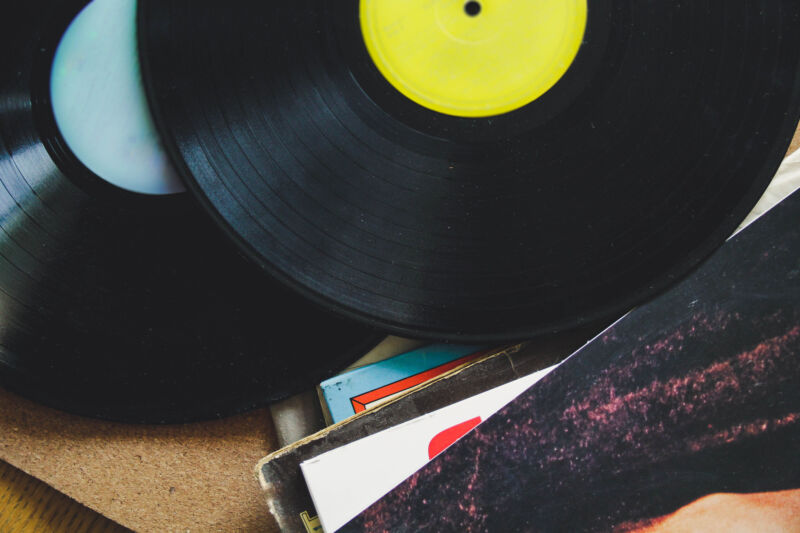
For the Great 78 Project, the Internet Archive partners with recording engineer George Blood— who is also a defendant in the lawsuit—to digitize sound recordings on 78 revolutions-per-minute (RPM) records. These early sound recordings are typically of poor quality and were made between 1898 and the late 1950s by using very brittle materials. The goal of the Great 78 Project was to preserve these early recordings so they would not be lost as records break and could continue to be studied as originally recorded.

In a blog post responding to the record labels’ lawsuit, Internet Archive founder Brewster Kahle said that the Internet Archive is currently reviewing the challenge and taking it seriously. However, Kahle characterizes the Great 78 Project as providing “free public access to a largely forgotten but culturally important medium,” claiming that “there shouldn’t be conflict here.”

“Through the efforts of dedicated librarians, archivists, and sound engineers, we have preserved hundreds of thousands of recordings that are stored on shellac resin, an obsolete and brittle medium,” Kahle said. “The resulting preserved recordings retain the scratch and pop sounds that are present in the analog artifacts; noise that modern remastering techniques remove.”

Blood declined Ars’ request to comment on pending litigation.

Record labels said that the conflict is obvious. From their perspective, the Great 78 Project undercuts the industry’s profits from selling licenses to stream some of the world’s most popular recordings of all time on services like Spotify or Apple Music.

According to Kahle, listeners accessing those streaming songs are different audiences than those who visit the Great 78 Project to hear how original recordings sounded, though.

“When people want to listen to music, they go to Spotify,” Kahle said. “When people want to study sound recordings as they were originally created, they go to libraries like the Internet Archive. Both are needed.”

Supporting this logic, Kahle noted that the Great 78 Project’s recordings “are used in teaching and research, including by university professors like Jason Luther of Rowan University, whose students use the Great 78 collection as the basis for researching and writing podcasts for use in class assignments.”

However, this “usage is tiny,” Kahle said, confirming that on average, each recording is accessed by only one researcher per month.

Perhaps if the usage was limited to this research, record labels might continue looking the other way. But the record labels are suing over “hundreds of thousands” of popular recordings that have been accessed and downloaded hundreds or even thousands of times on the Great 78 Project’s website. This causes “significant harm” to labels, as well as artists and their heirs, whom the complaint said never “see a dime” from the Internet Archive’s streams and downloads.

The complaint said that rather than paying artists and rights holders, the Internet Archive financially benefits from digitizing popular recordings. Record labels alleged that the Internet Archive advertises the free music hosted by the Great 78 Project on social media, attracting a wider audience to webpages where the Internet Archive requests donations. They argue that the Internet Archive is “willfully” ignoring copyrights to attract more donations by giving away popular songs that the nonprofit has no right to distribute.

Lawyers for record labels did not respond to Ars’ request to comment but wrote in the complaint that the Internet Archive attempts “to defend their wholesale theft of generations of music under the guise of ‘preservation and research,’ but this is a smokescreen: their activities far exceed those limited purposes.”

“Internet Archive unabashedly seeks to provide free and unlimited access to music for everyone, regardless of copyright,” the complaint said.

Record labels have demanded a jury trial and damages that could amount to hundreds of millions of dollars. The complaint identifies more than 2,700 infringing works, estimating that appropriate damages for each recording could amount to $150,000. A loss could cost Internet Archive more than $400 million.

Kahle seems prepared to defend against the charges that the Great 78 Project violates the Copyright Act and the Music Modernization Act—the latter of which was enacted in 2018 to extend copyright protections explicitly for pre-1972 recordings. Because record labels’ lawsuit quickly followed on the heels of a challenge from book publishers who successfully sued the Internet Archive over copyright claims earlier this year, Kahle has questioned the motives of lawyers behind this latest complaint.

“Now the Washington lawyers want to destroy a digital collection of scratchy 78 RPM records, 70 to 120 years old, built by dedicated preservationists in 2006,” Kahle told The New York Times. “Who benefits?”

https://arstechnica.com/?p=1960980


Montana loses fight against youth climate activists in landmark ruling

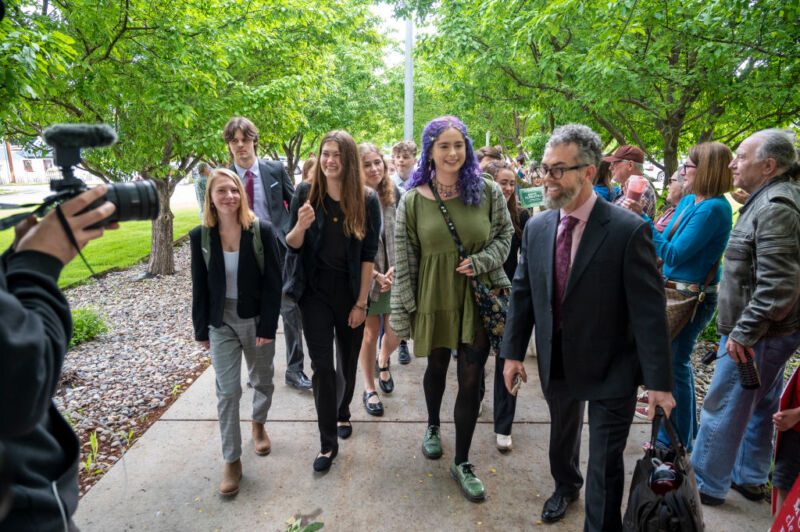
Youth plaintiffs are greeted by supporters as they arrive for the nation's first youth climate change trial at Montana's First Judicial District Court on June 12, 2023.
Enlarge / Youth plaintiffs are greeted by supporters as they arrive for the nation’s first youth climate change trial at Montana’s First Judicial District Court on June 12, 2023.

A Montana state court today sided with young people who sued the state for promoting the fossil fuel industry through its energy policy, which they alleged prohibits Montana from weighing greenhouse gas emissions in approving the development of new factories and power plants. This prohibition, 16 plaintiffs ages 5 to 22 successfully argued, violates their constitutional right to a “clean and healthful environment in Montana for present and future generations.”

Experts previously predicted that a win for youths in Montana would set an important legal precedent for how courts can hold states accountable for climate inaction. The same legal organization representing Montana’s young plaintiffs, Our Children’s Trust, is currently pursuing similar cases in four other states, The Washington Post reported.

The Post described this landmark case as “the nation’s first constitutional and first youth-led climate lawsuit to go to trial.”

To climate activists, it illustrates the power of a court hearing directly from young people describing experiences with immense loss caused by climate change. Today’s order followed five days of emotional testimony from young plaintiffs describing harms caused by the state’s climate inaction.

Montana tried to argue that adjusting its energy policy and other statutes would have “no meaningful impact or appreciable effect,” the Post reported, because climate change is a global issue. Montana Assistant Attorney General Michael Russell described the testimony as a “week-long airing of political grievances that properly belong in the Legislature, not a court of law,” according to the Post. Notably, the state did not meaningfully attempt to dispute climate science.

However, “undisputed testimony established” that the state “could evaluate ‘greenhouse gas emissions and corresponding impacts to the climate in the state’ when evaluating fossil fuel activities,” judge Kathy Seeley wrote in the Montana 1st Judicial District Court order. The state had no compelling interest not to conduct climate analyses and consider remedies, Seeley wrote.

Experts told Scientific American that Montana’s emissions are significant given its population size, emitting in 2019 “about 32 million tons of carbon dioxide.” That’s “about as much as Ireland, which has a population six times larger,” Scientific American reported. Young people suing alleged that Montana had “never denied a permit for a fossil fuel project,” the Post reported.

Because of this powerful youth testimony, the court ruled that the state’s energy policy’s limitation on environmental impact reviews was unconstitutional.

“Montana’s greenhouse gas emissions and climate change have been proven to be a substantial factor in causing climate impacts to Montana’s environment and harm and injury to the youth plaintiffs,” Seeley wrote.

As a result of the order, any Montana statutes prohibiting climate impact analysis and remedies are now invalid and permanently enjoined.

“This is a monumental decision,” Phil Gregory, the plaintiffs’ attorney, told the Post. Another attorney for plaintiffs and executive director of Our Children’s Trust, Julia Olson, told AP that the ruling was a “huge win for Montana, for youth, for democracy, and for our climate.”

Montana is expected to appeal the ruling, according to Emily Flower, a spokesperson for the state’s Attorney General Austin Knudsen, who called the ruling “absurd.”

“Montanans can’t be blamed for changing the climate—even the plaintiffs’ expert witnesses agreed that our state has no impact on the global climate,” Flower said. “Their same legal theory has been thrown out of federal court and courts in more than a dozen states. It should have been here as well, but they found an ideological judge who bent over backward to allow the case to move forward and earn herself a spot in their next documentary.”

Youth plaintiffs did not ask for any damages beyond their attorneys’ fees and costs, which were awarded by the court. To young people suing, winning is seemingly just about pushing the state to embrace climate science and mitigate known harms moving forward.

“As fires rage in the West, fueled by fossil fuel pollution, today’s ruling in Montana is a game-changer that marks a turning point in this generation’s efforts to save the planet from the devastating effects of human-caused climate chaos,” Olson told AP.

https://arstechnica.com/?p=1960765


Zuck/Musk cage match canceled; tech billionaires blame each other

Zuck/Musk cage match canceled; tech billionaires blame each other

The cage match between Mark Zuckerberg and Elon Musk is over before it even began.

In a series of posts on Threads, Meta CEO Zuckerberg said he was done talking about the fight because Musk never got “serious” about it.

“I think we can all agree Elon isn’t serious, and it’s time to move on,” Zuckerberg said.

The prospect of a cage match between the two tech billionaires was first raised in June when Musk proposed the fight. Zuckerberg—who has been training with mixed-martial arts fighters for two years—replied, “Send me location.”

Musk seemed serious about the fight, too, suggesting that the event be livestreamed for charity on their rival social media platforms. Now Zuckerberg claims that Musk kept pushing back the fight, seemingly hoping to keep the banter going online but unwilling to set an actual date.

Instead, Musk only suggested a date for a practice round in the octagon at Zuckerberg’s home, Zuckerberg said.

“Elon won’t confirm a date, then says he needs surgery, and now asks to do a practice round in my backyard instead,” Zuckerberg posted on Threads. “If Elon ever gets serious about a real date and official event, he knows how to reach me.”

While the narrative on Meta-owned Threads is that Musk basically has backed out of the fight, over on X, Musk has been cracking jokes that suggest Zuckerberg backed out.

“Zuck is a chicken,” Musk posted. In another post, he joked that Zuckerberg “can’t eat at Chick-fil-A because that would be cannibalism.”

Musk’s version of the story is that Zuckerberg canceled the fight because the Meta owner was seemingly too afraid to have a practice round. Now the X owner has joked that he will show up for an unscheduled practice round anyway.

“I’m gonna bang on his door and demand a fight,” Musk posted on X.

The X Daily account posted an alleged screenshot of texts between the billionaires on X, showing that Zuckerberg responded to the suggestion of a practice round by telling Musk to train on his own time. In the text, Zuckerberg seemed to suggest that Musk was only interested in hyping the fight and not actually training to fight.

“I don’t want to keep hyping something that will never happen, so you should either decide you’re going to do this and do it soon, or we should move on,” Zuckerberg’s text allegedly said.

While it sadly seems that we’ll never see the tech billionaires come to blows, Zuckerberg has left the door slightly ajar for the cage match to go down—if Musk ever properly trains.

“I love this sport, and I’ve been ready to fight since the day Elon challenged me,” Zuckerberg posted on Threads. “If he ever agrees on an actual date, you’ll hear it from me. Until then, please assume anything he says has not been agreed on.”

Neither Meta nor X responded to Ars’ request for comment.

https://arstechnica.com/?p=1960654


The Kids Online Safety Act isn’t all right, critics say

The Kids Online Safety Act isn’t all right, critics say
Aurich Lawson | Getty Images

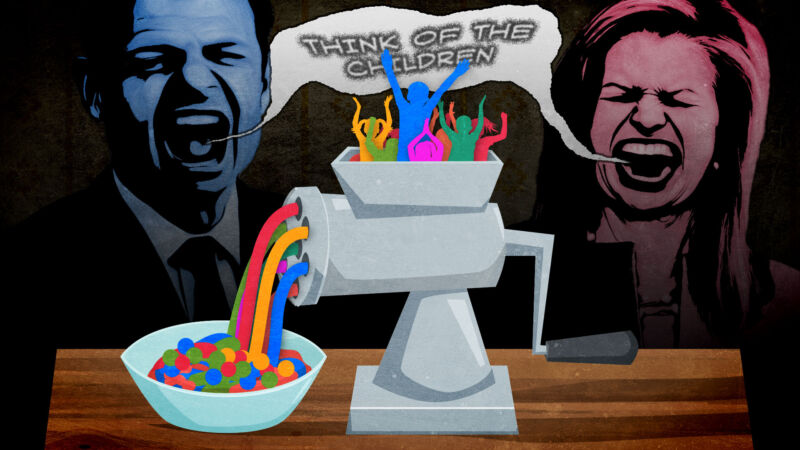
Debate continues to rage over the federal Kids Online Safety Act (KOSA), which seeks to hold platforms liable for feeding harmful content to minors. KOSA is lawmakers’ answer to whistleblower Frances Haugen’s shocking revelations to Congress. In 2021, Haugen leaked documents and provided testimony alleging that Facebook knew that its platform was addictive and was harming teens—but blinded by its pursuit of profits, it chose to ignore the harms.

Sen. Richard Blumenthal (D-Conn.), who sponsored KOSA, was among the lawmakers stunned by Haugen’s testimony. He said in 2021 that Haugen had showed that “Facebook exploited teens using powerful algorithms that amplified their insecurities.” Haugen’s testimony, Blumenthal claimed, provided “powerful proof that Facebook knew its products were harming teenagers.”

But when Blumenthal introduced KOSA last year, the bill faced immediate and massive blowback from more than 90 organizations—including tech groups, digital rights advocates, legal experts, child safety organizations, and civil rights groups. These critics warned lawmakers of KOSA’s many flaws, but they were most concerned that the bill imposed a vague “duty of care” on platforms that was “effectively an instruction to employ broad content filtering to limit minors’ access to certain online content.” The fear was that the duty of care provision would likely lead platforms to over-moderate and imprecisely filter content deemed controversial—things like information on LGBTQ+ issues, drug addiction, eating disorders, mental health issues, or escape from abusive situations.

So, regulators took a red pen to KOSA, which was reintroduced in May 2023 and amended this July, striking out certain sections and adding new provisions. KOSA supporters claim that the changes adequately address critics’ feedback. These supporters, including tech groups that helped draft the bill, told Ars that they’re pushing for the amended bill to pass this year.

And they might just get their way. Some former critics seem satisfied with the most recent KOSA amendments. LGBTQ+ groups like GLAAD and the Human Rights Campaign removed their opposition, Vice reported. And in the Senate, the bill gained more bipartisan support, attracting a whopping 43 co-sponsors from both sides of the aisle. Surveying the legal landscape, it appears increasingly likely that the bill could pass soon.

But should it?

Not all critics agreed that recent changes to the bill go far enough to fix its biggest flaws. In fact, the bill’s staunchest critics told Ars that the legislation is incurably flawed—due to the barely changed duty of care provision—and that it still risks creating more harm than good for kids.

These critics also warn that all Internet users could be harmed, as platforms would likely start to censor a wide range of protected speech and limit user privacy by age-gating the Internet.

“Duty of care” fatally flawed?

To address some of the criticisms, the bill changed platform restrictions so that platforms wouldn’t start blocking kids from accessing “resources for the prevention or mitigation of” any harms described under the duty of care provision. That theoretically means that if KOSA passes, kids should still be able to access online resources to deal with:

  • Mental health disorders, including anxiety, depression, eating disorders, substance use disorders, and suicidal behaviors.
  • Patterns of use that indicate or encourage addiction-like behaviors.
  • Physical violence, online bullying, and harassment of the minor.
  • Sexual exploitation and abuse.
  • Promotion and marketing of narcotic drugs, tobacco products, gambling, or alcohol.
  • Predatory, unfair, or deceptive marketing practices, or other financial harms.

Previously, this section describing harmful content was slightly more vague and only covered minors’ access to resources that would help them prevent and mitigate “suicidal behaviors, substance use, and other harms.”

Irene Ly—who serves as counsel on tech policy for Common Sense Media, a nonprofit that provides age ratings for tech products—helped advise KOSA authors on the bill’s amendments. Ly told Ars that these changes to the bill have narrowed the duty of care enough and reduced “the potential for unintended consequences.” Because of this, “support for KOSA from LGBTQ+ groups and policymakers, including openly gay members of Congress” was “significantly boosted,” Ly said.

But the duty of care section didn’t really change that much, KOSA critics told Ars, and Vice reported that many of KOSA’s supporters are far-right, anti-LGBTQ organizations seemingly hoping for a chance to censor a broad swath of LGBTQ+ content online.

The only other KOSA change was to strengthen the “knowledge standard” so that platforms can only be held liable for violating KOSA if they don’t take “reasonable efforts” to mitigate harms when they know that kids are using their platforms. Previously, platforms could be found liable if a court ruled that platforms “reasonably should know” that there are minors on the platform.

Joe Mullin, a policy analyst for the Electronic Frontier Foundation (EFF)—a leading digital rights nonprofit that opposes KOSA—told Ars that while the knowledge standard change is “actually positive” because it’s “tightened up a bit.” Still, the revised KOSA “doesn’t really solve the problem” that many critics still have with the legislation.

“I think the duty of care section is fatally flawed,” Mullin told Ars. “They really didn’t change it at all.”

In a letter to lawmakers last month, legal experts with the think tank TechFreedom similarly described the duty of care section as “incurably flawed” and cautioned that it seemingly violates the First Amendment. The letter urged lawmakers to reconsider KOSA’s approach:

The unconstitutionality of KOSA’s duty of care is highlighted by its vague and unmeetable nature. Platforms cannot ‘prevent and mitigate’ the complex psychological issues that arise from circumstances across an individual’s entire life, which may manifest in their online activity. These circumstances mean that material harmful to one minor may be helpful or even lifesaving to another, particularly when it concerns eating disorders, self-harm, drug use, and bullying. Minors are individuals, with differing needs, emotions, and predispositions. Yet KOSA would require platforms to undertake an unworkable one-size-fits-all approach to deeply personal issues, thus ultimately serving the best interests of no minors.

ACLU’s senior policy counsel Cody Venzke agrees with Mullin and TechFreedom that the duty of care section is still the bill’s biggest flaw. Like TechFreedom, Venzke remains unconvinced that changes are significant enough to ensure that kids won’t be cut off from some online resources if KOSA passes in its current form.

“If you take the broad, vague provisions of the duty of care, platforms are going to end up taking down the bad as well as the good, because content moderation is biased,” Venzke told Ars. “And it doesn’t do youths any good to know that they can still search for helpful resources, but those helpful resources supported have been swept up in the broad takedowns of content.”

https://arstechnica.com/?p=1960313


Sam Bankman-Fried is going to jail

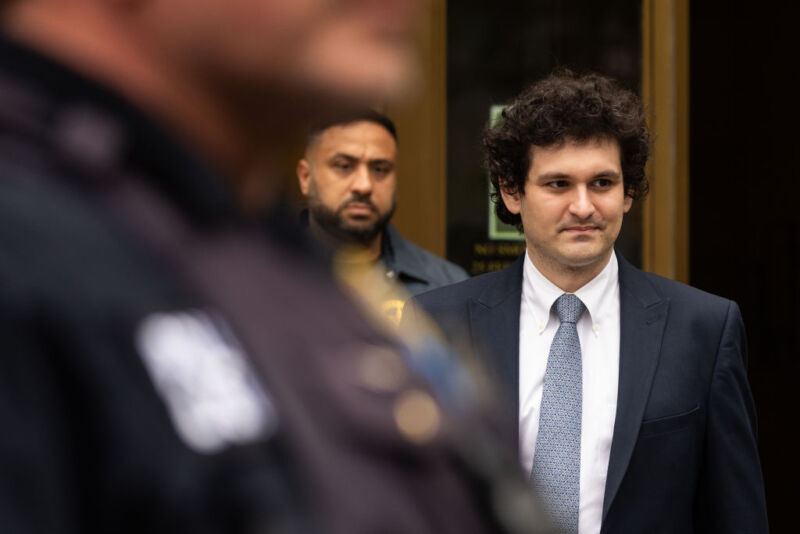
Sam Bankman-Fried.
Enlarge / Sam Bankman-Fried.

A federal judge in New York today ordered disgraced FTX founder Sam Bankman-Fried’s to jail after revoking his bail, The New York Times reported.

Bankman-Fried had been under house arrest, but prosecutors convinced Judge Lewis A. Kaplan of the Federal District Court in Manhattan that Bankman-Fried had fed documents to the media in order to intimidate a witness in the case. Now Bankman-Fried has to prepare his defense to 13 criminal charges from jail.

In June, Bankman-Fried filed a motion to dismiss, hoping that some of those charges would be dropped. But Kaplan decided that his arguments in the motion were “either moot or without merit,” CNN reported.

A New York Times report was among media stories that the prosecution shared to convince the court to give Bankman-Fried jail time. In that report, Bankman-Fried shared private writings of Caroline Ellison, a former FTX executive and former girlfriend to Bankman-Fried who has pled guilty and is currently cooperating with law enforcement in their investigation of the cryptocurrency exchange, the Times reported.

Prosecutors claimed that Bankman-Fried shared Ellison’s communications to intimidate her. The court found that Bankman-Fried tampered with witnesses at least twice, Reuters reported.

It wasn’t just the New York Times report that alarmed the court, however. Bankman-Fried’s other communications with the media led the prosecution to request a gag order to block all talks with the media.

According to The New York Times, “The Times, the Reporters Committee for the Freedom of the Press, and a documentarian making a film” about Bankman-Fried “each submitted court filings raising First Amendment concerns about the gag order.”

Bankman-Fried requested his detention be delayed, pending an appeal of the order revoking his bail, Reuters reported, but the judge denied that request.

https://arstechnica.com/?p=1960540


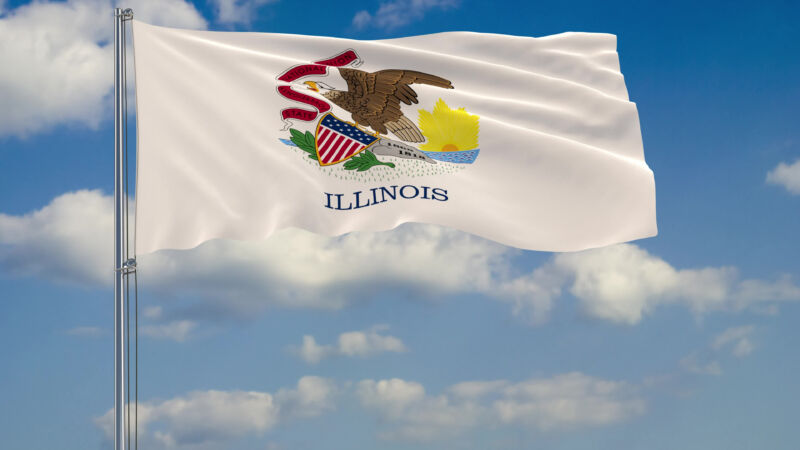
Illinois just made it possible to sue people for doxxing attacks

Illinois just made it possible to sue people for doxxing attacks

Last Friday, Illinois became one of the few states to pass an anti-doxxing law, making it possible for victims to sue attackers who “intentionally” publish their personally identifiable information with intent to harm or harass them. (Doxxing is sometimes spelled “doxing.”)

The Civil Liability for Doxing Act, which takes effect on January 1, 2024, passed after a unanimous vote. It allows victims to recover damages and to request “a temporary restraining order, emergency order of protection, or preliminary or permanent injunction to restrain and prevent the disclosure or continued disclosure of a person’s personally identifiable information or sensitive personal information.”

It’s the first law of its kind in the Midwest, the Daily Herald reported, and is part of a push by the Anti-Defamation League (ADL) to pass similar laws at the state and federal levels.

ADL’s Midwest regional director, David Goldenberg, told the Daily Herald that ADL has seen doxxing become “over the past few years” an effective way of “weaponizing” the Internet. ADL has helped similar laws pass in Maryland, Nevada, Oregon, and Washington.

Illinois’ law was motivated by a doxxing attack on a business that subsequently shut down. The UpRising Bakery and Café was doxxed last year after it planned an all-ages drag brunch, which triggered threats of violence against the bakery’s owner, Corrina Sac, and vandalism of the establishment. Goldenberg told Ars that the doxxing “tore apart [Sac’s] business” and, after the bakery closed, ADL raised nearly $50,000 through a GoFundMe campaign to help her recover.

Illinois state representative Jennifer Gong-Gershowitz told the Daily Herald that she introduced the anti-doxxing law as “a way to hold accountable those who perpetuate hate online.”

The law does not involve criminal charges but imposes civil liability on individuals who dox any Illinois residents. Actions can also be brought against individuals when “any element” of a doxxing offense occurs in the state.

While many states don’t have doxxing-specific laws, some have passed laws against online stalking, harassment, and cyberbullying that allow victims to press criminal charges against those who dox them. But few laws, Goldenberg told the Daily Herald, help people financially recover from doxxing the way that Illinois’ law seeks to do.

Feds mull best way to combat doxxing

The ADL’s ultimate goal is to see a federal anti-doxxing law passed, but right now, Congress is only taking small steps in that direction by mulling the Doxing Threat Assessment Act introduced in May.

Rather than provide legal remedies for doxxing victims, this federal law would “require the Department of Homeland Security to develop and disseminate a threat assessment regarding the use of cyber harassment, including doxxing, by terrorists and foreign malicious actors, and for other purposes.”

Congress may be right to exercise caution in passing anti-doxxing laws, according to the ACLU of Illinois, which opposed the Illinois law that passed this month.

ACLU of Illinois’ director of communications and public policy, Ed Yohnka, told the Daily Herald that his organization remained opposed because the law could infringe on free speech rights. The ACLU’s chief complaint seems to be that individuals can be sued for sharing publicly available personally identifiable information that any ill-intentioned person wishing to confront others in person could readily find.

“It continues to be overly broad and inclusive of protected speech—namely, the inclusion of both truly publicly available information as well as private conversations between more than two people,” Yohnka told the Daily Herald.

The ACLU of Illinois did not immediately respond to Ars’ request to comment.

Goldenberg told Ars that the Illinois law was written to emphasize not how information was found and gathered by people seeking to dox others, but on what they did with the information and how much harm they caused. The law might need less updating as the Internet evolves if it doesn’t focus on the methods used to mine personally identifiable information.

“The reality is that those who are using the Internet to spread hate, to spread misinformation, to do bad are pretty nimble and technology changes on a near daily basis,” Goldenberg told Ars. “The law was crafted in a way that ensures that if technology changes, and people use new technologies to share someone’s personally identifiable information with the intent to do harm and that harm actually happens, this law remains relevant.”

US Rep. Debbie Wasserman Schultz (D-Fla.) said in a press release that the first step toward federal action against doxxing is to better understand the problem. A company that conducts safety research, SafeHome, reported last year that more than 43 million Americans have experienced doxxing.

“Extremists are exploiting our online platforms to spread private information and incite violence against vulnerable individuals and groups,” said Wasserman Schultz. “Arming our national security officials and law enforcement with knowledge of how these groups operate and for identifying vulnerabilities and preventing attacks is a first step to protect our communities from harm.”

Since the Doxing Threat Assessment Act was introduced, the number of co-sponsors has doubled, suggesting the bipartisan bill is gaining popular support and has a decent chance of passing.

The bill’s co-sponsor, Rep. Don Bacon (R-Neb.), said that persecuted religious groups and businesses appeared most vulnerable and “with more information, our law enforcement will be able to develop a more robust approach to the protections of Americans and their data.”

Until there’s a federal anti-doxxing law passed, Goldenberg told Ars that ADL will continue talking with states considering passing anti-doxxing laws during next year’s legislative session

https://arstechnica.com/?p=1960461