Musk dumps remaining Twitter-branded stuff in auction

Musk dumps remaining Twitter-branded stuff in auction

Elon Musk is having another garage sale, this time dumping all of the leftover junk around X headquarters that belongs to the former Twitter brand.

The auction currently includes more than 600 items, including neon signs flashing the Twitter bird, a giant hashtag, and the @ icon. It also features branded furniture like a Twitter bird wooden coffee table and a bird cage hanging sofa swing.

Twitter fans feeling nostalgic amid Musk’s rebrand of the social platform will have plenty of time to peruse the items. The auction is scheduled to start September 12 and run through September 14.

Like Twitter’s last auction at the beginning of this year, this new auction is mostly just a bunch of office furniture and electronics that X seemingly has no use for anymore. It also includes the “Twitter Essentials” 24-record collection and record player, suggesting that tweeting little birds aren’t the only things being silenced in the X offices.

It’s hard to estimate how much X could get for this batch of items. During Twitter’s last auction, the highest bid was $100,000 for a three-foot Twitter bird statue.

Among items in the current auction that could attract high bids are Twitter bird signs still hanging on the X building. There are two signs up for grabs, but the listings note that the birds are “still mounted on the side of the building.” Buyers will be responsible, the listings say, for hiring a licensed San Francisco company with appropriate permits to remove the iconic signs.

Another particularly nostalgic item for longtime Twitter users is a painting of a selfie taken by Ellen DeGeneres at the 2014 Oscars. That selfie, the Guardian reported, was at one point “the most retweeted message of all time.”

The auction stems from Twitter’s rebranding, which has been a confusing time for some Twitter users. During the chaos of the X brand rollout, Twitter branding has remained prominent throughout the platform. It seems like X is still struggling to remove every reference to Twitter, tweets, and retweets on the platform. Day by day, though, the Twitter brand is slowly getting scrubbed away.

X is in; Twitter is out

Musk has long said that the purpose of buying Twitter was to speed up his launch of X, the “everything app.” By going through with this rebrand and replacing the Twitter app with X on phones everywhere, Musk is showing his commitment to transform the microblogging app into an irresistibly convenient platform where people can go to text, call, pay, shop, bank, and post online.

Experts have described the notion of creating an everything app that’s accessible in the US as ambitious. Even if Musk can get millions of people to buy into using one app instead of preferred apps already conveniently installed on their phones, regulators could raise significant hurdles for X, as antitrust scrutiny on tech companies and the financial industry has been mounting.

Despite some less optimistic forecasts, Musk has claimed in the past that he could turn Twitter into X, the everything app, within five years of buying the company. And he’s recently launched what he has signaled is a big part of achieving that goal: paying X users to post on the platform.

Yesterday, The Verge reported that X’s ad revenue sharing program has officially begun paying X users who earn $10 or more by creating popular posts that receive minimum impressions of 5 million views within three months.

https://arstechnica.com/?p=1960374


Biden administration: We never coerced Big Tech into suppressing speech

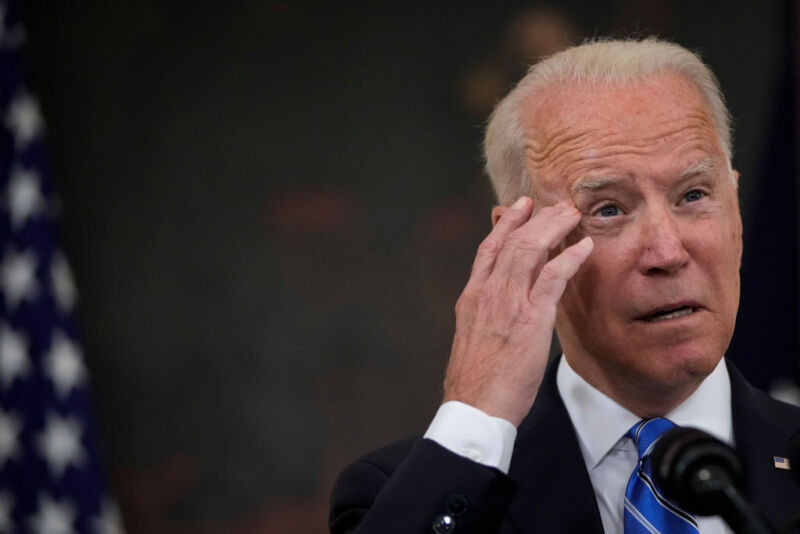
Biden administration: We never coerced Big Tech into suppressing speech

Today, three conservative-leaning judges with the 5th US Circuit Court of Appeals heard oral arguments to decide if an injunction should be lifted that restricts the Biden administration from communicating with social media platforms and requesting content takedowns.

The appeal followed a July 4 order from a district court, which found that the Biden administration had coerced platforms into censoring Louisiana and Missouri officials, whose posts were deemed as spreading COVID-19 misinformation.

Arguing for the Biden administration was attorney Daniel Bentele Hahs Tenny, who requested that either the injunction be reversed or a stay of the injunction should be extended by 10 days “in case the solicitor general wishes to pursue Supreme Court review.”

Missouri solicitor general Joshua Divine and attorney Dean John Sauer were on the other side of the argument. Both Divine and Sauer urged the court to uphold the injunction, claiming that states and individual plaintiffs suing had legal standing to seek the injunction.

Tenny began by claiming that the injunction was improper, partly because plaintiffs didn’t identify specific conduct by the Biden administration that requires an injunction. He also argued that with COVID-19 no longer considered a state of emergency and platforms like Twitter no longer policing COVID-19 misinformation, it’s unclear what the ongoing threat would be to plaintiffs seemingly at lesser risk of content removal.

“You have to find for each claim as to each defendant, each thing you’re trying to enjoin that is going to harm these individual plaintiffs,” Tenny said.

Because the plaintiffs did not do that, Tenny argued that the injunction should be reversed.

“What the district court should have been doing is looking for specific things that the government was doing, targeting specific actions by social media companies, causing irreparable injury to these plaintiffs, and if it found any, it could enjoin those, but it didn’t find any,” Tenny said. “That’s the problem.”

Seemingly in Tenny’s view, states have to show ongoing injury to justify the injunction. Lawyers for the plaintiffs, however, claimed that the plaintiffs have recently been subjected to COVID-19 takedowns. That included Sauer, who claimed that a YouTube video featuring him giving a talk about this case was removed, even though the government’s and some platforms’ COVID-19 policies have softened.

What constitutes a threat?

Another argument that Tenny made focused on whether the government, by requesting takedowns, was actually coercing platforms. Tenny claimed that while messages between the Biden administration and social media companies could sometimes be “testy”—apparently “f-bombs” were dropped—there is “no indication on the record” of what the implied threat would’ve been to social media companies if they didn’t comply with takedown requests.

Later, Sauer disputed Tenny’s position, arguing that plenty of evidence “absolutely” supported the district court’s finding that the Biden administration had coerced social media platforms into censoring content.

Perhaps most significantly, Sauer said that it was clear that platforms felt coerced because there was evidence that platforms didn’t want to comply with requests but later bowed to pressure from officials. Sauer cited one example. He said that three days after a Meta platform refused a request, “you have the White House press secretary at the podium, threatening” platforms “with a robust antitrust program”—which “Mark Zuckerberg has publicly stated is an existential threat” to his company—and “in the very next sentence,” the press secretary says, “take down the misinformation.”

Judges asked both sides to help them understand when such statements can be considered public policy announcements that are an ordinary part of the press secretary’s duties and when they should be considered threats.

Sauer agreed with the district court that it was necessary to view the sequence of events as a timeline. Between public and private messages requesting that platforms take action, Sauer said that the evidence seemed clear that the government was pressuring social media companies to submit to takedown requests or risk undesirable policy changes—such as strengthening antitrust enforcement or amendments chipping away at Section 230 protections.

Tenny argued that “it’s extraordinary to say, if the president’s view is that certain conduct of disseminating information is harming the public safety of the United States of America, the press secretary cannot express them.”

“If it’s backed by a threat that says, ‘If you don’t do what we want, then this will happen to you,’ that’s different,” Tenny said. “But that’s not what happened in this case.”

Tenny also cited a statistic saying that platforms only complied with 50 percent of the FBI’s takedown requests.

“The idea that the social media companies felt like they had to bend to the FBI’s will, when half the time they didn’t, I mean, this just doesn’t support any of these theories,” Tenny said.

Judges will soon decide if the injunction should be reversed or upheld.

The Biden administration has claimed that the government’s free speech rights will be unconstitutionally restricted if the injunction remains. It’s also warned that officials cannot stop misinformation in case of another emergency.

https://arstechnica.com/?p=1960281


Twitter held in contempt, fined $350K over Trump data delay

Twitter held in contempt, fined $350K over Trump data delay

Today, an unsealed court document revealed that, earlier this year, a federal judge held Twitter (now called X) in contempt of court. The judge imposed $350,000 in sanctions.

Sanctions were applied after the social media platform delayed compliance with a federal search warrant that required Twitter to hand over Donald Trump’s Twitter data without telling the former president about the warrant for 180 days.

At first, Twitter resisted producing Trump’s data and argued that the government’s nondisclosure order violated the First Amendment and the Stored Communications Act. However, US circuit judge Florence Pan wrote that the court was largely unpersuaded by Twitter’s arguments, mostly because the government’s interest in Trump’s data as part of its ongoing January 6 investigation was “unquestionably compelling.”

Last week, Trump was indicted on felony charges for working to overturn the results of the 2020 election, AP reported. Trump has since pled not guilty and continues to post on Truth Social, where he commented on today’s Twitter revelations. The former president said that he “just found out” that “crooked” Joe Biden’s Justice Department “secretly attacked” his Twitter account. He called the search warrant a “major ‘hit'” to his civil rights.

“Does the First Amendment still exist?” Trump wrote.

Twitter did not respond to Ars’ request to comment.

Why was Twitter held in contempt?

The unsealed court document provides a timeline of events leading the court to hold Twitter in contempt.

Twitter’s troubles started on January 17, 2023, when the government secured a search warrant that “directed Twitter to produce data and records related to the ‘@realDonaldTrump’ Twitter account.” The government then took the extra step to apply for a nondisclosure order, which was granted because “the district court found that there were ‘reasonable grounds to believe’ that disclosing the warrant to former President Trump ‘would seriously jeopardize the ongoing investigation’ by giving him ‘an opportunity to destroy evidence, change patterns of behavior, [or] notify confederates.'”

The government immediately tried to serve Twitter with the search warrant—which required Trump’s data to be shared within 10 days—but the website where Twitter gathers legal requests was “inoperative.” It took two days before Twitter’s website was fixed and the government was able to submit the warrant, and even then, Twitter did not immediately respond. Finally, on January 25, the government reached Twitter’s counsel, who said “that she ‘had not heard anything about [the] [w]arrant.'”

Then, on February 1, four days after failing to meet the deadline, Twitter “objected to producing any of the account information.” The government immediately requested a hearing where Twitter had to show cause why it should not be held in contempt for missing the deadline.

That hearing was scheduled for February 7. During the hearing, Twitter “requested that the court stay its enforcement of the warrant until after it adjudicated Twitter’s motion to vacate or modify the nondisclosure order.” Essentially, Twitter didn’t want to hand over data without Trump’s knowledge, but the court denied Twitter’s request and “found Twitter in contempt of court.”

At that point, Twitter was given an “opportunity to purge its contempt by producing” Trump’s account information. The court checked with Twitter and confirmed that it was capable of meeting a rapid deadline and turning over the data by 5:00 pm that evening.

“I believe we are prepared to do that,” Twitter’s counsel said. “Yes, Your Honor.”

Twitter missed the deadline, again

To encourage Twitter to meet this new deadline, the court threatened hefty fines for non-compliance. The judge laid out a formula for “sanctions that would accrue at a geometric rate: $50,000 per day, to double every day that Twitter did not comply.” At that time, Twitter did not object to the sanctions formula, Pan noted in the newly unsealed opinion.

“Twitter missed the 5pm deadline,” the document said. “Although Twitter timely produced some records, its production was incomplete.”

Ultimately, it took Twitter until 8:06 pm on February 9 to produce all the data that the government sought. According to the court, that was three days late. Twitter tried and failed to argue its way out of sanctions by saying that it acted in good faith to supply information as quickly as possible.

“Twitter contends that it ‘substantially complied with the [w]arrant’ because ‘there was nothing [it] could have done to comply faster’ after the court issued the February 7 order,” the court document said.

The court rejected Twitter’s “good faith” arguments, mainly because the company blew past the original deadline and repeatedly failed to raise concerns at earlier opportunities.

On March 3, the court denied Twitter’s attempt to modify or vacate the nondisclosure order, found Twitter in civil contempt, and imposed the $350,000 contempt sanction.

While Twitter appealed the decision, the company “paid the $350,000 sanction into an escrow account maintained by the district court clerk’s office.”

The appeal process stretched on for months. On June 20, the government modified its nondisclosure order to “permit Twitter to notify the former President of the existence and contents of the warrant.” That meant that “the only limitation on the disclosure would be” for Twitter “to withhold the identity of the case agent assigned to the investigation.”

Meanwhile, Twitter was late in its attempts to oppose the sanctions formula. The court opinion said that Twitter’s counsel “belatedly” pointed out that “roughly one month of noncompliance” would have “required Twitter to pay a sanction greater than ‘the entire world’s gross domestic product.'”

Twitter continued challenging the nondisclosure order and the sanctions, but the court rejected most of its arguments and ultimately affirmed the contempt sanctions, issuing its opinion on July 18.

“Twitter never raised any objection to the sanctions formula, despite having several opportunities to do so,” Pan wrote in the opinion. “The company thus appeared to acquiesce to the formula. Moreover, the $350,000 sanction ultimately imposed was not unreasonable, given Twitter’s $40 billion valuation and the court’s goal of coercing Twitter’s compliance.”

https://arstechnica.com/?p=1959973


Zoom has “Zoom fatigue,” requires workers to return to the office

A woman using Zoom to teleconference.

A video-conferencing company might be the last business anyone would expect to force employees to return to the office. That’s why a series of shocked reports followed Zoom’s announcement that any employees living “within 50 miles of a Zoom office” must now work in the office “at least two days a week.”

Starting this month and continuing through September, Zoom’s decision to bring employees back to offices could impact many of the company’s 7,400 employees, The New York Times reported.

In a statement, a Zoom spokesperson said that the company believes “a structured hybrid approach” is “most effective for Zoom” because it provides an opportunity for workers “to interact with their teams.”

Seemingly, Zoom is contradicting its own brand statements, which promise that Zoom facilitates “immersive in-office collaboration right from home.” Zoom’s homepage describes the service as providing one platform that helps teams become “more connected, more collaborative, more intelligent” and “do more.”

Zoom’s latest move back to the office follows a previous effort last year that established the hybrid “workstyle” and required that less than 2 percent of its workforce return to the office full time, MarketWatch reported. At that time, Zoom chief financial officer Kelly Steckelberg cited an internal survey showing that about 85 percent of employees who work remotely “want it to stay that way.”

Given a choice between fully remote, hybrid, or in-person work styles, approximately half of employees surveyed last year said that they’d choose a hybrid work style, though.

An anonymous Zoom employee told The Times that after the company’s most recent announcement, several employees expressed frustration over wasting time commuting, directly complaining to Zoom Chief Executive Eric Yuan during a company meeting.

It’s still unclear why Zoom settled on a 50-mile radius as its requirement for returning to the office, whether employees can seek exemptions, or if performance reviews will depend on in-office attendance, ComputerWorld reported.

Zoom declined Ars’ request to comment further.

Return-to-office comes amid Zoom’s pivot to AI

Through the pandemic, Zoom became a popular choice for many workers as COVID-19 made in-office work impossible for many. But Business Insider reported that market value has since dropped by at least $100 billion, mostly because so many companies over the past two years began requiring workers to return to the office.

Now Zoom is seemingly aligning its own thinking with businesses that can’t seem to let go of office culture. Zoom’s spokesperson said that with more workers in the office, “as a company, we are in a better position to use our own technologies, continue to innovate, and support our global customers.”

Of course, Zoom promotes its video-conferencing tool as an asset for both in-office and remote work. Zoom’s spokesperson said that Zoom itself will continue using its products to connect employees with different work styles.

“We’ll continue to leverage the entire Zoom platform to keep our employees and dispersed teams connected and working efficiently,” Zoom’s spokesperson said.

It’s possible that Zoom’s pivot to AI is forcing the return to the office. Yuan said on an earnings call that building up Zoom’s AI capability is a priority, ComputerWorld reported, and it’s possible it has become an all-hands-on-deck situation.

Back in February, as Zoom’s AI research and development expenses exploded, Zoom laid off approximately 1,300 workers. These workers were hired to “staff up rapidly” as Zoom’s popularity boomed during the pandemic, Yuan wrote in a blog. At the same time, he also announced that he was reducing his own salary by 98 percent and foregoing his corporate bonus in 2023.

“We worked tirelessly and made Zoom better for our customers and users. But we also made mistakes,” Yuan wrote. “We didn’t take as much time as we should have to thoroughly analyze our teams or assess if we were growing sustainably, toward the highest priorities.”

The future will tell if pivoting to AI and requiring the majority of employees to return to the office are other mistakes for Zoom or necessary business moves.

A 2022 Gallup poll suggested that overall the majority of workers are resistant to full-time in-office work—with more than 90 percent of 70 million workers saying that they don’t want to come back to the office full time.

However, workers generally appear more open to flexible hybrid structures like Zoom is proposing. Only 34 percent of respondents said that they wanted to “permanently work from home,” while 65 percent preferred hybrid work.

https://arstechnica.com/?p=1959432


X user “super pissed” that Musk ordered takeover of his @music account

X user “super pissed” that Musk ordered takeover of his @music account

About a week after X commandeered the popular @X account from longtime Twitter user Gene X Hwang, another user has reported that X has taken over his popular account, @music.

“16 years ago, I created @music and have been running it ever since,” Jeremy Vaught, director of engineering at the nonprofit Life Happens, posted on X. “Just now, Twitter/X just ripped it away. Super pissed.”

Vaught told Ars that he created the @music Twitter account in 2007 as a way to promote independent music being performed live in Second Life.

Over the next 16 years, Vaught connected with a vibrant community of software developers on Twitter as he continued developing major promotions in Second Life. Then, once his online interests grew past Second Life, he continued using the @music account to simply post about music, as Twitter became his preferred social media platform. With that basic account premise, the @music audience exploded, and he organically gained followers, eventually building up to approximately 450,000 followers.

During that time, Vaught experimented with the @music account, seeking the best way to utilize the large following there.

“I’m a software developer,” Vaught told Ars. “And I was trying to come up with the right way to use that audience and do something with it.”

But Vaught never had the time to focus on leveraging the @music audience, only ever benefiting from the account when companies occasionally sent him free perks like headphones in trade for promotions. Occasionally, buyers would approach Vaught, trying to tempt him to sell the @music handle, but the biggest offer was only around $5,000. Vaught said he was never interested because he knew that selling his handle violated Twitter’s terms of service, and he figured there was more value in keeping the account.

Now X has taken the account away. In the email Vaught posted on X, the platform told Vaught that “the user handle associated with the account @music will be affiliated with X Corp.”

“Accordingly, your handle will be changed to a new user handle,” the email said.

If you visit @music now, it has 11 million followers, which—judging from an Internet Archive snapshot—appears to be generated from merging the now-defunct @TwitterMusic account into Vaught’s @music account.

“Twitter’s not dead to me”

X offered Vaught a few alternative usernames to consider—@musicfan, @musicmusic, @music123, or @musiclover—none of which appealed to Vaught. He said that it was likely X had commandeered these handles from other users and that the account wouldn’t be the same under any other username, even if he did choose a new one.

To “minimize any inconvenience” from having his account handle taken away, X defaulted to changing Vaught’s username to @musicfan, which he described as “probably the least worst” alternative the platform suggested.

Right now, Vaught isn’t sure if he’s going to continue using the account under a different name.

“Honestly, if it’s not @music, it’s really not that interesting.” Vaught told Ars. “One of my initial reactions was just to close the whole thing down, right? Like I’m just so irritated and so mad.”

But while his reaction the day after learning that X was commandeering his handle was extreme frustration, Vaught told Ars that the platform will remain his primary form of social media.

“it’s highly annoying, but Twitter is still my preferred social media,” Vaught said. “That’s how I communicate and learn my news about what’s going on. Nothing else compares.”

His only “minor protest” to X’s action, he said, was to cancel his Twitter Blue subscription.

“I did turn off the Twitter Blue,” Vaught said. “I don’t feel like I have the need to keep paying [Elon Musk] 11 bucks a month.”

X does not respond to requests for comment, so it’s impossible to know how many more accounts may be commandeered during the Twitter rebrand and beyond.

Vaught said that he acknowledges that he owns nothing when it comes to managing accounts on social media platforms and will always be at the whim of what the platform wants regarding accounts. But he had taken some comfort when @TwitterMusic launched and nobody came for his account then. So he wasn’t necessarily expecting to lose the @music account this week.

“I thought, if I can survive that, who’s gonna come after it now?” Vaught said.

Vaught is mostly a Musk fan, as he’s interested in Musk’s electric cars and space developments. He said that this experience with X hasn’t tainted his opinion of Musk or his relationship too much with X as a platform. He’s holding out hope that Musk has a long-term plan for where Musk is taking X, but like many users, he’s struggling to adjust to the rebranding. Vaught still refers to the platform by its original name.

“Twitter’s not dead to me at this point,” Vaught told Ars, even if “it’s a super huge bummer” to lose the @music account. “Sixteen years is a long time to invest in something and then just have it ripped out from underneath you,” Vaught said.

https://arstechnica.com/?p=1959132


FCC prepares $75 monthly broadband subsidies for “high-cost” areas

Illustration of US paper currency and binary data to represent Internet connectivity.
Getty Images | imagedepotpro

The Federal Communications Commission is paving the way for $75 monthly subsidies to make broadband service more affordable for low-income households in certain “high-cost” areas.

The $75 subsidy will be part of the Affordable Connectivity Program (ACP) that generally offers $30 monthly discounts to people with low incomes. The ACP was created by Congress in late 2021 and implemented by the FCC to replace a previous pandemic-related subsidy program.

The ACP already provides $75 monthly subsidies for homes on tribal lands, but not in other areas. The US law that created the ACP lets the FCC make $75 subsidies available in areas where the costs of building broadband networks are higher than average.

That’s what the FCC did in its action announced yesterday. “The Infrastructure Act specified that the $75 monthly benefit would support providers that can demonstrate that the standard $30 monthly benefit would cause them to experience ‘particularized economic hardship’ such that they would be unable to maintain part or all of their broadband network in a high-cost area,” the FCC said.

ACP subsidies are distributed to Internet service providers that enroll in the program and give customers discounts. Comcast, Charter Spectrum, AT&T, Verizon, and other ISPs last year agreed to make $30 plans with download speeds of at least 100Mbps available to eligible low-income households, essentially making the Internet service free when the $30 subsidy is applied.

19.8 million households so far

ISPs that accept ACP subsidies must let customers use them on any plan—a provision designed to prevent the kind of upselling that took place under the pandemic subsidy program. That doesn’t mean getting the subsidy is easy, as some people with low incomes have been wrongly rejected by ISPs such as Comcast.

FCC Chairwoman Jessica Rosenworcel said yesterday that over 19.8 million low-income households are getting ACP discounts, including 2.8 million households in rural counties. Rural low-income households are signing up at a higher rate than urban ones, she said.

The FCC is hoping that $75 subsidies will expand the program’s reach to more rural and/or low-income areas. The law defines high-cost areas as those “in which the cost of building out broadband service is higher, as compared with the average cost of building out broadband service in unserved areas in the United States.”

https://arstechnica.com/?p=1959046


FCC slaps $300M fine on “largest illegal robocall operation” it’s ever seen

A phone's caller ID displaying the words
Getty Images | Bill Oxford

The Federal Communications Commission today issued a record fine of $299,997,000 against a robocall operation that specialized in auto warranty scam calls, the FCC announced, calling it “the largest illegal robocall operation the agency has ever investigated.”

“An international network of companies violated federal statutes and the Commission’s regulations when they executed a scheme to make more than five billion robocalls to more than 500 million phone numbers during a three-month span in 2021, including violating federal spoofing laws by using more than one million different caller ID numbers in an attempt to disguise the true origin of the robocalls and trick victims into answering the phone,” the FCC said.

The FCC proposed the $300 million penalty in December 2022. The FCC said it “offered the parties a chance to respond, which they did not do, resulting in today’s unprecedented fine.”

The FCC has generally had little success in collecting fines issued against robocallers. The commission can refer unpaid fines to the Justice Department for enforcement.

Robocallers already had lifetime bans

The FCC said the robocalling scheme was a “multi-national operation” that did business under various names including Sumco Panama, Virtual Telecom, Davis Telecom, Geist Telecom, Fugle Telecom, Tech Direct, Mobi Telecom, and Posting Express.

“Since at least 2018, this enterprise operated a complex scheme designed to facilitate the sale of vehicle service contracts under the false and misleading claim of selling auto warranties,” the FCC said. “Two of the central players of the operation, Roy M. Cox and Aaron Michael Jones, were under lifetime bans against making telemarketing calls following lawsuits by the Federal Trade Commission and State of Texas.”

The FCC said it took action to block the robocalling scheme last year by directing “all US-based voice service providers to cease carrying traffic associated with certain members of the enterprise. As a result, these illegal auto warranty robocalls dropped by 99 percent.”

The FCC coordinated last year’s action with the Ohio attorney general’s office, which filed a lawsuit against Jones, Cox, and others involved in the alleged robocalling scheme.

Previous fines were unpaid

Cox was banned from telemarketing in a 2013 settlement with the FTC, which accused him of sending “illegal robocalls offering credit card interest rate reduction programs, extended automobile warranties, and home security systems.” At the time, the FTC said that Cox was issued “a $1.1 million civil penalty that will be suspended due to his inability to pay.”

In 2017, the FTC obtained a similar telemarketing ban on Jones. He was also fined $2.7 million, but, as with Cox, the fine was “suspended based on his inability to pay.”

According to today’s FCC announcement, the newer Cox/Jones “enterprise violated a multitude of robocall prohibitions by making pre-recorded voice calls to mobile phones without prior express consent, placing telemarketing calls without written consent, dialing numbers included on the National Do Not Call Registry, failing to identify the caller at the start of the message, and failing to provide a call-back number that allowed consumers to opt out of future calls. The calls also violated spoofing laws by using misleading caller ID to disguise the enterprise’s role and prompt consumers to answer.”

Sumco allegedly sent robocall traffic over Avid Telecom, an Arizona-based company that was sued by nearly every US state in May. The states’ lawsuit said that Avid “chose profit over running a business that conforms to state and federal law” by routing billions of illegal robocalls to millions of US residents on the Do Not Call Registry. The lawsuit alleged that Avid Telecom “had direct knowledge that Sumco was sending them illegal call traffic.”

https://arstechnica.com/?p=1958712


Angry Tesla customers sue firm over “grossly” exaggerated EV range

A line of electric cars connected to Tesla chargers in a parking lot outside during daytime.
Enlarge / Tesla cars charging on July 17, 2022, in Nephi, Utah.
Getty Images | George Frey

Tesla is facing a class-action lawsuit filed by customers who say they were misled by the company’s exaggerated range claims. The lawsuit was filed yesterday, days after a report revealed that Tesla exaggerated its electric vehicles’ range so much that many drivers thought their cars were broken.

“Tesla marketed its electric vehicles as having a grossly overvalued range in an effort to increase sales to consumers,” said the lawsuit filed in US District Court for the Northern District of California.

The lawsuit seeks class-action status to represent all people in California who purchased a new Tesla Model 3, Model S, Model Y, or Model X vehicle. The three named plaintiffs are James Porter, Bryan Perez, and Dro Esraeili Estepanian. All three bought Tesla cars in 2022.

The complaint said that when plaintiffs ordered their cars online or spoke to Tesla representatives about the car features, they were never warned that the advertised range was “grossly overestimated.” The plaintiffs would not have purchased a Tesla car at the prices they paid if the company “truthfully revealed that the advertised range was exaggerated and not based on normal driving conditions,” the lawsuit said.

The complaint says Tesla committed “violations of state consumer fraud statutes, fraud, negligent misrepresentation, breach of express warranty, breach of implied warranty, violation of California’s Song-Beverly Consumer Warranty Act, and unjust enrichment.”

“As a result of Tesla’s tactics and false advertising, Plaintiffs and Class Members suffered an injury in fact, incurred damages, and have been harmed by Tesla’s conduct,” the complaint said. They are seeking financial damages in the lawsuit, which was prepared by class-action law firm Milberg Coleman Bryson Phillips Grossman.

Cars “failed to accurately account for external factors”

The complaint cited testing that found three Tesla models fell short of their advertised ranges by an average of 26 percent. In addition to alleging false advertising, the lawsuit said that range estimates provided by Tesla vehicles during car trips fail to account for temperature and other factors that reduce range.

Testing by analytics firm Recurrent “determined that Tesla model vehicles still overwhelmingly calculated that they could still deliver nearly the advertised full range, regardless of external factors—with Tesla vehicles calculating that they could travel more than 90 percent of their advertised range,” the complaint said. “Put simply, Tesla vehicles failed to accurately account for external factors impacting battery performance and vehicle range, leading to a gross overestimate of the vehicle’s range.”

The lawsuit cites a recent investigation by Reuters. “Based upon information from those familiar with Tesla’s early vehicle software designs, the Reuters report explains that Tesla developed algorithms for estimating the range of its electric vehicles, which would display to drivers ‘rosy’ projections for the distance the vehicle could travel on a full battery,” the lawsuit said. “However, once the battery reached 50 percent capacity, the algorithm would change and begin showing the driver more realistic projections. This would cause the estimated range of the vehicle to fluctuate drastically from that point.”

“The decision to include these algorithms to present inflated range estimates came directly from Tesla’s chief executive officer, Elon Musk,” the lawsuit continued.

Reuters reported that Tesla became inundated with complaints from drivers who thought their cars were broken when the actual driving range was much lower than advertised. When these drivers scheduled service appointments to address their range problems, Tesla allegedly canceled the appointments because there was no way to improve the actual driving distance. The Reuters report said that in mid-2022, Tesla started routing range complaints to a “Diversion Team” that fielded up to 2,000 cases a week and “was expected to close about 750 cases a week.”

Tesla didn’t respond to a request for comment when we wrote about the exaggerated EV range claims last week.

https://arstechnica.com/?p=1958680


Internet providers that won FCC grants try to escape broadband commitments

An abstract illustration shows flowing lines to data to represent a broadband network.
Getty Images | Yuichiro Chino

A group of Internet service providers that won government grants are asking the Federal Communication Commission for more money or an “amnesty window” in which they could give up grants without penalty.

The ISPs were awarded grants to build broadband networks from the FCC’s Rural Digital Opportunity Fund (RDOF), which selected funding recipients in December 2020. A group calling itself the “Coalition of RDOF Winners” has been meeting with FCC officials about their requests for more money or an amnesty window, according to several filings submitted to the commission.

The group says broadband construction costs have soared since the grants were announced. They asked for extra money, quicker payments, relief from letter of credit requirements, or an amnesty window “that allows RDOF winners to relinquish all or part of their RDOF winning areas without forfeitures or other penalties if the Commission chooses not to make supplemental funds available or if the amount of supplemental funds the Commission does make available does not cover an RDOF Winner’s costs that exceed reasonable inflation,” a July 31 filing said.

A different group of ISPs urged the FCC to reject the request, saying that telcos that win grants by pledging to build networks at a low cost are “gaming” the system by seeking more money afterward.

So far, the FCC leadership seems reluctant to provide extra funding. The commission could issue fines to ISPs that default on grants—the FCC recently proposed $8.8 million in fines against 22 RDOF applicants for defaults.

Group’s members are a mystery

The Coalition of RDOF Winners doesn’t include every ISP that was granted money from the program. But exactly which and how many ISPs are in the coalition is a mystery. The group’s attorney, Philip Macres of Klein Law Group, told Ars today that he is “not at liberty to provide the list of all the members in the Coalition of RDOF Winners.”

Macres confirmed that the group doesn’t include every RDOF winner but said he cannot reveal how many ISPs are members. There appear to be at least two members: Arkansas-based wireless broadband provider Aristotle Unified Communications and a Texas ISP called TekWav both joined the meetings at which the coalition asked the FCC for more money or an amnesty window.

In late 2020, the FCC tentatively awarded $9.2 billion over 10 years to 180 Internet providers that agreed to deploy broadband to over 5.2 million unserved homes and businesses. But after seeing evidence that the program was mismanaged under former Chairman Ajit Pai, the current FCC re-evaluated the grants and authorized payments of $6 billion to a smaller group of ISPs.

The size of individual grants didn’t change, but the FCC refused to give final authorization to certain grants, including $886 million that was originally awarded to SpaceX’s Starlink satellite service and $1.3 billion that was slated for wireless provider LTD Broadband.

Separately, the US government is distributing over $42 billion in the Broadband Equity, Access, and Deployment (BEAD) program that was authorized by Congress in November 2021. Geographic areas that have RDOF funding are generally ineligible for BEAD grants.

In cases where an ISP defaults on an RDOF grant, the geographic location associated with the grant would become eligible for funding from the larger BEAD program. But if a default happens after BEAD funding is allotted, an unserved area could end up with no subsidized networks.

Other ISPs urge FCC to enforce rules

The Coalition of RDOF Winners’ request for more funding or an amnesty window drew opposition from WTA—Advocates for Rural Broadband, formerly called the Western Telecommunications Alliance, which says it represents over 360 rural telecommunications companies across the US and over 85 industry vendors.

The WTA said it’s not a proponent of the “reverse auction” format the FCC used for the RDOF, in which ISPs bid on grants organized by census blocks. But “if the Commission employs reverse auctions as a device to determine and distribute Universal Service Fund support in certain areas, it must strictly enforce all of its auction rules, terms and conditions in order to prevent such reverse auctions from being abused, distorted and undermined by various gaming tactics,” the WTA said.

The WTA pointed out that winning RDOF bidders got their grants because they made lower bids than other ISPs. In other words, the ISPs that agreed to serve specific census blocks at a lower cost to the government are the ones that got the grants.

“An obvious gaming danger is the use of a ‘strategy’ of making support bids as unreasonably low as necessary in order to ‘win’ specific service areas, and then coming back to the Commission later for the additional support that is actually needed to construct and operate the promised broadband networks in such areas,” the WTA told the FCC in a July 28 filing.

https://arstechnica.com/?p=1958448


Meta loses battle in EU, will ask for consent to show personalized ads

Meta loses battle in EU, will ask for consent to show personalized ads

After five years of fighting legal battles to prevent this undesirable outcome, Meta has finally agreed to ask Instagram and Facebook users in the European Union for consent before targeting them with highly personalized ads, a Wall Street Journal report has revealed.

This means that instead of requiring Meta app users in the EU to agree to invasive data collection used for personalized ads at sign-up, or else fill out a long form to request to opt out, EU users will soon be able to opt in or out by clicking simply yes or no.

The Journal spoke to sources familiar with Meta’s dealings who confirmed that Meta sent a proposal to EU privacy regulators agreeing to shift to this consent legal basis for data collection as early as the end of October.

In a blog today, Meta explained that there will be “no immediate impact” on services, but in the future, the changes will impact app users located in the EU, the European Economic Area, and Switzerland.

Previously, Meta had argued that the EU’s General Data Protection Regulation (GDPR) did not require a consent basis for data collection. Now, Meta said that “a number of evolving and emerging regulatory requirements in the region”—perhaps most “notably how our lead data protection regulator in the EU, the Irish Data Protection Commission, is now interpreting GDPR in light of recent legal rulings”—partly motivated the social media company to agree to at last take this step.

One of those recent rulings came down last month in Norway, which told Meta to either ask for consent or stop showing behavioral ads in Europe. That decision led to a temporary ban on Meta’s behavioral ads in Norway, a move that was applauded by NOYB, an EU consumer rights group that advocates for data privacy and brought several complaints against Meta for allegedly violating the GDPR. After the Norway ruling, NOYB predicted that the temporary ban would be an “important first step” toward requiring Meta to ask for consent to collect data across the EU, and seemingly, that prediction panned out.

Ars could not immediately reach NOYB for comment.

Recently, Meta told EU regulators that making this change represented a “significant hurdle” for Meta and noted that it will “require at least three months to implement,” the WSJ reported. That’s why it seems like making the update by the end of October might be an ambitious deadline. In its proposal, Meta has also offered to wait to implement the change until early next year.

Analysts have suggested that the key reason Meta resisted using a consent legal basis for data collection in the past is because it makes it too easy for app users to opt out. When Apple started asking iPhone users for consent for apps to collect data in 2021, many users opted out, and Meta’s ad revenue took a huge hit as it lost access to a large chunk of third-party data.

Meta only started recovering from those losses this year, and the WSJ noted that Meta’s ad revenue rebound was largely due to Meta tweaking its ad-targeting, likely growing more reliant on its own data collection than third parties’. Therefore, it’s currently unclear how EU users opting out of sharing data directly with Meta will disrupt that forward momentum. It’s possible Meta’s ad revenue could take an even bigger hit because of those tweaks if the algorithm is now overly reliant on the company’s own data collection, which could soon experience a sudden decrease in volume.

In a blog, Meta made some assurances to advertisers that this change won’t hurt its business in the EU.

“Once this change is in place, advertisers will still be able to run personalized advertising campaigns to reach potential customers and grow their businesses,” Meta’s blog said. “We have factored this change into our business outlook and related public disclosures made to date.”

Meta also promised to share more information in the coming months, “because it will take time for us to continue to constructively engage with regulators to ensure that any proposed solution addresses regulatory obligations in the EU.”

Privacy experts are likely to claim Meta’s decision today as a win. Last December, a nonprofit defending data privacy online, the Electronic Frontier Foundation, said that tech companies like Meta using voluntary opt-in consent “should be the baseline requirement for any data collection, retention, or use.”

“And we should take a step further: online behavioral advertising should be banned,” EFF suggested.

https://arstechnica.com/?p=1958197