X sues hate speech researchers whose “scare campaign” spooked Twitter advertisers

X sues hate speech researchers whose “scare campaign” spooked Twitter advertisers

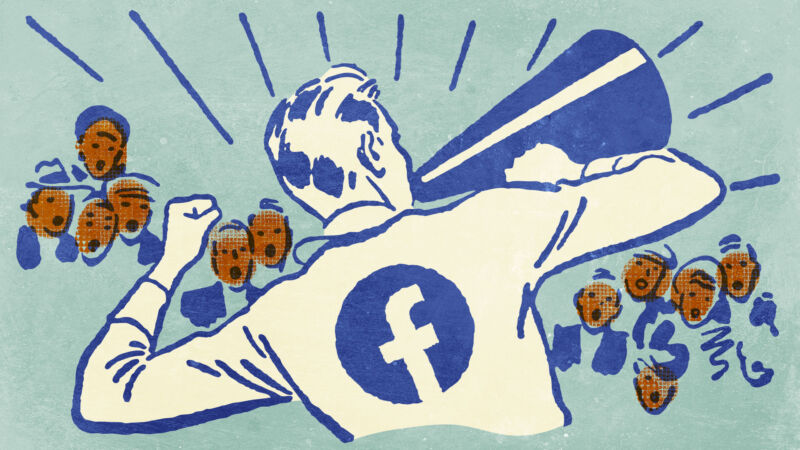
As Twitter continues its rebrand as X, it looks like Elon Musk hopes to quash any claims that the platform under its new name is allowing rampant hate speech to fester. Yesterday, X Corp sued a nonprofit, the Center for Countering Digital Hate (CCDH), for allegedly “actively working to assert false and misleading claims” regarding spiking levels of hate speech on X and successfully “encouraging advertisers to pause investment on the platform,” Twitter’s blog said.

In its complaint, X Corp. claims that CCDH’s reports have caused an estimated tens of millions in advertising revenue loss. The company said it’s aware of “at least eight” specific organizations, including large, multinational corporations, that “immediately paused their advertising spend on X based on CCDH’s reports and articles.” X also claimed that “at least five” companies “paused their plans for future advertising spend” and three companies decided not to reactivate campaigns, all allegedly basing decisions to stop spending due to CCDH’s reporting.

X is alleging that CCDH is being secretly funded by foreign governments and X competitors to lob this attack on the platform, as well as claiming that CCDH is actively working to censor opposing viewpoints on the platform. Here, X is echoing statements of US Senator Josh Hawley (R-Mo.), who accused the CCDH of being a “foreign dark money group” in 2021—following a CCDH report on 12 social media accounts responsible for 65 percent of COVID-19 vaccine misinformation, Fox Business reported.

“This is the same dark money group that tried to have the conservative @FDRLST deplatformed last year. And they’ve gone after other conservative sites as well, like @BreitbartNews,” Hawley said. “But who is funding this overseas dark money group—Big Tech? Billionaire activists? Foreign governments? We have no idea. Americans deserve to know what foreign interests are attempting to influence American democracy.”

The CCDH’s website says that it’s funded by “philanthropic trusts and members of the public.” A website dedicated to tracking funding sources of progressive organizations, InfluenceWatch, reported that the CCDH, which has offices in the US and the United Kingdom, has ties to the left-wing British Labour Party.

CCDH founder and CEO Imran Ahmed claims that Musk is attempting to censor the CCDH. Ahmed said in a statement provided to Ars that “Elon Musk’s latest legal threat is straight out of the authoritarian playbook.”

“He is now showing he will stop at nothing to silence anyone who criticizes him for his own decisions and actions,” Ahmed said.

Reuters reported that CCDH’s lawyers said X’s allegations had no legal basis and accused X of “intimidating those who have the courage to advocate against incitement, hate speech, and harmful content online.”

X’s lawyer, J. Jonathan Hawk, did not immediately respond to Ars’ request for comment.

https://arstechnica.com/?p=1958122


Facebook to unmask anonymous Dutch user accused of repeated defamatory posts

Facebook to unmask anonymous Dutch user accused of repeated defamatory posts

Starting today, Facebook users may feel a little less safe posting anonymously. The Court of the Hague in The Netherlands ruled that Meta Ireland must unmask an anonymous user accused of defaming the claimant, a male Facebook user who allegedly manipulated and made secret recordings of women he dated.

The anonymous Facebook user posted the allegedly defamatory statements in at least two private Facebook groups dedicated to discussing dating experiences. The claimant could not gain access but was shown screenshots from the groups, one with about 2,600 members and one with around 61,000 members. The claimant argued that his reputation had suffered from the repeated postings that included photos of the man and alleged screenshots of his texts.

The claimant tried to get Meta to remove the posts, but Meta responded with an email saying that it would not do so because “it is not clear to us that the content you reported is unlawful as defamation.”

At that point, Meta suggested that the man contact the anonymous user directly to resolve the matter, triggering the lawsuit against Meta. Initially, the claimant asked the court to order Meta to delete the posts, identify the anonymous user, and flag any posts in other private Facebook groups that could defame the claimant.

While arguing the case, Meta had defended the anonymous user’s right to freedom of expression, but the court decided that the claimant—whose name is redacted in court documents—deserved an opportunity to challenge the allegedly defamatory statements.

Partly for that reason, the court ordered Meta to provide “basic subscriber information” on the anonymous user, including their username, as well as any names, email addresses, or phone numbers associated with their Facebook account. The court did not order Meta to remove the posts or flag any others that may have been shared in private groups, though.

Meta has already agreed to comply with the order, the court’s ruling said. However, if Meta fails to provide the Facebook user’s identifying information, the social media company risks a penalty of approximately $1,200 daily. The maximum fine that Meta could face is less than $130,000.

A legal representative for the claimant and Meta could not immediately be reached for comment.

Identifying anonymous posters

Facebook allows users to post anonymously in private groups when admins allow it. The court order said it was common for private Facebook groups to allow anonymous posting in forums where primarily women discuss dangerous or negative dating experiences with men.

When a Facebook user posts anonymously, it’s never truly been anonymous, of course. Facebook’s policy stipulates that “your name and profile picture will still be visible to the group’s admins and moderators, as well as to Facebook, in order to help keep groups safe and in compliance with our Community Standards.”

There’s an entire branch of law where content removal attorneys fight back against anonymous posters. Sometimes attorneys prod platforms to unmask the user, commonly when making copyright claims, and other times they rely on tactics to unmask users themselves, like IP tracing or reverse image searches. This case, however, could be considered a “landmark decision” that “signals a shift in the balance between user privacy and accountability on social media platforms,” StackDiary reported.

Meta’s defense of the anonymous user’s right to free speech failed, the court said, because freedom of speech is not unlimited.

“Someone who, without evidence, repeatedly makes serious and clearly traceable accusations, must take into account, partly in the light of the conditions applied by Facebook, that he or she may be confronted with a measure whereby his or her anonymity is lifted,” the court order said.

Although the key concern for The Court in the Hague appeared to be that the statements posted anonymously were plausibly defamatory, the order also noted that the content would not have to necessarily be unlawful for Facebook to be ordered to identify the user posting it.

“According to settled case law, under certain circumstances Meta has an obligation to provide identifying data, even if the content of the relevant messages is not unmistakably unlawful,” the court order said.

https://arstechnica.com/?p=1957962


“Blaze your glory!”—Twitter’s “X” becomes first one-letter iPhone app

“Blaze your glory!”—Twitter’s “X” becomes first one-letter iPhone app

Apple has granted a rare exception to its strict App Store rules, allowing Twitter to rebrand as X and become the first one-character iPhone app.

Two days ago, Bleeping Computer reported that Apple had rejected Twitter’s attempt to update its app name to simply X due to minimum character requirements. As a result, the app was temporarily listed in its App Store as Twitter—alongside the X logo and the X tagline “Blaze your glory.” This potentially further confused users over what to call the app during Elon Musk’s sloppy rollout of Twitter’s new branding.

It stayed that way for days until about 2:30 this morning, when Apple updated the listing in its mobile App Store, Bleeping Computer reported—allowing the App Store’s first single-character name. A product designer and data scientist who founded a growth consulting agency called Next, Nick Sheriff, posted a screenshot confirming that historically the App Store only accepted app names with a minimum of two characters.

Apple could not immediately be reached for comment on whether the exception was made exclusively for X or if a policy change might be coming that could benefit other apps with single-character names. On the desktop App Store, Twitter’s old branding still appears as of this writing.

Sheriff told Ars that thousands of apps could be impacted by an update to the App Store policy, which he warned could “lead to a fragmentation of the App Store in unprecedented ways, unlike anything we’ve witnessed in over a decade.”

In his X post, Sheriff pointed out that “many brands outside the US, particularly in Asia,” consist of “just one character” and “don’t receive such special treatment.” He said it’s possible that Apple had to make technical changes to allow the Twitter rebrand to go through, and those changes could have both positive and negative impacts on the App Store.

“The question then was why Apple would do something for Twitter, but not for others in the past 10 years,” Sheriff wrote.

It’s possible that Apple was open to making an exception for X due to Apple’s relationship with X Corp CEO Linda Yaccarino from her heyday at NBCUniversal. When Yaccarino first took over the job of helming Twitter from Musk, it was reported that she had forged a significant brand partnership with Apple and NBCUniversal. At that point, some speculated that Yaccarino’s relationship would help repair any damage caused by Musk’s tirade against Apple last year (which was due to a different “misunderstanding” with the App Store).

Twitter does not respond to requests for comment.

https://arstechnica.com/?p=1957850


Arizona law school embraces ChatGPT use in student applications

A computer-augmented view of ASU's campus.
Benj Edwards / Arizona State University

On Friday, Arizona State University’s Sandra Day O’Connor College of Law announced that prospective students would be allowed to use AI tools, such as OpenAI’s ChatGPT, to assist in preparing their applications, according to a report by Reuters.

This decision comes a week after the University of Michigan Law School notably decided to ban such AI tools, highlighting the diverse policies different universities are adopting related to AI’s role in student applications.

Arizona State’s law school says that applicants who use AI tools must clearly disclose that fact, and they must also ensure that the submitted information is accurate. This parallels the school’s existing requirement for applicants to certify if they have used a professional consultant to help with their application.

The law school’s dean, Stacy Leeds, stated that the new policy acknowledges the increasing use of AI tools among lawyers and law students. Leeds emphasized that students cannot use AI to generate false information, adding that they still need to “communicate their own life.”

Released in November, ChatGPT is an AI assistant application that can perform analysis and also compose text in different styles, depending on what the user requests. Its appearance, followed by similar tools from other vendors, sparked an existential crisis among some educators who worry that students will use it to complete assignments without learning the material.

Some university professors, such as Ethan Mollick of Wharton School in Pennsylvania, have taken a more open approach, recognizing that the use of tools like ChatGPT among some students is inevitable. Mollick’s policy states that students must be able to vouch for the accuracy of their work, no matter how it was composed. Also, students must disclose their use of AI tools to the professor.

Leeds believes that generative AI, widely available to applicants regardless of their economic situation, can potentially level the playing field for those who might not be able to afford to hire a professional consultant—some of which charge hundreds of thousands of dollars in fees.

Despite the new policy, Reuters reports that officially sanctioned ChatGPT use at the Arizona State law school is limited to applications for now. The school is still formulating regulations for AI usage within coursework and the classroom. Soon, ASU plans to provide educational videos to guide prospective students about acceptable uses and potential pitfalls of AI.

https://arstechnica.com/?p=1957764


Instead of obtaining a warrant, the NSA would like to keep buying your data

National Security Agency headquarters.

An effort by United States lawmakers to prevent government agencies from domestically tracking citizens without a search warrant is facing opposition internally from one of its largest intelligence services.

Republican and Democratic aides familiar with ongoing defense-spending negotiations in Congress say officials at the National Security Agency (NSA) have approached lawmakers charged with its oversight about opposing an amendment that would prevent it from paying companies for location data instead of obtaining a warrant in court.

Introduced by US representatives Warren Davidson and Sara Jacobs, the amendment, first reported by WIRED, would prohibit US military agencies from “purchasing data that would otherwise require a warrant, court order, or subpoena” to obtain. The ban would cover more than half of the US intelligence community, including the NSA, the Defense Intelligence Agency, and the newly formed National Space Intelligence Center, among others.

The House approved the amendment in a floor vote over a week ago during its annual consideration of the National Defense Authorization Act, a “must-pass” bill outlining how the Pentagon will spend next year’s $886 billion budget. Negotiations over which policies will be included in the Senate’s version of the bill are ongoing.

In a separate but related push last week, members of the House Judiciary Committee voted unanimously to advance legislation that would extend similar restrictions against the purchase of Americans’ data across all sectors of government, including state and local law enforcement. Known as the “Fourth Amendment Is Not For Sale Act,” the bill will soon be reintroduced in the Senate as well by one of its original 2021 authors, Ron Wyden, the senator’s office confirmed.

“Americans of all political stripes know their Constitutional rights shouldn’t disappear in the digital age,” Wyden says, adding that there is a “deep well of support” for enshrining protections against commercial data grabs by the government “into black-letter law.”

The extent to which the NSA in particular uses data brokers to obtain location and web-browsing data is unclear, though the agency has previously acknowledged using data from “commercial” sources in connection with cyber defense. Regardless, the NSA’s lawyers have authored extensive guidelines for acquiring commercially available data, particularly when it belongs to US companies or individuals. Some of the rules prescribed by the agency’s lawyers remain classified.

The NSA did not respond to multiple requests for comment.

A government report declassified by the Office of the Director of National Intelligence last month revealed that US intelligence agencies were avoiding judicial review by purchasing a “large amount” of “sensitive and intimate information” about Americans, including data that can be used to trace people’s whereabouts over extended periods of time. The sensitivity of the data is such that “in the wrong hands,” the report says, it could be used to “facilitate blackmail,” among other undesirable outcomes. The report also acknowledges that some of the data being procured is protected under the US Constitution’s Fourth Amendment, meaning the courts have ruled that government should be required to convince a judge the data is linked to an actual crime.

The US Supreme Court has previously ordered the government to obtain search warrants before seeking information that may “chronicle a person’s past movements through the record of his cell phone signals.” In the landmark Carpenter v. United States decision, the court found that advancements in wireless technology had effectively outpaced people’s ability to reasonably appreciate the extent to which their private lives are exposed.

https://arstechnica.com/?p=1957520


Reddit calls for “a few new mods” after axing, polarizing some of its best

In this photo illustration the Reddit logo seen displayed on

Reddit is campaigning to replace numerous longstanding moderators who were removed from their positions after engaging in API protests. Over the past week, a Reddit employee has posted to subreddits with ousted mods, asking for new volunteers. But in its search, the company has failed to address the intricacies involved in moderating distinct and, in some cases, well-known subreddits. And it doesn’t look like the knowledge from the previous moderators is being passed down.

Redditors were enraged over suddenly high API access pricing, and the social media platform’s subsequent responses to protests and feedback have beleaguered Reddit for weeks. A two-day blackout of over 8,000 subreddits, for example, shut Reddit down for three hours in June. Protestors complicated matters further with moves like suddenly making subreddits not-safe-for-work (NSFW), all about John Oliver, or focusing on some unhelpful tweak of its original topic (like r/malefashionadvice only allowing posts related to the stylings of the 18th century).

It’s a tough job…

Reddit’s response has included threatening to remove moderators who are engaging in protests to actually removing them. Recently, efforts to replace the departed volunteers who were booted or quit have picked up steam. A Reddit employee going by ModCodeofConduct (Reddit has refused to disclose the real names of admins representing the company on the platform) has posted to numerous subreddits over recent days, including r/IRLEasterEggs, r/donthelpjustfilm, r/ActLikeYouBelong, r/malefashionadvice, and r/AccidentalRenaissance.

Ars Technica spoke with a moderator via email who resigned from r/AccidentalRenaissance after they say Reddit threatened to remove the mod team after they took various forms of protest within the subreddit. The user, who asked to be identified as M.R. for privacy reasons, said the biggest challenge for replacement mods would be dealing with some of “the worst photos they could imagine”:

Child porn, dying animals, dying children, brutal 3rd world scenes of horror, and quite a lot of literal poop. So if anyone was bothered by graphic images, they should stay well away…

And because your Reddit account can be permabanned at any time by Reddit’s Anti-Evil Operations bot with a modest amount of reporting from a number of sockpuppet accounts, you’re not able to tell these people to fuck off and go to hell when they inevitably ask why you’re discriminating against them and their sickening photos.

You have to maintain a veneer of pleasantness for even the most vile photos and the most abusive Redditors because those are the people that can and will get you banned in retaliation.

In addition to the aforementioned types of nastiness mods are tasked to cull from subreddits, mods Ars has spoken with over the weeks have frequently pointed to the potential for burnout, death threats, long training sessions (from other volunteer mods), and rapid turnover for Reddit mods.

Another Reddit user, who asked to be identified as Zach for privacy reasons, was a moderator for r/malefashionadvice for years before Reddit removed him. He put a lot of free labor into the community, he said, from banning trolls and “hateful people” and removing comments to making content and facilitating discussions to keep the subreddit’s 5.5 million members (as of this writing) interested.

“[E]very year we tried to test out whether our rules were well designed for this purpose and suspended what were called the ‘Daily Questions Megathreads,’ where questions and advice request went, and allowed people to post in a free-for-all fashion,” Zach told Ars, describing examples of the unique work done. Even the megathreads required the hand of moderators, as advisors eventually grew weary and took time off, and “lurkers and random posters” would start offering “garbage advice.”

Without mods proven to be dedicated and experienced, it’s unclear how fervently such efforts will continue in the future.

… and not everyone can do it

Various subreddits, (such as r/AskHistorians and r/science) have complicated moderation systems that not everyone can handle.

M.R. pointed to the r/AccidentalRenaissance moderation team formerly boasting “art history backgrounds, formal education, and an instinctual grasp of what makes a photo ‘Renaissance.'” Those principles are listed via a sidebar on the subreddit, but M.R. says that new mods haven’t properly instilled them since taking over.

Now, the subreddit boasts images that, M.R. laments, are simply “Not Renaissance.”

Imagine our dismay when the day the new mods came in, the subreddit’s profile photo became a closeup of the fingers touching in Creation of Adam. And the banner became a side-by-side comparison of a soccer player with his arms out at his sides, doing a side-by-side comparison of a Renaissance painting in a matching pose, but nothing else matched. Not lighting, not composition, not colors. … Literally nothing but ‘vaguely crucifix-shaped human.’

It became immediately clear to us that the new mods didn’t know the first thing about art …

M.R. doesn’t think the replacements mods were properly vetted and believes “Reddit picked the most loyal bootlickers who would churn out the maximum amount of content.”

Zach argued that r/malefashionadvice, as well as other large fashion subreddits (Zach currently moderates other fashion-focused communities) adhere, to some degree, to the 90-9-1 rule, which says that among sites with user-generated and user-edited content, 90 percent are lurking viewers, 9 percent contribute minimally, and 1 percent do almost all the work.

When Ars asked Zach if he thinks Reddit will find quality moderators through ModCodeofConduct’s calls, Zach said:

Not a snowball’s chance in hell. I think Reddit committed to a pretty stupid and self-defeating path here.

https://arstechnica.com/?p=1957407


Most of the 100 million people who signed up for Threads stopped using it

Man holding a smartphone that displays Meta's Threads app.
Getty Images | NurPhoto

Meta’s new Twitter competitor, Threads, is looking for ways to keep users interested after more than half of the people who signed up for the text-based platform stopped actively using the app, Meta CEO Mark Zuckerberg reportedly told employees in a company town hall yesterday. Threads launched on July 5 and signed up over 100 million users in less than five days, buoyed by user frustration with Elon Musk-owned Twitter.

“Obviously, if you have more than 100 million people sign up, ideally it would be awesome if all of them or even half of them stuck around. We’re not there yet,” Zuckerberg told employees yesterday, according to Reuters, which listened to audio of the event.

Third-party data suggests that Threads may have lost many more than half of its active users. Daily active users for Threads on Android dropped from 49 million on July 7 to 23.6 million on July 14, and then to 12.6 million on July 23, web analytics company SimilarWeb reported.

“We don’t yet have daily numbers for iOS, but we suspect the boom-and-bust pattern is similar,” SimilarWeb wrote. “Threads took off like a rocket, with its close linkage to Instagram as the booster. However, the developers of Threads will need to fill in missing features and add some new and unique ones if they want to make checking the app a daily habit for users.”

Although losing over half of the initial users in a short period might sound discouraging, the Reuters article said Zuckerberg told employees that user retention was better than Meta executives expected. “Zuckerberg said he considered the drop-off ‘normal’ and expected retention to grow as the company adds more features to the app, including a desktop version and search functionality,” Reuters wrote.

Chief Product Officer Chris Cox also spoke at the company event, reportedly saying that Meta is considering “retention-driving hooks” such as “making sure people who are on the Instagram app can see important Threads.” Threads is part of Meta’s Instagram platform, so users can create a Threads profile as part of their Instagram account.

Zuck: Threads still needs “basic functionality”

When contacted by Ars today, a Meta spokesperson pointed to Zuckerberg’s comments from Wednesday’s earnings call. Zuckerberg said:

On Threads, briefly, I’m quite optimistic about our trajectory. We saw unprecedented growth out of the gate and more importantly we’re seeing more people coming back daily than I’d expected. And now, we’re focused on retention and improving the basics. And then after that, we’ll focus on growing the community to the scale we think is possible. Only after that will we work on monetization. We’ve run this playbook many times before—with Facebook, Instagram, WhatsApp, Stories, Reels, and more—and this is as good of a start as we could have hoped for, so I’m really happy with the path we’re on here.

Zuckerberg also told investors that “Threads has been dramatically more than we expected in terms of the adoption and the rate of that… we had a small team working on [it] for a while, but it really kind of blew up and created a big opportunity immediately.”

Zuckerberg said “there’s still a lot of basic functionality to build” for Threads and talked briefly about the challenge of attracting users to new standalone apps. “We’ve tried a bunch of standalone experiences over time, and in general, we haven’t had a lot of success with building kind of standalone apps,” he said.

Threads could succeed in part because of user backlash to Musk’s changes at Twitter, now officially called “X,” Zuckerberg seemed to suggest. “It could just be that this is such an idiosyncratic case because of all of the factors that are happening around Twitter or X, I guess, it’s called now,” he said.

Threads is available in about 100 countries, including the US and UK, but is not in the European Union yet because of concerns over compliance with EU regulations. Threads has drawn privacy-related criticisms because of the amount of personal data collected by the app.

https://arstechnica.com/?p=1957448


Did Facebook fuel political polarization during the 2020 election? It’s complicated.

Did Facebook fuel political polarization during the 2020 election? It’s complicated.
Getty Images | Aurich Lawson

Over the last several years, there have been growing concerns about the influence of social media on fostering political polarization in the US, with critical implications for democracy. But it’s unclear whether our online “echo chambers” are the driving factor behind that polarization or whether social media merely reflects (and arguably amplifies) divisions that already exist. Several intervention strategies have been proposed to reduce polarization and the spread of misinformation on social media, but it’s equally unclear how effective they would be at addressing the problem.

The US 2020 Facebook and Instagram Election Study is a joint collaboration between a group of independent external academics from several institutions and Meta, the parent company of Facebook and Instagram. The project is designed to explore these and other relevant questions about the role of social media in democracy within the context of the 2020 US election. It’s also a first in terms of the degree of transparency and independence that Meta has granted to academic researchers. Now we have the first results from this unusual collaboration, detailed in four separate papers—the first round of over a dozen studies stemming from the project.

Three of the papers were published in a special issue of the journal Science. The first paper investigated how exposure to political news content on Facebook was segregated ideologically. The second paper delved into the effects of a reverse chronological feed as opposed to an algorithmic one. The third paper examined the effects of exposure to reshared content on Facebook. And the fourth paper, published in Nature, explored the extent to which social media “echo chambers” contribute to increased polarization and hostility.

“We find that algorithms are extremely influential in people’s on-platform experiences, and there is significant ideological segregation in political news exposure,” Natalie Jomini Stroud of the University of Texas at Austin—co-academic research lead for the project, along with New York University’s Joshua Tucker—said during a press briefing. “We also find that popular proposals to change social media algorithms did not sway political attitudes.”

Ideological segregation

Let’s start with the question of whether or not Facebook enables more ideological segregation in users’ consumption of political news. Sandra Gonzalez-Bailon of the University of Pennsylvania and her co-authors looked at the behavior of 208 million Facebook users between September 2020 and February 2021. For privacy reasons, they did not look at individual-level data, per Gonzalez-Bailon, focusing only on aggregated measures of audience behavior and audience composition. So the URLs they analyzed had been posted by users more than 100 times.

The results: Conservatives and liberals do indeed see and engage with different sets of political news—strong ideological separation. That segregation is even more pronounced when political news is posted by pages or groups as opposed to individuals. “In other words, pages and groups contribute much more to segregation than users,” said Gonzalez-Bailon. Furthermore, politically conservative users are much more segregated on Facebook than liberal users; there were far more political news URLs seen exclusively by conservatives compared to those seen exclusively by liberals.

Finally, the vast majority of political news that Meta’s third-party fact-checker program rated as false was viewed by conservatives, compared to liberals. That said, those false ratings amounted to a mere 0.2 percent, on average, of the full volume of content on Facebook. And political news in general accounts for just 3 percent of all posts shared on Facebook, so it’s not even remotely the most popular type of content. “This segregation is the result of a complex interaction between algorithmic forms of curation and social forms of curation, and these feedback loops are very difficult to disentangle with observational data,” said Gonzalez-Bailon of the study’s findings.

https://arstechnica.com/?p=1956517


Tesla exaggerated EV range so much that drivers thought cars were broken

A Tesla charging station on February 18, 2023, in Union City, New Jersey.
Enlarge / A Tesla charging station on February 18, 2023, in Union City, New Jersey.
Getty Images | VIEW press

Tesla has consistently exaggerated the driving range of its electric vehicles, reportedly leading car owners to think something was broken when actual driving range was much lower than advertised. When these owners scheduled service appointments to fix the problem, Tesla canceled the appointments because there was no way to improve the actual distance Tesla cars could drive between charges, according to an investigation by Reuters.

In mid-2022, Tesla started routing range complaints to a “Diversion Team” that fielded up to 2,000 cases a week and “was expected to close about 750 cases a week,” Reuters reported.

“Tesla years ago began exaggerating its vehicles’ potential driving distance—by rigging their range-estimating software,” the article published today said. “The company decided about a decade ago, for marketing purposes, to write algorithms for its range meter that would show drivers ‘rosy’ projections for the distance it could travel on a full battery, according to a person familiar with an early design of the software for its in-dash readouts.”

Once the battery fell below 50 percent, “the algorithm would show drivers more realistic projections for their remaining driving range.” The order to exaggerate car range allegedly came from the top, Reuters wrote:

The directive to present the optimistic range estimates came from Tesla Chief Executive Elon Musk, this person said.

“Elon wanted to show good range numbers when fully charged,” the person said, adding: “When you buy a car off the lot seeing 350-mile, 400-mile range, it makes you feel good.”

“We would like to cancel your visit”

Reuters said it “could not determine whether Tesla still uses algorithms that boost in-dash range estimates,” but reported that Tesla “last year became so inundated with driving-range complaints that it created a special team to cancel owners’ service appointments.” Reuters also noted that “automotive testers and regulators continue to flag the company for exaggerating the distance its vehicles can travel before their batteries run out.”

Tesla Model 3 driver Alexandre Ponsin “was sometimes getting less than half” of his 2021 vehicle’s advertised range of 353 miles, particularly in cold weather, leading him to believe the car had a serious defect, according to Reuters. He booked a service appointment a few months ago but later “received two text messages, telling him that ‘remote diagnostics’ had determined his battery was fine, and then: ‘We would like to cancel your visit.'”

The cancellation was in line with instructions Tesla employees had received “to thwart any customers complaining about poor driving range from bringing their vehicles in for service,” according to Reuters. “Last summer, the company quietly created a ‘Diversion Team’ in Las Vegas to cancel as many range-related appointments as possible.”

Diversion Team members reportedly “often closed hundreds of cases a week and staffers were tracked on their average number of diverted appointments per day.” Managers reportedly told employees that each canceled appointment saved the company $1,000, while easing pressure on service centers with long waits for service appointments.

Managers allegedly told employees in late 2022 “to stop running remote diagnostic tests on the vehicles of owners who had reported range problems,” speeding up the process of canceling cases. “Thousands of customers were told there is nothing wrong with their car” by advisers who had never run diagnostics, Reuters quoted a source as saying. Advisers offered tips to customers on how to increase their mileage by changing driving habits.

According to Reuters, supervisors also told employees to call a customer once and close the case as “unresponsive” if there was no answer. “When customers did respond, advisers were told to try to complete the call in no more than five minutes,” Reuters wrote.

https://arstechnica.com/?p=1957101


Microsoft Teams + Office bundle leads to official EU antitrust probe

Microsoft Teams + Office bundle leads to official EU antitrust probe
Getty Images

European Union regulators have opened a formal investigation into claims that Microsoft is unfairly bundling its Teams video conferencing app with its popular Office software as Brussels intensifies its scrutiny of big technology groups.

The European Commission, the executive body of the EU, said on Thursday that it feared Microsoft “may be abusing and defending” its market dominance in productivity software “by restricting competition.”

It was concerned the US tech giant may grant Teams “distribution advantages by not giving customers the choice” over access to the product, the statement said.

The move is the first such probe against Microsoft in more than a decade and comes after rivals said the group’s concessions to stop tying in Teams with its Office 365 software in Europe were insufficient for fair competition, according to multiple people with direct knowledge of Brussels’s thinking.

The investigation could lead to formal charges against Microsoft as early as the autumn, according to two people with direct knowledge of the matter. The Financial Times first reported that the EU was poised to open a formal probe into the matter last week.

“We respect the European Commission’s work on this case and take our own responsibilities very seriously,” Microsoft said. “We will continue to cooperate with the commission and remain committed to finding solutions that will address its concerns.”

A European Commission spokesperson said on Thursday: “We have not received any commitment by Microsoft that would resolve our concerns. It is too early to discuss a remedy to potential abuse.”

The EU has stepped up its actions against Silicon Valley giants in recent years. Margrethe Vestager, the bloc’s executive vice-president in charge of competition and digital policy, last month threatened to break up Google.

The investigation into Microsoft comes three years after Slack, now owned by Salesforce, filed a complaint with the EU. The workplace messaging app accused Microsoft of using its dominance to crush competitors by tying Teams to its Office 365 tools.

Microsoft, as part of its negotiations with antitrust investigators, had agreed to stop forcing users to have Teams automatically installed on their devices. But talks stalled over whether Microsoft will implement it globally or only in the bloc’s 27 member states.

Regulators and rivals have concerns over the price Microsoft should charge for Teams if it is no longer linked to Office software. Rivals, such as Slack, fear being undercut by Microsoft.

But if Microsoft raises prices, such a move may be considered bad for consumers. “It puts the commission in a difficult position,” said a person with knowledge of the talks.

The move against Microsoft, the first such Brussels investigation against the group since the commission charged it with tying Internet Explorer to its Windows operating system in 2009, comes after a prolonged truce between the company and the competition watchdog.

Microsoft then reached a settlement with the commission, offering users a choice of browsers. However, in 2013, the EU imposed a 561 million euro fine on the company for failing to fulfill its promise.

© 2023 The Financial Times Ltd. All rights reserved. Not to be redistributed, copied, or modified in any way.

https://arstechnica.com/?p=1957064