Twitter commandeers @X username from man who had it since 2007

Illustration includes an upside-down Twitter bird logo with an
Getty Images | Chris Delmas

Elon Musk’s decision to rebrand Twitter as “X” wouldn’t be complete without a change to the company’s official Twitter account. The @X handle was already taken by a user who registered it over 16 years ago, but that wasn’t much of an obstacle—Twitter simply took over the username and offered its longtime owner some merchandise but no monetary compensation.

San Francisco-based photographer Gene X Hwang was @X on Twitter from March 2007 until yesterday. “They just took it essentially—kinda what I thought might happen,” Hwang told The Telegraph. “They did send an email saying it is the property of ‘x’ essentially.”

Hwang confirmed to Ars today that “there was no financial compensation” offered to him. The company offered “to switch the @x account and its history/followers etc to a new handle once I select one that is available,” Hwang told us. “They also offered some merch and to meet with the management team as well.”

Hwang said he doesn’t feel any “need to meet with the management since I am not sure what that convo would be really.” The meeting would probably be “awkward,” he said.

No plans to fight change

The former @X account holder has no plans to fight the change, Hwang told Ars. “I am definitely not a legal expert and not sure what rights there are,” he wrote in an email, adding that “maybe there is something there but [I] don’t really wanna fight that kind of fight as I like to keep my life more simple.”

Hwang is still on Twitter with the new handle of @x12345678998765. “Alls well that ends well,” he tweeted last night. He told Ars that @x12345678998765 is the handle Twitter moved him to temporarily before he picks a new name.

Hwang said he “didn’t need to hear from Mr. Musk directly but it would have been nice to have gotten something for the account.” He views any compensation as “more of a nice-to-have/bonus” rather than a requirement, he said. “Maybe I should ask for the blue bird they are taking down from the [headquarters building] sign since it’s no longer Twitter any more, or a friend suggested asking for a Tesla Model X or a ride on SpaceX!” Hwang told us.

Before the @X handle was taken away, Hwang said he would be willing to give it up in exchange for payment. “I’m kind of waiting to see what might happen,” and “I would be willing to part with the handle if they made an offer for it that made sense,” he told TechCrunch earlier this week. No one from Twitter reached out to him before the company rebranded as X, he also said.

Hwang was quoted as saying several years ago that he turned down offers as high as $40,000 because he didn’t think they were legitimate. “I really didn’t entertain any of them seriously,” he said at the time.

Twitter claims right to take any username

Twitter’s official account was formerly @twitter, but the profile says, “This account is no longer active. Follow @x for updates.” The @X account is now populated with years worth of tweets that originally appeared on the @Twitter account, giving the impression that it was X all along.

Twitter says it can take over any username in its terms of service. “We may also remove or refuse to distribute any Content on the Services, limit distribution or visibility of any Content on the service, suspend or terminate users, and reclaim usernames without liability to you,” the Twitter terms say. That line was already in the Twitter terms before Musk bought the company.

Usernames can have a monetary value. The owner of @N, Naoki Hiroshima, wrote in 2014 that he’d “been offered as much as $50,000 for it” and that people “have tried to steal it.” One hacker was successful in taking control of @N, but Twitter later restored the handle to Hiroshima.

In January, a New York Times report said that “Twitter has considered selling user names to generate new revenue as its owner, Elon Musk, tries to resuscitate the company’s business.” Under Musk, Twitter has also gotten more aggressive about purging accounts that seem to be inactive.

https://arstechnica.com/?p=1956724


Musk plans Supreme Court appeal after losing bid to terminate SEC settlement

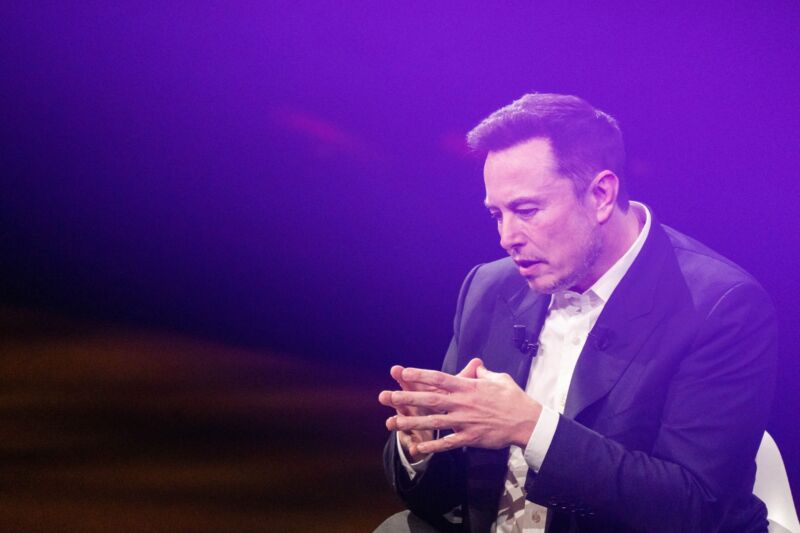
Elon Musk speaking at a tech event.
Enlarge / Elon Musk at the Viva Tech fair in Paris, France, on Friday, June 16, 2023.
Getty Images | Bloomberg

Elon Musk plans an appeal to the US Supreme Court after losing an attempt to terminate a settlement with the Securities and Exchange Commission that Musk claims violates his First Amendment rights. The 2018 settlement over Musk’s false “funding secured” tweets required Tesla to impose controls on his social media posts.

“Alex Spiro, a lawyer for Musk, confirmed on Tuesday that Musk plans an appeal to the Supreme Court,” according to Reuters.

In April 2022, Musk’s attempt to get out of the settlement was rejected by a judge in US District Court for the Southern District of New York. Musk appealed to the US Court of Appeals for the 2nd Circuit, but the ruling against Musk was affirmed unanimously by a three-judge panel.

Musk then petitioned for an en banc rehearing in front of all the 2nd Circuit Court’s judges, but his appeal was denied in a short order issued by the court yesterday. The “active members of the Court have considered the request for rehearing en banc. It is hereby ordered that the petition is denied,” the ruling said. The 2nd Circuit appeals court has 13 active members.

The only remaining option for Musk is the Supreme Court, but there is no guarantee that the highest court will take up the case.

The same tweets that led to Musk’s SEC settlement were also scrutinized in a class-action lawsuit against Musk and Tesla that sought financial damages for Tesla shareholders. The judge in that case ruled that Musk’s tweets about having secured funding to take Tesla private were false and reckless, but it was up to a jury to decide whether Musk knew the tweets were false and whether they caused Tesla investors to lose money. The jury sided with Musk in February 2023.

Musk needs Tesla approval for tweets

The SEC case began after Musk’s August 2018 tweets stating, “Am considering taking Tesla private at $420. Funding secured,” and, “Investor support is confirmed. Only reason why this is not certain is that it’s contingent on a shareholder vote.”

The SEC sued Musk and Tesla, saying the tweets were false and “led to significant market disruption.” The settlement required Musk and Tesla to each pay $20 million in penalties and forced Musk to step down from his board chairman post. That money is to be distributed to harmed investors under a plan approved by the court last year.

Musk was also required to get Tesla’s pre-approval for tweets or other social media posts “that contain, or reasonably could contain, information material to the Company or its shareholders.”

Musk claimed the SEC used the consent decree to “micro-manage” his Twitter activity, that he was “forced” into signing the deal, and that his “First Amendment freedoms are imperiled.” The SEC “has been weaponizing the consent decree by using it to try to muzzle and harass Mr. Musk and Tesla,” Spiro wrote in a court filing last year.

Ruling against Musk, US District Judge Lewis Liman called the claim that the SEC is harassing him “meritless” and wrote that Musk’s “free speech rights do not permit him to engage in speech that is or could ‘be considered fraudulent or otherwise violative of the securities laws.'”

Musk bought Twitter in October 2022 and is the CEO of both Tesla and SpaceX.

https://arstechnica.com/?p=1956438


Ready for your eye scan? Worldcoin launches—but not quite worldwide

A montage of the Worldcoin logo and Sam Altman
FT Montage/Bloomberg

Sam Altman’s cryptocurrency project, the Worldcoin Foundation, is rolling out its services globally even as the company cofounded by the OpenAI chief faces regulatory pushback in the US.

The Berlin and San Francisco-based start-up announced on Monday that its technology, including its Worldcoin token—a cryptocurrency traceable on the blockchain that requires users to first prove their identity—will be available in 35 cities across 20 countries.

Central to the effort is an eye-scanning physical “orb,” which Worldcoin’s founders say is necessary for a future in which distinguishing between humans and robots becomes increasingly challenging due to a surge in artificial intelligence technology. Once users have proven they are not robots, they can be issued one of the company’s tokens.

But the company’s goals face being stymied by US regulators cracking down on digital assets based on fears over cryptocurrencies being used as a vehicle for speculation and fraud. For this reason, Worldcoin tokens will not initially be available in the US.

“When we started thinking about this, we didn’t think it would end up as ‘world minus the US coin’ and here we are,” Altman told the Financial Times. “I’d say there’s 95 percent of the world’s population not in the US. The US does not make or break a project like this.”

While Worldcoin’s rollout comes as AI takes major strides forward—such as OpenAI’s release of ChatGPT last year—it also coincides with an unprecedented period of tumult for digital tokens and the broader crypto sector.

A crisis of confidence enveloped the industry last year, prompting the collapse of bellwethers including FTX and Celsius and leading regulators to issue a blitz of enforcement actions aimed at cracking down on speculative crypto projects.

Despite the regulatory hurdles, investors poured roughly $250 million into Worldcoin, including venture capital groups Andreessen Horowitz and Khosla Ventures, Internet entrepreneur Reid Hoffman, and, prior to the collapse of his FTX empire, Sam Bankman-Fried.

Alex Blania, Worldcoin’s co-founder, said the company was limited in what it could say about its commercial ambitions because of regulatory scrutiny in the US.

But the project “will make money,” according to Tiago Sada, head of product at the company. “All our products are for-profit. There will eventually be a bunch of different wallets and experiences which will make money.”

Worldcoin has also outlined plans to hold on to about 20 percent of all tokens it issues, using their value to fund “Orb production and initial protocol development… ecosystem development and maintenance.”

Altman admitted that eye-scanning technology has “a clear ick factor,” but he is confident that with proper explanation the company can attract users.

“On crypto, there have been a lot of bad actors and that’s a real shame… we have to earn people’s trust, which is why we’re explaining so much about how the technology works and the road map for decentralizing the company,” he said.

© 2023 The Financial Times Ltd. All rights reserved Not to be redistributed, copied, or modified in any way.

https://arstechnica.com/?p=1956032


OpenAI, Google will watermark AI-generated content to hinder deepfakes, misinfo

OpenAI, Google will watermark AI-generated content to hinder deepfakes, misinfo

Seven companies—including OpenAI, Microsoft, Google, Meta, Amazon, Anthropic, and Inflection—have committed to developing tech to clearly watermark AI-generated content. That will help make it safer to share AI-generated text, video, audio, and images without misleading others about the authenticity of that content, the Biden administration hopes.

It’s currently unclear how the watermark will work, but it will likely be embedded in the content so that users can trace its origins to the AI tools used to generate it.

Deepfakes have become an emerging concern for Internet users and policymakers alike as tech companies grapple with how to deal with controversial uses of AI tools.

Earlier this year, image generator Midjourney was used to make fake images of Donald Trump’s arrest, which subsequently went viral. While it was obvious to many that the images were fake, Midjourney still decided to take steps to ban the user who made them. Perhaps if a watermark had been available then, that user, Bellingcat founder Eliot Higgins, never would’ve faced such steep consequences for what he said was not an attempt to be clever or fake others out but simply have fun with Midjourney.

There are other more serious misuses of AI tools, however, where a watermark might help to save some Internet users from pain and strife. Earlier this year, it was reported that AI voice-generating software was used to scam people out of thousands of dollars, and just last month, the FBI warned of increasing use of AI-generated deepfakes in sextortion schemes.

The White House said the watermark will enable “creativity with AI to flourish but reduces the dangers of fraud and deception.”

OpenAI said in a blog that it has agreed “to develop robust mechanisms, including provenance and/or watermarking systems for audio or visual content,” as well as “tools or APIs to determine if a particular piece of content was created with their system.” This will apply to most AI-generated content, with rare exceptions, like not watermarking the default voices of AI assistants.

“Audiovisual content that is readily distinguishable from reality or that is designed to be readily recognizable as generated by a company’s AI system—such as the default voices of AI assistants—is outside the scope of this commitment,” OpenAI said.

Google said that in addition to watermarking, it will also “integrate metadata” and “other innovative techniques” to “promote trustworthy information.”

As concerns over AI misuse mount, President Joe Biden will meet with tech companies today. That should help Biden and Congress field key insights ahead of developing an executive order and bipartisan legislation in efforts to seize back control over rapidly advancing AI technologies.

In a blog, Microsoft praised the Biden administration for creating “a foundation to help ensure the promise of AI stays ahead of its risks” and “bringing the tech industry together to hammer out concrete steps that will help make AI safer, more secure, and more beneficial for the public.”

“None of us can get AI right on our own,” Google’s blog said.

More AI safeguards promised

On top of developing watermarks for AI-generated content, tech companies made a range of other voluntary commitments announced by the White House on Friday.

Among them, tech companies agreed to conduct both internal and external testing on AI systems ahead of their release. They also said they would invest more in cybersecurity and share information across the industry to help reduce AI risks. Those risks include everything from AI enabling bias or discrimination to lowering barriers for advanced weaponry development, OpenAI’s blog said. Microsoft’s blog highlighted additional commitments it’s made to the White House, including supporting the development of a national registry documenting high-risk AI systems.

OpenAI said that tech companies making these commitments “is an important step in advancing meaningful and effective AI governance, both in the US and around the world.” The maker of ChatGPT, GPT-4, and DALL-E 2 also promised to “invest in research in areas that can help inform regulation, such as techniques for assessing potentially dangerous capabilities in AI models.”

Meta’s president of global affairs, Nick Clegg, echoed OpenAI, calling tech companies’ commitments an “important first step in ensuring responsible guardrails are established for AI.”

Google described the commitments as “a milestone in bringing the industry together to ensure that AI helps everyone.”

The White House expects that raising AI’s standards will enhance safety, security, and trust in AI, according to an official quoted by the Financial Times. “This is a high priority for the president and the team here,” the official said.

https://arstechnica.com/?p=1955816


Fed’s new instant payment system could be trouble for PayPal, Venmo

Banks serving as guinea pigs for Federal Reserve’s instant payments system

Yesterday, the US Federal Reserve officially launched FedNow, a new system rolled out to 35 early-adopting banks and credit unions for processing instant payments between financial institutions. The Fed’s goal is to eventually connect more than 9,000 banks and credit unions nationwide, tossing out the old payments system and supporting faster payment processing between all US institutions.

If FedNow becomes popular enough, it could one day make trouble for apps like PayPal and Venmo, which serve as intermediaries to make fast payments between banks. Cash apps could eventually seem so slow or unnecessary that they become obsolete. For now, peer-to-peer payments apps seem safe, though, as analysts told NBC News that FedNow is “likely to benefit consumers and small businesses the most.”

“The Federal Reserve built the FedNow Service to help make everyday payments over the coming years faster and more convenient,” Federal Reserve Chair Jerome Powell said in a press release. “Over time, as more banks choose to use this new tool, the benefits to individuals and businesses will include enabling a person to immediately receive a paycheck or a company to instantly access funds when an invoice is paid.”

Ars reached out to large and small institutions included on the Fed’s list of early adopters to find out how they’re using the new payments technology.

Among the big banks listed as early adopters are Wells Fargo and JPMorgan Chase. Wells Fargo declined to comment, but a JPMorgan Chase spokesperson confirmed that FedNow is already enabling one of the world’s leading financial services providers to “deliver faster, seamless, and more efficient payment services” to its customers.

As the Federal Reserve seeks to expand adoption, big banks like JPMorgan Chase could serve as a key model proving the benefit of switching to FedNow’s instant payment rails. JPMorgan Chase’s spokesperson told Ars that the financial giant also expects that “given the rapid pace of innovation, our participation will help us learn, grow, and better serve our customers as a result.”

Many smaller, early-adopting regional banks and credit unions helped test FedNow ahead of its launch and are forming a foundation for the country’s first government-built instant payments system. Others are still waiting to see how FedNow works before adopting it. Financial services consulting firm Cornerstone Advisors reported that almost a quarter of financial institutions said they were waiting for FedNow’s launch before they even considered hatching their own instant-payments strategies.

Massachusetts-based Avidia Bank’s press release said that it is “positioned to provide consumers and businesses the option to move funds instantly, offering choice for sending and receiving payments to manage money, make bill payments, and avoid late fees.” That press release included a statement from Federal Reserve Bank of Boston first vice president and FedNow program executive Ken Montgomery, who said that banks like Avidia are paving “the way for industrywide progress, setting an example for others wanting to play a role in supporting a modernized US payment infrastructure.”

The more financial institutions that participate in FedNow, the more opportunities Americans have to move money instantly. Currently, FedNow has set a default transaction limit of $100,000, but individual banks can adjust it up to $500,000, Forbes reported. A press release from another early adopter, BNY Mellon, said the Fed would be continuing to onboard more institutions throughout the rest of this year.

https://arstechnica.com/?p=1955684


No apologies as Reddit halfheartedly tries to repair ties with moderators

close-up of olive branch on tree

Reddit is publicly extending an olive branch to the moderator community that it largely enraged over recent weeks. In a post on Wednesday, a Reddit employee detailed outreach efforts from the company, including new weekly feedback sessions, that it hopes can help repair ties with the social media platform and over 50,000 volunteer mods that it relies on. But as you might expect, mods remain skeptical.

Extending an olive branch

A Reddit admin going by Go_JasonWaterfalls on the site and claiming the title of Reddit VP of community (Ars attempted to confirm the identity of /u/Go_JasonWaterfalls, but Reddit spokesperson Tim Rathschmidt declined to confirm the employee’s identity by name) acknowledged the shattered relationship between mods—who spend thousands of hours providing free labor and have recently engaged in variously disruptive forms of protest over API pricing on the site—and Reddit—which has responded to said protests by ousting some protesting moderators from their posts. The company has also offered contentious interviews with CEO Steve Huffman. Reddit also reportedly forced some subreddits that moderators labeled “not safe for work” as a form of protest (claiming to have taken member polls beforehand) to revert back to “safe for work” and threatened to forcibly reopen subreddits that had gone private in protest.

“So, we’ve all had a… time on Reddit lately,” Go_JasonWaterfalls wrote. “And I’m here to recognize it, acknowledge that our relationship has been tested, and begin the ‘now what?’ conversation.”

Noting that Reddit’s “role is facilitation” and to give mods a platform they “can rely on,” including necessary tools and resources, Go_JasonWaterfalls emphasized the need for “consistent, inclusive, and direct connection” with mods before detailing outreach efforts, like Weekly Mod Feedback Sessions.

The sessions will take place every Tuesday and Thursday through October and “continue into the future as valuable,” the Reddit admin said. Redditors have to fill out a form of interest to participate. Reddit can easily turn away those with inactive accounts or who it views as currently being in violation of Reddit’s mod or content policies.

Go_JasonWaterfalls said Reddit will share notes from feedback sessions in the r/modnews subreddit.

Go_JasonWaterfalls also underscored Reddit’s Mod Council and Partner Communities programs, the next monthly meeting for the Accessibility Feedback Group, and upcoming in-person events in the US, Brazil, Canada, England, France, and India.

Mods have low expectations

Mods, meanwhile, traumatized by a tumultuous past couple of months, have very low expectations of Reddit’s efforts. Ars spoke with some who have already participated in similar efforts, like feedback sessions or the Mod Council, and claimed mixed results in regard to Reddit making actual moves in response to mod critiques and suggestions.

“The Reddit Mod Council in particular has been one where they will yo-yo on whether or not they listen to moderators. Sometimes they do, most times they don’t,” Alyssa Videlock, a mod for numerous subreddits, including large ones like r/tumblr and r/lgbt, told Ars.

Reddit is refusing to give way on virtually any of the mods’ demands, which has included things like more accessible API pricing or more time to adjust to the new pricing for apps they value and broader exemption for apps used by users (including mods) with accessibility needs. Reddit’s removal of troubling mods has also helped to obliterate Reddit community trust.

https://arstechnica.com/?p=1955306


Musk subpoenas Elizabeth Warren days after she called for Tesla investigation

Sen Elizabeth Warren sits during a Senate committee hearing.
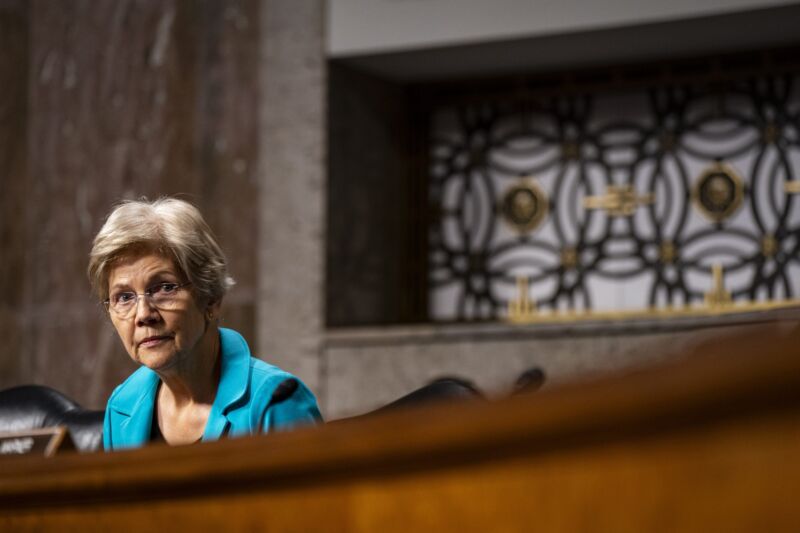
Enlarge / Senator Elizabeth Warren (D-Mass.) during a Senate Banking, Housing, and Urban Affairs Committee hearing on Thursday, May 18, 2023.
Getty Images | Bloomberg

Elon Musk’s X Corp. is serving a subpoena on Sen. Elizabeth Warren (D-Mass.), days after Warren urged the Securities and Exchange Commission to launch an investigation into Musk’s dual role running Tesla and Twitter.

Musk’s subpoena demands documents and communications related to Warren’s letter to the SEC, as well as Warren’s communications with the SEC and Federal Trade Commission. Musk is seeking documents going back to October 27, 2022, the day he completed his $44 billion purchase of Twitter.

Warren’s July 17 letter urged the SEC to investigate Tesla “regarding the actions of its Board of Directors in managing the apparent conflicts of its Chief Executive Officer, Elon Musk.” She wrote that Musk’s actions while running Twitter and Tesla simultaneously “have raised concerns about conflicts of interest, misappropriation of corporate assets, and other negative impacts to Tesla shareholders. Despite recent and repeated calls from investors to address these actions, the Board appears to have failed to uphold its legal duty to ensure that Mr. Musk act in the best interest of Tesla.”

Although Twitter recently hired Linda Yaccarino as CEO, Warren said Musk appears likely to continue overseeing core functions of Twitter’s business.

Today, Twitter successor company X Corp. notified a federal court that it “intends to serve a subpoena… on Senator Elizabeth Warren on July 20, 2023, or as soon thereafter as service may be effectuated.”

Musk trying to block FTC probe

The subpoena was filed with US District Court for the Northern District of California as part of a case in which Musk is trying to terminate a privacy settlement that Twitter and the FTC agreed on last year before Musk bought the company. Musk is also trying to avoid an FTC deposition and wants the court to “rein in” the FTC’s ongoing investigation into Twitter’s privacy and data practices.

The subpoena of Warren demands “all documents relating to the SEC letter, including any drafts,” and all communications relating to the letter sent or received by Warren since October 27.

Next, the subpoena asks for all communications between Warren or Warren’s office with the FTC “between October 27, 2022 and the present relating to X Corp. or Elon Musk, and all documents relating to any such communications.” The subpoena makes an identical request for all such communications with the SEC.

We contacted Warren’s office about the subpoena today and will update this article if we get a response.

X Corp. last week claimed the FTC’s investigation into Twitter is “tainted by bias” and that “the FTC’s desire to depose Mr. Musk derives from the same bad faith and improper conduct that has characterized its investigation to date.” The argument is similar to past claims by Tesla that the SEC “harass[ed]” Musk.

Warren’s call for SEC investigation

Musk will have some new headaches if the SEC heeds Warren’s call for an investigation. Warren’s letter said the “composition of Tesla’s eight-person Board raises concerns about whether it is in violation” of a rule requiring that a “majority of the board of directors must be comprised of Independent Directors.”

“Members of the Board with known ties to Mr. Musk or Tesla include Mr. Musk himself; Mr. Musk’s brother, Kimball Musk; Ira Ehrenpreis, a ‘longtime friend’ of Mr. Musk who helped design his record-breaking compensation package and explored limiting the disclosure of its details to investors; James Murdoch, Mr. Musk’s friend of almost 20 years who vacations with him; and J.B. Straubel, a former Tesla executive whose election to the Board in May of this year was opposed by both proxy advisory firm Glass Lewis and an investor group over concerns about Straubel’s role as a ‘company insider,'” Warren wrote.

Warren alleged that these “close relationships may explain the Board’s persistent inability or unwillingness to address the concerns posed by Mr. Musk’s actions.” According to Warren, that includes the “possible misappropriation of Tesla resources by Mr. Musk’s funneling of ‘more than 50 of his trusted Tesla employees’ to work on his Twitter takeover, including Tesla’s Chief Information Officer and other senior staff.”

Warren previously raised similar concerns in a December 2022 letter to Tesla Board Chair Robyn Denholm.

“This use of Tesla employees raised obvious questions about whether Mr. Musk appropriated resources from a publicly traded firm, Tesla, to benefit his own private company, Twitter,” Warren wrote to the SEC. “This would potentially violate Mr. Musk’s legal duty of loyalty to Tesla and trigger questions about the Board’s responsibility to prevent such actions, and may also run afoul of other ‘antitunneling’ rules that aim to prevent corporate insiders from extracting resources from their firms.”

Last week, Musk and other current and former Tesla board members agreed to return over $735 million to settle a shareholder lawsuit that alleged the Tesla directors “grossly” overpaid themselves.

https://arstechnica.com/?p=1955598


FTC rewrites rules on Big Tech mergers with aim to ease monopoly-busting

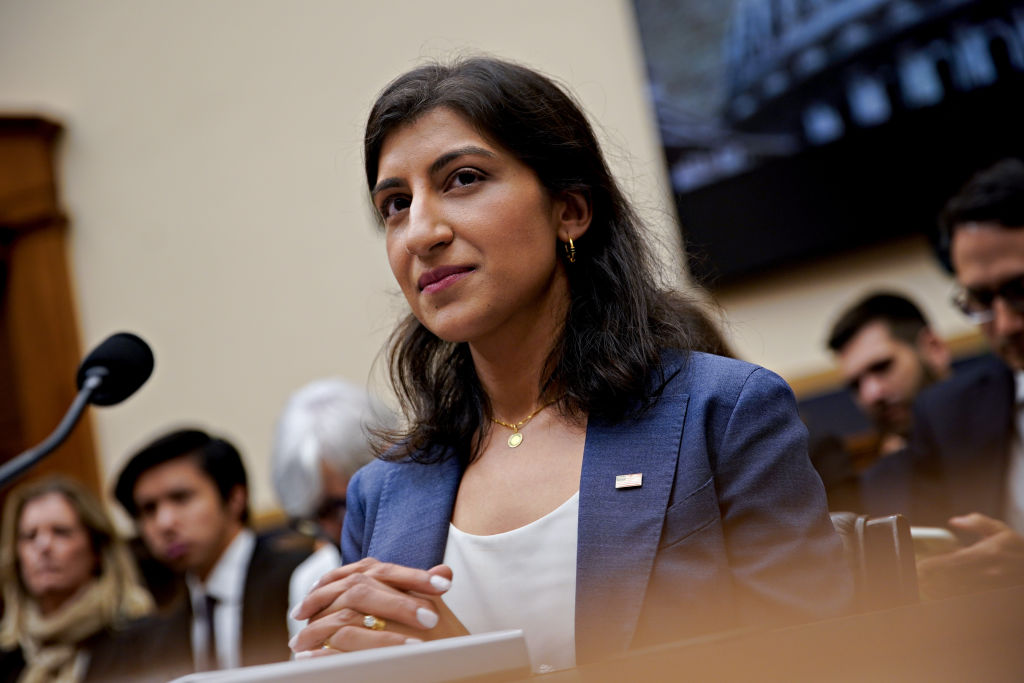
Lina Khan, chair of the Federal Trade Commission.
Enlarge / Lina Khan, chair of the Federal Trade Commission.

Antitrust enforcers released a draft update outlining new rules today that officials say will make it easier to crack down on mergers and acquisitions that could substantially lessen competition in the US.

Now the public has 60 days to review the draft guidelines and submit comments to the Federal Trade Commission (FTC) and the Department of Justice (DOJ) before the agencies’ September 18 deadline. A fierce debate has already started between those in support and those who oppose the draft guidelines.

Over the next two months, the FTC hopes to gain widespread public support for what the FTC has positioned as commonsense updates as tech mergers have recently raised complex legal questions. In a press release, FTC Chair Lina M. Khan said that the merger guidelines “contain critical updates” and were “informed by thousands of public comments—spanning healthcare workers, farmers, patient advocates, musicians, and entrepreneurs.”

“With these draft Merger Guidelines, we are updating our enforcement manual to reflect the realities of how firms do business in the modern economy,” Khan said.

The draft outlines 13 guidelines that “agencies may use when determining whether a merger is unlawfully anticompetitive under the antitrust laws,” the FTC’s press release said.

According to an FTC fact sheet, these are “the first merger guidelines to cite case precedents” and are built to “reflect the most common issues that arise in merger review.” The 13 guidelines are:

1. Mergers should not significantly increase concentration in highly concentrated markets.
2. Mergers should not eliminate substantial competition between firms.
3. Mergers should not increase the risk of coordination.
4. Mergers should not eliminate a potential entrant in a concentrated market.
5. Mergers should not substantially lessen competition by creating a firm that controls products or services that its rivals may use to compete.
6. Vertical mergers should not create market structures that foreclose competition.
7. Mergers should not entrench or extend a dominant position.
8. Mergers should not further a trend toward concentration.
9. When a merger is part of a series of multiple acquisitions, the agencies may examine the whole series.
10. When a merger involves a multi-sided platform, the agencies examine competition between platforms, on a platform, or to displace a platform.
11. When a merger involves competing buyers, the agencies examine whether it may substantially lessen competition for workers or other sellers.
12. When an acquisition involves partial ownership or minority interests, the agencies examine its impact on competition.
13. Mergers should not otherwise substantially lessen competition or tend to create a monopoly.

When an agency is attempting to decide if a merger or acquisition should be blocked, the first eight guidelines help agencies “to assess the risk that a merger’s effect may be substantially to lessen competition or to tend to create a monopoly.” The next four guidelines help agencies understand the “issues that often arise” when assessing any of the first eight guidelines. The last guideline explains how to consider mergers and acquisitions “that raise competitive concerns not addressed by the other guidelines.”

The draft guidelines also include appendices that describe “evidentiary and analytical tools” that agencies have used to detect anticompetitive measures in the past, as well as overviews of several types of rebuttals and legal tests invalidating defenses commonly raised by companies.

In drafting the guidelines, the FTC said that the agencies focused on “three core goals.” First, they strove to uphold legal precedent, then to increase transparency and accessibility of guidelines, and finally to make meaningful updates and “provide frameworks that reflect the realities of our modern economy and the best of modern economics and other analytical tools.”

The FTC’s press release included a statement from Attorney General Merrick B. Garland, who cautioned that “unchecked consolidation threatens the free and fair markets upon which our economy is based.”

“These updated Merger Guidelines respond to modern market realities and will enable the Justice Department to transparently and effectively protect the American people from the damage that anticompetitive mergers cause,” Garland said.

https://arstechnica.com/?p=1955103


AT&T says lead cables in Lake Tahoe “pose no danger” and should stay in place

A man with an umbrella walking past a building with an AT&T logo.

AT&T’s legacy telephone network may have nearly 200,000 miles of lead-covered cables, according to an estimate by AT&T submitted in a court filing.

“Based on its records, AT&T estimates that lead-clad cables represent less than 10 percent of its copper footprint of roughly two million sheath miles of cable, the overwhelming majority of which remains in active service,” AT&T wrote in a court filing yesterday in US District Court for the Eastern District of California. “More than two thirds of its lead-clad cabling is either buried or in conduit, followed by aerial cable, and with a very small portion running underwater. There are varying costs of installation, maintenance, and removal by cable type (aerial, buried, buried in conduit, underwater).”

Reacting to the court filing, financial analyst firm Raymond James & Associates wrote in a research note, “AT&T is telling us that the total exposure is 200,000 route miles or less.” With about two-thirds of the lead cables either buried or installed inside conduit, “We believe the implication for AT&T’s data is that the route miles that should be addressed most immediately is about 3.3 percent (or less),” the analyst firm wrote.

AT&T’s new court filing came in a case filed against AT&T subsidiary Pacific Bell by the California Sportfishing Protection Alliance (CSPA) in January 2021. The sportfishing group sued AT&T over cables that are allegedly “damaged and discharging lead into Lake Tahoe.”

AT&T: No need to remove Lake Tahoe cables for now

The two underwater cables run along the bottom of the western side of Lake Tahoe for a total of eight miles. AT&T “contends that it stopped using the Cables in or around the 1980s or earlier, that the Easements therefore have terminated, and that Defendant no longer owns the Cables,” according to a November 2021 settlement.

AT&T agreed in that settlement to remove the cables but now says it is at an “impasse” with the CSPA regarding removal. “In this matter, AT&T has always maintained that its lead-clad telecommunications cables pose no danger to those who work and play in the waters of Lake Tahoe, but in 2021, AT&T agreed to remove them simply to avoid the expense of litigation,” an AT&T lawyer at the firm Paul Hastings wrote yesterday in a letter to the plaintiff that was attached to the court filing.

AT&T said “the parties should agree to maintain these cables in place to permit further analysis by any qualified and independent interested party, including the EPA, and allow the safety of these cables to be litigated with objective scientific evidence rather than sensationalized media coverage. To do otherwise would give the misimpression that these cables present a health risk, which they do not, and would destroy evidence necessary for all relevant facts to be made public in court.”

To support its argument, AT&T cited the nonprofit Environmental Defense Fund’s position that the EPA should investigate underwater cables:

AT&T is not alone in this conclusion. In fact, just yesterday, in an open letter to the US Environmental Protection Agency, the Environmental Defense Fund recommended that the “EPA should assess the condition of the underwater cables to determine their condition, their current and anticipated releases to the environment, and the risks posed by their removal or leaving them in place.” AT&T agrees.

The Environmental Defense Fund’s statement was regarding underwater cables in general and not specific to Lake Tahoe.

AT&T denies confirming it would remove cables

AT&T’s stance that it won’t remove the Lake Tahoe cables any time soon is apparently a surprise to the plaintiff. The CSPA said in a court filing last week that in a Zoom meeting on July 10, “AT&T confirmed that it is prepared to commence the removal process on September 6, 2023, as long as the new permit request that AT&T submitted to State Parks in May is approved by State Park.”

AT&T’s filing said the company never “confirmed” that it is prepared to start the cable removal process on September 6.

The CSPA argues that the lead-covered cables “have leached, are leaching, and will continue to leach lead into the waters of Lake Tahoe, and that such leaching may present an imminent and substantial endangerment to human health or the environment.”

https://arstechnica.com/?p=1955116


Fear, loathing, and excitement as Threads adopts open standard used by Mastodon

warped Meta logo against a pink background
Jacqui VanLiew/Wired

Days after Meta launched its new app, Threads, this month, a software engineer at the company named Ben Savage introduced himself to a developer group at the World Wide Web Consortium, a web standards body. The group, which maintains a protocol for connecting social networks called ActivityPub, had been preparing for this moment for months, ever since rumors first emerged that Meta planned to join the standard. Now, that moment had arrived. “I’m really interested to see how this interoperable future plays out!” he wrote.

Warm replies to Savage’s email filtered in. And then came another response:

“The company you work for does disgusting things among others. It harms relationships and isolates people. It builds walls and lures people into them. When that doesn’t suffice, brutal peer pressure does … That said, welcome to the list, Ben.”

Meta’s embrace of ActivityPub, used by apps including the Twitter-like Mastodon, was bound to be a little awkward. The constellation of small apps and personal servers that currently use the protocol, known as the Fediverse, is marked by an ethos of sharing and openness, not profit-seeking or user bases denominated in the billions.

ActivityPub is designed to allow users of different apps to not only interact and view each others’ content, but also move their digital identity from one service to another. Mastodon, the largest app in the Fediverse, is open source and run by a nonprofit, and smaller Fediverse apps like PeerTube and Lemmy are often held up as a repudiation of the closed nature of services such as YouTube or Reddit. Corporations like Meta are typically held up as the enemy. No surprise that, despite appeals from ActivityPub leaders for civility when Meta arrived on the listserv, some couldn’t hold their tongue.

Weeks-old Threads already dwarfs the Fediverse, which has been around for more than a decade and recently peaked at about 4 million active monthly users. Some Fediverse fans see that imbalance as a win: Suddenly, the network could become many times more relevant. Others consider that view naive and expect Meta’s size to push the small world of apps built on ActivityPub in undesirable directions. Some have circulated a pact to preemptively block content from Threads’ servers from appearing on their own.

“The Fediverse community has been jolted into motion—due to fear and loathing of Meta, and also excitement,” says Dmitri Zagidulin, a developer who leads the World Wide Web Consortium (W3C) group responsible for discussing the future of ActivityPub. The prospect of Meta joining the decentralized movement has people trying to spiff up their projects and prepare for the spotlight. “There are furious meetings. Grants being applied for. Pull requests. Pushes for better security, better user experience. Better everything,” he says.

Zagidulin is himself a member of a Mastodon server that operates as a social cooperative, where users collectively decide major decisions. They recently held a vote on whether to preemptively block Threads, a process known as defederation. The result: 51 percent in favor, 49 percent against.

That divide reflects different visions for the Fediverse’s future. One involves embracing Threads to bootstrap the network’s stagnant growth. The ideals of openness and giving users more control didn’t tempt many people to join platforms like Mastodon until Elon Musk’s chaotic takeover of Twitter sent many longtime users looking for new digital homes. Even then, the bump quickly went bust. Some users gave up after finding federation tools confusing compared to Twitter. Then came Bluesky, a competitor supported by Twitter-founder Jack Dorsey that reflects many of the same principles but is developing a rival decentralized protocol to ActivityPub.

Amidst those challenges, Meta’s interest dangles the potential of the company’s vast resources and reach to inject new life into the Fediverse movement. “This is a clear victory for our cause,” wrote Eugen Rochko, CEO of Mastodon, in a blog post on the day Threads launched.

Others simply want Meta out. To Fediverse users like Vanta Black, the warm response from community leaders to Meta’s interest felt like betrayal. In 2017, as she navigated her gender identity, she found a home in small Mastodon communities where moderators and users intermingled and held shared values for how to filter out hateful posts. She fears the arrival of millions of Threads users will unleash volumes of content into the Fediverse that are impossible to manage.

https://arstechnica.com/?p=1954956