Meta won’t negotiate with publishers, will end Facebook news in Canada

Meta won’t negotiate with publishers, will end Facebook news in Canada

Yesterday, Canada passed its Online News Act, which requires tech companies to negotiate content deals with news publishers and pay news outlets for links shared on their platforms. As Meta threatened back in March, it promptly announced yesterday that it will be quickly ending news access on Facebook and Instagram in response to the law, Reuters reported.

“Today, we are confirming that news availability will be ended on Facebook and Instagram for all users in Canada prior to the Online News Act taking effect,” Meta’s statement said.

According to The New York Times, it’s still unclear when Canada’s law will take effect, but Meta’s statement makes it sound like Meta plans to cut off news as quickly as it can. Meta claims that news has no value to either the tech giant or to users who do not go to Facebook and Instagram to consume news.

That claim doesn’t match up with what surveys say about news consumption on Meta platforms, though.

In 2021, Pew Research Center reported results of a US survey finding that “when it comes to where Americans regularly get news on social media, Facebook outpaces all other social media sites.” For Canadians in 2022, Facebook was still the most popular social media platform for weekly news, according to Statista, which ran a survey finding that 21 percent of Canadians check Facebook for news weekly. That survey did record a drop in popularity for Instagram as a news source among Canadians, although Instagram still slightly outpaced Twitter as a weekly news source.

A Meta spokesperson linked Ars to an updated blog with some details on what Facebook and Instagram users can expect moving forward.

“Content from news outlets, including news publishers and broadcasters, will no longer be available to people accessing our platforms in Canada,” the blog said.

Currently, Meta is conducting ongoing “product tests to help us build an effective product solution to end news availability.” A “small percentage” of Canadian users on Instagram and Facebook are being impacted by these product tests and losing access to news already.

While Meta works to end news access for all Canadian users, the company has said that Facebook and Instagram will otherwise be unchanged. It also notes that Meta plans to continue building its global fact-checking network to combat misinformation on its platforms.

“Fact-checking will continue with respect to content that remains available in Canada,” Meta’s blog said.

The decision to drop news from Meta platforms was expected, as Meta spokespersons had made it clear for months that Canada’s law compelling platforms to pay for links to news content was “neither sustainable nor workable.”

Canada passed the law to require online ad revenue-sharing between news publishers and platforms and help reverse a decade-long collapse in news publisher revenue. In March, Meta estimated that links to news articles make up less than 3 percent of news feeds on its platforms and claimed it was an insignificant revenue source.

Meta isn’t the only one unhappy with Canada’s law, which yesterday received royal assent from Canada’s governor-general and will soon take effect. A Google spokesperson told Reuters that the law is still “unworkable” and that Google still hopes to find an alternative “path forward.”

Google did not immediately respond to Ars’ request to comment. [Update: Google’s spokesperson, Jenn Crider, told Ars that none of Google’s concerns have been addressed. She said that because the law “remains unworkable,” Google is “urgently” seeking to work with the Canadian government to “avoid an outcome that no one wants”—which Google previously described as “existing support to Canadian news publishers” slowing down or stopping “while Google and others seek the clarity.”

Crider said that Google has “proposed thoughtful and pragmatic solutions that would have improved” the law (described here) and “cleared the path” for Google to increase its “already significant investments in the Canadian news ecosystem.”]

Canada Heritage Minister Pablo Rodriguez, who introduced the Online News Act, said yesterday that there will be an implementation process before the law takes effect, Reuters reported. Rodriguez celebrated the law-passing by championing lawmakers in a statement, saying, “If the government can’t stand up for Canadians against tech giants, who will?”

Canada’s law was modeled after an Australian law passed in 2021 that requires companies like Meta and Google to negotiate deals with news publishers to link to content. When that Australia law passed, Meta similarly protested by ending news access before reaching an agreement, securing amendments to Australia’s law and striking content deals with several news publishers. It’s possible that Meta still has an opportunity to provide feedback on Canada’s law and reach a similar agreement there.

Both Meta and Google have met with the Canadian government this week, and a government spokesperson said that Canada looks forward to having more talks with tech companies, Reuters reported.

In a news release, the Canadian government said that draft regulations will next be published in the Canada Gazette, specifying how the law should be applied and providing guidance on exemptions.

“Everyone will have an opportunity to consult and provide feedback through this Canada Gazette process,” the news release said.

From there, the Canadian Radio-television and Telecommunications Commission will oversee “bargaining, negotiation and external final-offer arbitration processes between platforms and news businesses.” The commission will also create a code of conduct to ensure fairness and transparency in bargaining.

“A free and independent press is fundamental to our democracy,” Rodriguez is quoted saying in the news release. “Thanks to the Online News Act, newsrooms across the country will now be able to negotiate fairly for compensation when their work appears on the biggest digital platforms. It levels the playing field by putting the power of big tech in check and ensuring that even our smallest news business can benefit through this regime and receive fair compensation for their work.”

https://arstechnica.com/?p=1949649


US might finally force cable-TV firms to advertise their actual prices

President Joe Biden pointing with his right hand and speaking into microphones at a podium set up outside the White House.
Enlarge / President Joe Biden speaks on the South Lawn of the White House on June 15, 2023, in Washington, DC.
Getty Images | Alex Wong

President Joe Biden this week criticized cable-TV companies for imposing “junk fees,” as the Federal Communications Commission proposed new rules cracking down on the hidden fees charged by cable and satellite video providers.

“My administration’s top priority is lowering the cost of living for the middle class, and that includes cracking down on companies’ use of junk fees to hide true costs from families, who end up paying more as a result,” Biden said in a statement on Tuesday.

As Biden noted, the FCC “proposed a new rule that would require cable and satellite TV providers to give consumers the all-in price for the service they’re offering up front.” The proposed rule would force companies like Comcast, Charter Spectrum, and DirecTV to publish more accurate prices.

Biden continued:

Too often, these companies hide additional junk fees on customer bills disguised as “broadcast TV” or “regional sports” fees that in reality pay for no additional services. These fees really add up: according to one report, they increase customer bills by nearly 25 percent of the price of base service.

FCC Chairwoman Jessica Rosenworcel first floated pricing transparency rules for the TV services offered by cable and satellite companies in March. That effort took a step forward on Tuesday when the commission approved a Notice of Proposed Rulemaking (NPRM) that seeks public comment on rules that would force video providers to offer accurate prices in advertising.

Misleading “Broadcast TV” and “Regional Sports” fees

“Consumers who choose a video service based on an advertised monthly price may be surprised by unexpected fees related to the cost of video programming that raise the amount of the bill significantly,” the NPRM said. The cable and satellite TV companies’ practice of listing “Broadcast TV” and “Regional Sports Network” fees separately from the advertised price “can be potentially misleading and interpreted as a government-imposed tax or fee, instead of a company-imposed service fee increase,” and make it hard for customers to compare prices across providers, the FCC said.

The docket is available here, and comments will be accepted for 60 days after the NPRM is published in the Federal Register. The FCC said its proposal “would require cable operators and DBS [direct broadcast satellite] providers to clearly and prominently display the total cost of video programming service.”

The FCC is also seeking comment on whether it has the authority to impose similar requirements on other types of video providers. But Rosenworcel reportedly said in a congressional hearing that the FCC’s authority under US law doesn’t extend to streaming services.

The FCC already voted to require broadband providers to display labels with exact prices and other information about Internet service plans. As we reported last week, Comcast complained to the FCC that listing all of its monthly broadband fees is too hard and that it wants the commission to change the broadband label rules before they go into effect.

A TV-pricing transparency rule would force Comcast to be more honest in its advertised prices for video service as well. Comcast’s Broadcast TV and Regional Sports Network fees combined can add about $40 to a customer’s monthly TV bill.

Advertised price should be the price you pay

The FCC is still operating with a 2-2 partisan deadlock due to the Senate refusing to confirm Biden nominee Gigi Sohn. Biden is trying again with the nomination of Democrat Anna Gomez.

The FCC was required to implement broadband label rules in a 2021 law passed by Congress but isn’t facing a similar requirement to crack down on misleading TV prices. Though the NPRM on TV-pricing transparency was approved by the FCC, Rosenworcel may ultimately need a Democratic majority to impose strict pricing rules for TV service after the comment period is over.

“Consumers deserve to know exactly what they are paying for when they sign up for a cable or direct broadcast satellite subscription,” Rosenworcel said Tuesday. “No one likes surprises on their bill. The advertised price for a service should be the price you pay when your bill arrives.”

Currently, TV providers “hide a bunch of junk fees that are separate from the top-line service price,” Rosenworcel also said. Although the FCC probably won’t try to regulate streaming services’ advertised prices, Rosenworcel said her proposed rules would make it easier to compare traditional pay-TV prices to online options.

“Increases in programming costs shouldn’t be described as a tax, fee, or surcharge,” she said. “The ‘all-in’ pricing format we propose today would allow consumers to make informed choices by letting them more easily comparison shop among competing providers and evaluate programming costs against alternative programming providers, including streaming services.”

https://arstechnica.com/?p=1949540


Twitter CEO starts fighting Musk’s battles, paying Musk’s overdue bills

Twitter CEO starts fighting Musk’s battles, paying Musk’s overdue bills

Twitter CEO Linda Yaccarino has seemingly smoothed things over with Google after Twitter reportedly stopped paying its Google Cloud bills.

Sources familiar with the matter told The Wall Street Journal that Twitter has resumed payments to Google after “consistently” dodging bills that sometimes racked up to more than $20 million a month.

According to one source, Yaccarino hopped on a video call with Google Cloud’s chief executive, Thomas Kurian, last week, hoping to set things straight between the two tech companies. Now, it appears that Yaccarino’s management tactics were so effective that Google is weighing the benefits of forming “a broader partnership” with Twitter, possibly investing more in Twitter ads or paying to access Twitter data.

That could help Twitter recover as ad sales have continued plunging. Estimates from market intelligence firm Sensor Tower showed that year over year, Google’s ad spending on Twitter in May was down by more than 90 percent, the WSJ reported.

Google told Ars that it does not comment on its customers.

Earlier this month, Platformer reported that Twitter stiffing Google on cloud services could impact its trust and safety team’s efforts, potentially unleashing another flood of hate speech on the platform as its automated anti-abuse and anti-harassment tools risked being destabilized. That particular threat seems to have been thwarted by Yaccarino’s intervention.

But Twitter’s hate speech woes continue, and that impacts ad sales. Various reports have indicated that hate speech has surged on Twitter under Elon Musk, leading Australia today to order Twitter to explain how it’s combating a rapid rise in hate, The Washington Post reported. If Twitter fails to show it’s complying with Australia’s online safety law, it risks daily fines up to $475,000. Maximum penalties could be fines as high as $700,000 a day.

“Twitter appears to have dropped the ball on tackling hate,” Julie Inman Grant, Australia’s eSafety Commissioner, said in a news release announcing the order, which also reported that “a third of all complaints about online hate reported” to Australia’s safety officials “are now happening on Twitter.”

Twitter has 28 days to respond to Australia’s order.

Cash-strapped Twitter may not be able to afford to risk violations. It’s also likely that Twitter may even be motivated to respond by restricting more content—at least in Australia—as the company typically complies with government demands, Rest of World reported.

While Yaccarino’s decades of proven ability to build relationships with major advertisers are likely the reason she was hired for Twitter’s top job, it’s still unclear where exactly Yaccarino stands when it comes to defending Twitter’s shifted approach to moderating hate speech. When she first took the CEO job, some right-wing Twitter users worried that she may try to push Twitter back to its old ways and “tamp down on Musk’s free-speech initiatives” while doggedly attempting to mend ties with major advertisers like Google.

In Yaccarino’s first memo to Twitter employees, however, she seemed to signal that she was prepared to fall in line with Musk, writing that she believes that everyone “should have the freedom to speak your mind” on Twitter, CNBC reported. Before her hiring, Variety reported that she had applauded Twitter’s policy of “freedom of speech, not freedom of reach.”

But one problem that Australia’s eSafety commission has with Twitter is that it doesn’t seem to be limiting reach of all hateful speech that it detects, and Yaccarino may have to confront that issue. The commission’s news release pointed to a June report from UK-based Center for Countering Digital Hate, finding that Twitter “fails to act on 99 percent of Twitter Blue accounts tweeting hate.”

“Those paying for a Twitter Blue Check seemed to enjoy a level of impunity when it came to the enforcement of Twitter’s rules governing online hate, compared to non-paying users, and even had their Tweets boosted by the platform’s algorithms,” the eSafety commission’s press release said.

Yaccarino will be charged with responding to the Australian order as she continues wooing back Twitter advertisers, and it seems unlikely that Australia will settle without pushing for some changes that could rile Twitter users already skeptical of Yaccarino’s intentions at Twitter.

Meanwhile, Musk has continued to confuse Twitter users by seemingly establishing hate speech policies based on his own personal politics, rather than based on definitions of legally protected speech as he initially claimed he would. Musk recently declared labels like “cisgender” and “cis” as slurs on Twitter—without making it clear if he was simply trolling or if Twitter has actually changed its policy and will limit the reach of tweets mentioning these labels, Business Insider reported.

Twitter’s hateful conduct policy specifies that “you may not directly attack other people on the basis of” gender or gender identity, so it’s possible that “cis” or “cisgender” falls under those broad categories. Twitter did not immediately respond to Ars’ request to comment.

Commissioner Inman Grant has said that the purpose of Australia’s legal order was to force Twitter to address the reported hate surge and do more to start countering hate on the platform. Some former Twitter advertisers who are still hesitant to return to the platform seemingly want the same, The New York Times reported.

“We need accountability from these platforms and action to protect their users, and you cannot have accountability without transparency,” Inman Grant said.

https://arstechnica.com/?p=1949525


After porn-y protest, Reddit ousted mods; replacing them isn’t simple

In this photo illustration, a woman's silhouette holds a smartphone with the Reddit logo in the background.

After threatening to do so last week, Reddit has now removed the moderators of some of the subreddits that were protesting Reddit’s new API pricing scheme. Some of these subreddits have new mods in the protesters’ place, while other affected subreddits have been left unmoderated. Still others, oddly, saw their moderators reinstated.

Reddit claims the moves are a response to mods breaking its Moderator Code of Conduct by allowing “not safe for work” (NSFW) content in previously “safe for work” subreddits. However, moderators who spoke to Ars Technica believe Reddit’s actions are designed to silence their protests over the new fees.

Mod status revoked

Various Reddit moderators reached out to Ars Technica this week, informing us that mods for r/Celebrities, r/interestingasfuck, r/mildlyinteresting, r/self, r/ShittyLifeProTips, and r/TIHI have been removed. Other subreddits are reportedly affected, too, including r/toyota, r/garmin, and r/IllegalLifeProTips. All of the communities recently started allowing NSFW content as a form of API pricing protest.

Reddit can’t sell ads on NSFW content, and Redditors have accused the company of covertly switching some subreddits back to SFW.

Ars Technica asked Reddit if a Reddit admin had switched NSFW communities back to SFW, and spokesperson Tim Rathschmidt responded by saying, “It’s not OK to show people NSFW content when they don’t want to see it. In line with our Moderator Code of Conduct, we’ll remove moderators and restrict communities where moderators are engaging in malicious conduct, like allowing rule-violating behavior or encouraging the submission of sexually explicit content in previously safe-for-work spaces.”

He added that mods “incorrectly marking a community as NSFW is a violation of both our Content Policy and Moderator Code of Conduct.”

Reddit’s Content Policy has a rule that says: “Ensure people have predictable experiences on Reddit by properly labeling content and communities, particularly content that is graphic, sexually explicit, or offensive.” Rathschmidt also directed us to Rule 4 of the Moderator Code of Conduct, which says that mods must “Be Active and Engaged.”

As of this writing, some of the subreddits whose mods were removed remain unmoderated. Other subreddits have new mods. One example, r/Celebrities, has already seen resistance from community members, claiming the new mods “don’t represent” them and that these mods weren’t active in the community before the protests.

Meanwhile, the feeling around the general mod community is one of disgust, while some are seriously considering abandoning their volunteer posts or have already done so.

“We put up with a lot as Reddit mods—death threats, doxing, sorting through lewd and even illegal material (that Reddit continually ignores)—and deserve to be treated with basic respect,” a Reddit moderator, who asked to be referred to only as Jess for privacy reasons, said regarding the removal of some mods. The mod has started erasing their account and has resigned as a moderator.

“I have no desire to be associated with a company that conducts itself in such a manner,” Jess said.

Confusingly, the moderators of some of the subreddits, including r/mildlyinteresting, were restored.

Reddit didn’t answer Ars Technica’s questions about why mods for the aforementioned subreddits were removed or why some mods were restored.

https://arstechnica.com/?p=1948891


Amazon named its “labyrinthine” Prime cancellation process after Homer’s Iliad

An Amazon company logo displayed on a sign at a tech fair.
Enlarge / An Amazon logo at the Viva Tech fair in Paris, France, on Thursday, June 15, 2023.
Getty Images | Bloomberg

The Federal Trade Commission sued Amazon today, claiming the online giant violated US law by tricking consumers into signing up for the $14.99-per-month Amazon Prime subscription service and making it annoyingly difficult to cancel.

“For years, Defendant Amazon.com, Inc. has knowingly duped millions of consumers into unknowingly enrolling in its Amazon Prime service,” the FTC alleged in a complaint filed in US District Court for the Western District of Washington. “Specifically, Amazon used manipulative, coercive, or deceptive user-interface designs known as ‘dark patterns’ to trick consumers into enrolling in automatically renewing Prime subscriptions.”

The FTC said that until recent changes spurred by the agency’s investigation, Amazon required Prime customers who wanted to cancel to go through a “four-page, six-click, fifteen-option cancellation process.” For example, Amazon’s “End Membership” button did not actually end membership in Prime, the FTC said. Clicking “End Membership” redirected consumers to Amazon’s actual, extremely tedious process for canceling, the FTC said.

The FTC is seeking a permanent injunction, civil penalties, and other monetary relief. The agency says Amazon violated Section 5 of the FTC Act by unfairly charging consumers without their express informed consent.

The FTC said Amazon also violated the Restore Online Shoppers’ Confidence Act (ROSCA), a 2010 law that “generally prohibits charging consumers for goods or services sold in transactions effected on the Internet through a negative option feature.” Amazon was accused of violating the law because its disclosures to consumers were inadequate and because it “failed to obtain the consumer’s express informed consent” before charging each customer.

A negative option feature is defined in FTC regulations as a “provision under which the consumer’s silence or failure to take an affirmative action to reject goods or services or to cancel the agreement is interpreted by the seller as acceptance of the offer.” US law authorizes the court “to award monetary civil penalties of up to $50,120 for each violation of ROSCA,” the FTC said.

Amazon’s “Iliad”

The FTC complaint said that Amazon finally made some changes to its cancellation process in April 2023 due to pressure from the agency. “Fittingly, Amazon named that [cancellation] process ‘Iliad,’ which refers to Homer’s epic about the long, arduous Trojan War,” the FTC said. “Amazon designed the Iliad cancellation process (‘Iliad Flow’) to be labyrinthine, and Amazon and its leadership—including [Prime executives Neil] Lindsay, [Russell] Grandinetti, and [Jamil] Ghani—slowed or rejected user experience changes that would have made Iliad simpler for consumers because those changes adversely affected Amazon’s bottom line.”

You can access Amazon Prime’s current cancellation process by starting at this page.

Before the April 2023 changes, “there were only two ways to cancel a Prime subscription through Amazon: a) through the online labyrinthine cancellation flow known as the ‘Iliad Flow’ on desktop and mobile devices; or b) by contacting customer service,” the FTC said. “The Iliad Flow required consumers intending to cancel to navigate a four-page, six-click, fifteen-option cancellation process. In contrast, customers could enroll in Prime with one or two clicks.”

While customers could enroll in Prime “through devices other than computers and smartphones, such as through the Prime Video application on the Amazon Fire Stick and Fire TV, they could not cancel via these same technologies. Instead, they had to use the Iliad Flow or call customer service,” the FTC said.

The FTC said that Amazon’s Iliad cancellation process was in place from 2016 until this year. To reach the so-called Iliad Flow, customers would “navigate from Amazon.com to the Prime account management page (Prime Central), locate the ‘manage membership’ dropdown, and press a button labelled ‘End Membership,'” or “search ‘How to cancel membership’ in the Amazon search bar, then move through subsequent steps to reach the Iliad Flow—frequently, selecting a link reading ‘End Your Amazon Prime Membership’ and then pressing a button reading ‘End Your Prime Membership.'”

Completing those steps wasn’t enough to cancel, the FTC said. “Once consumers reached the Iliad Flow, they had to proceed through its entirety—spanning three pages, each of which presented consumers several options, beyond the Prime Central page—to cancel Prime,” the lawsuit said.

https://arstechnica.com/?p=1949330


EU wants “readily removable” batteries in devices soon—but what does that mean?

Fairphone 4 disassembled on a table
Enlarge / Very few modern smartphones can be considered to have a “readily removable” battery, but the Fairphone 4 is one of them.

Whenever regulation passes that seems to herald the dawn of a new age of repairable devices, there is almost always a catch, a loophole, or at least an “it depends.” In the case of recent headline-grabbing battery legislation out of the European Union, we’re waiting to see what counts as “readily” when it comes to removing and replacing device batteries.

Last week, the European Parliament voted overwhelmingly in favor of new rules for handling batteries of all sizes in the EU, due to be implemented within 3.5 years of passage or as early as 2027. Along with measures addressing carbon footprints for electric vehicle and industrial batteries and stricter waste and recycling targets, there was a particular line in Article 11 regarding the “Removability and replaceability of portable batteries,” that likely got smartphone, tablet, and laptop manufacturer lobbyists moving:

Portable batteries incorporated in appliances shall be readily removable and replaceable by the end-user or by independent operators during the lifetime of the appliance, if the batteries have a shorter lifetime than the appliance, or at the latest at the end of the lifetime of the appliance.

“Readily replaceable,” as addressed in the next paragraph, is when, after removing a battery, you can substitute a similar battery “without affecting the functioning or the performance of that appliance.” For all the things specifically defined, outlined, and estimated in the 129-page “COM(2020) 798 final,” there’s not much more about what the phrase exactly means.

The word “appliance” is used in a broader context than you might assume, as laptops, printers, and cell phones are all included. As the European Parliament’s press office puts it, these regulations mean that portable batteries must be designed “in such a way that consumers can themselves easily remove and replace them.”

Later in the document, regarding battery disposal, it notes that end users have a responsibility to properly sort out those batteries that are “readily removable by the end user without the use of professional tools.” Does that clarify what “readily replaceable” means, or is this no-tools line specific only to keep people from throwing out batteries inside their electric shavers? There’s no clear answer yet.

There’s already wiggle room in pricing and “wet conditions”

Even assuming the European Parliament negotiates its proposal with the Council of the Europe Union and European Commission, the bodies reach an agreement, and the new rules are sent to all EU member countries for national implementation, there’s lots of wiggle room for manufacturers to work in. There’s also time for them to appeal and demand more time to reach these design goals.

As noted by Repair.EU, a leading European right-to-repair advocate, manufacturers must make batteries available as spare parts for five years after the last model is sold and at “a reasonable and non-discriminatory price.” That’s something that the group, along with other watchdogs, will have to monitor and report on to ensure compliance.

Some manufacturers are already eyeing an exemption for batteries used in “wet conditions” to opt out electric toothbrushes and possibly wearables like earbuds and smartwatches. The exemption is “based on unfounded safety claims,” states Thomas Opsomer, policy engineer for iFixit, in Repair.EU’s post.

How many picks can you insert into a Pixel 7 screen before the battery inside is no longer considered "readily replaceable"?
Enlarge / How many picks can you insert into a Pixel 7 screen before the battery inside is no longer considered “readily replaceable”?

https://arstechnica.com/?p=1948877


Thousands of realistic but fake AI child sex images found online, report says

Thousands of realistic but fake AI child sex images found online, report says

Child safety experts are growing increasingly powerless to stop thousands of “AI-generated child sex images” from being easily and rapidly created, then shared across dark web pedophile forums, The Washington Post reported.

This “explosion” of “disturbingly” realistic images could help normalize child sexual exploitation, lure more children into harm’s way, and make it harder for law enforcement to find actual children being harmed, experts told the Post.

Finding victims depicted in child sexual abuse materials is already a “needle in a haystack problem,” Rebecca Portnoff, the director of data science at the nonprofit child-safety group Thorn, told the Post. Now, law enforcement will be further delayed in investigations by efforts to determine if materials are real or not.

Harmful AI materials can also re-victimize anyone whose images of past abuse are used to train AI models to generate fake images.

“Children’s images, including the content of known victims, are being repurposed for this really evil output,” Portnoff said.

Normally, content of known victims can be blocked by child safety tools that hash reported images and detect when they are reshared to block uploads on online platforms. But that technology only works to detect previously reported images, not newly AI-generated images. Both law enforcement and child-safety experts report these AI images are increasingly being popularized on dark web pedophile forums, with many Internet users “wrongly” viewing this content as a legally gray alternative to trading illegal child sexual abuse materials (CSAM).

“Roughly 80 percent of respondents” to a poll posted in a dark web forum with 3,000 members said that “they had used or intended to use AI tools to create child sexual abuse images,” ActiveFence, which builds trust and safety tools for online platforms and streaming sites, reported in May.

While some users creating AI images and even some legal analysts believe this content is potentially not illegal because no real children are harmed, some United States Justice Department officials told the Post that AI images sexualizing minors still violate federal child-protection laws. There seems to be no precedent, however, as officials could not cite a single prior case resulting in federal charges, the Post reported.

As authorities become more aware of the growing problem, the public is being warned to change online behaviors to prevent victimization. Earlier this month, the FBI issued an alert, “warning the public of malicious actors creating synthetic content (commonly referred to as ‘deepfakes’) by manipulating benign photographs or videos to target victims,” including reports of “minor children and non-consenting adults, whose photos or videos were altered into explicit content.”

These images aren’t just spreading on the dark web, either, but on “social media, public forums, or pornographic websites,” the FBI warned. The agency blamed recent technology advancements for the surge in malicious deepfakes because AI tools like Stable Diffusion, Midjourney, and DALL-E can be used to generate realistic images based on simple text prompts. These advancements are “continuously improving the quality, customizability, and accessibility of artificial intelligence (AI)-enabled content creation,” the FBI warned.

https://arstechnica.com/?p=1948977


ISPs say US should force Big Tech firms to pay for broadband construction

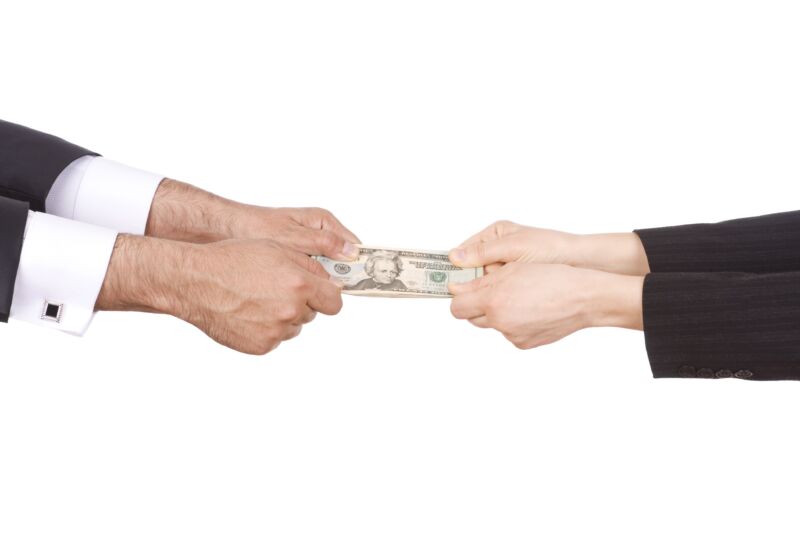
People fighting over money—image shows two people's hands pulling on either end of a stack of $20 bills.
Getty Images | numbeos

Internet service providers in both the US and Europe are clamoring for new payments from Big Tech firms.

European broadband providers are much closer to realizing the long-held goal of payments from tech companies, as the European Union government is holding an official consultation on the proposal. As the EU process unfolds, the telco lobby group USTelecom is hoping to push the US down a similar but not quite identical path.

In a blog post on Friday, USTelecom CEO Jonathan Spalter argued that the biggest technology companies should contribute toward a fund that subsidizes the building of broadband networks. Spalter wrote that Amazon and similar Internet companies should fill what he called a “conspicuously empty seat at the collective table of global high-speed connectivity.”

Given that “six companies account for half of all Internet traffic worldwide… Does it still make sense that the government and broadband providers alone fund this critical infrastructure? Is there no shared obligation from the primary financial beneficiaries of these networks—the world’s most powerful Internet companies?” Spalter wrote.

“We need a modern reset that more equitably shares these financial obligations among those who benefit the most from these connections,” he argued.

USTelecom members include AT&T, Verizon, Lumen (formerly CenturyLink), Windstream, and other telcos. It’s one of the biggest trade groups that lobbies for US-based Internet service providers.

USTelecom: Make tech firms pay into central fund

European telcos are pushing for direct payments from tech firms to ISPs. USTelecom instead wants payments into a central fund managed by the government.

The Biden administration last month urged the EU to reject the forced payments proposed by European ISPs, saying the plan “could give operators a new bottleneck over customers, raise costs for end users, and alter incentives for CAPs/LTGs [content and application providers and large traffic generators] to make efficient decisions regarding network investment and interconnection.”

The Biden administration also said payments from tech firms may violate net neutrality principles, saying that it “is difficult to understand how a system of mandatory payments imposed on only a subset of content providers could be enforced without undermining net neutrality.”

Despite that, USTelecom pointed to the Biden administration’s comments in its pitch to make Big Tech firms pay into a central fund like the existing Universal Service Fund (USF) managed by the Federal Communications Commission.

“We concur with the US government’s position that rather than the payments to broadband providers proposed in the EU, such ‘publicly accountable funding mechanisms can better ensure that resources are devoted to key policy objectives, such as improving access and strengthening network security, while avoiding discriminatory measures that distort competition,'” Spalter wrote.

Plenty of opposition to Big Tech payments

The Biden administration’s comments didn’t call for tech companies to pay into a government-run fund, though. The document noted that the US “approach to financing improvements to broadband infrastructure involves private investments, a national Universal Service Fund, and significant public funding made from general appropriations,” but didn’t argue for any changes to who pays into the fund.

Meta, Google, and Netflix have slammed the European demands for payments, saying that ISPs are attempting to charge twice for the same service. Big Tech firms also point out that they invest heavily in content delivery networks that reduce stress on ISP services.

The Body of European Regulators for Electronic Communications (BEREC) took a similar position, saying it has found no evidence of “free-riding” by tech companies or evidence that ISPs’ costs aren’t fully covered.

The Biden administration comments on the EU proposal also said that collecting revenue from online content providers could harm the global Internet ecosystem. “We urge caution should the EU consider any new funding mechanisms that could disrupt the current Internet ecosystem, which has successfully adapted to evolving technological and market conditions over time. Internet traffic is global, raising questions regarding one country’s ability to collect revenues from foreign content providers; if many countries take this path it would likely be unsustainable,” the US government said.

https://arstechnica.com/?p=1948968


FCC chair to investigate exactly how much everyone hates data caps

FCC Chairwoman Jessica Rosenworcel in a photograph taken at a conference.
Enlarge / FCC Chairwoman Jessica Rosenworcel at the Paley International Council Summit at Paley Museum on November 8, 2022, in New York City.
Getty Images | Steven Ferdman

Federal Communications Commission Chairwoman Jessica Rosenworcel wants the FCC to open a formal inquiry into how data caps harm Internet users and why broadband providers still impose the caps. The inquiry could eventually lead to the FCC regulating how Internet service providers such as Comcast impose limits on data usage.

Rosenworcel yesterday announced that she asked fellow commissioners to support a Notice of Inquiry on the topic. Among other things, the Notice would seek comment from the public “to better understand why the use of data caps continues to persist despite increased broadband needs of consumers and providers’ demonstrated technical ability to offer unlimited data plans.”

The inquiry would also seek comment on “trends in consumer data usage… on the impact of data caps on consumers, consumers’ experience with data caps, how consumers are informed about data caps on service offerings, and how data caps impact competition.” Finally, Rosenworcel wants to seek comment about the FCC’s “legal authority to take actions regarding data caps.”

“In particular, the agency would like to better understand the current state of data caps, their impact on consumers, and whether the Commission should consider taking action to ensure that data caps do not cause harm to competition or consumers’ ability to access broadband Internet services,” the press release said.

Tell FCC about your data cap experiences

Although the proposed Notice of Inquiry requires a commission vote before it can be issued, the FCC already created a “Data Caps Experience Form” and encourages Internet users to use that form to “share their unique experiences and challenges with data caps.” The FCC said it wants to hear from users of fixed services (e.g., home Internet) and wireless broadband, “including those with disabilities, low-income consumers, and historically disadvantaged communities.” The FCC also wants details on how data caps impact “access to online education, telehealth, and remote work.”

The chairwoman’s office noted in its press release that “many broadband ISPs temporarily or permanently refrained from enforcing or imposing data caps in response to the COVID-19 pandemic.”

“Internet access is no longer nice-to-have, but need-to-have for everyone, everywhere,” Rosenworcel said. “As we emerge from the pandemic, there are many lessons to learn about what worked and what didn’t work, especially around what it takes to keep us all connected. When we need access to the Internet, we aren’t thinking about how much data it takes to complete a task, we just know it needs to get done. It’s time the FCC take a fresh look at how data caps impact consumers and competition.”

https://arstechnica.com/?p=1948619


Twitter restricted Democrat’s abortion-rights ad—but platform may backpedal

A still from a campaign video that North Carolina Senator Rachel Hunt (D) shared on Twitter.
Enlarge / A still from a campaign video that North Carolina Senator Rachel Hunt (D) shared on Twitter.

It seems likely that Twitter’s policy restricting advertisers from promoting “abortion advocacy” campaigns could soon be changing.

North Carolina state senator Rachel Hunt (D) told the Huffington Post that Twitter blocked the promotion of a video ad in which she advocated for abortion rights as part of her bid to become the state’s lieutenant governor. Hunt shared emails from Twitter with the Huffington Post that confirmed that her election campaign ad’s reach was restricted because Twitter’s ad policy currently “restricts promotion of health and pharmaceutical products and services,” which includes ads for “abortion clinics” and “abortion advocacy.”

“Ah yes, the mention of abortion advocacy is the issue here,” Twitter’s employee reportedly told Hunt. However, the employee also noted that there may be “some good news to share on that front” in the next week or so.

Twitter isn’t the only platform to restrict this kind of advertising. TikTok has long banned political content and campaign ads. But some interpret the Twitter employee’s email to Hunt to mean that Twitter’s policy on abortion advocacy could soon change. And that would seemingly align Twitter with other platforms like Facebook that permit some ads promoting abortion advocacy, including recent pushes to stop abortion bans, a review of Facebook’s Ad Library shows.

A Meta spokesperson told Ars that Meta allows ads that promote abortion services and discussion and debate about them, but every ad is evaluated to ensure they follow community standards. Ads promoting reproductive health services or products (like abortion pills) can only be targeted to users 18 and older, for example, but ads sharing information about abortion access without mentioning services or products are not subject to restrictions. Misleading ads or ads spreading misinformation are banned.

Meta’s spokesperson said that when it comes to abortion advocacy, those ads fall under its policy for social issue, election, or political ads. That means the ad must adhere to all laws governing political advertising and include a disclaimer noting who paid for the ad.

Hunt’s ad, which is still available on Twitter, confirmed that her political campaign was launched in response to fears over increasingly anti-abortion legislation passed in the state. That includes a state ban on abortion after 12 weeks, which takes effect July 1. Despite restrictions on promotion, Hunt’s Twitter ad has accumulated more than 300,000 views as of this writing, perhaps due to media attention over Twitter’s ad-blocking policy.

The political campaign video starts off by immediately discussing the significance of Roe v. Wade.

“When Roe v. Wade came to rural America, women woke up to a different world,” Hunt said in the video. “A world with a bit more time. Little girls were little girls a little longer. Young women had the freedom to stay or go. The word ‘liberty’ was finally being used to talk about our lives. The important decisions didn’t get easier, but they were hers.”

Hunt then said that it wasn’t the 12-week ban law that concerned her most but any future law that could seek to ban abortion entirely. She said that overturning Roe v. Wade didn’t just change legal precedent but changed the circumstances of “how three generations of women have lived their lives.”

“A move to the city for college, for a career, for life―those dreams didn’t have to end with an unplanned pregnancy,” Hunt said in the ad.

Hunt did not immediately respond to Ars’ request for comment. Twitter does not currently respond to requests for comments, so Ars could not verify if an ad policy change is expected.

Republican post more ads on Twitter

Earlier this year, Twitter “relaxed” its ban on cause-based political advertising, promising to align its advertising policy “with that of TV and other media outlets.” The Federal Communications Commission prohibits the “censorship of candidate-sponsored ads” on radio and TV. Twitter promised to share more on this policy change but never seemed to follow up.

In March, AdWeek reported that Twitter had shared information that “only Republicans” were “running ads on the platform” following the policy change. At that time, ad buyers told AdWeek that “Republican ad buyers allocate nearly 25 percent of their media budget to Twitter, and the range for Democratic advertisers is between 1 percent to 5 percent.”

Historically, Twitter had been mostly useful to political advertisers for fundraising and reaching influencers, AdWeek reported, whereas other platforms are better for direct response advertising.

It’s possible that any change to Twitter’s ad policy related to promotion of abortion advocacy could be motivated by recent reports that Twitter ad sales are currently grim. Twitter may not be able to afford to turn down eager advertisers seeking to boost campaign messaging online.

Twitter’s employee told Hunt’s campaign that “for now,” she “still won’t be able to message” around abortion advocacy. Hunt told the Huffington Post that she disagreed with Twitter’s current policy.

“I find it deeply concerning that Twitter considers the topic of protecting our fundamental freedoms as prohibited content,” Hunt told the Huffington Post. “Regardless, I will continue to focus on sharing my message with voters in every community in every part of the state.”

On Twitter, Hunt made it clear that abortion advocacy countering anti-abortion views that she described as extreme would remain central to her campaign messaging.

“North Carolina’s new abortion bans go into effect on July 1,” Hunt said in the ad. “This campaign will be loud and unapologetic in opposition to extremism.”

https://arstechnica.com/?p=1948572