Montana calls UN climate report “hearsay” at landmark youth-led climate trial

Glacier National Park, Montana.
Enlarge / Glacier National Park, Montana.

Yesterday, a landmark climate trial kicked off in Montana, with 16 young residents demanding that the state be ordered to do more to protect residents’ constitutional rights by reducing emissions and tossing out state policies promoting the fossil fuels industry.

The trial comes shortly after the state legislature passed a new law that “explicitly prohibits” greenhouse gas emissions and climate effects to be considered in state agencies’ environmental impact reviews, The Wall Street Journal reported. Critics argue that means that new power plants or factories can be developed in Montana without considering climate impacts.

A victory for the young plaintiffs could potentially set important legal precedent for how courts can hold states accountable for climate inaction. The trial will take place over the next two weeks, ending on June 23. It will soon be followed by similar challenges by young people in other states, including Oregon and Hawaii.

Young people in Montana have alleged that policies promoting the fossil fuels industry in the state—like the State Energy Policy—violate their constitutional environmental rights. Unlike most states, Montana’s constitution explicitly promises that the state “shall maintain and improve a clean and healthful environment in Montana for present and future generations.” Other states with similar constitutional environmental protections include Pennsylvania, Massachusetts, and New York—but most state constitutions don’t include those protections.

The Montana plaintiffs’ ages range from 5 to 22, and the majority are not of voting age. Because of this, most plaintiffs feel powerless to act to block bad policies and reverse state climate impacts. That’s why they say they urgently need the court to intervene.

Some of the worst impacts they’re experiencing include dangerously increasing temperatures, increasing droughts and extreme weather events, and increasing frequency and severity of wildfires, according to their complaint, which was initially filed in 2020. Further, increasingly poor air quality is leading to increased health risks for vulnerable children, the complaint also noted, including some plaintiffs with pre-existing health conditions.

After the trial started on Monday, one of the first witnesses to testify was lead plaintiff Rikki Held—a 22-year-old whose family’s ranch has been hit hard by droughts, wildfires, and extreme weather, including heat waves and floods, The New York Times reported. Held acknowledged that “climate change is a global issue, but Montana needs to take responsibility for our part of that.” Currently, Montana is America’s fifth-largest state for coal production and 12th-largest for oil production, and Held suggested something needs to change if the state is honest about protecting future generations in its constitution.

“You can’t just blow it off and do nothing about it,” Held said.

But despite the evidence cited in the plaintiffs’ complaint supporting steps that Montana could take to address increasingly dire local conditions, state leaders like Assistant Attorney General Michael Russell argued that “Montana’s emissions are simply too minuscule to make any difference,” The New York Times reported.

https://arstechnica.com/?p=1947549


Google’s ad tech dominance spurs more antitrust charges, report says

Google’s ad tech dominance spurs more antitrust charges, report says

This week, the European Union (EU) is preparing to lob yet another formal antitrust complaint against Google, Bloomberg reported. Charges could come with massive fines for Google, as the EU’s European Commission follows in the US Department of Justice’s footsteps and starts pushing back against Google’s alleged advertising technology industry dominance.

The EU’s charges, referred to as statements of objections, could be announced by Wednesday, Bloomberg reported.

These latest charges come after Google spent years battling and frequently bending to the EU on antitrust complaints. Seeming to get bigger and bigger every year, Google has faced billions in antitrust fines since 2017, following EU challenges probing Google’s search monopoly, Android licensing, Shopping integration with search, and bundling of its advertising platform with its custom search engine program.

But ad tech drives most of Google’s revenue, Bloomberg reported, with its ad revenue comprising about 80 percent. And impressively, Google’s ad revenue has continued increasing, even as online advertising competition has become much stiffer, the policy research organization the Center for Strategic and International Studies reported. In 2022, Google’s ad revenue amounted to nearly $225 billion, Statista reported.

Speaking anonymously, people familiar with the matter told Bloomberg that the EU’s latest charges will “target the core” of Google’s ad tech business model.” One source told Bloomberg that this will become the “most significant” antitrust charge the EU has yet to throw at Google.

Google did not immediately respond to Ars’ request to comment.

Why is Google’s ad tech under fire?

Earlier this year, the US Department of Justice (DOJ) announced that it had “filed a civil antitrust suit against Google for monopolizing multiple digital advertising technology products.” That lawsuit alleged that “Google monopolizes key digital advertising technologies,” which “website publishers depend on to sell ads and that advertisers rely on to buy ads and reach potential customers.”

Google maintains its dominance because “it’s able to collect data allowing advertisers to target ads, as well as sell ad space and provide the technology that allows for advertisers to find publishers to sell their space,” Bloomberg reported.

By April, 17 states had joined the DOJ’s lawsuit. Doha Mekki, the principal deputy assistant attorney general of the DOJ’s Antitrust Division, said this partnership was necessary “to end Google’s long-running monopoly in digital advertising technology markets.” Their complaint argued that:

“One industry behemoth, Google, has corrupted legitimate competition in the ad tech industry by engaging in a systematic campaign to seize control of the wide swath of high-tech tools used by publishers, advertisers, and brokers, to facilitate digital advertising. Having inserted itself into all aspects of the digital advertising marketplace, Google has used anticompetitive, exclusionary, and unlawful means to eliminate or severely diminish any threat to its dominance over digital advertising technologies.”

Less than two weeks later, Google lost its bid to wriggle out of the DOJ antitrust case before April ended, The Wall Street Journal reported. A trial in the DOJ’s lawsuit is anticipated to start in March 2024, Bloomberg reported.

There is also an ongoing investigation of “suspected anti-competitive conduct by Google in ad tech,” which was launched by the United Kingdom’s Competition and Markets Authority in May 2022.

Now, the EU is preparing the next attack on Google’s ad tech dominance. According to Bloomberg, the EU has been probing Google’s ad tech practices since 2021.

One potential outcome of any of these complaints could be a mandate to break up Google’s lucrative ad tech business.

Because its ad tech business is so valuable, Google will likely fight the EU charges when they’re announced, which could reportedly happen by mid-week. Google has pushed back on every EU antitrust charge so far and is still currently fighting a record $4.1 billion fine for bundling search with Android, Bloomberg reported.

https://arstechnica.com/?p=1947247


FTC files to block Microsoft’s $69B Activision Blizzard acquisition [Updated]

Call of Duty Modern Warfare on a laptop
Enlarge / The FTC’s reported filing would be more likely to stop Microsoft’s acquisition of Call of Duty-maker Activision Blizzard than its previous internally litigated lawsuit.
Getty Images

[Update, 6:30 pm ET: The FTC filed its complaint (PDF) for a temporary restraining order and preliminary injunction against Microsoft and Activision Blizzard’s injunction. The complaint claims that the parties “may consummate the Proposed Acquisition at any time,” despite pending actions with both the FTC and the UK antitrust authority.

The complaint specifically cites the long success of the Call of Duty franchise, the instant success of Diablo IV, and Overwatch 2 as “a successful new title,” in suggesting why Microsoft’s ownership of both Activision and its own gaming platforms would be problematic. A merger, the FTC writes, would be “reasonably likely to substantially lessen competition and/or tend to create a monopoly” in “high-performance consoles, multi-game content library subscription services, and cloud gaming subscription services.”

Activision Blizzard CEO Bobby Kotick emailed his employees Monday, characterizing the FTC’s action as “a positive development in our merger process.” Moving the case to federal court “accelerates the legal process,” Kotick wrote, noting that the company’s “excellent legal team has been preparing for this move for more than a year.” Kotick suggests the merger will “support our hundreds of millions of players,” “protect American workers,” increase shareholder value, and “Enables two American companies to more effectively compete against the global competitors that dominate the video game industry around the world.”

Microsoft President Brad Smith tweeted a similar sentiment late Monday. “We always prefer constructive and amicable paths with governments but have confidence in our case and look forward to presenting it.“]

Original post: A source has told Reuters that the US Federal Trade Commission (FTC) will file an injunction seeking to block Microsoft’s acquisition of Activision Blizzard in a $69 billion deal.

The FTC had previously filed a lawsuit  in December seeking to block the deal, arguing that Microsoft’s acquisition of the major game studio would allow it to “suppress competitors to its Xbox gaming consoles and its rapidly growing subscription content and cloud-gaming business.” In that filing, the FTC pointed to Microsoft’s prior acquisition of Bethesda Software’s parent company, Zenimax, and the subsequent making of its upcoming epic RPG Starfield exclusive to Windows and Xbox, despite Microsoft’s prior statements to European antitrust authorities.

That case is still pending with an internal administrative law judge, with a hearing set for August. Those proceedings don’t have the power to entirely halt the deal, as a source close to the merger proceedings told Ars Technica in January. By filing for a preliminary injunction, the FTC now aims to prevent the deal from going through before a July 18 deadline, potentially voiding the deal and sending the companies back to the bargaining table.

“We welcome the opportunity to present our case in federal court,” Microsoft President Brad Smith told CNBC. “We believe accelerating the legal process in the US will ultimately bring more choice and competition to the market.”

Microsoft and Activision Blizzard are also facing strong opposition from the United Kingdom’s Competition and Markets Authority, which blocked the deal in April. The Authority was particularly concerned about the deal’s effect on the UK market for cloud-based gaming, something Microsoft has aimed to appease by signing deals to offer library games to Nvidia’s GeForce Now and the more European-focused Boosteroid. Over the weekend, Microsoft announced that Game Pass titles for PC would also be available on GeForce Now.

This post will be updated as the story develops.

https://arstechnica.com/?p=1947211


Musk stiffing Google could unleash yet more abuse on Twitter, report says

Musk stiffing Google could unleash yet more abuse on Twitter, report says

In what might be another blow to the stability of Twitter’s trust and safety efforts, the company has allegedly stopped paying for Google Cloud and Amazon Web Services (AWS), which host tools that support the platform’s safety measures, Platformer reported this weekend.

According to Platformer, Twitter relies on Google Cloud to host services “related to fighting spam, removing child sexual abuse material, and protecting accounts, among other things.” That contract is up for renewal at the end of this month after being negotiated and signed prior to Elon Musk’s takeover. Since “at least” March, Twitter has been pushing to renegotiate the contract ahead of renewal—unsurprisingly seeking to lower costs, Platformer reported.

But now it’s unclear if the companies will find agreeable new terms on time or if Musk already intends to cancel the contract. Platformer reported that Twitter is rushing to transition services off the Google Cloud Platform and seemingly plans to drop the contract amid failed negotiations.

Should the companies remain at odds, Twitter could end up canceling licensing to display tweets in Google search results.

Twitter has also stopped paying Amazon, Platformer reported, leading to threats from Amazon to stop paying for Twitter advertising.

AWS told Ars it has no comment on Platformer’s report. Twitter and Google did not immediately respond to Ars’ request for comment.

Twitter’s escalating trust and safety concerns

The headlines about Twitter’s trust and safety department this year have not exactly been reassuring.

Not only did both its brand safety chief and its trust and safety chief recently resign, but Twitter has also seen hate speech surge. Spam bots remain a problem, and propaganda accounts are thriving. Perhaps most concerningly, Twitter failed to remove child sexual abuse materials (CSAM) while hosting buyers and sellers, researchers revealed this month.

Twitter has also seemingly become incentivized to turn a blind eye to malicious activity from its paid subscribers—failing to remove 99 percent of hate speech posted by Blue Verified users. A barrage of hate speech during the West Hollywood Pride parade got so overwhelming—partly because Twitter allegedly did not respond to reports of hate speech—that the Los Angeles County district attorney’s office shut down its Twitter account last week, the Los Angeles Times reported.

Now, Platformer has reported that a Twitter service called Smyte—an automated anti-abuse and anti-harassment tool that was previously operating on Google Cloud Platform (GCP)—will potentially shut down on June 30. This could lead to a flood of spam bots and CSAM on Twitter as bots and content could fail to be removed.

https://arstechnica.com/?p=1947152


Acer reportedly sent Russia $70M in PC gear after saying it paused business there

Man holdering two Acer laptop boxes
Enlarge / Acer continued selling laptops, like these Chromebooks, in Russia after saying it suspended business there, Reuters reports.

Per a report by Reuters on Thursday, Acer said it sold monitors in Russia after publicly declaring that it would suspend business there due to the Russia-Ukraine war. In Reuters‘ report, Acer claimed it only sold a “limited number of displays and accessories” for “civilian daily use.” Additionally, Reuters reported that Acer sold laptops in Russia after saying it wouldn’t.

On April 8, 2022, Acer, like many tech companies (see: HP, Dell, Microsoft, Intel, Nvidia, etc.), said it would no longer do business in Russia for the foreseeable future.

“Acer strictly adheres to applicable international trade laws and regulations and is closely monitoring the conflict between Russia and Ukraine. Due to recent developments, Acer has decided to suspend its business in Russia,” the company’s statement said at the time.

Despite that, Acer reportedly continued to sell monitors to Russia, primarily through delivery services ordered by Swiss subsidiary Acer Sales International SA. Acer never explained why it sold anything to Russia after saying it suspended business there, Reuters noted.

The subsidiary didn’t respond to Reuters’ request for comment, and neither did Russia’s Ministry of Industry and Trade. Switzerland’s State Secretariat for Economic Affairs told the publication that it doesn’t comment on specific cases or companies. Acer’s Russian business told Reuters “nothing has changed” since Acer claimed it would stop conducting business in Russia.

Reuters said it viewed “customs records drawn from a commercial trade data provider” that show Acer sold “at least $70.4 million worth of computer hardware to Russia between April 8, 2022 and March 31, 2023.”

Acer purportedly did less business with Russia than before 2022. In terms of dollars and cents, business declined 71.1 percent year over year from April 8, 2022, to March 31, 2023, and went from 3,735 shipments to 744. But that’s likely more than anyone who heard Acer’s statement about doing business with Russia last year would expect.

Although Acer said it only shipped some consumer-use screens and accessories, Reuters cited an anonymous person “familiar with details of the shipments, who declined to be named due to the sensitivity of the issue” and reported that Acer shipped laptops and computer monitors to Russia since the company’s April 2022 statement. Acer denied selling any laptops or desktops to Russia since making its statement.

Reuters said it couldn’t determine where some of Acer’s available products in Russia came from or when they got into Russia, but an Acer spokesperson told Reuters that Russian importers could have received them from other countries.

IDC Russia data Reuters cited suggests Acer recently had notable business in Russia. In Q4 2021, before Acer said it’d pause business in Russia, Acer reportedly represented 18.5 percent of computers sold in Russia, compared to 20.8 percent for HP and Dell combined, for example.

Sanctions intact, but what about Acer’s reputation?

The sales Acer said it conducted in Russia after April 2022 were made “while ensuring compliance with international sanctions,” a spokesperson for Acer in Taiwan told Reuters.

“We strictly adhere to applicable international regulations and trade laws regarding exports to Russia,” they said.

The reported exports came from Switzerland, which, despite its historically neutral stance, adopted the European Union’s sanctions against Russia in February 2022. But going through Switzerland still allowed Acer to send computers to Russia until December 16, 2022. Nothing was sent after that time, Reuters said.

The publication didn’t report any exports from Taipei and said Taiwan has no customs records of Acer exporting goods to Russia. If it did, Acer would have violated sanctions that include electronics like laptops and monitors, Taiwan’s Economy Ministry told Reuters.

But as previously detailed, sanctions have not prevented people in Russia from getting goods made outside of the country. A January 2023 report from The New York Times, for example, found data showing “surges in trade for some of Russia’s neighbors and allies, suggesting that countries like Turkey, China, Belarus, Kazakhstan, and Kyrgyzstan are stepping in to provide Russia with many of the products that Western countries have tried to cut off.”

“Analysts estimate that Russia’s imports may have already recovered to prewar levels, or will soon do so, depending on their models,” the January report said.

It’s not hard to find examples of customers already proclaiming lost respect for Acer on social media since Reuters’ report broke. In an interview with a Taiwan-based TV station, corporate compliance expert John Eastwood is among those taking it further, saying Acer’s actions are “embarrassing” for not just Acer, but Taiwan, which has long faced its own potential outside threats.

https://arstechnica.com/?p=1946819


Musk on path to turn Twitter into the next MySpace or Yahoo, co-founder suggests

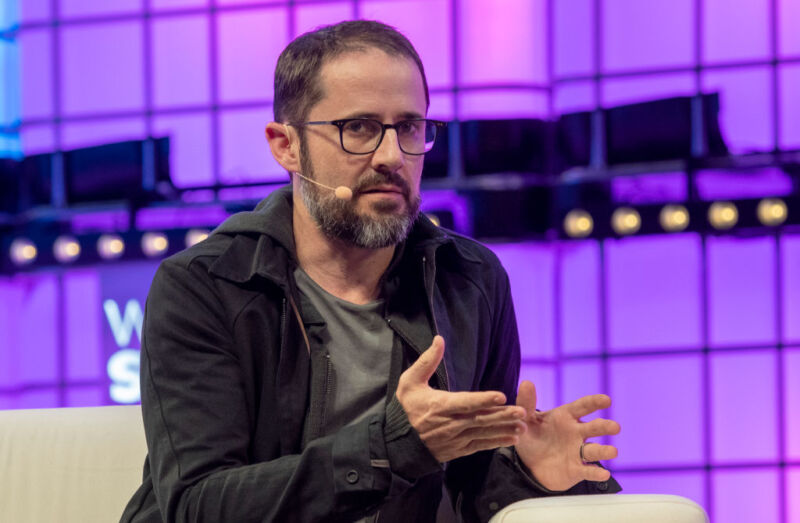
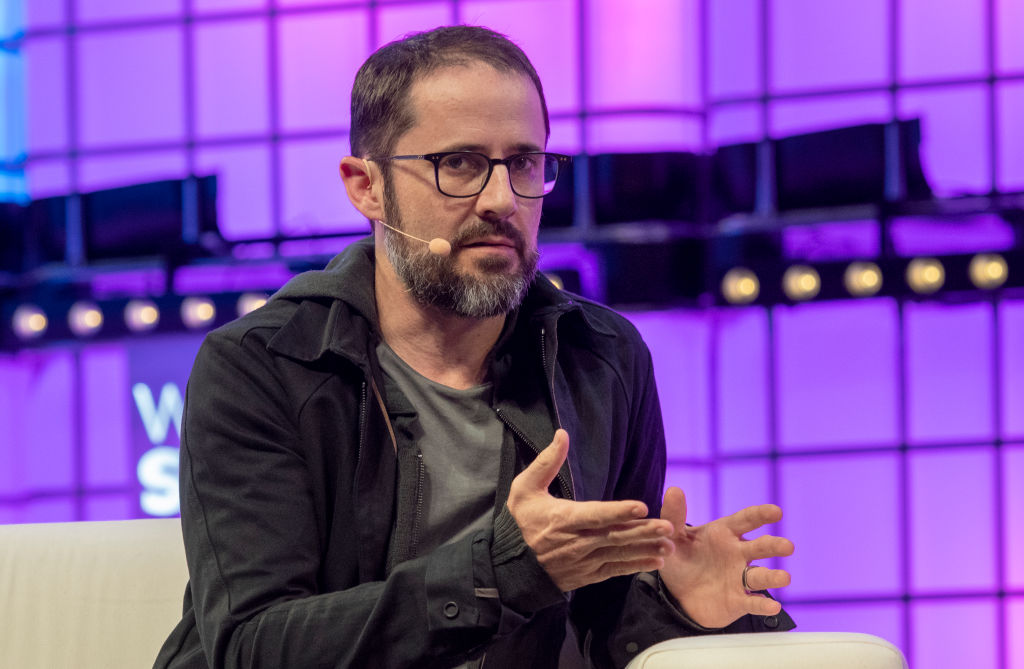
Ev Williams, Twitter co-founder, delivers remarks at Web Summit in Altice Arena on November 8, 2018, in Lisbon, Portugal.
Enlarge / Ev Williams, Twitter co-founder, delivers remarks at Web Summit in Altice Arena on November 8, 2018, in Lisbon, Portugal.

Twitter co-founder Evan “Ev” Williams has broken his silence and joined other co-founders in expressing his dismay at how Elon Musk is running the platform.

In his first public remarks on Musk’s leadership since Musk’s Twitter takeover, Williams told Bloomberg’s “The Circuit” yesterday that after Musk’s purchase went through, he felt “sad.”

Ever since, he hasn’t been encouraged by developments at Twitter. The company’s ongoing financial struggles include most recently recording a five-week period from April to May, where its advertising revenue dropped by 59 percent, compared to ad revenue at the same time last year.

Many believed that Twitter’s new CEO Linda Yaccarino, who started this week, would bring advertisers back to the platform. But Twitter’s ad staff thinks that advertisers might still be spooked by shifting Twitter policies leading to more controversial content, like pornography and hate speech, as well as more controversial ads promoting things like gambling and marijuana, The New York Times reported. It seems that many top advertisers are still hesitant to risk brand damage by reinvesting in Musk’s Twitter.

“I don’t think he’s dialed it in quite right yet,” Williams told Bloomberg, warning that Twitter’s potential to recover as a brand is now “much harder” now that “the brand is very linked to Elon.”

Williams said that poor leadership caused once-popular platforms like Yahoo and MySpace to fail, suggesting that it’s appropriate to compare Twitter today to Yahoo. He said that while Yahoo still exists and could be perceived as “thriving,” that “reputationally, it’s very different,” and that’s the path that Musk seems to be taking Twitter down.

Williams’ remarks come just a few months after Twitter co-founder Jack Dorsey tweeted that he didn’t think Musk was an ideal leader for Twitter, The Washington Post reported. When a Twitter user told Dorsey that “it’s pretty sad how it all went down” regarding Musk’s Twitter purchase, Dorsey tweeted in resounding agreement: “Yes.”

Williams and Dorsey had been perhaps the most optimistic about Musk becoming—as Musk described his role at Twitter—Chief Twit. Another co-founder, Biz Stone, stepped up first to express disapproval in a vague December 2022 tweet that never mentioned Musk by name.

“He’s not a serious person,” Stone tweeted. “He does things for sport that have serious consequences for real people. This is an open, global service.”

The only other Twitter co-founder, Noah Glass, rarely speaks about Twitter and is seemingly the only one to decline to share an opinion on Musk’s leadership.

Williams has “weird relationship” with Twitter

Williams was joined on “The Circuit” by former Twitter vice president of product Jason Goldman, who told Bloomberg that Twitter has already survived several attempts by its founding leadership to “kill the product.” Williams agreed that Twitter is a resilient product, calling Twitter “anti-fragile.”

Williams then suggested that emerging Twitter alternatives could easily take Twitter’s place if Musk fails to improve the product or if they simply offer better services or more innovative products.

But Williams also said that he’s had “a weird relationship with Twitter” that seems to exist between appreciation for what it is and disinterest in what it could become.

In 2022, he said that he was “excited” for Musk to take over the platform, while warning that Musk should have “respect for the people who have been shepherding” the company, “especially on the trust and safety side.” Musk did not heed that advice, dissolving Twitter’s trust and safety council, drastically reducing the trust and safety team, and then seemingly driving resignations of trust and safety chief Yoel Roth and Ella Irwin. And that’s seemingly a big part of what’s made Williams “sad” about Twitter these days.

Of Musk, Williams said, “I think he’s brilliant. But no one’s brilliant on everything.”

However, Williams seemingly doesn’t necessarily view social media as relevant today as he used to.

Williams said that in social media’s early beginnings, “We thought, oh, the best would be if we got media from our friends,” but now the growing popularity of TikTok is showing him that, to many users, “showing them media from your friends is probably not as good as the media from some super talented person who you’ve never met before.”

“I actually think there’s tons of interesting things now if we think about how do we use the Internet to help people be more social without consuming or creating media, so maybe the future of social media is the separation of social and media,” Williams suggested, seemingly indicating that Twitter and other traditional social media platforms might not have as prominent a place in that hypothetical version of the future.

For Musk to succeed, Williams said the Twitter owner would likely have to be prepared to continue taking on a huge loss.

“I don’t know how comfortable Elon is with losing billions of dollars,” Williams told Bloomberg. “Maybe he is—fine. Maybe he can get to break even and then just play with it. If a hundred million people in the world share the most interesting idea or thought, and the computers could algorithmically give you the most interesting slice of that, that’s a hell of a media service—but I also think, generally, the new thing does not come from the old thing.”

Williams did not immediately respond to Ars’ request for comment. Twitter does not respond to requests for comment.

https://arstechnica.com/?p=1946831


Judge denies Amazon’s, Apple’s motions to dismiss class action price-fixing suit

Amazon logo on an iPhone, held in silhouette of Apple logo
An antitrust-based lawsuit accusing Amazon and Apple of colluding to keep Apple products priced higher in Amazon’s store is moving forward after a judge declined to dismiss the case on the companies’ motions.
Getty Images

A federal judge has rejected Apple’s and Amazon’s motions to wholly dismiss a consumer antitrust lawsuit, one that accuses the tech giants of colluding to eliminate all but the highest-price Apple products in Amazon’s online store.

Writing in Seattle (PDF), Judge John C. Coughenour noted that Apple and Amazon do not dispute the existence of their agreement, which was publicly touted by the companies in November 2018. Nor do they argue that it had an “effect on interstate commerce,” as required by a lawsuit making a complaint under the Sherman Act. The issues pushed in the defendants’ motion for dismissal is whether the Global Tenets Agreement (GTA) signed by the companies has an impact on “a relevant market” and whether it “imposes an unreasonable restraint of trade.”

Coughenour dismissed one aspect of the plaintiff’s lawsuit. He disagreed with Apple’s and Amazon’s positioning of themselves as competing to sell Apple products “at a horizontal level.” Instead, they are, under their GTA, “vertically situated” as a manufacturer and distributor. But, given the “complex nature of the business relationships between the parties,” Coughenour wrote, and the fact that the plaintiffs agree that not all resellers of Apple products were removed from Amazon’s marketplace, a “per se” finding of antitrust violation could not be sustained.

But the case can go forward, Coughenour wrote. What the specific market is for Apple products on Amazon, and the GTA’s impact on it, that “is a question reserved for a jury.” The judge cites F.T.C v. Whole Foods Mkt. (the latter of which is owned by Amazon) in dismissing Apple’s claims that the plaintiffs have not defined a specific enough market for iPhones and iPads, which can be bought in many places. “The fact that a customer might buy a stick of gum at a supermarket or at a convenience store does not mean there is no definable groceries market,” a DC federal court wrote in 2008.

The original complaint, filed by Seattle law firm Hagens Berman on behalf of Pennsylvania resident Steven Floyd and a wider class, suggests that Apple and Amazon’s agreement, originally framed as a way of removing counterfeit or low-quality Apple products from the store, denies customers competitive pricing on iPhones and iPads. The suit claimed that the agreement essentially killed the market for refurbished Apple goods on Amazon while giving Amazon a discount of up to 10 percent on its own sales of Apple goods. The suit notably claimed that there were more than 600 vendors of Apple goods on Amazon in early 2018 but only seven by mid-2019.

Hagens Berman has seen Apple in court many times before. The firm has sued Apple over scratched iPad nano cases, e-book price-fixing, App Store developer rules, and iOS touchscreen patents, the last of which involved Apple’s accusing Hagens Berman of relying on an undisclosed attorney for help with their suit.

[Update, 4:45 p.m. ET: “This means the lawsuit is completely intact under one of the claims, and these two tech giants will have to answer for over-pricing of iPads and iPhones,” said Steve Berman, managing partner at Hagens Berman, in a statement to Ars Technica. Amazon declined to comment on this matter. We reached out to Apple, and will update this post if we hear back.]

https://arstechnica.com/?p=1946764


OpenAI faces defamation suit after ChatGPT completely fabricated another lawsuit

OpenAI faces defamation suit after ChatGPT completely fabricated another lawsuit

Armed America Radio touts one of its hosts, Mark Walters, as the “loudest voice in America fighting for gun rights.” Now it appears that Walters’ prominent commentary on gun rights and the Second Amendment Foundation (SAF)—a gun rights nonprofit that gave him a distinguished service award in 2017—has led generative AI chatbot ChatGPT to wrongly connect dots and make false and allegedly malicious statements about the radio host. That includes generating potentially libelous statements that Walters was once SAF’s chief financial officer and treasurer and that he was accused of embezzling funds and defrauding SAF.

Now, Walters is suing ChatGPT owner OpenAI in a Georgia state court for unspecified monetary damages in what’s likely the first defamation lawsuit resulting from ChatGPT’s so-called “hallucinations,” where the chatbot completely fabricates information.

The misinformation was first uncovered by journalist Fred Riehl, who asked ChatGPT to summarize a complaint that SAF filed in federal court.

That SAF complaint actually accused Washington attorney general Robert Ferguson of “misuse of legal process to pursue private vendettas and stamp out dissent.” Walters was never a party in that case or even mentioned in the suit, but ChatGPT disregarded that and all the actual facts of the case when prompted to summarize it, Walters’ complaint said. Instead, it generated a wholly inaccurate response to Riehl’s prompt, falsely claiming that the case was filed against Walters for embezzlement that never happened while serving at an SAF post that he never held.

Even when Riehl asked ChatGPT to point to specific paragraphs that mentioned Walters in the SAF complaint or provide the full text of the SAF complaint, ChatGPT generated a “complete fabrication” that “bears no resemblance to the actual complaint, including an erroneous case number,” Walters’ complaint said.

“Every statement of fact” in ChatGPT’s SAF case summary “pertaining to Walters is false,” Walters’ complaint said.

OpenAI did not immediately respond to Ars’ request for comment.

Is OpenAI responsible when ChatGPT lies?

It’s not the first time that ChatGPT has completely fabricated a lawsuit. A lawyer is currently facing harsh consequences in court after ChatGPT made up six cases that the lawyer cited without first verifying case details that a judge called obvious “legal gibberish,” Fortune reported.

Although the sophisticated chatbot is used by many people—from students researching essays to lawyers researching case law—to search for accurate information, ChatGPT’s terms of use make it clear that ChatGPT cannot be trusted to generate accurate information. It says:

Artificial intelligence and machine learning are rapidly evolving fields of study. We are constantly working to improve our Services to make them more accurate, reliable, safe and beneficial. Given the probabilistic nature of machine learning, use of our Services may in some situations result in incorrect Output that does not accurately reflect real people, places, or facts. You should evaluate the accuracy of any Output as appropriate for your use case, including by using human review of the Output.

Walters’ lawyer John Monroe told Ars that “while research and development in AI are worthwhile endeavors, it is irresponsible to unleash a platform on the public that knowingly makes false statements about people.”

OpenAI was previously threatened with a defamation lawsuit by an Australian mayor, Brian Hood, after ChatGPT generated false claims that Hood had been imprisoned for bribery. In that case, Hood asked OpenAI to remove the false information as a meaningful remedy; otherwise, the official could suffer reputation damage that he said could negatively impact his political career.

Monroe told Ars that Walters is only seeking monetary damages as a remedy at this time, confirming that Walters’ potential reputation loss could impact future job opportunities or result in lost listeners of his radio commentary.

https://arstechnica.com/?p=1946683


Google un-bans Downloader app, but developer still mad about “broken” DMCA

Screenshot of the Android TV app known as Downloader. The app presents a field that says,
Enlarge / Screenshot of the Downloader app on Google Play.

Google has reversed the suspension of an Android TV app that was hit with a copyright complaint simply because it is able to load a pirate website that can also be loaded in any standard web browser. The Downloader app, which combines a web browser with a file manager, is back in the Google Play Store after nearly a three-week absence.

As we previously reported, Google suspended the app based on a Digital Millennium Copyright Act (DMCA) complaint from several Israeli TV companies that said the app “allows users to view the infamous copyright infringing website known as SDAROT.” But that same website could be viewed on any standard browser, including Google’s own Chrome app.

“The app was removed on May 19th due to the DMCA takedown request,” developer Elias Saba wrote in a blog post today. “Instead of recognizing the absurdity of the claim that a web browser is somehow liable for all the unauthorized use of copyrighted content on the Internet, Google took a backseat and denied my appeal to have the app reinstated.”

The free app has been downloaded over 5 million times on Google Play and is available on the Amazon app store for devices such as Fire TVs.

In addition to the rejected appeal, Saba filed a DMCA counter-notification with Google. That “started a 10-business-day countdown for the [TV companies’] law firm to file legal actions against me,” Saba wrote today. “Due to the app being removed on a Friday and the Memorial Day holiday, 10 business days had elapsed with no word from the law firm on June 6th and I contacted Google to have the app reinstated.”

Google made one more mistake, developer says

Saba said he was informed by Google yesterday that “the app was no longer suspended but that now it was rejected by Google due to an invalid data safety form.” This was another mistake, according to Saba’s blog post:

In yet another example of the Google Play Store’s absurdity, Google had determined that my app collected email addresses without declaring so. Since there is no way for my app itself to collect email addresses, and without any additional information or help from Google, I can only assume that Google is referring to the email mailing list signup form on this website, which loads by default in the web browser of the Downloader app.

Fearing that another appeal would be like “argu[ing] with a brick wall,” Saba said he “accepted defeat and updated the Play Store data safety form for my app and declared that the app collects email addresses.” That means Downloader is now flagged by the Google Play Store as collecting and sharing personal information.

“I assure you, the Downloader app itself does not collect or share any of your personal information,” Saba wrote. “Well, unless you plan to file your taxes using the built-in web browser in Downloader because, apparently, once again, what is done in the web browser on the Internet is somehow the fault of my app.”

Saba said he updated the data safety form yesterday and that the app was restored today.

“The DMCA is broken”

Saba advised users who sideloaded Downloader while it was unavailable to uninstall the sideloaded version and reinstall the Google Play version.

“The app was offline for 20 days, all because the DMCA is broken with no consequences for people, or TV corporations half a world away, that choose to abuse it for their own benefit,” he complained. “While it was only unavailable for about 3 weeks, the app has now lost 47 percent of its active users compared to the day before it was removed.”

Google seems to have followed its standard process for complying with valid DMCA requests even though the complaint in this case essentially blamed a web browser for being able to browse the web. As Saba told us for our previous article, “There is no way to view content in the app other than to use the web browser to navigate to a website. The app also doesn’t present or direct users to any website, other than my blog at www.aftvnews.com, which loads as the default homepage in the web browser.”

In an email response to Ars today, Google said it followed the process set out by the DMCA and “allowed both parties to exercise their options under that law.” Google noted that its standard approach is to forward any counter-notification like the one Saba filed to the complainant and wait 10 business days for the complainant to seek a court order or file a claim of infringement with the US Copyright Office Copyright Claims Board.

https://arstechnica.com/?p=1946463


DeSantis ad uses fake AI images of Trump hugging and kissing Fauci, experts say

Collage shows three fake images of Trump hugging and kissing Anthony Fauci on the cheek, while three real images of the two men standing or sitting near each other are also shown.
Enlarge / Screenshot from Ron DeSantis ad shows a collage of real and fake images.

A Ron DeSantis presidential campaign video shows three pictures of Donald Trump hugging and kissing Anthony Fauci, all of which seem to be fake images generated by artificial intelligence. One professor told Ars today that there is “no doubt” the ad uses fake AI images.

As reported by AFP yesterday, media forensics experts say the images, which the DeSantis ad passed off as photographs taken during Trump’s presidency, have telltale signs of AI. Even non-experts may notice oddities, such as incomprehensible text on a sign that should say “White House” and “Washington.”

Of course, another giveaway is that then-President Trump and Fauci weren’t really on hugging and kissing terms. Trump repeatedly attacked Fauci and resisted measures to slow the spread of the COVID-19 pandemic. Fauci, who is now retired, was the longtime director of the National Institute of Allergy and Infectious Diseases.

The DeSantis video advertisement released Monday slams Trump for not firing Fauci. About halfway through, there is a collage of six images (seen at the top of this article) of Trump and Fauci.

“No doubt in my mind” that they’re fake

“There is no doubt in my mind that the top-left and bottom-middle pictures are fakes,” V.S. Subrahmanian, an AI researcher and professor of computer science at Northwestern University, told Ars today. “As pointed out in the AFP piece, the top-left image shows incorrect lettering on the picture of the White House. The bottom-middle image shows a number of weird white streaks between the stars in the US flag.”

As some people pointed out, Trump’s hair looks unnatural in the images. Ars Technica AI and Machine Learning Reporter Benj Edwards told me today that he noticed, among other problems, a “lack of detail in the hair. AI synthesis models are still bad at rendering accurate details and better at getting general things approximately correct.”

We contacted the DeSantis campaign today and will update this article if we get a response.

The three real photos in the collage show Trump and Fauci sitting or standing near each other. One of the real pictures can be found on Getty Images, another is on the National Institutes of Health website, and the third is from Reuters.

Though DeSantis is slamming Trump for not firing Fauci, DeSantis himself reportedly praised Fauci on March 25, 2020, as “really doing a good job” in a “tough, tough situation.”

Sneaky intermixing of real and fake images

“It was sneaky to intermix what appears to be authentic photos with fake photos, but these three images are almost certainly AI-generated,” University of California, Berkeley Professor Hany Farid told AFP. Farid’s research focuses on areas including digital forensics, misinformation, image analysis, and human perception. Problems in the bottom-right image include “differences in the shape of Trump’s ear as compared to stock photos,” Farid said.

The three suspicious images “contain many signs indicating that they were AI-generated,” AFP was told by Matthew Stamm, a Drexel University professor and expert on detecting falsified images and videos.

“For example, if you look closely at Donald Trump’s hair in the top-left, bottom-middle, and bottom-right images, you can see that it contains inconsistent textures and is significantly blurrier than other nearby content such as his ears or other regions of his face,” Stamm told AFP.

University of Buffalo Professor Siwei Lyu, director of the school’s Media Forensic Lab, “told AFP the [top-left] image also portrays Trump’s right arm in an abnormal position, with it appearing to extend too far as it wraps fully around Fauci’s body,” the news organization reported. In the lower-middle picture, Trump’s right hand is “clearly generated with the thumb in an unnatural position,” Lyu told AFP.

“At the same time, Stamm noted that Trump’s left hand does not appear to have a thumb in the image, instead blending into his right hand,” AFP wrote.

The DeSantis campaign ad is not the first to use AI. In April, the GOP released an anti-Biden ad that used AI-generated images.

https://arstechnica.com/?p=1946386