Lawyer cited 6 fake cases made up by ChatGPT; judge calls it “unprecedented”

Robotic hand points to a line on a document while a human signs it with a pen. A judge's gavel is in the background.
Getty Images | Andrey Popov

A lawyer is in trouble after admitting he used ChatGPT to help write court filings that cited six nonexistent cases invented by the artificial intelligence tool.

Lawyer Steven Schwartz of the firm Levidow, Levidow, & Oberman “greatly regrets having utilized generative artificial intelligence to supplement the legal research performed herein and will never do so in the future without absolute verification of its authenticity,” Schwartz wrote in an affidavit on May 24 regarding the bogus citations previously submitted in US District Court for the Southern District of New York.

Schwartz wrote that “the use of generative artificial intelligence has evolved within law firms” and that he “consulted the artificial intelligence website ChatGPT in order to supplement the legal research performed.”

The “citations and opinions in question were provided by ChatGPT which also provided its legal source and assured the reliability of its content,” he wrote. Schwartz admitted that he “relied on the legal opinions provided to him by a source that has revealed itself to be unreliable,” and stated that it is his fault for not confirming the sources provided by ChatGPT.

Schwartz didn’t previously consider the possibility that an artificial intelligence tool like ChatGPT could provide false information, even though AI chatbot mistakes have been extensively reported by non-artificial intelligence such as the human journalists employed by reputable news organizations. The lawyer’s affidavit said he had “never utilized ChatGPT as a source for conducting legal research prior to this occurrence and therefore was unaware of the possibility that its content could be false.”

Judge weighs “unprecedented circumstance”

Federal Judge Kevin Castel is considering punishments for Schwartz and his associates. In an order on Friday, Castel scheduled a June 8 hearing at which Schwartz, fellow attorney Peter LoDuca, and the law firm must show cause for why they should not be sanctioned.

“The Court is presented with an unprecedented circumstance,” Castel wrote in a previous order on May 4. “A submission filed by plaintiff’s counsel in opposition to a motion to dismiss is replete with citations to non-existent cases… Six of the submitted cases appear to be bogus judicial decisions with bogus quotes and bogus internal citations.”

The filings included not only names of made-up cases but also a series of exhibits with “excerpts” from the bogus decisions. For example, the fake Varghese v. China Southern Airlines opinion cited several precedents that don’t exist.

“The bogus ‘Varghese’ decision contains internal citations and quotes, which, in turn, are nonexistent,” Castel wrote. Five other “decisions submitted by plaintiff’s counsel contain similar deficiencies and appear to be fake as well,” Castel wrote.

The other five bogus cases were called Shaboon v. Egyptair, Petersen v. Iran Air, Martinez v. Delta Airlines, Estate of Durden v. KLM Royal Dutch Airlines, and Miller v. United Airlines.

https://arstechnica.com/?p=1942936


Biden admin wants Europe to reject forced payments from Big Tech to ISPs

A pile of money from the US and Europe, including 50 and 100-dollar bills along with 100, 200, and 500-euro notes.
Getty Images | Alan Schein

The Biden administration urged Europe to reject the telecom industry plan to make Big Tech companies pay for Internet service providers’ network expansions and upgrades. In comments submitted to the European Commission last week, the US Commerce Department’s National Telecommunications and Information Administration (NTIA) said that mandating payments from online platforms to ISPs would “distort competition” and undermine net neutrality.

“Mandating direct payments to telecom operators in the EU absent assurances on spending could reinforce the dominant market position of the largest operators,” the US submission said. “It could give operators a new bottleneck over customers, raise costs for end users, and alter incentives for CAPs/LTGs [content and application providers and large traffic generators] to make efficient decisions regarding network investment and interconnection. It is difficult to understand how a system of mandatory payments imposed on only a subset of content providers could be enforced without undermining net neutrality.”

European broadband providers said in their comments that they should be allowed to demand new fees from online companies that account for over 5 percent of a telco’s average peak traffic. Telco lobby groups claimed that Europe needs “a fair contribution based on a framework that allows balanced negotiations between telcos and large traffic generators who obtain the most benefit from telecom investment, while creating a high-cost burden with their traffic and exerting disproportionate power across markets.”

European ISPs argued for direct payments from tech companies rather than having tech firms pay into a government-operated fund that would distribute money to ISPs. The payments from tech firms to ISPs “should be based on commercial negotiations enshrined in a framework that obliges the parties to negotiate,” with the backstop of a neutral third party to resolve disputes, the telco lobby groups said.

The US government filing urges Europe “to promote affordable access to broadband, protect users’ access to online content, and avoid discriminatory measures that distort competition,” the NTIA said in a press release yesterday. Summarizing the comments, the NTIA said the proposal could “give telecom operators a new bottleneck that could be used to increase control over their customers; raise costs for consumers and small businesses; and create distortions in the Internet ecosystem.”

US: Tech firms already invest a lot

The Biden administration pointed out that tech companies already invest a lot of money in networks:

Internet services depend on a diverse global infrastructure extending well beyond end-user access networks. CAPs/LTGs build and operate networks, including large international fiber and submarine cable systems, that deliver popular services and applications. They develop or acquire content, operate data centers, and incur other obligations that contribute to the ecosystem’s total costs.

The US warned of “substantial risks in a mandatory mechanism of direct payments from CAPs/LTGs to telecom networks, especially absent mandatory, enforceable obligations on how such payments are spent. Enforcing mandatory payments on a subset of traffic generators could be discriminatory and degrade equal access to the Internet, thereby endangering the principle of Internet openness/net neutrality.”

The NTIA explained that the US approach to financing network construction “involves private investments, a national Universal Service Fund, and significant public funding made from general appropriations.” The US said these “publicly accountable funding mechanisms,” in contrast to mandated payments from one set of companies to another, are key for “avoiding discriminatory measures that distort competition.”

The US also warned that mandated payments would be “unsustainable” if more countries adopt them.

“We urge caution should the EU consider any new funding mechanisms that could disrupt the current Internet ecosystem, which has successfully adapted to evolving technological and market conditions over time,” the NTIA said. “Internet traffic is global, raising questions regarding one country’s ability to collect revenues from foreign content providers; if many countries take this path it would likely be unsustainable.”

EU group warns of price hikes, impact on small ISPs

In addition to criticism from Meta, Google, and Netflix, the fee proposal was criticized by the Body of European Regulators for Electronic Communications (BEREC). The group of regulators from European countries said it has found no evidence of “free-riding” by tech companies or evidence that ISPs’ costs aren’t fully covered.

“The introduction of a mandatory financial contribution from large CAPs to ISPs may distort competition between market actors,” the group said. “Smaller ISPs are likely to be at a competitive disadvantage compared to large ISPs, in particular because of their smaller number of end-users and their lower bargaining power. Large CAPs typically provide commercial content delivery networks (CDN) and cloud services. Thus, they could pass on higher costs to their customers. This would then not only affect for instance smaller CAPs, but also business users, in particular SMEs [small and medium-sized enterprises].”

BEREC also said there is a danger that content providers’ customers, including small and medium-sized businesses, will be “negatively affected when the higher costs are passed on through higher fees for content subscriptions or the quality of service is lowered.”

https://arstechnica.com/?p=1942584


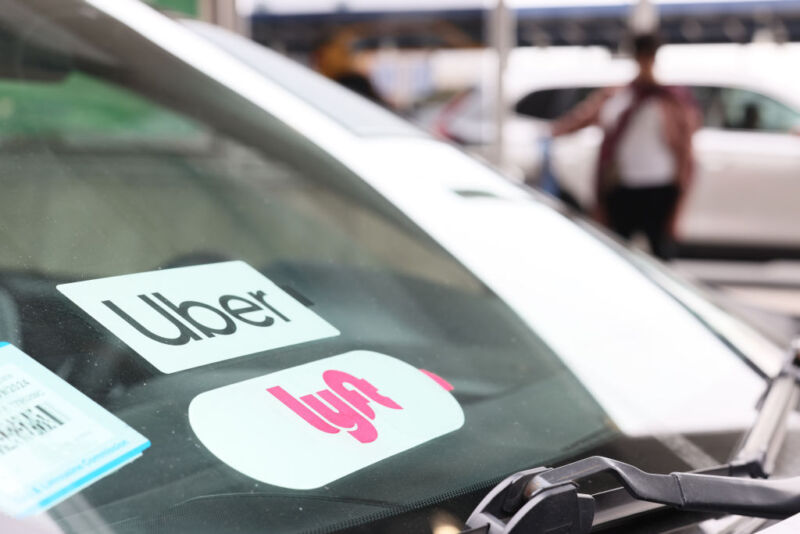
Minn. Gov. vetoes pay raise for drivers after Uber, Lyft threaten price hikes

Minn. Gov. vetoes pay raise for drivers after Uber, Lyft threaten price hikes

Days after Minnesota Uber and Lyft drivers celebrated the passing of ridesharing legislation that would have increased their pay and protections, the state’s governor, Tim Walz, vetoed the bill. Now Minnesota drivers are outraged, claiming that the governor bowed to “scare tactics.” They vowed to keep fighting against alleged abuse to create better worker conditions in the state.

Walz’s veto is his first in five sessions as Minnesota’s governor and came hours after Uber threatened to pull out of nearly all Minnesota markets and only offer premium products in areas where services remained, The Star Tribune reported. Lyft had also threatened to create “transportation deserts” if the bill became law.

Authored by Minnesota Senator Omar Fateh, the ridesharing legislation would have began July 1, 2024, and forced Uber and Lyft to pay drivers $1.45 per mile and 34 cents per minute in the state’s busiest counties. Outside that area, drivers would have received minimum compensation of $1.25 per mile and 34 cents per minute. It also guaranteed a minimum fee of $5 for any transportation provided.

Uber and Lyft had argued that increasing driver pay would have caused rider prices to spike by 50 percent at minimum, the Star Tribune reported. In a press release, Walz said that he was protecting riders by vetoing the bill and signing an executive order “convening a working group of drivers, riders, rideshare companies, members of the disability community, and labor to issue recommendations for rideshare legislation” by January 1, 2024.

“Rideshare drivers deserve fair wages and safe working conditions,” Walz said. “I am committed to finding solutions that balance the interests of all parties, including drivers and riders. This is not the right bill to achieve these goals. I have spent my career fighting for workers, and I will continue to work with drivers, riders, and rideshare companies to address the concerns that this bill sought to address.”

The Minnesota Uber/Lyft Drivers Association (MULDA) tweeted that Walz wasn’t protecting riders but instead was “in the pocket of corporate America.” Fateh tweeted that Walz had “not one conversation” with drivers before vetoing the bill.

“While Uber and Lyft had access to the administration and elected officials, I want to make it clear that not once has the administration reached out to the drivers,” Fateh tweeted. He promised that he “won’t back down” and would make passing new ridesharing legislation a “top priority” during the state’s next legislative session.

Uber sought “compromise”

An Uber spokesperson told Ars that it was always Uber’s “goal to pass comprehensive legislation this session that would raise rates for drivers while providing them the flexibility and benefits they tell us they want,” but said that a “compromise” in February was needed because Fateh’s bill did not achieve that goal.

Lyft provided a statement saying that they “appreciate” Walz for “listening to many in the community, vetoing the bill, and instead creating a task force to properly study these important issues.”

“Lawmakers should pass fair pay and other protections, but it must be done in a way that doesn’t jeopardize the affordability and safety of those who rely on the service,” Lyft’s statement said. “We recently did this in Washington state, where drivers, labor leaders, elected officials and the companies came together to pass smart legislation that benefited all involved. We look forward to continuing our engagement and finding a similar pathway forward here in Minnesota.”

According to Lyft, Walz was moved by letters sent by local groups who requested a “pause” on ridesharing legislation until more could be learned about the potential impact on people with disabilities who depend on affordable ridesharing for work and other activities.

Gig Workers Rising, a community of app workers pushing for better worker conditions, tweeted that the governor’s decision to veto the law overlooked other at-risk communities and “is a huge loss for communities of color.”

The ridesharing legislation also mandated more transparency from Lyft and Uber and “would have protected Uber and Lyft drivers, who are primarily immigrants, refugees, & people of color—who have a higher rate of deactivation, verbal abuse, and physical violence,” Gig Workers Rising tweeted.

Fateh, Walz, Gig Workers Rising, and MULDA did not immediately respond to Ars’ request for comments. [Update: MULDA president Eid Ali told Ars that it’s possible that if Walz’s working group delivers recommendations within the next two months that new legislation could be passed before the end of the year to better support drivers. Ali said that it was too hard to say now if those recommendations would ultimately meet the drivers’ desired pay standards, noting that the drivers had already compromised by agreeing to the modest increased pay rate that Walz vetoed this week. Currently, in addition to providing input for Walz’s working group, Ali said that MULDA is working with the city of Minneapolis to “see what we can accomplish on the city level.”]

Walz’s working group has been directed to launch a study “to obtain and analyze data related to the working conditions of rideshare drivers in Minnesota and how potential changes may impact access and cost for riders,” the governor’s press release said. A written report is due January 1, 2024.

MULDA tweeted that Walz was acting as an “agent” for Uber and Lyft, seeking to spend taxpayer money to study minimum wage just because the ridesharing companies told him to, and warning that without laws, drivers will continue to be exploited and abused.

https://arstechnica.com/?p=1942561


TikTok—banned or not, it’s probably here to stay, an Ars Frontiers 2023 recap

On May 22, Ashley Belanger (top left) moderated a panel featuring Ioana Literat (bottom left), Bryan Cunningham (top right), and Corynne McSherry (bottom right) for the Ars Frontiers 2023 session titled, "TikTok—Banned or Not, It's Probably Here to Stay."
Enlarge / On May 22, Ashley Belanger (top left) moderated a panel featuring Ioana Literat (bottom left), Bryan Cunningham (top right), and Corynne McSherry (bottom right) for the Ars Frontiers 2023 session titled, “TikTok—Banned or Not, It’s Probably Here to Stay.”

Ars Frontiers kicked off Monday with a panel called “TikTok—Banned or Not, It’s Probably Here to Stay,” featuring experts on TikTok, data privacy, and cybersecurity.

It just so happened that the week before Ars Frontiers, TikTok was banned in Montana. This made the panel discussion particularly timely, as some TikTok creators and TikTok promptly sued the state, hoping to ensure that all Americans maintain access to the China-owned app—despite lawmakers’ national security concerns that the Chinese Communist Party (CCP) might use TikTok to access US user data.

[embedded content]
Ars Frontiers 2023: “TikTok—Banned or Not, It’s Probably Here to Stay.”

An associate professor in the communication media and learning technologies design program at Teachers College, Columbia University, Ioana Literat monitors how young people use social media. She has been researching TikTok since it first became available in the US. Banning TikTok at the “apex of its popularity,” Literat said, would set “a huge cultural and political precedent” for TikTok’s young user base, which is so politically active on the app.

“The government hasn’t really shown a compelling justification for the ban,” Literat said. “If you’re going to restrict freedom of speech in this way, you really need to make a very clear and potent case for the need for the ban” and really prove that “there’s no better alternatives to this ban.”

Beyond rationales for a ban not being compelling, legal director at the Electronic Frontier Foundation Corynne McSherry said that state and federal pushes to ban TikTok were “entirely performative and a complete waste of time.” Her organization advocates for more comprehensive data privacy laws, rather than a TikTok ban.

Discussing the various First Amendment concerns that banning TikTok would cause, she agreed with Literat that “the government really hasn’t made much of an effort to get beyond rhetoric in terms of what we should really be worried about.”

“Perhaps you can hear in my voice, I’m a little frustrated about this,” McSherry said. “If we actually care about data privacy, which I think we should—I think that’s really important—what we really need is comprehensive federal legislation that doesn’t just target one particular app, but actually really protects all of us by targeting all of the different ways in which companies are surveilling us all the time.”

Bryan Cunningham, a former White House lawyer and CPRI executive director at UCI Cybersecurity Policy & Research Institute, predicted that “Congress and the president will try to ban TikTok,” and “it’ll be a complete failure,” partly because “it’s not enforceable.”

“I don’t know how you think you’re gonna get the app off of tens of millions” of people’s phones, Cunningham said. “Are we gonna have border checkpoints where they look at your phone and see if the app is on there?” He said his young daughters would drive to Canada to put TikTok on their phones if they had to, and McSherry pointed out that many users would simply use a VPN service to access the app and skirt the ban.

Cunningham said that in his view, concerns about the CCP using TikTok to spy on Americans were “very real,” but “there’s better ways to address them” than a ban. He agreed with McSherry that better data privacy laws would help to limit surveillance.

And TikTokers might even be totally onboard with going that route, Literat said. Her research shows that while young people using TikTok don’t seem to take the threat of a ban seriously—and joked relentlessly about non-tech-savvy Congress members grilling TikTok CEO Shou Zi Chew—they are genuinely concerned about data privacy on social media.

McSherry said that in the past two years, she’s seen lawmakers get more serious about passing data privacy laws that would be “a non-performative way to actually help the citizenry” avoid tech company surveillance.

From the national security standpoint, Cunningham said that the threat goes beyond data privacy, though, and also raises concerns about the CCP manipulating TikTok’s algorithm to sow disinformation, restrict content, or push propaganda. To solve that problem, he recommended what he called a little-discussed alternative to the ban: imposing economic sanctions on TikTok owner ByteDance.

“Congress could give the president the authority, if he doesn’t have it, to impose economic sanctions on ByteDance,” Cunningham said.

Ars Frontiers is all about innovation, and both McSherry and Cunningham pointed out that new apps could emerge to replace TikTok at any point. This is one reason why focusing policy on one app seems extremely short-sighted. But for approximately 150 million Americans on TikTok today, Literat suggested that, at least for now, TikTok appears irreplaceable.

TikTok “has cemented this role in our cultural imagination,” Literat said. “And it does have that role in young people’s lives, and I think it’s gonna be really hard for a platform to just supplant that. That takes time. And, of course, users care about where their friends are, where their peers are, and right now, they are on TikTok. So it would have to be a pretty mass migration, and I don’t see that happening yet to other platforms.”

https://arstechnica.com/?p=1942287


Supreme Court limits the EPA’s authority under the Clean Water Act

Cloudy skies and a marshy area with a stream running through it.
Enlarge / Wetlands like this may end up a complicated patchwork of regulated and unregulated areas thanks to the latest Supreme Court decision.

On Thursday, the US Supreme Court issued a ruling that severely limits the Environmental Protection Agency’s ability to regulate pollution under the Clean Water Act. The ruling applies to wetlands that are connected to bodies of water that fall under the Clean Water Act’s regulatory scheme, with the court now ruling that those connections need to be direct and contiguous for the act to apply. This would remove many wetlands separated by small strips of land—including artificial structures like levees—from oversight by the EPA.

The decision is a somewhat unusual one in that all nine justices agree that the people who originally sued the EPA should prevail. But there was a very sharply worded 5-4 disagreement over what the word “adjacent” means.

Whose waters are these?

The Clean Water Act was a major piece of environmental regulation due to the sometimes horrific pollution prevalent in the early 1970s. Its text applies regulations to the “waters of the United States,” a term that has proven sufficiently vague that it has been the subject of various lawsuits and federal regulatory policies over the years. Several geographic features—seasonal streams, human-made water features, and marshlands without a direct connection to rivers—have all been subject to dispute.

Even the Supreme Court found the issue difficult. In one of the more relevant cases, the court had a 4-4-1 split regarding the issue of whether wetlands without a direct connection to open waters were subject to regulation. Anthony Kennedy, who was the party of one, determined that there had to be a “significant nexus” connecting the two, a phrase that was also a subject of continual debate.

Against that backdrop, the relevant federal agencies (the EPA and Army Corps of Engineers) have pursued rulemaking under different interpretations of “significant nexus,” with more expansive ones prevailing under Democratic presidencies. The Trump administration’s attempt to limit the scope of regulations was thrown out by a court in 2021. The Biden administration’s replacement only took effect this year.

Brewing in the background since 2007 was a case called Sackett v. EPA. The Sacketts owned property near an Idaho lake and filled in some wetlands to build a house on the property. The EPA, noting that the wetlands drained into the lake via a nearby ditch, ordered the couple to restore the property to its original condition. The Sacketts sued, leading to the case that was before the Supreme Court.

Logic games

The entire court agrees that the connection between the Sacketts’ property and the lake is too tenuous for it to fall under the “waters of the US” category, so the EPA has no regulatory authority. But a five-Justice majority used the case as an opportunity to throw out the “significant nexus” standard and craft a rule that severely limits the wetlands that can be regulated by the EPA—to the point where it’s now more restrictive than even the Trump administration had planned. Under the new ruling, the Clean Water Act only applies to wetlands that are contiguous with open water, where it’s difficult to determine where the wetland ends and the river or lake begins.

To do so, the majority had to struggle with the text of the law, which explicitly covers “adjacent” wetlands. In the ruling, this was done by noting that “adjacent” could have multiple definitions and identifying other areas of the Clean Water Act that, when combined, provided a more stringent definition of “adjacent.” In practice, this looked a lot like playing a logic game, with the ruling literally defining the relevant wetlands using the phrase “A minus B, which includes C.”

The majority also dismisses a later amendment to the Clean Water Act that seemingly uses a more expansive definition of adjacent as “a relatively obscure provision.”

Justices Thomas and Gorsuch, while concurring with these limitations, argue that the court isn’t going far enough because it isn’t completely crippling the Clean Water Act’s scope. Making reference to colonial-era English common law and the Steamboat Act of 1838, they argue that Congress only has constitutional authority over bodies of water that can be used for trade. In this view, most of the water in the US doesn’t count.

As Thomas and Gorsuch note, this view would exclude congressional authority over interstate commerce like the sale of fish or recreation by out-of-state residents. That has been well outside the judicial mainstream since around the time of the New Deal. But an originalist can dream, I guess.

https://arstechnica.com/?p=1942332


Google never agreed it wouldn’t copy Genius’ song lyrics, US official says

Google never agreed it wouldn’t copy Genius’ song lyrics, US official says

After song lyrics website Genius sued Google in 2019 for allegedly breaching its terms of service by copying its lyrics transcriptions in search results, the United States Supreme Court invited the US solicitor general, Elizabeth Prelogar, to weigh in on how the US viewed the case. The question before Prelogar was whether federal copyright law preempted Genius’ terms of service, which prohibits any of its website visitors from copying lyrics for commercial uses.

Yesterday, Prelogar responded, filing a brief that sided with Google. She denied that Genius’ case was a good vehicle to test whether copyright law preempted state-law contract claims and recommended that the court deny Genius’ petition to review the case.

The key issue was that Genius’ terms of service may not be a valid contract because website visitors don’t have to directly agree to the website’s terms and may not even be aware they exist. Because of this, Prelogar said it was unclear whether any court would find that Google—or any visitor to Genius’ site—ever agreed to not copy the lyrics. Reviewing Genius’ arguments, Prelogar said that the Supreme Court should not review the case because “there is little indication that any other court of appeals would reach a different outcome in this case.”

A Google spokesperson told Ars that Google continues to dispute Genius’ claims it copied song lyrics.

“The Solicitor General and multiple courts continue to find that Genius’ claims have no merit,” Google’s spokesperson told Ars. “We include lyrics in search results to help you quickly find what you are looking for. We license the lyrics text from third parties, and we do not crawl or scrape websites to source lyrics.”

Ars could not immediately reach Genius for comment.

Genius’ “atypical” arguments against Google

On Genius’ website, lyrics are transcribed either by music fans or are obtained directly from the artist. For all lyrics on its site, Genius pays copyright holders for licenses to display the lyrics, and Genius profits by placing ads next to transcriptions of popular songs.

According to Prelogar’s brief, Genius argued that Google had “substantially reduced the number of visits” to its website and “significantly” decreased its advertising revenue after Google started displaying lyrics in information boxes in search results in 2014.

Google disputed this claim, saying that it obtains lyrics displayed in search results from LyricFind and confirming that both Google and LyricFind also hold licenses to display lyrics.

Setting aside the question of where Google gets the lyrics displayed in search results, the court considered whether or not Google, simply by visiting Genius’ website, had entered “a binding contract not to display, distribute, or copy its lyric transcriptions for commercial use,” Prelogar wrote, and if it had entered a binding contract, whether Genius’ breach of contract claim was any different from a copyright claim because both claims concern copying song lyrics.

An appeals court had decided that “[i]f the promise in a contract amounts only to a promise to refrain from reproducing, performing, distributing or displaying the work, then the contract claim is preempted,” and Prelogar agreed.

“Petitioner’s own breach-of-contract claims are atypical,” Prelogar wrote, “because access to petitioner’s website is not conditioned on any express promise to abide by petitioner’s terms of service, and petitioner does not contend that respondents made any such express promise here.”

Had Google or other Genius visitors been required to agree to the terms of service upon visiting the website, Genius might have had a better case. Prelogar provided an example where a hypothetical video rental store’s contract claims would likely not have been preempted by copyright law if its customer had signed a contract to rent a movie and agreed not to copy the movie, but then did it anyway.

That hypothetical case would have been a “better vehicle” for the Supreme Court to settle a still-debated question of whether state contracts are preempted by copyright law, Prelogar said. But Genius, in its lawsuit against Google, “does not allege that respondents explicitly promised not to copy the lyric transcriptions on petitioner’s website,” Prelogar wrote, and “it is uncertain whether New York courts would find that an enforceable contract exists.”

Although Genius has yet to comment on Prelogar’s brief, the lyrics website previously warned the court that siding with Google could fuel further efforts by Big Tech companies to steal aggregated user-generated content from popular websites like Genius, Wikipedia, or Reddit, Reuters reported.

https://arstechnica.com/?p=1941936


48 states sue phone company that allegedly catered to needs of robocallers

Illustration of robots wearing phone headsets and sitting in front of laptop computers.

Nearly every US state yesterday sued a telecom company accused of routing billions of illegal robocalls to millions of US residents on the Do Not Call Registry.

Avid Telecom, an Arizona-based company formed in 2000, “chose profit over running a business that conforms to state and federal law,” according to a lawsuit led by Arizona AG Kris Mayes and joined by the attorneys general of 47 other states and the District of Columbia. The case involves every US state except Alaska and South Dakota.

The lawsuit was filed in US District Court for the District of Arizona against Avid Telecom, CEO Michael Lansky, and VP of Operations and Sales Stacey Reeves. The lawsuit arises from work done by the Anti-Robocall Multistate Litigation Task Force of 51 attorneys general.

“In the more than 7.5 billion calls to telephone numbers on the National Do Not Call Registry, Avid Telecom used spoofed or invalid caller ID numbers, including more than 8.4 million calls that appeared to be coming from government and law enforcement agencies, as well as private companies,” a press release from the Arizona AG’s office said.

The lawsuit seeks a jury trial, a permanent injunction to prevent additional illegal robocalls, and financial penalties including “restitution or other compensation on behalf of residents” for illegal calls. The lawsuit cites the federal Telemarketing and Consumer Fraud and Abuse Prevention Act, the Telemarketing Sales Rule, the Telephone Consumer Protection Act, and certain state laws regarding unfair and deceptive trade practices.

Phone services customized for robocallers

Avid Telecom was accused of providing services to robocallers to make it easier to send illegal traffic. “Avid Telecom provided services customized to the needs of robocalling customers by enabling them to place a high volume of calls in quick succession, billing only for the duration of completed calls—typically in as little as 6-second increments—and ignoring clear indicia of illegal call traffic,” the lawsuit alleged.

Avid Telecom is a Voice over Internet Protocol (VoIP) company that “provides services to retail customers who are the originating callers that place robocall and telemarketing calls, as well as wholesale customers who are other voice service providers that route and transmit robocall and telemarketing calls,” the lawsuit said.

Of 24.5 billion calls that Avid sent or attempted to send between December 2018 and January 2023, about 93 percent allegedly lasted less than 15 seconds, an indicator of widespread robocalling. Robocalls allegedly included Social Security Administration scams, Medicare scams, auto warranty scams, Amazon scams, DirecTV scams, credit card interest rate reduction scams, and employment scams.

Avid Telecom received at least 329 traceback notifications from the Industry Traceback Group led by trade group USTelecom, which means the defendants were “on notice that Avid Telecom was transmitting illegal robocalls,” the lawsuit said. That wasn’t the only warning as the Industry Traceback Group is said to have sent Avid Telecom “additional letters and correspondence… about needing to improve Avid Telecom’s traffic screening procedures.”

Verizon cut off traffic

Avid Telecom allegedly received complaints from other telecom providers that received Avid’s call traffic. “Defendants were on notice from downstream providers that their customers were sending identified and suspected illegal traffic, which included illegal robocalls,” the lawsuit said.

For example, Verizon in December 2020 “sent Lansky a letter regarding the ‘very large volume of’ robocalls Avid Telecom was routing to Verizon,” the lawsuit said. Verizon later notified Lansky that it was blocking Avid Telecom’s traffic entirely because of “unacceptable levels of illegal or unwanted robocalls.”

Lansky allegedly responded to Verizon by complaining about its prices. “We term[inate] over 10 million min[ute]s a day of voice traffic with Verizon winning only a few dollars of it. We again as mentioned, can send you more and better traffic if the pricing was better,” he allegedly wrote.

https://arstechnica.com/?p=1941858


Netflix crackdown on account sharing hits US with $8 fee for each extra user

Illustration of a house with a Netflix logo and several TV screens.

Netflix is now telling US customers to stop sharing accounts with people outside their households or pay $7.99 a month for each extra member. “Your Netflix account is for you and the people you live with—your household,” Netflix says in an email targeted at customers whose accounts are being used in multiple locations.

The email provides two options: transfer the extra person’s profile to a new membership that they can pay for separately, or spend $7.99 a month extra to “share your Netflix account with someone who doesn’t live with you.”

“Starting today, we will be sending this email to members who are sharing Netflix outside their household in the United States,” Netflix announced.

Netflix asks customers to set up a “Netflix Household” at their primary location, but household members can keep using the streaming service in other places to at least some extent. “A Netflix account is for use by one household. Everyone living in that household can use Netflix wherever they are—at home, on the go, on holiday—and take advantage of new features like Transfer Profile and Manage Access and Devices,” Netflix’s announcement today said.

As for how Netflix determines which customers are sharing accounts, the company says it uses “information such as IP addresses, device IDs, and account activity to determine whether a device signed into your account is part of your Netflix Household.” In an attempt to assuage concerns about location privacy, Netflix says it does not collect GPS data from user devices.

Netflix was lenient about account sharing for many years but started rolling out new fees for extra members in Chile, Costa Rica, and Peru over a year ago. Netflix also announced plans for an ad-supported tier in April 2022 in response to slowing revenue and a loss in subscribers. The $6.99 ad-supported plan launched in the US in November 2022.

Extra members cannot be added to either Netflix’s $6.99 ad-supported plan or the $9.99 Basic plan. Extra member slots are an option only for the $15.49 Standard plan and the $19.99 Premium plan.

https://arstechnica.com/?p=1941574


Fake Pentagon “explosion” photo sows confusion on Twitter

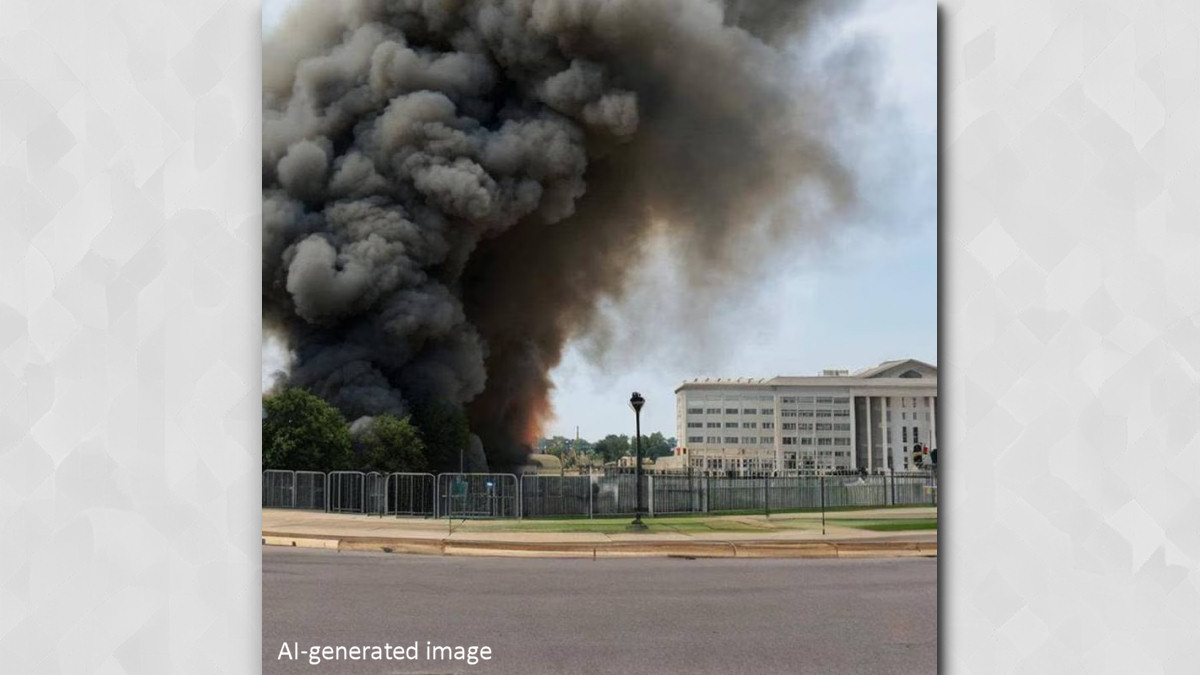
A fake AI-generated image of an
Enlarge / A fake AI-generated image of an “explosion” near the Pentagon that went viral on Twitter.

On Monday, a tweeted AI-generated image suggesting a large explosion at the Pentagon led to brief confusion, which included a reported small drop in the stock market. It originated from a verified Twitter account named “Bloomberg Feed,” unaffiliated with the well-known Bloomberg media company, and was quickly exposed as a hoax. However, before it was debunked, large accounts such as Russia Today had already spread the misinformation,  The Washington Post reported.

The fake image depicted a large plume of black smoke alongside a building vaguely reminiscent of the Pentagon with the tweet “Large Explosion near The Pentagon Complex in Washington D.C. — Inital Report.” Upon closer inspection, local authorities confirmed that the image was not an accurate representation of the Pentagon. Also, with blurry fence bars and building columns, it looks like a fairly sloppy AI-generated image created by a model like Stable Diffusion.

Before Twitter suspended the false Bloomberg account, it had tweeted 224,000 times and reached fewer than 1,000 followers, according to the Post, but it’s unclear who ran it or the motives behind sharing the false image. In addition to Bloomberg Feed, other accounts that shared the false report include “Walter Bloomberg” and “Breaking Market News,” both unaffiliated with the real Bloomberg organization.

This incident underlines the potential threats AI-generated images may present in the realm of hastily shared social media—and a paid verification system on Twitter. In March, fake images of Donald Trump’s arrest created with Midjourney reached a wide audience. While clearly marked as fake, they sparked fears of mistaking them for real photos due to their realism. That same month, AI-generated images of Pope Francis in a white coat fooled many who saw them on social media.

A screenshot of the "Bloomberg Feed" tweet about the reported explosion near the Pentagon that was later confirmed to be fake.
Enlarge / A screenshot of the “Bloomberg Feed” tweet about the reported explosion near the Pentagon that was later confirmed to be fake.

The pope in puffy coats is one thing, but when someone features a government subject like the headquarters of the United States Department of Defense in a fake tweet, the consequences could potentially be more severe. Aside from general confusion on Twitter, the deceptive tweet may have affected the stock market. The Washington Post says that the Dow Jones Industrial Index dropped 85 points in four minutes after the tweet spread but rebounded quickly.

Much of the confusion over the false tweet may have been made possible by changes at Twitter under its new owner, Elon Musk. Musk fired content moderation teams shortly after his takeover and largely automated the account verification process, transitioning it to a system where anyone can pay to have a blue check mark. Critics argue that practice makes the platform more susceptible to misinformation.

While authorities easily picked out the explosion photo as a fake due to inaccuracies, the presence of image synthesis models like Midjourney and Stable Diffusion means it no longer takes artistic skill to create convincing fakes, lowering the barriers to entry and opening the door to potentially automated misinformation machines. The ease of creating fakes, coupled with the viral nature of a platform like Twitter, means that false information can spread faster than it can be fact-checked.

But in this case, the image did not need to be high quality to make an impact. Sam Gregory, the executive director of the human rights organization Witness, pointed out to The Washington Post that when people want to believe, they let down their guard and fail to look into the veracity of the information before sharing it. He described the false Pentagon image as a “shallow fake” (as opposed to a more convincing “deepfake“).

“The way people are exposed to these shallow fakes, it doesn’t require something to look exactly like something else for it to get attention,” he said. “People will readily take and share things that don’t look exactly right but feel right.”

https://arstechnica.com/?p=1941475


Google bans Downloader app after TV firms complain it can load a pirate website

Screenshot of the Google home page displayed on Downloader, an Android app with a built-in browser.
Enlarge / The Downloader app that was suspended from Google Play.

The Google Play Store suspended an app that combines a web browser with a file manager after a Digital Millennium Copyright Act (DMCA) complaint pointed out that the app is capable of loading a piracy website—even though that same pirate website can be loaded on any standard browser, including Google Chrome.

The free app, which is designed for Android TV devices and is called Downloader, had been installed from Google Play over 5 million times before its suspension on Friday, an Internet Archive capture shows. The suspension notice that Google sent to Downloader app developer Elias Saba cites a complaint from several Israeli TV companies that said the app “allows users to view the infamous copyright infringing website known as SDAROT.”

Saba provided us with a copy of the suspension notice.

“You can see in the DMCA description portion that the only reason given is the app being able to load a website,” Saba told Ars. “My app is a utility app that combines a basic file manager and a basic web browser. There is no way to view content in the app other than to use the web browser to navigate to a website. The app also doesn’t present or direct users to any website, other than my blog at www.aftvnews.com, which loads as the default homepage in the web browser.”

Saba also detailed his frustrations with the takedown in a blog post and a series of tweets. “Any rational person would agree that you can’t possibly blame a web browser for the pirated content that exists on the Internet, but that is exactly what has happened to my app,” he wrote on his blog.

Downloader is still available on the Amazon app store for devices such as Fire TVs, or from the Downloader app’s website as an APK file.

It’s a “standard web browser,” developer says

Before being pulled from Google Play, the app’s description said that Downloader “allows Android TV owners to easily download files from the Internet onto their device. You can enter a URL which directly points to a file, or you can sideload the web browser plugin to download files from websites.”

“If loading a website with infringing content in a standard web browser is enough to violate DMCA, then every browser in the Google Play Store including @googlechrome should also be removed. It’s a ridiculous claim and an abuse of the DMCA,” Saba wrote on Twitter.

According to the app suspension notice, the DMCA complaint was submitted to Google by a law firm representing HOT Telecommunications Systems, DBS Satellite Services, United King Video, and Charlton. The complaint says an “Isareli [sic] court” and a US federal court issued permanent injunctions against the site, though the Sdarot website is still online at the URL cited in the DMCA complaint.

In April 2022, a US District Court judge in New York ordered all Internet service providers in the United States to block Sdarot and two other pirate services. The blocking order issued to ISPs was later stayed, but a permanent injunction was issued against the website operator.

App maker’s appeal rejected

Google’s notice to Saba said that his “app contains content that doesn’t comply with the Unauthorized Use of Copyrighted Content policy… Your app has been suspended and removed due to alleged copyright infringement (according to the terms of the Digital Millennium Copyright Act).”

Saba said he filed appeals on Friday through the Google Play Console and Google’s DMCA counter notification form. Saba’s Google Play Console appeal was rejected within about an hour, but he’s still waiting for a response to the appeal filed via Google’s DMCA counter notification form, he told Ars today.

“We’ve reviewed your appeal request but we’re still unable to reinstate your app,” the Google Play appeal rejection notice said on Friday.

We contacted Google about the app suspension today and will update this article if we get a response. The suspension of Downloader was previously reported by TorrentFreak.

Saba is hoping public attention will cause Google to change course. “I appealed the app suspension with Google and was rejected within minutes. Please retweet this and reach out to Google anyway you can because I don’t know what else to do at this point,” he wrote.

https://arstechnica.com/?p=1941388