Musk says he’ll keep tweeting whatever he wants, even if it repels advertisers

Musk says he’ll keep tweeting whatever he wants, even if it repels advertisers

“I’m allowed to say what I want,” Elon Musk said yesterday during a CNBC interview with journalist David Faber. Faber had asked Musk about the impact of his personal tweets on Twitter advertisers and other onlookers, pointing to Musk’s most recent tweets, which critics viewed as antisemitic, The Washington Post reported.

In the controversial tweets, Musk compared George Soros, a Jewish-born investor and philanthropist, to Marvel’s Jewish supervillain Magneto and claimed that Soros “hates humanity” and “wants to erode the very fabric of civilization.”

Musk disputed the characterization of these tweets as antisemitic, telling Faber, “I’m like a pro-semite, if anything.” He then made it clear that he didn’t want to talk further about Soros.

Pivoting the conversation, Faber next asked Musk if incoming Twitter CEO Linda Yaccarino might influence Musk to stop tweeting some of his most divisive opinions—especially if those statements alienate advertisers. In response, Musk misquoted the movie Princess Bride, saying, “Offer me money. Offer me power. I don’t care.”

“I’ll say what I want to say, and if the consequence of that is losing money, so be it,” Musk told Faber.

Still, Musk—who historically has not been shy about expressing disdain for advertising—admitted to Faber that Twitter is “very much an advertising-dependent business.” He said that Yaccarino, whom AdWeek once dubbed an “ad sales queen,” would be “incredible” at maintaining that part of Twitter’s business, which he previously sought to decrease Twitter’s reliance on by pivoting to subscriptions.

Many have speculated that Yaccarino will struggle to work with Musk because, as Bloomberg reported in March, “Musk’s own behavior on Twitter” is “one of the biggest barriers” to advertisers “spending more” on Twitter.

That report cited estimates from research firm Pathmatics, showing that according to Sensor Tower data in January and February, there was an 89 percent decline in ad spending from the top 10 Twitter advertisers.

Sensor Tower senior insights analyst Abe Yousef gathered more recent data for Ars, showing that in the first quarter of 2023, six out of the top 10 categories of US advertisers on Twitter spent significantly less on the platform, decreasing ad spending in those categories by a collective average of 53 percent, year over year.

According to Sensor Tower estimates, approximately 42 of the top 100 Twitter advertisers have ceased spending, including brands like Best Buy, Procter & Gamble, Ford, GM, and Volkswagen. Although some brands like Mondelez and Eli Lilly have returned to Twitter, they’re now spending less than they were prior to Musk’s takeover. In April, Sensor Tower estimates show that Mondelez’s spending is down by 84 percent and Eli Lilly’s by 63 percent compared to October 2022. Both of those advertisers were impacted by Twitter’s fake accounts scandal during Twitter Blue’s initial rollout. These declines in advertising spending can be specifically attributed to “internal strife at the company,” Sensor Tower reported, as well as “competitive headwinds” and “a softening ad market.”

However, in the midst of this advertiser exodus and Musk’s continued controversial tweeting, Yaccarino publicly has supported Musk, including tweeting praise for his CNBC interview. This seems to suggest that she’s ready to defend Musk from any brand’s criticism of his personal tweeting—which she has seemingly approvingly called “prolific.”

Twitter does not respond to requests for comment. Ars could not immediately reach Yaccarino for comment.

https://arstechnica.com/?p=1939946


Verizon abandons its confusing mess of six “unlimited” wireless plans

A Verizon 5G sign.
Getty Images | Bloomberg

Verizon is replacing its confusing mess of six “unlimited” wireless plans with a slightly less confusing menu of options.

Starting tomorrow when the new plans roll out, customers selecting a new plan will have two primary choices. Only the more expensive option will include access to the fastest portions of Verizon’s 5G network, and certain perks that used to be included in the base prices will be sold as optional add-ons.

Verizon claimed in an announcement that its new lineup “redefines wireless freedom” and brings “an end to bloated bundles.” But evaluating the new plans and optional add-ons won’t be entirely straightforward and service could be more expensive for at least some customers.

“If a new Verizon customer wanted to re-create what used to be Verizon’s highest-tier unlimited plan, it would end up costing more than it previously did, said Roger Entner, founder of Recon Analytics,” according to The Wall Street Journal.

“The way to get people to spend more is typically not through a math exercise,” Entner said. Financial analysts at KeyBanc Capital Markets wrote in a note to investors that trying to convince customers to pay more for faster 5G on Verizon’s mid-band spectrum “is likely a losing battle as consumers are likely aware other providers will provide mid-band 5G” at no extra charge, according to Light Reading.

Unlimited Welcome has notable limits

Verizon unlimited wireless plans

(Ars Technica may earn compensation for sales from links on this post through affiliate programs.)

The cheaper of Verizon’s two new options is called Unlimited Welcome—not to be confused with the current “Welcome Unlimited” plan. Unlimited Welcome will cost $65 a month plus taxes and fees for one line or as little as $27 per line for family plans with at least five users. The pricier Unlimited Plus option will cost $80 a month for a single line or as little as $42 per line for plans with at least five users.

Unlimited Plus is required to access what Verizon calls its 5G Ultra Wideband network. Ultra Wideband provides faster speeds from Verizon’s widely available C-Band spectrum and from the millimeter-wave spectrum that’s available in very limited areas. Unlimited Welcome will get access to 5G but not the Ultra Wideband variety, so it won’t provide as big of an upgrade over 4G speeds.

“Unlike others, Unlimited Plus has no smartphone data caps, won’t slow you down, and won’t deprioritize your data,” Verizon said.

Another big limit on the entry-level Unlimited Welcome plan is that it has no access to mobile hotspot usage—both plans allow unlimited phone data usage, but hotspot usage is limited on the more expensive plan and non-existent on the cheaper one. The more expensive plan includes 30GB of high-speed hotspot usage each month and slower hotspot speeds after the hotspot cap is reached.

If you go past the 30GB hotspot cap, you’ll get speeds up to 3Mbps on 5G Ultra Wideband for the rest of the month or up to 600kbps on non-Ultra Wideband 5G or 4G LTE.

https://arstechnica.com/?p=1939952


Twitter sued over Saudi spying that allegedly landed popular user in prison

Twitter sued over Saudi spying that allegedly landed popular user in prison

While based in the United States from 2008 to 2014, human rights activist Abdulrahman Al-Sadhan tweeted critically about the Kingdom of Saudi Arabia (KSA) to more than 160,000 followers. After he returned to Saudi Arabia in 2015, his anonymous account allegedly became unmasked by former Twitter employees who were charged with conspiring with the Saudi regime to silence dissidents. Now, his sister, Areej Al-Sadhan, is suing Twitter for allegedly violating its terms of service and giving her brother’s “identifying information to the government of Saudi Arabia” when his Twitter speech should’ve been protected.

“This puts every Twitter user at risk,” Areej alleged in an affidavit supporting her complaint. “As a result, Saudi Arabia kidnapped, tortured, imprisoned, and—through a sham trial— sentenced my brother to 20 years in prison, simply for criticizing Saudi repression on his Twitter account.”

Areej is a US citizen who alleges that she has been stalked, threatened, and targeted by the KSA ever since she began speaking out on her brother’s behalf—including on Twitter, where her account currently has nearly 15,000 followers. She filed the lawsuit on behalf of Abdulrahman in a US district court in San Francisco, claiming that her brother is an incompetent (unable to help their attorney) because he disappeared after the KSA sentenced him to prison and thus cannot defend himself. He has not been heard from since 2021, the lawsuit said.

“The Saudi government has since denied him contact with his family or access to his attorney,” Areej said in her affidavit. “I am not sure if he is alive. After I began to speak out against Saudi repression, my life became a living hell.”

Twitter’s privacy policy, the lawsuit noted, said in 2015 that Twitter would not share private user information, possibly lulling Abdulrahman into a false sense of security that he’d never be connected to his critical tweets:

We may share or disclose your non- private, aggregated or otherwise non-personal information, such as your public user profile information, public Tweets, the people you follow or that follow you, or the number of users who clicked on a particular link (even if only one did), or reports to advertisers about unique users who saw or clicked on their ads after we have removed any private personal information (such as your name or contact information).

“Another provision of the policy states that Twitter will preserve user information ‘if we believe that it is reasonably necessary … to protect the safety of any person.'” Areej’s lawyers noted.

In 2019, however, former Twitter employees, Ahmad Abouammo and Ali Alzabarah, were formally charged with spying for the Saudi government after going against Twitter’s privacy agreement and sharing private user data.

Areej’s case builds on that prior case, alleging that former Twitter employees “unlawfully transmitted back the names, birthdates, device identifiers, phone numbers, IP addresses, and session IP histories associated with” approximately 6,000 accounts tweeting critically about the Saudi regime. In total, the ex-employees allegedly accessed data 30,892 times and shared confidential information on anonymous users like Abdulrahman.

“Each time they accessed this user data, they committed a racketeering act in aid of the Saudi Criminal Enterprise’s goal of transnational repression,” Areej’s lawsuit alleged, which is a violation of the Racketeering Influenced and Corrupt Organizations (RICO) Act.

Twitter will likely take the position that its employees acted covertly and that their spying was not approved, The Washington Post reported. But Areej’s complaint alleged that the FBI alerted Twitter to the Saudi spying as early as 2015 and Twitter was financially motivated to look the other way because KSA is its most important market in the Middle East.

Also in 2015, then-Twitter CEO Jack Dorsey met Saudi Crown Prince Mohammed bin Salman—who later “approved an operation in Istanbul, Turkey to capture or kill Saudi journalist Jamal Khashoggi” in 2018—to discuss training and qualifying Saudi employees, the lawsuit said. The KSA has also heavily invested in Twitter, becoming Twitter’s second-largest shareholder behind Elon Musk, the lawsuit said.

According to Areej’s lawyer, Jim Walden, allowing the KSA to infiltrate US businesses to commit “flagrant acts of transnational repression” is an “utter failure of US policy.”

“As long as we lay idle while the rights of Americans and their families are trampled, authoritarian regimes like Saudi Arabia will continue to penetrate US business and to use them as weapons for their criminality,” Walden told Ars. “We look forward to holding Twitter and the Saudi regime to account.”

Areej has asked for a jury trial, where damages will be assessed for alleged injuries, including severe financial and professional harm for Areej and severe physical and mental pain, suffering, and anguish for Abdulrahman.

The last time Areej’s family saw Abdulrahman, the complaint said, he had “trouble walking and focusing, his toenails were missing, his hand was mutilated, and his body showed other signs of torture.” KSA’s secret police allegedly “gloated about obtaining confidential information” from Twitter and broke Abdulrahman’s hand, taunting, “this is the hand you write and tweet with.”

https://arstechnica.com/?p=1939716


AI technology “can go quite wrong,” OpenAI CEO tells Senate

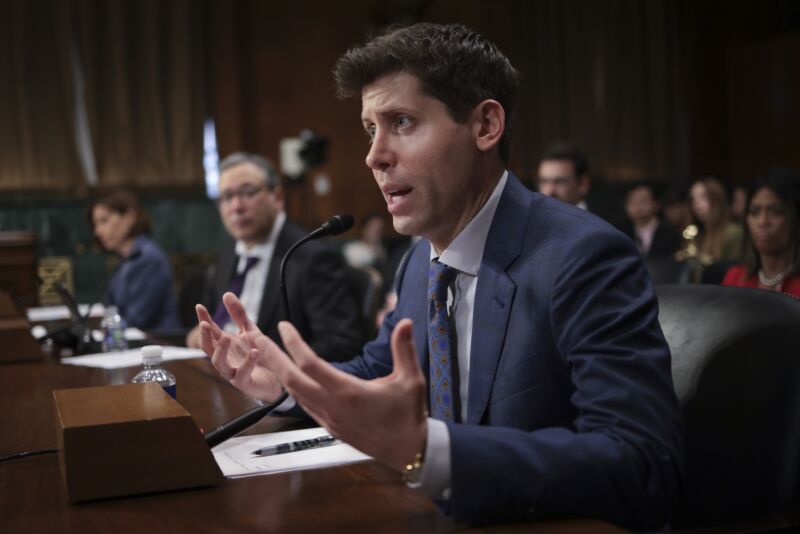
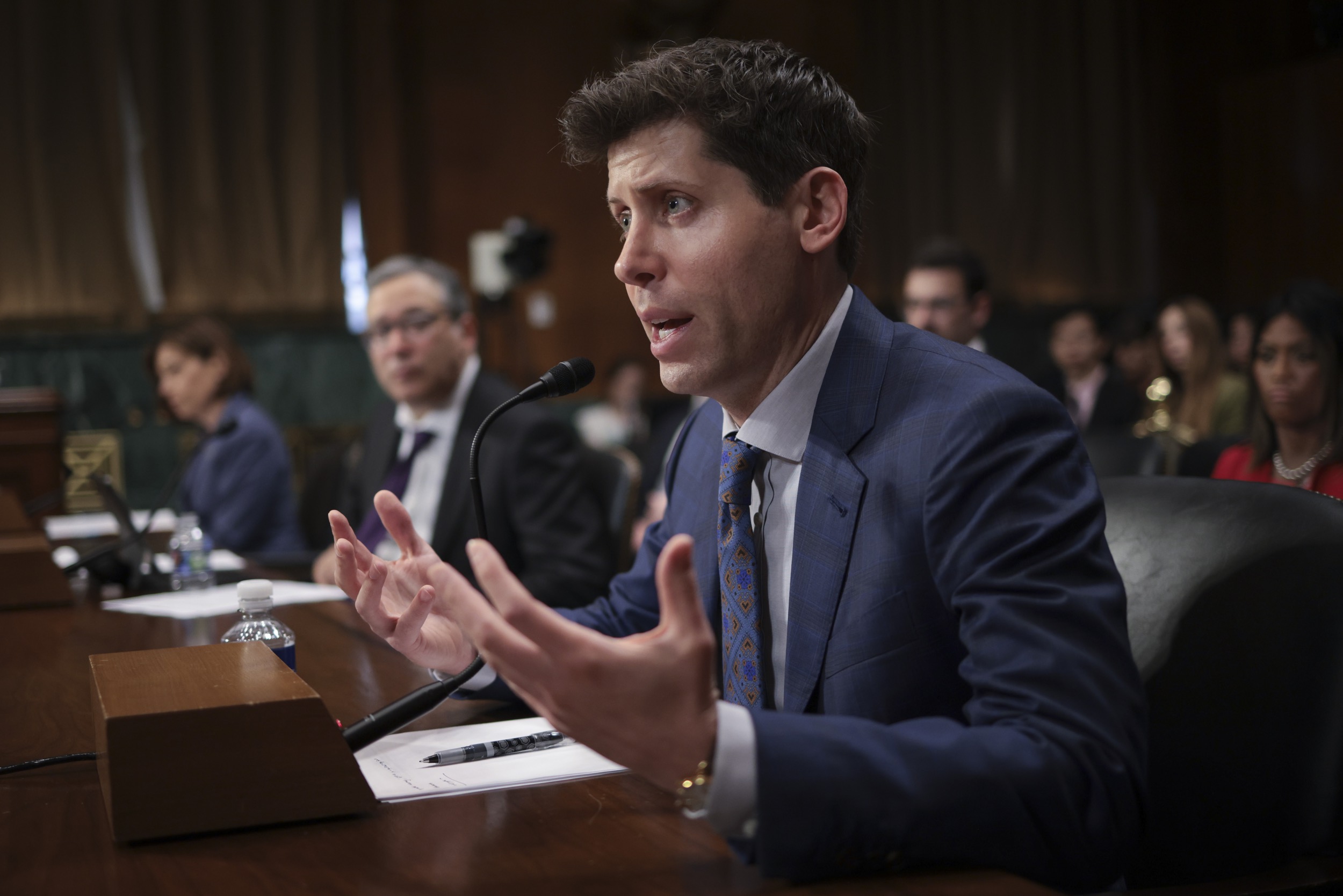
OpenAI CEO Sam Altman sits at a table and speaks into a microphone while testifying in a Senate hearing.
Enlarge / OpenAI CEO Sam Altman testifies about AI rules before the Senate Judiciary Subcommittee on Privacy, Technology, and the Law on May 16, 2023, in Washington, DC.
Getty Images | Win McNamee

OpenAI CEO Sam Altman testified in the US Senate today about the potential dangers of artificial intelligence technology made by his company and others, and urged lawmakers to impose licensing requirements and other regulations on organizations that make advanced AI systems such as OpenAI’s GPT-4.

“We think that regulatory intervention by governments will be critical to mitigate the risks of increasingly powerful models,” Altman said. “For example, the US government might consider a combination of licensing and testing requirements for development and release of AI models above a threshold of capabilities.”

While Altman touted AI’s benefits, he said that OpenAI is “quite concerned” about elections being affected by content generated by AI. “Given that we’re going to face an election next year and these models are getting better, I think this is a significant area of concern… I do think some regulation would be quite wise on this topic,” Altman said.

Altman was speaking at a hearing held by the Senate Judiciary Committee’s Subcommittee on Privacy, Technology, and the Law. Also testifying was IBM’s chief privacy and trust officer, Christina Montgomery.

“IBM urges Congress to adopt a precision regulation approach to AI,” Montgomery said. “This means establishing rules to govern the deployment of AI in specific use cases, not regulating the technology itself.” Montgomery said that Congress should clearly define the risks of AI and impose “different rules for different risks,” with the strongest rules “applied to use cases with the greatest risks to people and society.”

AI tech “can go quite wrong”

Several lawmakers commented on OpenAI and IBM’s willingness to face new rules, with Sen. Dick Durbin (D-Ill.) saying it’s remarkable that big companies came to the Senate to “plead with us to regulate them.”

Altman suggested that Congress form a new agency that licenses AI tech “above a certain scale of capabilities and could take that license away to ensure compliance with safety standards.” Before an AI system is released to the public, there should be independent audits by “experts who can say the model is or isn’t in compliance with these stated safety thresholds and these percentages on questions X or Y,” he said.

Altman said he is worried that the AI industry could “cause significant harm to the world.”

“I think if this technology goes wrong, it can go quite wrong, and we want to be vocal about that,” Altman said. “We want to work with the government to prevent that from happening.”

Altman said he doesn’t think burdensome requirements should apply to companies and researchers whose models are much less advanced than OpenAI’s. He suggested that Congress “define capability thresholds” and place AI models that can perform certain functions into the strict licensing regime.

As examples, Altman said that licenses could be required for AI models “that can persuade, manipulate, influence a person’s behavior, a person’s beliefs,” or “help create novel biological agents.” Altman said it would be simpler to require licensing for any system that is above a certain threshold of computing power, but that he would prefer to draw the regulatory line based on specific capabilities.

OpenAI consists of both nonprofit and for-profit entities. Altman said that OpenAI’s GPT-4 model is “more likely to respond helpfully and truthfully and refuse harmful requests than any other model of similar capability,” partly due to extensive pre-release testing and auditing:

Before releasing any new system, OpenAI conducts extensive testing, engages external experts for detailed reviews and independent audits, improves the model’s behavior, and implements robust safety and monitoring systems. Before we released GPT-4, our latest model, we spent over six months conducting extensive evaluations, external red teaming, and dangerous capability testing.

Altman also said that people should be able to opt out of having their personal data used for training AI models. OpenAI last month announced that ChatGPT users can now turn off chat history to prevent conversations from being used to train AI models.

People shouldn’t be “tricked” into interacting with AI

Montgomery pitched transparency requirements, saying that consumers should know when they’re interacting with AI. “No person anywhere should be tricked into interacting with an AI system… the era of AI cannot be another era of move fast and break things,” she said.

She also said the US should quickly hold companies accountable for deploying AI “that disseminates misinformation on things like elections.”

Senators heard from Gary Marcus, an author who founded two AI and machine learning companies and is a professor emeritus of psychology and neural science at New York University. He said at today’s hearing that AI can create persuasive lies and provide harmful medical advice. Marcus also criticized Microsoft for not immediately pulling the Sydney chatbot after it exhibited alarming behavior.

“Sydney clearly had problems… I would have temporarily withdrawn it from the market and they didn’t,” Marcus said. “That was a wake-up call to me and a reminder that even if you have companies like OpenAI that is a nonprofit… other people can buy those companies and do what they like with them. Maybe we have a stable set of actors now, but the amount of power that these systems have to shape our views and lives is really significant, and that doesn’t even get into the risks that someone might repurpose them deliberately for all kinds of bad purposes.”

https://arstechnica.com/?p=1939679


We can ID people from DNA that shows up in environmental studies

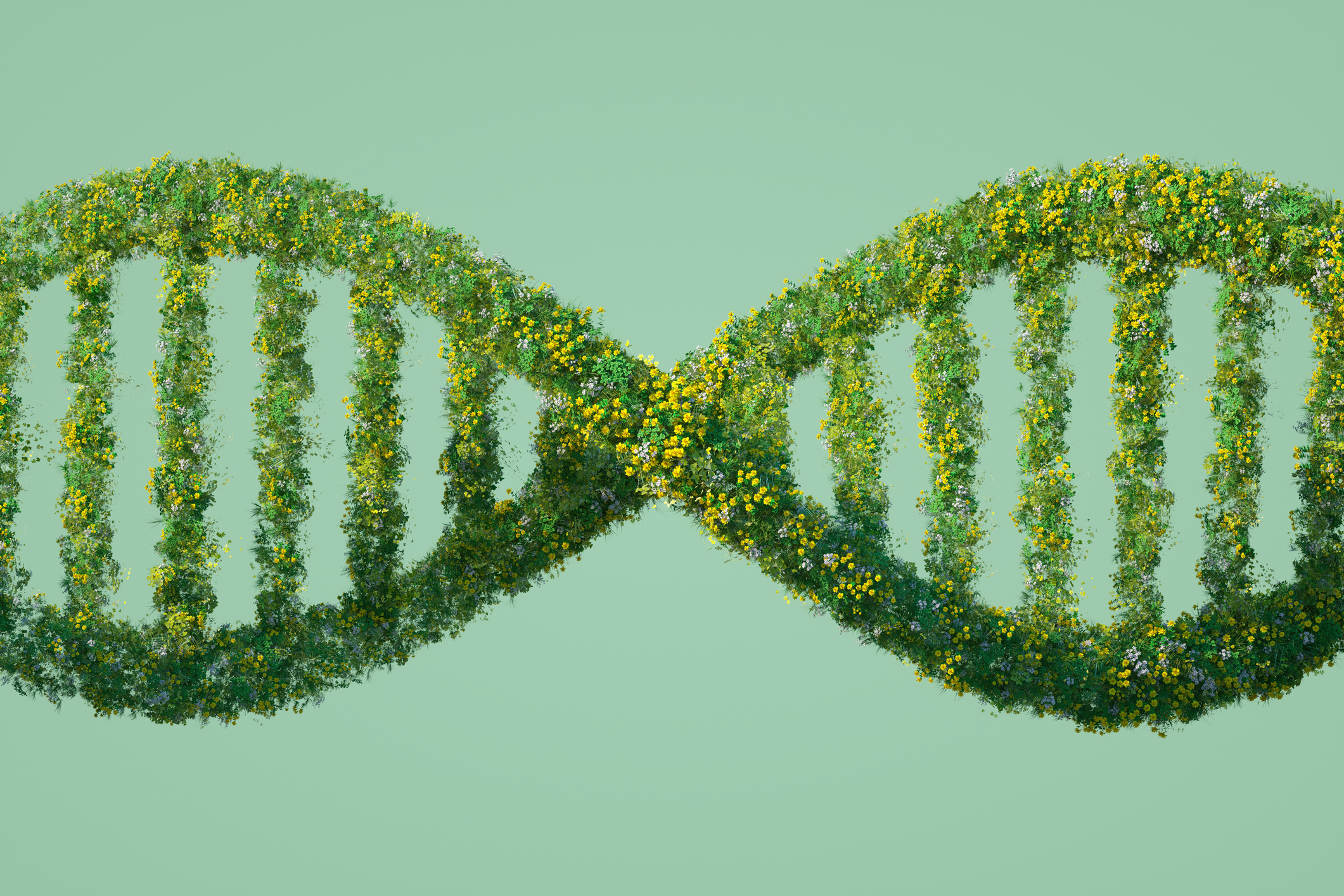
Image of a DNA molecule formed from shrubbery.
Enlarge / People may accidentally sequence your DNA while trying to study something else entirely.

It used to be that if you wanted to find a DNA sequence in a particular sample, you had to go searching for that specific sequence—you had to fish it out with a hook designed especially to catch it. But no more. DNA sequencing technology has advanced to the point where you can take a sample from almost any environment—a drop of water, an ice core, a scoop of sand or soil, even air—and just see whatever DNA is in there.

This provides a non-invasive way to study wild populations and invasive or endangered species and has been used to monitor for pathogens (SARS-CoV-2, mpox, polio, tuberculosis) in wastewater. But guess who else’s DNA is in those environmental samples? Yup. Ours.

Something identifiable in the air

Liam Whitmore is a zoologist and conservationist who studies green turtles. He and his colleagues realized that having human DNA slip into research samples might be an issue, so they looked to see if they could find any in old water and sand samples they had taken as part of a wildlife and pathogen monitoring study. They did. Then they went intentionally searching for specific human sequences, and, in water, sand, and air samples, they found plenty of genomic regions that could identify a person’s ancestry and susceptibility to several diseases. They didn’t go so far as to identify individuals but noted that someone probably could compare these sequences to public genetic data without too much difficulty.

This is not the first time conservationists have had to contend with inadvertently collecting sensitive human data; mics and cameras set up to study wildlife can also record human voices and images. Data filtering can alleviate some of the privacy and consent concerns this raises, but things are stickier with DNA. So Whitmore and company very responsibly outlined some of the potential problems as well as some potential benefits of their findings, rather than leaving it up to policymakers and regulators and ethicists to sort it out later (i.e., too late).

The findings raise questions about best practices for these sorts of studies. In the US and the European Union, federally funded researchers intending to work with identifiable human DNA samples must first get approval from their institutional review board (which Whitmore did) and also get written informed consent from participants. But consent is impossible to obtain when the DNA is captured inadvertently in the environment.

Environmental DNA sequences are often deposited into public databases, as well. Since we now recognize that they contain human DNA, can/should this still be the case?

Beyond bureaucratic concerns, there are a host of malicious uses for this human genomic bycatch. Bad guys can use it for location tracking and surveillance of individuals or, perhaps more distressingly, target populations, without their knowledge or consent. Commercial appropriation of this tracking and surveillance data is almost the most benign application one can imagine for it. Wastewater monitoring for pathogens arrived with COVID-19, but the significant legal and privacy issues regarding its use have barely been addressed. Now that identifiable human DNA can be isolated from air, these issues really need to get hammered out.

Good and bad

But the DNA that we are constantly shedding and leaving all around us could also be used for good. That same pathogen monitoring could be correlated with human DNA that identifies susceptible populations, helping to protect them. Human genomic bycatch could be used to continually monitor for cancer-causing mutations, which arise and accumulate over a person’s lifetime. It could be used to add genetic information from underrepresented populations to genomic databases that still lack them or to find undiscovered sites of human habitation that archeologists have not yet uncovered. And environmental DNA samples could be used to find missing persons, both victims and suspects. Gaining these benefits while maintaining privacy will require a careful balancing act.

As Natalie Ram, a legal scholar who works at the intersection of law and genetic privacy, put it in an accompanying paper: “To be sure, solving crime is a good thing. But exploiting involuntarily shed genetic information for investigative aims risks putting all of us under perpetual genetic surveillance.” She highlighted that law enforcement has repeatedly demonstrated that they could not possibly be keener to use genetic information gathered for other purposes, like consumer genetic testing and even newborn screening (!!) and that, in the US at least, “most lower courts have held that individuals have no constitutional privacy rights in the DNA they unintentionally and inevitably shed as they move through the world.”

We know that we leave genetic material all over the world; that’s hardly news. But now anyone who has the desire and the means can collect and use or misuse it. This means that all of the thorny, complicated questions that arose with DNA sequencing technology have become even more pressing.

Nature Ecology & Evolution, 2023. DOI: 10.1038/s41559-023-02056-2, 10.1038/s41559-023-02072-2

https://arstechnica.com/?p=1939649


Musk defends enabling Turkish censorship on Twitter, calling it his “choice”

Turkish President Recep Tayyip Erdogan (L) shakes hands with Elon Musk during a meeting in Ankara on November 8, 2017.
Enlarge / Turkish President Recep Tayyip Erdogan (L) shakes hands with Elon Musk during a meeting in Ankara on November 8, 2017.

This weekend, Twitter restricted access to some tweets in Turkey at the request of the Turkish government ahead of its next presidential election. Twitter’s compliance silenced accounts that had been critical of the Turkish government, Business Insider reported. It also prompted a wave of criticism directed at Twitter CEO Elon Musk, who seemingly once again abandoned his free speech principles to comply with the Turkish government order.

Musk defended his decision, arguing that “the choice is have Twitter throttled in its entirety or limit access to some tweets.” Some troubled Twitter users suggested that authoritarian governments could see this response as a signal that Twitter will help them silence opponents any time that they threaten to ban the platform regionally. Others felt that Twitter could have been more transparent about Turkey’s request.

An official Twitter account confirmed that all account holders impacted by the takedown request were informed and that those users’ tweets would be “available in the rest of the world.” Musk also claimed that, for transparency reasons, he would post the takedown notice that Twitter received from Turkey, but that seemingly never happened.

Among Musk’s critics was Wikipedia co-founder Jimmy Wales, who tweeted that Musk could have defended free speech in Turkey, as Wikipedia did after Turkey banned Wikipedia from 2017 to 2020. Rather than bend to a Turkish government request to remove an article on state-sponsored terrorism, Wikipedia fought Turkey in the country’s highest court until the ban was lifted, Insider reported.

One Twitter user pointed out that Twitter’s status as a for-profit company differs from Wikipedia’s status as a nonprofit, but that only made Wales question Musk’s decisions more.

“If Elon is now saying, ‘We don’t care about freedom of expression if it interferes with making money,’ then he should just say that,” Wales tweeted.

Twitter and Wikipedia did not respond to Ars’ request for comment. Wikipedia reports that Wales’ role is “continually changing,” but “his direct involvement in the running of the site has decreased considerably.”

Musk’s goal was seemingly to keep Twitter active in Turkey before the election. An Indiana University Bloomington researcher focused on social media manipulation, Tuğrulcan Elmas, told Insider that Twitter restricting access to a handful of accounts that the Turkish government dislikes likely wouldn’t endanger the election. Elmas argued that those users could still use other platforms to spread their messaging or leverage VPN tools to skirt the Twitter restrictions.

Vanity Fair reported that an investigative journalist censored by Twitter this weekend, Cevheri Güven, told the Turkish Minute, “It’s a disgrace to democracy and freedom of expression that Twitter has caved to” Turkey president Recep Tayyip Erdoğan.

Earlier this year, Rest of World reported that Twitter was complying with more government takedown requests under Musk than ever—finding that Musk had not refused a single request and had fully complied 80 percent of the time. Some of these requests asked Twitter to remove controversial posts, while others asked for private user data to attempt to identify anonymous users. In the year before Musk’s tenure as CEO, Twitter seemingly had a slightly stronger backbone, rejecting eight requests.

Musk, in particular, has a relationship with Erdoğan, whom The Atlantic described as making Turkey authoritarian again. The pair met in 2017, The Washington Post reported, and SpaceX signed a deal with Turkey in 2021. The next year at the World Cup, Musk and Erdoğan shook hands, the Post reported. Just last month, Insider reported, SpaceX assisted Turkey in a satellite launch, and critics believe that Musk’s dealings with Erdoğan may have prompted Twitter’s easy compliance with the most recent takedown request, seemingly intended to silence Erdoğan’s detractors ahead of his re-election bid.

US Representative Adam Schiff (D-Calif.) tweeted his disapproval of the censorship in Turkey.

“The day before a critical election in Turkey, Twitter appears to be acquiescing to the demands of the country’s autocratic ruler, Erdogan, and is censoring speech on the platform,” Schiff tweeted. “Given Twitter’s total lack of transparency, it is hard to avoid the conclusion that Musk’s promises of free speech have again fallen away.”

https://arstechnica.com/?p=1939412


Musk loses free speech court battle; Tesla to keep pre-screening tweets

Musk loses free speech court battle; Tesla to keep pre-screening tweets

Tesla CEO Elon Musk hoped that the Securities and Exchange Commission (SEC) would narrow or possibly even end the terms of a 2018 securities fraud settlement that require a lawyer to review his Tesla tweets before he posts them. Instead, a federal appeals court today rejected Musk’s claims that the SEC’s consent decree violated his First Amendment rights by placing a prior restraint on his speech.

This means Musk is stuck with what his lawyers called a “government-imposed muzzle” on his Tesla tweets.

The SEC’s consent decree came after a controversial Musk tweet claiming that he was considering taking Tesla private after allegedly securing funding—a tweet that caused investors to lose billions.

Under the agreement, Tesla’s general counsel or an in-house securities lawyer must pre-approve Musk’s tweets whenever the Tesla CEO discusses Tesla’s financial condition, potential mergers, production numbers or sales, new or proposed business lines, unpublished projections or forecasts or estimates, and other terms. A majority of shareholders can also stop Musk from tweeting about any topic they believe would move the market and potentially threaten their interests.

Musk had tried to argue that the required screening of his tweets constituted a “bad-faith” move by the SEC that made complying with the consent decree “substantially more onerous.” Today’s court order rejected that argument, however, partly because the SEC had only “opened just three inquiries into Musk’s tweets since 2018” and found that “each tweet plausibly violated the terms of the consent decree.”

“We see no evidence to support Musk’s contention that the SEC has used the consent decree to conduct bad-faith, harassing investigations of his protected speech,” the order said.

Further, because Musk had voluntarily signed the consent decree, accepting the tweet-screening terms, he essentially waived his First Amendment rights, the court order said.

“Had Musk wished to preserve his right to tweet without even limited internal oversight concerning certain Tesla-related topics, he had ‘the right to litigate and defend against the [SEC’s] charges’ or to negotiate a different agreement—but he chose not to do so,” the court order said.

It’s possible that Musk agreed to the terms because he didn’t expect them to be easily enforced. Since Musk agreed to have his tweets muzzled, the SEC has said that it has struggled to enforce the consent decree, confronting Musk in 2019 and then again in 2021 to express concerns that Musk’s tweets were not being reviewed.

The court concluded that “the SEC’s limited, appropriate inquiries in this case have not made compliance with the consent decree ‘substantially more onerous’ than could have been reasonably anticipated when Musk agreed to the consent decree’s terms.”

Finally, the court also rejected Musk’s assertion in his appeal that it was in the public’s interest to modify the terms of his consent decree.

“If anything, it cuts in the other direction, given the importance of the public’s interest in the enforcement of federal securities laws,” the order said.

This doesn’t mean Musk has given up on fighting the tweet screening. His lawyer, Alex Spiro, told Reuters that “we will seek further review and continue to bring attention to the important issue of the government constraint on speech.”

https://arstechnica.com/?p=1939292


The challenges and promises of climate lawsuits

Climate change demonstrators in Switzerland
Enlarge / Shareholders of the Swiss National Bank (SNB), join a demonstration against the central bank’s investments in the East African Crude Oil Pipeline (EACOP), ahead of the annual general meeting in Bern, Switzerland, on Friday, April 28, 2023.

Even the temperate, mountainous country of Switzerland isn’t immune to climate change. Sizzling heat waves are melting alpine glaciers, killing trees and fish and, in the cities, likely causing an uptick in human deaths.

Rosmarie Wydler-Wälti, who lives in Basel, is acutely aware of this. A woman in her 70s, she belongs to the demographic most vulnerable to heat-related death. To her, the government’s response to recent heat waves—cautioning seniors to stay in the shade during hot days, for instance — seemed like a Band-Aid. She wanted to see people tackling the problem’s root cause: countries like Switzerland not doing enough to curb emissions of planet-warming greenhouse gases.

With support from Greenpeace Switzerland, Wydler-Wälti and other members of a group of senior women climate activists filed a lawsuit against the Swiss government in 2016, demanding that the state curb emissions more quickly. They argued that the government, by not sticking to policies consistent with the worldwide goal of limiting warming to less than 2 degrees Celsius above pre-industrial temperatures, was threatening senior women’s fundamental human right to life. Indeed, many of the women involved ultimately reported having experienced heart palpitations, vomiting, swollen arms and legs and breathlessness during recent heat waves, and some reported having fainted.

Hundreds of lawsuits like these have been filed around the world in recent years, as activists, frustrated by the slow pace at which nations are acting to cut greenhouse gas emissions, have turned to the courts for help. The success rate has surprised many experts. Of those cases filed outside the United States—the focus of one analysis—dozens had outcomes that encouraged more aggressive climate action, according to a 2022 report from the Grantham Research Institute on Climate Change and the Environment at the London School of Economics and Political Science. In one landmark case that concluded in 2019, for example, Dutch courts ordered the government to set more ambitious climate targets.

But such cases don’t always succeed. To Wydler-Wälti’s disappointment, after a series of courts dismissed the case, the Swiss Supreme Court concluded in 2020 that the women’s rights hadn’t been violated severely enough to merit a case. “We would have to be half dead for them to believe that we’re particularly affected,” Wydler-Wälti says angrily.

This map shows cumulative figures (up to May 31, 2022) of climate cases filed before national courts. By far the most have been filed in the United States, perhaps because the majority of US cases have been against individual infrastructure projects, not overarching government policies.
Enlarge / This map shows cumulative figures (up to May 31, 2022) of climate cases filed before national courts. By far the most have been filed in the United States, perhaps because the majority of US cases have been against individual infrastructure projects, not overarching government policies.

Examining why some cases succeed while others don’t is key to understanding the future of this rapidly growing field of litigation. Experts say that success hinges on many factors—not only on the plaintiffs’ arguments but also on the design of a country’s legal system, its political environment, and the apparent willingness and/or ability of judges to interpret the scientific evidence around climate change.

“One of the reasons it’s so important to look closely at these cases and the impact they’re having is because their impact is likely to only grow in the years to come, as people increasingly see litigation as an important way to address the problems of climate change,” says Hari Osofsky, a human rights law expert now at Northwestern University’s Pritzker School of Law, who in 2020 co-authored an overview of climate change litigation in the Annual Review of Law and Social Science.

That said, “litigation by itself is not going to close the emissions gap,” Osofsky adds. “Solutions to climate change require a lot of different kinds of action.”

https://arstechnica.com/?p=1938870


Google to pay $8M settlement for “lying to Texans,” state AG says

Google to pay $8M settlement for “lying to Texans,” state AG says

Google has agreed to an $8 million settlement with Texas over deceptive ads promoting its Pixel 4 smartphone, Texas Attorney General Ken Paxton announced today.

At issue was Google’s trustworthiness as an advertiser after the tech giant “hired radio DJs to record and broadcast detailed testimonials about their personal experiences with the Pixel 4,” but then “refused to provide the DJs with a phone for them to use,” Paxton said.

The tech giant had previously settled claims from the Federal Trade Commission and six other states for approximately $9 million, and Paxton seemed proud that his “settlement recovers $8 million for the State of Texas alone.”

Google did not immediately respond to Ars’ request for comment, but a company spokesperson previously told TechCrunch that “we take compliance with advertising laws seriously and have processes in place designed to help ensure we follow relevant regulations and industry standards.” [Update: Google spokesperson José Castañeda repeated Google’s prior statement to Ars, saying, “We are pleased to resolve this issue.”]

Paxton said that “if Google is going to advertise in Texas, their statements better be true.” He decided to take action to hold Google “accountable for lying to Texans for financial gain,” saying that large companies should not expect “special treatment under the law.”

“Texas will do whatever it takes to protect our citizens and our state economy from corporations’ false and misleading advertisements,” Paxton said.

It’s not the first time that Texas has clashed with Google. In 2020, Texas joined other states in filing a complaint against Google for allegedly “illegally maintaining monopolies in Internet search and search advertising services” in 2020. That complaint is ongoing, with Google this week filing a memo asking the court to deny states’ request to review select Google employees’ communications with its attorneys.

More recently, in 2022, Texas sued Google, “alleging that the tech giant has unlawfully captured and used the biometric data of millions of Texans without properly obtaining their informed consent to do so,” according to a press release. At that time, Paxton compared Google to a “modern Eye of Sauron.”

https://arstechnica.com/?p=1939110


YouTuber who crashed plane admits he did it for money and views

Screenshot from Trevor Jacob's YouTube video "I Crashed My Airplane."
Enlarge / Screenshot from Trevor Jacob’s YouTube video “I Crashed My Airplane.”

A YouTuber who deliberately crashed a plane to “gain notoriety and make money” has agreed to plead guilty to obstructing a federal investigation, the United States Department of Justice (DOJ) announced yesterday. In his plea agreement, California pilot Trevor Jacob admitted to “deliberately destroying” the plane wreckage and repeatedly lying to officials.

The crimes of destruction and concealment with intent to impede a federal investigation carry a maximum sentence of 20 years imprisonment and a potential fine of up to $250,000. The Los Angeles district court may impose a lesser sentence due to the plea deal, though.

Jacob is scheduled to appear in court in the coming weeks, the DOJ reported. A DOJ public information officer, Ciaran McEvoy, told Ars that Jacob has not yet pleaded guilty. After an initial court appearance—essentially a bond hearing—a change of plea hearing will be scheduled. If Jacob pleads guilty at that hearing, a federal judge will schedule a sentencing hearing several months later. From there, Jacob would meet with the US Probation Office, which will draft a confidential pre-sentencing report recommending the sentence that the office thinks he deserves. Jacob and the prosecutors can either agree or disagree with that sentencing report, and then, ultimately, a judge will determine what sentence is imposed.

Ars could not immediately reach Jacob or his lawyer for comment. [Update: Jacob’s lawyer, Keri Curtis Axel, told Ars, “Trevor is taking full responsibility for his mistake in judgment; he hopes to move past it and to use his status as a world-class action sports athlete, entrepreneur, and influencer to be a source for good in society.”]

Destroying and concealing plane crash evidence

A former Olympic snowboarder and experienced pilot and skydiver, Jacob hatched his scheme to allegedly deliberately crash his plane on November 24, 2021, after securing a sponsorship and agreeing to promote a company’s wallet in a video. The company has not been named, and there is no mention of wallets in the video titled “I Crashed My Airplane” that’s still viewable on YouTube.

[embedded content]
“I Crashed My Airplane.”

YouTube did not respond to Ars’ request to comment.

The video currently has 3.3 million views. It starts with a view of Jacob giddily flying over Los Padres National Forest in California.

About a minute and a half into the video, the plane’s propeller slows to a stop, and Jacob starts cursing. By the two-minute mark, he jumps out of the plane. Footage from cameras mounted on the plane shows the crash, and Jacob uses a selfie stick to film himself parachuting into a dry brush area, where he incurs minor injuries and is exposed to poison oak.

“I’m just kind of taking in what happened,” Jacob said in the video, which then shows him hiking to the crash site to retrieve his cameras before spending what appears to be a harrowing day attempting to find his way out of the wilderness.

“I’m scared,” Jacob told his approximately 100,000 subscribers when the video was posted. “I’m in trouble.”

However, in his plea agreement, Jacob admitted that he had “planned to eject from his aircraft during the flight and video himself parachuting to the ground and his airplane as it descended and crashed,” the DOJ reported.

https://arstechnica.com/?p=1939047