Google Bard hits over 180 countries and territories—none are in the EU

The Google Bard logo at Google I/O

On Wednesday, Google detailed the evolution of its Bard conversational AI assistant, including PaLM 2 and expanded availability. The list of 180 supported countries and territories excludes Canada and all of the European Union’s (EU) 27 member states. As the world grapples with how to juggle the explosive growth of generative AI chatbots alongside user privacy, there’s suspicion that the EU’s General Data Protection Regulation (GDPR) is at the center of the omission.

Google’s I/O event this week included flashy announcements around AI developments and expanding Bard access with added Japanese and Korean language support. However, some people quickly noticed that EU countries and The Great White North were not part of the news. This could change, as Google’s support page says the company will “gradually expand to more countries and territories in a way that is consistent with local regulations and our AI principles.”

In the meantime, Google hasn’t explained why it’s not yet bringing Bard to the EU, Canada, or any other excluded geography. However, the EU features more stringent data protection and user privacy policies than Google’s homeland. And the EU’s AI regulatory landscape is on the brink of transformation.

ChatGPT already had trouble in Italy

So what sort of policy violations could a conversational AI assistant like Bard present in the EU? For some quick ideas, we can look at what OpenAI just went through to get Italy’s temporary ban on ChatGPT lifted.

Italy has rather active privacy regulators and was one of the first countries to restrict access to an AI like ChatGPT. When announcing its temporary ban in April, the Italian government said ChatGPT had to comply with measures around “transparency, the right of data subjects—including users and non-users—and the legal basis of the processing for algorithmic training relying on users’ data.”

OpenAI eventually complied with measures like sharing an online form that lets users opt out and delete data from ChatGPT’s training algorithms. OpenAI also checks Italian users’ birth dates upon signup to ensure they’re either 18 or older or have parental permission. Further, OpenAI said it would try to educate users about ChatGPT through a publicity campaign with details like how users can decline to share data.

By not releasing Bard in the EU, Google can avoid jumping through similar hoops OpenAI faced to retain availability in Italy. GDPR’s looming presence presents a wave of questions about how something like Bard could function with compliance in the EU.

GDPR guarantees that when it comes to their own data, EU users have the right to: access, rectification, erasure, restriction of processing, data portability, and objection, as well as to reject automated decision-making, such as profiling. Companies risk fines if their AI training data is boxed off in a way that precludes EU users from these rights.

https://arstechnica.com/?p=1938950


Right-wing Twitter worried Musk’s CEO pick could return Twitter to its roots

Former NBCUniversal head of advertising Linda Yaccarino hired as Twitter CEO.
Enlarge / Former NBCUniversal head of advertising Linda Yaccarino hired as Twitter CEO.

After a cryptic tweet from Elon Musk indicating that he’d chosen his successor at Twitter, The Washington Post revealed that sources had confirmed that Twitter’s next CEO will be Linda Yaccarino.

Yaccarino was most recently head of advertising at NBCUniversal (NBCU). This morning, NBCU announced she was leaving “effective immediately.” Over 12 years at NBCU, Yaccarino advocated for improvements in how the company measured ad effectiveness and played a key role in launching the ad-supported Peacock streaming service, The Wall Street Journal reported. In a statement, Yaccarino said it was an “absolute honor” to lead her NBCU team, which she said changed “the entire industry.”

At Twitter, Yaccarino could help rekindle relationships with advertisers who abandoned the platform shortly after Musk took over. Advertisers were spooked by major changes to the platform that caused brand safety and cybersecurity concerns, including Twitter running major brands’ ads next to extremist tweets and causing brand damage by allowing accounts to buy blue checkmarks and pose as major brands.

Musk said Yaccarino would be starting at Twitter in approximately six weeks. Musk will be transitioning to roles overseeing product, software, and system operations as executive chair and chief technology officer.

“Foolish enough to take the job”

Musk’s search for Twitter’s next CEO started in December last year, when he tweeted that he would step down as soon as he found someone “foolish enough to take the job.” Many people doubted whether Musk could be convinced to cede control of Twitter, and some outlets are reporting that it’s unlikely much will change in that regard once Yaccarino comes on board. Musk will likely still have the final say over what happens on the platform, and Yaccarino will likely have to navigate Musk’s whims, which reportedly led past Twitter executives to exit the company.

Recent data from market intelligence firm Sensor Tower shows that many of Twitter’s top 100 advertisers before Musk took the reins are still estranged from the platform, the WSJ reported. During the first quarter of this year, 37 major brands spent nothing on Twitter, and 24 brands cut ad spending by 80 percent or more. These brands once accounted for most of Twitter’s revenue, and the WSJ reported that Yaccarino would face “immediate challenges” in wooing them back.

She may have the clout to do it, though. According to WSJ, Yaccarino is a tough negotiator who is already “tight” with marketers and ad agencies. At NBCU, Yaccarino forged brand partnerships with companies like Apple, Snapchat, and YouTube, and her team generated more than $100 billion in ad sales, The Post reported. Yaccarino’s relationship with Apple could be meaningful after Twitter clashed with Apple last December. Over a chaotic couple of weeks, Apple paused ad spending, and then Musk went on a Twitter rant against Apple after a “misunderstanding” about Twitter possibly being removed from Apple’s App Store. Musk eventually seemed to reconcile with Apple, which reportedly resumed advertising.

Yaccarino has not yet publicly commented on her new role as Twitter CEO.

“Conspiracy Twitter” protesting new CEO

On Twitter, some users have threatened to leave the platform over Yaccarino’s hiring. In tweets directed to Musk, BBC journalist Shayan Sardarizadeh described the backlash in a widely viewed tweet.

“Conspiracy Twitter is currently in meltdown after finding out Elon Musk’s likely Twitter CEO appointee Linda Yaccarino is an executive chair of the World Economic Forum, an organisation they view as one of the roots of all evil in the world,” Sardarizadeh tweeted.

Profiling Yaccarino, The Washington Post reported that these users fear Yaccarino will “return Twitter to its old ways or tamp down on Musk’s free-speech initiatives.” These fears may be unfounded, though, as Yaccarino’s past public comments showed seeming approval of Musk’s leadership style. Her Twitter bio says she is “driven by industry progress, inspired by provocative leadership.”

Yaccarino seemingly impressed Musk earlier this year at a Miami Beach marketing event, where they were featured keynote speakers discussing Twitter 2.0 and “what the future holds for marketers on the platform.” During the event, the WSJ reported that Yaccarino praised Musk as being “committed to being accessible to everyone for continual feedback” on Twitter. She also appeared to agree with Musk’s “freedom of speech” take on content moderation, which results in less content moderation overall and is one of the factors contributing to advertiser hesitancy to invest in the platform.

“If freedom of speech, as he says, is the bedrock of this country, I’m not sure there’s anyone in this room who could disagree with that,” Yaccarino said at the event.

Musk attempted to address Twitter users’ concerns over Yaccarino’s potential influence on the platform in a tweet yesterday evening.

“The commitment to open source transparency and accepting a wide range of viewpoints remains unchanged,” Musk tweeted.

https://arstechnica.com/?p=1938908


SBF says “dishonesty and unfair dealing” aren’t fraud, seeks to dismiss charges

SBF says “dishonesty and unfair dealing” aren’t fraud, seeks to dismiss charges

Late Monday, legally embroiled FTX founder Sam Bankman-Fried moved to dismiss the majority of criminal charges lobbed against him by the United States government after his cryptocurrency exchange went bankrupt in 2022.

In documents filed in a Manhattan federal court, lawyers from the law firm Cohen & Gresser LLP shared Bankman-Fried’s first official legal defense. Lawyers accused the US of a “troubling” and “classic rush to judgment,” claiming that the government didn’t even wait to receive “millions of documents” and “other evidence” against Bankman-Fried before “improperly seeking” to turn “civil and regulatory issues into federal crimes.”

After FTX’s collapse last year, federal prosecutors acted quickly to intervene, within a month alleging that Bankman-Fried was stealing billions in customer funds, defrauding investors, committing bank and wire fraud, providing improper loans, misleading lenders, transmitting money without a license, making illegal campaign contributions, bribing China officials, and other crimes. Through it all, Bankman-Fried has pleaded not guilty. Now, in his motion to dismiss, Bankman-Fried has requested an oral argument to “fight these baseless charges” and “clear his name.” He’s asking the court to dismiss 10 out of 13 charges, arguing that federal prosecutors have failed to substantiate most of their claims.

“The Government’s haste and apparent willingness to proceed without having all the relevant facts and information has produced an indictment that is not only improperly brought but legally flawed and should be dismissed,” Bankman-Fried’s lawyers argued in one of several memos filed yesterday.

Bankman-Fried’s lawyers also allege that—after extraditing Bankman-Fried from his home in the Bahamas—the US has failed to honor terms of an extradition treaty requiring that the Bahamas consent to all charges brought against Bankman-Fried.

“Bankman-Fried now faces charges on four counts that were not encompassed by the counts listed in the Bahamas’s Warrant of Surrender and to which the Bahamas has not consented,” his lawyers alleged in court filings.

Should the court decide not to dismiss the charges, Bankman-Fried has asked the court to try the charges of illegal campaign contributions and foreign bribery separately from the charges of fraud and conspiracy. His lawyers argue this would help “avoid undue prejudice,” because a jury “may use the evidence of one of the crimes charged” to find “his guilt of the other crime or crimes charged.”

In short, combining the charges could “tempt the jury” to “infer a criminal disposition” on “the part of Bankman-Fried,” Bankman-Fried’s lawyers wrote in a memo.

Additionally, Bankman-Fried’s lawyers want a chance to further develop Bankman-Fried’s defense. To that end, they’ve asked the court to compel federal prosecutors to share any withheld “communications or other documents” relating to Bankman-Fried’s extradition from the Bahamas, as well as additional discovery from FTX that goes beyond the incriminating evidence gathered so far by federal prosecutors.

“The Government has failed to provide the required discovery and particulars needed to defend the case,” Bankman-Fried’s lawyers argued in a memo.

Bankman-Fried could not immediately be reached for comment.

https://arstechnica.com/?p=1937826


Spotify ejects thousands of AI-made songs in purge of fake streams

Spotify on a phone with headphones

Spotify has removed tens of thousands of songs from artificial intelligence music start-up Boomy, ramping up policing of its platform amid complaints of fraud and clutter across streaming services.

In recent months the music industry has been confronting the rise of AI-generated songs and, more broadly, the growing number of tracks inundating streaming platforms daily.

Spotify, the largest audio streaming business, recently took down about 7 percent of the tracks that had been uploaded by Boomy, the equivalent of “tens of thousands” of songs, according to a person familiar with the matter.

Recording giant Universal Music had flagged to all the main streaming platforms that it saw suspicious streaming activity on Boomy tracks, according to another person close to the situation.

The Boomy songs were removed because of suspected “artificial streaming”—online bots posing as human listeners to inflate the audience numbers for certain songs.

AI has made this type of activity easier because it allows someone to instantly generate many music tracks, which can then be uploaded online and streamed.

Boomy, which was launched two years ago, allows users to choose various styles or descriptors, such as “rap beats” or “rainy nights,” to create a machine-generated track. Users can then release the music to streaming services, where they will generate royalty payments. California-based Boomy says its users have created more than 14 million songs.

Spotify confirmed it had removed some Boomy content. “Artificial streaming is a longstanding, industry-wide issue that Spotify is working to stamp out across our service,” the company said.

“We are always encouraged when we see our partners exercise vigilance around the monitoring or activity on their platforms,” said Michael Nash, Universal’s chief digital officer.

The crackdown comes as music industry power broker Lucian Grainge has spent the past few months speaking out about the proliferation of songs on platforms such as Spotify, where 100,000 new tracks are being added each day, and growing manipulation of the system.

Grainge, Universal’s chief executive, told investors last week that “the recent explosive development in generative AI will, if left unchecked, both increase the flood of unwanted content on platforms and create rights issues with respect to existing copyright law.”

While the use of artificial intelligence to create songs is not new, the issue has escalated to the forefront of conversations in the music industry in the past few months. The streaming boom has given rise to an array of services offering artists the chance to buy their way to success. A Google search for “buy Spotify streams” yields millions of results, with sites such as “spotistar.com” offering 1,000 Spotify plays for $6.

The Financial Times reported last month that Universal sent a letter to streaming services asking them to crack down on the use of generative AI on their platforms. That same week, a song that used AI to mimic Drake and The Weeknd’s voices went viral on streaming platforms.

Spotify’s chief executive, Daniel Ek, last week told analysts, “I don’t think I’ve ever seen anything like it in technology,” regarding how fast AI technology was progressing.

Boomy at the weekend resumed submitting new tracks to Spotify. The two sides are negotiating over reinstating the rest of Boomy’s catalog. The company said: “Boomy is categorically against any type of manipulation or artificial streaming. We are working with industry partners to address this issue.”

© 2023 The Financial Times Ltd. All rights reserved. Not to be redistributed, copied, or modified in any way.

https://arstechnica.com/?p=1937660


US senators call Tesla’s safety review a “sham,” demand answers from Musk

US senators call Tesla’s safety review a “sham,” demand answers from Musk

US senators sent a letter Monday to Tesla CEO Elon Musk, saying they were “incredibly troubled” by reports that Tesla uses arbitration clauses in consumer and employee contracts to evade public accountability for rampant workplace discrimination and shocking vehicle safety flaws.

“We are deeply concerned that the arbitration agreements you impose on your workers and consumers have kept these reportedly deplorable and discriminatory conditions and potential safety flaws from the public eye and limited regulatory authorities’ ability to protect Tesla customers and employees and hold Tesla publicly accountable,” the lawmakers wrote.

Their letter starts by describing reports of allegedly racist and sexist worker conditions. Black Tesla employees, the senators say, are confronted by racial slurs “as often as 50 to 100 times” daily and are reportedly racially segregated by Tesla management to work only in “the lowest-level and most physically demanding roles.” Black workers also reported facing retaliation, on top of allegedly “being disproportionately disciplined and demoted.” Meanwhile, female Tesla employees are “allegedly groped” and reportedly have been fired after complaining about harassment.

“Tesla’s confidential arbitration agreements—which appear to be mandatory for workers—significantly limit the extent to which the details of discriminatory conditions at the company may come to light,” the senators wrote. They claimed that because of the agreements, there is likely an “untold number of other complaints that remain confidential.”

From there, the letter describes how Tesla’s consumer arbitration agreements have built “a black box around any concerns drivers may have on the safety of Tesla’s vehicles.”

Senators said that while the National Highway Traffic Safety Administration has documented some of the safety issues with Tesla’s Full Self-Driving beta software that “increase the vehicle’s crash risk,” there has been no light “shed on what private settlements Tesla may have made over the safety of its cars.” They also criticized Musk’s prior claims that a “comprehensive safety validation review and rigorous internal development process” help “make certain that our technologies are safe.”

“Let us be clear: your so-called safety review is a sham,” the senators wrote.

Tesla did not immediately respond to Ars’ request to comment.

Signatories of the letter include Bernie Sanders (I-Vt.), Richard Blumenthal (D-Conn.), Edward Markey (D-Mass.), Elizabeth Warren (D-Mass.), Jeffrey Merkley (D-Ore.), Richard Durbin (D-Ill.), and Sherrod Brown (D-Ohio).

Senators have asked Musk to respond by June 8 to a series of questions. They essentially want Musk to fill the gaps in public knowledge and detail Tesla’s history of independently arbitrating complaints outside the public eye. That means they want to know how many worker complaints of racial harassment, discrimination, retaliation, and sexual harassment Tesla has received in the past decade—and how much Tesla paid out and settled. They also asked for a complete breakdown of vehicle safety complaints that Tesla received since 2012. Perhaps most importantly, they ended by asking Tesla to commit to no longer “including arbitration clauses in employee and consumer contracts” or “filing motions to compel arbitration for new claims against it in court.”

Until Musk responds, the senators warn that “the public—including would-be buyers—have no visibility into what complaints may have already been made and what other potential safety issues with Tesla vehicles may exist.”

https://arstechnica.com/?p=1937589


Musk issues ultimatum to inactive Twitter users: Log in or be purged

Musk issues ultimatum to inactive Twitter users: Log in or be purged

On Monday, Twitter CEO Elon Musk tweeted a warning that all inactive Twitter accounts would soon be purged, potentially impacting follower counts.

“We’re purging accounts that have had no activity at all for several years, so you will probably see follower count drop,” Musk tweeted.

Twitter’s official policy now considers a user inactive if they fail to log in “at least every 30 days.” An archived version of this policy shows that as recently as April 19, the policy had been to log in every six months to keep an account active. Twitter seems to have quietly updated the policy within the past few weeks.

Twitter’s announcement comes days after Musk threatened to reassign NPR’s Twitter account if it stopped posting tweets. The threat came after the news organization announced it was leaving Twitter.

Responding to Musk’s seeming pressure to get NPR to rejoin Twitter, NPR reporter Bobby Allyn pointed out that Twitter would be violating its inactive account policy if it reassigned the NPR account. Allyn noted that NPR would only be subject to the policy if it failed to log in, not for failing to tweet, as Musk had suggested would be violative.

“Musk did not answer when asked whether he planned to change the platform’s definition of inactivity,” Allyn reported.

It’s still unclear to many Twitter users what the most recent change to the inactive account policy means.

Responding to Musk’s most recent tweet, many Twitter users asked if inactive accounts that had previously been suspended—like Donald Trump’s, which hasn’t tweeted since January 2021—would be purged or if Musk planned to be lenient on suspended accounts that were only recently welcomed back to the platform. Others wondered what the policy change might mean for accounts where the user is deceased, including popular Twitter feeds that memorialize celebrities.

Some dared to dream that Twitter’s decision means that long-inactive coveted handles might soon become available. Right now, it does not seem like Twitter has any intention of letting users claim inactive usernames, but Musk moves fast, and that policy could change any day. Twitter’s policy still states that “we cannot release inactive usernames at this time.”

https://arstechnica.com/?p=1937543


Musk’s only response to graphic shooting images is to doubt gunman’s Nazi ties

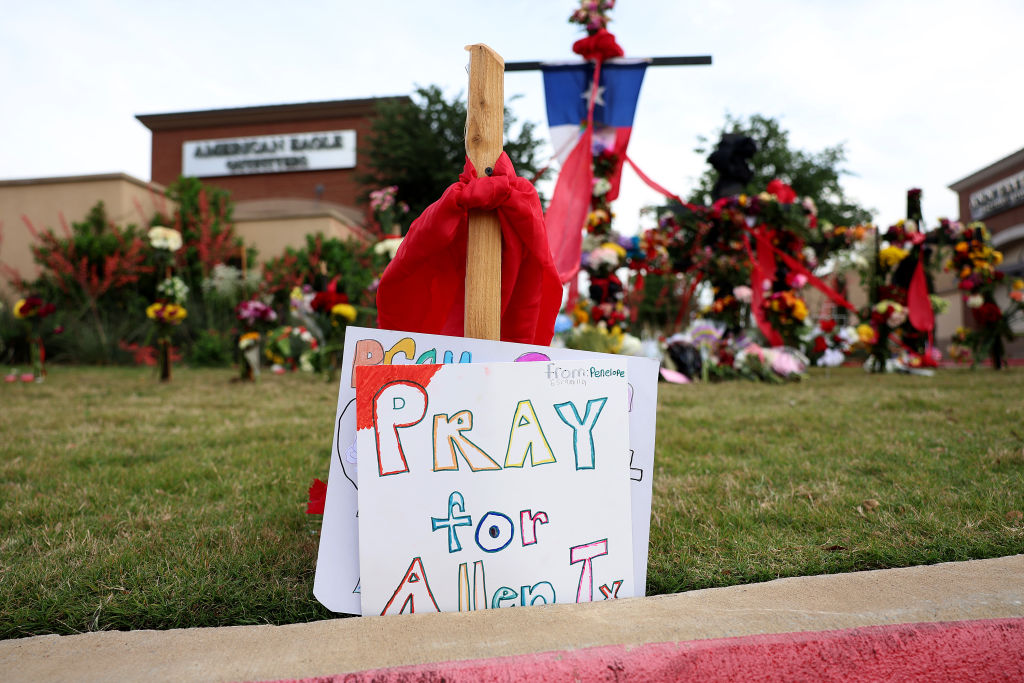
A sign asking people to "Pray for Allen, Texas," stands at a memorial to those killed at the Allen Premium Outlets mall after the mass shooting on May 8, 2023, in Allen, Texas.
Enlarge / A sign asking people to “Pray for Allen, Texas,” stands at a memorial to those killed at the Allen Premium Outlets mall after the mass shooting on May 8, 2023, in Allen, Texas.

Graphic images from a Texas mass shooting on Saturday that killed nine (including the gunman) and wounded seven are still circulating on Twitter after spreading virally all weekend. Critics told The New York Times that unlike other platforms, Twitter isn’t doing enough to remove or label these “unusually graphic” images, especially in footage where dead bodies of some victims, including a young child, appear to be identifiable, Reuters reported.

Family members do “not deserve to see the dead relatives spread across Twitter for everybody to see,” photojournalist Pat Holloway told the Times. Over the weekend, Holloway joined others in tweeting directly at Twitter CEO Elon Musk to improve the platform’s content moderation.

Twitter’s policy on sharing content after a violent attack acknowledges that “exposure to these materials may also cause harm to those that view them.” That policy is primarily focused on banning the distribution of content created by perpetrators of attacks, but it also places restrictions on “bystander-generated content” depicting “dead bodies” or “content that identifies victims.”

Another policy on sharing sensitive media says that “there are also some types of sensitive media content that we don’t allow at all”—including some depictions of deaths, violent crimes, and bodily fluids like blood—”because they have the potential to normalize violence and cause distress to those who view them.”

So far, Musk, Twitter trust and safety chief Ella Irwin, and the @TwitterSafety account have not tweeted or commented to clarify how Twitter’s policies apply in this case.

Musk did respond to an account tweeting about the gunman and pushing back against a Washington Post report that described the gunman, Mauricio Garcia, as potentially holding neo-Nazi beliefs. A law enforcement official told The Daily Mail that federal agents had reviewed Garcia’s social media accounts and found he “had expressed an interest in neo-Nazi views” and could be seen wearing “a patch on his chest reading RWDS”—an acronym used by extremists and white supremacists standing for “Right Wing Death Squad.”

“Do they cite any evidence for him being a ‘nazi white supremacist’?” Musk tweeted. He seemed to be asking for clarification after boasting that—unlike news reports describing the shooting, in his view—”this platform is hell bent on being the least untrue source of information.”

It’s possible that images from the shooting spread more quickly on Twitter because the platform notably invests less in content moderation than other platforms. Last fall, Twitter came under fire for gutting its content moderation team and then ditching its Trust and Safety Council. Earlier this year, the European Union told Musk to hire more mods or risk falling out of compliance with the EU’s Digital Service Act. At that time, Twitter issued a statement that it intended to comply with the EU order, but so far, Musk seems happier to rely on Community Notes and user reports flagging violative content than restoring the Trust and Safety team to prioritize content moderation.

On Twitter, there’s an ongoing debate between users who want to share the images from the shooting to protest gun violence and those like Holloway, who expect Twitter to block such sensitive content. For those who want to share the images, Twitter recommends that users proactively mark them as sensitive media. To do that, “navigate to your safety settings and select the ‘Mark media you Tweet as containing material that may be sensitive’ option,” Twitter’s policy directs users. Twitter will also apply the sensitive media filter on violative images reported by users.

Twitter did not respond to Ars’ request for comment.

https://arstechnica.com/?p=1937477


President Biden meets with AI CEOs at the White House amid ethical criticism

US President Joe Biden and Vice President Kamala Harris meet the 'Investing in America Cabinet.'
Enlarge / US President Joe Biden and Vice President Kamala Harris meet the ‘Investing in America Cabinet’ to discuss the Investing in America agenda in the Roosevelt Room of the White House in Washington, DC, on May 5.

On Thursday, President Joe Biden held a meeting at the White House with CEOs of leading AI companies, including Google, Microsoft, OpenAI, and Anthropic, emphasizing the importance of ensuring the safety of AI products before deployment. During the meeting, Biden urged the executives to address the risks that AI poses. But some AI experts criticized the exclusion of ethics researchers who have warned of AI’s dangers for years.

Over the past few months, generative AI models such as ChatGPT have quickly gained popularity and rallied intense tech hype, driving companies to develop similar products at a rapid pace.

However, concerns have been growing about potential privacy issues, employment bias, and the potential for using them to create misinformation campaigns. According to the White House, the administration called for greater transparency, safety evaluations, and protection against malicious attacks during a “frank and constructive discussion” with the executives.

The meeting’s most high-profile attendees included Google’s Sundar Pichai, Microsoft’s Satya Nadella, OpenAI’s Sam Altman, and Anthropic’s Dario Amodei.

Vice President Kamala Harris chaired the meeting, and in a video of Biden “dropping by” posted on Twitter, the president said, “I just came by to say thanks. What you’re doing has enormous potential—and enormous danger. I know you understand that. And I hope you can educate us as to what you think is most needed to protect society as well as to the advancement. This is really, really important.”

Last fall, the Biden administration released a set of guidelines called the “AI Bill of Rights” that aims to protect Americans from the detrimental effects of automated systems, including bias, discrimination, and privacy issues.

AI ethics researchers respond

While Biden’s invitation showed executive interest in a hot policy topic, critics of the invitee companies’ ethical track records were not impressed by the meeting, with many questioning the choice of inviting people to the meeting who, they argue, represent companies that have created the issues with AI that the White House seeks to address.

On Twitter, AI researcher Dr. Timnit Gebru wrote, “It seems like we spend half our time talking to various legislators and agencies and STILL we have this shit. A room full of the dudes who gave us the issues & fired us for talking about the risks, being called on by the damn president to ‘protect people’s rights.'”

In 2020, Google fired Gebru following a dispute over a research paper she co-authored that highlighted potential risks and biases in large-scale language models. The incident sparked debate within the AI research community about Google’s commitment to AI ethics.

Similarly, University of Oxford AI ethics researcher Elizabeth Renieris tweeted, “Unfortunately, and with all due respect POTUS, these are not the people who can tell us what is “most needed to protect society” when it comes to #AI.”

The criticism mirrors the common divide between what is often termed “AI safety” (a loose movement concerned primarily with hypothetical existential risk from AI, openly associated with OpenAI employees) and “AI ethics” (a group of researchers concerned largely about misapplications and impacts of current AI systems, including bias and misinformation).

Along these lines, author Dr. Brandeis Marshall suggested organizing a “counter-meeting” to the White House meeting that would include Hugging Face, the Distributed AI Research Institute, the UCLA Center of Critical Internet Inquiry, and the Algorithmic Justice League.

Also on Thursday, the White House announced a $140 million investment to launch seven AI research institutes through the National Science Foundation. Additionally, Anthropic, Google, Hugging Face, Nvidia, OpenAI, and Stability AI, will participate in public evaluations of their AI systems at DEF CON 31.

After the White House meeting, Harris released a statement saying, “The private sector has an ethical, moral, and legal responsibility to ensure the safety and security of their products. And every company must comply with existing laws to protect the American people. I look forward to the follow through and follow up in the weeks to come.”

https://arstechnica.com/?p=1937052


Walensky to step down as head of CDC

Image of a woman speaking.
Enlarge / CDC Director Rochelle Walensky testifying before Congress.

On Friday, the Centers for Disease Control and Prevention Director Rochelle Walensky announced that she’d be stepping down from her position at the end of June. The announcement came the same day that the World Health Organization announced that COVID no longer constituted an emergency, and Walensky’s resignation letter made reference to that: “The end of the COVID-19 public health emergency marks a tremendous transition for our country, for public health, and in my tenure as CDC Director.”

Walensky took on the directorship of the CDC at a very challenging time. The agency was dealing with a number of self-inflicted wounds, such as the failure of its initial tests for SARS-CoV-2 and confused advice on the value of masks. Layered on top of that was a degree of political interference from a White House that wanted to minimize the risk and damage of the pandemic. This included the sidelining of CDC experts who gave realistically grim warnings at the start of the pandemic and the editing of public health guidance by White House political appointees. By the start of the Biden administration, the once-flagship public health organization had lost a lot of its credibility and suffered from severe morale problems.

Walensky took on the task of restoring trust and reforming the agency, starting a restructuring program meant to get CDC to focus on getting the data needed to craft public health advice rather than generate academic publications. Better communication to the public was also a major goal of the reforms.

But the stumbles didn’t stop during her tenure at the CDC. The agency overruled its own experts on the use of boosters by high-risk individuals and rapidly issued and reversed advice on masks for people who have been vaccinated.

Regardless, President Biden praised her leadership in a statement on her resignation. “As Director of the CDC, she led a complex organization on the front lines of a once-in-a-generation pandemic with honesty and integrity,” Biden said. “Dr. Walensky leaves CDC a stronger institution, better positioned to confront health threats and protect Americans. We have all benefited from her service and dedication to public health, and I wish her the best in the next chapter.”

As of today, there’s no indication of what that next chapter will be.

https://arstechnica.com/?p=1937127


US seizes Z-Library login domain, but secret URLs for each user remain active

A stack of books wrapped in metal chains and locked with a padlock.
Getty Images | asadykov

US authorities have seized another major Z-Library domain but still haven’t been able to wipe the pirate book site off the Internet. Z-Library claims to offer over 13 million books, up from 11 million since US authorities launched their first major operation against Z-Library late last year.

“Unfortunately, one of our primary login domains was seized today,” Z-Library wrote in a Wednesday message on its Telegram account. “Therefore, we recommend using the domain singlelogin.re to log in to your account, as well as to register. Please share this domain with others.”

In November, US authorities charged Russian nationals Anton Napolsky and Valeriia Ermakova with criminal copyright infringement, wire fraud, and money laundering for allegedly operating Z-Library. The US said at the time that it seized 250 “interrelated web domains” run by Z-Library and that Napolsky and Ermakova were arrested in Argentina at the request of the US government.

Other people continue to operate Z-Library, which remained available on the Tor network and returned to the clearnet in February with a new strategy of assigning personal, secret URLs to each user. Z-Library directed users to singlelogin.me, where they could sign in with their login credentials and receive a unique URL to access the entire pirate library.

Singlelogin.me seized

But the singlelogin.me site now displays a “This website has been seized” message over Justice Department and FBI logos. As Z-Library’s Telegram account noted, singlelogin.re and personal domains remain accessible.

Users can register or log in at singlelogin.re or restore access to existing accounts and personal URLs by “using our magic email address,” Z-Library said. “Just send any letter from your mailbox to this email blackbox@zlib.se, and you will receive your personal access to Z-Library in the auto-generated letter within 3–5 minutes.”

The message on Telegram also said that Z-Library’s Tor and I2P networks are accessible. Meanwhile, the criminal case against Napolsky and Ermakova is still pending, and there have been no major updates since November.

https://arstechnica.com/?p=1937077