TikTok spied on me. Why?

TikTok spied on me. Why?
Celina Pereira via Financial Times

One evening in late December last year, I received a cryptic phone call from a PR director at TikTok, the popular social media app. I’d written extensively about the company for the Financial Times, so we’d spoken before. But it was puzzling to hear from her just before the holidays, especially since I wasn’t working on anything related to the company at the time.

The call lasted less than a minute. She wanted me to know, “as a courtesy,” that The New York Times had just published a story I ought to read. Confused by this unusual bespoke news alert, I asked why. But all she said was that it concerned an inquiry at ByteDance, TikTok’s Chinese parent company, and that I should call her back once I’d read it.

The story claimed ByteDance employees accessed two reporters’ data through their TikTok accounts. Personal information, including their physical locations, had been used as part of an attempt to find the writers’ sources, after a series of damaging stories about ByteDance. According to the report, two employees in China and two in the US left the company following an internal investigation. In a staff memo, ByteDance’s chief executive lamented the incident as the “misconduct of a few individuals.”

When I phoned the PR director back, she confirmed I was one of the journalists who had been surveilled. I put down my phone and wondered what it meant that a company I reported on had gone to such lengths to restrict my ability to do so. Over the following months, the episode became just one in a long series of scandals and crises that call into question what TikTok really is and whether the company has the world-dominating future that once seemed inevitable.

During the Internet era that roughly began with the dominance of Google Search, most of us have implicitly traded access to our data in exchange for often marginal digital conveniences. By the time ByteDance was founded in Beijing in 2012, Google had been reading our emails over our shoulders, Amazon had been watching us shop, and Twitter and Facebook had been mediating our messages to friends and foes for years. Indeed, Zhang Yiming, the millennial software engineer who set up ByteDance, modeled himself and aspects of his new company on Silicon Valley. Zhang, who briefly worked for Microsoft before going out on his own, was once fond of quoting Steve Jobs and Jack Welch.

His first hit app, an endlessly scrolling news site called Toutiao (Today’s Headlines), built the foundations for the company’s future growth. Existing platforms such as Facebook and Instagram relied on users manually following friends, celebrities, and companies, whose posts then made up the content they saw on their feeds. Toutiao wasn’t interested in who its users knew, just what they clicked on, which articles they read the whole way through, and which ones they commented on. ByteDance’s underlying technology began generating a profile of what each reader liked and refined that picture every time they opened the app. Within four months of Toutiao’s launch in 2012, it had a million users, and ByteDance had a blueprint for a new kind of non-social social network.

In 2016, ByteDance released Douyin, an app for watching short videos in China. It quickly grew to have more than 100 million users and was launched internationally with a new name: TikTok. The app only took off after ByteDance merged it with another Chinese social site, Musical.ly, which it acquired for $1B in 2017. TikTok’s ever-learning algorithm, which collected location and information on the content of videos (as well as biometric data such as faceprints and voice recognition in the US) was combined with Musical.ly’s video editing tools, which allowed users to easily replicate and repost clips.

All of it went into a product perfectly suited for a generation raised on smartphones. (Sixty percent of users are between 16 and 24 years old, but many are younger.) TikTok’s content is more minutely tailored than other platforms’, meaning each user can feel like they’re finding their own little corner of the site in the form of their “For You” page. My 17-year-old sister has BookTok; I get cooking videos, Marie Kondo-style organization tips, and cats. (When I originally set up my TikTok account to test features on the app I did it in the guise of my fluffy black and white cat, named Buffy after the Vampire Slayer. Technically, it was Buffy’s account that TikTok employees accessed on my phone.)

Almost overnight, TikTok became one of the fastest growing companies in an industry famous for growing fast. It has been downloaded more than three billion times. In 2021, TikTok had more site visits than Google and more watch minutes in the US than YouTube. Globally, users spend 52 minutes per day on TikTok, almost double the time spent per day on Instagram. That made TikTok China’s first app to break out on a truly global scale.

It also made it a target for Beijing’s recent crackdown on Big Tech. In 2018, one of ByteDance’s other apps was accused of promoting immoral content by state media. When it was eventually pulled down, Zhang wrote a public letter of apology, pledging greater censorship of ByteDance content. Along with other prominent tech founders, Zhang stood down as chairman in 2021. (He retains a 20 percent stake in ByteDance, with a separate class of shares that give him additional voting rights and veto powers.)

China possesses considerable power over technology companies. It controls export of ByteDance algorithms, including TikTok’s, and can mandate that companies disclose user data to the state. TikTok has said it has never given data to the Chinese government and wouldn’t do so if it was asked.

Yet, around the world and particularly in the US, TikTok’s biggest market, there is alarm about the security of this data. “This is a tool that is ultimately within the control of the Chinese government… to me, it screams out with national security concerns,” was the assessment of FBI director Christopher Wray earlier this year. In October 2022, Forbes journalist Emily Baker-White reported that a China-based team at ByteDance “planned to use the TikTok app” to pinpoint the precise locations of “specific US citizens.” After the story was published, the company posted a tweet that read: “TikTok has never been used to ‘target’ any members of the US government, activists, public figures or journalists.” As The New York Times made clear a couple of months later, employees at TikTok had already accessed Baker-White’s phone, as well as my own.

https://arstechnica.com/?p=1937025


Googlers angry about CEO’s $226M pay after cuts in perks and 12,000 layoffs

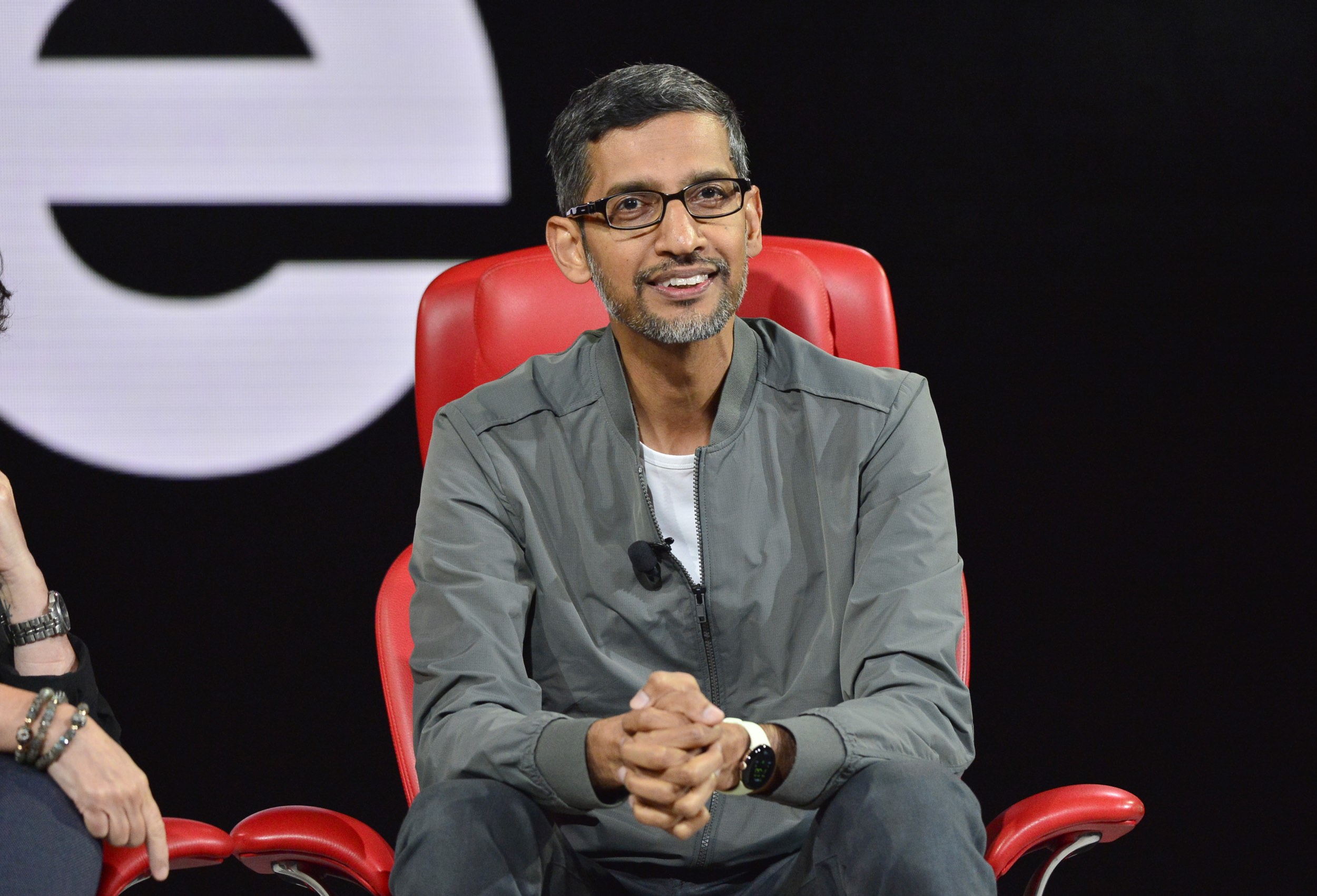
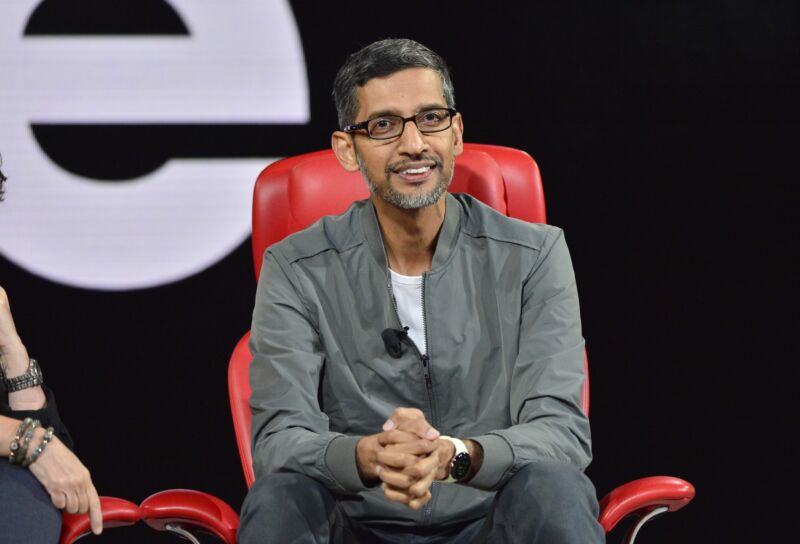
Google CEO Sundar Pichai smiling on stage at a conference where he was speaking. He sits in a comfortable chair and is leaning over with his hands clasped together.
Enlarge / Google CEO Sundar Pichai speaks at Vox Media’s Code Conference on September 6, 2022, in Beverly Hills, California.
Getty Images | Jerod Harris

Following Google’s layoff of 12,000 employees and other cost-cutting moves, employees are reportedly expressing anger about CEO Sundar Pichai’s $226 million pay package.

“In the weeks since Pichai’s annual compensation was made public, internal Google platforms have filled with conversations and memes slamming the CEO for taking a pay bump while slashing costs elsewhere,” CNBC reported yesterday. CNBC’s report said internal memes shared by employees also criticized Google owner Alphabet’s recent authorization of a $70 billion stock repurchase program, the same amount as last year. Pichai is the CEO of both Alphabet and Google.

According to CNBC, one “popular meme showed an image of Shrek character Lord Farquaad with the text ‘Sundar accepting $226 million while laying off 12k Googlers, cutting perks, and destroying morale and culture.'” It also included the Farquaad quote, “some of you may die, but that is a sacrifice I am willing to make.”

The median Alphabet employee was paid $279,802 in 2022. Although Alphabet lists Pichai’s 2022 compensation as $226 million, most of it will vest over three years, and the amount could change. The total value is lower than the triennial award he got for the previous three-year period.

“We respect shareholders more than Googlers”

One meme with over 700 likes read, “$70 billion in buybacks shows we respect external shareholders more than Googlers,” according to CNBC. There were also reportedly memes “comparing Pichai to Apple CEO Tim Cook, who in January received over a 40 percent cut from his 2022 target total compensation.”

Cook requested a pay cut that dropped his target compensation to $49 million in 2023. In 2022, Cook’s target compensation was $84 million, but he ended up receiving $99.4 million.

CNBC said it viewed over a dozen memes shared in Google’s internal discussion forums, including one “with more than 1,200 likes [that] referred to comments from finance chief Ruth Porat, who wrote last month in a rare companywide email that the company is making ‘multi-year’ cuts to employee services.”

“Ruth’s cost savings applied to everyone… except our hardworking VPs and CEO,” the meme reportedly said. The spending cuts announced by Porat reportedly target office supplies, laptop replacements, fitness classes, snack bars, cafeterias, and more.

When contacted by Ars, a Google spokesperson declined to comment on the report of employee complaints.

After Google’s January announcement of 12,000 layoffs, Pichai reportedly said in a meeting with staff that Google executives would take a “very significant reduction in their annual bonus.” Pichai wrote in an email to employees that “I take full responsibility for the decisions that led us here,” saying that over the past two years the company “hired for a different economic reality than the one we face today.” Alphabet had 190,234 employees at the end of 2022.

In Q1 2023, Alphabet reported revenue of $69.8 billion and net income of $15.1 billion, outperforming analysts’ expectations.

CEO-to-worker pay ratio of 808:1

Pichai’s compensation includes a $218 million stock award that was granted in December 2022 and will vest over three years, according to a regulatory filing. The amount could change in value depending on the company’s stock performance. Pichai’s total pay in 2021 was listed as $6.3 million, and in 2020 it was $7.4 million.

Pichai’s listed annual pay varies significantly because of the large stock awards he’s granted once every three years. His 2019 pay was $280.6 million and his 2016 pay was about $200 million.

Alphabet reported that Pichai’s 2022 compensation was 808 times more than the median employee’s. “Given that CEO equity awards are currently made on a triennial cadence, while our broad-based employee equity awards are typically made on an annual cadence, the pay ratio can fluctuate significantly across years. For example, our 2020 pay ratio was 27:1; our 2021 pay ratio was 21:1; and our 2022 pay ratio is 808:1,” Alphabet’s filing said.

Alphabet’s CEO-to-employee ratio was 1,085:1 in 2019, when Pichai was awarded $280.6 million and the median salary was $258,708. Apple reported a pay ratio in 2022 of 1,177:1. Apple’s ratio is likely to drop in 2023 because of Cook’s pay cut.

In a December 2022 filing, Alphabet said that the “vesting of a significant portion of the award will depend on Alphabet’s total shareholder return (relative to S&P 100 companies), and this performance-based equity may not vest at all.” Alphabet also said it increased the proportion of “performance stock units” in Pichai’s pay package from 43 percent to 60 percent, and changed the S&P 100 percentile target from the 50th percentile to the 55th percentile.

These changes will “further align Mr. Pichai’s compensation to long-term shareholder value creation and Alphabet’s stock performance relative to the S&P 100 over the applicable performance periods,” the company said.

https://arstechnica.com/?p=1936849


“We must regulate AI,” FTC Chair Khan says

Lina M. Khan testifies during a Senate Commerce, Science, and Transportation Committee nomination hearing on April 21, 2021 in Washington, DC.
Enlarge / FTC Chair Lina M. Khan testifies during a Senate Commerce, Science, and Transportation Committee nomination hearing on April 21, 2021, in Washington, DC.
Graeme Jennings/Getty Images

On Wednesday, Federal Trade Commission (FTC) Chair Lina Khan pledged to use existing laws to regulate AI in a New York Times op-ed, “We Must Regulate A.I. Here’s How.” In the piece, she warns of AI risks such as market dominance by large tech firms, collusion, and the potential for increased fraud and privacy violations.

In the op-ed, Khan cites the rise of the “Web 2.0” era in the mid-2000s as a cautionary tale for AI’s expansion, saying that the growth of tech companies led to invasive surveillance and loss of privacy. Khan feels that public officials must now ensure history doesn’t repeat itself with AI, but without unduly restricting innovation.

“As these technologies evolve,” she wrote, “we are committed to doing our part to uphold America’s longstanding tradition of maintaining the open, fair and competitive markets that have underpinned both breakthrough innovations and our nation’s economic success—without tolerating business models or practices involving the mass exploitation of their users.”

Khan’s op-ed comes when rising hype and anxiety about generative AI like ChatGPT has begun to dominate the tech world. Increasing use of the nebulous term “AI” in commerce has led the FTC to post clarifying statements about how it plans to deal with these new technologies (and potentially misleading claims about them) on its website.

In line with those previous statements, Khan made a point of noting that AI represents nothing special in the eyes of the law. “Although these tools are novel, they are not exempt from existing rules,” she wrote, “and the FTC will vigorously enforce the laws we are charged with administering, even in this new market.”

Furthermore, Khan’s plans for AI go beyond the popular AI chatbots of generative AI, extending to other forms of automation and algorithmic decision-making. She mentions at least four key areas of concern:

  • Ensuring fair competition: Preventing large tech firms from exploiting their market dominance and using collusion to stifle innovation and smaller competitors in the AI landscape.
  • Strengthening consumer protection: Safeguarding users from deceptive and fraudulent practices enabled by AI, such as phishing scams, deepfake videos, and voice cloning.
  • Promoting data privacy: Monitoring AI systems to ensure they adhere to data protection laws and prevent exploitative data collection or usage, protecting users’ personal information.
  • Combating discriminatory practices: Ensuring AI systems don’t perpetuate or amplify biases and discrimination, which can lead to unfair treatment in areas like employment, housing, or access to essential services.

Some of these elements have previously been laid out in the Biden administration’s “AI Bill of Rights” guidelines published in October. Those guidelines do not explicitly have the force of law behind them, but the FTC has the latitude to interpret existing laws to apply to AI. “The FTC is well equipped with legal jurisdiction to handle the issues brought to the fore by the rapidly developing A.I. sector,” Khan said.

Looking ahead, Khan asks: Can the United States continue to foster world-leading technology without accepting “race-to-the-bottom business models” and “monopolistic control” that locks out higher-quality products. Her answer? “Yes—if we make the right policy choices.”

https://arstechnica.com/?p=1936486


Starlink nixes plan to impose 1TB data cap and per-gigabyte overage fees

A Starlink broadband satellite dish placed outside on the ground.
Enlarge / Starlink satellite dish.
Getty Images | olegda88

Starlink has abandoned plans to charge data overage fees to standard residential users who exceed 1TB of monthly usage.

When SpaceX’s Starlink division first announced the data cap in November 2022, it said that residential customers would get 1TB of “priority access data” each month. After using 1TB, customers could keep accessing the Internet at slower (but unspecified) speeds or pay $0.25 per gigabyte for “additional priority access.”

This was originally supposed to take effect in December, but Starlink delayed the change to February and then to April. But now, Starlink’s list of support FAQs no longer mentions the residential data cap and the current version of the fair use policy says that standard service plan users have unlimited data. The previous version of the Starlink fair use policy described the 1TB residential cap and optional $0.25-per-gigabyte overage fees.

Starlink sent an email to users that said, “Good news! Your Starlink subscription will remain unlimited and will no longer be deprioritized after 1TB of data use.” Nathan Owens, a Netflix engineer who frequently tweets about Starlink, posted a screenshot of the email yesterday.

Starlink speeds have gotten slower

While eliminating data overage fees is a significant change, service to residential users will still be slower than speeds offered on Starlink’s pricier plans geared toward businesses and “high-demand” users. What Starlink used to call residential and business plans are now described as “standard” and “priority.”

So what’s the exact difference between standard and priority data speeds? In a specifications sheet, Starlink says that standard users can expect download speeds during peak usage hours to range from 25Mbps to 100Mbps. Priority users can expect 40Mbps to 220Mbps download speeds.

For uploads, standard users can expect 5Mbps to 10Mbps during peak usage hours. Priority users would get 8Mbps to 25Mbps uploads. Expected latency is 25ms to 50ms for both standard and priority users.

Speeds have dropped as Starlink attracts more users. As recently as late September, Starlink said that residential users should expect download speeds of 50Mbps to 200Mbps, upload speeds of 10Mbps to 20Mbps, and latency of 20 to 40 ms. Business service at the time was said to offer 100Mbps to 350Mbps downloads and 10Mbps to 40Mbps uploads. The expected speeds were lowered by early November, Internet Archive captures show.

As one Starlink user wrote on Reddit, “It’s not exactly a win. They’re only promising 25-100Mbps for residential now. I’ve noticed some pretty significant speed issues lately, so I think this has been implemented before it was announced.”

The now-abandoned plan for a 1TB cap would have had a carveout between the hours of 11 pm to 7 am, letting customers use unlimited data overnight while counting all other usage toward the monthly limit.

Priority costs at least $250/month, up to $2,500 upfront

In addition to a one-time $599 hardware fee, Starlink’s standard plans cost $120 a month in “limited-capacity” areas and $90 a month in “excess-capacity” areas.

The priority plans for businesses and other high-demand users start at $250 a month for 1TB of the highest-speed data. The monthly prices are $500 for 2TB and $1,500 for 6TB. The recommended hardware for priority users costs $2,500.

Priority plan customers who exceed their monthly cap and don’t pay for extra priority data would get the same speeds allocated to residential users (“standard data”) for the rest of the month. Country-specific pricing for extra priority data is available here. It’s $0.50 per gigabyte in the US.

Certain users may want to upgrade

Starlink’s fair use policy says that priority plans “are designed for high demand users, such as those with business, government or institutional needs. Priority data is given network precedence over Standard and Mobile data, meaning users will experience faster and more consistent download and upload speeds.”

Standard plan customers, who are most likely to be residential Internet users, should upgrade to priority plans in some cases, SpaceX also says. Like many ISPs, Starlink has a rule that says using a large but unspecified amount of data could cause the company to reduce a residential customer’s speeds:

Starlink seeks to distribute Standard data among our users in a fair and equitable manner. If bandwidth patterns consistently exceed what is allocated to a typical residential user, Starlink may take network management measures, such as temporarily reducing a customer’s speeds, to prevent or mitigate congestion of the Services. Bandwidth intensive applications, such as streaming videos, gaming, or downloading large files are most likely to be impacted by such actions. Standard Service Plan customers with high bandwidth needs should consider upgrading to a Priority Service Plan.

In addition to standard and priority plans, Starlink is offering a mobile plan for portable use, such as with RVs, and a “mobile priority” plan for maritime, in-motion, and other high-demand mobile use cases.

https://arstechnica.com/?p=1936523


AI vs. Hollywood: Writers battle “plagiarism machines” in union talks

An AI-generated image of
Enlarge / An AI-generated image of “an office copy machine in front of a hollywood-style explosion.”
Midjourney

The Writers Guild of America (WGA) is seeking to restrict the use of generative AI in writing film and TV scripts as part of an ongoing strike, reports Reuters. The concerns come at a time when anxiety over the economic impact of tech like ChatGPT looms large in the minds of many.

The WGA strike is the first in 15 years, and it’s taking place over issues beyond just AI. But in particular, Reuters reports that WGA writers have two main concerns about automation in writing, quoting screenwriter John August, who is part of the WGA negotiating committee: They don’t want their material to be used as training data for AI systems, and they don’t want to be tasked with fixing AI-generated “sloppy first drafts.”

An excerpt of the WGA's position on AI, as posted by novelist Hari Kunzru and several others on Twitter. MBA stands for "Minimum Basic Agreement," the name of the union's collective bargaining agreement.
Enlarge / An excerpt of the WGA’s position on AI, as posted by novelist Hari Kunzru and several others on Twitter. MBA stands for “Minimum Basic Agreement,” the name of the union’s collective bargaining agreement.

That’s because writers who are hired to polish first drafts get paid at a lower rate, and WGA writers are fighting to make sure that a ChatGPT-generated first draft would not be counted as “literary material” or “source material,” which are terms defined in their contract.

On Twitter, screenwriter C. Robert Cargill expressed similar concerns, writing, “The immediate fear of AI isn’t that us writers will have our work replaced by artificially generated content. It’s that we will be underpaid to rewrite that trash into something we could have done better from the start. This is what the WGA is opposing and the studios want.”

Additionally, the WGA argues that existing scripts should not be used to train AI systems, to avoid potential IP theft. WGA chief negotiator Ellen Stutzman said some members have referred to AI as “plagiarism machines.”

While accusations of plagiarism in the training of AI models like ChatGPT still haven’t been settled in courts, the models absorb millions of documents scraped from the Internet without permission from content creators. By recombining statistical “knowledge” about those works in new ways, large language models (LLMs) can create novel material.

So far, Hollywood studios have rejected the WGA’s proposals, instead offering to discuss new technologies annually. As the strike is still underway, the outcome of these negotiations remains uncertain, but it’s a notable sign of the growing pains of integrating new technology like generative AI into an existing creative field.

https://arstechnica.com/?p=1936380


Facebook furious at FTC after agency proposes ban on monetizing youth data

Facebook furious at FTC after agency proposes ban on monetizing youth data

Facebook has not been doing enough to comply with a 2020 privacy order, the Federal Trade Commission (FTC) announced Wednesday. On top of “continuing to give app developers access to users’ private information” that Meta claimed had been cut off, the FTC alleges that Facebook has caused new harm. Perhaps most alarming, the FTC alleges that Facebook’s Messenger Kids product misled parents on who could connect to chat with minors and misrepresented who had access to private youth data.

Now, the FTC has proposed changes to the 2020 order that would prohibit Facebook owner Meta from launching new products on any of its platforms without procuring written FTC compliance confirmation and prevent the company from monetizing any of the youth data it collects across Facebook, Instagram, WhatsApp, and Oculus.

“Facebook has repeatedly violated its privacy promises,” Samuel Levine, director of the FTC’s Bureau of Consumer Protection, said in a press release.

The FTC confirmed that it has asked Meta to respond to allegations first reported by The Verge in 2019 that “from late 2017 until mid-2019, Facebook misrepresented that parents could control whom their children communicated with through its Messenger Kids product.” Quite the opposite, instead of providing adequate parental controls to prevent strange adults from contacting kids, a Facebook bug allowed “children in certain circumstances” to “communicate with unapproved contacts in group text chats and group video calls.” In 2019, Facebook confirmed to The Verge that the technical issue had occurred and thousands of users were notified about the bug, which affected “a small number of group chats.”

According to the FTC, this is the third time that Facebook has violated a privacy order. Facebook has also violated the FTC Act and the Children’s Online Privacy Protection Act Rule, the FTC alleged.

“The company’s recklessness has put young users at risk, and Facebook needs to answer for its failures,” Levine said in the press release.

A Meta spokesperson told Ars that the FTC’s proposed changes are “a political stunt,” saying that the FTC gave Meta “no opportunity to discuss this new, totally unprecedented theory.” Meta considers the FTC’s proposed changes to the privacy order “a new low.”

“Let’s be clear about what the FTC is trying to do: usurp the authority of Congress to set industry-wide standards and instead single out one American company while allowing Chinese companies, like TikTok, to operate without constraint on American soil,” Meta’s spokesperson said. “FTC Chair Lina Khan’s insistence on using any measure—however baseless—to antagonize American business has reached a new low.” [Update: Facebook says that the assessor’s report did not find violations of the 2020 privacy order and noted that the two privacy concerns that the FTC raised were already discovered, fixed, and publicly disclosed.]

The FTC’s proposed changes were drafted in response to a report from an independent assessor who reviewed Facebook’s privacy program and concluded that there were “several gaps and weaknesses” in it. Some of these deficiencies, the FTC alleges, “pose substantial risks to the public.”

Among the most drastic proposed changes are a blanket prohibition against monetizing data of users under 18 and a pause on launching new products, services, or features ” without written confirmation from the assessor” confirming full compliance with the FTC’s order. The FTC has also proposed additional limitations on Meta’s uses of facial recognition technology and an extension of the 2020 order’s compliance requirements to encompass all companies merged under Meta. Finally, the FTC proposes going back to the drawing board on the 2020 privacy order and strengthening many of the existing requirements, including “those related to privacy review, third-party monitoring, data inventory and access controls, and employee training.”

Meta’s spokesperson told Ars that the company contends that it has “spent vast resources building and implementing an industry-leading privacy program under the terms of our FTC agreement.”

“We will vigorously fight this action and expect to prevail,” Meta’s spokesperson told Ars.

Meta has 30 days to officially respond to the proposed changes, but ultimately, the FTC says it will “determine whether modification of the 2020 order is in the public interest or justified by changed conditions of fact or law.”

https://arstechnica.com/?p=1936426


Pornhub shocks Utah by restricting access over age-verification law

Pornhub shocks Utah by restricting access over age-verification law

Since Monday, Pornhub has begun blocking access for all Utah visitors, taking a strong stance against the state’s recently passed age-verification law. In a video statement that now appears on Pornhub’s homepage when Utah users attempt to access the adult site, Pornhub spokesperson Sharita Bell said the law was not a “real solution.”

“As you may know, your elected officials have required us to verify your age before granting you access to our website,” Bell said in the video. “While safety and compliance are at the forefront of our mission, giving your ID card every time you want to visit an adult platform is not the most effective solution for protecting our users—and in fact, will put children and your privacy at risk.”

In its statement, Pornhub warned that “without proper enforcement,” Utah’s law would put children and privacy at risk by driving Pornhub users to platforms that choose not to comply with the law—including pirate sites possibly hosting illegal content.

“As we’ve seen in other states, this just drives traffic to sites with far fewer safety measures in place,” Bell said. “Very few sites are able to compare to the robust trust and safety measures we currently have in place.”

Until Utah can enforce the law across all platforms, Pornhub has warned that access will be restricted. Other MindGeek sites like Brazzers, YouPorn, and Redtube have also blocked access in Utah, Axios reported. To remedy the situation, the adult sites urge Utah users to contact their representatives and request that the state update its laws to a “real solution.”

The remedy that Pornhub said would be “the best and most effective solution for protecting children and adults alike is to identify users by their device and allow access to age restricted materials and websites based on that identification.”

In response to Pornhub’s protest, the Republican Utah state senator who sponsored the age-verification law, Todd Weiler, told Ars that “Utah’s new law only requires adult sites to make reasonable efforts to confirm that the consumers of their content are adults.” Weiler likened the policy of requiring age verification to access adult sites to requiring cashiers to check IDs before alcohol and tobacco sales, saying, “I don’t think that is too much to ask.”

Because Pornhub had not protested Louisiana’s law, Weiler seemed surprised that Pornhub took the seemingly drastic step of blocking Utah users.

“When I ran the legislation last February, I did not expect adult porn sites to be blocked in Utah,” Weiler told Ars. “Not at all.”

Utah’s age-verification law takes effect for adult sites on May 3. It holds companies liable if minors sue after accessing adult content on their platforms.

According to Pornhub, Utah’s law mandating age verification differs from Louisiana’s law in at least one meaningful way. In Louisiana, the state government created a digital wallet that Pornhub could access to securely verify state IDs. Because Utah has no such technology, Axios reported, Pornhub said it had no choice but to make “the difficult decision to completely disable access to our website” in Utah.

https://arstechnica.com/?p=1936192


Colorado kills law that made it harder for cities to offer Internet service

Two large spools of fiber conduits, which are used to install fiber cables underground.
Enlarge / Spools of fiber conduits for broadband network construction.
Getty Images | Akchamczuk

Colorado yesterday eliminated an 18-year-old state law that made it harder for cities and towns to offer broadband Internet service. The 2005 law required local governments to hold an election before offering cable television or telecommunications service, a process that pitted city and town leaders against well-funded broadband industry lobbying campaigns.

Gov. Jared Polis, a Democrat, signed a bill to eliminate that law yesterday. The bill had been approved by the State House in a 48-14 vote and in the Senate by a 31-4 vote. Both chambers have Democratic majorities, but the votes didn’t go entirely along party lines; all of the “no” votes came from Republicans, but other Republicans joined Democrats in approving the bill.

The bill signed by Polis “gives local governments the authority to provide broadband service, either on their own or by partnering with industry service providers, without holding a local election,” the Governor’s Office of Information Technology said.

“Each local government is in a unique position or different phase of connecting residents to high-speed Internet, and this bill allows them to establish broadband plans that meet the needs of their communities,” Colorado Broadband Office Executive Director Brandy Reitter said.

Going forward, cities and towns won’t have to hold elections to opt out of the 2005 restriction on municipal broadband. A vote to opt out of the state law didn’t guarantee that a city or town would build a network, but the vote was a necessary step and in some cases resulted in a municipal broadband service.

Local voters rejected telecom lobby campaigns

There are 272 municipalities in Colorado, and over 120 of them voted to give themselves the authority to offer broadband, even as local votes necessitated by the state law sometimes attracted lobbying campaigns from cable and telecom groups.

In 2017, when Fort Collins voters considered a ballot question to authorize a city-built broadband network, an industry-funded group called “Priorities First Fort Collins” spent $451,000 campaigning against the municipal broadband effort. Priorities First Fort Collins received nearly all of its funding from two groups: The Colorado Cable Telecommunications Association, which counted Comcast as a member, and a group run by the city’s chamber of commerce, which had both Comcast and CenturyLink as members.

A pro-municipal broadband group spent less than $10,000 in the campaign, but voters rejected the telecom lobbying effort and approved the ballot question. A Fort Collins municipal broadband service went live in 2019.

There have been 123 local ballot questions on overriding the state law as of the November 2022 elections, according to the Colorado Municipal League. Residents voted to opt out of the state restriction 122 out of 123 times, with the lone defeat coming in Longmont in 2009 after an industry lobbying campaign.

Longmont held another vote in 2011, and city officials were better prepared for industry lobbying the second time around. The 2011 measure passed with about 60 percent of the vote, and Longmont now offers fiber Internet directly to residents.

State capital Denver chose to opt out of the state law in 2020 in a ballot initiative supported by over 82 percent of voters. Overriding the Colorado law at the local level was easy enough that some municipal broadband advocates no longer considered it a significant barrier.

https://arstechnica.com/?p=1936108


Mastodon fixes “confusing” sign-up process to attract users fleeing Twitter

Mastodon fixes “confusing” sign-up process to attract users fleeing Twitter

Since late 2022, Mastodon has increasingly become a popular alternative to Twitter for millions of users. This is partly because its CEO and founder, Eugen Rochko, has emphasized that the decentralized social network—which operates as a nonprofit—will never be bought by a chaotic billionaire.

However, some would-be Mastodon users fleeing Twitter apparently never made it through Mastodon’s slightly more complicated sign-up process. Some of them quickly abandoned Mastodon after creating an account, becoming instantly confused when they were asked to find a server to join. Because of this unfamiliar extra step that’s not required to join most mainstream social networks, it seemed like Mastodon was missing out on a major opportunity to attract and retain Twitter users. These stakes likely only got higher after top Twitter influencers started joining another Twitter rival called Bluesky.

As Bluesky gained steam, Mastodon decided to listen to user feedback and take an unexpected step to make its platform more accessible than ever. Now, Mastodon will do what social networks traditionally do and default users to a server operated by Mastodon when they sign up. Acknowledging that Mastodon’s sign-up process “can be confusing,” Rochko announced that this tweak to Mastodon removes “friction from decentralized features” and makes it “as easy as possible” for new users to “get past the sign-up process and more quickly engage with others.”

For users attracted to Mastodon because of its decentralized structure that allows users—not companies—to create and manage their own servers, the move to default users to Mastodon-run servers seemed counterintuitive. But Rochko wrote that “it’s important for Mastodon to be good as a product on its own merits, and not just because of its ideology,” noting that “if we only attract people who already care about decentralization, our ability to make decentralization mainstream becomes that much harder.”

“This gives us a far better chance of showcasing what decentralized social networks have to offer instead of having that person bounce and never hearing from them again,” Rochko wrote, citing immense growth over the past six months despite many users struggling to sign up. Rochko confirmed that users can also opt to “go through advanced server selection” at sign-up if they’re not interested in joining Mastodon’s default servers.

Building on Mastodon’s sudden success

Earlier this year, Mastodon was gaining 1,000 new users an hour. Rochko watched as its user count ticked up to 8 million. Compared to Twitter’s estimated 368 million monthly active users, Mastodon’s growing total number of users seems small, but to Mastodon, this surge represented a tipping point that possibly marked a culture shift toward decentralized social networks becoming more mainstream.

As Mastodon grew, investors came calling. Rochko told the Financial Times that he turned down more than five Silicon Valley venture capital firms offering to invest “hundreds of thousands of dollars.” While currently, Mastodon is willing to compromise by defaulting users to a server that it operates, Rochko has never been willing to compromise on the social network’s nonprofit status. Instead, Mastodon’s massive growth is primarily being funded by more than 8,500 Patreon donors. Donations amount to a $30,000 monthly budget, Rochko told The Verge in March, and certain top-tier Patreon supporters are considered sponsors. Mastodon has also received a limited amount of grant funding, Rochko told The Verge.

After refusing to sell out to investors, last month, Rochko posted a blog saying that “without doubt,” Mastodon’s sudden success put a “strain” on its resources. Most worryingly, Mastodon was struggling to maintain “the public Mastodon servers that we, the non-profit, maintain ourselves: mastodon.social and mastodon.online.” It’s too soon to tell if Mastodon has fixed issues that could cause performance lags if its default servers become overburdened and underfunded as more users join due to the easier sign-up process.

“We have been working non-stop to maintain quality of service on mastodon.social and mastodon.online, but you may have noticed issues such as confirmation emails not arriving or home feeds being delayed,” Rochko wrote. “We apologize for the inconvenience and continue to work on addressing these issues.”

Any inconsistencies in platform performance could become another reason for fair-weather users to abandon the platform.

Ars could not immediately reach Mastodon for comment.

https://arstechnica.com/?p=1936085


Top Twitter influencers flee to Bluesky amid Musk’s continued debasing

Top Twitter influencers flee to Bluesky amid Musk’s continued debasing

Yesterday, Twitter rival Bluesky experienced its biggest spike in users yet. Between Wednesday and Thursday, Bluesky doubled its user base, Bloomberg reported.

The surge in Bluesky’s popularity came as some of Twitter’s most influential users began joining Bluesky, including writer-comedian Dril, United States Representative Alexandria Ocasio-Cortez, and filmmaker James Gunn. Some of these influencers may have been seeking to distance themselves from Twitter after the platform gifted many legacy accounts with blue verified badges that falsely labeled the accounts as paid subscribers.

Still in beta testing, Bluesky is currently available to more than 40,000 users, Bluesky CEO Jay Graber told Bloomberg today. There’s much more interest from users, though. The iPhone app has been downloaded approximately 360,000 times, and the Android app is reportedly a top download after only recently launching in the US, the United Kingdom, and Japan.

Now that influencers are tweeting out their Bluesky handles, though, it’s likely that many more users have joined the waitlist, which is seemingly the only way to get an invite code right now. It’s possible that beta users will soon have invites to share, too. Ars could not immediately reach Bluesky for comment.

The eagerness to find a Twitter replacement has seemed to escalate after Twitter removed and then reinstated verification badges on legacy verified accounts. Many Twitter users have started joking about getting or wanting Bluesky invites at a time when one of Bluesky’s newest users, model Chrissy Teigen, recently described having Twitter’s blue badge on her account as a form of “punishment.”

Beyond celebrities and influencers who felt stung by receiving blue checks they never asked for falsely branding their accounts, even users who never really cared about badges may be more actively seeking a Twitter alternative as the platform grows less reliable.

In the past few months, several news organizations left the platform, many government accounts lost verification, and many apps broke when Twitter turned off its free API. This week, Mashable reported that Twitter made search unavailable without a login, further restricting access to tweets. Just yesterday, New York’s Metropolitan Transportation Authority (MTA) became one of the first major transportation agencies to stop sharing live updates on Twitter. In MTA’s press release, acting chief customer officer Shanifah Rieara said that MTA terminated those posting services because “reliability of the platform can no longer be guaranteed.”

But while it’s easy to criticize Twitter’s inconsistencies while CEO Elon Musk tries to find new ways to monetize the platform, Bluesky in its beta form may not be a perfect alternative for users worried about things like impersonation, content moderation, or customizable news feeds.

https://arstechnica.com/?p=1935427