FBI agents search home of FTX exec who gave millions to Republicans

The FTX Cryptocurrency Derivatives Exchange logo on a laptop screen .
Getty Images | Bloomberg

The FBI on Thursday reportedly searched the home of former FTX executive Ryan Salame, who ran the failed cryptocurrency exchange’s Bahamian subsidiary and was a major campaign donor to Republicans. Yesterday morning’s search of Salame’s $4 million home in Potomac, Maryland, was reported by The New York Times and Bloomberg, with both media outlets citing anonymous sources.

Salame hasn’t been charged with a crime but was a member of FTX founder and former CEO Sam Bankman-Fried’s inner circle. Salame received $87 million in payments and loans from FTX entities, the exchange’s new leadership said last month.

It’s unclear what FBI agents were looking for at Salame’s house, but the search “signals that federal authorities are not done with their investigation into FTX’s collapse as they prepare for Mr. Bankman-Fried’s trial set in October,” the Times wrote. “They are scrutinizing an array of employees and advisers in the former crypto mogul’s orbit, including Mr. Bankman-Fried’s younger brother.”

The Times notes that Salame has been under scrutiny “over the $24 million in campaign contributions he made during last year’s midterm elections,” with federal authorities alleging in court filings “that most of the $90 million contributed to political candidates by a handful of former FTX employees, including Mr. Salame, had been misappropriated from customers of the exchange.”

Bankman-Fried is facing 13 criminal charges in US District Court for the Southern District of New York. Three former executives who worked with Bankman-Fried at FTX or its affiliate, Alameda Research, already pleaded guilty to criminal fraud charges and are cooperating with government prosecutors. The executives who pleaded guilty are Nishad Singh, FTX’s former director of engineering; FTX’s former CTO Gary Wang; and former Alameda CEO Caroline Ellison.

Salame and SBF formed “megadonor tag team”

Bloomberg’s article said that “Salame’s attorney had spoken with prosecutors on his behalf and handed over information relating to campaign finance activity prior to Thursday’s search.” Before FTX’s collapse, Salame was co-CEO of Bahamian subsidiary FTX Digital Markets.

“As FTX grew, Mr. Salame began building his profile in Washington as a big Republican donor,” The New York Times wrote in December. “During the midterm elections, Mr. Salame gave $24 million, primarily to Republican candidates and committees, while Mr. Bankman-Fried gave about $40 million, primarily to Democrats. Together, they formed a bipartisan megadonor tag team, with fund-raisers on both sides of the aisle clamoring for access to a stream of donations that many expected to last decades.”

One of the charges faced by Bankman-Fried is conspiracy to make unlawful political contributions and defraud the Federal Election Commission. The indictment says Bankman-Fried tried to “influence cryptocurrency regulation in Washington, DC by steering tens of millions of dollars of illegal campaign contributions to both Democrats and Republicans.”

The indictment alleged that Bankman-Fried used FTX customer funds that he misappropriated to make contributions “in the names of others in order to obscure the true source of the money and evade federal election law,” which imposes annual limits on campaign donations. Bankman-Fried was accused of conspiring with “others known and unknown” to evade federal election law.

Salame donated to George Santos

Salame, who joined Alameda in 2019 and FTX in 2021, “is in a relationship with Michelle Bond, a crypto advocate and 2022 Republican congressional candidate,” Bloomberg wrote. Salame and Bond reportedly are joint owners of the home that was searched yesterday.

“Among the candidates Salame supported was George Santos, then a little-known Long Island Republican who has since become a household name for lying about key parts of his background. Salame also helped introduce donors to Santos—including his parents and other FTX executives,” Bloomberg wrote.

Salame and two other FTX executives reportedly gave the maximum allowed donations to Santos.

Salame told Bahamian authorities about likely illegal transfers of clients’ assets from FTX to Alameda on November 9, 2022, according to a letter sent to police that day by Christina Rolle, executive director of the Bahamas Securities Commission. Salame told the Securities Commission that only three people had the necessary codes or passwords to make the transfers, namely Bankman-Fried, Singh, and Wang.

Rolle’s letter to the Royal Bahamas Police Force commissioner, which is included in a court document, requested a criminal investigation and was sent right before FTX’s collapse. “The Commission understood Mr. Salame as advising that the transfer of clients’ assets in this manner was contrary to the normal corporate governance and operations of FTX Digital. Put simply, that such transfers were not allowed and therefore may constitute misappropriation, theft, fraud or some other crime,” Rolle wrote.

https://arstechnica.com/?p=1935395


Nuke-launching AI would be illegal under proposed US law

An AI-generated image of a nuclear mushroom cloud.
Enlarge / An AI-generated image of a nuclear mushroom cloud.
Midjourney

On Wednesday, US Senator Edward Markey (D-Mass.) and Representatives Ted Lieu (D-Calif.), Don Beyer (D-Va.), and Ken Buck (R-Colo.) announced bipartisan legislation that seeks to prevent an artificial intelligence system from making nuclear launch decisions. The Block Nuclear Launch by Autonomous Artificial Intelligence Act would prohibit the use of federal funds for launching any nuclear weapon by an automated system without “meaningful human control.”

“As we live in an increasingly digital age, we need to ensure that humans hold the power alone to command, control, and launch nuclear weapons—not robots,” Markey said in a news release. “That is why I am proud to introduce the Block Nuclear Launch by Autonomous Artificial Intelligence Act. We need to keep humans in the loop on making life or death decisions to use deadly force, especially for our most dangerous weapons.”

The new bill builds on existing US Department of Defense policy, which states that in all cases, “the United States will maintain a human ‘in the loop’ for all actions critical to informing and executing decisions by the President to initiate and terminate nuclear weapon employment.”

The new bill aims to codify the Defense Department principle into law, and it also follows the recommendation of the National Security Commission on Artificial Intelligence, which called for the US to affirm its policy that only human beings can authorize the employment of nuclear weapons.

“While US military use of AI can be appropriate for enhancing national security purposes, use of AI for deploying nuclear weapons without a human chain of command and control is reckless, dangerous, and should be prohibited,” Buck said in a statement. “I am proud to co-sponsor this legislation to ensure that human beings, not machines, have the final say over the most critical and sensitive military decisions.”

The new bill comes as anxiety grows over the future potential of rapidly advancing (and sometimes poorly understood and overhyped) generative AI technology, which prompted a group of researchers to call for a pause in the development of systems “more powerful” than GPT-4 in March.

While GPT-4 isn’t feared to launch a nuclear strike, a group of AI researchers that evaluate the capabilities of today’s most popular large language models for OpenAI fear that more advanced future AI systems may be a threat to human civilization. Some of that fear has transferred to the broader populace, despite worries over existential threats from AI remaining controversial in the broader machine learning community.

Hot topics in technology aside, the new bill is also part of a larger plan from Markey and Lieu for avoiding nuclear escalation. The pair also recently reintroduced a bill that would prohibit any US president from launching a nuclear strike without prior authorization from Congress. The overall goal, according to the congressmen, is to reduce the risk of “nuclear Armageddon” and hinder nuclear proliferation.

Cosponsors of the Block Nuclear Launch by Autonomous Artificial Intelligence Act in the Senate include Bernie Sanders (I-Vt.) and Elizabeth Warren (D-Mass.).

https://arstechnica.com/?p=1935261


WebOps platform Pantheon defends hosting “hate groups” as developers quit

WebOps platform Pantheon defends hosting “hate groups” as developers quit

Over the past week, backlash erupted on LinkedIn, in a thread where passionate open source developers began criticizing Pantheon. The developers and other Pantheon supporters commenting had just discovered that the website operations platform—which hosts more than 700,000 websites—is currently hosting websites for hugely influential anti-LGBTQ and anti-immigration organizations that have been designated as hate groups by the Southern Poverty Law Center (SPLC).

The controversy sparked after a digital strategist, Greg Dunlap, posted a link to SPLC’s page designating a Christian conservative legal advocacy group, Alliance Defending Freedom (ADF), as a hate group for its views on the LGBTQ community. On the page, SPLC described ADF as supporting “recriminalization of sexual acts between consenting LGBTQ adults in the US and criminalization abroad,” defending “state-sanctioned sterilization of trans people abroad,” and claiming that a “homosexual agenda” will “destroy Christianity and society.”

In his LinkedIn post, Dunlap tagged Pantheon co-founders Josh Koenig and Zack Rosen, and asked them why Pantheon is hosting a website for the alleged hate group. ADF also has ties to high-ranking Republicans and has influenced Supreme Court opinions (including the decision to overturn Roe v. Wade).

Before the founders could respond to Dunlap, several Pantheon supporters began voicing their concerns in the thread, including pointing out that Pantheon also hosts the Federation for American Immigration Reform (FAIR). SPLC designated FAIR as a hate group for having “ties to white supremacist groups and eugenicists” and making “many racist statements.” Among Pantheon supporters expressing disappointment in Pantheon hosting these designated hate groups were customers who said their organizations were now seeking alternative hosting services. There were also developers, known as “Pantheon Heroes,” who said they would stop assisting Pantheon’s open source projects and would be leaving Pantheon’s program.

Koenig eventually responded, confirming that Pantheon would continue hosting the websites mentioned and not caving to the backlash. Koenig wrote:

“This is a difficult and complex topic, but the short answer is that we made a decision at the very beginning to be an open platform. That’s our roots: open source, open web, etc. We’re used by a very wide range of causes, campaigns, and political actors. It’s challenging when people we disagree with deeply on a personal level use our technology, but we’re neither an advocacy organization, nor in the content moderation business. I also appreciate that this is frustrating and dissatisfying to a lot of folks, but we believe it’s better to be up front and clear about our position.”

Some LinkedIn commenters noted that Pantheon’s terms of service prohibit using Pantheon services in any manner considered “abusive, threatening, harassing, hateful,” or “offensive.” The terms also specify that Pantheon reserves the right to remove any subscriber content at any time.

But in a separate document describing Pantheon’s “position on content on our platform,” the platform says that its “default position is to refrain from moderating what our customers publish,” which means Pantheon will provide services to organizations with “values and perspectives that vary widely.” This policy says that Pantheon differentiates between typical requests to remove content that violates its terms and other requests that ask Pantheon to “evaluate the mission or character of the organizations responsible for posting the content.”

“While our platform is particularly well-suited for media, political campaigns, and advocacy organizations, we intentionally refrain from bringing our personal beliefs and political viewpoints into customer interactions,” Pantheon’s post says. “As a company, we believe Pantheon can make a bigger difference in the world by supporting opportunities for positive impact than by limiting the use of the platform.”

Koenig told Ars that this policy is why Pantheon will continue hosting ADF’s website.

“The Alliance Defending Freedom website was flagged through our escalation process as potentially violating our terms of service,” Koenig told Ars. “This process evaluates the content on the website, not the organization itself. While the views of this organization are in no way aligned with the values Pantheon embraces internally, the content reviewed on its website was not found to be in violation with our terms of service.”

ADF’s senior counsel and senior vice president of corporate engagement, Jeremy Tedesco, told Ars that Pantheon was “doing the right thing by refusing to bow to cancel culture in the face of dishonest attacks.” Tedesco discredited the SPLC as a “blatantly partisan activist outfit,” and ADF’s website says that ADF considers the hate group label as representing SPLC’s “subjective opinion.”

SPLC did not immediately respond to Ars’ request for comment.

https://arstechnica.com/?p=1935089


Judge slams Tesla for claiming Musk quotes captured on video may be deepfakes

Tesla CEO Elon Musk smiling and pointing with his right index finger.
Enlarge / Tesla CEO Elon Musk at the unveiling of the new Tesla Model Y in Hawthorne, California on March 14, 2019.
Frederic J. Brown/AFP via Getty Images

The judge overseeing a wrongful death lawsuit involving Tesla’s Autopilot system rejected Tesla’s claim that videos of CEO Elon Musk’s public statements might be deepfakes.

Tesla’s deepfake claim “is deeply troubling to the Court,” Santa Clara County Superior Court Judge Evette Pennypacker wrote in a tentative ruling this week. “Their position is that because Mr. Musk is famous and might be more of a target for deep fakes, his public statements are immune. In other words, Mr. Musk, and others in his position, can simply say whatever they like in the public domain, then hide behind the potential for their recorded statements being a deep fake to avoid taking ownership of what they did actually say and do. The Court is unwilling to set such a precedent by condoning Tesla’s approach here.”

Plaintiffs want Tesla to admit the authenticity of various statements Musk made about the self-driving capabilities in Tesla cars. Pennypacker’s tentative ruling ordered Musk to be interviewed for a deposition at which plaintiffs can ask whether he made the statements.

“Mr. Musk was either at these places or he was not; he either said these things or he did not. Ironically, Tesla’s refusal to answer these questions only makes a clearer record that Mr. Musk is the only person that has this information to respond to this discovery, one of the pre-requisites to permitting an Apex deposition,” Pennypacker wrote.

Tesla admits deepfake argument is “unusual”

Tesla previously told the court it could not admit or deny “the authenticity of a number of statements allegedly made by Elon Musk in various speeches and interviews over a period of nearly ten years.”

“While at first glance it might seem unusual that Tesla could not admit or deny the authenticity of video and audio recordings purportedly containing statements by Mr. Musk, the reality is he, like many public figures, is the subject of many ‘deepfake’ videos and audio recordings that purport to show him saying and doing things he never actually said or did,” Tesla wrote last week.

Pennypacker wasn’t swayed by Tesla’s objections, writing that “Tesla’s argument that it cannot commit one way or another to the statements, or in some cases even admit that it is Mr. Musk in the videos, because of the ease with which deep fakes can be made is unconvincing.”

Among other challenged statements, Tesla refused to admit that in June 2014, Musk said, “I’m confident that—in less than a year—you’ll be able to go from onramp to highway exit without touching any controls.” This Musk statement, which has been quoted in many news articles, came during a Q&A at Tesla’s 2014 shareholder meeting that can be viewed on YouTube.

A hearing on the tentative ruling is scheduled for today. But as Reuters notes, tentative rulings “are almost always finalized with few major changes after such a hearing.”

The wrongful death and negligence lawsuit was filed in 2019 by the wife and children of Walter Huang, a 38-year-old Apple engineer who was killed in March 2018 while his Tesla Model X was in Autopilot mode. “As Walter Huang approached the paved gore area dividing the main travel lanes of US-101 from the SH-85 exit ramp, the autopilot feature of the Tesla turned the vehicle left, out of the designated travel lane, and drove it straight into a concrete highway median,” the lawsuit said.

Huang was playing a Three Kingdoms video game on his phone when his car crashed, a fact that Tesla cites in its defense. The National Transportation Safety Board found that the crash’s probable causes were “the Tesla Autopilot system steering the sport utility vehicle into a highway gore area due to system limitations, and the driver’s lack of response due to distraction likely from a cell phone game application and overreliance on the Autopilot partial driving automation system. Contributing to the crash was the Tesla vehicle’s ineffective monitoring of driver engagement, which facilitated the driver’s complacency and inattentiveness.”

https://arstechnica.com/?p=1935023


Elizabeth Holmes gets bail extension one day before prison term start

Former Theranos CEO Elizabeth Holmes, alongside her partner Billy Evans, leaves a hearing at the Robert E. Peckham US Courthouse on March 17 in San Jose, California.
Enlarge / Former Theranos CEO Elizabeth Holmes, alongside her partner Billy Evans, leaves a hearing at the Robert E. Peckham US Courthouse on March 17 in San Jose, California.

Theranos founder Elizabeth Holmes just got a little more freedom—a delay of her 11-year prison sentence, which was previously scheduled to start Thursday, April 27.

In an unsurprising legal move, Holmes filed a last-ditch motion with the US Court of Appeals for the 9th Circuit, challenging a lower court’s denial of bail as she appeals her conviction. Her motion in the appeals court triggered an automatic freeze of the bail denial until the appeals court issues a ruling.

On April 10, US District Judge Edward Davila denied her request to remain free as she pursued an appeal of her conviction. Davila ruled that her arguments for appealing the conviction did not raise a “substantial question of law or fact” and was unlikely to succeed. Thus, she was ordered to begin her prison term as scheduled.

Last year, Holmes was convicted on four of 11 fraud counts and Davila sentenced her to 11 years and three months in prison. He recommended she serve her time in a relatively cushy minimum-security women’s prison camp in Bryan, Texas, which is outside Houston.

But on Tuesday, Holmes filed a motion with the 9th Circuit appeals court to remain free amid the appeals process. In her motion, she and her lawyers argued that her conviction relied on “prejudicial errors that warrant reversal and a new trial” and that Davila’s denial of bail relied on “numerous, inexplicable errors.” Those include referring to Holmes’ “patient fraud convictions,” despite the fact that she was acquitted on charges related to defrauding patients; the four counts on which she was convicted only relate to defrauding Theranos investors.

Still, her chances of staving off prison time much longer do not look rosy. Former Theranos President Ramesh “Sunny” Balwani, who was convicted on 12 counts of fraud last year and sentenced to nearly 13 years in prison, tried the same legal maneuver. The 9th Circuit appeals court ultimately denied his bail request amid an appeal. He reported to a low-security federal prison in Los Angeles last week.

https://arstechnica.com/?p=1934792


TikTok ban stalls as Montana governor suggests covering all foreign foes

TikTok ban stalls as Montana governor suggests covering all foreign foes

Earlier this month, Montana passed the first bill to ban TikTok statewide, upsetting critics who claimed the law was unenforceable, both technically and legally. Now The Wall Street Journal reports that before the controversial bill could even officially reach Governor Greg Gianforte’s desk, he was already taking a pen to the bill and crossing out every mention of TikTok. Gianforte’s press secretary, Kaitlin Price, told Ars that his intent was to amend the bill to address critics’ technical and legal concerns with the original language.

“The amendment for consideration seeks to improve the bill by broadening Montanans’ privacy protections beyond just TikTok and against all foreign adversaries, while also addressing the bill’s technical and legal concerns,” Price told Ars.

Ars has since reviewed a draft of the governor’s proposed amendments, confirming that—rather than target TikTok specifically—the amended bill would instead take aim at all social media apps that “provide certain data to foreign adversaries.”

The governor also proposed eliminating penalties for app stores for making TikTok available in the state, striking out those sections, too. His amendatory language tightens the bill in that regard by only penalizing the companies found guilty of sharing Montanans’ data with foreign adversaries. But, otherwise, the governor’s language broadens the bill, and, according to the Electronic Frontier Foundation’s civil liberties director, David Greene, his proposed amendments haven’t clarified every legal and technical concern that critics raised.

“There’s just a million questions about what the bill does and how it would be enforceable,” Greene told Ars.

Enforcing the bill is still technically a challenge, since “Montana doesn’t control all Internet access in its state,” Greene said. And it’s still legally problematic, in part because a state can’t regulate interstate commerce. There’s also an issue where, if the state decides that a social media company like TikTok should be illegal in the state, any action that the state takes is “still gonna have to survive First Amendment scrutiny,” Greene said. Civil rights experts have argued that Montanans have a right to express themselves and access information on TikTok.

As amended, the Montana law prohibits any social media applications that collect user data from providing that personal information or data to foreign adversaries “or a person or entity located within a country designated as a foreign adversary.” If a social media company violates the law, the state’s Department of Justice can impose fines of “$10,000 for each discrete violation,” and the app is then “liable for an additional $10,000 each day thereafter that each discrete violation continues.”

The law defines a social media application as “a person or entity that owns or operates an Internet-based electronic application through which content can be shared by users, including but not limited to commentary, videos, still photographs, blogs, video blogs, podcasts, and music.” The bill specifies that Internet service providers are not considered social media applications.

TikTok spokesperson Brooke Oberwetter told Ars that the company had not yet reviewed the governor’s amended language and could not provide Ars with additional comments on Montana’s bill at this time. Oberwetter shared TikTok’s original statement when Montana’s bill passed, which said that “the bill’s constitutionality will be decided by the courts” and noted that “the bill’s champions have admitted that they have no feasible plan for operationalizing this attempt to censor American voices.”

“We will continue to fight for TikTok users and creators in Montana whose livelihoods and First Amendment rights are threatened by this egregious government overreach,” Oberwetter said.

Currently, the Montana bill is being transmitted to the governor’s office, the WSJ reported. From there, Gianforte can either sign the bill into law or choose to veto the bill. If he does not act within 10 days, the bill would automatically become law and would be scheduled to come into effect on January 1, 2024.

https://arstechnica.com/?p=1934753


Colorado governor signs tractor right-to-repair law opposed by John Deere

A tractor plowing a field, photographed from behind.
Getty Images | Juan Silva

Colorado has enacted the nation’s first state law guaranteeing farmers a right to repair tractors and other equipment themselves or at independent repair shops. Colorado Gov. Jared Polis, a Democrat, signed the bill yesterday.

“I am proud to sign this important bipartisan legislation that saves hardworking farmers and ranchers time and money on repairs, and supports Colorado’s thriving agriculture industry… Farmers and ranchers can lose precious weeks and months when equipment repairs are stalled due to long turnaround times by manufacturers and dealers. This bill will change that,” Polis said.

The state House voted 46-14 in favor of the bill on April 11, while the Senate voted 21-12 on March 30. “The legislation advanced through long committee hearings, having been propelled forward mostly by Democrats even though a Republican lawmaker co-sponsored the bill,” the Associated Press wrote. “The proposal left some GOP lawmakers stuck between their farming constituents pleading for the ability to repair their equipment and the manufacturers who vehemently opposed it.”

The law’s requirements are scheduled to take effect on January 1, 2024. Farm equipment manufacturers will have “to provide parts, embedded software, firmware, tools, or documentation, such as diagnostic, maintenance, or repair manuals, diagrams, or similar information (resources), to independent repair providers and owners of the manufacturer’s agricultural equipment,” according to the legislature’s summary of the Consumer Right To Repair Agricultural Equipment bill.

Deceptive trade practice

Failing to provide repair resources will be considered a deceptive trade practice under the new Colorado law. “Any new contractual provision or other arrangement that a manufacturer enters into that would remove or limit the manufacturer’s obligation to provide resources to independent repair providers and owners is void and unenforceable,” the legislative summary said.

Manufacturers must provide the required tools, software, and information at “fair and reasonable terms and costs” to independent repair providers and equipment owners, the Colorado law text says. The terms must not “discourage or disincentivize repairs to be made by an owner or an independent repair provider.” Manufacturers also can’t impose “substantial” obligations, such as requiring an equipment owner or independent repair provider to “become an authorized repair provider of the manufacturer.”

Colorado previously imposed similar requirements on makers of powered wheelchairs. The farmer and rancher law applies to tractors, trailers, combines, sprayers, tillage implements, balers, “other equipment used to plant, cultivate, or harvest agricultural products or to ranch,” and to attachments and repair parts.

In January, the American Farm Bureau Federation and John Deere signed a memorandum of understanding on repair rights after “several years of discussions.” As a state law, the Colorado requirement is more enforceable than the voluntary memorandum and isn’t limited to John Deere equipment. Skeptics of the John Deere agreement say it doesn’t provide enough help to farmers and that real laws are still needed.

In response to the Colorado bill, John Deere has said it supports customers’ decisions to repair products themselves or use independent repair services but still opposes the state law. “We feel strongly that the legislation in Colorado is unnecessary and will carry unintended consequences that negatively impact our customers,” the company has told media outlets. We asked John Deere for more information on the “unintended consequences” and will update this article if we get an answer.

John Deere is facing a class-action lawsuit over its alleged monopolization of repair services. Numerous lawsuits against John Deere were consolidated into a single antitrust case being heard in US District Court for the Northern District of Illinois. In February, the US Department of Justice filed a statement of interest opposing John Deere’s attempt to get the case dismissed.

https://arstechnica.com/?p=1934659


GOP releases AI-generated ad to fearmonger over Biden’s reelection bid

Screenshot from RNC's "Beat Biden" ad.
Enlarge / Screenshot from RNC’s “Beat Biden” ad.

Shortly after US President Joe Biden announced his 2024 presidential run—asking Americans to re-elect him so he can “finish the job!”—the Republican National Committee (RNC) responded with a AI-generated video. The 30-second RNC ad urged voters to “Beat Biden,” or else suffer disastrous consequences that the RNC suggests would likely come to pass if Americans voted to re-elect “the weakest president we’ve ever had.”

The RNC video opens with a fake news announcer calling the 2024 presidency for Biden. On the screen flashes a dark, AI-generated image of Biden and Vice President Kamala Harris, smiling and waving in front of a sea of American flags. From there, a series of AI-generated scenes show the faked future that the RNC imagines that this election result would bring, depicting banks closing, China invading Taiwan, San Francisco crime skyrocketing, and 80,000 “illegals” overwhelming the border.

[embedded content]
RNC’s “Beat Biden” ad.

“Who’s in charge here?” the RNC’s video asks. “It feels like the train is coming off the tracks.” The video then concludes with an image of Biden bent over his desk, appearing worried as he faces down the RNC’s slogan, “Beat Biden.”

Along with sharing the video, RNC Chairwoman Ronna McDaniel issued a statement claiming Biden is “so out-of-touch” for thinking that “he deserves another four years” after “creating crisis after crisis.”

“If voters let Biden ‘finish the job,’ inflation will continue to skyrocket, crime rates will rise, more fentanyl will cross our open borders, children will continue to be left behind, and American families will be worse off,” McDaniel said, her statement in sync with the AI video’s claims and designed to appeal to “Make America Great Again” (MAGA) fans.

Meanwhile, on Truth Social, Donald Trump continued his 2024 campaign by reminding his audience that “in the polls,” he claims to be “beating Biden everywhere, by a lot.” (Against other Republican candidates, Trump has a lead, as seen in a recent NBC News poll among Republican primary voters that weighs heavily in his favor, as well as this recent Wall Street Journal poll. However, The New York Times reported today that polls measuring Trump’s chances against Biden remain highly competitive but currently show Biden narrowly ahead.)

In his official statement on Biden’s re-election announcement, Trump also appeals to his MAGA fans. Like the RNC video, he criticizes Biden for doing more damage than the worst five American presidents in history put together. He warns that “banks are failing” and the “border has been abolished.” He also suggests that voting out Biden would “prevent World War III from happening.”

The RNC’s “Beat Biden” video had nearly 27,000 views on YouTube, as of this writing. Several YouTube commenters cracked jokes about the RNC’s historic use of AI image generators, with some suggesting that the RNC needed to use AI because their arguments against Biden aren’t based in reality. On Twitter, “Pod Save America” co-host Dan Pfeiffer similarly criticized the video, saying that the RNC’s response “suggests that they still haven’t figured out an argument against Biden that makes sense to anyone outside of the MAGA media bubble.”

The RNC didn’t immediately respond to Ars’ request to comment.

https://arstechnica.com/?p=1934254


EU names 19 large tech platforms that must follow Europe’s new Internet rules

Large Google logo in the form of the letter
Enlarge / Google’s booth at the Integrated Systems Europe conference on January 31, 2023, in Barcelona, Spain.
Getty Images | Cesc Maymo

The European Commission will require 19 large online platforms and search engines to comply with new online content regulations starting on August 25, European officials said. The EC specified which companies must comply with the rules for the first time, announcing today that it “adopted the first designation decisions under the Digital Services Act.”

Five of the 19 platforms are run by Google, specifically YouTube, Google Search, the Google Play app and digital media store, Google Maps, and Google Shopping. Meta-owned Facebook and Instagram are on the list, as are Amazon’s online store, Apple’s App Store, Microsoft’s Bing search engine, TikTok, Twitter, and Wikipedia.

These platforms were designated because they each reported having over 45 million active users in the EU as of February 17. The other listed platforms are Alibaba AliExpress, Booking.com, LinkedIn, Pinterest, Snapchat, and German online retailer Zalando.

Companies have four months to comply with the full set of new obligations and could face fines of up to 6 percent of a provider’s annual revenue. One new rule is a ban on advertisements that target users based on sensitive data such as ethnic origin, political opinions, or sexual orientation.

There are new content moderation requirements, transparency rules, and protections for minors. For example, “targeted advertising based on profiling towards children is no longer permitted,” the EC said.

Companies will have to provide their first annual risk assessment on August 25, and their risk mitigation plans will be subject to independent audits and oversight by the European Commission. “Platforms will have to identify, analyse and mitigate a wide array of systemic risks ranging from how illegal content and disinformation can be amplified on their services, to the impact on the freedom of expression and media freedom,” the EC said. “Similarly, specific risks around gender-based violence online and the protection of minors online and their mental health must be assessed and mitigated.”

New rules

New requirements for the 19 platforms include the following, today’s EC announcement said:

  • Users will get clear information on why they are recommended certain information and will have the right to opt-out from recommendation systems based on profiling;
  • Users will be able to report illegal content easily and platforms have to process such reports diligently;
  • Platforms need to label all ads and inform users on who is promoting them;
  • Platforms need to provide an easily understandable, plain-language summary of their terms and conditions, in the languages of the Member States where they operate.

Another content-moderation rule requires platforms to “analyse their specific risks, and put in place mitigation measures—for instance, to address the spread of disinformation and inauthentic use of their service,” the EC said.

In addition to banning targeted advertising based on profiling children, the EC said that “platforms will have to redesign their systems to ensure a high level of privacy, security, and safety of minors.”

“Special risk assessments including for negative effects on [children’s] mental health will have to be provided to the Commission four months after designation and made public at the latest a year later,” the announcement said. “Platforms will have to redesign their services, including their interfaces, recommender systems, terms and conditions, to mitigate these risks.”

Several requirements are designed to let outside auditors and researchers verify a company’s compliance. Compliance with Digital Services Act obligations must be “externally and independently audited;” companies must provide researchers with access to data; companies must “publish repositories of all the ads served on their interface;” and companies must “publish transparency reports on content moderation decisions and risk management,” the EC said.

“Thanks to the Digital Services Act, European citizens and businesses will benefit from a safer Internet,” European Commissioner for Internal Market Thierry Breton said in a video posted on Twitter. “As of the 25th of August, online platforms and search engines with more than 45 million active users in the EU will have stronger obligations, because with great scale comes great responsibility.”

The Digital Services Act is complemented by the EU’s Digital Markets Act, which imposes requirements on online “gatekeepers” to prevent them from stifling competition.

https://arstechnica.com/?p=1934219


Supreme Court won’t hear appeals from fossil fuel firms in climate change lawsuits

Supreme Court won’t hear appeals from fossil fuel firms in climate change lawsuits

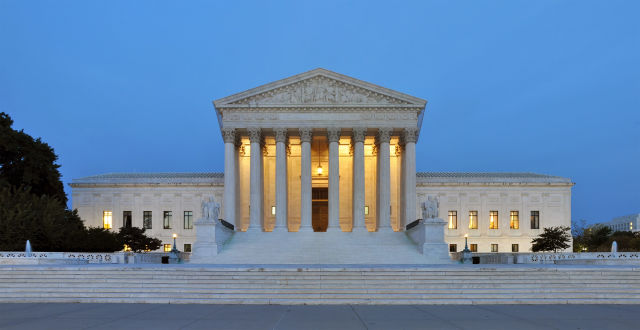
WASHINGTON—The Supreme Court on Monday declined to hear five appeals from the fossil fuel industry seeking to move climate change lawsuits it faces to the federal courts. The decision opens the door for Baltimore and other cities, states, and counties to pursue their claims for damages from climate-related extreme weather events, flooding, and sea-level rise in state courts.

Since the localities began filing their climate suits six years ago, they have, for the most part, seen state courts as the appropriate, and more advantageous, jurisdiction for seeking damages caused by climate change using product liability, deceptive advertising, and nuisance statutes.

They have contended that the industry has known for decades that burning fossil fuels produces greenhouse gases that warm the planet—harming local jurisdictions, their infrastructure, and, ultimately, their citizens.

“Since we filed this case nearly five years ago, the climate crisis has worsened, the costs to Baltimore taxpayers are skyrocketing, and the defendants have pocketed trillions of dollars in profits while trying to dodge accountability for their deception,” Sara Gross, chief of the Affirmative Litigation Division in the Baltimore City Department of Law, said in a statement.

Oil and gas companies, on the other hand, have sought to move these cases to federal courts where the focus would be less on local damages caused by extreme weather and more on national issues related to energy needs and greenhouse gas emissions under the federal Clean Air Act. ExxonMobil, Chevron, and Shell Oil Products were among the parties arguing that issues related to greenhouse gas emissions are “inherently federal.”

The lawsuits before the high court were filed by Rhode Island, the cities of Baltimore, Honolulu, and Imperial Beach, California, and counties in California and Hawaii. Numerous other states, cities, and counties have filed similar suits.

“After decades of climate change deception by the fossil fuel defendants, and now nearly half a decade of delay tactics in our lawsuit to hold them accountable for it, our residents, workers, businesses and taxpayers are ready for their day in court,” said Rhode Island Attorney General Peter F. Neronha.

The fossil fuel companies vowed to continue fighting the lawsuits and pursuing their jurisdictional arguments. “We will continue to fight these suits, which are a waste of time and resources and do nothing to address climate change,” a spokesperson for ExxonMobil said. “Today’s decision has no impact on our focus to invest billions of dollars into leading the way in a thoughtful energy transition that takes the world to net zero carbon emissions.”

John Masslon, senior counsel at the Washington Legal Foundation, a conservative public law firm that filed an amicus brief on behalf of the fossil fuel industry, said the jurisdictional argument is far from decided. “The issue of whether climate change litigation belongs in state or federal court is not going away,” Masslon said. “The Supreme Court will eventually have to resolve the circuit split on this critical issue. Kicking the can down the road will just help pad the bank accounts of lawyers at consumers’ expense.”

To date, at least five federal circuit courts of appeals have considered the jurisdictional issue and concluded that there were insufficient grounds to move the cases from the state courts to federal jurisdiction.

In March, a brief filed by the Biden administration also urged the court not to take up the appeals, arguing that no federal questions had been raised.

This story originally appeared on Inside Climate News.

https://arstechnica.com/?p=1934146