FBI: Rent-a-Hitman site nabbed Air National Guardsman who was “excited” to kill
Enlarge/ A picture from Josiah Garcia’s Facebook profile.
US authorities say a 21-year-old Air National Guardsman applied for hitman work on the satirical RentAHitman.com website and later agreed to kill a fictional person in exchange for $5,000. Tennessee man Josiah Ernesto Garcia was arrested and charged with use of interstate commerce facilities in the commission of murder-for-hire, US Attorney Henry Leventis announced Friday.
“Garcia submitted an employment inquiry indicating that he was interested in obtaining employment as a hit man,” the announcement said. “Garcia followed up on this initial request and submitted other identification documents and a resume, indicating he was an expert marksman and employed in the Air National Guard since July 2021.”
Garcia’s resume allegedly said his nickname, “Reaper,” was “Earned from Military experience and Marksmanship.” The resume said he was recognized as an expert marksman “for not missing a single bullseye on all of the targets and for shooting expert with 2 (or more) weapons,” according to the FBI.
The criminal complaint filed Thursday is based on an affidavit by FBI Special Agent Stephen Hunter, who described Garcia making a series of inquiries to the Rent-a-Hitman site, speaking to an undercover agent via phone and in person, and continuing to seek hitman work despite being warned of the risks multiple times.
FBI: Would-be hitman was willing to torture
Garcia allegedly told an undercover agent that he would be comfortable torturing victims and taking trophies such as fingers or ears, that he owned an AR-15 rifle, and that he accepted an envelope with $2,500 in cash as a down payment for killing the fictional client’s abusive husband. “After agreeing to the terms of the murder arrangement, Garcia asked the agent if he needed to provide a photograph of the dead body,” the US Attorney’s office said.
Enlarge/ A post on Garcia’s Facebook profile displays this gun with the caption, “She’s beautiful.”
The FBI affidavit says that after Garcia was arrested and waived his Miranda rights, he told agents that he changed his mind and was planning to return the $2,500 down payment. He allegedly told agents that “he was looking for work because he needed money and his family could not afford rent” and that a co-worker at the Air National Guard suggested that he look for “contract mercenary jobs.”
“Garcia searched that term online and came across the rentahitman.com website,” the affidavit said. Garcia was living at his parents’ house and said he was working one weekend per month in the Air National Guard. Authorities say they seized an AR-style rifle from his bedroom.
The criminal charge could put Garcia in prison for up to 10 years if he’s convicted. The case is in US District Court for the Middle District of Tennessee.
https://arstechnica.com/?p=1932368
Discord flushes leaked docs, reposters after leading FBI to prime suspect
Enlarge/ Photo illustration shows the Discord logo and the suspect, national guardsman Jack Teixeira, reflected in an image of the Pentagon in Washington, DC.
On Friday, Air Force National Guard airman Jack Teixeira was charged with two counts under the Espionage Act, alleging his unlawful gathering and unauthorized removal of top-secret military documents. These documents spread widely online after Teixeira allegedly spent months leaking classified information on a private Discord server. At his first court appearance, Teixeira was not required to enter a plea, but he is due back in court Wednesday, NBC News reported.
If he’s eventually found guilty, Teixeira could face up to 10 years in prison for each count, according to an affidavit from the Federal Bureau of Investigation’s special agent Patrick Lueckenhoff. His affidavit did not detail all the information that the FBI has gathered on Teixeira, but Lueckenhoff said that it shared enough information to demonstrate “sufficient probable cause for Teixeira’s arrest.”
Since Teixeira’s arrest, many have wondered how the FBI tracked him down. Lueckenhoff’s affidavit provides a timeline for the FBI’s manhunt and confirms that Discord played a major role in his arrest.
On April 10, the FBI interviewed one of the Discord users on the now-deleted server where Teixeira had served as an administrator. That Discord user disclosed key information that assisted the FBI, including confirming that the Discord admin’s real name was Jack, that he seemed to live in Massachusetts, and that he claimed to serve in the Air National Guard.
The FBI then requested assistance directly from Discord, which on Friday confirmed it had been cooperating with the investigation. Lueckenhoff’s affidavit showed that on April 12, Discord “provided the FBI with records pursuant to legal process.” These records included account and subscriber information, revealing that the Discord admin’s name was “Jack Teixeira” and that his billing address was “a specific residence in North Dighton, Massachusetts.”
On April 13, the same Discord user who had previously spoken to the FBI picked Teixeira out from a lineup of photos from the Registry of Motor Vehicles. That day, the FBI arrested Teixeira, and Discord released a statement to Ars, explaining that Teixeira’s alleged activity was prohibited on the platform.
“We are aware that law enforcement officials have arrested the individual accused of illegally posting classified material on our platform,” Discord’s spokesperson said. “We have cooperated with officials and remain committed to doing so as this investigation continues.”
Discord said that its terms of service “expressly prohibit” any illegal or criminal activity on the platform, “which includes the sharing of documents on Discord that may be verifiably classified.” The platform also confirmed that other Discord users were affected. Discord apparently has “banned users involved with the original distribution of the materials, deleted content,” and “issued warnings to users who continue to share the materials in question.”
Identifying classified materials unlawfully shared on its platform is not a straightforward process for Discord, though. In a blog, Discord noted that “only authorized government personnel can determine whether a document is classified, unclassified, or even authentic. And currently, there is no structured process for the government to communicate their determinations to platforms like Discord.”
Discord’s private channels are a major draw for some users. On Teixeira’s private server, which was called “Thug Shaker Central,” roughly 25 members formed the community specifically to have a private place to heatedly discuss guns, attempt to track covert military operations, and swap memes described by outlets like Business Insider and The Washington Post as racist and antisemitic. Discord’s statement suggested that it could not be expected to preserve privacy on servers found to be promoting irresponsible online behavior.
“While Discord places a premium on the privacy of our users, we believe that our platform best serves the needs of all when we collectively engage in responsible online behavior,” Discord’s spokesperson said.
https://arstechnica.com/?p=1932356
Parler shuts down as new owner says conservative platform needs big revamp
Getty Images | Smith Collection/Gado
Parler, the self-described “uncancelable free speech platform,” has been sold and shut down while its new owner conducts a “strategic assessment.” The platform will be back eventually, new owner Starboard says.
The Parler website is now a simple page containing only today’s press release announcing the acquisition, which was completed without financial terms being disclosed. “No reasonable person believes that a Twitter clone just for conservatives is a viable business any more,” the acquisition announcement said, promising a revamp.
“While the Parler app as it is currently constituted will be pulled down from operation to undergo a strategic assessment, we at Starboard see tremendous opportunities across multiple sectors to continue to serve marginalized or even outright censored communities—even extending beyond domestic politics,” the press release said. No timing for a return was mentioned.
In an interview with The Wall Street Journal, Starboard founder and CEO Ryan Coyne said that Parler is “going to take a breath of fresh air.”
New buyer emerged after canceled Kanye West deal
Starboard, formerly called Olympic Media, owns conservative news sites American Wire News and BizPac Review. “The team at Parler has built an exceptional audience, and we look forward to integrating that audience across all of our existing platforms,” Coyne said in the acquisition announcement.
Parlement Technologies, the previous owner, struck a deal to sell Parler to Ye (formerly Kanye West) in mid-October. But Parler canceled the deal weeks after Ye praised Adolf Hitler and Nazis in an appearance on Alex Jones’ Infowars show.
Parlement then laid off about 75 percent of its staff in November and December, reportedly leaving it with only about 20 employees. Parler also once reportedly offered Donald Trump’s company a 40 percent ownership stake, but negotiations were cut off after a mob of Trump supporters attacked the US Capitol on January 6, 2021.
Parlement CEO George Farmer, who is leaving the company, “said Starboard was one of a handful of suitors interested in Parler,” the WSJ wrote today.
January 6 attack increased scrutiny
Parler’s extremely lax approach to removing Russian disinformation came under greater scrutiny in Congress after the attack on the Capitol. Parler was also kicked off Amazon Web Services right after January 6, taking it offline until it secured alternative hosting. Apple and Google booted Parler from their app stores but eventually allowed it back on after Parler agreed to change its content moderation approach.
Parler has said it has about 16.5 million registered users, but its active user base appears to be much smaller. Analytics firm SimilarWeb says Parler’s website had 851,000 visits on desktop and mobile in the past month. In October, TechCrunch reported that Parler had 250,000 monthly active users on its iOS and Android apps.
Despite that, Coyne claimed in the acquisition announcement that “Parler’s large user base and additional strategic assets represent an enormous opportunity for Starboard to continue to build aggressively in our media and publishing business.”
Starboard also claims that artificial intelligence technology can help boost Parler’s reach. “Advancements in AI technology, along with the existing code base and other new features, provide an opportunity for Starboard to begin servicing unsupported online communities—building a home for them away from the ad-hoc regulatory hand of platforms that hate them,” the company said.
https://arstechnica.com/?p=1931858
Tesla is stonewalling discrimination probe, California state agency charges
Enlarge/ Cars parked at the Tesla Fremont Factory in Fremont, California, on February 10, 2022.
Getty Images | Josh Edelson
Tesla was sued yesterday by a California state agency that says the Elon Musk-led carmaker is stonewalling an investigation into alleged discrimination and harassment.
“Tesla’s failure to comply with my office’s obligation to investigate allegations of workplace misconduct shows a lack of respect for the rights and well-being of their workers,” Kevin Kish, director of the California Civil Rights Department, said today in a press release. Kish said his agency “will not accept any attempts to obstruct our investigation” and that “Tesla is not above the law.”
The agency’s press release said that Tesla “fail[ed] to comply with a subpoena in connection to an ongoing, confidential investigation into allegations of unlawful harassment and discrimination.” The agency filed a petition in Alameda County Superior Court asking for “an order directing respondent Tesla to appear before this Court and to show cause as to why it has refused to comply and/or not fully complied with CRD’s investigative discovery.”
The agency says the court should also order Tesla to produce a witness for a deposition and “provide full, complete responses” to the subpoena. The confidential investigation that led to yesterday’s complaint began in April 2021.
“Sex, race, and disability discrimination”
The Civil Rights Department’s petition said the investigation concerns “allegations of unlawful harassment and discrimination tolerated and fostered by respondent Tesla… The Complainants have all alleged instances of discrimination and harassment against respondents Tesla for matters including, but not limited to, sex, race, and disability discrimination.”
The Civil Rights Department, then known as the Department of Fair Employment and Housing, sued Tesla in February 2022 in a case alleging systemic racial segregation at the carmaker’s Fremont factory. The complaints that led to yesterday’s filing are separate from those in last year’s lawsuit.
With the new case, the Civil Rights Department said it is seeking documents and a deposition with a Tesla official who can address the allegations. The department said:
CRD is vested with the authority to issue and enforce subpoenas. As part of the investigation, CRD sought to depose an individual who Tesla believes would be knowledgeable of the alleged misconduct and related policies and procedures. However, Tesla failed to adequately respond and, to date, has declined to make an individual available. As a result, CRD is seeking a court order to compel compliance with its investigation into alleged instances of discrimination and harassment involving a group of workers.
We contacted Tesla today and will update this article if we get a response.
Tesla faces several other discrimination suits
Tesla is facing several racial discrimination lawsuits. In one of them, the California Supreme Court yesterday denied “Tesla’s bid to force two Black workers to arbitrate their discrimination claims,” according to a Bloomberg Law article. “The court’s seven justices, during their weekly conference, declined without comment the automaker’s request to review an appellate ruling that the workers also can pursue a public injunction against the company under the California Fair Employment and Housing Act.”
That case began in November 2017. In another lawsuit filed in July 2022, 15 factory employees alleged that Tesla’s “standard operating procedures include blatant, open, and unmitigated race discrimination.”
Yet another racial discrimination lawsuit, filed against Tesla by former freight elevator operator Owen Diaz, resulted in a $3.2 million jury verdict earlier this month. A previous jury ruled that Tesla should pay $137 million to Diaz, but a judge reduced the damages to $15 million. Diaz rejected the $15 million award and sought the new damages trial that reduced his payout even further.
Tesla is also facing lawsuits from women who allege that the company failed to stop rampant sexual harassment in California factories and service centers.
https://arstechnica.com/?p=1931709
Twitter “no longer exists” as a company, merges into Musk’s X Corp
Last month, Twitter CEO Elon Musk told employees that they’d be eligible to receive stocks in X Corporation—the new name for the holding company that he initially set up to purchase Twitter—telling them that soon Twitter could be worth $250 billion. More recently, an April court filing shows that Twitter, Inc. has officially merged with X Corp, achieving Musk’s goal of wiping out Twitter Inc. as a company. The court filing confirmed that Twitter, Inc. “no longer exists.” Now, there is only X Corp.
“X,” Musk cryptically tweeted after the news of the merger broke.
Musk’s lawyer, Jonathan Patchen, didn’t immediately respond to Ars’ request for comment.
This tweet so far is his only public announcement regarding this change. It remains unclear what the change ultimately means. Some speculate that Twitter becoming X Corp is the next step in Musk’s plan to launch an “everything app” like China’s WeChat, where users can send payments, shop, and message each other all on one platform. Successfully launching an “everything app” would seemingly be one way for Musk to achieve his ambitious $250 billion valuation goal. But, as Slate noted, others have suggested that merging Twitter, Inc. into X Corp could also signal that Musk was serious when he tweeted that it was a “good idea” to fold all his companies—Twitter, SpaceX, Tesla, Neuralink, and The Boring Company—into one parent company called X.
As usual, it’s hard to predict what Musk intends to do next with Twitter. This news follows one of the most unserious months in Musk’s tenure as CEO, where he replaced the Twitter bird logo with Dogecoin’s shiba inu logo and got in trouble with the landlord at Twitter’s headquarters when he erased the “w” on Twitter’s signage so that the building was marked “Titter.” Journalist Dave Troy tweeted that these moves and others—like Twitter’s press team responding only with a poop emoji—were apparently signs that Musk was about to “kill off a beloved (?) global brand.”
Anyway, if you’re about to kill off a beloved (?) global brand, you might screw around with the logos and signage and replace it with meme dogs and scatological humor. 🤷♂️
Troy’s thread also noted that Twitter co-founder Jack Dorsey had praised Musk as the only appropriate buyer for Twitter. Dorsey tweeted in April 2022 that Musk was the “singular solution” Dorsey trusted to solve “the problem” of Twitter being a company, rather than a public good, saying “I don’t believe anyone should own or run Twitter.”
The similarities between Twitter and Substack Notes are obvious to more than just Musk—The Verge reported the Substack news by joking that “Substack is getting tweets.” And Musk’s personal affront to Substack seemed to be confirmed when journalist Matt Taibbi tweeted to complain that he could no longer link to his Substack on Twitter. The Twitter Files journalist, formerly tight with Twitter, confirmed that the links to Substack stopped functioning due to Twitter raising a “dispute over the new Substack Notes platform.” When Taibbi asked Twitter how he was supposed to promote his Substack, Twitter’s response suggested that he post all his articles “on Twitter instead.”
Part of Musk’s “everything app” strategy is to entice creators like Taibbi to live on Twitter, with Musk envisioning Twitter users becoming avid subscribers eager to access exclusive content from journalists posting entire news articles or other creators posting long videos. Other ways he plans to monetize Twitter include creating a digital payments platform and essentially an online bank, where creators like Taibbi could earn higher interest by keeping their money on Twitter. Experts told American Banker that Musk might struggle with his payments platform ambitions, facing “a crowded market that is rarely friendly to payment products from social networks.”
In the past, Musk has said that he thinks he could transform Twitter into X, the “everything app,” within the next five years. Experts told Ars that regulators would likely get in Musk’s way, with lawmakers recently scrutinizing tech companies much more closely over antitrust concerns and security concerns regarding rapid developments with fintech. But if Musk can stay ahead of regulators, he might possibly be able to forge a path to turn Twitter into an “everything app,” potentially called X, worth $250 billion.
With the recent court filing and Musk’s email to employees signaling his plans to quickly balloon Twitter’s valuation, the clues are there that Musk has not given up on this dream. And it must be personally satisfying for Musk to merge a well-known brand like Twitter with X Corp and have that merger result in X Corp as the chosen name for the resulting company. Back in the early 2000s when Musk’s online bank X merged with PayPal, leadership decided to keep the name PayPal due to its broader brand recognition after Musk lost a popular vote. Now, Musk’s vote is likely the only one that counts, and thus Twitter, Inc. has now become X Corp. This move could perhaps help to distance X Corp from all of Twitter’s legal woes—including most recently a lawsuit filed by Twitter’s ex-CEO.
https://arstechnica.com/?p=1930724
SBF called Alameda “unauditable,” joked about losing track of $50 million
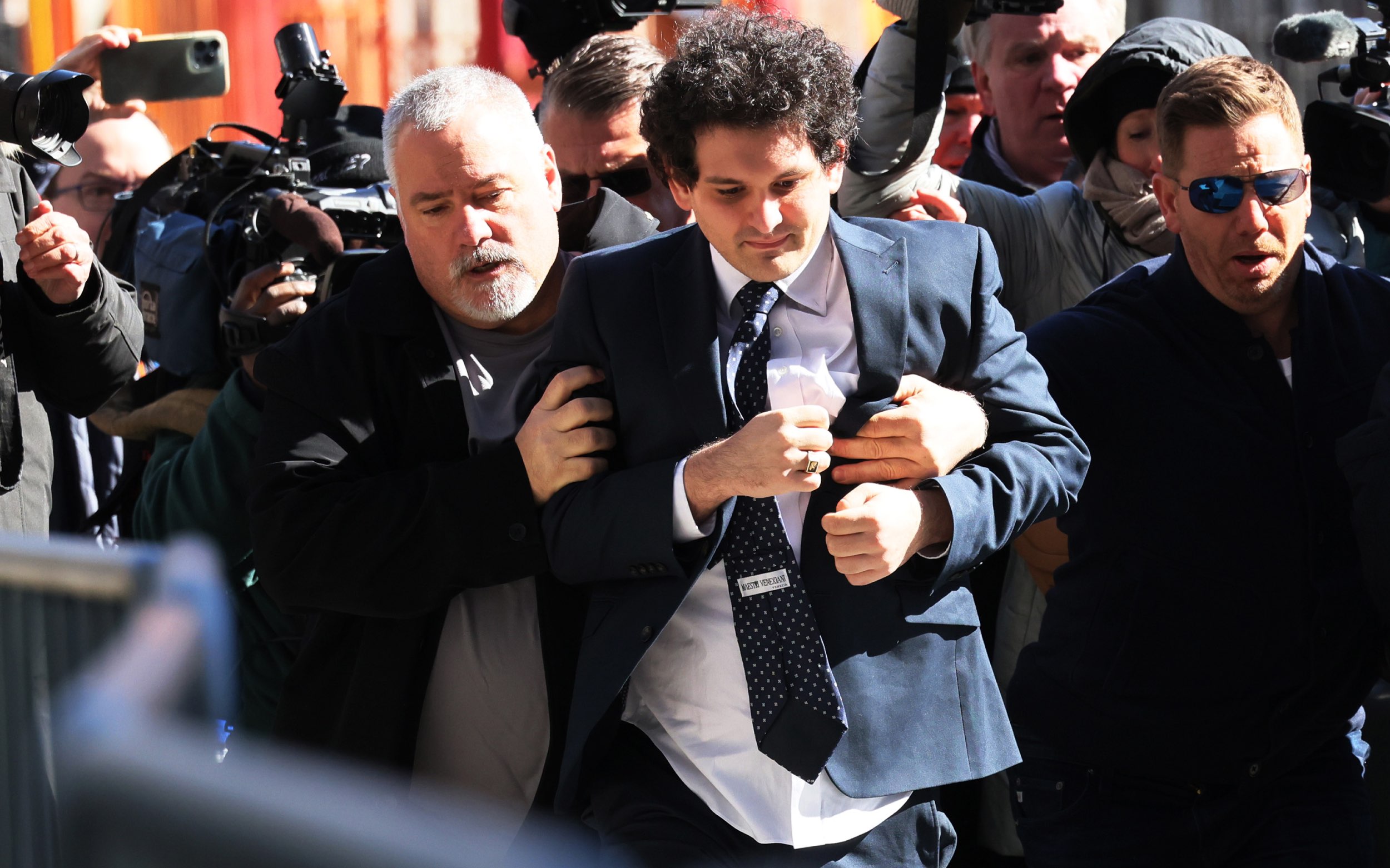
Enlarge/ FTX Founder Sam Bankman-Fried arrives at US District Court on March 30, 2023, in New York City after being hit with a new criminal charge for allegedly authorizing a bribe of at least $40 million to one or more Chinese government officials.
Getty Images | Michael Santiago
Sam Bankman-Fried declared FTX affiliate Alameda Research to be “unauditable” and joked about sometimes losing track of $50 million worth of assets, according to a report issued by FTX’s new CEO.
“In an internal communication, Bankman-Fried described Alameda as ‘hilariously beyond any threshold of any auditor being able to even get partially through an audit,'” according to the report filed in US Bankruptcy Court in Delaware on Sunday. Bankman-Fried’s internal message said:
Alameda is unauditable. I don’t mean this in the sense of “a major accounting firm will have reservations about auditing it”; I mean this in the sense of “we are only able to ballpark what its balances are, let alone something like a comprehensive transaction history.” We sometimes find $50m of assets lying around that we lost track of; such is life.
In a bit of an understatement, the report said that “Bankman-Fried’s statements evidence the challenges a competent audit firm would have had to overcome to audit Alameda’s business.” The new filing is titled “First interim report of John J. Ray III to the independent directors on control failures at the FTX exchanges.” It also details security failures such as using plain text to store private keys linked to over $100 million in assets and sloppy accounting practices like approving invoices in Slack with emoji.
First report in “spirit of transparency”
Ray, who previously oversaw the Enron liquidation, is leading FTX through bankruptcy proceedings. “We are releasing the first report in the spirit of transparency that we promised since the beginning of the Chapter 11 process,” Ray said in a press release.
While FTX’s new leadership tries to determine how much money they can return to harmed investors, former FTX CEO Bankman-Fried is accused of improperly diverting billions of dollars of FTX customer funds to Alameda and is facing 13 criminal charges for several types of fraud and conspiracy. Bankman-Fried himself received about $2.2 billion in payments and loans from FTX entities, mainly from Alameda Research, FTX and its affiliated debtors said last month.
Three former executives who worked with Bankman-Fried pleaded guilty to criminal fraud charges and are cooperating with government prosecutors. They are Nishad Singh, FTX’s former director of engineering; FTX’s former CTO Gary Wang; and former Alameda CEO Caroline Ellison.
FTX’s leaders “stifled dissent, commingled and misused corporate and customer funds, lied to third parties about their business, joked internally about their tendency to lose track of millions of dollars in assets, and thereby caused the FTX Group to collapse as swiftly as it had grown,” the report said.
“come up with some numbers? idk.”
Ray’s report noted that companies as large and complex as FTX usually have sophisticated accounting systems. That was not the case at FTX and its sister company Alameda, which were both co-founded by Bankman-Fried.
“Fifty-six entities within the FTX Group did not produce financial statements of any kind. Thirty-five FTX Group entities used QuickBooks as their accounting system and relied on a hodgepodge of Google documents, Slack communications, shared drives, and Excel spreadsheets and other non-enterprise solutions to manage their assets and liabilities,” the report said.
One internal portfolio summary noted that Alameda hadn’t come up with any valuation numbers for certain cryptocurrency tokens:
Alameda often had difficulty understanding what its positions were, let alone hedging or accounting for them. For the vast majority of assets, Alameda’s recordkeeping was so poor that it is difficult to determine how positions were marked. A June 2022 “Portfolio summary” purporting to model cryptocurrency positions held by Alameda stated, with respect to valuation inputs for certain tokens, that Alameda personnel should “come up with some numbers? idk.”
https://arstechnica.com/?p=1930725
Musk admits NPR isn’t state-affiliated after asking questions he could have Googled
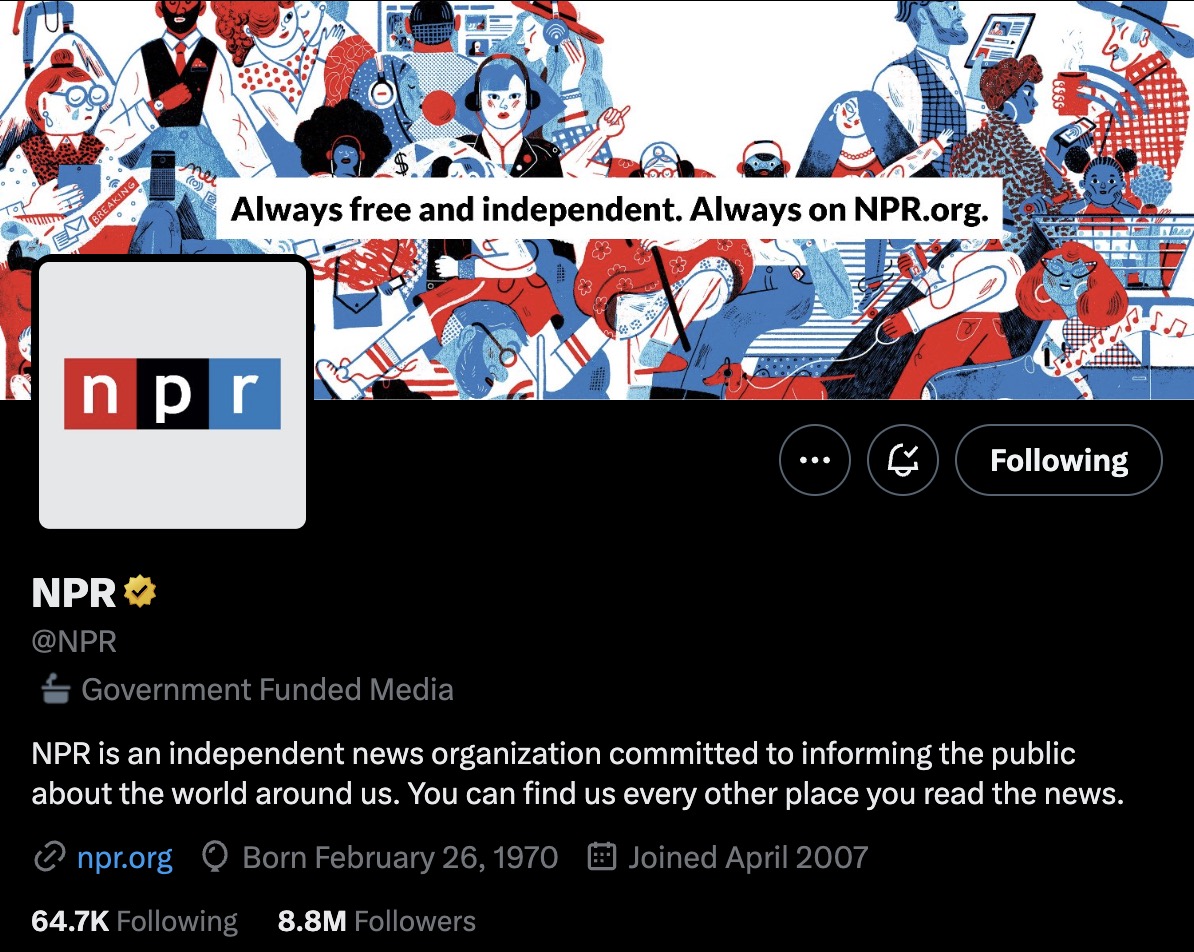
Enlarge/ NPR’s Twitter profile as of April 9, 2023.
When Elon Musk slapped NPR’s Twitter account with a “US state-affiliated media” label last week, it quickly became clear he didn’t know much about how NPR operates or how it’s funded. After admitting the state-affiliated label was wrong, Musk changed NPR’s tag yesterday to “Government Funded Media”—even though NPR gets less than 1 percent of its annual funding directly from the US government.
The state-affiliated tag took NPR and many others by surprise, in part because it contradicted Twitter’s own policy that cited NPR and the BBC as examples of state-financed media organizations that retain editorial independence. Twitter has historically applied its state-affiliated tag to state-controlled news organizations like Russia’s RT and China’s Xinhua.
Twitter changed its policy to remove the reference to editorial independence at NPR and the BBC but didn’t scrub the old language from another Twitter help page that still describes both NPR and the BBC as editorially independent. The BBC’s main Twitter account is also newly labeled as “Government Funded Media” after previously having no label.
In emails with NPR reporter Bobby Allyn, Musk asked basic questions that he could have found answers to with a quick Internet search. “He didn’t seem to understand the difference between public media and state-controlled media,” Allyn said Friday in an interview with Mary Louise Kelly on the show All Things Considered.
Allyn continued:
He asked me at one point, quote, “what’s the breakdown of NPR’s annual funding?” And he asked, “who appoints leadership at NPR?” These are questions you can get by Googling, but for some reason he wanted to ask me. And also, let’s take a moment and pause on these questions, Mary Louise, because he made a major policy decision, right? And after doing so, he is just now asking for the basic facts. This is not exactly how most CEOs in America operate. Anyway, I answered his questions. About 1 percent of NPR’s budget is from federal grants, and an independent board appoints NPR’s CEO, who picks leadership.
Musk: Label “might not be accurate”
Musk could have gotten the NPR funding information from this NPR page, which says, “On average, less than 1 percent of NPR’s annual operating budget comes in the form of grants from CPB [Corporation for Public Broadcasting] and federal agencies and departments.”
Corporate sponsorships are the top contributor to NPR funding, accounting for 39 percent of average annual revenue between 2018 and 2022. NPR gets another 31 percent of its funding in programming fees from member organizations. Federal funding indirectly contributes to the latter category because the publicly funded CPB provides annual grants to public radio stations that pay NPR for programming.
Musk’s emails were further detailed in an article by Allyn. After Allyn told Musk that NPR gets only 1 percent of its money from the government, Musk replied, “Well, then we should fix it.”
“The operating principle at new Twitter is simply fair and equal treatment, so if we label non-US accounts as govt, then we should do the same for US, but it sounds like that might not be accurate here,” Musk wrote in another email to Allyn.
NPR’s current government-funded label links to Twitter’s policy, which includes Twitter’s definition of state-affiliated media accounts but doesn’t provide a definition of government-funded.
https://arstechnica.com/?p=1930327
TikTok ban bill is so broad it could apply to nearly any type of tech product
Enlarge/ TikTok ad at a Metro station in Washington, DC on March 30, 2023.
Getty Images | Bloomberg
Banning TikTok has been a hot topic in Congress lately. But if lawmakers go through with a ban on the social network owned by Chinese company ByteDance, the US could end up banning or restricting access to many more apps and technology products than just TikTok.
A leading “TikTok ban” candidate is the RESTRICT Act, or the Restricting the Emergence of Security Threats that Risk Information and Communications Technology Act. The bipartisan Senate bill was introduced a month ago and endorsed by the White House in an official statement from National Security Adviser Jake Sullivan. The Biden administration reportedly provided feedback on a draft of the proposed law before it was announced.
The bill doesn’t actually guarantee that TikTok will be banned—its text doesn’t even mention TikTok or ByteDance. But it would give the secretary of Commerce and president broad power to ban mobile or desktop applications and other types of technology products from countries regarded as threats to national security.
For that reason, the RESTRICT Act has received vocal opposition from digital rights activists. The bill’s vagueness on which specific products would be banned and the sweeping powers it would give the executive branch have generated speculation that it could criminalize the use of VPNs and authorize additional surveillance of US citizens’ online activity.
There has been some “misinterpretation and other overly strained readings of the law [that] have been shared widely on both social media and in the news,” which Congress could have prevented by writing a clearer bill, the Electronic Frontier Foundation said in a breakdown of the proposed law published Tuesday. Although the EFF doesn’t view the RESTRICT act as a surveillance tool, it says there are many legitimate concerns about the proposal.
“This is sweeping legislation that would have Congress abdicate much of its responsibility in holding the executive branch accountable, and leaving any room for misinterpretation is a problem. The confusing language here is another failure of the bill,” wrote EFF employees, including David Greene, a senior staff attorney and the group’s civil liberties director.
EFF: Bill can be read as criminalizing some VPN use
Some of the worrisome predictions made about the bill aren’t impossible. Even if the Biden administration uses the proposed powers in a limited way, future presidents could be more aggressive in banning products.
There is a chance the bill could lead to punishments of individual Americans for using a VPN or other technologies to access TikTok, the EFF said.
“The bill authorizes the Department of Commerce to impose ‘mitigation measures’ without any restrictions on what those measures might be. Couple that with a vague enforcement provision that grants the power to broadly punish any person who ‘evades’ these undefined ‘mitigation measures,’ and the result is a law that can be read as criminalizing common practices like using a VPN to get a prohibited app, side-loaded installations, or using an app that was lawfully downloaded somewhere else,” the EFF said.
The bill language the EFF was referring to says, “No person may engage in any transaction or take any other action with intent to evade the provisions of this Act, or any regulation, order, direction, mitigation measure, prohibition, or other authorization or directive issued thereunder.”
The EFF analysis continued:
Even if the bill’s sponsors do not intend it, giving the Commerce Department broad authority to impose crushing criminal penalties on any person trying to evade a ‘mitigation measure’ is dangerous. For example, in the case of a mitigation measure that bars the importation of TikTok into the US, it authorizes penalties, including 25 years of prison time, for any person who brings TikTok into the US, whether by use of a VPN or downloading it while in another country.
Generally speaking, the bill would “give more power to the executive branch and remove many of the commonsense restrictions that exist under the Foreign Intelligence Services Act (FISA)” and the Berman Amendments, the EFF said.
Why so broad? Senators don’t like Whac-A-Mole
The RESTRICT Act was introduced by Sens. Mark Warner (D-Va.) and John Thune (R-S.D.). Including Warner and Thune, the bill was co-sponsored by six Democrats and six Republicans.
Explaining why the bill doesn’t just target TikTok, Warner cited other Chinese companies like Huawei and ZTE, and Russian company Kaspersky Lab. “We need a comprehensive, risk-based approach that proactively tackles sources of potentially dangerous technology before they gain a foothold in America, so we aren’t playing Whac-A-Mole and scrambling to catch up once they’re already ubiquitous,” said Warner, who is chairman of the Senate Select Committee on Intelligence.
Thune agreed that “Congress needs to stop taking a piecemeal approach when it comes to technology from adversarial nations that pose national security risks.”
The EFF urged Congress to focus instead on passing “comprehensive consumer data privacy legislation that will have a real impact, and protect our data no matter what platform it’s on—TikTok, Facebook, Twitter, or anywhere else that profits from our private information… Foreign adversaries won’t be able to get our data from social media companies if the social media companies aren’t allowed to collect, retain, and sell it in the first place.”
https://arstechnica.com/?p=1930021
Twitter lawyer quits as Musk’s legal woes expand, report says
After the Federal Trade Commission launched a probe into Twitter over privacy concerns, Twitter’s negotiations with the FTC do not seem to be going very well. Last week, it was revealed that Twitter CEO Elon Musk’s request last year for a meeting with FTC Chair Lina Khan was rebuffed. Now, a senior Twitter lawyer, Christian Dowell—who was closely involved in those FTC talks—has resigned, several people familiar with the matter told The New York Times.
Dowell joined Twitter in 2020 and rose in the ranks after several of Twitter’s top lawyers exited or were fired once Musk took over the platform in the fall of 2022, Bloomberg reported. Most recently, Dowell—who has not yet confirmed his resignation—oversaw Twitter’s product legal counsel. In that role, he was “intimately involved” in the FTC negotiations, sources told the Times, including coordinating Twitter’s responses to FTC inquiries.
The FTC has overseen Twitter’s privacy practices for more than a decade after it found that the platform failed to safeguard personal information and issued a consent order in 2011. The agency launched its current probe into Twitter’s operations after Musk began mass layoffs that seemed to introduce new security concerns, AP News reported. The Times reported that the FTC’s investigation intensified after security executives quit Twitter over concerns that Musk might be violating the FTC’s privacy decree.
The FTC declined Ars’ request to comment, and Twitter continues to reply with a poop emoji in lieu of comments.
If the Times’ report is accurate, it’s unclear who will replace Dowell as Twitter’s senior product counsel overseeing FTC negotiations. Musk recently stopped relying on his personal lawyer to chip in at Twitter, but the Times reported that he has seemingly continued to seek guidance from lawyers at SpaceX, one of his other companies.
While the FTC probe remains ongoing, Musk’s layoffs have seemingly ensured that Twitter’s legal woes will continue compounding. Not only is Twitter seeking legal action against the suspected ex-employee who leaked Twitter source code on Github, but Twitter is also currently involved in individual arbitration with hundreds, if not thousands, of ex-employees who were not allowed to join a class-action lawsuit over allegedly missing severance payments and lost wages.
Twitter will need to fill Dowell’s position soon, it seems, since Germany’s federal office of justice just this week launched another probe into the platform, Reuters reported. The German authority’s probe is concerned with Twitter’s seeming failure to delete or block illegal content in the country and is threatening to fine Twitter up to 50 million euros if the illegal content is not removed, Forbes reported.
Musk did not seem to see that probe coming, responding in a tweet, “First I’ve heard about this. Did they identify what content they’re concerned about?” Reuters’ report said that the German office cited several complaints about illegal content on Twitter, but while authorities said they have “sufficient evidence,” they did not provide examples of illegal content driving those complaints.
Forbes reported that illegal content in Germany includes hate speech, personal threats, defamation, and antisemitism. That report also noted that Twitter is being sued by a digital rights campaign group, HateAid, and the European Union of Jewish Students for claims that Twitter failed to remove content reported for antisemitism.
https://arstechnica.com/?p=1929974
The dumb reason Twitter won’t allow retweeting tweets linking to Substack
Getty Images | NurPhoto
Twitter users on Friday began noticing that they could not retweet or reply to tweets containing links to the Substack.com domain. This behavior seems to have started less than 48 hours after the popular newsletter platform announced a new product called Notes that will compete directly with Twitter.
For example, this tweet references my newsletter, understandingai.substack.com. When I try to retweet it, it gives me an error message saying, “Some actions on this tweet have been disabled by Twitter.” If I try to reply to the same tweet, I get an error message saying, “Something went wrong, but don’t fret—let’s give it another shot.” Even liking isn’t allowed.
This tweet is identical, except that I linked to my custom domain, understandingai.org. I have no trouble liking, retweeting, or replying to it.
In the last 24 hours, Twitter also appears to have started blocking tweet-embedding in Substack posts.
“We’re investigating reports that Twitter embeds and authentication no longer work on Substack,” Substack tweeted on Thursday. “We are actively trying to resolve this and will share updates as additional information becomes available.”
I emailed Twitter’s official press email address, press@twitter.com, for comment. Twitter automatically replies to all emails at that account with the message “💩.” I don’t expect a further response, as Twitter appears to have laid off most of its press shop. Tesla disbanded its PR department three years ago.
But it’s not hard to guess why Twitter started restricting tweets about Substack. On Wednesday, Substack announced its Notes feature, which sounds an awful lot like Twitter.
“In Notes, writers will be able to post short-form content and share ideas with each other and their readers,” Substack wrote in a blog post. “Like our Recommendations feature, Notes is designed to drive discovery across Substack. But while Recommendations lets writers promote publications, Notes will give them the ability to recommend almost anything—including posts, quotes, comments, images, and links.”
This wouldn’t be the first time Twitter has restricted the reach of rivals on its platform. Back in December, Twitter banned several technology reporters after they reported on the controversy over services that track Twitter-owner Elon Musk’s private jet. That led to an exodus of users to Twitter rivals such as Mastodon. A few days later, Twitter started blocking links to Mastodon and other competing social media platforms.
As I write this, tweets linking to Mastodon accounts seem to be working again.
Substack has yet to respond to an email seeking comment. We’ll update the story if we hear back.
Tim Lee was on staff at Ars from 2017 to 2021. He recently launched a new Substack newsletter, Understanding AI. It explores how AI works and how it’s changing our world. You can subscribe to his newsletter here.