Here’s how the IRS’s clean vehicle tax credit will change on April 18

18 May 2022, Lower Saxony, Salzgitter: An employee removes battery modules from a worn-out battery of an electric car in battery recycling at the VW plant in Salzgitter. Volkswagen is building a battery cell factory at its Salzgitter site for its planned large-scale production of the Group's own battery cells. New battery systems for electric cars are already being developed at the research and development center.
Enlarge / Until the beginning of this year, an EV’s tax credit was determined by the storage capacity of its battery pack. Now, the tax credit is linked to local manufacturing of components and locally sourced critical minerals.
Julian Stratenschulte/picture alliance via Getty Images

It has been a confusing few months for potential electric vehicle customers after the introduction of complicated new rules for the clean vehicle tax credit at the beginning of the year. Now the rules are changing once again.

On Thursday, the Internal Revenue Service published a draft of new guidance for the $7,500 clean vehicle tax credit and said that starting on April 18, it will begin enforcing the domestic sourcing requirement for battery minerals and components. As a result, many new EVs may not qualify for the tax credit.

Tell me the rules again

As we’ve detailed before, the revised clean vehicle tax credit has quite a few conditions that must be satisfied in order for that vehicle to be eligible.

The battery pack must have a capacity of at least 7 kWh. The vehicle cannot have a gross vehicle weight of more than 14,000 lbs (6,350 kg). Plug-in hybrid and battery EVs must be built by qualified manufacturers, although that requirement doesn’t apply to a hydrogen fuel cell EV. The vehicle’s final assembly must be in North America. And there are income and price caps—$55,000 for a sedan and $80,000 for trucks, vans, and SUVs—as well.

But those requirements are not the end of the story—they are necessary but not sufficient for eligibility. $3,750 of the credit requires that a certain percentage of the value of the battery pack’s components must be manufactured or assembled in North America. For this year, that’s 50 percent, and it increases by 10 percent per year until 2029, when all the value of the battery components in a new EV must be manufactured or assembled in North America to qualify.

The IRS declined to enforce this condition when the new rules went into effect at the start of 2023 as it figured out how it would apply it—a move that angered US Senator Joe Manchin, who was responsible for writing the new tax credit rules in the Inflation Reduction Act of 2022. Yesterday, Senator Manchin vowed to sue the federal government if he was able to make them start applying these rules—one can imagine he is therefore pleased that the domestic content and value rules will be enforced starting on April 18 now that the IRS has written guidance.

Now, there’s a four-step process for determining the value of the battery’s components. First, identify all the components manufactured or assembled in North America. Then determine the incremental value of all battery pack components, including those made or assembled in North America. Next, determine the total incremental value of the battery components, and finally, divide the total value of all North American-sourced components by the total value of all the components to get a percentage.

In time, it should be increasingly easy for automakers to satisfy this requirement; over the past few months, we’ve seen new battery factories announced in Michigan, Kentucky, Tennessee, Ohio, South Carolina, and Indiana, with yet more in the works.

Where did you get that lithium from?

In order to qualify for the other half of the $7,500 tax credit, some of the critical minerals used in the battery pack must be extracted, processed, or recycled in the US or extracted or processed in a country with which the US has a free trade agreement. Again, the IRS initially declined to apply this requirement in January before it could come up with guidance; that changes on April 18.

Like the battery value rule, the percentage of domestically sourced minerals has to increase year on year for a vehicle to be eligible. In 2023, 50 percent of the critical minerals must meet this requirement, increasing by 10 percent per year until 2029, when all the critical minerals must satisfy the domestic rule.

https://arstechnica.com/?p=1928238


GPT-4 poses too many risks and releases should be halted, AI group tells FTC

The ChatGPT website is displayed on a smartphone screen next to two blocks displaying the letters
Getty Images | VCG

A nonprofit AI research group wants the Federal Trade Commission to investigate OpenAI, Inc. and halt releases of GPT-4.

OpenAI “has released a product GPT-4 for the consumer market that is biased, deceptive, and a risk to privacy and public safety. The outputs cannot be proven or replicated. No independent assessment was undertaken prior to deployment,” said a complaint to the FTC submitted today by the Center for Artificial Intelligence and Digital Policy (CAIDP).

Calling for “independent oversight and evaluation of commercial AI products offered in the United States,” CAIDP asked the FTC to “open an investigation into OpenAI, enjoin further commercial releases of GPT-4, and ensure the establishment of necessary guardrails to protect consumers, businesses, and the commercial marketplace.”

Noting that the FTC “has declared that the use of AI should be ‘transparent, explainable, fair, and empirically sound while fostering accountability,'” the nonprofit group argued that “OpenAI’s product GPT-4 satisfies none of these requirements.”

GPT-4 was unveiled by OpenAI on March 14 and is available to subscribers of ChatGPT Plus. Microsoft’s Bing is already using GPT-4. OpenAI called GPT-4 a major advance, saying it “passes a simulated bar exam with a score around the top 10 percent of test takers,” compared to the bottom 10 percent of test takers for GPT-3.5.

Though OpenAI said it had external experts assess potential risks posed by GPT-4, CAIDP isn’t the first group to raise concerns about the AI field moving too fast. As we reported yesterday, the Future of Life Institute published an open letter urging AI labs to “immediately pause for at least 6 months the training of AI systems more powerful than GPT-4.” The letter’s long list of signers included many professors alongside some notable tech-industry names like Elon Musk and Steve Wozniak.

Group claims GPT-4 violates the FTC Act

CAIDP said the FTC should probe OpenAI using its authority under Section 5 of the Federal Trade Commission Act to investigate, prosecute, and prohibit “unfair or deceptive acts or practices in or affecting commerce.” The group claims that “the commercial release of GPT-4 violates Section 5 of the FTC Act, the FTC’s well-established guidance to businesses on the use and advertising of AI products, as well as the emerging norms for the governance of AI that the United States government has formally endorsed and the Universal Guidelines for AI that leading experts and scientific societies have recommended.”

The FTC should “halt further commercial deployment of GPT by OpenAI,” require independent assessment of GPT products prior to deployment and “throughout the GPT AI lifecycle,” “require compliance with FTC AI Guidance” before future deployments, and “establish a publicly accessible incident reporting mechanism for GPT-4 similar to the FTC’s mechanisms to report consumer fraud,” the group said.

More broadly, CAIDP urged the FTC to issue rules requiring “baseline standards for products in the Generative AI market sector.”

We contacted OpenAI and will update this article if we get a response.

“OpenAI has not disclosed details”

CAIDP’s president and founder is Marc Rotenberg, who previously co-founded and led the Electronic Privacy Information Center. Rotenberg is an adjunct professor at Georgetown Law and served on the Expert Group on AI run by the international Organisation for Economic Co-operation and Development. Rotenberg also signed the Future of Life Institute’s open letter, which is cited in the CAIDP complaint.

CAIDP’s chair and research director is Merve Hickok, who is also a data ethics lecturer at the University of Michigan. She testified in a congressional hearing about AI on March 8. CAIDP’s list of team members includes many other people involved in technology, academia, privacy, law, and research fields.

The FTC last month warned companies to analyze “the reasonably foreseeable risks and impact of your AI product before putting it on the market.” The agency also raised various concerns about “AI harms such as inaccuracy, bias, discrimination, and commercial surveillance creep” in a report to Congress last year.

GPT-4 poses many types of risks, and its underlying technology hasn’t been adequately explained, CAIDP told the FTC. “OpenAI has not disclosed details about the architecture, model size, hardware, computing resources, training techniques, dataset construction, or training methods,” the CAIDP complaint said. “The practice of the research community has been to document training data and training techniques for Large Language Models, but OpenAI chose not to do this for GPT-4.”

“Generative AI models are unusual consumer products because they exhibit behaviors that may not have been previously identified by the company that released them for sale,” the group also said.

https://arstechnica.com/?p=1927971


Meta wants EU users to apply for permission to opt out of data collection

Meta wants EU users to apply for permission to opt out of data collection

Meta announced that starting next Wednesday, some Facebook and Instagram users in the European Union will for the first time be able to opt out of sharing first-party data used to serve highly personalized ads, The Wall Street Journal reported. The move marks a big change from Meta’s current business model, where every video and piece of content clicked on its platforms provides a data point for its online advertisers.

People “familiar with the matter” told the Journal that Facebook and Instagram users will soon be able to access a form that can be submitted to Meta to object to sweeping data collection. If those requests are approved, those users will only allow Meta to target ads based on broader categories of data collection, like age range or general location.

This is different from efforts by other major tech companies like Apple and Google, which prompt users to opt in or out of highly personalized ads with the click of a button. Instead, Meta will review objection forms to evaluate reasons provided by individual users to end such data collection before it will approve any opt-outs. It’s unclear what cause Meta may have to deny requests.

A Meta spokesperson told Ars that Meta is not sharing the objection form publicly at this time but that it will be available to EU users in its Help Center starting on April 5. That’s the deadline Meta was given to comply with an Irish regulator’s rulings that it was illegal in the EU for Meta to force Facebook and Instagram users to give consent to data collection when they signed contracts to use the platforms.

Meta still plans to appeal those Irish Data Protection Commission (DPC) rulings, believing that its prior contract’s legal basis complies with the EU’s General Data Protection Regulation (GDPR). In the meantime, though, the company must change the legal basis for data collection. Meta announced in a blog post today that it will now argue that it does not need to directly obtain user consent because it has a “legitimate interest” to collect data to operate its social platforms.

“We believe that our previous approach was compliant under GDPR, and our appeal on both the substance of the rulings and the fines continues,” Meta’s blog said. “However, this change ensures that we comply with the DPC’s decision.”

The DPC’s rulings came after an EU consumer rights group, NOYB, filed numerous complaints against Meta for sweeping data collection that violated the GDPR. In January, NOYB Senior Attorney Romain Robert told Ars that Meta’s plan to use a “legitimate interests” basis for data collection would require much more transparency from the company. Robert said it was unlikely that Meta would be inclined to share enough information or release previously unknown details about its data processing that it could satisfy EU regulators under the “legitimate interests” legal basis.

https://arstechnica.com/?p=1927913


Judge finds Google destroyed evidence and repeatedly gave false info to court

A piece of paper being destroyed in a paper shredder machine.
Getty Images | Hup

A federal judge yesterday ruled that Google intentionally destroyed evidence and must be sanctioned, rejecting the company’s argument that it didn’t need to automatically preserve internal chats involving employees subject to a legal hold.

“After substantial briefing by both sides, and an evidentiary hearing that featured witness testimony and other evidence, the Court concludes that sanctions are warranted,” US District Judge James Donato wrote. Later in the ruling, he wrote that evidence shows that “Google intended to subvert the discovery process, and that Chat evidence was ‘lost with the intent to prevent its use in litigation’ and ‘with the intent to deprive another party of the information’s use in the litigation.'”

He said that chats produced by Google last month in response to a court order “provided additional evidence of highly spotty practices in response to the litigation hold notices.” For example, Donato quoted one newly produced chat in which “an employee said he or she was ‘on legal hold’ but that they preferred to keep chat history off.”

Donato’s ruling was made in a multi-district antitrust case bringing together lawsuits filed by Epic Games, the attorneys general of 38 states and the District of Columbia, the Match Group, and a class of consumers. It’s being heard in US District Court for the Northern District of California. The case is over the Google Play Store app distribution model, with plaintiffs alleging that “Google illegally monopolized the Android app distribution market by engaging in exclusionary conduct, which has harmed the different plaintiff groups in various ways,” Donato noted.

Donato’s ruling said that Google provided false information to the court and plaintiffs about the auto-deletion practices it uses for internal chats. Google deletes chat messages every 24 hours unless the “history-on” setting is enabled by individual document custodians.

Judge: Google repeatedly gave false info

There are 383 Google employees who are subject to the legal hold in this case, and about 40 of those are designated as custodians. Google could have set the chat history to “on” as the default for all those employees but chose not to, the judge wrote.

“Google falsely assured the Court in a case management statement in October 2020 that it had ‘taken appropriate steps to preserve all evidence relevant to the issues reasonably evident in this action,’ without saying a word about Chats or its decision not to pause the 24-hour default deletion,” Donato wrote. “Google did not reveal the Chat practices to plaintiffs until October 2021, many months after plaintiffs first asked about them.”

The judge then chided Google at greater length:

The Court has since had to spend a substantial amount of resources to get to the truth of the matter, including several hearings, a two-day evidentiary proceeding, and countless hours reviewing voluminous briefs. All the while, Google has tried to downplay the problem and displayed a dismissive attitude ill tuned to the gravity of its conduct. Its initial defense was that it had no ‘ability to change default settings for individual custodians with respect to the chat history setting,’ but evidence at the hearing plainly established that this representation was not truthful.

Why this situation has come to pass is a mystery. From the start of this case, Google has had every opportunity to flag the handling of Chat and air concerns about potential burden, costs, and related factors. At the very least, Google should have advised plaintiffs about its preservation and related approach early in the litigation, and engaged in a discussion with them. It chose to stay silent until compelled to speak by the filing of the Rule 37 motion and the Court’s intervention. The Court has repeatedly asked Google why it never mentioned Chat until the issue became a substantial problem. It has not provided an explanation, which is worrisome, especially in light of its unlimited access to accomplished legal counsel, and its long experience with the duty of evidence preservation.

Donato said another “major concern is the intentionality manifested at every level within Google to hide at the ball with respect to Chat. As discussed, individual users were conscious of litigation risks and valued the ‘off the record’ functionality of Chat. Google as an enterprise had the capacity of preserving all Chat communications systemwide once litigation had commenced but elected not [to] do so, without any assessment of financial costs or other factors that might help to justify that decision.”

https://arstechnica.com/?p=1927710


Reddit cracked down on revenge porn, creepshots with twofold spike in permabans

Reddit cracked down on revenge porn, creepshots with twofold spike in permabans

A year after Reddit updated its policy on non-consensual intimate image (NCII) sharing—a category that includes everything from revenge porn to voyeurism and accidental nip slips—the social media platform has announced that it has gotten much better at detecting and removing this kind of content. Reddit has also launched a transparency center where users can more easily assess Reddit’s ongoing efforts to make the platform safer.

According to Reddit’s 2022 Transparency Report—which tracks various “ongoing efforts to keep Reddit safe, healthy, and real”—last year Reddit removed much more NCII than it did in 2021. The latest report shows that Reddit removed 473 percent more subreddits and permanently suspended 244 percent more user accounts found to be violating community guidelines by sharing non-consensual intimate media. Previously, Reddit labeled NCII as “involuntary pornography,” and the 2022 report still uses that label, reporting that the total number of posts removed was 187,258. That includes non-consensual AI-generated deepfakes, also known as “lookalike” pornography.

“It’s likely this increase is primarily reflective of our updated policies and increased effectiveness in detecting and removing non-consensual intimate media from Reddit,” the transparency report said.

Despite banning revenge porn and other forms of NCII, Reddit came under fire in recent years for NCII found on its platform. One prominent example of revenge porn that escaped moderation included infringing posts by a Maryland mayor, Andrew Bradshaw, in 2021. Bradshaw pled guilty to using multiple Reddit accounts to post photos of an ex-girlfriend for two months before he was ultimately charged with 50 counts of distributing revenge porn, AP reported.

By March 2022, Reddit had updated its policy, announcing to users that the platform had made “edits and additions to the policy detail page to provide examples and clarify the boundaries when sharing intimate or sexually explicit imagery on Reddit.”

It seemed like a step in the right direction for Reddit, but then a BBC investigation revealed there was seemingly still more work to be done. In August 2022, BBC found “thousands” of images and videos, some of which were non-consensual intimate media, reporting that women were “facing threats and blackmail from a mob of anonymous strangers.” Reddit users told the BBC at the time that sometimes Reddit removed images promptly, but other times it took months before actions were taken.

Reddit responded to BBC’s report by citing 88,000 non-consensual sexual images removed in 2021. A Reddit spokesperson noted that BBC’s report provided “no indication of which images are violating” and “only found 150 sexually explicit images.”

As scrutiny heightened, Reddit continued working on blocking more violating content this year. Earlier this month, Reddit joined StopNCII.org, an image-hashing database that automatically blocks reported NCII from spreading. That database is operated by the nonprofit international charity SWGfL’s Revenge Porn Hotline. Meta helped launch the initiative in 2021, and Reddit joining this year signals its seemingly more aggressive effort to join other major platforms in facilitating reporting and preventing the spread of NCII.

“We have already seen promising results from this tool and believe it will help us remove this content even more quickly and accurately,” a Reddit spokesperson told Ars.

SWGfL did not immediately respond to Ars’ request for comment on Reddit’s recent partnership with the organization or its 2022 transparency report.

In addition to removing more NCII, Reddit reported that in the second half of 2022, the platform also removed and reported much more child sexual abuse materials (CSAM) than it had previously. Compared to 2021, Reddit removed 874 percent more CSAM between July and December 2022.

Reddit attributes this spike in content removal to hiring “more staff dedicated to combating child sexual exploitation,” investing in tools and “proactive detection methods,” and moderating more content after adding “new ways to share media (such as images in chat and comments) on the platform.”

“We also take the steps required by US law to report the relevant users/content to the National Center for Missing and Exploited Children (NCMEC), and preserve relevant account data,” a Reddit spokesperson told Ars.

Similar to StopNCII.org, NCMEC partnered with Meta and launched an image-hashing database to prevent teen sextortion last year, called TakeItDown. Unlike Pornhub, OnlyFans, TikTok, Facebook, and Instagram, Reddit has not yet partnered with that initiative. Reddit’s spokesperson told Ars they would provide an update if that changes in the future. A Reddit thread upvoted by more than 17,000 users suggests that some of Reddit’s community members are keen to spread awareness that TakeItDown can help minors block revenge porn on other platforms.

Some Reddit users have questioned whether it’s safe or effective to report non-consensual intimate images to StopNCII.org. To help users navigate this sensitive issue, Reddit partners with crisis counselors and provides additional resources. Reddit also provides resources for survivors reporting CSAM on the platform.

Reddit is partially owned by Advance Publications, which also owns Ars Technica parent Condé Nast.

https://arstechnica.com/?p=1927657


SBF paid $40M bribe to unfreeze crypto trading accounts in China, US charges

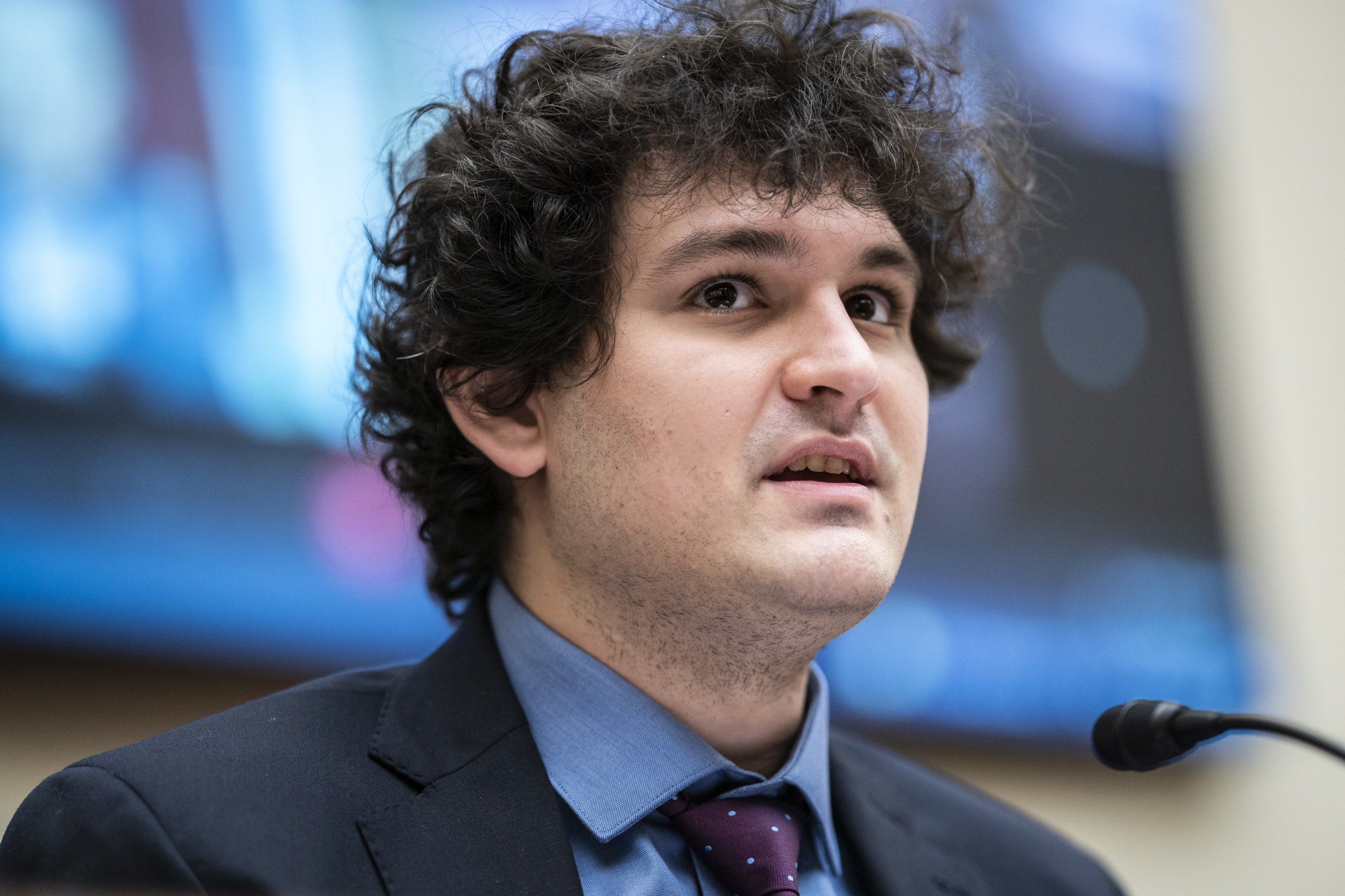
Then-FTX CEO Sam Bankman-Fried speaks during a Congressional hearing.
Enlarge / Then-CEO of FTX Sam Bankman-Fried speaks during a House Committee on Financial Services hearing on December 8, 2021, in Washington, DC.
Getty Images | The Washington Post

FTX founder Sam Bankman-Fried is facing a new criminal charge, with an updated indictment alleging that he violated the Foreign Corrupt Practices Act when he “authorized and directed a bribe of at least $40 million to one or more Chinese government officials.”

The superseding indictment returned by a federal grand jury in New York yesterday, and unsealed today, said the bribe’s purpose “was to influence and induce one or more Chinese government officials to unfreeze certain Alameda trading accounts containing over $1 billion in cryptocurrency, which had been frozen by Chinese authorities.” Including the new charge, Bankman-Fried now faces 13 criminal counts.

In early 2021, Chinese law enforcement officials froze certain Alameda accounts on two of China’s largest cryptocurrency exchanges, the indictment said. Bankman-Fried “understood that the Accounts had been frozen by Chinese authorities as part of an ongoing investigation of a particular Alameda trading counterparty.”

The alleged bribe consisted of cryptocurrency then worth about $40 million, which was “transferred from Alameda’s main trading account to a private cryptocurrency wallet” in or about November 2021.

Accounts unfrozen, apparently after bribe

The alleged bribe apparently achieved its purpose. “At or around the time of the $40 million bribe payment, the Accounts were unfrozen,” the indictment said. “After confirmation that the Accounts were unfrozen, Bankman-Fried authorized the transfer of additional tens of millions of dollars in cryptocurrency to complete the bribe.” Money from the unfrozen accounts was then used at Bankman-Fried’s direction “to fund additional Alameda trading activity,” the indictment said.

Before allegedly resorting to bribery, Bankman-Fried and others working for him “considered and tried numerous methods to unfreeze the Accounts or otherwise to regain access to the cryptocurrency in the Accounts,” the indictment said. Those attempts included “retaining attorneys to lobby or otherwise advocate in China for Alameda’s funds to be unfrozen; communicating with the Chinese Exchanges; and opening new accounts on the Chinese Exchanges using the personal identifying information of several individuals unaffiliated with FTX or Alameda (the ‘Fraudulent Accounts’) and attempting to transfer the cryptocurrency from the frozen Accounts to the Fraudulent Accounts in an effort to circumvent the Chinese authorities’ freeze orders.”

But after months of failed attempts, the indictment said, Bankman-Fried and others “ultimately agreed to and directed a multi-million-dollar bribe to seek to unfreeze the Accounts.” Several Alameda employees were allegedly involved.

“Following Bankman-Fried’s authorization and direction, an Alameda employee sent cryptocurrency payment instructions for at least a portion of the bribe payment to other Alameda employees, including at least one employee located in the United States,” the indictment said. The alleged conspirators include people “known and unknown, at least one of whom was first brought to and will be arrested in the Southern District of New York,” the indictment said.

Bankman-Fried was arrested in December. The previous criminal counts include charges of defrauding FTX customers, investors, and lenders, as well as conspiracy to commit those frauds. They also include conspiracy to commit bank fraud, conspiracy to operate an unlicensed money-transmitting business, conspiracy to commit money laundering, and conspiracy to make unlawful political contributions and defraud the Federal Election Commission.

Use of parents’ devices restricted in bail deal

Bankman-Fried pleaded not guilty and is out on bail but was in danger of losing his bail package over his use of technology such as a VPN service. US prosecutors and Bankman-Fried reached a new agreement on bail conditions, and US District Judge Lewis Kaplan approved the new conditions today.

Bankman-Fried was previously ordered to live with his parents, who have two laptops, a desktop computer, and two cell phones in their house. His “parents have agreed to not allow the Defendant to use the Parents’ Devices, to password protect the Parents’ Devices, to safeguard the passwords from the Defendant, to not allow the Defendant to have the passwords to the Parents’ Devices in any form, and to install monitoring software on the Parents’ Devices… that will photograph the device’s user every five minutes,” the new bail agreement said.

Bankman-Fried’s parents also agreed to sign sworn affidavits stating that they won’t bring “prohibited electronic devices” into their home. His parents further “agreed to provide the Government with the serial numbers, MAC addresses, and any other identifying information the Government requests for the Parents’ Devices, and to provide Pretrial Services with access to the photographs taken by the monitoring software whenever requested by Pretrial Services.”

After a dispute over Bankman-Fried’s VPN (virtual private network) usage, he is being given limited access to a laptop that will be configured to let him use an FTX transactional database over a VPN connection “to prepare his defense.” He is otherwise prohibited from using VPNs.

https://arstechnica.com/?p=1927429


Report: Twitter secretly boosted accounts instead of treating everyone equally

Report: Twitter secretly boosted accounts instead of treating everyone equally

It looks like the Twitter experience is about to change for nearly everybody on the platform—even those who buy into CEO Elon Musk’s Twitter Blue subscription service.

On Monday, Musk tweeted that after April 15, “only verified accounts will be eligible to be in For You recommendations” and eligible to vote in polls (which can be a way for accounts to boost engagement). Musk claims this is “the only realistic way to address” an otherwise “hopeless losing battle” with “advanced AI bot swarms taking over” the platform.

These changes will apparently take effect two weeks after Musk said Twitter will begin “un-verifying” legacy blue checked accounts. That makes it likely that soon some of Twitter’s most beloved and trusted accounts will no longer be promoted widely to users via the “For You” tab if they refuse to pay $8 a month to get access to subscriber benefits.

After making these announcements, Musk reiterated past claims that charging a subscription fee is about making Twitter more trustworthy and “treating everyone equally.”

“My prediction is that this will be the only platform you can trust,” Musk tweeted, shortly after declaring that when it comes to amplifying tweets, “there shouldn’t be a different standard for celebrities imo.”

In November, Musk acknowledged that launching Twitter Blue was also a critical part of his monetization strategy to end Twitter’s near-complete reliance on ad revenue. At that time, Musk promised to fully explain his Twitter Blue strategy, saying, “I will explain the rationale in longer form before this is implemented. It is the only way to defeat the bots & trolls.”

Twitter has yet to fully explain how the company expects that Twitter Blue solves its spam bot problem as promised and did not respond to Ars’ request for comment.

Twitter secretly boosting list of favored users

While Twitter accounts with legacy check marks brace for these reported changes—which some users have described as akin to “shadowbanning” free users—Platformer reported that Twitter has still been showing a clear preference to some of its most high-profile users. A secret list of 35 Twitter power users whose accounts are marked VIP currently enjoy increased visibility in feeds, with engineers reportedly even going so far as to tweak code to ensure that they show up in the “For You” tab.

https://arstechnica.com/?p=1927341


US agency sues top crypto exchange Binance and CEO, seeks permanent trading bans

Binance founder and CEO Changpeng Zhao sitting at a table and speaking into a microphone, wearing a shirt with a Binance logo.
Enlarge / Binance founder and CEO Changpeng Zhao at the Web Summit 2022 conference in Lisbon, Portugal.
Getty Images | Ben McShane

The US Commodity Futures Trading Commission (CFTC) yesterday sued Binance, the world’s largest cryptocurrency exchange, saying the company and its founder, Changpeng Zhao, are charged with “willful evasion of federal law and operating an illegal digital asset derivatives exchange.”

Binance committed “numerous violations of the Commodity Exchange Act and CFTC regulations,” the agency said. In a press release announcing the civil enforcement action, the agency said its litigation “seeks disgorgement, civil monetary penalties, permanent trading and registration bans, and a permanent injunction against further violations of the CEA and CFTC regulations.”

The CFTC alleges that the defendants operated the trading platform “through an intentionally opaque common enterprise, with Zhao at the helm as Binance’s owner and chief executive officer.” The agency said the defendants “chose to knowingly disregard applicable provisions of the CEA while engaging in a calculated strategy of regulatory arbitrage to their commercial benefit.” Samuel Lim, Binance’s former chief compliance officer, was charged with aiding and abetting the violations.

CFTC Chairman Rostin Behnam said, “For years, Binance knew they were violating CFTC rules, working actively to both keep the money flowing and avoid compliance. This should be a warning to anyone in the digital asset world that the CFTC will not tolerate willful avoidance of US law.”

A Reuters article said Binance was founded in Shanghai in 2017 but operates with “a holding company based in the Cayman Islands,” and “has never revealed the location of its core exchange. The CFTC charged the holding company and two other Binance units.”

Binance finds complaint “unexpected and disappointing”

Zhao reportedly said last year that Binance processed $34 trillion worth of trades in 2021. Binance trading totaled $23 trillion in 2022, Reuters wrote, citing data provider CryptoCompare.

Zhao issued a response on the Binance website, saying the CFTC complaint is “unexpected and disappointing… Upon an initial review, the complaint appears to contain an incomplete recitation of facts, and we do not agree with the characterization of many of the issues alleged in the complaint.” While Binance is “not perfect, we hold ourselves to a high standard, often higher than what existing regulations require,” he wrote.

The CFTC’s complaint, filed in US District Court for the Northern District of Illinois, said US law “requires that, subject to certain exemptions, commodity derivative transactions must be conducted on exchanges designated by, or registered with, the CFTC.” The agency noted that derivatives are “financial instruments such as futures, options, or swaps that derive their value from something else,” such as a benchmark rate, a physical commodity like oil or wheat, or—as in the Binance case—digital asset commodities like cryptocurrencies.

Binance did not register with the CFTC, the agency said. “Zhao, Lim, and other members of Binance’s senior management have failed to properly supervise Binance’s activities and, indeed, have actively facilitated violations of US law, including by assisting and instructing customers located in the United States to evade the compliance controls Binance purported to implement to prevent and detect violations of US law,” the complaint said.

The CFTC complaint said Binance “instructed US customers to use virtual private networks (VPNs) to obscure their location” and “allowed customers that had not submitted proof of their identity and location to continue to trade on the platform long after announcing such conduct was prohibited.” The complaint said Binance directed VIP customers and “key employees who control trading decisions, trading algorithms, and other assets all located in the United States to open Binance accounts under the name of newly incorporated shell companies to evade Binance’s compliance controls.”

https://arstechnica.com/?p=1927325


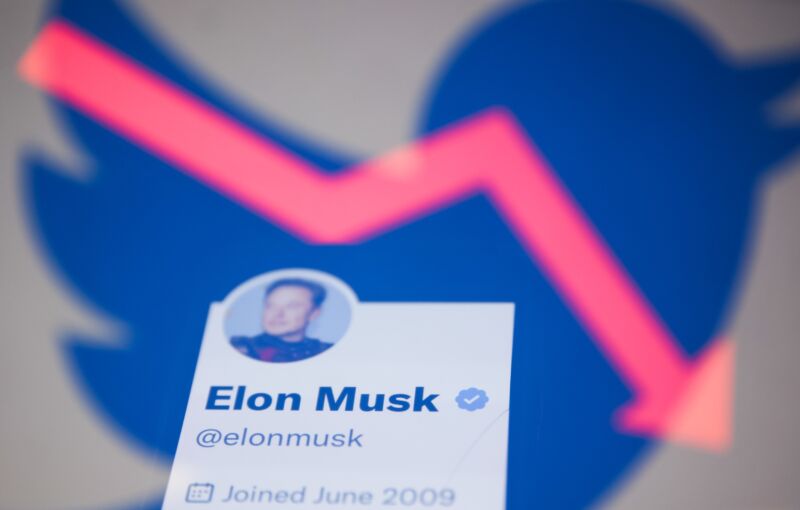
Musk says Twitter value is down to $20 billion, calls firm an “inverse startup”

Elon Musk's Twitter profile displayed on a phone screen in front of a Twitter logo and a fake stock graph with an arrow pointing down.
Getty Images | NurPhoto

Elon Musk told Twitter employees that the company is now worth about $20 billion, less than half the amount he paid for it. The New York Times reported that Musk provided the $20 billion figure in an email sent to staff on Friday to announce a new stock compensation program.

“According to Mr. Musk’s email about the new stock compensation program, Twitter employees will receive stock in X Corporation, the holding company he used to buy the company. Those awards will be granted under the $20 billion valuation. Mr. Musk also said in the email that he believed Twitter could someday be worth $250 billion,” the NYT article said.

Musk “warned workers that Twitter remained in a precarious financial position and, at one point, had been four months away from running out of money,” the article said. Musk’s email reportedly said bankruptcy was averted because of the “radical changes” he implemented—like staff cuts that reduced the company headcount from about 7,500 to under 2,000.

Musk’s email told workers that Twitter “can be thought of as an inverse startup,” apparently a reference to the large staff cuts, The Information reported. Musk wrote, “I see a clear, but difficult path” to a future valuation of more than $250 billion, The Information article said. The news site also provided more details on the stock offer to employees:

Musk told employees he is aiming to do “liquidity events,” where employees could sell their equity for cash “every six months, based on a third party valuation.” He said that was modeled closely on how his rocket company SpaceX works, “which I think achieves the public company advantage of having a liquid stock, but without the stock price chaos and lawsuit burdens of a public company.”

In February, Musk publicly claimed he saved Twitter from bankruptcy. Meanwhile, the company has been served with a string of lawsuits from vendors and property owners alleging that Twitter hasn’t paid its bills. Twitter advertising revenue plunged after the Musk purchase, and subscription revenue for the revamped Twitter Blue service has gotten off to a slow start.

Musk paid a premium but value has dropped since takeover

While Musk paid $44 billion for Twitter, that doesn’t mean it was worth that much when he completed the transaction in late October 2022. The $54.20-per-share price Musk and Twitter agreed to on April 25, 2022, was a 38 percent premium over Twitter’s closing stock price on April 1, which was just before Twitter’s stock price rose dramatically in response to Musk revealing he had already bought 9.2 percent of the company.

Twitter’s actual value may have declined in the ensuing months when Musk tried to pull out of the deal and repeatedly claimed that Twitter provided false data to the government about how many user accounts were spam or fake. Twitter had to sue Musk to force him to honor the merger contract, and he gave up when it became clear he was likely to lose in court. While the stock price came close to $54.20 when the acquisition closed, that was to be expected since the deal closing resulted in a payout to stock holders.

Still, Musk’s email isn’t the only confirmation that Twitter’s value has dropped significantly since he bought the company. “Fidelity has marked down the value of its Twitter stock by more than 60 percent since Elon Musk acquired the company at the end of October,” Axios reported on January 29. Fidelity is one of the institutions that helped Musk finance the deal.

The Information article suggested that a $20 billion valuation might be generous. “It’s possible Musk feels constrained from slashing Twitter’s valuation any lower because the outside investors who backed his bid, which include Andreessen Horowitz and Sequoia, paid for shares at the $44 billion valuation of the takeover,” the article said.

Musk used $13 billion of debt to fund the takeover, resulting in interest payments that reportedly amount to $1.5 billion a year. The banks that provided the funding to Musk reportedly haven’t been able to sell the debt to outside investors.

https://arstechnica.com/?p=1927065


The fight to expose corporations’ real impact on the climate

Discarded electronics
Walter Zerla via Getty Images

Say you are a maker of computer graphics cards, under pressure from investors questioning your green credentials. You know what to do. You email your various departments, asking them to tally up their carbon emissions and the energy they consume. Simple enough. You write a report pledging a more sustainable future, in which your trucks are electrified and solar panels adorn your offices.

Good start, your investors say. But what about the mines that produced the tantalum or palladium in your transistors? Or the silicon wafers that arrived via a lengthy supply chain? And what of when your product is shipped to customers, who install it in a laptop or run it 24/7 inside a data center to train an AI model like GPT-4 (or 5)? Eventually it will be discarded as trash or recycled. Chase down every ton of carbon and the emissions a company creates are many times times higher than it first seemed.

Calls are growing to require corporations to go through that rigorous carbon accounting process, part of a push to reveal emissions hidden within product life cycles. Wall Street’s regulator, the US Securities and Exchange Commission, argues that each ton of carbon emitted represents a risk that investors deserve to know about, because it might lead to costs and disruption from future carbon regulations around the world, and could alienate customers or employees concerned about climate change. Last year, the agency proposed rules, expected to be finalized next month, that would require most of the largest companies to take stock of all emissions, including those concealed deep in their supply chains.

Politicians in California have a parallel effort to force both public and private companies doing business in the state to confess the full scope of their emissions. The motivation is not just to help investors, but to make companies own up to the damage they cause, and help consumers sniff out false claims about sustainability. The proposed rules would require roughly 5,000 companies with revenue that exceeds $1 billion to report their emissions to a public database.

Scott Wiener, a state senator from San Francisco, imagines standing in the grocery aisle and being able to quickly check up on the emissions of companies marketing “climate-friendly” or “low-carbon” products. He’s hopeful forcing companies to make full disclosures will make greenwashing wither and “push enormous companies to do whatever it takes to decarbonize their supply chains.” A bank that invests in carbon-intensive businesses, for example, might think twice before doing so if customers can easily compare its operations with competitors.

Cynthia Hanawalt, a senior fellow at Columbia University’s Sabin Center for Climate Change Law, says that requiring these disclosures could flush out the true scale of corporate emissions. The majority are currently hidden from sight. “Right now we have a very haphazard system with inconsistent voluntary reporting,” she says. “That’s not serving anyone well—except maybe the fossil fuel industry.”

https://arstechnica.com/?p=1926799