The fight to expose corporations’ real impact on the climate

Discarded electronics
Walter Zerla via Getty Images

Say you are a maker of computer graphics cards, under pressure from investors questioning your green credentials. You know what to do. You email your various departments, asking them to tally up their carbon emissions and the energy they consume. Simple enough. You write a report pledging a more sustainable future, in which your trucks are electrified and solar panels adorn your offices.

Good start, your investors say. But what about the mines that produced the tantalum or palladium in your transistors? Or the silicon wafers that arrived via a lengthy supply chain? And what of when your product is shipped to customers, who install it in a laptop or run it 24/7 inside a data center to train an AI model like GPT-4 (or 5)? Eventually it will be discarded as trash or recycled. Chase down every ton of carbon and the emissions a company creates are many times times higher than it first seemed.

Calls are growing to require corporations to go through that rigorous carbon accounting process, part of a push to reveal emissions hidden within product life cycles. Wall Street’s regulator, the US Securities and Exchange Commission, argues that each ton of carbon emitted represents a risk that investors deserve to know about, because it might lead to costs and disruption from future carbon regulations around the world, and could alienate customers or employees concerned about climate change. Last year, the agency proposed rules, expected to be finalized next month, that would require most of the largest companies to take stock of all emissions, including those concealed deep in their supply chains.

Politicians in California have a parallel effort to force both public and private companies doing business in the state to confess the full scope of their emissions. The motivation is not just to help investors, but to make companies own up to the damage they cause, and help consumers sniff out false claims about sustainability. The proposed rules would require roughly 5,000 companies with revenue that exceeds $1 billion to report their emissions to a public database.

Scott Wiener, a state senator from San Francisco, imagines standing in the grocery aisle and being able to quickly check up on the emissions of companies marketing “climate-friendly” or “low-carbon” products. He’s hopeful forcing companies to make full disclosures will make greenwashing wither and “push enormous companies to do whatever it takes to decarbonize their supply chains.” A bank that invests in carbon-intensive businesses, for example, might think twice before doing so if customers can easily compare its operations with competitors.

Cynthia Hanawalt, a senior fellow at Columbia University’s Sabin Center for Climate Change Law, says that requiring these disclosures could flush out the true scale of corporate emissions. The majority are currently hidden from sight. “Right now we have a very haphazard system with inconsistent voluntary reporting,” she says. “That’s not serving anyone well—except maybe the fossil fuel industry.”

https://arstechnica.com/?p=1926799


Microsoft wins battle with Sony as UK reverses finding on Activision merger

Promotional image of a PlayStation 5 game console and controller.
Enlarge / Sony’s PlayStation 5.

UK regulators reviewing Microsoft’s proposed acquisition of Activision Blizzard reversed their stance on a key question today, saying they no longer believe Microsoft would remove the Call of Duty franchise from Sony’s PlayStation consoles.

Last month, the UK Competition and Markets Authority (CMA) tentatively concluded that a combined Microsoft/Activision Blizzard would harm competition in console gaming. At the time, the CMA said evidence showed that “Microsoft would find it commercially beneficial to make Activision’s games exclusive to its own consoles (or only available on PlayStation under materially worse conditions).” The agency also raised concerns about the merger affecting rivals in cloud gaming.

The preliminary finding was a victory for Sony, which has consistently expressed doubts about Microsoft’s promise to keep putting Call of Duty games on PlayStation. But Microsoft argued that the CMA’s financial model was flawed and was able to convince the agency to reverse its conclusion. In an announcement today, the CMA said it “received a significant amount of new evidence.”

“Having considered the additional evidence provided, we have now provisionally concluded that the merger will not result in a substantial lessening of competition in console gaming services because the cost to Microsoft of withholding Call of Duty from PlayStation would outweigh any gains from taking such action,” CMA Panel Chair Martin Coleman said.

As a result, the CMA panel investigating the deal “updated its provisional findings and reached the provisional conclusion that, overall, the transaction will not result in a substantial lessening of competition in relation to console gaming in the UK,” the agency announcement said.

Pulling CoD would cause “significant” financial loss

The updated findings said pulling Call of Duty off PlayStation would cause “a significant net financial loss for the Parties under all scenarios that we considered plausible,” but numbers were redacted from the public version of the document.

The CMA said the “most significant new evidence” submitted to the agency relates to Microsoft’s financial incentives to make Activision games exclusive to Xbox consoles, adding:

While the CMA’s original analysis indicated that this strategy would be profitable under most scenarios, new data (which provides better insight into the actual purchasing behaviour of CoD gamers) indicates that this strategy would be significantly loss-making under any plausible scenario. On this basis, the updated analysis now shows that it would not be commercially beneficial to Microsoft to make CoD exclusive to Xbox following the deal, but that Microsoft will instead still have the incentive to continue to make the game available on PlayStation.

UK hasn’t dropped cloud gaming concerns

This should make it easier for Microsoft to get UK approval for the merger, but the company still needs to convince regulators that the deal won’t harm competition in cloud gaming.

“Our provisional view that this deal raises concerns in the cloud gaming market is not affected by today’s announcement. Our investigation remains on course for completion by the end of April,” Coleman said.

The CMA’s provisional findings last month said evidence “indicates that Microsoft would find it commercially beneficial to make Activision’s games exclusive to its own cloud gaming service (or only available on other services under materially worse conditions). Microsoft already accounts for an estimated 60-70 percent of global cloud gaming services and also has other important strengths in cloud gaming from owning Xbox, the leading PC operating system (Windows) and a global cloud computing infrastructure (Azure and Xbox Cloud Gaming).”

Buying Activision Blizzard, the CMA said, “would reinforce this strong position and substantially reduce the competition that Microsoft would otherwise face in the cloud gaming market in the UK. This could alter the future of gaming, potentially harming UK gamers, particularly those who cannot afford or do not want to buy an expensive gaming console or gaming PC.”

Microsoft, in response, told the CMA that “Activision games would not have been available to cloud gaming services absent the Merger,” and that there’s “no evidence that Activision content would have been an important input for cloud gaming providers.” Microsoft also said its proposed licensing remedies would “ensure wide availability of CoD and other Activision titles on cloud gaming services.”

https://arstechnica.com/?p=1926787


Twitter to un-verify people who don’t pay $8/month starting on April Fools’ Day

Close-up view of the official Twitter Blue account with its verified checkmark.
Getty Images | NurPhoto

Four and a half months after the chaotic rollout of paid checkmarks, Elon Musk’s Twitter is following through on a plan to remove verification from individual accounts that don’t pay $8 per month for a Twitter Blue subscription.

“Starting April 1, we’ll be winding down our legacy Verification program and accounts that were verified under the previous criteria (active, notable, and authentic) will not retain a blue checkmark unless they are subscribed to Twitter Blue,” a Twitter FAQ says. Twitter also stopped accepting applications for verification checkmarks under the old criteria.

“To keep your blue checkmark on Twitter, individuals can sign up for Twitter Blue here,” Twitter said yesterday. “Organizations can sign up for Verified Organizations here.”

The change means that many accounts deemed notable by Twitter before Musk bought the company will no longer be verified. As we’ve noted, that could make it easier for scammers to impersonate real people even when the scammers don’t purchase blue checks. After a verified person loses their checkmark, a scammer could pretend to be that person, and there would be no verified account to point to prove the scammer is fake.

Twitter also announced yesterday that it is “accepting applications for grey checkmarks for eligible government and multilateral accounts.” Twitter now has several checkmarks with different colors to indicate the type of account.

Musk reportedly ignored warnings about scammers

When paid checkmarks first rolled out in November, Musk reportedly ignored internal warnings from Twitter’s trust and safety team that scammers would abuse paid verification. The paid checkmarks fueled a wave of imposter accounts, and Musk temporarily halted the paid verification scheme after just two days. “Basically, tricking people is not OK,” Musk admonished Twitter users at the time.

Musk relaunched paid checkmarks in December but didn’t say exactly when he’d implement the original plan of removing checkmarks from what Twitter now calls “legacy verified” accounts. The updated version of Twitter Blue has some rules to limit abuse of paid checkmarks, such as requirements that an “account must be older than 90 days upon subscription and have a confirmed phone number,” and “have no recent changes to your profile photo, display name, or username.”

Meanwhile, Twitter announced yesterday that Twitter Blue is now available globally. “Sign up today to get your blue checkmark, prioritized ranking in conversations, half ads, long Tweets, Bookmark Folders, custom navigation, Edit Tweet, Undo Tweet, and more,” Twitter’s announcement said.

But as The Verge pointed out, the prioritized ranking feature and the perk of seeing 50 percent fewer ads aren’t available yet. Those two perks are listed as “coming soon” when you click the link to sign up for Twitter Blue.

https://arstechnica.com/?p=1926646


Cops raided Afroman’s home, then sued him for using footage in music videos

Singer-songwriter Joseph Foreman, better known as "Afroman," clowns around poolside at an Orange County hotel.
Enlarge / Singer-songwriter Joseph Foreman, better known as “Afroman,” clowns around poolside at an Orange County hotel.

Seven Ohio cops who raided a rapper known as Afroman’s house last summer are now suing the rapper after Afroman made music videos using footage from the raid. The Adams County Sheriff’s Office police officers allege that the rapper is profiting off unauthorized use of their likenesses, not only in the music videos but also on merchandise created after Afroman’s social media posts and music videos went viral on platforms like TikTok and Instagram.

Cops suing say they’ve been subjected to death threats, ridicule, reputation loss, embarrassment, humiliation, emotional distress, and other alleged harms and will continue to suffer unless the court forces Afroman to destroy all the merchandise and posts bearing their likenesses.

Ars couldn’t immediately reach Afroman, whose real name is Joseph Foreman, for comment, but Vice talked to him in January. Afroman told Vice that after the raid, he suffered, too, losing gigs and feeling powerless. He decided to create music videos for songs called “Lemon Pound Cake,” “Why You Disconnecting My Video Camera,” and “Will You Help Me Repair My Door” to reclaim his good name.

The cops’ warrant shows that officers conducted the raid to seek evidence of “drug possession and trafficking, as well as kidnapping,” The Guardian reported, but no evidence was found, and no charges were issued against Afroman.

Afroman was not present during the raid, and his music videos relied on security camera footage and videos shot by his wife on her phone. The rapper claims that police destroyed his property and seized $400. “I felt powerless yet angry,” he told Vice. “These guys can destroy my property and I literally couldn’t do nothing about it.”

He said that releasing the music videos was his only way to process these feelings and that he was shocked when the videos went viral. “The only thing I could do was take to my pen and sing about the injustice,” Afroman told Vice. “And to my surprise, it’s going over well!”

Some of the music videos and social media posts have since garnered millions of views.

Ars could not immediately reach Robert Klingler, the lawyer for the officers suing. The officers are Shawn D. Cooley, Justin Cooley, Michael D. Estep, Shawn D. Grooms, Brian Newland, Lisa Phillips, and Randolph L. Walters, Jr.

Klingler told The Washington Post that Afroman’s home raid was “lawful.”

Adams County Sheriff Kimmy Rogers told Vice last month that while the office didn’t “appreciate” the disrespect from the public after Afroman’s videos became popular, Rogers felt the office could “handle” it.

However, Rogers also said then that “it’s kind of tolling on some of the officers.”

https://arstechnica.com/?p=1926613


Tech makers must provide repairs for up to 10 years under proposed EU law

DIY repair mobile phone at home. Woman repairing mobile phone at home, changing damaged part.
Enlarge / Smartphone repairs could be required for up to five years, while other products, like washing machines, may require up to a decade of vendor repairs.

Makers of numerous product categories, including TVs, vacuums, smartphones, and tablets, could be required to enable repairs for their products for up to 10 years after purchase, depending on the device type. The European Commission on Wednesday announced a proposal it has adopted that would implement long-term repair requirements on electronics makers if the European Parliament and Council approve it.

The regulation would apply to any devices with repairability requirements in the EU, including vacuum cleaners, washer-dryers, welding equipment, servers, and data-storage devices. The EU is currently hammering out right-to-repair requirements for smartphones and tablets.

Already, the EU requires vendors to repair or replace products within two years of purchase for free if the product is defective. The new regulation would require companies to provide a free repair (instead of replacing the product) if doing so would be the same price or cheaper than replacing it.

Further, the proposed legislation requires vendors to perform repairs for a minimum of five to 10 years, depending on the device type, after purchase. TV makers, for example, would be required to do repairs for at least seven years after purchase, while washing machine and washer-dryer makers would be on the hook for 10 years. The EU is currently mulling proposals requiring smartphone and tablet makers to provide repairs for up to five years under the law proposed on Wednesday.

The regulation wouldn’t require vendors to perform repairs in this time frame if it is “impossible,” such as if the “repair is technically impossible,” the commission explained in a Q&A page.

Over 15 years, the commission estimates this regulation would save 18.5 million tons of greenhouse gas emissions, 1.8 million tons of resources, and 3 million tons of waste. Meanwhile, EU consumers would save 176.5 billion euro (about $192.3 billion), and “sellers and producers” would save about 15.6 billion euro (about $16.3 billion), by the commission’s measures.

Making repair more appealing

One of the drivers behind the proposal is boosting the repair sector, which the commission claimed would see job growth if this regulation passes. It didn’t provide a new job count estimate, however.

The commission’s announcement Wednesday said:

Over the last decades, replacement has often been prioritized over repair whenever products become defective, and insufficient incentives have been given to consumers to repair their goods when the legal guarantee expires. The proposal will make it easier and more cost-effective for consumers to repair as opposed to replace goods.

The proposal also seeks European Union member states to set up an “online matchmaking repair platform to connect consumers with repairers and sellers of refurbished goods in their area.” It also requires companies to be vocal and inform customers about its repair obligations and services, including providing repair prices and time estimates upon request.

The commission wants to establish a “European quality standard for repair services” to help consumers find “higher quality” repair shops. The standard would “be open to all repairers across the EU willing to commit to minimum quality standards, for example, based on duration or availability of products.”

Ongoing debate

The European Right to Repair coalition posted a statement Wednesday arguing that the commission’s proposal “does not tackle the cost of repair” or do enough to empower independent repair shops. It has pushed for legislation guaranteeing the use of third-party and secondhand spare parts and universal access to affordable spare parts, repair manuals, and diagnostic tools, as well as financial incentives to reduce pricing for repairs.

The coalition thinks vendors should be required to repair devices within two years of purchase, regardless of whether it’s cheaper than replacing the item for the vendor. It also wants the proposal to affect more product categories.

The commission has acknowledged that consumers are sometimes deterred by repair costs and says its proposal is partially about making repairs a more appealing option to consumers with broken gadgets. But instead of putting regulations on things like spare parts and pricing, it’s banking on hardware makers building more repairable designs, as per its Ecodesign Directive.

During a press conference yesterday reported on by TechCrunch, Didier Reynders, one of the commission’s justice commissioners, pointed to the importance of repairable designs for reducing repair costs.

“It means that it’s possible to really cut significantly the cost of repair. …  Because often—in the sound sector for example, audio equipment, it is not possible to actually open up a device—you can’t actually get inside it yourself. So the Ecodesign approach should simplify things there.”

Despite commission claims that its proposal could help local repair shops, Cecilia Bonefeld-Dahl, director-general of DigitalEurope, a tech trade group, hinted at the industry’s early reluctance to relinquishing some control over the repairs of purchased gadgets.

https://arstechnica.com/?p=1926309


“Click-to-cancel” rule would penalize companies that make you cancel by phone

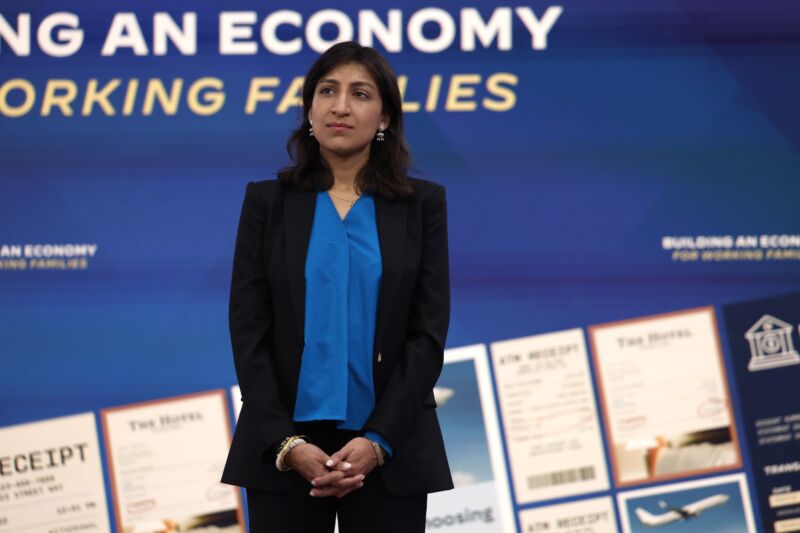
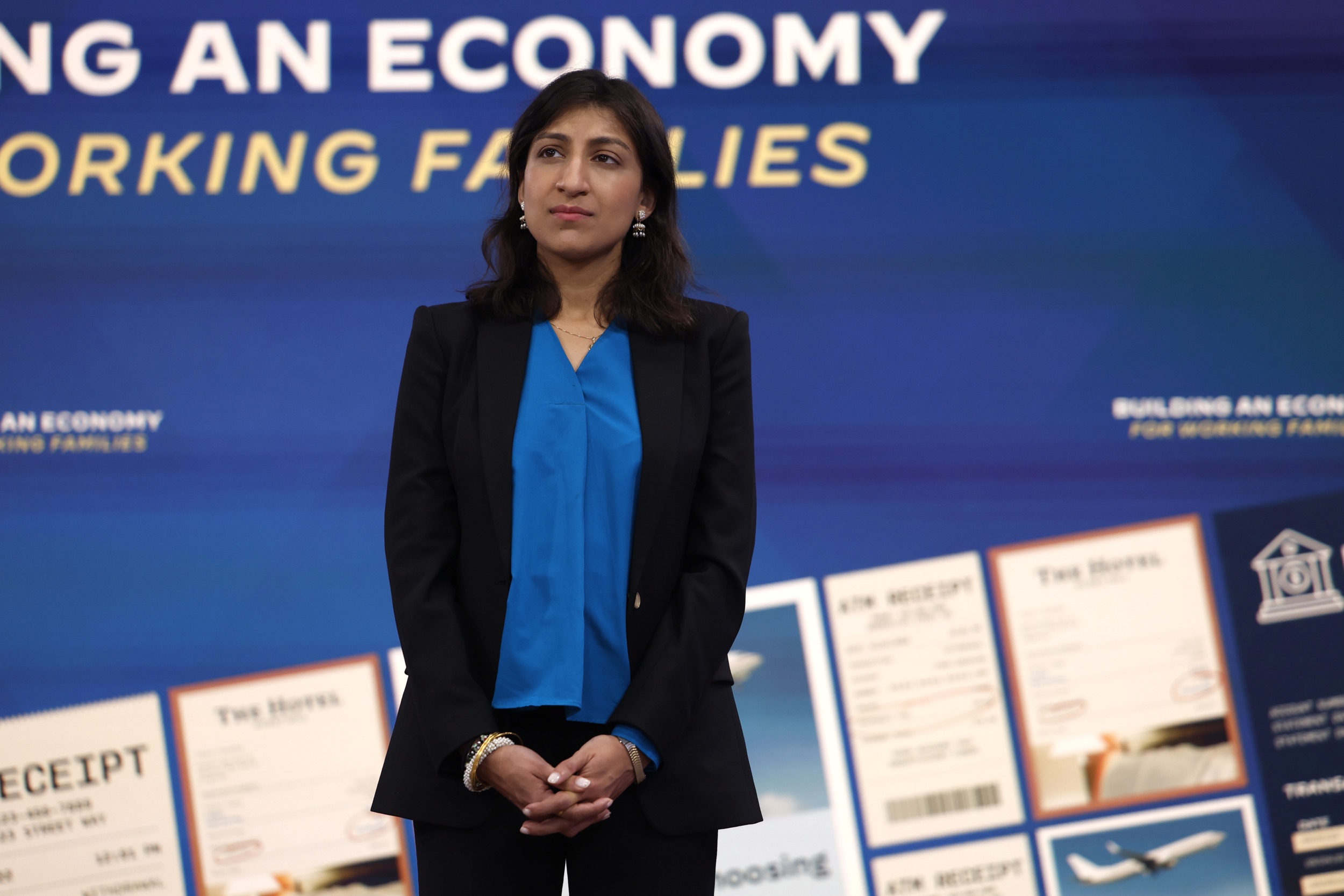
Federal Trade Commission Chair Lina Khan standing on a stage.
Enlarge / Federal Trade Commission Chair Lina Khan listens during a President Biden speech on the economy on October 26, 2022, in Washington, DC.
Getty Images | Anna Moneymaker

Canceling a subscription should be just as easy as signing up for the service, the Federal Trade Commission said in a proposed “click-to-cancel” rule announced today. If approved, the plan “would put an end to companies requiring you to call customer service to cancel an account that you opened on their website,” FTC commissioners said.

The FTC said the click-to-cancel rule would require sellers “to make it as easy for consumers to cancel their enrollment as it was to sign up,” and “go a long way to rescuing consumers from seemingly never-ending struggles to cancel unwanted subscription payment plans for everything from cosmetics to newspapers to gym memberships.”

The FTC said the proposed rule would be enforced with civil penalties and let the commission return money to harmed consumers.

“The proposal states that if consumers can sign up for subscriptions online, they should be able to cancel online, with the same number of steps. If consumers can open an account over the phone, they should be able to cancel it over the phone, without endless delays,” FTC Chair Lina Khan wrote.

The FTC is seeking public comment on the proposal, which also includes other changes to the commission’s 1973 Negative Option Rule. “Some businesses too often trick consumers into paying for subscriptions they no longer want or didn’t sign up for in the first place,” Khan said.

Requiring simple cancellations

The proposed rule requires a simple cancellation mechanism for any medium in which a consumer signs up for a service, including Internet, telephone, mail, and in-person. It says:

On the Internet, this “Click to Cancel” provision requires sellers, at a minimum, to provide an accessible cancellation mechanism on the same website or web-based application used for sign-up. If the seller allows users to sign up using a phone, it must provide, at a minimum, a telephone number and ensure all calls to that number are answered during normal business hours. Further, to meet the requirement that the mechanism be at least as simple as the one used to initiate the recurring charge, any telephone call used for cancellation cannot be more expensive than the call used to enroll (e.g., if the sign-up call is toll-free, the cancellation call must also be toll-free). For a recurring charge initiated through an in-person transaction, the seller must offer the simple cancellation mechanism through the Internet or by telephone in addition to, where practical, the in-person method used to initiate the transaction.

The proposed rule also targets the practice of trying to dissuade consumers from canceling by offering different service options. Sellers would be allowed to “pitch additional offers or modifications when a consumer tries to cancel their enrollment,” but “must first ask consumers whether they want to hear them,” the FTC said. “In other words, a seller must take ‘no’ for an answer and upon hearing ‘no’ must immediately implement the cancellation process.”

Khan said the proposal also “would address new business tactics, like digital dark patterns—where firms deploy hard-to-see buttons, hidden pop-ups, or misleading links to manipulate consumers away from canceling their subscription.”

The FTC will take comments on the proposal for 60 days after it is published in the Federal Register. Once the comment period begins, people can submit comments online or by mail.

FTC Republican dissents

The Notice of Proposed Rulemaking was approved 3-1 in a party-line vote. A dissenting statement from Republican Christine Wilson said expanding the Negative Option Rule may “discourage companies from using negative option features that consumers prefer and enjoy because of potential liability.”

Additionally, Wilson argued that the FTC “does not have authority to seek civil penalties in de novo Section 5 cases,” referring to Section 5 of the Federal Trade Commission Act that prohibits unfair or deceptive acts. Wilson also pointed to the Supreme Court’s AMG Capital Management decision in 2021 that said Section 13(b) of the FTC Act does not authorize the commission to seek monetary relief.

“I might have supported a tailored rule to address the negative option marketing abuses prevalent in our law enforcement experience that consolidated various legal requirements,” Wilson wrote. “This proposal instead attempts an end-run around the Supreme Court’s decision in AMG to confer de novo redress and civil penalty authority on the Commission for Section 5 violations unrelated to deceptive or unfair negative option practices.”

The FTC majority cited authority from Section 5 of the FTC Act and the Restore Online Shoppers’ Confidence Act (ROSCA), a 2010 US law. In a statement, Kahn and fellow Democrats said the proposal “draws on Section 5’s prohibition against unfair or deceptive practices. Specifically, it proposes to amplify ROSCA’s simple-cancellation mandate and applies it across the full universe of negative option marketing.”

The proposal’s text says the FTC Act “provides the Commission with authority to issue a notice of proposed rulemaking where it has reason to believe that the unfair or deceptive acts or practices which are the subject of the proposed rulemaking are prevalent.”

https://arstechnica.com/?p=1926351


Chipmakers fight spread of US crackdowns on “forever chemicals”

Chips on a wafer
Enlarge / The surface of a semiconductor wafer in the cleanroom at the Tower Semiconductor Ltd. plant in Migdal HaEmek, Israel, on Monday, Feb. 28, 2022. Intel Corp. agreed to acquire Tower Semiconductor for about $5.4 billion, part of Chief Executive Officer Pat Gelsingers push into the outsourced chip-manufacturing business. Photographer: Kobi Wolf/Bloomberg via Getty Images

Intel and other semiconductor companies have joined together with industrial materials businesses to fight US clampdowns on “forever chemicals,” substances used in myriad products that are slow to break down in the environment.

The lobbying push from chipmakers broadens the opposition to new rules and bans for the chemicals known as PFAS. The substances have been found in the blood of 97 percent of Americans, according to the US government.

More than 30 US states this year are considering legislation to address PFAS, according to Safer States, an environmental advocacy group. Bills in California and Maine passed in 2022 and 2021, respectively.

“I think clean drinking water and for farmers to be able to irrigate their fields is far more important than a microchip,” said Stacy Brenner, a Maine state senator who backed the state’s bipartisan legislation.

In Minnesota, bills would ban by 2025 certain products that contain added PFAS—which is short for perfluoroalkyl and polyfluoroalkyl substances—in legislation considered to be some of the toughest in the country.

The Semiconductor Industry Association—whose members include Intel, IBM, and Nvidia—has cosigned letters opposing the Minnesota legislation, arguing its measures are overly broad and could prohibit thousands of products, including electronics. Chipmakers also opposed the California and Maine laws.

The pushback in the US echoes a dispute in Europe, where chipmakers have warned that a proposed ban on PFAS will disrupt semiconductor supplies.

Long-term PFAS exposure can weaken the immune system, decrease infant and fetal growth, and increase kidney cancer risk in adults, according to a 2022 report by the US National Academies of Sciences, Engineering, and Medicine.

Widely used in products from non-stick cookware to firefighting foam to ski wax, PFAS are also widely used in semiconductor manufacturing. Chip companies have said there are typically no alternatives to PFAS for their manufacturing.

“In the applications I am aware of, there are not viable substitutes available at commercial scale,” said John Rogers, a senior vice-president at Moody’s who covers chemicals makers.

The state measures come as federal regulators also move to control PFAS. Last week the US Environmental Protection Agency proposed to limit the chemicals in drinking water, citing health risks. The proposal, which is open for 60 days of public comment, would lead to new rules that the EPA wants finalized by the end of this year.

If fully implemented, “the rule will prevent thousands of deaths and reduce tens of thousands of serious PFAS-attributable illnesses,” the EPA said.

Intel added PFAS to the issues it lobbied on starting in 2021, according to federal disclosures. In 2022 the company helped to launch the Sustainable PFAS Action Network, a lobbying group that has opposed the PFAS legislation in California and Minnesota. The executive director of the organization, Kevin Fay, has been an external lobbyist for Intel since at least 2008, regulatory disclosures show. The Sustainable PFAS Action Network is also representing the Semiconductor Industry Association.

Fay said companies are reviewing the EPA’s proposal. Intel declined to comment.

US PFAS regulations do not yet pose a significant risk for semiconductor companies, but if new rules are adopted, costs will probably be passed on to consumers in higher prices, said Jason Pompeii, a senior director at Fitch.

“There will be a tax incurred to remediate, which will hopefully drive innovation and alternatives to PFAS” in semiconductor manufacturing, he said.

© 2023 The Financial Times Ltd. All rights reserved. Not to be redistributed, copied, or modified in any way.

https://arstechnica.com/?p=1926260


FCC chair proposes ban on deceptive “Broadcast TV” and “Regional Sports” fees

The phrase &quo;Hidden fees&quo; printed on a piece of paper tucked inside a pile of documents.
Getty Images | AndreyPopov

A new proposal targeting hidden fees charged by cable and satellite companies could force TV providers to clearly list their “all-in” prices.

The proposal announced today by Federal Communications Commission Chairwoman Jessica Rosenworcel would require cable and direct-broadcast satellite providers to “state the total cost of video programming service clearly and prominently, including broadcast retransmission consent, regional sports programming, and other programming-related fees, as a prominent single line item on subscribers’ bills and in promotional materials.”

TV providers generally advertise a low rate that doesn’t include charges such as the “Broadcast TV” and “Regional Sports Network” fees. Cable and satellite companies say these fees cover the amounts they have to pay for programming.

But paying for programming is part of the cost of doing business—there would be no TV channel lineup without channels, after all. By treating programming costs as separate fees, TV providers advertise rates that aren’t even close to what customers actually have to pay. Comcast, for example, adds nearly $40 to monthly TV bills in the form of Broadcast TV and Regional Sports Network fees.

No word on timing of vote

Rosenworcel’s press release said her “proposal aims to eliminate the misleading practice of describing these video programming costs as a tax, fee, or surcharge. This updated ‘all-in’ pricing format will allow consumers to make informed choices, including the ability to comparison shop among competing providers and to compare programming costs against alternative programming providers, including streaming services.”

It’s not clear when the FCC will vote on the plan. Rosenworcel circulated a Notice of Proposed Rulemaking (NPRM) to fellow commissioners, an FCC spokesperson told Ars today. The document is not public.

When an item is on circulation, commissioners can vote on it at any time. An NPRM also isn’t a final step—it would kick off a public comment period and could be followed by a vote on final rules several months later.

Rosenworcel is still leading the FCC without a Democratic majority more than two years into Joe Biden’s presidency. Biden nominee Gigi Sohn withdrew earlier this month after the Senate failed to vote on whether to confirm her nomination.

Broadband rules approved but not in force yet

While Rosenworcel’s new proposal only targets TV providers, the FCC already adopted rules requiring broadband providers to “display easy-to-understand labels to allow consumers to comparison shop for broadband services.” The upcoming broadband disclosures are modeled on nutrition labels.

The broadband labels were required in a law passed by Congress in November 2021. The FCC finalized the plan to implement broadband labels in November 2022, but the mandate hasn’t taken effect yet.

Internet providers with over 100,000 subscribers will have to comply six months after the White House Office of Management and Budget completes a review of the rules as required by the federal Paperwork Reduction Act, the FCC order said. Smaller broadband providers will have a year to comply.

https://arstechnica.com/?p=1926056


AI platform allegedly bans journalist over fake Trump arrest images

AI-generated photo faking Donald Trump's possible arrest, created by Eliot Higgins using Midjourney v5.
Enlarge / AI-generated photo faking Donald Trump’s possible arrest, created by Eliot Higgins using Midjourney v5.

Yesterday, about 50 AI-generated images imagining what former President Donald Trump’s arrest would look like spread across Twitter. The images caused confusion for some users because the Midjourney v5 engine used to create them generates such realistic-looking content.

Today, the Midjourney user behind the images—Bellingcat founder Eliot Higgins—alleged to Buzzfeed News that he was banned from Midjourney over the images. Buzzfeed also reported that Midjourney has banned the word “arrest” from being used in text prompts to generate images.

Midjourney has not yet confirmed the ban. An Ars test indicates that prompts using Donald Trump’s name also seem to be blocked on the engine, generating instead an error message saying that the prompt was blocked because “it may conflict with our content policy.” We got the same error message when we used prompts including other Trump family names and all the presidents’ names. However, other celebrity names, like former NFL player Tom Brady, are still seemingly acceptable in prompts.

Higgins told Buzzfeed that he understands why Midjourney may have banned him, saying that “it was pushing my luck” creating the Twitter thread that went viral. Higgins told Ars that responses to the images have been generally positive but that he also is “getting quite a few angry” Trump fans responding.

“I didn’t intend to do any clever criticism or anything like that,” Higgins told Buzzfeed, saying that he was just having fun imagining Trump’s arrest with the images. “But then it kind of took on a life of its own.”

Higgins told Ars that “what really stood out” to him was “the number of people who don’t seem to have been aware of Midjourney’s existence or what it’s capable of.” He thinks creating the images “had a positive impact in raising awareness of what kind of images can be faked now” and said that AI platforms like Midjourney “probably shouldn’t train their datasets on people they don’t want re-created.”

Yesterday, Higgins told Wired how Twitter users could avoid being fooled by convincing AI-generated images like the fake Trump arrest images. Higgins noted that celebrities are easier targets for deepfakes, though, because “it’s clear that the more famous a person is, the more images the AI has had to learn from,” Higgins said.

“So very famous people are rendered extremely well, while less famous people are usually a bit wonky,” Higgins told Wired.

On Twitter, Higgins’ images are now labeled with a community note flagging that they’re fake. Twitter’s policy states that users “may not deceptively share synthetic or manipulated media that are likely to cause harm” and that these labels “help people understand their authenticity” and “provide additional context.”

Higgins’ entire thread is still available on Twitter, where some images have been viewed 4.8 million times as of this writing.

While Trump previously indicated that he expected his indictment to occur yesterday, that didn’t happen. Outlets like MSNBC and The New York Times are now reporting that his potential arrest over hush-money payments to porn star Stormy Daniels could happen in the coming days.

While Ars has not found any comments from Trump on Higgins’ AI-generated images, Forbes reported that Trump has told advisors that he wants his arrest—if it happens—to be a “spectacle” that includes a “perp walk” in handcuffs so that he doesn’t appear weak to his supporters.

https://arstechnica.com/?p=1925983


DirecTV puts Newsmax back on the air after Republicans’ angry protests

A large Newsmax logo on a booth on a conference floor.
Enlarge / Newsmax logo displayed at the National Rifle Association’s annual meeting in Houston, Texas on May 28, 2022.
Getty Images | Patrick T. Fallon

Two months after dumping Newsmax instead of paying a new fee, DirecTV has reached a deal to put the conservative news network back in the satellite provider’s channel lineup.

Newsmax had waged an aggressive public relations campaign against DirecTV. “This is a blatant act of political discrimination and censorship against Newsmax,” Newsmax CEO Christopher Ruddy said on January 25 in an article on the network’s website.

Newsmax changed its tune today when announcing the deal that will put Newsmax back on DirecTV starting tomorrow. “While we raised the issue of censorship relating to our removal, we now believe in DirecTV’s commitment to distributing diverse viewpoints, including conservative ones,” Newsmax said in a statement provided to Ars.

Ruddy provided a statement for DirecTV’s press release today, saying that “Newsmax recognizes and appreciates that DirecTV clearly supports diverse voices, including conservative ones.”

GOP lawmakers slammed DirecTV

Newsmax previously hired former US Rep. Jack Kingston (R-Ga.) as a lobbyist in its fight against DirecTV and had allies in Congress. A letter from 42 Republican lawmakers to the CEOs of AT&T and DirecTV claimed that DirecTV appears to be “actively working to limit conservative viewpoints on its system.”

The letter from Republican lawmakers also claimed that Democrats coordinated with private companies to launch an “un-democratic assault on free speech.” AT&T owns 70 percent of DirecTV.

DirecTV had carried Newsmax since 2014 but told Ars in January that it never paid Newsmax under the previous deal. With Newsmax demanding a carriage fee that allegedly amounted to tens of millions of dollars, DirecTV said the “demands for rate increases would have led to significantly higher costs that we would have to pass on to our broad customer base.”

No extra cost for DirecTV users

DirecTV said in an announcement today that “Newsmax will be available on DirecTV, DirecTV Stream, and U-verse at no additional cost to customers.” This seems to suggest that if DirecTV is paying Newsmax anything under the new deal, it’s a much smaller amount than Newsmax requested.

DirecTV CEO Bill Morrow said, “Through our persistent negotiations, we reached a resolution under mutually agreeable business terms allowing us to deliver the conservative news network at the right value—a reflection of the free market at work.”

A DirecTV spokesperson declined to tell Ars today whether the satellite company agreed to pay Newsmax, saying that “terms of the renewal—which includes a multi-year distribution deal—were not disclosed.”

“This deal marks the end of a months-long carriage dispute that stemmed from financial differences with Newsmax and is ending with an agreement that comes at no additional cost to our customers,” DirecTV said. “It has always been our desire to provide Newsmax, and never about limiting conservative voices, a view that Newsmax now recognizes and accepts.”

Cable and satellite TV providers have consistently blamed carriage disputes on networks seeking higher payments. “This agreement marks DirecTV’s latest successful resolution of a carriage dispute, an unfortunate but increasingly frequent occurrence involving nearly every pay TV and streaming provider attempting to keep rising consumer costs in check,” DirecTV said today.

DirecTV said it has “resolved public disputes with approximately 50 programmers or station groups” in the past five years, with those battles typically lasting a few days or weeks but “extending to several months in some instances.”

DirecTV called Newmax attacks false and troubling

When the dispute erupted in January, Newsmax claimed DirecTV pays license fees “to all 22 liberal news and information channels it carries” even though “most of the channels have much lower ratings than Newsmax.”

Newsmax didn’t initially identify the 22 allegedly liberal news and information channels carried by DirecTV. Newsmax later provided a list that included major broadcast networks as well as more surprising entries like the Comedy Channel and The Weather Channel.

A few weeks into the now-resolved dispute, DirecTV criticized Newsmax for using its news platform to wage its battle against DirecTV.

“It’s troubling that Newsmax is using its news/editorial platform to publish inaccurate and misleading information regarding our contract dispute,” DirecTV wrote on February 15. “Each day, the news outlet is publishing nearly two dozen blogs on its website and dozens of posts on its main social handle, creating targeted content for its commentators, leveraging its network of contributors and dedicating significant airtime each hour to our business dispute. In our view, these efforts are obscuring facts in pursuit of Newsmax’s own commercial interests, not elucidating the news.”

DirecTV’s previous decision to drop One America News also led to a public outcry from Republican lawmakers, but OAN hasn’t returned to the TV service. OAN sued DirecTV and lost a key ruling in January when a California judge said its deal with DirecTV did not entitle it to a renewal.

Sen. Ted Cruz (R-Texas) called Newsmax’s new deal with DirecTV “a victory for free speech over powerful corporations that want to put their thumbs on the scale of the national conversation.” Cruz claimed that pressure from lawmakers forced DirecTV’s hand.

“This outcome speaks to the power of citizens and their elected representatives working to stop viewpoint discrimination,” Cruz said. “I’m grateful to my colleagues, Senators Lindsey Graham, Mike Lee, and Tom Cotton, for joining me in this fight.”

https://arstechnica.com/?p=1925976