Marvel angry about Ant-Man dialogue leak, demands names of Reddit and Google users

Movie poster for Ant-Man and the Wasp: Quantumania.

Marvel is seeking the identities of Reddit and Google users involved in the leak of dialogue from Ant-Man and the Wasp: Quantumania. Marvel says that before the Ant-Man film’s release, movie dialogue was leaked in a Google Docs file and that the link to the document was posted in a Reddit thread.

Marvel on Friday asked a federal court to issue Digital Millennium Copyright Act (DMCA) subpoenas to both Reddit and Google demanding the identities of people allegedly involved in the pre-release dialogue reveal, including Reddit moderators whom Marvel suspects of being behind the leak. The requests were filed in US District Court for the Northern District of California.

The Google document was deleted after Marvel owner Disney filed a copyright complaint to Google. The link to the Google document was also deleted from the Reddit thread. But Marvel still wants to find out who posted the Google Doc and who shared it to Reddit.

The new subpoena requests come amid a different battle in the same court between Reddit and several film studios over whether Reddit should have to identify users who posted comments in piracy-related threads. Reddit is fighting those demands for users’ identifying information.

In this case, Marvel is trying to get the names of users including those behind the Reddit account MSSmods, which is a shared account for the moderators of the Marvel Studios Spoilers subreddit. The subpoena request points to a January 2023 Reddit thread that originally linked to the Google Docs file containing Ant-Man movie dialogue. Users discuss the leaked dialogue in the Reddit thread, with some calling it among the biggest movie leaks ever or the biggest leak in the subreddit’s history.

Marvel wants names, numbers, addresses, and more

An Internet Archive capture of the Reddit thread shows that a user with the screen name “Vision” kicked it off by linking to the Google Docs file. The initial post said the leak was based on a subtitle file in another language that was translated into English.

The link was apparently removed the same day the thread began. “As we have discovered that the info provided to us is receiving copyright notices, any future sharing of the material will result in a ban for rule 3,” a moderator wrote in a stickied comment.

The subpoena request filed by Marvel subsidiary MVL Film Finance seeks information “to identify the individual(s) alleged to be responsible for the unauthorized posting of the then-unreleased dialogue of the motion picture ‘Ant-Man and the Wasp: Quantumania‘” to the Reddit thread that included the Google Doc link.

“The purpose for which the DMCA Subpoena is sought is to obtain the identity of an alleged infringer (or infringers) and such information will only be used for the purpose of protecting MVL’s rights under title 17 U.S.C. §§ 100, et seq,” said a sworn declaration filed by Marvel Studios VP of Global Security and Content Protection Matthew Slatoff.

Marvel is asking for users’ names, addresses, phone numbers, email addresses, and IP addresses. If Reddit has to comply, it might have to provide identifying details on numerous users. The subpoena request seeks the following details from Reddit:

  1. All Identifying Information for the user “u/MSSmods.”
  2. All Identifying Information for any other user(s) responsible for posting, editing, and/or maintaining the content previously available on the Reddit Site (along with user “u/MSSmods,” the “Infringing Users”), including, without limitation, any moderator of the MarvelStudioSpoilers subreddit involved in uploading content on or about January 20, 2023 to the Reddit Site comprising and/or related to the dialogue of then-unreleased motion picture “Ant-Man and the Wasp: Quantumania” (the “Infringing Content”).
  3. All Identifying Information for any user involved, between January 15, 2023 and February 15, 2023, in posting and/or editing the Infringing Content.

Reddit “committed to protecting users’ privacy”

As a TorrentFreak article on Marvel’s subpoena requests notes, “no infringing content was ever posted to the Reddit thread… The allegedly infringing content was hosted on Google, [and] the thread simply provided a link.”

Reddit did not provide a direct answer to the question of whether it will fight Marvel’s requests when contacted by Ars today but said it aims to protect users’ privacy. “Reddit is committed to protecting our users’ privacy. We have rigorous processes in place to assess legal requests and object when appropriate,” a Reddit spokesperson told Ars.

Marvel’s subpoena to Google seeks the same types of identifying information—real names, usernames, addresses, phone numbers, email addresses, and IP addresses—for the user or users who posted or edited the document containing movie dialogue. Marvel also wants Google to provide a “report setting forth any and all revisions made” to the document between December 1, 2022, and February 15, 2023, “including any Identifying Information for any user who edited and/or made revisions to any such content, including any IP address(es) associated with any such revisions.”

We contacted Google about the subpoena and will update this article if we get any response.

Reddit is owned by Advance Publications, which also owns Ars Technica parent Condé Nast.

https://arstechnica.com/?p=1923552


Discord promises outraged users it won’t store call recordings—for now

Discord promises outraged users it won’t store call recordings—for now

Before it was updated last month, Discord’s privacy policy specifically promised to alert users “in advance” if the company ever started storing contents of video calls, voice calls, or channels. That’s why some users became alarmed when the latest updates—which go into effect March 27—seemed to quietly drop this promise. One Discord user asked Ars to investigate, wondering, “Does Discord plan to retain call recordings?”

According to a Discord spokesperson, the answer is no.

“There has not been a change in Discord’s position on how we store or record the contents of video or voice channels,” a Discord spokesperson told Ars. “We recognize that when we recently issued adjusted language in our privacy policy, we inadvertently caused confusion among our users. To be clear, nothing has changed and we have reinserted the language back into our privacy policy, along with some additional clarifying information.”

Before users began complaining, the policy was going to be updated to say that Discord would be collecting information on “any content that you upload to the service. For example, you may write messages or posts (including drafts), send voice messages, create custom emojis, create short recordings of GoLive activity, or upload and share files through the services. This also includes your profile information and the information you provide when you create servers.”

As users raised concerns on Reddit, Discord staffers seemed to rush to assuage fears, saying, “We understand that the wording of the new privacy policy is broad and can be misunderstood” and promising, “We are going to fix this.”

Since then, Discord added back in the missing language, word for word: “We generally do not store the contents of video or voice calls or channels. If we were to change that in the future (for example, to facilitate content moderation), we would disclose that to you in advance.” A Reddit user identifying as a Discord staffer told Redditors that Discord won’t “regularly” collect this type of content.

In the United States and the European Union, call recordings by anyone not participating in the call are illegal and generally require consent. It’s likely that Discord updated the privacy policy not just to appease users but also to cover its tracks legally, but that doesn’t mean it will never happen. In response to user outrage, the policy’s new updated language now also specifies that Discord may collect some of this type of content in the future.

“We may build features that help users engage with voice and video content, like create or send short recordings,” Discord’s new policy states.

Discord doesn’t have a perfect record when it comes to user privacy. Last year, Discord was fined 800,000 euro for privacy violations in the EU, including failing to close out voice rooms when Windows users clicked the “X” icon. Instead of exiting those users, the EU found that users unwittingly stayed logged in to voice rooms, which continued running in the background and could be transmitting private conversations that users did not know could be overheard.

https://arstechnica.com/?p=1923563


Meta threatens to restrict news in Canada if it’s forced to pay publishers

Meta threatens to restrict news in Canada if it’s forced to pay publishers

After losing a similar battle in Australia, Meta continues to resist efforts by a growing number of countries to require the social media company to pay for news linked on platforms like Facebook and Instagram. On Saturday, Meta announced that it would end news access for Canadian Facebook and Instagram users if the country’s Online News Act is passed, Reuters reported.

A Meta spokesperson told Ars that the online advertising giant contends that laws like Canada’s proposed legislation “misrepresents” the relationship between its platforms and news publishers. According to Meta spokesperson Lisa Laventure, the company’s stance in Canada is the same as its stance protesting the United States’ Journalism Competition and Preservation Act (JCPA).

“A legislative framework that compels us to pay for links or content that we do not post, and which are not the reason the vast majority of people use our platforms, is neither sustainable nor workable,” Laventure said.

The Canadian government describes the Online News Act as positioning digital platforms to support the “production of trusted news and information.” It’s designed to help reverse a collapse in news publisher revenue, which News Media Canada reported fell by billions between 2011 and 2020 and continued falling through the pandemic. If the law is passed, it should ensure online ad revenue-sharing between news publishers and platforms, laying out a framework for platforms to bargain with Canadian news organizations or else—“as a last resort”—face “mandatory arbitration” whenever deals cannot be reached.

Currently, Meta estimates that links to news articles make up less than 3 percent of news feeds and are “not a draw for our users” or a “significant source of revenue,” a Meta spokesperson told Ars.

Social media users in Canada will know more about how this move will impact their news access once the law is passed and Canada updates its guidance on how news organizations can apply to be compensated for links shared on digital platforms. Meta has said that it “will keep Canadians informed of any changes to our services.”

Meta already gave up this fight in Australia

Proposed laws like Canada’s and the US’s JCPA follow in the footsteps of Australia’s news media bargaining code enacted in 2021. When Australia first passed the law, Meta temporarily suspended news access before reaching an agreement that Wired reported resulted in at least 11 content deals struck between Facebook and news organizations.

Meta did not respond to Ars’ request for comment on how many content deals it currently has in Australia or how Canada’s proposed law could be amended to create the “sustainable” or “workable” solution that Meta is seemingly seeking.

According to Wired, Australia’s law does not work perfectly but has led many tech companies to privately bargain with news organizations to avoid arbitration processes that could cost more than content deals. Nobody is sure how lucrative these content deals really are for publishers. Media organizations told Wired last year that for some, the payments cover salaries of a couple of journalists on staff, but for others, like News Corp, “tech platform deals contribute more than $100 million in annual revenue.”

It’s unclear whether Meta’s pushback will result in any changes to the proposed legislation in Canada, but the CBC reported that Canadian Heritage Minister Pablo Rodriguez criticized Meta for threatening to cut off news access.

“Once again, it’s disappointing to see that Facebook has resorted to threats instead of working with the Canadian government in good faith,” Rodriguez said, adding that “this tactic didn’t work in Australia, and it won’t work here.”

https://arstechnica.com/?p=1923500


YouTuber must pay $40K in attorneys’ fees for daft “reverse censorship” suit

YouTuber must pay $40K in attorneys’ fees for daft “reverse censorship” suit

A YouTuber, Marshall Daniels—who has posted far-right-leaning videos under the name “Young Pharaoh” since 2015—tried to argue that YouTube violated his First Amendment rights by removing two videos discussing George Floyd and COVID-19. Years later, Daniels now owes YouTube nearly $40,000 in attorney fees for filing a frivolous lawsuit against YouTube owner Alphabet, Inc.

A United States magistrate judge in California, Virginia K. DeMarchi, ordered Daniels to pay YouTube $38,576 for asserting a First Amendment claim that “clearly lacked merit and was frivolous from the outset.” YouTube said this represents a conservative estimate and likely an underestimate of fees paid defending against the meritless claim.

In his defense, Daniels never argued that the fees Alphabet was seeking were excessive or could be burdensome. In making this rare decision in favor of the defendant Alphabet, DeMarchi had to consider Daniels’ financial circumstances. In his court filings, Daniels described himself as “a fledgling individual consumer,” but also told the court that he made more than $180,000 in the year before he filed his complaint. DeMarchi ruled that the fees would not be a burden to Daniels.

According to Daniels, who filed his complaint in 2020, he was a victim of “reverse censorship” on YouTube, which harmed him by demonetizing his account by removing videos with the titles “Fauci Silenced Dr. Judy Mikovits from Warning the American Public” and “George Floyd, Riots & Anonymous Exposed as Deep State Psyop for NOW.” Daniels alleged that the videos were removed not for violating YouTube community guidelines against harassment or cyberbullying, but “by the behest of members of Congress.”

In his repeatedly tossed-out complaint, Daniels said that Congress members Nancy Pelosi (D-Calif.) and Adam Schiff (D-Calif.) coerced YouTube into removing the videos by making statements suggesting that Section 230 didn’t cover platforms found to be pushing disinformation and writing letters to Google executives about their enforcement of policies banning COVID-19 misinformation.

Daniels claimed he was advancing a “novel legal theory” by suing Alphabet, but DeMarchi said that his argument failed in part because it was based on a statute that specifically precluded liability for federal actors like Pelosi and Schiff.

“None of his arguments are persuasive, as he articulated no plausible legal theory—novel or otherwise—for holding private entities liable as government actors in the circumstances presented,” DeMarchi wrote in the order granting attorney fees to Alphabet, which normally only happens under “exceptional circumstances.”

Internet law expert Eric Goldman wrote in a blog that Daniels’ arguments defending his “MAGA-ish content” were “misguided.” Goldman characterized DeMarchi’s order as “a polite way for a judge to say ‘not even close’ and ‘I can’t believe you tried this.’”

Neither Daniels’ attorneys nor Google immediately responded to Ars’ request for comment.

https://arstechnica.com/?p=1923313


Congressman confronts FBI over “egregious” unlawful search of his personal data

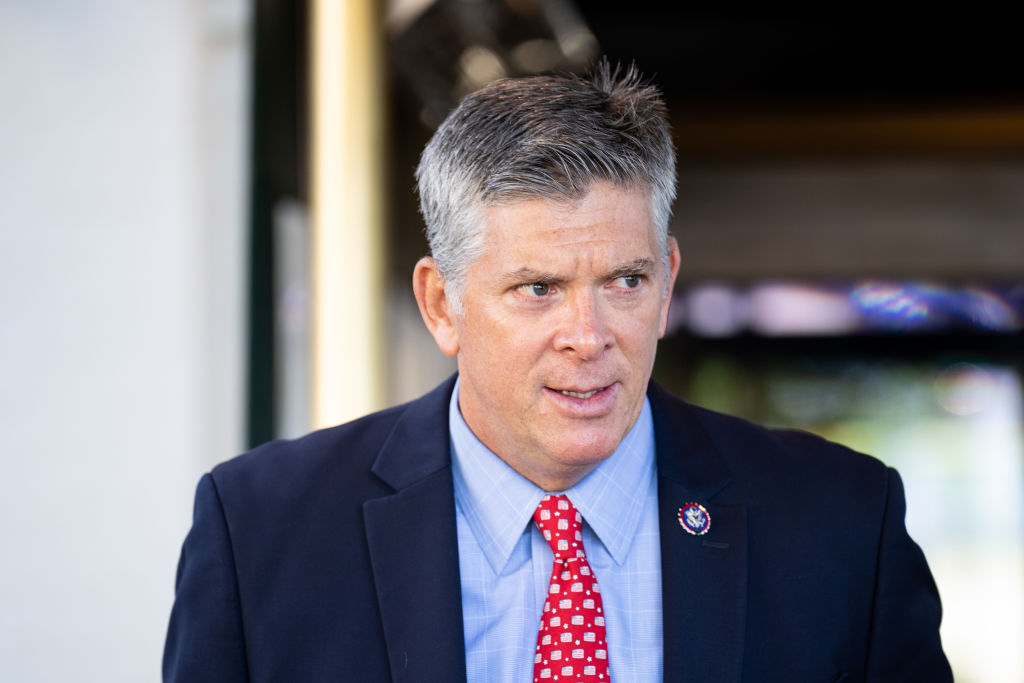
Rep. Darin LaHood (R-Ill.)
Enlarge / Rep. Darin LaHood (R-Ill.)

Last month, a declassified FBI report revealed that the bureau had used Section 702 of the Foreign Intelligence Surveillance Act (FISA) to conduct multiple unlawful searches of a sitting Congress member’s personal communications. Wired was the first to report the abuse, but for weeks, no one knew exactly which lawmaker was targeted by the FBI. That changed this week when Rep. Darin LaHood (R-Ill.) revealed during an annual House Intelligence Committee hearing on world threats that the FBI’s abuse of 702 was “in fact” aimed at him.

“This careless abuse by the FBI is unfortunate,” LaHood said at the hearing, suggesting that the searches of his name not only “degrades trust in FISA” but was a “threat to separation of powers” in the United States. Calling the FBI’s past abuses of Section 702 “egregious,” the congressman—who is leading the House Intelligence Committee’s working group pushing to reauthorize Section 702 amid a steeply divided Congress—said that “ironically,” being targeted by the FBI gives him a “unique perspective” on “what’s wrong with the FBI.”

LaHood has said that having his own Fourth Amendment rights violated in ways others consider “frightening” positions him well to oversee the working group charged with implementing bipartisan reforms and safeguards that would prevent any such abuses in the future.

House Permanent Select Committee on Intelligence Chairman Mike Turner (R-Ohio) said that LaHood “personifies the fears and mistrust many in America have about the FBI’s leadership,” noting that ”too many Americans are worried it could be them” next.

FBI director Christopher Wray said that he “completely” understood LaHood’s concerns, while emphasizing that the FBI has already implemented reforms and safeguards to prevent similar abuses in the future. An FBI spokesperson told Ars that “extensive changes” to address 702 compliance issues include “a whole new Office of Internal Audit currently focused on FISA compliance” and new policies requiring “enhanced pre-approval requirements before certain ‘sensitive’ US person queries can be run.” The spokesperson provided an example, saying that for any sensitive queries involving elected officials, the FBI’s deputy director must sign off.

Wray said at the hearing that queries of the Section 702 database on US persons have dropped by 93 percent since last year. He also confirmed that the FBI launched “all sorts of mandatory enhanced training” initiatives on 702 compliance.

Sean Vitka, senior policy counsel for Demand Progress, told Ars that LaHood’s revelation this week is “the biggest news on the surveillance front” for US citizens. Earlier this year, Vitka wrote that abuses like LaHood experienced are “bone-chilling,” saying that there’s a documented “pattern of continuous and widespread misuses of Section 702” and “it is absolutely imperative” that Congress institute reforms this year, “before it’s too late.”

Earlier this year, Demand Progress joined 13 organizations proposing reforms to Section 702, urging Congress to enact changes like requiring a warrant for intelligence community searches on Americans, bolstering the judicial review process for Section 702 queries, and enacting limits to prevent searches on ordinary private citizens.

LaHood acknowledged at the hearing that—unlike Congress members who want to see Section 702 repealed rather than reauthorized by the end of this year—he thinks Section 702 is “invaluable” as an effective way to gather intelligence on non-US citizens. However, “overly broad” searches like the ones targeting him are “wholly inappropriate.”

“The bottom line is 702 deserves to be reauthorized because it’s an invaluable tool to be used to counter the threats of our adversaries, but the FISA working group must pursue reforms and safeguards through this reauthorization process,” LaHood said.

https://arstechnica.com/?p=1923238


Silicon Valley Bank shut down by US banking regulators

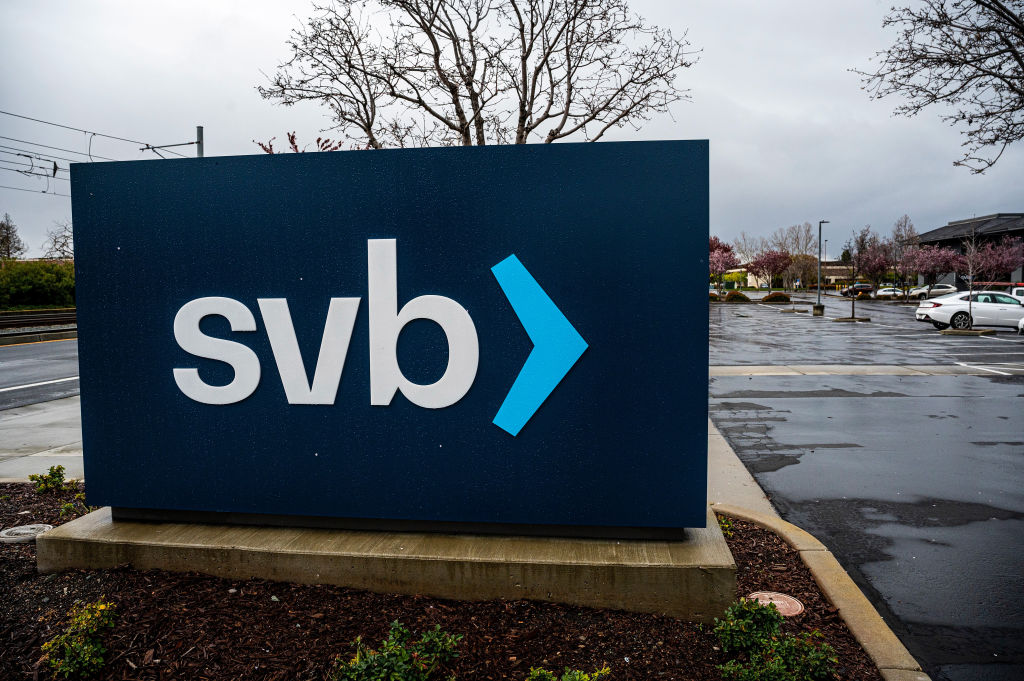
Signage outside Silicon Valley Bank headquarters in Santa Clara, California, US, on Thursday, March 9, 2023. SVB Financial Group bonds are plunging alongside its shares after the company moved to shore up capital after losses on its securities portfolio and a slowdown in funding. Photographer: David Paul Morris/Bloomberg via Getty Images
Enlarge / Signage outside Silicon Valley Bank headquarters in Santa Clara, California, US, on Thursday, March 9, 2023. SVB Financial Group bonds are plunging alongside its shares after the company moved to shore up capital after losses on its securities portfolio and a slowdown in funding. Photographer: David Paul Morris/Bloomberg via Getty Images

Silicon Valley Bank was shuttered by US regulators on Friday after a rush of deposit outflows and a failed effort to raise new capital called into question the future of the tech-focused lender.

With about $209 billion in assets, SVB has become the second-largest bank failure in US history after the 2008 collapse of Washington Mutual, and marks a swift fall from grace for a lender that was valued at more than $44 billion less than 18 months ago.

The Federal Deposit Insurance Corporation, the US regulator that guarantees bank deposits of up to $250,000, said it was closing SVB and that insured depositors would have access to their funds by Monday.

Many of SVB’s clients were venture capital funds as well as tech and health care startups, and would have account balances well in excess of the maximum amount insured by the FDIC. The regulator said these depositors would receive an initial payment next week and the rest would depend on what happens to SVB’s assets.

The regulator historically has sought to merge failed lenders with a larger and more stable institution. Washington Mutual, for example, was sold to JPMorgan Chase. The FDIC said it would use the sale proceeds of SVB to fund payouts to larger depositors.

The prices on SVB’s bonds plunged on Friday, with its senior debt trading at about 45 cents on the dollar and its junior debt as low as 12.5 cents, suggesting bondholders are braced for heavy losses.

Earlier on Friday, SVB had abandoned its efforts to raise $2.25 billion in new funding to cover losses on its bond portfolio and had begun looking for a buyer to save it, according to people with knowledge of the efforts.

SVB shares were halted during early trading on New York’s Nasdaq exchange, and its woes hit shares in several other US banks that are seen to have similar depositor and funding profiles.

Trading in Pacific West, Western Alliance, and First Republic were stopped due to volatility after they all initially fell 40 to 50 percent. Trading was also briefly stopped in Signature Bank after its shares fell nearly 30 percent. Several of those banks sought to reassure the market by putting out statements highlighting their differences from SVB in terms of asset and depositor base.

The banking group’s troubles stem from a decision made at the peak of the tech boom to park $91 billion of its deposits in long-dated securities such as mortgage bonds and US Treasuries, which were deemed safe but are now worth $15 billion less than when SVB purchased them after the Federal Reserve aggressively raised interest rates.

It had planned to sell $1.25 billion of its common stock to investors and an additional $500 million of mandatory convertible preferred shares, which are slightly less dilutive to existing shareholders. That would have helped bridge the roughly $1.8 billion in losses SVB incurred from the sale of about $21 billion of securities initiated to cover customers withdrawing deposits.

On Thursday, SVB and its underwriter Goldman Sachs raced to complete the share offering. While Goldman had secured enough interest in the convertible bond deal by mid-afternoon, the common stock sale was struggling as SVB shares slid, according to one person with knowledge of the efforts. Private equity firm General Atlantic had also committed to provide $500 million in equity if the offering had been completed.

The bank’s shares registered their biggest-ever decline on Thursday, wiping $9.6 billion off its market capitalization. SVB shares had fallen more than 60 percent in pre-market trading on Friday before the trading halt.

US bank failures have been extremely rare in recent years; the last FDIC-insured bank to close was in October 2020, and the last time there were more than 10 was in 2014.

The ramifications of SVB’s troubles may be widely felt. The lender is the banking partner for half of US venture-backed tech and life sciences companies and is a large presence in offering credit lines to the $10 trillion private capital industry.

Its customers had begun to grow increasingly fearful of the bank’s financial position on Thursday when some startups began pulling their cash. Some venture capital groups acknowledged that they had begun advising some of their portfolio companies to consider withdrawing a portion of their deposits from the lender earlier this week.

“SVB’s 40 years of business relationships supporting Silicon Valley evaporated in 14 hours,” said a senior executive at one multibillion-dollar venture capital fund.

Reporting by Joshua Franklin, Eric Platt, Ortenca Aliaj, Antoine Gara, and Brooke Masters in New York and Tabby Kinder and George Hammond in San Francisco. Additional reporting by Stephen Gandel in New York and Robert Smith in London.

© 2023 The Financial Times Ltd. All rights reserved. Not to be redistributed, copied, or modified in any way.

https://arstechnica.com/?p=1923229


Starlink explains why its FCC map listings are so different from reality

A Starlink satellite dish pictured on the ground, near an RV.
Enlarge / A Starlink satellite dish.

SpaceX has offered a public explanation for why Starlink’s actual service availability falls far short of what it claimed on the Federal Communications Commission’s national broadband map.

SpaceX’s FCC filings indicate it offers fixed broadband at virtually every address in the US even though the Starlink website’s service map shows it has a waitlist in huge portions of the country. As we previously reported, SpaceX removed some homes from the FCC database when residents filed challenges because they were unable to order Starlink at addresses listed as served on the FCC map.

SpaceX tried to clear up the confusion in an FCC filing last week. The company says it followed FCC rules when submitting data and blamed the FCC system for not allowing it to report data more precisely. Under the map system rules, SpaceX argues that it is allowed to report an address as “served” even if the resident can only order Starlink’s RV service.

Whether someone can order residential Starlink service at their address depends on “available capacity,” which is “driven by local subscription levels,” SpaceX wrote. The filing went on to explain the mismatch between the FCC map and Starlink’s actual availability:

To address this confusion, SpaceX has been discussing with Commission staff the best way to reflect the availability of its services within the National Broadband Map. Commission staff suggested, and SpaceX agreed, that SpaceX should submit data only for its Residential and Business plans and mirror the map and other information on www.starlink.com. Unfortunately, the filing portal’s technical constraints have prevented SpaceX from making this change. When these technical constraints are removed, SpaceX will supplement this filing, which should remove a key source of confusion.

Until then, in accordance with program rules, SpaceX will continue to populate the National Broadband Map with information on the availability of all Starlink plans that can provide service to a residence or small business; these plans are branded as Residential, Business, and RV. SpaceX encourages those interested in purchasing or learning more about these plans to consult the Starlink website, www.starlink.com, which will always be the best resource on the current availability of Starlink services.

Starlink for RVs is “always de-prioritized”

Starlink for RVs is meant for traveling, though not for in-motion use, and its service is classified as “best effort.”

“Network resources are always de-prioritized for Starlink for RV users compared to other Starlink services, resulting in degraded service and slower speeds in congested areas and during peak hours. Stated speeds and uninterrupted use of the service are not guaranteed,” a Starlink support FAQ says.

In general, correcting false availability data is important because the FCC map will be used to determine which parts of the US are eligible for $42.45 billion in federal grants to expand broadband availability. But Starlink’s submissions shouldn’t affect the grant process.

The National Telecommunications and Information Administration (NTIA), which is distributing the grants, says it will consider “locations served exclusively by satellite” as “unserved.” A footnote referencing an FCC document indicates that this applies both to geostationary satellites and the non-geostationary satellites used by SpaceX.

Still, the FCC map should be useful as a public resource, and Starlink claiming that its RV plan with de-prioritized service provides “fixed broadband” at specific addresses makes the map less useful. SpaceX’s FCC filing last week argued that the “RV plan provides high-speed Internet at any fixed location, including a residence. It is also available for immediate order nationwide at www.starlink.com/rv and provides an option for broadband connectivity to those who need it where the Residential and Business plans are not available today.”

https://arstechnica.com/?p=1922701


Musk apologizes for mocking and firing Twitter exec with muscular dystrophy

Musk apologizes for mocking and firing Twitter exec with muscular dystrophy

After a tweet exchange where Twitter CEO Elon Musk questioned a fired former Twitter executive’s disabilities and work performance, Musk has issued a rare apology and offered to rehire former Senior Director of Product Design Haraldur “Halli” Thorleifsson.

Thorleifsson joined Twitter in 2021, saying on the podcast Fast Politics with Molly Jong-Fast that he decided to let his successful design agency Ueno get acquired by Twitter because he really believed that, much like Musk, Twitter had “never lived up to its potential.” Until his exit from Twitter, Thorleifsson led an innovation team at Twitter, but Musk apparently was not familiar with the meaningful contributions Thorleifsson made to the company until after he let Thorleifsson go. Now Musk apparently regrets dismissing Thorleifsson.

“I would like to apologize to Halli for my misunderstanding of his situation,” Musk tweeted. “It was based on things I was told that were untrue or, in some cases, true, but not meaningful.”

According to Musk, Thorleifsson “is considering remaining at Twitter.”

Ars could not immediately reach Thorleifsson to confirm whether he’ll likely rejoin Twitter. In interviews since his exit, Thorleifsson is focusing less on Twitter drama and instead promoting a new restaurant that he’s opening in Iceland in a few weeks, which will be named after his mother, AnnaJona.

Thorleifsson told Jong-Fast on her podcast that his mom died in a car accident when he was 11 years old. After he moved back to the neighborhood where he grew up, he decided to build a restaurant in her memory in a beautiful house that came up for sale that he fondly remembered frequently walking past with his mother as a boy.

Musk regrets tweets about Thorleifsson

Musk’s controversial tweet exchange erupted after Thorleifsson tweeted nine days after losing access to his work computer, asking Musk to confirm whether or not he had been laid off. Musk responded after four hours, saying, “What work have you been doing?”

Thorleifsson told Musk that a confidentiality agreement prevented him from describing his Twitter projects, and then things seemed to become more heated when Musk immediately granted permission for Thorleifsson to openly discuss his work, then responded with two laughing emojis when Thorleifsson attempted to do that.

Thorleifsson told the BBC that shortly after this exchange, he was notified that he’d been fired, and the next day, Musk sent out a now-deleted tweet, saying of Thorleifsson, “He’s the worst, sorry.”

The next day, Musk lashed out at Thorleifsson again, tweeting, “The reality is that this guy (who is independently wealthy) did no actual work, claimed as his excuse that he had a disability that prevented him from typing, yet was simultaneously tweeting up a storm. Can’t say I have a lot of respect for that.”

Thorleifsson’s agency, Ueno, was massively successful before Twitter acquired it, completing ambitious projects for many major tech companies, from executing novelty projects like Google’s Santa Tracker to building the tools that support Apple Maps. Thorleifsson, who uses a wheelchair, told Jong-Fast that he had offers from Twitter and other tech companies for years to sell the agency, but he never seriously considered it until his muscular dystrophy started progressing, losing strength in his arms and making it harder for him to work.

Beyond becoming a recognizable talent to top tech industry heads, Thorleifsson also advocated on behalf of people with disabilities. In Iceland, Thorleifsson was named person of the year by several media outlets in 2022, BBC reported. He was recognized for his work campaigning to expand wheelchair access and his decision not to receive his Twitter payout as a lump sum but as wages that could be taxed to support Iceland’s social services.

This stellar reputation as a dedicated worker began haunting Musk, who began backpedaling on his criticism of Thorleifsson after Daniel Houghton—the former CEO of Lonely Planet, who worked directly with Thorleifsson on online content and e-commerce platforms—told Musk, “this is super disappointing to see.”

“Not only is his work ethic next level, his talent and humility are world class,” Houghton told Musk. “Exactly the kind of person you want on your team when the odds are stacked. I feel certain there’s a deep misunderstanding somewhere in here of ‘did no actual work.’”

Houghton’s tweet moved Musk to finally call Thorleifsson “to figure out what’s real vs what I was told.”

“Better to talk to people than communicate via tweet,” Musk admitted.

https://arstechnica.com/?p=1922606


Musk suspends “overzealous” rightsholders for “weaponizing” DMCA on Twitter

Musk suspends “overzealous” rightsholders for “weaponizing” DMCA on Twitter

Yesterday, Twitter CEO Elon Musk declared that Twitter will now be temporarily suspending any accounts found to be “engaging in repeated, egregious weaponization” of the Digital Millennium Copyright Act (DMCA). Musk’s tweet came at the same time that an intense copyright dispute was unfolding that resulted in the suspension of a rightsholder’s Twitter account. The suspension came after a professional photographer and Twitter user, @NightLights_AM, submitted a takedown notice to a hobbyist Twitter user, @Rainmaker1973, who posted one of the photographer’s videos without permission.

It’s difficult to track down the full story here because the suspended account’s tweets are unavailable, and some of the hobbyist account’s tweets have been deleted. And it’s unclear if Musk was aware of this particular dispute or the subsequent account suspension of the rightsholder. But TorrentFreak documented the DMCA Twitter saga in great detail, gathering archived and cached tweets to piece together what happened.

According to TorrentFreak, @NightLights_AM is run by Norway-based nature and astrophotographer Adrien Mauduit, whose Twitter feed was full of colorful videos and photos that he took as an “Aurora chasing specialist.” In early March, Mauduit uploaded a video of a geomagnetic storm that was then embedded in a tweet sent by @Rainmaker1973, which is run by an Italy-based Twitter user named Massimo.

Massimo, who is an engineer who uses Twitter to “build the big picture of #science via selected & curated pics, videos & links,” credited Mauduit’s account and linked to the original tweet. But that didn’t stop Mauduit, according to Massimo, from sending a takedown notice.

Seemingly hoping to resolve the dispute, Massimo contacted Mauduit, who then asked for money, according to Massimo. Ars could not immediately reach Mauduit for comment, but so far he has not confirmed or denied any of the allegations Massimo has made about their exchanges. TorrentFreak noted that Mauduit may have intended to ask for licensing fees, but Massimo’s story is that Mauduit is one of many content creators who have “blackmailed” him for sharing content for educational purposes over the years.

“I was hit by DMCA tens of times since 2014 and I was suspended once for 3 weeks,” Massimo tweeted. I paid more than $1,500 to keep this account open, I’ve paid all those have blackmailed me. I’ve been blocked in error several times, and I’m struggling going on like this.”

But with Musk’s new declaration to suspend excessive DMCA use, he appears to be more sympathetic to Twitter users like Massimo than to Twitter creators like Mauduit. Twitter did not respond to Ars’ request to clarify, but TorrentFreak speculated that Musk may have been directly behind Mauduit’s account suspension.

Although Twitter is required to respond to copyright complaints, Musk has long been a critic of what he considers DMCA weaponization and, even more generally, is opposed to upholding online norms where creators seek credit for original content. In 2021, when Musk was criticized for cropping out creators’ names and stealing the memes that he shared, Musk claimed “no one should be credited with anything ever,” The New York Times reported. And in May 2022, he tweeted that “overzealous DMCA is a plague on humanity” and “current copyright law in general goes absurdly far beyond protecting the original creator.” So, it’s not necessarily surprising that he would shift Twitter policy to prevent such overzealousness on his own platform.

Musk is not completely against creators with valid complaints, of course, tweeting that “reasonable media takedown requests are, of course, appropriate and will always be supported.” Where the line will be drawn between reasonable and unreasonable has yet to be seen, though. [Update: Twitter trust and safety chief Ella Irwin told Ars, “Twitter handles DMCA complaints from rightsholders on a regular basis and we review each complaint to ensure they are valid and if so, we take down the reported content. For all complaints, DMCA and otherwise, we look for evidence of bad faith reporting such as someone claiming to be a rights owner when they actually do not own the rights to the content in question or someone threatening to get a user suspended unless they pay them money immediately, which often turns out to be a fraud scam. If we see evidence of bad faith reporting, we will suspend the reporter.”]

An hour after tweeting about Twitter’s new efforts to prevent DMCA weaponization, Musk seemed to realize that his tweet did not reassure content creators that the Twitter CEO hopes will be part of his overall Twitter monetization strategy. He later tweeted that supporting content creators is still a “major priority,” saying that he understands that “people need to make a living and prosper from their work.”

No one’s sure how much money Mauduit was making by uploading his original content to Twitter, but it seems clear that as long as his account is suspended, the photographer will be missing opportunities to promote his work and prosper from it.

https://arstechnica.com/?p=1922323


Biden FCC nominee withdraws, blaming cable lobby and “unlimited dark money“

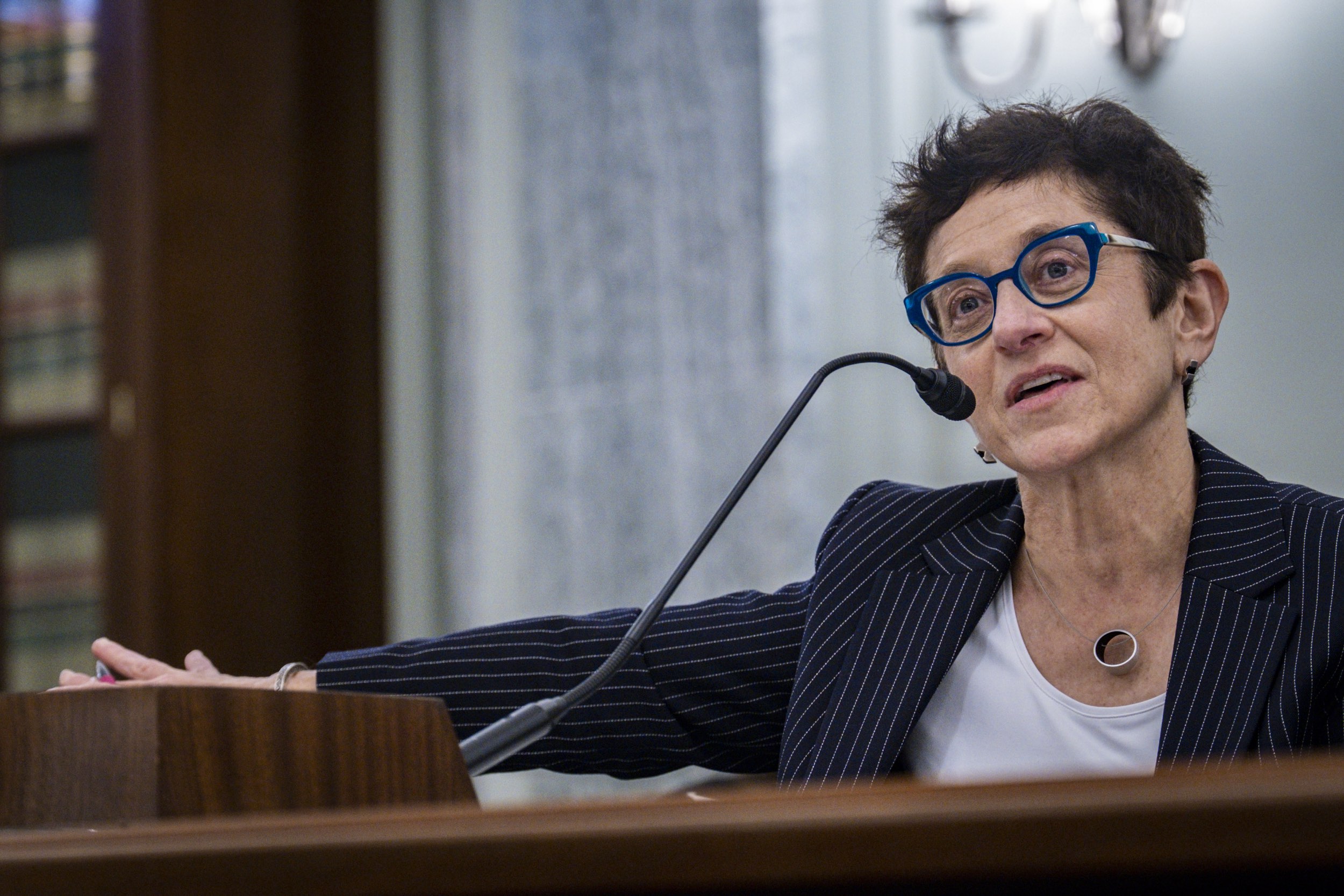
Gigi Sohn speaking into a microphone while seated during a Senate hearing.
Enlarge / Gigi Sohn testifies during a Senate Commerce Committee confirmation hearing on Feb. 9, 2022.
Getty Images

President Biden’s nominee to the open seat on the Federal Communications Commission, Gigi Sohn, withdrew her nomination today.

“When I accepted his nomination over sixteen months ago, I could not have imagined that legions of cable and media industry lobbyists, their bought-and-paid-for surrogates, and dark money political groups with bottomless pockets would distort my over 30-year history as a consumer advocate into an absurd caricature of blatant lies,” Sohn said in a statement provided to Ars and other media organizations.

Sohn’s nomination was “met with homophobic tropes and attacks against herself and her family,” a recent letter from advocacy groups to senators said. Sohn’s statement said that “unrelenting, dishonest and cruel attacks on my character and my career as an advocate for the public interest have taken an enormous toll on me and my family.”

“It is a sad day for our country and our democracy when dominant industries, with assistance from unlimited dark money, get to choose their regulators. And with the help of their friends in the Senate, the powerful cable and media companies have done just that,” Sohn also said.

Manchin announced opposition today

Earlier today, Sen. Joe Manchin (D-W.Va.) announced that he would vote against Sohn. With Republicans lined up against the nominee, that meant she would need support from every remaining member of the Democratic caucus in order to be confirmed.

In a statement, Manchin criticized Sohn for “her years of partisan activism, inflammatory statements online, and work with far-left groups.” Manchin didn’t provide any examples of Sohn making “inflammatory statements.” The “work with far-left groups” may be a reference to Sohn being on the board of the Electronic Frontier Foundation.

“Especially now, the FCC must remain above the toxic partisanship that Americans are sick and tired of, and Ms. Sohn has clearly shown she is not the person to do that,” Manchin’s statement said. “For those reasons, I cannot support her nomination to the FCC, and I urge the Biden Administration to put forth a nominee who can bring us together, not drive us apart.”

The FCC has been stuck with a 2-2 partisan deadlock for Biden’s entire term as president. He nominated Sohn, a longtime consumer advocate and former FCC official, in October 2021 and again in January 2023 after the previous Senate didn’t vote on the nomination.

“I believe it is critical for at least one member of the FCC to be a consumer advocate who has spent a career not beholden to any interest but that of the public,” Sohn told the Senate Commerce Committee during a confirmation hearing last month.

https://arstechnica.com/?p=1922327