Biden helped draft bipartisan bill that could ban TikTok nationwide

Biden helped draft bipartisan bill that could ban TikTok nationwide

United States lawmakers seem to be exploring every possible path to potentially ban TikTok nationwide. The latest push comes today from Sen. Mark Warner (D-Va.), who this afternoon will lead a dozen senators in introducing a bipartisan bill that would grant US Commerce Secretary Gina Raimondo the power to ban TikTok on personal devices to protect national security, Reuters reported.

The bill is called the “Restricting the Emergence of Security Threats that Risk Information and Communications Technology (RESTRICT) Act.” Unlike the “Deterring America’s Technological Adversaries (DATA) Act”—which Republicans who view President Joe Biden’s stance on China as weak have been jamming through Congress to quickly empower Biden to ban TikTok—Warner’s bill doesn’t single out TikTok to be banned. Critics have said singling out TikTok risks damaging US global alliances and driving more countries into China’s influence sphere, CNBC reported. Instead, Warner avoids making his bill all about TikTok. His office told Reuters that the RESTRICT Act will “comprehensively address the ongoing threat posed by technology from foreign adversaries,” citing TikTok as an example of tech that could be assessed as a threat.

According to Warner, who is introducing the bill with Sen. John Thune (R-SD), the RESTRICT Act is superior to the DATA Act because it provides a legal framework for the US to review all “foreign technology coming into America,” not just from China, but also from Russia, North Korea, Iran, Venezuela, and Cuba. It’s designed to give the US “a systemic approach to make sure we can ban or prohibit” emerging technology threats “when necessary.”

Reuters reported that Democrats Tammy Baldwin (Wis.), Joe Manchin (W.Va.), Michael Bennett (Colo.), Kirsten Gillibrand (NY), and Martin Heinrich (NM) support Warner and Thune’s bill, as well as Republicans Deb Fischer (Neb.), Jerry Moran (Kan.), Dan Sullivan (Alaska), Susan Collins (Maine), and Mitt Romney (Utah). All senators are expected to attend a press conference today at 3 pm ET to discuss the bill in more detail.

Ars couldn’t immediately reach TikTok for comment. Warner’s office told Ars that more details will be shared at the press conference this afternoon. [Update: TikTok spokesperson Brooke Oberwetter told Ars that TikTok has not yet reviewed the bill to comment on it specifically. Oberwetter said that TikTok appreciates that “some members of Congress remain willing to explore options for addressing national security concerns that don’t have the effect of censoring millions of Americans. A US ban on TikTok is a ban on the export of American culture and values to the billion-plus people who use our service worldwide.”]

Biden’s support for the RESTRICT Act

Biden and the Committee on Foreign Investment in the United States (CFIUS) have been in talks with TikTok for years, attempting to strike a deal allowing TikTok to continue operating in the US. Now it seems he’s either done talking with TikTok or seeking legal powers to apply more pressure on TikTok to finalize that deal.

The New York Times called the Biden administration’s seeming support of the RESTRICT Act a “strategy switch.” Although the White House has not yet endorsed Warner’s bill, sources told the Times that the Biden administration has provided feedback on a draft, seeing it as an alternative to implementing an outright ban on TikTok via the DATA Act.

TikTok spokesperson Brooke Oberwetter told the Times that the Biden administration didn’t need additional authority to strike a deal with TikTok. He still has the option to sign the deal between TikTok and the CFIUS, which Oberwetter said that TikTok considered finalized, “save for some legal terms that are not material to national security.”

In January, though, Warner told Axios that he was pretty sure that the CFIUS deal would never be finalized.

“I’ve tried to give the Biden administration time if they’ve got a technical solution,” Warner told Axios. “But candidly, in my view, I don’t think they’re going to come up with a solution because it’s really hard.”

Because courts rejected a prior TikTok ban attempted under the Trump administration that was similar to the ban that the DATA Act proposes, the RESTRICT Act seems to be agreeable to some members of both parties because it offers a new path to a TikTok ban that wouldn’t require Biden to overstep his presidential authority.

It’s still unclear what path the US will take, but pressure appears to be mounting for Biden to choose a lane and find a way to keep TikTok in the US or get behind efforts to ban it.

TikTok rejects national security concerns

On March 23, TikTok CEO Shou Zi Chew will testify before the House Energy and Commerce Committee, a key opportunity to persuade lawmakers that their national security fears are unfounded.

In December, Oberwetter told Ars that efforts to ban TikTok are “politically motivated” and “will do nothing to advance the national security” of the US. TikTok has also criticized TikTok bans for taking “a piecemeal approach to national security and a piecemeal approach to broad industry issues like data security, privacy, and online harms.”

Some of Warner’s statements suggest that the RESTRICT Act possibly addresses that latter criticism, telling Axios that the optics were better if the US passed a law like his bill because “it’d be better to say we are concerned about this category of applications rather than a specific single app.” Warner said he couldn’t back efforts like the DATA Act because singling out China-based TikTok could stoke retaliation from China.

TikTok isn’t the only one opposing some of Congress’ efforts to ban the app. The American Civil Liberties Union has warned that banning TikTok on personal devices would violate Americans’ First Amendment rights, calling the DATA Act unconstitutional and urging lawmakers to vote it down. An ACLU spokesperson told Ars that the organization is waiting to review Warner’s bill before deciding whether the RESTRICT Act could also be considered unconstitutional.

https://arstechnica.com/?p=1922277


Twitter revenue, earnings reportedly fell 40% shortly after Musk buyout

Elon Musk's Twitter profile displayed on a phone screen in front of a Twitter logo and a fake stock graph with an arrow pointing down.
Getty Images | NurPhoto

Twitter’s revenue and adjusted earnings reportedly fell about 40 percent year over year in December 2022 amid an advertiser exodus following Elon Musk’s takeover.

Twitter no longer reports earnings publicly since Musk bought the company and took it private in late October. But Twitter reported the December 2022 revenue and earnings declines in an update to investors, according to “people familiar with the matter” cited in a Wall Street Journal report on Friday.

Many big companies cut advertising spending on Twitter shortly after Musk’s acquisition, largely over concerns about content moderation. Twitter offered special deals to advertisers throughout December 2022, but it wasn’t enough to prevent the 40 percent revenue and earnings declines.

Halfway through December, about 70 percent of Twitter’s top 100 ad spenders from before the Musk buyout reportedly weren’t advertising on the platform. Some advertisers have returned, in part thanks to deals offered for the Super Bowl in February, so revenue numbers in the early months of 2023 could be better.

It’s not clear what the exact revenue and earnings numbers were for either December 2021 or December 2022 because Twitter reported quarterly earnings when it was a public company. Its Q4 2021 revenue was $1.57 billion and net income was $182 million. Despite the Q4 2021 profit, Twitter reported a net loss of $221 million for the full year of 2021.

“Twitter posted a net loss in eight out of the 10 years from 2012 to 2021 and hasn’t booked an annual profit since 2019,” the WSJ wrote. Twitter’s last public earnings report before Musk bought the company was for Q2 2022. Twitter reported revenue of $1.18 billion and a net loss of $270 million in that quarter.

Musk said he saved Twitter from bankruptcy

A week after his buyout, Musk said that Twitter was losing over $4 million a day. He cut costs by laying off half of Twitter’s staff, terminating thousands of contractors, and issuing an ultimatum that caused many employees to resign. In early February, Musk said he had an “extremely tough” three months because he “had to save Twitter from bankruptcy… Twitter still has challenges, but is now trending to breakeven if we keep at it.”

Musk used $13 billion of debt to fund his takeover, which resulted in interest payments reportedly totaling $1.5 billion a year. Twitter reportedly made the first interest payment of about $300 million in January. “Some of Twitter’s debt carries an annual interest rate of almost 15 percent,” the WSJ article said.

Musk seems to have long-term plans to bring payment functionality to Twitter and thus compete against services like PayPal, but for now it relies on advertising and subscriptions for revenue. His revamped Twitter Blue service hasn’t attracted many paying subscribers, leaving Twitter far short of Musk’s goal for “roughly half of our revenue to be subscription.”

Another problem is how to keep Twitter running smoothly with a much smaller staff thanks to Musk’s cost-cutting. That challenge seemed clear today when an API change apparently broke all links on Twitter for 45 minutes or so. Musk wrote that a “small API change had massive ramifications,” while claiming that Twitter’s “code stack is extremely brittle for no good reason” and will “need a complete rewrite.”

https://arstechnica.com/?p=1922060


Twitter API error broke the site today as Musk blames “brittle” platform

Twitter logo displayed on a cracked phone screen is seen through broken glass
Getty Images | NurPhoto

Twitter suffered an embarrassing technology failure today that temporarily broke links to outside websites and even to Twitter’s own webpages. The problem lasted for about 45 minutes or so.

In our tests, clicking any link brought up this error message:

{“errors”:[{“message”:”Your current API plan does not include access to this endpoint, please see https://developer.twitter.com/en/docs/twitter-api for more information”,”code”:467}]}

Clicking that developer link didn’t clear anything up while the problem was still happening because it brought up the same API error message. In addition to news articles and other outbound links, the error message appeared when we tried to click Twitter’s terms of service, privacy policy, cookie policy, and other similar pages. Some images embedded in tweets were broken, and there were reports of TweetDeck being broken too.

We also got the error message when loading any Twitter page in a browser’s incognito mode. It was still possible to view tweets in a browser tab where we were already logged in to Twitter, and the link problem was a trending topic of discussion.

Twitter’s official support account acknowledged the problem before it was fixed. “Some parts of Twitter may not be working as expected right now,” Twitter wrote. “We made an internal change that had some unintended consequences. We’re working on this now and will share an update when it’s fixed.”

Musk: Code is “brittle for no good reason”

“This platform is so brittle (sigh). Will be fixed shortly,” CEO Elon Musk wrote. He added later that a “small API change had massive ramifications. The code stack is extremely brittle for no good reason. Will ultimately need a complete rewrite.”

The “current API plan” part of the error message led to widespread speculation that the problem was related to Twitter’s decision to charge for API access. “Did Twitter forget to subscribe to their own API?” one user asked. “Twitter’s own products are breaking because it ended the free API,” The Information tech reporter Paris Martineau wrote.

We’ll update this article if we get specific details on what caused the link failure. Links on Twitter appear to be working fine now and the Twitter support account confirmed the problem was fixed.

After buying Twitter in October 2022, Musk cut costs by laying off half of Twitter’s staff and terminating thousands of contractors, A Washington Post report in mid-November quoted a former employee as saying layoffs and other departures “have left multiple critical systems down to two, one or even zero engineers.”

https://arstechnica.com/?p=1922014


Thousands scammed by AI voices mimicking loved ones in emergencies

Thousands scammed by AI voices mimicking loved ones in emergencies

AI models designed to closely simulate a person’s voice are making it easier for bad actors to mimic loved ones and scam vulnerable people out of thousands of dollars, The Washington Post reported.

Quickly evolving in sophistication, some AI voice-generating software requires just a few sentences of audio to convincingly produce speech that conveys the sound and emotional tone of a speaker’s voice, while other options need as little as three seconds. For those targeted—which is often the elderly, the Post reported—it can be increasingly difficult to detect when a voice is inauthentic, even when the emergency circumstances described by scammers seem implausible.

Tech advancements seemingly make it easier to prey on people’s worst fears and spook victims who told the Post they felt “visceral horror” hearing what sounded like direct pleas from friends or family members in dire need of help. One couple sent $15,000 through a bitcoin terminal to a scammer after believing they had spoken to their son. The AI-generated voice told them that he needed legal fees after being involved in a car accident that killed a US diplomat.

According to the Federal Trade Commission, so-called impostor scams are extremely common in the United States. It was the most frequent type of fraud reported in 2022 and generated the second-highest losses for those targeted. Out of 36,000 reports, more than 5,000 victims were scammed out of $11 million over the phone.

Because these impostor scams can be run from anywhere in the world, it’s extremely challenging for authorities to crack down on them and reverse the worrying trend, the Post reported. Not only is it hard to trace calls, identify scammers, and retrieve funds, but it’s also sometimes challenging to decide which agencies have jurisdiction to investigate individual cases when scammers are operating out of different countries. Even when it’s obvious which agency should investigate, some agencies are currently ill-equipped to handle the rising number of impersonations.

Ars could not immediately reach the FTC for comment. Will Maxson, an assistant director at the FTC’s division of marketing practices, told the Post that raising awareness of scams relying on AI voice simulators is likely consumers’ best defense currently. It’s recommended that any requests for cash be treated with skepticism. Before sending funds, try to contact the person who seems to be asking for help through methods other than a voice call.

Safeguards against AI voice impersonation

AI voice-modeling tools have been used to improve text-to-speech generation, create new possibilities for speech editing, and expand movie magic by cloning famous voices like Darth Vader’s. But the power of easily producing convincing voice simulations has already caused scandals, and no one knows who’s to blame when the tech is misused.

Earlier this year, there was backlash when some 4chan members made deepfake voices of celebrities making racist, offensive, or violent statements. At that point, it became clear that companies needed to consider adding more safeguards to prevent misuse of the technology, Vice reported—or potentially risk being held liable for causing substantial damage, like ruining the reputations of famous people.

The courts have not yet decided when or if companies will be held liable for harms caused by deepfake voice technology—or any of the other increasingly popular AI technology, like ChatGPT—where defamation and misinformation risks seem to be rising.

There may be increasing pressure on courts and regulators to get AI in check, though, as many companies seem to be releasing AI products without fully knowing the risks involved.

Right now, some companies seem unwilling to slow down releases of popular AI features, including controversial ones that allow users to emulate celebrity voices. Most recently, Microsoft rolled out a new feature during its Bing AI preview that can be used to emulate celebrities, Gizmodo reported. With this feature, Microsoft seems to be attempting to dodge any scandals by limiting what impostor celebrity voices can be prompted to say.

Microsoft did not respond to Ars’ request for comment on how well safeguards currently work to prevent the celebrity voice emulator from generating offensive speech. Gizmodo pointed out that, like many companies eager to benefit from the widespread fascination with AI tools, Microsoft relies on its millions of users to beta test its “still-dysfunctional AI,” which can seemingly still be used to generate controversial speech by presenting it as parody. Time will tell how effective any early solutions are in mitigating risks.

In 2021, the FTC released AI guidance, telling companies that products should “do more good than harm” and that companies should be prepared to hold themselves accountable for risks of using products. More recently, the FTC last month told companies, “You need to know about the reasonably foreseeable risks and impact of your AI product before putting it on the market.”

https://arstechnica.com/?p=1922001


As Kenya’s crops fail, a fight over GMOs rages

maize plant
James Wakibia/Getty Images

the middle of its worst drought in 40 years. In the parched north of the country, rivers are running dry and millions of livestock have perished due to lack of food. Around 4.4 million Kenyans don’t have enough to eat, and the situation will worsen if the coming rainy season fails like the previous five. “I’ve never seen it so bad. There’s nothing in the farms, the drought is too harsh,” says Daniel Magondo, a cotton and maize farmer in central Kenya.

The record-breaking drought is forcing Kenya to confront a controversial topic: whether the country should grow genetically modified (GM) crops. These are plants that have had genes from another organism inserted into their DNA to give them a new trait, such as disease or drought resistance. Although GM crops are completely safe to eat and are widely grown in the US, Canada, Brazil, and India, governments in many parts of the world, including Europe and East Africa, have pushed back against them.

That was the case in Kenya in 2012, when the cabinet banned them from being imported. The ban stayed in place until 2019, when the government allowed the importation of GM cotton engineered to be resistant against a pest called the cotton bollworm. And then in October 2022, the cabinet declared that it would allow farmers to grow pest-resistant GM maize—effectively ending the decade-long ban on GM crops in the country. Since 2015, fall armyworm moths have ravaged maize crops, by one estimate destroying a third of Kenya’s annual production.

In a statement released in October, the Kenyan cabinet said that GM maize would help improve the country’s food supply, relieving some of the pressure of the ongoing drought. The government ordered 11 tonnes of pest-resistant GM maize seeds that are widely grown in South Africa and have also been trialed in Kenya. But then, in February 2023, Kenya’s GMO regulator was barred from releasing the seeds after four separate legal complaints were lodged: three with Kenyan courts and one in the East African Court of Justice.

One complaint was filed by the Centre for Food and Adequate Living Rights (CEFROHT), a Ugandan environmental nonprofit. Others were lodged by the Kenyan Peasants League and Paul Mwangi, a Kenyan lawyer. CEFROHT says that the Kenyan decision has violated the East African Community Treaty, which requires East African countries to protect natural resources. Other groups are worried that cultivating GM maize will shift farmers’ focus away from indigenous crops. With planting season just around the corner, the future of GM crops in Kenya is in limbo until the courts make a decision.

Timothy Machi welcomed the GM ban being reversed. “Something we’ve been longing for so long as a country has finally come to fruition,” says Machi, Kenya lead at the development NGO RePlanet Africa, which campaigns to improve Africa’s food security. So when the news broke that the move had been challenged in court, Machi helped organize protests in Nairobi and in Kampala in neighboring Uganda. Across the two cities, some 200 scientists and campaigners marched in support of GM crops. They held signs that read “GMOs for food security” and promoted the hashtag “Let Kenya eat.”

https://arstechnica.com/?p=1921888


Netflix fights attempt to make streaming firms pay for ISP network upgrades

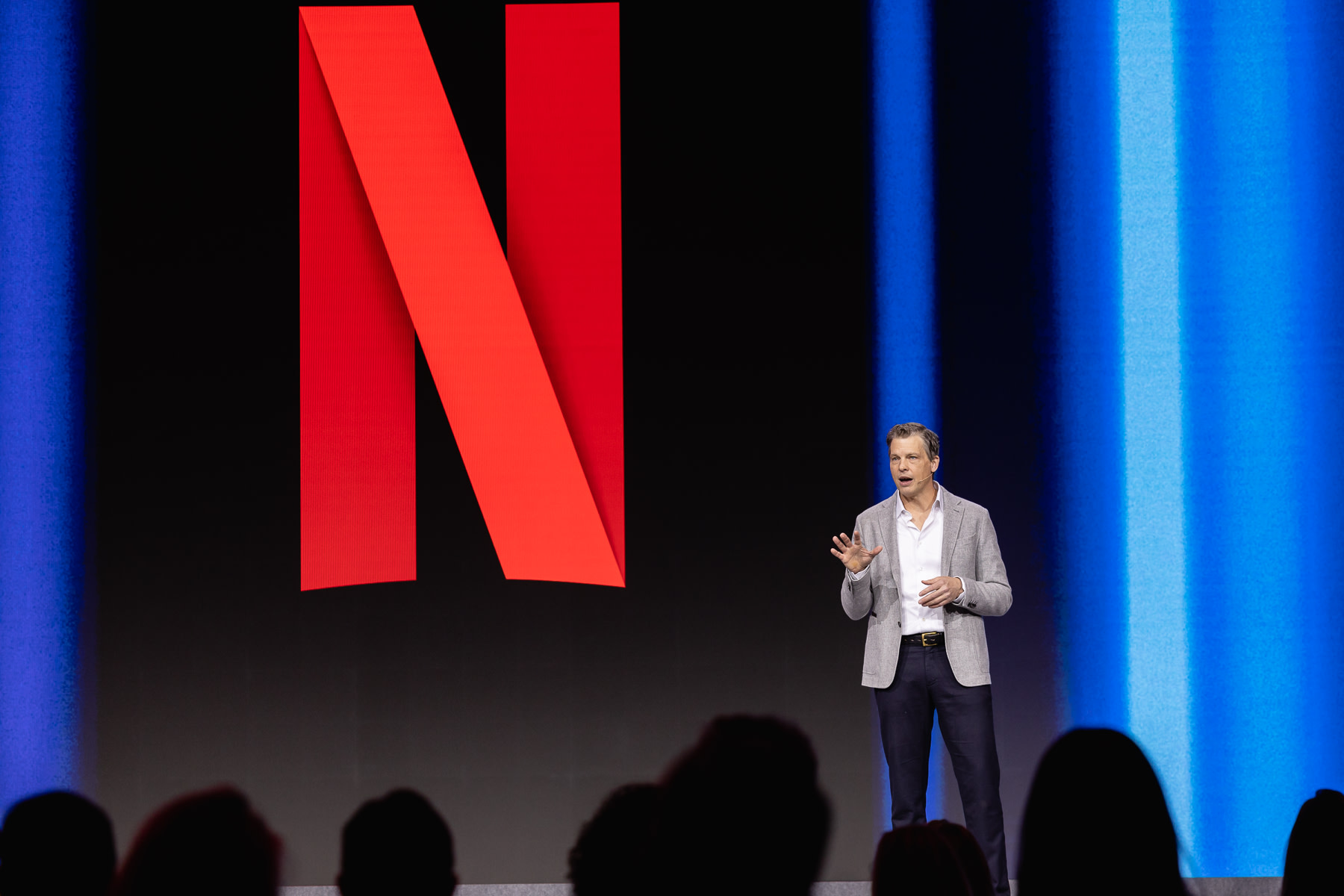
Netflix Co-CEO Greg Peters speaks on a stage with a Netflix logo in the backdrop.
Enlarge / Netflix co-CEO Greg Peters.

Netflix co-CEO Greg Peters spoke out against a European proposal to make streaming providers and other online firms pay for ISPs’ network upgrades.

“Some of our ISP partners have proposed taxing entertainment companies to subsidize their network infrastructure,” Peters said in a speech Tuesday at Mobile World Congress in Barcelona (transcript). The “tax would have an adverse effect, reducing investment in content—hurting the creative community, hurting the attractiveness of higher-priced broadband packages, and ultimately hurting consumers,” he argued.

ISPs have been seeking payments for years, and their demands are now being evaluated by European regulators in an exploratory consultation. The European Commission last week started taking public input on the proposal to make online platforms pay for telecom companies’ broadband network upgrades and expansions.

“ISPs claim that these taxes would only apply to Netflix. But this will inevitably change over time as broadcasters shift from linear to streaming,” Peters said at MWC.

Sandvine data suggests that nearly half of global Internet traffic is sent by Facebook, Amazon, Google, Apple, Netflix, and Microsoft. Online video accounts for 65 percent of all traffic, and Netflix recently passed YouTube as the top video-traffic generator.

“Charging twice for the same infrastructure”

Peters cited Nielsen data showing that “Netflix accounts for under 10 percent of total TV time” in the US and UK while “traditional local broadcasters account for over half of all TV time.” Live sports account for much of that.

“As broadcasters continue the shift away from linear to streaming, they will start to generate significant amounts of Internet traffic too—even more than streamers today based on the current scope and scale of their audiences,” Peters said. “Broadband customers, who drive this increased usage, already pay for the development of the network through their subscription fees. Requiring entertainment companies—both streamers and broadcasters—to pay more on top would mean ISPs effectively charging twice for the same infrastructure.”

Telcos that receive new payments wouldn’t be expected to lower the prices charged to home Internet users, Peters said. “As the consumer group BEUC has pointed out, there is no suggestion these levies would be passed onto consumers in the form of ‘lower prices or better infrastructure,'” he said.

Peters said Netflix’s “operating margins are significantly lower than either British Telecom or Deutsche Telekom. So we could just as easily argue that network operators should compensate entertainment companies for the cost of our content—exactly as happened under the old pay-TV model.”

Netflix touts its own network spending

While telcos claim companies like Netflix don’t pay their “fair share,” Peters pointed out that Netflix has spent a lot building its own network that reduces the amount of data sent over traditional telecom networks.

“We’ve spent over $1 billion on Open Connect, our own content delivery network, which we offer for free to ISPs,” he said. “This includes 18,000 servers with Netflix content distributed across 6,000 locations and 175 countries. So when our members press play, instead of the film or TV show being streamed from halfway around the world, it’s streamed from around the corner—increasing efficiency for operators while also ensuring a high-quality, no-lag experience for consumers.”

Peters also touted Netflix’s encoding technology that cut bit rates in half between 2015 and 2020. While Internet traffic has increased about 30 percent a year, “ISPs have managed this increased consumer usage efficiently while their costs have remained stable,” Peters said. “Regulators have highlighted this, too, calling out that infrastructure costs are not sensitive to traffic and that growing consumption will be offset by efficiency gains.”

An October 2022 report issued by the Body of European Regulators for Electronic Communications (BEREC) found there is “no evidence of ‘free-riding'” and that connectivity costs “are typically covered and paid for by ISPs’ customers.”

“The ‘sending party network pays’ (SPNP) model would provide ISPs the ability to exploit the termination monopoly and it is conceivable that such a significant change could be of significant harm to the Internet ecosystem,” the BEREC report said.

Telefonica CEO José María Álvarez-Pallete López told Reuters last week that payments from tech companies “would not be like a tax—we would charge them like they were customers. Why do some customers pay and others not? It’s correcting an anomaly.”

https://arstechnica.com/?p=1921732


Florida bill would make bloggers who write about governor register with state

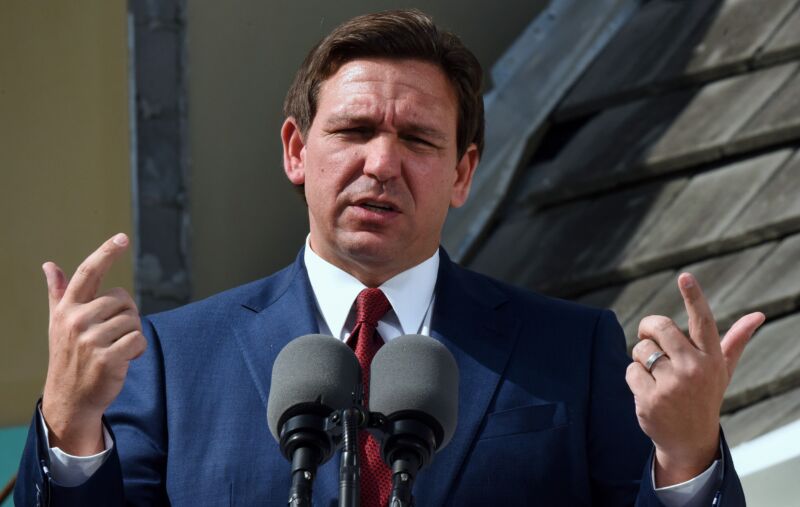
Florida Gov. Ron DeSantis speaks at a press conference while gesturing with his hands.
Enlarge / Florida Gov. Ron DeSantis at a press conference in Daytona Beach Shores on January 18, 2023.
Getty Images | SOPA Images

A proposed law in Florida would force bloggers who write about Gov. Ron DeSantis and other elected officials to register with a state office and file monthly reports or face fines of $25 per day. The bill was filed in the Florida Senate Tuesday by Senator Jason Brodeur, a Republican.

If enacted, the proposed law would likely be challenged in court on grounds that it violates First Amendment protections of freedom of speech and the press. Defending his bill, Brodeur said, “Paid bloggers are lobbyists who write instead of talk. They both are professional electioneers. If lobbyists have to register and report, why shouldn’t paid bloggers?” according to the Florida Politics news website.

The bill text defines bloggers as people who write for websites or webpages that are “frequently updated with opinion, commentary, or business content.” Websites run by newspapers or “similar publications” are excluded from the definition.

The proposed registration requirements apply to bloggers who receive payment in exchange for writing about elected state officers, including “the Governor, the Lieutenant Governor, a Cabinet officer, or any member of the Legislature.” Bloggers who write about a member of the legislature would have to register with the state Office of Legislative Services, while bloggers who write about the governor or other members of the executive branch would have to register with the Commission on Ethics.

“If a blogger posts to a blog about an elected state officer and receives, or will receive, compensation for that post, the blogger must register with the appropriate office… within 5 days after the first post by the blogger which mentions an elected state officer,” the bill said. “Upon registering with the appropriate office, a blogger must file monthly reports on the 10th day following the end of each calendar month from the time a blog post is added to the blog.”

“Hard to imagine” a bigger First Amendment violation

The reports would have to name the “individual or entity that compensated the blogger for the blog post” and specify the “amount of compensation received.” There would be fines “of $25 per day per report for each day late, not to exceed $2,500 per report.” The blogger requirements would use the “same procedure by which lobbyists are notified of the failure to timely file a report and the amount of the assessed fines.”

“It’s hard to imagine a proposal that would be more violative of the First Amendment,” New York-based civil rights lawyer Ron Kuby said, according to an NBC News article. “We don’t register journalists. People who write cannot be forced to register.”

Scott Wilkens, senior counsel at the Knight First Amendment Institute at Columbia University, told Ars that the “bill raises serious First Amendment concerns about free speech online. It seems very hard to draw a meaningful distinction between paid bloggers who write about the Florida executive or legislative branches and journalists who do the same. The bill regulates speech about issues of public concern—issues that lie at the heart of the First Amendment.”

We also got a statement from Bruce Brown, executive director of the Reporters Committee for Freedom of the Press. “When a bill this plainly unconstitutional is introduced it’s essential that journalists explain to the public why it runs afoul of the First Amendment,” Brown said. “Our system of free expression rejected the British tradition of licensing printers because we recognized that it was the essence of self-rule to have complete freedom to criticize the public officials who act in our name. The registration regime proposed here would encumber that and deny Floridians their right to hear from a variety of voices about the conduct of their elected leaders.”

DeSantis demanded new defamation law

The Florida Legislature is separately considering proposals that would make it easier for people to sue media organizations for defamation; these proposals have also been criticized for harming freedom of speech. Brodeur filed one of the defamation proposals on Monday.

The defamation proposals were spurred by DeSantis, who last month held a roundtable discussion on media defamation and called on the legislature “to protect Floridians from the life-altering ramifications that defamation from the media can cause for a person who does not have the means or the platform to defend himself.”

“We’ve seen over the last generation legacy media outlets increasingly divorce themselves from the truth and instead try to elevate preferred narratives and partisan activism over reporting the facts,” DeSantis said. “When the media attacks me, I have a platform to fight back. When they attack everyday citizens, these individuals don’t have the adequate recourses to fight back. In Florida, we want to stand up for the little guy against these massive media conglomerates.”

https://arstechnica.com/?p=1921609


Microsoft/Activision deal will win EU approval, sources say

Microsoft/Activision deal will win EU approval, sources say

Last fall, it looked like trouble for Microsoft when the European Union launched an in-depth investigation into its acquisition of Activision, but it now seems that Microsoft will emerge victorious. Three people familiar with the European Commission’s opinion on the matter told Reuters that, by agreeing to make a few more concessions, Microsoft will likely win EU antitrust approval on April 25.

According to Reuters, the European Commission is not expected to ask Microsoft to divest large parts of Activision—like separating out its Call of Duty business—to win approval. Instead, long-term licensing deals of lucrative games that Microsoft has offered to rivals could suffice, in addition to agreeing to “other behavioral remedies to allay concerns of other parties than Sony,” one insider told Reuters.

Microsoft declined Ars’ request to comment, but the company told Reuters that it is “committed to offering effective and easily enforceable solutions that address the European Commission’s concerns.” Microsoft has previously opposed any proposed remedies forcing the merged companies to sell the Call of Duty franchise.

Earlier this month, the United Kingdom indicated that its antitrust approval of the acquisition might depend on such a sale. An Activision spokesperson told Ars at that time that the company hoped to help the UK government “better understand our industry” to avoid selling Call of Duty or breaking up other parts of Activision’s business.

Microsoft got its big chance to sway the UK this week when it attended a private hearing with UK’s antitrust watchdog, the Competition and Markets Authority (CMA), to discuss “feasible remedies,” Bloomberg reported. Sources said that Microsoft offered to pay a third-party monitor to oversee the company’s compliance with any behavioral remedies proposed by the UK to approve the deal. The CMA is expected to make its decision on April 26.

This hearing followed a closed-door meeting with the EU during which Microsoft President Brad Smith seemingly successfully argued that the merger would not be “feasible or realistic” if Call of Duty weren’t part of the acquisition, Bloomberg reported.

If the European Commission approves the deal based largely on Microsoft’s plan to offer rivals long-term licensing deals, the commission’s decision could influence other government agencies scrutinizing the deal.

“Our commitment to grant long-term 100 percent equal access to Call of Duty to Sony, Steam, Nvidia, and others preserves the deal’s benefits to gamers and developers and increases competition in the market,” a Microsoft spokesperson told Reuters.

The UK isn’t the only body not yet convinced by Microsoft’s proposed solution that licensing deals will remedy anticompetitive concerns. When the United States Federal Trade Commission moved to block the deal last December, the FTC’s director of the Bureau of Competition, Holly Vedova, warned that Microsoft can’t always be trusted to share its most lucrative titles with rivals. “Microsoft has already shown that it can and will withhold content from its gaming rivals,” Vedova wrote in an FTC complaint.

An Activision spokesperson told Ars that the merger would help the company continue to make multi-platform games that can compete in an “industry dominated by growing competitors.” Activision’s spokesperson also said that the solutions Microsoft has presented “are legally binding, and beyond that, our passionate player community would hold Microsoft accountable for keeping its promises.”

The FTC is scheduled to review the deal at an evidentiary hearing on August 2.

https://arstechnica.com/?p=1921598


Developers of disabled third-party Twitter clients ask users to forgo refunds

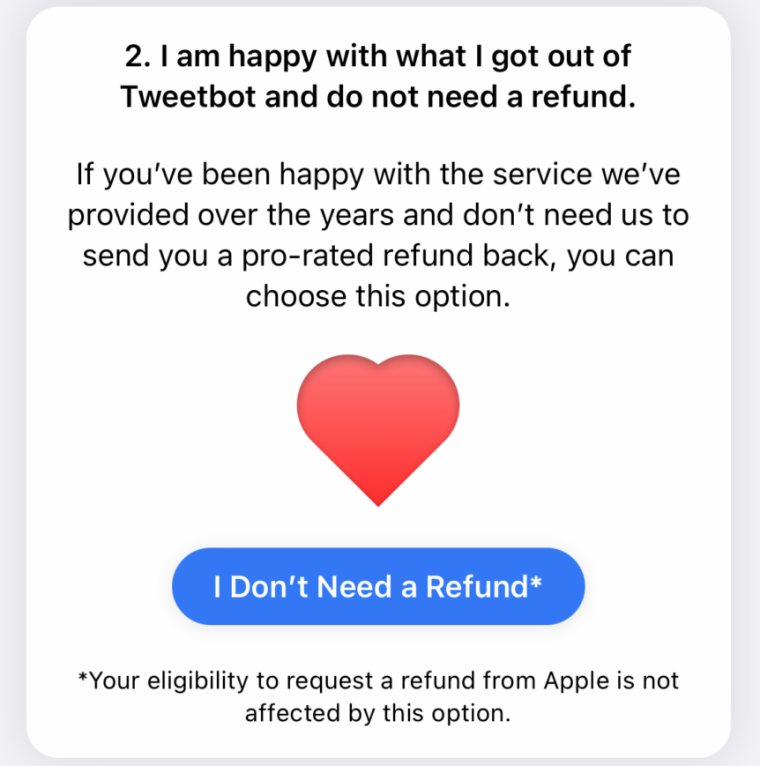
The "I don't need a refund" button as viewed in the Tweetbot app.
Enlarge / The “I don’t need a refund” button as viewed in the Tweetbot app.

Elon Musk’s “extremely hardcore” version of Twitter abruptly and unexpectedly cut off API access for popular third-party Twitter clients back in January, citing unnamed “long-standing API rules” that the apps had apparently been breaking. The company later retconned its developer agreement to prohibit “a substitute or similar service or product to the Twitter Applications.”

For the former developers of Tweetbot and Twitterific, two of the longest-lived and most popular third-party Twitter clients, this meant losing their biggest products and revenue streams, and potentially refunding subscribers who suddenly couldn’t use the apps they were paying for.

Tapbots and The Iconfactory (developers of Tweetbot and Twitterrific, respectively) have released one last update for their Twitter apps, walking users through the process of dealing with their expired subscriptions. If users want a prorated refund (back-dated to January 12, the last day both clients functioned normally), they don’t need to take any action; both apps will be giving out prorated refunds to subscribers they don’t hear from. But the apps also include a button that allows users to opt out of their refunds, allowing the developers to keep that money to fund future projects.

“The loss of ongoing, recurring revenue from Twitterrific is already going to hurt our business significantly, and any refunds will come directly out of our pockets—not Twitter’s and not Apple’s,” wrote Twitterific’s Sean Heber in a blog post shortly after API access was discontinued. “To put it simply, thousands of refunds would be devastating to a small company like ours.”

Users who forgo their refunds for Tweetbot or Twitterrific can still contact Apple and request a refund later if they change their minds. If you’re a subscriber to Tweetbot or Twitterific and you’ve already deleted the app, you can re-download it to transfer your subscription or forgo a refund.

Tapbots has already moved on to a new project named Ivory, an iOS and iPadOS client for the decentralized Mastodon social network that looks and works a whole lot like Tweetbot used to (a macOS client is still in development). Tweetbot users can elect to transfer their remaining Tweetbot subscriptions to Ivory instead of getting or forgoing a refund. The Iconfactory has expressed interest in supporting Mastodon and its underlying ActivityPub protocol but as of late January didn’t have any specific products in development.

Twitter API access is one of the many topics that the flailing Musk-era version of Twitter has struggled to address. Musk initially announced that anyone who wanted to use the API would need to pay for it, including researchers and automated bot accounts. He later said that a “light, write-only API” would be available “for bots providing good content that is free.” That post is dated February 4, and no other official announcements about API access have been made since then.

“The Twitter pay for API access plan seems to have been forgotten about,” wrote Tapbots co-founder Paul Haddad on Mastodon. “My guess is they didn’t have anyone that could properly implement any paid rate limits on the 1.1 API and just gave up on the entire thing.”

https://arstechnica.com/?p=1921429


Reddit tells court: Film studios spewed “nonsense” in demand for users’ names

The Reddit logo displayed on a smartphone; a laptop is seen in the photo's background.
Getty Images | NurPhoto

Reddit is fighting a film-industry attempt to identify users who discussed piracy, telling a federal court that the studios’ request for users’ real names should be rejected and that one of the studios’ arguments is “nonsense.”

“Courts have long recognized that the First Amendment protects online anonymity and have established a stringent standard to use in precisely this scenario, where a litigant seeks to unmask users for the purpose of providing evidence in litigation that does not involve those users… Plaintiffs are far from meeting that strict standard here,” Reddit said Tuesday in a filing in US District Court for the Northern District of California.

We detailed the film studios’ attempt to unmask Reddit users in a story last week. Reddit has no involvement in the lawsuit that triggered the request for users’ identities—the studios behind films such as Hellboy, Rambo V: Last Blood, Tesla, and The Hitman’s Bodyguard sued cable broadband provider RCN in a different court, alleging that RCN failed to terminate Internet subscribers who illegally downloaded copyrighted movies. (RCN is now known as Astound Broadband after being combined with several other cable ISPs in the same ownership group.)

In an attempt to prove that RCN turned a blind eye to users downloading copyrighted movies, the film studios subpoenaed Reddit seeking identifying information for specific users who commented in piracy-related threads. After Reddit provided information on only one user, calling the other requests a “fishing expedition,” the studios filed a motion to compel Reddit to respond to the subpoena.

Reddit: Users didn’t even mention RCN

Reddit’s new motion said the film studios “cannot overcome the Reddit users’ First Amendment rights because the users’ posts Plaintiffs have identified as the basis for this subpoena are completely irrelevant to Plaintiffs’ lawsuit.” Reddit continued:

Four of the seven users at issue do not appear to have ever even mentioned RCN, based on the evidence offered by Plaintiffs. They merely refer to “my provider” or “our ISP.” And those references are all made in a discussion about Comcast, not RCN. Plaintiffs’ argument that the users are “very likely” referring to RCN should be rejected as speculative. Two of the three remaining users did mention RCN, but were discussing issues (such as their customer service experience) unrelated to copyright infringement or Plaintiffs’ allegations. And the final user vaguely mentioned RCN arguably in the context of copyright infringement once nine years ago, well beyond any arguably relevant timeframe for Plaintiffs’ allegations.

Reddit further argued that the plaintiffs could get the information elsewhere. “Plaintiffs can obtain evidence about RCN’s repeat infringer policies in countless ways that do not involve unmasking anonymous online speakers,” Reddit told the court. “Most obviously, Plaintiffs could seek discovery directly from RCN. That would be far more efficient than taking wild guesses about which Reddit users might be RCN customers or might have engaged in copyright infringement at some point in the last decade. And, more importantly, it would not involve setting aside the fundamental First Amendment rights of uninvolved third parties.”

The film studios, including Bodyguard Productions and Millennium Media, claimed that the users wouldn’t be harmed by having their identities revealed. “Plaintiffs are not seeking to retaliate economically or officially against these subscribers,” the film studios’ motion argued. “Rather, Plaintiffs just wish to discuss the comments the subscribers made and use their comments as evidence that RCN monitors and controls the conduct of its subscribers, RCN has no meaningful policy for terminating repeat infringers and this lax or no policy was a draw for using RCN’s service.”

A hearing on the filmmakers’ motion is scheduled for March 23.

Thread was about Comcast infringement email

Reddit said the studios’ assertion that four users who posted in a Comcast thread are “very likely” RCN customers is an “unsupported opinion” and “simply insufficient to support Plaintiffs’ request to infringe upon the users’ First Amendment rights.”

The February 2022 thread was started by a user “explaining that they had received a copyright infringement email from Comcast and expressing that they were ‘kinda worried,'” Reddit wrote. “In the year since, there have been over 240 replies in that discussion. Among those hundreds of comments about Comcast’s copyright practices, one mentions RCN.”

Reddit said it provided identifying information for that one user to the plaintiffs. “But the remaining four Comcast Users are now being targeted merely because they happened to post in the Comcast Thread, despite the fact that none of the users were responding or referring to any discussion of RCN, and none mention RCN themselves,” Reddit wrote.

https://arstechnica.com/?p=1921339