SBF tries to revise bail conditions after judge noted suspicious VPN use

SBF tries to revise bail conditions after judge noted suspicious VPN use

A few weeks ago, disgraced FTX founder Samuel Bankman-Fried was in danger of losing his bail package and potentially being jailed until October. The court was fed up with trying to monitor Bankman-Fried’s online activity, and United States district judge Lewis Kaplan decided that the only option left was for Bankman-Fried to recommend independent experts who could help the court set appropriate bail conditions to limit any suspicious online activity.

Kaplan gave Bankman-Fried until this Friday to find experts who could help the court determine precisely what tech privileges needed to be revoked to ensure that Bankman-Fried would be incapable of compromising the court’s investigation into the criminal fraud case, Bloomberg reported. Yesterday, Bankman-Fried officially submitted his recommendations, naming two tech consultants he believes are qualified to advise on his bail conditions: Edward Stroz and Michael McGowan.

Bankman-Fried supplied resumes for both candidates. Stroz was an FBI agent in the 1980s and 1990s, specializing in major international financial crimes. During that time, he created New York City’s Computer Crime Squad and investigated hundreds of cases alleging bank fraud. Since then, he has spent the past two decades managing an international consulting firm, Aon, where his duties include overseeing digital forensics investigations for corporate clients, trial counsel, and civil litigants.

McGowan has a similar background, with 19 years of experience as a digital forensics consultant, including 15 years at Aon. In 2019, he founded his own consulting company, Metafor. His resume highlights his history of analyzing tech-related questions in high-profile cases, including analyzing Major League Baseball player Alex Rodriguez’s text messages, detecting a forged contract with Mark Zuckerberg, and uncovering a deleted document that led to a multi-hundred-million-dollar settlement in a Zoom case.

Stroz told Ars he has no comment at this time. Ars could not immediately reach McGowan for comment. A spokesperson for Bankman-Fried’s counsel Mark S. Cohen also declined to comment.

It will be up to Kaplan to decide if these experts are qualified to help the court set new bail conditions. Kaplan decided he needed tech consulting after he learned that Bankman-Fried had been using a VPN.

Bankman-Fried said he was using the VPN service “just to watch the Super Bowl,” Bloomberg reported, but the judge knew he had accessed the VPN at least one other time. And this suspicious online activity came after Bankman-Fried had already been prohibited from using encrypted messaging or call applications, specifically Slack and Signal. At the time, Kaplan wrote that his biggest concern with the messaging and call apps was that Bankman-Fried was potentially contacting witnesses.

Bloomberg reported that the court was likely worried that Bankman-Fried could just as easily have been using the VPN to cover his tracks while logging into a cryptocurrency exchange, transferring data, or accessing the dark web. In his order prohibiting Bankman-Fried’s VPN use, Kaplan wrote, “The defendant’s use of a VPN presents many of the same risks associated with his use of an encrypted messaging or call application.”

If Kaplan accepts either or both of Bankman-Fried’s independent expert recommendations, Stroz and McGowan will help the court determine what other tech use could be associated with those same risks—beyond encrypted messages and VPN services—and should be prohibited until the case is decided.

https://arstechnica.com/?p=1921301


Texas Republican wants ISPs to block a wide range of abortion websites

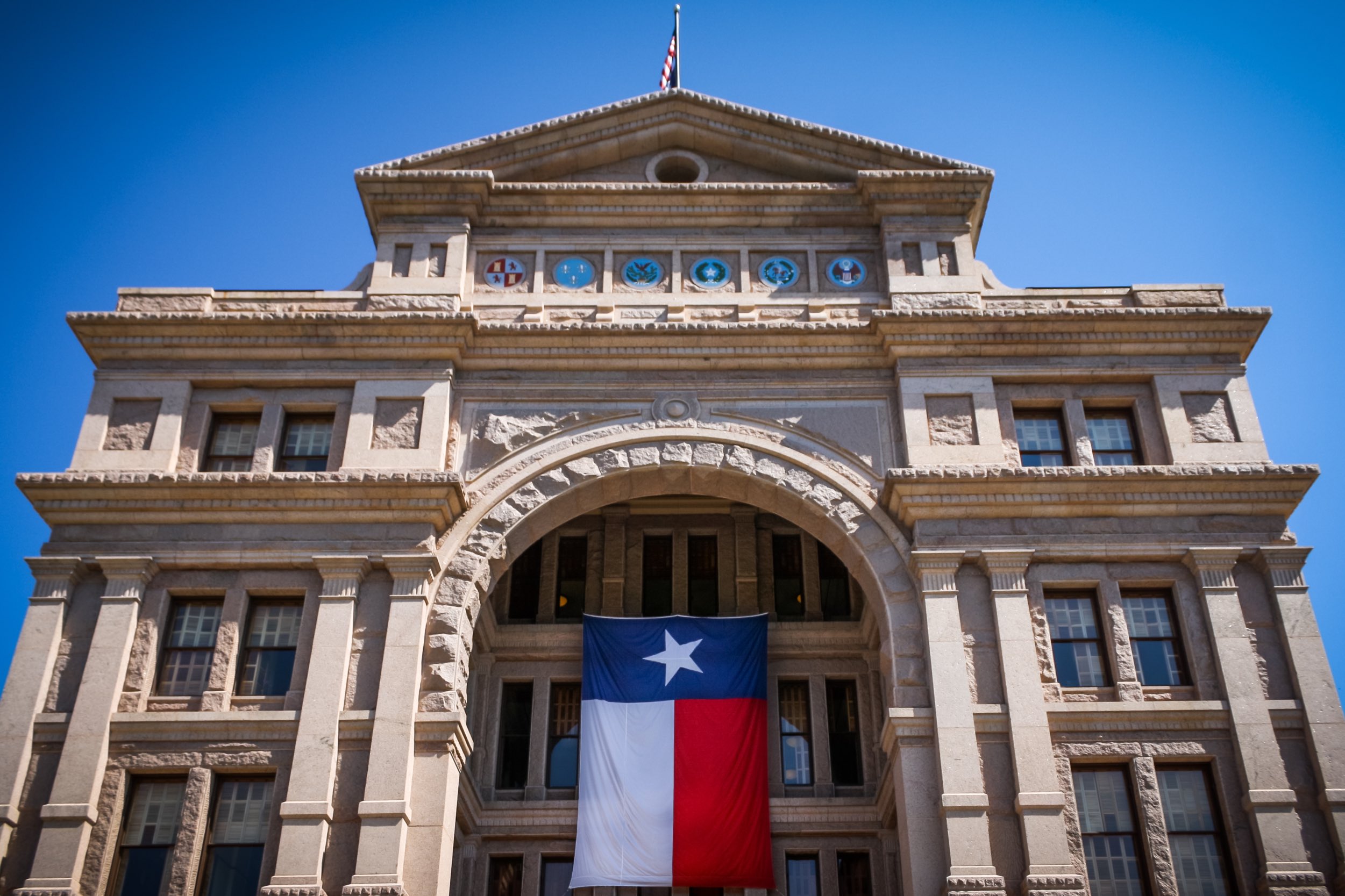
The Texas state flag hanging on the outside of the state Capitol building during daytime.
Enlarge / Texas State Capitol Building.
Getty Images | Brian Bumby

A proposed state law in Texas would force Internet service providers to block websites containing information on how to obtain an abortion or abortion pill. Republican lawmaker Steve Toth, a member of the state House of Representatives, introduced the bill last week.

Texas already has several laws that heavily restrict access to abortion, but the new proposal is notable for its attempt to control how ISPs provide access to the Web. “Each Internet service provider that provides Internet services in this state shall make every reasonable and technologically feasible effort to block Internet access to information or material intended to assist or facilitate efforts to obtain an elective abortion or an abortion-inducing drug,” the bill says.

The bill lists six websites that would have to be blocked: aidaccess.org, heyjane.co, plancpills.org, mychoix.co, justthepill.com, and carafem.org. ISPs would also have to block any website or online platform “operated by or on behalf of an abortion provider or abortion fund” and any website or platform used to download software “that is designed to assist or facilitate efforts to obtain an elective abortion or an abortion-inducing drug.”

Finally, the bill would force ISPs to block any website or platform “that allows or enables those who provide or aid or abet elective abortions, or those who manufacture, mail, distribute, transport, or provide abortion-inducing drugs, to collect money, digital currency, resources, or any other thing of value.”

People who become aware of websites containing prohibited abortion information may notify an ISP “and request that the provider block access to the information or material in accordance with that section,” the bill says.

Bill encourages civil lawsuits

Toth’s proposal isn’t just aimed at ISPs. Individuals in Texas would be prohibited from making or hosting a website or platform “that assists or facilitates a person’s effort in obtaining an abortion-inducing drug,” for example.

More broadly, the bill would establish “civil liability for distribution of abortion-inducing drugs.” It attempts to extend the law’s reach outside the Texas borders, saying “the law of this state applies to the use of an abortion-inducing drug by a resident of this state, regardless of where the use of the drug occurs.” Women who get abortions would not be held liable, as the bill targets distribution instead.

The bill would create a private civil right of action that would let individuals sue people or organizations that violate the proposed law. The private right of action would include letting Texans sue any interactive computer service that provides “information or material that assists or facilitates efforts to obtain elective abortions or abortion-inducing drugs.”

While the bill would make it a criminal offense to pay for the costs of an elective abortion or to destroy evidence of an elective abortion, it mostly limits enforcement to civil lawsuits in other circumstances. It specifies that no state or municipal official can take action against ISPs, interactive computer services, or others who violate specific sections of the law.

ISP liability shield could spur more blocking

Despite the focus on civil lawsuits, the bill says government officials “may request or encourage an Internet service provider to comply with the requirements of this subchapter.” It would also give ISPs a liability shield that could act as an incentive to err on the side of blocking more websites.

ISPs would have “absolute and nonwaivable immunity from liability or suit” for any “action taken to comply with the requirements of this subchapter, or to restrict access to or availability of the information or material described,” the bill says. ISPs that qualify for this immunity would even be able to recover financial damages from people who sue them.

The bill also seems to encourage ISPs to cut off broadband service from people who aim to spread information about abortion. ISPs would have the same “absolute and nonwaivable immunity from liability or suit” for “denial of service to persons who use or seek to use the Internet to make available information or material” described in the bill.

Interactive computer service users and providers would also have immunity from lawsuits for actions taken to restrict access to abortion information or to deny service to people “who provide or aid or abet elective abortions or who manufacture, mail, distribute, transport, or provide abortion-inducing drugs.”

The abortion bill would raise concerns about the government deciding which websites people may visit, particularly as federal net neutrality rules were eliminated by the Trump-era Federal Communications Commission. But it could still be challenged in court if it became law. As Free Press General Counsel Matt Wood told Light Reading, “this bill that would see a state government making those choices for the carriers and their customers alike is absolutely terrifying and constitutionally suspect too.”

https://arstechnica.com/?p=1921083


Meta says $725M deal ends all Cambridge Analytica claims; one state disagrees

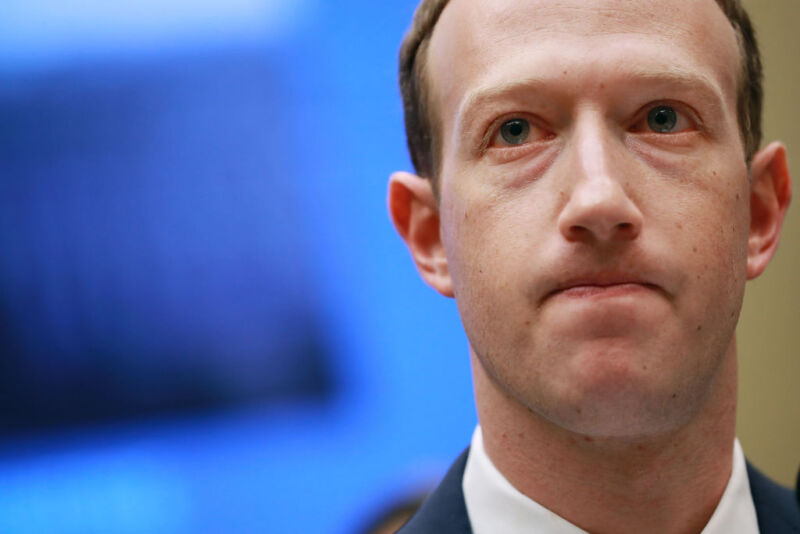
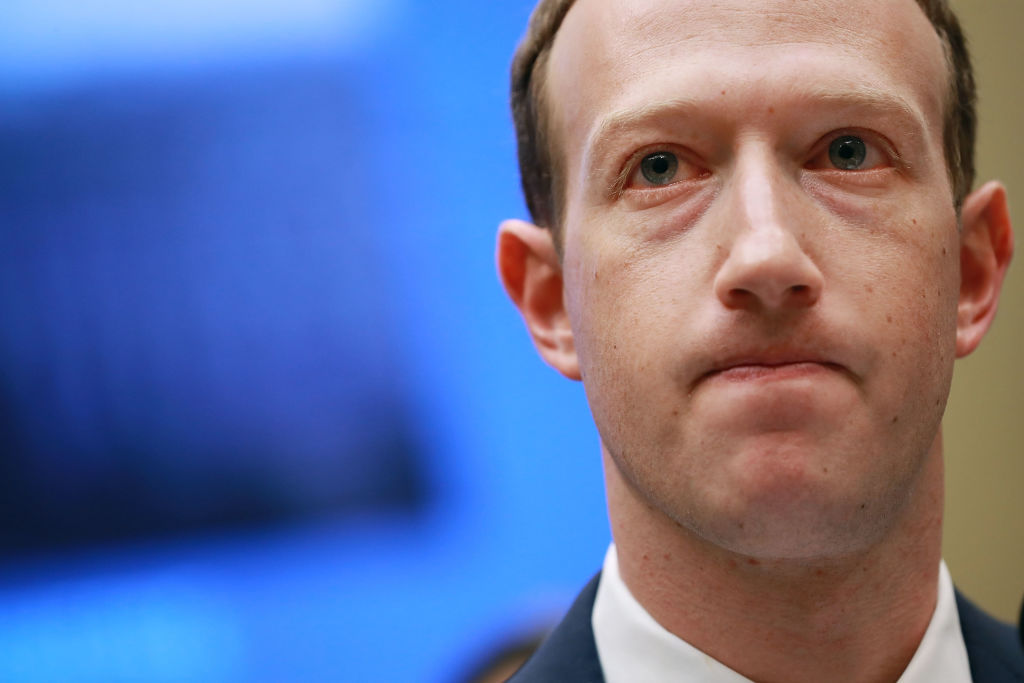
Facebook co-founder, Chairman, and CEO Mark Zuckerberg.
Enlarge / Facebook co-founder, Chairman, and CEO Mark Zuckerberg.

Tomorrow is the day that Meta expected would finally end its Cambridge Analytica woes. That’s when a US district court in California is scheduled to preliminarily approve a $725 million settlement agreement that Meta believed would release the company of all related claims.

However, just days before Meta could reach that seeming finish line, the state of New Mexico has moved to intervene. In a court filing yesterday, New Mexico argued that Meta might be interpreting its settlement agreement wrong and claimed that, for New Mexico citizens, the Cambridge Analytica scandal is far from resolved.

To clarify whether Meta’s agreement releases New Mexico’s and others’ claims and to ensure that the California court doesn’t “inadvertently or otherwise release claims” raised in New Mexico’s still-pending parallel action against Meta, New Mexico’s attorneys have asked to be heard “briefly” at tomorrow’s hearing.

The state’s confusion springs from how the settlement agreement currently defines “released claims” as applying to settlement class members, which covers all Facebook users during the class action’s specified period. Because New Mexico is arguing on behalf of hundreds of thousands of New Mexico Facebook users, the state says the agreement could be read—as Meta is reading it—as dismissing the state’s claims. However, the action was brought by the state itself, which is not a Facebook user, so lawyers said the agreement, as written, might be too limited to release Meta from New Mexico’s claims.

Ars could not immediately reach Meta or the state of New Mexico for comment. [Update: A Meta spokesperson told Ars, “The attorneys representing New Mexico misstated our position, which we will explain to the Court.”]

New Mexico fights to keep Meta on the hook

In the motion to intervene, New Mexico’s lawyers wrote that Meta never notified the state when the settlement agreement was reached last December and instead ignored weeks of inquiries sent by the state to clarify whether Meta interpreted the agreement as releasing New Mexico’s claims. The state only learned of Meta’s position this week, rushing yesterday to respond before the court begins approving the settlement agreement tomorrow.

“The State of New Mexico has no interest in upending the carefully negotiated proposed settlement,” state lawyers wrote in the motion. “However, earlier today, Facebook for the first time explicitly took the position that certain claims asserted in the State’s action pending in a New Mexico court” will be released by the class action settlement agreement.

According to the state lawyers, Meta’s interpretation of the settlement agreement is too broad and would require “extraordinary circumstances” to get the result Meta wants: releasing claims in all other courts and preventing future litigation.

“There are no extraordinary circumstances that would warrant extinguishing the State’s claims pending in other courts via the release in the Settlement Agreement in this case,” state lawyers wrote. “Facebook’s position is also contrary to the law in this District, where courts have frequently rejected attempts to read settlement agreement language that broadly.”

New Mexico’s lawsuit against Meta was filed in January 2021, alleging that Meta’s business practices revealed through the Cambridge Analytica scandal violated the New Mexico Unfair Practices Act. This claim was never raised in the current class-action lawsuit. The state has asked the California court to hear its arguments tomorrow against releasing claims in this lawsuit—before Meta can release terms of the settlement agreement to millions of Facebook users, including New Mexico Facebook users.

That notice could potentially confuse New Mexico citizens about their rights in still-pending litigation pursued by the state, which is not a class member and is, therefore, a non-party in the class-action settlement.

“Because the State is a non-party, it clearly must be permitted to intervene in order to be heard as to why the terms of the Settlement Agreement should not be interpreted as one of the parties, Defendant Facebook, would read it, i.e. to extinguish certain claims or forms of relief brought by the State in another jurisdiction without its consent,” the state wrote.

https://arstechnica.com/?p=1920981


Tesla shareholder suit says Musk and co. lied about Full Self-Driving safety

Aerial view of cars parked in a Tesla factory parking lot. A Tesla logo is painted on the concrete.
Enlarge / Cars parked at the Tesla Fremont Factory in Fremont, California, on February 10, 2022.
Getty Images | Josh Edelson

A class-action complaint alleges that Tesla and CEO Elon Musk repeatedly made false statements about the capabilities and safety of the electric carmaker’s Autopilot and Full Self-Driving (FSD) technology.

The complaint, filed Monday in US District Court for the Northern District of California, comes less than two weeks after a recall of 362,758 cars based on a US government finding that Tesla’s “FSD Beta system may allow the vehicle to act unsafe around intersections, such as traveling straight through an intersection while in a turn-only lane, entering a stop sign-controlled intersection without coming to a complete stop, or proceeding into an intersection during a steady yellow traffic signal without due caution.” The problem is slated to be fixed by an over-the-air software update.

The lawsuit was filed by investor Thomas Lamontagne and seeks to represent a proposed class of potentially thousands of people who acquired Tesla stock. Tesla, Elon Musk, and other Tesla executives “made materially false and misleading statements regarding the Company’s business, operations, and prospects,” the lawsuit said, continuing:

Specifically, Defendants made false and/or misleading statements and/or failed to disclose that: (i) Defendants had significantly overstated the efficacy, viability, and safety of the Company’s Autopilot and FSD technologies; (ii) contrary to Defendants’ representations, Tesla’s Autopilot and FSD technologies created a serious risk of accident and injury associated with the operation of Tesla vehicles; (iii) all the foregoing subjected Tesla to an increased risk of regulatory and governmental scrutiny and enforcement action, as well as reputational harm.

Stock sold for “artificially inflated prices”

The lawsuit says Lamontagne “acquired Tesla securities at artificially inflated prices during the Class Period and was damaged upon the revelation of the alleged corrective disclosures.” The complaint cites several stock-price drops triggered by news about Tesla safety deficiencies and related investigations.

There were significant stock-price drops in April 2021, August 2021, June 2022, and January 2023 triggered by National Highway Traffic Safety Administration (NHTSA) and Securities and Exchange Commission (SEC) investigations, the lawsuit said. After each price decline, Tesla “stock continued to trade at artificially inflated prices throughout the remainder of the Class Period because of Defendants’ continued misstatements and omissions regarding Tesla’s Autopilot and FSD technologies,” the lawsuit said.

The complaint says the “truth fully emerge[d]” earlier this month on news of the 362,758-vehicle recall. “As a result of Defendants’ wrongful acts and omissions, and the precipitous decline in the market value of the Company’s common stock, Plaintiff and other Class members have suffered significant losses and damages,” the complaint said.

Tesla’s stock price hit a peak of $409.97 in November 2021 but fell to $108.10 by January 3, 2023. The stock price has risen substantially in the eight weeks since then—despite a 5.7 percent drop right after this month’s recall news—and ended today’s trading at $205.71.

We emailed Tesla’s media relations contact about the shareholder lawsuit today, but our message wasn’t delivered because the “recipient’s mailbox is full and can’t accept messages now.”

https://arstechnica.com/?p=1920791


Twitter Payments chief is out as layoffs cut 10% of Twitter staff, report says

Twitter Payments chief is out as layoffs cut 10% of Twitter staff, report says

More engineers, product managers, and data scientists are out at Twitter, as another round of layoffs has slashed 10 percent of the remaining staff, The New York Times reported. Multiple sources familiar with the matter told the Times that 200 employees were affected.

On Saturday night—just as it happened during Twitter’s November layoffs—some employees discovered they were about to lose their jobs when they were abruptly logged out of corporate email accounts and laptops. Now there are fewer than 2,000 employees left, it’s estimated.

Among those impacted is Esther Crawford, who enthusiastically embraced Twitter CEO Elon Musk’s vision of Twitter 2.0 and proved to be so hardcore that she became the chief executive of Twitter Payments, Financial Times reported. In November, Musk told staff there were no plans for more layoffs and pointed to Twitter Payments—a product that would support peer-to-peer payments and e-commerce on the platform—as the product that would save Twitter from going broke. Now, the Twitter Payments team has dropped from a staff of 30 to fewer than eight, the Times reported, making it unclear if the product is still a top priority as Twitter’s money struggles drag on.

Ars could not immediately reach Twitter or Crawford for comment.

Crawford—who was once criticized for being a “bootlicker” by a former Twitter senior staff member—tweeted that she was “deeply proud of the team for building through so much noise and chaos.” She also said that “the worst take you could have from watching me go all-in on Twitter 2.0 is that my optimism or hard work was a mistake.”

Several lawsuits have been filed by staff affected by Twitter’s mass layoffs. Those former staffers allege that they’ve been offered severance packages that are less than what they are owed. For executives hit by the latest round of layoffs, including Crawford and Haraldur Thorleifsson, their promised severance packages are even higher. The Times reported that they’re so pricey, sources familiar with what’s included in their severance packages expect it could cost Twitter more to lay them off than keep them on staff.

Former staff suing also allege that during layoffs, Twitter disproportionately discriminated against women, people on family leave, and people with disabilities. Twitter has so far been successful in pushing most of these lawsuits out of court and into individual arbitration with the company.

Musk under fire for accessibility team layoffs

Just before Twitter announced this newest round of layoffs on Saturday, Sen. Ed Markey (D-Mass.) sent Musk a letter on Friday, urging Musk to rehire the accessibility team, which was cut entirely during prior layoffs.

This team previously advocated on behalf of people with disabilities to improve their Twitter experience, including sharing insights into making everything from an emoji to an ad more accessible to “around a billion people worldwide” who “have some form of disability.”

Markey said that Musk’s decision last year to dismiss Twitter’s accessibility team and the recent decision to charge for access to Twitter’s application programming interface eliminated features that many users depend on. That includes adding automated alt-text on images and auto-generating closed captioning on Twitter Spaces.

The consequences, Markey told Musk, have been “devastating.” He claimed that while Twitter has never done a perfect job when it comes to issues with accessibility, under Musk, it has gotten worse.

“All of these changes under your leadership signal a disregard for the needs” of people with disabilities, Markey wrote. “Consequently, Twitter users with disabilities are questioning their ability to continue to use the platform, and many have already left it entirely.”

Markey gave Musk until March 17 to explain why Twitter eliminated its accessibility team, confirm whether Twitter would commit to rehiring the team, and outline how Twitter would address the overlooked needs reported by users.

“I urge you to immediately reinstate Twitter’s accessibility team and take all necessary steps to promote accessibility,” Markey wrote.

https://arstechnica.com/?p=1920369


West Virginia, Florida make moves to undermine science education

Image of a girl holding up a ball-and-stick model of a molecule in a classroom.
Aleksandar Nakic

Two recent bills introduced at the state level could spell trouble for science education. One of them is in West Virginia, where the state Senate has approved a bill that would allow teachers to tell students that the Universe is the result of intelligent design, an idea that was developed to avoid prohibitions on teaching creationism. While a court held that teaching intelligent design was an unconstitutional imposition of religion, a recent Supreme Court decision weakened the legal foundations of that ruling.

Meanwhile, Florida’s thinking much bigger, with the State House considering a bill that would say the legislature disapproves of college courses that cover “theoretical or exploratory” topics being used to fulfill general education requirements. That would seemingly rule out most science classes.

First, the second Virginia

The bill under consideration in West Virginia, Senate Bill 619, is a truly bizarre hybrid. Two of its provisions are basic housekeeping functions regarding the role of teachers in changing final grades and determining whether students are promoted to the following grade level. But then there’s the third provision: “Teachers in public schools, including public charter schools, that include any one or more of grades kindergarten through 12, may teach intelligent design as a theory of how the universe and/or humanity came to exist.”

A school board in Pennsylvania had instructed its science teachers to tell students that intelligent design was an alternative to evolution. This led to a lawsuit by the parents of several students. The resulting decision, called Kitzmiller v. Dover compiled an extensive record showing that intelligent design was simply a relabeling of creationism, which had already been found to be an unconstitutional imposition of religion. Not surprisingly, the court ruled that teaching intelligent design was also an unconstitutional imposition of religion.

In past years, a handful of state legislators would typically introduce bills promoting intelligent design, apparently unaware of the legal risk that would expose schools to. But the current Supreme Court’s willingness to overturn precedent has some legislators crafting bills in the hope that they could get the court to overturn precedents that they disliked.

In fact, the Supreme Court has already overturned a precedent that could give advocates of teaching creationism in public school science classes some hope. To reach his decision, the judge in Kitzmiller v. Dover relied on Supreme Court precedent called the Lemon test to determine if the school board’s policy violated the US Constitution’s prohibition against state establishment of religion. But last year, the court threw out its own precedent and got rid of the Lemon test.

Instead, as it has in other cases, the court now wants determinations to be made based on the legal standards from hundreds of years earlier: “In place of Lemon and the endorsement test, this Court has instructed that the Establishment Clause must be interpreted by ‘reference to historical practices and understandings.’” How that would apply to instruction in biology when the theory of evolution wasn’t even developed until the mid-1800s is anyone’s guess.

So, it’s possible that the bill is intended to exploit the current legal uncertainty. When we asked, however, Senator Amy Grady focused on an aspect of the issues in Kitzmiller v. Dover that wasn’t at issue in determining its constitutionality. “In [Kitzmiller v. Dover], the teaching of Intelligent Design was a requirement,” Grady told Ars. “In SB 619, it simply allows a teacher to present it as a theory.”

Grady was also unimpressed with the historical record from Kitzmiller v. Dover, which showed creationism and intelligent design being treated as synonymous. “Intelligent Design is not specific to a religion,” Grady said. “It is different than Biblical creationism.”

As of Saturday, the bill had passed the state Senate on a 27-6 vote and will now be considered by the state House.

Who needs a theory anyway?

Meanwhile, science education may end up an inadvertent casualty of Florida’s ongoing war against its own higher education system. HB 999 was recently introduced to the state legislature and continues a lot of the general themes of the state’s ongoing efforts to stop teaching what it considers “divisive concepts.” The bill largely targets topics like gender studies and critical race theory and would essentially eliminate those as viable majors at any state-supported institution. In the process, it would strip academic departments of their ability to hire new faculty, instead placing that in the hands of senior administrators.

But the bill is positively incoherent when it comes to science education. It calls on state-supported schools to provide general education classes on various topics, including the natural sciences. And it specifically calls for the classes to cover the use of hypothetical models as a central part of the scientific method: “Natural science courses must afford students the ability to critically examine and evaluate the principles of the scientific method, model construction, and use the scientific method to explain natural experiences and phenomena.”

And then, a few paragraphs later, completely undercuts that by saying that things like science don’t belong in general education classes at all. “Courses with a curriculum based on unproven, theoretical, or exploratory content,” the bill suggests, “are best suited to fulfill elective or specific program prerequisite credit requirements, rather than general education credit requirements.”

How you cover “model construction” while avoiding all “exploratory content” is apparently left as an exercise for the faculty.

At the moment, this bill hasn’t passed either house of the Florida Legislature, so there’s a reasonable chance that it will be modified before being voted on. But, the bill contains a lot of the ideas that have provided the Florida governor with a great deal of political traction. So it will likely draw much support from the governor’s backers in the legislature.

https://arstechnica.com/?p=1920367


Amazon has a donkey meat problem

Amazon has a donkey meat problem
Rosie Struve/Getty Images

When Cindy first tried the Artemisia Anti-Hemorrhage Formula dietary supplements that she purchased on Amazon, she had no reason to suspect that she was eating donkey. A California native and lifelong vegetarian, she assumed that the world’s largest online retailer had vetted the bottle’s claims of being made from “100 percent pure, natural herbs.” But while reading the back of the bottle, she noticed an ingredient she hadn’t seen before: “gelatina nigra.” She googled it, and what she found made her stomach turn.

Every year, millions of donkeys are slaughtered and skinned to make the so-called gelatina nigra found in Cindy’s dietary supplement. More commonly called “ejiao” or “donkey-hide gelatin,” the animal product is made from donkey skin. It’s in such high demand due to its alleged health benefits that it’s decimating the global donkey population and has led to increasingly brutal treatment of the animals, according to a 2019 report by the Donkey Sanctuary, an advocacy organization. A video the organization obtained shows workers in Tanzania bludgeoning donkeys with hammers to meet their slaughter quotas. “It’s not herbal. It’s literally made with donkeys,” says Cindy, who asked to go by only her first name for privacy reasons. “Why would Amazon sell something that cruel?”

While some retailers like Walmart and eBay have committed to drop products that contain ejiao, edible items containing this ingredient are widely for sale on Amazon in spite of multiple petitions asking that it stop selling them. A legal complaint filed in California last week by the law firm Evans & Page on behalf of the Center for Contemporary Equine Studies, a nonprofit, claims Amazon’s continued sale of these donkey-based products is more than distasteful—it may be illegal.

The Center alleges that Amazon’s distribution and sale of ejiao violates an obscure California animal welfare law called the Prohibition of Horse Slaughter and Sale of Horsemeat for Human Consumption Act. The 1998 ballot initiative, known at the time of its passage as Proposition Six, makes the sale of horsemeat for human consumption a crime on the grounds that horses, like dogs and cats, are not food animals and deserve similar protections. The Center is arguing that, under the statute, horsemeat is defined to mean any part of any equine, including donkeys.

For Frank Rothschild, director of the Center for Contemporary Equine Studies, the law is clear: Donkeys are equines, and the sale of ejiao for human consumption in California is illegal. “We are a scientific organization and not in the business of national advocacy. We want the defendants to stop selling ejiao because it’s illegal,” he says. “That’s the law.”

Bruce Wagman, an attorney unaffiliated with the complaint who has practiced animal law in California for 30 years, says that while the center presents a reasonable argument, it’s unclear whether a judge would agree because the law’s wording leaves room for interpretation. “Horsemeat is not really defined in the text of the relevant statute,” he says. “But the spirit of Proposition Six is absolutely to prevent equines, including donkeys, from being slaughtered for people to consume. Period.”

https://arstechnica.com/?p=1919892


Report: More Twitter drama after Slack shutdown; employees play hooky

Report: More Twitter drama after Slack shutdown; employees play hooky

On Wednesday and Thursday, Twitter’s internal Slack channels were suddenly shut down. Platformer reported that the company manually shut services off. Before that was confirmed, a Twitter employee posting on the anonymous workplace chat app Blind had speculated that it was also possible that Twitter had shut down employee access because it had stopped paying its Slack bills.

Whatever the reason driving Twitter’s decision to remove Slack access, it resulted in a very unproductive work day for some Twitter employees who were suddenly unable to communicate, Platformer reported. At the same time that employees lost Slack access, they also couldn’t access Jira, a tracking software that Platformer said engineers use to ship code and monitor progress on new features. Rather than being equipped to go “hardcore,” some decided to just take the day off. Other employees took two days off.

Apparently, Twitter told employees that the Slack channel was down for “routine maintenance,” but a Slack employee told Platformer that was “bullshit.”

“There is no such thing as ‘routine maintenance,’” the Slack employee said.

A Slack spokesperson confirmed to Ars that Slack did not deactivate Twitter’s workspace or user accounts.

Slack rarely shuts down services for maintenance. If there had been some kind of routine maintenance scheduled, Slack would have documented it here, where the app tracks the status of various incidents reported on the platform.

Twitter could not immediately be reached for comment.

Why would Twitter shut down Slack?

It may be that Twitter CEO Elon Musk is looking for more ways to cut costs or is testing other internal communications tools. Platformer suggested that Musk might be considering swapping out Slack for tools used by Tesla engineers, including Mattermost and Microsoft’s Teams.

For Twitter employees, losing Slack would likely deepen the sting of losing so much legacy knowledge of the platform during mass layoffs. One employee who stuck around after the first round of layoffs said they would search Slack for answers to questions after losing access to so many colleagues, finding solutions “99 percent of the time,” Platformer reported.

Slack was also where many employees said their goodbyes. Under Musk, employees have said they feel less comfortable using Slack to share insights and opinions on how to improve Twitter. If Slack was to be permanently deactivated, it could mark for some the end of an era when employee input was seemingly more highly valued by the company. Platformer reported that at least one employee—speaking on the anonymous workplace chat app Blind—said that deactivating Slack was the “proverbial final straw” prompting them to start job-hunting.

Major ad agency endorses Twitter stability

Any slowdown in Twitter productivity generates concern that the platform could grow unstable, and those fears do not appear unfounded. At the start of this month, Twitter experienced a global outage, then a Super Bowl outage, and just yesterday, a 20-minute outage in Asia, Platformer reported.

Some have speculated that outages could cause advertisers to continue shunning Twitter, but AdAge reported today that a rare endorsement of Twitter’s stability from a major ad agency, WPP, has some advertisers reassessing the benefits of doing business with Twitter.

WPP CEO Mark Read told Bloomberg TV yesterday that “Twitter seems to be a lot more stable the last few months than perhaps it was toward the end of last year. I think clients want to start to look about how they can come back onto Twitter,” AdAge reported.

This represents a massive reversal regarding WPP’s stance on Twitter after urging advertisers to leave the platform last November, AdAge reported.

While Musk figures out which team communications tools will best support Twitter through rapid updates to support new features and its recently announced transition to making its algorithm open source—which will happen supposedly next week—Musk seems pleased that at least advertisers seem to expect the platform will remain stable through it all. Musk directly acknowledged the AdAge report on Twitter today, commenting on WPP’s endorsement by tweeting, “That’s great to hear!”

https://arstechnica.com/?p=1920032


Secret crawlspace cryptomine discovered in routine inspection of MA high school

Cohasset Police Department found electrical wires, temporary duct work, and numerous computers confirmed to be a cryptomine operating illegally.
Enlarge / Cohasset Police Department found electrical wires, temporary duct work, and numerous computers confirmed to be a cryptomine operating illegally.
Cohasset Police

After a former town employee of Cohasset, Massachusetts, was accused of stealing thousands of dollars in electricity from a local middle/high school to operate a secret cryptocurrency mine in a seemingly overlooked crawlspace, police grew concerned when the suspect missed a court date and couldn’t be located.

A warrant was then issued for the accused, 39-year-old Nadeam Nahas, who resigned his position at the Town of Cohasset last year, police said. That warrant got quickly pulled, though, after Nahas appeared in court today, Cohasset Police Department (CPD) communications specialist Justin Shrair told Ars.

The department can’t share any other new information at this time, Shrair told Ars. But he confirmed that the possible cryptocurrency mining operation was discovered in December 2021, when the director of Cohasset Middle/High School conducted a routine inspection and “noticed electrical wires, temporary duct work, and numerous computers,” which “seemed out of place.”

To investigate further, CPD told Ars that the director called in a range of experts. First, the town’s IT director confirmed that it was a cryptomine “unlawfully attached to the school electrical system.” Then, CPD called the US Coast Guard Investigative Service and the Department of Homeland Security to help safely remove the equipment and investigate the mining rig’s origins.

Their investigation took three months and led them to suspect Nahas, who at the time was an assistant facilities director for the town. That role is typically responsible for managing daily operations of town buildings. It was later confirmed by Boston ABC affiliate WCVB that the mining operation had stolen nearly $18,000 in electricity from the district.

The cryptomine’s operator was likely motivated to maximize cryptocurrency gains by negating the cost of operating the mine. Cryptomines notoriously run off an excess of electricity, with all the world’s cryptomines requiring more energy than the entire country of Australia, the White House reported last year. Where Cohasset is located in the Boston area, “electricity costs have exceeded the national average” by at least 48 percent over the past five years, the US Bureau of Labor Statistics reported.

CPD said that Nahas is presumed innocent until convicted in a court of law, but they found probable cause to charge Nahas with vandalizing the school and “fraudulent use of electricity.”

https://arstechnica.com/?p=1919905


US says Google routinely destroyed evidence and lied about use of auto-delete

A person's finger hovering over a keyboard's delete key.
Getty Images | Diy13

The US government asked a federal court to sanction Google for allegedly using an auto-delete function on chats to destroy evidence needed in an antitrust lawsuit while falsely telling the government that it suspended its auto-deletion practices.

The US motion to sanction Google seeks a ruling that Google violated the rule against spoliation of evidence and “an evidentiary hearing to assess the appropriate sanctions to remedy Google’s spoliation.” The US also sought an order forcing “Google to provide further information about custodians’ history-off chat practices, through written declarations and oral testimony, in advance of the requested hearing.” The motion was filed under seal on February 10 and unsealed yesterday.

“Google consciously failed to preserve relevant evidence. The daily destruction of relevant evidence was inevitable when Google set a company-wide default to delete history-off chat messages every 24 hours, and then elected to maintain that auto-delete setting for custodians subject to a litigation hold,” US Department of Justice antitrust lawyers wrote in a memorandum supporting the motion.

Google “had a duty to preserve employee chat messages” starting in 2019 due to the litigation, the US motion said. “Google’s daily destruction of written records prejudiced the United States by depriving it of a rich source of candid discussions between Google’s executives, including likely trial witnesses,” according to the US filing in US District Court for the District of Columbia.

Google’s auto-deletions continued until February 8, the US said. “Amazingly, Google’s daily spoliation continued until this week,” the US alleged. “When the United States indicated that it would file this motion—following months of conferral—Google finally committed to ‘permanently set to history on’ and thus preserve its employees’ chat messages.”

A similar motion for sanctions was filed by 21 states that are also involved in the litigation against Google. The motions came in a lawsuit filed in October 2020 in which the US and states allege that Google illegally maintains monopolies in search and search advertising through anticompetitive and exclusionary practices.”

Epic Games also seeks sanction for chat deletions

Google’s “history-off” chats that are deleted every 24 hours previously came up in antitrust litigation over the Google Play Store. In that case, Plaintiff Epic Games and the Utah attorney general want the court to “issue adverse inference jury instructions to remedy Google’s spoliation of Google Chats.” The motion is still pending.

“Google blames its systematic spoliation of relevant evidence on an enterprise default setting for Google Chats that is set to ‘history off,’ but that is no excuse,” Epic Games wrote. “Any administrator of Google Chats—an application developed by Google—could have changed this default setting at any point for all custodians. Google has never claimed otherwise. But Google chose not to change the setting. It also chose to do nothing to ensure that its custodians changed this default setting on their own workstations.”

https://arstechnica.com/?p=1919839