Meta must pay $175M for patent-infringing livestreaming tech, judge says
Meta must pay $175M for patent-infringing livestreaming tech, judge says

After a jury unanimously decided last September that Meta owed $175 million to walkie-talkie app-maker Voxer for patent infringement, Meta tried to avoid paying up by requesting a judge either reject the jury’s verdict or give Meta a new trial. This week, a federal judge denied Meta’s request, making it likely that Meta will have to pay all those running royalties for illegally copying Voxer’s technology and using it to launch Facebook Live and Instagram Live.

Meta had argued seemingly everything it could to get out of paying millions in damages. It questioned whether the jury’s decision was reasonable, claiming that Voxer’s lawyer had made comments that biased the jury. In Meta’s view, no reasonable jury would have found that Meta infringed Voxer’s patented video-streaming and messaging technologies. Further, even if everyone agreed that there was infringement, Meta argued that the damages were too extreme and improperly calculated by Voxer’s expert. Instead of owing running royalties, Meta felt it should be required to pay either no damages or a lump sum.

In his decision, US District Judge Lee Yeakel affirmed that substantial evidence supported the jury’s verdict of patent infringement and sufficient evidence supported the damages that the jury awarded Voxer.

Meta can still appeal, but a Meta spokesperson declined to tell Ars if the company will.

Ars could not immediately reach Voxer to comment, but this week’s decision inches the company closer to the end of a decade-long legal saga that started in 2012 when Voxer first met with Facebook to discuss a potential partnership.

According to Voxer’s complaint, Voxer began developing its technology in 2006, hoping to help improve battlefield communications. US army veteran Tom Katis co-founded the company, wanting to create a live-messaging and video-streaming app that would help eliminate interruptions in transmissions that left soldiers vulnerable during sudden ambushes or when medevacs were needed. That ambition morphed into the walkie-talkie app that Voxer launched in 2011, which was so popular, it prompted meetings with Facebook by 2012.

Voxer was likely excited to be wooed by Facebook, but soon after Voxer shared its patent portfolio and proprietary tech with the social network, the partnership fell through. When that happened, Facebook revoked Voxer’s access to its platform, deeming Voxer a competitor while allegedly making it harder to discover Voxer on Facebook. After that, Meta moved forward without Voxer’s involvement and launched Facebook Live in 2015 and Instagram Live in 2016.

After the launches, Voxer tried to book another meeting with Facebook, but the social network declined to discuss any alleged patent infringement. When Voxer sued in 2020, the app maker alleged that “both products incorporate Voxer’s technologies and infringe its patents.”

Meta has maintained in the three years since then that there was no patent infringement, but notably, the company didn’t immediately repeat statements to that effect this week.

Voxer’s win this week is due to Katis’ foresight in filing patents as he developed a bold new kind of technology he’d never seen before. When Katis built Voxer, he told a 2012 conference audience in Paris that he was surprised how easy it was to patent Voxer’s technology, quickly filing more than 75 patents the year after launching the walkie-talkie app. Katis said he successfully patented the technology because “no one”—including Facebook—”was crazy enough” to try to develop livestreaming tech like the vision he had for Voxer.

https://arstechnica.com/?p=1919682


After defending false data, Comcast admits another FCC broadband map mistake

A parked Comcast service van with the
Enlarge / A Comcast Xfinity service van in San Ramon, California on February 25, 2020.
Getty Images | Smith Collection/Gado

Comcast has fessed up to another mistake on the national broadband map after previously insisting that false data it gave the Federal Communications Commission was actually correct.

Our report on February 9 showed that when residents in two Colorado cities objected to Comcast’s coverage claims through the FCC challenge system, the company disputed those challenges even though it was impossible to order Comcast Internet service at the challenged addresses. As we previously wrote, Comcast only admitted to the FCC that it submitted false data in Arvada, Colorado, one day after we contacted the company’s public relations department.

But Comcast hadn’t yet admitted that it gave the FCC false data in Fort Collins, Colorado, at the time of our last report. That changed last week in a letter to the FCC. “Upon further review of the location ID in question, Comcast has determined that the location is currently not serviceable by Comcast,” the company told the FCC.

The letter came in response to a challenge filed on November 19 by Justin Olsson, who contested Comcast’s claim to cover the house where his mother lives on Kedron Court in Fort Collins. Comcast had disputed Olsson’s challenge on January 21 but changed its tune after our article.

A member of Comcast’s executive customer relations department sent Olsson a copy of its new letter to the FCC on Friday. Olsson, a lawyer for a tech company in California, showed us the letter and his response to Comcast. He wrote:

I appreciate that you finally admitted it after Ars Technica reached out to you… I would like to point out, however, that it’s really absolutely unacceptable that you contested my challenge without even looking into it—even when you had evidence in your own system that the address wasn’t serviceable.

You wasted hours of my time, and it’s hard not to think that was part of the strategy, hoping that people wouldn’t follow up and letting you get away with your blatant dishonesty in the broadband map effort. I hope for the country’s sake that you all can clean up your act and not continue to do business in this way.

Comcast needs to make more corrections

Including the address challenged by Olsson, we found 13 residential addresses that Comcast claims to serve on the FCC map in that part of Fort Collins despite all addresses being labeled as “invalid” on Comcast’s ordering website. The addresses all appear to be just outside the southern edge of Comcast’s actual coverage area.

Comcast’s new letter to the FCC said it submitted an update to mark the challenged address as “not serviceable.” The change hasn’t taken effect on the public version of the FCC map yet, which is updated with corrections every two weeks.

In addition to Fort Collins, our previous article detailed Comcast’s false coverage claims in Arvada. We found over 30 addresses that Comcast claimed to serve on the FCC map, even though each address was listed as “invalid” on the Comcast website.

Resident Matthew Hillier challenged Comcast’s claim to cover his home on Quartz Loop in Arvada. Comcast disputed the challenge despite the clear evidence that it didn’t serve the home and only admitted the error to the FCC after we contacted Comcast public relations. Comcast’s coverage claim was removed from Hillier’s address, but the FCC map still incorrectly says Comcast serves the surrounding homes where it’s also impossible to order Comcast Internet.

Correcting false data is important because the map will be used to determine which parts of the US are eligible for $42.45 billion in federal grants to expand broadband availability starting in mid-2023. As we’ve written multiple times, one problem with the FCC’s challenge system is that a successful challenge at a single address doesn’t necessarily result in mistakes being fixed at surrounding homes.

For our February 9 story, we didn’t get any answer from Comcast on whether it would correct errors at the surrounding addresses we pointed out in Arvada and Fort Collins. We asked Comcast the same question for this story and received a response this time. “The homes you identified are in the process of being vetted, and we will make any corrections necessary as quickly as we can,” Comcast told Ars.

FCC: Process “working as designed”

The FCC says it can conduct audits of provider-reported availability information and confirmed to Ars last week that it has “multiple ongoing” investigations into data submitted by ISPs. One of those investigations began after our report about an Ohio ISP called Jefferson County Cable, which admitted to lying to the FCC about the size of its network in an attempt to block funding to rivals. While the FCC confirmed an investigation into Jefferson County Cable, it hasn’t yet confirmed an investigation into Comcast.

A spokesperson for FCC Chairwoman Jessica Rosenworcel told Ars that Comcast’s correction of the Fort Collins mistake shows the challenge process is working as intended. “The response you shared from the provider is an indication that the challenge process is working as designed and can be an effective tool for correcting inaccuracies in provider-reported availability information,” the FCC spokesperson said.

But it’s unclear how this specific Comcast incident could prove the process is working as intended. With both the Fort Collins and Arvada coverage claims, Comcast disputed the challenges despite clear evidence that it didn’t serve the homes and only admitted its coverage claims were false after we contacted Comcast on the residents’ behalf.

https://arstechnica.com/?p=1919542


Starlink to charge users in “limited-capacity” areas $30 more than others

The original round version of the Starlink satellite dish mounted on a roof..
Enlarge / The original round version of the SpaceX Starlink satellite dish mounted on the roof of a rural home.
Getty Images | The Bold Bureau

Starlink notified users of new monthly prices in which people who live in “limited-capacity” areas will pay $30 more per month than users in “excess-capacity” areas. The changes consist of a price hike for many users and a decrease for others.

The original price of Starlink was $99 a month, but SpaceX has been charging all residential users $110 since a price hike imposed in March 2022. Emails sent yesterday and today notified residential users of a “$10 increase in areas with limited capacity” for a new price of $120 a month, and a “$20 decrease in areas with excess capacity” for a new price of $90 a month.

The email to users in limited capacity areas said, “As a current customer in an area with limited capacity, your monthly service price will increase to $120/month beginning April 24, 2023. For new customers in your area, the price increase is effective immediately. If you do not wish to continue service, you can cancel at any time on your account page.”

The email noted that SpaceX’s ongoing launches of satellites will increase capacity and that “the Starlink team is making continuous network updates to improve performance over time.” But it didn’t say anything about whether a limited-capacity area could become an excess-capacity area or vice versa.

While speeds can vary a lot by area, the change generally means that users who receive the lowest speeds will pay the highest prices. However, the price hike and the Starlink email’s invitation to cancel service could reduce the number of customers in congested areas, possibly increasing average speeds for the remaining users. Average Starlink speeds have dropped as more users sign up for the satellite service, speed-test data shows.

Users lament price hike and lack of choice

A Starlink customer in South Carolina, near Columbia, received the limited-capacity email and shared it with Ars. “Can’t say I’m happy about it but also don’t have much of a choice,” said the customer, Andy, who preferred that we not publish his last name.

Andy said he lives in a low-density rural area where “AT&T DSL that barely works is the only other option I have.” He also told us that Starlink speeds have “dropped quite a bit” since he started using it in April 2021.

Download speeds that used to be 200 to 250Mbps are down to about 90 to 100Mbps, while uploads have dropped from about 25 to 30Mbps to 8 or 9Mbps, Andy said. He’s seen upload speeds as low as 4Mbps during the 4 pm to 8 pm hours, he said. “I’ve seen a lot more buffering lately when watching shows on HBO Max in the evening,” he said.

While some users may cancel instead of paying more, “for those that have no choice it’s just another cost increase and the second increase in less than a year,” Andy said.

Starlink’s coverage map shows that large parts of the US are on a waitlist, which may indicate the areas deemed to be low-capacity. Starlink claimed to serve virtually the whole US in its submissions for the Federal Communications Commission’s national broadband map.

The price increase/decrease email spurred lots of discussion on the Starlink subreddit. “This increase puts me at double what my old ISP [charged], but they had a monopoly on my area and only provided 6Mbps,” one user wrote, adding that actual speeds under the previous ISP were about 2Mbps. “I hope this isn’t a yearly thing. Inflation has already nullified my last two raises, this isn’t making it any easier,” the user wrote.

“Price goes up and quality goes down. This feels familiar,” another person wrote in the Reddit thread.

https://arstechnica.com/?p=1919393


NSA’s “state secrets” defense kills lawsuit challenging Internet surveillance

Digital illustration of an eye as an abstract representation Internet surveillance.
Getty Images | kontekbrothers

The US Supreme Court yesterday denied a petition to review a case involving the National Security Agency’s surveillance of Internet traffic, leaving in place a lower-court ruling that invoked “state secrets privilege” to dismiss the lawsuit.

The NSA surveillance was challenged by the Wikimedia Foundation, the American Civil Liberties Union, and the Knight First Amendment Institute at Columbia University. The Supreme Court’s denial of Wikimedia’s petition for review (formally known as “certoriari”) was confirmed in a long list of decisions released yesterday.

“As a final development in our case, Wikimedia Foundation v. NSA, the United States Supreme Court denied our petition asking for a review of the National Security Agency’s (NSA) mass surveillance of Internet communications and activities. This denial represents a big hit to both privacy and freedom of expression,” the Wikimedia Foundation said yesterday.

The lawsuit challenged the NSA’s “Upstream” surveillance program in which “the NSA systematically searches the contents of Internet traffic entering and leaving the United States, including Americans’ private emails, messages, and web communications,” the Wikimedia Foundation said. “The Supreme Court’s refusal to grant our petition strikes a blow against an individual’s right to privacy and freedom of expression—two cornerstones of our society and the building blocks of Wikipedia,” Wikimedia Foundation Legal Director James Buatti said.

Litigation would “risk disclosure of state secrets”

A September 2021 ruling by the US Court of Appeals for the 4th Circuit affirmed a US district court’s decision to throw out the lawsuit. As the appeals court ruling noted, the district court found that Wikimedia didn’t have standing to pursue the case “and that further litigation would unjustifiably risk the disclosure of state secrets.”

“Although the district court erred in granting summary judgment to the government as to Wikimedia’s standing, we agree that the state secrets privilege requires the termination of this suit,” the 4th Circuit panel of appeals court judges said in a 2-1 ruling. The 4th Circuit subsequently denied Wikimedia’s motion for an en banc rehearing in front of all the court’s judges, and Wikimedia sought Supreme Court review in August 2022.

The Wikimedia petition for Supreme Court review argued that the appeals court “was wrong to dismiss the lawsuit on the basis of the state secrets privilege and that the court should have, instead, excluded any secret evidence, but allowed the case to proceed,” the groups challenging NSA surveillance said at the time.

Wikimedia and fellow plaintiffs argued they could prove their case based on the government’s public disclosures about the surveillance program.

“It is past time for the Supreme Court to rein in the government’s sweeping use of secrecy to evade accountability in the courts. Upstream surveillance is no secret, and the government’s own public disclosures are the proof,” Patrick Toomey, deputy director of the ACLU’s National Security Project, said when the petition for Supreme Court review was filed. “Every day, the NSA is siphoning Americans’ communications off the Internet backbone and into its surveillance systems, violating privacy and chilling free expression. The courts can and should decide whether this warrantless digital dragnet complies with the Constitution.”

https://arstechnica.com/?p=1919333


Biden won’t save the Apple Watch from potential ban

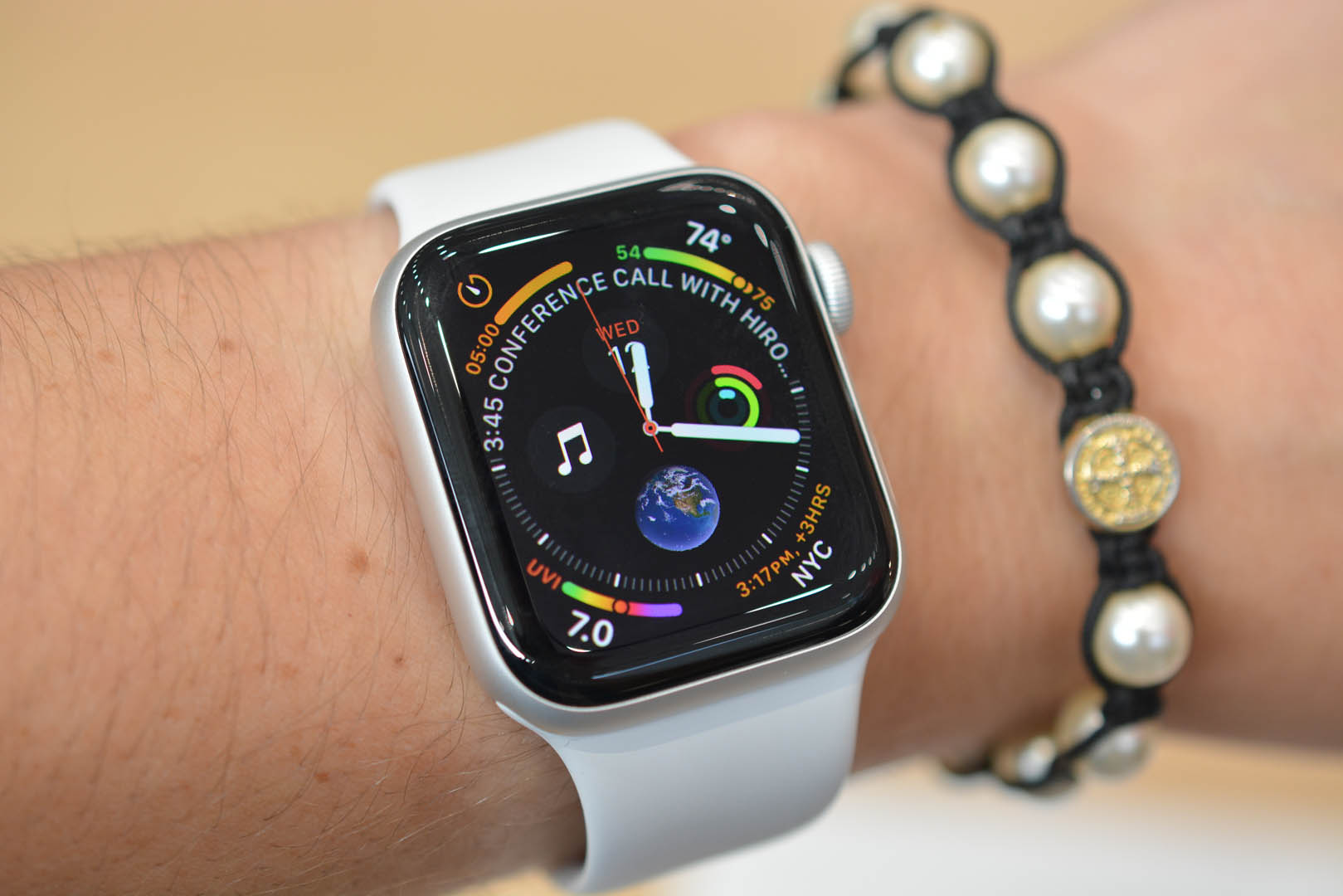
The Apple Watch Series 4 on a wrist.
Enlarge / AliveCor and Apple’s battle started with the Apple Watch Series 4.
Valentina Palladino

Apple will continue fighting California-based AliveCor over the startup’s electrocardiogram (ECG) technology. On Tuesday, AliveCor announced that US President Joe Biden had decided not to veto the US International Trade Commission’s (ITC) December ruling that could lead to an import ban on the Apple Watch Series 4 and later.

It’s unlikely that Apple’s watch will be totally banned. But as The Verge pointed out, AliveCor could walk away with a licensing agreement from Apple to use its patents in the Apple Watch.

According to AliveCor, which has around 150 workers to Apple’s 80,000, it shared its ECG sensor technology with Apple in 2015 while building a business relationship, The Hill reported earlier this month. In 2018, Apple released the Apple Watch Series 4, which not only introduced an ECG sensor to the smartwatch but also blocked outside heart monitoring apps. AliveCor said this forced it in 2019 to stop selling KardiaBand, an ECG band that the company announced for Apple Watches in 2016.

“We come up with new technologies, and instead of the ecosystem letting us thrive and continue to build on top of the innovations we already have, Apple cuts us out up front, steals our technology, uses their platform power to scale it, and now is basically saying it’s scaled so it can’t be cut off,” AliveCor CEO Priya Abani said, according to The Hill’s February 17 report.

In December, the ITC ruled that Apple infringed (PDF) on AliveCor’s patent; however, no import ban is currently in effect. That’s because AliveCor is currently appealing (PDF) a December ruling by the US Patent and Trademark Office finding that three of the company’s patents in question are invalid, as reported by Reuters. As such, an Apple spokesperson told The Verge this week that the ITC’s ruling hasn’t impacted the Apple Watch yet.

Biden’s decision not to veto the ITC’s ruling against Apple, reportedly delegated to US Trade Representative Katherine Tai, differs from the last time Apple faced such a ban from the government agency. In 2013, the ITC called for a ban on iPhones and iPads due to Apple infringing on Samsung patents, but then-US President Barack Obama vetoed the ban, following pressure from “phone carriers and a bipartisan coalition of lawmakers,” according to The Hill. Before then, no president had vetoed an ITC-issued product ban since 1987, so it was unlikely that Biden would veto December’s decision, despite Apple’s lobbying efforts reported by The Hill.

With Apple and AliveCor seeking appeals, any mandates regarding the Apple Watch may not take effect for another 18 months, The Hill reported this week.

At the same time, Apple is also battling Masimo over the Apple Watch. In May, the ITC will reveal if there will be an import ban on all Apple Watches except for the SE (from the Series 6 and on) after a January ruling found that Apple infringed on the California and Switzerland-based company’s pulse oximeter patent.

https://arstechnica.com/?p=1919312


SCOTUS “confused” after hearing arguments for weakening Section 230 immunity

<img src="https://rassegna.lbit-solution.it/wp-content/uploads/2023/02/scotus-confused-after-hearing-arguments-for-weakening-section-230-immunity.jpg" alt="Jose Hernandez and Beatriz Gonzalez, stepfather and mother of Nohemi Gonzalez, who died in a terrorist attack in Paris in 2015, arrive to speak to the press outside of the US Supreme Court following oral arguments in Gonzalez v. Google on February 21 in Washington, DC. “>
Enlarge / Jose Hernandez and Beatriz Gonzalez, stepfather and mother of Nohemi Gonzalez, who died in a terrorist attack in Paris in 2015, arrive to speak to the press outside of the US Supreme Court following oral arguments in Gonzalez v. Google on February 21 in Washington, DC.

Today, the Supreme Court heard oral arguments to decide whether Section 230 immunity shields online platforms from liabilities when relying on algorithms to make targeted recommendations. Many Section 230 defenders feared that the court might be eager to chip away at the statute’s protections, terrified that in the worst-case scenario, the Supreme Court could doom the Internet as we know it. However, it became clear that justices had grown increasingly concerned about the potential large-scale economic impact of making any decision that could lead to a crash of the digital economy or an avalanche of lawsuits over targeted recommendations.

The case before the court, Gonzalez v. Google, asks specifically whether Google should be held liable for allegedly violating federal law that prohibits aiding and abetting a terrorist organization by making targeted recommendations that promoted ISIS videos to YouTube users. If the court decides that Section 230 immunity does not apply, that single decision could impact how all online platforms recommend and organize content, Google and many others have argued.

“Congress was clear that Section 230 protects the ability of online services to organize content,” Halimah DeLaine Prado, Google’s general counsel, told Ars in a statement. “Eroding these protections would fundamentally change how the Internet works, making it less open, less safe, and less helpful.”

Legal experts attending the proceedings said they felt much more optimistic that won’t happen, though, mostly because the Supreme Court’s questions almost exclusively focused on what the statute currently says and not on other legal questions like how Section 230 guards online speech. Santa Clara University School of Law professor Eric Goldman—who filed one of the dozens of briefs in support of Google in this case—told a panel audience today that because justices seemed to understand the full scope of what’s at stake in the case, “there’s some reason to be optimistic that Google will likely prevail.”

However, it’s all still up in the air. Tomorrow the Supreme Court hears oral arguments in a related case, Taamneh v. Twitter, which Goldman warned could impact the court’s decision on Gonzalez v. Google in ways that experts still cannot predict. It’s possible that a decision in Taamneh v. Twitter could lead Google to file a motion to dismiss the Gonzalez case and an opportunity for the Gonzalez family to further appeal. It’s likely that both cases won’t be resolved until June, CNN reported.

SCOTUS appears both cautious and confused

Oral arguments dragged on for two and a half hours while the Supreme Court considered the pros and cons of weakening Section 230. Lawyer Eric Schnapper argued on behalf of the family of Nohemi Gonzalez, a 23-year-old student killed in a 2015 Paris terrorist attack. His arguments seemed to stray sometimes from the logic used in the Gonzalez family’s complaint, and that frequently confused some justices who admittedly lacked expertise. At one point, Supreme Court Justice Elena Kagan pointed out that the question before the court today could be better suited to Congress since the justices are not “the nine greatest experts on the Internet.” Remaining cautious about disrupting the Internet, Kagan and others contended that Schnapper’s argument could create a future where a line is drawn and Section 230 protections end up applying to nothing.

“The line-drawing problems are real,” Schnapper told the court. “No one minimizes that.”

After Schnapper opened the proceeding, US Deputy Solicitor General Malcolm Stewart argued on behalf of the Justice Department, which partially supports the plaintiffs in this case. Stewart told the court that online platforms should be liable for design decisions they make that violate laws. Extreme hypotheticals were considered during oral arguments, such as a platform intentionally designing an algorithm to promote terrorist content. Google’s lawyer, Lisa Blatt, got some pushback when she argued that Section 230 immunity would apply in that extreme hypothetical.

When Justice Brett Kavanagh suggested this could lead to many more lawsuits, Stewart disagreed that tech companies would be buried by complaints. Stewart said that he “wouldn’t necessarily agree that there would be lots of lawsuits” because most negligence suits would likely be easily dismissed at the liability stage—before Section 230 questions come into play.

Blatt defended Section 230 as providing critical protections for online platforms, saying that weakening it to uphold this standard would cause “death by 1,000 cuts” if global tech companies and smaller platforms had to suddenly make business decisions based on 50 different states’ negligence laws.

https://arstechnica.com/?p=1919265


Germany raises red flags about Palantir’s big data dragnet

German police sit in their car off the highway while watching moving traffic
Enlarge / German police officers sit in their vehicle at the Neuenburg junction of the A5 motorway and observe the traffic from France.

Britta Eder’s list of phone contacts is full of people the German state considers to be criminals. As a defense lawyer in Hamburg, her client list includes anti-fascists, people who campaign against nuclear power, and members of the PKK, a banned militant Kurdish nationalist organization.

For her clients’ sake, she’s used to being cautious on the phone. “When I talk on the phone I always think, maybe I’m not alone,” she says. That self-consciousness even extends to phone calls with her mother.

But when Hamburg passed new legislation in 2019 allowing police to use data analytics software built by the CIA-backed company Palantir, she feared she could be pulled further into the big data dragnet. A feature of Palantir’s Gotham platform allows police to map networks of phone contacts, placing people like Eder—who are connected to alleged criminals but are not criminals themselves—effectively under surveillance.

“I thought, this is the next step in police trying to get more possibilities to observe people without any concrete evidence linking them to a crime,” Eder says. So she decided to become one of 11 claimants trying to get the Hamburg law annulled. Yesterday, they succeeded.

A top German court ruled the Hamburg law unconstitutional and issued strict guidelines for the first time about how automatic data analysis tools like Palantir’s can be used by police, and it warned against the inclusion of data belonging to bystanders, such as witnesses or lawyers like Eder. The ruling said that the Hamburg law, and a similar law in Hesse, “allow police, with just one click, to create comprehensive profiles of persons, groups, and circles,” without differentiating between suspected criminals and people who are connected to them.

The decision did not ban Palantir’s Gotham tool but limited the way police can use it. “Eder’s risk of being flagged or having her data processed by Palantir will now be dramatically reduced,” says Bijan Moini, head of legal of the Berlin-based Society for Civil Rights (GFF), which brought the case to court.

Although Palantir was not the ruling’s target, the decision still dealt a blow to the 19-year-old company’s police ambitions in Europe’s biggest market. Cofounded by billionaire Peter Thiel, who remains the chairman, Palantir helps police clients connect disparate databases and pull huge amounts of people’s data into an accessible well of information. But the guidance issued by Germany’s court can influence similar decisions across the rest of the European Union, says Sebastian Golla, assistant professor for criminology at Ruhr University Bochum, who wrote the complaint against Hamburg’s Palantir law. “I think this will have a bigger impact than just in Germany.”

https://arstechnica.com/?p=1918581


The US plan to become the world’s cleantech superpower

The first storm of the season produces a rainbow behind wind turbines on a hill in Palm Springs, California

In a huge hangar in Quonset Point, Rhode Island, welders are aiming blazing torches at sheets of aluminum. The hulls of three new ships, each about 27 meters long, are taking shape. The first will hit the water sometime in the spring, ferrying workers to service wind turbines off the New England coast.

The US barely has an offshore wind sector for these vessels to service. But as the Biden administration accelerates a plan to decarbonize its power generation sector, turbines will sprout along its coastline, creating demand for services in shipyards and manufacturing hubs from Brownsville, Texas, to Albany, New York.

Senesco Marine, the shipbuilder in Rhode Island, has almost doubled its workforce in recent months as new orders for hybrid ferries and larger crew transfer vessels have come in. “Everybody tells me recession in America is inevitable,” says Ted Williams, a former US Navy officer who is now the company’s chief executive. “But it’s not happening in shipbuilding.”

Nor is it happening in any clean energy sector in America. Across the country, a new revolution is underway in sectors from solar to nuclear, carbon capture to green hydrogen—and its goals are profound: to rejuvenate the country’s rustbelt, decarbonize the world’s biggest economy, and wrest control of the 21st-century’s energy supply chains from China, the world’s cleantech superpower.

The world is only just beginning to contend with what it means. Less than three years ago, the US had ditched the Paris Agreement on climate change, and then-President Donald Trump was touting an era of American energy dominance based on the country’s fossil fuel abundance. Europeans chided the US for its foot-dragging over climate.

Since then, President Joe Biden has passed sweeping legislation to reverse course. Last year’s colossal Inflation Reduction Act and its hundreds of billions of dollars in cleantech subsidies are designed to spur private-sector investment and accelerate the country’s decarbonization effort.

“It is truly massive,” says Melissa Lott, director of research at Columbia University’s Center on Global Energy Policy. “It’s industrial policy. It’s the kitchen sink. It’s a strong, direct, and clear signal about what the US is prioritizing.”

The tax incentives have made the US irresistible to investors, say cleantech developers, and are sucking money away from other countries. Since the passage of the IRA last year, $90 billion of capital has already been committed to new projects, according to Climate Power, an advocacy group.

“The US is now the most opportunity-rich, most aggressive growth, most prolific market for renewables investment in the world today,” says David Scaysbrook, managing partner of Quinbrook Infrastructure Partners, a global cleantech private equity group. “And will be for quite some time.”

And yet it is a gamble for the US, too. The ring of protectionism, and the sheer scale of the state intervention, has alarmed allies—even those who once implored the US to rejoin the global climate fight. France’s President Emmanuel Macron says the IRA could “fragment the West.” Ursula von der Leyen, the European Commission’s president, has complained it would bring “unfair competition” and “close markets.”

And the underlying effort to break the dependence on cheap Asian components that have sped the advance of renewables in recent years leaves many analysts skeptical. At a time when the White House is also contending with high inflation and Russian aggression, can the US reset the global energy order, create high-paying cleantech jobs at home, and cut emissions—all at the same time?

“There is simply no reason why the blades for wind turbines cannot be made in Pittsburgh rather than Beijing,” Biden said in a speech last April.

“Global arms race for clean energy? Certainly,” says Daniel Liu, an analyst at Wood Mackenzie. “But there has to be some level of collaboration, because no country can do it alone.”

https://arstechnica.com/?p=1918239


SpaceX could be fined $175K for failure to properly report launch data to FAA

A SpaceX Falcon 9 rocket lifts off from Cape Canaveral Air Force Station carrying 60 Starlink satellites on November 11, 2019.
Enlarge / A SpaceX Falcon 9 rocket lifts off from Cape Canaveral Air Force Station carrying 60 Starlink satellites on November 11, 2019.

Before launching 53 Starlink satellites from Florida last August, it seems that SpaceX failed to submit required data to the US Department of Transportation’s Federal Aviation Administration (FAA). Now, the FAA has proposed a $175,000 fine to SpaceX for not sharing that data within at least seven days of its launch.

According to the FAA, the missing SpaceX data is critical because it’s used to “assess the probability of the launch vehicle colliding with one of the thousands of tracked objects orbiting the Earth.”

The FAA and SpaceX did not immediately respond to Ars’ request for comment.

SpaceX has 30 days to respond to the FAA’s enforcement notice.

The FAA has previously clashed with SpaceX over seemingly reckless launches. In 2021, for example, SpaceX applied for an FAA waiver, asking for permission to “exceed the maximum public risk allowed by federal safety regulations” while launching a prototype spacecraft, The Washington Post reported. After the FAA denied the waiver, SpaceX moved forward with the launch anyway, resulting in an investigation and temporary suspension of operations at one of SpaceX’s launch sites.

Ultimately, SpaceX remedied the issues that the FAA identified, but it was unclear if the FAA considered fining SpaceX.

In 2021, Musk was publicly critical of the FAA, tweeting that the FAA’s space division had a “fundamentally broken regulatory structure” and alleging that delays in FAA inspections had delayed launch times.

While SpaceX seemed willing to break rules in 2021, United Launch Alliance’s CEO, Tory Bruno, that year urged the FAA to enforce regulations and licensing procedures so that all commercial space launch providers take the FAA’s safety precautions during launches seriously. Bruno said that if any company violates FAA safety rules and procedures, the FAA should strongly respond with “a deterrent set of penalties that will cause them to think twice.”

Now it seems the FAA is ready to take that advice, proposing civil penalties against SpaceX to ensure all launches meet the FAA’s deadlines to share launch collision analysis trajectory data.

https://arstechnica.com/?p=1918682


Domestic violence hotline calls will soon be invisible on your family phone plan

Domestic violence hotline calls will soon be invisible on your family phone plan

Today, the Federal Communications Commission proposed rules to implement the Safe Connections Act, which President Joe Biden signed into law last December. Advocates consider the law a landmark move to stop tech abuse. Under the law, mobile service providers are required to help survivors of domestic abuse and sexual violence access resources and maintain critical lines of communication with friends, family, and support organizations.

Under the proposed rules, mobile service providers are required to separate a survivor’s line from a shared or family plan within two business days. Service providers must also “omit records of calls or text messages to certain hotlines from consumer-facing call and text message logs,” so that abusers cannot see when survivors are seeking help. Additionally, the FCC plans to launch a “Lifeline” program, providing emergency communications support for up to six months for survivors who can’t afford to pay for mobile services.

“These proposed rules would help survivors obtain separate service lines from shared accounts that include their abusers, protect the privacy of calls made by survivors to domestic abuse hotlines, and provide support for survivors who suffer from financial hardship through our affordability programs,” the FCC’s announcement said.

The FCC has already consulted with tech associations and domestic violence support organizations in forming the proposed rules, but now the public has a chance to comment. An FCC spokesperson confirmed to Ars that comments are open now. Crystal Justice, the National Domestic Violence Hotline’s chief external affairs officer, told Ars that it’s critical for survivors to submit comments to help inform FCC rules with their experiences of tech abuse.

To express comments, visit this link and fill in “22-238” as the proceeding number. That will auto-populate a field that says “Supporting Survivors of Domestic and Sexual Violence.”

FCC’s spokesperson told Ars that the initial public comment period will be open for 30 days after the rules are published in the federal register, and then a reply comment period will be open for 30 days after the initial comment period ends.

FCC Chairwoman Jessica Rosenworcel released a statement today, asking the public to help the commission build a record “to explore how to help survivors of domestic violence stay connected.”

“What I learned is that domestic abuse often happens in silence,” Rosenworcel said, explaining how abusers cut off partners from resources and support systems. She vowed that the Safe Connections Act will help to “break that silence.”

FCC Commissioner Geoffrey Starks said that for more than 12 million domestic violence survivors in the US annually, access to “communications technology is critical—the difference between life and death.”

The public comment period will be an important time for the FCC to continue learning, Justice told Ars. She said that the law is an important step to provide more resources to survivors, but it isn’t necessarily perfect and may need to be adapted over time. For example, Justice noted that “timing is always important” when forming safety plans for survivors. So while the law’s two-day waiting period to separate a phone line may seem like a fairly quick response time for the wireless industry, any delay could become an issue for survivors needing faster access to a secure phone line, Justice said.

The Electronic Frontier Foundation, which strongly supported the Safe Connections Act, published a blog from the EFF’s director of federal affairs, India McKinney, saying that EFF would have preferred if the law “did not require survivors to provide paperwork to ‘prove’ their abuse.” As currently written, the Safe Connections Act does not require that alleged abusers have been convicted but does require a copy of any documentation of the abuse, such as a police report, court statement, or signed affidavit from an official source, such as a licensed medical provider, mental health provider, or social worker.

“For many survivors, providing paperwork about their abuse from a third party is burdensome and traumatic, especially when it is required at the very moment when they are trying to free themselves from their abusers,” McKinney wrote.

Phone companies partner with domestic violence hotline

In Rosenworcel’s statement, the FCC chairwoman also announced a significant new partnership between the National Domestic Violence Hotline and the largest wireless service providers. This partnership will work to ensure that survivors reach agents who are prepared to field requests to separate phone lines and connect survivors with additional resources.

Justice told Ars that the Hotline has had a long-running relationship with Verizon but that this new initiative is “the largest effort” the Hotline has ever launched with the wireless industry. Partners include AT&T, T-Mobile, Verizon, US Cellular, and the trade association CTIA.

Through the partnership, the Hotline trains customer service representatives to understand what survivors go through when they’re trying to escape traumatic experiences like domestic violence, stalking, or human trafficking. This gives phone company agents, Justice said, the language they need to communicate with survivors, provide support switching phone lines, and refer survivors to Hotline resources and other organizations across the country.

https://arstechnica.com/?p=1918597