L’errore umano è la minaccia più grande per i dati aziendali


Kaspersky ha pubblicato la nuova edizione dell’indagine IT Security Economics, che ha evidenziato come la perdita di dati causata da attacchi informatici (17%) o dai dipendenti (21%) sia il problema di sicurezza più rilevante tra le PMI e le grandi aziende europee.

Per accompagnare il report, l’azienda ha realizzato anche un interessante sito interattivo che consente di confrontare il budget di sicurezza con le risposte di quasi 3.000 rappresentanti di aziende di ogni genere.

I controlli interattivi permettono di filtrare i risultati sulla base del settore, della regione, e del numero di dipendenti per creare analisi più precise e circoscritte.

La crescente digitalizzazione ha portato alla generazione, distribuzione, copia e archiviazione di enormi quantità di dati, ma ci sono crescenti preoccupazioni sulla loro sicurezza. I dirigenti aziendali si concentrano sempre di più sulle policy di trasparenza dei fornitori per garantire la protezione dei dati aziendali e dei clienti.

Secondo la ricerca, la perdita o l’esposizione di informazioni aziendali e dei clienti a causa di una violazione dei dati è uno dei principali timori per le aziende (55% delle risposte). Inoltre, la protezione di ambienti tecnologici complessi (43%) e l’adozione di infrastrutture cloud (38%) sono altre preoccupazioni comuni.

Costruire la fiducia

La mancanza di fiducia nella capacità delle aziende di proteggere i dati ha un impatto negativo sulla reputazione e la fiducia dei clienti. Pertanto, è essenziale che le aziende prestino molta attenzione alla sicurezza dei dati e mettano in atto misure appropriate per proteggerli.

Entrando nel dettaglio, la perdita di dati a causa di negligenze o errori dei dipendenti (21%) e attacchi informatici interni (17%) sono le principali sfide di sicurezza per le aziende.

La protezione dei dati è diventato il problema di sicurezza più allarmante, e l’88% degli intervistati ritiene che la presenza di politiche di trasparenza sia importante per stringere rapporti commerciali con i fornitori.

Anche se il 73% delle organizzazioni ha già politiche di trasparenza, il 77% è disposto ad investire risorse per svilupparle ulteriormente.

Yuliya Shlychkova, Head of Public Affairs di Kaspersky

Yuliya Shlychkova, Head of Public Affairs di Kaspersky, ha commentato: “Oggi le aziende sono più consapevoli quando si tratta di sicurezza dei dati e un approccio responsabile alla loro gestione sta diventando un elemento essenziale quando si considerano fornitori e collaboratori”.

“Per aiutare i propri clienti e partner a verificare che vengano applicati gli standard richiesti per garantire la sicurezza dei dati, sempre più aziende adottano policy di trasparenza”, ha proseguito Shlychkova.

Condividi l’articolo


Articoli correlati

Altro in questa categoria


https://www.securityinfo.it/2023/02/17/lerrore-umano-e-la-minaccia-piu-grande-per-i-dati/?utm_source=rss&utm_medium=rss&utm_campaign=lerrore-umano-e-la-minaccia-piu-grande-per-i-dati


Doobie-us: Pot ads come to Twitter amid cannabis industry collapse

Then-future Technoking Elon Musk enjoying some cannabis on Joe Rogan's podcast.
Enlarge / Then-future Technoking Elon Musk enjoying some cannabis on Joe Rogan’s podcast.

Elon Musk’s fondness for 420 jokes is well-documented on Twitter, where the CEO loves responding to tweets with comments like “420 haha.” So it makes sense that Musk is well aware of opportunities for cannabis advertisers to reach Twitter users who like tweeting about marijuana as much as he does. It comes as no surprise, then, that Twitter announced yesterday that it would become the weed-friendliest social platform and start allowing some previously restricted cannabis ads to appear in Twitter feeds of users in states that have legalized weed.

“As of today, in certain US states, we have taken measures to relax our cannabis ads policy to create more opportunities for responsible cannabis marketing—the largest step forward by any social media platform,” Alexa Alianiello, Twitter’s lead of ad sales and partnerships, wrote in a blog post.

This policy change sets Twitter apart from other advertising giants like Meta, which bans both CBD and THC ads, and Google, which allows some CBD ads but bans marijuana ads, including instructional content.

“Going forward, Twitter is allowing advertisers to promote brand preference and informational cannabis-related content for CBD, THC, and cannabis-related products and services,” Alianiello wrote.

Previously, Twitter had only allowed US advertisers to post ads for approved CBD topical products. Now it appears that weed delivery services and accessories like vape pens could be advertised, according to Yahoo News.

Twitter’s new policy allows approved cannabis advertisers to target users in areas of Canada and the US where marijuana is legalized. Approved ads can only promote “informational or brand-preference content” and cannot glamorize cannabis use, appeal to minors, or advertise the price or distribution of cannabis. Celebrities and athletes cannot endorse cannabis in ads. US advertisers cannot show people using cannabis products or people under the influence of cannabis. They are also prohibited from encouraging users to cross state lines or making misleading or false claims, including about marijuana health benefits.

In the US, where marijuana has been legalized in 21 states but remains a federally illegal industry, only licensed advertisers can expect to be pre-authorized by Twitter. Those advertisers agree to accept full responsibility for complying with laws. Targeting in the US is restricted to Twitter users older than 21.

Twitter did not respond to Ars’ request for comment on its new policy.

It’s unclear how quickly Twitter will be able to authorize cannabis advertisers, but Amy Deneson, co-founder of the Cannabis Media Council, told Politico that Twitter’s embrace of cannabis advertisers is “groundbreaking” for an industry currently lacking straightforward online tools to reach wide audiences. Deneson told Politico that Twitter has set no minimum ad purchases for the cannabis industry and will be matching any ad buys before March to boost reach for new cannabis advertisers, regardless of budget size. [Update: A spokesperson for the Cannabis Media Council told Ars that although it has planned its inaugural campaign, the council is not currently running ads on Twitter and has no plans in the immediate future to run ads. Deneson said in a statement that Twitter made a good business decision with its policy change, which could generate “significant revenue.” The cannabis industry, Deneson said, will benefit from having more advertising channels on Twitter that “will give cannabis and cannabinoid brands another avenue to reach and grow their audiences.” Twitter’s move could possibly persuade other mainstream media and platforms to allow cannabis industry ads.]

Twitter’s policy update could help save some weed businesses from failing amid a cannabis industry financial collapse. Fortune reported this month that many businesses are failing due to “excessive debt, falling marijuana prices, competition from illegal sellers, and high taxes.”

It’s easy to see how the cannabis industry and Twitter could help prop each other up during difficult financial times. Search Engine Journal reported last month that Twitter advertising is down 40 percent, and more than 500 top advertisers have paused spending. Cannabis advertisers could help fill that revenue gap.

The move could pose a risk of further alienating some Twitter advertisers, though. If major brands grow concerned about how Twitter is verifying cannabis advertisers and feel hesitant about having their ads appear near cannabis ads, Twitter may suffer even more prolonged pauses in spending from its biggest advertisers, Politico reported.

Twitter will also have to train staff to determine when a cannabis industry ad is appealing to minors or glamorizing weed consumption. Without clear standards, which ads get approved could depend on who is assessing the ads, and that would make it harder for cannabis businesses to design impactful campaigns in line with the rules.

https://arstechnica.com/?p=1918179


Big Tech lobbyist language made it verbatim into NY’s hedged repair bill

Repair shop technician solders on laptop-size circuit board
Jerry Holt/Star Tribune via Getty Images

When New York became the first state to pass a heavily modified right-to-repair bill late last year, it was apparent that lobbyists had succeeded in last-minute changes to the law’s specifics. A new report from the online magazine Grist details the ways in which Gov. Kathy Hochul made changes identical to those proposed by a tech trade association.

In a report co-published with nonprofit newsroom The Markup, Maddie Stone writes that documents surrounding the drafting and debate over the bill show that many of the changes signed by Hochul were the same as those proposed by TechNet, which represents Apple, Google, Samsung, and other technology companies.

The bill would have required that companies that provide parts, tools, manuals, and diagnostic equipment or software to their own repair networks also make them available to independent repair shops and individuals. It saw heavy opposition from trade groups before its passing. New York Assemblymember Patricia Fahy, the bill’s sponsor, told Grist that backers had to make “a lot of changes to get it over the finish line in the first day or two of June.” The bill passed with broad bipartisan support, but it was pared down to focus only on small electronics.

Between that passage and the December signing, lobbyists working for TechNet and firms including Apple, Google, and Microsoft met with the governor, according to state ethics filings. Apple, IBM, and TechNet asked Hochul to veto the bill, while Microsoft sought to cooperate with Fahy on changes.

Later, TechNet sent a version of the bill that limited the effects to later products and excluded printed circuit boards and business-to-business or government contracts, according to Grist. Crucially, the new version, which had changes attributed to a TechNet vice president, allows for companies to offer “assemblies” of parts if the companies say the parts pose a “safety risk.” TechNet’s version also suggested independent repair shops should be forced to provide customers with “a written notice of US warranty laws” before they can start work.

TechNet’s suggestions made their way to the Federal Trade Commission. A staffer at the FTC took aim at the assembly clause, the exclusion of security workarounds for repair, and other elements. Dan Salsburg, chief counsel for the FTC’s Office of Technology, Research, and Investigation, wrote that TechNet’s suggestions had “a common theme—ensuring that manufacturers retain control over the market for the repair of their products.”

A TechNet executive told Grist that the original New York bill “presented unacceptable risks to consumer data privacy and safety.” TechNet’s Chris Gilrein told Grist that even the final law “remains a state-mandated transfer of intellectual property… when consumers have access to more repair options than ever before.”

New York’s Senate has yet to pass the revised law, though it is widely expected to do so. State regulators may be able to clarify aspects of the bill in the final version. And repair and environmental advocates are hoping that New York’s first bill, however awkwardly pointed, may trigger similar debates and laws in other states.

You can read much more about New York’s repair bill and see exactly how lobbyist language made it verbatim into the final wording at Grist.

Disclosure: The author previously worked for iFixit, a repair company. He holds no financial stake in the company.

https://arstechnica.com/?p=1918115


Tesla finally agrees to open its charging network to all EVs in US

Tesla finally agrees to open its charging network to all EVs in US

Today, the Biden administration announced new standards for expanding the national electric vehicle (EV) charging network in order to encourage widespread EV adoption by providing a “predictable” user experience. All charging stations will soon be required to adopt the same connector types, payment methods, and data privacy assurances. These new standards have pushed Tesla, for the first time, to make part of its proprietary charging network compatible with non-Tesla EVs in the United States.

Joining other industry stakeholders in supporting Biden’s goal to build 500,000 EV chargers nationwide by 2030, Tesla has pledged to make “at least 7,500 chargers available for all EVs by the end of 2024,” Biden’s announcement said. This will include 3,500 new and existing 250 kW “superchargers” along highway corridors and 4,000 slower “destination chargers” at hotels and restaurants in urban and rural areas.

Any EV driver should be able to use the Tesla app or website to access these charging stations, but it’s currently unclear how Tesla will adapt its charging network to comply with new connector-type standards. The most widely used connector type is the Combined Charging System (CCS), and Reuters reported that any company hoping to secure a portion of $7.5 billion in federal funding for Biden’s EV initiative would have to adopt the CCS standard. A White House official said that Tesla would be adopting the CCS standard, already has “a hardware and a software solution” to do so, and could qualify for state funding to retrofit its charger network, Reuters reported. Earlier this year, InsideEVs reported that Tesla’s solution could be a mysterious “Magic Dock” to retrofit Tesla charging stations to charge non-Tesla EVs. No one’s sure exactly how the Magic Dock would work yet.

Opening its charging network to all EVs could position Tesla as the clear industry leader across America, analysts told Reuters, but adopting the CCS standard could also diminish some consumers’ incentive to buy Teslas. Tesla drivers have enjoyed exclusive access to the nation’s largest and fastest network of “superchargers,” but soon any EV owner can enjoy that same benefit without buying a Tesla.

Tesla did not respond to Ars’ request for comment.

Despite this seeming risk to its EV sales, Tesla CEO Elon Musk seemed “very open” to helping Biden meet his ambitious EV charging goals, White House Infrastructure Coordinator Mitch Landrieu said at a press briefing today. With so much funding available to competitors, Tesla otherwise might have risked a rival creating a larger charging network, thus losing Tesla drivers’ incentive of exclusivity either way.

When Musk met with White House officials last month, he made no commitment to opening up the charging network, The Washington Post reported. Today’s announcement will likely be good news to at least some of Tesla’s investors, who, Reuters reported, have been waiting for Tesla to confirm its commitment.

Is Biden’s made-in-America plan realistic?

Tesla isn’t the only company that Biden is relying on to expand the country’s EV charging network through the Department of Transportation’s (DOT) National Electric Vehicle Infrastructure (NEVI) program.

More than a dozen companies have committed to adding “more than 100,000 public chargers available for all EVs.” Those companies include automakers like General Motors, Mercedes-Benz, Volvo, and Ford, as well as other EV industry stakeholders, including Hertz, BP, Pilot Company, EVgo, TravelCenters of America, ChargePoint, Electrify America, and Starbucks. General Motors and Francis Energy made some of the largest commitments. The former promised to install “up to 40,000 public Level 2 EV chargers in local communities by 2026” and the latter to expand into 40 states by 2023 and then install “50,000 EV charging ports by 2030.” Other companies and networks made commitments to regularly maintain new charging stations.

While the NEVI program helps Biden achieve his mission of electrifying “the great American road trip,” Biden’s larger goal is to aggressively ramp up domestic manufacturing of EVs and EV chargers. To that end, Biden’s plan requires that all federally funded EV chargers must be built in the US. Companies have until July 2024 to ensure that 55 percent of the cost of all components for new EV chargers is paid to domestic manufacturers. Any equipment that doesn’t meet that standard must be installed by October 2024. Biden expects that requiring continued investments will support the development of a dependable domestic supply chain.

“These standards will direct federal dollars to build out a national EV charging network that is user-friendly, reliable, and accessible so that charging is as easy as filling up at a gas station,” Biden’s announcement said.

Not everyone expects that Biden’s plan will result in America suddenly gaining a dependable supply chain, though. Reuters reported that the European Union and Mexico have voiced concerns that the US is discriminating against foreign EV makers, and states told DOT that the global demand for EV chargers is already straining the supply chain—making it hard to speed up charger manufacturing while meeting new made-in-America standards. Tesla is worried that the “pace and scale of deployment” of Biden’s plan is too ambitious and could create a “shortfall in the number of compliant charging stations.”

https://arstechnica.com/?p=1917886


Report: Musk had Twitter engineers boost his tweets after Biden got more views

A cellphone displaying a photo of Elon Musk placed on a computer monitor filled with Twitter logos.
Getty Images | Samuel Corum

Twitter CEO Elon Musk had Twitter engineers set up a “special system” to boost his tweets after his post about the Super Bowl got fewer views than a tweet from President Biden, according to a report by Platformer yesterday.

Biden’s tweet supporting the Philadelphia Eagles has 29.1 million views, while Musk’s now-deleted tweet also supporting the Eagles received a mere 9.1 million. Hours after the Eagles’ loss, Musk’s cousin James Musk posted a message in Twitter’s Slack asking anyone “who can make dashboards and write software” to help with “debugging an issue with engagement across the platform,” the report said. James Musk’s Slack message reportedly called the situation one of “high urgency.”

Additionally, Elon Musk “flew his private jet back to the Bay Area on Sunday night to demand answers from his team.”

“Late Sunday night, Musk addressed his team in-person,” Platformer wrote. “Roughly 80 people were pulled in to work on the project, which had quickly become priority number one at the company. Employees worked through the night investigating various hypotheses about why Musk’s tweets weren’t reaching as many people as he thought they should and testing out possible solutions.”

Fix it or you’re fired

Earlier this month, Musk reportedly fired an engineer who tried to explain why his tweet views were down. More firings were threatened as Musk’s “deputies told the rest of the engineering team this weekend that if the engagement issue wasn’t ‘fixed,’ they would all lose their jobs as well,” the Platformer report said.

A solution was found by Monday. Musk’s newfound reach was immediately noticeable to users in the default “For You” feed that isn’t limited to accounts each user follows.

“Twitter users opened the app to find that Musk’s posts overwhelmed their ranked timeline,” and this “was no accident, Platformer can confirm: after Musk threatened to fire his remaining engineers, they built a system designed to ensure that Musk—and Musk alone—benefits from previously unheard-of promotion of his tweets to the entire user base.” Platformer said its report is “based on interviews with people familiar with the events involved and supported by documents.”

While engineers said it’s possible that “Musk’s reach might have been reduced because he’d been blocked and muted by so many people in recent months,” there also may have been a technical reason for Musk’s relatively low views.

“Twitter’s system has historically promoted tweets from users whose posts perform better to both followers and non-followers in the For You Tab; Musk’s tweets should have fit that model but showed up less only about half the time that some engineers thought they should, according to some internal estimates,” Platformer wrote.

Musk has tweeted about his view count on multiple occasions. The Twitter owner and CEO temporarily made his account private a couple of weeks ago, saying he wanted “to test whether you see my private tweets more than my public ones.” Shortly before the Super Bowl, he wrote that Twitter addressed a problem in which the “Fanout service for Following feed was getting overloaded when I tweeted, resulting in up to 95% of my tweets not getting delivered at all.”

Musk gets “power user multiplier”

To boost Musk’s tweet views after the Super Bowl, Twitter engineers “deployed code to automatically ‘greenlight’ all of Musk’s tweets, meaning his tweets will bypass Twitter’s filters designed to show people the best content possible. The algorithm now artificially boosted Musk’s tweets by a factor of 1,000—a constant score that ensured his tweets rank higher than anyone else’s in the feed,” Platformer wrote.

This is called a “power user multiplier” internally, but it “only applies to Elon Musk”; it “bypass[es] Twitter heuristics that would otherwise prevent a single account from flooding” the For You ranked feed, Platformer wrote.

After the change, Musk posted a meme indicating he was aware that his tweets were being forced into people’s feeds. The meme tweet has drawn 148.9 million views. According to Platformer, the multiplier for Musk’s account was subsequently lowered a bit, so it’s less than 1,000 now.

“Please stay tuned while we make adjustments to the uh .… ‘algorithm,'” Musk wrote in a subsequent tweet that got 54.8 million views.

Musk made himself the Twitter CEO after buying the company in late October, but has said he won’t keep the job indefinitely. Musk reportedly said today that “toward the end of this year should be a good timing to find someone else to run the company.” Before ceding the CEO job, Musk said he wants to make sure Twitter is “in stable condition.”

https://arstechnica.com/?p=1917851


Seven states push to require ID for watching porn online

Seven states push to require ID for watching porn online

After decades of America fretting over minors potentially being overexposed to pornography online, several states are suddenly moving fast in 2023 to attempt to keep kids off porn sites by passing laws requiring age verification.

Last month, Louisiana became the first state to require ID from residents to access pornography online. Since then, seven states have rushed to follow in Louisiana’s footsteps. According to a tracker from Free Speech Coalition, Florida, Kansas, South Dakota, and West Virginia introduced similar laws, and laws in Arkansas, Mississippi, and Virginia are seemingly closest to passing. If passed, some of these laws could be enforced promptly, while some bills in states like Florida and Mississippi specify that they wouldn’t take effect until July.

But not every state agrees that rushing to require age verification is the best solution. Today, a South Dakota committee voted to defer voting on its age verification bill until the last day of the legislative session. The bill’s sponsor, Republican Jessica Castleberry, seemingly failed to persuade the committee of the urgency of passing the law, saying at the hearing that “this is not your daddy’s Playboy. Extreme, degrading, and violent pornography is only one click away from our children.” She told Ars that the bill was not passed because some state lawmakers were too “easily swayed by powerful lobbyists.”

“It’s a travesty that unfettered access to pornography by minors online will continue in South Dakota because of lobbyists protecting the interests of their clients, versus legislators who should be protecting our children,” Castleberry told Ars. “The time to pass this bill was in the mid-1990s.”

Lobbyists opposing the bill at the hearing represented telecommunications and newspaper associations. Although the South Dakota bill, like the Louisiana law, exempted news organizations, one lobbyist, Justin Smith, an attorney for the South Dakota Newspaper Association argued that the law was too vague in how it defined harmful content and how it defined which commercial entities could be subjected to liabilities.

“We just have to be careful before we put things like this into law with all of these open-ended questions that put our South Dakota businesses at risk,” Smith said at the hearing. “We would ask you to defeat the bill in its current form.”

These laws work by requiring age verification of all users, imposing damages on commercial entities found to be neglecting required age verification and distributing content to minors online that’s been deemed to be inappropriate. The laws target online destinations where more than a third of the content is considered harmful to minors. Opponents in South Dakota anticipated that states that pass these laws, as Louisiana has, will struggle to “regulate the entire Internet.” In Arkansas, violating content includes “actual, simulated, or animated displays” of body parts like nipples or genitals, touching or fondling of such body parts, as well as sexual acts like “intercourse, masturbation, sodomy, bestiality, oral copulation, flagellation, excretory functions,” or other sex acts deemed to have no “literary, artistic, political, or scientific value to minors.”

When Louisiana’s law took effect last month, Ars verified how major porn sites like Pornhub quickly complied. It seems likely that if new laws are passed in additional states, popular sites will be prepared to implement additional controls to block regional access to minors.

Ars could not immediately reach other lawmakers sponsoring age verification bills in these states for comment.

Is age verification the answer?

While Castleberry declared South Dakota’s bill dead, the proposed law in Arkansas has already passed the Senate and will be reviewed by the state’s House Rules committee tomorrow. That bill warns that exposing minors to pornography can negatively impact minors’ brain function and development, exacerbate their emotional or medical issues, trigger deviant sexual arousal, promote harmful sexual behaviors, and cause self-esteem issues or body image disorders in minors.

The Republican senator sponsoring the Arkansas law, Tyler Dees, told Vice that he introduced the bill after many constituents voiced concerns about “the growing problems related to pornography and the advancement of technology and devices around our children.”

It could be that Dees’ constituents were alarmed by the results of a recent survey on teens and pornography, which was published by Common Sense Media a week before Dees’ bill was introduced and was widely reported by media outlets like CNN and The New York Times. That survey found that 73 percent of teens reported that they consumed pornography, with more than half claiming they’d been exposed to porn accidentally and 15 percent of minors reporting they were first exposed to porn at age 10 or younger.

https://arstechnica.com/?p=1917664


Tesla Autopilot workers try to unionize, are “tired of being treated like robots”

A Tesla car connected with a cable to a supercharger.
Enlarge / Tesla Supercharger at a gas station in Katowice, Poland, on October 9, 2021.
Getty Images | NurPhoto

Tesla Autopilot workers in Buffalo, New York, today launched a unionization campaign that, if successful, would create the first union at Elon Musk’s electric carmaker. Bloomberg reported on the union drive after speaking to several Tesla workers at the Buffalo facility:

Workers at the plant told Bloomberg News that Tesla monitors keystrokes to track how long employees spend per task and how much of the day they spend actively working. This leads some to avoid taking bathroom breaks, six employees said.

“People are tired of being treated like robots,” said Al Celli, a member of the union’s organizing committee.

The workers want higher pay, better job security, more involvement in workplace decisions, and limits on “monitoring, metrics and production pressure,” Bloomberg reported.

“We have such a rush to get things done that I don’t know if it’s actually being well-thought-out,” Celli said. “It’s just, ‘let’s get this out as fast as we can.'”

The Buffalo plant has over 800 Tesla Autopilot analysts with starting pay of about $19 per hour, Bloomberg wrote. The workers are reportedly “in non-engineering roles that contribute to Tesla’s automated-driving development, including by identifying objects in images its vehicles capture and helping its systems recognize them on the road.”

“Asking for a seat in the car we helped build”

The Tesla workers are coordinating with Service Employees International Union affiliate Workers United. The union campaign’s website said the workers are asking Tesla to “refrain from threatening or retaliating against workers for organizing, agree to a quick and fair election process, and give the union equal time to hold meetings or post info[rmation].”

“We are paid far less than the national average for our job title and have next to no sick time. We are only asking for a seat in the car that we helped build,” organizer Keenan Lasch said in a statement quoted by CBS News.

According to Bloomberg, workers at Tesla’s Buffalo plant “said they began building an organizing committee in the fall after the company shut down an internal chat channel where employees aired grievances about issues such as the handling of snow days.”

In August 2022, the National Labor Relations Board ruled that Tesla violated US labor law by implicitly banning employees from wearing shirts with union insignias at its Fremont, California, factory. The board ordered Tesla to eliminate the shirt ban and notify workers that it violated US labor law. Tesla started strictly enforcing the policy in 2017 after employees wore union shirts in the Fremont factory.

In September 2019, a federal administrative law judge ruled that Tesla violated federal labor laws by trying to hamper union organizing in Fremont. The judge also ruled that Musk violated labor law when he suggested in a tweet that unionized employees would lose stock options. The NLRB affirmed the judge’s ruling in 2021.

A Buffalo News article noted that a previous union drive involving other workers at the plant hasn’t resulted in an election. “In 2018, the United Steelworkers and International Brotherhood of Electrical Workers unions launched a campaign to organize production and maintenance workers at the facility,” the article said.

https://arstechnica.com/?p=1917693


Biden FCC nominee slams critics, says ISPs shouldn’t get to choose regulators

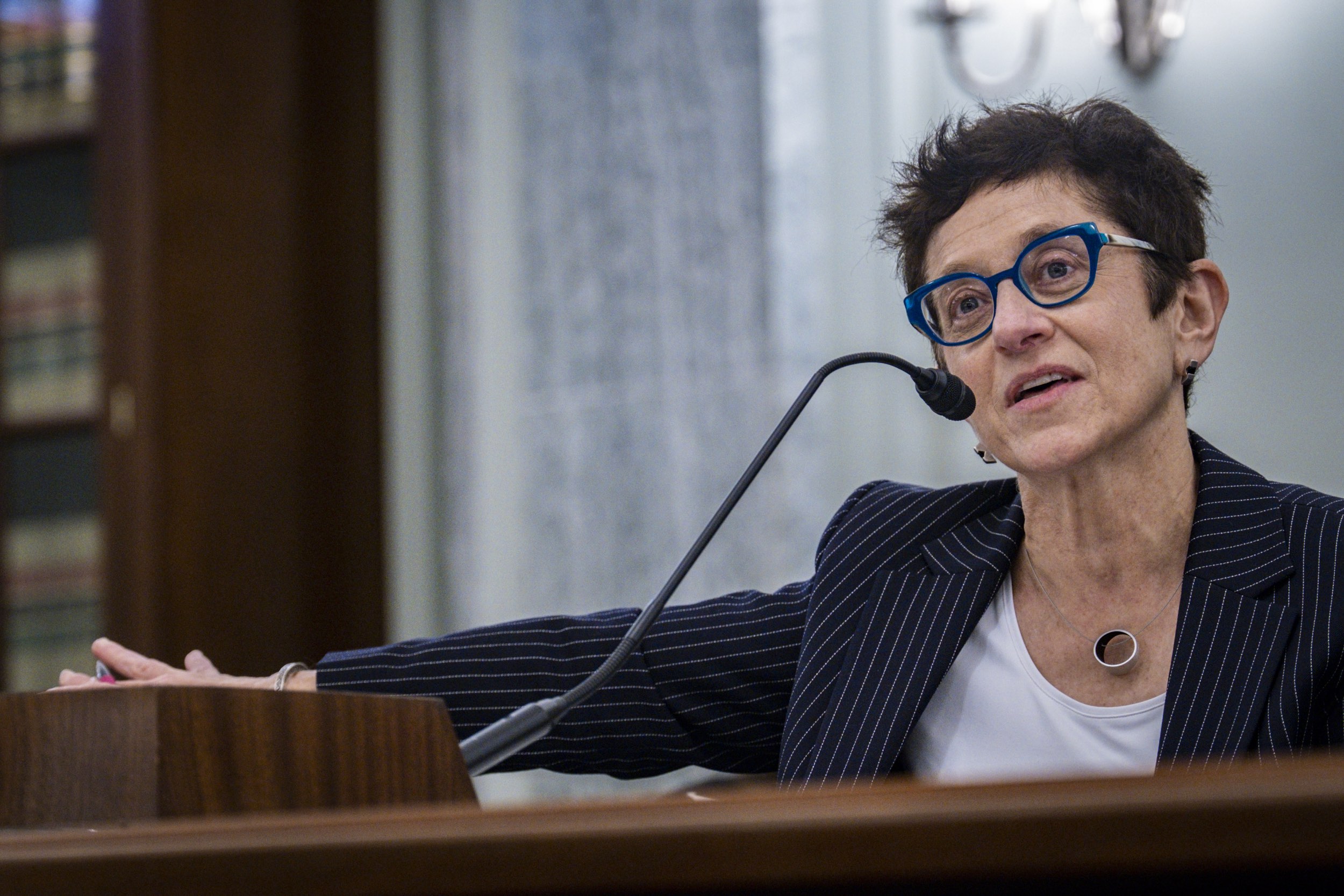
Gigi Sohn speaking into a microphone while seated during a Senate hearing.
Enlarge / Gigi Sohn testifies during a Senate Commerce Committee confirmation hearing on Feb. 9, 2022.
Getty Images

President Biden’s long-stalled nominee to the Federal Communications Commission fired back at her critics today, saying that the telecom industry shouldn’t be allowed to choose its own regulators.

“I believe deeply that regulated entities should not choose their regulator,” Sohn said in prepared testimony for a Senate Commerce Committee nomination hearing today. “Unfortunately, that is the exact intent of the past 15 months of false and misleading attacks on my record and my character. My industry opponents have hidden behind dark money groups and surrogates because they fear a pragmatic, pro-competition, pro-consumer policymaker who will support policies that will bring more, faster, and lower-priced broadband and new voices to your constituents.”

Biden first nominated Sohn, a longtime consumer advocate and former FCC official, on October 26, 2021. The full Senate never voted on whether to confirm Sohn as an FCC commissioner, and Biden renominated her last month. With the FCC deadlocked at two Democrats and two Republicans, Chairwoman Jessica Rosenworcel hasn’t been able to pursue any major regulation of an industry that was deregulated during the Trump era.

“The FCC has been without a majority for the entirety of the Biden administration—over two years—at a time when closing the digital divide is front and center,” Sohn’s testimony said. “There are too many important issues in front of the commission to lack a full complement of members, including improving the broadband maps, fixing the Universal Service Fund, closing the homework gap, ensuring fair access to broadband, and protecting consumers’ privacy. Americans deserve a full FCC where I could play a critical role in addressing every one of these, but time is of the essence.”

Nominee: FCC needs a consumer advocate

Sohn co-founded the consumer advocacy group Public Knowledge in 2001 and led the organization until taking a position as counselor for then-FCC Chairman Tom Wheeler in 2013. She has continued to argue for consumer-protection regulations since leaving the FCC in 2016.

“I believe it is critical for at least one member of the FCC to be a consumer advocate who has spent a career not beholden to any interest but that of the public,” Sohn’s testimony said. “I’ve certainly worked with industry toward common goals and many in industry are among the over 400 groups that support my confirmation, but my roots and my heart are with the everyday Americans the FCC by law is tasked to serve.”

Republicans such as Sen. Ted Cruz (R-Texas) lined up against Sohn in her previous nomination hearings, claiming she would use a post at the FCC to censor conservatives. Contradicting those criticisms, executives at conservative news networks Newsmax and One America News Network supported Sohn’s nomination and praised her longtime commitment to free speech.

The National Association of Broadcasters denounced Sohn for being a former board member at Locast, a nonprofit online TV service that shut down after losing a copyright case launched by major broadcast networks. Comcast apparently lobbied against Sohn behind the scenes despite not publicly opposing the nomination.

Sohn faced “homophobic and sexist fearmongering”

More recently, conservative media outlets attacked Sohn for being on the board of the Electronic Frontier Foundation because of the group’s battle against the Fight Online Sex Trafficking Act (FOSTA), which the EFF called unconstitutional censorship of speech on the Internet. A Daily Mail headline last month said, “Biden’s FCC nominee Gigi Sohn sits on board of nonprofit that wants to uphold online sex work and that honored an OnlyFans dominatrix who boasts about urinating on faces.” A Fox News headline described the EFF as a “group that opposes anti-sex trafficking efforts.”

Sohn, who is being joined by her wife and their daughter at today’s hearing, has been “met with homophobic tropes and attacks against herself and her family,” a recent letter from advocacy groups to senators said. “Homophobic and sexist fearmongering should have no place in the consideration of Gigi’s qualifications… We call upon every member of the Senate to condemn homophobia and sexism and consider Gigi’s nomination on its merits,” the letter said.

A spokesperson for the Senate Commerce Committee’s Democratic leadership said today, “We’ve seen a campaign of meritless smears and attacks against Gigi Sohn from opponents who clearly do not want to see a pro-competition, pro-consumer expert on the commission.”

For the cable and telecom industries, trying to block Sohn’s nomination is about avoiding consumer-protection regulations. “Ms. Sohn is one of the leading advocates for policies that amount to regulatory overreach in the broadband market,” the US Chamber of Commerce said in a letter to senators yesterday. The business group also called Sohn’s support of government-owned broadband networks “alarming.”

“It would be a mistake to embrace a public option for broadband instead of focusing on private sector providers who have helped the United States lead the world in quality and resilience,” the Chamber of Commerce said.

https://arstechnica.com/?p=1917564


Musk fired top engineer for explaining why his tweet views are down

Musk fired top engineer for explaining why his tweet views are down

Earlier this month, when Twitter CEO Elon Musk locked his Twitter account to personally test whether locked tweets generated more views than public tweets, many wondered why he didn’t just ask a Twitter engineer how the platform worked. A new report says Musk did meet with engineers—after his test—and that meeting led him to impulsively fire an engineer who attempted to provide an alternative explanation for why Musk’s tweet views might be declining.

The meeting took place on Tuesday, according to the tech newsletter Platformer. Bringing together engineers and advisers, Musk asked his team why his account, which has “more than 100 million followers,” would only be getting “tens of thousands of impressions.”

“This is ridiculous,” Musk said, according to multiple sources.

A principal engineer stepped forward to explain that the decline may be due to easily chartable waning public interest in Musk. To back up the engineer, Twitter employees provided internal data that corresponded with a Google Trends chart, Platformer reported.

They also shared the results of an investigation into Twitter’s algorithm, which found “no bias” against the CEO. None of this seemed to satisfy Musk, whose immediate response was to remove the employee who suggested that since Musk’s move to purchase Twitter last April, people have been increasingly uninterested in following all of Musk’s moves online.

“You’re fired,” Musk told the engineer, whom Platformer did not name due to concerns that the engineer could face online harassment.

Twitter did not respond to Ars’ request for comment.

Ongoing chaos for Twitter engineers

It’s hard to determine how many engineers are still employed at Twitter since Musk took over, but last month, CNBC reported that internal records showed that the platform employed just 550 full-time engineers. Musk took issue with CNBC’s reporting but did not directly dispute the reported number of full-time engineers.

One former engineer told CNBC that because the company’s code base is massive, “it requires knowledge of different platforms and programming languages to maintain different parts of Twitter.” That means skill sets are not necessarily transferrable between teams, the former engineer said, noting that Musk would struggle to quickly train engineers to take over responsibilities of all the abruptly dismissed engineers who had “so much institutional knowledge.” Reducing the staff so heavily would surely make it harder for the engineers left at Twitter to “maintain the service reliably while still building new features,” the engineer predicted.

https://arstechnica.com/?p=1916811


SpaceX says it blocked Ukraine from using Starlink with military drones

A Starlink antenna sitting on the ground, with patches of snow around it.
Enlarge / A Starlink terminal used by Ukrainian servicemen in Bakhmut on February 1, 2023.
Getty Images | Yasuyoshi Chiba

SpaceX took steps to prevent Ukraine’s military from using Starlink satellite Internet with drones because the service was never intended to be “weaponized,” SpaceX President and COO Gwynne Shotwell said at an FAA space transportation conference Wednesday.

“Using Starlink with drones went beyond the scope of an agreement SpaceX has with the Ukrainian government, Shotwell said, adding that the contract was intended for humanitarian purposes such as providing broadband Internet to hospitals, banks, and families affected by Russia’s invasion,” Reuters reported.

Shotwell said, “We were really pleased to be able to provide Ukraine connectivity and help them in their fight for freedom. It was never intended to be weaponized. However, Ukrainians have leveraged it in ways that were unintentional and not part of any agreement,” according to the Associated Press.

Starlink’s terms of service specifically address this, saying it is “not designed or intended for use with or in offensive or defensive weaponry or other comparable end-uses.” SpaceX knows “the military is using them for comms, and that’s OK,” Shotwell reportedly said. “But our intent was never to have them use it for offensive purposes.”

Shotwell declined to say exactly how SpaceX prevented Ukraine from using Starlink with drones. “There are things that we can do to limit their ability to do that… there are things that we can do and have done,” she said, according to Reuters.

Ukraine officials express anger, puzzlement

SpaceX came to Ukraine’s aid after Russia invaded the country in February 2022. Reports in March said Starlink broadband connections helped the Ukraine military’s elite drone unit target and destroy Russian tanks and other “priority targets.”

Shotwell’s comments expanded on a recent statement by SpaceX founder and CEO Elon Musk. In a tweet on January 31, Musk wrote that “SpaceX Starlink has become the connectivity backbone of Ukraine all the way up to the front lines… However, we are not allowing Starlink to be used for long-range drone strikes.” Musk’s comment came after a TV host on a Russian state-controlled channel called Musk “a war criminal.”

After Shotwell’s comments, a Ukraine official criticized SpaceX for restricting Starlink’s use by the military. Mykhailo Podolyak, adviser to President Volodymyr Zelenskyy, wrote in a tweet yesterday that companies are either on the side of Ukraine and “the right to freedom and don’t seek ways to do harm” or on the side of Russia “and its ‘right’ to kill and seize territories. SpaceX (Starlink) and Mrs. Shotwell should choose a specific option.”

One “Ukrainian military official called Shotwell’s statements ‘strange’ given the well-established fact of the country’s use of Starlink as a combat tool,” the AP wrote.

Starlink has been useful to Ukraine in multiple ways, Mykhailo Fedorov, Ukraine’s vice prime minister and minister of digital transformation, said in a statement quoted by news outlets. There are “no problems with the operation of Starlink uplink terminals in Ukraine,” and Musk is “one of the biggest private donors of our future victory,” he said.

“Starlinks help save thousands of lives daily,” Fedorov also said. “The energy infrastructure continues to work due to Starlinks. Doctors perform complex surgeries thanks to the connection that Starlinks provide.”

https://arstechnica.com/?p=1916835