FCC approves Amazon’s satellite broadband plan over SpaceX’s objections

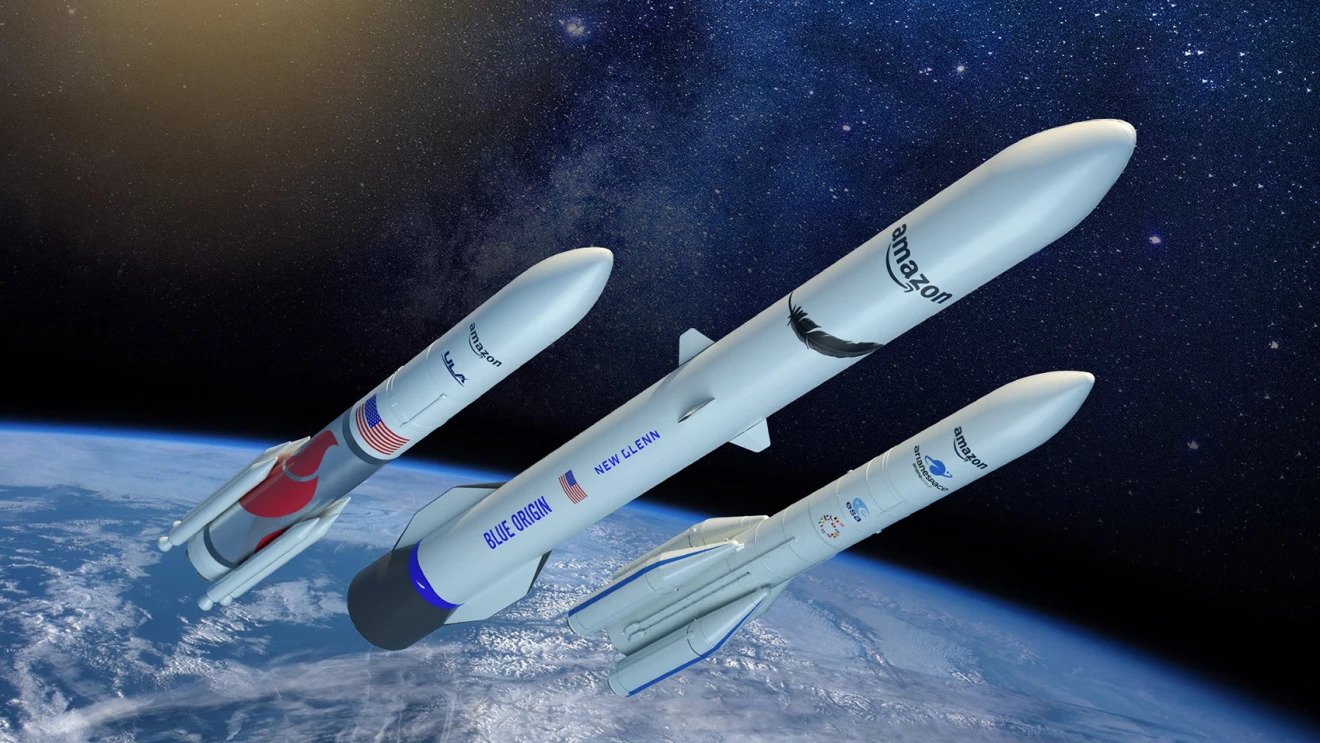
Illustration of rockets that Amazon will use to launch satellites.
Enlarge / Amazon will launch satellites using Arianespace, Blue Origin, and United Launch Alliance.

Amazon’s Kuiper division can start launching satellites to offer broadband service in the US, the Federal Communications Commission said yesterday.

The FCC’s International Bureau approved Kuiper’s orbital debris mitigation plan. This approval was needed to satisfy a condition imposed in 2020 when the Amazon subsidiary received tentative approval for a network of 3,236 satellites in low-Earth orbit.

“Our action will allow Kuiper to begin deployment of its constellation in order to bring high-speed broadband connectivity to customers around the world,” yesterday’s FCC order said.

Amazon’s satellite launch plans took shape in April 2022 when it announced deals for 83 launches over five years using Arianespace, Blue Origin, and United Launch Alliance. Amazon said the deals would let it deploy most of its 3,236 planned satellites. The company plans to deploy two prototype satellites early in 2023 on the upcoming launch of United Launch Alliance’s new Vulcan Centaur rocket.

When contacted by Ars, Amazon declined to say when it will start launching the production satellites that will allow it to offer broadband service to homes and businesses. In a statement on the FCC decision, Amazon said, “Our orbital debris mitigation plans demonstrate the Kuiper System is designed to meet or exceed all requirements set forth by the FCC. We are pleased that the Commission has granted our application and we appreciate the coordination to ensure the industry is prioritizing safety.”

The FCC said it found “Kuiper’s orbital debris mitigation plan to be sufficiently developed to support deployment of its NGSO [non-geostationary orbit] satellite system.”

SpaceX sought 578-satellite limit

Amazon’s biggest competitor for low-latency satellite broadband will be SpaceX’s Starlink service, but Amazon’s launch schedule puts it a few years behind SpaceX. The companies have fought each other in FCC proceedings, with Amazon objecting to SpaceX’s satellite plans and SpaceX filing objections to Amazon’s.

In approving Amazon’s plan yesterday, the FCC dismissed objections from other satellite providers such as SpaceX and Viasat. As the FCC order notes, SpaceX argued that the commission “should limit Kuiper to deploy only 578 satellites in its 630 kilometer orbital shell, and defer action regarding the remainder of the constellation,” in order to “address Kuiper’s ability to coexist with other systems in and around its 590 kilometer and 610 kilometer shells, and allow for ‘continued monitoring’ of deployment.”

A Space filing last month said, “Granting an initial 578 satellites of Amazon’s 3,236-satellite system would offer Amazon a path to begin deploying for ‘many months,’ while providing the Commission with time and additional data to assess the serious issues raised in this proceeding.”

The FCC concluded that SpaceX’s requested limit isn’t necessary:

To the extent that SpaceX is concerned with Kuiper demonstrating its ability to safely operate, the conditions adopted here are designed to address that point. We do not see a specific need to further limit Kuiper’s authorization. While SpaceX expresses concern over Kuiper’s ability to co-exist with other systems at certain altitudes, similar to Viasat, it does not specify a particular risk presented by the deployment of an identified planned system.

The FCC order said in a footnote, “In terms of numbers of satellites, we observe that SpaceX’s proposed second generation Starlink constellation, which has been authorized in part, is almost ten times as large as Kuiper’s planned system.” The FCC also said the requirements it imposed on the Kuiper and SpaceX constellations are similar.

FCC dismisses other objections

According to the FCC, SpaceX also argued “that Kuiper’s satellite disposal strategy will place the Kuiper satellites in an elliptical orbit that, because of the variable effects of atmospheric drag on orbit evolution, will result in large uncertainties in the predicted trajectories of the Kuiper satellites, making it difficult for other operators to assess and mitigate risk.” SpaceX contended that “the large covariances involved in the elliptical orbits may therefore pose a risk to SpaceX’s satellites operating at the same altitudes during their orbit raising phase of operations.”

However, Kuiper responded that it “will perform orbit determination using Global Positioning System (GPS) measurements on all Kuiper satellites during the deorbiting process and share high-accuracy location information with operators on a real-time basis.” The FCC accepted that plan and imposed it as a condition on the license.

SpaceX and Viasat both “raised concerns that Kuiper’s satellite designs are not sufficiently finalized to enable review,” but Amazon said the design is complete and that it doesn’t expect material changes, the FCC order said. Kuiper would have to apply for a license modification if it does make significant changes.

Starlink speeds have been dropping as it signs up more users, but it’s still a viable option for people without access to cable or fiber. SpaceX President and COO Gwynne Shotwell said yesterday that Starlink had its first “cash-flow positive quarter last year” and that the satellite division “will make money” in 2023, according to CNBC. For residential users, Starlink costs $110 a month plus a one-time hardware cost of $599.

https://arstechnica.com/?p=1916496


Twitter experiencing international outages; most users can’t tweet or DM

Twitter experiencing international outages; most users can’t tweet or DM

Late Wednesday afternoon, Twitter began experiencing international outages, with many users unable to perform basic functions like tweeting, sending direct messages, and following accounts. When Ars reporters attempted to tweet, an error message was generated saying that a daily limit of tweets had been reached, even from accounts that had not tweeted that day. According to Twitter, users typically have to tweet 2,400 times to reach the platform’s daily limit.

Independent Internet monitor NetBlocks tweeted that the outages impacted Twitter’s website, mobile app, and features like posting and retweeting and were “not related to country-level Internet disruptions or filtering.”

Twitter has no communications department to follow up to confirm if the apparent outage is due to a bug or recent product update, both possible causes reported by CNBC.

Some clever users discovered that they could still tweet by scheduling their posts, while some brands still appeared to be able to tweet. Other users immediately began reporting issues, according to the Internet tracking service Downdetector, which documented thousands of problems with the platform. One user reporting problems joked that the glitches were tied to Twitter’s mass layoffs, including many engineers, while others tweeted speculation that the features were possibly disabled because Twitter began updating its API ahead of the platform’s plan to cut off free access, starting Thursday. According to Fortune, Twitter’s internal Slack channels are “going crazy” trying to determine the source of the glitch, including considering whether there’s a data center outage.

Fortune reporter Kylie Robison tweeted that Twitter CEO Elon Musk emailed staff after the outage began, indicating that it could be a data center issue, while also saying, “Please pause for now on new feature development in favor of maximizing system stability and robustness.”

Earlier today, Musk tweeted to confirm that Twitter was looking into reported Twitter restrictions in Turkey, but so far, Musk has not tweeted about the global outage. Like many Twitter users, it’s possible that Musk simply does not have access to tweet an update right now.

https://arstechnica.com/?p=1916302


Creation of largest US lithium mine draws closer despite protest over land use

Aerial view of a dirt road leading up through The Thacker Pass Lithium mining area in the arid Nevada desert.
Enlarge / Aerial view of a dirt road leading up through The Thacker Pass Lithium mining area in the arid Nevada desert.

Construction will reportedly soon begin on a mine that’s expected to become the United States’ largest source of lithium. This mine is viewed as critical to Joe Biden’s $2 trillion clean energy plan by powering the nation’s increased production of electric vehicles.

On Monday, a US district judge denied the majority of legal challenges raised by environmentalists, ranchers, and indigenous tribes, upholding that the federal government’s decision to approve the Thacker Pass mine in 2020 was largely not made in error. However, chief judge Miranda Du did agree with one of the protesters’ claims, ordering the US Bureau of Land Management (BLM) to complete a fresh review to determine if Lithium Americas Corp has the right to deposit waste rock on 1,300 acres of public land that the mining project wants to use as a waste site.

Because this waste site may not contain valuable minerals, there’s a possibility that this land may not be validly claimed as a waste site under current US mining laws, Du wrote in the order. A mining law from 1872 requires that mining projects must validate all claims to public lands before gaining federal approval, and that means Lithium Americas must now provide evidence that valuable minerals have been found on the proposed Thacker Pass waste site to resume the project.

Although this review may set back the project’s major construction timeline by as much as six months, that doesn’t seem to be a big concern for Lithium Americas. Reuters reported that the company met with BLM today to begin the review. The company’s chief executive, Jon Evans, told Reuters that because lithium has previously been found throughout the project area, Lithium Americas considers Du’s order to conduct a review an “easy fix.”

Calling it a win for the mining project, Evans confirmed that preparations for the mine site would promptly begin, projecting that heavy construction would be underway by this summer.

In the order, Du rejected claims that the project could disturb wildlife, degrade air quality and groundwater sources, or overlook the cultural significance of Thacker Pass to local tribes, determining that BLM adequately weighed environmental and cultural impacts before approving the project.

Ars could not immediately reach BLM for comment. Lithium Americas linked Ars to a statement the company posted today, saying that it would be working closely with BLM to review the waste site and saw no reason to further delay construction.

“The favorable ruling by the Federal Court confirms the permitting process for Thacker Pass was conducted thoroughly and responsibly, and results in there being no impediment to commencing construction,” Lithium Americas wrote in the statement.

https://arstechnica.com/?p=1915705


Musk says he saved Twitter from bankruptcy, but it still has big money problems

Elon Musk's Twitter account displayed on a smartphone screen in a photo illustration.
Getty Images | NurPhoto

Elon Musk says Twitter has stabilized its finances after being close to bankruptcy, but the company still faces money problems and at least seven lawsuits alleging it stopped paying bills after Musk bought the social network. A new report says an attempt to boost Twitter Blue subscription revenue isn’t paying off much yet, and a plan to charge for API access has angered users and developers.

In a tweet on Sunday, Musk said he’s had an “extremely tough” three months because he “had to save Twitter from bankruptcy, while fulfilling essential Tesla & SpaceX duties… Wouldn’t wish that pain on anyone. Twitter still has challenges, but is now trending to breakeven if we keep at it. Public support is much appreciated!”

Musk had said on November 4, 2022, that Twitter was losing over $4 million a day. He reduced Twitter’s expenses by laying off half its staff, terminating thousands of contractors, and issuing an ultimatum that caused many employees to resign. After the cost-cutting spree, he reportedly said on a podcast in late December that “we’ve got the expenses reasonably under control, so the company’s not in the fast lane to bankruptcy anymore.”

One of Twitter’s problems is the $13 billion of debt Musk used to fund his takeover, which resulted in interest payments totaling $1.5 billion a year. Twitter made the first interest payment of about $300 million in late January to “a group of seven banks, led by Morgan Stanley, which became stuck with the debt after they were unable to sell it to outside investors,” Bloomberg wrote.

Though Twitter made the debt payment, Musk’s apparent cost-cutting strategy of not paying rent or invoices from vendors is detailed in a growing pile of lawsuits. The latest lawsuit was filed in a New York state court on Friday by Innisfree M&A, which said Twitter owes $1.9 million for “proxy solicitation services” related to the special meeting of shareholders that resulted in approval of Musk’s $54.20-per-share offer to buy the company.

Twitter Blue not a roaring success

Musk has tried to boost revenue by expanding the Twitter Blue subscription’s features and raising its price from $5 to $8 a month. But as of mid-January Twitter had just 180,000 paid subscribers in the US, less than 0.2 percent of monthly active users, The Information reported yesterday. Twitter’s worldwide subscriber total was about 290,000.

The upgraded subscription was first launched in early November and then relaunched on December 12. The first rollout was plagued by a wave of account impersonations that took advantage of Musk’s decision to make verification a paid feature.

Twitter Blue revenue could still grow significantly as the upgraded version hasn’t been available very long. But as of now Musk has “focused a lot of attention on a product with a relatively poor payoff, even as his erratic decisions as Twitter’s CEO have caused a drastic drop in advertising sales, which makes up the majority of the company’s revenue,” The Information wrote.

“All together, the global number of subscribers would equate to around $28 million in annual revenue—less than 1 percent of the $3 billion Musk has said Twitter aims to make in revenue this year,” the report said. Musk told Twitter employees in a November email that “we need roughly half of our revenue to be subscription.”

While individuals haven’t been flocking to Twitter Blue for $8 a month, Musk hopes businesses will be willing to pay much larger sums. One plan that hasn’t yet been finalized would require businesses to pay “$1,000 a month to keep their Gold verification badges, plus an extra $50 per month for each account affiliated with the business,” The Information report said.

https://arstechnica.com/?p=1915699


Getty sues Stability AI for copying 12M photos and imitating famous watermark

Getty sues Stability AI for copying 12M photos and imitating famous watermark

Getty Images is well-known for its extensive collection of millions of images, including its exclusive archive of historical images and its wider selection of stock images hosted on iStock. On Friday, Getty filed a second lawsuit against Stability AI Inc to prevent the unauthorized use and duplication of its stock images using artificial intelligence.

According to the company’s newest lawsuit filed in a US district court in Delaware, “Stability AI has copied more than 12 million photographs from Getty Images’ collection, along with the associated captions and metadata, without permission from or compensation to Getty Images, as part of its efforts to build a competing business.”

In this lawsuit, Getty alleged that Stability AI went so far as to remove Getty’s copyright management information, falsify its own copyright management information, and infringe upon Getty’s “famous trademarks” by duplicating Getty’s watermark on some images. Reuters reported Getty’s second lawsuit against Stability AI followed last month’s filing in the United Kingdom. On top of those lawsuits, Stability AI is also facing a class-action lawsuit from artists claiming that the company trained its Stable Diffusion model on billions of copyrighted artworks without compensating artists or asking for permission.

Stability AI did not immediately respond to Ars’ request for comment. Getty Images responded with a “no comment.”

Last month, Getty said in a statement that the company “believes artificial intelligence has the potential to stimulate creative endeavors,” but Stability AI has gone about potentially disrupting the company’s stock imagery business in the wrong way. Rather than paying Getty for licenses to train its Stable Diffusion model “in a manner that respects personal and intellectual property rights,” Getty said that “Stability AI did not seek any such license from Getty Images” and seemingly “chose to ignore viable licensing options and long‑standing legal protections in pursuit of their stand‑alone commercial interests.”

So far, it’s remained unclear what legal standing image rightsholders—whether it’s Getty or an individual artist—have over companies freely scraping images on websites to train AI systems like Stable Diffusion without consent. If the court sides with Getty, it could answer some of the legal questions that many artists have been asking since the controversy began. Notably, Stability AI has somewhat sympathized with artists protesting the technology, announcing a plan last month to let artists opt out of image training efforts.

Getty is in a slightly different position than artists, saying in its most recent complaint that it’s being targeted not just because of the superior quality of the images it hosts, but also because of all the detailed descriptions and metadata that Getty collects. A company like Stability AI can use that data to better respond to user prompts, basically using all of Getty’s input to unfairly compete with the image provider, the company alleges.

“Stability AI was well aware that the content it was scraping without permission from Getty Images’ websites was protected by copyright,” Getty’s complaint said.

Getty requested a jury trial “to bring an end to Stability AI’s blatantly infringing conduct and obtain redress for Stability AI’s callous disregard for its intellectual property rights.” The company is seeking damages, asking the court to compel “a full and complete accounting to Getty Images for Stability AI’s profits, gains, advantages, and the value of the business opportunities received from its infringing acts.”

https://arstechnica.com/?p=1915502


Twitter suspended 400K for child abuse content but only reported 8K to police

Twitter suspended 400K for child abuse content but only reported 8K to police
NurPhoto / Contributor | NurPhoto

Last week, Twitter Safety tweeted that the platform is now “moving faster than ever” to remove child sexual abuse materials (CSAM). It seems, however, that’s not entirely accurate. Child safety advocates told The New York Times that after Elon Musk took over, Twitter started taking twice as long to remove CSAM flagged by various organizations.

The platform has since improved and is now removing CSAM almost as fast as it was before Musk’s takeover—responding to reports in less than two days—The Times reported. But there still seem to be issues with its CSAM reporting system that continue to delay response times. In one concerning case, a Canadian organization spent a week notifying Twitter daily—as the illegal imagery of a victim younger than 10 spread unchecked—before Twitter finally removed the content.

“From our standpoint, every minute that that content’s up, it’s re-victimizing that child,” Gavin Portnoy, vice president of communications for the National Center for Missing and Exploited Children (NCMEC), told Ars. “That’s concerning to us.”

Twitter trust and safety chief Ella Irwin tweeted last week that combating CSAM is “incredibly hard,” but remains Twitter Safety’s “No. 1 priority.” Irwin told The Times that despite challenges, Twitter agrees with experts and is aware that much more can be done to proactively block exploitative materials. Experts told the Times that Twitter’s understaffing of its trust and safety team is a top concern, and sources confirmed that Twitter has stopped investing in partnerships and technology that were previously working to improve the platform’s effectiveness at rapidly removing CSAM.

“In no way are we patting ourselves on the back and saying, ‘Man, we’ve got this nailed,’” Irwin told The Times.

Twitter did not respond to Ars’ request for comment.

Red flags raised by Twitter’s low-budget CSAM strategy

Twitter Safety tweeted that in January, Twitter suspended approximately 404,000 accounts that created, distributed, or engaged with CSAM. This was 112 percent more account suspensions than the platform reported in November, Twitter said, backing up its claim that it has been moving “faster than ever.”

In the same tweet thread, Twitter promised that the company has been “building new defenses that proactively reduce the discoverability” of tweets spreading CSAM. The company did not provide much clarity on what these new defense measures included, only reporting a vague claim that one such new defense against child sexual exploitation (CSE) “reduced the number of successful searches for known CSE patterns by over 99% since December.”

Portnoy told Ars that NCMEC is concerned that what Twitter is publicly reporting doesn’t match what NCMEC sees in its own Twitter data from its cyber tipline.

“You’ve got Ella Irwin out there saying that they’re taking down more than ever, it’s priority number one, and what we’re seeing on our end, our data isn’t showing that,” Portnoy told Ars.

Other child safety organizations have raised some red flags over how Twitter has been handling CSAM in this same time period. Sources told the Times that Twitter has stopped paying for CSAM-detection software built by an anti-trafficking organization, Thorn, while also cutting off any continued collaboration on improving that software. Portnoy confirmed to Ars that NCMEC and Twitter remain seemingly divided by a disagreement over Twitter’s policy not to report to authorities all suspended accounts spreading CSAM.

Out of 404,000 suspensions in January, Twitter reported approximately 8,000 accounts. Irwin told the Times that Twitter is only obligated to report suspended accounts to authorities when the company has “high confidence that the person is knowingly transmitting” CSAM. Any accounts claiming to be selling or distributing CSAM off of Twitter—but not directly posting CSAM on Twitter—seemingly don’t meet Twitter’s threshold for reporting to authorities. Irwin confirmed that most Twitter account suspensions “involved accounts that engaged with the material or were claiming to sell or distribute it, rather than those that posted it,” the Times reported.

Portnoy said that the reality is that these account suspensions “very much do warrant cyber tips.”

“If we can get that information, we might be able to get the child out of harm’s way or give something actionable to law enforcement, and the fact that we’re not seeing that stuff is concerning,” Portnoy told Ars.

The Times wanted to test out how well Twitter was working to combat CSAM. So the organization created an automated computer program to detect CSAM without displaying any illegal imagery, partnering with the Canadian Center for Child Protection to cross-reference CSAM found with illegal content previously identified in the center’s database. The Canadian center’s executive director, Lianna McDonald, tweeted this morning to encourage more child safety groups to speak out against Twitter seemingly becoming a platform of choice for Internet users on the dark web openly discussing strategies for finding CSAM on Twitter.

“This reporting begs the question: Why is it that verified CSAM (i.e., images known to industry and police) can be uploaded and hosted on Twitter without being immediately detected by image or video blocking technology?” McDonald tweeted. “In addition to the issue of image and video detection, Twitter also has a problem with the way it is used by offenders to promote, in plain sight, links to CSAM on other websites.”

While Irwin seems confident that Twitter is “getting a lot better” at moderating CSAM, some experts told the Times that Twitter wasn’t even taking basic steps to prioritize child safety as the company claims it has been. Lloyd Richardson, the technology director at the Canadian center, which ran its own scan for CSAM on Twitter to complement the Times’ analysis, told the Times that “the volume we’re able to find with a minimal amount of effort is quite significant.”

https://arstechnica.com/?p=1915357


Proposals but no consensus on curbing water shortages in Colorado River basin

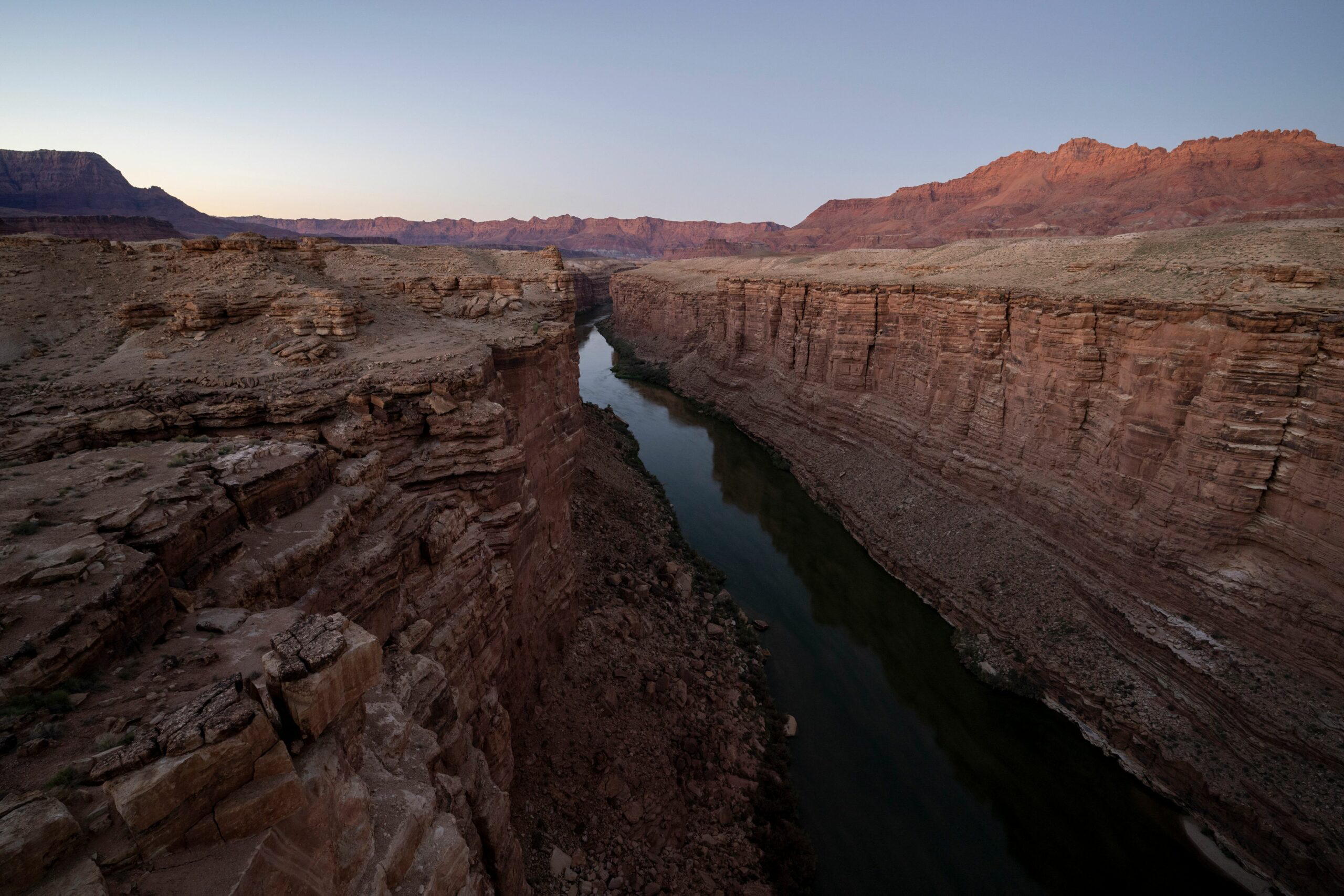
Marble Canyon in Arizona
Enlarge / A view of the Colorado River from the Navajo Bridge in Marble Canyon, Arizona on Aug. 31, 2022.
Robyn Beck/AFP via Getty Images

In 2007, the seven states that rely on the Colorado River for water reached an agreement on a plan to minimize the water shortages plaguing the basin. Drought had gripped the region since 1999 and could soon threaten Lake Powell and Lake Mead, the largest reservoirs in the nation.

Now, that future has come to pass and the states are again attempting to reach an agreement. The Colorado River faces a crisis brought on by more than 20 years of drought, decades of overallocation and the increasing challenge of climate change, and Lake Mead and Lake Powell, its largest reservoirs, have fallen so low that their ability to provide water and generate electricity in the Southwest is at risk. But reaching consensus on how to avoid that is proving to be more challenging than last time.

“The magnitude of the problem is so much bigger this time, and it’s also so much more immediate,” said Elizabeth Koebele, an associate professor of political science at the University of Nevada, Reno.

Monday night, six states in the Colorado River Basin submitted a plan to the Bureau of Reclamation, the federal agency in charge of the damming and distribution of water in the West, laying out a potential way to protect the major reservoirs of Lake Powell and Lake Mead from reaching critically low levels, which could result in the loss of electricity for millions of Americans in the Southwest and largely block the river’s water from reaching Arizona, California and Nevada.

But California, the state that uses the greatest amount of water and has the strongest rights to the river, didn’t join the others that submitted the proposal to the federal agency. Instead, the state proposed its own plan with less drastic cuts. That means that for the second time in less than a year, the seven states that rely on Colorado River Water—Arizona, California, Colorado, Nevada, New Mexico, Utah, and Wyoming—yet again failed to reach an agreement to cut back water usage.

“Unfortunately, despite numerous meetings and intensive good faith efforts, a seven-state consensus was not reached,” California wrote in its letter outlining its proposal.

In 2007, when the interim guidelines for shortages in the lower basin of the river were established, the Bureau of Reclamation pushed for the states to come up with a consensus agreement, Koebele said. They did that, which helped inform the guidelines. Without a consensus, she said, the current proposals don’t carry the same weight.

The issue then was seen as a short-term problem, said Kyle Roerink, executive director of the Great Basin Water Network, an organization focused on freshwater issues in Nevada and Utah. Now, he said, stakeholders realize the river has changed for the long run.

“Nobody wants to give up what they’ve got going for themselves in any part of the basin,” he said. “That’s why this is painful.”

The January 31 deadline, however, was not for states to come up with a final solution on how to deal with the ongoing drought along the Colorado River and the need to drastically scale back the amount of water the states use. Rather, the timing was set by the states themselves to provide a model for the Bureau of Reclamation to evaluate as a potential alternative to either no action being taken, or the federal agency deciding itself how to cut back water usage along the river over the next three years.

“There’s a little bit more wiggle room than we initially thought” for coming up with an agreement, Koebele said.

In November, Reclamation announced it would conduct a supplemental environmental review of the 2007 interim guidelines with an eye toward confronting the low water levels of the reservoirs in the future. The supplement would modify the operations of the Glen Canyon and Hoover dams to avoid reaching water levels so low they could interrupt power generation or cease supplying downstream users in the coming years. The states have been asked to come up with a plan to cut between 2 and 4 million acre feet from the amount they are currently using.

https://arstechnica.com/?p=1915001


US military shoots down Chinese balloon over coastal waters

Image of a hand holding a needle to a balloon.

On Saturday afternoon, US jets intercepted the Chinese surveillance balloon as it was leaving the continental US. Live footage of the event shows contrails of aircraft approaching the balloon, followed by a puff of smoke that may indicate the explosion of some ordnance near the balloon’s envelope—a reporter is heard saying “they just shot it” in the video embedded below. The envelope clearly loses structural integrity shortly afterwards as it plunges towards the ocean. Reportedly, the events took place near Myrtle Beach, South Carolina.

Shortly afterwards, the US Department of Defense (DOD) released a statement attributed to its Secretary, Lloyd J. Austin III, that confirmed the interception was performed by US fighter jets on the order of President Biden. The DOD identifies the hardware as a “high altitude surveillance balloon,” and says that the President authorized shooting it down as early as Wednesday. The military, however, determined that this could not be done without posing a risk to US citizens, either due to debris from the balloon itself, or from the ordnance used to destroy it.

As a result, the military waited until the balloon was far enough offshore to no longer pose a risk to land, but close enough that it would fall within US territorial waters, ensuring that the country would be the first to recover any hardware that survived the plunge into the sea. Secretary Austin also thanked Canada for its assistance in tracking and intercepting the balloon through the countries’ cooperative North American defense organization, NORAD.

It’s unclear how much intelligence value there will be in any hardware that survives the fall to the ocean from that altitude. Of course, it was also unclear whether there was any intelligence value in the balloon’s flight across the US in the first place.

https://arstechnica.com/?p=1915176


Musk beats fraud charges; jury rejects investor claims in “funding secured” case

Elon Musk wearing a suit and mask as he leaves a federal courthouse.
Enlarge / Elon Musk leaves court in San Francisco on Friday, February 3, 2023.
Getty Images | Bloomberg

Update at 6:15 pm ET: The jury sided with Elon Musk in a ruling issued about two hours after closing arguments on Friday.

“A jury rejected investor claims that Elon Musk violated federal securities law when he tweeted in 2018 about potentially taking Tesla private, handing a major win to the billionaire chief executive,” The Wall Street Journal reported. “The nine-person jury said the investors who brought the class-action case failed to prove that Mr. Musk hurt them by tweeting about a possible deal.”

Original story: The class-action trial over Elon Musk’s false “funding secured” tweets ended today with closing arguments. A nine-member federal jury now must decide whether Musk and Tesla should have to pay damages to investors who lost money after Musk falsely claimed in August 2018 that he had secured funding to take Tesla private.

“To Elon Musk, if he believes it—or even just thinks about it—then it’s true, no matter how objectively false or exaggerated it may be,” plaintiff’s attorney Nicholas Porritt said today. “Now it may work in his businesses—that’s not an issue for this trial. But it does not work in the securities markets, for public companies. The securities markets have rules governing what you can and cannot say, and one of those basic rules is that what you say must be true and accurate.”

Musk lawyer Alex Spiro blamed investors for their losses today, accusing them of “gambling and looking for lawsuits as insurance.”

Judge Edward Chen already ruled that Musk’s tweets were false “and that Mr. Musk recklessly made those representations.” The first false statement was that he had secured funding to take Tesla private for $420 per share. The second statement ruled false came in Musk’s follow-up tweet that said, “Investor support is confirmed. Only reason why this is not certain is that it’s contingent on a shareholder vote.”

Chen’s written instructions to the jury said they must assume these statements were “untrue” and that “Mr. Musk acted with reckless disregard for whether the statements were true.” But the jury “must still decide whether he knew that the statements were untrue,” and whether the false statements were material facts to investors.

That pre-trial ruling on one of the lawsuit’s key questions led some experts to say Musk is likely to lose the case.

Musk blamed for investors losing $12 billion

This screenshot from page 5 of the jury form will probably make you feel sorry for the jury members.
Enlarge / This screenshot from page 5 of the jury form will probably make you feel sorry for the jury members.

Once the truth came out that Musk hadn’t secured any funding for a going-private transaction, and Musk abandoned the idea because investors didn’t support it, “Tesla stock prices crashed and investors lost $12 billion in damages,” Porritt said. (That was the number offered by a plaintiff’s expert witness during the trial.)

Musk argued on the witness stand that he believed funding was secured from the Saudi Arabia government’s Public Investment Fund (PIF) even though he didn’t have a signed deal.

Spiro acknowledged in closing arguments today that “funding secured” was “technically inaccurate” but that the statement wasn’t really important to investors. “This whole case is built on bad word choice,” he said.

Deliberations could be complex for the jury in US District Court for the Northern District of California, particularly if they side with plaintiffs. If jurors find Musk is liable, they have to determine the “amount of artificial inflation” on Tesla stock proved by plaintiffs on each day from August 7 to August 17, 2018.

The jury also has to decide on any potential liability for members of the Tesla board of directors, including Musk’s brother, Kimbal Musk. If both Musk and Tesla directors are found liable, the jury must decide on “each Defendant’s share of responsibility for Plaintiff’s losses” with the total adding up to 100 percent.

You can read the full 10-page verdict form at this link. The jury was selected on January 17 and opening arguments were the next day.

Musk defense: Funding was no problem

Plaintiffs portrayed Musk as a “rich liar” and “fire-breathing dragon,” Spiro said. “They’re trying to condition you and distract you. ‘Bad tweet, bad tweet, fraud tweet.’ Just because it’s a bad tweet doesn’t make it fraud,” he said.

Defending Musk’s tweets, Spiro said that “‘funding secured’ was just this concept that some party had money and expressed interest, and that was indisputably true.” Spiro said funding “had never been a problem” in previous deals because “investors clamored for the opportunity to invest with Elon Musk. And, of course, he had his own wealth to finance a going-private [transaction].”

The going-private proposal wasn’t halted because of a lack of funding, Spiro said. Musk stopped pursuing the idea after it became clear “that the shareholders wanted to stay public,” Spiro said.

Musk’s “funding secured” tweet said in full, “Am considering taking Tesla private at $420. Funding secured.” Spiro argued that the “am considering” part of the tweet was more important and that “every reasonable investor was waiting for more information.”

https://arstechnica.com/?p=1915085


Former Trump official led feds to Telegram group livestreaming child abuse

Former Trump official led feds to Telegram group livestreaming child abuse

New details have been revealed through recently unsealed Cook County court documents, showing how federal investigators in 2020 gained access to encrypted Telegram messages to uncover “a cross-country network of people sexually exploiting children.”

The Chicago Sun-Times reported that Homeland Security Investigations (HSI) agents based in Arizona launched “Operation Swipe Left” in 2020 to investigate claims of kidnapping, livestreaming child abuse, and production and distribution of child sexual abuse materials (CSAM). That investigation led to criminal charges filed against at least 17 people. The majority of defendants were living in Arizona, but others charged were residents of Illinois, Wisconsin, Washington, DC, California, and South Africa. Ten children were rescued, including four children actively suffering abuse at the time of the rescue. The youngest victim identified was 6 months old, and the oldest was 17 years old.

Telegram became a preferred tool for defendants in this investigation, many of whom believed that police could never access their encrypted messages. At least one federal prosecutor told a judge that authorities never would have gained access; however, one of the defendants, Adam Hageman, “fully cooperated” with investigators and granted access through his account to offending Telegram groups.

Hageman is one of two defendants with ties to the Republican Party, the Sun-Times and other outlets have reported, while other defendants include a youth soccer coach, a grocery store employee, an amusement park employee, and a police officer’s son.

Hageman was a former Turning Point USA employee, appointed by the Trump administration to work for the US Department of Commerce. In 2020, he was arrested and pled guilty to receiving CSAM. After his arrest, Hageman agreed to grant federal investigators access to his group chats on Telegram, leading to charges filed against 12 others.

Hageman has since been sentenced to five and half years in prison for “receipt of child pornography.” Hageman’s attorney, Christopher Macchiaroli, told the Sun-Times that Hageman “immediately accepted responsibility” for making a “terrible mistake” and “is paying the consequences for it.” The Sun-Times reported that other defendants received “significant prison time.” One defendant, Michael William Spatz of Tempe, Arizona, seemingly received the largest sentence of any defendant that HSI has uncovered so far, sentenced to 30 years in prison for sex crimes.

Authorities such as the Federal Bureau of Investigation, in recent times, have controversially sought ways to get around encryption, a privacy concern that the American Civil Liberties Union has previously reported on. For Operation Swipe Left, authorities did not need so-called “backdoors” to access encrypted chats, instead relying on Hageman’s cooperation to access additional evidence and trigger more arrests.

Telegram’s policy explains how the platform resists some law enforcement requests for data. A Telegram spokesperson did not directly comment on Operation Swipe Left, instead providing Ars with a statement, saying that Telegram moderators partly depend on user reports to stop the spread of CSAM on the platform.

“Telegram uses a combination of proactive moderation of publicly visible content and user reports to combat such harmful content in private spaces,” Telegram’s spokesperson told Ars. “Every incoming report is carefully examined by moderators within an average of two hours and such content is taken down.”

The Sun-Times reported that defendants were skilled at hiding their illegal activity on the app for months, and thus it seems unlikely that Telegram would receive a user report in this case.

An HSI spokesperson verified the accuracy of all statements that the agency made to Sun-Times for Ars. The spokesperson could not immediately confirm how rare it is for HSI to gain access to encrypted Telegram messages. A search on HSI’s site confirms that in 2020, at least one other arrest was made when Australian authorities gained access to a Utah man’s Telegram account and found he had been exchanging CSAM on the platform.

https://arstechnica.com/?p=1914958