Trump tries to get back on Facebook, claims ban is electoral “interference”

Police hold back a large group of Trump supporters on the day of the attack on the US Capitol.
Enlarge / Police hold back Trump supporters outside the US Capitol’s Rotunda on January 6, 2021.
Getty Images | Olivier Douliery/AFP

Former US President Donald Trump yesterday petitioned Facebook owner Meta to restore his account, two years after he was banned for egging on his supporters as they attacked the US Capitol. “We believe that the ban on President Trump’s account on Facebook has dramatically distorted and inhibited the public discourse,” Trump’s campaign wrote in a letter to Meta Tuesday, according to NBC News.

The Trump team’s letter also reportedly said that a continuation of the ban would constitute a “deliberate effort by a private company to silence Mr. Trump’s political voice… every day that President Trump’s political voice remains silenced furthers an inappropriate interference in the American political and election process.” The letter was sent to Meta CEO Mark Zuckerberg, Meta VP of Global Affairs Nick Clegg, and Facebook VP of Public Policy Joel Kaplan.

Twitter already reversed its ban on Trump shortly after Elon Musk bought the company. Trump hasn’t tweeted yet. He formed his own social network, Truth Social, after being banned from Facebook and Twitter.

In its petition to Meta, “Trump’s campaign didn’t threaten a lawsuit, as some sources close to Trump thought he would,” NBC News wrote. “It instead talked about the importance of free speech and petitioned Meta for a ‘meeting to discuss President Trump’s prompt reinstatement to the platform.'”

Trump team ready for a fight

A Trump adviser told NBC News that the campaign is “prepared to engage with House Republicans who control the lower chamber of Congress to advocate on Trump’s behalf and pressure Meta.”

“If Facebook wants to have this fight, fine, but the House is leverage, and keeping Trump off Facebook just looks political,” the adviser said.

We contacted Meta and will update this article if we get a response. According to NBC News, “A Meta spokesperson declined to comment about Trump beyond saying the company ‘will announce a decision in the coming weeks in line with the process we laid out.'”

When Facebook and Instagram blocked Trump’s accounts and removed some of his posts, Zuckerberg criticized Trump for using his platform “to condone rather than condemn the actions of his supporters at the Capitol building” and “to incite violent insurrection against a democratically elected government.” Trump has baselessly claimed that the election he lost to Joe Biden was stolen.

Meta “will look to experts” on Trump decision

Facebook’s ban on Trump was initially set for at least two weeks and was later extended until at least January 7, 2023. “At the end of this period, we will look to experts to assess whether the risk to public safety has receded,” Facebook VP of Global Affairs Nick Clegg wrote at the time. “We will evaluate external factors, including instances of violence, restrictions on peaceful assembly and other markers of civil unrest. If we determine that there is still a serious risk to public safety, we will extend the restriction for a set period of time and continue to re-evaluate until that risk has receded.”

“When the suspension is eventually lifted, there will be a strict set of rapidly escalating sanctions that will be triggered if Mr. Trump commits further violations in future, up to and including permanent removal of his pages and accounts,” Clegg further wrote.

US Rep. Adam Schiff (D-Calif.) and Sen. Sheldon Whitehouse (D-R.I.) last month wrote a letter urging Meta to keep Trump off Facebook, stating:

Trump has continued to post harmful election content on Truth Social that would likely violate Facebook’s policies, and we have every reason to believe he would bring similar conspiratorial rhetoric back to Facebook, if given the chance. On Election Day this year, Trump perpetrated false election narratives, including unfounded claims that, “The Absentee Ballot situation in Detroit is REALLY BAD…Protest, Protest, Protest!” Similarly, he posted that, “Maricopa County in Arizona looks like a complete Voter Integrity DISASTER. Likewise Detroit (of course!), Pennsylvania, and other places. Not being covered by Fake News Media!” A later post claimed, “Arizona even said ‘by the end of the week!’ – They want more time to cheat! Kari Lake MUST win!”

“For Meta to credibly maintain a legitimate election integrity policy, it is essential that your company maintain its platform ban on former president Trump,” Schiff and Whitehouse wrote.

As for whether Trump will use his newly restored Twitter account, NBC News quoted an anonymous Republican who said it is likely. “‘Trump is probably coming back to Twitter. It’s just a question of how and when,’ said a Republican who spoke on condition of anonymity to discuss private conversations with Trump about returning to the platform,” according to NBC News. “‘He’s been talking about it for weeks, but Trump speaks for Trump, so it’s anyone’s guess what he’ll do or say or when.'”

https://arstechnica.com/?p=1910774


RNC loses complaint claiming Gmail spam filter is biased against Republicans

A woman sits at a desk in front of a computer but her head is hidden because she is covered by a massive pile of envelopes labeled
Getty Images

The Federal Election Commission (FEC) has rejected a Republican National Committee (RNC) complaint claiming that Google violated US law by using Gmail’s spam filter on Republican campaign emails. Republicans had claimed Gmail’s spam filtering amounted to “illegal in-kind contributions made by Google to Biden For President and other Democrat candidates.”

But an FEC decision last week, which Google provided to Ars today, said the commission found “no reason to believe” that Google made prohibited in-kind corporate contributions. The FEC, an independent agency of the US government, also found no evidence that the Biden for President campaign committee knowingly accepted illegal in-kind contributions in the form of spam filtering preference.

The FEC told Google in a letter that it has “closed its file in this matter” and that documents related to the case will be placed on the public record within 30 days.

“The Commission’s bipartisan decision to dismiss this complaint reaffirms that Gmail does not filter emails for political purposes,” Google said in a statement. “We’ll continue to invest in our Gmail industry-leading spam filters because, as the FEC notes, they’re important to protecting people’s inboxes from receiving unwanted, unsolicited, or dangerous messages.”

FEC: Study cited by Republicans doesn’t prove bias

Republicans made their case in a joint complaint filed in April by the RNC, National Republican Senatorial Committee (NRSC), and National Republican Congressional Committee (NRCC). “By overwhelmingly and disproportionately suppressing emails from Republican candidates, including President Trump and others, Google used its corporate resources to provide a massive service to their Democrat opponents by denying Republican candidates the same ability to communicate with voters,” the complaint said.

The RNC complaint cited a North Carolina State University study that found “Gmail marks a significantly higher percentage (67.6 percent) of emails from the right as spam compared to the emails from left (just 8.2 percent).”

But the FEC decision said that “the NCSU Study does not make any findings as to the reasons why Google’s spam filter appears to treat Republican and Democratic campaign emails differently.” The FEC also described several limitations in the study:

First, the NCSU Study observed a limited time period, and the authors note that they “cannot make inferences about the behaviors of the SFAs [spam filtering algorithms] in general. Second, a number of variables were outside the NCSU Study’s control, including how many emails the individual campaigns sent; how long the campaigns had been active; and how many users outside of the study group had marked a specific email as spam. Thus, the study authors conclude, they “cannot determine the extent to which these factors influence spam percentages.” Finally, the authors note that their study selected for particular variables, and that other variables may have other effects not shown in the NCSU Study. They state that “we have no reason to believe that there were deliberate attempts from these email services to create these biases to influence the voters.”

The FEC decision noted that Google’s response “contends that the NCSU Study was small, analyzing only 34 recipient email addresses when Gmail has 1.5 billion users, and over ‘a mere 153 days, 27 of which were post-election.'” Google also responded that “only four Gmail accounts were included in each of the Read, Spam, and Inbox Groups,” that “the emails sent by Republican and Democratic campaigns were not identical, and that there are multiple factors that impact the action of Google’s SFA that were outside the authors’ control,” the FEC said.

https://arstechnica.com/?p=1910536


UK lawmakers vote to jail tech execs who fail to protect kids online

UK lawmakers vote to jail tech execs who fail to protect kids online

The United Kingdom wants to become the safest place for children to grow up online. Many UK lawmakers have argued that the only way to guarantee that future is to criminalize tech leaders whose platforms knowingly fail to protect children. Today, the UK House of Commons reached a deal to appease those lawmakers, Reuters reports, with Prime Minister Rishi Sunak’s government agreeing to modify the Online Safety Bill to ensure its passage. It now appears that tech company executives found to be “deliberately” exposing children to harmful content could soon risk steep fines and jail time of up to two years.

The agreement was reached during the safety bill’s remaining stages before a vote in the House of Commons. Next, it will move on to review by the House of Lords, where the BBC reports it will “face a lengthy journey.” Sunak says he will revise the bill to include new terms before it reaches the House of Lords, where lawmakers will have additional opportunities to revise the wording.

Reports say that tech executives responsible for platforms hosting user-generated content would only be liable if they fail to take “proportionate measures” to prevent exposing children to harmful content, such as materials featuring child sexual abuse, child abuse, eating disorders, and self-harm. Some measures that tech companies can take to avoid jail time and fines of up to 10 percent of a company’s global revenue include adding age verification, providing parental controls, and policing content.

If passed, the Online Safety Bill would make managers liable for holding tech companies to their own community guidelines, including content and age restrictions. If a breach of online safety duties is discovered, UK media regulator Ofcom would be responsible for prosecuting tech leaders who fail to respond to enforcement notices. Anyone found to be acting in good faith to police content and protect kids reportedly won’t be prosecuted.

Ars could not immediately reach any major tech company for comment on the House of Commons deal, but Reuters reported that executives based in the United States have been closely monitoring updates to the Online Safety Bill.

UK Culture Secretary Michelle Donelan said in a statement that this amendment would prevent senior managers at tech companies from ignoring otherwise enforceable requirements of the Online Safety Bill, giving Ofcom “additional teeth to deliver change and ensure that people are held to account if they fail to properly protect children.”

Last month, Donelan wrote a letter to parents explaining why she was advocating for criminal penalties for any tech leaders who “consent or connive” to skirt Online Safety Bill requirements.

“The onus for keeping young people safe online will sit squarely on the tech companies’ shoulders,” Donelan wrote. “You or your child will not have to change any settings or apply any filters to shield them from harmful content. Social media companies and their executives in Silicon Valley will have to build these protections into their platforms—and if they fail in their responsibilities, they will face severe legal consequences.”

https://arstechnica.com/?p=1910506


With $1.5 billion bill due at month-end, Elon Musk’s options aren’t great

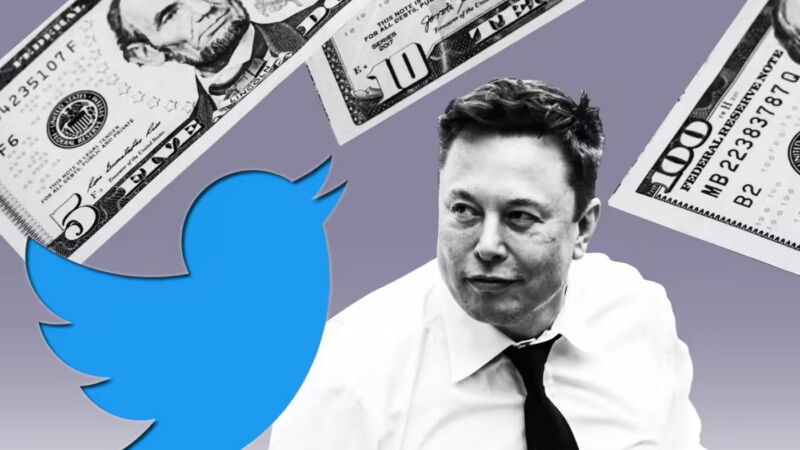
picture of elon musk, twitter logo, and money
Enlarge / Elon Musk’s personal equity investment in Twitter of about $26bn would be effectively wiped out in the event of a bankruptcy.
FT Montage/Bloomberg

The bill for Elon Musk’s purchase of Twitter is coming due, with the billionaire facing unpalatable options on the company’s enormous debt pile, ranging from bankruptcy proceedings to another costly sale of Tesla shares.

Three people close to the entrepreneur’s buyout of Twitter said the first installment of interest payments related to $13 billion of debt he used to fund the takeover could be due as soon as the end of January. That debt means the company must pay about $1.5 billion in annual interest payments.

The Tesla and SpaceX chief financed his $44 billion deal to take Twitter private in October by securing the huge debt from a syndicate of banks led by Morgan Stanley, Bank of America, Barclays, and Mitsubishi. The $13 billion debt is held by Twitter at a corporate level, with no personal guarantee by Musk.

Since the takeover, Musk has raced to cut costs, such as firing half the company’s staff, while seeking new revenue streams, such as launching its Twitter Blue subscription service.

The company’s dire finances—it made a loss of $221 million in 2021 before the acquisition and Musk has said revenues have declined since—have led the new owner to regularly raise the prospect that the company could crash into bankruptcy.

How Musk deals with the looming interest payment is a crucial test of his leadership of Twitter, which has so far been marked by chaotic management that has alienated its corporate advertisers.

“This company is like you’re in a plane that is headed towards the ground at high speed with the engines on fire and the controls don’t work,” Musk said last month.

If Twitter did not make its first interest payment, it would join a small but notorious club of companies dubbed “NCAA” by debt traders—short for “no coupon at all”—that includes US car rental company Hertz and German payments group Wirecard.

Financial Times

Such a default on its debt would probably result in Twitter’s management filing for bankruptcy, at which point the US courts would begin an expensive and bureaucratic debt restructuring process.

Musk could avoid this fate by settling the interest from Twitter’s dwindling cash reserves or selling more equity in the company to fund the payments—both painful options. The business has a cash position of about $1 billion, Musk has said. He has also warned that its net cash outflow could be about $6 billion next year without additional cost-saving measures.

Rising interest rates mean the debt will become more and more expensive, at the same time as Twitter’s enterprise value has been damaged.

https://arstechnica.com/?p=1910459


Reports: Twitter’s sudden third-party client lockouts were intentional

Person in full-size bird costume reads a book in a chair while a human looking distressed is locked in a human-sized bird cage.
Enlarge / Twitter is blocking many third-party clients’ access to its API while continuing to provide no explanation.
Ryan J Lane/Getty Images

Twitter has not yet explained why third-party clients like Twitterific and Tweetbot stopped working late last week. But a new report and testing by one app developer suggest the outages and lack of communication are intentional.

Internal Twitter Slack chat messages viewed by The Information (subscription required) show a senior software engineer writing in a “command center” channel that “third-party app suspensions are intentional.” Another employee, asking about talking points to use when addressing the outages with product partners, was told by a product marketing manager that Twitter had “started to work on comms,” but there was no delivery date, according to The Information’s report.

Some Tweetbot users seemed to briefly regain account access early Sunday, without the ability to post, only to lose access again later. That resulted from Tweetbot co-creator Paul Haddad swapping out the app’s API keys, but all of his keys were later revoked. That result “proves that this was intentional and we and others were specifically targeted,” Haddad wrote on Mastodon Sunday evening, as noticed by The Verge.

“I wouldn’t have swapped out the keys in the first place if there was even a shred of communication,” Haddad wrote.  “Figured if nothing else, this would push the issue. Oh well, on to smaller but greener pastures.”

Neither Twitter nor owner Elon Musk has mentioned the failure of third-party clients to connect. Twitter’s status page early Monday said that all systems were operational, with no past incidents listed as far back as January 2. “Enterprise” clients, such as business-minded apps that monitor Twitter engagement and track topics, appear to be functioning, as do some versions of third-party clients, like Twitterific for Mac.

Twitter has long kept third-party clients, which allow users and small teams to customize how they view, track, and engage with tweets, at arm’s length. Prior to Musk’s ownership, Twitter asked developers not to make them, restricted its API, and took away push notifications and auto-refresh for the clients.

Musk’s ownership, which commenced with large-scale layoffs and has consistently seen the company rapidly changing policy and making its intent hard to decipher, led some industry watchers and tech pundits to wonder if the third-party API shutdown was simply an infrastructure failure that the company couldn’t quickly fix.

But a more likely explanation involves ad revenue. By way of explaining his deep cuts across the company, Musk said in mid-December that Twitter was on track for a “negative cash flow of $3 billion.” The cash crunch largely seems due to the $1.5 billion debt servicing needed for Musk’s takeover debt, as well as drastically declining advertising revenue since his takeover. Twitter has been sued multiple times by landlords for lapsed rent.

Twitter recently changed its iOS app to default to a tab showing an algorithm-based “For You” feed, requiring users to regularly tap over to view a more reverse-chronological “Following” feed. Third-party clients have traditionally offered far more control over how users can sort their feeds—and, most notably, they don’t show Twitter’s “promoted” tweet advertising. The company has recently offered deeply incentivized advertising packages following drastic downturns in its ad sales.

We could not contact Twitter for comment, as its public relations and communications departments reportedly no longer exist. Musk’s latest tweet, just after midnight ET on January 16, is a lightly coded swipe at media as being quietly state-run.

https://arstechnica.com/?p=1910176


Musk wins legal battle to force laid-off Twitter employees into arbitration

Musk wins legal battle to force laid-off Twitter employees into arbitration

The weekend delivered some disappointing news for laid-off Twitter employees who launched a class-action lawsuit in November against the social media platform immediately after CEO Elon Musk kicked off the first round of layoffs at the company. On Friday, a US district judge ruled that five plaintiffs who proposed the class action would instead have to enter individual arbitration to pursue their claims that Twitter violated employment laws.

This doesn’t mean the class-action lawsuit has completely fallen apart, though. US District Judge James Donato wrote in his order that while these five employees waived their right to sue by signing optional arbitration agreements under Twitter’s prior owner, three other plaintiffs later added to the lawsuit said they opted out. Those employees still have the right to pursue the proposed class action, which alleges sex and disability discrimination during layoffs and argues that Twitter still owes proper severance payments and lost wages.

“After Twitter filed its motion, plaintiffs amended their complaint to add three named plaintiffs who say that they opted out of Twitter’s arbitration agreement,” Donato wrote.

The five ex-employees dropped from the class-action suit had tried to argue that Twitter’s arbitration agreements were unreasonable, or in legal terms, “unconscionable.” But Donato wrote that the former employees failed to prove this claim, as “Twitter provided signed copies of the agreements, and they are all clear and straightforward.” The agreements specified that the question of their “enforceability and validity” could only be resolved by an arbitrator.

Twitter could not immediately be reached for comment.

Shannon Liss-Riordan, the lawyer representing the plaintiffs in individual arbitration and the ongoing class action, said last week in a press release that her firm had already filed 300 demands for arbitration on behalf of ex-Twitter employees.

Ars could not immediately reach Liss-Riordan for comment on what comes next in the class-action suit, but Donato wrote that the plaintiffs’ complaint “will be taken up later as warranted by developments in the case.”

According to Liss-Riordan’s press release, her firm has filed four class-action suits in total against Twitter and expects to continue filing many more arbitration demands—all of which, she says, could become costly for Twitter to defend against. Her firm has previously helped ex-employees recover millions through arbitration, and she’s not the only one fighting back after Twitter layoffs. Another lawyer, Lisa Bloom, is representing other former employees pursuing arbitration demands, and Reuters reported that Twitter also faces at least three complaints filed with the US labor board.

“Musk’s decision to fleece Twitter workers isn’t just shameful—it’s also going to be very costly,” Liss-Riordan said in her press release. “These claims will be extraordinarily expensive and time-consuming for Twitter to defend. Insisting that workers file claims one by one has backfired for many companies our firm has taken on. These companies think they can make employees just go away and not assert their rights by using arbitration clauses, but we have made them sorry about what they wished for.”

https://arstechnica.com/?p=1910200


Google to SCOTUS: Liability for promoting terrorist videos will ruin the Internet

Google to SCOTUS: Liability for promoting terrorist videos will ruin the Internet

For years, YouTube has been accused of enabling terrorist recruitment. This allegedly happens when a user clicks on a terrorist video hosted on the platform, then spirals down a rabbit hole of extremist content automatically queued “up next” through YouTube’s recommendation engine. In 2016, the family of Nohemi Gonzalez—who was killed in a 2015 Paris terrorist attack after extremists allegedly relied on YouTube for recruitment—sued YouTube owner Google, forcing courts to consider YouTube’s alleged role in aiding and abetting terrorists. Google has been defending YouTube ever since. Then, last year, the Supreme Court agreed to hear the case.

Now, the Gonzalez family is hoping that the high court will agree that Section 230 protections designed to shield websites from liabilities for hosting third-party content shouldn’t be extended to also protect platforms’ right to recommend harmful content.

Google thinks that’s exactly how the liability shield should work, though. Yesterday, in a court filing, Google argued that Section 230 protects YouTube’s recommendation engine as a legitimate tool “meant to facilitate the communication and content of others.”

“Section 230 includes sorting content via algorithms by defining ‘interactive computer service’ to include ‘tools’ that ‘pick, choose,’ ‘filter,’ ‘search, subset, organize,’ or ‘reorganize’ content,” Google argued. “Congress intended to provide protection for these functions, not for simply hosting third-party content.”

Google claimed that denying that Section 230 protections apply to YouTube’s recommendation engine would remove shields protecting all websites using algorithms to sort and surface relevant content—from search engines to online shopping websites. This, Google warned, would trigger “devastating spillover effects” that would devolve the Internet “into a disorganized mess and a litigation minefield”—which is exactly what Section 230 was designed to prevent.

It seems that in Google’s view, a ruling against Google would transform the Internet into a dystopia where all websites and even individual users could potentially be sued for sharing links to content deemed offensive. In a statement, Google general counsel Halimah DeLaine Prado said that such liability would lead some bigger websites to overly censor content out of extreme caution, while websites with fewer resources would probably go the other direction and censor nothing.

“A decision undermining Section 230 would make websites either remove potentially controversial material or shut their eyes to objectionable content to avoid knowledge of it,” DeLaine Prado said. “You would be left with a forced choice between overly curated mainstream sites or fringe sites flooded with objectionable content.”

The Supreme Court will begin hearing oral arguments in this case on February 21.

Google has asked the court to affirm the 9th Circuit of Appeals judgment, which found that Section 230 indeed shields YouTube’s recommendation engine. The Gonzalez family seeks a ruling that Section 230 immunity does not directly cover YouTube’s action of recommending terrorist videos posted by third parties.

Ars could not immediately reach either legal team for comment.

Up next: Deciding the fate of Section 230

In the court filing, Google argued that YouTube already works to counter recruitment efforts with community guidelines that prohibit content promoting terrorist organizations.

Since 2017, Google has taken steps to remove and block the reach of any violating content, including refining YouTube algorithms to better recognize extremist content. Perhaps most applicable to this case, at that time, YouTube also implemented a “redirect method” using targeted advertising to guide potential ISIS recruits away from radicalization videos.

Today, Google said in the court filing, YouTube functions differently from how it did in 2015, with the video-sharing platform investing more heavily in prioritizing stronger enforcement of its violent extremism policy. In the last quarter of 2022, YouTube automatically detected and removed approximately 95 percent of videos that violated its policy, the court filing said.

According to Google, companies operating under protections from Section 230 are already motivated to make the Internet safer, and the Supreme Court must consider how any decision reforming how Section 230 is interpreted risks disturbing that delicate balance.

Google argues that it shouldn’t be up to the Supreme Court to make decisions that would reform Section 230, but instead up to Congress. So far, lawmakers’ recent attempts to reform Section 230 have failed, but this week, Joe Biden urged Congress to join him in reversing course on how the liability shield operates. If Biden gets his way, platforms like YouTube may be held liable for hosting offensive third-party content in the future. Such a regulation change could give the Gonzalez family peace of mind, knowing YouTube would legally have to proactively block all terrorist videos, but Google’s argument suggests that such extreme Section 230 reform would inevitably “upend the Internet.”

https://arstechnica.com/?p=1909955


Musk on trial for “funding secured” tweet—experts predict he’s going to lose

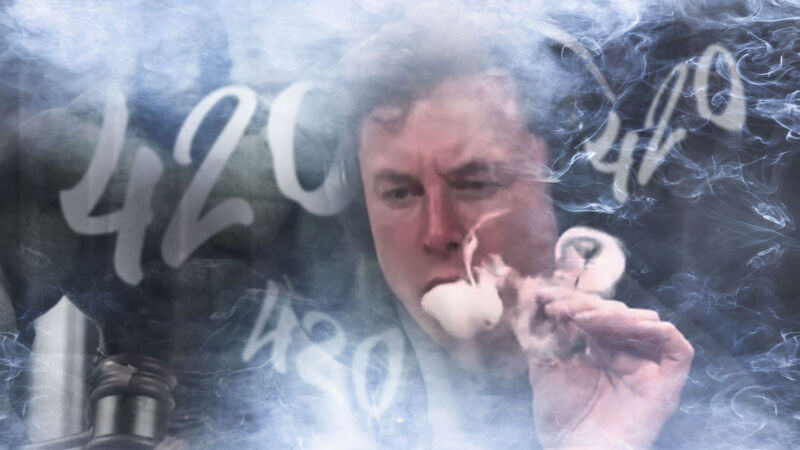
Photo illustration of Elon Musk smoking a joint and surrounded by smoke with the number
Aurich Lawson | Youtube

Elon Musk is headed to trial next week over his infamous tweet claiming he had secured funding to take Tesla private at $420 a share. A 10-day civil trial with jury selection scheduled for Tuesday, January 17, is set to begin in US District Court for the Northern District of California.

The class-action lawsuit alleges Musk harmed investors with this tweet from August 7, 2018: “Am considering taking Tesla private at $420. Funding secured.” Additional statements by Musk and Tesla reinforced the false impression given by Musk’s going-private claim, the lead plaintiff says.

“As a result of the turmoil in the prices for Tesla stock, options, and bonds caused by Musk and Tesla’s statements, investors lost billions of dollars from August 7, 2018 to August 17, 2018,” lead plaintiff Glen Littleton’s trial brief in October said. “These damages include losses resulting from the effect on the prices of Tesla securities immediately following the August 7, 2018 tweets, that was then corrected from August 8, 2018 to August 17, 2018 as the falsity of the tweets was realized by investors… Absent Musk and Tesla’s fraudulent statements, these losses would not have been suffered by Tesla investors.”

Law professor Robert Miller told Ars he thinks Musk will lose and that the only outstanding question is how much he’ll have to pay in damages. “Elon’s going to lose, and he’s going to lose for a significant amount. We’re just talking about exactly how much,” said Miller, who is the F. Arnold Daum chair in corporate finance and law at the University of Iowa College of Law. The case will determine “how much of the inflation and deflation is attributable to the fraud,” he said.

Another expert agrees. “Everything is lined up for a plaintiffs’ win here,” Minor Myers, a University of Connecticut corporate law professor, told Reuters. While Musk’s chances of winning outright may be low, the plaintiff still has to prove his false statements directly caused investors’ losses in order to obtain a significant payout. They’re seeking billions of dollars in damages for investors who bought Tesla shares at inflated prices and sold at a loss.

A Musk filing said the plaintiff’s request amounts to $66.67 in per-share damages, including the alleged effects of Musk’s tweets and “consequential effects” such as shareholder lawsuits and negative news coverage. Musk disputes this calculation.

The $420 price suggested in Musk’s tweet was almost a 20 percent premium over Tesla’s closing share price of $349.54 on August 2, 2018. “Musk believed that 20 percent was a ‘standard premium’ in going-private transactions,” the lawsuit said. “Although the precise calculation equaled $419.49, Musk rounded the price up to $420 per share because he thought his girlfriend at the time, Claire Elise Boucher (also known as ‘Grimes’), would find it funny due to the significance of the number to marijuana users.”

Judge ruled tweets false and reckless

Although a jury will decide the case, District Judge Edward Chen already issued a major ruling that makes it harder for Musk to win. In April 2022, Chen granted in part Littleton’s motion for partial summary judgment, ruling that Musk recklessly made false statements.

“The Court holds that, based on the evidence presented, there is no genuine dispute that the first three representations at issue were false and that Mr. Musk recklessly made those representations,” Chen’s ruling said. Chen only sided against Littleton on a fourth statement from a Musk blog post on August 13, 2018, in which he described ongoing communications with the Saudi Arabian sovereign wealth fund.

The jury will be aware of that ruling. As Chen wrote, “[T]he jury will be told that the Court has already found that the August 2018 tweets were false and made with the requisite scienter.” (Scienter is a legal term for intent or knowledge of wrongdoing.)

The first of the three statements Chen found to be false and reckless was the infamous tweet: “Am considering taking Tesla private at $420. Funding secured.” Chen’s ruling said that “a reasonable jury could reach only one conclusion—i.e., that Mr. Musk recklessly tweeted to the public that funding was secured.”

https://arstechnica.com/?p=1909889


Third-party Twitter clients stopped working, and nobody’s sure why

Bird perched on a rail, looking downcast
Enlarge / Many third-party Twitter clients, apps the social network has been seeking to diminish since 2012, are suddenly not working, with no update or outreach from Twitter.
Nathan Coppen/Getty Images

Tweetbot, Twiterrific, Echofon, and other third-party Twitter clients have failed to work for many people since late Thursday night, and the social network has seemingly not notified the apps’ developers as to why.

Paul Haddad, a co-creator of Tweetbot, posted on Mastodon at 11:10 pm ET Thursday in reply to a post from tech journalist Casey Newton that multiple third-party clients were failing, with “no communication as to if [it’s] a bug or …” Tweets from the official accounts of the Tweetbot and Twitteriffic clients on Thursday night confirmed their communication issues. The account for Echofon posted shortly after 8:30 am Friday that it was working to resolve its issues and that “Twitter has not yet replied.”

Haddad told TechCrunch that the connection issues started at 10:30 pm on Thursday and noted that all API requests from his app were failing. A post on Twitter’s developers forum shows numerous Twitter-based app developers noting that their apps have been listed as “suspended” or showing invalid authentication credentials.

Not all third-party clients appear to be broken at the moment. Ars staffers successfully refreshed data tools that pull in Twitter data, and we heard from a user of the Tweeten client that it is still functioning. TweetDeck, an alternative client owned by Twitter, appeared functional Friday morning. Third-party client Fenix for Android was listed as “suspended,” according to developer Matteo Villa, but its iOS version was still functional.

Twitter’s uneven history with third-party clients and the company’s recent history of making unannounced changes with seemingly unexpected consequences has spurred discussion that this could be more of a sudden policy shift than an API glitch.

Twitter outright told developers to stop making client apps in early 2011, changed its API to severely restrict them in mid-2012, and then removed auto-refresh and push notifications in 2018. Heavy layoffs at the social media network have led many tech industry watchers to anticipate operational failures at the company as workers with knowledge of existing systems depart without replacement.

We could not reach Twitter for comment, as its public relations department reportedly no longer exists. The company had yet to comment on the API outage or related third-party client issues as of 11 am. Twitter owner Elon Musk tweeted at 9:06 am about changes to the bookmark button placement, image cropping, and “other minor bug fixes next week.”

https://arstechnica.com/?p=1909824


Biden taking “absolutely wrong approach” to crack down on Big Tech, critics say

Biden taking “absolutely wrong approach” to crack down on Big Tech, critics say

As president, Joe Biden has made it clear that he wants to lead the charge to change how Big Tech operates in the US. In a rare op-ed for the Wall Street Journal, Biden heavily criticized tech companies while outlining three broad areas of regulatory reform that he says that Congress should be considering this year. Only with bipartisan action, Biden said, can the US do more to protect data privacy, prevent anti-competitive behavior, and “fundamentally reform Section 230,” by reversing course and holding platforms accountable for third-party content.

Not everyone agrees with Biden’s vision of a better future for US tech innovation, however. Perhaps the most disagreement is over his proposed Section 230 reforms. Republicans seem keen to revise Section 230, not because they want to hold platforms liable for content, but because they want to prevent a suspected content moderation bias against right-leaning users. Meanwhile, some nonpartisan critics have advised against Section 230 reforms proposed by both Democrats and Republicans. Among them is the Electronic Frontier Foundation, a nonprofit that defends civil liberties online, which has long said that, as it stands now, Section 230 is “an essential legal pillar for online speech.”

“As it was originally written, Section 230 allows good-faith moderation by platforms without fear of taking on undue liability for their users’ posts,” EFF’s transition memo providing tech policy recommendations for Biden reads. “Altering the law to force the removal of so-called ‘disinformation,’ to demand the political neutrality of their decisions, or to broaden platform liability for already-unlawful content would have consequences that reach far beyond the intended targets.” The EFF did not immediately respond to Ars’ request for comment but warned in the memo that by weakening Section 230, Biden could trigger even more content removal, silence more users, and decrease overall functionality of the Internet.

Another critic not entirely sold by Biden’s approach is Adam Thierer, a senior fellow for R Street, a nonpartisan, nonprofit policy research group. He tweeted that Biden’s “hotly worded” op-ed was “basically a call for America to become more like Europe on tech policy, with comprehensive, top-down, highly repressive controls on the information sector and digital innovators. This is absolutely the wrong approach for the US.”

Thierer told Ars that “the problem with the European Union model of tech regulation is that it leaves very little breathing room for innovation to occur because entrepreneurs are preemptively smothered by layers of convoluted, time-consuming red tape. Innovators are basically treated as guilty until proven innocent in the EU,” which makes it harder for EU tech companies to dominate global markets.

Even bleaker, Biden’s seeming urge, Thierer said, to adopt the EU’s “disastrous model of top-down, heavy-handed technological governance” could inadvertently pave the way for China to continue growing an outsize influence in the tech sphere. That, Thierer said, would pose risks to America’s global competitive advantage and collective national security—which are risks that Biden seems keenly aware of due to the seemingly unstoppable popularity of TikTok.

Past failures of bipartisan bills cracking down on Big Tech

Biden said in his op-ed that US regulations need to change because “the risks Big Tech poses for ordinary Americans are clear.” He wants Congress to help him set clear limits on what data can be collected, establish controls to prevent abusive and illegal content from spreading, and outline “fairer rules of the road” to enable more online competition and innovation.

Suffocating US tech innovation is a possible outcome of passing any new law and, thus, a big concern for many lawmakers. Thierer told Ars that before passing any new federal laws, Biden should examine the patchwork of existing federal and state tech industry regulations to identify laws already impeding innovation. In EFF’s transition memo, EFF recommended that Biden review state laws to identify the strongest ones and not pass any federal laws that would preempt those state laws.

Last year, Congress’ attempts to pass bipartisan bills designed to hold Big Tech accountable failed, partly due to intense Big Tech lobbying, OpenSecrets reported. In his op-ed, Biden said his administration had spent the past two years working toward his vision to crack down on Big Tech, but the time has now come for Congress to resist the influence of lobbyists and get on board with his ideas for new regulations.

“Our existing authority has limits,” Biden wrote. “We need bipartisan action from Congress to hold Big Tech accountable.”

The president seems aware that he will have to face down critics. But ultimately, Biden seems to believe that he will garner enough support by appealing to “shared values” of all American lawmakers.

“There will be many policy issues we disagree on in the new Congress, but bipartisan proposals to protect our privacy and our children; to prevent discrimination, sexual exploitation, and cyberstalking; and to tackle anticompetitive conduct shouldn’t separate us,” Biden wrote. “Let’s unite behind our shared values and show the nation we can work together to get the job done.”

https://arstechnica.com/?p=1909620