Twitter didn’t block child sex abuse hashtags until journalists pointed them out

Twitter logo displayed on a cracked phone screen is seen through broken glass
Getty Images | NurPhoto

Elon Musk said in November that Twitter’s top priority is eliminating content that sexually exploits children. But Twitter apparently didn’t take action against a series of hashtags and keywords used to promote the sale of child sex abuse material (CSAM) until after NBC News identified the problem in a report published Friday.

Twitter blocked searches for the hashtags and keywords on Saturday, NBC News wrote yesterday.

“NBC News found that a series of hashtags on the platform related to the file-sharing service Mega served as rallying points for users seeking to trade or sell CSAM. NBC News observed the hashtags over a period of several weeks, and counted dozens of users who collectively published hundreds of tweets daily,” the report said. “The accounts used thinly veiled keywords and terms related to CSAM to promote the content they said was stored on Mega, which they said was available for purchase or trade.”

Some accounts had been using the CSAM hashtags for months, and “dozens of users had tagged Musk using the hashtags attempting to alert him to the issue,” NBC News wrote.

“Nearly all of the tweets viewed by NBC News that advertised or promoted CSAM used hashtags that referred to Mega or another similar service, allowing users to search and locate their tweets. Despite the hashtags being active for months, they remain searchable on the platform,” the report on Friday said.

Twitter laid off half its staff after Musk bought the company, then lost more people after Musk issued an ultimatum saying employees must commit to “working long hours at high intensity” to keep their jobs. Staff cuts reportedly left the team responsible for reviewing and escalating reports of CSAM with “an overwhelmed skeleton crew.”

Twitter VP discusses hashtag bans

After the Friday report, Twitter VP of Product Trust and Safety Ella Irwin told NBC News that the department would review the content over the weekend. “As you probably know the links you shared relate to a file sharing service broadly used for a wide variety of purposes and so that makes it much harder to find the specific illegal content being posted using the hashtags in question,” Irwin wrote in an email.

On Saturday, Irwin sent a follow-up email to NBC News reporting that Twitter had banned the hashtags. “We were already reviewing doing this in the coming weeks, given that we have banned other hashtags used commonly for trafficking [CSAM] material already, however we made the decision to accelerate this action for these terms,” she wrote.

NBC News paraphrased Irwin as saying that “in the last six weeks Twitter had been analyzing thousands of hashtags for a project that was scheduled for completion in the next few weeks. She noted that the company did not want to ban hashtags that had a legitimate use, but in this case the company decided to act.”

Irwin also wrote, “We definitely know we still have work to do in the space, and certainly believe we have been improving rapidly and detecting far more than Twitter has detected in a long time but we are deploying a number of things to continue to improve.”

Despite extensive staff cuts, Irwin told NBC News that Twitter has “roughly 25% more staffing on this issue/problem space now than the company had at its peak last January.”

Mega Executive Chairman Stephen Hall last week told NBC News that when a “public link is reported as containing CSAM, we immediately disable the link, permanently close the user’s account, and provide full details to the New Zealand authorities, and any relevant international authority.” An NBC News email yesterday said that “Hall reacted to the news of the Mega-related terms being blocked on Twitter by writing that it was ‘a rather blunt reaction to a complex situation.'”

https://arstechnica.com/?p=1909278


FCC’s new broadband map greatly overstates actual coverage, senators say

Illustration of ones and zeroes overlaid on a US map.
Getty Images | Matt Anderson Photography

Nevada’s US senators say the Federal Communications Commission’s new, more detailed broadband maps have tens of thousands of mistakes in their state alone.

“Nevada’s Office of Science, Innovation, & Technology (OSIT) has found over 20,000 purported broadband-serviceable locations on the map that they believe overstate coverage. They also have found incorrect information on the quality of service available to some locations and in some cases, missing serviceable locations,” Sens. Jacky Rosen (D-Nev.) and Catherine Cortez Masto (D-Nev.) wrote in a letter to the FCC last week.

The FCC’s new broadband-availability information shows which addresses have service based on data submitted by Internet service providers, so mistakes would indicate that broadband companies are claiming to serve more homes and businesses than they actually do. The senators’ reference to “missing serviceable locations” also suggests the FCC failed to include every home or business location in its list of addresses.

The new address-level data replaces the FCC’s previous maps that were based on the Form 477 data-collection program in which ISPs reported whether they were able to offer service in each census block. The old program essentially let ISPs count an entire census block as served, even if they could serve just one home in the area.

With the new program, the FCC says fixed broadband providers are required to report “where they have actually built out their broadband network infrastructure and to which they either currently provide service or could perform a standard broadband installation.” A “standard installation” means that service can be deployed within 10 business days “with no charges or delays attributable to the extension of the network of the provider.”

Vermont also called map inaccurate

Nevada government officials aren’t alone in saying the new, more detailed map has lots of mistakes. The Vermont Community Broadband Board (VCBB) last month urged residents “to check their addresses on the FCC National Broadband Map and file a challenge if the information is incorrect.”

“The FCC map poses a challenge to Vermont’s broadband build-out,” VCBB Executive Director Christine Hallquist said in a press release. “The map is missing or incorrectly lists the location of over 60,000 broadband-serviceable locations. The map also lists service availability levels far beyond what the state has found through its mapping and what we are hearing about from residents.”

The VCBB said “correcting addresses that are incorrectly listed as served at speeds of 25/3Mbps or greater by a wired or licensed wireless provider could mean millions of additional federal dollars to build out 100/100Mbps fiber broadband across the state.”

It’s not surprising that the map has mistakes. The FCC released the first version of the upgraded National Broadband Map in November and invited people to review the map and submit challenges to correct errors. You can search for broadband availability at specific addresses here and use that page to submit challenges.

The FCC voted in August 2019 to require ISPs to submit accurate data about where they offer service. Congress followed up by imposing a law with similar requirements and provided $98 million for the mapping overhaul in December 2020. The first collection of address-availability data from ISPs under the new program finished in early September.

Senators want more time for challenges

The new maps will be used by the National Telecommunications and Information Administration (NTIA) to distribute $42.45 billion in grants from the Broadband Equity, Access, and Deployment (BEAD) program created by Congress in the Infrastructure Investment and Jobs Act. While the FCC will review possible mistakes and make corrections on a rolling basis, the NTIA urged people to submit challenges by January 13, 2023, and said it intends to announce grant allocations by June 30, 2023, “using the most up-to-date version of the FCC maps as a guide.”

But Nevada’s US senators said the number of mistakes makes it clear that the US government should give states more time to challenge the data. Rosen and Cortez Masto urged the FCC to “work with NTIA to extend the availability and location challenge process by an additional 60 days to give our state broadband office and others the time needed to verify and submit accurate data.”

The senators urged the FCC to “consider allowing our broadband office to review technical documentation that broadband providers submitted to the FCC to verify whether an area is served or unserved.” That data would help Nevada officials “verify whether providers are actually serving our communities with the services they say they are offering,” they wrote.

The senators also wrote that Nevada’s “State Broadband Office has concerns with the current challenge process, through which states can challenge the draft maps, as it is based on assumptions that put the onus on consumers to proactively engage with providers.”

https://arstechnica.com/?p=1908925


FAA giving airlines another year to fix altimeters that can’t handle 5G signals

An airplane landing at sunset.
Getty Images | Daniel Garrido

The Federal Aviation Administration will give airlines another year to fix or replace airplane altimeters that can’t filter out cellular transmissions from outside their allotted frequencies. In a notice of proposed rulemaking (NPRM) released today, the FAA proposed a deadline of February 1, 2024, to replace or retrofit faulty altimeters, which are used by airplanes to measure altitude.

Out of 7,993 airplanes on the US registry, the FAA said it “estimates that approximately 180 airplanes would require radio altimeter replacement and 820 airplanes would require addition of radio altimeter filters to comply with the proposed modification requirement.” The total estimated cost of compliance is $26 million.

The requirement could finally end a dispute between the aviation and wireless industries, which has prevented AT&T and Verizon from fully deploying 5G on the C-Band spectrum licenses the wireless carriers purchased for a combined $69 billion. Airplane altimeters rely on a spectrum from 4.2 GHz to 4.4 GHz, but some cannot filter out 5G transmissions from the carriers’ spectrum in the 3.7-3.98 GHz range.

“Some radio altimeters may already demonstrate tolerance to the 5G C-Band emissions without modification,” the FAA said. “Some may need to install filters between the radio altimeter and antenna to increase a radio altimeter’s tolerance. For others, the addition of a filter will not be sufficient to address interference susceptibility; therefore, the radio altimeter will need to be replaced with an upgraded radio altimeter.”

“Erroneous system warnings” pose a problem

The FAA said it “expects erroneous system warnings due to a malfunctioning radio altimeter to lead to flight crew becoming desensitized to system warnings. Such desensitization negates the safety benefits of the warning itself and can lead to a catastrophic event.”

The FAA had said in June 2022 that airlines must replace or retrofit faulty altimeters “as soon as possible.” But the notice issued today said February 1, 2024, “is the date the FAA has determined to be as soon as reasonably practical, consistent with FAA policy.”

The FAA will take public comment on its new proposal for 30 days before finalizing it. A Bloomberg report quoted lobby group Airlines for America as saying that airlines “are working diligently to ensure fleets are equipped with compliant radio altimeters, but global supply chains continue to lag behind current demand. Any government deadline must consider this reality.”

The proposed rule would affect airplanes operating under Part 121 certificates. Those certificates are for carriers with scheduled air service, which generally includes “large, US-based airlines, regional air carriers, and all cargo operators,” the FAA says.

“To minimize the number of erroneous system messages and the unsafe condition they produce, the FAA is proposing to require all airplanes operating under part 121 meet the PSD [power spectral density] performance curve to operate in the contiguous US after February 1, 2024,” the notice said.

Between now and the 2024 deadline, airplanes continuing to use faulty altimeters have to follow some limits during landings. A December 2021 Airworthiness Directive “prohibit[ed] certain operations requiring radio altimeter data when in the presence of 5G C-Band interference.”

Old altimeters “ignore assigned spectrum boundaries”

The Federal Communications Commission in February 2020 approved mobile use in the C-Band after considering complaints from the airline industry. The FCC concluded that harmful interference to altimeters was unlikely to occur “under reasonable scenarios” because of the 220 MHz guard band between 5G and altimeter operations and power limits the FCC required for C-Band transmissions.

But airlines weren’t prepared for the C-Band launches originally scheduled to begin in December 2021. AT&T and Verizon agreed to a nationwide delay for about six weeks and to limits on deployment near airports. The deployment limits around airports were initially set to expire in July 2022, but carriers later agreed to maintain some limits in the airport areas until July 2023.

Altimeters were originally designed decades ago when nearby spectrum bands only contained low-power operations, such as satellites. “This led the early designers of the altimeters to decide they really could ignore their assigned spectrum boundaries, and as a result they allow transmitted energy far outside their band into the receiver,” expert Dennis Roberson explained at a Congressional hearing in February 2022.

The altimeter problems spurred the FCC to launch an inquiry into poorly designed wireless devices that receive transmissions from outside their allotted frequencies. The inquiry could result in new regulations for wireless receivers; the FCC has traditionally imposed limits on transmitters only.

https://arstechnica.com/?p=1908731


Schools sue social networks, claim they “exploit neurophysiology” of kids’ brains

Girl lying on bed at night and using a mobile phone
Getty Images | Elva Etienne

A lawsuit filed by Seattle Public Schools alleges that social media is one of the main causes of “a youth mental health crisis” and blames social media companies for “exploit[ing] the neurophysiology” of kids’ brains. Arguing that social media companies are violating the state public nuisance law, the lawsuit seeks financial damages and other remedies from the owners of Facebook, Instagram, Snapchat, TikTok, and YouTube.

“Defendants have successfully exploited the vulnerable brains of youth, hooking tens of millions of students across the country into positive feedback loops of excessive use and abuse of Defendants’ social media platforms,” the lawsuit said. “Worse, the content Defendants curate and direct to youth is too often harmful and exploitive (e.g., promoting a ‘corpse bride’ diet, eating 300 calories a day, or encouraging self-harm).”

The complaint was filed Thursday in US District Court for the Western District of Washington.

“Most youth primarily use five platforms: YouTube, TikTok, Snapchat, Instagram, and Facebook, on which they spend many hours a day,” Seattle Public Schools said Friday in a statement on the lawsuit. “Research tells us that excessive and problematic use of social media is harmful to the mental, behavioral, and emotional health of youth and is associated with increased rates of depression, anxiety, low self-esteem, eating disorders, and suicide.”

Defendants include Facebook and Instagram’s owner, Meta; Snapchat owner Snap; TikTok owner ByteDance; and Alphabet, the owner of Google and YouTube.

Social networks profit from young users, lawsuit says

Seattle Public Schools argued that the companies’ “misconduct has been a substantial factor in causing a youth mental health crisis, which has been marked by higher and higher proportions of youth struggling with anxiety, depression, thoughts of self-harm, and suicidal ideation.”

“Defendants have maximized the time users—particularly youth—spend on their platforms by purposely designing, refining, and operating them to exploit the neurophysiology of the brain’s reward systems to keep users coming back, coming back frequently, and staying on the respective platforms for as long as possible,” the complaint said. “Youths are particularly susceptible to Defendants’ manipulative conduct because their brains are not fully developed, and they consequently lack the same emotional maturity, impulse control, and psychological resiliency as other more mature users.”

The social networks profit from young users and “have blatantly violated” the Children’s Online Privacy Protection Act requirement “to obtain ‘verifiable parental consent’ prior to collecting and using information about children under age 13,” the lawsuit claimed. The defendants “turned a blind eye to younger users on their platforms by leaving users to self-report their age,” and “intentionally market their platforms to youths and adolescents,” the lawsuit said.

The rates at which kids suffer from mental health problems have “climbed steadily since 2010 and by 2018 made suicide the second leading cause of death for youths,” the Seattle school complaint said. Children spending more time on social networks during the pandemic “has only intensified this crisis,” the complaint also said.

The complaint said research shows “a clear relationship between youth social media use and disordered eating behavior,” and that “the more time young girls spend on social media platforms, such as Instagram and Snapchat, the more likely they are to develop disordered eating behaviors.”

https://arstechnica.com/?p=1908650


Germany reminds Musk that removing disinformation from Twitter is a must

Germany reminds Musk that removing disinformation from Twitter is a must

Twitter CEO Elon Musk continues to deal with intense scrutiny of how his social media platform will fight disinformation with its reduced staff. Early in 2023, Musk met with Germany’s digital minister, Volker Wissing, in California to discuss whether Twitter would “voluntarily comply” with an agreement Twitter previously made with the European Commission to combat disinformation.

A ministry spokesperson described the meeting as “a very open and long talk” that ended with Musk assuring Wissing that Twitter wouldn’t back down from the disinformation fight. Politico reported in December that part of Twitter’s agreement with the commission involves preventing users from profiting from misinformation, labeling political ads, and making data available to researchers.

Ars could not immediately reach Twitter for comment. A ministry spokesperson told Ars that “in his talks with Elon Musk, Federal Minister Wissing made it clear, among other things, that Germany expects the existing voluntary commitments against disinformation and the rules of the Digital Services Act to be observed in the future.”

The DSA was implemented in November, designed to “ensure that the online environment remains a safe space,” while “safeguarding freedom of expression.” The European law targets major social networks for compliance first, noting that they have “greater responsibility” to protect users from risks like “dangerous disinformation.” Twitter and other “very large online platforms” have until mid-June 2023 to comply fully with the law. Unlike the voluntary agreement that Twitter made with the commission, a ministry spokesperson told Ars that “like any company, Twitter must in future comply with the rules of the Digital Services Act. There are no exceptions here.”

“With the Digital Services Act, we have set clear rules at EU level to take action against illegal content, increasing disinformation, and bots in social networks,” the ministry’s spokesperson told Ars. “Companies are held accountable here so that users can use the networks safely.”

Over the next few months, the German government will be “critically” watching Twitter, the ministry spokesperson said.

The ministry did not share any comments that Musk made in the meeting but said that Musk made the meeting on very short notice—only confirming the evening before it was scheduled.

Musk has been criticized in the past few months for his personal use of Twitter—tweeting conspiracy theories from his account—as well as official decisions he’s made as Twitter CEO, like eliminating Twitter’s COVID-19 misinformation policy. In the last few days, trust and safety issues continued to plague the platform. This week, a Washington Post reporter confirmed that Twitter’s revised authentication process for Twitter Blue subscribers still does not prevent impersonation, and Vice reported that Twitter amplified an “obviously fake tweet” about vaccines, resulting in a targeted harassment campaign against a doctor.

Back in November, the European Commission’s Internal Market commissioner, Thierry Breton, told Musk that Twitter had “huge work ahead” to effectively tackle disinformation, Politico reported.

When 2023 started, one of the first changes Twitter made, however, could potentially result in more misinformation spreading on the platform. Earlier this week, Twitter lifted a political ad ban designed to stop misinformation spread and announced a plan to stop limiting the reach of “cause-based” tweets.

And Musk has continued to draw criticism for his personal tweets. Musk recently responded to a tweet that Politifact has since debunked for relying on “faulty data to claim cardiac arrests are increasing in athletes” who received the COVID-19 vaccine. The Washington Post reported that the tweet was posted amid “COVID misinformation spikes” seen across Twitter after Buffalo Bills football player Damar Hamlin collapsed on the field mid-game on Monday. Twitter’s official response to this misinformation spread seems lacking. There are currently no community notes on the tweet Musk responded to, which would normally help alert users to the seeming misinformation. Instead, Musk seems to personally validate the tweet, saying the information was “certainly worth further investigation.”

https://arstechnica.com/?p=1908442


Climate enforcers need hard evidence, and Friederike Otto has it

A red-orange sky over the Houses of Parliament.

On July 19, 2022, the UK experienced a taste of the weather to come. Temperatures reached 40.3° Celsius—soaring past the previous record by more than one-and-a-half degrees.

Dozens of homes in east London were destroyed by fires, while elsewhere in the country, the heat pushed the power grid close to the point of failure. The Office for National Statistics estimates that there were more than 2,800 excess deaths among over-65s during the summer heat waves of 2022, making it the deadliest year for heat since 2003.

Before the temperatures had even peaked, Friederike Otto was in her office in Imperial College London, getting ready to answer the question that she knew would be thrown at her countless times in the following week: Was climate change to blame?

When an extreme weather event strikes, Otto and her small team of climate scientists—most of them working in their spare time—are the people the world looks toward to tell them whether climate change has made the weather more severe or more likely to be. “I think it’s important to get a more realistic picture of what climate change means,” says Otto, a senior lecturer in climate science at the Grantham Institute for Climate Change and the cofounder of the World Weather Attribution initiative. “For some types of events, like heat waves, climate change is a real game-changer, and we see events that we have never seen before.”

Every week, a contact at the Red Cross sends Otto and her colleagues at World Weather Attribution a list of floods, heat waves, and other extreme weather events across the globe. Often there are six or eight crises listed in the email—far too many for Otto’s small team to tackle—so the scientists narrow their focus to weather that is impacting millions of people, selecting roughly one event every six weeks, from storms in Europe to flooding in Pakistan.

Once the scientists have picked a subject for their analysis, they move fast, digging into historical records and running climate models in order to figure out what role—if any—climate change played in a disaster. The final report is usually published within days or weeks of an extreme weather event. This is a huge departure from the normally glacial pace of academic publishing, where it can take years for a scientific paper to finally end up in a journal, but quick answers are the whole point of World Weather Attribution. By releasing studies while an extreme event is still dominating headlines and political agendas, the scientists fill a void that might otherwise be occupied by climate change denial. In the case of the UK heat wave, World Weather Attribution was ready with its report just nine days after temperatures reached their peak.

The findings revealed the unprecedented scale of the record-breaking temperatures. Otto’s team estimated that climate change had made the UK heat wave at least 10 times more likely, and that in a world without global warming peak temperatures would have been about 2° Celsius lower. The weather was so unusual that, in a world without climate change, it would have been statistically impossible to reach such high temperatures in two out of the three weather stations the scientists studied. In the world of climate attribution science, this is about as close as you get to a smoking gun. “People always want the number, and sometimes you can’t give a very satisfactory number,” Otto says. This time, however, Otto had no shortage of numbers to share with the reporters who were ringing her up.

But attribution science can do a lot more than tell us how climate change influences the weather. Otto wants to use her attribution reports to hold polluters to account for extreme weather events. “We have started to do a lot of work with lawyers, to basically bridge this knowledge gap between what we can say scientifically and what has so far been used in terms of evidence,” she says. With legal cases underway in Germany and Brazil, attribution science is moving into the courtroom.

The beginnings of WWA

Otto cofounded World Weather Attribution in 2014 with the oceanographer Heidi Cullen and climatologist Geert Jan van Oldenborgh. At first, Otto—who has degrees in physics and philosophy—thought that the main role of weather attribution was to untangle the complexity of weather systems to quantify how much climate change was influencing extreme weather. Other scientists had established how to use climate models to attribute weather events to climate change, but no one had tried to use the science to produce rapid reports on recent disasters.

World Weather Attribution’s first real-time study was published in July 2015. It found that a heat wave in Europe earlier that month was almost certainly made more likely thanks to climate change. Other studies followed on floods, storms, and rainfall, each one published within weeks of the disaster. But attribution studies aren’t just about understanding past events—they can help us prepare for the future, Otto says. “I see attribution now as a tool that helps us disentangle drivers of disasters and helps us use extreme events as a lens in society to see where we are vulnerable.”

https://arstechnica.com/?p=1908311


Wikipedia admin jailed for 32 years after alleged Saudi spy infiltration

Wikipedia admin jailed for 32 years after alleged Saudi spy infiltration

Whistleblowers have alleged that the Saudi Arabian government infiltrated the highest ranks of Wikipedia in order to control information about the country, activists reported yesterday. The alleged infiltration resulted in the 2020 arrests in Saudi Arabia of two Wikipedia administrators—Ziyad al-Sofiani (jailed for up to eight years) and Osama Khalid (jailed for up to 32 years)—for “swaying public opinion” and “violating public morals” by posting content “deemed to be critical about the persecution of political activists in the country.” Today, Wikimedia Foundation released a statement to Ars disputing the report, alleging that there was no “infiltration” and that Wikipedia admins have “no ranks.”

These conflicting statements follow an investigation concluded by the Wikimedia Foundation last month that resulted in the banning of 16 users for “conflict of interest editing on Wikipedia projects” in the Middle East and North Africa (MENA) region. At the time, Wikimedia said, “We were able to confirm that a number of users with close connections with external parties were editing the platform in a coordinated fashion to advance the aim of those parties.”

According to a joint statement from US-based rights group Democracy for the Arab World Now (DAWN) and Beirut-based SMEX, sources close to Wikipedia and interviews with the jailed administrators confirmed that those “external parties” were “government agents acting as independent editors.” These government agents acted as spies for Saudi authorities, the activists alleged, identifying noncompliant administrators like those jailed for editing Wikipedia entries to include information that Saudi officials did not approve of.

“It’s wildly irresponsible for international organizations and businesses to assume their affiliates can ever operate independently of, or safely from, Saudi government control,” DAWN Executive Director Sarah Leah Whitson said in a statement.

DAWN and SMEX did not immediately respond to Ars’ request for comment. (Update: Wikimedia has released an updated statement here on “inaccuracies.” Whitson told Ars that Wikimedia is “playing technical word games” and that “it’s really important for Wikimedia to be transparent about what they have described as a conflict of interest among its editors.” She said that Wikimedia should “provide more transparency about the 16 users that they banned” and “the safety precautions they’re going to take to avoid further endangering Wikipedia editors in totalitarian states, because there’s no denying that two of them are now languishing in Saudi prisons” and the problem goes “well beyond Saudi Arabia.” Whitson urges Wikimedia to reconsider its global model of relying on Wikipedia editors based in totalitarian states, not just because it can endanger the editors, but also because Wikipedia “loses its credibility” when information edited in these states cannot be trusted.)

A Wikimedia spokesperson told Ars that there are “material inaccuracies in the statement released by SMEX/DAWN” and in a Guardian report.

“There was no finding in our investigation that the Saudi government ‘infiltrated’ or penetrated Wikipedia’s highest ranks,” Wikimedia’s spokesperson told Ars. “And there are in fact no ‘ranks’ among Wikipedia admins. There was also no reference to Saudis acting under the influence of the Saudi government in our investigation. While we do not know where these volunteers actually reside, the bans of any volunteers who may have been Saudi were part of a much broader action globally banning 16 editors across the MENA region.”

Activists claimed that Wikimedia was “cryptically” excluding details in its statement, alleging that sources confirmed that “the ban was against 16 Saudi users, Wikimedia’s highest ranked editorial team in the region, following its discovery that they were serving as agents for the Saudi government to promote positive content about the government and delete content critical of the government, including information about political prisoners in the country.” (All banned users are listed on this Wikimedia page as being banned on December 6, 2022.)

In their statement, DAWN and SMEX also clarified that by “high-ranking” administrators, they were pointing to Wikipedia’s user access levels, which Wikipedia says “affects their abilities to perform specific actions on Wikipedia.” These users are not Wikipedia employees but are instead volunteers granted access to different tools. Only admins, Wikipedia says, have “exclusive access to a number of tools to allow them to carry out certain functions on the wiki. The tools cover processes such as page deletion, page protection, blocking and unblocking users, and the ability to edit fully protected pages.”

The Wikimedia Foundation did not comment on the Wikipedia admins’ arrests, but in its December statement, it indicated that legal limitations perhaps prevented further comment.

Activists say that Wikimedia’s response is inadequate, and they are urging the foundation to make the results of its investigation public—disclosing “all of the pages the team based in Saudi Arabia edited” and subjecting “them to independent review and analysis.” They also say Wikimedia should put warning labels on pages for which admins could be at risk of prosecution by authoritarian regimes and “review its reliance on administrators in countries where freedom of speech is limited and independent writing severely restricted.”

The groups have also asked Saudi officials to “disclose its efforts to influence and control the content on Wikipedia,” including the “extent to which it pressured or rewarded administrators based in Saudi Arabia to produce content.” They’ve asked Saudi authorities to release “those prosecuted or sentenced for their role in posting content in Wikipedia.”

Wikimedia said in December that it would be exploring “various ways to keep everyone safe and free to contribute to the projects.” The foundation promised to “work with our communities to find a global process to navigate safety challenges that allow such situations to be dealt with as transparently as possible while also prioritizing avoiding risk to the safety of our users.”

We will update this post if the foundation provides updates on any new actions it plans to take in 2023 to shield admins from authoritarian regimes’ attempts to control Wikipedia content.

https://arstechnica.com/?p=1908310


WhatsApp just made it harder to censor citizens with Internet shutdowns

WhatsApp just made it harder to censor citizens with Internet shutdowns

To ring in the new year, WhatsApp introduced a new feature to help people circumvent government-imposed Internet shutdowns that the United Nations said last summer work to undermine human rights.

“To help, today we’re launching proxy support for WhatsApp users all over the world,” WhatsApp’s statement said. “What this means is we’re putting the power into people’s hands to maintain access to WhatsApp if their connection is blocked or disrupted.”

WhatsApp’s new proxy support feature enables users to “connect to WhatsApp through servers set up by volunteers and organizations around the world dedicated to helping people communicate freely.” It also allows users to set up their own proxy servers to help others connect to the app. The feature is currently available to all users running the most updated version of the app.

WhatsApp did not immediately respond to Ars’ request for comment on how long development of this feature has been in the works. In its statement, the messaging app pointed to Internet “disruptions like we’ve seen in Iran for months on end” that “deny people’s human rights and cut people off from receiving urgent help” as a primary motivation. (Update: A WhatsApp spokesperson told Ars that WhatsApp regularly consults with human rights organizations on “freedom of expression and privacy issues” and confirmed that WhatsApp consulted these experts when developing the proxy feature. The spokesperson told Ars that WhatsApp “started putting the capability into the app over the last few months of last year, so people would get the technology on their device as they upgraded their WhatsApp.” Once “the vast majority of users” were upgraded to “a version that is capable of using the proxy,” WhatsApp announced the feature. Now, WhatsApp is hoping that its community partners and users will help spread awareness of the feature to people in communities that are particularly vulnerable to Internet shutdowns.)

According to WhatsApp, users in regions impacted by shutdowns can expect the same level of privacy and security when communicating through the app after connecting by a proxy server that users expect from WhatsApp. All communications will be protected by end-to-end encryption, “ensuring they stay between you and the person you’re communicating with and are not visible to anyone in between, not the proxy servers, WhatsApp, or Meta.”

WhatsApp’s new feature arrives at a moment when Internet shutdowns have been affecting hundreds of millions. According to the independent VPN review site Top10VPN, the cost of government-imposed Internet shutdowns has risen by more than 300 percent since 2021. In 2022, the total cost of 114 “major deliberate Internet outages” in 23 countries was estimated to be close to $24 billion. Social media blocks in these regions amounted to 26,865 hours. Reuters reported that Iran imposed a social media block on WhatsApp after an Iranian woman, Mahsa Amini, was arrested for “unsuitable attire,” then died in police custody.

Top10VPN reported that Russia was “the single most affected nation,” with Internet shutdowns costing $21.59 billion, while Iran’s shutdowns were second, costing $773 million.

Approximately 51 percent of government Internet outages were associated with additional human rights abuses, like restricting rights to assembly or freedom of the press. With 710 million people reportedly impacted by these outages last year, WhatsApp’s new feature seeks to provide at least one secure way in 2023 to prevent governments from abruptly or persistently censoring citizens with Internet shutdowns.

https://arstechnica.com/?p=1908147


FTC intends to ban noncompete clauses that bind 30 million US workers

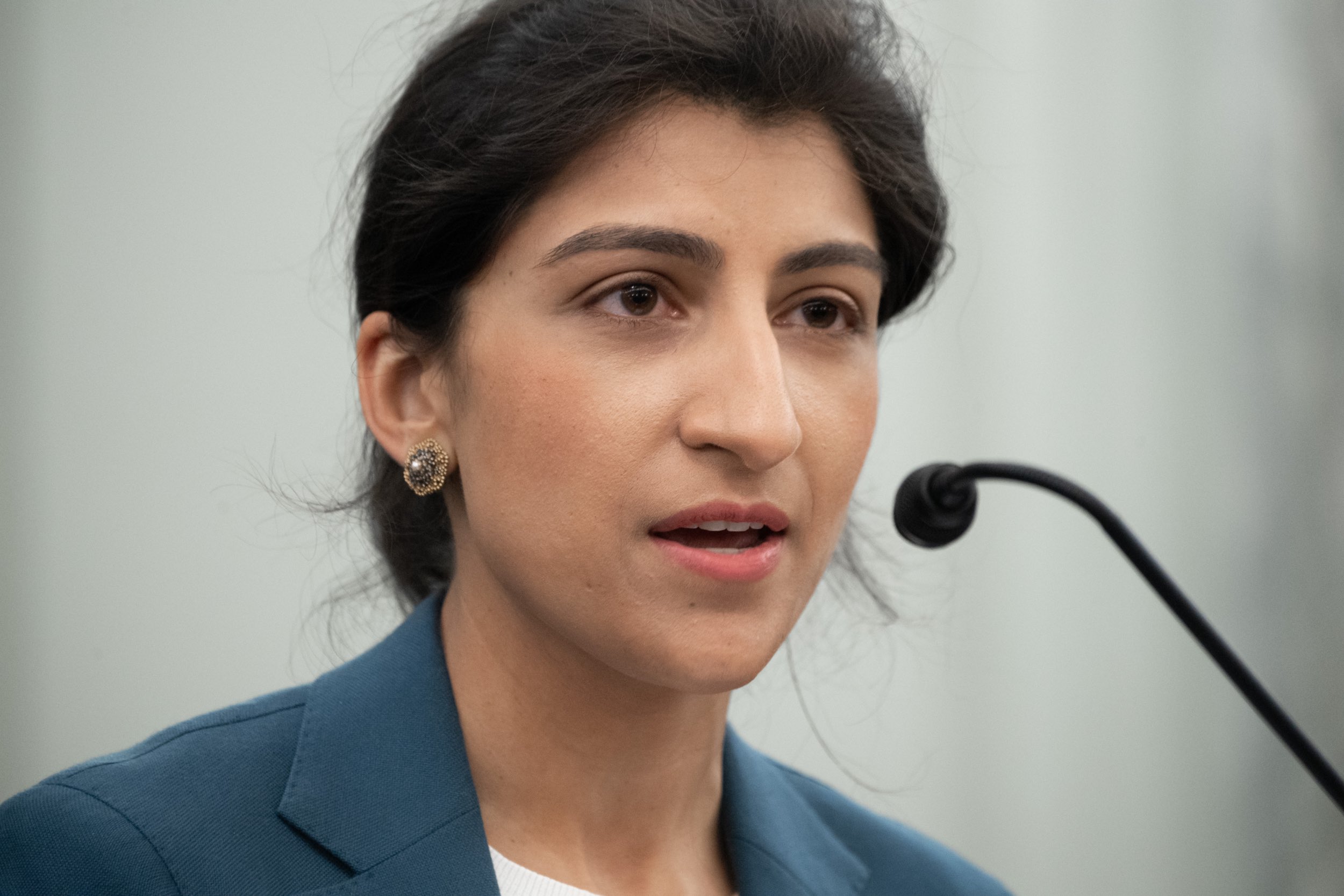
Lina Khan speaks into a microphone while answering questions at a Senate confirmation hearing.
Enlarge / Lina Khan at a Senate confirmation hearing in April 2021, before she was confirmed as chair of the FTC.
Getty Images | Pool

The Federal Trade Commission today proposed a rule that would prohibit employers from imposing noncompete clauses on workers, arguing that “noncompetes constitute an unfair method of competition and therefore violate Section 5 of the Federal Trade Commission Act.”

The contract clauses currently “bind about one in five American workers, approximately 30 million people,” the FTC said in a fact sheet, writing that noncompetes prevent workers from seeking better jobs and prevent employers “from hiring qualified workers bound by these contracts.”

“Noncompetes undermine core economic liberties,” FTC Chair Lina Khan wrote. “Evidence suggests noncompetes also suppress earnings and opportunity even for workers who are not subject to a noncompete. FTC economists estimate that noncompetes lower US workers’ collective income by $250-$296 billion [per year].”

Khan added that “locking workers in place can enable incumbents to close off markets to new rivals, undermining dynamism and healthy competition.”

Employers would have to rescind existing noncompetes

The FTC said its proposed rule “would make it illegal for an employer to enter into or attempt to enter into a noncompete with a worker; maintain a noncompete with a worker; or represent to a worker, under certain circumstances, that the worker is subject to a noncompete.”

The FTC said employers would have to “rescind existing noncompetes and actively inform workers that they are no longer in effect.” The proposed rule would apply to employees and independent contractors, covering “anyone who works for an employer, whether paid or unpaid,” the FTC said.

The FTC defined a noncompete clause as “a contractual term between an employer and a worker that prevents the worker from seeking or accepting employment with a person, or operating a business, after the conclusion of the worker’s employment with the employer.”

A noncompete ban would affect many types of jobs and industries. “Companies use noncompetes for workers across industries and job levels, from hairstylists and warehouse workers to doctors and business executives,” the FTC said. “In many cases, employers use their outsized bargaining power to coerce workers into signing these contracts.”

The FTC pointed to a case involving Amazon, which sued former executive Gene Ferrell in 2017, alleging he violated a noncompete agreement when he left to join a tech startup called Smartsheet. “After unfavorable media coverage, Amazon dropped the suit,” the FTC said. “Under the leadership of Gene and others, Smartsheet thrived and exceeded $500 million in annual revenue.”

https://arstechnica.com/?p=1908107


After $414M fine, Meta tries to avoid seeking user consent for personalized ads

After $414M fine, Meta tries to avoid seeking user consent for personalized ads

For four years, Meta has been battling European Union regulators over how its apps, Facebook and Instagram, collect user data to personalize ads. The key question for regulators was whether Meta’s so-called contract legal basis—which lumps the user consent agreement into its apps’ terms of services—forced its users to choose between consenting to data collection or losing all access to the social platforms.

Yesterday, the EU’s lead privacy watchdog, the Irish Data Protection Commission (DPC), finally reached two decisions, deciding that Meta had illegally forced consent from both Facebook and Instagram users. Now, Meta must pay a $414 million fine and update its apps over the next three months to come into compliance with the EU’s General Data Protection Regulation (GDPR).

Ars could not immediately reach DPC for comment.

DPC has kept the substance of the decisions confidential—not even sharing its decisions with complainants—but in a statement said that Meta “is not entitled to rely on the ‘contract’ legal basis in connection with the delivery of behavioral advertising as part of its Facebook and Instagram services.”

Meta plans to appeal both the “substance of the ruling and the fines,” providing a statement that says the company “strongly” disagrees with the ruling. Due to “a lack of regulatory clarity,” Meta claims that the contractual legal basis that it’s relied on to gain user consent since 2018 had previously been deemed acceptable by EU regulators. Currently, Meta says the appropriateness of this legal basis under GDPR is still “being debated by the highest courts in the EU.” Because the matter appears to still be undecided, Meta says that it believes that an appeal will prove that its apps “fully” comply with GDPR—alleging that no app updates are necessary.

Meta plans to avoid requesting user consent

Shortly after the DPC’s decisions were announced, Meta claimed that there has been some “inaccurate speculation and misreporting on what these decisions mean.”

Some have speculated that the ruling meant that Facebook and Instagram would have to start asking users to respond “yes or no” to give consent for data collection used for personalized ads. Recent history suggests that this move would seemingly be unappealing to Meta. When Apple switched to this consent legal basis for data collection, Wired UK reported that the move “screwed” Facebook by triggering “an unstoppable collapse” in Facebook’s ability to collect user data.

Asked if Meta was considering a consent legal basis, a Meta spokesperson reiterated the company’s statement to Ars, saying that the DPC’s decisions “do not mandate the use of consent.” Instead, Meta would be “assessing a variety of options that will allow us to continue offering a fully personalized service to our users,” seemingly seeking ways to do so without asking for user consent.

https://arstechnica.com/?p=1908035