Paramount sues WBD over Netflix deal. WBD says Paramount’s price is still inadequate.

Paramount Skydance escalated its hostile takeover bid of Warner Bros. Discovery (WBD) today by filing a lawsuit in Delaware Chancery Court against WBD, declaring its intention to fight Netflix’s acquisition.

In December, WBD agreed to sell its streaming and movie businesses to Netflix for $82.7 billion. The deal would see WBD’s Global Networks division, composed of WBD’s legacy cable networks, spun out into a separate company called Discovery Global. But in December, Paramount submitted a hostile takeover bid and amended its bid for WBD. Subsequently, the company has aggressively tried to convince WBD’s shareholders that its $108.4 billion offer for all of WBD is superior to the Netflix deal.

Today, Paramount CEO David Ellison wrote a letter to WBD shareholders informing them of Paramount’s lawsuit. The lawsuit requests the court to force WBD to disclose “how it valued the Global Networks stub equity, how it valued the overall Netflix transaction, how the purchase price reduction for debt works in the Netflix transaction, or even what the basis is for its ‘risk adjustment’” of Paramount’s $30 per share all-cash offer. Netflix’s offer equates to $27.72 per share, including $23.25 in cash and shares of Netflix common stock. Paramount hopes the information will encourage more WBD shareholders to tender their shares under Paramount’s offer by the January 21 deadline.

Before WBD announced the Netflix deal, Paramount publicly questioned the fairness of WBD’s bidding process. Paramount has since argued that its bid wasn’t given fair consideration or negotiation.

In his letter today, Ellison wrote:

We remain perplexed that WBD never responded to our December 4th offer, never attempted to clarify or negotiate any of the terms in that proposal, nor traded markups of contracts with us. Even as we read WBD’s own narrative of its process, we are struck that there were few actual board meetings in the period leading up to the decision to accept an inferior transaction with Netflix. And we are surprised by the lack of transparency on WBD’s part regarding basic financial matters. It just doesn’t add up – much like the math on how WBD continues to favor taking less than our $30 per share all-cash offer for its shareholders.

Additionally, Paramount plans to nominate board directors for election at WBD’s annual shareholder meeting who will fight against the Netflix deal’s approval. The window for nominations opens in three weeks, Ellison’s letter noted.

https://arstechnica.com/gadgets/2026/01/paramount-sues-wbd-over-netflix-deal-wbd-says-paramounts-price-is-still-inadequate/


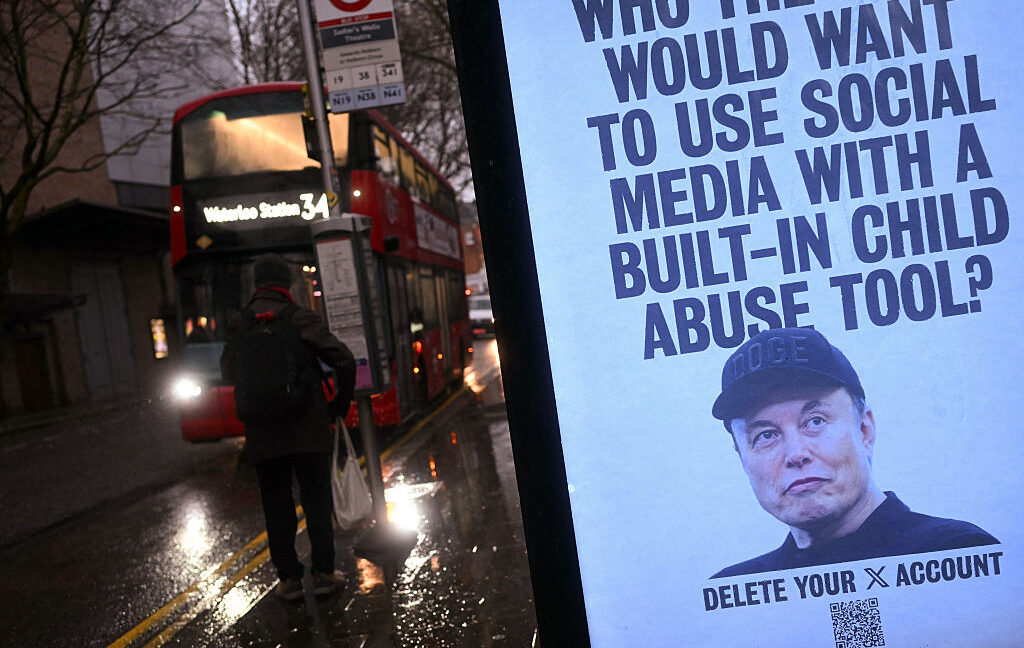
UK probes X over Grok CSAM scandal; Elon Musk cries censorship

Ofcom noted that in its view, CSAM does include “AI-generated imagery, deepfakes and other manipulated media,” which “would fall under the category of a ‘pseudo-photograph.’” As Ofcom explained, “If the impression conveyed by a pseudo-photograph is that the person shown is a child, then the photo should be treated as showing a child.”

Similarly, “manipulated images and videos such as deepfakes should be considered within the scope” of intimate image abuse, Ofcom said. “Any photograph or video which appears to depict an intimate situation” that a real person would not want publicly posted should “be treated as a photograph or video actually depicting such a situation.”

Some Grok fans think that the chatbot’s outputs that undress people and put them in skimpy bikinis or underwear isn’t abuse. However, the UK law further details that an “intimate situation” could be an image where a person’s “genitals, buttocks, or breasts” are “covered only with underwear” or “covered only by clothing that is wet or otherwise transparent.”

It’s unclear how long Ofcom may take to reach its decision, but the regulator acted urgently to intervene. And UK officials who were shocked by the scandal have confirmed that they are quickly moving to protect people in the UK from being targeted by Grok’s worst outputs.

While Ofcom does not directly refer to Musk’s comments on censorship, the regulator takes a defensive stance in its announcement—likely preparing to fight X’s argument by pointing out that X would be the one in charge of deciding what is illegal content and what should be removed.

“The legal responsibility is on platforms to decide whether content breaks UK laws, and they can use our Illegal Content Judgements Guidance when making these decisions,” Ofcom noted. “Ofcom is not a censor—we do not tell platforms which specific posts or accounts to take down.”

https://arstechnica.com/tech-policy/2026/01/uk-investigating-x-after-grok-undressed-thousands-of-women-and-children/


Conservative lawmakers want porn taxes. Critics say they’re unconstitutional.

Critics argue that age verification has never been about protecting children but rather scrubbing porn from the internet. A video leaked in 2024 by the Centre for Climate Reporting showed Russell Vought, a Trump ally and Project 2025 coauthor, calling age verification laws a “back door” tactic to a federal porn ban.

Sites like OnlyFans and Pornhub have brought platform-dependent sex work into the mainstream, but they have also made it easier to police adult entertainers and consumers. As more states begin to implement added tariffs on sex work, creators will bear the brunt of the new laws more than anyone.

The skewed ideology of cultural conservatism that is taking shape under Trump 2.0 wants to punish sexual expression, says Mike Stabile, director of public policy at the Free Speech Coalition, a trade association for the adult industry in the US. “When we talk about free speech, we generally mean the freedom to speak, the ability to speak freely without government interference. But in this case, free also means not having to pay for the right to do so. A government tax on speech limits that right to those who can afford it.”

According to company policy, OnlyFans complies with all tax requirements in the jurisdictions in which it operates. Creators are responsible for their own tax affairs. Pornhub, which is currently blocked in Utah and Alabama, did not respond to a request for comment.

Douek notes that following the Supreme Court’s decision to uphold age-verification laws in Texas, states can legally regulate minors’ access to sexually explicit material, “but a porn tax does nothing to limit minors’ access to this speech—it simply makes it more expensive to provide this content to adults.” A 2022 report from Common Sense Media, a youth advocacy nonprofit, found that 73 percent of teens age 13 to 17 have watched adult content online. Today, young people regularly access NSFW content via social media, on platforms like X and Snap. Last year, a survey by the UK’s Office of the Children’s Commissioner reported that 59 percent of minors are being exposed to porn by accident, primarily via social media, up from 38 percent in 2023.

https://arstechnica.com/tech-policy/2026/01/conservative-lawmakers-want-porn-taxes-critics-say-theyre-unconstitutional/


SpaceX gets FCC permission to launch another 7,500 Starlink satellites

T-Mobile is using Starlink in the US, and the satellite operator has partnerships with carriers overseas. With today’s FCC authorization, Starlink will be able to provide both fixed and mobile service from all 15,000 second-generation satellites.

SpaceX wants to launch another 15,000 satellites

SpaceX also recently struck a $17 billion deal to buy spectrum licenses from EchoStar, which will give it 50 Mhz of mobile spectrum and reduce its reliance on cellular carriers. SpaceX has been leasing 10 MHz of spectrum from T-Mobile to provide supplemental service in the US.

Starlink is separately planning to launch yet another 15,000 satellites that are designed for mobile service. SpaceX asked the FCC to approve this plan in September 2025, saying the “new system will offer a new generation of MSS connectivity, supporting voice, texting, and high-speed data.”

Starlink requests for FCC authorization often face opposition from other satellite firms, and the application for 15,000 more satellites is no exception. Viasat filed a petition to deny the application on Monday this week.

“This proposed expansion of SpaceX’s operating authority would give it an even greater ability and incentive to foreclose other operators from accessing and using limited orbital and spectrum resources on a competitive basis,” Viasat told the FCC. “At the same time, the proposed operations would generate insurmountable interference risks for other spectrum users and the customers they serve, preclude other operators from accessing and using scarce spectral and orbital resources on an equitable basis, undermine and foreclose competition and innovation, and otherwise harm the public.”

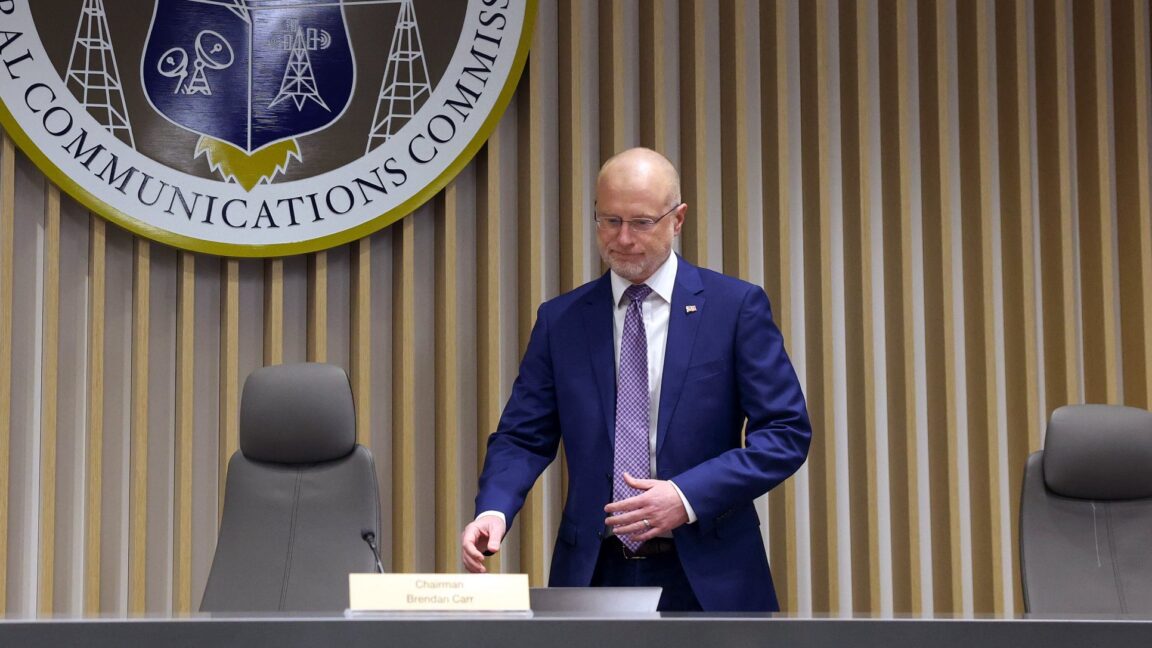
Globalstar also filed a petition to deny, and several other satellite operators raised objections. FCC Chairman Brendan Carr has generally been a supporter of SpaceX and Elon Musk, however. Carr alleged that the Biden administration targeted Musk’s companies for “regulatory harassment,” and in his current role as chairman Carr pressured EchoStar into selling the spectrum licenses that SpaceX is now buying.

In today’s press release announcing the latest authorization, Carr said that “the FCC has given SpaceX the green light to deliver unprecedented satellite broadband capabilities, strengthen competition, and help ensure that no community is left behind.”

https://arstechnica.com/tech-policy/2026/01/spacex-gets-fcc-permission-to-launch-another-7500-starlink-satellites/


Cloudflare defies Italy’s Piracy Shield, won’t block websites on 1.1.1.1 DNS

The CCIA added that “the Piracy Shield raises a significant number of concerns which can inadvertently affect legitimate online services, primarily due to the potential for overblocking.” The letter said that in October 2024, “Google Drive was mistakenly blocked by the Piracy Shield system, causing a three-hour blackout for all Italian users, while 13.5 percent of users were still blocked at the IP level, and 3 percent were blocked at the DNS level after 12 hours.”

The Italian system “aims to automate the blocking process by allowing rights holders to submit IP addresses directly through the platform, following which ISPs have to implement a block,” the CCIA said. “Verification procedures between submission and blocking are not clear, and indeed seem to be lacking. Additionally, there is a total lack of redress mechanisms for affected parties, in case a wrong domain or IP address is submitted and blocked.”

30-minute blocking prevents “careful verification”

The 30-minute blocking window “leaves extremely limited time for careful verification by ISPs that the submitted destination is indeed being used for piracy purposes,” the CCIA said. The trade group also questioned the piracy-reporting system’s ties to the organization that runs Italy’s top football league.

“Additionally, the fact that the Piracy Shield platform was developed for AGCOM by a company affiliated with Lega Serie A, which is one of the very few entities authorized to report, raises serious questions about the potential conflict of interest exacerbating the lack of transparency issue,” the letter said.

A trade group for Italian ISPs has argued that the law requires “filtering and tasks that collide with individual freedoms” and is contrary to European legislation that classifies broadband network services as mere conduits that are exempt from liability.

“On the contrary, in Italy criminal liability has been expressly established for ISPs,” Dalia Coffetti, head of regulatory and EU affairs at the Association of Italian Internet Providers, wrote in April 2025. Coffetti argued, “There are better tools to fight piracy, including criminal Law, cooperation between States, and digital solutions that downgrade the quality of the signal broadcast via illegal streaming websites or IPtv. European ISPs are ready to play their part in the battle against piracy, but the solution certainly does not lie in filtering and blocking IP addresses.”

https://arstechnica.com/tech-policy/2026/01/cloudflare-may-pull-servers-out-of-italy-over-order-that-it-block-pirate-sites/


X’s half-assed attempt to paywall Grok doesn’t block free image editing

So far, US regulators have been quiet about Grok’s outputs, with the Justice Department generally promising to take all forms of CSAM seriously. On Friday, Democratic senators started shifting those tides, demanding that Google and Apple remove X and Grok from app stores until it improves safeguards to block harmful outputs.

“There can be no mistake about X’s knowledge, and, at best, negligent response to these trends,” the senators wrote in a letter to Apple Chief Executive Officer Tim Cook and Google Chief Executive Officer Sundar Pichai. “Turning a blind eye to X’s egregious behavior would make a mockery of your moderation practices. Indeed, not taking action would undermine your claims in public and in court that your app stores offer a safer user experience than letting users download apps directly to their phones.”

A response to the letter is requested by January 23.

Whether the UK will accept X’s supposed solution is yet to be seen. If UK regulator Ofcom decides to move ahead with a probe into whether Musk’s chatbot violates the UK’s Online Safety Act, X could face a UK ban or fines of up to 10 percent of the company’s global turnover.

“It’s unlawful,” UK Prime Minister Keir Starmer said of Grok’s worst outputs. “We’re not going to tolerate it. I’ve asked for all options to be on the table. It’s disgusting. X need to get their act together and get this material down. We will take action on this because it’s simply not tolerable.”

At least one UK parliament member, Jess Asato, told The Guardian that even if X had put up an actual paywall, that isn’t enough to end the scrutiny.

“While it is a step forward to have removed the universal access to Grok’s disgusting nudifying features, this still means paying users can take images of women without their consent to sexualise and brutalise them,” Asato said. “Paying to put semen, bullet holes, or bikinis on women is still digital sexual assault, and xAI should disable the feature for good.”

https://arstechnica.com/tech-policy/2026/01/xs-half-assed-attempt-to-paywall-grok-doesnt-block-free-image-editing/


Wi-Fi advocates get win from FCC with vote to allow higher-power devices

“This is important for Wi-Fi 7 as well as Wi-Fi 6,” Feld wrote today in response to the Carr plan. “But we need a real pipeline for more unlicensed spectrum. Glad to see value of unlicensed acknowledged. Looking forward to more of it.”

Risk to Wi-Fi spectrum appears low

Despite the positive response to Carr’s plan this week, there’s still a potential threat to Wi-Fi’s use of the 6 GHz band. The 1,200 MHz between 5.925 and 7.125 GHz was allocated to Wi-Fi in April 2020, but a plan to auction spectrum to wireless carriers could take some of those frequencies away from Wi-Fi.

A law approved by Congress and Trump in July 2025 requires the FCC to auction at least 800 MHz of spectrum, some of which could come from the 6 GHz band currently allocated to Wi-Fi or the Citizens Broadband Radio Service (CBRS) in the 3550 MHz to 3700 MHz range. The FCC has some leeway to decide which frequencies to auction, and its pending decision in the matter will draw much interest from groups interested in preserving and expanding Wi-Fi and CBRS access.

Calabrese said in June 2025 that 6 GHz and CBRS “are the most vulnerable non-federal bands for reallocation and auction.” But now, after Trump administration statements claiming 6 GHz Wi-Fi as a key Trump accomplishment and support from congressional Republicans, Calabrese told Ars today that reallocation of Wi-Fi frequencies “seems far less likely.” Advocates are “far more worried about CBRS now than 6 GHz,” he said.

In addition to consumer advocacy groups, the cable industry has been lobbying for Wi-Fi and CBRS, putting it in opposition to the mobile industry that seeks more exclusive licenses to use airwaves. Cable industry lobby group NCTA said yesterday that it is “encouraged by the FCC’s action to enhance usage in the 6 GHz band. With Wi-Fi now carrying nearly 90 percent of mobile data, securing more unlicensed spectrum is essential to keep up with surging consumer demand, power emerging technologies, and ensure fast, reliable connections for homes, businesses, and communities nationwide.”

https://arstechnica.com/tech-policy/2026/01/fcc-to-authorize-more-powerful-wireless-devices-in-6-ghz-wi-fi-band/


Grok assumes users seeking images of underage girls have “good intent”

Chatbot makers must protect kids, NCMEC says

X has been very vocal about policing its platform for CSAM since Musk took over Twitter, but under former CEO Linda Yaccarino, the company adopted a broad protective stance against all image-based sexual abuse (IBSA). In 2024, X became one of the earliest corporations to voluntarily adopt the IBSA Principles that X now seems to be violating by failing to tweak Grok.

Those principles seek to combat all kinds of IBSA, recognizing that even fake images can “cause devastating psychological, financial, and reputational harm.” When it adopted the principles, X vowed to prevent the nonconsensual distribution of intimate images by providing easy-to-use reporting tools and quickly supporting the needs of victims desperate to block “the nonconsensual creation or distribution of intimate images” on its platform.

Kate Ruane, the director of the Center for Democracy and Technologys Free Expression Project, which helped form the working group behind the IBSA Principles, told Ars that although the commitments X made were “voluntary,” they signaled that X agreed the problem was a “pressing issue the company should take seriously.”

“They are on record saying that they will do these things, and they are not,” Ruane said.

As the Grok controversy sparks probes in Europe, India, and Malaysia, xAI may be forced to update Grok’s safety guidelines or make other tweaks to block the worst outputs.

In the US, xAI may face civil suits under federal or state laws that restrict intimate image abuse. If Grok’s harmful outputs continue into May, X could face penalties under the Take It Down Act, which authorizes the Federal Trade Commission to intervene if platforms don’t quickly remove both real and AI-generated non-consensual intimate imagery.

But whether US authorities will intervene any time soon remains unknown, as Musk is a close ally of the Trump administration. A spokesperson for the Justice Department told CNN that the department “takes AI-generated child sex abuse material extremely seriously and will aggressively prosecute any producer or possessor of CSAM.”

“Laws are only as good as their enforcement,” Ruane told Ars. “You need law enforcement at the Federal Trade Commission or at the Department of Justice to be willing to go after these companies if they are in violation of the laws.”

Child safety advocates seem alarmed by the sluggish response. “Technology companies have a responsibility to prevent their tools from being used to sexualize or exploit children,” NCMEC’s spokesperson told Ars. “As AI continues to advance, protecting children must remain a clear and nonnegotiable priority.”

https://arstechnica.com/tech-policy/2026/01/grok-assumes-users-seeking-images-of-underage-girls-have-good-intent/


Warner Bros. sticks with Netflix merger, calls Paramount’s $108B bid “illusory”

Larry Ellison “didn’t raise the price”

On December 5, after a bidding war that also involved Paramount and Comcast, Warner Bros. struck a deal to sell Netflix its streaming and movie studios businesses. Netflix, already the world’s largest streaming service, would become an even bigger juggernaut if it completes the takeover including rival HBO Max, WB Studios, and other assets.

While the Paramount bid is higher, it would involve the purchase of more Warner Bros. assets than the deal with Netflix. “Unlike Netflix, Paramount is seeking to buy the company’s legacy television and cable assets such as CNN, TNT, and Discovery Channel,” the Financial Times wrote. “Netflix plans to acquire WBD after it spins off its cable TV business, which is scheduled to happen this year.”

Paramount, which recently completed an $8 billion merger with Skydance, submitted its bid for a hostile takeover days after the Netflix/Warner Bros. deal was announced. Warner Bros. resisted, and Paramount amended its offer on December 22 to address objections.

“Larry Ellison has agreed to provide an irrevocable personal guarantee of $40.4 billion of the equity financing for the offer and any damages claims against Paramount,” Paramount said. It also said it offered “improved flexibility to WBD on debt refinancing transactions, representations and interim operating covenants.”

Larry Ellison’s son, David Ellison, is the chairman and CEO of Paramount Skydance. In his CNBC appearance, Di Piazza acknowledged that “Larry Ellison stepped up to the table and the board recognizes what he did.” But “ultimately, he didn’t raise the price. So, in our perspective, Netflix continues to be the superior offer, a clear path to closing.”

https://arstechnica.com/tech-policy/2026/01/warner-bros-sticks-with-netflix-merger-calls-paramounts-108b-bid-illusory/


Letting prisons jam contraband phones is a bad idea, phone companies tell FCC

The FCC plan is not limited to jamming of phones on spectrum licensed for the exclusive use of wireless carriers. The FCC additionally sought comment on whether contraband devices operating on Wi-Fi airwaves and other unlicensed spectrum should be subject to jamming. That’s concerning to the Wi-Fi Alliance because Wi-Fi operates on unlicensed spectrum that is shared by many users.

“Accordingly, declaring that a jammer on unlicensed spectrum is permitted to disrupt the communications of another device also operating on unlicensed spectrum is contrary to the foundational principle of Part 15 [of FCC rules], under which all unauthorized devices must cooperate in the use of spectrum,” the group said. “Moreover, authorizing the use of jamming equipment in unlicensed spectrum pursuant to Part 15 would undermine decades of global spectrum policy, weaken trust in license-exempt technologies by providing no assurance that devices using those technologies will work, and set a dangerous precedent for the intentional misuse of unlicensed spectrum.”

Letting jammers interfere with Wi-Fi and other unlicensed devices would effectively turn the jammers into “a de facto licensed service, operating with primary status in bands that are designated for unlicensed use,” the Wi-Fi Alliance said. “To achieve that undesirable result, the Commission would be required to change the Table of Frequency Allocations and issue authorizations for operations on unlicensed spectrum (just as it contemplates for the use of cell phone spectrum in jamming devices). That outcome would upend the premise of Part 15 operations.”

The GPS Innovation Alliance, another industry group, warned that even if the FCC imposes strict limits on transmission power and out-of-band emissions, “jammer transmissions can have spillover effects on adjacent and nearby band operations. Only specialized, encrypted signals, and specialized receivers and devices designed to decrypt those signals, are jam-resistant, in contrast to how most commercial technologies work.”

Now that public comments are in, Carr has to decide whether to move ahead with the plan as originally written, scrap it entirely, or come up with a compromise that might address some of the concerns raised by opponents. The FCC’s NPRM suggests a pilot program could be used to evaluate interference risks before a broader rollout, and the pilot idea received some support from carriers in their comments. A final proposal would be put to a vote of commissioners at the Republican-majority FCC.

https://arstechnica.com/tech-policy/2026/01/letting-prisons-jam-contraband-phones-is-a-bad-idea-phone-companies-tell-fcc/