Military device with biometric database of 2K people sold on eBay for $68

Soldier using biometric device
Enlarge / An American ISAF solider from team Apache of Task Force Geronimo, 4th Platoon Delaware of the United States Army, collects biometric information from an Afghan villager in the village of Mans Kalay in Sabari, Khost district on August 4, 2012.

When a German security researcher, Matthias Marx, found a United States military device for sale on eBay—an instrument previously used to identify wanted individuals and known terrorists during the War in Afghanistan—Marx gambled a little and placed a low bid of $68.

He probably didn’t expect to win, since he offered less than half the seller’s asking price, $149.95. But win he did, and after that, he had an even bigger surprise coming, The New York Times reported. When the device arrived with a memory card still inside, Marx was shocked to realize he had unwittingly purchased the names, nationalities, photographs, fingerprints, and iris scans of 2,632 people whose biometric data had allegedly been scanned by US military.

The device allegedly stored not just personal identifiable information (PII) of seemingly suspicious persons, but also of US military members, people in Afghanistan who worked with the government, and ordinary people temporarily detained at military checkpoints. Most of the data came from residents of Afghanistan and Iraq.

All of this data was supposed to be destroyed onsite, but that seemingly never happened. The failure to wipe device is consistent with the US military’s occasional failures over the past decade, which have put people who helped the US military and US military members at risk of being identified and targeted by the Taliban, The Times reported.

Currently, no one’s sure how many times the device has traded hands since it was last used in 2012 near Kandahar, Afghanistan.

Marx has shown abundant caution with the data, declining to share the database electronically with The Times. Instead, The Times sent a reporter in Germany to Marx’s location to see the data, then got in touch with at least one American who confirmed the data was likely his.

The Department of Defense (DOD) press secretary, Brigadier General Patrick S. Ryder, told The Times that they would need to review the data before confirming its authenticity.

“Because we have not reviewed the information contained on the devices, the department is not able to confirm the authenticity of the alleged data or otherwise comment on it,” Ryder told The Times. “The department requests that any devices thought to contain personally identifiable information be returned for further analysis.”

Experts told The Times that if the data is authentic, this particular breach could have fatal consequences. They recommend that the US government review the data, inform everyone impacted by the breach, and then provide asylum for anyone still based in Afghanistan.

When Marx discovered the data, he said that he contacted the DOD, but Marx told Ars that he was “alarmed” when the DOD allegedly failed to investigate or take action to protect those affected by the leak.

“We also imagined the data would be useful to investigate how the devices ended up online and to derive who else is potentially endangered,” Marx told Ars.

Marx told The Times that he found the military’s failure to delete this highly sensitive data “disturbing,” alleging that “they didn’t even try to protect the data,” and suggesting this was because “they didn’t care about the risk, or they ignored the risk.”

https://arstechnica.com/?p=1906775



Is it time for GDPR 2.0?

Scrabble tiles spell out the word
Enlarge / Can the GDPR’s privacy protections be improved?
Nick Dedeke is a professor in the Supply Chain and Information Management (SCIM) Group at Northeastern University in Boston.

The European Union introduced the General Data Protection Regulation (GDPR) in May 2016 to grant users (also called data subjects) more control over their personal data, which is typically under the custody of data aggregators and/or data processors. After an initial period of introduction to the public and stakeholders, the law took effect on May 25, 2018, and the GDPR made several positive contributions to better regulate data protection. First, it expanded some existing rights, such as the subject’s right to information, right to access, right to rectification, right to cancellation, and right to object. The GDPR also created new rights, such as the right to be forgotten, the right to portable data, and the right to restrict the processing of personal data. The GDPR also included several obligations that data controllers owe data subjects.

Second, the GDPR also introduced a notable extension to existing definitions of personal data. Currently, personally identifiable information (PII) includes data such as name, address, phone number, and email. Sensitive personally identifiable information (SPII) includes data such as social security numbers, driver’s licenses or state ID numbers, passport numbers, alien registration numbers, financial account numbers, and biometric identifiers. Some data become SPII when they appear with PII data. For example, data elements such as citizenship or immigration status, medical information, ethnic, religious, sexual orientation, or lifestyle information become SPII when they are linked to the identity of an individual.

GDPR defines personal data as any information relating to an identified or identifiable natural person. The identifiable natural person is someone who can be identified, directly or indirectly, by a name, an identification number, location data, an online identifier, or to one or more factors specific to the physical, physiological, genetic, mental, economic, cultural or social identity of that person. So personal data includes photographs where an individual is identifiable, cookie ID, Internet Protocol (IP) address, and location data. Article 9 of the GDPR introduced a new category called special personal data, which includes personal data revealing racial or ethnic origin, political opinions, religious or philosophical beliefs, trade-union membership, genetic data, biometric data processed solely to identify a human being, health-related data, and data concerning a person’s sex life or sexual orientation. The processing of the special category of personal data is forbidden unless for very specific purposes and under specific conditions.

Finally, it is commendable that the EU was the first government body to complete a major update of its privacy law. It helps combat the commoditization of user data by online platforms and sets legal boundaries for the ever-expanding adoption and use of big data analytics, online surveillance, and massive data harvesting technologies. For these reasons and more, the GDPR is a major step forward in society’s quest to protect citizens’ personal data.

Why discuss GDPR’s flaws?

After familiarizing myself with the GDPR, I would not recommend that any country copy it without making significant changes to some of the law’s major assumptions. Although the GDPR is a laudable effort to regulate data processing by data processors and to protect the personal data of citizens, it contains several stipulations and assumptions that I believe are flawed. I raise these issues not because I dislike the law but because privacy, security, and business communities need to discuss these flaws so those communities can develop some shared understanding of the flaws of the GDPR before we engage officials who are thinking of enacting a US version of the GDPR. I hope this article triggers a robust discussion about what the GDPR could improve on. Further, I look forward to learning about what other experts think the flaws of the GDPR are.

https://arstechnica.com/?p=1906341


Meta and Alphabet lose dominance over US digital ads market

Meta and Alphabet lose dominance over US digital ads market
SOPA Images via Getty

Meta and Alphabet have lost their dominance over the digital advertising market they have ruled for years, as the duopoly is hit by fast-growing competition from rivals Amazon, TikTok, Microsoft and Apple.

The share of US ad revenues held by Facebook’s parent Meta and Google owner Alphabet is projected to fall by 2.5 percentage points to 48.4 percent this year, the first time the two groups will not hold a majority share of the market since 2014, according to research group Insider Intelligence.

This will mark the fifth consecutive annual decline for the duopoly, whose share of the market has fallen from a peak of 54.7 percent in 2017 and is forecast to decline to 43.9 percent by 2024. Worldwide, Meta and Alphabet’s share declined 1 percentage point to 49.5 percent this year.

Jerry Dischler, head of ads at Google, told the Financial Times that fierce rivalry from new entrants reflects an “extremely dynamic ad market.”

Regulators in the US and Europe have added antitrust scrutiny such as pursuing Google for allegedly promoting its products over rivals.

In December, Facebook owner Meta was served with a complaint from the EU’s watchdogs over concerns that the social network’s classified advert service is unfair to rivals. Tech groups are fighting harder than ever for a share of the $300 billion digital ads market, even as companies worldwide are cutting their ad budgets in response to rising interest rates and high inflation.

Amazon and Apple have expanded their advertising teams. In July, Netflix announced it would partner with Microsoft to build an advertisement-supported tier of its streaming service.

Meta chief executive Mark Zuckerberg has blamed recent revenue falls on Apple’s privacy changes that make it harder to track users and target advertising, as well as the growing popularity of viral videos app TikTok, owned by Chinese parent ByteDance.

https://arstechnica.com/?p=1906620


TikTok cops to running “covert surveillance campaign” on Western journalists

TikTok cops to running “covert surveillance campaign” on Western journalists

Following an internal investigation, TikTok owner ByteDance today confirmed reports from this fall that claimed some of its employees used the popular app to track multiple journalists, including two in the US. The ByteDance employees’ goal? To identify anonymous sources who were leaking information to the media on the company’s ties to the Chinese government, according to The New York Times.

Forbes reported that multiple reporters from its own publication were “part of this covert surveillance campaign.” A Buzzfeed reporter and UK-based Financial Times journalist Cristina Criddle were also surveilled, FT reported. ByteDance employees reportedly accessed reporters’ TikTok accounts to obtain IP and user data, assessing whether there was any overlap with pings from known locations of ByteDance employees suspected of leaking. ByteDance confirmed that these tactics became so broad that the employees also monitored the data of some of the journalists’ associates.

According to Forbes, ByteDance fired Chris Lepitak, the chief internal auditor responsible for the company’s Internal Audit and Risk Control department. ByteDance confirmed Lepitak’s team was behind the surveillance campaign. In October, Forbes reported that Lepitak was also seemingly seeking information on the “location and details of the Oracle server that is central to TikTok’s plans to limit foreign access to personal US user data.” That server is key to the Biden administration’s ongoing discussions with TikTok over national security concerns, with the US increasingly wary of China-based ByteDance employees gaining access to US-stored data.

Forbes received access to one internal email from TikTok General Counsel Erich Andersen, which confirmed that Lepitak’s team “misused their authority to obtain access to TikTok user data” in tracking journalists.

FT reported that four employees were involved, and Forbes reported that ByteDance fired two employees based in the US and two in China. ByteDance spokesperson Hilary McQuaide echoed Andersen’s email in a statement saying that “the misconduct of certain individuals, who are no longer employed at ByteDance, was an egregious misuse of their authority to obtain access to user data.”

Ars could not immediately reach ByteDance for comment.

Earlier today, Reuters reported that TikTok began offering the US more concessions, seemingly willing to take any step but put itself up for sale to alleviate concerns about China-based employees accessing American user data. The deal will be that much harder to close after ByteDance confirmed that American journalists and civilians have already been tracked by China-based employees. Already, some US lawmakers have been voting to remove TikTok from government devices, and Congress is considering passing a nationwide ban.

https://arstechnica.com/?p=1906558


TikTok, blocked? US access may rest on shaky terms of natsec deal

TikTok, blocked? US access may rest on shaky terms of natsec deal

China-owned TikTok’s been living rent-free in many American lawmakers’ minds all year. Some lawmakers—who have been monitoring US tensions with China and coping with growing concerns that TikTok in its current form shouldn’t be trusted with millions of Americans’ data—reached a breaking point this December. In the past few weeks, many state and federal agencies introduced and passed various laws, campaigning hard to remove the popular short-video app from US devices.

It looks like the US could end up following through on Donald Trump’s thwarted 2020 plan to ban TikTok nationwide.

Possibly the only thing potentially keeping TikTok operating in the US has been an elusive deal that President Joe Biden’s administration is discussing with TikTok—a deal that just days ago, The New York Times reported, included terms that were “unlikely to satisfy anyone.” Now, Reuters has released an exclusive report, revealing new details about the terms of Biden’s deal and providing the first glimmer of hope for Americans increasingly worried that their TikTok access might soon be revoked.

According to people familiar with the Biden-TikTok deal—which includes the Committee on Foreign Investment in the United States (CFIUS), as well as Treasury and Justice Department officials—TikTok has already invested $1.5 billion into reorganization and hiring efforts to set up Oracle Corp to take over management of TikTok user data in the US. This plan was already in motion following a divestment agreement TikTok previously made with CFIUS under Trump.

But now TikTok has apparently agreed to provide even more US oversight during talks this summer with the CFIUS. TikTok hopes these new concessions will alleviate lawmaker concerns over how American user data is managed and how Americans use the app.

In addition to protecting user data and overseeing content moderation for US users, Reuters’ report confirmed that Oracle will now be reviewing app and server codes. This is TikTok’s way of granting Oracle even more oversight regarding monitoring updates to TikTok’s design and user interface, as well as its search and recommendation tools. Building out TikTok’s United States Data Security (USDS) division, TikTok will open its first “transparency center” in Maryland in January, providing a destination for Oracle engineers charged with overseeing TikTok’s US operations. TikTok is also hiring independent auditors and monitors to report on TikTok US operations directly to CFIUS, reportedly hoping to identify qualified candidates by mid-January.

Another key concern for lawmakers involves Chinese laws that require Chinese companies to share data with the government. Some lawmakers see this as a deal-breaker, and the only acceptable solution is TikTok’s sale to an owner that’s not based in a country considered a foreign adversary to the US. Sources told Reuters that TikTok owner ByteDance offered the US another option for consideration to alleviate this perhaps most pressing concern.

Instead of selling the company, ByteDance suggested setting up an independent, three-member “proxy” board to “run the USDS division independent of ByteDance.” To appoint board members, CFIUS would conduct screening, the US would control who’s appointed, and ByteDance’s only involvement would be paying for it all.

Until the deal is finished, Reuters reported that ByteDance has recommended that a former US Secret Service agent, Andrew Bonillo, should head the USDS division. According to Bonillo’s LinkedIn profile, he worked for the Secret Service from 2000 to 2010, then had a brief stint as an academic lecturer before turning to the tech sector for employment. Bonillo’s been with TikTok since 2021, serving as its interim general manager for US Data Security since May.

TikTok spokesperson Brooke Oberwetter told Ars that TikTok disputes nothing in Reuters’ report. Oracle could not immediately be reached for comment. The White House declined Reuters’ request to comment.

“The solution under consideration by CFIUS is a comprehensive package of measures with layers of government and independent oversight to address concerns about TikTok content recommendation and access to US user data—measures that go well beyond what any peer company is doing today,” Oberwetter told Ars.

Reuters’ report shows how far TikTok has been willing to go to ensure it doesn’t lose access to 100 million US-based users, but one source said it’s still unclear if Biden will reach a point when he’s ready to sign the deal. And the decision’s not solely up to him.

To close the deal, Biden would need consensus from various stakeholders across multiple government agencies. So far, the deal’s progress has been delayed while pressure has been mounting from at least a few Congress members to scrap Biden’s deal and go the easier route to end national security concerns—by blocking TikTok entirely.

https://arstechnica.com/?p=1906451


FTX founder Sam Bankman-Fried’s top associates plead guilty to US charges

FTX co-founder Sam Bankman-Fried is escorted out of the Magistrate's Court on December 21, 2022 in Nassau, Bahamas.
Enlarge / FTX co-founder Sam Bankman-Fried is escorted out of the Magistrate’s Court on December 21, 2022 in Nassau, Bahamas.
Joe Raedle / Getty Images

Two of FTX founder Sam Bankman-Fried’s closest associates have pleaded guilty to fraud and agreed to co-operate with US authorities investigating the collapse of the bankrupt cryptocurrency exchange, a federal prosecutor in Manhattan said on Wednesday.

Damian Williams, the US attorney for the Southern District of New York, announced the guilty pleas and criminal charges against Caroline Ellison, former chief executive of FTX trading affiliate Alameda Research, and Zixiao “Gary” Wang, a co-founder of FTX, in a short video statement. His office had brought eight charges against Bankman-Fried last week.

The announcement from Williams came just after a plane carrying Bankman-Fried took off from the Bahamas, where he waived his right to challenge extradition to the US. He landed in New York late on Wednesday, local media reported, and is due to appear in a Manhattan court as soon as Thursday, where his bail request will be considered.

The trio of longtime friends were among the key members of a tight circle of associates who ran Bankman-Fried’s crypto empire, which included the FTX cryptocurrency exchanges and Alameda Research, the private trading firm. All three had lived together with other senior executives in a luxury apartment in Nassau’s Albany complex.

Ellison pleaded guilty to seven counts, including wire fraud and conspiracy to commit securities fraud and money laundering, which carry a maximum sentence of 110 years in prison, while Wang pleaded guilty to four counts of fraud and conspiracy to commit fraud, with a maximum 50-year sentence, according to signed agreements seen by the Financial Times.

The documents said prosecutors would not oppose bail requests from both defendants under certain conditions, including posting a bond and handing in their travel documents, as they awaited formal sentencing.

Separately, the Securities and Exchange Commission and the Commodity Futures Trading Commission filed civil lawsuits against 28-year-old Ellison and 29-year-old Wang, accusing them of fraud.

As chief executive of the FTX trading affiliate, Ellison “used FTX’s customer assets to pay Alameda’s debts” and diverted billions of dollars of depositors’ money to the company to fill a hole caused by a crypto market crash in May, the SEC’s complaint alleges.

The CFTC said Wang had a hand in creating some of the algorithms that underpinned FTX, which allowed Alameda “to maintain an essentially unlimited line of credit” on the exchange, giving it an “unfair advantage” over regular depositors.

“These critical code features and structural exceptions allowed Alameda to secretly and recklessly siphon FTX customer assets from the FTX platform,” the CFTC added.

Both defendants were co-operating with the SEC, the agency said. The CFTC said they were not contesting their liability.

A lawyer for Wang, Ilan Graff, said: “Gary has accepted responsibility for his actions and takes seriously his obligations as a co-operating witness.” Lawyers for Ellison did not immediately respond to requests for comment.

Alameda, the trading firm launched in 2017, played a key role in the events leading to FTX’s collapse and the allegations against its senior executives.

Bankman-Fried, Wang and Ellison were among the earliest employees of the trading firm. Over time, the firm shifted from relatively safe arbitrage strategies to increasingly risky bets on crypto tokens and companies, funded in part with borrowed money.

After launching FTX, Bankman-Fried and Wang formally relinquished their roles at Alameda to avoid the appearance of conflict of interest between the firms. US authorities allege they remained closely involved with Alameda.

The SEC claims that Ellison and Bankman-Fried “schemed to manipulate the price of FTT”, a crypto token issued by FTX. Alameda had taken out large loans underpinned with FTT, so a collapse of the price of the token threatened to wipe out the trading firm.

SEC chair Gary Gensler said that artificially supporting the price served to “to prop up the value of their house of cards”.

The US Department of Justice last week filed charges against Bankman-Fried and accused him of orchestrating “one of the biggest financial frauds in American history” by misappropriating customer assets from FTX to Alameda Research. He was arrested in the Bahamas, where he lives. He is also facing parallel civil cases from the SEC and CFTC.

Bankman-Fried stepped down as chief executive of FTX as it filed for Chapter 11 bankruptcy last month. A representative for Bankman-Fried declined to comment.

Williams reiterated his call for others who worked with Bankman-Fried to come forward. “If you participated in misconduct at FTX or Alameda, now is the time to get ahead of it,” he said. “We are moving quickly and our patience is not eternal.”

© 2022 The Financial Times Ltd. All rights reserved. Not to be redistributed, copied, or modified in any way.

https://arstechnica.com/?p=1906424


Mastodon is hurtling toward a tipping point

The Twitter and Mastodon app logos are seen in this photo illustration in Warsaw, Poland on 12 November, 2022. Mastodon is a decentralized, open-source network that comes without an algorithm or ads and doesnt sell the data of its users. Hundreds of thousands of users have joined Mastodon since Musk took over Twitter. Since Musk's takeover mass layoffs have taken place as well as a series of changes to the content moderation protocol and verification process. Furthermore reports have surface that Musk is considering putting all of Twitter behind a paywall. (Photo by STR/NurPhoto via Getty Images)
NurPhoto via getty

Rodti MacLeary started a Mastodon instance, mas.to, in 2019. By early November 2022, it had amassed around 35,000 users. But since Elon Musk bought Twitter and unleashed one chaotic decision after another, people have signed up for mas.to and other instances, or servers, in surging waves that have sometimes kicked them briefly offline. The influx of users is propelled by each haphazard policy update Musk professes from his own Twitter account. Last week, Twitter’s billionaire owner suspended several high-profile journalists and accused them of doxing him, and then briefly banned links to any social media competitors, including Mastodon. But the mas.to instance continued to grow, hitting 130,000 total users and 67,000 active users by Tuesday.

That’s minuscule compared to Twitter’s hundreds of millions of tweeters. But it’s a heavy lift for someone like MacLeary, who has a day job and no paid staff, and has funneled time and money into mas.to as a labor of love. As a decentralized, open-source social media platform, Mastodon is markedly different in its construction from Big Tech platforms like Meta, Twitter, and YouTube. That’s part of its appeal, and it’s working its way from a niche into the mainstream consciousness: Mastodon now has more than 9,000 instances and some nearly 2.5 million active monthly users.

“There’s definitely momentum behind it,” MacLeary says. “Whether that momentum has pushed it over the tipping point, I don’t know. It reminds me of my experience in early Twitter, which was very positive. You felt like you knew everyone there.”

Whether Mastodon stays a nice, utopian “early Twitter” or becomes a ubiquitous, messy social network is yet to be seen. But it’s growing in its potential to replicate some of what Twitter does, with politicians, celebrities, and journalists signing up. Twitter profiles now often bear Mastodon usernames, as social groups make the move to the other app. But there’s a schism: Some new users want Mastodon to be Twitter, and some Mastodon users are there because they’re over Twitter.

And with that growing number of users comes more responsibility—not just for Mastodon itself, but for volunteer administrators, whose hobbies running servers have become second jobs.

“There are a lot of people who really don’t realize what they’re getting themselves into,” says Corey Silverstein, an attorney who specializes in Internet law. “If you’re running these [instances], you have to run it like you’re the owner of Twitter. What people don’t understand is how complicated it is to run a platform like this and how expensive it is.”

https://arstechnica.com/?p=1906412


Microsoft sued by Call of Duty gamers opposing Activision merger

Microsoft sued by Call of Duty gamers opposing Activision merger

About two weeks after the Federal Trade Commission filed a lawsuit to block Microsoft’s acquisition of Activision Blizzard, 10 gamers from California, New Jersey, and New Mexico have banded together to file a lawsuit against Microsoft.

Echoing many of the FTC’s concerns, the gamers are hoping to pressure and prevent Microsoft from closing “the largest tech deal ever in the video gaming market” and, thus, swallowing up its biggest competitor in the game industry.

In their complaint, plaintiffs describe Activision Blizzard as a crucial rival that drives industry-wide innovation and price competition. If the acquisition is allowed, the public could suffer loss and damages because Microsoft would supposedly wield more market power than it already has—suddenly granted “the ability to foreclose rivals, limit output, reduce consumer choice, raise prices, and further inhibit competition.”

Under the Clayton Antitrust Act, consumers have similar rights as industry competitors to oppose acquisitions like this one, allowing courts to weigh anti-competitive harms raised by consumers. The gamers are suing Microsoft for allegedly violating antitrust law, and are deeply worried that their favorite games could soon see prices spike, while games could decrease in overall quality. If the deal goes through, they allege that Microsoft would be positioned to hoard the best talent and most popular games to potentially gain “far-outsized market power.”

A Microsoft spokesperson told Ars that the gamers’ worst fears are not warranted.

“This deal will expand competition and create more opportunities for gamers and game developers as we seek to bring more games to more people,” a Microsoft spokesperson told Ars.

But the FTC seems to agree more with gamers, pointing in a press release to “Microsoft’s record of acquiring and using valuable gaming content to suppress competition from rival consoles.”

“Microsoft has already shown that it can and will withhold content from its gaming rivals,” Holly Vedova, the FTC’s Bureau of Competition director, warned in the press release.

Loyal gamers fear potential monopoly

The people suing bring a unique perspective to the debate over Microsoft’s acquisition of Activision, a deal that Microsoft hopes to close in 2023. In their complaint, they say that gamers are particularly vulnerable to price hikes because Microsoft knows that they’re unlikely to substitute other games for their favorites. That means Microsoft could take beloved titles— like Call of Duty games, which all plaintiffs play—and cut off access to platforms or services outside of Microsoft’s gaming ecosystem.

Microsoft already publicly stated that it would make Call of Duty available on rival consoles from Sony and Nintendo for the next 10 years. But like the FTC, plaintiffs say they’ve seen Microsoft make similar promises before, only to go back on their word once an acquisition is finalized, which it did with Starfield after acquiring ZeniMax Media in 2020.

Plaintiffs also argue that just because Microsoft promises to make a game available on other consoles or gaming systems, that doesn’t mean that it will be available at the same time, of the same quality, or have the same features and upgrades.

Consider, the complaint suggests, if Microsoft used popular Activision titles to boost its dominant position and push competitors out of the emerging cloud-based gaming market—essentially choking out competition in a market before it can even start to flourish. Likewise, any exclusive perks on massively popular games offered only within Microsoft’s gaming ecosystem could drive users away from competing platforms, with the complaint alleging that Microsoft could even “have the ability and incentive to engage in strategies to foreclose Sony.”

One way that game content quality could decrease, the complaint says, is through the gaming industry’s ongoing consolidations. The deal could place Microsoft in a position to attract all the best game developers, potentially starving independent game studios from accessing top talents. In this scenario, the complaint alleges that the industry could suffer from reduced wages, limited mobility, and worse working conditions—with Microsoft in a powerful position to set industry standards.

Ars could not immediately reach lawyers representing gamers suing, but the complaint says that plaintiffs believe that the better future for the gaming industry is one where Activision Blizzard continues existing as a separate market entity, stoking industry-wide competition as one of Microsoft’s only major rivals.

“The competition in the industry brought by Activision Blizzard must be preserved to ensure that the next generation of video game innovation and value are enhanced through competition, not stifled through consolidation,” their complaint states.

Gamers suing have asked a US federal court to declare that Microsoft’s acquisition of Activision Blizzard violates antitrust law. Following in the footsteps of the FTC, they’re fighting to ensure that the merger will be permanently blocked.

https://arstechnica.com/?p=1906278


Elon Musk blames Twitter cost cuts on “$3 billion negative cash flow”

Picture of Elon Musk
Jonathan Newton/The Washington Post via Getty Images

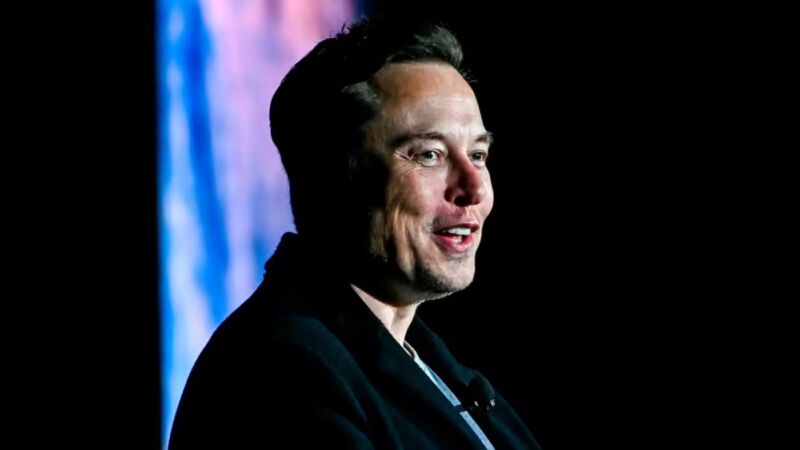
Elon Musk has defended his financial stewardship of Twitter, arguing that the social media platform would have faced a “negative cash flow situation of $3 billion a year” were it not for his controversial cost-cutting efforts.

The billionaire entrepreneur, who bought the social networking company for $44 billion in October after previously attempting to pull out of the deal, gave a snapshot of its dire finances during a Twitter Spaces online forum on Wednesday.

“We have an emergency fire drill on our hands . . . This company is like you’re in a plane that is headed towards the ground and high speed with the engines on fire and the controls don’t work,” he said. “That’s the reason for my actions that may seem sometimes spurious.”

He said that the platform had been on course to spend about $5 billion in 2023. Overall costs at Twitter in 2021, the last annual period that the company reported before being taken private, were $5.6 billion, during which time it made a net loss of $221 million.

Musk predicted that Twitter’s net cash outflow, “if you didn’t make any changes,” would be about $6 billion to $6.5 billion next year. This is partly because the company has been loaded with $12.5 billion of debt to help to fund his acquisition, which required about $1.5 billion a year in annual debt servicing payments amid rising interest rates, he said.

“Not good since Twitter has $1 billion in cash,” he said. “So that’s why I spent the last five weeks cutting costs like crazy.”

His remarks suggested the company was on track to make about $3 billion in annual revenues next year. That would suggest Twitter was on course for revenues as much as $2 billion lower in 2023 than the $5 billion it achieved in 2021—which mainly came from advertising. Many marketers have pulled out of the platform since Musk’s takeover because of moderation concerns.

The picture of Twitter’s finances comes after Musk fired about half of its 7,500-strong workforce and stripped employees’ benefits, prompting concerns about whether the company is sufficiently staffed in areas such as content moderation and compliance.

On Sunday, Musk said in a tweet that Twitter had been “in the fast lane to bankruptcy since May.”

However, Musk said on Wednesday that changes he had made would mean the company would “roughly” hit cash flow break-even.

“With the changes we are making here on massively reducing the burn rate, and building subscriber revenue, I now think that Twitter will, in fact, be okay next year,” Musk said, adding that he had spoken to advertisers who were urging him to show how Twitter could provide a return on their investment.

The Tesla and SpaceX chief executive has previously indicated he plans to transform Twitter into an “everything app,” where users might be able to send funds or shop, for example, in an effort to generate new revenue streams, including payments and subscriptions.

However, an attempt to launch a new premium subscription service, Twitter Blue, has been rife with challenges after some users wielded the offer of paid-for “blue tick” verification in order to impersonate others, causing the company to pause and later relaunch the service.

Late on Tuesday, Musk said he would resign as Twitter’s chief as soon as he had found someone “foolish enough to take the job,” bowing to the result of a poll of the platform’s users he conducted at the weekend.

Musk also indicated he would continue to run the company’s “software and server teams” after stepping down, suggesting he will remain closely involved in day-to-day operations and product development at the social networking site.

Additional reporting by Richard Waters in San Francisco

© 2022 The Financial Times Ltd. All rights reserved. Not to be redistributed, copied, or modified in any way.

https://arstechnica.com/?p=1906213


MSG defends using facial recognition to kick lawyer out of Rockettes show

MSG defends using facial recognition to kick lawyer out of Rockettes show

When Kelly Conlon joined her daughter’s Girl Scout troop for a fun outing to see the Rockettes perform their Christmas Spectacular show at Radio City Music Hall in New York, she had no idea she would end up booted from the show once she entered the building.

Security stopped Conlon, NBC New York reported, because she is a New Jersey lawyer. It seems that Madison Square Garden Entertainment has begun using facial recognition technology to identify any visitor to any of its venues—including Radio City Music Hall—who is involved with any law firm that is actively involved in litigation against MSG Entertainment.

Conlon has never practiced law in New York nor personally been involved in litigation against MSG Entertainment. Instead, she is guilty by association, as an associate for Davis, Saperstein and Solomon, which has spent years tangled up in litigation against a restaurant that NBC reported is “now under the umbrella of MSG Entertainment.”

According to Conlon, she became aware of this supposed conflict of interest when security guards approached her in the Radio City Music Hall lobby just as she passed through the metal detector. Over the speakers, Conlon heard a warning about a woman in a gray scarf, then security confirmed the warning was about her, telling her, “Our recognition picked you up.”

Despite Conlon assuring security that “I’m not an attorney that works on any cases against MSG,” she was escorted out. Ars could not immediately reach MSG for comment, but in a statement, MSG said the same thing would’ve happened to any attorney involved in her firm, claiming that her firm had been “notified twice” of MSG’s policy.

“MSG instituted a straightforward policy that precludes attorneys pursuing active litigation against the Company from attending events at our venues until that litigation has been resolved,” the statement provided to NBC said. “While we understand this policy is disappointing to some, we cannot ignore the fact that litigation creates an inherently adverse environment.”

A New York Times report suggests that MSG began using facial recognition technology in 2018 to “bolster security.” MSG venues post signs to notify visitors that the technology is being used. Ars could not immediately reach Conlon for comment, but she told NBC that she posed no threat at the Rockettes show, insisting, “I was just a mom taking my daughter to see a Christmas show.” She described her experience as “embarrassing” and “mortifying.”

Instead of attending the festive show with her daughter, Conlon waited outside. NBC reported that others who have been blacklisted have sued MSG over the policy, viewing it as MSG’s way of punishing law firms that go after the titan of entertainment. One firm so far has fought and won in court, becoming the only exception to the policy, but MSG is still appealing that decision.

https://arstechnica.com/?p=1906010