Comcast’s sneaky Broadcast TV fee hits $27, making a mockery of advertised rates

A Comcast service van seen from behind.
Enlarge / Comcast service van parked on residential street in Lafayette, California, September 28, 2021.
Getty Images | Smith Collection/Gado

The Comcast “Broadcast TV” fee that isn’t included in the company’s advertised prices is rising again, tacking as much as $27 onto the monthly bills of cable TV users. Comcast’s Broadcast TV and Regional Sports Network fees combined could add nearly $40 to a customer’s monthly TV bill after next month’s price hikes, all while Comcast advertises much lower prices than people actually pay.

“Comcast has started notifying customers and municipalities that it plans to raise video and Internet prices next month, including a whopping $7.35 a month increase for the Broadcast TV fee in one town,” a TV Answer Man article said on Saturday. The $7.35-per-month increase is in Taunton, Massachusetts, where Comcast said the Broadcast TV fee will rise from $18.65 to $26.

The Broadcast TV fee is rising from $24.95 a month to $27.25 a month starting on December 20 in Sandown, New Hampshire, a letter from Comcast to town government officials said. In Sandown, the Regional Sports Network fee is rising from $11.85 to $12.

The TV Answer Man report also said several towns in Michigan were “alerted that the Broadcast Fee will rise from $14.80 to $20.70 a month while the monthly Regional Sports fee will go from $9.50 to $10.15.” These are just a few examples as Comcast is raising prices nationwide.

The Broadcast TV charges added to customer bills vary by region. Comcast says the fees are based on the amounts that “broadcast stations charge us to carry them on our cable systems.” It’s true that Comcast has to pay retransmission consent fees to carry the stations, even though stations can be accessed for free over the air with an antenna. But the sneaky manner in which Comcast and other cable companies pass those costs on to customers can lead to bill shock and unexpected price increases.

Comcast’s advertised prices do not include the Broadcast TV or the Regional Sports Network fees even though these fees account for a large portion of customers’ actual monthly bills. On Comcast’s ordering website, the base prices are listed along with a message stating that Broadcast TV and Regional Sports fees are “extra” and that the price is “subject to change.” The Broadcast TV and Regional Sports fees also aren’t included in how Comcast calculates promotional pricing and thus can be raised even when a customer’s promotional rate hasn’t expired.

Comcast defends price hikes

Comcast said in the letter to town officials in Sandown that “rising programming costs, most notably for broadcast TV and sports, continue to be the biggest factors driving price increases. While we absorb some of these costs, these fee increases affect service pricing.”

Comcast is also raising the base prices of monthly service plans and issued a statement saying the average increase nationwide is 3.8 percent. A Comcast spokesperson told Ars the 3.8 percent figure includes all the residential services—TV, Internet, and phone lines. But Comcast said there are no increases in phone prices, so the average TV and Internet price hikes would be higher than 3.8 percent.

Comcast’s statement on the price increases blamed the rising cost of video programming but said the overall increases are lower than the most recent inflation rate:

TV networks and other video programmers continue to raise their prices, with broadcast television and sports being the biggest drivers of increases in customers’ bills. We’re continuing to work hard to manage these costs for our customers while investing in our broadband network to provide the best, most reliable Internet service in the country and to give our customers more low-cost choices in video and connectivity so they can find a package that fits their lifestyle and budget. Our national average increase of 3.8 percent is about half of the most recent rate of inflation.

A Comcast spokesperson also noted that “the rest of the industry is not immune from the rising costs charged by programmers as most of today’s popular streamers have taken recent price increases as well.” But compared to Comcast, streaming services’ advertised rates are generally closer to the actual prices their customers pay.

The letter to Sandown officials listed increases to base monthly rates for TV and Internet service and hikes to several fees in addition to the Broadcast TV and Regional Sports ones. TV box fees are set to rise from $8.50 to $10 a month, modem rentals from $14 to $15 a month, and in-home service visits from $70 to $100, the letter said.

Charter raised Broadcast TV fee to $21

We’ve written about Comcast’s ever-increasing Broadcast TV and Regional Sports Network fees numerous times over the years. We’ve written similar articles about cable giant Charter Communications raising its Broadcast TV fee and other rates, though Charter doesn’t impose a Regional Sports Network fee.

Charter raised prices on Spectrum home Internet service by $5 earlier this month, bringing its standalone broadband prices to $79.99 a month for 300Mbps download speeds, $99.99 a month for 500Mbps, and $119.99 a month for 1Gbps. Charter also raised its Broadcast TV fee in March from $18 to $21 a month.

Disclosure: The Advance/Newhouse Partnership, which owns 12.4 percent of Charter, is part of Advance Publications. Advance Publications owns Condé Nast, which owns Ars Technica.

https://arstechnica.com/?p=1900423


Twitter staff cuts enabled spam porn deluge that drowned out China protest news

Twitter staff cuts enabled spam porn deluge that drowned out China protest news

This weekend, widespread protests erupted in China in what amounted to “the biggest show of opposition to the ruling Communist Party in decades,” AP News reported. Many protesters attempted to document events live to spread awareness and inspire solidarity across Twitter. Demonstrations were so powerful that Chinese authorities actually seemed to cave, appeasing some of the protesters’ demands by easing the severe lockdown restrictions that sparked the protests.

This could have been a moment that showed how Twitter under Elon Musk is still a relevant breaking-news source, still a place where free speech demonstrations reach the masses, and thus, still the only place to track escalating protests like these. Instead, The Washington Post reported that a flood of “useless tweets” effectively buried live footage from protests. This blocked users from easily following protest news, while Twitter seemingly did nothing to stop what researchers described as an apparent Chinese influence operation.

For hours, these tweets dropped Chinese city names where protests occurred into posts that were mostly advertising pornography and adult escort services. And it worked, preventing users attempting to search city names in Chinese from easily seeing updates on the protests. Researchers told The Post that the tweets were posted from a range of Chinese-language accounts that hadn’t been used for months or even years. The tweets began appearing early Sunday, shortly after protesters started calling for Communist Party leaders to resign.

Examples of tweets can be seen here.

Researchers swiftly took note of the suspected Chinese influence operation very early on Sunday. Some reached out to Twitter directly. Eventually, an outside researcher managed to reach a current Twitter employee, who confirmed that Twitter was working to resolve the issue. However, experts told The Post that Twitter’s solution only seemed to reduce the problem, not completely resolve it. Stanford Internet Observatory Director Alex Stamos told The Post that his team has continued investigating the operation’s reach and impact.

Stamos did not immediately respond to Ars’ request for comment. Twitter reportedly has no communications team.

A former Twitter employee told The Post that what Stamos’ team observed is a common tactic used by authoritarian regimes to reduce access to news. Normally, Twitter’s anti-propaganda team would have manually taken down the accounts, that former employee said. But like many other teams hit by Twitter layoffs, firings, and resignations, that team has been heavily reduced.

“All the China influence operations and analysts at Twitter all resigned,” the former Twitter employee told The Post.

Scrutiny increases on automated content removal

In reducing the content-moderation teams, Musk seems to rely mostly on automated content removal to catch violations that previous staff members had manually monitored. It has become an issue that stretches beyond China. Also this weekend, French regulators said they’ve become dubious about Twitter capably stopping misinformation spread, and the New Zealand government had to intervene and contact Twitter directly when Twitter failed to detect banned footage of the Christchurch, New Zealand, terror attack.

A spokesperson for New Zealand Prime Minister Jacinda Ardern told The Guardian that “Twitter’s automated reporting function didn’t pick up the content as harmful.” Apparently, the entire Twitter team that New Zealand had expected to partner with in blocking such extremism-related content was laid off.

Now Ardern’s office says “only time will tell” if Twitter is truly committed to removing harmful content, and other governments globally seem to agree. Just today, French communications regulatory agency Arcom told Reuters that “Twitter has shown a lack of transparency in the fight against misinformation,” releasing a report that specifically calls out how “imprecise” the company was about how its automated tools combat misinformation.

According to European Union data reviewed by AP, Twitter had already become more sluggish with removing hate speech and misinformation throughout the past year, even before Musk took over. But it’s Musk who will have to answer to governments scrambling to ensure that Twitter’s content moderation will actually work to prevent extremism and disinformation campaigns from spreading online and causing real harm.

By mid-2023, Musk will feel greater pressure to respond to countries’ concerns in the EU, where stricter rules protecting online safety will soon be enacted. If he doesn’t, he risks fines as high as 6 percent of Twitter’s global revenue, AP reported.

For now, though, Musk is basically doing the opposite of what online safety experts want, according to AP. As Musk grants “amnesty” to suspended Twitter accounts, experts told AP that they predict misinformation and hate speech will only rise on the platform.

These experts included members of Twitter’s Trust and Safety Council, who confirmed that the group has not met since Musk took over and seems unsure whether a scheduled meeting for mid-December will occur. So far when making decisions on bringing back suspended accounts, Musk seems to prefer Twitter polls to trusting expert opinions. One council member, University of Virginia cyber civil rights expert Danielle Citron, told AP that “the whole point of the permanent suspension is because these people were so bad they were bad for the business.”

Ars couldn’t immediately reach Citron for comment, but she told AP that—like rumors that Twitter could break at any moment—Musk granting amnesty to suspended accounts is yet another “disaster waiting to happen.”

https://arstechnica.com/?p=1900332


Twitter is now having trouble paying some employees on time

Payslip
Enlarge / Payslip

Twitter is investigating why some staff in Europe have not received their November salaries in a timely manner amid sweeping cuts and layoffs across the company since Elon Musk’s takeover.

Twitter staff in the UK received an email just before 1 pm London time on November 25 telling them their pay date would be November 28. Alongside the email, sent from the EMEA Payroll Team, staff received their usual monthly payslips. However, staff in the UK and Germany appear not to have been paid on time.

“It has come to our attention that some of you may not have received your November 2022 salary yet in your bank account,” an email sent to current and former staff reads. “The payments have gone through our Twitter bank account, and as usual, with no change to the process.”

The email says this “might be a delay in Interbank settlement” but adds the company is “actively investing [sic] with our bank and will keep you posted.”

Four independent sources in the UK and Germany told Ars Technica that they had not received payment on the morning their salaries were due.

The sources included current and former staff—the latter of whom should still be paid per the terms of their release from the company.

Usually, Twitter staff are paid on the 28th of every month. If the day falls on a Monday, staff typically see their salary as a pending payment on Friday, with the cash hitting their accounts by midnight on Saturday.

Twitter has already been criticized by former staff for not paying their expenses on time. Former Twitter employees who incurred expenses while still working for the company are owed thousands in expenses that are gathering debt on their personal bank accounts. Much of Twitter’s payroll staff resigned in mid-November after Musk’s work-long-hours-or-quit ultimatum.

While staff in the UK and Germany have not been paid, those in the Netherlands and Ireland have been—suggesting that the problem is one of staffing and operations, rather than a systematic refusal to pay workers. “The company is just not run well,” said one former UK staff member affected.

One former Twitter employee shared screenshots of their bank accounts showing their salary not being paid had pushed them into an overdraft. The former staff member is also owed expenses from the company incurred while they worked there. “First you are told you are out, but we are going to try to save your job,” the former employee said. “Then you get told you will be paid so you can’t start work or get paid for jobs, otherwise you’re fired. Now it’s payday, and direct debits are starting to be taken from a virtually empty account.

“I feel ashamed I trusted the words of the senior staff who now all got their money and are happily enjoying it, while the rest of us suffer like this. That is one very harsh way to push people to quit rather than wait for their severance packages.”

By midday UK time, some staff members reported they were being paid with a payment reference atypical of how Twitter would usually pay their salaries—though one former employee estimated around 80 percent of workers had not been paid by around 1 pm UK time, based on conversations held in a Slack group containing former and current employees.

One former staff member shared a screenshot with Ars showing a payment had been made, then reversed, this morning. Another ex-Twitter employee said that “at least 20 people” had to make calls to their mortgage providers because of a lack of funds because their salary did not arrive in time.

As of 6 pm UK time, some staff in the UK still had not been paid, according to those with access to the group. Some received an email suggesting that receiving banks were undergoing anti-fraud checks.

Others reported that payments were coming from different banks that Twitter would not usually use to pay salaries—in contradiction of Twitter’s earlier claims to staff that “as usual, with no change to the process.”

Twitter did not respond to a request to comment on this story. It is unclear whether it has any communications staffers still employed after layoffs.

https://arstechnica.com/?p=1900325


Founder ran FTX as “personal fiefdom”; many assets stolen or missing, court hears

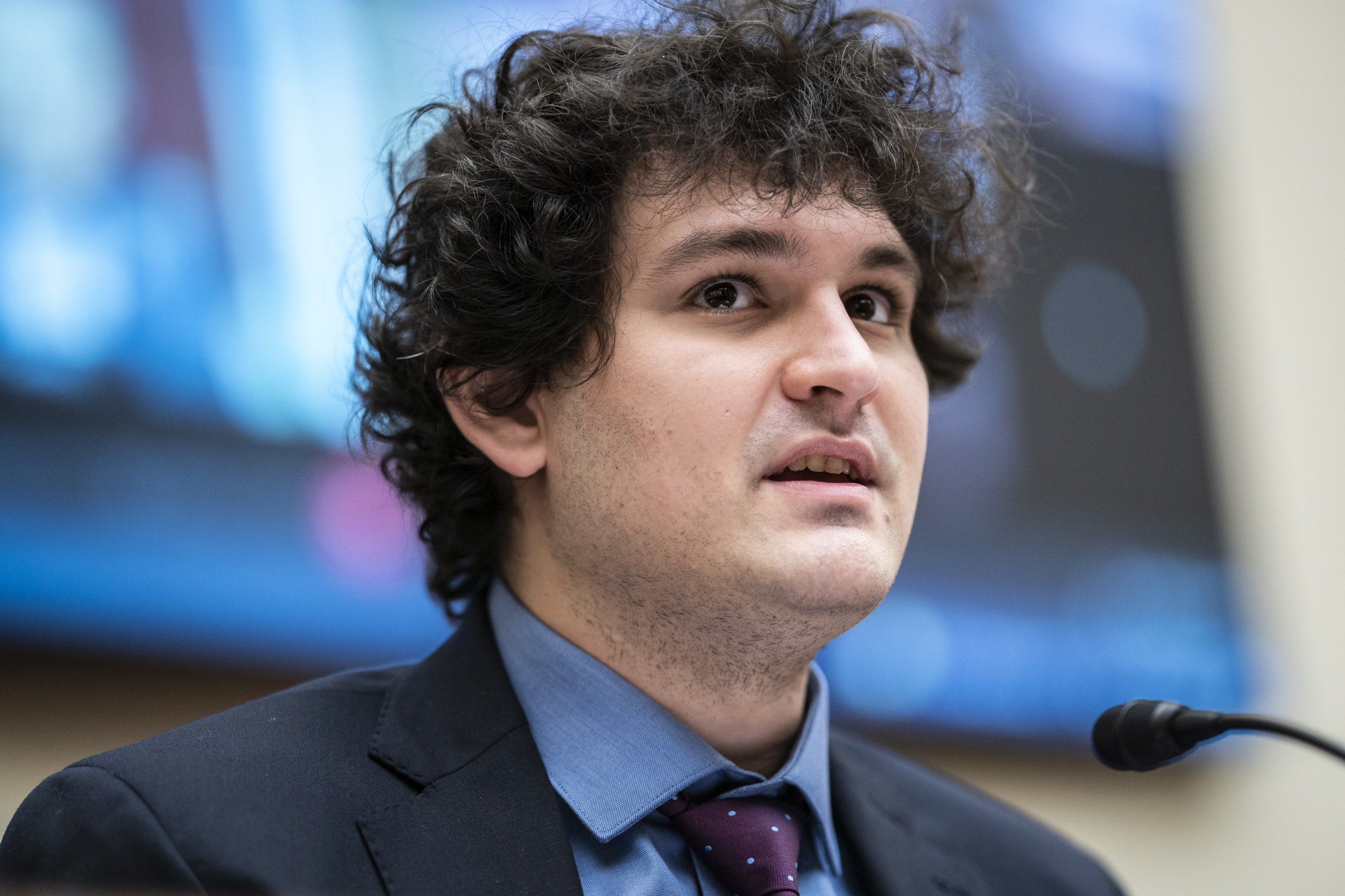
Then-FTX CEO Sam Bankman-Fried speaks during a Congressional hearing.
Enlarge / Then-CEO of FTX Sam Bankman-Fried speaks during a House Committee on Financial Services hearing on December 08, 2021 in Washington, DC.
Getty Images | The Washington Post

FTX co-founder and former CEO Sam Bankman-Fried ran the failed cryptocurrency exchange as his “personal fiefdom” and many of its assets have disappeared, an FTX lawyer said at a hearing in US Bankruptcy Court in Delaware on Tuesday. “A substantial amount of assets have either been stolen or are missing,” said James Bromley, a Sullivan & Cromwell partner who is representing FTX, according to a New York Times report.

“What we have here is a worldwide, international organization, but which was run as a personal fiefdom of Sam Bankman-Fried,” Bromley said, according to The Wall Street Journal. “FTX was in the control of inexperienced and unsophisticated individuals, and some or all of them were compromised individuals.”

Bromley also told the court that “substantial amounts of money” were spent on items unrelated to the business, including vacation homes in the Bahamas, the Financial Times wrote. FTX now owes its top 50 creditors over $3.1 billion, according to a bankruptcy court filing.

FTX moved its headquarters from Hong Kong to the Bahamas in September 2021, attributing the move to the Bahamas’ favorable cryptocurrency regulations. A Fortune report said “FTX broke ground on a $60 million headquarters in the Bahamas” in April, but “local construction firms and people familiar with the matter” confirmed that construction never began.

“We have witnessed one of the most abrupt and difficult collapses in the history of corporate America,” Bromley said at the hearing, adding that bankruptcy proceedings “allowed everyone for the first time to see under the covers and recognize the emperor had no clothes.”

Bankman-Fried to staff: “I disappointed all of you”

Bankman-Fried apologized to FTX employees in a newly reported letter shared in the company Slack. “I didn’t mean for any of this to happen, and I would give anything to be able to go back and do things over again. You were my family,” he wrote in the letter, published by Quartz. “I’ve lost that, and our old home is an empty warehouse of monitors. When I turn around, there’s no one left to talk to. I disappointed all of you, and when things broke down I failed to communicate.”

Bankman-Fried also wrote to former employees that FTX filed for bankruptcy due to “an extreme amount of coordinated pressure,” which he said he agreed to “reluctantly.”

“I froze up in the face of pressure and leaks and the Binance LOI [letter of intent] and said nothing,” Bankman-Fried wrote, referring to Binance’s abandoned plan to buy FTX. Bankman-Fried resigned from the CEO role when FTX filed for Chapter 11 bankruptcy in the Delaware court on November 11.

As noted by CoinDesk, Bankman-Fried’s letter “did not address allegations that FTX diverted customer and corporate funds to prop up Bankman-Fried’s Alameda Research, revelations that Alameda had an exemption from FTX’s normal liquidation process or statements that Alameda had loaned funds to FTX officials including himself.” Alameda Research is a related firm co-founded by Bankman-Fried that also filed for bankruptcy on November 11.

As previously reported, FTX’s bankruptcy filing came “after a whirlwind 10 days in which Bankman-Fried desperately sought billions of dollars to save his company after customers rushed to pull their assets out of the business following concerns surrounding its financial health and links between the exchange and Alameda.”

FTX was valued at $32 billion

FTX’s valuation rose to $32 billion in a $400 million funding round announced in January 2022. In September, FTX was reportedly in talks with investors to raise up to $1 billion in another funding round that would have maintained the company’s $32 billion valuation.

At yesterday’s hearing, “Bromley said the bankruptcy team had found that ‘substantial funds’ were transferred from the exchange to Bankman-Fried’s crypto hedge fund Alameda Research, and ‘substantial amounts of money were spent on things not related to the business,'” the Financial Times wrote. That included about $300 million worth of Bahamas real estate consisting of “homes and vacation properties used by the senior executives” of FTX, he said.

FTX’s new CEO, John Ray III, told the bankruptcy court last week that he had never in his career “seen such a complete failure of corporate controls and such a complete absence of trustworthy financial information as occurred here.” FTX did not have an “accurate list of bank accounts and account signatories,” lacked a complete list of employees, and used “an unsecured group email account as the root user to access confidential private keys and critically sensitive data for the FTX Group companies around the world,” he also wrote in the court filing.

Separately, Semafor reported yesterday that Bankman-Fried invested $100 million in Elon Musk-owned Twitter. Musk denied the report.

https://arstechnica.com/?p=1899880


Musk breaks promise to form Twitter moderation panel, blames activists

Musk breaks promise to form Twitter moderation panel, blames activists

When “Chief Twit” Elon Musk launched a poll to decide whether to reinstate Donald Trump’s Twitter account, many wondered what happened to Musk’s plan to form a “widely diverse” content moderation council to help him weigh any decisions to reverse permabans. He had announced that plan after meeting with civil rights groups earlier this month but had never mentioned it since. It took four days of Trump not tweeting before Musk finally provided an update on that oversight council that he never formed.

In a tweet seemingly blaming activists for Twitter’s advertising woes, Musk claimed that he had only promised to form the council on the condition that activists promised to stop pushing advertisers to boycott his platform.

“A large coalition of political/social activist groups agreed not to try to kill Twitter by starving us of advertising revenue if I agreed to this condition,” Musk tweeted. “They broke the deal.”

Some activists who attended the meeting tweeted to confirm that they never made such a deal with Musk, including Free Press co-CEO Jessica Gonzalez, who helped drive a #StopToxicTwitter coalition pressuring Twitter’s top 20 advertisers to boycott the platform.

“Not sure who Musk is talking about here, but I met with him a few weeks ago with civil rights leaders, and I also co-lead the #StopToxicTwitter coalition that is calling on advertisers to pause ads until he rights the ship,” Gonzalez tweeted. “I never made any such deal.”

NAACP President Derrick Johnson backed Gonzalez in his own tweet denying activists made a deal with Musk.

“We would never make such a deal,” Johnson tweeted. “Democracy always comes first. The decisions being made at Twitter are dangerous, and it is our duty, as it has been since our founding, to speak out against threats to our democracy. Hate speech and violent conspiracies can have no safe harbor.”

When Ars previously reported on the meeting between Musk and activists, it was immediately clear that Gonzalez planned to continue promoting the #StopToxicTwitter campaign. Gonzalez said at that time that Musk’s promises, including forming a council to review content decisions, were “just the beginning of a long process” to hold Twitter accountable for upholding community standards.

Johnson didn’t immediately respond to a request for comment, but Gonzalez told Ars that Musk is using activists as a scapegoat for his own poor decision-making regarding brand safety.

“Musk is losing advertisers because he’s acted irresponsibly, slashing content moderation teams that help keep brands safe and gutting the very sales teams responsible for maintaining relationships with advertisers,” Gonzalez told Ars. “The main person responsible for the Twitter advertiser exodus is Elon Musk.”

Twitter shut down its communications department and could not be reached for comment.

https://arstechnica.com/?p=1899819


Sneaky ways cops could access data to widely prosecute abortions in the US

Sneaky ways cops could access data to widely prosecute abortions in the US

It’s not clear yet what role tech companies will play in helping police access data to prosecute abortions in post-Roe America, but it has already become apparent that law enforcement is willing to be sneaky when seeking data.

Cops revealed one potential tactic they could use back in June, when Meta faced scrutiny from reproductive rights activists for complying with a search warrant request from police in Madison County, Nebraska. The Nebraska cops told Meta they were investigating a crime under the state’s “Prohibited Acts with Skeletal Remains.”

But what they were actually investigating was a case involving a woman, Jessica Burgess, who was suspected of aiding her 17-year-old daughter, Celeste Burgess, in procuring an unlawful abortion in the state at 23 weeks. The mother and daughter previously told police that Celeste miscarried, but—in part because of data Meta supplied—the mother is now being prosecuted for unlawfully aiding her daughter in an abortion. Celeste is being prosecuted as an adult for other crimes.

Meta seemed blindsided by criticism over its decision to comply with these Nebraska warrants. At the time, a Meta spokesperson told Ars that “nothing in the valid warrants we received from local law enforcement in early June, prior to the Supreme Court decision” overturning Roe v. Wade, “mentioned abortion.”

Some of Meta’s toughest critics didn’t buy into Meta’s explanation. Civil rights litigator Cynthia Conti-Cook and Digital Defense Fund (DDF) director Kate Bertash, both experts tracking digital surveillance of abortion, wrote in the Los Angeles Times that Meta could have discovered the true intentions of the investigation if the company had followed its own policies and reviewed the data before sharing it with law enforcement.

Facebook had the option there, the op-ed suggested, to lean on its policy to “conduct a careful review of each law enforcement request to disclose user data for consistency with international human rights standards.” Because the United Nations protects access to abortion under international human rights law, Facebook could potentially have fought the warrant from Nebraska police, these experts claimed, but it did not.

The op-ed didn’t specify, however, what legal basis there would be for a US-based company like Facebook to argue in a US court to uphold its own policies adhering to international human rights laws when those policies seem to conflict with US laws. The experts pointed in the op-ed to the Convention on the Elimination of All Forms of Discrimination against Women, a 50-year-old agreement that includes the right to abortion access—which the US famously signed but never ratified, the United Nations recently noted.

DDF does not respond to any press requests, and Conti-Cook told Ars that “Facebook should be the one to explain whether and how they apply their policies about considering international human rights standards to legal requests, as their website promises users, or whether those promises are meaningless and not applied equally in the US.” Meta did not respond to multiple requests to clarify whether its policy means it will only push back against law enforcement requests violating international human rights standards that align with US laws.

Lawyers representing Celeste and Jessica Burgess did not respond to Ars’ requests for comment. For many following their story, though, the mother and daughter’s data seizure became a prime example of how Big Tech companies would help law enforcement investigate abortions. Because of digital surveillance, experts say that abortion in post-Roe America could be prosecuted at levels unprecedented in US history because, without digital surveillance, abortion has been historically harder for police to track.

But just because Big Tech companies collect the most information on Americans, that doesn’t mean Facebook or Google will inevitably be the primary force driving abortion-related arrests. As abortion access becomes further restricted nationwide—and new legal gray areas emerge as other states pass laws attempting to protect access—the courts will have to decide which laws stand up against the others and which evidence is compelling. There will likely be other kinds of tech not yet widely known that could prove more useful to police in conducting abortion surveillance and winning guilty verdicts. A staff technologist and privacy advocate for the Electronic Frontier Foundation (EFF) tracking abortion-related privacy concerns, Daly Barnett, told Ars that even before Roe v. Wade was overturned, it was already “a constant battle” for privacy experts struggling to keep up with “what new surveillance technologies law enforcement is abusing.”

The EFF recently revealed one example of a new surveillance technology granting cops access to data that nobody knew they had. A joint investigation from the EFF and the Associated Press brought to light police software called Fog Reveal, which EFF described as a potentially illegal tool that police were trying to keep secret.

https://arstechnica.com/?p=1873036


Major tax-filing websites secretly share income data with Meta

Major tax-filing websites secretly share income data with Meta

Here to add another layer of dread ahead of the upcoming tax season, The Markup reported that some of the biggest online e-filing services—unbeknownst to millions of users—have been sharing sensitive user financial information with Meta. Some services linked user names and email addresses with detailed information like income, refund amounts, filing status, and even the amount of dependents’ college scholarships.

These services include H&R Block, TaxAct, and TaxSlayer, which transmit data via a tool that Meta provides for businesses called the Meta Pixel. The Markup published the data sent to Meta by these companies, which it confirmed was sometimes generated and shared “regardless of whether the person using the tax filing service has an account on Facebook” or other Meta service.

Meta provides the Meta Pixel as a code that businesses can customize and embed on their websites to gather information to help businesses improve targeted marketing campaigns on Meta platforms. In return for this service, Meta gets to use the shared data to drive its own algorithms in its mission to know just about everything that can be known about its own users.

The Markup asked the Internal Revenue Service to verify whether tax preparers sharing sensitive financial information with Meta violated IRS regulations, but the IRS declined to comment.

Tax-filing services respond

H&R Block spokesperson Angela Davied told The Markup that the company would be reviewing the information revealed by The Markup. She told Ars that the company has since decided to change how it uses the Meta Pixel.

“At H&R Block, we take protecting our clients’ privacy very seriously, and we are taking steps to mitigate the sharing of client information via pixels,” Davied told Ars.

A TaxSlayer spokesperson, Molly Richardson, told The Markup that TaxSlayer, like H&R Block, was evaluating its use of the pixel. “Our customers’ privacy is of utmost importance, and we take concerns about our customers’ information very seriously,” Richardson said, confirming that the pixel would be removed until TaxSlayer finished its review.

This week, the Markup reviewed data shared from tax services with Meta. Its reporting confirmed that TaxSlayer no longer has the pixel on its site, and TaxAct currently isn’t sending income and refund amounts to Meta but was still sharing data regarding names of dependents. As of Monday, The Markup said H&R Block was still sharing “information on health savings accounts and college tuition grants.”

A spokesperson for TaxAct, Nicole Coburn, told The Markup, “We take the privacy of our customers’ data very seriously.” She also confirmed that “TaxAct, at all times, endeavors to comply with all IRS regulations.” [Update: Coburn told Ars, “The privacy of our customers is very important to all of us at TaxAct and we continue to comply with all laws and IRS regulations. Data provided to Facebook is used at an aggregate level, not the individual level, by TaxAct to analyze our advertising effectiveness. TaxAct is not using the information provided by its customers and referenced in the report issued by The Markup to target advertising with Facebook.]

According to Meta, it prohibits businesses from sharing “information about an individual’s financial account or status.” This rule didn’t stop two businesses from sharing income information, The Markup reported.

A Meta spokesperson told Ars that the company detects and filters out some of this data.

“Advertisers should not send sensitive information about people through our business tools,” Meta’s spokesperson told Ars. “Doing so is against our policies and we educate advertisers on properly setting up business tools to prevent this from occurring. Our system is designed to filter out potentially sensitive data it is able to detect.”

Although the IRS declined to comment, The Markup reported that the IRS strictly regulates the information that tax preparers can collect and share without first gaining user consent. “For anything beyond immediately facilitating filing, the preparer has to get signed consent from the user that explains the recipient and the precise information being disclosed,” The Markup reported.

Tax companies sharing sensitive financial data could risk jail time or fines for not explicitly telling users how information gathered during tax filing was shared with Meta, The Markup reported. A review conducted by The Markup found no such disclosures directly mentioning sharing data with Meta or Facebook posted on H&R Block, TaxAct, or TaxSlayer websites.

https://arstechnica.com/?p=1899620


Musk recruits engineers for “Twitter 2.0” after mass layoffs and resignations

Elon Musk's Twitter account displayed on a phone screen with the Twitter logo in the background.
Getty Images | NurPhoto

Having gutted Twitter’s staff, Elon Musk told remaining employees he plans to hire new engineers and salespeople, The Verge reported Monday. “During an all-hands meeting with Twitter employees today, Musk said that the company is done with layoffs and actively recruiting for roles in engineering and sales and that employees are encouraged to make referrals, according to two people who attended and a partial recording obtained by The Verge,” the report said.

Musk completed his $44 billion purchase of Twitter on October 27 and laid off about half of the company’s 7,500 employees. He sent an ultimatum to the remaining staff last week, saying they must commit to “working long hours at high intensity” to keep their jobs; the ultimatum came with the choice of staying at the company or resigning with three months of severance.

Some sales employees who opted to stay after Musk’s ultimatum were reportedly laid off shortly after. With the latest departures, Twitter was reportedly left with about 2,700 employees. Musk also laid off about 5,000 contractors and banned remote work, while warning staff of a “dire” economic outlook.

In yesterday’s all-hands meeting, Musk reportedly told staff that “in terms of critical hires, I would say people who are great at writing software are the highest priority.” Another Verge report last week said that “Twitter recruiters have already started reaching out to outside engineers to see if they want to join ‘Twitter 2.0—an Elon company.'”

Musk seeks “anyone who actually writes software”

Musk told employees in his ultimatum email that under his ownership, Twitter will be “much more engineering-driven. Design and product management will still be very important and report to me, but those writing great code will constitute the majority of our team and have the greatest sway.”

After Musk’s ultimatum deadline passed, he began meeting with engineers who chose to stay. In an email to staff on Friday, Musk wrote, “Anyone who actually writes software, please report to the 10th floor at 2 pm today. Before doing so, please email a bullet point summary of what your code commits have achieved in the past ~6 months, along with up to 10 screenshots of the most salient lines of code.”

The Twitter careers page wasn’t listing any open jobs today. There were more than 100 job openings before Musk took over.

Musk may have to hire engineers quickly to keep Twitter systems running properly. A Washington Post report quoted a former employee as saying layoffs and other departures “have left multiple critical systems down to two, one or even zero engineers.” Gutted departments include “Twitter’s traffic and front end teams that route engineering requests to the correct backend services,” a Verge report said. “The team that maintains Twitter’s core system libraries that every engineer at the company uses is also gone.”

https://arstechnica.com/?p=1899533


Twitter reverses Trump ban; Trump refuses to return

Twitter reverses Trump ban; Trump refuses to return

Donald Trump has not tweeted since Elon Musk reinstated his Twitter account on Saturday. In interviews, Trump has suggested he no longer needs Twitter, planning to promote his next presidential run on his own social network, Truth Social.

“I don’t see any reason for it,” Trump said via video-conference when a panel at the Republican Jewish Coalition’s annual leadership meeting asked if he’d be logging back in to Twitter, according to Reuters. Trump claimed that Twitter’s “got problems,” Bloomberg reported, and he could get better user engagement on Truth Social. Many have noted that Trump is also bound to give Truth Social a six-hour exclusive on any post before he’s allowed to post anywhere else.

Musk made the decision to reinstate Trump’s account after launching a poll that logged more than 15 million votes—with close to 52 percent voting in favor of bringing back the former president. Nobody’s sure how much of that vote was driven by bots, The Verge reported, but that didn’t stop Musk, who is painfully aware of how bots could impact polls, from claiming the vote was driven by legitimate users.

“The people have spoken,” Musk tweeted, confirming that the profile for account @RealDonaldTrump would be accessible again. “Trump will be reinstated.”

Trump’s account was banned in 2021, when Twitter decided that two tweets in particular “were highly likely to encourage and inspire people to replicate the criminal acts that took place at the US Capitol on January 6, 2021.”

Now that Musk has reinstated the account, those are the first two tweets that anyone visiting Trump’s Twitter profile today will read. They will remain at the top of Trump’s feed unless Trump tweets again or deletes them.

The first says, “To all of those who have asked, I will not be going to the Inauguration on January 20th.” At that time, Twitter said there was already a plan for a second attack on the Capitol scheduled in the coming weeks. That led Twitter’s old guard to decide that it was possible that this tweet glorified or incited violence by serving as “encouragement to those potentially considering violent acts that the Inauguration would be a ‘safe’ target, as he will not be attending.”

The second says, “The 75,000,000 great American Patriots who voted for me, AMERICA FIRST, and MAKE AMERICA GREAT AGAIN, will have a GIANT VOICE long into the future. They will not be disrespected or treated unfairly in any way, shape or form!!!” Here, Twitter decided Trump was saying that he would not be allowing for an orderly transition between his administration and President Joe Biden’s. Twitter also deemed the phrase “American Patriots” as describing Trump supporters, suggesting the tweet could potentially also be read as a show of support for “those committing violent acts at the US Capitol.”

Previously, Twitter viewed these tweets as so inappropriate, the social platform denied attempts by federal archivists to commandeer the account and preserve tweets for historical purposes.

The January 6 attack is still being investigated by Congress, but CBS News reported yesterday that all evidence collected by Congress will be shared within the next month. It’s not clear how that will affect Trump, given that he refused to cooperate with the investigation, filing a lawsuit to block a subpoena that would have compelled him to provide testimony and documents.

When Musk took over Twitter, he claimed that he would be forming a content moderation council before bringing back banned accounts like Trump’s. There has been no mention of that council forming since then, as Twitter has been seemingly focused more on cutting staff and developing new monetizable products and features than it has on addressing advertiser concerns over content moderation.

Instead, Musk appeared to make the decision to reinstate Trump based solely on the poll or intended to reinstate the account regardless of the poll results.

Some criticized Musk for celebrating Trump’s return by tweeting “Vox Populi, Vox Dei,” which translates to “the voice of the people is the voice of God.” The full quote, some pointed out, translates to this warning: “Do not listen to those who say the voice of the people is the voice of God, since the tumult of the crowd is always close to madness.”

Trump and Truth Social did not respond to Ars’ requests for comment. Twitter reportedly cut its communications department.

https://arstechnica.com/?p=1899250


Google settles “Location History” lawsuit with 40 states, will pay $392 million

Google settles “Location History” lawsuit with 40 states, will pay $392 million

Google has settled a privacy lawsuit with a coalition of 40 state attorneys general today. Google agreed to pay $391.5 million for misleading Location History settings the company was running from 2014-2020.

Google’s Location History settings have gotten it in trouble with several regulatory bodies. The action began after a 2018 Associated Press article pointed out that the “Location History” check box didn’t control all Google location history across your entire account and that many location tracking features lived under a second check box called “Web & App Activity.” Consumers might turn off the “Location History” check box thinking it stopped all Google location tracking, but it was actually only for a single Google Maps feature. Google lost a case in Australia over this setting in 2021 and recently settled a separate lawsuit with Arizona for $85 million. A few other states still have pending lawsuits.

Google redesigned its privacy settings several times since the AP article, and in a blog post on the settlement, Google said the ruling was “based on outdated product policies that we changed years ago.”  As part of the settlement, Google promises to make more privacy settings changes in “the coming months,” saying the changes include:

  • Revamping user information hubs: To help explain how location data improves our services, we’re adding additional disclosures to our Activity controls and Data & Privacy pages. We’re also creating a single, comprehensive information hub that highlights key location settings to help people make informed choices about their data.
  • Simplified deletion of location data: We’ll provide a new control that allows users to easily turn off their Location History and Web & App Activity settings and delete their past data in one simple flow. We’ll also continue deleting Location History data for users who have not recently contributed new Location History data to their account.
  • Updated account set-up: We’ll give users setting up new accounts a more detailed explanation of what Web & App Activity is, what information it includes, and how it helps their Google experience.

Ellen Rosenblum, the Oregon attorney general, recapped the lawsuit, saying, “For years, Google prioritized profit over the privacy of people who use Google products and services. Consumers thought they had turned ‘off’ their location tracking features on Google, but the company continued to secretly record their movements and use that information for advertisers.”

Google’s business model is almost entirely made up of tracking people and using that data to show them relevant ads across the Internet. The company’s last yearly report showed $282 billion in revenue, so for “years” of privacy violations, that $392 million settlement works out to about 12 hours of revenue.

https://arstechnica.com/?p=1897732