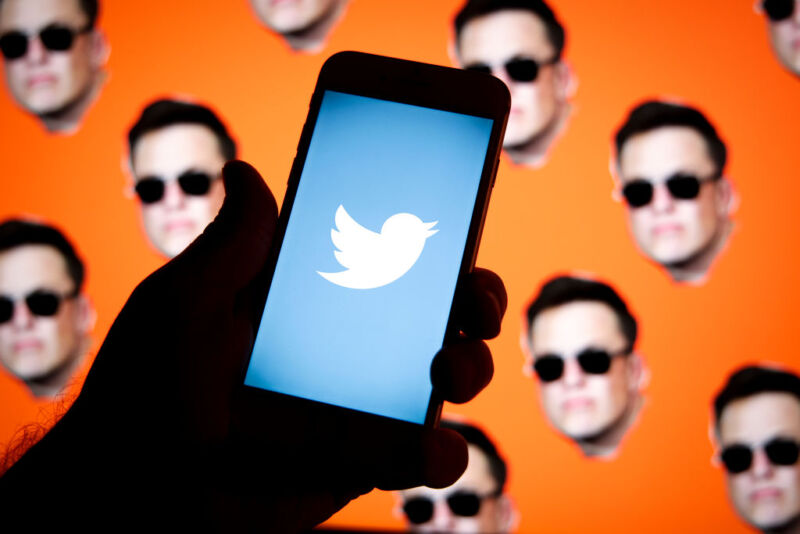
Twitter offering some laid-off staff only half what they’re owed, lawsuit says

Twitter offering some laid-off staff only half what they’re owed, lawsuit says

Before layoffs began at Twitter, employees had already filed a class-action lawsuit alleging that Twitter violated federal and California laws by not giving staff proper notice before termination. This lawsuit was widely reported, but it’s still unlikely that every employee affected by layoffs is aware they’re eligible to join the lawsuit. That’s a problem, according to Shannon Liss-Riordan, the lawyer representing Twitter staff suing, who says that any employee who doesn’t join the lawsuit might end up agreeing to a worse separation deal than Twitter originally promised them.

“We have amended our class-action complaint against Twitter,” Liss-Riordan told Ars. “Since we originally filed the complaint last Thursday, it has now become clear that Twitter has broken promises to employees.”

According to Liss-Riordan, Twitter told laid-off employees they “would receive the same severance pay and benefits they would have received under Twitter’s previous ownership,” but it now appears that’s not true. Twitter’s prior policy was to provide “at least two months’ severance (or more, based on years of service), as well as bonuses, equity, and other benefits,” Liss-Riordan said, but Musk’s Twitter told employees given the official termination date of January 4, 2023, that they would only get one month’s severance pay.

“This is a breach of contract; it’s unlawful and wrong,” Liss-Riordan said.

Liss-Riordan told Ars that Twitter should be required to provide notice to employees of the class-action lawsuit before asking them to sign severance agreements.

“Most employees don’t realize they have rights or a realistic avenue for pursuing their claims,” Liss-Riordan said, but in this case, there’s already a path. She is prepared to file hundreds or thousands of individual arbitration claims, but she’s worried that Musk will instead lock laid-off employees out of arbitration by committing them to separation agreements that could provide lesser value.

Liss-Riordan said that Twitter is expected to send out separation agreements this week. She urges employees not to sign until they’ve considered the claims already filed on their behalf.

“Twitter needs to stop asking employees to sign away their rights without informing them that they have legal claims and a lawsuit has been filed on their behalf,” Liss-Riordan told Ars.

Twitter did not immediately respond to Ars’ request for comment.

Twitter has been scrutinized for seemingly attempting to shortchange laid-off staff. Last month, The New York Times reported that the timing of Twitter layoffs—before employees were set to receive stock grants as part of their compensation—could have been a way for Musk to avoid paying grants through layoffs. But Musk has seemed to maintain that Twitter is providing more than adequate compensation. Last week, Musk tweeted that “[e]veryone exited was offered 3 months of severance, which is 50 percent more than legally required.”

In addition to supporting claims for laid-off employees seeking promised severance, Liss-Riordan told Ars that employees who were promised remote work, but later were denied that opportunity by Musk, are also eligible to join the class-action lawsuit.

“Many employees stuck with Twitter based on the promise that they could continue working remotely,” Liss-Riordan told Ars. “We have also included a claim for employees who relied on promises that have now been broken and did not pursue other job opportunities during these last months of uncertainty.”

Go to discussion…

https://arstechnica.com/?p=1896364


Microsoft “irreparably damaging” EU’s cloud ecosystem, industry group claims

Microsoft “irreparably damaging” EU’s cloud ecosystem, industry group claims

This fall, Microsoft claimed to have addressed anticompetitive cloud infrastructure complaints from a few smaller cloud services providers in Europe. In a blog, the company announced it would be partnering with small to mid-sized cloud providers to give Microsoft customers more options for non-Microsoft cloud infrastructure. Notably, these Microsoft licensing changes excluded its biggest cloud competitors, Google and Amazon, from participating as partners. This, unsurprisingly, drew prompt criticism from a trade group with members that include both the smaller cloud providers as well as Amazon. The Cloud Infrastructure Service Providers in Europe (CISPE) group claimed that Microsoft’s response failed to “show any progress in addressing Microsoft’s anti-competitive behavior.”

Now, CISPE has filed a complaint, urging the European Commission to open a formal investigation into how Microsoft is allegedly “irreparably damaging the European cloud ecosystem and depriving European customers of choice in their cloud deployments.”

According to CISPE, the group had no choice but to file the complaint because Microsoft allegedly has “not provided the detail, clarity or assurance that it truly intends to bring a swift end to its anti-competitive licensing practices.” Rather than address complaints from smaller cloud providers like OVHcloud and Aruba—which are also CISPE members—CISPE suggests that Microsoft added new unfair practices this fall. These changes, CISPE Secretary General Francisco Mingorance told Ars, created “an existential issue for many of our members and without an investigation and action, it could spell the end of a European cloud infrastructure sector.”

A Microsoft spokesperson defended its licensing changes as expanding options to customers.

“The licensing changes we introduced this fall give customers and cloud providers around the world even more options for running and offering our software in the cloud,” a Microsoft spokesperson told Ars. “We remain committed to addressing valid licensing concerns and support a competitive environment where all providers can thrive.”

“Our view is that despite Microsoft’s smokescreen of new ‘benefits’ offered to European customers, only legal action will force it to make meaningful changes to its unfair and anti-competitive licensing behaviors,” Mingorance told Ars.

Because CISPE had been working with the European Commission case team on the prior complaint from OVH and Aruba, Mingorance told Ars that the commission knew the new complaint was coming. There’s currently no expected timeline for the European Commission to respond, but CISPE is hoping it will act sooner than later. To guide the commission toward enforcing better standards, CISPE has provided proposed remedies “that ensure the software licenses of any dominant software vendor cannot be used to self-preference, discriminate or otherwise lock-in customers to their own cloud ecosystems,” CISPE wrote in its press release.

In addition to calling for an investigation into Microsoft, CISPE has asked the Commission to commit to more broadly policing anticompetitive behaviors in the sector by creating “an independent European Observatory to undertake periodic audits of software licensing terms of any dominant software company.”

Although Amazon has a huge stake in this sector and is a CISPE member, Mingorance told Ars that the trade group is representing threats to all its members in pushing for the investigation—not just the major competitors Microsoft seemingly tried to carve out as potential cloud partners.

“A key reason behind filing the complaint was to support our two members who had their own complaint (Aruba and OVH) and to ensure the representation of our smaller members who faced similar issues,” Mingorance told Ars.

One of CISPE’s goals in Europe is to end long-term service contracts and licensing fees, giving all cloud providers a chance to compete, without coming up against a dominant market player like Microsoft forcing subscribers to choose from a smaller batch of its pre-approved partners.

“Leveraging its dominance in productivity software, Microsoft restricts choice and inflates costs as European customers look to move to the cloud, thus distorting Europe’s digital economy,” Mingorance warned in the press release.

If CISPE’s complaint prompts an investigation, it will add to the intense antitrust scrutiny that Microsoft is already facing in Europe. Just yesterday, Reuters reported that EU regulators opened a full-scale investigation into Microsoft’s $69 billion bid for Activision, with regulators approaching a March 23 deadline to block or clear the deal.

Go to discussion…

https://arstechnica.com/?p=1896273


Elizabeth Holmes loses bid for new trial despite bizarre visit from key witness

Former Theranos CEO Elizabeth Holmes (center) arrives at federal court with her father, Christian Holmes, and partner, Billy Evans, on October 17 in San Jose, California. Holmes appeared in federal court related to an attempt to overturn her fraud conviction.
Enlarge / Former Theranos CEO Elizabeth Holmes (center) arrives at federal court with her father, Christian Holmes, and partner, Billy Evans, on October 17 in San Jose, California. Holmes appeared in federal court related to an attempt to overturn her fraud conviction.

Elizabeth Holmes, the disgraced founder of the defunct blood-testing startup Theranos, lost her bid for a new fraud trial. That’s despite the dramatic twist in the case last month, with Holmes winning a last-minute hearing over a bizarre incident in which the government’s star witness against her showed up distraught and disheveled at her home.

Holmes, who was convicted in January on four counts of criminal fraud for deceiving investors, is now scheduled for sentencing on November 18.

In a ruling filed late Monday, US District Judge Edward Davila flatly denied Holmes’ motions for a new trial, concluding that they didn’t include new information relating to her case or establish any misconduct by government prosecutors.

Holmes and her lawyers claimed that star witness Adam Rosendorff, Theranos’ former lab director, abruptly showed up at Holmes’ front door in August and made statements implying that government prosecutors manipulated his testimony during the trial.

Rosendorff appeared at Holmes’ home on the evening of August 8 and requested to speak with Holmes, but instead only spoke with her partner, William Evans. The two men offered differing accounts of the content and meaning of their 10-minute exchange.

Evans said that Rosendorff appeared at their front door anxious and untidy—his voice was shaky, his shirt was untucked, and his hair uncombed. According to Evans, Rosendorff wanted to speak with Holmes because he thought it could be “healing.” He allegedly told Evans that during his six grueling days of testimony during the trial, he tried to be honest, but that government prosecutors “tried to make everybody [at Thearnos] look bad,” and that they “made things sound worse than they were.” Afterward, he “felt like he had done something wrong” and was losing sleep over the outcome.

With that account, Holmes and her lawyers alleged that government prosecutors had “cherry-picked evidence” and manipulated Rosendorff’s testimony, amounting to misconduct and the need for a new trial.

“She’s not somebody who can be helped.”

But Rosendorff disputed those claims during the evidentiary hearing on October 17. Rosendorff told the court that he did not believe prosecutors made things appear worse than they were and that they were “comprehensive” and did not cherry-pick the evidence presented. He reiterated that all of his testimony was truthful and that prosecutors never pressured him to lie.

He also clarified in the hearing that his unusual visit wasn’t motivated to help Holmes but to promote healing.

“I don’t want to help Ms. Holmes,” Rosendorff said. “She’s not somebody who can be helped. At this point she needs to help herself. She needs to pay her debt to society.”

At another point, Rosendorff added that he did feel sorry that Holmes’ children could grow up without a mother if she is sent to prison. Holmes gave birth to her first child late last year as her trial was nearing its end. In the hearing last month, she appeared visibly pregnant with her second child.

Judge Davila concluded that Rosendorff’s testimony was credible and that his alleged post-trial comments did not establish government misconduct. Even if Evans’ account of Rosendorff’s comments were accurate, the comments were “too vague and general to imply that any specific testimony was actually false or misleading,” Davila wrote. Moreover, as the former lab director for Theranos, Rosendorff’s testimony mostly related to charges of defrauding patients and doctors—charges on which Holmes was acquitted. Rosendorff’s testimony, even if it was false, would not affect the convictions related to investor fraud counts.

Davila denied Holmes a new trial and set sentencing to next week. Holmes faces up to 20 years in prison for each of the four counts, though it is unlikely that she will face the maximum sentences. Holmes is expected to appeal the conviction.

https://arstechnica.com/?p=1896155


Starlink announces 1TB monthly cap, users who go over will get slower speeds

A Starlink satellite dish mounted on a roof.
Enlarge / The new version of Dishy McFlatface.

Starlink is imposing new data-usage limits on its Internet customers, slowing speeds after a customer uses 1TB in any given month unless they pay extra. While the new data limits are in some ways more forgiving than Comcast’s data cap, the change may be concerning to Starlink users who have already seen slower speeds in recent months.

“To ensure our customer base is not negatively impacted by a small number of users consuming unusually high amounts of data, the Starlink team is implementing a Fair Use policy for Residential customers in the US and Canada and all Business/Maritime customers beginning December 2022,” an FAQ says.

Under Starlink’s fair use policy, residential customers will get 1TB of “priority access data” each month. After using 1TB, customers can keep accessing the Internet at slower speeds or pay $0.25 per gigabyte for “additional priority access.” Starlink sent emails to customers notifying them of the new policy late last week. The residential service’s base price is $110 per month.

Starting in December, Starlink customers will have an option to opt into “automatic purchasing of additional Priority Access at any time from within their account, even before exceeding their Priority Access data usage limit,” the FAQ says. This would prevent any slowdowns but automatically charge users by the gigabyte after they go over their cap, potentially racking up big fees.

“A user will remain opted-in to purchasing additional Priority Access until the user chooses to opt-out,” the company says.

Overnight usage doesn’t count toward cap

Like other satellite providers, the SpaceX-run ISP will be more lenient on usage that happens overnight. “Your usage between 11 pm and 7 am will not count toward Priority Access data limits,” the policy says.

Starlink said customers will be able to see how much data they’ve used on the website by logging into their account and selecting “Manage” under “Your Starlinks.” Data usage information will also be available in the Starlink app by selecting the “person” icon on the home screen.

There doesn’t appear to be a specific speed limit for residential customers who exceed 1TB, but the impact is expected to be noticeable at certain times. A Starlink FAQ explains:

For Residential service plans, download and upload are queued behind other users with Priority Access, which may result in slower speeds. During times of peak network congestion, users will be able to engage in typical Internet activity like email, online shopping, or even downloading an SD movie, but may not be able to engage in activities like online gaming, video calls or downloading 4K and HD movies.

The fair use policy notes this could lead to “degradation or unavailability of certain third-party services or applications,” with bandwidth-intensive applications like streaming video “most likely to be impacted.” Starlink said there will also be times when the difference isn’t noticeable. “Importantly, in areas that are uncongested or at times of low usage, users should not notice any difference in performance between Priority and Basic Access during normal use,” the policy says.

Starlink for RVs will not get any priority access data. “RV and Best Effort service plans are permanently Basic Access,” Starlink says.

Business users will face more specific limits. After using all their priority access data, businesses would get speeds of just 1Mbps and have to pay $1 per GB for continued priority data, the policy says. Businesses can choose from plans that offer 500GB, 1TB, or 3TB of priority access data a month.

The Starlink Maritime service for boats will provide 5TB of priority access with 1Mbps speeds after that and charge $2 per GB for additional high-speed data.

“Starlink is a finite resource”

“Starlink is a finite resource that will continue to grow as we launch additional satellites,” the fair use policy says. “To serve the greatest number of people with high-speed Internet, we must manage the network to balance Starlink supply with user demand.”

Starlink engineers discussed the potential of a data cap in November 2020 in a Reddit AMA (Ask Me Anything) thread. “So we really don’t want to implement restrictive data caps like people have encountered with satellite Internet in the past,” they wrote. “Right now we’re still trying to figure a lot of stuff out—we might have to do something in the future to prevent abuse and just ensure that everyone else gets quality service.”

The Federal Communications Commission recently rejected Starlink’s application to receive $885.51 million in broadband funding, citing the service’s $600 price for hardware, slowing speeds, and “recognized capacity constraints.”

https://arstechnica.com/?p=1895937


Musk announces Twitter ban on unlabeled parody after celebs impersonate him

An illustration of various Elon Musks in sunglasses
Aurich Lawson | Stable Diffusion

Twitter owner and CEO Elon Musk yesterday announced a strict ban on unlabeled parody accounts, a step he’s taking after numerous Twitter users impersonated Musk. “Going forward, any Twitter handles engaging in impersonation without clearly specifying ‘parody’ will be permanently suspended,” Musk wrote in a tweet thread.

Musk’s announcement came as a number of high-profile Twitter users changed their display name and profile picture to match Musk’s. Comedian Sarah Silverman posted a screenshot indicating that her account was temporarily locked for violating Twitter rules after she tweeted using Musk’s name and profile picture. Silverman’s tweet impersonating Musk said, “I am a freedom of speech absolutist and I eat doody for breakfast every day.”

Comedian Kathy Griffin’s account was suspended under similar circumstances. As Silverman noted, these suspensions happened about a week after Musk wrote in a tweet that “comedy is now legal on Twitter.”

Because Musk said the rule on unlabeled parody applies to “any Twitter handles,” it appears that unverified accounts would also have to follow it. Banning all unlabeled parodies would perhaps be stricter than Twitter’s current rule that says, “You may not impersonate individuals, groups, or organizations to mislead, confuse, or deceive others, nor use a fake identity in a manner that disrupts the experience of others on Twitter.”

But even the existing rule, which was in place before Musk proposed buying Twitter, says parody accounts “should clearly indicate that the user is not affiliated with the subject of the account.” While Musk’s statement may not differ much from the current rule, it suggests that Twitter will take a harder line against unlabeled parody than it did previously.

Some accounts that were clearly marked as parodies of Elon Musk were also suspended, according to Chad Loder, who researches online extremism. That includes one account with over 2.3 million followers, which was tweeting as a Musk parody and making posts about Jeffrey Epstein and Ghislaine Maxwell before being suspended.

Musk says rule targets “malicious deception”

Verified people who change their display name, even without impersonating someone, would also face a “temporary loss” of their blue checkmark, Musk wrote. “Previously, we issued a warning before suspension, but now that we are rolling out widespread verification, there will be no warning,” Musk wrote yesterday. “This will be clearly identified as a condition for signing up to Twitter Blue. Any name change at all will cause temporary loss of verified checkmark.”

As previously reported, the Musk-led Twitter plans to raise the price of its Twitter Blue subscription from $5 to $8 a month and make account verification contingent on subscribing. The Twitter Blue changes are reportedly being delayed until after Tuesday’s US midterm elections but could be implemented later this week.

Musk also wrote yesterday that it’s okay “to use a pseudonym. The high-level principle is just that verified users can’t engage in malicious deception.”

On the Griffin suspension, Musk wrote that “she was suspended for impersonating a comedian” and that “if she really wants her account back, she can have it.” Musk did not otherwise refer directly to his impersonators when announcing the parody rule, but he wrote, “My commitment to free speech extends even to not banning the account following my plane, even though that is a direct personal safety risk.” That’s a reference to the Elonjet account, whose creator said Musk offered him $5,000 to disable the account in 2021.

A few months before completing the Twitter acquisition, Musk said that “permanent bans should be extremely rare and really reserved for accounts that are bots or spam.” He also said at the time that he would restore former President Donald Trump’s account.

https://arstechnica.com/?p=1895712


Chinese chip designers slow down processors to dodge US sanctions

A snail on a CPU
Getty Images

Alibaba and start-up Biren Technology are tweaking their most advanced chip designs to reduce processing speeds and avoid US-imposed sanctions aimed at suppressing Chinese computing power.

Alibaba, Biren, and other Chinese design houses have spent years and millions of dollars creating the blueprints for advanced processors to power the country’s next generation of supercomputers, artificial intelligence algorithms and data centers. These are produced offshore by the world’s biggest contract chipmaker, Taiwan Semiconductor Manufacturing.

But sanctions announced by Washington last month that cap the processing power of any semiconductor shipped into China without a license have thrown a wrench into their ambitions.

Both Alibaba and Biren had already conducted expensive test runs of their latest chips at TSMC when Washington unveiled the controls. The rules have forced the companies to halt further production and make changes to their designs, according to six people briefed on the situation.

They mark another blow for Alibaba, the tech group founded by billionaire Jack Ma. Its shares have lost 80 percent of their value since Beijing canceled sister group Ant’s initial public offering two years ago. The group’s new chip was to be its first graphics processing unit and was close to being unveiled, according to three people close to the matter.

The US export controls extend to third-country chip manufacturers because almost all semiconductor fabrication plants use American components or software, meaning the rules may amount to an embargo on all high-end processors entering China. Washington earlier restricted such imports from California chip companies Nvidia and AMD.

Meanwhile, China’s own domestic chip plants are possibly decades away from producing cutting-edge chips such as those designed by Alibaba and Biren.

Analysts said Washington’s sanctions, of which the high-end processor restrictions are one part, aimed to forcibly slow China’s tech sector development.

“Attempting to freeze a country in place for a technological level of hardware is a big deal,” said Paul Triolo, head of tech policy at consulting group ASG. “That is what the US is trying to do by restricting sales and closing off the manufacturing road map to get to these advanced levels of hardware.”

Triolo said high-end processors were the building blocks for research into supercomputing and AI, which power everything from autonomous driving to drug discovery. “If Commerce doesn’t give out licenses then China has a real problem,” he said.

However, the US Department of Commerce was unlikely to grant such licenses, said Kevin Wolf, an expert on export controls at Akin Gump. “This part of the rule states that such applications will be ‘presumptively denied,’” he said.

https://arstechnica.com/?p=1895641


Musk-led Twitter laid off some employees by mistake, asks them to come back

A computer keyboard with a key labeled
Getty Images | Peter Dazeley

After layoffs targeting half the company, the Elon Musk-led Twitter is reportedly asking dozens of employees to come back.

“Some of those who are being asked to return were laid off by mistake, according to two people familiar with the moves. Others were let go before management realized that their work and experience may be necessary to build the new features Musk envisions, the people said, asking not to be identified discussing private information,” Bloomberg wrote.

On Friday, barely a week after Musk bought Twitter, the company moved ahead with a plan to lay off about 50 percent of its workforce. About 3,700 people were reportedly laid off. “Many employees learned they lost their job after their access to company-wide systems, like email and Slack, were suddenly suspended. The requests for employees to return demonstrate how rushed and chaotic the process was,” Bloomberg wrote.

Reports say that Twitter began asking laid-off workers to come back on Saturday. Business Insider quoted a source as saying that one “worker who Twitter asked to return rejected the offer because they felt ‘used, and think they will be fired again soon.'”

Paid verification delayed until after Tuesday election

Twitter is also reportedly delaying the implementation of Musk’s plan to verify accounts account for $8 a month until after Tuesday’s midterm elections. Twitter prematurely said on Saturday, in the release notes for an iOS app update, that the paid verification was being rolled out “starting today.” But a company official confirmed in a tweet that the change isn’t live yet.

The delay was also confirmed in news reports. “Twitter is delaying the rollout of account verifications for its paid Twitter Blue subscription plan until after the midterm elections, a source with knowledge of the decision confirmed to CNN,” the news site wrote.

The paid verification could be launched this week, however. The change “is being delayed until Wednesday to avoid potential chaos during the US midterm elections,” Bloomberg wrote. A week earlier, Musk reportedly ordered employees to make the change by November 7, which is today.

Meanwhile, five employees filed a class-action lawsuit against Twitter alleging that the layoffs violated the federal and state Worker Adjustment and Retraining Notification laws, which require 60 days’ advance written notice before a mass layoff. Laid-off Tesla workers filed a similar lawsuit in June.

Musk defended the Twitter layoffs on Friday, writing that “unfortunately there is no choice when the company is losing over $4M/day. Everyone exited was offered 3 months of severance, which is 50% more than legally required.” A report by The Verge said layoffs were particularly extensive in Twitter’s “product trust and safety, policy, communications, tweet curation, ethical AI, data science, research, machine learning, social good, accessibility, and even certain core engineering teams.”

https://arstechnica.com/?p=1895634


Algorithms quietly run the city of DC—and maybe your hometown

Algorithms quietly run the city of DC—and maybe your hometown
Dmitry Marchenko/Getty Images

Washington, DC, is the home base of the most powerful government on earth. It’s also home to 690,000 people—and 29 obscure algorithms that shape their lives. City agencies use automation to screen housing applicants, predict criminal recidivism, identify food assistance fraud, determine if a high schooler is likely to drop out, inform sentencing decisions for young people, and many other things.

That snapshot of semiautomated urban life comes from a new report from the Electronic Privacy Information Center (EPIC). The nonprofit spent 14 months investigating the city’s use of algorithms and found they were used across 20 agencies, with more than a third deployed in policing or criminal justice. For many systems, city agencies would not provide full details of how their technology worked or was used. The project team concluded that the city is likely using still more algorithms that they were not able to uncover.

The findings are notable beyond DC because they add to the evidence that many cities have quietly put bureaucratic algorithms to work across their departments, where they can contribute to decisions that affect citizens’ lives.

Government agencies often turn to automation in hopes of adding efficiency or objectivity to bureaucratic processes, but it’s often difficult for citizens to know they are at work, and some systems have been found to discriminate and lead to decisions that ruin human lives. In Michigan, an unemployment-fraud detection algorithm with a 93 percent error rate caused 40,000 false fraud allegations. A 2020 analysis by Stanford University and New York University found that nearly half of federal agencies are using some form of automated decision-making systems.

EPIC dug deep into one city’s use of algorithms to give a sense of the many ways they can influence citizens’ lives and encourage people in other places to undertake similar exercises. Ben Winters, who leads the nonprofit’s work on AI and human rights, says Washington was chosen in part because roughly half the city’s residents identify as Black.

https://arstechnica.com/?p=1895355


Musk floats several gimmicks to make Twitter profitable

Musk floats several gimmicks to make Twitter profitable

Elon Musk’s strategy to make Twitter profitable as quickly as possible seems to be to turn Twitter into everything the platform is not, seemingly ignoring much of what made the platform profitable in the first place.

Instead of creating the town square where important public discourse is freely debated (which Musk claimed was his Twitter vision), he’s now making moves to potentially skew discussions by ranking unauthenticated accounts with freshly granted blue checks above others in feeds, not because they’re users who have more informed or more popular points of view, but because they are just about anyone who paid $8 that month. His other big ideas to drive profits reportedly include charges to direct-message celebrity users and charges to see OnlyFans-like videos posted by paid, verified users. In weighing these ideas, Musk is seemingly ready to charge fees wherever he can and unafraid to throw up paywalls between users and the content that arguably initially drew them to Twitter.

According to The New York Times’ interviews with two people familiar with the matter and reviews of internal documents, Musk and his advisers have discussed all these strategies to monetize Twitter and dig the platform out of debt.

The first step toward Musk’s penny-pinching Twitter world is launching “Twitter Blue,” a subscription service that costs $8 monthly to verify users. According to The Times, that product will launch on November 7 for users in the United States, Australia, Canada, and New Zealand. There’s an expectation that more than 400,000 already-verified users will have a brief interim period where they’ll keep their blue checks. Then, at some undetermined time, those already-verified users will eventually have to pay up or lose the check.

These paid subscribers don’t just get a blue check, Twitter documents show. They would seemingly also get access to other benefits, like the ability to post longer videos and have their replies to other tweets ranked more highly. The latter perk typically happens anyway when a verified user’s replies get the most views and then the most likes, but now it’s yet another perk being built into the blue check and then sold back to them in the Musk era.

Beyond Twitter Blue, Musk’s strategy to turn Twitter into a moneymaker seems to so far revolve around videos, even ordering staff to examine the code and explore the prospect of reviving Vine, the short-video looping app that Twitter killed in 2016. For anyone who knows Twitter history, that particular move may raise an eyebrow, given that Twitter notably only became profitable in 2017 after it killed investments in products like Vine.

The other idea that Musk’s team has is to cater to creators by charging users fees to watch videos. Twitter would likely take a cut of that revenue, banking on the idea that popular content creators would be financially motivated to help Musk maintain user engagement as more content becomes paywalled.

https://arstechnica.com/?p=1895335


Musk to gut Twitter infrastructure, cut costs by $1B annually

Musk to gut Twitter infrastructure, cut costs by $1B annually

With Twitter losing $3 million per day, Elon Musk has ordered whatever Twitter staff he has left to start making up the difference by cutting Twitter infrastructure costs by $1.5 to $3 million per day. Musk is hoping to save $1 billion in annual costs in what Reuters reported has been dubbed Twitter’s “Deep Cuts Plan,” part of Musk’s ongoing scramble to turn Twitter profits around, seemingly even if it risks platform outages during high-traffic times.

Twitter is not commenting publicly yet on the Deep Cuts Plan, but Musk tweeted Friday morning to express how “extremely messed up” he thinks Twitter’s ad revenue loss is. Many major brands, including Cheerios and Audi, have paused advertising on Twitter, Reuters reported. Both brands told Reuters they would continue to evaluate the situation at Twitter before resuming.

“Twitter has had a massive drop in revenue, due to activist groups pressuring advertisers, even though nothing has changed with content moderation, and we did everything we could to appease the activists,” Musk tweeted. “Extremely messed up! They’re trying to destroy free speech in America.”

Ad buyers are growing hesitant about advertising on Twitter. Musk has repeatedly said that he has not yet updated Twitter’s content moderation policy, but Twitter’s content moderation has already changed. Since Musk took over, Twitter has restricted staff from policing content violations, and researchers have documented a surge in hate content on the platform. Anecdotally, Redditors have also begun documenting an apparent surge in adult content on the platform.

Twitter’s head of safety and integrity, Yoel Roth, tweeted, “We’re still enforcing our rules at scale,” and he shared a thread detailing Twitter’s efforts to combat the surge in hate content. But advertisers don’t seem as confident in Twitter’s stripped-down approach.

Infrastructure cuts could cause outages

Reuters reports that the key goal of Musk’s Deep Cuts Plan is to cut back on costs for servers and cloud services, which could cause Twitter to become unstable during peak traffic times when users rely most on the platform for the most current updates. That includes during elections like the upcoming US midterms, as well as during moments of crisis like mass protests, acts of war, school shootings, or extreme weather events.

It doesn’t seem to matter to Musk much if the platform becomes unstable. According to Twitter staff sources and a Slack message reviewed by Reuters, Musk’s priority is apparently slashing costs as quickly as possible, setting a November 7 deadline for employees to identify cost-saving infrastructure cuts.

While Twitter staff layoffs have begun as another cost-saving measure, employees who are left to continue working with Musk are expected to be in the office every day for long hours until the Deep Cuts Plan’s goals are achieved.

Meanwhile, NBC News reporter Ben Collins has tweeted that those spared this fate through Musk’s sudden layoffs seem to be happier about the position they’re in.

“Talking to a couple of Twitter employees just now who learned they don’t work there anymore when their email stopped working,” Collins tweeted. “I have never talked to people more excited to get laid off in my entire life.”

https://arstechnica.com/?p=1895227