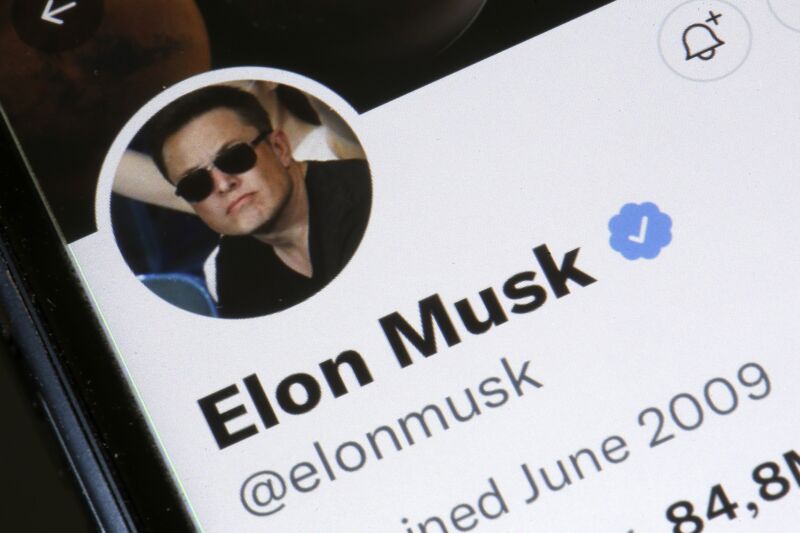
Twitter shuts offices for day as it cuts 50% of workforce; staff already suing

Twitter shuts offices for day as it cuts 50% of workforce; staff already suing

A day after it was reported that Twitter would lay off 50 percent of staff, Twitter has temporarily shut down its offices to begin layoffs. Some staff told Reuters that hundreds of employees who got this news yesterday immediately logged into Slack to say goodbyes before access was removed. Other workers told Reuters that the content moderation team is expected to be hit hard by layoffs.

One Twitter user whose bio says he formerly served as a Twitter senior community manager tweeted to mark the moment he lost company Slack access. That Twitter staffer assumed that losing Slack access confirmed he was no longer employed but won’t know for sure until today, when employees will find out if they’re fired when they receive an email to their personal inbox. Every employee expected to stick around Twitter will receive an email to their work inbox.

Those email announcements are expected to arrive by noon ET on Friday, according to a Twitter internal email reviewed by Reuters, which informed Twitter staff, “In an effort to place Twitter on a healthy path, we will go through the difficult process of reducing our global workforce on Friday.”

Around 3,700 employees are expected to be laid off. This sudden confirmation, however, will at least end the uncertainty for Twitter staff, who were left guessing up until yesterday about whether new Twitter-owner Elon Musk would actually follow through with rumored mass layoffs.

Before layoffs have even been confirmed, though, some staff members are already fighting back. In his rush to cut staff, Musk and his legal team seemingly overlooked or disregarded a federal and California law—the Worker Adjustment and Retraining Notification (WARN) Act—which requires 60 days’ notice to staff in advance of mass layoffs.

Already, Twitter staff is suing Twitter, with five employees filing a class-action lawsuit in a San Francisco federal court on behalf of all Twitter staff. The workers will be represented by attorney Shannon Liss-Riordan, who helped Tesla workers sue after 10 percent of staff was laid off last June. That litigation ended in a win for Tesla that forced Tesla workers out of court and into closed-door arbitration. To prevent another Musk company from doing the same to Twitter staff, Liss-Riordan told Bloomberg that employees have asked the court to stop Twitter from forcing them to sign documents that would waive their rights to take part in the lawsuit.

“We filed this lawsuit tonight in an attempt the make sure that employees are aware that they should not sign away their rights and that they have an avenue for pursuing their rights,” Liss-Riordan told Bloomberg.

Liss-Riordan and Twitter did not immediately respond to Ars’ request for comment.

The class-action lawsuit is asking Twitter to either comply with the WARN Act or provide severance payments, including lost wages, which the employees suing said have not been provided thus far.

Twitter staff is gathering behind the hashtag #OneTeam to provide updates and support through the layoffs. One Twitter user whose bio says he is a “recovering” global head of social and editorial for Twitter posted what he said would be the final tweet sent from his team from the official Twitter account. It’s a screencap that just says, “bye literally everyone.”

https://arstechnica.com/?p=1895181


Corpus Christi sold its water to Exxon and is losing its big bet on desalination

People fish in front of defunct oil drilling rigs in the Corpus Christi Ship Channel at Aransas Pass on March 11, 2019, in Port Aransas, Texas.
Enlarge / People fish in front of defunct oil drilling rigs in the Corpus Christi Ship Channel at Aransas Pass on March 11, 2019, in Port Aransas, Texas.

CORPUS CHRISTI, Texas—Five years ago, when ExxonMobil came calling, city officials eagerly signed over a large portion of their water supply so the oil giant could build a $10 billion plant to make plastics out of methane gas.

A year later, they did the same for Steel Dynamics to build a rolled-steel factory.

Never mind that Corpus Christi, a mid-sized city on the semi-arid South Texas coast, had just raced through its 50-year water plan 13 years ahead of schedule. Planners believed they had a solution: large-scale seawater desalination.

According to the plan in 2019, the state’s first plant needed to be running by early 2023 to safely meet industrial water demands that were scheduled to come online. But Corpus Christi never got it done.

That hasn’t stopped the city and its port authority from pursuing broader plans to build out a next-generation industrial sector around Corpus Christi Bay and make this region a rival to Houston, home to the nation’s largest petrochemical complex, 200 miles up the Gulf Coast.

As efforts to cut carbon emissions fall desperately behind the timetables established in decades of global climate accords, Corpus Christi is planning a massive expansion of its hydrocarbon sector, aimed at delivering oil and gas from Texas’ shale fields to global markets for decades to come.

All that’s missing is the freshwater. Now the commitments city officials made over the past five years are coming due. Exxon’s plastic plant started operations this year and will eventually consume 25 million gallons of water per day, even as the region’s water plan foresees demand exceeding supplies in this decade.

Sunset Over Corpus Christi Bay In Texas.
Enlarge / Sunset Over Corpus Christi Bay In Texas.

This summer, severe drought and heat pushed Corpus Christi into water use restrictions. Yet the desalination plans remained years away from completion, hung up on questions from state and federal environmental regulators—the Texas Commission on Environmental Quality and the US Environmental Protection Agency—over the ecological consequences of dumping hundreds of millions of gallons of salty brine per day into Corpus Christi Bay.

“I would love nothing more than to get right in front of their faces—the state, TCEQ, EPA, all of those agencies—and say, ‘Hey people! Do you realize that we need this permit now? We provide water for 500,000 people,” Corpus Christi mayor Paulette Guajardo told the city council in July, answering complaints over years of delays. “This is of urgency. We have to have this permit.”

Today the pursuit of desalination has become an increasingly desperate race to meet incoming demands. The number of plants proposed for Corpus Christi Bay has grown to five—two for the City of Corpus Christi, two for the Port of Corpus Christi and one for a private polymer manufacturer.

Last month, the TCEQ issued its first wastewater discharge permit to a plant proposed by the port, despite a challenge from the EPA signaling what could be a long legal fight ahead.

Regulators and scientists worry that each plant’s discharge of tens of millions of gallons of hyper-salty wastewater per day could disrupt major reproductive cycles for a host of aquatic species, which rely on the half-salty waters of the coastal bays for larvae to mature.

All together, environmentalists say, the five plants’ discharge, coupled with the water pollution and ocean freighter traffic from the industrial boom they would unleash, may constitute a near-fatal blow for life in the bay, whose once-teeming ecosystems have nursed communities on its banks since long before Corpus Christi.

https://arstechnica.com/?p=1895162


Musk to cut half of Twitter jobs and end remote work for the rest, report says

Illustration of an Elon Musk bust surrounded by flags with the Twitter logo.
Aurich Lawson

Elon Musk plans to eliminate half the jobs at Twitter and require remote employees to report to an office, Bloomberg reported.

“Elon Musk plans to eliminate about 3,700 jobs at Twitter, or half of the social media company’s workforce,” and “intends to reverse the company’s existing work-from-anywhere policy, asking remaining employees to report to offices—though some exceptions could be made,” the report said. Bloomberg cited people with knowledge of the matter. Musk reportedly aims to inform affected staffers of the layoffs on Friday.

After an earlier report that Musk told investors he plans to cut 75 percent of Twitter’s workforce, Musk reportedly told staff that he wouldn’t eliminate 75 percent of the jobs. But it was still clear there would be a significant amount of layoffs.

Twitter reportedly has about 1,500 employees who work remotely full-time. Musk’s reported work-from-home directive would be similar to orders he issued at Tesla and SpaceX earlier this year. Musk told employees at his electric car and space companies that they must be in the office at least 40 hours per week or leave the company.

Workers may have to relocate quickly

In June, Musk held a virtual town hall with Twitter staff where he reportedly said he would let “exceptional” employees work at home if he completed his then-pending acquisition of the social network. “If someone can only work remotely, and they’re exceptional, it wouldn’t make sense to fire them,” he said. Musk reportedly pointed out at the meeting that the work at Twitter is different from the work at Tesla, saying, “Tesla makes cars, and you can’t make cars remotely.”

Axios also reported the work-from-home news, writing that Twitter “plans to require its remaining staffers to return to physical offices full time… sources inside the company say that many employees can’t or won’t be willing to relocate, resulting in additional attrition beyond the layoffs.” Employees who were hired to work remotely during the pandemic would have to decide quickly whether to stay on and could be given “as little as 60 days” to relocate to an area close to a Twitter office, the Axios report said.

Before Musk, Twitter leadership encouraged employees to work wherever they felt comfortable doing so. Twitter CEO Parag Agrawal told employees in March that while all company offices were reopening, “the decisions about where you work, whether you feel safe traveling for business, and what events you attend, should be yours. As we open back up, our approach remains the same. Wherever you feel most productive and creative is where you will work, and that includes working from home full-time forever.”

According to the Bloomberg report, senior personnel on Twitter product teams “were asked to target a 50 percent reduction in headcount… Layoff lists were drawn up and ranked based on individuals’ contributions to Twitter’s code during their time at the company.” Musk reportedly brought in “engineers and director-level staff from Tesla” to help assess the layoff lists.

Impending layoffs a hot topic inside Twitter

Musk immediately fired Agrawal and several other high-ranking executives after he completed the purchase of Twitter a week ago. After that, “a few employees with director and vice president jobs were cut,” Bloomberg wrote. Moreover, “after the [plans for] layoffs were sorted, Twitter Chief Accounting Officer Robert Kaiden left the company, becoming one of the last pre-Musk C-suite executives to depart,” the article said.

A Washington Post article said Twitter staff became aware of the planned 50 percent reduction on Wednesday despite not getting any official word from leadership:

By day’s end, word had spread across the company that layoffs—half the staff—would probably come Friday, and that Musk would require Twitter’s remaining employees to return to the office full-time. But that word didn’t come from Musk, or anyone on his leadership team. It came via Blind, the anonymous workplace gossip site that some Twitter employees say has become their best, and often only, source of information about what’s going on inside the company in the chaotic, surreal week since Musk acquired it for $44 billion.

“Since Musk closed the deal on Oct. 27, employees say, they have not received a single official communication from anyone in a leadership position at the company,” The Washington Post article also said. “They have not been told that Musk completed the purchase, that their CEO and top executives were summarily fired, or that Musk dissolved the board and installed himself as chief executive.”

https://arstechnica.com/?p=1894788


Why Egypt became one of the biggest chokepoints for Internet cables

Why Egypt became one of the biggest chokepoints for Internet cables
imaginima/Getty Images

The Asia-Africa-Europe-1 Internet cable travels 15,500 miles along the seafloor, connecting Hong Kong to Marseille, France. As it snakes through the South China Sea and toward Europe, the cable helps provide Internet connections to more than a dozen countries, from India to Greece. When the cable was cut on June 7, millions of people were plunged offline and faced temporary Internet blackouts.

The cable, also known as AAE-1, was severed where it briefly passes across land through Egypt. One other cable was also damaged in the incident, with the cause of the damage unknown. However, the impact was immediate. “It affected about seven countries and a number of over-the-top services,” says Rosalind Thomas, the managing director of SAEx International Management, which plans to create a new undersea cable connecting Africa, Asia, and the US. “The worst was Ethiopia, that lost 90 percent of its connectivity, and Somalia thereafter also 85 percent.” Cloud services belonging to Google, Amazon, and Microsoft were all also disrupted, subsequent analysis revealed.

While connectivity was restored in a few hours, the disruption highlights the fragility of the world’s 550-plus subsea Internet cables, plus the outsize role Egypt and the nearby Red Sea have in the Internet’s infrastructure. The global network of underwater cables forms a large part of the Internet’s backbone, carrying the majority of data around the world and eventually linking up to the networks that power cell towers and Wi-Fi connections. Subsea cables connect New York to London and Australia to Los Angeles.

Sixteen of these submarine cables—which are often no thicker than a hosepipe and are vulnerable to damage from ships’ anchors and earthquakes—pass 1,200 miles through the Red Sea before they hop over land in Egypt and get to the Mediterranean Sea, connecting Europe to Asia. The last two decades have seen the route emerge as one of the world’s largest Internet chokepoints and, arguably, the Internet’s most vulnerable place on Earth. (The region, which also includes the Suez Canal, is also a global choke point for shipping and the movement of goods. Chaos ensued when the container ship Ever Given got wedged in the canal in 2021.)

“Where there are chokepoints, there are single points of failure,” Nicole Starosielski, an associate professor of media, culture, and communication at New York University and an author on submarine cables, said. “Because it’s a site of intense concentration of global movement, that does make it more vulnerable than many places around the world.”

The area has also recently gained attention from the European Parliament, which in a June report highlighted it as a risk for widespread Internet disruption. “The most vital bottleneck for the EU concerns the passage between the Indian Ocean and the Mediterranean via the Red Sea because the core connectivity to Asia runs via this route,” the report says, flagging extremism and maritime terrorism as risks in the area.

Pyramid scheme

Look at Egypt on a map of the world’s subsea Internet cables and it immediately becomes clear why Internet experts have been concerned about the area for years. The 16 cables in the area are concentrated through the Red Sea and touch land in Egypt, where they make a 100-mile journey across the country to reach the Mediterranean Sea. (Cable maps don’t show the exact locations of cables.)

It has been estimated that around 17 percent of the world’s Internet traffic travels along these cables and passes through Egypt. Alan Mauldin, the research director of telecoms market research firm TeleGeography, says last year the region had 178 terabits of capacity, or 178,000,000Mbps—the US has median home Internet speeds of 167Mbps.

Egypt has become one of the Internet’s most prominent chokepoints for a few reasons, says Doug Madory, director of Internet analysis at monitoring firm Kentik. Primarily, its geography contributes to the concentration of cables in the area. Passing through the Red Sea and across Egypt is the shortest (mostly) underwater route between Asia and Europe. While some intercontinental Internet cables travel across land, it is generally safer for them to be placed at the bottom of the sea where it is harder for them to be disrupted or snooped upon.

Going through Egypt is one of the only practical routes available. To the south, cables that pass around Africa are longer; while to the north, only one cable (the Polar Express) travels above Russia. “Every time someone tries to draw up an alternative route, you end up going through Syria or Iraq or Iran or Afghanistan—all these places have a lot of issues,” Madory says. The JADI cable system that bypassed Egypt was shut down due to Syria’s civil war, Madory says, and it has not been reactivated. In March this year, another cable avoiding Egypt was severed as a consequence of Russia’s full-scale invasion of Ukraine.

https://arstechnica.com/?p=1894771


Musk meets with critics, says Twitter won’t restore banned users before election

Elon Musk's Twitter profile displayed on a computer screen juxtaposed next to a Twitter logo displayed on a phone screen
Getty Images | NurPhoto

Twitter won’t restore banned accounts until after next week’s midterm election, Elon Musk wrote in a tweet early on Wednesday. That means former President Donald Trump and others banned by the pre-Musk Twitter won’t be allowed back just yet.

“Twitter will not allow anyone who was de-platformed for violating Twitter rules back on platform until we have a clear process for doing so, which will take at least a few more weeks,” Musk wrote. “Twitter’s content moderation council will include representatives with widely divergent views, which will certainly include the civil rights community and groups who face hate-fueled violence.”

Twitter banned Trump after the January 6, 2021, attack on the US Capitol, explaining that “we have permanently suspended the account due to the risk of further incitement of violence.” Musk said in May that Twitter’s decision to ban Trump was “morally wrong and flat-out stupid” and that he would reverse the ban if he completed his then-pending acquisition of Twitter. He also said that “permanent bans should be extremely rare and really reserved for accounts that are bots or spam.”

Musk completed his purchase of Twitter last week. He is now the CEO and sole director of Twitter, according to filings with the Securities and Exchange Commission.

Twitter Head of Safety and Integrity Yoel Roth wrote that the company is “staying vigilant against attempts to manipulate conversations about the 2022 US midterms.” Roth previously defended Twitter’s decision to restrict much of the staff from policing content violations as part of the post-merger transition.

NAACP expressed “grave concerns” to Musk

A Bloomberg report last week indicated Musk “intends to do away with permanent bans on users because he doesn’t believe in lifelong prohibitions,” meaning that Trump would be allowed back on Twitter. Trump told Fox News last week that he is staying on his own Truth Social network but declined to comment on whether he would use his Twitter account if it’s reactivated.

Allowing Trump back would invite a backlash and complicate Musk’s attempts to convince advertisers that Twitter won’t become a “free-for-all hellscape” under his leadership.

Musk wrote today that he talked to “civil society leaders… about how Twitter will continue to combat hate & harassment & enforce its election integrity policies.” Musk said the meeting included representatives of the Anti-Defamation League, Color of Change, Free Press, the Asian American Foundation, the NAACP, the George W. Bush Presidential Center, and the League of United Latin American Citizens.

“The NAACP met with Elon Musk to express our grave concerns with the dangerous, life-threatening hate and conspiracies that have proliferated under his watch. The bird cannot be free as long as election denialism, hatred, misinformation and disinformation exist on Twitter,” NAACP CEO Derrick Johnson wrote today.

Update: A spokesperson for the League of United Latin American Citizens criticized Musk for inviting its recently fired CEO instead of the group’s current leadership, saying former CEO Sindy Benavides “does not represent LULAC in any capacity before any audience.” Benavides is reportedly involved in a splinter group in a dispute involving two factions that each claim control of the organization. The battle could be decided in court.

https://arstechnica.com/?p=1894504


US senator seeks antitrust review of apartment price-setting software

US senator seeks antitrust review of apartment price-setting software

ProPublica is a Pulitzer Prize-winning investigative newsroom. Sign up for The Big Story newsletter to receive stories like this one in your inbox.

The chair of a U.S. Senate committee asked the Federal Trade Commission on Tuesday to review whether a Texas-based property tech company’s rent-setting software violates antitrust laws.

The move comes after ProPublica published an investigation on October 15 into RealPage’s pricing software, which suggests new rents daily to landlords for all available units in a building. Critics say the software may be helping big landlords operate as a cartel to push rents above competitive levels in some markets.

“Alarmingly, recent reporting by ProPublica highlighted that RealPage’s algorithm-based price optimization software, YieldStar, is being used by a growing number of property managers and landlords, potentially impacting pricing and the supply of homes in the rental market,” said the letter signed by US Sen. Sherrod Brown, the Ohio Democrat who chairs the Senate Committee on Banking, Housing, and Urban Affairs. “Renters should have the power to negotiate fairly priced housing, free from illicit collusion and deceptive pricing techniques.”

RealPage’s software applies a complex set of mathematical rules to a vast trove of data collected by the company from landlords who are its clients. That data includes the otherwise private data of nearby competitors.

“Troublingly, ProPublica reported that a former RealPage executive stated that the data could give insight into how competitors within a half-mile or mile radius are pricing their units,” said the letter, which was addressed to FTC chair Lina Khan.

RealPage has said the data fed into its pricing tool is anonymized and aggregated. It said the company “uses aggregated market data from a variety of sources in a legally compliant manner.”

In a statement Tuesday, the company said it had not seen the letter, “but we are always willing to engage with policy stakeholders to ensure they have the facts about the competitive dynamics of the housing market and the value and benefits that RealPage creates for renters and housing providers.”

Critics say the use of private data is one of the reasons the software invites scrutiny from antitrust enforcers such as the FTC. RealPage also claims its analytics “balance supply and demand to maximize revenue growth.” And the company organizes forums for competitors to meet and discuss aspects of its software, including its pricing algorithms. One legal expert told ProPublica that such collaborations “could raise an antitrust red flag.”

In one neighborhood in Seattle, ProPublica found, 70 percent of apartments were overseen by just 10 property managers, all of which used pricing software sold by RealPage in at least some of their buildings.

The Senate letter said the recent reporting on RealPage “raises serious concerns about collusion in the rental market.” It said “the FTC should review whether rent setting algorithms that analyze rent prices through the use of competitors’ private data, such as YieldStar, violate antitrust laws.”

RealPage said previously that its revenue management software prioritizes a property’s own internal supply and demand dynamics over external factors such as competitors’ rents. The software helps eliminate the risk of collusion that could occur with manual pricing, which often relies on phone surveys of competitor prices, the company said.

An FTC spokesperson said the agency does not comment on letters or requests from Congress.

The letter also raised concerns that the pricing software is potentially restricting the supply of apartments. It said that the national rental vacancy rate was just 5.6% at the end of 2021, the lowest since 1984. Even in the tight market, however, it said, there are reports that RealPage’s algorithm sometimes encourages property owners to keep units vacant or push tenants out to increase profits.

The letter cited ProPublica’s story, which quoted from a 2017 earnings call with RealPage’s then-CEO, Steve Winn. He explained how one large property company found it could increase profits by raising rents and leaving more apartments vacant.

Winn has not responded to requests for comment.

“Intentionally holding units vacant, when there are so few homes available, decreases a consumer’s negotiating power and exacerbates the housing shortage,” the letter said.

RealPage’s influence over apartment pricing has grown substantially in recent years, following its 2017 acquisition of its biggest pricing competitor, software called Lease RentOptions, or LRO, from The Rainmaker Group. RealPage was pricing 1.5 million units at the time, and the purchase allowed it to double that number. The Department of Justice’s antitrust division took a close look at the merger, but allowed it to proceed.

By 2020, RealPage had expanded its number of clients to 31,700 across all its products, which also include accounting, lease management and other software. Private equity firm Thoma Bravo bought RealPage last year for $10.2 billion. It now calls its pricing software AI Revenue Management.

After ProPublica published its investigation, a group of tenants filed a lawsuit against RealPage and nine of the country’s biggest landlords, alleging they were colluding to artificially inflate rents.

A RealPage spokesperson has denied the allegations and said the company “will vigorously defend against the lawsuit.” She declined to comment further, saying the company does not comment on pending litigation.

https://arstechnica.com/?p=1894459


Europe prepares to rewrite the rules of the Internet

Europe prepares to rewrite the rules of the Internet
Elena Lacey/Getty Images


Next week, a law takes effect that will change the Internet forever—and make it much more difficult to be a tech giant. On November 1, the European Union’s Digital Markets Act comes into force, starting the clock on a process expected to force Amazon, Google, and Meta to make their platforms more open and interoperable in 2023. That could bring major changes to what people can do with their devices and apps, in a new reminder that Europe has regulated tech companies much more actively than the US.

“We expect the consequences to be significant,” says Gerard de Graaf, a veteran EU official who helped pass the DMA early this year. Last month, he became director of a new EU office in San Francisco, established in part to explain the law’s consequences to Big Tech companies. De Graaf says they will be forced to break open their walled gardens.

“If you have an iPhone, you should be able to download apps not just from the App Store but from other app stores or from the Internet,” de Graaf says in a conference room with emerald-green accents at the Irish consulate in San Francisco, where the EU’s office is initially located. The DMA requires dominant platforms to let in smaller competitors and could also compel Meta’s WhatsApp to receive messages from competing apps like Signal or Telegram, or prevent Amazon, Apple, and Google from preferencing their own apps and services.

Although the DMA takes force next week, tech platforms don’t have to comply immediately. The EU first must decide which companies are large and entrenched enough to be classified as “gatekeepers” subject to the toughest rules. De Graaf expects that about a dozen companies will be in that group, to be announced in the spring. Those gatekeepers will then have six months to come into compliance.

De Graaf has predicted a wave of lawsuits challenging Europe’s new rules for Big Tech but says he is in California to help make clear to Silicon Valley giants that the rules have changed. The EU has previously levied big fines against Google, Apple, and others through antitrust investigations, a mechanism that put the burden of proof on bureaucrats, he says. Under DMA, the onus is on the business to fall in line. “The key message is that negotiations are over, we’re in a compliance situation,” de Graaf says. “You may not like it, but that’s the way it is.”

Like the EU’s digital privacy law, GDPR, the DMA is expected to lead to changes in how tech platforms serve people beyond the EU’s 400 million Internet users, because some details of compliance will be more easily implemented globally.

Tech companies will also soon have to grapple with a second sweeping EU law, the Digital Services Act, which requires risk assessments of some algorithms and disclosures about automated decision-making and could force social apps like TikTok to open their data to outside scrutiny. The law is also to be implemented in stages, with the largest online platforms expected to have to comply in mid-2024. The EU is also considering passing specific rules for artificial intelligence, which could ban some use cases of the technology.

De Graaf argues that tougher rules for tech giants are needed not only to help protect people and other businesses from unfair practices, but to allow society to receive the full benefits of technology. He has been critical of a nonbinding AI Bill of Rights recently released by the White House, saying that a lack of firm regulation can undermine the public’s confidence in technology. “If our citizens lose trust in AI because they believe it discriminates against them and leads to outcomes that are harmful to their lives,” he says, “they are going to shun AI, and it will never be successful.”

The EU’s new office opened after recent moves by the bloc and the US to collaborate more on tech policy. De Graaf says both sides are interested in finding ways to address chip shortages and the ways authoritarian governments can leverage technology and the Internet.

He’s also planning a trip to Sacramento to meet California state lawmakers who he says have been trailblazers in standing up to Big Tech. They passed a bill last month requiring strict default privacy settings for children and controls on how companies use data they collect about kids. The US Congress has passed relatively little legislation affecting the tech industry in recent years, aside from the $52 billion CHIPS and Science Act in support of semiconductor production in July.

Marlena Wisniak, who leads work on tech at civil liberties group the European Center for Not for Profit Law, takes the EU’s new presence in the tech industry’s backyard as new proof it is serious about shaping tech policy globally. She says de Graaf should use some of that power to benefit people reliant on Big Tech platforms outside the US and EU, who are rarely represented in tech diplomacy.

Wisniak also hopes the EU’s digital emissaries can avoid falling into traps that have derailed the plans of some previous newcomers to Silicon Valley, a place with many more executives, entrepreneurs, and investors than policy experts. “I hope that EU policymakers don’t get dazzled by the tech hype,” she says. “The tech bro narrative is real.”

This story originally appeared on wired.com.

https://arstechnica.com/?p=1893737


Comcast wants Internet users to pay more because customer growth has stalled

A Comcast Xfinity service van driving down a street.
Enlarge / A Comcast Xfinity service van in Sunnyvale, California, in November 2018.
Getty Images | Sundry Photography

Comcast has a problem—it isn’t signing up many new broadband customers. But Comcast also has a solution—get more money from existing subscribers.

Comcast failed to add any broadband customers in Q2 2022, holding steady at 32,163,000 residential and business Internet customers combined. In its Q3 earnings report released yesterday, Comcast said it gained only 14,000 broadband users in the latest quarter. Comcast also lost 561,000 video customers and 316,000 VoIP phone customers.

That’s why Comcast executives focused on ARPU (average revenue per user) in an earnings call yesterday. With new customers few and far between, Comcast is aiming for growth in the average amount each existing customer pays.

“We expect ARPU growth will continue to be the primary driver of our residential broadband revenue growth in the near term,” Comcast President and CFO Michael Cavanagh said.

Comcast could get more customers by expanding into new territory or by connecting homes in neighborhoods where some people are stuck without broadband even though their neighbors have Comcast Internet service. But Comcast seems content to stick with its current territory and often refuses to provide new hookups unless homeowners pay tens of thousands of dollars upfront—or even $210,000, as described in one of our recent stories.

CEO doesn’t expect much subscriber growth

Comcast CEO Brian Roberts said the nation’s largest cable company is “still in a challenging environment in terms of depressed move activity and increased competition from new entrants.” Robert said there are four primary drivers of growth in Comcast’s cable division: “residential broadband units, residential broadband ARPU, wireless, and business services.”

“While we don’t anticipate residential broadband units to be a significant driver for now, we expect to maintain healthy growth in the other three, leading to continued strong financial performance at cable for the foreseeable future,” Roberts said. Cavanagh said that “broadband revenue increased 5.7 percent driven by growth in ARPU and in our customer base compared to last year. Broadband ARPU increased 3.7 percent year over year, consistent with the growth rate in the second quarter.”

Comcast also discussed ARPU growth in its earnings call three months ago, suggesting that price increases helped boost per-user revenue in Q2. “In broadband alone, we had really healthy ARPU growth, 3.6 percent, half being rate-driven, the other half just how we manage tier mix,” Comcast cable division CEO David Watson said at the time.

Meanwhile, Roberts emphasized yesterday that Comcast is “returning a substantial amount of capital to our shareholders. We pay nearly $5 billion in dividends per year, and we bought back $9.5 billion of our shares year-to-date through the third quarter.”

Broadband revenue

Broadband revenue was $6.135 billion during the three-month period. That amounts to about $63.55 monthly per subscriber, but includes both business and residential accounts. The Q3 2022 broadband revenue is up from $6.107 billion in Q2 2022, and up from $5.8 billion since Q3 2021.

Comcast has multiple ways of getting more money from existing subscribers. That includes selling mobile plans—Comcast added 333,000 wireless lines in the quarter, hitting 4.95 million wireless lines in total. Wireless revenue increased 30.8 percent, reaching $789 million. Comcast also sells home security services.

But the Roberts and Cavanagh statements referred specifically to “broadband ARPU,” suggesting they want to keep raising broadband bills. That could include increases to basic monthly rates, boosts to fees that raise the cost above advertised prices, or requiring subscribers to purchase the $25-per-month xFi Complete add-on in order to get unlimited data and higher upload speeds.

https://arstechnica.com/?p=1893811


Report: Musk names himself Twitter CEO and intends to reverse Trump ban

Photo illustration with Elon Musk’s Twitter account displayed on the screen of an iPhone.
Getty Images | Chesnot

Elon Musk reportedly appointed himself to the CEO role at Twitter and is expected to reverse lifelong bans on users—including the ban imposed on former President Donald Trump.

As reported last night, Musk completed his $44 billion purchase of Twitter and immediately fired CEO Parag Agrawal and several other high-ranking executives. Bloomberg reported today that Musk appointed himself CEO but cited an anonymous source as saying that Musk “may eventually cede the Twitter CEO role in the longer term.” Musk is also the CEO of Tesla and SpaceX.

Bloomberg’s source provided details on Musk’s plan to reverse lifelong bans:

Musk also intends to do away with permanent bans on users because he doesn’t believe in lifelong prohibitions, the person said. That means people previously booted off the platform may be allowed to return, a category that would include former president Donald Trump, the person said. It’s unclear however if Trump would be allowed back on Twitter in the near term.

This isn’t much of a surprise. In May, Musk said Twitter’s decision to ban Trump was “morally wrong and flat-out stupid,” and that he would reverse the ban if he completed his pending acquisition of Twitter. “If there are tweets that are wrong, those should be either deleted or made invisible, and a temporary suspension is appropriate, but not a permanent ban,” Musk said at the time, speaking at a conference.

Musk also said that “permanent bans should be extremely rare and really reserved for accounts that are bots or spam, scam accounts, where there’s no legitimacy to the account at all. I do think it was not correct to ban Donald Trump.”

Twitter’s leadership page hadn’t been updated as of this writing, as it still lists Agrawal as CEO. Bloomberg’s report that Musk named himself Twitter CEO doesn’t seem to have been confirmed by any other major news organizations yet. But with Agrawal out, Musk is clearly in charge whether he’s just the owner or both the owner and CEO. A CNBC report in May said that “Musk is expected to serve as a temporary CEO of Twitter for a few months” after he completes the deal.

Twitter banned Trump to prevent further incitement

Twitter banned Trump after the January 6, 2021, attack on the US Capitol, explaining that “we have permanently suspended the account due to the risk of further incitement of violence.” With Trump attempting to overturn his election loss and making baseless claims that the election was stolen, Twitter said that Trump’s tweets “must be read in the context of broader events in the country and the ways in which the President’s statements can be mobilized by different audiences, including to incite violence, as well as in the context of the pattern of behavior from this account in recent weeks.”

Trump now posts on Truth Social, a social network he launched through the Trump Media & Technology Group. Trump has claimed he won’t go back to Twitter even if his ban is reversed. But in a Truth Social post this morning, Trump wrote, “I am very happy that Twitter is now in sane hands, and will no longer be run by Radical Left Lunatics and Maniacs that truly hate our country.”

In a tweet after closing his purchase of Twitter, Musk wrote, “the bird is freed.” In another tweet replying to a user who complained of being shadowbanned, Musk wrote that he “will be digging in more today.”

“Let the good times roll,” Musk also tweeted this morning.

The executives fired by Musk are getting big severance payments, with Agrawal “set to receive the largest payout of $38.7 million, due largely to the entirety of his shares vesting upon his firing,” Business Insider reported.

Update: Musk indicated in a tweet this afternoon that there won’t be any major content moderation changes or account reinstatements right away. “Twitter will be forming a content moderation council with widely diverse viewpoints. No major content decisions or account reinstatements will happen before that council convenes,” Musk wrote.

https://arstechnica.com/?p=1893613


A scientist’s quest for an accessible, unhackable voting machine

Juan Gilbert demonstrates his transparent voting machine, which he says is a breakthrough in election security.
Enlarge / Juan Gilbert demonstrates his transparent voting machine, which he says is a breakthrough in election security.
Lawren Simmons for Undark

In late 2020, a large box arrived at Juan Gilbert’s office at the University of Florida. The computer science professor had been looking for this kind of product for months. Previous orders had yielded poor results. This time, though, he was optimistic.

Gilbert drove the package home. Inside was a transparent box, built by a French company and equipped with a 27-inch touchscreen. Almost immediately, Gilbert began modifying it. He put a printer inside and connected the device to Prime III, the voting system he has been building since the first term of the George W. Bush administration.

After 19 years of building, tinkering, and testing, he told Undark this spring, he had finally invented “the most secure voting technology ever created.”

Gilbert didn’t just want to publish a paper outlining his findings. He wanted the election security community to recognize what he’d accomplished—to acknowledge that this was, in fact, a breakthrough. In the spring of 2022, he emailed several of the most respected and vocal critics of voting technology, including Andrew Appel, a computer scientist at Princeton University. He issued a simple challenge: Hack my machine.

Their access would be unfettered—no tamper-evident seals to avoid, chain of custody procedures to subvert, or mock poll workers to dupe—and they’d have to agree to only one condition: Flip every vote to the same candidate.

By this point, Gilbert had published a video of his ballot-marking device, or BMD, in action, but he was unsure how the hacking community would respond. “There’s a part of that community that’s very confident in what they do,” he said. “And if they hear how it works, they may run away from it.”

After nearly two decades in the election space, Gilbert knew he was jumping feet-first into perhaps the most contentious debate over election administration in the United States—what role, if any, touchscreen ballot-marking devices should play in the voting process. Federal law requires polling sites to have at least one voting machine on-site that can serve voters with disabilities, and at least 30 percent of votes were cast on some kind of machine in the 2020 general election, as opposed to a hand-marked ballot.

Advocates say the electronic voting systems can be relatively secure, improve accessibility, and simplify voting and vote tallying. Meanwhile, academic critics like Appel have argued that they are insecure and should be used as infrequently as possible. Those arguments have at times been bolstered by a rich, informal community of hackers who spend their time proving that they can hack the devices.

Computer science professor Juan Gilbert stands in his office at the University of Florida. After spending nearly 20 years developing a new voting machine, Gilbert issued a simple challenge: Hack my machine.
Enlarge / Computer science professor Juan Gilbert stands in his office at the University of Florida. After spending nearly 20 years developing a new voting machine, Gilbert issued a simple challenge: Hack my machine.
Lawren Simmons for Undark

Recently, this formerly niche debate has been embraced by a chorus of conspiracy theorists who claim, with no evidence, that compromised machines cost Donald Trump the presidency.

Amid these concerns about election technology, a handful of innovators—including Gilbert—have searched for a solution that will silence critics: a voting machine that’s easy to use, based in open source software, and significantly more difficult to hack than existing models. But some experts believe that the pursuit is misguided, because no computer could ever be unhackable. And even if Gilbert’s machine were foolproof, he and others argue that vote hacker culture—one that’s more intent on destroying devices than creating them—makes it unlikely the machine would ever get a fair hearing, let alone be adopted.

For two decades, the rise of voting technology has enabled some of the United States’ loftiest democratic ideals, and also embodied its most visceral political suspicions.

Gilbert believes he’s invented his way out of that dilemma. Who will prove him wrong?

https://arstechnica.com/?p=1893539