No new combustion-engine cars from 2035, says European Union
Getty Images
The days of the new internal combustion engine are definitely numbered—at least in the European Union. On Thursday, the European Council and the European Parliament agreed on provisional rules to heavily reduce passenger vehicle carbon emissions in 2030 before enacting a complete ban on internal combustion engines for new passenger cars and vans in 2035.
“This agreement will pave the way for the modern and competitive automotive industry in the EU. The world is changing, and we must remain at the forefront of innovation. I believe we can take advantage of this technological transition. The envisaged timeline also makes the goals achievable for car manufacturers,” said Jozef Síkela, Czech minister of industry and trade. (The Czech Republic currently holds the EU presidency.)
The EU is already home to some of the world’s stricter emissions regulations. Under the current regulations, automakers must meet a fleetwide average of 95 g CO2/100 km; if they fail to do so, they are fined 95 euro for each gram of CO2/km over that limit for every vehicle they’ve sold in a given year. But much tougher limits are on the way as the EU tries to reduce its carbon emissions by 55 percent by 2030 compared to 1990.
Under the new regulations, automakers will have to reduce their 2021 fleet average CO2 emissions by 55 percent for passenger cars by 2030 and by 50 percent for vans by the same year. From that point, new internal combustion engine vehicles will only have another five years left—by 2035 the EU expects a 100 percent reduction in CO2 emissions for all new cars and vans.
OEMs that produce fewer than 10,000 cars a year, like Ferrari, McLaren, and Aston Martin, will be given a waiver that exempts them from the 2030 target, but they, too, will have to go entirely emissions-free by 2035.
However, this does not mean all the EU’s existing gasoline- and diesel-powered vehicles will have to be parked and scrapped, and the EU is crafting rules for registering vehicles that use carbon-neutral fuels like the synthetic gasoline being developed by Porsche, Siemens, and others.
Here in the US, a nationwide ban on new internal combustion engine vehicles seems more remote, although California—the country’s largest automobile market—has also decided on 2035 as the last year for new gasoline- or diesel-powered cars and trucks.
https://arstechnica.com/?p=1893499
Elon Musk completes Twitter purchase, immediately fires CEO and other execs
Aurich Lawson
Elon Musk completed the $44 billion purchase of Twitter today, capping a months-long saga that resulted in Twitter suing Musk to force him to honor their merger agreement. Musk’s first course of business was to fire top executives.
“Musk fired Chief Executive Parag Agrawal and Chief Financial Officer Ned Segal after the deal closed” on Thursday, The Wall Street Journal wrote. Twitter legal chief Vijaya Gadde and general counsel Sean Edgett were also reportedly fired by Musk. It’s not yet clear who will be the CEO under Musk’s ownership.
Musk feuded with Agrawal while he was trying to get out of the merger contract. In August, he challenged the then-Twitter CEO to a public debate about Twitter’s spam-account data. Twitter stuck with its lawsuit against Musk instead, and the court case helped force Musk to complete the deal. Musk had also posted tweets with criticism of Gadde’s approach to content moderation.
Musk completed the deal a day after visiting Twitter’s headquarters in San Francisco. Twitter employees had been circulating an open letter criticizing Musk after a Washington Post report stating that “Musk told prospective investors in his deal to buy the company that he planned to get rid of nearly 75 percent of Twitter’s 7,500 workers, whittling the company down to a skeleton staff of just over 2,000.” During his Twitter visit, he reportedly told staff that he will not be firing 75 percent of them.
Twitter is set to become a private company now that Musk completed the deal. He has said he’s buying Twitter to protect free speech, but he defines free speech in a way that suggests he’s willing to restrict speech in any country where the government requires him to do so.
Hours before completing the acquisition, Musk posted a message to advertisers assuring them that Twitter will not “become a free-for-all hellscape.”
Merger caps months of fighting
The deal was completed one day before a court-imposed deadline. The saga began with Musk buying 9.2 percent of Twitter stock in March. Twitter then struck a deal with Musk to have him join the board of directors while prohibiting from buying more than 14.9 percent of the company’s stock.
In a sign of things to come, Musk pulled out of that deal and started laying groundwork to buy the company outright. He offered to buy Twitter in mid-April, claiming he wanted to preserve free speech on the platform.
Twitter directors quickly adopted a poison pill that made it difficult for anyone to buy over 15 percent of the company’s stock in any “transaction not approved by the Board.” Musk continued his attempts at a takeover and on April 25 he signed a deal with the Twitter board to buy the company for $44 billion.
Musk’s second thoughts emerged quickly. On May 13, Musk said the deal to purchase Twitter is “temporarily on hold” while he awaited details on the number of spam and fake accounts on the site. Twitter’s board held firm, saying it would “enforce the merger agreement.”
Musk spent the ensuing weeks claiming that Twitter lied in its estimate that fewer than 5 percent of its monetizable daily active users (mDAU) are spam or fake. He never disproved the mDAU statistic but attempted to terminate the merger agreement on July 8, claiming that Twitter “made false and misleading representations upon which Mr. Musk relied when entering into the Merger Agreement.”
https://arstechnica.com/?p=1893477
Section 230 shields TikTok in child’s “Blackout Challenge” death lawsuit
As lawsuits continue piling up against social media platforms for allegedly causing harms to children, a Pennsylvania court has ruled that TikTok is not liable in one case where a 10-year-old named Nylah Anderson died after attempting to complete a “Blackout Challenge” she discovered on her “For You” page.
The challenge recommends that users choke themselves until they pass out, and Nylah’s mother, Tawainna Anderson, initially claimed that TikTok’s defective algorithm was responsible for knowingly feeding the deadly video to her child. The mother hoped that Section 230 protections under the Communications Decency Act—which grant social platforms immunity for content published by third parties—would not apply in the case, but ultimately, the judge found that TikTok was immune.
TikTok’s “algorithm was a way to bring the Challenge to the attention of those likely to be most interested in it,” Judge Paul Diamond wrote in a memorandum before issuing his order. “In thus promoting the work of others, Defendants published that work—exactly the activity Section 230 shields from liability. The wisdom of conferring such immunity is something properly taken up with Congress, not the courts.”
This is not the only lawsuit attempting to hold TikTok liable for the deaths of children from the “Blackout Challenge.” Other lawsuits filed this summer in California are still pending, but these make similar arguments regarding TikTok’s allegedly defective algorithm. Diamond suggested that Nylah’s mother “cannot defeat Section 230 immunity” simply “by creatively labeling her claims.” His judgment suggests that those other pending lawsuits won’t fare any better in overcoming the effective shield that Section 230 grants social media companies as publishers, no matter the outcome of how algorithms are designed to recommend content.
“Because Anderson’s design defect and failure to warn claims are ‘inextricably linked’ to the manner in which Defendants choose to publish third-party user content, Section 230 immunity applies,” Diamond wrote.
Anderson’s lawyers at Jeffrey Goodman, Saltz Mongeluzzi & Bendesky PC, provided Ars with a statement on the ruling:
“The Anderson family will continue to fight to make social media safe so that no other child is killed by the reckless behavior of the social media industry. The federal Communications Decency Act was never intended to allow social media companies to send dangerous content to children, and the Andersons will continue advocating for the protection of our children from an industry that exploits youth in the name of profits.”
TikTok did not immediately provide Ars with a statement on the ruling.
Although this verdict is likely considered a big loss to child safety advocates, the law firm Seeger Weiss LLP recently announced that it’s “pioneering a novel approach to litigation against social media companies that sidesteps protections provided by Section 230.” The law firm said it has filed dozens of lawsuits where it’s already representing more than 1,000 clients—and is still seeking more clients—“who allege the design of social media platforms causes serious harm to children, including anxiety, depression, eating disorders, sexual exploitation, and suicide.” A much broader effort seeking accountability beyond just TikTok, these lawsuits also target other social platforms from Meta and Snap.
Seeger Weiss LLP didn’t immediately respond to Ars’ request for comment to clarify how effective its “novel approach” could be in actually defeating Section 230 protections, given this week’s ruling in favor of TikTok.
Negating Anderson’s claims that TikTok has a responsibility not to design its algorithm to recommend dangerous content to children, Diamond, in his ruling, quoted the 2nd Circuit in finding that “tools such as algorithms that are designed to match information with a consumer’s interests” are “well within the range of publisher functions covered by Section 230.”
https://arstechnica.com/?p=1893360
RNC sues Google over spam filter, complains Gmail is “modern Western Union”
Getty Images | pagadesign
The Republican National Committee is suing Google over Gmail’s spam filtering, claiming the company is “unlawfully discriminating against” the RNC by “throttling its email messages because of the RNC’s political affiliation and views.”
“Google has relegated millions of RNC emails en masse to potential donors’ and supporters’ spam folders during pivotal points in election fundraising and community building,” claims the lawsuit filed Thursday in US District Court for the Eastern District of California. The spam filtering has “caused the RNC to lose valuable revenue in California and the rest of the country, and Google’s conduct will continue to cost the RNC further revenue in the coming weeks as the 2022 midterm election looms, and beyond,” it says.
The lawsuit argues that the “timing of Google’s most egregious filtering is particularly damning.” The RNC said nearly all of its emails get through to users’ inboxes for most of each month, but that the ratio flips at the end of the month.
“At approximately the same time at the end of each month, Google sends to spam nearly all of the RNC’s emails,” the lawsuit said. “Critically, and suspiciously, this end of the month period is historically when the RNC’s fundraising is most successful. It doesn’t matter whether the email is about donating, voting, or community outreach. And it doesn’t matter whether the emails are sent to people who requested them. This discrimination has been ongoing for about ten months—despite the RNC’s best efforts to work with Google.”
Google denied the allegations, saying the spam filtering is based on actions taken by users. “As we have repeatedly said, we simply don’t filter emails based on political affiliation,” Google said in a statement provided to Ars. “Gmail’s spam filters reflect users’ actions. We provide training and guidelines to campaigns, we recently launched an FEC-approved pilot for political senders, and we continue to work to maximize email deliverability while minimizing unwanted spam.”
RNC: Gmail is “modern-day Western Union”
The RNC lawsuit compared Google’s actions to Western Union discriminating against telegraph users based on their political views in the 1800s. “At bottom, Google’s email service is a modern-day Western Union: Google offers to carry messages in the form of electronic mail… Although Google’s tools for discriminating might be more sophisticated than Western Union’s, that doesn’t make it any less of a business in violation of the longstanding nondiscrimination obligations states like California have enacted,” the lawsuit said.
The RNC asked for a court order “declaring unlawful and enjoining Google’s diversion of the RNC’s communications to its supporters that use Google’s Gmail service.” The Republican group also asked for compensatory, statutory, and punitive damages. “Whether Google is categorized as a common carrier, public accommodation, or a business providing a service, California law prohibits Google’s spam filtration of RNC emails based on political affiliation and views,” the lawsuit said.
The RNC said it wants quick action because the upcoming midterm elections make it “imperative that Google immediately ceases its practice of intentionally (or negligently) mislabeling RNC emails as spam.” The lawsuit alleges violations of California’s common carrier law, Unruh Civil Rights Act, and Unfair Competition Law. It also alleges intentional and negligent interference with prospective economic relations, negligence, and unlawful discrimination.
As Google noted in its statement on the lawsuit, the US Federal Election Commission in August approved the company’s plan to let campaign emails bypass Gmail spam filters. The FEC’s advisory opinion said Gmail’s pilot program is permissible under the Federal Election Campaign Act and FEC regulations “and would not result in the making of a prohibited in-kind contribution.”
The Democratic National Committee objected to the Google plan, saying it would reward “a variety of fundraising practices designed to mislead donors.” The DNC accused Republicans of using “abusive fundraising tactics” including “pre-checked boxes that trick donors into unknowingly making recurring contributions.”
Gmail has also received complaints from individual Republicans such as Sen. Marco Rubio (R-Fla.). But Rubio’s problem “was that a vendor had not enabled an authentication tool that keeps messages from being marked as spam,” The Washington Post reported in late July. Rubio was one of over 20 Senate Republicans who sponsored legislation that would prohibit email providers from using “filtering algorithms to flag emails from political campaigns” unless the receiver of the email “took action to apply such a label.”
https://arstechnica.com/?p=1892720
Comcast’s new higher upload speeds require $25-per-month xFi Complete add-on
Enlarge/ Comcast’s xFi Advanced Gateway with Wi-Fi 6E.
For Comcast Internet customers frustrated by the cable service’s slow upload speeds, there have been some welcome announcements recently. But the availability of faster Comcast uploads has a catch—users can only get the higher upstream speeds by purchasing xFi Complete, which adds $25 to monthly broadband costs.
“As markets launch, Xfinity Internet customers who subscribe to xFi Complete will have their upload speeds increased between 5 and 10 times faster,” an announcement last week said. “xFi Complete includes an xFi gateway, advanced cybersecurity protection at home and on the go, tech auto-upgrades for a new gateway after three years, and wall-to-wall Wi-Fi coverage with an xFi Pod [Wi-Fi extender] included if recommended. Now, another benefit of xFi Complete is faster upload speeds.”
Comcast is deploying the speed upgrade in the Northeast US over the next couple of months. Plans with 10Mbps upload speeds will get up to 100Mbps upload speeds once the new tiers roll out in your region—if you pay for xFi Complete. Comcast told Ars that faster upload speeds will come to customer-owned modems “later next year” but did not provide a more specific timeline.
There is a cheaper way to get the same xFi Gateway with Wi-Fi 6E, as Comcast offers the option to rent that piece of hardware for $14 a month. But Comcast is only making the upload boost available to those who subscribe to the pricier xFi Complete service.
While the standard monthly rate for xFi Complete is $25, new customers who sign up by December 31 can get it for $20 monthly during the first year of service.
Comcast vague on timing for user-owned hardware
We asked Comcast today if there’s any technical reason it can’t deliver the higher upload speeds on customer-owned equipment. A company spokesperson responded that Comcast is working on bringing faster uploads to non-Comcast modems.
“We intend to extend the experience to customer-owned modems later next year and are working through the technical requirements as we learn,” Comcast said. “We started offering it with our own equipment first and now are working through how to extend to customer-owned equipment.”
Comcast also said that giving the upload boost to xFi Complete customers first follows its “typical validate, test, and certification process for a new network innovation.” But if the reasons for limiting the upload boost to Comcast hardware initially are purely technical instead of revenue-based, it’s not clear why people who rent the gateway for $14 a month shouldn’t get the same benefit.
Comcast has also been teasing Full Duplex upgrades that are supposed to provide symmetrical download and upload speeds over cable. Comcast says it will offer multi-gigabit download and upload speeds to at least some cable customers “before the end of 2023.” It won’t be surprising if those upgrades require subscribing to xFi Complete.
https://arstechnica.com/?p=1892437
Biden looks to Musk’s Starlink to deliver promised Internet access in Iran
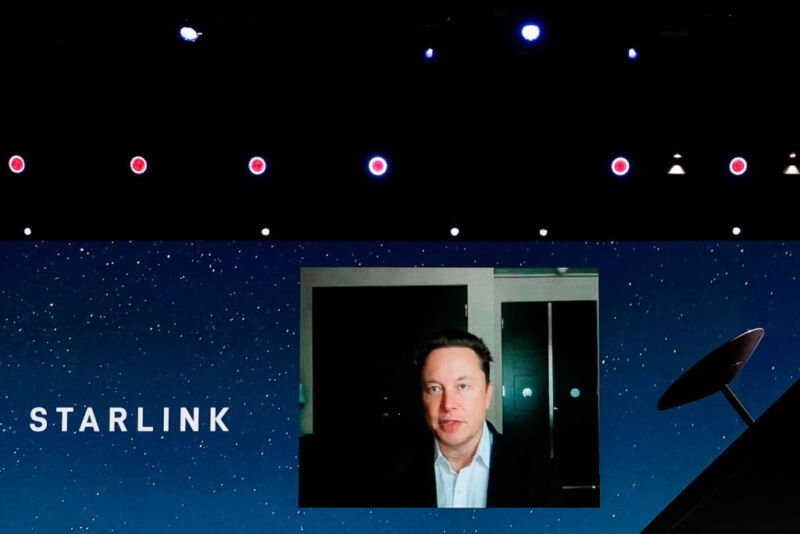
Last month, Elon Musk offered activists protesting in Iran uncensored Internet access, and a US State Department official said that the US would also be taking steps to help Iranians connect. Without delay, Musk activated SpaceX’s satellite Internet service Starlink, and he said all he needed to get Iranian protesters online was to somehow install special terminals in Iran that could receive the signal. So far, Musk tweeted that only a few terminals have been installed in the country.
More are still needed, and now it looks like the US could possibly be taking steps to help with that. CNN reports that multiple US officials confirmed that the Biden administration is in talks with Musk to potentially follow through on Biden’s promise earlier this month and actually help set up broad access to Starlink in Iran. CNN says it’s not clear yet if those discussions will lead to the US offering to pay for the special terminals to be set up, however.
“We have our foot on the gas to do everything we possibly can to support the aspirations of the Iranian people,” one senior administration official told CNN.
News of these talks comes days after Musk and the Pentagon wound down discussions over who should fund Starlink in Ukraine. Those discussions ended with Musk withdrawing SpaceX’s request for millions in Pentagon funding and SpaceX adding a donation option on the Starlink service, “for those who want to donate to places in need,” Musk tweeted at the time.
The tension with the Pentagon over Starlink funding is one reason why US officials worry Musk may not be a reliable partner, with Musk suggesting at one point that he couldn’t fund Starlink access in Ukraine indefinitely. But regardless of that tension, so far Starlink seems to be the US’s go-to solution, with the US once again partnering with Musk to provide Internet service in another region rattled by violence.
SpaceX did not immediately respond to Ars’ request for comment.
Actually ensuring that people in Iran get broad access to the Internet doesn’t end with installing the terminals, even if that’s where Musk’s talks with Biden lead. Iran outlaws technology like Starlink, but CNN notes that such technology is “nevertheless abundant across the country.”
What’s not abundant is reliable Internet access, and it’s not guaranteed that Starlink would be reliable if set up in Iran. Experts told CNN that unless activists in Iran understand how to hide Internet signals from their country’s authoritarian regime, having too many people accessing the service risks Iran’s security services quickly shutting down terminals. And connecting to Starlink would come with risks for activists the US seeks to support. Anyone found connecting to Starlink in Iran could risk being charged as spies by the Iranian government.
That’s why providing Internet access in Iran is considered a greater challenge than assisting in Ukraine, but US President Joe Biden has expressed unwavering support to protect Iranians’ right to protest. He vowed earlier this month that he would make it easier for Iranian protesters to access the Internet and make Iranian officials pay for obstructing citizens’ right to protest freely.
To help Biden succeed in this mission, once again, Musk has been called to the White House. But not everyone is ready to trust Musk in this sensitive role. At least one US senior defense official told CNN, “He’s a loose cannon we can never predict.”
https://arstechnica.com/?p=1892070
US might bail Musk out by blocking Twitter deal over national security
After the richest man in the world, Elon Musk, decided he would move forward with his plan to buy Twitter for what experts say is nearly four times its current worth, even Twitter doubted that Musk actually meant to see the deal through. Now, as Musk remains under federal investigation for his merger conduct, The Washington Post reports that if Musk does take over Twitter, he plans to gut Twitter’s staff by 75 percent. And Bloomberg reports that the Biden administration is considering launching national security reviews into Musk’s Twitter and Starlink satellite Internet deals. Those reviews could end up blocking the Twitter deal after all, which many commenters think is exactly what Musk wants.
Twitter immediately sent out a staff memo denying any company-wide layoffs, according to Bloomberg. Musk seemingly isn’t talking about any of this on the record, but he did tweet to show how humorous he finds the situation.
Famed mixed martial arts fighter Nik Lentz tweeted, “It would be hysterical if the government stopped Elon from overpaying for Twitter.” Musk replied with two emojis: a 100 percent sign and a cry-laughing face.
According to Bloomberg’s interviews with “people familiar with the matter,” US officials were not comfortable with Musk’s tweets that threatened to stop funding Starlink service in Ukraine and discussed solutions to the war that would be favorable to Russian President Vladimir Putin. Concerns about Musk drawing Twitter finances from foreign investors reportedly began escalating within the Biden administration, which is trying to avoid national security threats surrounding Musk deals.
Current talks are reportedly focused on determining if the US even has the legal tools to conduct reviews into Musk’s deals.
Bloomberg pointed to one possibility in the law governing the Committee on Foreign Investment in the United States (CFIUS), an interagency panel governed by the Treasury Department that reviews acquisitions by foreign buyers of US businesses. But Bloomberg sources say it’s not clear if the law would support launching national security reviews of Musk’s deals. And even if the CFIUS did launch reviews, everyone would be kept in the dark. The Treasury Department told Bloomberg that the CFIUS doesn’t comment on any acquisitions it may be reviewing, so it will be difficult to track if the US attempts to go that route.
Because Twitter collects so much data on Americans—Pew Research says 1 in 5 US adults are on Twitter—the White House considers it a potential risk that a Musk-owned Twitter could end up supplying data on Americans to Russia, Gizmodo reported. Biden had previously expressed that same fear about China-owned TikTok, and this week, Forbes validated his concerns, as TikTok owner ByteDance reportedly planned to use TikTok data to track Americans. Last month, Biden announced a plan to avoid the TikTok security concerns without halting TikTok’s US operations, but the process of launching security reviews of Musk’s deals seems much less straightforward.
A spokesperson for the White House, Adrienne Watson, denied reports that US officials are holding these discussions. Twitter, Musk, and his lawyer Alex Spiro did not immediately respond to Ars’ requests for comment.
Last week, Musk confirmed that he would keep on providing Starlink services in Ukraine, but he has continued to tweet controversially. Bloomberg reported today on criticism of Musk’s “warm” tweet responding to a top Kremlin official, while within the last few hours, Musk has also tweeted that “Russia overrunning Ukraine would destabilize” perhaps “the entire world” but that he didn’t think removing Vladimir Putin would likely fix anything.
As Musk and Twitter move closer to next week’s expected deal closing on October 28, the Biden administration will likely join Twitter staff in watching Musk’s feed and nervously weighing what the consequences of the merger will be, should it be allowed to proceed.
https://arstechnica.com/?p=1891916
Car feature subscriptions should be illegal, New Jersey legislators say
One of the most egregious moneymaking trends in the auto industry today is the rise of the subscription feature. Sometimes, it’s for software functions like navigation—Tesla recently announced that owners of cars will have to pay $99 per year or $9.99 per month to access navigation, maps, and voice commands once their cars reach a certain age, for example. And previously, BMW made headlines by making Apple CarPlay a subscription feature before backtracking in 2019.
But we’re also starting to see automakers sell cars with built-in hardware features that must be activated through a subscription. Again, BMW is a notable example here; in markets like Korea and the United Kingdom, the company offers a subscription for features like heated seats. Tesla provides another example. It ships every car with the hardware required for its “Full Self Driving” feature but charges a fee—just increased from $12,000 to $15,000 in September—to activate it.
Some legislators in New Jersey are unhappy about that business model. In late September, Assemblymen Paul Moriarty and Joe Danielsen introduced a bill that would prohibit car makers or dealers from offering subscriptions in New Jersey for any feature that uses hardware already installed on the vehicle at the time of purchase unless that feature would represent an ongoing expense to the dealer, manufacturer, or a third party.
The bill exempts third-party services like satellite radio or Wi-Fi and establishes penalties of up to $10,000 for a first offense and up to $20,000 for subsequent violations.
However, it’s still just a bill, and there’s no guarantee it will be passed into New Jersey law. Additionally, the “ongoing expense” requirement may be easily satisfied if an OEM has to pay to maintain a server or connectivity, as would be the case with a navigation system or partially automated driving feature that pulls in data from the cloud.
This legislation is somewhat surprising given the state in which it was introduced—BMW is headquartered in New Jersey, along with several other automakers. We’ve asked BMW for comment and will update this article if we hear back.
https://arstechnica.com/?p=1891901
Reform Section 230, punish users spreading online hate: New York AG
Her potentially First Amendment-infringing policy reform recommendation comes after the Bureau of Internet and Technology and the Hate Crimes Unit of the Civil Rights Bureau conducted an investigation into how online platforms—including Reddit, Discord, 4chan, 8chan, Twitch, and YouTube—helped a white gunman prepare and then murder 10 Black people in Buffalo, New York, during a mass shooting in May.
According to the Office of the Attorney General, the gunman’s content, including snippets of his manifesto, was shared across mainstream platforms like Facebook, Instagram, Twitter, and TikTok. Among other solutions proposed, James and New York Governor Kathy Hochul announced that they want lawmakers to establish a civil liability so that no one shares extremist content, which can potentially inspire copycats.
Discord provided Ars with a statement, “We created Discord to be a place for people to find togetherness, and hateful ideologies and actions are in direct opposition to our mission.”
“We have worked closely with the New York Attorney General over the course of the investigation,” Discord’s spokesperson told Ars. “We know we must do more to keep hate, violence, and extremism off of our platform and are actively collaborating with partners on tools and techniques to strengthen industry moderation practices and policy transparency. Our work here never stops.”
Meta said it supports standardized approaches to content enforcement that could make clear what content is prohibited, holds companies accountable for enforcing policies, and improves transparency.
“There is no place on our platforms for terrorism, extremism, or any promotion of violence or hate,” a Meta spokesperson said. “We constantly work to prevent the abuse of our services and are committed to keeping people safe on our platforms.”
None of the other platforms could be immediately reached for comment. James’ office also did not immediately respond.
Section 230 reforms recommended, too
After reviewing “thousands of pages of documents and social media content to examine how the alleged shooter used online platforms to plan, prepare, and publicize his attack,” James’ office also reiterated some more commonly proposed solutions to hate content spreading online. Those include old standards like requiring more transparency on content moderation and stronger content moderation efforts from social platforms.
But James’ recommendations also included some other suggestions less commonly considered these days. In addition to imposing civil liabilities on users, James also went after the platforms. She recommended legal reforms to hold platforms liable for hosting extremist content and new laws requiring livestreams to be delayed so that moderators have a cushion to remove infringing content before it goes live.
To push the reforms, James explained, would require amending Section 230, which currently protects platforms from such liabilities. But she said it doesn’t have to stay that way.
“Congress should rethink the ready availability of Section 230 as a complete defense for online platforms’ content moderation practices,” James said. “Instead, the law should be reformed to require an online platform that wishes to retain Section 230’s protections to take reasonable steps to prevent unlawful violent criminal content from appearing on the platform.”
This, James said, would change the default mode so that companies like Meta or Twitch have “the initial burden of establishing that its policies and practices were reasonably designed to address unlawful content.”
Not everyone agrees with James on reforming Section 230 and penalizing users. Tech policy coalition Chamber of Progress CEO Adam Kovacevich posted a statement saying, “Penalties for creating homicidal posts have the potential to slow the spread of violent content online. But the AG’s proposal to change Section 230 to prevent the spread of violent content misunderstands that Section 230 already protects and encourages content moderation. The best way to protect content moderation is to protect Section 230, not to gut it.”
The New York AG’s report also challenges long-upheld First Amendment protections for both platforms and users sharing extremist content. She suggested that Congress, the State Legislature, and the platforms could take action to hold anyone accountable for proliferating hate speech online.
Among lawmakers endorsing James’ recommendations was Buffalo Mayor Byron Brown, who explained the role platforms played in allowing the Buffalo shooter’s influence to spread online easily.
“A growing number of violent attacks on communities start with hate speech online,” Brown said. “It’s far too easy for individuals to become radicalized and indoctrinated with a hateful ideology through the Internet. The [May 15] mass murderer researched his Buffalo target, spread this hateful manifesto, and livestreamed his murders with disturbing ease. Much more must be done to ensure that there is no place on the Internet for hate speech, for hate indoctrination, for spreading hate manifestos.”
https://arstechnica.com/?p=1890927
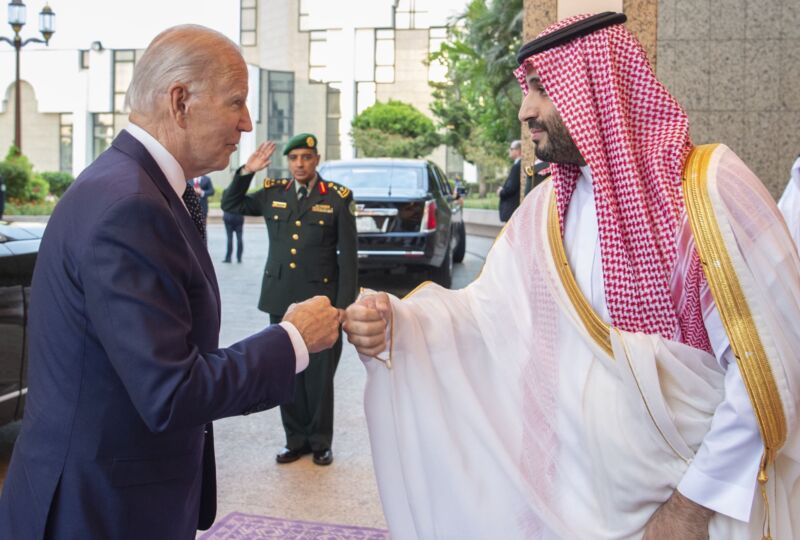
US citizen got 16 years in Saudi Arabian prison for tweets, his son says
A US citizen who traveled to Saudi Arabia to visit family reportedly received a 16-year prison sentence for posting tweets critical of the Saudi government. The sentence was imposed on 72-year-old Saad Ibrahim Almadi, according to his son, Ibrahim Almadi.
Ibrahim Almadi spoke to several news organizations about the sentence imposed on his father, who reportedly holds both US and Saudi citizenship and has lived in the US since the 1970s. He alleges that his father was tortured in Saudi prison and that the US State Department mishandled the case. The punishment is due to tweets that expressed “mild opinions about the government,” his son said.
President Biden “sold my father for oil,” Ibrahim Almadi told the New York Post. “Biden just cares about votes. He doesn’t care about my father, he doesn’t care about American citizens.” (Almadi also said he is a Democrat who voted for Biden.)
The tweets that landed Saad Ibrahim Almadi in a Saudi prison were posted while he was inside the US, The Washington Post wrote yesterday. Almadi was detained when he traveled to Riyadh to visit family in November 2021, and was sentenced nearly a year later, on October 3.
No dissident, Almadi is “simply a project manager”
The Washington Post report says:
Almadi is not a dissident or an activist; he is simply a project manager from Florida who decided to practice his right to free speech inside the United States… “He had what I would call mild opinions about the government,” his son Ibrahim told me. “They took him from the airport.”
Almadi was charged with harboring a terrorist ideology, trying to destabilize the kingdom, as well as supporting and funding terrorism. He was also charged with failing to report terrorism, a charge related to tweets Ibrahim sent on a separate account.
Ibrahim Almadi said his father received two visits in prison from US officials, with the first coming six months after his arrest. Almadi also criticized the US response to his father’s imprisonment in an interview with the BBC:
He told the BBC that he believes there are double standards over Saudi Arabia, saying the US would take firm action if a citizen were detained in Russia or Iran. “But if you’re held in Saudi Arabia, a barrel of oil is worth more than you, habibi,” he said.
A source at the US State Department told the BBC when asked about Saad’s case during President Biden’s trip to Saudi Arabia that it had no higher duty than protecting US citizens abroad, but that it could not comment further.
Ibrahim Almadi said his father visited Saudi Arabia without thinking about his old Twitter posts. The tweets presented as evidence “included writing that officials were unable to protect national borders amid rocket fire from Iran-allied Houthi rebels in Yemen, encouraging people to get Lebanese citizenship, and endorsing the idea of naming a street after [the murdered journalist Jamal] Khashoggi,” according to the New York Post. The tweets also included “criticism of the demolition of old parts of the cities of Mecca and Jeddah” and “concern over poverty in the kingdom,” the BBC wrote.
US “told Ibrahim not to speak publicly”
Almadi reportedly received both a 16-year prison sentence and a 16-year travel ban to be enforced after release. He’d have to live to age 104 to return to the US if the sentence isn’t reduced.
“I feel empty inside. I feel dead inside. I feel betrayed,” Ibrahim Almadi told The Washington Post. “He’s not only my father, he’s my best friend. He is everything to me.”
Ibrahim Almadi initially worked behind the scenes, urging the US government to intervene. But he’s speaking out now that the sentence has been handed down. “The State Department told Ibrahim not to speak publicly about the case, but he no longer believes that staying quiet will secure his father’s freedom. And he says that State has handled his father’s case with neglect and incompetence,” The Washington Post wrote.
Ibrahim Almadi says he told the State Department the sentencing hearing was scheduled for October 3 but that no US official attended.
“A senior State Department official confirmed that the consular affairs office in Washington failed to alert the embassy when the hearing date was moved up, even though Ibrahim had notified them,” The Washington Post wrote. “‘Unfortunately, that information wasn’t passed [to the embassy],’ the official said. ‘That is something we deeply regret.'”
This official also reportedly said the Biden administration raised Almadi’s case with the Saudi government at senior levels. But the State Department is still determining whether Almadi will be designated as “wrongfully detained,” a designation that could increase US efforts to free him.