Coinbase users scammed out of $21M in crypto sue company for negligence

Coinbase users scammed out of $21M in crypto sue company for negligence

Last fall, scammers infiltrated social platforms like dating apps, WhatsApp, Facebook, and Twitter, attempting to convince people to download Coinbase Wallet. Once the targeted users downloaded the wallet, the scammer would then send links to fraudulent websites, prompting users to purchase a “voucher” that seemed like a safe transaction protected and facilitated by Coinbase’s trusted platform but was “actually a malicious smart contract.” Horrified users eventually discovered the smart contract gave “the scammers complete access to the entire funds in the victim’s wallets” without requiring authorizations to withdraw funds.

Today, nearly 100 people from all over the globe are seeking to make the publicly traded Coinbase pay for allegedly doing nothing to protect users. Users allege that Coinbase was unmoved by reports that scammers were draining accounts of tens or hundreds of thousands of dollars’ worth of cryptocurrency. In total, Coinbase Wallet users that are suing collectively lost $21 million.

For months, users allegedly warned the company of this seeming security flaw. Instead of acting to protect users, though, Coinbase “took no remedial steps to fix the security flaw or even warn customers about this major problem, despite warning customers about other security risks,” according to a recently filed arbitration demand. This allegedly allowed “hundreds” of additional users to become targets of “an easily preventable” liquidity mining pool scam.

“They didn’t even appear to try,” Eric Rosen, an attorney from Roche Freedman LLP, the law firm representing users, told The Washington Post. “Of course, scammers quickly picked up on this, and literally directed victims to download the Coinbase Wallet.”

Legitimate liquidity mining pools promise high returns to users who buy vouchers for small sums, making it enticing to those new to crypto, but for Coinbase Wallet users, “clicking on these innocuous-looking vouchers would record a single line of computer code granting the scammers permission to steal crypto deposited into an account, weeks or months later,” the Post reported.

This case is different from other crypto scams that prompt users to authorize fraudulent transactions. Claimants allege that Coinbase’s terms of use never warned of the risk, assuring users instead that only sharing a secret passcode could compromise an account.

Coinbase is a titan in the crypto world that regularly touts its security features, but the arbitration demand says that “scammers directed customers to the Coinbase Wallet because of its terrible security.” Rather than act on this information, Coinbase allegedly spent six months before taking any action to prevent more users from being scammed.

Coinbase’s response

Since first being threatened with legal action, Coinbase has changed its ways and now provides warnings to users when “a website is requesting permission to withdraw a huge sum of dollars from an account,” the Post reported. This type of warning was already customary on competitors’ products, like MetaMask and Trust Wallet.

“In our view, this is effectively an admission that Coinbase previously wasn’t doing enough to protect its customers,” Jordana Haviv, another Roche Freedman attorney for the claimants, told Ars.

In the coming weeks or possibly months, Haviv told Ars that an arbitrator would be selected, Coinbase would be provided an opportunity to respond to allegations, and then discovery would begin.

Users suing Coinbase hope that arbitration will end in the long-sought recovery of funds lost, which to some amounted to their entire life savings. They also want Coinbase to compile a list of all accounts hit by the scam.

Coinbase told Ars that its products already work to prevent liquidity mining scams.

“Coinbase is committed to protecting its customers from scams, fraud, and other crimes and has invested significant resources in protecting users against liquidity mining scams,” Coinbase spokesperson Lisa Johnson said in a statement provided to Ars.

The company seems to be maintaining that it’s not responsible for stolen cryptocurrency due to security flaws in its Wallet product—the same response it gave to users now suing when they reported the fraudulent activity.

“A customer’s activities on Coinbase Wallet, including managing the wallet’s private security keys and access to the wallet’s contents, are exclusively controlled by the customer, not Coinbase,” Johnson said. “That is why Coinbase provides customers with multiple product offerings, so they can choose the products that are best for them.”

https://arstechnica.com/?p=1890656


Comcast wanted $210,000 for Internet—so this man helped expand a co-op fiber ISP

A worker prepares to install fiber conduits from a large spool.
Enlarge / Fiber conduits being installed for Los Altos Hills Community Fiber.
Los Altos Hills Community Fiber

Sasha Zbrozek lives in Los Altos Hills, California, which he describes as “a wealthy Silicon Valley town,” in a house about five miles from Google’s headquarters. But after moving in December 2019, Zbrozek says he learned that Comcast never wired his house—despite previously telling him it could offer Internet service at the address.

Today, Zbrozek is on the board of a co-op ISP called Los Altos Hills Community Fiber (LAHCF), which provides multi-gigabit fiber Internet to dozens of homes and has a plan to serve hundreds more. Town residents were able to form the ISP with the help of Next Level Networks, which isn’t a traditional consumer broadband provider but a company that builds and manages networks for local groups.

Zbrozek’s experience with Comcast led to him getting involved with LAHCF and organizing an expansion that brought 10Gbps symmetrical fiber to his house and others on nearby roads. Zbrozek described his experience to Ars in a phone interview and in emails.

“Before I bought my home, I checked with Comcast—by phone—to see if service was available at the address. They said yes. After moving in, I called to buy service. The technician came out and left a note saying that service was not available,” he told us.

Want Comcast? That’ll be $210,000

There are five parcels that neighbor Zbrozek’s property, and three of them have Comcast service, he said. Comcast’s online availability checker indicated—correctly, as it turned out—that the house he was buying didn’t have service. But it was clear that Comcast was serving the neighborhood, so he called the cable company to find out if he could get Internet access.

Zbrozek recalled a Comcast agent telling him the previous residents of the house he was buying never signed up for service and that “we might need to add a drop from the pole to your house, but, you know, otherwise it’s no big deal.”

Instead of it being no big deal, Zbrozek said it took over a year to get Comcast to tell him how much it would charge for a line extension to his house. Zbrozek eventually had to reach out to the Los Altos Hills town government to get a price quote from Comcast.

The answer was $210,000. Comcast wanted Zbrozek to pay $300 per foot to trench cable across about 700 feet, according to a February 2021 email from Los Altos Hills’ public works director that Zbrozek shared with Ars.

While Zbrozek had calculated a distance of 167 feet from his property to the nearest pole with Comcast wires, he said Comcast told him the house was too far from the pole to legally provide above-ground service. Los Altos Hills requires underground installation in most cases.

Sasha Zbrozek in a picture taken around the time he began canvassing neighbors about installing fiber.

Zbrozek also proposed connecting to Comcast by running a line to a neighbor’s property that had Comcast service. “The closest point between my property and a (now former) neighbor with Comcast who would’ve let me do some private trenching is about 40 feet,” Zbrozek told Ars. However, Comcast doesn’t allow that type of property-to-property connection.

“The spirit of the franchise agreement [between Comcast and Los Altos Hills] is that I’m supposed to be able to get service because I’m on a public road, but in practice that just wasn’t the case,” he said. Before getting fiber service, Zbrozek and his wife, Stella, made do by “tethering to a cell phone. I just got an unlimited plan and plugged my cell phone into a home router and called it a day,” he said.

https://arstechnica.com/?p=1888712


AT&T to pay $23M fine for bribing powerful lawmaker’s ally in exchange for vote

AT&T's logo pictured on a wall at its headquarters.
Enlarge / AT&T’s logo at its corporate headquarters in Dallas, Texas.
Getty Images | Ronald Martinez

AT&T agreed to pay a $23 million fine “to resolve a federal criminal investigation into alleged misconduct involving the company’s efforts to unlawfully influence former Illinois Speaker of the House Michael J. Madigan,” a Department of Justice press release said today.

“The investigation of AT&T Illinois is being resolved with a deferred prosecution agreement under which the company admitted it arranged for payments to be made to an ally of Madigan to influence and reward Madigan’s efforts to assist AT&T Illinois with respect to legislation sought by the company,” the announcement said. AT&T “admitted that in 2017 it arranged for an ally of Madigan to indirectly receive $22,500 in payments from the company.”

AT&T “made no effort to ensure any work was performed” in exchange for the payment, the Justice Department said, adding that AT&T acknowledged that the payment was made “in exchange for Madigan’s vote and influence over a bill.” The bill ended AT&T’s obligation to provide landline phone service to all state residents.

AT&T allegedly used a lobbying firm as an intermediary to make the payment and disguise its true purpose. US Attorney John Lausch’s office filed a one-count criminal information in US District Court for the Northern District of Illinois, charging AT&T Illinois with using an interstate facility to promote legislative misconduct. Former AT&T Illinois President Paul La Schiazza was indicted on five charges as a result of the same investigation.

“La Schiazza conspired in 2017 with former Speaker Michael J. Madigan, Madigan’s close friend, Michael McClain, and others, to corruptly arrange for $22,500 to be paid to a Madigan ally… Although the members of the conspiracy formulated a pretextual assignment for Madigan’s ally to disguise why the ally was being paid, the ally performed no actual work for AT&T Illinois and had no role in advancing the legislation,” the Justice Department said.

Madigan and McClain were previously indicted on racketeering and bribery charges. A new superseding indictment adds an AT&T-related conspiracy charge. Madigan, a Democrat, was House speaker for all but two years between 1983 and 2021, before resigning. The original “22-count indictment accuses Madigan of leading for nearly a decade a criminal enterprise whose purpose was to enhance Madigan’s political power and financial well-being while also generating income for his political allies and associates,” the Justice Department said in March.

AT&T pushed bill to end landline obligation

AT&T’s payment was designed to influence a 2017 vote on Carrier of Last Resort (COLR) legislation that “terminate[d] AT&T Illinois’ costly obligation to provide landline telephone services to all Illinois residents,” the deferred prosecution agreement says. The law was passed by the legislature and vetoed by the governor, but both houses of the legislature voted to override the veto.

Under the agreement with AT&T, “the government will defer prosecution on the charge for two years and then seek to dismiss it if AT&T Illinois abides by certain conditions, including continuing to cooperate with any investigation related to the misconduct alleged in the information,” the Justice Department said, continuing:

In addition to the monetary penalty and its continued cooperation with the government, AT&T Illinois’s obligations under the agreement include implementing a new compliance and ethics program and providing annual reports to the government regarding remediation and implementation of the program. If AT&T Illinois fails to completely fulfill each of its obligations under the agreement during the two-year term, the US Attorney’s Office can initiate prosecution of the charged offense.

AT&T must pay the $23 million fine to the Crime Victims Fund within 30 days. “We hold ourselves and our contractors to the highest ethical standards. We are committed to ensuring that this never happens again,” AT&T said in a statement to media organizations.

https://arstechnica.com/?p=1890282


Equifax surveilled 1,000 remote workers, fired 24 found juggling two jobs

Equifax surveilled 1,000 remote workers, fired 24 found juggling two jobs

Hundreds of thousands of Americans juggled two full-time jobs in September, and nearly 4 million more mixed full-time with part-time work, the Bureau of Labor Statistics reported. This “overemployment” trend has become so popular through the pandemic that Wired reported that some workers described holding down two jobs as the cure to burnout experienced from having just one job. For remote workers, in particular, the ability to generate extra income by doing two jobs at once became so normalized, The Washington Post reported last week, that some remote workers considered it “fair” to hide a second job from their primary employers.

Some remote workers learned the hard way that not all employers consider it fair, though. This week it was reported that the credit-reporting service Equifax proved unwilling to sit idly by as its employees attempted to keep second jobs on the sly. According to Business Insider, Equifax “used one of its own products, The Work Number, to help it suss out who was holding down multiple jobs simultaneously” and then fired 24 out of 25 remote workers that its investigation uncovered. Some Equifax remote workers were juggling as many as three jobs.

For its investigation, Business Insider reviewed company emails, spoke to current and fired Equifax employees, and reviewed internal Equifax documents. Insider found that Equifax used The Work Number to comb through “work histories and activity records for more than 1,000 employees and contractors” and see any overlapping payment periods reported by other companies. This information, Insider reported, is usually only provided to individuals seeking their own reports, while third parties would typically receive a different version that doesn’t provide such granular information. In addition to dozens of workers Equifax then fired, the company reportedly flagged 283 contractors also suspected to be dually employed, but Business Insider was unable to verify if those contractors were also fired.

“Equifax recently conducted an investigation into a number of employees suspected of holding dual, full-time employment that conflicted with their roles at our company,” Equifax spokesperson Kate Walker told Ars in a statement. “As a result, several employees who violated our company code of conduct and outside employment policy, which were in effect at the time of the investigation, were recently terminated.”

Equifax used other employee surveillance methods to determine which workers were violating its employee code of conduct—which Walker told Insider specifies that employees “always need to disclose and discuss outside employment with your supervisor.” Some workers were suspected of calling into interviews with Equifax from their other job sites, and Equifax began noting any employee clocking “abnormally low VPN usage,” below 13 hours weekly, as a red flag.

Equifax employees were informed of terminations in a company-wide email that unsettled some. One fired worker who spoke to Insider said he wasn’t aware of Equifax’s code of conduct when he took his second job. A current employee told Insider that Equifax shouldn’t be using the data it collects for The Work Number to “spy” on its own employees.

The Work Number collects employment records from 2.5 million companies, Insider reported, and when two Insider reporters ran their own reports on the service, payment periods for “almost every job both had ever held was listed in the report.”

Although Equifax’s investigation, which it at one point dubbed “Project Home Alone,” targeted employees with two or more jobs, the company said that this violation wasn’t the only reason that 24 employees were terminated.

“Equifax followed all applicable laws in its handling of this situation,” Walker told Ars. “These employees were terminated because of multiple factors, including in many cases their own admission that they had a secondary full-time position, which prevented them from fulfilling their full-time obligations to Equifax.”

In its story on overemployment, Wired reported that people drawn to the trend found support on Reddit, Discord, and a website called Overemployed.com. In forums, the dual-employed and those aspiring to take on multiple jobs discuss strategies to do it all unnoticed. It seems implied across all forums that employees will need to hide their other jobs from each employer, but Overemployed.com assures visitors that “it’s legal to work multiple remote jobs.” The website compiled a guide that breaks down labor laws in different states.

However, on the very same page, Overemployed.com also foretold of the Equifax terminations by warning any website visitors that employers still seemingly retain all the power: “The truth is, you can get fired at any time whether you work just one or multiple remote jobs.”

https://arstechnica.com/?p=1890244


Musk says Starlink can’t keep providing Ukraine broadband unless Pentagon pays

A satellite dish sits inside a room.

SpaceX has asked the Pentagon to fund the Ukraine government and military’s use of Starlink broadband, saying the Elon Musk-led company can’t afford to donate more user terminals or pay for operations indefinitely, CNN reported.

“We are not in a position to further donate terminals to Ukraine, or fund the existing terminals for an indefinite period of time,” SpaceX’s director of government sales wrote to the Pentagon in a September letter, according to CNN. The letter “requested that the Pentagon take over funding for Ukraine’s government and military use of Starlink, which SpaceX claims would cost more than $120 million for the rest of the year and could cost close to $400 million for the next 12 months.”

Musk defended the request today. “SpaceX is not asking to recoup past expenses, but also cannot fund the existing system indefinitely and send several thousand more terminals that have data usage up to 100X greater than typical households. This is unreasonable,” he wrote on Twitter.

The CNN article said that “roughly 20,000 Starlink satellite units have been donated to Ukraine” and that the Ukraine military asked for 8,000 more in July.

Musk: Operation has cost SpaceX $80 million

SpaceX’s Starlink division sent satellite terminals to Ukraine after Russia’s invasion of the country disrupted broadband networks, and the Internet access has been useful in Ukraine’s military operations against Russian forces. The US initially provided $3 million for the effort.

Musk wrote last week that “only a small percentage” of Starlink terminals and service were paid for by outside sources and that the “operation has cost SpaceX $80M & will exceed $100M by end of year.”

According to CNN’s article, the SpaceX letter to the Pentagon said “about 85 percent of the 20,000 terminals in Ukraine were paid—or partially paid—for by countries like the US and Poland or other entities. Those entities also paid for about 30 percent of the Internet connectivity, which SpaceX says costs $4,500 each month per unit for the most advanced service.”

The $4,500-per-month figure seems to refer to the typical fee for that tier of service, rather than to SpaceX’s actual costs to provide it.

“SpaceX says it has paid for about 70 percent of the service provided to Ukraine and claims to have offered that highest level —$4,500 a month—to all terminals in Ukraine despite the majority only having signed on for the cheaper $500 per month service,” CNN wrote. “The terminals themselves cost $1,500 and $2,500 for the two models sent to Ukraine, the documents say, while consumer models on Starlink’s website are far cheaper and service in Ukraine is just $60 per month.”

SpaceX request “rankled” Pentagon brass

The funding request seems to have triggered a conflict between SpaceX and the Pentagon. “SpaceX’s request that the US military foot the bill has rankled top brass at the Pentagon, with one senior defense official telling CNN that SpaceX has ‘the gall to look like heroes’ while having others pay so much and now presenting them with a bill for tens of millions per month,” CNN wrote.

The Pentagon took a more measured tone publicly. “I can confirm that the department has been in communication with SpaceX regarding Starlink,” Pentagon deputy press secretary Sabrina Singh said, according to the Financial Times. “We’re working with our partners and allies trying to figure out what’s best.”

“There are certainly other Satcom capabilities that exist out there,” she also said. “There’s not just SpaceX, there are other entities that we can certainly partner with when it comes to providing Ukraine with what they need on the battlefield.”

On October 3, after Musk wrote a controversial tweet proposing terms for a Ukraine-Russia peace, Ukrainian diplomat Andrij Melnyk told Musk to “fuck off.” While SpaceX’s letter to the Pentagon was sent months before that Twitter exchange, Musk today replied to a journalist who suggested the funding request and Melnyk’s tweet to Musk were connected. “We’re just following his recommendation,” Musk wrote.

Melnyk’s Twitter profile says he is Ukraine’s ambassador to Germany. But he was fired from that post in July, “a week after the diplomat gave an interview in which he defended the legacy of a World War II nationalist leader who collaborated with the Nazis,” The New York Times reported at the time.

Some Ukrainians pay for Starlink themselves

Amid the funding conflict, some Ukrainians tweeted about how they and Ukraine soldiers have been paying for Starlink service themselves.

“All the Starlinks I have seen/used were bought either by volunteers like myself, or soldiers put their personal money in. The subscription price is also paid out of the pocket. In my charity fund @dzygaspaw, I have bought and delivered to the frontlines over 50 Starlinks, some of them are still being paid from my credit card, now $60 each per month,” Dimko Zhluktenko wrote.

CNN’s article on the SpaceX letter to the Pentagon said there have been “wide-ranging Starlink outages as Ukrainian troops attempt to retake ground occupied by Russia in the eastern and southern parts of the country.”

“That has affected every effort of the Ukrainians to push past that front,” CNN quoted a source as saying. “Starlink is the main way units on the battlefield have to communicate.”

https://arstechnica.com/?p=1890216


Brazil court orders Apple to reimburse customers for charger-less iPhones

A black smartphone with two cameras.
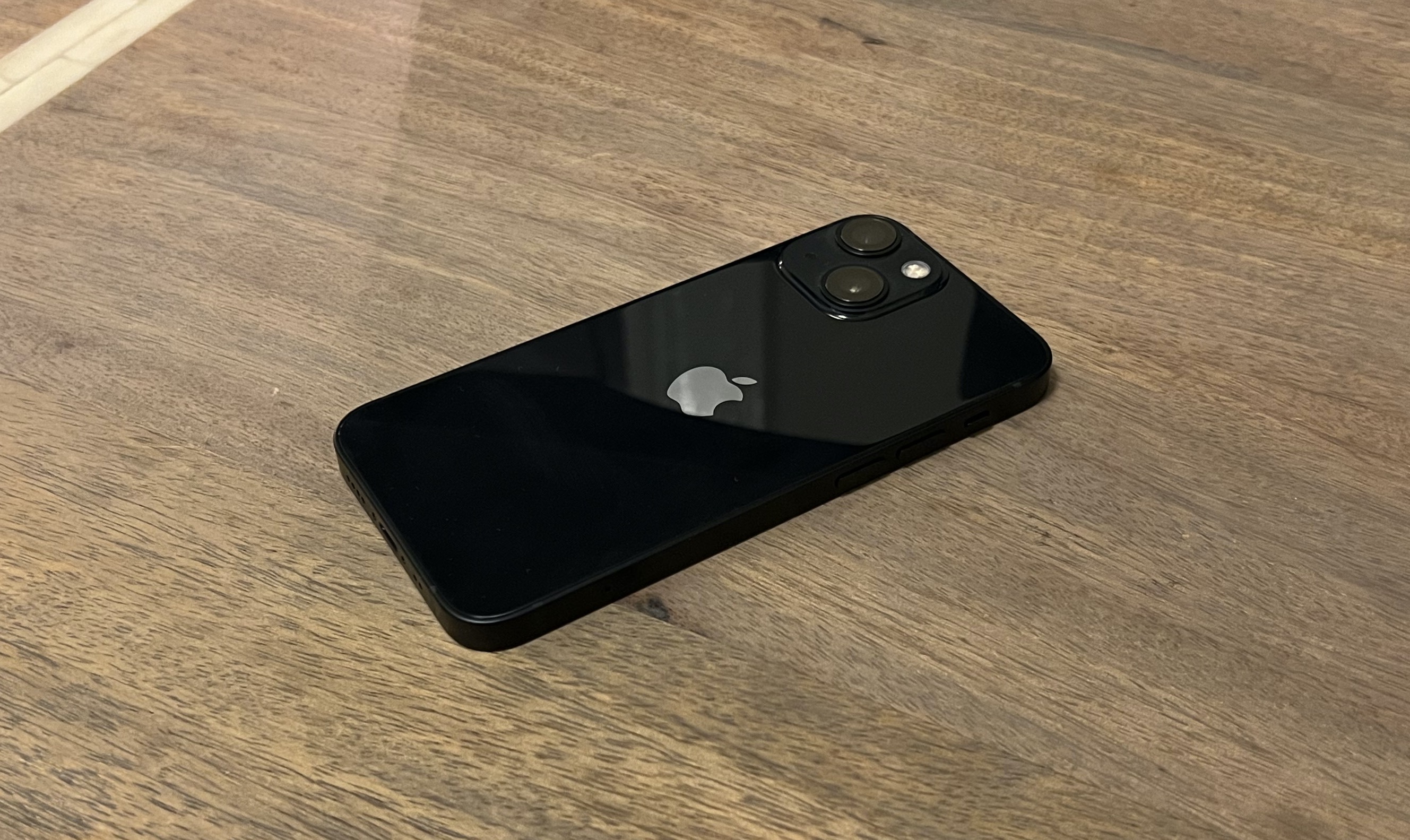
Enlarge / Apple has been repeatedly fined in Brazil for selling devices like this iPhone 13 Mini without a charger.
Samuel Axon

Apple has received its third fine in Brazil for not including chargers with its iPhones. A civil court judge in São Paulo issued the tech giant a 100 million real (about $19 million) fine on Thursday, French news agency Agence France-Presse reported via Barron’s.

Civil court Judge Caramuru Afonso Francisco in São Paulo reportedly issued the fine as damages in a lawsuit from the Brazilian Consumers’ Association.

The judge is also said to have ordered Apple to start selling chargers with the iPhone 12 and iPhone 13 series in Brazil. Further, the judge ordered Apple to provide chargers to customers in Brazil who bought an iPhone 12 or 13 over the last two years.

Apple can appeal the ruling and will, according to Reuters’ report Thursday. Apple didn’t immediately respond to Ars Technica’s request for comment.

The ruling dubbed Apple’s charger-less iPhones an “abusive practice,” AFP said. Apple stopped including chargers with its phones starting with the iPhone 12. At the time, Apple said that removing power adapters and EarPods from iPhone boxes meant smaller, lighter boxes, which enabled “70 percent more boxes to be shipped on a pallet” and “cut over 2 million metric tons of carbon emissions annually.” In its 2020 iPhone 12 Product Environmental Report [PDF], Apple said it expected to avoid mining over 600,000 metric tons of copper, tin ore, and zinc by not including chargers and EarPods with the iPhone 12.

In this week’s ruling, however, Judge Francisco reportedly wrote that selling an iPhone without a charger “requires consumers to purchase a second product in order for the first to work.”

This marks Apple’s third fine with the country since March 2021, when it reportedly received a fine worth $2 million from Procon-SP, São Paulo’s consumer protection agency, for selling the iPhone in Brazil without a charger.

And in September of this year, the Ministry of Justice and Public Security (MJSP) of Brazil fined Apple approximately $2.3 million and banned the selling of iPhones without chargers in the country. Similarly to Judge Francisco, the government body argued that Apple had shifted the burden to customers. Brazil’s MJSP also disputed Apple’s claims that it was being more eco-friendly, saying Apple could better help the environment by moving iPhones to USB-C.

Brazil is considering mandating USB-C charging on phones. Even more pressure comes from the European Union moving forward with plans to require USB-C charging on various consumer electronics requiring wired charging, including phones, tablets, and headphones, by the end of next year. The issue seems like it will continue to be hard to ignore, as some US politicians have also pushed for universal charging.

Earlier this year, a Bloomberg report claimed Apple is working on a USB-C iPhone for next year, but there has been no official word from Apple.

https://arstechnica.com/?p=1890112


TikTok made money from getting Syrian refugees to beg in livestreams

TikTok made money from getting Syrian refugees to beg in livestreams

After the BBC launched an investigation into how TikTok profits off Syrian families in crisis—reportedly violating TikTok policies by begging live for TikTok gifts that are exchangeable for cash—TikTok immediately took action, banning all accounts that BBC identified. These accounts, a TikTok spokesperson told Ars, violated TikTok community standards that prohibit “exploitative begging.”

TikTok defines exploitative begging as using children or other vulnerable people in attempts to increase gifts. The platform also prohibits children under 18 from receiving gifts.

“We are deeply concerned by the information brought to us by the BBC,” a TikTok spokesperson said.

BBC’s report suggests that TikTok not only failed to remove infringing livestreams from its platform, but the platform also, through an affiliated agency, seemingly recruited these livestreamers and then profited from accounts it should have banned.

BBC discovered that displaced families in Syria were being recruited by “agencies affiliated to TikTok in China and the Middle East.” After amassing 1,000 followers, the families, including children, would then conduct livestreams for hours, their accounts generating gifts at rates as high as $1,000 per hour.

From these gifts, BBC reported that TikTok was taking unusually high cuts, up to 70 percent, with families ultimately only receiving $19 out of $106 donated during a BBC experiment on the platform. The rest went to TikTok and the agency that recruited the families and provided them with phones, Wi-Fi, and SIM cards to launch the streams. The agency, BBC reported, is like many others that are “contracted by TikTok to help content creators produce more appealing livestreams.”

Responding to BBC’s report, TikTok has since severed ties with the agency. “This type of content is not allowed on our platform, and we are further expanding our global policies around exploitative begging,” a TikTok spokesperson told Ars.

TikTok disputed one aspect of BBC’s report. A spokesperson told the BBC that TikTok’s “commission from digital gifts was significantly less than 70 percent. But it declined to confirm the exact amount.”

TikTok’s response

For the families accused of begging on TikTok, the platform is one of few options to request cash online, charities providing aid in Syria told the BBC. Some international charities, like the International Rescue Committee, provide emergency cash assistance to families in the region but did not respond to Ars’ request to comment on the demand for this type of aid compared to donations of food or medical supplies.

On TikTok, families can be paid by other users in coins, and then streamers agree to share a portion of the revenue from those coins with TikTok. That’s where TikTok enters a gray area and appears to be taking money from families in crisis when it should, by its own standards, be removing the streams.

In response to the BBC’s report, TikTok removed all content that the BBC flagged as “exploitative begging.”

A TikTok spokesperson told Ars that the company took action to prevent other agencies it partners with from recruiting families for this sort of livestreaming, saying that TikTok has written “to all our LIVE agencies to remind them of their contractual agreement to adhere to our strict policies.”

When TikTok partners with LIVE agencies, the agencies agree to only take a commission for recruiting livestreamers who do not violate community standards. Because TikTok says it would be impossible to catch all violating content, it relies on agencies to comply with this agreement. Since the BBC report, TikTok has begun reviewing all agency partners and considering strengthening policies to disincentivize apparent rule-breaking.

In Syria, IRC reported that 14 million people need aid, following a decade of war that has displaced more than 12 million.

BBC reported that, because of TikTok’s inconsistency in moderating content it deems exploitative begging, “hundreds of families continue to go live every day, and most of the money donated is still going to TikTok.”

https://arstechnica.com/?p=1890110


Elon Musk is under federal investigation for merger conduct, Twitter tells judge

In this photo illustration, Elon Musk's official Twitter profile seen on a computer screen through a magnifying glass.
Getty Images

Elon Musk is being investigated over “conduct” related to his pending acquisition of Twitter, the company said in an October 6 court filing that was just made public yesterday. “Elon Musk is presently under investigation by federal authorities for his conduct in connection with the acquisition of Twitter,” Twitter told Delaware Court of Chancery Judge Kathaleen McCormick.

Twitter’s filing mostly describes its efforts to obtain documents related to the ongoing investigations. It says a privilege log produced by Musk’s law firm refers to “drafts of a May 13 email to the SEC [Securities and Exchange Commission]” and “a slide presentation to the FTC [Federal Trade Commission],” but that “the final communications themselves were neither produced nor logged.”

“Through counsel, he has exchanged substantive correspondence with those authorities concerning their investigations,” Twitter wrote. “Twitter wants those documents, because they bear upon key issues in this litigation. Twitter requested the production of those documents months ago. But with trial just 11 days away, Defendants have still not produced them.”

Twitter made this court filing just before McCormick delayed the trial to give Musk and Twitter three weeks to close the on-again, off-again $44 billion merger. Twitter wrote that Musk’s “game of ‘hide the ball’ must end,” and asked the court for an order compelling “the production of Defendants’ lawyers’ communications with the government concerning Twitter and the Twitter transaction.”

Twitter blasts Musk for “stonewalling”

Twitter said it has been seeking the documents since July 22, and described Musk’s attempts to avoid producing them as follows:

Defendants initially resisted production by reserving the right to withhold communications based on something they called “investigative privilege.” After the Court cast doubt on that species of “privilege,” Defendants have adopted a new approach. Instead of logging the communications as privileged, they simply deemed them outside the scope of discovery, on the theory that the search protocol Twitter negotiated with Defendants’ counsel somehow missed the mark.

“The obvious explanation for Defendants’ stonewalling is that they do not want Twitter to obtain documents that will further undermine Defendants’ position in this litigation,” Twitter also wrote. “But that is no excuse. Defendants should be compelled to cause their law firms to collect and produce the requested communications immediately.”

The SEC questioned Musk over his May 17 tweet claiming the “deal cannot move forward until” Twitter CEO Parag Agrawal justifies the company’s spam-account estimates. The SEC told Musk that the “term ‘cannot’ suggests that Mr. Musk and his affiliates are exercising a legal right” under the merger agreement to suspend the acquisition, but “we note that the Schedule 13D has not been amended to reflect the apparent material change.”

The SEC was also investigating Musk’s late disclosure of his 9.2 percent stake in Twitter, which he amassed before launching the attempt to buy the company outright. The FTC also reportedly opened an inquiry into whether Musk failed to comply with an antitrust reporting requirement related to that stake. Musk’s initial filing indicated he intended to be a passive shareholder but he later refiled it to classify himself as an active investor.

Musk lawyer accuses Twitter of “misdirection”

Musk’s lawyer claimed Twitter’s filing is a “misdirection,” according to Reuters. “Alex Spiro, an attorney for Musk, told Reuters that Twitter’s court filing was a ‘misdirection’ and asserted: ‘It is Twitter’s executives that are under federal investigation.'”

Twitter’s filing said, “Defendants do not deny that their counsel exchanged responsive, non-privileged communications with governmental authorities concerning Musk’s acquisition of Twitter. Instead, they seek to shield these documents from discovery by asserting that Twitter’s request for production comes ‘too late’ and that their counsel agreed only to produce documents identified through the application of agreed-upon search terms. Neither argument has any merit.”

Noting that Twitter requested the documents in July and made further attempts to get the same documents in August, the company said: “Defendants have resisted and delayed production for months. They cannot now cite their own obstruction as a basis for denying Twitter the documents that it requested from the outset.” Additionally, Twitter said that search terms “do not supply an excuse for avoiding the production of relevant responsive documents that are known to counsel, such as the government communications at issue on this Motion.”

The court case could end without a trial if Twitter and Musk complete the acquisition. Musk recently said he’ll close the deal despite previously attempting to get out of it, leading to the trial being delayed. But Twitter said in another court filing last week that there is a problem with Musk’s financing and that Musk won’t commit to a closing date.

Judge McCormick previously criticized Musk for withholding text messages, citing “glaring deficiencies” in the Musk side’s document production. McCormick was also considering whether to sanction Musk for failing to produce Signal messages, which were apparently deleted using Signal’s automatic deletion feature.

https://arstechnica.com/?p=1890082


Big pharma says drug prices reflect R&D cost. Researchers call BS

Big pharma says drug prices reflect R&D cost. Researchers call BS
Mike Kemp/Getty Images

At the end of September, a spot of good news: Relyvrio, a new drug for treating amyotrophic lateral sclerosis—or ALS, a neurological disorder without a cure—was approved in the United States. The ALS community rejoiced; the drug’s authorization was described as a “long-sought victory for patients.”

But the next day, the price of the medicine was revealed: $158,000 a year. This was far higher than what the Institute for Clinical and Economic Review, an independent nonprofit that analyzes health care costs, had estimated would be a reasonable price, which it deemed to be between $9,100 and $30,700.

Americans, though, probably weren’t shocked. Prescription drugs in the US cost about 2.5 times what they do in other countries, and a quarter of Americans find it difficult to afford them. Almost every new cancer drug starts at over $100,000 a year. And a 2022 study found that every year, the average price of newly released drugs is 20 percent higher.

How drug prices are set in the US is a mysterious black box. When rationalizing their lofty price tags, one of the most common reasons pharmaceutical companies will cite is that a high price is needed to make good on the money invested in research and development.

But is that true? “You hear it so much,” says Olivier Wouters, an assistant professor of health policy at the London School of Economics and Political Science. “That’s why I was like, well, let’s get some data, because I don’t believe it. I don’t think anyone believes it.”

So Wouters did just that. In September 2022, he and his colleagues published a new paper in JAMA that took this simple argument and put it to the test. In the study, they looked at the 60 drugs that had been approved by the US Food and Drug Administration (FDA) between 2009 and 2018 for which there was publicly available information about both R&D spending and pricing. And then they matched up the figures. “Essentially, it was like investigative journalism—check all the receipts, trace back in time on what they spend,” he says. If it were the case that R&D spending was the reason behind high drug prices, you’d expect to see a high correlation between the two. Instead, they found no correlation.

https://arstechnica.com/?p=1890068


FCC to ban all new Huawei and ZTE equipment on national security grounds

A Huawei sign hanging from the ceiling in a conference expo hall.
Enlarge / Huawei sign displayed at CES 2020 in Las Vegas on Wednesday, Jan. 8, 2020.

The Federal Communications Commission is expected to “ban all sales of new Huawei and ZTE telecommunications devices in the US” on national security grounds, Axios reported today.

The FCC previously banned Huawei and ZTE equipment from being used in telecom networks that receive subsidies from the Universal Service Fund, but an order proposed by Chairwoman Jessica Rosenworcel would go further. Citing anonymous sources, Axios reported that it would prevent Huawei and ZTE from getting any new products approved by the FCC.

The FCC declined to provide specific details on the proposal when contacted by Ars today. But the FCC said the proposed order would update and strengthen its “covered list” equipment rules and fulfill a statutory mandate that Congress imposed on the commission in the Secure Equipment Act of 2021.

“The ban is not retroactive, so the companies can continue to sell products that the FCC previously approved… New models or equipment that would need a new FCC approval, however, would be banned,” the Axios article said. The New York Times also reported on the proposed ban.

The FCC’s covered list applies to “communications equipment and services that are deemed to pose an unacceptable risk to the national security of the United States or the security and safety of United States persons.” Rosenworcel issued a statement on the pending proposal, saying, “The FCC remains committed to protecting our national security by ensuring that untrustworthy communications equipment is not authorized for use within our borders, and we are continuing that work here.”

FCC could vote on order at any time

The FCC’s list of items on circulation includes the proposed ban, titled, “Protecting Against National Security Threats to the Communications Supply Chain through the Equipment Authorization Program.” It was circulated last week.

Putting an item in circulation lets commissioners vote on it at any time instead of at one of the commission’s monthly meetings. The order’s text would become public after it’s approved.

In addition to Huawei and ZTE, Axios says the proposal would ban video surveillance equipment from three Chinese companies: Hytera, Hikvision, and Dahua. The companies make products for police departments.

It’s not clear whether the Huawei/ZTE portion of the ban affects only network equipment used by telecommunications providers, or if consumer devices like smartphones are included. Radio frequency devices must be authorized by the FCC, so a wide range of devices could be included in the ban. Huawei’s smartphone business has already tanked due to previous US sanctions.

The FCC designated Huawei and ZTE as national security threats in 2020.

https://arstechnica.com/?p=1889878