Why Musk gave up: He’s almost certain to lose Twitter case, law professor says

Illustration of Elon Musk surrounded by birds in the shape of Twitter's logo.
Aurich Lawson | Patrick Pleul/dpa-Zentralbild/ZB

Why did Elon Musk agree to buy Twitter again instead of continuing to argue his claims that Twitter violated the merger agreement by lying about bots? There are a few answers, but “the biggest one of all is that he’s almost certain to lose [in Delaware Court of Chancery]. And of course, if he loses, he has to do exactly what he’s just agreed to do, which is close the deal at the original price,” law professor Robert Miller told Ars in a phone interview yesterday.

Miller is the F. Arnold Daum chair in corporate finance and law at the University of Iowa College of Law. “The Delaware Supreme Court and the Delaware Court of Chancery have cited Professor Miller’s articles on material adverse effects, an issue the Court of Chancery has described as ‘one of the most difficult issues under Delaware law,’ more than forty times,” his University of Iowa bio says. Musk’s defense against Twitter’s lawsuit depended heavily on whether he could prove that Twitter suffered a material adverse effect.

Musk tried to get out of the $44 billion deal by claiming that Twitter lied in its estimate that fewer than 5 percent of its monetizable daily active users (mDAU) are spam or fake. But his claims seemed to have no solid proof, and with the scheduled trial less than two weeks away, Miller says Musk probably finally realized his case likely isn’t a winner.

“By this point, I think his lawyers have all the documents that they’re going to get from Twitter, and it’s probably pretty clear that there’s nothing to that claim,” Miller said. He also predicted that Musk would lose over a week ago, when it seemed the October 17 trial would begin as scheduled.

In a letter to Twitter Monday, days before he was scheduled for a deposition, Musk offered to complete the deal “provided that the Delaware Chancery Court enter an immediate stay of the action… and adjourn the trial and all other proceedings related thereto pending such closing or further order of the Court.” A stay would not prevent Twitter from resuming its lawsuit against Musk if he pulls out of the deal again.

Musk’s fraud argument was implausible

If Musk actually proved what he alleged, he’d be “home free” and wouldn’t even have to pay the $1 billion merger breakup fee, Miller said. But Miller called Musk’s central allegation implausible.

“If Twitter had been engaged in a gigantic fraud about mDAU—in other words, if they really knew there was a better way to measure fake accounts than the process they were using but they chose to use this one anyway because it produced the numbers they liked, but the real process that they themselves knew to be better came back with a number like 15 percent—if he could prove that, he’d be in great shape,” Miller said.

But that scenario would be “comparable to an Enron-level fraud,” a “massive securities fraud” in which “anybody who was involved in the fraud and sold Twitter shares that they received as compensation during the fraud period would be guilty of criminal insider trading,” Miller said. That “makes it inherently implausible. Things like that do occasionally happen, but they’re extremely rare,” he said.

Miller has given presentations on the Musk/Twitter case to the New York City Bar Association’s committee on mergers and acquisitions multiple times, including yesterday morning. He also used to be a lawyer at Wachtell, Lipton, Rosen & Katz, which is representing Twitter against Musk and previously represented Musk and Tesla in other matters.

Experts who spoke to the Financial Times agreed that Musk’s side must have realized during discovery that the case was too weak to go to trial. “I think we were very close to the end of the discovery, and Musk’s lawyers did not get what they wanted,” Stefano Bonini, a corporate governance expert at Stevens Institute of Technology, told FT. “The judge has not given that many concessions to Elon’s team. They filed requests for an unreasonable amount of data, and the judge ruled that a lot of what they asked for was unnecessary and genuinely confidential.”

In a tweet yesterday, Musk wrote, “Buying Twitter is an accelerant to creating X, the everything app.” 

https://arstechnica.com/?p=1887052


Musk makes U-turn before trial, tells Twitter he’ll complete merger [Updated]

Elon Musk wearing a tuxedo as he arrives at the 2022 Met Gala.
Enlarge / Elon Musk arrives for the 2022 Met Gala at the Metropolitan Museum of Art on May 2, 2022, in New York.
Getty Images | Angela Weiss

Elon Musk has told Twitter he is once again willing to buy the company at the originally agreed-upon price, according to a Bloomberg News report.

“Elon Musk is proposing to buy Twitter Inc. for the original offer price of $54.20 a share… Musk made the proposal in a letter to Twitter, according to people familiar with the matter, who asked not to be identified discussing confidential information,” Bloomberg wrote.

The Wall Street Journal subsequently reported that Musk’s “lawyers communicated the proposal to Twitter’s lawyers overnight Monday and filed a letter confidentially with the Delaware Chancery Court ahead of an emergency hearing on the matter scheduled for Tuesday.”

The reports come less than two weeks before a trial is scheduled to determine whether Musk would be forced to go through with the deal. Musk agreed to buy Twitter on April 25, then tried to back out of the deal on July 8. Twitter sued Musk in Delaware Court of Chancery to force him to complete the $44 billion purchase, and a five-day trial is scheduled to begin on October 17. Musk was also scheduled to answer questions in a deposition later this week.

“If Twitter accepts the proposal, the two sides wouldn’t have to follow through on a five-day nonjury trial set to begin October 17. There are no guarantees they will reach a deal and the trial could still go forward as planned,” the WSJ wrote.

Trading of Twitter stock was temporarily halted after the Bloomberg report. After trading resumed, the stock price rose nearly 13 percent, hitting $47.93.

Musk seeks stay in court case

Update, 5:12 pm ET: Musk’s letter to Twitter is now public and was included in a Securities and Exchange Commission filing. It says that Musk wants to complete the merger “provided that the Delaware Chancery Court enter an immediate stay of the action… and adjourn the trial and all other proceedings related thereto pending such closing or further order of the Court.” The offer to complete the deal is also pending receipt of Musk’s debt financing.

While Musk’s request would prevent the trial from beginning as scheduled, a stay would not stop Twitter from resuming its lawsuit against Musk if he pulls out of the deal again.

Twitter reportedly leery of new offer amid “distrust”

Musk lost a few key pre-trial rulings in the Delaware court. For example, Judge Kathaleen McCormick denied his request to delay the trial until at least February 2023. “The reality is delay threatens irreparable harm to the sellers,” she said.

Musk’s attempt to exit the merger centers on his unproven claim that Twitter’s spam estimates are wrong. Twitter says that fewer than 5 percent of its monetizable daily active users (mDAU) are spam or fake, and pointed out that Musk’s attempt to prove the estimate wrong relied on a tool that labeled his own account a likely bot. Twitter also argues that Musk has no right to exit the deal based on spam data, saying he “forwent all due diligence” when giving Twitter a take-it-or-leave-it offer.

Twitter reportedly won’t take immediate action in response to Musk’s new proposal, and would want the court to oversee the process if the merger does proceed. “Twitter is considering whether to accept the proposal, and will not act for at least another day, according to one of the people [familiar with the negotiations],” The Washington Post reported. “Because there is great distrust on both sides, Twitter leaders are questioning whether the letter represents a legal maneuvering, this person said.”

“The court held an emergency hearing Tuesday morning with both sides,” the Post also wrote. “Musk was willing to drop the case but Twitter wanted assurances that the court would oversee the process because of the distrust, one of the people said. There is another hearing scheduled later Tuesday.”

https://arstechnica.com/?p=1886727


SCOTUS weighs first case testing Big Tech liability for recommending content

SCOTUS weighs first case testing Big Tech liability for recommending content

A key protection shielding social media companies from liability for hosting third-party content—Section 230 of the Communications Decency Act—is set to face its first US Supreme Court challenge.

The question before the court hinges on whether Google-owned YouTube is responsible for aiding and abetting ISIS terrorists by actively recommending ISIS videos to users via its algorithms.

According to plaintiffs, ISIS allegedly relied on YouTube during efforts to ramp up recruitment before the terrorist group took credit for killing 130 people and injuring more than 350 others during six coordinated attacks in 2015. The lawsuit now headed to the Supreme Court focuses on the killing of an American woman named Nohemi Gonzalez, who was dining in a Paris bistro when ISIS militants attacked.

On Monday, the Supreme Court announced it would review the case—raised by Nohemi’s father, Reynaldo Gonzalez—which argues that YouTube helped spread ISIS’ messaging. Although plaintiffs say in court documents that YouTube did not play a direct role in Gonzalez’s death, they allege that YouTube “knowingly permitted ISIS to post on YouTube hundreds of radicalizing videos inciting violence,” NBC News reported.

Google did not provide Ars with comment before deadline, but in a court filing in July, it asked the Supreme Court to decline to review the case. At that time, Google said it was confused.

“It remains unclear which specific aspects of YouTube’s technology are even at issue,” Google said in the court filing. The tech company also suggested that an overhaul of YouTube’s terrorism-related policies since Gonzalez’s death meant “the relevance of this case to the YouTube of 2022 is far from clear.”

Some of the changes that YouTube has made since 2017 include devoting more engineering resources to automatically identify and remove terrorism-related content, nearly doubling the number of human experts working with YouTube to more accurately flag content for removal, and preventing monetization and comments on flagged content that doesn’t violate policies but warrants a warning.

“Together, we can build lasting solutions that address the threats to our security and our freedoms,” wrote Kent Walker, Google’s general counsel, in 2017. “It is a sweeping and complex challenge. We are committed to playing our part.”

Displaying versus recommending content

Google’s stated position is that Gonzalez’s case is doomed, partly because of “the ambiguity of petitioners’ pleadings as to what, specifically, makes YouTube’s technology distinct from other widely used technologies,” which are covered by Section 230. The company defended its algorithms, saying that its recommendation engine works based on user inputs like most other Internet technologies—such as search engines—and claiming that a Supreme Court decision to hold YouTube accountable for recommending ISIS videos “would threaten the basic organizational decisions of the modern Internet.”

Ars reached out to Gonzalez’s lawyer, Eric Schnapper, who couldn’t immediately respond to provide comment. However, in a court filing responding to Google, Schnapper wrote that Google relies on cherry-picking partial quotes from prior court opinions and twisting semantics of the complaint to claim that what’s at issue is how it “displays” versus “recommends” content. Schnapper wrote that if what was at issue was simply what YouTube displayed, Section 230 immunity would indeed cover Google’s tracks, but that’s not what Gonzalez alleges.

At the heart of Gonzalez’s complaint and what the court must now decide is whether YouTube actually contributed to ISIS recruitment by recommending videos, not just displaying them. Schnapper wrote that because Google made such a “highly dubious interpretation of Section 230,” it’s now time for the Supreme Court to step in and clarify how the law should work.

As Google indicated, the court’s ultimate decision could impact how other social media companies like Facebook or Twitter recommend content in the future. There’s political pressure from both Democrats and Republicans to diminish the strength of Section 230, NBC News reported, “with conservatives claiming that companies are inappropriately censoring content and liberals saying that social media companies are spreading dangerous right-wing rhetoric.”

The Supreme Court will also review a related appeal, a lawsuit seeking to hold Twitter accountable for hosting terrorist content on its platform in violation of the Anti-Terrorism Act. As in Gonzalez’s case, the question of Twitter’s Section 230 immunity has not yet been decided. Twitter did not immediately respond to Ars’ request for comment. Previously, Supreme Court Justice Clarence Thomas criticized Section 230, but otherwise, the jury’s out on which way the court will go in the Google or Twitter case.

Google wants lawmakers, not the Supreme Court, to be responsible for amending Section 230. In the company’s court filing, Google lawyers wrote that Congress is reviewing multiple laws connected to Section 230 and suggested that “if Congress thought Section 230’s application in this context was problematic, Congress could act.”

In his response, Schnapper pointed out a seeming flaw in that argument: “This Court has repeatedly warned against attaching meaning to congressional inaction.” He also argued that delaying until Congress acts imperils online users in the meantime, noting that even Google has acknowledged in the past that combating increasingly widespread online extremism is a matter of “great public importance.”

https://arstechnica.com/?p=1886430


Coroner lists Instagram algorithm as contributing cause of UK teen’s death [Updated]

Coroner lists Instagram algorithm as contributing cause of UK teen’s death [Updated]

In a London court this week, coroner Andrew Walker had the difficult task of assessing a question that child safety advocates have been asking for years: How responsible is social media for the content algorithms feed to minors? The case before Walker involved a 14-year-old named Molly Russell, who took her life in 2017 after she viewed thousands of posts on platforms like Instagram and Pinterest promoting self-harm. At one point during the inquest, Walker described the content that Russell liked or saved in the days ahead of her death as so disturbing, the coroner said in court, that he found it “almost impossible to watch.”

Today, Walker concluded that Russell’s death couldn’t be ruled a suicide, Bloomberg reports. Instead, he described her cause of death as “an act of self-harm whilst suffering from depression and the negative effects of online content.”

Bloomberg reported that Walker came to this decision based on Russell’s “prolific” use of Instagram—liking, sharing, or saving 16,300 posts in six months before her death—and Pinterest—5,793 pins over the same amount of time—combined with how the platforms catered content to contribute to Russell’s depressive state.

“The platforms operated in such a way using algorithms as to result, in some circumstances, of binge periods of images, video clips and text,” which “romanticized acts of self-harm” and “sought to isolate and discourage discussion with those who may have been able to help,” Walker said.

Following Walker’s ruling, Russell’s family issued a statement provided to Ars, calling it a landmark decision and saying that the court didn’t even review the most disturbing content that Molly encountered.

“This past fortnight has been particularly painful for our family,” the Russell family’s statement reads. “We’re missing Molly more agonizingly than usual, but we hope that the scrutiny this case has received will help prevent similar deaths encouraged by the disturbing content that is still to this day available on social media platforms including those run by Meta.”

Bloomberg reports that the family’s lawyer, Oliver Sanders, has requested that Walker “send instructions on how to prevent this happening again to Pinterest, Meta, the UK government, and the communications regulator.” In their statement, the family pushed UK regulators to quickly pass and enforce the UK Online Safety Bill, which The New York Times reported could institute “new safeguards for younger users worldwide.”

Defenses from Pinterest and Facebook took different tactics

During the inquest, Pinterest and Meta took different approaches to defend their policies. Pinterest apologized, saying it didn’t have the technology it currently has to more effectively moderate content that Molly was exposed to. But Meta’s head of health and well-being, Elizabeth Lagone, frustrated the family by telling the court that the content Molly viewed was considered “safe” by Meta’s standards.

“We have heard a senior Meta executive describe this deadly stream of content the platform’s algorithms pushed to Molly, as ‘SAFE’ and not contravening the platform’s policies,” the Russell family wrote in their statement. “If this demented trail of life-sucking content was safe, my daughter Molly would probably still be alive.”

A Meta spokesperson told Bloomberg that the company is “committed to ensuring that Instagram is a positive experience for everyone, particularly teenagers,” promising to “carefully consider the Coroner’s full report when he provides it.”

Molly’s family made it a point to praise Pinterest for its transparency during the inquest, urging other social media companies to look to Pinterest as a model when dealing with anyone challenging content policy decisions.

“For the first time today, tech platforms have been formally held responsible for the death of a child,” the Russells’ statement said. “In the future, we as a family hope that any other social media companies called upon to assist an inquest follow the example of Pinterest, who have taken steps to learn lessons and have engaged sincerely and respectfully with the inquest process.”

Bloomberg reported that Pinterest has said that “Molly’s story has reinforced our commitment to creating a safe and positive space for our pinners.” In response to the ruling, Pinterest said it has “continued to strengthen” its “policies around self-harm content.”

Neither Pinterest nor Meta immediately responded to Ars’ request for comment. [Update: Pinterest told Ars that its thoughts are with the Russell family, saying it has listened carefully to the court and the family throughout the inquest. According to Pinterest, it is “committed to making ongoing improvements to help ensure that the platform is safe for everyone” and internally “the Coroner’s report will be considered with care.” Since Molly’s death, Pinterest said it has taken steps to improve content moderation, including blocking more than 25,000 self-harm related search terms and, since 2019, has combined “human moderation with automated machine learning technologies to reduce policy-violating content on the platform.”]

https://arstechnica.com/?p=1885952


Ex-eBay security execs imprisoned for stalking journalists who cover eBay

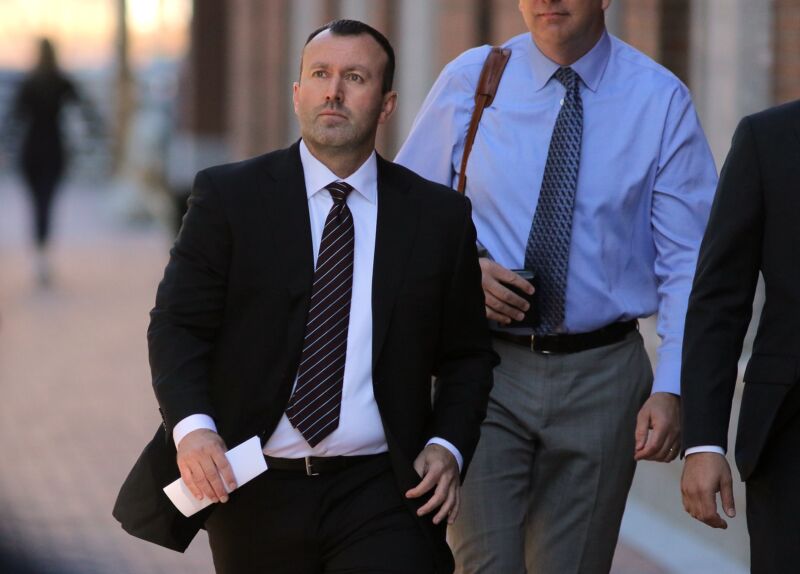
Former eBay executive James Baugh, wearing a suit, walks to court for his sentencing.
Enlarge / Former eBay executive James Baugh arrives at court for his sentencing in Boston on September 29, 2022.
Getty Images | Boston Globe

Two former eBay executives were sentenced to prison yesterday for cyberstalking and harassing journalists whose news coverage had rankled the eBay CEO. One other former eBay employee was sentenced last year, and four others await sentencing.

James Baugh, 47, eBay’s former senior director of safety and security, was sentenced to 57 months in prison and two years of supervised release, a Justice Department press release said yesterday. David Harville, 50, eBay’s former director of global resiliency, was sentenced to two years in prison and two years of supervised release. Baugh and Harville were also ordered to pay fines of $40,000 and $20,000, respectively.

Charges against those two and several other ex-eBay employees were announced in June 2020. The victims were Ina and David Steiner, who operate the website EcommerceBytes and live in Natick, Massachusetts.

The disturbing harassment campaign sent “anonymous and disturbing deliveries to the victims’ home,” including “a book on surviving the death of a spouse, a bloody pig mask, a fetal pig, a funeral wreath, and live insects,” the Justice Department said yesterday. “The harassment also featured Craigslist posts inviting members of the public to experience sexual encounters at the victims’ home.”

There were also “threatening Twitter messages… written as if they had been sent by eBay sellers who were unhappy with the victims’ coverage in the newsletter,” some of which “posted the victims’ home address and threatened to show up at their home,” the Justice Department said.

“On Aug. 15, 2019, Baugh, Harville and a co-conspirator traveled from California to Natick to surveil the victims and install a GPS tracking device on the victims’ car,” the Justice Department said. “The victims spotted the surveillance team and contacted local police. Harville also purchased tools intending to break into the victims’ garage and lied to an eBay investigator who was responding to the Natick Police’s request for assistance.”

Baugh and Harville “deleted digital evidence” after learning of the police investigation, and “Baugh made false statements to police and internal investigators and falsified records intended to throw the police off the trail,” the Justice Department said.

Execs “weaponized eBay’s security department”

FBI Special Agent Joseph Bonavolonta said that Baugh and Harville “demonstrated a clear contempt for the law when they weaponized eBay’s security department to engage in an incredibly disturbing pattern of retaliatory harassment and intimidation to torment this couple, who, thankfully, did not let their fear silence them.”

The harassment campaign lasted from about August 5, 2019, to September 6, 2019. “Senior executives at eBay were frustrated with the newsletter’s tone and content as well as the substance of comments posted beneath the newsletter’s articles. The harassment campaign arose from communications between those senior executives and Baugh, who was eBay’s senior security employee,” the Justice Department said.

Ina Steiner wrote a message for EcommerceBytes readers about the case on Wednesday. “David and I are getting ready to drive to the Moakley Federal Courthouse in Boston tomorrow to tell a judge how we were impacted by two men who confessed this year to cyberstalking and surveilling us in 2019,” she wrote. “We will make at least two more trips into Boston this fall to tell a judge how four other defendants upended our lives and impacted our business before he sentences them.”

Guilty pleas meant the Steiners “were spared the ordeal of the May trial” but also “deprived of the information that would have come out during the proceedings,” she wrote. In May, the Steiners reportedly decided to proceed with their pending lawsuit against eBay after settlement talks failed.

“We believe everyone who played a role should be held accountable,” Steiner wrote. “Last year David and I brought a civil RICO case against those we believe were responsible for the criminal campaign, including former eBay CEO Devin Wenig, CCO [Chief Communications Officer] Steve Wymer, and eBay itself. While it was a difficult decision, we firmly believe it was the right thing to do. We still have many questions, the answers to which would help us heal and possibly regain some trust we’ve lost.”

The civil and criminal cases are both in US District Court for the District of Massachusetts.

https://arstechnica.com/?p=1885954


FCC OKs satellite de-orbit rule despite possible conflict with NASA guidelines

Illustration of a garbage can floating in orbit around Earth.
Getty Images | PM Images

The Federal Communications Commission today unanimously approved a rule that aims to minimize space debris by requiring low Earth orbit (LEO) satellites to be disposed no more than five years after being taken out of service. “The new rules shorten the decades-old 25-year guideline for deorbiting satellites post-mission, taking an important step in a new era for space safety and orbital debris policy,” the FCC said in a press release.

As previously reported, the new five-year rule will be legally binding, unlike the current 25-year standard that’s based on a NASA recommendation proposed in the 1990s. The FCC has said it will apply to “space stations ending their missions in or passing through the low-Earth orbit region below 2,000 kilometers.”

Satellites already in orbit will be exempt from the new requirement. There’s also a grandfathering period of two years for satellites that are already authorized by the FCC but not yet launched.

LEO satellites can be taken out of orbit faster than ones in higher altitudes. Starlink, which has launched over 3,000 LEO satellites, uses a de-orbiting process that can be completed in months.

But there is controversy over the FCC’s authority to implement the rule and a possible conflict with NASA guidance. On Tuesday, leaders of the House Committee on Science, Space, and Technology and the Subcommittee on Space and Aeronautics said they are “concerned by the FCC’s proposal to act unilaterally.”

“As the bipartisan leadership of the Science Committee and our Space and Aeronautics Subcommittee wrote to your predecessor in April 2020, the Commission does not have clear authority from Congress, a fact which remains true today,” the lawmakers wrote in a letter to FCC Chairwoman Jessica Rosenworcel.

The draft of the FCC rule released a few weeks ago said the commission already “adopted comprehensive rules on orbital debris in 2004, pursuant to its authority to determine whether the public interest would be served by the authorization of satellite communications systems.” The FCC drafted the new five-year rule after “seeking comment on a comprehensive update to its orbital debris rules to better reflect the significant increase in satellites and types of operations in orbit,” the agency said.

NASA reevaluating orbital debris standards

“Internationally, NASA has led coordination on space debris mitigation guidelines with other space agencies over several decades,” lawmakers wrote to Rosenworcel. NASA also is slated to reevaluate the US government’s orbital debris standards, the letter said:

Within the Federal government, agencies follow US Orbital Debris Mitigation Standards and Practices, which are developed through coordination within the Federal government and based on scientific and technical research led by the National Aeronautics and Space Administration (NASA). In addition, NASA has been charged with reevaluating those standards and action by the FCC at this time could lead to conflicting US guidelines.

Lawmakers argued that “regulatory action by the FCC at this time, without clear authority from Congress, will at the very least create confusion and undermine the Commission’s work, and at worst undermine US economic competitiveness and leadership in space.” The letter was sent by Science Committee Chairwoman Eddie Bernice Johnson (D-Texas), the committee’s ranking member Frank Lucas (R-Okla.), Subcommittee on Space and Aeronautics Chairman Don Beyer (D-Va.), and the subcommittee’s ranking member Brian Babin (R-Texas).

A NASA spokesperson declined to comment on today’s FCC vote but noted that the agency submitted comments to the FCC’s orbital debris docket in April 2019 and October 2020.

The FCC took NASA comments into consideration, noting that the space agency “expressed concern that a five-year limit would impact NASA Science Mission Directorate’s (SMD’s) CubeSat missions, which rely on natural decay of orbit to manage post-mission orbital lifetime and impose greater limits on acceptable launch opportunities.” The five-year requirement “may be unduly burdensome” at certain altitudes, the FCC said. To account for those concerns, the FCC plan makes it possible to get waivers from the five-year rule on a case-by-case basis, particularly for scientific research missions.

While NASA didn’t explicitly oppose a five-year rule, it said in the 2019 comments that “NASA analysis shows that as long as short duration spacecraft adhere to the 25-year rule, their negative contribution to the orbital environment is not significant.”

https://arstechnica.com/?p=1885651


More EV charging stations coming nationwide, electrifying 75K miles of highways

More EV charging stations coming nationwide, electrifying 75K miles of highways

For drivers choosing electric vehicles, convenient access to reliable charging stations remains one of the biggest pain points after adopting the eco-friendlier way to cruise. Just the thought of driving out of the way to find a charging station when planning road trips—rather than pop into a choice of many gas stations at any exit—deters so many drivers that it was starting to look like unreliable charging could be the deciding factor that could ultimately doom EVs.

Instead, the Department of Transportation and the Biden administration announced yesterday that America greenlit a plan to invest $5 billion over the next five years to create a more reliable charging network by installing EV chargers in all 50 states, the District of Columbia, and Puerto Rico. The first wave of funding is available now, granting access to all states to “more than $1.5 billion to help build EV chargers covering approximately 75,000 miles of highway across the country.”

“President Biden is leading the shift to electrify transportation—ensuring drivers can commute and charge confidently and affordably and lessening our oversized reliance on fossil fuels while combatting climate change,” US Secretary of Energy Jennifer M. Granholm said in the press release.

The plan is to sprinkle hundreds of thousands of additional EV chargers along interstate highways, including in places where people would least expect to find them. Biden hopes this will decrease hesitancy among car buyers to invest more in EVs, so that half of all new vehicles sold in 2030 will be zero-emissions vehicles. That could reduce vehicle emissions, the DOT press release said, by “50-52 percent below 2005 levels by 2030.”

This significant advancement in EV charging infrastructure comes a little more than a week after the US Departments of Energy and Transportation appointed the first executive director charged with leading the Joint Office of Energy and Transportation, Gabe Klein. In a press release announcing Klein’s new role, DOE and DOT said Klein was specifically brought in to oversee efforts to “build a national electric vehicle (EV) charging network with a focus on filling gaps in rural and disadvantaged communities and hard-to-reach locations.”

To help underserved communities, cities, and states prepare their EV charging plans now that funding is available, Klein’s team will be available to provide technical assistance and analytical support.

Klein was not available to comment on the Biden administration’s latest move. However, a DOE representative provided Ars with a statement from Klein, saying his next steps would be to combine private and public investments “to support the deployment of 500,000 electric vehicle chargers nationwide,” ensuring “equitable access to affordable transportation,” in line with Biden’s goal to deliver “40 percent of the benefits from federal climate and clean energy investment in underserved communities.”

According to DOT, 35 state plans have already been approved, and some states have already started staffing local efforts to expand EV charging. Now, those states can be reimbursed for their efforts, plus access funding for initiatives like upgrading existing chargers, funding construction of new charging infrastructure, covering necessary operation and maintenance costs, and updating road signs to point people to new charging stations. Acting Federal Highway Administrator Stephanie Pollack said in DOT’s press release that the new initiative would quickly form “the backbone of our national EV charging network.”

The US has tried offering various incentives to convince car owners to switch to EVs, and researchers have identified a robust, cost-effective charging infrastructure as a necessary component of encouraging mass adoption. However, part of a robust infrastructure includes ensuring that charging stations are reliable and function when the drivers arrive, another consumer complaint that the new funding also seeks to address.

Last year, Georgia Institute of Technology climate and energy policy expert Omar Asensio reported with his research team in the Cell Press journal Patterns that AI could help states track the functionality of charging stations.

Asensio told Ars that the new charging infrastructure funding would help address current user concerns his analysis found over uneven distribution of charging stations. His team analyzed millions of EV charging reviews and concluded that “based on the rate of consumers leaving reviews at charging stations across the United States, we find that the deep-learning algorithms can detect the functioning of a certain station, daily.”

Klein, who previously served as commissioner of the Chicago Department of Transportation and director of the Washington DC Department of Transportation, is a vocal advocate for electrified transportation. He shares Biden’s views that expanding EV charging infrastructure is key to reaching US climate goals, considering, as the DOT press release noted, that the transportation sector is currently “our country’s largest source of greenhouse gas emissions.” He vowed to be a driving force pushing the country to embrace greener roadways.

“I will seize the opportunity to steward a critical shift in our transportation economy from fossil fuels to clean, electric energy systems, as there has never been a more important mission in our recent history than solving the climate crisis,” Klein said in DOE’s press release.

https://arstechnica.com/?p=1885357


Meta disrupted China-based propaganda machine before it reached many Americans

Meta disrupted China-based propaganda machine before it reached many Americans

China’s ability to influence American politics by manipulating social media platforms has been a topic of much scrutiny ahead of the midterm elections, and this week has marked some progress toward mitigating risks on some of the most popular US platforms.

US President Joe Biden is currently working on a deal with China-based TikTok—often regarded as a significant threat to US national security—with the one goal of blocking potential propaganda or misinformation campaigns. Now today, Meta, owner of Facebook and Instagram, shared a report detailing the steps it took to remove the first “Chinese-origin influence operation” that Meta has identified attempting “to target US domestic politics ahead of the 2022 midterms.”

In the press release, Meta Global Threat Intelligence Lead Ben Nimmo joined Meta Director of Threat Disruption David Agranovich in describing the operation as initiated by a “small network.” They said that between fall 2021 and September 2022, there were four “largely separate and short-lived” efforts launched by clusters of “around half a dozen” China-based accounts, which targeted both US-based conservatives and liberals using platforms like Facebook, Instagram, and Twitter.

In total, Meta removed “81 Facebook accounts, eight pages, one group, and two accounts on Instagram.” Meta estimated approximately 250 accounts joined the group, 20 accounts followed one or more Pages, and fewer than 10 accounts followed one or both Instagram accounts.

“This was the first Chinese network we disrupted that focused on US domestic politics ahead of the midterm elections,” the press release said. Previously, Meta had only disrupted Chinese networks that were working to influence opinions on US politics held by audiences outside the US.

When Meta monitors this type of activity, which it calls “coordinated inauthentic behavior,” it says in its report that it’s looking for fake accounts intentionally manipulating public debate. The bad actors do this by coordinating actions of multiple fake accounts “to mislead others about who they are and what they are doing.”

Meta policy dictates that this type of moderation is about monitoring account behavior, not the content of posts. Examples in the report include fake accounts posting memes targeting the left by alleging that the National Rifle Association of America paid off Senator Marco Rubio (R-Fla.) and the right by depicting a tentacled Biden gripping the world bearing nukes and machine guns. What gets an account removed is not, Meta said, “what they post or whether they’re foreign or domestic,” but whether the network would collapse without the fake accounts propping it up.

A Meta spokesperson told Ars that it focuses on “violating deceptive behavior, not content,” to take down covert influence operations because “these networks typically post content that isn’t provably false, but they rather aim to mislead people about who’s behind it and what they are doing.”

In the press release, Nimmo and Agranovich summed up the extent of the Chinese network’s reach and how well Meta worked to detect its deceptive behaviors, writing: “Few people engaged with it, and some of those who did called it out as fake. Our automated systems took down a number of accounts and Facebook Pages for various Community Standards violations, including impersonation and inauthenticity.”

Other threats detected

In the same report, Meta described a takedown of a much larger instance of “coordinated inauthentic behavior” originating from Russia.

Described as the largest Russian network of its kind that Meta has “disrupted since the war in Ukraine began,” this second operation targeted users based in “primarily Germany, France, Italy, Ukraine, and the UK.” Its online presence spanned 1,633 Facebook accounts, 703 Facebook pages, one Facebook group, and 29 accounts on Instagram.” The reach was limited to 4,000 accounts following at least one page, fewer than 10 accounts joining the group, and 1,500 accounts following at least one Instagram account. The operation also invested $105,000 in Facebook and Instagram ads, “paid primarily in US dollars and euros.”

The Russian network began operating in May, Meta reported, by launching more than 60 websites “carefully impersonating legitimate websites of news organizations in Europe,” such as Spiegel and The Guardian. It’s concerning because of the attention to detail mimicked authoritative news sites and translated articles into different languages. The operation relied on Facebook, Instagram, petitions on Change.org, Twitter, YouTube, and other social networks in its attempt to spread its fraudulent information.

German investigative journalists tipped off Meta to the problem, and when Meta tried to block domains, the network “attempted to set up new websites, suggesting persistence and continuous investment in this activity across the Internet.”

“This is the largest and most complex Russian-origin operation that we’ve disrupted since the beginning of the war in Ukraine,” Nimmo and Agranovich wrote in the press release. “It presented an unusual combination of sophistication and brute force. The spoofed websites and the use of many languages demanded both technical and linguistic investment.”

But while Meta considered the Russian network “unusual,” a report from the Stanford Internet Observatory (SIO) Cyber Policy Center released last month described the majority of these tactics as common.

For their report, SIO evaluated Meta and Twitter data covering a period of five years of pro-Western covert influence operations, which the platforms had already jointly removed.

To complete its analysis, SIO worked with the social media analytics firm Graphika to identify “an interconnected web of accounts on Twitter, Facebook, Instagram, and five other social media platforms that used deceptive tactics to promote pro-Western narratives in the Middle East and Central Asia,” as well as narratives that heavily criticized Russia, China, and Iran.

Twitter’s dataset “covered 299,566 tweets by 146 accounts between March 2012 and February 2022,” but Meta’s was limited to “39 Facebook profiles, 16 pages, two groups, and 26 Instagram accounts active from 2017 to July 2022.” Combining the datasets left SIO with five years’ worth of cross-platform activities from the influence operations to analyze.

Hoping to better understand “how different actors use inauthentic practices to conduct online influence operations,” SIO found that these operations have a limited range of tactics, employing the same—mostly unsuccessful strategies—over and over.

“The assets identified by Twitter and Meta created fake personas with GAN-generated faces, posed as independent media outlets, leveraged memes and short-form videos, attempted to start hashtag campaigns, and launched online petitions: all tactics observed in past operations by other actors,” SIO’s report said.

In Meta’s most recent report, tactics included relying on “crude ads,” generating fake profiles, impersonating journalists, leveraging memes, launching online petitions, and posting comments on influential accounts for maximum visibility.

https://arstechnica.com/?p=1885001


FCC advances plan to require blocking of spam texts from bogus numbers

A man viewing a text message with a
Getty Images | B4LLS

The Federal Communications Commission today released a plan to require mobile carriers to block a wide range of illegal text messages.

“In this Notice of Proposed Rulemaking (NPRM), we propose to require mobile wireless providers to block illegal text messages, building on our ongoing work to stop illegal and unwanted robocalls,” the FCC order said. “Specifically, we propose to require mobile wireless providers to block texts, at the network level, that purport to be from invalid, unallocated, or unused numbers, and numbers on a Do-Not-Originate (DNO) list.” These texts “are highly likely to be illegal,” the FCC said.

The NPRM seeks public comment on the plan. Once the NPRM is published in the Federal Register, there will be 30 days for comments and another 15 days for reply comments. After that, the FCC can draft new requirements for mobile carriers and set up a final vote.

“The American people are fed up with scam texts, and we need to use every tool we have to do something about it,” FCC Chairwoman Jessica Rosenworcel said. “Recently, scam text messaging has become a growing threat to consumers’ wallets and privacy. More can be done to address this growing problem and today we are formally starting an effort to take a serious, comprehensive, and fresh look at our policies for fighting unwanted robotexts.”

In addition to seeking comment on the proposed rules, the FCC order seeks comment more generally on the problem of spoofed text messages. “We also seek comment on the extent to which spoofing is a problem with regard to text messaging today and whether there are measures the Commission can take to encourage providers to identify and block texts that appear to come from spoofed numbers,” the FCC said.

The FCC also asked for comment “on applying caller ID authentication standards to text messaging.” Caller ID authentication is already required for phone calls on the Internet Protocol portions of voice networks.

Curious vote timing for year-old item

The timing of the NPRM’s release is curious because commissioners could have voted on it any time in the past 11.5 months. The item was circulated by Rosenworcel to commissioners on October 18, 2021, according to the FCC’s list of items on circulation.

When the FCC chair circulates an item, commissioners can vote whenever they’re ready. The NPRM, “Targeting and Eliminating Unlawful Text Messages,” was the oldest one on the list of circulated items.

An Axios report today said the vote was finally concluded shortly after a reporter asked why it was taking so long. “The Federal Communications Commission approved a long-delayed proposal to crack down on spam texts Friday night after Axios asked agency members why it hadn’t moved on the issue,” the article said, noting that it “had been awaiting a vote at the FCC for nearly a year.”

The spam text NPRM was approved Friday and released publicly today. The vote was reportedly 4-0, meaning both Democrats and both Republicans approved.

We asked Rosenworcel’s office and the other commissioners today for details on when each member voted. Democratic Commissioner Geoffrey Starks “voted on this item well before Friday,” Starks’ office told Ars.

A spokesperson for Rosenworcel said the chair’s office defers to commissioners on whether they want to disclose the timing of their votes, but also said the robotext proposal has had Rosenworcel’s “strong support” since she proposed it.

Republican FCC member Brendan Carr didn’t say when he voted, but he told Ars in an email, “This is a good item, and I’m hoping the FCC moves quickly to an order on it. I can tell you that I was not dragging [my] feet on it.”

It’s not clear when Republican Nathan Simington cast a vote. We’ll update this article if we get new information on the vote timing. The FCC still lacks a Democratic majority due to Senate inaction on Biden nominee Gigi Sohn.

Robotexts a big and growing problem

Complaints about spam texts are rising. The NPRM said the FCC “received approximately 14,000 consumer complaints about unwanted text messages, representing an almost 146 percent increase from the number of complaints the year before.” Complaints rose to 15,300 in 2021, and 8,500 in the first six months of 2022.

“Unwanted text messages present the same problems as unwanted calls—they invade consumer privacy, and are vehicles for consumer fraud and identity theft,” the FCC said.

Robocalls are still a bigger problem in terms of overall complaints, but the FCC noted that text message-based scams present some additional harms not seen with robocalls. The NPRM described how spam texts use phishing and malware to scam victims:

Texts can include links to well-designed phishing websites that appear identical to the website of a legitimate company and fool a victim into providing personal or financial information. Texted links can also load unwanted software, including malware that steals passwords and other credentials, onto a device. Scam texts, like scam calls, may involve illegal caller ID spoofing, i.e., falsifying the caller ID information that appears on the called party’s phone with the intent to defraud, cause harm, or wrongfully obtain something of value. In 2020, scammers stole over $86 million through spam texting fraud schemes. The median amount stolen from consumers in such scams was $800.

The FCC issued a consumer alert about the rise in robotext scams on July 28. The FCC’s Consumer Advisory Committee last month finalized a report on the state of text messaging, including information on the sources of illegal and unwanted text messages and tactics used by bad actors to defraud consumers.

https://arstechnica.com/?p=1884977


Experts debate the ethics of LinkedIn’s algorithm experiments on 20M users

Experts debate the ethics of LinkedIn’s algorithm experiments on 20M users

This month, LinkedIn researchers revealed in Science that the company spent five years quietly researching more than 20 million users. By tweaking the professional networking platform’s algorithm, researchers were trying to determine through A/B testing whether users end up with more job opportunities when they connect with known acquaintances or complete strangers.

To weigh the strength of connections between users as weak or strong, acquaintance or stranger, the researchers analyzed factors like the number of messages they sent back and forth or the number of mutual friends they shared, gauging how these factors changed over time after connecting on the social media platform. The researchers’ discovery confirmed what they describe in the study as “one of the most influential social theories of the past century” about job mobility: The weaker the ties users have, the better the job mobility. While LinkedIn says these results will lead to changes in the algorithm to recommend more relevant connections to job searchers as “People You May Know” (PYMK) moving forward, The New York Times reported that ethics experts said the study “raised questions about industry transparency and research oversight.”

Among experts’ biggest concerns was that none of those millions of users LinkedIn analyzed were directly informed they were participating in the study—which “could have affected some people’s livelihoods,” NYT’s report suggested.

Michael Zimmer, an associate professor of computer science and the director of the Center for Data, Ethics, and Society at Marquette University, told NYT that “the findings suggest that some users had better access to job opportunities or a meaningful difference in access to job opportunities.”

LinkedIn clarifies A/B testing concerns

A LinkedIn spokesperson told Ars that the company disputes this characterization of their research, saying that nobody was disadvantaged by the experiments. Since NYT published its report, LinkedIn’s spokesperson told Ars that the company has been fielding questions due to “a lot of inaccurate representation of the methodology” of its study.

The study’s co-author and LinkedIn data scientist, Karthik Rajkumar, told Ars that reports like NYT’s conflates “the A/B testing and the observation nature of the data,” making it “feel more like experimentation on people, which is inaccurate.”

Rajkumar said the study came about because LinkedIn noticed the algorithm was already recommending a larger number of connections with weaker ties to some users and a larger number of stronger ties to others. “Our A/B testing of PYMK was for the purpose of improving relevance of connection recommendations, and not to study job outcomes,” Rajkumar told Ars. Instead, his team’s objective was to find out “which connections matter most to access and secure jobs.”

Although it’s called “A/B testing,” suggesting it’s comparing two options, the researchers did not just look at weak ties versus strong ties, exclusively testing a pair of algorithms that generated either. Rather, the study experimented with seven different “treatment variants” of the algorithm, noting that different variants yielded different results, such as users forming fewer weak ties, creating more ties, creating fewer ties, or making the same number of weak or strong ties. Two variants, for example, caused users to form more ties in general, including more weak ties, while another variant led users to form fewer ties in general, including fewer weak ties. One variant led to more ties, but only strong ties.

“We don’t randomly vary the proportion of weak and strong contacts suggested by PYMK,” a LinkedIn spokesperson told Ars. “We strive to make better recommendations to people, and some algorithms happen to recommend more weak ties than others. Because some people end up getting the better algorithms a week or two earlier than others during the test period, this creates enough variation in the data for us to apply the observational causal methods to analyze them. No one is being experimented on to observe job outcomes.”

https://arstechnica.com/?p=1884675