California says Amazon ruined online shopping, sues it for driving up prices

California says Amazon ruined online shopping, sues it for driving up prices

Amazon is again under fire for its policies allegedly forbidding its online retailers from selling their products for lower prices on other websites and retail platforms. Critics say this has led to years of higher prices for consumers instead of allowing markets to determine fair prices.

Last year, the District of Columbia sued Amazon for the same reason and lost in court in March 2022. But then in April, the Department of Justice issued a statement in support of DC’s case, and shortly after, DC filed to appeal this August. Now, California attorney general Rob Bonta has piled on more pressure, announcing a lawsuit against Amazon for allegedly blocking price competition in California, too.

Previously, an Amazon spokesperson told Politico, regarding the DC lawsuit, that “sellers set their own prices for the products they offer in our store.” The spokesperson suggested that without Amazon’s commitment to highlighting competitively priced items above others, prices in the market would go up, not decrease as critics suggest.

Today, an Amazon spokesperson provided Ars with a similar statement about the new case.

“Similar to the DC Attorney General—whose complaint was dismissed by the courts—the California Attorney General has it exactly backwards,” Amazon’s spokesperson said. “Sellers set their own prices for the products they offer in our store. Amazon takes pride in the fact that we offer low prices across the broadest selection, and like any store we reserve the right not to highlight offers to customers that are not priced competitively. The relief the AG seeks would force Amazon to feature higher prices to customers, oddly going against core objectives of antitrust law.”

Bonta disagrees with Amazon. He said in his press release that Amazon’s “agreements thwart the ability of other online retailers to compete, contributing to Amazon’s dominance in the online retail marketplace and harming merchants and consumers through inflated fees and higher prices.”

“The reality is: Many of the products we buy online would be cheaper if market forces were left unconstrained,” Bonta said. “With today’s lawsuit, we’re fighting back.”

His lawsuit filed today asks the San Francisco Superior Court to issue an order that “stops Amazon’s anticompetitive behavior and recovers the damages to California consumers and the California economy.” Beyond just prohibiting Amazon from anticompetitive practices, Bonta wants Amazon to “compensate for the harms to consumers through increased prices”—an amount that has yet to be determined.

A California Department of Justice spokesperson told Ars that the amount “will be determined by the court, but the harm we’re alleging is significant. To think about the size, you may want to consider what it means if every Californian has paid even just a little more for every product they purchased online over the span of a decade.”

How is California’s case different than DC’s?

Bonta posted the new complaint lobbed against Amazon, which suggests that because nearly 75 percent of consumers go directly to Amazon for all online purchases, merchants have no choice but to sell on Amazon.

But because retailers alleged that the cost of selling items on Amazon is higher than on other platforms, including their own websites, Bonta said the terms of retailer agreements with Amazon limit their ability to sell items at a lower cost on platforms with lower seller fees. Bonta cited an e-commerce consultant who confirmed retailers could sell items for lower fees on sites like Walmart or eBay. The result is a scenario where consumers are denied opportunities to access products at cheaper rates.

At the furthest extreme, Bonta said that if Amazon catches retailers breaking the agreement, retailers can face sanctions, like decreased visibility of their items in product search results “and even the possibility of termination or suspension.”

The DOJ is apparently on Bonta’s side. In its statement of support to reopen DC’s case against Amazon, the DOJ said that the DC Superior Court erred in its judgment dismissing the case, partly because DOJ said it relied on inapplicable case law. “If left uncorrected, the Court’s ruling could jeopardize the enforcement of antitrust law,” DOJ warned.

Not inserting its own judgment, DOJ recommended the DC court reconsider whether DC met its burden to prove that Amazon’s retailer agreements are unreasonable.

Six months ago, Amazon seemingly cleared this hurdle, but this next round of legal battles could prove more challenging, especially with the DOJ and another state’s legal team involved. As DC kicks off its appeal process, Bonta, in today’s filing, asked the San Francisco Superior Court for a jury trial.

“We hope that the California court will reach the same conclusion as the DC court and dismiss this lawsuit promptly,” Amazon’s spokesperson told Ars.

https://arstechnica.com/?p=1881446


San Francisco sued by woman who says her rape-kit DNA was used to arrest her

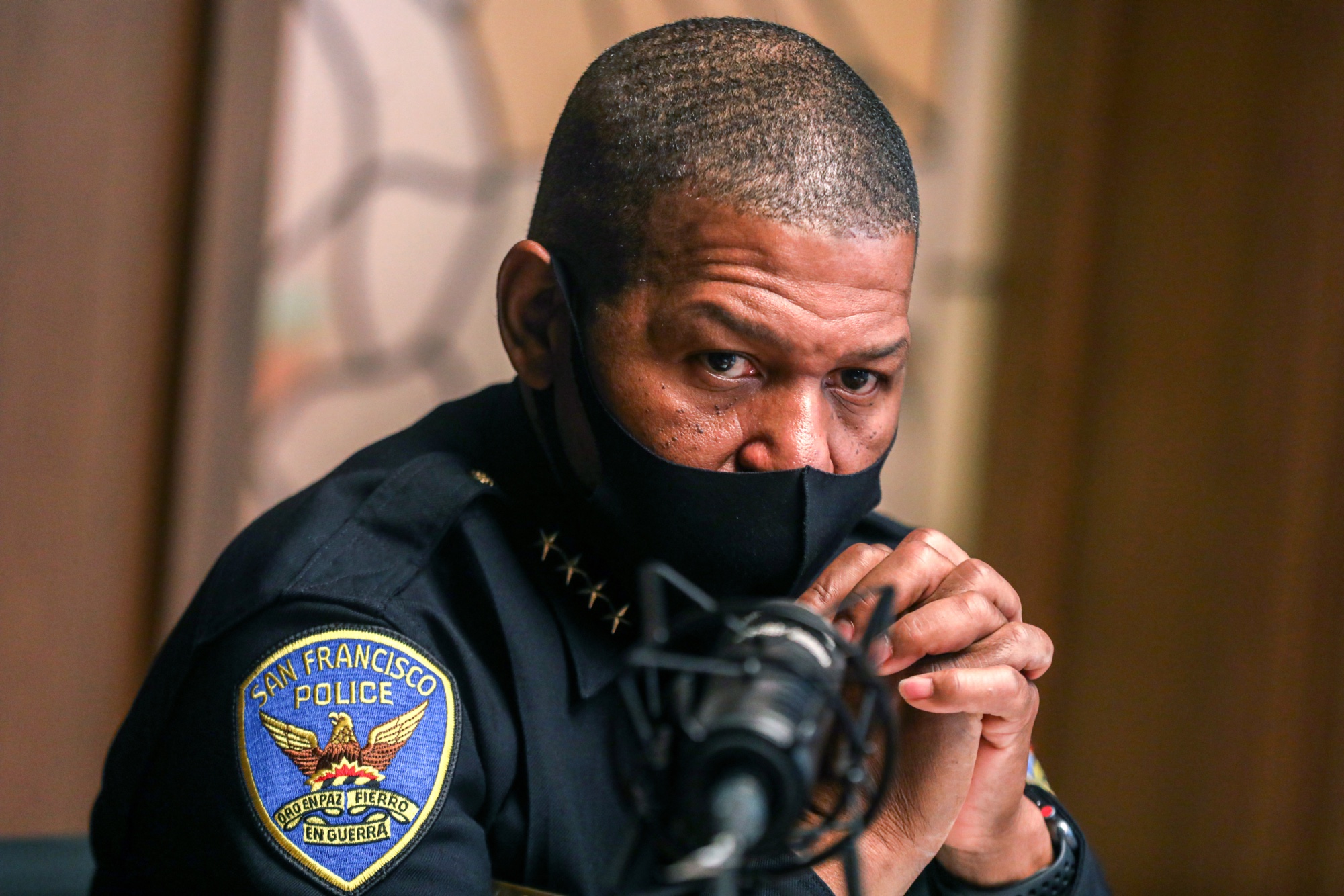
San Francisco Police Chief Bill Scott wearing a mask and sitting at a table.
Enlarge / San Francisco Police Chief Bill Scott answers questions in a meeting with the San Francisco Chronicle editorial board on Tuesday, Feb. 15, 2022.
San Francisco Chronicle/Hearst Newspapers via Getty Images

San Francisco has been sued by a sexual assault victim in a complaint that describes “the San Francisco Police Department’s shocking practice of placing crime victims’ DNA into a permanent database without the victims’ knowledge or consent.”

“Plaintiff Jane Doe, a sexual assault survivor, was re-victimized by this unconstitutional practice,” alleged the lawsuit filed Monday in US District Court for the Northern District of California. “In 2016, she provided a DNA sample to the San Francisco Police Department as part of its investigation into her sexual assault. However, she never consented to it to be stored or used for any other purpose. Nevertheless, the Department maintained Plaintiff Doe’s DNA in the database for more than six years.”

According to the lawsuit, Jane Doe was arrested on burglary charges in 2021 after DNA from a crime scene apparently matched the DNA she provided five years earlier. The charges were eventually dropped.

The SFPD practice previously came to light in February 2022, as we wrote at the time. Chesa Boudin, who was then the district attorney, issued a press release denouncing the police department practice in which the “crime lab attempts to identify crime suspects by searching a database of DNA evidence that contains DNA collected from rape and sexual assault victims.” Boudin said he learned of the practice when a woman’s DNA collected years previously during a rape exam was used to link her to a property crime.

Outcry spurred changes

Under the policy, SFPD officers tested “victims’ DNA for matches in every subsequent criminal investigation in which genetic material is recovered without any reasonable basis to suspect the victims are in any way connected to these completely unrelated crime scenes,” Jane Doe’s complaint said, adding that thousands of people were reportedly “subjected to this arbitrary, unlawful unconstitutional invasion of privacy.”

Amid widespread condemnation, the SFPD reportedly ended the policy about a week after the public revelation. Because “the crime lab routinely ran crime scene evidence through this database that included Plaintiff’s DNA without ever attempting to get her consent or anyone else’s consent,” Jane Doe’s “DNA was likely tested in thousands of criminal investigations, though the police had absolutely no reason to believe that she was involved in any of the incidents,” the lawsuit said.

California’s legislature recently approved a bill on DNA collected from crime victims “requiring that law enforcement agencies use these samples only for purposes directly related to the incident being investigated, prohibiting law enforcement agencies from comparing these samples with samples that do not relate to the incident being investigated, and prohibiting law enforcement agencies from including these samples in databases that allow the samples to be compared to or matched with profiles derived from DNA evidence obtained from crime scenes.”

The bill was approved by the California Senate and Assembly and awaits Governor Gavin Newsom’s signature.

https://arstechnica.com/?p=1881324


AT&T can’t upgrade most 5G phones to new bands, regrets the error

You can buy a number of 5G phones in an AT&T store, but only a handful of them will make use of the carrier's most reliable frequencies.
Enlarge / You can buy a number of 5G phones in an AT&T store, but only a handful of them will make use of the carrier’s most reliable frequencies.

Update: An AT&T spokesperson said in response to this story that “only 2022 and newer devices can be certified by the FCC to use 3.45 GHz.” Statements regarding upgrading of older 5G phones were “provided by mistake and then incorrectly confirmed,” said Jim Greer, AT&T spokesperson. “We regret the error and apologized to the reporter and his readers for the mistake.” The original story follows.

AT&T has admitted it will not upgrade “older” phones and tablets—some released as recently as June—as it rolls out its newly acquired midband 5G frequencies, going back on public statements it made as recently as late August.

The carrier told CNET on August 23 that it would release a software update that would allow phones like the iPhone 12 and 13, the Pixel 6, Galaxy S21 models, and low-cost Motorola phones to utilize the 3.45 GHz C-band AT&T purchased for roughly $9.1 billion in early 2022. Combined with the low-band access AT&T already offered, this would give its 5G phones access to both wider coverage and faster average speeds.

This was notably different from AT&T’s stance in January 2022, just after it had won its hard-fought spectrum auction. Back then, Chris Sambar, AT&T’s executive vice president of technology operations, told CNET that 3.45 GHz support would only be available on “the major flagship devices in 2022, the big devices from the big OEMs.”

AT&T’s mid-summer confidence, or confusion, came to light a little over two weeks after its reported and confirmed upgrade promise.

AT&T admitted to CNET last week that the list of devices supporting its new bands was more like 11 newer flagship devices, not more than 30 existing models. AT&T described the considerable discrepancy on “an inaccurate list… provided by mistake and then incorrectly confirmed during the fact-checking” of CNET’s post, according to Jim Greer, assistant vice president of corporate communications for AT&T.

It’s unclear whether AT&T was wrong about the frequency capabilities and hardware inside the phones it sold, if FCC certification was an issue, or if AT&T simply abandoned its work to make “older” phones viable through a software update.

The iPhone 13 uses a Qualcomm SDX60M modem, while the iPhone 14 is likely sporting the X65, the same chip as in the Samsung S22 models. A PC Magazine post from February noted that the X65 could reach and combine AT&T’s frequencies from the lower and upper parts of the n77 subsection of the C-band, providing 85 MHz of space compared to 45 MHz on an X60 chip.

Those with 5G-capable phones on AT&T will still have access to the carrier’s 3.7 GHz C-band, along with mmWave and low-band frequencies. Notably, AT&T continues to sell phones and other 5G devices that will never have access to its prime 3.45 GHz space, some with three-year contracts.

AT&T has a rich recent streak of blending facts and marketing in its handling of new network technologies. The carrier pushed a “5GE” icon to phones that were 4G-only in early 2019, proudly proclaiming that it “broke our industry’s narrative” over what actually counts as 5G. After lawsuits and arbitration hearings, AT&T was forced to drop it, if only in advertising.

In mid-2020, AT&T emailed customers with 3G phones a misleading message that left many believing their phones would imminently stop working and required upgrading. AT&T wasn’t due to turn off 3G until February 2022, and some of those customers had phones that would work on other frequencies beyond that date.

When AT&T finally launched a 5G network, testers found its speeds were notably slower than many of its competitors’ 4G offerings.

We’ve reached out to AT&T for comment on this post and will update if we receive a response.

https://arstechnica.com/?p=1881162


Twitter shareholders approve the $44B merger Musk is trying to get out of

Closeup shot of a Twitter logo seen displayed on a smartphone screen.
Getty Images | NurPhoto

Twitter shareholders voted to approve Elon Musk’s purchase of the company, weeks ahead of a trial over Musk’s attempt to exit the merger deal. Though a specific vote tally wasn’t available today, multiple news reports said investors backed the Twitter board’s recommendation to approve the $44 billion deal that Musk agreed to in April before changing his mind.

“A majority of Twitter shareholders voted in favor of accepting Musk’s $54.20-a-share offer to acquire the social-networking company, according to a preliminary vote count read on Tuesday,” Bloomberg wrote.

Today’s shareholder vote was the last remaining approval Twitter needed for the Musk deal, but the bigger question is what will happen at the upcoming trial at Delaware Court of Chancery. Twitter sued Musk to force him to complete the deal, and a trial is scheduled to begin on October 17.

Musk owns about 9.2 percent of Twitter stock and wasn’t expected to vote “given that he has alleged that Twitter breached the merger agreement,” The Wall Street Journal wrote. “The agreement requires Mr. Musk to vote his shares in favor of the deal, though his support isn’t crucial if enough other investors back it.”

Twitter stock was up 0.7 percent today despite a big drop in the overall market. Twitter was at $41.70 at closing, and shareholders would receive $54.20 per share if Musk has to complete the purchase.

Today’s “shareholder meeting lasted 7 minutes, with polls open for about 3 minutes,” the Bloomberg article said. “Shareholders could also submit votes for several weeks ahead of the meeting.” News reports before today’s meeting indicated there were already enough votes to approve the merger.

Judge criticized Musk ahead of trial

Musk has tried to exit the merger by claiming Twitter lied about the number of spam bots on its service. Musk has repeatedly complained about the overall number of bots on Twitter but hasn’t disproven Twitter’s specific estimate, which is that less than 5 percent of its monetizable daily active users (mDAU) are spam or fake.

Musk lost some key rulings in the pre-trial phase. His attempt to delay the trial until February 2023 was rejected in July. Last week, Judge Kathaleen McCormick rejected Musk’s newer motion for a four-week delay, writing in her ruling that “even four weeks’ delay would risk further harm to Twitter too great to justify.”

McCormick last week also criticized Musk for failing to provide documents sought by Twitter, writing that “Musk’s own production of text messages revealed glaring deficiencies.” She ordered Musk to produce more documents, noting that Twitter “has born[e] the bulk of the burden of discovery” while “Defendants had less to do but still fell short in their obligations.”

A Twitter filing made public yesterday said that gaps in Musk’s production of text messages “are notable because they correspond precisely to the period when Musk apparently developed buyer’s remorse and set into action his scheme to escape the merger agreement.”

More Musk texts made public

It’s clear that Musk’s document “production was incomplete because other parties have produced messages to and from Musk during this time period that Musk should have produced,” Twitter wrote. That includes texts between Musk and Morgan Stanley’s head of global technology investment banking, Michael Grimes, which were produced by Morgan Stanley.

Those messages show that on May 8, Musk wrote to Grimes that he was thinking of exiting the merger agreement due to the possibility of “World War III.” About a half hour later, according to Twitter’s newly public filing, Musk wrote to Grimes that “An extremely fundamental due diligence item is understanding exactly how Twitter confirms that 95% of their daily active users are both real people and not double-counted.”

“If that number is more like 50% or lower, which is what I would guess based on my feed, then they have been fundamentally misrepresenting the value of Twitter to advertisers and investors,” Musk wrote to Grimes. “To be super clear, this deal moves forward if it passes due diligence, but obviously not if there are massive gaping issues.”

Twitter’s filing said these messages came weeks after Musk “expressly disclaimed any diligence before signing and agreeing to a no-diligence merger.”

https://arstechnica.com/?p=1881040


To defeat FTC lawsuit, Meta demands 100+ rivals share biggest trade secrets

To defeat FTC lawsuit, Meta demands 100+ rivals share biggest trade secrets

Several years after Facebook-owner Meta acquired WhatsApp and Instagram, the Federal Trade Commission launched an antitrust lawsuit that claimed that through these acquisitions, Meta had become a monopoly. A titan wielding enormous fortune over smaller companies, the FTC said Meta began buying or burying competitors in efforts that allegedly blocked rivals from offering better-quality products to consumers. In this outsize role, Meta stopped evolving consumer preferences for features like greater privacy options and stronger data protection from becoming the norm, the FTC claimed. The only solution the FTC could see? Ask a federal court to help them break up Meta and undo the damage the FTC did not foresee when it approved Meta’s acquisitions initially.

To investigate whether Meta truly possesses monopolistic power, both Meta and the FTC have subpoenaed more than 100 Meta competitors each. Both hope to clearly define in court how much Meta dominates the market and just how negatively that impacts its competitors.

Through 132 subpoenas so far, Meta is on a mission to defend itself, claiming it needs to gather confidential trade secrets from its biggest competitors—not to leverage such knowledge and increase its market share, but to demonstrate in court that other companies can compete with Meta. According to court documents, Meta’s so hungry for this background on its competitors, it says it plans to subpoena more than 100 additional rivals, if needed, to overcome the FTC’s claims.

Meta is asking its competitors for a wide range of insights, from their best-performing features to the names of their biggest advertisers. It wants to see all business receipts, which to its competitors is seemingly turning the antitrust litigation into a business opportunity for Meta to find out precisely how other companies attract users, scale products, and gauge success.

Among rivals already subpoenaed are Twitter, TikTok owner ByteDance, Reddit, Pinterest, LinkedIn, and Snap. More requests could be made in the coming years, though, before the discovery for both sides concludes on January 5, 2024.

Snap, others oppose “overly broad” subpoenas

Unsurprisingly, nobody wants to hand over confidential trade secrets to Meta. And because the only competitor that the FTC named in the antitrust litigation was Snap, Bloomberg reports that Snap has become one of the most vocal opponents of Meta’s “overly broad” subpoenas.

In a court document, Snap lawyers said that what Meta wanted was effectively access to Snap’s “competitive playbook,” seeking “materials on every product and nearly every aspect of Snap’s business, with a time range that spans almost Snap’s entire existence.”

“This is exactly the type of information Meta would use to further harm Snap competitively,” Snap’s lawyers said.

Meta claimed the FTC sought similar information from Snap, but Snap claimed the FTC’s requests were “far narrower.”

Snap’s major concern is that Meta has a history of duplicating rival products’ features, including its controversial new feature dominating its Facebook and Instagram feeds, TikTok-like videos called Reels. Both Snap and ByteDance responded to subpoenas by asking Meta to limit the scope of documents requested and prevent Meta’s in-house counsel from accessing any documents containing sensitive trade secrets, which could then ostensibly be shared with Meta employees. Court documents show that Snap withheld “the vast majority of the documents Meta has requested,” and Meta rejected Snap’s offers to share confidential business information only with Meta’s outside counsel.

For Snap, the subpoena would be easier to swallow if it knew Meta couldn’t act on any information shared. Meta responded to the outside counsel request by noting that the court had already rejected “the same request from Snap” and reiterating that its in-house counsel is “not involved in competitive decision-making.”

Snap did not immediately respond to Ars’ request for comment.

Today, Bloomberg reported that a California federal court will decide approximately how many documents and, therefore, how many trade secrets Snap should have to reveal to help Meta build its defense against the FTC.

Snap is hoping the court will “quash the subpoena in its entirety,” in part because the request is “massively overbroad and unduly burdensome.” Snap claims Meta is asking Snap “to reconstruct virtually every decision Snap has made.” They also say Meta has not demonstrated a “substantial need” to justify “all the confidential commercial information that it demands.” Instead, they accuse Meta of “clear fishing expeditions” with “irrelevant” document requests, such as seeking information on the FTC’s investigation into Snap’s disappearing messages feature.

Meta wants the court to order Snap to produce all requested documents, partly because it claims that such a broad request “is common, and appropriate, in large antitrust cases.” It also claims that Snap is “not a truly disinterested non-party” in the antitrust litigation and that delays in producing documents were “designed to prejudice Meta’s defense.” As Bloomberg reports, as legal challenges to Meta’s subpoenas from other social media companies mount, a Meta spokesperson told Ars that all these competitors resisting compliance with subpoenas appears to somewhat substantiate Meta’s claims that the industry remains competitive despite Meta’s ownership of Facebook, WhatsApp, and Instagram.

“Meta competes vigorously with many companies to help people share, connect, communicate, or simply be entertained,” Meta spokesperson Christopher Sgro told Bloomberg and Ars. “As a natural step in preparing our defense to the FTC’s lawsuit, we have served subpoenas on companies with which we compete or which we believe have other information relating to the FTC’s claims.”

https://arstechnica.com/?p=1880953


Starlink appeals FCC rejection of $886M grant, calls reversal “grossly unfair”

Photo illustration with Starlink logos displayed on a smartphone and PC screen.
Getty Images | SOPA Images

SpaceX’s Starlink division has appealed the Federal Communications Commission decision to block it from receiving $885.51 million in broadband funding. Starlink called the funding reversal “grossly unfair” and “flawed as a matter of both law and policy.”

The appeal submitted Friday asks the commission to undo the FCC’s Wireline Competition Bureau ruling from last month. The FCC isn’t likely to reverse the decision, as it had the public support of Chairwoman Jessica Rosenworcel. But SpaceX’s action could be a precursor to filing a lawsuit against the FCC.

In its conclusion, SpaceX said that “the Commission should reverse the Bureau Decision by finding that SpaceX is reasonably capable of meeting its performance obligations in its winning bid areas,” and order the Bureau to grant SpaceX’s application.

Starlink was tentatively awarded the Rural Digital Opportunity Fund (RDOF) money in December 2020 through a reverse auction in which ISPs bid on grants organized by census blocks. In July 2021, six months after taking over as chair, Rosenworcel announced that the auction overseen by former Chairman Ajit Pai had major problems and needed a cleanup.

At the time, Rosenworcel’s FCC cited “complaints that the program was poised to fund broadband to parking lots and well-served urban areas.” When it later rejected SpaceX’s funding entirely, Rosenworcel called Starlink’s technology promising but said the FCC should not “publicly subsidize its still-developing technology for consumer broadband—which requires that users purchase a $600 dish—with nearly $900 million in universal service funds until 2032.”

The FCC also rejected $1.3 billion slated for LTD Broadband, a fixed wireless provider. Overall, the current FCC leadership has approved about $6 billion of the $9.2 billion originally awarded to Internet service providers by Pai’s FCC.

Starlink’s complaints

Starlink claimed the FCC “misused data outside the record to penalize SpaceX alone for its system’s current speeds, which are irrelevant to whether SpaceX can meet RDOF’s speed requirements starting three years from now, as is actually required.” Starlink continued:

RDOF was, by design, meant to provide funding—and time—for participating service providers to meet these requirements. Indeed, most RDOF applicants currently provide no service in many/any of their RDOF areas today. The fact the Bureau relied on unauthorized outside speed tests without even notifying SpaceX that its decision was based on these tests only compounds the error.

The FCC’s funding decision questioned Starlink’s ability to consistently provide low-latency service with the required download speeds of 100 Mbps and upload speeds of 20 Mbps. The FCC cited Ookla speed test data showing declining Starlink speeds in the second quarter of 2022, “including upload speeds that are falling well below 20 Mbps.”

Starlink also accused the FCC of “ignor[ing] robust record evidence of SpaceX’s proven ability to quickly expand and upgrade its network,” citing the company’s rapid schedule of rocket launches. “This world-leading launch cadence gives SpaceX an unmatched ability to deploy its satellites and has enabled SpaceX to launch over 3,000 satellites to date,” the company said. “SpaceX’s satellites have also operated with over 99 percent reliability since being licensed by the FCC in 2018, far surpassing the deployment and reliability requirements in its FCC license and demonstrating it will readily exceed all RDOF deployment requirements.”

https://arstechnica.com/?p=1880488


Google and Amazon want more defense contracts, despite worker protests

A Project Nimbus cloud contract with the Israeli government has some Google and Amazon workers upset.
Enlarge / A Project Nimbus cloud contract with the Israeli government has some Google and Amazon workers upset.

Hundreds of Google workers and their supporters gathered near the company’s downtown San Francisco offices Thursday, raising signs that read “No Tech for Apartheid” and filling the air with chants of “Tech from Amazon and Google! You can’t claim that you are neutral!”

Similar scenes unfolded outside Google and Amazon offices in New York and Seattle, and a Google office in Durham, North Carolina. Google and Amazon employees were joined at the rallies by tech workers from other companies and Palestinian rights organizations. They all convened to protest Project Nimbus, Google and Amazon’s cloud computing contract with the Israeli government.

Google documents published by The Intercept show the contract includes AI technology such as face detection, video analysis, and sentiment analysis. Opponents of the deal worry the Israeli military could use the technology to expand surveillance of Palestinians living in occupied territories and violate human rights.

In an email, Google Cloud spokesperson Atle Erlingsson wrote that Google Cloud proudly supports numerous governments, including Israel’s. He accused protestors of misrepresenting Project Nimbus, saying that “Our work is not directed at highly sensitive or classified military workloads,” but he acknowledged that the contract will provide Israel’s military access to Google technology. Amazon did not immediately respond to a request for comment.

The demonstrations retread familiar territory for Google, after thousands of workers signed a letter in 2018 condemning a Pentagon drone surveillance contract, Project Maven. Dozens of employees resigned over the deal, which also prompted outcry from academics, including Google cofounder Larry Page’s former Stanford adviser. The company eventually said it would not seek to renew the contract and published a set of AI principles meant to serve as ethical guideposts.

Some Google employees who oppose Project Nimbus say it breaches some of those promises, which include a pledge to not pursue technologies that “gather or use information for surveillance violating internationally accepted norms” or breach “widely accepted principles of international law and human rights.” Human Rights Watch and Amnesty International say Israel routinely abuses Palestinian human rights, and call Israel an apartheid state.

Aniran Chandravongsri joined Google’s cloud division as a Seattle-based software engineer during the height of the Maven protests in May 2018. Having previously worked at General Electric, a major Pentagon contractor, he says seeing the outcry “was a reason I felt a little bit more comfortable joining Google.” Over the years, he has signed petitions protesting the company’s work with police departments and US Customs and Border Patrol, but he decided to take a leadership role in the pushback against Project Nimbus.

Chandravongsri’s parents were born in Laos, where he still has extended family. He has seen first-hand how CIA-led bombing campaigns during the 1960s and 1970s left a deadly legacy of unexploded ordnance that still threatens lives today, a problem seen in many war zones, including Gaza. He says reading the AI capabilities included in Project Nimbus “really scared me.”

https://arstechnica.com/?p=1879983


Ted Cruz blows up Congress’ plan to save journalism by making Big Tech pay up

Ted Cruz blows up Congress’ plan to save journalism by making Big Tech pay up

Both Google and Meta have taken steps to start paying US publishers for aggregating their news content, but neither tech giant has yet found a perfect solution that would fairly compensate publishers and potentially help combat the mass shuttering of newsrooms across America. The Wall Street Journal reported that Facebook stopped its program paying US publishers in July, and more recently, media outlets haven’t been thrilled by terms of Google’s “News Showcase” program, either, and were mostly resisting partnership.

In the latter case, WSJ reported that some media outlets were holding out on joining the News Showcase for a very specific reason. They were waiting to see what happened with a new bill—the Journalism Competition and Preservation Act—which seemed like a better deal. If passed, the JCPA would force Google and Meta to pay US news publishers collectively bargaining for fair payment. However, now, Senator Ted Cruz (R-Texas) has introduced a new amendment to the JCPA which, the Chicago Tribune reports, was narrowly approved this week. And Cruz’s new stipulation may have effectively killed the previously bipartisan bill by diminishing Democratic support, thus crushing US publishers’ supposed dream deal.

What Cruz has suggested is an amendment to prohibit tech companies and news organizations from using the collective bargaining tool to collude on efforts to censor content. While the bill itself waives an antitrust agreement so that news organizations can collectively bargain with tech companies, Cruz says that this key antitrust exemption would not apply if during the negotiation process anyone “engages in any discussion of content moderation.”

After an 11 to 10 vote, the Cruz amendment was approved.

The Chicago Tribune reported that one of the bill’s co-sponsors, Amy Klobuchar (D-Minn.), said the amendment divided Congress, and Democrats would have to walk away from the bill. She’s concerned that the Cruz amendment would provide an escape route for Google or Meta to avoid joint negotiations by simply raising discussions around content moderation “at the first opportunity.”

Cruz seemed to suggest that preventing censorship risks was more critical than preventing platforms from shutting down joint negotiations.

“What happened today was a huge victory for the First Amendment and free speech,” Cruz said in a statement to Ars. “Sadly, it is also a case study in how much the Democrats love censorship. They would rather pull their bill entirely than advance it with my proposed protections for Americans from unfair online censorship.”

Klobuchar, Google, and Meta did not immediately provide Ars with comments.

Criticisms of the JCPA

Since the pandemic started, The New York Times recently reported that 360 newspapers have closed. Before that, newsroom financial instability was just as bad, NYT says, with newspapers shuttering at a rate of two weekly. Largely to blame: a decline in advertising revenue in small newsrooms. Meanwhile tech giants like Google and Meta continued sucking up billions in advertising dollars—generating the greatest chunk of their vast wealth and for the most part, not paying newsrooms for money made from aggregating content.

In an effort to help save local journalism from extinction, Klobuchar joined with Senator John Kennedy (R-La.) and Representatives David Cicilline (D-R.I.) and Ken Buck (R-N.Y.) to introduce the Journalism Competition and Preservation Act. The goal was to push ad dollars back to news organizations by forcing Google and Meta to pay publishers for aggregation.

The Chicago Tribune reported that while some journalism organizations and free press advocates consider the bill a “lifeline,” others criticize the bill for “everything from the temporary antitrust exemption to undermining copyright law and fair use on the Internet.”

The Electronic Frontier Foundation, a nonprofit dedicated to defending civil liberties online, reported that the JCPA was not a “magic solution.” EFF opposes the JCPA in part because it mostly just creates more opportunities for more giants to get involved. Rather than helping small newsrooms, the law could encourage more large corporations to buy up more newspapers, lay off more staff, and replace even more news with click-bait.

On a larger scale, the notion of news publishers licensing links to tech companies “implies a sort of property right in links, an ownership of how information is shared,” EFF reported. “That has grave consequences for the entire Internet, which depends on the ability to link to information sources from far and wide. Linking isn’t copyright infringement, at least under current law. But the JCPA risks creating a new quasi-copyright law for linking, or even leading the courts to extend copyright law to cover some forms of linking.”

EFF did not immediately respond to Ars’ request for comment, but EFF experts have warned, “Creating an implicit right to control linking in any context won’t preserve journalism, it will let it rot away.”

Instead of focusing on enacting the JCPA, EFF reported that newsrooms could be better protected and made more profitable by promoting more digital ad competition by Congress passing the Competition and Transparency in Digital Advertising Act. Both bills are still being reviewed by committees.

While Congress debates the merits of propping up thousands of small US newsrooms through the JCPA and the Digital Advertising Act, Google’s News Showcase has yet to debut in the US. Most recently, some larger publishers did sign licensing deals, though. WSJ reported that Bloomberg and Reuters could make up to $3 million annually from multiyear deals, and WSJ parent News Corp projects future earnings of more than $100 million annually from multiyear deals with Google and other tech companies.

https://arstechnica.com/?p=1880095


FCC to fight space debris by requiring satellite disposal in 5 years or less

Illustration of many satellites orbiting the Earth.
Enlarge / Artist’s impression of low Earth-orbit satellites like those launched by SpaceX and OneWeb.

The Federal Communications Commission has a plan to minimize space junk by requiring low Earth orbit (LEO) satellites to be disposed no more than five years after being taken out of service.

A proposal released yesterday by FCC Chairwoman Jessica Rosenworcel would adopt “a first-ever rule requiring non-geostationary satellite operators to deorbit their satellites after the end of their operations to minimize the risk of collisions that would create debris.” It’s scheduled for an FCC vote on September 29.

The five-year rule would be legally binding, unlike the current 25-year standard that’s based on a NASA recommendation proposed in the 1990s.

“Currently, it is recommended that operators with objects in LEO ensure that their spacecraft are either removed from orbit immediately post-mission or left in an orbit that will decay and re-enter Earth’s atmosphere within no more than 25 years to mitigate the creation of more orbital debris. However, we believe it is no longer sustainable to leave satellites in LEO to deorbit over decades,” the FCC proposal said.

The new rule “would require space station operators planning disposal through uncontrolled re-entry into Earth’s atmosphere to complete disposal as soon as practicable, and no more than five years following the end of mission,” an FCC fact sheet on the draft order said. The plan includes “a grandfathering period of two years for the new requirement to reduce any potential burden on operators.”

Current satellites exempt

Satellites already in orbit will be exempt from the new requirement if it’s approved as written. “For satellites already authorized by the Commission that have not yet been launched, we will provide a grandfathering period of two years, beginning on September 29, 2022, in order to allow operators to incorporate the five-year post-mission disposal requirement into their mission objectives,” the FCC said.

The rule would apply to US-licensed satellites. It would also apply to operators of non-US licensed satellites if they seek US market access, for example, by providing broadband service to US residents.

It will be possible to get waivers from the five-year plan on a case-by-case basis, particularly for scientific research missions. The FCC proposal said NASA “expressed concern that a five-year limit would impact NASA Science Mission Directorate’s (SMD’s) CubeSat missions, which rely on natural decay of orbit to manage post-mission orbital lifetime and impose greater limits on acceptable launch opportunities.” The five-year requirement “may be unduly burdensome” at certain altitudes, the FCC said.

Starlink’s plan should comply with new rule

SpaceX’s Starlink broadband division, the biggest operator of LEO satellites, would apparently comply with the new rule without any changes to current operations. Lower altitudes help speed up disposal: When SpaceX sought permission to use altitudes of 540-570 km instead of the 1,110-1,325 km it originally obtained approval for, it told the FCC that deorbiting from this lower range can be done in months.

SpaceX said its deorbiting sequence from 540-570 km would consist of an “active” phase that takes a few weeks for each vehicle and a “passive” phase that lasts several weeks to months, “with the exact time depending on solar activity.” In a worst-case scenario, the deorbiting would still take less than five years because of the lower altitude, SpaceX said:

While SpaceX expects its satellites to perform nominally and deorbit actively as described above, in the unlikely event a vehicle is unable to finish its planned disposal maneuver, the denser atmospheric conditions at the 540-570 km altitude provide fully passive redundancy to SpaceX’s active disposal procedures. The natural orbital decay of a satellite at 1,110-1,325 km requires hundreds of years to enter the Earth’s atmosphere, but the lower satellites will take less than five years to do so, even considering worst-case assumptions.

The FCC approved SpaceX’s plan to cut altitudes in half partly because the lower altitudes would make it easier to prevent buildup of orbital debris. The new five-year rule would apply to satellites in Starlink’s range and above, specifically to “space stations ending their missions in or passing through the low Earth-orbit region below 2,000 kilometers.”

Describing the debris problem, the pending FCC proposal said:

Defunct satellites, discarded rocket cores, and other debris now fill the space environment creating challenges for future missions. Moreover, there are more than 4,800 satellites currently operating in orbit as of the end of last year, and the vast majority of those are commercial satellites operating at altitudes below 2,000 km—the upper limit for LEO. Many of these were launched in the past two years alone, and projections for future growth suggest that there are many more to come.

Starlink has FCC permission to launch nearly 12,000 satellites. While currently orbiting Starlink satellites are in the 540-570 km range, about 7,500 of its approved satellites would orbit from 335 km to 346 km. SpaceX is also seeking permission for 30,000 more satellites in altitudes ranging from 340 km to 614 km.

OneWeb is operating LEO broadband satellites at an altitude of about 1,200 km, with deorbiting plans reportedly calling for disposal timelines of five years or less. Amazon plans to launch a few thousand satellites in altitudes of 590 km, 610 km, and 630 km.

https://arstechnica.com/?p=1880034


Uber exec accused of disguising data-breach extortion as “bug bounty”

Uber exec accused of disguising data-breach extortion as “bug bounty”

After the Federal Trade Commission began investigating a massive Uber data breach in 2016, the tech company was hit with another breach that was seemingly just as concerning. Rather than report the second data breach to the FTC and risk further public embarrassment, then-Uber security chief Joe Sullivan consulted with lawyers and then negotiated with the hackers. He allegedly set up a deal under which Uber paid the hackers a $100,000 “bug bounty” to delete the data, then pretended the data breach was part of a planned test of Uber’s security and had the hackers sign a nondisclosure agreement.

Now, Sullivan faces criminal obstruction charges, and The Wall Street Journal reports that his case has raised alarms for tech company security chiefs everywhere, who think Sullivan shouldn’t be taking the fall for Uber. One former security chief from AT&T, Edward Amoroso, told the Journal that “many top security officers believe” that Sullivan “did nothing wrong.”

Amoroso argued that by criminalizing reporting decisions of security chiefs like Sullivan, the US Department of Justice risks setting back the entire security profession. He said the debate was best left up to security communities, not a court, to decide who is responsible. Ars couldn’t immediately reach Amoroso for additional comment.

The DOJ disagrees. Justice Department attorney Andrew Dawson echoed prosecutors in the case who say that their primary issue is with Sullivan failing to communicate the second breach during an active FTC investigation into security failures surrounding Uber’s first big data breach.

“This is a case about coverup, about payoff, and about lies,” Dawson said in court on Wednesday, according to WSJ.

Uber declined to comment to Ars or the WSJ. The DOJ told Ars it cannot comment at this stage of litigation. Ars could not immediately reach Sullivan’s lawyers for additional comment.

Hiding hackers behind Uber’s “bug bounty”

WSJ reported that the hackers behind the second data breach, Brandon Charles Glover and Vasile Mereacre, have already pleaded guilty to hacking and extortion. The court will still decide if Sullivan did anything wrong by taking the steps he did after caving to the hackers’ demands for “high compensation.”

Court records reviewed by the WSJ showed that Sullivan’s team decided to treat the hackers’ extortion of $100,000 to delete 57 million records as “an example of security researchers reporting a bug.”

Uber typically contracts and pays security researchers through a “bug bounty program” to discover vulnerabilities before hackers do. In this case, Uber directed the hackers to join their bug bounty program. Then, they required the hackers to sign NDAs before Uber funneled the $100,000 to them in bitcoin.

Prosecutors said this was meant to disguise the illegal activity so the FTC would only see it as a valid payment through the bug bounty program. Dawson said that Sullivan only took these actions because the legal team told his team that “the matter could be treated as a bug bounty and wasn’t a reportable data breach if the hackers deleted the data and signed a nondisclosure agreement.”

On Wednesday, Sullivan’s attorney David Angeli told the court that even if the court frowned on hiding the data breach payoff by logging it internally as a bug bounty, Sullivan should not face criminal charges because he was not alone in taking these steps.

In the days following the first contact with the hackers, Sullivan consulted with “more than 30 other Uber employees, including then-Chief Executive Travis Kalanick and the company’s legal team” to plan Uber’s response to the incident. Angeli also said Sullivan was never in direct contact with the FTC during its investigation but instead communicated through lawyers.

Ongoing security risks

In 2017, Uber fired Sullivan, but today Sullivan is still a top tech company security chief, currently on leave from his duties as Cloudflare’s chief security officer. (Cloudflare did not provide Ars with comment on the lawsuit.) The Journal reports that a final question looms for courts to consider regarding Sullivan’s seeming neglect as a security chief who allegedly covered up a data breach.

After the hackers were paid off, it was discovered through their plea agreement following conviction that the data was shared with a third person—someone who never made an agreement with Uber to delete the data. Known as “Individual One” in court records, this person represents the ongoing vulnerabilities that can remain when tech companies deal with data breaches without oversight—which was a big part of why the FTC investigated Uber in the first place.

In the final FTC settlement in 2018, Uber agreed to terms that say it “could be subject to civil penalties if it fails to notify the FTC of certain future incidents involving unauthorized access to consumer information.”

If found guilty, Sullivan faces maximum penalties for obstruction of justice of five years in prison and a $250,000 maximum fine. He has also been charged with concealing a felony, which comes with maximum penalties of three years in prison and possibly another $250,000 maximum fine.

https://arstechnica.com/?p=1880002