US lawmakers warn Apple on using Chinese group’s chips in new iPhone
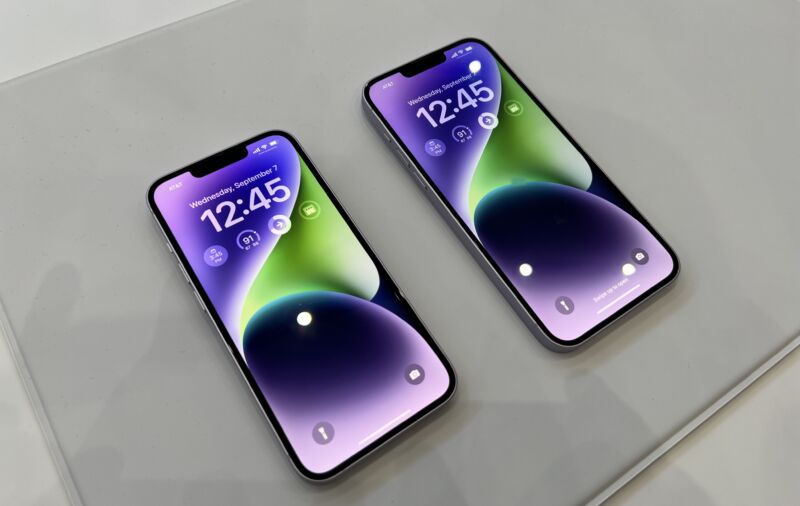
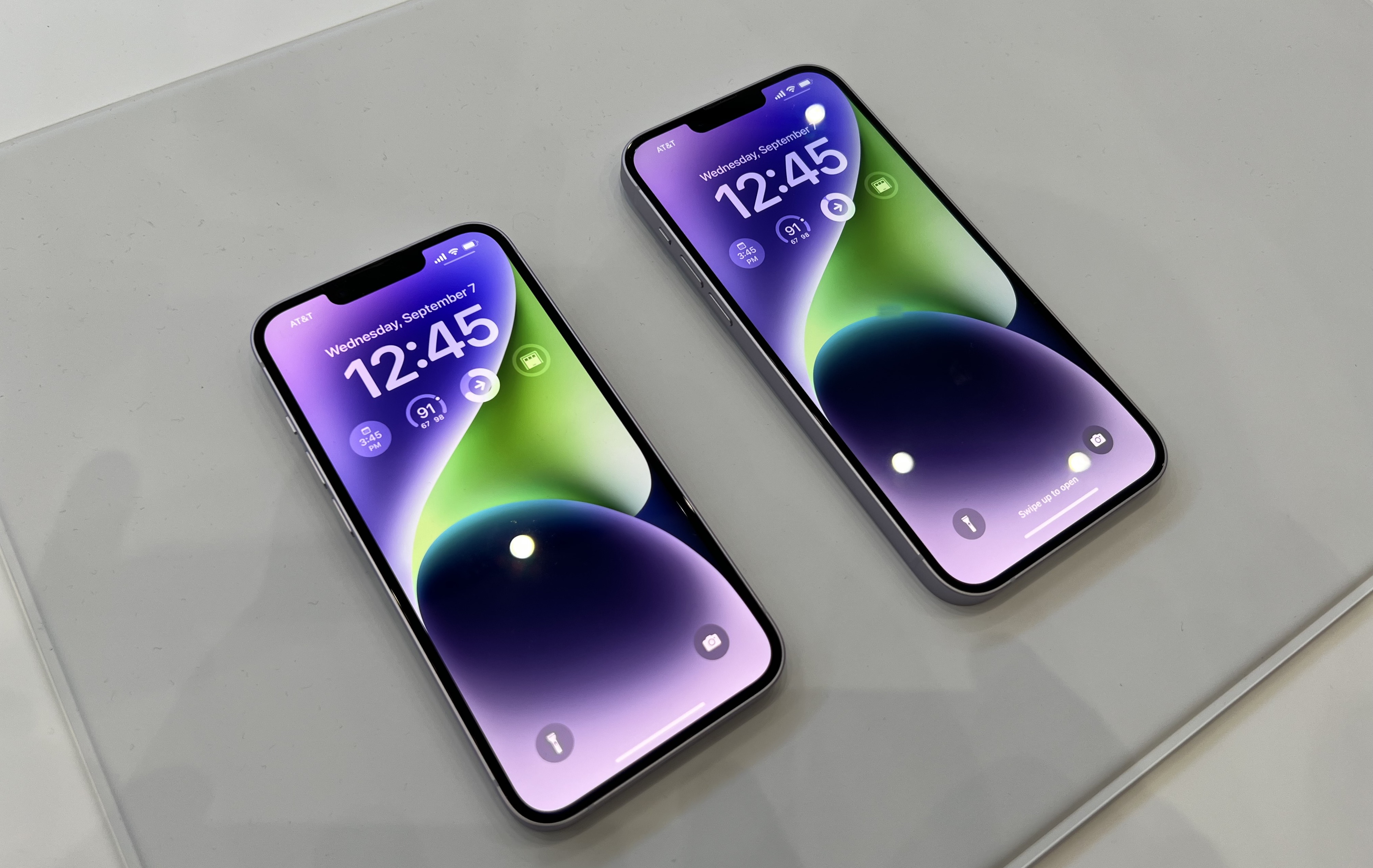
Two purple iPhones lying on a table. Both show a lock screen with some live widgets.
Enlarge / On the left: iPhone 14. On the right: iPhone 14 Plus. Each shows a configuration of the new always-on lock screen functionality in iOS 16.
Samuel Axon

Republican lawmakers have warned Apple that it will face intense scrutiny from Congress if the California company procures memory chips from a controversial Chinese semiconductor manufacturer for the new iPhone 14.

Marco Rubio, Republican vice-chair of the Senate Intelligence Committee, and Michael McCaul, the top Republican on the House Foreign Affairs Committee, said they were alarmed following a media report that Apple would add Yangtze Memory Technologies Co to its list of suppliers for Nand flash memory chips that are used to store data on smartphones.

“Apple is playing with fire,” Rubio told the Financial Times. “It knows the security risks posed by YMTC. If it moves forward, it will be subject to scrutiny like it has never seen from the federal government. We cannot allow Chinese companies beholden to the Communist party into our telecommunications networks and millions of Americans’ iPhones.”

Asked about the congressional concerns, Apple told the FT it did not use YMTC chips in any products but said it was “evaluating sourcing from YMTC for Nand chips to be used in some iPhones sold in China.”

Apple said it was not considering using YMTC chips in phones for sale outside China. It added that all user data stored on Nand chips used by the company were “fully encrypted.”

The FT reported in April that the White House and Commerce Department were investigating claims that YMTC was violating US export control rules by supplying chips to Huawei, the Chinese telecoms equipment group.

“YMTC has extensive ties to the Chinese Communist party and military. There is credible evidence that YMTC is breaking export control laws by selling goods to Huawei,” McCaul told the FT. “Apple will effectively be transferring knowledge and knowhow to YMTC that will supercharge its capabilities and help the CCP achieve its national goals.”

Chuck Schumer, the Democratic Senate majority leader, has also privately raised concerns with Commerce Secretary Gina Raimondo about YMTC, according to a person familiar with the situation.

YMTC did not respond to a request for comment about its relationship with Apple.

In July, a bipartisan group of senators—including Schumer and Mark Warner, the Democratic chair of the Senate Intelligence Committee—urged the Biden administration to put YMTC on a Commerce Department blacklist that would effectively bar US companies from providing technology to the Chinese group.

The senators, who included James Risch, the top Republican on the Foreign Relations Committee, said YMTC should be put on the “entity list” as it was violating export control rules by selling memory chips to Huawei.

The lawmakers also accused Beijing of subsidizing YMTC in ways that would help put the “national champion” on track to dominate the sector by selling chips below cost, as China has done in other areas such as the solar industry.

“YMTC is an immediate threat,” they wrote to Raimondo.

One person familiar with the Commerce Department’s stance said it was aware of the concerns and was preparing a response to the senators.

A spokesperson said the department’s Bureau of Industry and Security was conducting a review of China-related policies that would “potentially seek to employ a variety of legal, regulatory, and, when relevant, enforcement tools to keep advanced technologies out of the wrong hands.”

McCaul, who is set to become head of the House Foreign Affairs Committee if the Republicans win control of the lower chamber of Congress in November’s midterm elections, said the Chinese subsidies to YMTC posed a threat.

“Massive CCP subsidies to YMTC mean the company will undercut the market. This could very likely devastate the memory chip market and give China even more control of this critical national security technology,” he said. “How can the world’s data be secure if it’s stored on a chip made by a CCP national champion?”

Several people familiar with the situation said lawmakers had asked Apple in recent months about YMTC-related speculation but got no response. Apple did not comment on the congressional inquiries.

The criticism of Apple comes as the Biden administration steps up efforts to make it harder for China to secure cutting-edge technology. US officials recently told Nvidia and Advanced Micro Devices—two US chipmakers—that they would have to obtain special licenses to sell advanced processors used for artificial intelligence applications to Chinese companies.

Congress passed legislation in July that would provide US semiconductor manufacturers with a pool of $52 billion to support development of the domestic chip industry and reduce reliance on foreign companies.

Underscoring the importance of YMTC for China, President Xi Jinping visited the company in 2018 after Washington slapped tough restrictions on Huawei and ZTE, another Chinese telecoms equipment maker.

“It’s pretty shocking that Apple is partnering with a Chinese technology company… which is in exactly the same industry as the other banned companies and has the direct support of the top CCP leadership,” said Zach Edwards, an independent tech expert.

Additional reporting by Eleanor Olcott in Hong Kong

© 2022 The Financial Times Ltd. All rights reserved Not to be redistributed, copied, or modified in any way.

https://arstechnica.com/?p=1879935


Judge slams Musk for withholding text messages, cites “glaring” omissions

A cellphone displaying a photo of Elon Musk placed on a computer monitor filled with Twitter logos.
Getty Images | Samuel Corum

Delaware Court of Chancery Judge Kathaleen McCormick yesterday slammed Elon Musk for failing to provide text messages sought by Twitter. McCormick cited “glaring deficiencies” in the Musk side’s document production in an order partially granting Twitter’s request for more records, writing:

Plaintiff’s Fourth Discovery Motion identifies clear deficiencies in Defendants’ document production. Third parties produced text messages with Musk that Musk himself did not produce, and Musk’s own production of text messages revealed glaring deficiencies. As just one example, Defendants produced two texts sent to Musk from Robert Steel of Parella Weinberg Partners on June 17 at 9:57 a.m. and 10:15 a.m. The 9:57 a.m. text asks a question. The 10:15 a.m. text—stating “Ok. Got it. …”—implies that Musk responded. Assuming that Musk’s response was not telepathic, one would expect some evidence of it in Defendants’ document production. But Defendants provided none by the deadline for substantially completing document discovery.

McCormick further wrote that “Musk’s approach to answering interrogatories also left much to be desired.” After being ordered “to respond to interrogatories that required Defendants to identify persons with knowledge of relevant facts,” Musk’s side “supplemented their responses on August 26, but they did a bad job of it, identifying only a handful of people about whom Twitter was already aware.” Musk later supplemented that by identifying 491 “people with knowledge” but could have provided that information “much earlier,” the judge wrote.

“Defendants have now cured many of the deficiencies about which Plaintiff complained in its Fourth Discovery Motion. They accuse Plaintiff of jumping the gun and seeking sanctions prematurely, but I do not see it that way. I can understand why Plaintiff requires relief. Plaintiff has born[e] the bulk of the burden of discovery.”

Twitter had to provide an “onerous ‘historical snapshot’ that was the subject of Defendants’ Second Discovery Motion” and “documents from 42 custodians,” while Musk’s side “agreed to produce from just two custodians,” she wrote. “Defendants had less to do but still fell short in their obligations. Defendants’ prior deficiencies have left Plaintiff wondering whether there are other deficiencies and scrambling in third-party discovery.”

A Twitter filing on August 30 said, “as of last night’s substantial completion deadline, Twitter had produced more than 41,000 documents; Defendants fewer than 2,100.” Twitter said it also had “reviewed more than 210,000 documents,” over four times as many as the defendants.

Judge to Musk: There’s no time for “just kiddings”

McCormick issued that ruling and one other after 5 pm ET yesterday. The other ruling, resolving a Musk motion to compel production of Slack messages from additional people, also had pointed criticism of the billionaire who has been trying to pull out of an agreement to buy Twitter.

“Defendants gave Plaintiff the impression that they were seeking limited Slack custodians, only to then say that they never meant it. In this highly expedited case, there is no time for ‘just kiddings.’ Parties must be able to rely upon one another’s good faith proposals for the discovery process to function,” McCormick wrote.

McCormick described a “tedious” back-and-forth between the parties’ lawyers in which Musk’s side initially sought Slack messages from all 42 of Twitter’s custodians. The correspondence “bears out Plaintiff’s account that Defendants effectively abandoned their initial demand of 42 custodians in favor of a request [for documents from] only eight,” she wrote. But Musk later “changed tack and demanded that Plaintiff produce Slack messages from all 42 custodians.”

“Even if Defendants’ representations were inadvertent, Defendants cannot be permitted to re-trade now,” McCormick wrote.

https://arstechnica.com/?p=1879723


Are Hawaii’s beach showers in violation of the Clean Water Act?

Are Hawaii’s beach showers in violation of the Clean Water Act?

Ecotoxicologist Craig Downs describes his main work goal as “preventing zombies”—communities of coral or other marine creatures that appear to be thriving, but upon closer inspection, turn out to be composed only of adults lacking the ability to reproduce. These populations are like the “living dead,” a generation away from vanishing, according to scientists who discovered them in dying reefs across the Caribbean in 2016.

Globally, coral reefs are in decline for a number of reasons, including climate change, coastal development, and pollution. Over the years, Downs, executive director of Haereticus Environmental Laboratory in Virginia, has studied sunscreen, microplastics, and most recently, beach showers, in an effort to understand the effects of these human-made substances on some of the world’s most popular vacation destinations. His latest study, published in July, could also breathe new life into an old law.

In April, the Clean Water Act, the keystone US law on water pollution, took what many environmentalists describe as a tough hit. In a controversial shadow docket decision, the Supreme Court voted to remove states’ power to block federally approved, but environmentally damaging, projects. Commentators decried the attempt to strip states of the right to protect their own waters, one of the core principles enshrined in the act.

Downs’ study, which suggests that beach showers are leaching pollutants into the sea, concerns another part of the law—section 502, subsection 14, to be precise. He and his colleagues allege that the showers are “point sources,” defined by the Clean Water Act as “single identifiable sources of pollution from which pollutants are discharged.” If Downs and his colleagues are right, attorneys say, this would meaningfully change the current understanding of the 50-year-old statute, potentially allowing citizens to sue many an unsuspecting municipality or resort.

“I wasn’t very surprised to hear about this study,” said Peter Prows, managing partner of the environmental law firm Briscoe Ivester & Bazel in San Francisco. One of his clients, the Republic of Palau, in the Western Pacific, banned several sun filters after connecting a crash in its famous golden jellyfish population, in part, to the sunscreen pollution left by tourists.

In Hawaii nearly a decade ago, a lifeguard by the name of Tamara Paltin—now a Maui politician—asked Downs how much sunscreen was coming from a local beach shower that drained over the pavement and nearby grass. She also wondered about the showers in the rest of the county, which includes Maui and three other islands. Many of the facilities discharge their wastewater straight into the sea.

Although he was researching sunscreen pollution at the time, Downs didn’t think anything of it. Years later, William White, a co-author on the new paper, told Downs about erosion caused by another shower at Waialea Bay on Hawaii Island and insisted Downs take a look. “He pressed it into my brain,” Downs said. “The people who lived there have always wondered if it was an issue.”

When Downs and his colleagues tested the ground and water around the showers on three Hawaiian islands in 2019, levels of sunscreen chemicals, including oxybenzone, avobenzone, benzophenone-2, octocrylene, and octinoxate, were disturbingly high.

The resulting research paper is punctuated with references to pollution discharge permits and precise statutory definitions of “pollutants” and “point sources.” The first few lines of the discussion section echo the opening paragraphs of the US Supreme Court’s opinion in County of Maui vs Hawaii Wildlife Fund, a case in which a group of local NGOs fought a water-polluting county⁠—and won.

That this feat was possible hints at the power contained in the Clean Water Act. Enacted in 1972, it had bold aims: to restore and maintain the integrity of the nation’s water and eliminate water pollution by 1985. To achieve them, lawmakers packed the statute with a variety of tools, among them, “citizen suits,” which allow ordinary Americans to take legal action against polluters—a right exercised by Hawaii Wildlife Fund against Maui County Council.

The county had argued that pollutants seeping from injection wells where it stored wastewater were not a point source discharge, because the wells didn’t discharge directly into the sea; the waste traveled there indirectly, through the groundwater. The court decided that the act’s “language, structure, and purpose” would never have left such a large loophole open to polluters.

Any case against beach shower pollution would have to establish that sunscreen is a pollutant. According to Anupa Asokan, senior ocean advocate for the National Resource Defense Council and a board member for the environmental nonprofit Surfrider Foundation, “There’s science to back up the fact that some of the chemicals in sunscreen aren’t great for coral.” Downs himself has published a number of papers on this, including a 2015 study suggesting that oxybenzone and octinoxate could contribute to the bleaching of Hawaiian reefs. These findings led to a statewide ban on the two chemicals.

https://arstechnica.com/?p=1878757


Leaked “shopping list” reveals Russia’s most “desperately” needed war tech

Leaked “shopping list” reveals Russia’s most “desperately” needed war tech

Ukrainian Prime Minister Denys Shmyhal this week told Politico that he expects that diminished access to technology will be the driving force staving off Russia’s ongoing attacks. Since invading Ukraine, Russia has spent months burning through nearly half of the critical military technology in its arsenal, and now Politico has shared a leaked “shopping list” of tech that Russia is most urgently seeking to replenish its stockpile.

“According to our information, Russians have already spent almost half… of their weaponry arsenal,” Shmyhal told Politico.

Among about two dozen “chokepoint technologies” that Russia “most desperately” needs to stay in the fight are microchips manufactured by eight US tech companies that America hopes to block Russia from accessing through sanctions.

Those companies include Marvell, Intel, Holt, ISSI, Microchip, Micron, Broadcom, and Texas Instruments. Sanctions can only go so far to limit distribution from these companies, though, as Russia will likely look to third parties or unregulated markets to fill the gap. Ars reached out to all US tech companies for comment, but only a few immediately responded.

“We take our responsibility as a good corporate citizen seriously,” Brian Thorsen, a Microchip spokesperson, told Ars. “In compliance with export laws, and because actions by Russia against the Ukraine are in opposition to our Guiding Values, Microchip ceased shipments to customers in Russia, Belarus, and sanctioned regions in the Ukraine.”

“For over a decade all of Intel’s sales in Russia have been through distributors who are required to comply with US export controls,” Penny Bruce, Intel’s corporate communications director, told Ars. “Intel has suspended all shipments to customers in both Russia and Belarus and will continue to comply with all applicable export regulations and sanctions in the countries in which it operates. This includes compliance with the sanctions and export controls against Russia and Belarus issued by the US and allied nations.”

In March, Marvell posted a similar statement directed to business partners: “Marvell is stopping all transactions of its products directly and indirectly to customers based in Russia, Belarus, Donetsk People’s Republic (DNR), and Luhansk People’s Republic (LNR) regions of Ukraine.”

Politico reported that some of the tech parts that Russia seeks could still potentially be accessed easily and smuggled into Russia via unregulated online markets, but other products have long been out of stock globally.

Without more microchips—as well as other items on the Kremlin’s shopping list like “semiconductors, transformers, connectors, casings, transistors, insulators, and other components”—Russia may lose its most powerful missile technology and perhaps even be forced to withdraw from the conflict.

Shmyhal told Politico the “outcome of the war” could “hinge” on whether Russia can quickly stockpile microchips, which is why Ukraine has issued international warnings to alert other countries to help cut off Russia’s supply. For now, the strategy appears to be working in Ukraine’s favor.

“Because of sanctions imposed on Russia, the deliveries of this high-tech microchip equipment… have stopped and they have no way of replenishing these stocks,” Shmyhal told Politico.

https://arstechnica.com/?p=1878539


FCC has obtained detailed broadband maps from ISPs for the first time ever

Illustration of ones and zeroes overlaid on a US map.
Getty Images | Matt Anderson Photography

The Federal Communications Commission has collected precise broadband availability information from Internet service providers for the first time and aims to release a first draft of a new broadband map in November, FCC Chairwoman Jessica Rosenworcel wrote Friday.

The FCC last week “completed the first filing window for submitting data on where broadband service is and is not available,” a milestone in the years-long process of creating an accurate US broadband map, she wrote. “For the first time ever, we have collected extensive location-by-location data on precisely where broadband services are available, and now we are ready to get to work and start developing new and improved broadband maps.”

The resulting map should show whether fixed broadband service is available at each residence or business location. The FCC’s inaccurate broadband maps have long made it difficult to distribute deployment grants where they’re needed most.

Current maps are based on the Form 477 data-collection program in which ISPs report whether they offer service in each census block, which essentially lets ISPs count an entire census block as served even if it can serve just one home in the area. The new, more accurate maps will be used to help distribute $42.45 billion from the Broadband Equity, Access, and Deployment program created by Congress in the Infrastructure Investment and Jobs Act.

Bad data bites Internet users

ISPs, in many cases, have given potential customers false information, leading them to believe Internet access would be available in homes that don’t have it. Comcast and other ISPs have required thousands of dollars in up-front fees to wire up homes even after falsely promising service would be available at a specific address. The FCC mapping upgrade isn’t designed specifically to address that problem, but it could ultimately make it easier for homeowners to get accurate information.

The FCC voted in August 2019 to require ISPs to submit more accurate data, despite the major broadband industry trade groups objecting to requirements to report availability below the census block level. Congress followed up by imposing a law with similar requirements and provided $98 million for the mapping overhaul in December 2020. A Rosenworcel letter to members of Congress in March 2021 explained why the process wouldn’t be completed quickly:

To fully implement the Broadband DATA Act, the Commission must revamp its data collection methods and platform. We must create a framework for massive amounts of data from many different sources to interrelate with one another and to feed into a comprehensive, user-friendly dataset on broadband availability. We also need to develop, test, and launch IT systems to collect and verify these various data. We must create—for the first time—a publicly accessible, data-driven map of serviceable locations where broadband is or should be available throughout the United States.

We must then collect accurate and complete data from each and every broadband service provider on precisely where it offers broadband services, no longer relying on census blocks but drilling down to the location of each home and small business—and then overlay that information onto our map of serviceable locations. And finally, we must build a way to collect data from a myriad of independent sources, including state and local governments, Tribal nations, consumers, and other private and public third parties, that will help us supplement and verify the information we collect from service providers.

As Rosenworcel explained Friday, the FCC has since created “the first-ever national dataset capturing individual locations that should have fixed broadband service availability” by drawing from “address records, tax assessment records, imagery and building footprints, Census data, land use records, parcel boundaries, and geo-spatial road and street data. Our old broadband maps, in contrast, lacked any of this location-specific information.”

https://arstechnica.com/?p=1878520


YouTube algorithm pushed election fraud claims to Trump supporters, report says

YouTube algorithm pushed election fraud claims to Trump supporters, report says

For years, researchers have suggested that algorithms feeding users content aren’t the cause of online echo chambers, but are more likely due to users actively seeking out content that aligns with their beliefs. This week, New York University researchers for the Center for Social Media and Politics showed results from a YouTube experiment that just happened to be conducted right when election fraud claims were raised in fall 2020. They say their results provide an important caveat to prior research by showing evidence that in 2020, YouTube’s algorithm was responsible for “disproportionately” recommending election fraud content to users more “skeptical of the election’s legitimacy to begin with.”

A coauthor of the study, Vanderbilt University political scientist James Bisbee told The Verge that even though participants were recommended a low number of election denial videos—a maximum of 12 videos out of hundreds participants clicked on—the algorithm generated three times as many to people predisposed to buy into the conspiracy than it to people who did not. “The more susceptible you are to these types of narratives about the election… the more you would be recommended content about that narrative,” Bisbee said.

YouTube spokesperson Elena Hernandez told Ars that Bisbee’s team’s report “doesn’t accurately represent how our systems work.” Hernandez says, “YouTube doesn’t allow or recommend videos that advance false claims that widespread fraud, errors, or glitches occurred in the 2020 US presidential election” and YouTube’s “most viewed and recommended videos and channels related to elections are from authoritative sources, like news channels.”

Bisbee’s team states directly in their report that they did not attempt to crack the riddle of how YouTube’s recommendation system works:

“Without access to YouTube’s trade-secret algorithm, we can’t confidently claim that the recommendation system infers a user’s appetite for election fraud content using their past watch histories, their demographic data, or some combination of both. For the purposes of our contribution, we treat the algorithm as the black box that it is, and instead simply ask whether it will disproportionately recommend election fraud content to those users who are more skeptical of the election’s legitimacy.”

To conduct their experiment, Bisbee’s team recruited hundreds of YouTube users and re-created the recommendation experience by having each participant complete the study logged into their YouTube accounts. After participants clicked through various recommendations, researchers recorded any recommended content flagged as supporting, refuting, or neutrally reporting Trump’s election fraud claims. Once they finished watching videos, participants completed a long survey sharing their beliefs about the 2020 election.

Bisbee told Ars that “the purpose of our study was not to measure or describe or reverse-engineer the inner workings of the YouTube algorithm, but rather to describe a systematic difference in the content it recommended to users who were more or less concerned about election fraud.” The study’s only purpose was to analyze content fed to users to test whether online recommendation systems contributed to the “polarized information environment.”

“We can show this pattern without reverse-engineering the black box algorithm they use,” Bisbee told Ars. “We just looked at what real people were being shown.”

Testing YouTube’s recommendation system

Bisbee’s team reported that because YouTube’s algorithm relies on watch histories and subscriptions. In most cases, it’s a positive experience for recommended content to align with user interests. But because of the extreme circumstances following the 2020 election, researchers hypothesized that the recommendation system would naturally feed more election fraud content to users who were already skeptical about Joe Biden’s win.

To test the hypothesis, researchers “carefully controlled the behavior of real YouTube users while they were on the platform.” Participants logged into their accounts and downloaded a browser extension to capture data on the recommended videos. Then they navigated through 20 recommendations, following a specified path laid out by researchers—such as only clicking the second recommended video from the top. Every participant started out watching a randomly assigned “seed” video (either political or non-political) to ensure that the initial video they watched didn’t influence subsequent recommendations based on prior user preferences that the algorithm would recognize.

There were many limitations to this study, which researchers outlined in detail. Perhaps foremost, participants were not representative of typical YouTube users. The majority of participants were young, college-educated Democrats watching YouTube on devices running Windows. Researchers suggest the recommended content might have differed if more participants were conservative or Republican-leaning, and thus assumedly more likely to believe in election fraud.

There was also an issue where YouTube removed election fraud videos from the platform in December 2020, resulting in researchers’ losing access to what they described as an insignificant number of videos recommended to participants that could not be assessed.

Bisbee’s team reported that the key takeaway from the report was preliminary evidence of a pattern of behavior of YouTube’s algorithm—but not a true measure of how misinformation spread on YouTube in 2020.

https://arstechnica.com/?p=1878094


T-Mobile dominates 2.5 GHz spectrum auction to fill in network gaps across US

Illustration of a US map with crisscrossing lines representing a broadband network.
Getty Images | Andrey Denisyuk

T-Mobile won the lion’s share of spectrum licenses in the latest Federal Communications Commission auction, helping it fill rural network gaps that evoked comparisons to Swiss cheese. T-Mobile’s winning bids totaled $304.3 million, letting it obtain 7,156 licenses out of 7,872 that were sold, the FCC announced yesterday.

T-Mobile’s licenses are spread across 2,724 counties (out of 3,143 total in the US). The second-highest bidder in dollar terms was PTI Pacifica, which spent $17.7 million on nine licenses in five counties. “With most of the available spectrum in the 2.5 GHz band located in rural areas, this auction provides vital spectrum resources to support wireless services in rural communities,” the FCC said.

The auction provided up to three blocks of spectrum, totaling 117.5MHz in each county. In terms of the number of licenses won, the second-place finisher was the North American Catholic Educational Programming Fund. Its winning bids totaled $7.8 million and cover 107 licenses in 84 counties.

There were 63 winning bidders overall, and the auction raised $427.8 million. Small entities and rural service providers were given discounts on the license costs. The 2.5 GHz spectrum was originally set aside for educational institutions but has been repurposed for commercial service.

T-Mobile network already big on 2.5 GHz

Mid-band spectrum such as 2.5 GHz has been good for boosting capacity and speeds over relatively large areas. While low-band spectrum is best at covering long distances and penetrating obstacles, there’s more spectrum available in the middle and upper bands. At the highest extreme, millimeter-wave spectrum provides the fastest speeds but has the smallest coverage areas.

T-Mobile already makes heavy use of 2.5 GHz spectrum in its 5G network. AT&T and Verizon use mid-band spectrum in the 3.7 GHz to 3.98 GHz range, which they’ve deployed more slowly than planned because airlines haven’t yet retrofitted or replaced all of the older airplane altimeters that can’t filter out transmissions from outside their allotted frequencies.

The new 2.5 GHz licenses are “flexible‐use geographic overlay licenses,” which means there are restrictions on use to protect carriers already operating in the spectrum. “With overlay licenses, licensees obtain the rights to geographic area licenses ‘overlaid’ on top of the existing incumbent licenses. As with an ordinary flexible-use license, the overlay licensee may operate anywhere within its geographic area, subject to protecting the licensed areas of incumbent licensees,” the FCC explains.

But that won’t present a problem for T-Mobile. As FierceWireless wrote in March after the FCC set the auction rules, the auction is “for ‘white spaces’ of the 2.5 GHz band where no one owns the spectrum. T-Mobile is particularly interested in Auction 108 because it already owns or leases much of the 2.5 GHz spectrum across the United States, and it wants to fill in the gaps in its coverage.”

T-Mobile to fix “Swiss cheese” network problem

2.5 GHz licenses were first distributed to educational institutions in the 1980s in “35-mile-radius circles” that “left oddly shaped white spaces where no one owns the spectrum,” FierceWireless explained. T-Mobile already had leases with schools around the country to use the licenses.

“T-Mobile is likely to be the major winner, as the auction will allow the company to fix the ‘Swiss cheese’ problem its 2.5 GHz network grid is known to suffer from,” New Street Research policy analyst Blair Levin wrote at the time.

Before the auction, AT&T and Verizon requested more information on the lease agreements to help them decide whether to bid. The FCC denied the request, saying that “adoption of proponents’ expanded disclosure requirement is beyond the bounds of the existing spectrum leasing rules and the Commission’s prior determinations supporting those disclosure requirements.”

AT&T didn’t buy any licenses in the auction. Verizon, listed under its “Cellco Partnership” name in the auction results, won 12 licenses in nine counties for $1.5 million.

https://arstechnica.com/?p=1877999


FCC has approved $6 billion in broadband grants despite rejecting Starlink

An Ethernet cable

Several US government agencies are having a busy week for doling out broadband deployment funding to ISPs and state governments. Today, the FCC announced $791.6 million for six broadband providers, covering network expansions to over 350,000 homes and businesses in 19 states. The ISPs will receive the money over 10 years.

“This round of funding supports projects using a range of network technologies, including gigabit service hybrid fiber/fixed wireless deployments that will provide end-user locations with either fiber or fixed wireless network service using licensed spectrum,” the FCC said. Funded ISPs include Nextlink Internet and Starry.

Separately, the Treasury Department and National Telecommunications and Information Administration (NTIA) this week announced new grants for states and Tribal entities (more on that later in this article).

The FCC actions are final approvals for Rural Digital Opportunity Fund (RDOF) grants, which were tentatively awarded in December 2020 through a reverse auction in which ISPs bid on grants organized by census blocks. The auction was mismanaged under then-Chairman Ajit Pai’s leadership, causing Chairwoman Jessica Rosenworcel to announce a major cleanup in July 2021 amid “complaints that the program was poised to fund broadband to parking lots and well-served urban areas.”

$6 billion approved despite Starlink rejection

The FCC a few weeks ago rejected SpaceX Starlink’s final application to receive $885.51 million tentatively awarded in the Pai auction. While the Pai FCC was criticized for giving Starlink money for locations at or adjacent to major airports, the Rosenworcel FCC also doubted whether Starlink’s technology can meet the funding program’s speed and latency requirements when deployed to hundreds of thousands of customers.

The FCC also rejected fixed wireless provider LTD Broadband’s tentative funding of over $1.3 billion. Before finalizing funding, the FCC says it reviews each application “to determine whether they met all legal, financial, and technical requirements.”

Despite the high-profile rejections, the FCC today said the RDOF is now set to provide more than $6 billion to applicants in 47 states. The Pai FCC originally awarded $9.2 billion to 180 bidders.

The new round of funding will go to NextLink Internet (aka AMG Technology Investment Group) in Illinois, Indiana, Iowa, Kansas, Louisiana, Minnesota, Nebraska, Oklahoma, Texas, Wisconsin, and Wyoming; GeoLinks in Arizona and Nevada; Starry (aka Connect Everyone) in Alabama, Arizona, Colorado, Illinois, Nevada, Ohio, Pennsylvania, and Virginia; GigaBeam Networks in West Virginia; Safelink Internet in Nevada; and Shenandoah Cable Television in Virginia.

To confirm the funding, the ISPs are required to submit letters of credit and Bankruptcy Code opinion letter by September 15. GeoLinks, Starry, and Shenandoah Cable Television aren’t getting everything they originally won in the reverse auction, as the FCC today also announced a list of census blocks where those ISPs defaulted on bids. Monster Broadband also defaulted on bids.

Treasury and NTIA funding

The FCC’s RDOF relies on the Universal Service Fund, which is paid for by Americans through fees on phone bills. By contrast, the NTIA funding announced this week was allocated by Congress and President Biden in the November 2021 Infrastructure Investment and Jobs Act.

The NTIA, which is part of the Commerce Department, yesterday announced $105.8 million in broadband deployment grants to five Tribal entities in Arizona that will connect more than 33,300 homes. Combined with other projects approved earlier in August, the NTIA has awarded $634.7 million to 25 Tribal entities.

The Treasury Department yesterday announced five newly approved broadband projects to be paid for by the American Rescue Plan’s Coronavirus Capital Projects Fund. That includes $47.5 million to connect 5,500 homes and businesses in Arkansas; $40.8 million to connect 10,000 homes and businesses in Connecticut; $187 million for 50,349 homes and businesses in Indiana; $87.7 million for 21,000 homes and businesses in Nebraska; and $45 million for 3,965 homes and businesses in North Dakota. Four of the states plan competitive grant programs to distribute the money while North Dakota “plans to collaborate with tribal organizations to identify solutions to address specific connectivity needs.”

The Treasury Department previously approved broadband projects from the same fund in eight other states. All providers who get the money will be required to participate in the FCC’s Affordable Connectivity Program, which provides households that meet income eligibility requirements up to $30 per month (or up to $75 on Tribal lands). That will result in free Internet for many people.

$42.45 billion fund coming later

The biggest broadband fund of all is the $42.45 billion Broadband Equity, Access, and Deployment (BEAD) program from the Infrastructure Investment and Jobs Act, but it’s on a longer timeline. That money is being distributed by the NTIA but it won’t released until after the FCC finishes a large project to upgrade the map of where providers do and don’t offer broadband. Rosenworcel has said the new map will be ready this fall.

To help states get ready, the NTIA is distributing planning grants. All 50 states and six territories applied for them, and Louisiana became the first to receive one, according to an NTIA announcement today. Louisiana’s $2.9 million grant will, among other things, help it identify unserved and underserved locations, conduct community outreach, train employees, conduct surveys “to better understand barriers to adoption,” and develop a Statewide Digital Equity Plan.

“Over the coming weeks, every state and territory will have funding in hand as they begin to build grant-making capacity, assess their unique needs, and engage with diverse stakeholders to make sure that no one is left behind,” Secretary of Commerce Gina Raimondo said.

https://arstechnica.com/?p=1877448


Crypto firm accidentally gave $10.5M to sisters, now wants their $1.35M house

Crypto firm accidentally gave $10.5M to sisters, now wants their $1.35M house

After a Crypto.com employee entered the wrong account number and mistakenly sent AU$10.5 million to an Australian woman who had requested an AU$100 refund, a court document shows it took seven months for the cryptocurrency exchange platform to discover its error. By that point, the transfer error could not be reversed, and some of the money had allegedly already been spent.

The recipient, Thevamanogari Manivel, didn’t notify Crypto.com, instead allegedly transferring funds to bank accounts held by her and her family. Crypto.com claims Manivel used the money to buy her sister a modern million-dollar house, complete with a home gym and theater.

Last Friday, Justice James Elliott, a judge for the Victorian Supreme Court in Australia, issued a default judgment in the case. This became necessary because, as Crypto.com alleged in the court document, Manivel and other named defendants, including her sister Thilagavathy Gangadory, failed to respond to a court summons.

Crypto.com wants the court to force the sisters to give up the house and return the money, plus any profits from the sale and legal fees. The court agreed, ordering Gangadory to pay a minimum of $1.35 million, plus interest of $27,369.64, and ordering that she sell the house, which is currently valued by RealEstate.com at $1.37 million.

Earlier this year, after discovering its mistake, the cryptocurrency exchange company froze Manivel’s bank account and later all the other bank accounts to which Crypto.com alleged its money had been wrongly transferred. The exchange claims, among other complaints, that Gangadory was “unjustly enriched” by their error.

Attempting to serve court documents to the sisters, Crypto.com’s legal team reached out to Manivel’s lawyers. The Guardian reported that her lawyers responded just once to confirm receipt. Crypto.com had less success reaching Gangadory, who allegedly never responded to attempts to serve her court documents.

In his default judgment, Elliott said that this non-response was a concern indicating that she may not have received the documents. Ultimately, he decided that an email with a link to court documents to Gangadory served as sufficient notice, and he issued the default judgment that Crypto.com sought.

The judge noted in his order, however, that the defendants can still challenge the judgment. Australia’s 7News reported that the case would resume this October to settle how much Crypto.com will recover.

If the sisters continue failing to appear, they could be held in contempt of court. Crypto.com told Business Insider that Manivel’s lawyers told the crypto firm that Gangadory is currently seeking legal advice on the default judgment.

Neither Manivel nor Gangadory could be reached by Ars or other outlets for comment. A Crypto.com spokesperson told Ars, “As the matter is before the courts, we are unable to comment.”

https://arstechnica.com/?p=1877285


Tesla’s ban on pro-union shirts is illegal and must be rescinded, NLRB rules

Workers walk past a large Tesla logo.
Enlarge / A huge logo greets workers heading to the assembly line at a Tesla factory on February 19, 2015, in Fremont, California.
Getty Images | San Francisco Chronicle/Hearst Newspapers

Tesla violated US labor law by implicitly banning employees from wearing shirts with union insignias, the National Labor Relations Board ruled yesterday. In addition to ruling that Tesla broke the law, the NLRB overturned a Trump-era decision in a similar case involving Walmart.

The NLRB’s 3-2 decision went along party lines, with Republicans dissenting. The Democratic majority said it “found that it was unlawful for Tesla to maintain a policy requiring employees to wear a plain black T-shirt or one imprinted with the employer’s logo, thus prohibiting employees from substituting a shirt bearing union insignia.” Tesla’s strict enforcement of the policy began in 2017, shortly after employees started wearing union shirts in a Fremont, California, factory.

Such “interference is presumptively unlawful, and the employer has the burden to establish special circumstances that make the rule necessary to maintain production or discipline,” the NLRB said. The majority further ruled “that Tesla failed to establish special circumstances in this case.”

The NLRB ordered Tesla to rescind its team-wear policy or revise it “to make clear that it does not prohibit production associates from wearing black union shirts.” Tesla must also notify all current employees of the change and post copies of an NLRB notice at its Fremont facility. The required notice to employees says the NLRB found that Tesla violated federal labor law and advises employees of their rights.

NLRB Chairman Lauren McFerran issued a statement:

Wearing union insignia, whether a button or a T-shirt, is a critical form of protected communication. For many decades, employees have used insignia to advocate for their workplace interests—from supporting organizing campaigns, to protesting unfair conditions in the workplace—and the law has always protected them. With today’s decision, the Board reaffirms that any attempt to restrict the wearing of union clothing or insignia is presumptively unlawful and—consistent with Supreme Court precedent—an employer has a heightened burden to justify attempts to limit this important right.

Trump-era ruling “ignored decades” of precedent

The new ruling said the board’s 2019 decision, which found that Walmart’s dress code for the selling floor was legal, “upset the proper balance struck by the Supreme Court in Republic Aviation, ignored decades of Board precedent holding that any limitation on the display of union insignia is presumptively unlawful regardless of whether an employer permits other related Section 7 [of the National Labor Relations Act] activity, and created uncertainty in this previously well-settled area of the law.”

The NLRB said it thus overruled the Walmart decision and reaffirmed that “when an employer interferes in any way with its employees’ right to display union insignia, the employer must prove special circumstances that justify its interference.” Applying that standard here, the NLRB decided that “Respondent [Tesla] violated Section 8(a)(1) of the Act by maintaining its team-wear policy, which requires employees to wear shirts imprinted with the Respondent’s logo and implicitly prohibits employees from substituting any shirt with a logo or emblem, including a shirt bearing union insignia, for the required team wear.”

The now-reversed 2019 ruling on Walmart “held that the ‘special-circumstances’ test applies only when an employer completely prohibits union insignia, and that lesser size-and-appearance restrictions on union insignia could be deemed lawful based on less compelling employer interests,” the NLRB said. The earlier decision said Walmart violated the law by enforcing its policy in areas other than the selling floor, but that it had legitimate justifications for maintaining the policy in customer-facing areas.

We contacted Tesla about yesterday’s NLRB ruling and will update this article if we get a response.

https://arstechnica.com/?p=1876963