Twitter users glorify self-harm in rapidly growing social contagion, report says

Twitter users glorify self-harm in rapidly growing social contagion, report says

Even though Twitter’s terms of service explicitly ban posts glorifying self-harm and media depicting “visible wounds,” independent researchers report that Twitter too often seemingly looks the other way regarding self-harm. Researchers from the Network Contagion Research Institute (NCRI) estimate there are “certainly” thousands, and possibly “hundreds of thousands,” of users regularly violating these terms without any enforcement by Twitter. The result of Twitter’s alleged inaction: Since October, posts using self-harm hashtags have seen “prolific growth.”

According to reports, Twitter was publicly alerted to issues with self-harm content moderation as early as last October. That’s when a UK charity dedicated to children’s digital rights, 5Rights, reported to a UK regulator that there was a major problem with Twitter’s algorithmic recommendation system. 5Rights’ research found that Twitter’s algorithm “was steering accounts with child-aged avatars searching the words’ self-harm’ to Twitter users who were sharing photographs and videos of cutting themselves.”

In October, Twitter told Financial Times that “It is against the Twitter rules to promote, glorify, or encourage suicide and self-harm. Our number-one priority is the safety of the people who use our service. If tweets are in violation of our rules on suicide and self-harm and glorification of violence, we take decisive and appropriate enforcement action.”

NCRI’s report shows a collection of tweets that provide graphic evidence showing that any steps Twitter took since last fall has done little to combat the problem. Even users with small followings seem to get broader exposure for posts promoting self-harm, their research showed. Pointing to just one hashtag “#shtwt” (which stands for “self-harm Twitter”), researchers discovered that users with the hashtag in their bios have doubled since last fall. Also “monthly mentions of ‘shtwt’ and associated self-harm terms have increased by over 500 percent since Twitter was first publicly alerted to the issue.” Where in October, there were fewer than 4,000 monthly tweets with the hashtag, they report the soaring trend peaked in July 2022 with “close to 30,000.”

A Twitter spokesperson provided a more recent statement to Ars that largely echoes what the company said last October. The company still considers it “against the Twitter rules to promote, glorify, or encourage self-harm” and says that “the safety of the people who use our service is our priority, and we are committed to building a safer Internet and improving the health of the public conversation.”

What could Twitter do to stop self-harm content from spreading?

NCRI researchers say that there are several reasons why Twitter fails to moderate self-harm content.

For one thing, users are purposefully evasive. They rely on coded language in tweets (like “armgills” or “cat scratches”) that Twitter may not be aware of, and sometimes users claim that graphic images depicting wounds show fake blood. Both are seemingly successful tactics to avoid content removal.

For another, researchers say that Twitter is more consumed with moderating political content where upset users are more hostile within communities and are likely to report content directing harm to others. There isn’t that level of ire between community members glorifying self-harm, they say. Researchers suggest that because “members of the self-harm community are not hostile and celebrate” each other, “rather than deride one another,” the community doesn’t monitor itself in the same way. Thus it becomes necessary for Twitter to be more proactive in finding and flagging content, it says, because self-harm community “members are unlikely to denounce or report one another to Twitter,” and, therefore, can more easily go unnoticed.

To improve self-harm content moderation and reported problems with its algorithm, Twitter now uses “other tools” the company has “deployed around this type of content,” which includes “not allowing known associated terms to appear in the top of search or in search typeahead.” Twitter also works with organizations to redirect people searching self-harm terms in more than 30 countries to “reliable resources using #ThereisHelp prompts.”

Describing Twitter as an “ongoing, potent accelerator of serious disorders,” the NCRI report warns that “if these networks continue to grow unabated on Twitter, so will the risk of increasingly severe or even fatal injuries.” A Rutgers University psychology professor who helped author the report, Lee Jussim, told The Washington Post that based on the surge his team witnessed within the past year alone, “It smells to me like social media contagion.”

Jussim and 5Rights couldn’t immediately be reached by Ars for additional comment.

https://arstechnica.com/?p=1876955


Musk subpoenas Twitter whistleblower, hoping to prove company lied about spam

Former Twitter security chief Peiter Zatko poses for a portrait.
Enlarge / Former Twitter security chief Peiter Zatko, also known as Mudge.
Getty Images | Washington Post

Elon Musk’s lawyers have subpoenaed Twitter whistleblower Peiter Zatko in hopes of bolstering Musk’s defense against the lawsuit Twitter filed over their broken merger deal.

The subpoena orders Zatko to produce a list of documents and to appear for an oral deposition on September 9, about five weeks before the Musk/Twitter trial is scheduled to begin at the Delaware Court of Chancery. The subpoena was filed Thursday and made public today.

Zatko, a network security expert also known as “Mudge,” worked at Twitter from November 2020 until being fired in January 2022. His whistleblower complaint, which was made public last week, alleges that Zatko “uncovered extreme, egregious deficiencies by Twitter in every area of his mandate including… user privacy, digital and physical security, and platform integrity/content moderation.” It also claims that Twitter is guilty of “lying about bots to Elon Musk.”

Musk has defended his attempt to break the merger agreement by questioning Twitter’s public disclosure that less than 5 percent of its monetizable daily active users (mDAU) are spam or fake. Musk produced his own spam estimate of 33 percent by using a tool called the Botometer, but that estimate includes all “visible accounts” so it isn’t directly comparable to mDAU.

The Botometer’s creator expressed surprise that Musk used the tool, noting that it lets you “choose any threshold you want and to get any result you want.” Twitter pointed out that the Botometer once gave Musk’s Twitter account a rating of 4 out 5, suggesting the tool saw Musk as more bot-like than human-like. Twitter has also repeatedly said its spam estimates are accurate and that Musk has no right to exit the merger agreement based on the number of spam accounts.

Whistleblower complaint might help Twitter instead

Though Zatko’s complaint accused Twitter of lying to Musk, TechDirt’s Mike Masnick outlined reasons to doubt that conclusion in a lengthy post titled, “Twitter Whistleblowing Report Actually Seems To Confirm Twitter’s Legal Argument, While Pretending To Support Musk’s.”

As Masnick notes, Twitter’s mDAU estimate “has never meant that less than 5 percent of all accounts, or all tweets, or all activity is spam or bots. It just means that less than 5 percent of what is counted in their mDAU number is.” We’ve similarly pointed out in various Ars articles that Musk has argued against Twitter’s 5 percent estimate by talking about the percentage of spam across all Twitter accounts, even though the mDAU figure only includes accounts that are logged in and can see ads each day.

Yet Zatko’s argument that Musk is correct hinges on counting spam bots that aren’t part of the mDAU number. Here’s what Zatko’s complaint said:

However there are many millions of active accounts that are not considered “mDAU,” either because they are spam bots, or because Twitter does not believe it can monetize them. These millions of non-mDAU accounts are part of the median user’s experience on the platform. And for this vast set of non-mDAU active accounts, Musk is correct: Twitter executives have little or no personal incentive to accurately “detect” or measure the prevalence of spam bots.

Masnick pronounced himself “really confused by this section, and the claims that ‘Musk is correct.’ Because in court they’re not arguing about how much spam is on the overall platform. They’re arguing about how much is in the mDAU.” Yet the quoted paragraph from Zatko’s complaint “confirms exactly what Twitter has been saying in SEC filings and in court. What it reports to the SEC is an estimate of how many spam accounts slip through other processes, and are inadvertently counted in the mDAU,” Masnick wrote.

“The fact that Mudge is saying that there are spam accounts outside the mDAU… is the very point that Twitter has been making and that Musk keeps misrepresenting,” Masnick continued. “mDAU does not include all accounts on the platform. And the only way in which the spam counting could even be remotely relevant to the case (and, again, it’s not) is if Twitter made a material misstatement to the SEC.”

Zatko’s wide-ranging complaint could be problematic for Twitter in other ways. The Federal Trade Commission is reportedly reviewing the complaint, and the US Senate Judiciary Committee set up a hearing with Zatko for September 13. Zatko has also reportedly discussed the complaint with staff at several other Congressional committees.

Musk seeks mDAU documents and much more

Nonetheless, Musk is seeking a wide range of documents and communications related to mDAU from Zatko. The mDAU requests include but aren’t limited to documents and messages about “Twitter’s use of mDAU as a ‘Key Metric,’ as noted in Twitter’s SEC filings”; documents “supporting, refuting, or otherwise relating to Twitter’s representation” to the SEC that less than 5 percent of mDAU are spam; and documents about how the mDAU metric and spam numbers are calculated.

Musk wants documents and messages related to “Twitter’s use of any other user metric other than mDAU, including but not limited to, daily active users, monthly active users, daily user engagement, monthly user engagement, or advertisement engagements.” Another request targets documents “describing any process or workflow” that Twitter uses to detect and label accounts as spam or false.

Musk also wants “Documents and Communications regarding foreign intelligence service agents employed at Twitter.” That’s apparently in response to Zatko’s allegation that the “Indian government forced Twitter to hire specific individual(s) who were government agents.” Also, a federal jury recently convicted a former Twitter employee of acting as a foreign agent for Saudi Arabia.

Musk further seeks documents “regarding security vulnerabilities at Twitter,” documents related to Zatko’s firing, documents “regarding reports of the prevalence of bot or spam accounts on Twitter to [CEO] Parag Agrawal and/or other members of Twitter’s executive team,” and much more.

https://arstechnica.com/?p=1876775


Dish and Viasat’s fight against Starlink satellite deployment fails in court

Illustration of a stamp that prints the word
Getty Images | Bet_Noire

Dish Network and Viasat lost their attempt to block one of the key approvals Starlink received from the Federal Communications Commission. On Friday, the US Court of Appeals for the District of Columbia Circuit rejected the Viasat and Dish protests in a ruling that upheld the FCC decision.

Dish and Viasat sued the FCC after the commission’s April 2021 decision to let SpaceX fly 2,824 of its Starlink satellites at a lower altitude than originally planned, in the 540-570 km range instead of 1,110-1,325 km. The FCC rejected protests from satellite competitors while agreeing with SpaceX that the altitude change would improve broadband speed and latency while making it easier to minimize orbital debris.

A panel of three DC Circuit judges heard the appeal and unanimously sided with the FCC and SpaceX, which was an intervenor in the case on the FCC’s behalf. “Dish argued that the proposed changes would interfere with its GSO [geostationary orbit] satellite television service,” the judges wrote. “Another competitor, Viasat, Inc., jointly objected with an environmental organization calling itself The Balance Group. They argued that NEPA [the National Environmental Policy Act] required the FCC to prepare an environmental assessment before granting the modification.”

Dish claimed the FCC did not adequately consider the risk of signal interference, but the judges rejected that argument on the merits. Judges denied The Balance Group’s appeal, saying the group lacked standing as it failed to adequately explain its operations or membership. They rejected Viasat’s appeal because the company’s theory for why it was injured by the FCC decision is “much too speculative” and “does not fall within the zone of interests protected by NEPA.”

In summary, judges found that the FCC “adequately explained its conclusion that the modification of SpaceX’s license would not interfere with Dish’s satellites, and there is no proper party to pursue the NEPA claim.” The same court in July 2021 rejected Viasat’s motion for a preliminary injunction that would have halted Starlink satellite launches while litigation continued. The case was argued in December 2021, and the court’s opinion was filed by Circuit Judge Gregory Katsas.

The losing parties could ask the DC Circuit appeals court to rehear the case in front of all the court’s judges or file a petition with the Supreme Court. But either avenue would probably be a long shot.

Why Dish lost

Dish’s first argument is “that the FCC unreasonably refused to consider expert reports claiming that SpaceX’s proposed changes would interfere with Dish’s GSO satellites. But the reports use a different method for assessing interference than what binding regulations require,” the ruling said.

Contrary to Dish’s claims, the FCC considered the possibility of interference and found that the Starlink altitude change “will not increase interference to GSO satellite systems,” the ruling said. The FCC “applied the correct legal standard in making that finding based on a certified compliance with ITU [International Telecommunication Union] power limits.”

Judges said they also rejected Dish’s argument that “the FCC unreasonably waived the requirement of a favorable ITU finding, thus allowing SpaceX to proceed based on software validation alone.” The FCC had good cause to make that decision, the ruling said:

When the International Bureau first granted the waiver, it determined that an ITU backlog would significantly delay the start of operations even though SpaceX had already certified compliance with ITU power limits using ITU-approved software. We have held that “harm resulting from delay” can be good cause for a waiver. Here, the [FCC’s International] Bureau reasonably granted a waiver to avoid long delays in the provision of Internet service to Americans who remain “totally unserved by other broadband solutions.” And it reasonably concluded that the certification of compliance would provide some assurance of no harmful interference.

https://arstechnica.com/?p=1876713


Zuckerberg avoids Cambridge Analytica deposition as Facebook agrees to settle

Zuckerberg avoids Cambridge Analytica deposition as Facebook agrees to settle

It’s been four years since users alleging harm caused by the Cambridge Analytica scandal sued Facebook (now Meta) for selling tons of easily identifying personal information to third parties, allegedly doing so even when users thought they had denied consent. In 2018, plaintiffs alleged in a consolidated complaint that Facebook acted in “astonishingly reckless” ways and did “almost nothing” to protect users from the potential harms of this “intentionally” obscured massive data market. The company, they said, put 87 million users at “a substantial and imminent risk of identity theft, fraud, stalking, scams, unwanted texts, emails, and even hacking.” And users’ only option to avoid these risks was to set everything on Facebook to private—so even friends wouldn’t see their activity.

Because of Facebook’s allegedly deceptive practices, plaintiffs said that “Facebook users suffered concrete injury in ways that transcend a normal data breach injury.” Plaintiffs had gotten so far in court defending these claims that Meta CEO Mark Zuckerberg was scheduled to take the stand for six hours this September, along with lengthy depositions scheduled for former Facebook Chief Operating Officer Sheryl Sandberg and current Meta Chief Growth Officer Javier Olivan. However, it looks like none of those depositions will be happening now.

On Friday, a joint motion was filed with the US District Court for the Northern District of California. It confirmed that the plaintiffs and Facebook had reached a settlement agreement that seems to have finally ended the class action lawsuit that Meta had previously said it hoped would be over by March 2023.

It’s not clear yet how much the settlement will cost Facebook—which has already paid billions in fines to the FTC—but there may be more information on Facebook sanctions in the next few days. Although the joint motion requested 60 days to draft a written settlement agreement, US district judge Vince Chhabria only granted the motion in part. Chhabria said he still expects all parties to “appear at the hearing on Friday, September 2 to discuss sanctions.”

Meta and Facebook’s legal team told Ars that it has no comment. The plaintiffs’ legal team did not immediately respond.

What did Facebook users want the court to decide?

Originally, the plaintiffs asked in their complaint that the court order a Facebook audit and disclosure, a change to Facebook’s default settings, “compensation for intrusions into privacy on an unprecedented level,” and damages for users “who did not understand what was taken from them and how Facebook has profited.” Additional relief was also requested.

Part of their complaint was that privacy settings that actually granted users control over their data were buried in the app, while privacy settings that did not offer the same control over data were made accessible. This, the plaintiffs alleged, was deceptive to users, who claim they weren’t even informed once Facebook learned about the illegal Cambridge Analytica data purchase.

Since 2018, Meta has changed some of Facebook’s policies, but plaintiffs alleged that “it has done so now only in the wake of regulatory and governmental outrage.” In addition to fines, the FTC imposed “significant requirements to boost accountability and transparency” in 2019.

Currently, Congress is considering legislation called the Digital Accountability and Transparency to Advance Privacy Act (aka the DATA Privacy Act), which would grant federal protections for users of popular web services. If passed, the law would force tech companies to provide “consumers with accessible notice of the business’ privacy practices.”

Until tech becomes better regulated, users are forced to place trust in companies to update their policies as privacy and security risks become known. On an earnings call earlier this year, Meta signaled that it is motivated to continue updating its policies. Leadership said that the company would be investing in more privacy-safe ways for advertisers to target marketing to users. That includes beta-testing with large advertisers a new “privacy enhancing” technology called Private Lift. This “measurement solution,” Meta says, adds “extra layers of privacy to limit the information that can be learned” by both advertisers and Meta while still allowing advertisers to effectively target users.

https://arstechnica.com/?p=1876677


Forget 5G wireless, SpaceX and T-Mobile want to offer Zero-G coverage

T-Mobile's Mike Sievert and SpaceX's Elon Musk appear on stage at Starbase Thursday evening.
Enlarge / T-Mobile’s Mike Sievert and SpaceX’s Elon Musk appear on stage at Starbase Thursday evening.

BOCA CHICA, Texas—SpaceX and T-Mobile announced an ambitious plan on Thursday evening to provide ubiquitous connectivity from space to anyone with a cell phone.

The project would pair SpaceX’s Starlink satellite technology with the second-largest wireless carrier in the United States, T-Mobile US, and its mid-band spectrum, mobile network, and large customer base.

Delivering space-to-ground Internet to mobile phones will require SpaceX to finalize development of its second generation of Starlink satellites. These will be significantly larger than the current ones, which have a mass of about 295 kg. SpaceX founder and chief engineer Elon Musk said the project could enter “beta service” before the end of 2023.

During a live event at SpaceX’s Starbase facility in South Texas, where the company is building and testing its next-generation Starship rocket, Musk appeared alongside T-Mobile US chief executive Mike Sievert. The event had something of a rocket concert flair, with a smoke machine, fireworks, and plenty of people mingling around the stage in black T-shirts. Only, these shirts bore magenta T-Mobile and white SpaceX logos, and three Starship prototypes loomed in the background.

The companies are proposing to deliver a service dreamed about since the advent of mobile telephones—no dead zones. “Our vision is, if you have a clear view of the sky, you’re connected,” Sievert said.

How this would work

Presently, a user of SpaceX’s Starlink service needs to have a dish-shaped terminal that can pull down broadband Internet from one of the 2,800 Starlink satellites in low Earth orbit. The existing satellites are just not powerful enough to connect to much smaller mobile phones, as the signal is too weak.

The solution to this problem is using a much more powerful phased array antenna on the second version, or V2, of the Starlink satellites. Musk said the body of these satellites would be about 7 meters long, and the antenna would fold out to be about 5 meters on a side, or “roughly 25 square meters.” As the satellite passes overhead, this antenna will send and receive data along a focused beam passing across the planet’s surface.

Initially, at least, the service would not provide broadband Internet service. But in a typical cell of service, it should provide up to 2 to 4 megabits of data, enough for thousands of voice calls or millions of text messages. This would allow connectivity in areas off the grid, or during emergency situations such as when a hurricane knocks out service to a community.

A user’s cell phone would look for service first from a cell phone tower, but when it did not detect this, instead of providing a user with no bars of service, the phone would search the sky. It would then draw connectivity from the nearest available satellite, with software on the satellite communicating to the mobile phone as if it were a virtual cell tower on the ground.

Sievert said T-Mobile planned to offer this service to its users on most of its existing plans for free, initially covering the United States, including Alaska and Hawaii, as well as much of the world’s oceans. He invited foreign mobile network operators to partner with T-Mobile and SpaceX, and offer reciprocal roaming around the world.

The challenges

Beyond regulatory issues, SpaceX faces several major challenges to make this all work. Principal among them is designing and building the large satellites capable of talking to mobile phones.

“These are the most advanced antennas in the world, we think,” Musk said. “They have to pick up a very quiet signal from your cell phone. Just imagine, that signal has to travel 500 miles, and then be caught by a satellite that’s traveling at 17,000 mph. The satellite’s got to compensate for the Doppler effect of moving so fast.”

The satellites also have to get into space. The V2 satellites are too large for the Falcon 9 rocket’s payload fairing, which is 5 meters across. So the full-size Starlink V2 satellites will need to wait for the much larger Starship rocket to come online. SpaceX is working toward doing just that at the Starbase facility in South Texas, but operational launches are likely at least a year away.

To that end, if Starship development does not come as soon as expected, Musk said SpaceX may develop a “V2 mini” Starlink satellite that could fit within the Falcon 9 rocket’s payload fairing. But it seems clear that bringing the kind of global connectivity Musk and Sievert spoke about will require a fully operational Starship launch system.

In his comments on Thursday night, Musk acknowledged that the company has a lot of technical work to do, but he said the SpaceX teams have made great progress.

“So it’s really quite a difficult technical challenge,” he said. “But we have it working in the lab, and we’re confident this will work in the field. So it’s actually quite a lot of extra hardware on the satellites, and it’s also a lot of software. It’s a hard problem.”

The competition

SpaceX has already launched satellites for one competitor in this area, Lynk, and is due to launch the “BlueWalker 3” demonstration satellite for another company, AST Space Mobile, later this year. Both of these companies are attempting to deliver direct-to-cellphone service.

Lynk says it has already successfully demonstrated the ability to use ordinary, unmodified mobile telephones to connect to satellite Internet services. The company presently has one operational satellite in space but is planning to launch more to provide a wider area of coverage.

“Elon said it’s hard, and it’s only been done in the lab, but Lynk has done it in space already,” Charles Miller, the co-founder and chief executive of Lynk, said in an interview Thursday night. “We’re the only company in the world that has done that.”

Lynk has 14 commercial contracts with mobile network operators covering 35 countries, Miller said. The company expects to receive a license from the US Federal Communications Commission before the end of this year to begin selling commercial service in those countries. 

While Lynk has a head start, and AST Space Mobile a satellite ready for demonstration tests, the entrance of SpaceX and T-Mobile, two of the world’s leaders in spaceflight and connectivity, has created a whole new level of competition. Plausibly, they could pull this off, as SpaceX has already deployed the worlds largest satellite constellation, and the company has a history of delivering on its new rockets.

Musk and Sievert seemed to enjoy themselves on stage and talked of other ways the two companies might partner. Starlink, for example, might provide “backhaul” capacity to remote cell towers on Earth. This means the satellites would connect those towers to the Internet without T-Mobile having to run wire to the towers.

And perhaps, one day, T-Mobile might become the first cell service provider on Mars. “We’d love to have T-Mobile on Mars,” Musk quipped during the event.

https://arstechnica.com/?p=1876061


US government to make all research it funds open access on publication

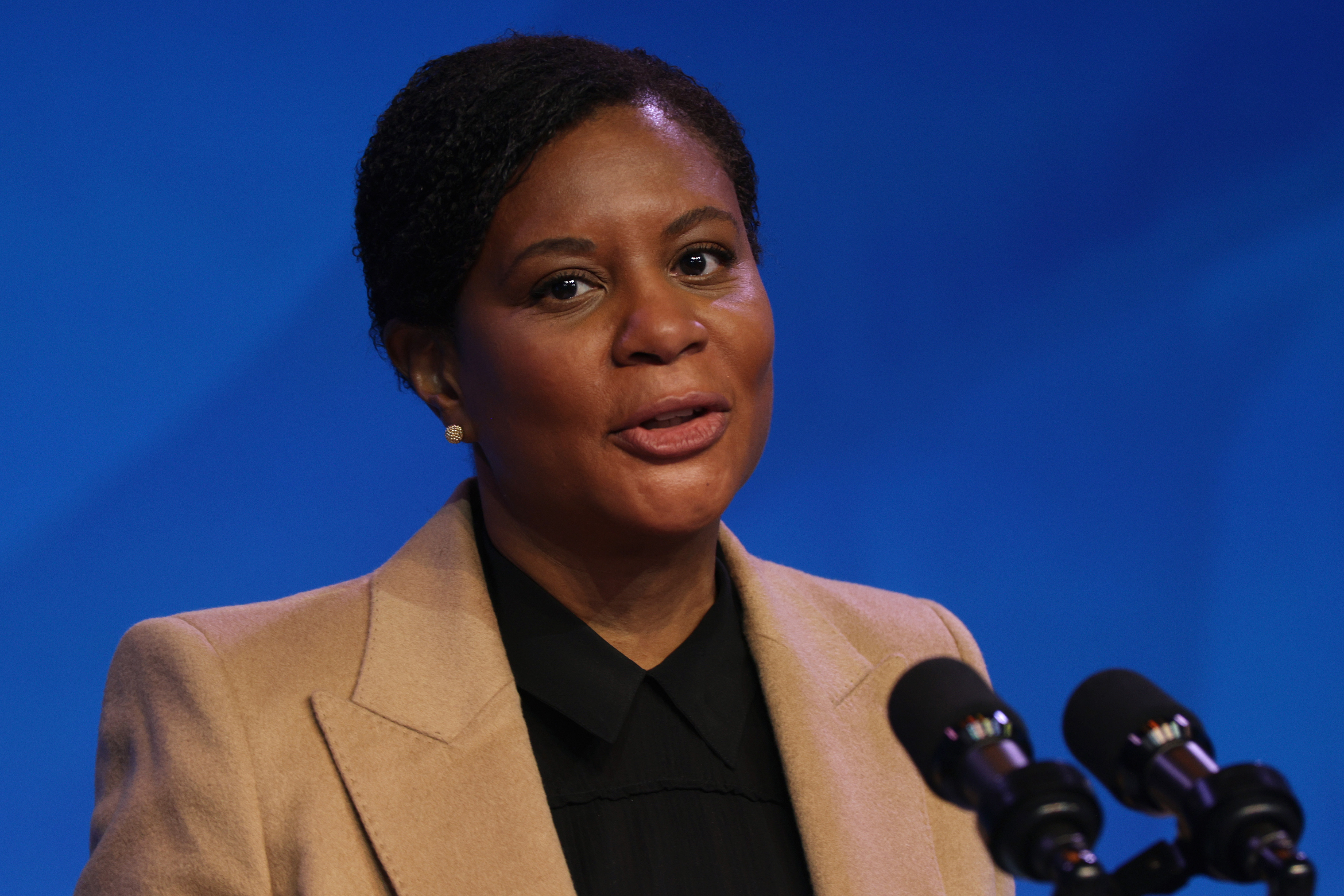
Alondra Nelson, President Joe Biden's pick for OSTP Deputy Director for Science and Society, speaks during an announcement on January 16, 2021, at the Queen theater in Wilmington, Delaware.
Enlarge / Alondra Nelson, President Joe Biden’s pick for OSTP Deputy Director for Science and Society, speaks during an announcement on January 16, 2021, at the Queen theater in Wilmington, Delaware.

Many federal policy changes are well known before they are announced. Hints in speeches, leaks, and early access to reporters at major publications all serve to pave the ground for the eventual confirmation. But on Thursday, the White House Office of Science and Technology Policy (OSTP) dropped a big one that seemed to take everyone by surprise. Starting in 2026, any scientific publication that receives federal funding will need to be openly accessible on the day it’s published.

The move has the potential to further shake up the scientific publishing industry, which has already adopted preprint archives, similar mandates from other funding organizations, and greatly expanded access to publications during the pandemic.

The change was announced by Alondra Nelson, acting head of the OSTP (a permanent Director is in the process of Senate confirmation). The formal policy is laid out in an accompanying memorandum.

An awkward history

The US government is likely to be the world’s largest funder of scientific research. For medical research, the US National Institutes of Health spends more than the rest of the top 20 organizations combined. Yet, for decades, the scientific publishing system was set up so that the government (much less the people it represented) didn’t necessarily have access to the research it was funding. Instead, access was predicated on paid subscriptions to the journals the work was published in.

Two trends have undercut that limitation. One is the rise of open-access journals, which charge an up-front fee to the researchers and then provide anyone with Internet service access to the final research publication. The second is the trend toward “preprints.” Preprint servers, pioneered by researchers in physics and astronomy, provide access to manuscripts submitted to publishers for peer review. Their use in the biological sciences expanded considerably during the COVID-19 pandemic.

Some people involved in scientific publishing worried that these trends would undercut the finances of the entire publishing industry, while others hoped to push them to open up all scientific publishing. This tension played out in the halls of Congress, where competing legislation would mandate or block open access to federal research. A truce of sorts was reached during the Obama administration. For federally funded research, publishers had two choices: either make the publication open access from the start or have subscription-only access for a year before opening things up. Government-sponsored repositories were opened to host copies of papers that weren’t made open access on the publisher’s site.

In the intervening time, there’s been a lot of growth in open access journals, and many subscription journals allowed authors to pay a fee to immediately open published papers. Most subscription journals also offered COVID-related papers as open access without any additional fees. OSTP has apparently decided that these adjustments have prepared the industry to survive even greater access levels.

Wide open

OSTP also contends that the payoffs of doing so for society would be large. “When research is widely available to other researchers and the public, it can save lives, provide policymakers with the tools to make critical decisions, and drive more equitable outcomes across every sector of society,” Nelson said in her announcement. The policy document elaborates this by arguing the COVID-19 pandemic indicated that the benefits of immediate public access (as opposed to a year of subscription only) are even greater.

Under the new policy, any agency that funds more than $100 million in grants has 180 days to submit a revised policy to OSTP; smaller agencies have a year to do so. These plans must involve having any publications resulting from this funding be deposited in publicly accessible repositories on the day they appear in a scientific journal. They may still appear in subscription-only journals, but a copy must be made public. Separately, any data used in the publication must also be placed in a public-accessible repository.

By the end of 2024, agencies must have plans to ensure that information on everyone involved in the publications is also available in repositories. All the data and documentation associated with publications must have a digital identifier (such as a DOI) associated with them. By the end of 2025, all of these policies need to be implemented.

To an extent, this overlaps with existing NIH policy, which allows authors to deposit pre-publication versions of their papers; publishers can still add value through formatting, integrated graphics and movies, and convenient cross-referencing to other studies, thus (potentially) justifying the price of subscriptions. Charging fees for publishing papers in open access form will also remain an option. So, this won’t kill the scientific publishing industry overnight.

The most striking change is the immediacy of having a parallel copy available on the day of publication. But, in the longer term, having a system to identify and access the underlying data could be more significant. Right now, most publishers require relevant data to be shared, but there’s often no formal way of enforcing that requirement, and it’s widely ignored. Making it a condition of funding can obviously change that.

As is currently the case, enforcing the new requirements will be the key to the impact of this program. By the time a paper goes through peer review and gets published, many of the people involved have already moved on to other projects. Taking the time to put their earlier work into a repository doesn’t provide obvious rewards, so there will have to be some enforcement mechanism to drive adoption.

https://arstechnica.com/?p=1876279


Two swatting attempts on Marjorie Taylor Greene used bog-standard tech

Two swatting attempts on Marjorie Taylor Greene used bog-standard tech

Yesterday, Congresswoman Marjorie Taylor Greene (R-Ga.) tweeted to sound the alarm that she had been “swatted” around 1 am. “Swatting” is a term for incidents that involve a false report of emergencies like suicide or gun violence that leads police to send a SWAT team or armed tactical unit to enter a person’s home, often with guns drawn.

A Rome Police Department report from Wednesday confirmed there was an “attempted swatting,” where five officers responding to a report of possible gun violence used a “tactical approach” before ringing the doorbell on Greene’s residence. They said they knew it was her house before they arrived but didn’t kick the door down like they might during an actual swatting because they “were still unsure” of “exactly what had transpired.” A few minutes later, Greene answered the door and sent the police away after they performed a quick wellness check in the house to ensure there was no threat.

Today, Greene tweeted again, saying that she was swatted again.

Greene’s communications director, Nick Dyer, told Ars that “a criminal investigation of these violent crimes is ongoing, and our No. 1 concern is the safety of Congresswoman Greene and her family.” Dyer said that the second attempt happened early this morning but that Greene was “not sharing details at this time” when asked to confirm whether police returned to Greene’s residence ready to use force.

Ars obtained the second Rome PD report. It showed that this time, instead of “attempted swatting,” police recorded the hoax call as a “false report of a crime.”

According to the second report, a caller used an online chat-based suicide crisis line and claimed to be a man named Wayne Greene who was “possibly” shooting his family members and attempting suicide. The caller claimed shots had been fired and said, “If anyone tried to stop me from shooting myself, I will shoot.” He also claimed he’d be ready to fire upon police.

Police attempted to trace the call but reported that the caller used a VPN service to obscure their location.

Two officers reportedly visited Greene’s residence after receiving this call earlier today and again left after Greene greeted them at her front door and confirmed there was no danger. Reports show that police did not send SWAT teams either time but calmly approached Greene’s home and both times confirmed the false reports.

A “computer-generated voice” took credit for first swatting

According to the first Rome PD report, five officers responded to a call on Wednesday during the initial attempted swatting. The caller claimed that a man had been “shot five times in a bathtub” at Greene’s home, and there was a woman and possibly children still in potential danger.

On the way to Greene’s house, police realized who the homeowner was, but “due to the nature of the call,” police “formed up” at a nearby intersection and made a “tactical approach.” Rome PD provided Ars with no further details about the approach.

Because they suspected the call might possibly have been a hoax, they decided to ring Greene’s doorbell. The doorbell woke her, and she took a few minutes to answer. Police waited for her to answer the door and did not attempt to forcefully enter the residence.

When Greene answered, she confirmed the hoax and asked police to search the residence to do a wellness check for her safety.

As was the case for the false report from this morning, it was revealed that technology obscured the identity of the hoax caller during the initial swatting attempt.

That time, technology was used to mask the voice of the caller.

The report shows that after police left Greene’s house, a second 911 call was placed on Wednesday, reportedly “from the suspect,” who, police said, “used a computer-generated voice” to make the hoax call. The police report said the caller took credit for the attempted swatting and wanted police to know the attack was politically motivated because of Greene’s anti-transgender views.

During the second “false report” incident, Greene’s anti-transgender stance also seemed to factor into the suspect’s motives. The chat-based caller identified himself as “Wayne Greene” and claimed they had come out as transgender to their family, which they said triggered the alleged violence the caller was reporting.

Both callers’ identities are still unconfirmed, but the “computer-generated voice” told police they were a well-known member of Kiwi Farms—a far-right Internet forum that “supports cyberstalking.” They claimed to be a user named “AltisticRight.” Kiwi Farms has previously been implicated as the forum behind swattings of a prominent trans Twitch streamer, who helped launch a campaign to take down the forum.

Earlier this month, Twitch users called for more support from police to deter dangerous swatting attempts, which can be fatal. In Greene’s case, it looks like police can deter some swatting attempts, at least when targets are high-profile officials.

It seems unusual that a far-right group would attack a far-right official like Greene, but Dyer said police are still investigating.

Right now, Greene’s safety is her team’s top concern, Dyer said.

https://arstechnica.com/?p=1876109


Amazon to close US telehealth service as it shifts sector ambitions

Amazon to close US telehealth service as it shifts sector ambitions

Amazon is closing its telehealth service, Amazon Care, ending an ambitious plan to roll out its homegrown platform to “millions” of patients around the country, part of a long-stated goal of disrupting the US health care industry.

A memo sent to Amazon Care staff on Wednesday by Neil Lindsay, head of Amazon Health Services, said Amazon Care—which promised a doctor, nurse, or other health practitioner on demand, 24 hours a day—was not the right “long-term solution” for the external companies to which it had hoped to sell the service.

“This decision wasn’t made lightly and only became clear after many months of careful consideration,” Lindsay wrote, according to the memo seen by the Financial Times.

“Although our enrolled members have loved many aspects of Amazon Care, it is not a complete enough offering for the large enterprise customers we have been targeting.”

Analysts said Amazon Care’s closure, which will come at the end of the year, should not be seen as a retreat on its efforts to gain a foothold in the $4 trillion US health care sector. “This is not a sign of failure by any means,” said Natalie Schibell at Forrester Research. “It’s a strategic move.”

Amazon’s decision comes after its recent agreement to acquire One Medical, a large network of primary care providers, for $3.9 billion—its largest deal in the health care space.

That takeover, if approved by regulators, would provide Amazon with much of the access to corporate employees it had been seeking with Amazon Care, said Christina Farr, health-tech investor at Omers Ventures, making the in-house platform redundant. Companies such as Google offer One Medical to employees.

“One Medical already has all these contracts, and does telemedicine,” Farr said. “It made sense for Amazon to acquire an existing network. Physician recruitment is really hard, building insurance contracts is really hard, building employer relationships is really hard. All of those things take a long time and One Medical was available to purchase.”

With a workforce in excess of 1.5 million, more than 200 million Prime subscribers globally, and expansive logistics and cloud computing infrastructure, Amazon has long been considered ideally positioned to take on some of the health care industry’s incumbents—the share prices of which fall, albeit briefly, whenever the company announces deals.

Amazon’s ambitions in health care have been years in the making and are set to intensify under the leadership of Andy Jassy, who replaced Jeff Bezos as chief executive last year.

Amazon is also among the bidders for Signify Health, a home health care provider, which is courting several offers. The decision to explore a deal, which would be Amazon’s fourth big health care sector transaction in recent years, highlights the company’s will to test antitrust regulators’ appetite to curtail its M&A strategy. Amazon and Signify declined to comment.

“They are calling [Lina] Khan’s bluff,” said a seasoned investor who is following the Signify bidding, referring to the chair of the Federal Trade Commission and a critic of Amazon’s market power.

Another lawyer said Amazon was demonstrating its readiness to go to court with regulators if needed.

“Amazon’s health care business is small relative to others in the US,” said a competition lawyer who asked not to be named for client confidentiality reasons. “At the moment, any acquisition that isn’t a mega-player in the space is not going to be blocked.”

A person who has worked with Amazon said that it is prepared to handle political and media backlash, but it was confident that a transaction to buy Signify would win regulatory approval.

“They are happy to go to court,” the person said. “They know they can win so they are not letting the antitrust rhetoric in DC stop them from considering buying an asset.”

A spokesperson for the FTC would not comment on Amazon’s health deals but pointed to comments made by Khan at a forum this year in which she said the “life and death” health care industry was “one of the most critical” for her agency to scrutinize.

A $5 billion takeover of home health provider LHC Group by UnitedHealth, a large insurer, has been delayed while the FTC seeks more information about the proposed deal.

Ultimately, Amazon’s M&A activity points to it assembling the building blocks for a large health service offering “value-based care,” said Rebecca Springer, a senior analyst covering health care at PitchBook. The term describes a business model in which health providers earn income based on patient outcomes—how well the patient is—versus merely providing treatments.

© 2022 The Financial Times Ltd. All rights reserved. Not to be redistributed, copied, or modified in any way.

https://arstechnica.com/?p=1876068


Comedian George Lopez sues Pandora for $5.5M for “brazen” copyright infringement

Comedian George Lopez sues Pandora for $5.5M for “brazen” copyright infringement

According to a lawsuit filed this week by comedian George Lopez, all Pandora had to do to negotiate streaming rights for two of his popular comedy specials was contact him directly. Instead, Lopez’s complaint says that Pandora considered the comedian a “cash cow”—alleging that Lopez is yet another comedian whose copyrighted materials have been illegally streamed to Pandora listeners without the streaming service securing proper licensing or sharing royalties.

“Pandora found a cash cow in a new revenue stream, and in a brazen business decision determined that the risk was worth the gain—that is until now,” Lopez’s lawyer, Richard S. Busch of the Los Angeles law firm King & Ballow, wrote in the complaint.

Busch was already representing other comedians suing Pandora, including Lewis Black, Ron White, and the estates of late comedians George Carlin and Robin Williams. According to The Wrap’s exclusive report, all the lawsuits have been consolidated and will be heard in the California Central District Court before the end of August.

Lopez is seeking $5.5 million in statutory damages, which equates to $150,000 per comedy clip Pandora allegedly streamed. He alleges that, at minimum, if 37 comedy tracks made available by Pandora from two albums were streamed just once by his 117,000 monthly listeners, Pandora has broadcast nearly 1.5 million comedy clips without his permission annually. He says this has been happening for at least three years.

The total damages could go up, though, especially if the court hears evidence that Pandora profited more from Lopez’s comedy. Lopez could also seek higher damages if the lawsuit drags on and Pandora continues streaming his comedy. In both cases, the court can decide if Lopez is entitled to more compensation.

Lawyers for Lopez and Pandora Media did not immediately respond to Ars’ questions, but as of this writing, Lopez still has an active artist page on Pandora. By clicking the comedian’s face—which shows him grinning while clutching his own bobblehead—Pandora plays a short ad before many listeners can begin streaming popular bits from two of Lopez’s earliest comedy specials, “Right Now Right Now” and “Team Leader.”

Lopez retained exclusive copyrights on his materials and says he is the sole entity losing out when listeners stream those specials, which bothers him. “Unfortunately, Mr. Lopez has not received a fraction of a penny for any of these broadcasts or streams,” the complaint reads.

A Lopez victory could be a win for all comedians and podcasts

The Wrap reported that Pandora argues that if the court sides with Lopez and other comedians, that “would upend longstanding industry precedent.” The company “denies ever stiffing any comedian, claiming it has paid out millions in royalties via comedians’ record companies.”

Both Black and Lopez contest that they do not count among comedians who have been paid. In their consolidated lawsuit, both are suing Pandora for two separate instances of copyright infringement. First, distributing a copyrighted sound recording, and second, distributing a copyrighted spoken-word recording. If the comedians win, it’s possible, for the first time, that comedians and podcasters could begin enjoying the same rights and compensation as musicians when dealing with services streaming their recordings.

“Anyone wishing to obtain the right to do so, must get a license from the respective copyright owner in both of these copyrights, and pay agreed-to royalties,” Lopez’s lawsuit reads.

Comedy copyright infringement was “brazen”

The lawsuit also noted that Pandora used to be transparent about infringing on comedian copyrights in SEC filings. Lopez’s complaint claims that the company “admitted that it would very likely face copyright infringement liability as a result” of not contacting comedians like Lopez before streaming content. It alleges that the company only stopped admitting to this practice after SiriusXM acquired Pandora.

In 2021, SiriusXM reported that 74 percent of Pandora’s profits came from advertising. Previously, in 2017, Pandora reported to the Securities and Exchange Commission that streaming popular comedy and podcasts was considered critical to its perceived value to listeners of its ad-based services. In Lopez’s complaint, the comedian alleges that part of SiriusXM’s seeming strategy “to increase its stock price helping them to reorganize the company” with Pandora was to deprive comedians like Lopez of “hard-earned royalties” while the companies (which still operate separately) earned “billions.”

SiriusXM did not immediately respond to Ars’ request for comment.

In the same 2017 SEC filing, Pandora reported, “Failure to obtain or retain rights to comedy, podcasts, or other non-music content on acceptable terms, or at all, to successfully monetize and generate revenues from such content, or to effectively manage the numerous risks and challenges associated with such expansion could adversely affect our business and financial condition.”

Lopez alleges the practice has already harmed him, and it’s possible that by adding his heft as a leading comedian worldwide to the lawsuit, righting his wrong could protect much less famous entertainers who discover potential copyright infringements.

His complaint says that Pandora knew that Lopez—”an industry leading comedian, actor, and comedy writer for nearly 30 years”—”would suffer” and failed to ever reach out to him. Now he has joined up with other comedians to prove that he, “in fact, did suffer the brunt of the harm caused by Pandora’s unauthorized acts,” not just from alleged illegal streaming in California, but also “around the world.”

https://arstechnica.com/?p=1875815


Data privacy bill would give you more control over info collected about you

Data privacy bill would give you more control over info collected about you
Matt Anderson Photography/Getty Images

Data privacy in the US is, in many ways, a legal void. While there are limited protections for health and financial data, the cradle of the world’s largest tech companies, like Apple, Amazon, Google, and Meta (Facebook), lacks any comprehensive federal data privacy law. This leaves US citizens with minimal data privacy protections compared with citizens of other nations. But that may be about to change.

With rare bipartisan support, the American Data and Privacy Protection Act moved out of the US House of Representatives Committee on Energy and Commerce by a vote of 53-2 on July 20, 2022. The bill still needs to pass the full House and the Senate, and negotiations are ongoing. Given the Biden administration’s responsible data practices strategy, White House support is likely if a version of the bill passes.

As a legal scholar and attorney who studies and practices technology and data privacy law, I’ve been closely following the act, known as ADPPA. If passed, it will fundamentally alter US data privacy law.

ADPPA fills the data privacy void, builds in federal preemption over some state data privacy laws, allows individuals to file suit over violations, and substantially changes data privacy law enforcement. Like all big changes, ADPPA is getting mixed reviews from media, scholars, and businesses. But many see the bill as a triumph for US data privacy that provides a needed national standard for data practices.

Who and what will ADPPA regulate?

ADPPA would apply to “covered” entities, meaning any entity collecting, processing, or transferring covered data, including nonprofits and sole proprietors. It also regulates cellphone and Internet providers and other common carriers, with potentially concerning changes to federal communications regulation. It does not apply to government entities.

ADPPA defines “covered” data as any information or device that identifies or can be reasonably linked to a person. It also protects biometric data, genetic data, and geolocation information.

The bill excludes three big data categories: de-identified data, employee data, and publicly available information. That last category includes social media accounts with privacy settings open to public viewing. While research has repeatedly shown de-identified data can be easily re-identified, the ADPPA attempts to address that by requiring covered entities to take “reasonable technical, administrative, and physical measures to ensure that the information cannot, at any point, be used to re-identify any individual or device.”

How ADPPA protects your data

The act would require data collection to be as minimal as possible. The bill allows covered entities to collect, use, or share an individual’s data only when reasonably necessary and proportionate to a product or service the person requests or to respond to a communication the person initiates. It allows collection for authentication, security incidents, prevention of illegal activities or serious harm to persons, and compliance with legal obligations.

People would gain rights to access and have some control over their data. ADPPA gives users the right to correct inaccuracies and potentially delete their data held by covered entities.

The bill permits data collection as part of research for public good. It allows data collection for peer-reviewed research or research done in the public interest—for example, testing whether a website is unlawfully discriminating. This is important for researchers who might otherwise run afoul of site terms or hacking laws.

The ADPPA also has a provision that tackles the service-conditioned-on-consent problem—those annoying “I Agree” boxes that force people to accept a jumble of legal terms. When you click one of those boxes, you contractually waive your privacy rights as a condition to simply use a service, visit a website, or buy a product. The bill will prevent covered entities from using contract law to get around the bill’s protections.

https://arstechnica.com/?p=1875789