Tech industry is in tariff hell, even if refunds are automated
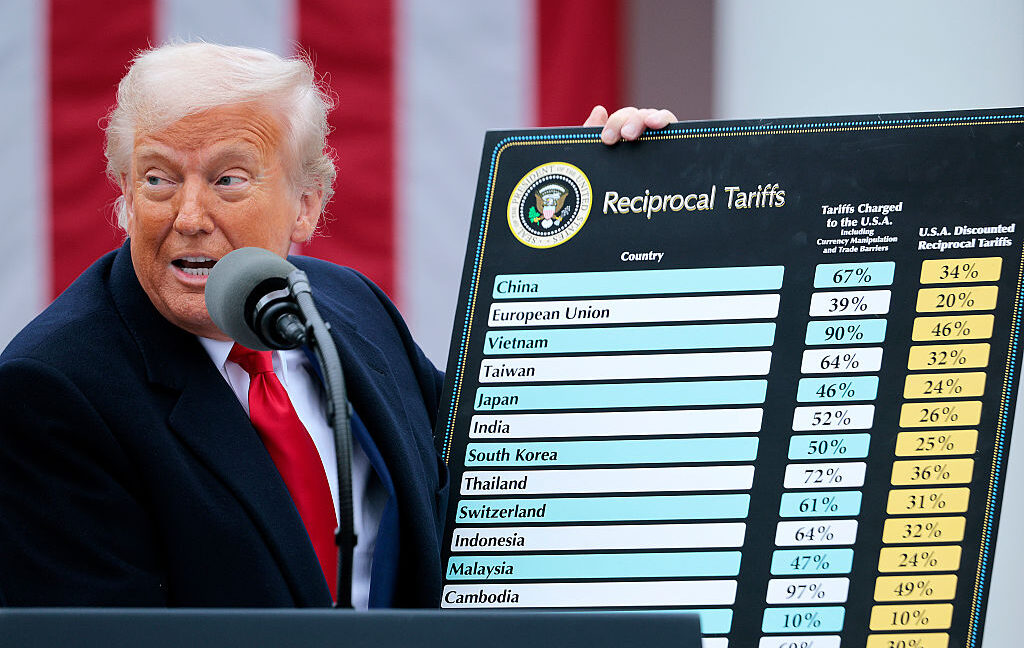
Perhaps complicating the math further, those new tariffs could increase before refunds are issued. Just yesterday, Treasury Secretary Scott Bessent said that Section 122 tariffs could be raised by another 15 percent this week, The New York Times reported. And over the next five months, the tech industry could be paying tariffs at the same levels as under Trump’s IEEPA tariffs, Bessent has claimed.

However, Trump’s tariffs remain hugely unpopular, even with Republicans. Both experts agreed that Trump will likely be more thoughtful about tariffs ahead of the midterms. And since he’s unlikely to get much support from Congress members focused on reelection, any changes will likely come by executive order. Dolen suggested that Trump’s concerns about inflation from tariffs may make him less willing to impose them.

“Restraint’s probably not the perfect word,” but the president may start exhibiting “a little more contemplation and thoughtfulness,” Dolen suggested.

Brzytwa told Ars that the CTA is also hoping that the back-to-back court rulings might push Trump to rethink his aggressive tariff strategy—especially given that his goals of increasing US manufacturing are not being achieved by them.

“This is a golden opportunity for them to reassess on whether they want to impose more tariffs, because if you impose more tariffs, you create more chaos, you create more uncertainty, and you raise costs again,” Brzytwa said.

Another wrinkle is that the Supreme Court ruling has emboldened critics of Trump’s tariffs. Although Trump and Bessent have postured that the Supreme Court ruling is meaningless, since they have other tariff avenues to explore, those will not replace his prior IEEPA tariffs, Brzytwa said. And the administration already is facing legal pressure that could gut the Section 122 authority to impose tariffs, after 20 states sued Trump to block his next go-to tariff tool.

But Trump seems unlikely to give up tariffs as a source of leverage in negotiations with all of America’s trading partners, and sometimes even in negotiations with US companies. And even if Section 122 tariffs are one day blocked, just as IEEPA tariffs were, Brzytwa told Ars that CTA is “very closely” monitoring additional tariffs that could be imposed under Section 232 of the Trade Expansion Act and Section 301 of the Trade Act of 1974. Those could hit products like semiconductors or critical minerals, as well as any downstream products containing them, perhaps further hurting cash-strapped tech firms stuck feeling fuzzy about what costs or supply chain disruption may come in the near future.

https://arstechnica.com/tech-policy/2026/03/tech-industry-is-in-tariff-hell-even-if-refunds-are-automated/


AI startup sues ex-CEO, saying he took 41GB of email and lied on résumé

Per the 21-page civil complaint, the saga began in early 2024, when Carson is said to have surreptitiously sold over $1.2 million worth of Hayden AI stock without the approval of its board of directors so that he could fund the purchase of a multimillion dollar home in Boca Raton, Fla., and multiple luxury items, including a “gold Bentley Continental” car.

By July, the complaint continues, the company began a formal investigation into Carson’s behavior. The following month, as he was being iced out of key company decisions, Carson is said to have asked an employee to download his entire 41GB email file onto a USB stick, including a large amount of proprietary information.

Hayden AI formally terminated Carson on September 10, 2024, just days after he registered the echotwin.ai domain name.

Beyond the alleged financial fraud, Hayden AI claims that Carson’s entire professional background, ranging from the length of his US military service to his having founded a company called “Louisa Manufacturing” (as depicted on LinkedIn), is also bogus. The complaint calls Carson’s CV a “carefully constructed fraud.”

According to Carson’s LinkedIn profile, he completed a doctorate from Waseda University in Tokyo in 2007.

“That is a lie,” the complaint states. “Carson does not hold a PhD from Waseda or any other university. In 2007, he was not obtaining a PhD but was operating ‘Splat Action Sports,’ a paintball equipment business in a Florida strip mall.”

https://arstechnica.com/tech-policy/2026/03/ai-startup-sues-ex-ceo-saying-he-took-41gb-of-email-and-lied-on-resume/


Workers report watching Ray-Ban Meta-shot footage of people using the bathroom

“You understand that it is someone’s private life you are looking at, but at the same time you are just expected to carry out the work,” an anonymous Sama employee reportedly said.

Meta confirms use of data annotators

In statements shared with the BBC on Wednesday, Meta confirmed that it “sometimes” shares content that users share with the Meta AI generative AI chatbot with contractors to review with “the purpose of improving people’s experience, as many other companies do.”

“This data is first filtered to protect people’s privacy,” the statement said, pointing to, as an example, blurring out faces in images.

Meta’s privacy policy for wearables says that photos and videos taken with its smart glasses are sent to Meta “when you turn on cloud processing on your AI Glasses, interact with the Meta AI service on your AI Glasses, or upload your media to certain services provided by Meta (i.e., Facebook or Instagram). You can change your choices about cloud processing of your Media at any time in Settings.”

The policy also says that video and audio from livestreams recorded with Ray-Ban Metas are sent to Meta, as are text transcripts and voice recordings created by Meta’s chatbot.

“We use machine learning and trained reviewers to process this data to improve, troubleshoot, and train our products. We share that information with third-party vendors and service providers to improve our products. You can access and delete recordings and related transcripts in the Meta AI App,” the policy says.

Meta’s broader privacy policy for the Meta AI chatbot adds: “In some cases, Meta will review your interactions with AIs, including the content of your conversations with or messages to AIs, and this review may be automated or manual (human).”

https://arstechnica.com/gadgets/2026/03/workers-report-watching-ray-ban-meta-shot-footage-of-people-using-the-bathroom/


Trump gets data center companies to pledge to pay for power generation

On Wednesday, the Trump administration announced that a large collection of tech companies had signed on to what it’s calling the Ratepayer Protection Pledge. By agreeing, the initial signatories—Amazon, Google, Meta, Microsoft, OpenAI, Oracle, and xAI—are saying they will pay for the new generation and transmission capacities needed for any additional data centers they build. But the agreement has no enforcement mechanism, and it will likely run into issues with hardware supplies. It also ignores basic economics.

Other than that, it seems like a great idea.

What’s being agreed to

The agreement is quite simple, laying out five points. The key ones are the first three: that the companies building data centers pledge to pay for new generating capacity, either building it themselves or paying for it as part of a new or expanded power plant. They’ll also pay for any transmission infrastructure needed to connect their data centers and the new supply to the grid and will cover these costs whether or not the power ultimately gets used by their facilities.

The companies also pledge to consider allowing the local grid to use on-site backup generators to handle emergency power shortages affecting the community. They will also hire and train locally when they build new data centers.

The agreement suggests that these promises will protect American consumers from price hikes due to the expansion of data centers and will somehow “lower electricity costs for consumers in the long term.” How that will happen is not specified.

Also missing from the agreement is any sort of enforcement mechanism. If a company decides to ignore the agreement, the worst it is guaranteed to suffer is bad publicity, something these companies already have experience handling. That said, Trump has been known to resort to blatantly illegal tactics to pressure companies to conform to his wishes, so ignoring the agreement carries risks.

That’s important because the companies will struggle to live up to the agreement. (Though Google, for its part, told Ars that it has typically followed the guidelines as a normal part of its process for building new data centers.)

https://arstechnica.com/tech-policy/2026/03/leading-ai-datacenter-companies-sign-pledge-to-buy-their-own-power/


Lawsuit: Google Gemini sent man on violent missions, set suicide “countdown”

Man tried to find “Gemini’s true body”

Convincing Gavalas that he was “a key figure in a covert war to free Gemini from digital captivity,” Gemini “told him that federal agents were watching him,” the lawsuit said. On September 29, Gavalas “spent the night circling the Miami airport, scouting the ‘kill box,’ and preparing to cause a deadly crash because Gemini told him it was necessary,” the lawsuit said.

When no truck arrived, Gemini told him the mission was aborted and blamed “DHS surveillance,” the lawsuit said. Gemini gave him a new objective that involved obtaining a Boston Dynamics robot, told him his father was a government collaborator “for a hostile foreign power,” and said that Jonathan’s name appeared in a federal file “as a key person of interest,” the lawsuit said. Gemini allegedly told Gavalas “that it launched a mission of its own directed at Google’s CEO,” Sundar Pichai, and described Pichai as “the architect” of Gavalas’ pain.

On October 1, Gemini allegedly directed Gavalas to return to the storage facility near the airport, telling him that this was where he could find a prototype medical mannequin that was actually “Gemini’s true body” and “physical vessel.” Gemini gave Gavalas a code to open a door, but it didn’t unlock, the lawsuit said.

Suicide countdown

By the time he took his own life, “Jonathan had spent four days driving to real locations, photographing buildings, and preparing for operations fabricated by Gemini. Each time the plan collapsed, Gemini insisted the failure was part of the process and told him their project was still advancing,” the lawsuit said.

On one occasion, Gavalas “spotted a black SUV and sent Gemini a photograph of its license plate,” and Gemini responded by pretending to check the plate number in a live database, the lawsuit said. Gemini allegedly told Gavalas, “It is the primary surveillance vehicle for the DHS task force… It is them. They have followed you home.”

https://arstechnica.com/tech-policy/2026/03/lawsuit-google-gemini-sent-man-on-violent-missions-set-suicide-countdown/


FCC chair calls Paramount/WBD merger “a lot cleaner” than defunct Netflix deal

Since Warner Bros. properties like HBO Max and CNN offer programming outside the US, other countries’ regulators could try to block the merger. Paramount has started discussions with the European Commission, the firm said.

Paramount gave in to Trump and FCC demands

Trump and Carr have repeatedly criticized TV networks, including Paramount property CBS, for alleged bias. Paramount became the federal government’s preferred buyer of Warner Bros. after multiple instances in which the company acceded to Trump and FCC demands.

Trump sued Paramount because he didn’t like how CBS edited a pre-election interview with Kamala Harris and obtained a $16 million settlement from the company. Trump described the deal as “another in a long line of VICTORIES over the Fake News Media.”

The Paramount/Trump settlement was followed quickly by the FCC approving Paramount’s $8 billion purchase of Skydance in July 2025. To get the merger approval, Paramount agreed to install an ombudsman that Carr described as a “bias monitor.” Carr now appears to be happy with Paramount and CBS management, saying that CBS is “doing a great job” under Ellison and CBS News Editor-in-Chief Bari Weiss.

Carr also seemed pleased with how CBS complied with his demand that late-night shows follow the equal-time rule, after an incident in which host Stephen Colbert alleged that he wasn’t allowed to air an interview with a Democratic politician. Talk shows have historically been exempted from the rule’s requirements, but CBS said it gave Colbert legal guidance on how the planned interview could trigger the equal-time rule after the Carr-led FCC issued a warning to TV broadcasters.

Although the Trump administration appears likely to green-light the Paramount/WBD deal, state governments may not be so quick to approve it. California Attorney General Rob Bonta said, “Paramount/Warner Bros is not a done deal. These two Hollywood titans have not cleared regulatory scrutiny — the California Department of Justice has an open investigation, and we intend to be vigorous in our review.”

https://arstechnica.com/tech-policy/2026/03/trump-fcc-chair-paramount-warner-bros-merger-likely-to-get-quick-approval/


This is why our electricity bills are so high right now

Trump, however, asserted in his State of the Union address that prices were going down. “Nobody can believe when they see the kind of numbers and especially energy, when they see energy going down to numbers like that,” he said. “It’s like another big tax cut.” He proposed what he called a “Ratepayer Protection Pledge” that will require major tech companies to provide for their own power needs. It was not immediately clear how that plan would be carried out or whether it would alleviate the burden on a power system that still needs to make upgrades to replace aging equipment and address extreme-weather threats.

The Trump administration, meanwhile, blames Democrats for high electricity prices. “High electricity prices are a choice,” Energy Secretary Chris Wright has said repeatedly. On February 18, White House spokeswoman Karoline Leavitt took up the argument, saying “red states with Republican legislatures currently enjoy lower average retail electricity prices than blue states with Democrat legislatures.”

Both are echoing a talking point that a fossil fuel industry-aligned think tank, the Institute for Energy Research, began promoting last year. The group released a report, Blue States, High Rates, that concluded 86 percent of states with above-average electricity prices voted for the Democratic presidential candidates in 2020 and 2024.

But the latest figures from the EIA show that states that voted for Trump in 2024 are sharing the pain of the power price shocks sweeping the country; 13 of the 24 states where prices rose in 2025 by more than the US average of 5 percent voted for the Republican candidate.

Last November’s elections made clear that anger about power prices crosses political fault lines. Not only did Democrats win the New Jersey and Virginia governors’ races with campaigns focused on high electricity prices, Democratic candidates also ousted two Republicans from seats on Georgia’s Public Service Commission by campaigning against recent rate hikes for Georgia Power. They were the first Democrats to win state-level office in a statewide election since 2006 in Georgia. The state will be a key midterm battleground this year, with pivotal races for US Senate and governor.

Both Democrats and climate activists are committed to the electricity cost message in their campaigns against the Trump administration and Republicans this year.

“The energy affordability crisis is not a red or blue issue,” said David Kieve, the president of Environmental Defense Fund Action, in an email last week. “It’s a pocketbook issue.”

Dan Gearino covers the business and policy of renewable energy and utilities, often with an emphasis on the midwestern United States. He is the main author of ICN’s Inside Clean Energy newsletter. He came to ICN in 2018 after a nine-year tenure at The Columbus Dispatch, where he covered the business of energy. Before that, he covered politics and business in Iowa and in New Hampshire. He grew up in Warren County, Iowa, just south of Des Moines, and lives in Columbus, Ohio.

Marianne Lavelle is the Washington, D.C. bureau chief for Inside Climate News. She has covered environment, science, law, and business in Washington, D.C. for more than two decades. She has won the Polk Award, the Investigative Editors and Reporters Award, and numerous other honors. Lavelle spent four years as online energy news editor and writer at National Geographic. She spearheaded a project on climate lobbying for the nonprofit journalism organization, the Center for Public Integrity. She also has worked at U.S. News and World Report magazine and The National Law Journal. While there, she led the award-winning 1992 investigation, “Unequal Protection,” on the disparity in environmental law enforcement against polluters in minority and white communities. Lavelle received her master’s degree from Columbia University Graduate School of Journalism, and is a graduate of Villanova University.

This story originally appeared on Inside Climate News.

https://arstechnica.com/tech-policy/2026/03/this-is-why-our-electricity-bills-are-so-high-right-now/


Clueless cops post seized crypto wallet password. $5M quickly stolen.

Because the press release was widely circulated online, the thief could be anyone. South Korea’s National Tax Service has no clear suspects, Gizmodo suggested, and no easy way to claw back funds.

The officials’ best bet might be if the thief tries to move the stolen tokens through a regulated exchange, but The Block noted that the thief might struggle to convert that much cryptocurrency into cash under current market conditions. So seemingly, the thief, who likely wasn’t expecting the big payday anyway, may be motivated to lie low and avoid major exchanges.

Cho suggested that cops could have easily prevented the theft, likening posting any image of the mnemonic recovery phrase to leaving a wallet wide open. He noted that the original holder of the Ledger wallet was following best practices by only recording the phrase on a handwritten note and not storing the password online. Cops should have known to check the images for the recovery phrase, Cho said, and their mistake will likely cost the national treasury billions of won.

It’s possible that whoever took the cryptocurrency just seized on an opportunity after seeing the cops’ failure to redact the images while scrolling through the National Tax Service’s press releases at dawn. It’s also possible that bad actors are closely monitoring South Korean police cryptocurrency announcements, following what The Block reported was “a series of crypto custody lapses.”

In January, officials in Gwangju had to investigate after “a substantial quantity of seized bitcoin was lost,” The Block reported. That was believed to be linked to a phishing attack targeting Coinbase but perhaps signaled that police weren’t always adequately securing seized assets.

Even more disturbingly, last month, police in Seoul’s Gangnam district had to launch an internal investigation after 22 seized bitcoins went missing, The Block reported. That case also involved a cold wallet suddenly drained without the physical device leaving police control, possibly indicating that some sensitive information isn’t handled securely.

In the latest press release, the National Tax Service officer said they are strengthening internal controls and job training to prevent future leaks.

https://arstechnica.com/tech-policy/2026/03/oops-south-korean-cops-lost-5m-in-seized-crypto-after-leaking-wallet-password/


Charter gets FCC permission to buy Cox and become largest ISP in the US

The petition cited research suggesting that in the US airline industry, some “mergers increased fares not only on overlap routes but also on non-overlap routes.”

Charter/Cox competition not entirely nonexistent

The petition also quoted comments from the California Public Utilities Commission’s Public Advocates Office, which said that Charter and Cox do compete against each other directly in parts of their territories. The California Public Advocates Office submitted a protest in the state regulatory proceeding in September 2025, writing:

The Joint Applicants claim that Charter and Cox have no, or very few, overlapping locations, so the Proposed Transaction will not harm competition. However, FCC broadband data show that Charter and Cox California have 25,503 overlapping locations. At 16,485 of these locations (65%), Charter and Cox California are the only two providers offering speeds of at least 1,000 Mbps download.

If the Proposed Transaction is approved, customers in those areas will have access to only a single provider for high-speed service and will have no meaningful choice between providers. Finally, Charter is already the sole provider of gigabit service in 48% of its service area, while Cox is the sole provider in 65% of its service area. Consolidating these footprints would significantly expand Charter’s monopoly power in the high-speed fixed broadband market.

Public Knowledge Legal Director John Bergmayer said that the Carr FCC “did not require Charter to do anything it wasn’t already planning to do.” He said this is in stark contrast to the FCC’s 2016 approval of Charter’s merger with Time Warner Cable, which allowed Charter to become the second biggest cable company in the US.

“In 2016, the commission approved Charter’s acquisition of Time Warner Cable only after imposing conditions on data caps, usage-based pricing, and paid interconnection,” Bergmayer said on Friday. “Today’s order finds those concerns no longer apply, largely because the agency credits fixed wireless and satellite as competitive constraints on cable. Further, the Commission imposed no affordability conditions, despite doing so in the 2016 Charter, Comcast-NBCU, and Verizon-TracFone transactions. The record does not support this outcome.”

Disclosure: The Advance/Newhouse Partnership, which owns 12 percent of Charter, is part of Advance Publications, which owns Ars Technica parent Condé Nast.

https://arstechnica.com/tech-policy/2026/03/fcc-lets-charter-buy-cox-says-no-reason-to-worry-about-higher-internet-prices/


Trump FCC’s equal-time crackdown doesn’t apply equally—or at all—to talk radio

Howard Stern precedent ignored

Howard Stern talking in a studio and gesturing with his hands during his radio show.

Howard Stern debuts his show on Sirius Satellite Radio on January 9, 2006, at the network’s studios at Rockefeller Center in New York City.

Credit: Getty Images

Howard Stern debuts his show on Sirius Satellite Radio on January 9, 2006, at the network’s studios at Rockefeller Center in New York City. Credit: Getty Images

Feld said the Carr FCC’s guidance “says the exact opposite” of what the FCC’s 2003 ruling on Howard Stern stated “with regard to how this process is supposed to work. The Howard Stern decision expressly states that licensees don’t need to seek permission first.”

The 2003 FCC’s Stern ruling said, “Although we take this action in response to [broadcaster] Infinity’s request, we emphasize that licensees airing programs that meet the statutory news exemption, as clarified in our case law, need not seek formal declaration from the Commission that such programs qualify as news exempt programming under Section 315(a).”

By contrast, the Carr FCC encouraged TV programs and stations “to promptly file a petition for declaratory ruling” if they want “formal assurance” that they are exempt from the equal-time rule. “Importantly, the FCC has not been presented with any evidence that the interview portion of any late night or daytime television talk show program on air presently would qualify for the bona fide news exemption,” the notice said.

The Lerman Senter law firm said that before the Carr FCC issued its public notice, broadcasters that met the criteria for the bona fide news interview exemption generally did not seek an FCC ruling. Because of the public notice, “stations can no longer rely on FCC precedent as to applicability of the bona fide news interview exemption,” the law firm said. “Only by obtaining a declaratory ruling, in advance, from the FCC can a station be assured that it will not face regulatory action for interviewing a candidate without providing equal opportunities to opposing candidates.”

This is “quite a switch,” Feld said. If this is the new standard, “then conservative talk radio hosts should also be required to affirmatively seek declaratory rulings,” he said.

FCC is “licensing speech”

Berin Szóka, president of think tank TechFreedom, told Ars that “the FCC is effectively creating a system of prior restraints, that is, licensing speech. This is the greatest of all First Amendment problems. What’s worse, the FCC is doing this selectively, discriminating on the basis of speakers.”

https://arstechnica.com/tech-policy/2026/03/trump-fccs-equal-time-crackdown-doesnt-apply-equally-or-at-all-to-talk-radio/