Big Tech just got one step closer to squashing key US antitrust bill

Big Tech just got one step closer to squashing key US antitrust bill

Sponsors of a key bipartisan antitrust bill have tried for months to secure a Senate vote and potentially pass “the first major bill on technology competition” to come before the Senate “since the dawn of the Internet.”

Now, The Wall Street Journal reports, that bill will remain “in limbo” as Congress has failed to schedule a vote before its recess. This could signify that Big Tech companies will prevail—through intense lobbying and criticism—and prevent the bill from passing a Senate floor vote. In just one week this summer, one industry group reportedly spent $22 million in ads against the bill.

The bill is controversial because it targets large companies like Amazon, Alphabet, Meta, and Apple. It stops them from self-preferencing business practices, like promoting their products above others or forcing smaller businesses to buy ad space to compete. Critics, like Google, say the law could threaten everything from the quality of online services to national security, but supporters, like bill co-sponsor Representative David Cicilline (D-RI), say much of the criticism boils down to “lies coming from Big Tech.”

Cicilline, Amazon, Apple, Google, and Meta did not immediately respond to Ars’ requests for comment. The tech companies “either declined to comment or didn’t respond to requests for comment” from WSJ.

Sponsors continue to combat any misinformation on the Hill, and Senate Majority Leader Chuck Schumer (D.-NY) said supporters are actively working on securing Senate votes. Cicilline said Big Tech has not won yet. “We continue to have very strong bipartisan support in both chambers, and the votes to pass it in both chambers,” Cicilline said. “It’s really just a matter of getting it on the calendar.”

Among the bill’s opponents influencing Congress to delay the vote is the Computer & Communications Industry Association, which represents tech companies like Amazon, Alphabet, and Meta. CCIA President Matt Schruers tells Ars that his team has been “regularly talking to staffers and members of Congress.” He said that the bill was “never ready for prime time” and “as more members understand the details and the problems it would create for privacy, security, and the economy, they have reservations about supporting it in a floor vote.”

The independent non-partisan policy institute the Center for American Progress declined to comment, but previously conducted a lengthy analysis of both sides of this debate. One of the most publicized issues that critics have with the bill is that it could potentially limit Big Tech companies’ abilities to moderate content without discrimination claims. The idea is that the companies would be so afraid of being sued that they would let every bit of offensive content fly on their platforms.

Wired called the argument “weak,” but the bill’s sponsors—who have been continually willing to engage critics and amend the bill to acknowledge legitimate concerns—are stuck entertaining the argument. WSJ reported that content moderation amendments are being considered, but if the sponsors strike the content moderation part of the bill, they risk losing Republican votes. Those votes will be vital in passing the law and depend on the bill’s explicit protections against discriminatory content moderation, a popular conservative rallying point right now.

For now, supporters of the antitrust bill remain optimistic. They can only hope that Schumer will stick to a reported plan to vote on the American Innovation and Choice Online Act when Congress reconvenes this fall. However, Schumer also planned to hold a vote early this summer, which never happened. If he fails to schedule the vote again, mid-term elections could tip control of Congress to Republicans and possibly doom the bill.

Another bill co-sponsor, Senator Chuck Grassley (R-IA), said that further delays in regulating Big Tech would be bad for the economy and customers. The Department of Justice, Department of Commerce, and the Biden administration have expressed support for the bill. There’s some confidence that the bipartisan support it currently enjoys will save it from being squashed.

If passed, the law would be enacted immediately, with enforcement guidelines from DOJ and the Federal Trade Commission written within a year. After that, the maximum penalty that Big Tech companies could expect to pay is 15 percent of its total US revenue for the period of the violation. Legal experts say that the law would probably never be litigated because very few companies would take the risk of not complying and potentially being sued. If passed, the law would effectively mean the end of America trusting Big Tech to regulate itself—or ceding regulatory power to the European Union.

“Big Tech companies want to protect the status quo, which allows them to expand their influence over our decisions, whether you’re a small businessperson or a consumer,” Grassley said. “If we want action, we need a Senate vote and we need that Senate vote to be soon.”

Senator Amy Klobuchar (D-MN) told Ars that she believes the bill is still on track. “It’s past time we put common sense rules of the road in place for big tech platforms,” Klobuchar said. “Despite more than $100 million being spent against us on ads and the thousands of lobbyists and lawyers fighting this bill, we still have broad support. I have had constructive conversations with Senator Schumer and other colleagues about timing and I am hopeful that when we return in the fall we will vote on this bipartisan legislation.”

Sen. Schumer and Sen. Grassley did not immediately respond to Ars’ requests for comment.

https://arstechnica.com/?p=1872215


Musk wants public debate with Twitter CEO instead of that upcoming court trial

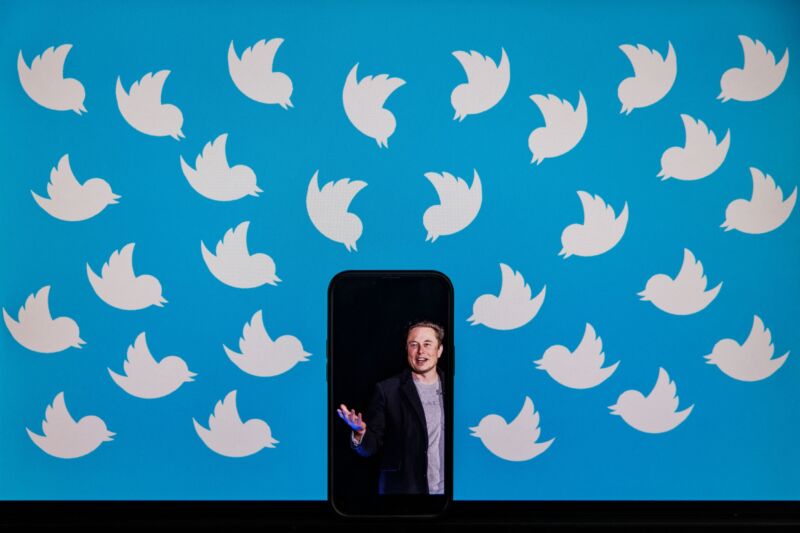
A cellphone displaying a photo of Elon Musk placed on a computer monitor filled with Twitter logos.
Getty Images | Samuel Corum

Elon Musk, unsatisfied with the ongoing court case over his attempt to break a $44 billion merger contract, has challenged Twitter CEO Parag Agrawal to a public debate.

“I hereby challenge @paraga to a public debate about the Twitter bot percentage,” Musk wrote in a tweet on Saturday. “Let him prove to the public that Twitter has <5% fake or spam daily users!”

Of course, a Musk/Agrawal debate is unlikely to happen, and Musk’s proposed debate would not be likely to prove any facts about Twitter spam that couldn’t be proven at trial. Musk, Agrawal, or both could also choose to testify at the upcoming trial in the Delaware Court of Chancery. CNBC reported, unsurprisingly, that a “source close to the company says a debate is not going to happen outside of a pending trial.”

Despite Musk’s claimed eagerness to prove his point in a public debate, he tried to have that trial delayed until February 2023. Judge Kathaleen McCormick rejected Musk’s request for a delay while granting Twitter’s motion to expedite the trial, now scheduled to begin on October 17. “The reality is delay threatens irreparable harm to the sellers,” McCormick said in her ruling.

In May, when Agrawal posted a thread explaining Twitter’s spam-estimate process, Musk responded with a poop emoji.

Trial is not about spam, Twitter says

Musk may be worried the trial won’t focus enough on his claims that Twitter’s spam numbers aren’t accurate. “That’s not what this case is about,” Twitter attorney William Savitt said at the hearing on the trial date, calling Musk’s spam complaint a “manufactured issue.”

Twitter wrote in a court filing last week that Musk has no right to exit the merger based on the number of spam accounts, saying the agreement contained no references to false or spam accounts. “When Musk offered to buy Twitter, he did not ask for—and Twitter did not make—any representations regarding the number of false or spam accounts,” Twitter wrote, adding that “Musk forwent all due diligence—giving Twitter twenty-four hours to accept his take-it-or-leave-it offer before he would present it directly to Twitter’s stockholders.”

Twitter also pointed out that Musk’s analysis purporting to show that at least 10 percent of Twitter’s active daily users are spam or fake used a web tool that recently labeled his own account a likely bot.

Musk’s attempt to break the merger deal centers on his unproven claim that Twitter’s publicly stated spam numbers are incorrect. Specifically, Twitter reports in Securities and Exchange Commission filings that fewer than 5 percent of its monetizable daily active users (mDAU) are spam or fake.

https://arstechnica.com/?p=1872090


Twitter says Musk’s spam analysis used tool that called his own account a bot

Illustration of three bots with Elon Musk's face.
Aurich Lawson | Getty Images | Christopher Pike/Bloomberg

Twitter yesterday slammed Elon Musk’s response to the company’s lawsuit in a 127-page filing in the Delaware Court of Chancery that says Musk’s claims are “contradicted by the evidence and common sense.” Twitter’s court filing also said Musk’s spam analysis relied on a tool that once called his own Twitter account a likely bot.

“According to Musk, he—the billionaire founder of multiple companies, advised by Wall Street bankers and lawyers—was hoodwinked by Twitter into signing a $44 billion merger agreement,” Twitter wrote. “This story is as implausible and contrary to fact as it sounds. And it is just that—a story, imagined in an effort to escape a merger agreement that Musk no longer found attractive once the stock market—and along with it, his massive personal wealth—declined in value.”

Twitter’s filing was in response to Musk’s defense and counterclaims, which were submitted last week but not made public immediately because Twitter was given time to request redactions. Twitter apparently chose not to make any redactions.

“Musk’s Counterclaims, based as they are on distortion, misrepresentation, and outright deception, change nothing. Musk signed and is obligated to consummate the merger agreement,” Twitter wrote.

Twitter: Musk used tool that labeled his account a bot

Musk has defended his attempt to break the merger agreement by questioning Twitter’s public disclosure that less than 5 percent of its monetizable daily active users (mDAU) are spam or fake. Twitter’s court filing said Musk’s own analysis used a publicly available website to find “that false or spam accounts constitute at least 10 percent of Twitter’s monetizable daily active users,” but “Musk is not measuring the same thing as Twitter or even using the same data as Twitter.”

“Musk can produce a higher estimate only by running a data set neither limited to nor inclusive of mDAU through a generic web tool that designated his own Twitter account a likely ‘bot.’ The result is a distortion that Musk is hoping will nonetheless make waves,” Twitter said.

Specifically, Musk used “an Internet application called the ‘Botometer’—which applies different standards than Twitter does and which earlier this year designated Musk himself as highly likely to be a bot,” Twitter said.

The Botometer website is a project of the Observatory on Social Media and the Network Science Institute at Indiana University. Citing a May 2022 Protocol article, Twitter’s court filing said that “the Botometer indicated that Elon Musk’s own Twitter account was likely a bot, scoring it 4/5.”

Musk’s Botometer score now more “human-like”

This morning, Botometer gave Musk’s account a rating of 1.2 out of 5, indicating that Musk is more “human-like” than bot-like as of today. Protocol’s article in May noted that Musk’s account was getting wildly different Botometer scores from one day to the next, saying the tool “highlights just how hard it is to identify bots, especially using only public data.”

As Twitter’s court filing noted, “the Botometer’s own FAQ website cautions that ‘Bot detection is a hard task’ and that if it ‘were easy to do with software, there wouldn’t be any bots—Twitter would have already caught and banned them!'”

Twitter’s filing described other problems with Musk’s reliance on the Botometer as follows:

The Botometer thus does not even purport to apply Twitter’s definition of a false or spam account. In fact, some bots (like those that report earthquakes as they happen or updates on the weather) are often helpful and permissible under Twitter’s platform manipulation and spam policy, to which Twitter respectfully refers the Court. Moreover, Defendants have not indicated what score they are applying to conclude an account constitutes spam; thus, their allegation is unverifiable.

Musk already lost one important ruling when Court of Chancery Judge Kathaleen McCormick expedited the trial, rejecting Musk’s request to delay it until February 2023. The five-day trial is now scheduled to begin on October 17.

https://arstechnica.com/?p=1871817


Twitter subpoenas emails, texts from Tesla bigwigs and Musk’s BFFs

Twitter subpoenas emails, texts from Tesla bigwigs and Musk’s BFFs

Are spam accounts really the reason behind Tesla CEO Elon Musk’s decision to back out of his cursed Twitter deal?

This week, Twitter sent a bunch of subpoenas to find out, pulling Musk’s close circle of friends and business associates into the chaotic trial. One subpoena includes more than two dozen document and communications requests for Tesla. The documents that Twitter seeks from Musk’s friends, advisors, banks, legal team, and investors include emails, text messages, and Twitter DMs.

It’s possible that just one email out of all the subpoenaed material could give Twitter enough information to convince the Delaware Chancery Court to force Musk to cough up $44 billion and actually buy the social network. By crawling documents from Musk’s inner circle, Twitter hopes to reveal what was happening behind Musk’s tweets through the negotiation. In their lawsuit, Twitter claims that Musk violated their merger agreement, and the subpoenas could help prove that he possibly never planned to follow through on the purchase.

“A single email could be decisive, increasing the chances of winning,” Stephen Gillers, a New York University School of Law professor, told The Wall Street Journal.

However, Musk is gathering more evidence against Twitter, too.

Not one to back down, Musk sent his own subpoenas to Twitter’s advisors in the deal, JPMorgan Chase and Goldman Sachs. In addition to examining documents and communications showing how Twitter was approaching negotiations with Musk, according to The Guardian, Musk also requested information on how Twitter planned to negotiate with any other purchasers.

As documents trade hands, Twitter’s legal team will likely try to prove that Musk intentionally worked to tank his financing on the deal, and Musk’s team may claim that Twitter breached the agreement by sharing misleading information on financial concerns—like the real number of Twitter spam accounts. Musk previously tried to push back the trial until 2023, but it looks like much will be revealed once the five-day trial starts on October 17.

Twitter, Tesla, and Musk’s legal team didn’t immediately respond to Ars’ requests for comment. Twitter declined comment to the WSJ on either the “subpoenas or its legal strategy.”

Some of Musk’s associates expressed frustrations with Twitter’s subpoenas for being too broad. Venture-capital investor Joe Lonsdale tweeted that subpoenas to Musk’s friends should be considered “a giant harassing fishing expedition.” He claims that his involvement in the deal amounts to “a few snarky comments.” (Lonsdale did not immediately respond to Ars’ request for comment.)

An expert on mergers and acquisitions at Boston College Law School, Brian Quinn, told the WSJ that it’s unusual to subpoena friends in a lawsuit like this. The reason why it’s happening now is because Musk purchased Twitter as an individual. That means his closest friends are “fair game as potential sources of information about his intentions.”

Musk can contend that the subpoenas are “overly broad or unduly burdensome”—if he can explain to the court why any particular request would yield only irrelevant documents or communications.

Musk already faces many hurdles if he wants to get out of the Twitter deal, and this recent onslaught of subpoenas has only lined up more potential hurdles. Meanwhile, Twitter continues to lose “billions in market value” since the day Musk announced his intentions to purchase it. The social media company’s biggest fear is that—as UConn School of Law professor Minor Myers told Reuters—Musk’s plan since signing the deal has been “to blow the whole thing up.”

By the end of tomorrow, Musk will publicly answer Twitter’s lawsuit and respond with any counterclaims.

https://arstechnica.com/?p=1871713


Record labels’ war on ISPs and piracy nets multiple settlements with Charter

A computer keyboard with a pirate's skull and cutlasses symbol on one of the keys.

Charter Communications has agreed to settle piracy lawsuits filed by the major record labels, which accused the cable Internet provider of failing to terminate the accounts of subscribers who illegally download copyrighted songs.

Sony, Universal, Warner, and their various subsidiaries sued Charter in US District Court in Colorado in March 2019 in a suit that claimed the ISP helps subscribers pirate music by selling packages with higher Internet speeds. They filed another lawsuit against Charter in the same court in August 2021.

Both cases were settled. The record labels and Charter told the court of their settlements on Tuesday in filings that said, “The Parties hereby notify the Court that they have resolved the above-captioned action.” Upon the settlements, the court vacated the pending trials and asked the parties to submit dismissal papers within 28 days.

Charter subsidiary Bright House Networks also settled a similar lawsuit in US District Court for the Middle District of Florida this week. The record labels’ case in Florida was settled one day before a scheduled trial, as TorrentFreak reported Tuesday. The case was dismissed with prejudice after the settlement.

No details on any of the settlements were given in the documents notifying the courts. A three-week jury trial in one of the Colorado cases was scheduled to begin in June 2023 but is no longer needed.

The question for Internet users is whether the settlements mean that Charter will be more aggressive in terminating subscribers who illegally download copyrighted material. Charter declined to comment today when we asked if it agreed to increase account terminations of subscribers accused of piracy. We also contacted the big three record labels and will update this article if they provide any information on the settlements.

$1 billion Cox verdict may force ISPs to cut off subscribers

Even if the settlements have no specific provision on terminating subscribers, Charter presumably has to pay the record labels to settle the claims. That could make the country’s second-biggest ISP more likely to terminate subscribers accused of piracy in order to prevent future lawsuits.

A jury ruled in December 2019 that Cox must pay $1 billion in damages to the major record labels in a case filed in US District Court for the Eastern District of Virginia. That decision raised alarm bells for the Electronic Frontier Foundation (EFF), the Center For Democracy and Technology, the American Library Association, the Association of College and Research Libraries, the Association of Research Libraries, and consumer-advocacy group Public Knowledge.

Those groups warned in a June 2021 court filing that the verdict, if not overturned, “will force ISPs to terminate more subscribers with less justification or risk staggering liability.” The US Court of Appeals for the Fourth Circuit heard oral arguments in March 2022 and has not yet issued a ruling.

Charter motion to dismiss denied

In the Colorado court, the record labels’ complaint said Charter “has knowingly contributed to, and reaped substantial profits from, massive copyright infringement committed by thousands of its subscribers. Charter has insisted on doing nothing—despite receiving thousands of notices that detailed the illegal activity of its subscribers, despite its clear legal obligation to address the widespread, illegal downloading of copyrighted works on its Internet services, and despite being sued previously by Plaintiffs for similar conduct.”

Charter argued in a motion to dismiss the case that “a failure to terminate a customer’s access to the Internet based solely upon unverified (and unverifiable) notices alleging past infringement does not demonstrate the requisite intent by an ISP to encourage infringement.” Charter said it has a “policy to not terminate customer accounts based solely upon the receipt of notices containing unverifiable accusations of infringement.”

Charter also wrote that “[p]laintiffs do not (and cannot) allege that termination restricts access to the infringing content. It is common sense that terminating a customer’s Internet connection does not prevent a customer from finding another source of Internet access, nor does it impact the availability of the allegedly infringing content hosted via peer-to-peer networks or programs. Charter has no more ability to block access to peer-to-peer networks than a subscriber’s electric company.” Charter’s motion to dismiss the case was denied, and the company ultimately chose not to go to trial.

In Florida, the judge dismissed the record labels’ claim for vicarious liability, but the industry’s complaint also sought damages for vicarious copyright infringement.

Disclosure: The Advance/Newhouse Partnership, which owns 12.4 percent of Charter, is part of Advance Publications. Advance Publications owns Condé Nast, which owns Ars Technica.

https://arstechnica.com/?p=1871583


Accused of profiting on child sexual abuse, Visa halts Pornhub ad payments

Accused of profiting on child sexual abuse, Visa halts Pornhub ad payments

This week, a California court denied Visa’s motion to be dropped from a lawsuit alleging that Visa “intended to help” monetize child sexual abuse materials hosted on sites like Pornhub. In part, because the credit card company processed payments for ads featured alongside these videos, the judge determined that Visa will have to answer to victim claims that Visa provided the tool that made hosting illicit videos profitable.

Today, Visa responded to the court’s decision by suspending all advertising purchases from Pornhub owner MindGeek’s advertising arm, TrafficJunky. “During this suspension, Visa cards will not be able to be used to purchase advertising on any sites including Pornhub or other MindGeek affiliated sites,” Alfred F. Kelly, Jr., Visa chairman and CEO, wrote in a statement.

This move follows an earlier decision Visa made in December 2020 to stop allowing payments on MindGeek’s websites featuring user-generated content, like Pornhub. The new statement says that they decided to end advertising payments, too, because the California court’s decision “created new uncertainty about the role of TrafficJunky” in MindGeek’s alleged practice of posting illegal videos depicting content that Visa says it condemns.

“Visa condemns sex trafficking, sexual exploitation, and child sexual abuse,” Kelly wrote. “It is illegal, and Visa does not permit the use of our network for illegal activity. Our rules explicitly and unequivocally prohibit the use of our products to pay for content that depicts nonconsensual sexual behavior or child sexual abuse.” He also said that Visa directly communicates with all of its merchants to ensure they comply with these standards. The suspension will likely resume until the lawsuit is settled.

Visa still disputes the legitimacy of its involvement in the lawsuit, earlier this week saying the company is an “improper defendant.”

From this point forward, Kelly says that Visa expects to build its defense and present exonerating evidence. Until the matter is settled, he says that “Visa can be used only at MindGeek studio sites that feature adult professional actors in legal adult entertainment.”

MindGeek did not immediately respond to Ars’ request for comment. (Update at 5:41 pm ET: A MindGeek spokesperson tells Ars that the National Center for Missing & Exploited Children “reported earlier this year that Pornhub reported fewer incidents of CSAM [child sexual abuse material] and removed cases of CSAM in the shortest amount of time after being notified among all major platforms, including Facebook, Twitter, YouTube, and more.” Because of this work to improve content moderation, MindGeek says, “Despite today’s suspension of payment acceptance for our advertising platform, we are extremely confident in our policies and the fact that we have instituted trust and safety measures that far surpass those of any other major platform on the Internet.”)

Lauren Tabaksblat, Brown Rudnick lead attorney representing victims suing, says Visa’s most recent move to stop doing business with MindGeek came too late. She says, “Visa’s announcement today is way overdue and way short. It is utter bad faith for Visa to suggest that it did not know what was happening on MindGeek‘s sites despite numerous media reports of horrific abuse, many investigative journalist reports about the abuse, a viral online campaign by advocates about the abuse, detailed reports of the abuse from advocates and victims sent to senior management, a New York Times story about the abuse, and public testimony from lawyers and victims about the abuse.”

https://arstechnica.com/?p=1871545


As Earth spins faster, Meta joins fight against leap seconds

An atomic clock based on a fountain of atoms.

Meta recently joined the ranks of tech giants calling for the end of the leap second, the fascinatingly complex way humans account for tiny changes in the Earth’s rotation timing. The owner of Facebook and Instagram adds to a chorus that’s been growing for years, and the debate could come to a head at a global conference in 2023—or even sooner if the Earth keeps having record-short days.

Facebook, like many large-scale tech companies, is tired of trying to time a global network of servers against leap seconds, which add between 0.1 and 0.9 seconds to Coordinated Universal Time (UTC) every so many years. There have been 27 leap seconds added since 1972. In a post on Meta’s engineering blog, Oleg Obleukhov and Ahmad Byagowi say 27 is quite enough for non-solar-scientist types—”enough for the next millennium.”

International timekeeping bodies add leap seconds at unpredictable intervals because the things that cause them—the braking action of tides on rotation, moon position, the distribution of ice caps on mountaintops, mantle flow, earthquakes—are unpredictable. When the Earth’s speed varies too much from atomic time-keeping, a leap second is called for by the International Earth Rotation and Reference Systems Service (IERS).

At midnight on the designated day,  clocks are set to tick from 23:59:59 to 23:59:60 to 00:00:00. That uncommon middle timestamp drives coordinated systems bonkers. A leap second in 2012 took down Reddit, Gawker, and Australian airline Qantas. Cloudflare took the hit on New Year’s 2017 (and detailed why). Since then, many technologies have prepped themselves for the next leap second with “leap smearing,” or using micro-second slowdowns over a long, global-server-friendly span leading up to midnight.

Meta argues that 27 leap seconds have been enough for most people—and, more importantly, their servers—to get by.
Enlarge / Meta argues that 27 leap seconds have been enough for most people—and, more importantly, their servers—to get by.

Meta’s engineers note that, while every leap second thus far has been positive, a negative leap second—the kind computer systems might not easily “smear”—could occur due to “the Earth’s rotation pattern changing.” It’s far from idle speculation. 

Earth recently experienced a record-short day on June 29, 1.59 milliseconds less than the 24-hour norm. It’s part of a general speeding-up trend. The second-shortest day had been July 19, 2020, at 1.47 milliseconds under, until July 26, 2022, at 1.50 milliseconds, one day after Meta’s anti-leap-second post.

Leonid Zotov of Lomonosov Moscow State University told timeanddate that he believes the irregular movement of the Earth’s geographical poles could be at fault. But Zotov also thinks there’s “a 70 percent chance” a negative leap second won’t be needed, at least this year.

Arguments against leap seconds have been stacking up since the disruptions caused by the last two (with the occasional quirky dissent). The last time it came up for an official decision, in 2015 at the World Radiocommunication Conference in Geneva, the International Telecommunication Union (ITU) punted the decision to 2023. The next big confab of time-keepers takes place in late 2023 in Dubai, United Arab Emirates, when a contract delegating UTC time-keeping to the ITU expires.

Meta’s call to action might not be the first, but it could end up being great timing.

https://arstechnica.com/?p=1871355


50 state AGs vow action against carriers that bring foreign robocalls to US

A smartphone on a wooden table displaying an incoming call from an unknown phone number.
Getty Images | Diy13

Attorneys general from all 50 states have created an Anti-Robocall Litigation Task Force “to investigate and take legal action against the telecommunications companies responsible for bringing a majority of foreign robocalls into the United States,” they announced yesterday.

In the task force’s first action, it “issued 20 civil investigative demands to 20 gateway providers and other entities that are allegedly responsible for a majority of foreign robocall traffic,” said an announcement from North Carolina Attorney General Josh Stein. The task force’s formation was led by Stein and the attorneys general of Indiana and Ohio, the announcement said.

Stein cited data suggesting that “more than 33 million scam robocalls are made to Americans every day,” such as “Social Security Administration fraud against seniors, Amazon scams against consumers, and many other scams targeting all consumers, including some of our most vulnerable citizens.”

Robocalls bring in revenue

Gateway providers are responsible for ensuring that foreign traffic is legal but “are not taking sufficient action to stop robocall traffic,” Stein’s announcement said. “In many cases, they appear to be intentionally turning a blind eye in return for steady revenue.”

The task force plans to “take action against phone companies that violate state and federal laws,” focusing on “the bad actors throughout the telecommunications industry.” Stein also previously sued a gateway provider called Articul8.

“Robocalls are an intrusive and obnoxious menace, responsible for $29.8 billion in fraud last year alone,” Connecticut Attorney General William Tong said. “Our Anti-Robocall Litigation Task Force will shut down the telecom fraud highway and bring these scammers to justice.”

New FCC rule for gateway providers

The Federal Communications Commission has also been cracking down on gateway carriers that bring foreign robocalls to the US. The FCC defines a gateway provider as “a US-based intermediate provider that receives a call directly from a foreign originating provider or foreign intermediate provider at its US-based facilities before transmitting the call downstream to another US-based provider.”

The FCC issued an order in May that requires gateway providers to implement STIR/SHAKEN Caller ID authentication technology in the IP portions of their networks by June 30, 2023. Other phone companies were already required to do so.

Phone companies are also prohibited from accepting calls from providers that do not certify compliance with the FCC’s Robocall Mitigation Database. There’s some evidence that robocalls have declined under the new rules, but spam texts appear to be on the rise.

https://arstechnica.com/?p=1871384


SpaceX and Viasat fight over whether Starlink can meet FCC speed obligations

A Starlink satellite dish on the roof of a house.
Enlarge / A Starlink satellite dish.

Over a year and a half after tentatively winning $886 million in broadband funding from the government’s Rural Digital Opportunity Fund (RDOF), SpaceX is still trying to get paid by the Federal Communications Commission. One problem for Starlink—though not the only problem—is a series of objections from satellite company Viasat, which says Starlink lacks the capacity and speed to meet FCC obligations.

In a new FCC filing, SpaceX denounced Viasat’s “misguided campaign” against the Starlink funding. “Viasat is transparently attempting to have the Commission impede competition at all costs to protect its legacy technology,” SpaceX told the FCC. The new SpaceX filing was submitted on Friday and posted to the FCC’s website Monday, as pointed out by Light Reading.

But SpaceX might have struggled to get its funding even if Viasat never objected. Starlink was tentatively awarded $886 million in December 2020 by the FCC during the final weeks of Chairman Ajit Pai’s tenure. Consumer advocacy group Free Press accused Pai of “subsidiz[ing] broadband for the rich,” pointing out that Starlink was awarded money in urban areas including locations at or adjacent to major airports.

Starlink service isn’t geographically restricted in the same way as wireline networks, but the RDOF and other programs require ISPs to bid on specific census blocks. Starlink won bids covering 642,925 homes and businesses in 35 states.

In addition to rural areas, SpaceX won “the right to serve a large number of very urban areas that the FCC’s broken system deemed eligible for awards,” Free Press said. A design flaw in the FCC’s mapping system made it possible to bid on subsidies in census blocks that were “surrounded on all sides by fiber.”

Pai’s FCC auction mismanaged

That RDOF auction was apparently mismanaged by Pai, as Chairwoman Jessica Rosenworcel announced in July 2021 that the agency must “clean up issues with the program’s design originating from its adoption in 2020.” The FCC cited “complaints that the program was poised to fund broadband to parking lots and well-served urban areas.”

Rosenworcel’s office sent letters to dozens of winning bidders, suggesting that they voluntarily give up portions of their funding. SpaceX was one of the auction’s biggest winners, and Rosenworcel’s FCC asked the company to give up funding in about 6 percent of the 113,900 census blocks where SpaceX tentatively won FCC grants.

The FCC letters to SpaceX and other ISPs pointed to concerns “that certain areas included in the Rural Digital Opportunity Fund auction are already served by one or more service providers that offer 25/3Mbps broadband service or otherwise raise significant concerns about wasteful spending, such as parking lots and international airports.”

SpaceX didn’t agree to give up any funding and is apparently still trying to get the full amount. While the FCC review of SpaceX’s funding is ongoing, the commission has periodically released RDOF money to various other ISPs over the past year. The FCC also recently proposed $4.3 million in fines against 73 ISPs for defaulting on their bids.

Pai’s auction also awarded $1.32 billion to a Las Vegas company called LTD Broadband to serve 528,088 locations in 15 states. But LTD subsequently “missed filing deadlines and failed to secure regulatory approvals needed to receive the money,” The Wall Street Journal wrote.

https://arstechnica.com/?p=1871281


Microsoft’s $3M anti-abortion donations under fire from activists, shareholders

Microsoft’s $3M anti-abortion donations under fire from activists, shareholders

Microsoft isn’t the only company that seems to contradict its own politics by promising to cover abortion travel costs for employees, while at the same time donating to political action committees that funded the governors and attorneys general who fought to overturn Roe v. Wade. However, Microsoft is one of the biggest donors that helped install so many anti-abortion officials over time. The Center for Political Accountability (CPA) told Bloomberg that since 2010, Microsoft donated $3 million to Republican groups doggedly working to end abortion in America.

Microsoft might be donating to these groups for any number of reasons, but a UK activist shareholder group called Tulipshare says the company should change its political giving policy to resist political contradictions and increase transparency. To put pressure on Microsoft, Tulipshare partnered with CPA. Together, they propose that Microsoft release an annual report that would publicly connect the dots between the money Microsoft donates, the elected officials those donations support, and the specific causes that those elected officials support. Such a report could end any company claims about incidental anti-abortion donations.

According to Jenna Armitage, Tulipshare’s chief marketing officer, the activist group’s strategy is to “engage with Microsoft’s investor relations department” to request the annual report. That report would ideally “mandate that the company require political action committees it funds to say which candidates and causes they support.” If Microsoft rejects the proposal, Tulipshare’s next step would be to prompt investors to “introduce a shareholder motion.”

“We’re asking Microsoft to demand more transparency from the political groups they donate to so that no one can play dumb about what that money is funding,” Armitage tells Ars. “In this scenario,” Republican groups “would have to report their spending to Microsoft, and Microsoft would have to report that spending to its shareholders.”

If Tulipshare succeeds with its proposal, for the first time, Microsoft would be required to take a hard look in full public view at where its political giving goes and how that aligns with the organization’s stated politics. Tulipshare’s goal is to push Microsoft to stop all anti-abortion donations and lobbying efforts, holding the company accountable to the core values seemingly reflected by concerns over Microsoft employees maintaining safe access to reproductive health care.

Armitage says it’s wrong to mislead employees about the full scope of a company’s politics. “You see a lot of companies hopping on this woke marketing opportunity to speak out against something, whether it be to attract more recruits, to just kind of insert themselves into the media, when actually their political activities say otherwise,” Armitage said.

According to OpenSecrets, so far in 2022, Microsoft is ranked No. 2 ($283,500)—tied with Google ($283,500) and behind only PricewaterhouseCoopers ($500,500)—on a list of 15 companies “that pledged to cover travel expenses related to abortion” while their corporate PACs donated to politicians who recently voted against the Women’s Health Protection Act. That law would have codified abortion but failed to pass a Senate vote when no Republicans voted for it. Microsoft donated $233,000 to 119 of those anti-abortion politicians who voted no, giving the maximum donation ($5,000) to nine.

It will be up to Microsoft leadership to decide if such a report would benefit the company’s reputation at this moment. But OpenSecrets suggests it’s clear that Microsoft’s donations support anti-abortion causes, because groups receiving donations make clear how the money will be used. One of the groups that received Microsoft donations, the Republican Attorneys General Association, immediately emailed supporters on June 24 to ask for donations after Roe v. Wade was overturned, promising that “every donation will help Republican Attorneys General combat the Democrats’ pro-abortion agenda and stand tall for life.”

A Microsoft spokesperson declined to comment to both Bloomberg and Ars.

Microsoft historically donates to both Democrats and Republicans through its corporate PACs, and OpenSecrets notes that out of all 15 companies, Microsoft was the only company showing “a trend of contributing more to Democratic groups over time.” This could suggest the company is working to be more cognizant of how political giving contradicts its politics not just on abortion, but also on other Democratic issues that Microsoft supports, like climate change or LGBTQ+ protections.

https://arstechnica.com/?p=1871269