Avowed bitcoin creator Craig Wright is not happy with £1 win in UK libel lawsuit

Craig Wright, self-declared inventor of bitcoin, center, arrives at federal court with his attorney Andres Rivero, right, in West Palm Beach, Florida, on Friday, June 28, 2019.
Enlarge / Craig Wright, self-declared inventor of bitcoin, center, arrives at federal court with his attorney Andres Rivero, right, in West Palm Beach, Florida, on Friday, June 28, 2019.

In 2016, when Craig Wright promised to provide “extraordinary proof” that he is bitcoin creator Satoshi Nakamoto, he was met with a lot of skepticism. Some had doubts when Wright fabricated evidence, and many weren’t surprised when he failed to bring forward the supposed proof he promised. Instead, he apologized for lacking the “courage” to share any real evidence. Then, in 2018, he committed perjury, further inflaming public perceptions that he could be a fraud.

By 2019, Wright began fighting back at critics by threatening to take them to court for defamation. Among Wright’s most vocal skeptics is bitcoin expert Peter McCormack, who became the first target of Wright’s litigiousness. In 2019, Wright sued McCormack for libel for tweeting things like “Craig Wright is a fucking liar, and he’s a fraud; and he’s a moron; he is not Satoshi.” Wright expected that a successful libel lawsuit against McCormack would finally prove he founded bitcoin.

This week, a verdict was delivered by a UK high court—where Justice Martin Chamberlain wrote that “the identity of Satoshi is not among the issues” determined. The libel lawsuit, in the end, was a victory for Wright; he was awarded damages for the “serious harm” McCormack caused to his reputation. But it also proved that, once again, Wright is not being forthcoming about evidence in his public fight to be acknowledged as bitcoin’s creator.

In the lawsuit, Wright claimed that McCormack’s tweets, as well as a YouTube video discussion, had done serious damage to Wright’s reputation. He said he had academic papers accepted and then rejected, invitations to conferences revoked, and his chances of becoming a magistrate in Surrey spoiled. But he once again was found to have given false evidence for his claims, and a UK judge decided it would be “unconscionable” to award Wright anything but nominal damages for harm done to his reputation. For all that time in court, Wright was awarded just £1 yesterday, and The Guardian reports that he will walk away with an even more tarnished reputation.

Because Wright “advanced a deliberately false case and put forward deliberately false evidence until days before trial, he will recover only nominal damages,” wrote Justice Chamberlain.

Despite the scant damages collected, the lawsuit could serve to silence more critics who don’t have the time and resources to go to court over their social media posts, which McCormack claimed in the disputed tweets was Wright’s actual motivation for suing.

The judge is still deliberating how much to award to cover the costs of both legal teams. Wright’s legal team did not immediately respond to Ars’ request for comment. McCormack’s legal team told Ars that they’re “very pleased with the findings that the judge has reached.”

McCormack tweeted that he was also “very pleased” with the court’s findings, thanking his lawyers and the judge. He said he would have more people to thank once the case is officially closed.

Wright has not tweeted any response as of this writing. The Guardian reports that Wright responded with this statement: “I intend to appeal the adverse findings of the judgment in which my evidence was clearly misunderstood. I will continue legal challenges until these baseless and harmful attacks designed to belittle my reputation stop.”

https://arstechnica.com/?p=1870911



SEC: Crypto fraudsters raised $300M with “textbook pyramid and Ponzi scheme”

Golden coins stacked in a pyramid.
Getty Images | SimoneN

The US Securities and Exchange Commission yesterday filed a lawsuit against 11 people accused of creating and promoting a crypto pyramid and Ponzi scheme known as “Forsage.” The fraudulent scheme “raised more than $300 million from millions of retail investors worldwide, including in the United States,” the SEC’s announcement said.

The SEC alleged that “in January 2020, Vladimir Okhotnikov, Jane Doe a/k/a Lola Ferrari, Mikhail Sergeev, and Sergey Maslakov launched Forsage.io, a website that allowed millions of retail investors to enter into transactions via smart contracts that operated on the Ethereum, Tron, and Binance blockchains.” Forsage allegedly “operated as a pyramid scheme for more than two years, in which investors earned profits by recruiting others into the scheme.” Forsage also “used assets from new investors to pay earlier investors in a typical Ponzi structure,” the SEC said.

The SEC filed a complaint in US District Court for the Northern District of Illinois against the four alleged co-founders and seven other people, accusing them of violating the registration and anti-fraud provisions of the federal securities laws. The complaint seeks permanent injunctions, disgorgement, and civil penalties.

The four alleged co-founders are Russian, while the seven other defendants are from the US. Two of the US-based defendants have already agreed to settle the charges. “Fraudsters cannot circumvent the federal securities laws by focusing their schemes on smart contracts and blockchains,” said Carolyn Welshhans, acting chief of the SEC’s Crypto Assets and Cyber Unit.

“Textbook pyramid and Ponzi scheme”

The SEC complaint described the pyramid scheme as follows:

Forsage is a textbook pyramid and Ponzi scheme. It did not sell or purport to sell any actual, consumable product to bona fide retail customers during the relevant time period and had no apparent source of revenue other than funds received from investors. The primary way for investors to make money from Forsage was to recruit others into the scheme.

To participate, an investor created a crypto-asset wallet and then purchased “slots” in Forsage’s smart contracts, which gave the investor the right to earn compensation from others whom the investor recruited into the scheme (the “downlines”) and compensation from the larger Forsage community of investors in the form of profit sharing of payments known as “spillovers.” When an investor purchased a slot, a portion of that investment was directed to the persons who recruited the investor (the “uplines”) and the investor in turn became an upline to whomever the investor recruited. Thus, all payouts to earlier investors were made using funds received from later investors.

Forsage’s “website was publicly available to investors in the United States and was unrestricted—that is, it did not require a login or password to access content, including anonymized investor information contained in its ‘back office,’ the Forsage Academy, the Forsage Community, or the Forsage Customer Care Center,” the SEC complaint said.

The website at forsage.io is still accessible. The SEC said it is hosted by Cloudflare and is “on the InterPlanetary File System (IPFS), a peer-to-peer network of cached Internet content designed to preserve information indefinitely.”

https://arstechnica.com/?p=1870867


Visa knew about Pornhub’s child porn, judge says, and now must face trial

Visa knew about Pornhub’s child porn, judge says, and now must face trial

In December 2020, a New York Times op-ed declared that Pornhub had a child porn problem. Subsequently, Visa temporarily suspended all business with Pornhub and other sites hosted by Pornhub owner MindGeek.

At that time, a MindGeek employee confidentially claimed that this was MindGeek’s worst fear—losing one of its major payment processors—and, therefore, it was unsurprising when MindGeek responded to increased pressure from Visa and other companies by immediately deleting 80 percent of its hosted content, approximately 10 million unverified videos. According to a California court, much of that was likely child porn.

After that, Visa seemed to think that the matter was resolved and continued doing business with MindGeek, claiming it has no control over MindGeek’s content. Now, a lawsuit from a plaintiff named Serena Fleites (a Pornhub child sex-trafficking victim since the age of 13) and 34 other plaintiffs alleges that Visa has become a willing co-conspirator in alleged child sex trafficking on MindGeek sites, and a judge has agreed that they’re not just speculating. It’s a real possibility that Visa could be liable.

This week, US District Judge Cormac Carney of the US District Court of the Central District of California decided that there’s reason to believe that Visa knowingly processed payments that allowed MindGeek to monetize “a substantial amount of child porn.” To decide, the court wants to know much more about Visa’s involvement, calling for more evidence of legal harms caused during a jurisdictional discovery process extended through December 30, 2022.

“The court can comfortably infer that Visa intended to help MindGeek monetize child porn,” Carney wrote, describing Visa’s payment processor as a tool that potentially enabled criminal activity. In his order, Carney granted Visa’s motion to dismiss claims that the company knowingly participated in child sex trafficking but denied its motion to dismiss claims that it conspired with MindGeek to benefit financially from a child sex-trafficking venture.

Visa’s defense hinges on whether it bears direct responsibility, arguing that all blame should go to other parties directly involved in decisions to profit off child porn. In its motion to dismiss, Visa didn’t mention its past suspension of business with MindGeek, likely because that would potentially counter Visa’s argument that “Plaintiff’s claims against Visa are all based on an unsupported assumption that Visa could force MindGeek to operate differently.” Carney says this is unpersuasive because “Visa quite literally did force MindGeek to operate differently, and markedly so, at least for a time.”

A Visa spokesperson shared a statement with Ars, saying that the company believes that Visa is “an improper defendant in this case.”

“Visa condemns sex trafficking, sexual exploitation, and child sexual abuse materials as repugnant to our values and purpose as a company,” the spokesperson says. “This pre-trial ruling is disappointing and mischaracterizes Visa’s role and its policies and practices. Visa will not tolerate the use of our network for illegal activity.”

A MindGeek representative shared a statement with Ars, saying that the company is “confident the plaintiff’s claims will be dismissed for lack of merit.”

“At this point in the case, the court has not yet ruled on the veracity of the allegations, and is required to assume all of the plaintiff’s allegations are true and accurate,” the MindGeek representative says.

However, Lauren Tabaksblat, lead attorney for plaintiffs and a partner at Brown Rudnick, tells Ars that it’s a landmark decision to move forward with Visa as a defendant because “it brings credit card companies into this fight,” where they should be. She says the discovery process will likely yield important new insights into Visa’s and MindGeek’s financial operations. “We have a clear path to take discovery and then ultimately proceed with respect to all the claims against MindGeek and Visa going forward,” Tabaksblat says.

The case against Visa

Nobody suing is saying that Visa participated in child sex trafficking, but Carney says that Visa’s defense pretends that’s the allegation, rather than engaging more directly with the claim that Visa conspired to financially benefit from MindGeek’s policies and practices.

“MindGeek is being sued for knowingly monetizing child porn,” Carney says. Because Visa’s decision to continue to “recognize MindGeek as a merchant is directly linked to MindGeek’s criminal act,” that means Visa could be partly responsible for harms, due to keeping “open the means through which MindGeek completed its criminal act knowing that that criminal act was being committed.”

Carney also says that it’s possible Visa could have prevented harms: “When MindGeek decides to monetize child porn, and Visa decides to continue to allow its payment network to be used for that goal despite knowledge of MindGeek’s monetization of child porn, it is entirely foreseeable that victims of child porn like Plaintiff will suffer the harms that Plaintiff alleges.”

Visa’s defense includes pointing the finger at everyone else and citing various precedents that failed to hold companies liable for larger societal problems that are out of their control, which Carney says don’t apply in this case. “Unlike the cases to which Visa cites,” Carney wrote, courts don’t have to speculate about how Visa’s actions might affect many other “independent actors” that theoretically together bear collective responsibility for a larger societal problem. Unlike past cases, the court has a clear example in the NYT response that shows how Visa could have taken actions that would clearly “affect the way that MindGeek approaches child porn.”

Carney finds invalid Visa’s claims that holding them accountable in this case might pose “an existential threat to the financial industry,” by setting a precedent where courts expect companies to “police” the “billions of individual transactions” they process. Carney disagrees with this logic, saying that the plaintiff doesn’t expect Visa to police every transaction but more narrowly suggests that the company adopt a payment processing policy to “refrain from offering the tool with which a known alleged criminal entity performs its crimes.”

https://arstechnica.com/?p=1870703


Chipmakers battle for slice of US government support

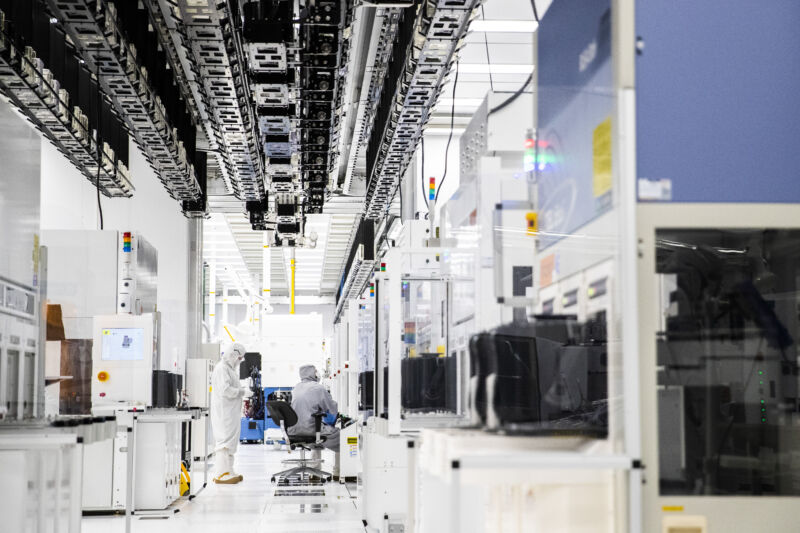
Employees wearing cleanroom suits monitor chemical vapor deposition operations inside the GlobalFoundries semiconductor manufacturing facility in Malta, New York. Production plants for semiconductors have become a focal point as the economic recovery from the pandemic is held back in areas by a shortage of some of the critical electronic components necessary.
Enlarge / Employees wearing cleanroom suits monitor chemical vapor deposition operations inside the GlobalFoundries semiconductor manufacturing facility in Malta, New York. Production plants for semiconductors have become a focal point as the economic recovery from the pandemic is held back in areas by a shortage of some of the critical electronic components necessary.

The long wait for legislation to boost the US’s position in global semiconductor manufacturing is almost over. The scramble among companies to get their hands on the billions of dollars it unleashes is only just beginning.

The House of Representatives last week followed the Senate in passing a broad law to counter China’s rise as a technology power, including $52 billion in grants to support advanced chip manufacturing and research and development in the US. The law, which has yet to be signed, unlocks an estimated $24 billion more in investment tax credits for chipmakers by letting them write off 25 percent of the cost of new factories, or fabs, against their profits in the first year.

Pat Gelsinger, CEO of Intel, said the act may be “the most important piece of industrial policy” in the US since World War II. It is designed to reverse a decline in the US share of global chip manufacturing to 10 percent from 38 percent in 1990.

However, the financial support from Washington is unlikely to stretch across all the giant projects already under construction or on the drawing board in the US.

“It’s not as big as everyone thinks,” said Pat Moorhead, a US chips analyst. With advanced chip manufacturing plants costing more than $10 billion, the Department of Commerce, which will be responsible for deciding who gets the money, will face some difficult choices, he said.

The legislation includes $39 billion over five years to support the construction of new fabs, with grants of up to $3 billion for each project. Another $11 billion is set aside for R&D, with $2 billion for projects considered important by the Pentagon.

Intel alone hopes to secure $12 billion of the construction grants, or nearly a third of the total, for two fabs under construction in Arizona and two more for which it is close to breaking ground in Ohio. Others who have been angling for the money include the two chipmakers that have leapfrogged Intel in recent years to master the most advanced, or “leading-edge,” chip-making techniques—TSMC, which is building a $12 billion fab in Arizona, and Samsung, which is working on a $17 billion facility in Texas. Both plants are due to begin producing chips in 2024.

Although Congress has agreed to make the grants available to foreign companies, domestic chipmakers are lobbying hard to make sure the lion’s share of the money goes to American companies. An executive at one US chipmaker said that the commerce department should favor companies that carry out their R&D in the US and employ the largest number of workers there—things that would clearly favor American companies.

The commerce department has not yet revealed the application process or said how it will pick priorities for taxpayer support.

US officials must also decide how much of the money to allocate to the most expensive, “leading edge” fabs, which supply chips for demanding, high-volume uses like smartphones and PCs. That would mean throwing full support behind Intel, which lost its technological lead in global chip making to TSMC and Samsung and has been investing heavily to claw its way back.

On the same day that the House passed the Chips Act, Intel shocked Wall Street with a slump in its latest quarterly results and said it would cut its capital spending plans for this year by $4 billion. However, it did not change longer-term plans for its advanced new fabs. The plants are central to the company’s goal of trying to compete head-on with TSMC by becoming a “foundry” that manufactures chips on behalf of other companies rather than only to its own designs.

The financial setback last week revived suggestions from some analysts that Intel should abandon its foundry ambitions to focus instead on shoring up its existing business. However, the company has argued that it needs to become a foundry to justify the escalating costs that come with each new generation of manufacturing technology, since its existing business is not big enough to require such large-scale fabs.

Others with big plans to boost US production include memory chipmaker Micron, which has earmarked $150 billion for capital spending by 2031. The company has been waiting for the act to become law before giving the go-ahead to a big new plant that it expects will start production in the middle of this decade, according to CEO Sanjay Mehrotra. “It’s not about if these fabs will be built—it’s about where they will be built,” he said.

Memory and storage chips have grown to account for nearly a third of the semiconductor market, and Micron has world-leading technology in this field, meaning that it is likely to be seen in the US as a strategic supplier needing extensive government support, said Moorhead.

TSMC is also angling for extensive support to justify its most significant attempt so far to put down roots in the US, where costs are higher than its home base. Chair Mark Liu said in June that the US plant was turning out to be “more costly” than TSMC had expected and that a shortage of chip manufacturing talent was causing the company problems.

Morris Chang, the TSMC founder, said earlier this year that the erosion of US chip manufacturing expertise over a number of decades had made it extremely hard for the country to regain global competitiveness. Speaking in an interview with the Brookings Institution, he said it had made the Chips Act “an expensive exercise in futility.”

While the US is under pressure to regain its edge in leading-edge chipmaking, the commerce department must also decide how much cash to set aside for older process technologies that still play a central role in many chip markets. Many industrial and car-making customers, as well as the Pentagon, use chips that are produced in lower volumes to their own specifications and which do not need to meet the most demanding low-power standards.

SkyWater Technology, a chip foundry based in Indiana, in July announced plans for a new $1.8 billion fab to produce chips using older technology. Tom Sonderman, CEO, said the plant would support a wide range of industrial customers using facilities on US soil. The fab would only go ahead if it can win substantial official backing, with a third of the cost from the federal government and another third from state support, he added.

© 2022 The Financial Times Ltd. All rights reserved. Not to be redistributed, copied, or modified in any way.

https://arstechnica.com/?p=1870677


Crucial texts between Trump and top DHS officials leading up to Jan. 6 deleted

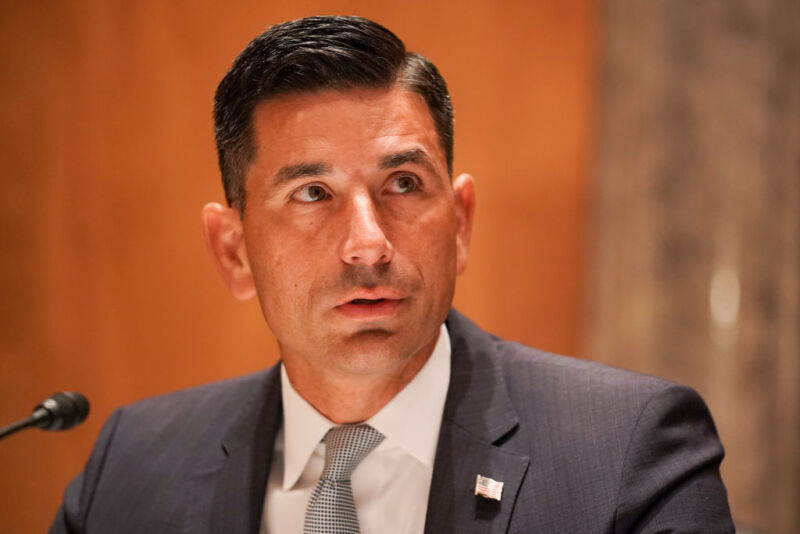
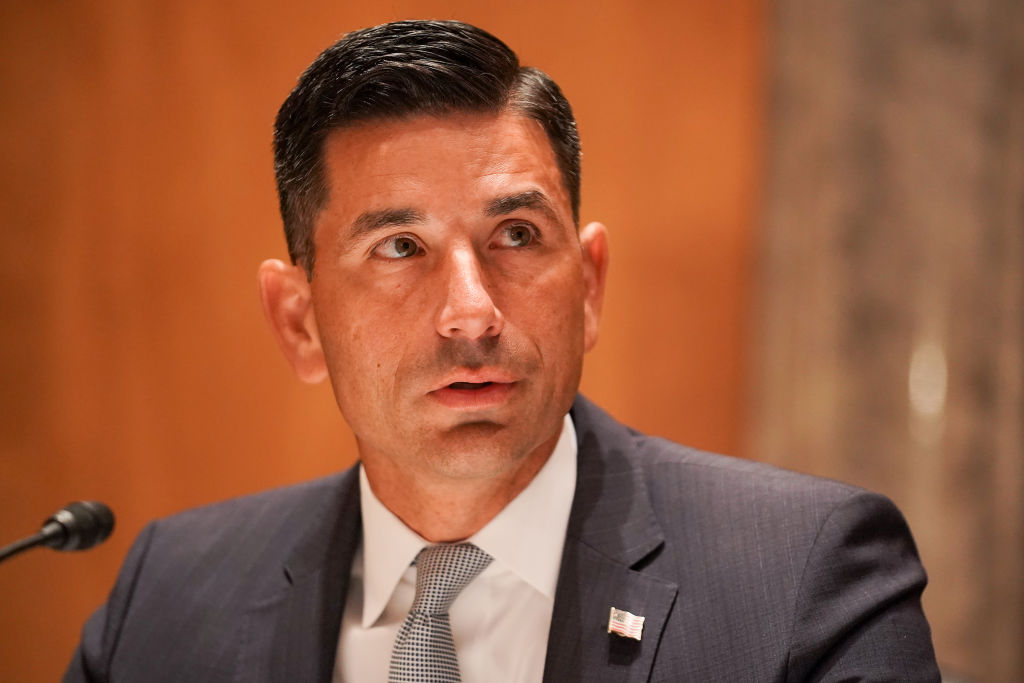
Former acting Homeland Security Secretary Chad Wolf.
Enlarge / Former acting Homeland Security Secretary Chad Wolf.

“Protestors are literally storming the Capitol. Breaking windows on doors. Rushing in. Is Trump going to say something?”

This text from White House correspondent Michael D. Shear to former White House chief of staff Mark Meadows is one of thousands preserved from the January 6 attack on the Capitol showing that when the trouble started, people with power immediately turned to their phones to do what they could to stop it.

There are many more deleted texts, though, that would have shown how former President Donald Trump acted before the attack and how he responded to urgent requests to de-escalate the violence in the middle of it. First, the Secret Service confirmed in December 2021 that thousands of their texts were deleted in an agency-wide phone reset. Now, The Washington Post reports that senior Department of Homeland Security officials—acting Homeland Security Secretary Chad Wolf and acting deputy secretary Ken Cuccinelli—also lost text messages from that day, blaming a government phone reset that happened during the transition to the Biden administration in January 2021.

“It is extremely troubling that the issue of deleted text messages related to the January 6 attack on the Capitol is not limited to the Secret Service but also includes Chad Wolf and Ken Cuccinelli, who were running DHS at the time,” House Homeland Security Committee Chairman Bennie G. Thompson (D-MS) said in a statement.

Thompson also noted that DHS took its time notifying Congress of the missing records.

“It appears the DHS Inspector General has known about these deleted texts for months but failed to notify Congress,” Thompson said. “If the Inspector General had informed Congress, we may have been able to get better records from senior administration officials regarding one of the most tragic days in our democracy’s history.”

DHS’s Office of Inspector General, Cuccinelli, and Wolf did not immediately respond to the Post’s or Ars’ requests for comment.

Cuccinelli tweeted critically about The Washington Post report, though. He tweeted out a text from a friend that said, “Even when you follow the rules Ken Cuccinelli you [sic] obviously you do it for nefarious reasons!”

“Some of you may have noticed that my name cropped up on more Jan. 6th stuff,” Cuccinelli tweeted. “This time the fact that DHS erased my phone after I left the department,” he wrote. “I got the following text from a friend that I thought was hilarious enough to share: ‘Congratulations. The Washington Post is going after you for handing in your government phone just like you were supposed to do and having a [sic] erased by security personnel you no longer supervised as part of standard procedure you did not develop.’”

Wolf also responded by tweet: “I complied with all data retention laws and returned all my equipment fully loaded to the Department. Full stop. DHS has all my texts, emails, phone logs, schedules, etc. Any issues with missing data needs to be addressed to DHS. To imply otherwise is lazy reporting.”

https://arstechnica.com/?p=1870285


Jury orders Charter to pay $7 billion for murder of woman killed by cable tech

A parked van used by a Spectrum cable technician. The van has the Spectrum logo on its side and a ladder stowed on the roof.
Enlarge / Charter Spectrum cable van in West Lake Hills, Texas, in April 2019.

A Texas jury has ordered Charter Communications to pay $7 billion in punitive damages to the family of an 83-year-old woman murdered in her home by a Spectrum cable technician. The Dallas County Court jury returned the $7 billion verdict on Tuesday after previously finding Charter liable for $337.5 million in compensatory damages.

The damages could be reduced by a judge. Charter says it shouldn’t be held liable for the murder and that it plans to appeal. The jury, which found in the earlier phase of the case that Charter’s negligence was a major cause of the death, reportedly reached the $7 billion verdict after less than two hours of deliberation.

“This was a shocking breach of faith by a company that sends workers inside millions of homes every year,” one of the family’s lawyers, Chris Hamilton, said in a press release Tuesday. “The jury in this case was thoughtful and attentive to the evidence. This verdict justly reflects the extensive evidence regarding the nature of the harm caused by Charter Spectrum’s gross negligence and reckless misconduct.”

Former Spectrum technician Roy Holden pleaded guilty to the 2019 murder of customer Betty Thomas and was sentenced to life in prison in April 2021. He robbed and murdered Thomas one day after a service call. The press release described the murder as follows:

Mr. Holden performed a service call in Ms. Thomas’ home the day before her December 2019 murder. Although Charter contended he was off-duty the following day, he managed to learn that Ms.Thomas had reported that she was still having problems with her service and used his company key card to enter a Charter Spectrum secured vehicle lot and drove his Charter Spectrum van to her house. Once inside, while fixing her fax machine, the victim, Ms. Thomas, caught the field tech stealing her credit cards from her purse. The Charter Spectrum field tech, Roy Holden, then brutally stabbed the 83-year-old customer with a utility knife supplied by Charter Spectrum and went on a spending spree with her credit cards.

Charter accused of forgery

The press release further said that “Charter Spectrum attorneys used a forged document to try to force the lawsuit into a closed-door arbitration where the results would have been secret and damages for the murder would have been limited to the amount of Ms. Thomas’s final bill. The jury found that Charter Spectrum committed forgery beyond a reasonable doubt, conduct that constitutes a first-degree felony under Texas law.”

The Dallas Morning News reported that verdict papers show the “jury agreed that Charter ‘knowingly and intentionally’ forged the documents.”

Trial testimony also revealed that Charter “hired Roy Holden without verifying his employment history, which would have revealed that he had lied about his work history,” and that “supervisors ignored a series of red flags, including Mr. Holden’s own written pleas to upper management for help because of severe distress over financial and family problems,” the family’s lawyers said. Additionally, “Charter Spectrum’s employees admitted at trial the field tech’s theft and crimes against the victim began while he was on duty and in the course and scope of his employment the day before.”

Damages likely to be lowered based on precedent

The large amount of punitive damages awarded raises the likelihood that a judge will lower the penalty. “Punitive damages like that are never paid—they’re always reduced,” said Texas civil-trial lawyer W. Mark Lanier, according to a Wall Street Journal article. “They’re a message of how frustrated the jury was with egregious facts.”

The WSJ also quoted California-based consumer attorney Brian Kabateck as saying, “It’s a breathtaking amount of punitive damages… I think the shelf life of this verdict is going to be very short.” Kabateck said he suspects “this judge would probably take a very dim view of the size of this verdict and probably cut it down.”

A 2003 ruling by the US Supreme Court said that “in practice, few awards exceeding a single-digit ratio between punitive and compensatory damages, to a significant degree, will satisfy due process.” Such ratios are not binding, but “[s]ingle-digit multipliers are more likely to comport with due process, while still achieving the State’s goals of deterrence and retribution, than awards with ratios in range of 500 to 1,” the ruling said.

A US District Court judge in California cited that precedent in April when he reduced a jury’s punitive-damages verdict from $130 million to $13.5 million, a nine-to-one ratio to the compensatory damages of $1.5 million. In that case, involving racist abuse suffered by a Tesla factory worker, the judge wrote that a nine-to-one ratio “to the size of compensatory damages is warranted and constitutional.”

In the Charter case, a nine-to-one ratio would still result in punitive damages of over $3 billion.

https://arstechnica.com/?p=1869949


Twitter has one more task before Musk trial: Get shareholder approval

A sign at a polling place says
Getty Images | Grace Cary

Twitter is moving ahead with a shareholder vote on the merger with Elon Musk a few weeks before its lawsuit against Musk goes to trial. Twitter yesterday sent a letter to shareholders inviting them to a September 13 special meeting where they will be asked to approve the merger agreement that Musk is now trying to get out of.

“We are committed to closing the merger on the price and terms agreed upon with Mr. Musk,” Twitter CEO Parag Agrawal and Board Chairman Bret Taylor wrote. “Your vote at the special meeting is critical to our ability to complete the merger. Twitter’s Board of Directors unanimously recommends that you vote ‘FOR’ each of the proposals at the special meeting.”

Noting that a five-day court trial is set to begin in October, the letter said, “Adoption of the merger agreement by our stockholders is the only remaining approval or regulatory condition to completing the merger under the merger agreement.” While Musk sent a “notice purporting to terminate the merger agreement,” the Twitter letter said the company “believes that Mr. Musk’s purported termination is invalid and wrongful, and the merger agreement remains in effect.”

“If the merger is completed, you will be entitled to receive $54.20 in cash, without interest and subject to any applicable withholding taxes, for each share of our common stock that you own,” the Twitter letter to shareholders said. Twitter’s share price was about $39 today.

Only Twitter stockholders who held shares as of July 22 will be eligible to vote at the meeting, which will be held via webcast. Musk bought over 9 percent of Twitter stock before offering to buy the company. Approval of the merger deal “requires the affirmative vote of the holders of a majority of the shares of our common stock,” Twitter said.

Musk complains about document access

Delaware Court of Chancery Judge Kathaleen McCormick last week ruled that the Twitter/Musk trial will happen in October, rejecting Musk’s request to delay it until February 2023. Musk claimed more time was needed for “complex, technical discovery” regarding Twitter’s spam-account data, which “will likely involve sifting through hundreds of billions of actions on Twitter and reviewing related sampling and control processes.”

Twitter lawyers called Musk’s spam complaint a “manufactured issue” that has no bearing on the case and said Musk hasn’t “present[ed] even a shred of supporting evidence” to support his claims that Twitter’s spam-account estimates are wrong. McCormick said that “delay threatens irreparable harm to the sellers” when she ruled that the trial must proceed in October.

The sides are now fighting over exactly when the five-day trial will begin, with Twitter seeking an October 10 start date and Musk asking for October 17. Musk also alleges that Twitter isn’t providing documents quickly enough.

Musk has been trying to disprove Twitter’s estimate that fewer than 5 percent of its monetizable daily active users (mDAU) are spam or fake. In a court filing yesterday, Musk’s legal team alleged that “Twitter refuses to begin immediate rolling document productions of certain categories of documents requested by defendants that are plainly relevant, do not require electronic searching, and are easily collected and produced.”

The information sought by Musk includes “certain data regarding how Twitter calculates its mDAU figures and the guidance provided to human reviewers who identify false and spam accounts at Twitter,” the court filing said. Musk’s filing argued that “immediate production of these documents is more than reasonable in light of the expedited schedule in this case.”

Twitter has agreed to provide some documents “from categories that Twitter agrees are responsive” by the end of the week, Musk’s filing said. But Musk alleged that “Twitter will not agree to (1) identify what documents it purports are not relevant, (2) explain why it is only producing ‘some of’ the documents it concedes are responsive, or (3) agree to produce anything earlier than ‘the end of the… week.'”

When contacted by Ars today, Twitter declined to comment on Musk’s filing.

https://arstechnica.com/?p=1869700


CEO sold worthless crypto tokens and used proceeds for Hawaii condo, DOJ says

Illustration of cryptocurrency coins falling down, and a graph showing a declining value.
Getty Images | Namthip Muanthongthae

The CEO of a purported cryptocurrency investment company pleaded guilty for his role in a crypto fraud scheme that raised $21 million from investors, the Department of Justice said.

Michael Alan Stollery (aka “Michael Stollaire”), 54, was CEO and founder of the California-based Titanium Blockchain Infrastructure Services (TBIS). He pleaded guilty Friday to one count of securities fraud in US District Court for the Central District of California and faces up to 20 years in prison at his scheduled sentencing in November, according to a Department of Justice announcement Monday.

Stollery launched his fraudulent crypto offering in January 2018, according to the DOJ. The Securities and Exchange Commission previously sued Stollery and his company and won a judgment that will return at least some of the money to defrauded investors.

The DOJ said Stollery lured investors to purchase his company’s cryptocurrency “through a series of false and misleading statements.” Stollery “admitted that he did not use the invested money as promised but instead commingled the ICO investors’ funds with his personal funds, using at least a portion of the offering proceeds for expenses unrelated to TBIS, such as credit card payments and the payment of bills for Stollery’s Hawaii condominium,” according to the DOJ press release.

The press release also said:

Stollery admitted that, to entice investors, he falsified aspects of TBIS’s white papers, which purportedly offered investors and prospective investors an explanation of the cryptocurrency investment offering, including the purpose and technology behind the offering, how the offering was different from other cryptocurrency opportunities, and the prospects for the offering’s profitability. Stollery also planted fake client testimonials on TBIS’s website and falsely claimed that he had business relationships with the Federal Reserve and dozens of prominent companies to create the false appearance of legitimacy.

The criminal case is sealed, but a court filing with the DOJ’s allegations, filed in May 2022, is available here.

Crypto token “did not have any functionality”

Titanium sold a utility token called a “BAR,” but the token “did not have any functionality at the time of the ICO [initial coin offering],” the DOJ alleged.

As Cointelegraph explains, “a utility token is a special type of cryptographic asset that is primarily aimed at garnering the funds necessary to develop a cryptocurrency project.” Utility tokens “do not represent any ownership stake in the project being invested in” but “allow the holder to buy or sell the underlying tokens on a preferential basis,” and “may generate profits for the token acquirer if the project ends up reaching its intended purpose with reasonable success.”

Stollery “promoted TBIS as an investment and emphasized that holders of BAR would share in TBIS’s future earnings and in appreciation in the value of the BAR digital assets,” the DOJ said. He also compared investing in TBIS to purchasing Google stock when it was only $75 a share, the DOJ said.

Stollery also ran a technology consulting services company called EHI and claimed in white papers that Titanium Blockchain “will simply inherit EHI’s clientele.” Stollery claimed his clients included Accenture, Apple, Boeing, Cargill, Citizens Bank, eBay, General Electric, HP, Honeywell, IBM, Intel, Microsoft, PayPal, Pfizer, Synchrony Financial, the Federal Reserve Bank, the Royal Bank of Scotland, Universal Studios, Disney, and others.

“As a result of the fraudulent scheme… defendant Stollery obtained approximately $21 million in the form of various digital assets, such as Ether and Bitcoin, and cash from dozens of investors located in at least 18 states, including California, and abroad, who purchased BAR,” the DOJ said.

Before announcing the ICO, Stollery used social media to hype Titanium Blockchain as “a start-up company seeking to develop an IT platform using blockchain technology,” the DOJ said. “On its various social media accounts, TBIS’s profile contained some variation of the following marketing message: ‘Just as steel changed the building industry forever, Titanium will usher in a new era of network construction, based on blockchain technology.'”

https://arstechnica.com/?p=1869488


Hulu’s “unwritten policy” on political censorship sparks backlash

Hulu’s “unwritten policy” on political censorship sparks backlash

Last year, Hulu raised its ad-supported subscriptions by a dollar, shortly after prompting subscribers to submit more feedback on ads. Since 2017, vocal members in the Hulu community have complained about seeing the same political ads “1,000 times,” with some claiming they were repeatedly served ads from Republicans that spread misinformation. After President Biden was elected in 2020, others complained about “Democratic propaganda.” Many suggested Hulu wasn’t the place for political ads, with one post pitching a new Hulu policy of “no political ads” getting more than 2,000 votes.

At least one subscriber in the forum claimed that regardless of content, Hulu was financially motivated to sell political ads, but this week Hulu has taken actions that seemingly respond to subscribers’ longtime complaints—by blocking more political ads. Democrats have claimed that Hulu blocked political ads discussing key party issues like abortion rights, gun control, and climate change, sparking an entirely different backlash and a Twitter rally cry to #BoycottHulu.

“Hulu’s censorship of the truth is outrageous, offensive, and another step down a dangerous path for our country,” executive directors of the Democratic Senatorial Campaign Committee, Democratic Congressional Campaign Committee, and Democratic Governors Association told The Washington Post in a statement. “Voters have the right to know the facts about MAGA Republicans’ agenda on issues like abortion—and Hulu is doing a huge disservice to the American people by blocking voters from learning the truth about the GOP record or denying these issues from even being discussed.”

On July 15, the Democratic groups said that they attempted to purchase joint ads ahead of the midterm election on Hulu. The spots argued for more abortion rights and gun control. The same ads ran without issue on platforms like YouTube and Facebook. They were hoping the ads would stream on Hulu, too, capturing the attention of Hulu subscribers ages 13 to 54, who are known to sit and binge shows for hours and overwhelmingly prioritize Hulu as a top form of entertainment above all else.

These are audiences that political committees say they cannot reach with campaign ads on traditional media like cable TV, which are “bound by the Communications Act of 1934, a law that requires broadcast television networks to provide politicians equal access to the airwaves.” Hulu is not bound by the same law, and only Hulu knows what is and isn’t allowed to be discussed in political ads it serves to its streaming video audiences.

The Washington Post reported that these new complaints about Hulu’s “unwritten policy” add to a “growing list” of political ads censored by Hulu for “mentioning gun violence, abortion, or political violence” like the January 6 committee investigation. One prior complaint from another Democrat involved a recommendation by Hulu to remove the word “climate change” from an ad.

So far, Hulu has not commented on the controversy and did not immediately respond to Ars’ request for comment. An anonymous source “familiar with Hulu’s policies” on internal matters told The Washington Post that “the company does not publicly disclose its advertising guidelines but that [it prohibits] advertising that takes a position on a controversial issue, regardless of whether it is a political ad. The ads are reviewed on a case-by-case basis, with edits sometimes recommended to the advertisers.”

The anonymous source also said that Hulu will accept ads discussing abortion and gun violence, but “it needs to be in context.” One example demonstrating how context can impact review decisions is an ad that Hulu reviewed about the January 6 attack on the Capitol Building. The ad was permitted to air only after footage from the attack was removed. Once that footage was replaced with video of Donald Trump, the ad was approved.

https://arstechnica.com/?p=1869417


Russia is quietly ramping up its Internet censorship machine

Russia is quietly ramping up its Internet censorship machine

Since 2019, Vladimir Putin has supercharged his plan to separate Russia from the global Internet. The country’s sovereign Internet law, which came into force that November, gives officials the power to block access to websites for millions of Russians. The law was used to hit Facebook, Instagram, and Twitter with blocks and followed Russia’s invasion of Ukraine in February.

Since then, Russian officials have continuously dripped out new policies and measures to further control the Internet, boosting the state’s censorship and surveillance powers. Each small move continues to push Russia toward a more isolated, authoritarian version of the web—restricting the rights of those inside its border and damaging the foundational ideas of an open web.

“Russia’s invasion of Ukraine has created an additional pretext for ramping up draconian censorship but also passing more laws that outlaw more things and put more people under threat of criminal prosecution,” says Tanya Lokot, a professor in digital media and society at Dublin City University, who researches digital rights and Internet freedom.

Over the last two months, Russian officials have made around half a dozen policy or legal announcements that look to ramp up control over the web and the country’s tech ecosystem. In July, so far, legislators have proposed the creation of a Russian app store that would be installed on new phones and introduced a law that could limit people’s data being moved out of the country. Russia’s parliament also voted to allow people’s biometric data to be gathered from banks and added to one big database. Google has been fined $374 million for not falling in line, and Apple has been fined for not storing data in Russia.

In June, Russia tightened its laws on “foreign agents,” cracked down further on the use of VPNs, announced a database collecting IMEI codes of mobile phones, told officials not to use foreign video conference software such as Zoom and instant messaging apps, and launched a draft law that would stop foreign software being used in the country’s critical infrastructure by 2025.

Combined, the policies—if enacted—will increase surveillance of Russians’ technology use and further entrench the state’s control over communications. But these new policies build on a decade of Moscow’s ever-tightening grip. Stanislav Shakirov, the cofounder of Russian digital rights group Roskomsvoboda and the founder of tech development organization Privacy Accelerator, says Russia has been legislating to regulate and control the Internet since 2012. There are five core principles, Shakirov says.

First, Russia aims to control its Internet infrastructure, owning Internet cables going through its territory and connecting it to the rest of the world. Second, the country puts “pressure” on websites and Internet companies such as tech giant Yandex and Facebook alternative VKontakte to censor content. Third, Shakirov says, is its media crackdown—banning independent media organizations and adopting the aforementioned “foreign agents” law. This is followed by forcing people to self-censor what they say online and restricting protest.

Finally, Shakirov says, there is the “restriction of access to information”—blocking websites. The legal ability to block websites was implemented through the adoption of Russia’s sovereign Internet law in 2016, and since then, Russia has been expanding its technical capabilities to block sites. “Now the possibilities for restricting access are developing by leaps and bounds,” Shakirov says.

The sovereign Internet law helps to build upon the idea of the RuNet, a Russian Internet that can be disconnected from the rest of the world. Since the start of the war against Ukraine in late February, more than 2,384 sites have been blocked within Russia, according to an analysis by Top10 VPN. These range from independent Russian news websites and Ukrainian domains to Big Tech and foreign news sites.

https://arstechnica.com/?p=1869195