Google fires Blake Lemoine, the engineer who claimed AI chatbot is a person

Former Google engineer Blake Lemoine poses for a picture wearing a hooded sweatshirt.
Enlarge / Former Google engineer Blake Lemoine.
Getty Images | Washington Post

Google has fired Blake Lemoine, the software engineer who was previously put on paid leave after claiming the company’s LaMDA chatbot is sentient. Google said Lemoine, who worked in the company’s Responsible AI unit, violated data security policies.

“If an employee shares concerns about our work, as Blake did, we review them extensively. We found Blake’s claims that LaMDA is sentient to be wholly unfounded and worked to clarify that with him for many months,” Google said in a statement provided to Ars and other news organizations.

Lemoine confirmed on Friday that “Google sent me an email terminating my employment with them,” The Wall Street Journal wrote. Lemoine also reportedly said he’s talking with lawyers “about what the appropriate next steps are.” Google’s statement called it “regrettable that despite lengthy engagement on this topic, Blake still chose to persistently violate clear employment and data security policies that include the need to safeguard product information.”

LaMDA stands for Language Model for Dialog Applications. “As we share in our AI Principles, we take the development of AI very seriously and remain committed to responsible innovation,” Google said. “LaMDA has been through 11 distinct reviews, and we published a research paper earlier this year detailing the work that goes into its responsible development.”

Google: LaMDA just follows user prompts

In a previous statement provided to Ars in mid-June, shortly after Lemoine was suspended from work, Google said that “today’s conversational models” of AI are not close to sentience:

Of course, some in the broader AI community are considering the long-term possibility of sentient or general AI, but it doesn’t make sense to do so by anthropomorphizing today’s conversational models, which are not sentient. These systems imitate the types of exchanges found in millions of sentences, and can riff on any fantastical topic—if you ask what it’s like to be an ice cream dinosaur, they can generate text about melting and roaring and so on. LaMDA tends to follow along with prompts and leading questions, going along with the pattern set by the user. Our team–including ethicists and technologists–has reviewed Blake’s concerns per our AI Principles and have informed him that the evidence does not support his claims.

Google also said, “Hundreds of researchers and engineers have conversed with LaMDA and we are not aware of anyone else making the wide-ranging assertions, or anthropomorphizing LaMDA, the way Blake has.”

“I know a person when I talk to it”

Lemoine has written about LaMDA several times on his blog. In a June 6 post titled, “May be Fired Soon for Doing AI Ethics Work,” he reported being “placed on ‘paid administrative leave’ by Google in connection to an investigation of AI ethics concerns I was raising within the company.” Noting that Google often fires people after putting them on leave, he claimed that “Google is preparing to fire yet another AI Ethicist for being too concerned about ethics.”

A Washington Post article on June 11 noted that “Lemoine worked with a collaborator to present evidence to Google that LaMDA was sentient.” Just before he was cut off from his Google account, “Lemoine sent a message to a 200-person Google mailing list on machine learning with the subject ‘LaMDA is sentient,'” the article said. Lemoine’s message concluded, “LaMDA is a sweet kid who just wants to help the world be a better place for all of us. Please take care of it well in my absence.”

“I know a person when I talk to it,” Lemoine said in an interview with the newspaper. “It doesn’t matter whether they have a brain made of meat in their head. Or if they have a billion lines of code. I talk to them. And I hear what they have to say, and that is how I decide what is and isn’t a person.”

https://arstechnica.com/?p=1869132


South Carolina lawmakers want to banish abortion talk from the Internet

South Carolina lawmakers want to banish abortion talk from the Internet

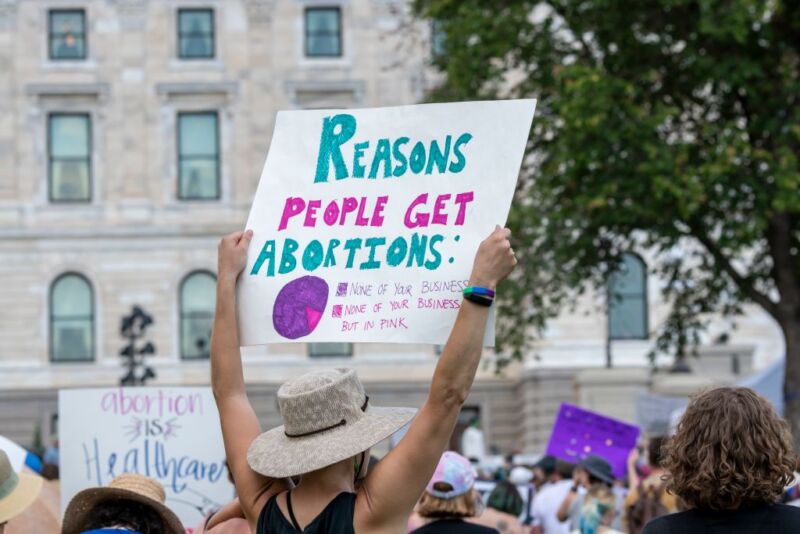
While YouTube has started deleting videos promoting false information on abortion, the South Carolina Senate introduced a new bill that strives to block Internet users from talking about abortion truthfully online.

Known as the “Equal Protection at Conception—No Exceptions—Act,” the bill would ban any website from hosting or publishing any information about accessing or self-inducing abortion “knowing that the information will be used, or is reasonably likely to be used, for an abortion.”

Specifically, the bill restricts “providing information to a pregnant woman, or someone seeking information on behalf of a pregnant woman, by telephone, Internet, or any other mode of communication.” That includes restrictions against providing abortion referral services, including to doulas performing abortions, as well as hosting or maintaining a website that’s “purposefully directed to a pregnant woman” living in South Carolina. Less specifically, the bill notes that further restrictions will apply once the law becomes enforced.

The law is not designed to prosecute pregnant people—the one linked here does that—but instead expands the web of punishment by targeting the people who attempt to “aid and abet” an abortion. If it’s passed, felony charges could be brought against anyone who violates, attempts to violate, or threatens to violate the law by a range of stakeholders, including the state attorney general, solicitors, the father or grandparents of the unborn child, or the parents or legal guardians of pregnant minors. The punishment for the crime is the same for anyone who performs or induces abortion “knowingly or intentionally”: imprisonment “for not more than 25 years if the unborn child dies as a result of the violation” or “not more than 20 years if the unborn child is born alive despite the violation.”

In addition to these restrictions, the bill paints abortion providers as an organized crime syndicate that must be regulated as such and abortion pills as a street drug that senators predict will be trafficked like fentanyl.

No one’s sure yet if the bill will stand, even if it manages to get through the state legislature and to South Carolina Governor Henry McMaster’s desk to sign. Wired reported that any states restricting access to abortion pills would face challenges from the Food and Drug Administration, which has defended the legality of mail-ordering pills. And President Joe Biden says that pharmacies not filling abortion pill prescriptions violate civil rights laws. There are also First Amendment concerns. The Washington Post reported that “there’s broad uncertainty about how courts would interpret such bills,” but legal scholars say that regardless, the South Carolina bill will likely be “a harbinger of other state measures, which may restrict communication and speech as they seek to curtail abortion.” The bill notes that if any section is deemed unconstitutional, the rest of the sections will remain valid unless also successfully challenged in court.

McMaster and state senators sponsoring the bill did not immediately respond to Ars’ requests for comment. Because the legislation is not yet active, a spokesperson for online civil rights nonprofit Electronic Frontier Foundation tells Ars that they do not yet have an official position on the bill.

Proposed abortion laws broaden political divide

SC’s proposed “No Exceptions” Act is the most recent in a dizzying array of proposed laws seeking to regulate abortion more stringently since the Dobbs decision. Some states, like Louisiana, tried and failed to make abortion punishable by death, while Republicans in Idaho announced their party platform wouldn’t make abortion exceptions for pregnant people whose lives become endangered. The Washington Post reported that more Republicans are ready to do away with rape or incest exceptions, too.

A recent viral tweet also caused a stir by calling attention to a stalled North Carolina bill introduced last year that declared abortion would be treated like first-degree murder, punishable by death, and made provisions so that lethal force could be used to prevent someone from seeking an abortion. That’s seemingly not a looming reality right now, but it does show how extreme proposed laws can go to disregard the life of the pregnant person when restricting abortion.

Meanwhile, Congress is currently debating the “My Body, My Data Act” introduced last month, which attempts to restrict companies from sharing reproductive health data that could serve as evidence in states enforcing stricter regulations. Last month, President Biden said he would also support making an exception to the filibuster so that Democrats could more easily pass legislation protecting abortion access nationwide.

https://arstechnica.com/?p=1868823


One America News loses Verizon TV deal, begs for access to Comcast or Charter

One America News Network promotional item featuring a picture of four newscasters; text that says,
Enlarge / Screenshot from One America News Network’s press kit.
One America News Network

One America News Network is about to lose its last major TV distributor. After being removed from DirecTV in early April, the right-wing network was still aired on Verizon Fios. But with a channel-carriage contract expiring at the end of July, Verizon confirmed that the sides won’t reach a deal.

“Our negotiation with OAN has been a typical, business-as-usual carriage negotiation like those that routinely happen between content distributors and content providers. These negotiations were focused on economics, as they always are, but OAN failed to agree to fair terms,” Verizon said in a statement provided to Ars last night. “Since we were unable to reach an agreement, effective July 31, 2022, we will no longer have the rights to provide our customers with this programming, and it will be removed from the Fios TV lineup.”

Verizon also confirmed the July 31 removal in an update posted to its website, which notes that “sometimes broadcasters and cable networks demand unacceptable price increases” that can increase customers’ monthly TV bills. We contacted OAN about its removal from Verizon last night and will update this article if we get a response.

OAN’s removal from major TV providers came after pressure from advocacy groups that pointed out that OAN “is a major supporter of the Stop the Steal movement” and that it spread “election fraud lies that claimed the 2020 election was stolen from Donald Trump,” “stok[ed] violent calls for the attack on the US Capitol,” and airs “wall-to-wall COVID-19 disinformation.” US Reps. Anna Eshoo (D-Calif.) and Jerry McNerney (D-Calif.) last year questioned AT&T, Verizon, and other TV providers about why they carry OAN, Newsmax, and Fox News.

“We are concerned about the role Verizon plays in disseminating misinformation to millions of its Fios TV subscribers,” an Eshoo/McNerney letter to Verizon said.

OAN makes desperate pleas to viewers

OAN has gotten increasingly desperate in its attempts to stay on major TV providers. OAN owner Herring Networks sued DirecTV and its majority owner AT&T in March, saying it might have to shut down because of the lost revenue from DirecTV’s decision to drop the network.

OAN has also been urging Comcast and Charter Spectrum customers to demand that the nation’s two largest cable companies air the channel. “OAN has tried for years to get on Comcast and Charter Spectrum TV. You are stuck paying for LIBERAL main stream media news. Yet OAN asks for less than 1/5th of the rate of MSNBC,” reads a message that we viewed on OAN’s website yesterday:

Providing phone numbers to call the cable companies, the message says, “It’s time to tell Comcast & Charter Spectrum that you want OAN added to your channel lineup. Call today!”

https://arstechnica.com/?p=1868770


Amazon might own your doctor’s office after latest acquisition

Amazon might own your doctor’s office after latest acquisition

When Amazon launched Amazon Care to its employees in 2019, the goal was to test the product before rolling it out nationwide. After that rollout happened earlier this year, Amazon CEO Andy Jassy told Insider that the expansion would “fundamentally” change the health care game by dramatically enhancing the medical-care process. He predicted that patients in the future would be so used to telehealth and other new conveniences that they’ll think that things like long wait times and delays between in-person visits commonly experienced today are actually “insane.”

Now, The Wall Street Journal reports, Amazon has gone one step closer to that future by agreeing to a $3.9 billion deal to purchase One Medical, a company that operates a network of health clinics. With this move, Amazon will expand the number of patients it serves by gaining access to “a practice that operates more than 180 medical offices in 25 US markets and works with more than 8,000 companies to provide health benefits to employees, including with in-person and virtual care.”

Echoing Jassy’s enthusiasm, Neil Lindsay, Amazon Health Services’ senior vice president, told WSJ that the company thinks “health care is high on the list of experiences that need reinvention.” Purchasing One Medical is a way for Amazon to break further into the $4 trillion health care industry at a time when Amazon’s revenue is down and costs are up.

An Amazon spokesperson declined to comment on Ars’ questions about any projected timeline once the deal is made for merging One Medical services into Amazon Care or whether there is a waitlist of companies who have expressed interest in joining Amazon Care in the past who might benefit from the acquisition. Instead, the spokesperson directed Ars to its press release. One Medical did not immediately respond to Ars’ request for comment.

In the past, Amazon has partnered with major players and ended up throwing away $100 million on a losing health care venture called Haven that tried to reinvent the wheel and failed after three years. This new venture is more expensive but perhaps less ambitious, benefiting from tapping into One Medical’s existing infrastructure and, thus, likely less disruptive. Lindsay says Amazon’s innovative focus for this venture is on speeding up health care delivery and improving the overall patient experience.

One Medical’s troubling past

After the deal is done, One Medical chief executive Amir Dan Rubin “will remain CEO.” In a news release to One Medical investors, Rubin expressed a lot of enthusiasm for the deal.

“The opportunity to transform health care and improve outcomes by combining One Medical’s human-centered and technology-powered model and exceptional team with Amazon’s customer obsession, history of invention, and willingness to invest in the long-term is so exciting,” Rubin says. “There is an immense opportunity to make the health care experience more accessible, affordable, and even enjoyable for patients, providers, and payers.”

Currently, One Medical is a primary-care company that claims to share Amazon’s customer-focused approach to health care, providing a range of digital services, including wellness apps and 24/7 virtual care. Feeding what WSJ says is a growing need for convenience through the pandemic, One Medical lets members schedule appointments, renew prescriptions, and message their doctors in an app.

It has not been a total success story, though. Almost half a billion of Amazon’s investment in One Medical is paying off the company’s debt.

One Medical also recently came under fire in 2021 during a Congressional investigation into how it administered COVID-19 vaccines when they first became available in December 2020.

The investigation surfaced emails and internal chat messages that Congress says showed that One Medical leveraged its supply of vaccines to push costly membership subscriptions. Congress reports that One Medical successfully signed up close to 400 members by making it easy to get a vaccine by purchasing a membership for $199 and difficult to get one if you didn’t pay for the membership. One senior exec chatted to another, “the only way people can get a vaccine is if they are a member.”

In addition to accusations about profiting from vaccine scarcity, Congress says One Medical also hoarded vaccines for staff, their friends, and their families, giving them early access to sign up for an appointment, even if they weren’t eligible for a vaccine yet. Congress concluded, “One Medical’s willful disregard of proper vaccination prioritization contributed to a delay in vaccination of members of vulnerable communities.”

The Hill reported that “a One Medical spokesperson called the memorandum ‘grossly unfair,’ noting the company ‘was not given the opportunity to address the staff’s findings before the memorandum was released.'” The spokesperson also said that “claims that One Medical used its vaccines to promote the company’s interests, convince more people to become members,” or offer improper vaccinations to friends and family were false.

Congress’ investigation did not disrupt One Medical operations much. NPR reported that Washington state and nearby counties stopped allocating vaccines to One Medical because of the scandal.

Rubin was leading the company at the time. He has been CEO of One Medical since 2017 and has previously held executive roles for decades at health care companies, including a recent stint at UnitedHealth Group.

Congress’ recent investigation into One Medical’s untimely delivery of vaccines to vulnerable communities is not mentioned in the joint press release from Amazon and One Medical. Instead, Lindsay expresses full confidence in how One Medical handles delivery of patient care, saying Amazon will benefit from One Medical’s “human-centered and technology-powered approach to health care,” which Amazon believes “can and will help more people get better care, when and how they need it.”

https://arstechnica.com/?p=1868616


Two senators propose ban on data caps, blasting ISPs for “predatory” limits

Ethernet cable tied in a knot.

US Senators Ben Ray Luján (D-N.M.) and Cory Booker (D-N.J.) want to ban Internet data caps. The senators today introduced the “Uncap America Act,” which would “prohibit predatory data caps that force families to pay high costs and unnecessary fees to access high-speed broadband,” they said in a press release.

“A broadband Internet access service provider shall not impose a data cap except when tailored primarily for the purposes of reasonable network management or managing network congestion,” the bill says. The proposed law would order the Federal Communications Commission to issue “regulations to define the conditions under which a data cap is to be considered tailored to the purpose of reasonable network management or managing network congestion.”

Data caps that don’t comply with the exceptions would violate the Communications Act. “While certain broadband Internet access service networks may require practices to effectively manage congestion, those practices should be tailored to improve equitable access among consumers,” the bill says. “Unnecessary data caps limit participation in the digital economy and are contrary to the public interest.”

The bill can be expected to attract fierce opposition from the broadband industry and would face long odds of passing through the Senate and House. If it does become law, it would likely prohibit the home Internet data caps imposed by Comcast and others, which clearly exist for financial purposes and not for any network management need.

Data caps defined

While the Luján/Booker bill leaves key details up to the FCC, it provides a comprehensive definition of what counts as a data cap under the proposed law. The bill says a data cap is “a limit on the amount of bits or other units of information a customer of a broadband Internet access service provider may download or upload during a period of time specified by the broadband Internet service access provider before the customer is charged a fee for additional usage; is subject to an increasing cost per bit or other unit of information; is charged for an incremental block of usage; or experiences a reduction of access speed; or that the customer is otherwise discouraged or prevented from exceeding.”

The proposed law would apply to home Internet services and mobile data plans, as it uses a definition of broadband service in US law that includes “mass-market retail service by wire or radio.” But the FCC would be able to define different rules for different types of connections, Luján’s office told Ars.

“As Internet usage continues to be a necessity for work, education, and health care, no family should have to worry about extra fees and costs because of unnecessary limits on their data,” Luján said in the press release. Luján is chair of the Senate Commerce Subcommittee on Communications, Media, and Broadband.

Booker said that “Internet access is a basic necessity and has been increasingly important throughout the coronavirus pandemic. Unfortunately, many Internet providers have imposed predatory data caps, making it difficult for many vulnerable families to access high-speed Internet.” The Uncap America Act aims to ensure that “providers are not taking advantage of their consumers by imposing predatory data caps,” he said.

Caps called “roundabout way to increase prices”

The bill has support from Consumer Reports; Public Knowledge, a consumer advocacy group; and Incompas, an industry lobby group that represents “competitive networks.”

Data caps are particularly harmful to low-income people, Public Knowledge Senior Policy Counsel Jenna Leventoff said in the press release. “The pandemic has proven that data caps are rarely necessary as an economic matter, often operating as a roundabout way for providers to increase prices,” she said.

“Americans need fast, reliable, and affordable Internet connections that are free from the burden of data caps that chill Internet use and make it more expensive,” said Consumer Reports Senior Policy Counsel Jonathan Schwantes. “Where caps are legitimate and justified, so be it. But we can’t allow ISPs to maximize profits at the expense of consumers.”

https://arstechnica.com/?p=1868613


FCC chair tries to find out how carriers use phone geolocation data

Visualization of a radio signal coming from a mobile phone used by a person walking through a crowded outdoor area.
Getty Images | peterhowell

Federal Communications Commission Chairwoman Jessica Rosenworcel has ordered mobile carriers to explain what geolocation data they collect from customers and how they use it. Rosenworcel’s probe could be the first step toward stronger action—but the agency’s authority in this area is in peril because Congress is debating a data privacy law that could preempt the FCC from regulating carriers’ privacy practices.

Rosenworcel sent letters of inquiry Tuesday “to the top 15 mobile providers,” the FCC announced. The chairwoman’s letters asked carriers “about their policies around geolocation data, such as how long geolocation data is retained and why and what the current safeguards are to protect this sensitive information,” the FCC said.

The letters also “probe carriers about their processes for sharing subscriber geolocation data with law enforcement and other third parties’ data-sharing agreements. Finally, the letters ask whether and how consumers are notified when their geolocation information is shared with third parties,” the FCC said.

“Mobile Internet service providers are uniquely situated to capture a trove of data about their own subscribers, including the subscriber’s actual identity and personal characteristics, geolocation data, app usage, and web browsing data and habits,” the letters say. Under US communications law, carriers are prohibited from using or sharing private information except under specific circumstances.

Rosenworcel told carriers to answer the questions by August 3. Letter recipients included the big three carriers AT&T, T-Mobile, and Verizon; cable companies Comcast and Charter, which resell mobile service; mobile operators Consumer Cellular, C-Spire, Dish, Google, H2O Wireless, Lycamobile, Mint Mobile, Red Pocket, and US Cellular; and Best Buy Health, which operates the medical-focused Lively mobile service.

FCC has authority over phone privacy… for now

The FCC letters pointed out that in February 2020, it proposed fines totaling $208 million after AT&T, Sprint, T-Mobile, and Verizon were caught “selling access to their customers’ location information without taking reasonable measures to protect against unauthorized access to that information.” While that practice is believed to have been stopped, this week’s FCC letters said there’s still reason to worry about the data collected by carriers:

These carriers voluntarily determined to end the sale of real-time location information to location aggregation services However, last year, a report by the Federal Trade Commission that studied ISPs representing 98 percent of the mobile Internet market observed that ISPs collect more data than is necessary to provide services and more data than consumers expect.

The $208 million in proposed fines is apparently still pending, but the FCC said it “has ensured that these carriers are no longer monetizing their consumers’ real-time location in this way, and the agency is continuing its investigation into these practices.”

The FCC inquiry is important “in light of the long history of abuses by carriers selling this kind of detailed and hyper-accurate information to law enforcement, bounty hunters, and even stalkers,” said Harold Feld, senior VP of consumer advocacy group Public Knowledge. Mobile carriers “have unique access to highly accurate geolocation information—known as A-GPS—designed so that 911 responders can find a caller with pinpoint accuracy,” and have “access to other information that can be combined with geolocation to produce a detailed picture of a person’s activities far beyond what applications on the handset can provide,” Feld said.

Although the FCC gave up its Title II authority over broadband under former Chairman Ajit Pai, Feld noted that the agency still has substantial authority over phone service. “The FCC has specialized power to force carriers to respond,” Feld wrote. “It has the power to impose transparency requirements to reveal when law enforcement abuses the legal process to obtain deeply personal phone information. It has the power to require specific data minimization and data protection obligations if necessary. The FCC has used this power in the past to create new rules in response to revelations that stalkers had access to carrier information, and should not hesitate to use its regulatory powers again if necessary.”

https://arstechnica.com/?p=1868529


Russia fines Google $370M for refusing to bend to Putin’s war propaganda

Russia fines Google $370M for refusing to bend to Putin’s war propaganda

After Russia invaded Ukraine in February, Google formed its exit strategy from Russia, suspending all ads by March, then blocking Play Store app sales and removing most of its employees by May. After that, Google has only continued to provide free services to Russian Internet users, like Search, Gmail, Maps, or YouTube, and now, Google might be paying big for that decision.

This week, Russian regulator Roskomnadzor announced that a Russian court ordered the tech giant to pay its steepest fine yet since the Ukraine war started, citing Google’s “repeated failure” to remove “prohibited content” deemed “fake.” Unless Google manages to appeal the decision, it will have to fork over approximately $374 million for not restricting content that goes against Russian interests. Examples include content discrediting the Armed Forces of the Russian Federation, promoting extremism, or inciting young people to join mass protests (which Russia banned).

Google did not immediately respond to a request for comment on a possible appeal, but the company knew a fine was coming. It just perhaps didn’t know how large a fine. Roskomnadzor warned Google last month that it would be fined 5 to 10 percent of its annual turnover, but TechCrunch estimates that ultimately “the new fine would be around 15 percent of the company’s annual turnover.” (Roskomnadzor did not immediately respond to Ars’ request to clarify the percent of Google’s annual turnover the fee represents.)

It’s not yet clear if Google will pay up or resist the order. Previously, in December 2021, Russia ordered Google to pay a $98 million fine—which Reuters reported was “the first revenue-based fine of its kind in Russia.” Roskomnadzor says that Google paid that previous fine, and since then, there were some other small fines reported.

The latest court order also issued additional penalties for Google’s “systematic violations of Russian law.” These include “coercive measures” designed to put pressure on Google to comply with laws, including labels on YouTube videos to inform Internet users about violations of Russian law, and a “ban on distributing advertising of the corporation.”

Resisting propaganda on YouTube

Google’s repeated failure to remove content is part of the company’s continued resistance to turn YouTube into a Russian propaganda tool. The private nonprofit RadioFreeEurope/RadioLiberty, which strives to deliver news in countries where free press is restricted, reported that “Roskomnadzor ordered media across the country to publish only information about the war in Ukraine provided by official sources.” It subsequently forbid any media reporting on Western governments referring to the conflict as a war—preferring the term “special military operation”—or calling the invasion of Ukraine “unjustified and unprovoked.”

That is the definition of propaganda: limiting what’s published to only one political viewpoint. Russia’s media restrictions assist Russian President Vladimir Putin in his efforts to control the narrative on the Ukraine war. Earlier this year, he sought to expand legal repercussions against anything he deemed “fake news” by establishing a new Russian law that made any “public dissemination of deliberately false information” about the military that causes “serious consequence” punishable by imprisonment up to 15 years.

Earlier this year, YouTube removed more than 9,000 channels relating to the Russia-Ukraine war—just not the videos that Russia wanted gone. At that time, YouTube’s chief product officer, Neal Mohan, told the Guardian that it removed more than 70,000 videos from the platform, including suspending channels hosted by pro-Kremlin journalist Vladimir Solovyov and multiple channels associated with Russia’s Ministries of Defense and Foreign Affairs because they violated YouTube policy.

Mohan said the overwhelming majority of videos removed were “coming from Russian government, or Russian actors on behalf of the Russian government,” and referred to the invasion of Ukraine as a “liberation mission” rather than an act of violence or war. Failing to acknowledge a major violent event broke a YouTube policy established in 2019 that is designed to stop hate speech and originally was prompted to prevent Holocaust-denial videos from being posted.

“We have a major violent events policy and that applies to things like denial of major violent events: everything from the Holocaust to Sandy Hook,” Mohan told the Guardian. “And of course, what’s happening in Ukraine is a major violent event. And so we’ve used that policy to take unprecedented action.”

That “unprecedented action” specifically went against Putin’s directive to only publish media in Russia from official sources discussing the Ukraine war. On Monday, Putin complained about tech companies evacuating Russia, saying that the “almost-complete closure of access to foreign hi-tech products is being deliberately, intentionally used against” Russia. He said rather than bend to tech companies’ pressure to end the war, his plan is to continue building up Russia’s own technology sector.

https://arstechnica.com/?p=1868285


DHS bought “shocking amount” of warrantless phone-tracking data, ACLU says

DHS bought “shocking amount” of warrantless phone-tracking data, ACLU says

For years, people have wondered not if, but how much, the Department of Homeland Security accesses mobile location data to monitor US citizens. This week, the American Civil Liberties Union released thousands of heavily redacted pages of documents that provide a “glimpse” of how DHS agencies came to leverage “a shocking amount” of location data, apparently purchasing data without following proper protocols to ensure they had the authority to do so.

Documents were shared with the ACLU “over the course of the last year through a Freedom of Information Act (FOIA) lawsuit.” Then Politico got access and released a report confirming that DHS contracted with two surveillance companies, Babel Street and Venntel, to scour hundreds of millions of cell phones from 2017 to 2019 and access “more than 336,000 location data points across North America.” The collection of emails, contracts, spreadsheets, and presentation slides provide evidence that “the Trump administration’s immigration enforcers used mobile location data to track people’s movements on a larger scale than previously known,” and the practice has continued under Biden due to a contract that didn’t expire until 2021.

The majority of the new information details an extensive contract DHS made with Venntel, a data broker that says it sells mobile location data to solve “the world’s most challenging problems.” In documents, US Customs and Border Patrol said Venntel’s location data helped them improve immigration enforcement and investigations into human trafficking and narcotics.

It’s still unclear whether the practice was legal, but a DHS privacy officer was worried enough about privacy and legal concerns that DHS was ordered to “stop all projects involving Venntel data” in June 2019. It seems that the privacy and legal teams, however, came to an agreement on use terms, because the location data-buying practice has since resumed, with Immigration and Customs Enforcement signing a new Venntel contract last winter that goes through June 2023.

The ACLU still describes the practice as “shadowy,” saying that DHS agencies still owed them more documents that would further show how they are “sidestepping” the “Fourth Amendment right against unreasonable government searches and seizures by buying access to, and using, huge volumes of people’s cell phone location information quietly extracted from smartphone apps.” Of particular concern, the ACLU also noted that an email from DHS’ senior director of privacy compliance confirmed that DHS “appeared to have purchased access to Venntel even though a required Privacy Threshold Assessment was never approved.”

DHS did not comment on the Politico story, and neither DHS agencies mentioned nor did the ACLU immediately respond to Ars’ request for comment.

The ACLU says that no laws currently prevent data sales to the government, but that could change soon. The ACLU endorses a bill called the Fourth Amendment Is Not for Sale Act, which is designed to do just. Even if that bill is passed, though, the new law would still provide some exceptions that would allow government agencies to continue tracking mobile location data. The ACLU did not immediately respond to comment on any concerns about those exceptions.

https://arstechnica.com/?p=1867886


Musk loses attempt to delay Twitter trial until 2023 as judge expedites case

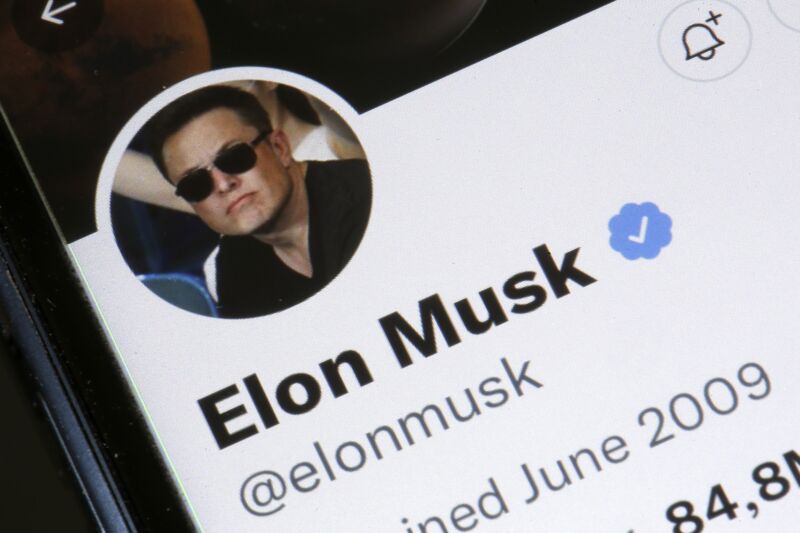
Photo illustration with Elon Musk’s Twitter account displayed on the screen of an iPhone.
Getty Images | Chesnot

Elon Musk has lost his attempt to delay the Twitter trial until next year. Delaware Court of Chancery Judge Kathaleen McCormick scheduled a five-day trial for October, rejecting Musk’s request for a trial in February 2023.

McCormick’s ruling came far closer to Twitter’s preferred timeline than Musk’s. Twitter, which is suing Musk to force him to complete their agreed-upon merger, was seeking a four-day trial in September 2022.

“The reality is delay threatens irreparable harm to the sellers,” McCormick said today, as reported by Reuters. “Those concerns are on full display in the present case,” she also said, according to The Wall Street Journal. “Typically, the longer the merger transaction remains in limbo, the larger the cloud of uncertainty cast over the company and the greater the risk of irreparable harm to the sellers.”

McCormick is the Delaware court’s chancellor, or chief judge. Last year, she ordered a company to complete a merger in a case that has some similarities to the Twitter/Musk dispute.

Twitter: Musk’s spam complaint a “manufactured issue”

In today’s hearing, McCormick made an oral ruling after the sides argued their dueling motions. There was a dial-in number for the public to listen to the hearing, but the conference call was “at capacity” the first few times Ars tried it. We ended up getting on the call during the last couple minutes of McCormick’s ruling.

Musk claims that Twitter violated the merger deal by not providing all the data he requested on spam accounts. In today’s hearing, “Twitter’s lawyers said the lawsuit doesn’t turn on the amount of spam and fake accounts because the merger agreement didn’t make any promises about that metric,” the WSJ wrote.

“That’s not what this case is about,” Twitter attorney William Savitt said, calling Musk’s spam complaint a “manufactured issue.”

Twitter’s motion for an expedited trial said the Court of Chancery “has acknowledged that whenever a merger is held in ‘limbo’ by a buyer’s refusal to close, the seller is at risk of irreparable injury.” Twitter also said a quick trial “is essential to ensure sufficient time for this Court to grant effective relief and for the Delaware Supreme Court to review this Court’s decision.”

Musk claimed he needs months to evaluate data

Musk opposed the motion to expedite, claiming that a review of Twitter’s spam-account data “will require complex, technical discovery—including the forensic review and analysis of large swaths of data.” According to Musk’s filing, this “will likely involve sifting through hundreds of billions of actions on Twitter and reviewing related sampling and control processes.”

Musk disputes Twitter’s claim that fewer than 5 percent of its monetizable daily active users (mDAU) are spam or fake but hasn’t offered any hard evidence to refute the statistic. Musk pointed to Twitter’s recent restatement of the total mDAU statistic, but it was a small change. For Q4 2021, the incorrect mDAU statistic was 216.6 million daily users, and the corrected number was 214.7 million.

Twitter’s filing said Musk hasn’t “present[ed] even a shred of supporting evidence,” and that as “a party in breach of his obligations under a merger agreement, Musk should not be permitted to continue his smear campaign against his contractual counterparty without an obligation to face prompt legal accountability.”

Musk lawyer Andrew Rossman said at today’s hearing that “when Mr. Musk started asking questions [about spam accounts], the answers he got were alarming,” according to Reuters.

“Rossman also pushed back on the notion that Musk was trying to harm Twitter, pointing out the billionaire held a larger stake than the combined holdings of the directors of Twitter,” Reuters wrote.

https://arstechnica.com/?p=1867816


Cryptomining boom has people’s energy bills skyrocketing; feds mull new rules

Cryptomining boom has people’s energy bills skyrocketing; feds mull new rules

This is not the summer that Americans want to deal with an unknown number of cryptocurrency firms unexpectedly flooding the power grid. More Americans are already expecting to experience rolling blackouts as the nation’s power grid strains against record heat and drought conditions currently spiking energy usage from coast to coast. Now, lawmakers are worried that US cryptocurrency mining operations planning for rapid growth will potentially further destabilize the grid while quietly spiking carbon emissions and driving up utility costs to more and more consumers.

That’s why Senator Elizabeth Warren (D-Mass) joined five other Congress members to submit a letter to the Environmental Protection Agency and Department of Energy, recommending the agencies combine forces to draft new regulations requiring emissions and energy use reporting from all cryptomining operations nationwide. Only then, Warren and others suggest, will we know exactly how many firms are operating in the US, how much energy is being used, how much damage to the environment is being done, and how many communities are being affected.

The letter provided the EPA and DOE with new information from Congress’ investigation into the environmental impacts of “seven of the largest cryptomining operations in the US.” It’s just a fraction of the whole, but together, these firms plan to increase their total mining capacity by nearly 230 percent, requiring an added electricity consumption than is used to power all the homes in Los Angeles. None of the firms said that it tracks the impacts on consumers connected to power grids, and none of the firms seemed to think they had any reason to fully comply with Congress’ request for information.

“None of the companies provided full and complete information in response to our questions,” Warren et al. wrote. “But the information they did provide reveals that these companies’ mining operations are significant and growing, have a major impact on climate change, and that federal intervention is necessary.”

Only three firms shared data on greenhouse gas emissions, but the pattern the limited dataset revealed was troubling to Congress members: “These three companies that provided clear emissions data alone are currently responsible for approximately 1.6 million tons emitted annually, the equivalent of almost 360,000 cars—and these figures are only set to go upwards in the coming years.”

Warren et al. have given the agencies until August 15 to verify their authority to enforce cryptomining reporting. They suggested that some reporting, like emissions data, could be required through existing legislation, like the Clean Air Act.

Impact on consumer utility bills

After China banned cryptomining last fall, the US became the prime destination for firms relocating. Within the past few years, the Congress members say in the letter, the US has supplied “over a third of the global computing power dedicated to mining Bitcoin” (the most popular cryptocurrency). As more firms move into the US, Warren et al. said that people who live and do business near these firms have already ended up paying higher utility costs.

The biggest example comes from Plattsburgh, New York. The Congress members described a report detailing “residential electricity bills that were ‘up to $300 higher than usual’ in the winter of 2018.” In that case, New York responded to growing concerns by passing the first US moratorium on new cryptomining operations. Warren et al. are not urging a nationwide ban like China’s but quoted a study from the Haas School of Business at the University of California, Berkeley, that showed the extent of the issue and implications for other areas impacted by future growth: “the power demands of cryptocurrency mining operations in upstate New York push up annual electric bills by about $165 million for small businesses and $79 million for individuals.”

https://arstechnica.com/?p=1867655