Musk wants Twitter trial pushed to 2023 so he has time to analyze spam data

Illustration of Elon Musk juggling three birds in the shape of Twitter's logo.
Aurich Lawson | Photo by Jim Watson/AFP via Getty Images

Elon Musk urged the Delaware Court of Chancery to reject Twitter’s motion for an expedited trial, saying he needs extensive time to analyze Twitter’s spam-account data. While Twitter’s motion sought a four-day trial to be completed in September 2022, Musk’s court filing on Friday said the trial should begin on or after February 13, 2023.

“Twitter has engaged in tactical delay for two months by resisting Defendants’ information requests… Twitter’s sudden request for warp speed after two months of foot-dragging and obfuscation is its latest tactic to shroud the truth about spam accounts long enough to railroad Defendants into closing,” Musk’s motion said. Musk’s legal team argued that the “core dispute over false and spam accounts is fundamental to Twitter’s value,” and that resolving “these issues will require complex, technical discovery—including the forensic review and analysis of large swaths of data.”

Twitter sued Musk on July 12, demanding that he complete the $44 billion purchase he agreed to in April. Twitter’s motion for a September 2022 trial cited the contract’s “presumptive drop-dead date of October 24, 2022 for completion of the merger.”

“Expedition of trial proceedings is essential to ensure sufficient time for this Court to grant effective relief and for the Delaware Supreme Court to review this Court’s decision,” Twitter wrote. “And a trial in September still leaves the parties and this Court more than two months to complete pre-trial discovery and briefing—a timeline appropriately tailored to the needs of this case and consistent with expedited schedules this Court has ordered in similar merger enforcement cases.”

Musk disputes drop-dead date

Musk disputed the necessity of holding the trial before October 24. “Twitter’s bid for extreme expedition rests on the false premise that the Termination Date in the merger agreement is October 24, glossing over that this date is automatically stayed if either party files litigation. By filing its complaint, Plaintiff has rendered its supposed need for a September trial moot,” Musk’s motion said.

The merger agreement says that if either Twitter or Musk sues to enforce the contract, “the Termination Date shall automatically be extended to (i) the twentieth (20th) Business Day following the resolution of such action, suit or proceeding or (ii) such other time period established by the court presiding over such action, suit or proceeding.”

Musk argued that “the only relevant date by which litigation must conclude” is the expiration date for the debt financing supporting the deal, which is April 25, 2023. “While Twitter has proposed a trial within sixty days, this court has observed it would be an ‘extraordinary feat’ to try a complex busted deal case within even five to six months. Twitter’s request to compress the schedule into a fraction of that time is implausible,” Musk’s motion said.

The dispute “goes well beyond the significant complexities of a typical ‘busted deal’ case, implicating complex data science questions concerning the accuracy of Twitter’s disclosures regarding the number of false and spam accounts,” the Musk filing continued. “The factual record regarding these representations will likely involve sifting through hundreds of billions of actions on Twitter and reviewing related sampling and control processes. Just the time it will take to load, process and analyze the hundreds of terabytes of relevant data will exceed Plaintiff’s hasty schedule.”

Musk’s legal team estimated that the trial “will require at least 30-40 fact depositions, and at least 12 expert depositions in total.”

https://arstechnica.com/?p=1867571


Amid global hellscape, Bill Gates to tank his wealth ranking, gives away $20B

Amid global hellscape, Bill Gates to tank his wealth ranking, gives away $20B

Throughout the pandemic, the world’s richest men added about a trillion dollars to their net worth. The Washington Post reported that SpaceX’s Elon Musk and Amazon’s Jeff Bezos pocketed a fifth of that. But while some billionaires spent the pandemic getting richer, Microsoft co-founder Bill Gates looked at the world crumbling around him and decided to make a different business plan.

“I will move down and eventually off of the list of the world’s richest people,” Gates declared in a blog, announcing his plan to personally donate funds that will dramatically increase the annual amount that the Bill & Melinda Gates Foundation pays out to support global initiatives in the name of progress.

To address global crises that Gates says have been profoundly exacerbated by the pandemic, “the Gates Foundation intends to increase spending from nearly $6 billion per year before COVID to $9 billion per year by 2026.” The proposed 50 percent annual budget increase has already been unanimously agreed upon “in principle” by the foundation’s formal board members.

Gates said as one of the world’s richest men, it’s his humanitarian duty to give more.

“The great crises of our time require all of us to do more,” Gates said in a foundation press release announcing his decision. “This is why I am raising my giving to the Gates Foundation, helping to increase payout to $9 billion every year. I hope by giving more, we can mitigate some of the suffering people are facing right now and help fulfill the foundation’s vision to give every person the chance to live a healthy and productive life.”

Gates’ net worth is currently estimated at $102.7 billion. He said he would be immediately transferring $20 billion to the Gates Foundation this month, expecting that the money will be used to “increase its investments in its existing strategies, which include global health and development, gender equality, and education, primarily in low- and middle-income countries, in addition to its work in US education and economic mobility.” Combined with a $3.1 billion gift from billionaire Warren Buffett, that brings the Gates Foundation’s current endowment to “approximately $70 billion.”

For perspective, that means the Gates Foundation’s current endowment nearly equals the same amount of money that the foundation has spent since its founding in 2000 ($79.2 billion).

That seems encouraging, but Gates predicts that the need for funding will only increase over time. That’s why, when he looks to the future, the world’s currently No. 5 richest man says he plans to act even more drastically than giving away approximately a fifth of his net worth. To make a lasting impact, he vowed “to give all my wealth to the foundation other than what I spend on myself and my family.”

Throwing money at these problems

Since the pandemic started, the Gates Foundation has struggled to fund key COVID response efforts “without taking money away from other important work that we fund.”

Gates watched as the foundation acted immediately over the past two years to fund COVID responses by committing “$2.1 billion to gender equality, nearly $1 billion to advance global nutrition, and over $2 billion to address the COVID-19 pandemic.” As funds got stretched, he fretted over diverted funding from research and programs addressing longstanding issues, like combating “the damage from climate change,” which “is already worse than most models predicted.”

But at a time when pessimism is on the rise, Gates says his philanthropy helps him to “believe progress is possible.”

The foundation’s increased annual budget will focus on funding research and development of new programs and technologies in five key areas: pandemic prevention, global health, climate mitigation (and adaption), education improvement, and food costs.

However, even the optimistic billionaire concedes that no matter how much money he throws at these problems, it could still amount to too little too late. “These innovations will not come in time to avoid the problems altogether, but the faster we move, the less people will suffer,” Gates said.

In addition to all the money that Gates plans to donate to the foundation in the coming years, he says he will also continue “giving and investing in US health care issues” and additional climate change solutions (through Gates’ coalition of private investors, Breakthrough Energy). He says that these efforts will likely generate perpetual wealth. That may keep Gates from actually ever really giving away all his money, but he clarified that all proceeds from his ongoing investments would be funneled back to the foundation.

In the US, it looks like philanthropists like Gates will lead the charge against climate change, considering that senator Joe Manchin III (D-W. Va.) recently opposed any new spending on climate change that’s being discussed as part of an “economic package” currently being debated. Manchin also said he opposes plans in the economic package to increase taxes on the rich. Divisive politics like this example have become increasingly responsible for holding back progress, Gates said.

Gates called it a privilege to invest his personal wealth to help tackle the world’s biggest challenges. In his blog, he seemed to suggest that his plan to remove himself from the list of the world’s richest men—for the first time since the ’80s—would be a worthy goal for any billionaire currently enjoying those tax breaks that Manchin so staunchly defends. “I hope others in positions of great wealth and privilege will step up in this moment, too,” Gates said.

https://arstechnica.com/?p=1867152


FCC chair proposes new US broadband standard of 100Mbps down, 20Mbps up

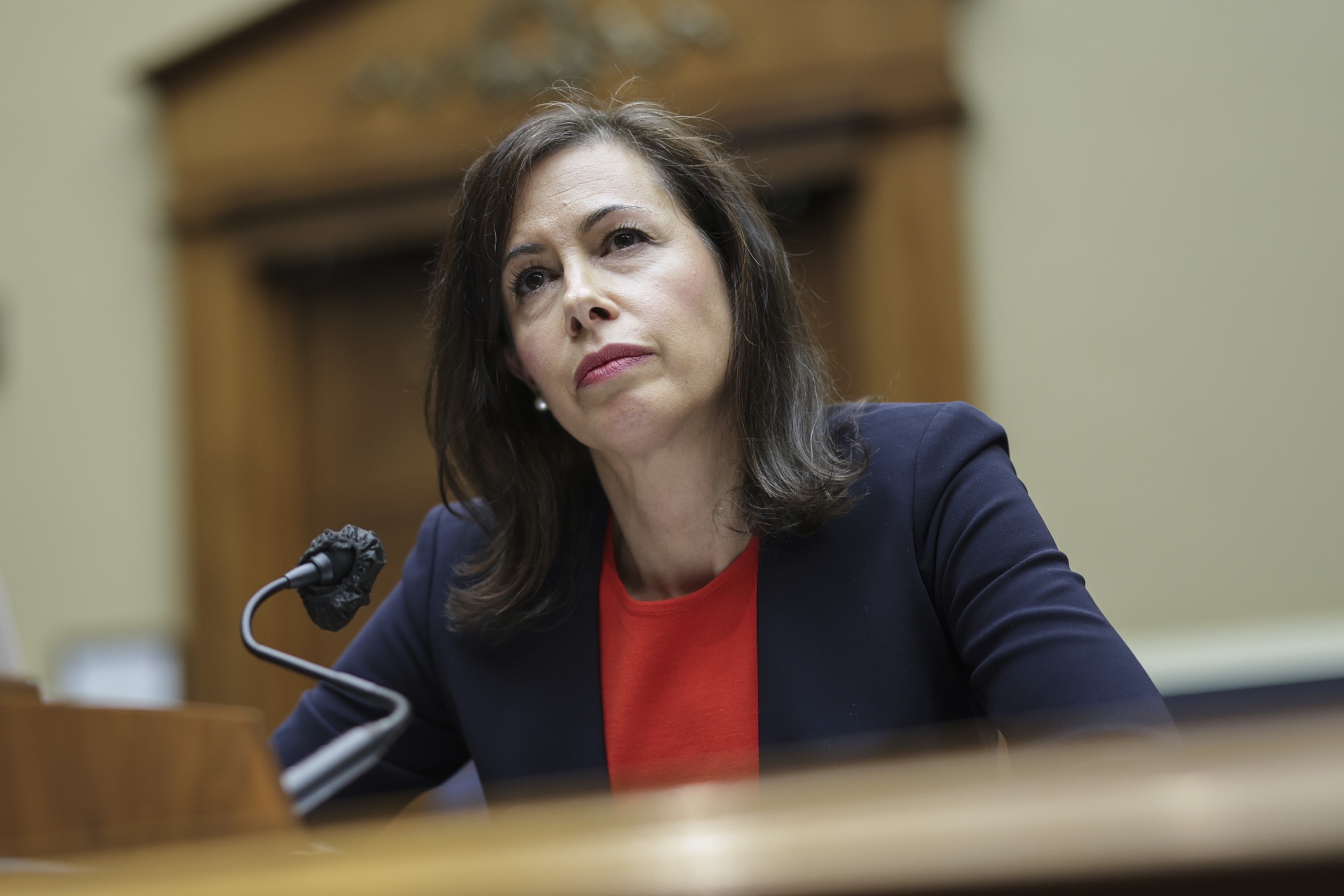
Federal Communications Commission Chairwoman Jessica Rosenworcel sitting at a table while answering questions at a Congressional hearing.
Enlarge / Federal Communications Commission Chairwoman Jessica Rosenworcel during a House Energy and Commerce Committee Subcommittee hearing on March 31, 2022, in Washington, DC.
Getty Images | Kevin Dietsch

Federal Communications Commission Chairwoman Jessica Rosenworcel is aiming to increase the agency’s broadband speed standard from 25Mbps to 100Mbps on the download side and from 3Mbps to 20Mbps for uploads.

Rosenworcel’s “Notice of Inquiry proposes to increase the national broadband standard to 100 megabits per second for download and 20 megabits per second for upload and discusses a range of evidence supporting this standard, including the requirements for new networks funded by the Infrastructure Investment and Jobs Act,” the FCC said in an announcement today. Rosenworcel is also proposing “a separate national goal of 1Gbps/500Mbps for the future.”

The 25/3Mbps metric was adopted in January 2015 under then-Chairman Tom Wheeler and was never updated by former Chairman Ajit Pai during his four-year term leading the commission. Pai decided in January 2021 that 25Mbps download and 3Mbps upload speeds were still fast enough for home Internet users.

“The needs of Internet users long ago surpassed the FCC’s 25/3 speed metric, especially during a global health pandemic that moved so much of life online,” Rosenworcel said in the announcement. “The 25/3 metric isn’t just behind the times, it’s a harmful one because it masks the extent to which low-income neighborhoods and rural communities are being left behind and left offline.”

FCC deadlock prevents aggressive action

Rosenworcel circulated the proposed Notice of Inquiry to fellow commissioners. The proposal requires a vote, and the commission is still deadlocked with two Democrats and two Republicans as the Senate continues its inaction on Biden nominee Gigi Sohn.

Under US law, the FCC is required to determine annually whether “advanced telecommunications capability is being deployed to all Americans in a reasonable and timely fashion” and to “take immediate action to accelerate deployment” and promote competition if current deployment is not “reasonable and timely.” Maintaining the 25/3Mbps standard for home Internet service made it easier for Pai to give the telecom industry and FCC passing grades in the annual reports.

Rosenworcel also wants to expand the commission’s deployment analysis to consider prices and adoption, among other things. “Looking beyond speed, Chairwoman Rosenworcel also proposes that the Commission consider affordability, adoption, availability, and equitable access as part of its determination as to whether broadband is being deployed in a reasonable and timely fashion,” the FCC announcement said.

If the FCC raises the speed standard and evaluates affordability, it’s more likely to find that broadband isn’t being deployed in a reasonable and timely fashion. But Rosenworcel will need a 3-2 Democratic majority to reverse Pai’s broadband-industry deregulation and reclaim authority to treat Internet service providers as common carriers, so the practical outcomes of the speed-standard change could be limited unless a third Democrat is confirmed to the FCC.

https://arstechnica.com/?p=1867109


Elon Musk has reason to worry about the judge set to rule on Twitter lawsuit

Five judges sit at a table and four judges stand behind them while posing for a picture in front of the Delaware Court of Chancery crest.
Enlarge / Chancellor Kathaleen McCormick of the Delaware Court of Chancery, seated in the middle and surrounded by the court’s vice chancellors and masters in chancery.

Elon Musk has reason to worry about the Delaware Court of Chancery judge handling Twitter’s lawsuit against him. Kathaleen McCormick, the court’s chancellor, or chief judge, “has a no-nonsense reputation as well as the distinction of being one of the few jurists who has ever ordered a reluctant buyer to close a US corporate merger,” Reuters wrote today.

Specifically, McCormick last year “order[ed] an affiliate of private equity firm Kohlberg & Co LLC to close its $550 million purchase of DecoPac Holding Inc, which makes cake decorating products,” Reuters wrote.

McCormick’s April 2021 ruling in that case, available on the court’s website, centered on a specific performance clause in the purchase contract—similar to the clause that Twitter is citing in its attempt to force Musk to complete his $44 billion purchase. “Chalking up a victory for deal certainty, this post-trial decision resolves all issues in favor of the seller and orders the buyers to close on the purchase agreement,” McCormick wrote in the ruling.

“The buyers lost their appetite for the deal shortly after signing it, as government entities issued stay-at-home orders around the country and DecoPac’s weekly sales declined precipitously… Rather than use reasonable best efforts to work toward a definitive credit agreement, the buyers called their litigation counsel and began evaluating ways to get out of the deal,” McCormick’s ruling noted. “Without input from DecoPac management, they prepared a draconian reforecast of DecoPac’s projected sales based on uninformed (and largely unexplained) assumptions that were inconsistent with real-time sales data.”

The Kohlberg/DecoPac deal was completed less than three weeks after McCormick’s ruling.

Twitter lawsuit cites “seller-friendly” contract

Twitter sued Musk on Tuesday, a few days after the Tesla and SpaceX CEO sent a letter claiming to terminate their merger agreement. “Twitter negotiated for itself a robust right to demand specific performance of the agreement’s terms that encompassed the right to compel defendants to close the deal, and ensured that Musk personally was bound by that provision (among others),” the company’s lawsuit said.

As we’ve written, the merger deal says that if Twitter meets its obligations under the agreement, it “shall be entitled to specific performance or other equitable remedy” to “cause the Equity Investor [Musk] to fund the Equity Financing, or to enforce the Equity Investor’s obligation to fund the Equity Financing directly, and to consummate the Closing.”

The Musk/Twitter deal is “seller-friendly,” has “no financing contingency and no diligence condition,” and “is backed by airtight debt and equity commitments,” Twitter’s complaint said. Musk tried to get out of the deal after stock market declines slashed his net worth, and he “apparently believes that he—unlike every other party subject to Delaware contract law—is free to change his mind, trash the company, disrupt its operations, destroy stockholder value, and walk away,” Twitter told the court.

While Musk claims that Twitter broke the merger deal by not providing all the spam data he requested, Twitter said it provided enough data and that Musk has conjured “an alternative reality in which Twitter had failed to cooperate.” Musk’s demands for spam data also came too late because he made his purchase offer “without seeking any representation from Twitter regarding its estimates of spam or false accounts,” the lawsuit said.

“A serious, no-nonsense judge”

McCormick has served on the Delaware Court of Chancery since 2018 and has been its chancellor since May 2021. She was nominated to the post by Delaware Gov. John Carney.

“She already has a track record of not putting up with some of the worst behavior that we see in these areas when people want to get out of deals,” UC Berkeley law professor Adam Badawi told Reuters. “She is a serious, no-nonsense judge.”

In the Delaware Court of Chancery, cases are “decided by the presiding judge and not a jury, though the judge can call an advisory jury to help consult. The judge’s decision can be appealed to the State Supreme Court, whose decision is final,” The New York Times noted.

Twitter has proposed a four-day trial with a September 19 start date. If the court rules that Musk has to complete the merger and he refuses, the “Delaware Court of Chancery can hold someone in contempt of court, and it has the power to send someone to jail,” NPR wrote.

Financial seizure is another enforcement possibility, as Tesla and SpaceX are both incorporated in Delaware. “Elon Musk owns a lot of stock in Delaware corporations, which may be subject to seizure in Delaware… so, there may be means of compelling him,” NPR was told by Michael Hanrahan, a corporate litigator whose practice is mostly in the Delaware Court of Chancery.

https://arstechnica.com/?p=1867063


TikTok resists calls to preserve Ukraine content for war crime investigations

Ukraine's Prosecutor General Iryna Venediktova (C-L) and Prosecutor of the International Criminal Court, Britain's Karim Khan (C-R), visit a mass grave on the grounds of the Church of Saint Andrew in Bucha, on the outskirts of Kyiv, on April 13, 2022.
Enlarge / Ukraine’s Prosecutor General Iryna Venediktova (C-L) and Prosecutor of the International Criminal Court, Britain’s Karim Khan (C-R), visit a mass grave on the grounds of the Church of Saint Andrew in Bucha, on the outskirts of Kyiv, on April 13, 2022.
Fadel Senna/AFP via Getty Images

TikTok is resisting calls to preserve and hand over access to its content for war crime investigations, as lawyers and activists warn that the Chinese-owned app is a major data challenge in prosecuting atrocities in Russia’s invasion of Ukraine.

The video app’s popularity with young Ukrainians and Russians posting footage of the war has made it a trove of digital intelligence that investigators are attempting to mine and archive as evidence of war crimes, crimes against humanity, and illegal acts of violence in Ukraine.

TikTok, owned by Chinese tech giant ByteDance, has been criticized for being slow to respond to requests for product changes that allow the video app’s content to be archived and verified more easily, as well as better access to TikTok’s platform for members of civil society.

“There is a lot of suspicion of engaging with TikTok because of its origins, and I think rightfully so. I have concerns about the security of data there, and it is not fully clear where the interest and influence in the company is coming from,” said Dia Kayyali, associate director for advocacy at Mnemonic, a nonprofit that archives digital documentation of human rights violations. “It is especially concerning that China could directly have access to that data.”

So far, China has refused to condemn Russia for invading Ukraine and backed Moscow’s complaints about NATO expansion. TikTok has admitted it has censored content critical of China in the past, including references to Tiananmen Square, for instance. TikTok says it no longer blocks content based on political sensitivities.

“I haven’t gotten any follow-up and it’s very frustrating. TikTok’s processes are just not developed, and they do not have it figured out,” said Kayyali, who met with TikTok earlier this year.

It comes as TikTok struggles to balance the swift removal of posts showing graphic violence or misleading content with the preservation of potential evidence for human rights trials.

“TikTok is one of the newest in the game, and it’s one of the hardest platforms, from a data collection standpoint, because their [sharing mechanisms] are not as rich as, say, Twitter or Facebook,” said David Hasman, who oversees data analysis at the International Criminal Court, which is one of several international institutions and countries that have launched human rights investigations in Ukraine.

“The way that TikTok stores data is much different, and where they store their data, in which countries, obviously is also a lot different. I would say it’s probably one of the biggest challenges,” he added, referring to TikTok’s Chinese ownership.

Since early 2022, TikTok has met with human rights lawyers, activists, and others involved in Ukraine war crime investigations. However, it has yet to introduce any changes to its process or the product itself.

Criminal prosecutors are increasingly relying on social media posts from TikTok and others as a way to “bring the crime scene to the courtroom,” said Karim Khan, chief prosecutor of the ICC.

“Any effective investigation anywhere in the world now really requires a very effective harnessing of social media,” said Khan. “People… recording killings or attacks or the consequences of attacks in real time, it can have absolutely fantastic probative value.”

Experts say TikTok is particularly challenging to archive from, compared to its more mature competitors such as YouTube or Facebook, because it is prone to video and audio editing and remixing, it has non-chronological newsfeeds, and when inappropriate content is removed by the company, nearly 90 percent is deleted before anyone sees it.

“The consequences for legal investigations is that it is very difficult to verify the content. And how will investigators request information if they don’t know it ever existed? This can have a catastrophic effect for justice for human rights abuses,” said Raquel Vázquez Llorente, head of law and policy at the nonprofit Witness and an international criminal lawyer who works at the intersection of technology and human rights.

The ICC’s Khan declined to confirm if it had officially asked TikTok to provide evidence from Ukraine but said, “When we know that there are investigations going on, like we did in Iraq, we could also petition the courts… to preserve that evidence.”

He added, “Clearly on all platforms, there is potential evidence. Over the life of the court, we have sought to have access to information from states and from corporations. And that will continue, but every company, like every state, will have its own approach to the importance of co-operation.”

TikTok said it regularly meets with organizations, government bodies, and third-party experts to gather feedback and is committed to cooperating with law enforcement while respecting the privacy of its users.

© 2022 The Financial Times Ltd. All rights reserved. Not to be redistributed, copied, or modified in any way.

https://arstechnica.com/?p=1867049


Amazon finally admits giving cops Ring doorbell data without user consent

Amazon finally admits giving cops Ring doorbell data without user consent

More than 10 million people rely on Ring video doorbells to monitor what’s happening directly outside the front doors of their homes. The popularity of the technology has raised a question that concerns privacy advocates: Should police have access to Ring video doorbell recordings without first gaining user consent?

Ring recently revealed how often the answer to that question has been yes. The Amazon company responded to an inquiry from US Senator Ed Markey (D-Mass.), confirming that there have been 11 cases in 2022 where Ring complied with police “emergency” requests. In each case, Ring handed over private recordings, including video and audio, without letting users know that police had access to—and potentially downloaded—their data. This raises many concerns about increased police reliance on private surveillance, a practice that’s long gone unregulated.

Ring says it will only “respond immediately to urgent law enforcement requests for information in cases involving imminent danger of death or serious physical injury to any person.” Its policy is to review any requests for assistance from police, then make “a good-faith determination whether the request meets the well-known standard, grounded in federal law, that there is imminent danger of death or serious physical injury to any person requiring disclosure of information without delay.”

Critics say it shouldn’t be left up to Ring and the police to decide when data can be accessed, or how long that data can be stored.

“There are always going to be situations in which it might be expedient for public safety to be able to get around some of the usual infrastructure and be able to get footage very quickly,” says Matthew Guariglia, a policy analyst for Electronic Frontier Foundation, a nonprofit dedicated to protecting civil liberties online. “But the problem is that the people who are deciding what constitutes exigent circumstances and what constitutes the type of emergency, all of these very important safeguards, are Ring and the police, both of whom, as far as I know, don’t have a great reputation when it comes to deciding when it’s appropriate to acquire a person’s data.”

To improve the situation, Guariglia wants regulators to lay more ground rules limiting how much police can rely on private surveillance. He also wants companies like Ring to take more steps to protect users from potentially unlawful surveillance by changing the doorbell’s default settings to turn audio recording off and automatically store data to prevent third parties, including the police and Ring, from accessing it.

Ring refused to commit to doing either. The company says that it only stores data for users with subscription plans, and those users can easily choose to use higher security settings if desired. Responding to Ars’ request for comment, Ring would not share whether 11 cases of sharing data without user consent in 2022 was higher or lower than average; the company supplied a prior statement pushing back against media reports that question Ring’s judgment on when to share data with police:

“It’s simply untrue that Ring gives anyone unfettered access to customer data or video, as we have repeatedly made clear to our customers and others. The law authorizes companies like Ring to provide information to government entities if the company believes that an emergency involving danger of death or serious physical injury to any person, such as a kidnapping or an attempted murder, requires disclosure without delay. Ring faithfully applies that legal standard.”

Markey is counted among Ring’s biggest critics, seeming to suggest in a statement that Ring might be sharing data with police in less high-stakes circumstances by referring to Ring’s law enforcement policy as having a “so-called ‘emergency circumstance exception.'” In his response, Markey agreed with Guariglia that changing Ring default settings would immediately enhance data security for potentially millions of users. Absent those changes, the senator says Ring leaves its users open to threats, which could include potential invasions of privacy, self-surveillance risks, surveillance of First Amendment activities, and coercion, among other risks.

“As my ongoing investigation into Amazon illustrates, it has become increasingly difficult for the public to move, assemble, and converse in public without being tracked and recorded,” Markey said.

https://arstechnica.com/?p=1866920


Crypto lender Celsius files for bankruptcy, still won’t let users withdraw funds

Celsius CEO Alex Mashinsky speaks at a conference while seated on a stage and wearing a T-shirt that says,
Enlarge / Celsius CEO Alex Mashinsky addresses the audience at the November 2021 Web Summit in Lisbon, Portugal.
Getty Images | SOPA Images

Cryptocurrency loan company Celsius filed for bankruptcy under Chapter 11 yesterday, one month after the lender announced it was suspending withdrawals. The petitions for reorganization give Celsius “the best opportunity to stabilize the business, consummate a comprehensive restructuring transaction that maximizes value for all stakeholders, and emerge from Chapter 11 positioned for success in the cryptocurrency industry,” the company said.

In an FAQ updated yesterday, Celsius told users that withdrawals are still suspended. As part of the bankruptcy process, Celsius said it “intend[s] to put forward a plan that restores activity across the platform.” But it offered no timeline for allowing withdrawals and other suspended transactions again:

On June 12, 2022, we made the difficult but necessary decision to pause withdrawals, Swap, and transfers on our platform to stabilize our business and protect our customers.

Most account activity will be paused until further notice. Withdrawals, Swap, and transfers between accounts will remain paused, and rewards will stop accruing as of the date of the filing. Celsius is not requesting authority [from the bankruptcy court] to allow customer withdrawals at this time.

Existing loans “will continue to be serviced” but “Celsius will not be issuing new loans at this time,” the company said. Celsius also said that if it hadn’t halted withdrawals, “the acceleration of withdrawals would have allowed specific customers—those who were first to act—to be paid in full while leaving others behind to wait for Celsius to harvest value from illiquid or longer-term asset deployment activities before they receive a recovery.”

Celsius was slamming its critics and claiming optimism about its future shortly before it suspended withdrawals. Celsius cofounder and CEO Alex Mashinsky blasted what he called “FUD and misinformation” in a tweet on June 11, asking a critic, “do you know even one person who has a problem withdrawing from Celsius?”

Assets, liabilities, and creditors

Celsius said in a court filing that it has assets between $1 billion and $10 billion, liabilities between $1 billion and $10 billion, and over 100,000 creditors. In a bankruptcy case, a creditor is an entity that had a claim—a right to payment or other remedy—against the debtor at or before the time of the filing.

The court filing’s section for “estimated number of creditors” includes various checkboxes, with “more than 100,000” being the largest option available. The Celsius website boasts that “1.7 million people call Celsius their home for crypto.”

As the Financial Times notes, Celsius is the latest in “a wave of digital asset companies that have frozen assets and entered restructuring amid a sharp sell-off in cryptocurrencies this year.” Crypto hedge fund Three Arrows Capital filed for bankruptcy on July 1, while crypto lender Voyager Digital filed for bankruptcy on July 6.

A press release said Celsius has $167 million in cash on hand “to support certain operations during the restructuring process.” The company’s filings in US Bankruptcy Court for the Southern District of New York “include requests to pay employees and continue their benefits without disruption, for which the Company expects to receive Court approval… Customer claims will be addressed through the Chapter 11 process,” Celsius said.

Celsius also said it’s sorry for the lack of communication since suspending withdrawals. “We apologize that communication with our teams and community has been very limited over the past few weeks, and we look forward to being able to offer greater transparency with everyone through our reorganization, which encourages dialogue with all stakeholders,” Celsius said.

https://arstechnica.com/?p=1866785


EU lawmakers slam “radical proposal“ to let ISPs demand new fees from websites

A person's hand holding a roll of 50-Euro notes.
Getty Images | Alicia Llop

Fifty-four members of the European Parliament (MEPs) are protesting what they call a “radical proposal” to require payments from online service providers to Internet service providers.

Noting that Europe’s 2015 “Open Internet Regulation ensures that citizens are free to use whichever apps and websites they wish,” the MEPs said they have “deep concern about the European Commission’s plans to change our net neutrality legislation in the upcoming Connectivity Infrastructure Act to be proposed in autumn, without having consulted the public, technology experts, academics, civil society, or expert regulatory agencies.”

No specific proposal has been released, but “statements to the press indicate that a new provision would require payments from online service providers to broadband providers—ostensibly to fund the rollout of 5G and fiber to the home,” the MEPs wrote in the letter yesterday to the European Commission.

The letter cited a May 2 Reuters article that said, “Tech giants such as Google, Meta, and Netflix may have to bear some of the cost of Europe’s telecoms network, Europe’s digital chief Margrethe Vestager said on Monday, following EU telecoms operators’ complaints.” The MEPs’ list of references also includes two Ars Technica articles from 2012 when a similar proposal was being discussed.

Vestager reportedly said at a news conference that “there are players who generate a lot of traffic that then enables their business but who have not been contributing actually to enable that traffic. They have not been contributing to enabling the investments in the rollout of connectivity… and we are in the process of getting a thorough understanding of how could that be enabled.”

European ISPs sought payments from Big Tech

Despite claims by some that Big Tech gets a “free ride,” websites and other online service providers pay for their own Internet access and in some cases build extensive network infrastructure to carry Internet traffic part of the way to broadband users. But ISPs that deliver content directly to Internet users over the so-called “last mile” of the network have clamored for extra payments from websites to help cover their costs, in addition to the payments they already get from home and business Internet customers. In November 2021, the CEOs of 13 large European telecom companies called on tech giants to pay for a portion of the Internet service providers’ network upgrade costs.

“Large telecom companies have tried for decades to require compensation from content providers for providing access to customers, despite the fact that the telecom companies are already being paid by their own customers to provide access,” the 54 members of the 705-seat European Parliament wrote. Letting ISPs collect these payments “would reverse decades of successful Internet economics by requiring the providers of websites and applications to pay fees to ISPs that have never existed before,” and “abolish key net neutrality guarantees that Europeans fought hard for,” they wrote.

Complaining about an alleged lack of transparency, the letter said, “no one outside the Commission has been able to evaluate the announced proposal of access fees. To us it sounds very similar to ones that have been rejected many times already.”

The 2012 European proposal was ditched, and “every strong net neutrality regime has banned these fees, including in the EU, India, the US, and California,” they wrote. (US net neutrality rules were repealed, but the California ones remain in effect after judges rejected ISPs’ attempts to overturn them.)

https://arstechnica.com/?p=1866602


Twitter sues Elon Musk, says he can’t “trash the company… and walk away”

Illustration of Elon Musk surrounded by birds in the shape of Twitter's logo.
Aurich Lawson | Patrick Pleul/dpa-Zentralbild/ZB

Twitter filed its expected lawsuit against Elon Musk today, demanding that he complete the $44 billion purchase of the social network.

“Musk refuses to honor his obligations to Twitter and its stockholders because the deal he signed no longer serves his personal interests,” the lawsuit said. “Having mounted a public spectacle to put Twitter in play, and having proposed and then signed a seller-friendly merger agreement, Musk apparently believes that he—unlike every other party subject to Delaware contract law—is free to change his mind, trash the company, disrupt its operations, destroy stockholder value, and walk away.”

The suit accused Musk of “a long list of material contractual breaches by Musk that have cast a pall over Twitter and its business” and asks the court to “compel consummation of the merger upon satisfaction of the few outstanding conditions.” The lawsuit points out that in the purchase agreement, “Twitter negotiated for itself a robust right to demand specific performance of the agreement’s terms that encompassed the right to compel defendants to close the deal, and ensured that Musk personally was bound by that provision (among others).”

The lawsuit was filed today in the Delaware Court of Chancery. You can read the whole thing here, and we’ll be adding to this breaking news article as we read Twitter’s complaint.

Musk’s unsolicited, “seller-friendly” offer

The lawsuit describes how Musk made an unsolicited bid to buy Twitter for $54.20 per share, a “take-it-or-leave-it” offer that “represented a 38 percent premium over Twitter’s unaffected share price.”

“The other terms Musk offered and agreed to were, as he touted, ‘seller friendly.’ There is no financing contingency and no diligence condition. The deal is backed by airtight debt and equity commitments. Musk has personally committed $33.5 billion,” Twitter’s complaint said.

But the market fell after the agreement was signed, and “the value of Musk’s stake in Tesla, the anchor of his personal wealth, has declined by more than $100 billion from its November 2021 peak,” the lawsuit said. “So Musk wants out. Rather than bear the cost of the market downturn, as the merger agreement requires, Musk wants to shift it to Twitter’s stockholders. This is in keeping with the tactics Musk has deployed against Twitter and its stockholders since earlier this year, when he started amassing an undisclosed stake in the company and continued to grow his position without required notification.”

Since agreeing to buy the company, Musk has also “repeatedly disparaged Twitter and the deal, creating business risk for Twitter and downward pressure on its share price,” the complaint said.

“Model of hypocrisy”

“Musk’s exit strategy is a model of hypocrisy,” the lawsuit continued, pointing out that one of Musk’s chief stated reasons for buying Twitter “was to rid it of the ‘[c]rypto spam’ he viewed as a ‘major blight on the user experience.’ Musk said he needed to take the company private because, according to him, purging spam would otherwise be commercially impractical.” In the press release announcing the deal, Musk said his goals included “defeating the spam bots, and authenticating all humans.”

Musk made his offer to buy Twitter “without seeking any representation from Twitter regarding its estimates of spam or false accounts,” and “even sweetened his offer to the Twitter board by expressly withdrawing his prior diligence condition,” the lawsuit said. But after the market started dropping, Musk started questioning Twitter’s spam estimates and eventually claimed that Twitter broke the merger deal by not providing all the spam data he requested.

“Musk shifted his narrative, suddenly demanding ‘verification’ that spam was not a serious problem on Twitter’s platform, and claiming a burning need to conduct ‘diligence’ he had expressly forsworn,” the complaint said.

Musk centered the dispute over Twitter’s estimate that fewer than 5 percent of monetizable daily active users (mDAUs) are spam or fake. “Musk wanted an escape. But the merger agreement left him little room,” the complaint said. “With no financing contingency or diligence condition, the agreement gave Musk no out absent a Company Material Adverse Effect or a material covenant breach by Twitter. Musk had to try to conjure one of those.”

https://arstechnica.com/?p=1866296


Gmail users “hard pass” on plan to let political emails bypass spam filters

Gmail users “hard pass” on plan to let political emails bypass spam filters

Earlier this month, Google sent a request to the Federal Election Commission seeking an advisory opinion on the potential launch of a pilot program that would allow political committees to bypass spam filters and instead deliver political emails to the primary inboxes of Gmail users. During a public commenting period that’s still ongoing, most people commenting have expressed staunch opposition for various reasons that they’re hoping the FEC will consider.

“Hard pass,” wrote a commenter called Katie H. “Please do not allow Google to open up Pandora’s Box on the people by allowing campaign/political emails to bypass spam filters.”

Out of 48 comments submitted as of July 11, only two commenters voiced support so far for Google’s pilot program, which seeks to deliver more unsolicited political emails to Gmail users instead of marking them as spam. The rest of the commenters opposed the program, raising a range of concerns, including the potential for the policy to degrade user experience, introduce security risks, and even possibly unfairly influence future elections.

Business Insider reported that the period for public commenting ends on Saturday, July 16, which is longer than what was shared in conflicting reports that said the initial deadline to comment was July 11. That means there’s still time for more Gmail users and interested parties to chime in.

Top concerns from Gmail users

Having the extra five days to comment may not seem like a lot, but at least the minor extension provides an opportunity to those who perhaps are not yet aware of Google’s proposal. FEC spokesperson Judith Ingram told Business Insider that the FEC “declined to comment on whether the agency believes it has given the public adequate time to comment on the matter.” The FEC and Google did not immediately respond to Ars’ requests for comment.

Already, many Gmail users have rushed to weigh in, though, with the majority of commenters citing their top concerns and urging the FEC to disapprove of the pilot program as much as they do.

For some opposing commenters, it’s about rejecting unnecessary strains on the Gmail user experience. In short: People don’t want emails coming to their inbox that they did not sign up for. Some users threatened to leave Gmail if political emails were diverted to the primary inbox, saying politicians didn’t deserve special treatment by getting exemption from the spam folder.

“Swamp my inbox with political spam if you want me to switch to my Yahoo account full time,” wrote commenter Thomas Beard. “I’m not married to your service.”

Other commenters were more concerned over a perceived government overreach. Similar to an exemption to the Telephone Consumer Protection Act that allows politicians to bypass do-not-call lists, politicians would be able to bypass Gmail spam filters, if the FEC approves. This could potentially lead to even more misinformation spread, commenters complained. Other commenters said that the move could also introduce security risks. One commenter imagined bad actors who register to run for office, become exempt from spam filters, and position themselves to scam unsuspecting users who trust Google to filter out malicious content.

A few commenters suggested that now is the time for the FEC to strengthen regulations on political communications, not opening citizens up to even more rampant political messaging.

“Please do not allow this awful idea to proceed,” a commenter called “d ervin” wrote. “Google and Facebook/Meta have ruined everything [on the] Internet, and I wish at least one of my governments’ agencies would have the guts to curtail their overreach.”

The worst-case scenario for some commenters is a future where political spam delivered to primary inboxes influences elections. A few commenters expressed fears that Google’s seemingly liberal political bias would influence Gmail users by delivering emails from Democrats to the primary inbox, while still marking Republican emails as spam. Some commenters cited how campaign emails were implicated as part of what caused the January 6 riot (by pushing an election fraud conspiracy), and thus say that political emails deserve even more scrutiny, not less.

Others were concerned that older Gmail users would become more vulnerable to “emotionally charged” messaging that they never signed up for.

“This is a HORRIFIC idea,” wrote commenter Natalee Roan. “My 85-year-old mother gets over 20 emails A DAY from political campaigns—each one screaming that if she doesn’t give today, it will be the end of the USA as we know it. They are all from legitimate campaigns, but not one of them is Opt-in—meaning they are the very definition of SPAM [unsolicited]. These emails are adding to the political divide by using tactics that are designed to literally scare people into giving donations and severely contributing to our political divide. I can’t think of anything worse for our democracy than allowing these emails to proliferate by not sending them through SPAM filters.”

Some commenters pointed out that all this move does is put the onus back on the user to mark political messages as spam. For one commenter, that seemed like a good thing: giving control back to the user to decide what hits their inbox, but another said that due to the volume of political emails that could be hitting inboxes soon, it was another reason to staunchly oppose. Nobody has time to sit and mark dozens, let alone hundreds or thousands, of emails as spam.

The only other commenter to speak in favor of the proposal suggested that Gmail’s longstanding practice of diverting political emails to spam was a threat to protected political speech. By sending political emails to the primary inbox, it ensures that everyone’s messaging gets the same circulation. However, another commenter suggested that by sending more political emails to inboxes, Gmail could stoke apathy toward politics, not supporting Gmail users’ engagement with all political views.

“This is a surefire way to turn people OFF to getting more engaged in the political process at a crucial time when we need a more aware and participating electorate,” wrote commenter Matt Morain.

https://arstechnica.com/?p=1866199