Uber emails: Exec admits “we’re not legal,” another claims we’re all “pirates”

Uber emails: Exec admits “we’re not legal,” another claims we’re all “pirates”

Media outlets have only just begun digging up all the dirt buried in the so-called Uber files. Gathered by The Guardian, the more than 124,000 confidential files reportedly show precisely how Uber’s greed drove unethical executive decision-making during the ridesharing app’s global expansion.

Kicking off a series of reports from various outlets, The Guardian did a deep dive into private communications that form the majority of the data leak. That cache of 83,000 emails, iMessages, and WhatsApp messages allegedly reveals “the inside story” of how Uber spent five years evading police while imperiling driver safety, attacking rivals, secretly wooing officials with financial incentives, and brazenly disregarding laws in pursuit of market dominance.

Acknowledging misdeeds that occurred between 2013 and 2017, all Uber has to say now is: Let’s leave the past in the past.

“We have not and will not make excuses for past behavior that is clearly not in line with our present values,” Uber SVP of Marketing & Public Affairs Jill Hazelbaker wrote in a statement. “Instead, we ask the public to judge us by what we’ve done over the last five years and what we will do in the years to come.”

Uber did not immediately respond to Ars’ request for comment, but its official stance is that it has since corrected course under new leadership. It’s become a “different company,” thanks to the “90 percent of current Uber employees” who joined after CEO Dara Khosrowshahi came onboard to right the ship in 2017. The company says that today it prioritizes driver safety, partners with taxi companies and unions that it once waged war on, and transparently works with officials to comply with thousands of regulations.

Despite Uber’s wishes, the past is unlikely to remain in the past, though, and the timing of the Uber files’ release is not great. The public reckoning of the Uber files arrives just as the tech company has become profitable for the first time in its history.

The Guardian report is the first of many to come from a massive global investigation into Uber conducted by 180 journalists representing 40 media outlets. They came together through the International Consortium of Investigative Journalists to share the treasure trove of data in hopes of telling the full story of Uber’s dodgy past. This summer, expect to see more scandalous Uber stories from outlets including the BBC, Washington Post, and Le Monde.

What did Uber do?

The Guardian report shows how Uber staff and executives at the highest level—at the time operating under Uber co-founder Travis Kalanick—joked about the company’s “other than legal status” and openly discussed other dubious growth tactics.

Messages from executives evidence how Uber allegedly strategically skirted regulations in many countries, including Turkey, South Africa, Spain, the Czech Republic, Sweden, France, Germany, and Russia. “We are not legal in many countries, we should avoid making antagonistic statements,” one executive cautioned in an email.

The messages also document how, at least a dozen times, when law enforcement in France, the Netherlands, Belgium, India, Hungary, and Romania attempted raids on Uber offices to crack down on suspected illegal activity, Uber flipped an internal “kill switch” to cut off authorities from accessing its data systems. “We have officially become pirates,” another executive claimed in an email.

Kalanick’s spokesperson told The Guardian that the “kill switch” software was not designed to help Uber evade authorities and “should never have been used to thwart legitimate regulatory action.” The spokesperson also said that Uber stopped using the software in 2017, “when Khosrowshahi replaced Kalanick as CEO.”

These tactics and other dubious protocols were reportedly sanctioned by Uber’s legal department.

Standing out from thousands of communications that The Guardian sifted through was another message from Uber’s head of global communications, Nairi Hourdajian. It made plain that leadership considered Uber above the law. “We’re just fucking illegal,” Hourdajian declared. (Hourdajian declined to comment in The Guardian story.)

The future of Uber

Last November, Uber celebrated its first profitable quarter since launching, approximately four years after replacing its CEO. More recently, The New York Times reported in May that Uber profits have continued to climb, with the company reporting “$6.9 billion in revenue for the first three months of 2022, outstripping analysts’ expectations and skyrocketing 136 percent from the same time last year.”

It’s no wonder that Uber hopes to look ahead rather than dwell on the past by accounting for all of the “mistakes and missteps” made during what Hazelbaker described as “one of the most infamous reckonings in the history of corporate America.”

While the majority of leadership responsible for that reckoning is out of the picture now, some executives like Uber Eats chief Pierre-Dimitri Gore-Coty—previously in charge of Western Europe Uber operations—have stuck around. In Gore-Coty’s case, he blames poor decision-making during Uber’s early years on youth and inexperience, saying that he “too often took direction from superiors with questionable ethics.”

Uber stated how it has made an enormous shift in company culture, and its recent profitability seems to suggest that the new strategy is paying off. “We’ve moved from an era of confrontation to one of collaboration, demonstrating a willingness to come to the table and find common ground with former opponents, including labor unions and taxi companies,” Hazelbaker wrote. “We are now regulated in more than 10,000 cities around the world, working at all levels of government to improve the lives of those using our platform and the cities we serve.”

As its profits finally rise, whether Uber gets to the end of its rocky road to redemption without facing more public backlash will likely depend on what the upcoming reporting from the Uber files shows.

https://arstechnica.com/?p=1865604


Twitter gets ready to sue Elon Musk, hires elite merger law firm

Twitter gets ready to sue Elon Musk, hires elite merger law firm
Chris Delmas/Getty Images

Twitter has hired an elite law firm to handle its forthcoming lawsuit against Elon Musk, which could be filed any day now.

After Musk pulled out of his deal to buy Twitter for $44 billion on Friday, Twitter Board Chairman Bret Taylor said the company will sue Musk to enforce the merger contract and force him to complete “the transaction on the price and terms agreed upon.” Twitter then hired the “merger law heavyweight” Wachtell, Lipton, Rosen & Katz to work on a lawsuit it expects to file early this week in the Delaware Court of Chancery, Bloomberg reported.

“Wachtell Lipton has perhaps the leading litigation practice in Delaware, where the majority of US public companies are incorporated,” the Financial Times wrote. “It defends companies in lawsuits over breach of fiduciary duty and broken merger agreements in the state.”

The Wachtell firm gives Twitter “access to lawyers including Bill Savitt and Leo Strine, who served as Chancellor of the Delaware Chancery Court,” Bloomberg wrote. Wachtell has previously represented Musk and Tesla in other matters.

To defend against Twitter’s lawsuit, Musk has hired Quinn Emanuel Urquhart & Sullivan. “The firm led his successful defense against a defamation claim in 2019 and is representing him as part of an ongoing shareholder lawsuit over his failed attempt to take Tesla private in 2018,” Bloomberg wrote.

Merger contract could force Musk to close deal

Twitter’s stock continued its decline, with a drop of over 8 percent in today’s trading so far. The stock price was less than $34 as of this writing, while Musk agreed to buy the company for $54.20 per share.

The Twitter/Musk deal includes a $1 billion breakup fee that applies in some circumstances, but Twitter can try for more than that. As we’ve written, the merger deal says that if Twitter meets its obligations under the agreement, it “shall be entitled to specific performance or other equitable remedy” to “cause the Equity Investor [Musk] to fund the Equity Financing, or to enforce the Equity Investor’s obligation to fund the Equity Financing directly, and to consummate the Closing.”

Musk claimed that Twitter violated the merger agreement in his Friday letter informing the company that he is terminating the deal. Musk’s claims center on his attempts to get more information on Twitter’s spam estimates, with the letter saying:

While Section 6.4 of the Merger Agreement requires Twitter to provide Mr. Musk and his advisors all data and information that Mr. Musk requests “for any reasonable business purpose related to the consummation of the transaction,” Twitter has not complied with its contractual obligations. For nearly two months, Mr. Musk has sought the data and information necessary to “make an independent assessment of the prevalence of fake or spam accounts on Twitter’s platform”… This information is fundamental to Twitter’s business and financial performance and is necessary to consummate the transactions contemplated by the Merger Agreement because it is needed to ensure Twitter’s satisfaction of the conditions to closing, to facilitate Mr. Musk’s financing and financial planning for the transaction, and to engage in transition planning for the business. Twitter has failed or refused to provide this information. Sometimes Twitter has ignored Mr. Musk’s requests, sometimes it has rejected them for reasons that appear to be unjustified, and sometimes it has claimed to comply while giving Mr. Musk incomplete or unusable information.

https://arstechnica.com/?p=1865531


Arizona makes it illegal for bystanders to record cops at close range

Arizona makes it illegal for bystanders to record cops at close range

The same week that a federal judge sentenced ex-cop Derek Chauvin to more prison time for killing George Floyd, Arizona passed a law making it harder to record police by limiting how close bystanders can be while recording specified law enforcement activity. Chauvin was convicted in part because a recording showing his attack on Floyd at close proximity went viral. It was filmed by a teenager named Darnella Frazier while she was standing “a few feet away.”

The new Arizona law requires any bystanders recording police activity in the state to stand at a minimum of 8 feet away from the action. If bystanders move closer after police have warned them to back off, they risk being charged with a misdemeanor and incurring fines of up to $500, jail time of up to 30 days, or probation of up to a year.

Sponsored by Republican state representative John Kavanagh, the law known as H.B. 2319 makes it illegal to record police at close range. In a USA Today op-ed, Kavanagh said it is important to leave this buffer for police to protect law enforcement from being assaulted by unruly bystanders. He said “there’s no reason” to come closer and predicted tragic outcomes for those who do, saying, “Such an approach is unreasonable, unnecessary, and unsafe, and should be made illegal.”

This week, Kavanagh has succeeded in making close-range recording illegal in Arizona, with only a few exceptions. Perhaps most critically, the person involved in the police activity—someone being questioned, arrested, or handled by police—can record, as long as it doesn’t interfere with police actions. The same exception extends to anyone recording while in a vehicle involved in a police stop.

Additionally, anyone recording activity from an enclosed structure on private property still has a right to record police within 8 feet—unless law enforcement “determines that the person is interfering” or “it is not safe” for them to be in the area. That caveat potentially gives police a lot of discretion over who can record and when.

Kavanagh said he decided to push for this change in Arizona law after some Tucson officers complained that bystanders sometimes stood a foot or two behind them while recording arrests. The state representative also told USA Today that his decision to set the minimum distance at 8 feet “is based upon 8 feet being established by the US Supreme Court as being a reasonable distance as they applied it to people entering and leaving abortion clinics when faced with protesters.”

Responding to critics who think citizens should be able to get closer to law enforcement activity, Kavanagh said, “The argument that filming from 8 feet away does not allow for a proper view of the scene is ridiculous.” He cited impactful police brutality recordings that were recorded from further distances, including Rodney King (100 feet) and Freddie Gray (“clearly 8 to 10 feet away”).

Concerns over constitutionality

Over the past decade, similar attempts to limit the recording of police activity have repeatedly been struck down as unconstitutional.

In 2011, a top US appeals court stopped police from arresting bystanders for supposedly “secretly” recording police activity, deeming the police action a violation of both free speech and guaranteed protections against unreasonable search and seizure. This established “a constitutionally protected right to videotape police.”

The next year, the US Department of Justice stated in a letter that recording police activity should only be “subject to narrowly defined restrictions,” praising the practice because it improves public confidence in law enforcement, helps ensure public safety, and holds police accountable. In 2017, a federal appeals court re-affirmed First Amendment rights to record police, saying that recordings both protect against abuse of power and exonerate wrongly accused cops.

Ahead of the law passing, Kavanagh was concerned about the constitutionality of his bill, especially after rules attorneys for the state House of Representatives told him it might be unconstitutional to apply the 8-foot buffer “to all police encounters.” To push the law through, Kavanagh amended the bill so that it “only applies to filming during police-citizen encounters where there is a potential for violence, such as arresting or summonsing people, questioning suspicious persons, and handling emotionally disturbed people.”

Kavanagh has expressed confidence that the new law will hold up against inquiries into its constitutionality. However, earlier this year, the ACLU of Arizona tweeted that “Not only is this bill a terrible idea, but it’s also unconstitutional” because it “places unnecessary burdens on folks and grants police too much discretion.”

Today, the ACLU of Arizona renewed those concerns, with staff attorney K.M. Bell saying that the law is a “chilling” use of the “public’s most effective tool against police wrongdoing in violation of our First Amendment rights.”

“By limiting our ability to record police interactions, this law will undoubtedly make it even more difficult to hold police officers accountable for misconduct,” Bell said in an emailed statement.

Kavanagh did not immediately respond to a request for comment on constitutional concerns now that the bill has passed.

For now, bystanders recording Arizona police activity (as defined in the bill) will need to rely on their camera’s zoom capabilities if they want to follow in Frazier’s footsteps and capture close-up footage that holds police accountable. Her close-range video has been deemed “one of the most important civil rights documents in a generation” by journalists and documentarians.

https://arstechnica.com/?p=1865110


The danger of license plate readers in post-Roe America

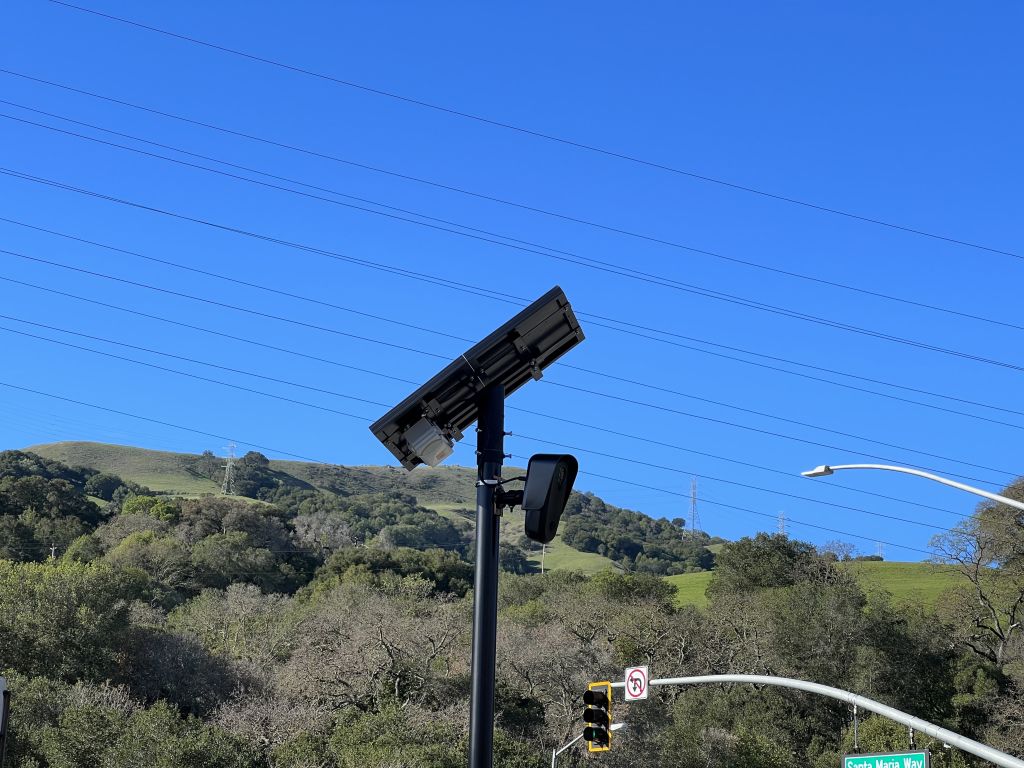
A license plate reader in California.
Enlarge / A license plate reader in California.

Since the United States Supreme Court overturned Roe v. Wade last month, America’s extensive surveillance state could soon be turned against those seeking abortions or providing abortion care.

Currently, nine states have almost entirely banned abortion, and more are expected to follow suit. Many Republican lawmakers in these states are discussing the possibility of preventing people from traveling across state lines to obtain an abortion. If such plans are enacted and withstand legal scrutiny, one of the key technologies that could be deployed to track people trying to cross state lines is automated license plate readers (ALPRs). They’re employed heavily by police forces across the US, but they’re also used by private actors.

ALPRs are cameras that are mounted on street poles, overpasses, and elsewhere that can identify and capture license plate numbers on passing cars for the purpose of issuing speeding tickets and tolls, locating stolen cars, and more. State and local police maintain databases of captured license plates and frequently use those databases in criminal investigations.

The police have access to not only license plate data collected by their own ALPRs but also data gathered by private companies. Firms like Flock Safety and Motorola Solutions have their own networks of ALPRs that are mounted to the vehicles of private companies and organizations they work with, such as car repossession outfits. Flock, for instance, claims it’s collecting license plate data in roughly 1,500 cities and can capture data from over a billion vehicles every month.

“They have fleets of cars that have ALPRs on them that just suck up data. They sell that to various clients, including repo firms and government agencies. They also sell them to police departments,” says Jay Stanley, a senior policy analyst at the ACLU. “It’s a giant, nationwide mass surveillance system. That obviously has serious implications should interstate travel become part of forced-birth enforcement.”

In a statement to WIRED, a Flock Safety spokesperson said the company does not provide customer data to third parties. “We will never share or sell customer data to any third parties. While we cannot speak for any other vendors, we have never and will never sell data to repossession companies or third-party organizations, including anti-abortion groups,” the company said.

However, anyone can become a first party by purchasing the company’s cameras. (Its customers often include neighborhoods and home owners associations.) Flock Safety says its cameras are installed in more than 1,500 cities in 42 states, which are connected to Flock’s centralized camera network. A March 2021 Vice investigation based on Flock-related emails obtained from nearly 20 police departments allows anyone who administers a Flock camera to “make the data Flock captures available to, say, the police, the home owner association’s board, or the individual members of an entire neighborhood.” In addition to private customers, Flock has also reportedly partnered with hundreds of police departments across the US.

Motorola Solutions did not respond to a request for comment prior to publication.

https://arstechnica.com/?p=1865115


Musk expected to take “drastic action” to break Twitter deal, report says

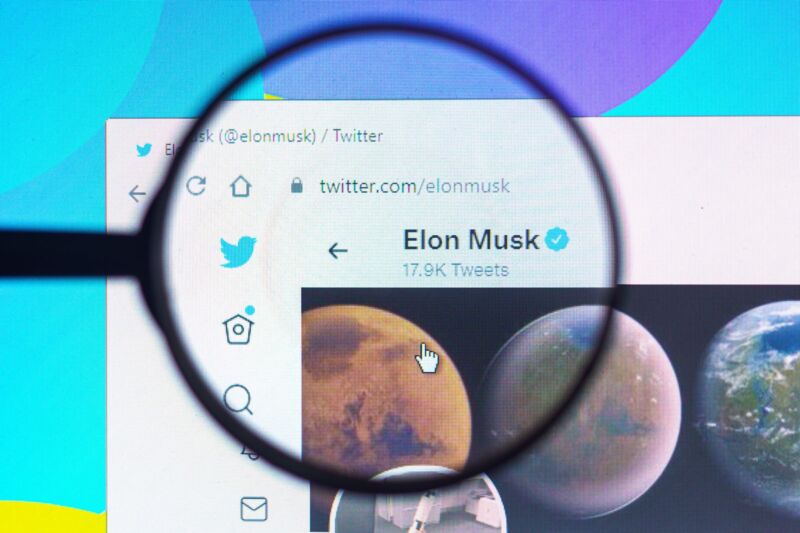
In this photo illustration, Elon Musk's official Twitter profile seen on a computer screen through a magnifying glass.
Getty Images | SOPA Images

Elon Musk is expected to take “drastic action” to get out of his $44 billion deal to buy Twitter, The Washington Post wrote yesterday in an article citing “three people familiar with the matter.”

The anonymous sources seem to be from Musk’s camp. “Musk’s team has concluded it cannot verify Twitter’s figures on spam accounts,” and the Musk side’s “doubts about the spam figures signal they believe they do not have enough information to evaluate Twitter’s prospects as a business,” the Post wrote. Musk’s people have also reportedly “stopped engaging in certain discussions around funding for the $44 billion deal, including with a party named as a likely backer.”

According to the Post, one of its sources said Musk’s team is now “expected to take potentially drastic action. The person said it was likely a change in direction from Musk’s team would come soon, though they did not say exactly what they thought that change would be.”

None of the comments are far off from what Musk has publicly said himself since he began trying to get out of the Twitter deal. Even though his offer to buy Twitter waived “business due diligence,” he later threatened to pull out of the contract and claimed Twitter violated the merger agreement by refusing to provide the data behind its spam estimates. Twitter then gave Musk access to its data “firehose.”

Twitter “believes the deal contract is on its side”

Despite Musk framing his second thoughts as being solely about Twitter’s spam estimates, the Tesla CEO is likely wary of completing the purchase because the values of both Twitter and Tesla stock have plummeted since he struck the Twitter deal on April 25. The merger agreement itself doesn’t give Musk any easy way out. There’s a $1 billion breakup fee, but Musk can’t necessarily get out that cheaply, and his responsibility could end up being decided in court.

As we’ve written, the merger deal says that if Twitter meets its obligations under the agreement, it “shall be entitled to specific performance or other equitable remedy” to “cause the Equity Investor [Musk] to fund the Equity Financing, or to enforce the Equity Investor’s obligation to fund the Equity Financing directly, and to consummate the Closing.” Either Twitter or Musk could win an injunction or other relief in court “to prevent breaches of this Agreement.”

To try to get out of the agreement, Musk “could deliver a letter to Twitter saying he is terminating the deal, and he could sue Twitter,” The New York Times noted today. But there are “no clear grounds for Mr. Musk to try to break the deal,” and Twitter could countersue. The company “strongly believes that the deal contract is on its side, and that it would be an uphill battle for Mr. Musk,” the Times wrote.

The existence of spam accounts on Twitter was well-known before Musk agreed to buy the company. In the deal announcement, Musk said one of his main goals in buying Twitter was “defeating the spam bots.” Musk spoke to Twitter employees in a virtual town hall on June 16 but didn’t give any firm update during the meeting on whether he would complete the deal.

Firehose apparently won’t help Musk refute spam estimate

Musk has produced no evidence to refute Twitter’s specific claim about the number of spam accounts, which is that fewer than 5 percent of monetizable daily active users (mDAUs) are spam or fake. The firehose gives Musk access to all of the tweets on the platform, but that won’t necessarily show whether tweets were posted by humans or bots or how many people are viewing Twitter posts each day without making posts of their own.

Twitter defended its spam estimates in a briefing with reporters yesterday. “The company says it points human content reviewers at a specific sampling of tweets and relies on a variety of signals both public and private to evaluate the accounts’ activity,” Axios wrote after the briefing. “It says that no outsider, even those with access to its full stream of tweets, can replicate its process.”

The Wall Street Journal’s account of the briefing said that “Twitter officials declined to say whether the company shared the private user information with Mr. Musk. They would only say that Twitter has fully complied with the obligations of the purchase agreement and that the privacy of user information was important to the company.”

Twitter issued a statement early last month saying that it “has and will continue to cooperatively share information with Mr. Musk to consummate the transaction in accordance with the terms of the merger agreement. We believe this agreement is in the best interest of all shareholders. We intend to close the transaction and enforce the merger agreement at the agreed price and terms.”

When contacted by Ars today, Twitter said it has no further comment beyond its statement from a month ago. Twitter also told staff last month that a shareholder vote on the Musk deal should happen in late July or early August.

https://arstechnica.com/?p=1865085


Parents sue TikTok after 7 kids die from profitable Blackout Challenge videos

Parents sue TikTok after 7 kids die from profitable Blackout Challenge videos

After the first child died from self-strangulation while attempting a recommended “Blackout Challenge,” there were many steps that TikTok could have taken to shield other kids from the same fate immediately. Instead, a new lawsuit filed in California says TikTok chose to continue profiting from promoting what’s now being described as its deadliest challenge, directly causing the deaths of six more children in 2021.

The lawsuit was filed by the parents of two of those children—girls ages 8 and 9. They claim their kids became addicted to TikTok, were fed a constant stream of seemingly harmless challenge videos persuading them to participate, and then died after attempting the Blackout Challenge. (The Blackout Challenge encourages TikTok users to post videos where they choke themselves until they pass out.)

Rather than blame creators of harmful videos or come after TikTok for publishing videos, the lawsuit instead seeks damages from TikTok for its product design, which directs kids to videos.

In a statement, the parents’ legal team at the Social Media Victims Law Center (SMVLC) summarized the lengthy complaint: “The suit alleges that TikTok’s defective design of its social media product results in an addictive product that is not safe for users and fails to warn minors and their parents that TikTok is addictive and pushes harmful content onto their ‘For You’ page that could endanger their wellbeing.”

TikTok did not immediately respond to Ars’ request for comment, but a TikTok spokesperson told The New York Times that “the company would not comment on continuing litigation.” The spokesperson also linked to a prior company statement to People magazine about a 10-year-old girl who also died after attempting the Blackout Challenge. At that time, TikTok said that the “disturbing challenge” predated their platform and had never become “a TikTok trend.” Expressing “deepest sympathies” to the family affected in that case, TikTok vowed to “remain vigilant in our commitment to user safety” and “immediately remove related content if found.”

The lawsuit tells a different story, pointing out that “the ‘Blackout Challenge’ currently cannot be found on TikTok’s social media product,” which proves that the videos could have been removed after TikTok learned of the first death. Instead, the company chose not to take that or any earlier action to limit child exposure to the challenge, even though “the cost of incorporating age and identity verification into TikTok’s product would be negligible.”

Parents want TikTok to pay for addicting their kids, demanding a jury trial to decide whether TikTok’s design needs to change. Damages sought right now are unspecified but are expected to cover intangible losses suffered by the kids before they died, as well as the loss of each kid’s “future earning capacity” and “normal activities, pursuits, and pleasures.”

“TikTok needs to be held accountable for pushing deadly content to these two young girls,” said SMVLC attorney Matthew P. Bergman, who is part of the parents’ legal team. “TikTok has invested billions of dollars to intentionally design products that push dangerous content that it knows are dangerous and can result in the deaths of its users.”

What could TikTok have done?

Parents suing TikTok say it’s obvious when kids post videos of themselves that they’re too young for TikTok. The lawsuit claims that the platform knows that “hundreds of thousands of children as young as 6 years old are currently using its social media product,” but makes no attempt to terminate accounts for users under 12 because that would diminish the company’s ad revenue.

“TikTok has information and knowledge that can determine with reasonably [sic] certainty each user’s age, habits, and other personal information, regardless of what information the user provides at the time of account setup,” the complaint states. “In other words, TikTok knows when a user claims to be 21 but is really 12.”

Keeping kids under 13 off TikTok isn’t the only option, though. The lawsuit claims there are many actions that TikTok could have taken to save lives after the first report from January 2021 of a child dying after attempting the “Blackout Challenge.”

https://arstechnica.com/?p=1864971


Energy charter treaty makes climate action nearly illegal in 52 countries

Energy charter treaty makes climate action nearly illegal in 52 countries

Five young people whose resolve was hardened by floods and wildfires recently took their governments to the European Court of Human Rights (ECHR). Their claim concerns each country’s membership of an obscure treaty they argue makes climate action impossible by protecting fossil fuel investors.

The energy charter treaty has 52 signatory countries which are mostly EU states but include the UK and Japan. The claimants are suing 12 of them including France, Germany and the UK—all countries in which energy companies are using the treaty to sue governments over policies that interfere with fossil fuel extraction. For example, the German company RWE is suing the Netherlands for 1.4 billion euros ($1.42 billion) because it plans to phase out coal.

The claimants aim to force their countries to exit the treaty and are supported by the Global Legal Action Network, a campaign group with an ongoing case against 33 European countries they accuse of delaying action on climate change. The prospects for the current application going to a hearing at the ECHR look good. But how simple is it to prise countries from the influence of this treaty?

The energy charter treaty started as an EU agreement in 1991 which guaranteed legal safeguards for companies invested in energy projects such as offshore oil rigs. Under Article 10 (1) of the treaty, these investments must “enjoy the most constant protection and security.” If government policies change in order to curtail these projects, such as Italy’s 2019 decision to ban drilling for oil and gas within 12 miles of its coast, the government is obliged to compensate the relevant company for its lost future earnings.

The legal mechanism which allows this is known as an investor-state dispute settlement. A letter to EU leaders signed by 76 climate scientists argues this could keep coal power plants open or force governments into paying punishing fees for shutting them down, at a time when deep and rapid cuts to emissions are desperately needed.

Money spent compensating fossil fuel investors will deprive investment in renewable energy and other things vital to the green transition, such as public transport. While withdrawing from the energy charter treaty is possible for any country to do, losing the benefits of membership—such as fewer duties and taxes on imports of oil and gas—will make it a difficult decision.

Furthermore, the obligations of countries that have been signatories to the treaty are not nullified upon exiting it, but instead linger for 20 years thereafter. Investors can still bring disputes against former members and, if successful, must be compensated by the state in question. Russia and Italy withdrew from the energy charter treaty in 2009 and 2016 respectively, and continue to face multiple claims.

Working in oil fields of Azerbaijan.
Enlarge / Working in oil fields of Azerbaijan.

Leaving the treaty

Meanwhile, the European Commission is poised to expand the influence of the energy charter treaty into countries in Africa and Latin America, potentially embroiling these states in the same investor-state dispute settlements that have hindered climate action in Europe.

The political declaration for a new international energy charter, based on the principles of the original European treaty, was signed by 87 countries in 2015. Negotiations continue, but the 25-point list setting out the priorities of the signatories only includes one reference to “sustainable development”.

An update on negotiations mentioned that existing fossil fuel investments are due to be protected until 2033, meaning governments will be liable for compensation if they close a coal plant prematurely. The UK and EU reached a deal to exempt new fossil fuel projects from protection as of mid-August 2023.

Drastic action is urgently needed to meet the goals of the Paris Agreement and reduce greenhouse gas emissions in line with limiting warming to 1.5°C at best and 2°C at worst. Countries will need to regulate and close emission sources—yet at the same time, fossil fuel investors, including oil companies and energy utilities, are asking for more time and money in order to adapt to the transition.

The claim filed by RWE against the Dutch government in February 2021 argued the latter had failed to give enough time for the company to transition from coal to biomass. But this is something the Dutch government cannot afford to do—it was found to be acting unlawfully by its own supreme court in 2019 in taking too long to implement emissions cuts.

One way to address this problem is for parties contracted to the energy charter treaty to withdraw from it en masse, and so escape the sunset clause which holds them liable two decades after leaving. These countries could also enter into a separate agreement to exclude investor-state dispute cases against each other.

Sustained public pressure—and a favorable ruling in the ECHR for the five claimants—could encourage enough governments to act decisively, fatally weakening the treaty and its grip on international climate action.

Chamu Kuppuswamy is a Senior Lecturer, School of Law, University of Hertfordshire

This article is republished from The Conversation under a Creative Commons license. Read the original article.

https://arstechnica.com/?p=1864794


Lawsuit: At Tesla, racial discrimination is “standard operating procedure”

A Tesla factory building and parking lot in Fremont, California.
Getty Images | Justin Sullivan

Tesla is facing a new racial discrimination lawsuit filed by 15 factory employees who allege that Tesla’s “standard operating procedures include blatant, open, and unmitigated race discrimination.” Racial harassment and discrimination is “rampant” at Tesla, and the company has “done little to nothing to reasonably prevent or stop this toxic behavior and work environment,” the lawsuit says.

The plaintiffs include nine men and six women who work or worked at Tesla factories in California. About half of the plaintiffs were either fired or quit, while the rest still work at Tesla.

“Plaintiffs, who [are] African-American employees, have been subjected to offensive racist comments and offensive racist behavior and discipline by colleagues, leads, supervisors, managers, and/or Human Resources personnel on a daily basis,” the complaint says. The complaint alleges that an April 2021 incident at Tesla CEO Elon Musk’s home led to one of the plaintiffs being fired on the same day.

The complaint seeks financial damages and was filed Thursday in Alameda County Superior Court. “Throughout their employment with Tesla, plaintiffs were targeted for harassment on the basis of their race. The harassment included being called [variations of the n-word], ‘Boy’ and other racially derogatory terms on a regular basis as well as observing other employees enduring the same treatment,” the complaint says. One plaintiff who worked at Tesla’s Fremont factory for one month in 2022 alleged that the “harassment included the use of the terms ‘Blackies’ or ‘Darkies’ to address African-American workers.”

There was also “racist graffiti, including but not limited to [variations of the n-word], ‘KKK,’ and swastikas written on Tesla restroom walls, restroom stalls, lockers, benches, workstations, breakrooms, and tables,” the lawsuit said. The alleged “racial slurs were apparent to all who walked by, were left up for months at a time, without Tesla bothering to remove them or address the issue.”

Tesla accused of breaking labor and civil rights laws

The lawsuit said Black workers were repeatedly denied promotions while other, less qualified employees rose through the ranks. Minorities were also “assigned to the most physically demanding posts in Tesla as compared to non-minority workers who were given more technical, less physical tasks,” the lawsuit said.

The lawsuit accuses Tesla of racial discrimination; racial harassment; retaliation; failure to prevent discrimination and harassment; negligent and intentional infliction of emotional distress; negligent hiring, retention, and supervision; wrongful termination; and constructive termination in cases where employees had “no choice but to quit.” Tesla’s actions violated California labor law and the Unruh Civil Rights Act, the complaint said.

In addition to Tesla, the lawsuit includes dozens of defendants who worked for the company as managers, as leads or supervisors, or in human resources. Most of the defendants are referred to by “Doe” or “Roe” placeholder names. We contacted Tesla about the lawsuit today and will update this article if we get a response.

Alleged incident at Musk’s home

Plaintiff Nathaniel Aziel Gonsalves worked at Tesla’s Foster City factory from February 2013 until his termination in April 2021. Gonsalves “was forced to keep his head down and endure the racially discriminatory comments made to him by supervisors and managers at Tesla,” the lawsuit said. His supervisor, identified as defendant Clinton Doe, “repeatedly made racially discriminatory comments to Gonsalves, stating that Gonsalves ‘wasn’t like most black people,’ that he ‘didn’t act ghetto,’ and further called him a ‘zebra’ because he was ‘neither black nor white.'”

Gonsalves complained about discriminatory conduct in September 2020 and October 2020, but “no action was taken by management authorities in response to” either complaint, the lawsuit said. He was “suddenly terminated” in April 2021 after nine years at the company.

The Gonsalves allegations contain the lawsuit’s only direct reference to Tesla CEO Elon Musk. The complaint described an incident at Musk’s home that allegedly led to Gonsalves’ firing:

On the day of Gonsalves’ termination, an employee of Tesla, “Cory,” was working on the solar panels at Tesla owner Elon Musk’s home. While Cory was at Musk’s home, Cory accused Gonsalves of protecting and/or favoring minorities and was prejudice [sic] against other races. Despite the severity of these accusations, Tesla refused to conduct any investigations or interviews; rather, Tesla terminated Gonsalves within two hours after Cory spoke with Musk.

When Gonsalves asked for an explanation of his firing, a human resources representative and his regional manager “casually stated that the decision to terminate Gonsalves ‘came from higher up’ and that there was nothing they can do,” the complaint said.

https://arstechnica.com/?p=1864291


Landmark EU rules will finally put regulation of Big Tech to the test

Landmark EU rules will finally put regulation of Big Tech to the test

Imagine an online world where what users want matters, and interoperability reigns. Friends could choose whichever messaging app they like and seamlessly chat cross-app. Any pre-installed app could be deleted on any device. Businesses could finally access their Facebook data, and smaller tech companies could be better positioned to compete with giants. Big Tech could even face consequences for not preventing the theft of personal info.

As the US struggles to pass legislation to protect Internet consumers, in the EU, these ideals could become reality over the next few years. EU lawmakers today passed landmark rules to rein in the power of tech giants such as Alphabet unit Google, Amazon, Apple, Facebook (Meta), and Microsoft, establishing a task force to regulate unfair business practices in Big Tech.

Amazon said that the company plans to evolve with Europe’s “regulatory landscape” and review what the new legislation means for Amazon, its customers, and its partners. Microsoft declined to comment. None of the other Big Tech companies mentioned immediately responded to a request for comment for this story.

It remains unclear exactly how challenging these new regulations—the Digital Markets Act and the Digital Services Act—will be to enforce.

Critics say that not much will change, arguing that tech giants will be able to easily afford massive fines for DMA violations or DSA breaches. And at an estimated 80 members, the DMA task force is too small to monitor compliance.

Once published in the EU’s Official Journal, “both acts will enter into force,” with the DMA applicable after six months. The DSA works a little differently. It will apply to all digital service providers after 15 months or “from January 1, 2024, whichever comes later,” but for “very large online platforms and very large online search engines,” compliance will be enforced after only four months.

It’s possible that the EU regulations—and any enforcement issues that may arise—will influence how the US approaches Big Tech regulation in the future, but the move is likely to impact millions of global users, depending on how (or if) companies act to remain in compliance.

Stronger rules for “gatekeepers”

Known as the Digital Services Act package, the new rules were first proposed in 2020. The package seeks to better protect people across the EU using digital services for both business and pleasure, aiming “to create a safer digital space where the fundamental rights of users are protected and to establish a level playing field for businesses.”

That starts with the DMA taking power back from so-called “gatekeepers,” Big Tech companies like Apple, Google, or Meta that seem to limit innovation by controlling how users shop and talk online.

Impact assessments of both laws detail why it’s necessary to target very large online platforms for stronger enforcement to pave the way for smaller tech companies to drive more innovation and give users more choices.

Other goals of the regulations include preventing disinformation spread and the sale or trade of illegal goods online.

Not everyone is optimistic that the EU regulations will adequately function to diminish Big Tech’s dominance, though. In a statement, European Consumer Organization Deputy Director-General Ursula Pachl cautioned that if the DMA’s new task force “does not hire the experts it needs to monitor Big Tech’s practices in the market, the legislation could be hamstrung by ineffective enforcement.”

The Electronic Frontier Foundation, a nonprofit dedicated to defending online civil liberties, criticized the DSA in an email statement: “It gives way too much power to government agencies to flag and remove potentially illegal content and to uncover data about anonymous speakers.”

“We can expect a highly politicized co-regulatory model of enforcement with an unclear role of government agencies, which could create real problems,” said EFF International Policy Director Christoph Schmon. “Respect for the EU’s fundamental rights charter and inclusion of civil society groups and researchers will be crucial to ensure that the DSA becomes a positive model for legislation outside the EU.”

In the past, Big Tech has proven to be skilled at subverting laws that are challenging to enforce. Last year, the US Federal Trade Commission reported that companies like Alphabet, Meta, Microsoft, Amazon, and Apple spent the past decade wielding wealth to overpower rivals and skirt laws designed to increase competition.

https://arstechnica.com/?p=1864235


Google closes data loophole amid privacy fears over abortion ruling

Google closes data loophole amid privacy fears over abortion ruling

Google is closing a loophole that has allowed thousands of companies to monitor and sell sensitive personal data from Android smartphones, an effort welcomed by privacy campaigners in the wake of the US Supreme Court’s decision to end women’s constitutional right to abortion.

It also took a further step on Friday to limit the risk that smartphone data could be used to police new abortion restrictions, announcing it would automatically delete the location history on phones that have been close to a sensitive medical location, such as an abortion clinic.

The Silicon Valley company’s moves come amid growing fears that mobile apps will be weaponized by US states to police new abortion restrictions in the country.

Companies have previously harvested and sold information on the open market, including lists of Android users using apps related to period tracking, pregnancy, and family planning, such as Planned Parenthood Direct.

Over the past week, privacy researchers and advocates have called for women to delete period-tracking apps from their phones to avoid being tracked or penalized for considering abortions.

The US tech giant announced last March that it would restrict the feature, which allows developers to see which other apps are installed and deleted on individuals’ phones. That change was meant to be implemented last summer, but the company failed to meet that deadline, citing the pandemic, among other reasons.

The new deadline of July 12 will hit just weeks after the overturning of Roe vs Wade, a ruling that has thrown a spotlight on how smartphone apps could be used for surveillance by US states with new anti-abortion laws.

“It’s long overdue. Data brokers have been banned from using the data under Google’s terms for a long time, but Google didn’t build safeguards into the app approvals process to catch this behavior. They just ignored it,” said Zach Edwards, an independent cyber security researcher who has been investigating the loophole since 2020.

“So now anyone with a credit card can purchase this data online,” he added.

Google said: “In March 2021, we announced that we planned to restrict access to this permission, so that only utility apps, such as device search, antivirus, and file manager apps, can see what other apps are installed on a phone.”

It added: “Collecting app inventory data to sell it or share it for analytics or ads monetization purposes has never been allowed on Google Play.”

Despite widespread usage by app developers, users remain unaware of this feature in Android software—a Google-designed programming interface, or API, known as the “Query All Packages.” It allows apps, or snippets of third-party code inside them, to query the inventory of all other apps on a person’s phone. Google itself has referred to this type of data as high-risk and “sensitive,” and it has been discovered being sold to third parties.

Researchers have found that app inventories “can be used to precisely deduce end users’ interests and personal traits,” including gender, race, and marital status, among other things.

Edwards has found that one data marketplace, Narrative.io, was openly selling data obtained by intermediaries in this way, including smartphones using Planned Parenthood and various period tracking apps.

Narrative said it removed pregnancy tracking and menstruation app data from its platform in May in response to the leaked draft outlining the Supreme Court’s forthcoming decision.

Another research company, Pixalate, discovered that consumer apps, like a simple weather app, were running bits of code that exploited the same Android feature and were harvesting data for a Panamanian company with ties to US defense contractors.

Google said it “never sells user data, and Google Play strictly prohibits the sale of user data by developers. When we discover violations we take action,” adding it had sanctioned multiple companies believed to be selling user data.

Google said it would restrict the Query All Packages feature to only those who require it from July 12. App developers will be required to fill out a declaration explaining why they need access and notify Google of this before the deadline so it can be vetted.

“Deceptive and undeclared uses of these permissions may result in a suspension of your app and/or termination of your developer account,” the company warned.

Additional reporting by Richard Waters.

© 2022 The Financial Times Ltd. All rights reserved Not to be redistributed, copied, or modified in any way.

https://arstechnica.com/?p=1864151