FCC lets Starlink offer Internet service on moving vehicles throughout US

A Starlink satellite dish pictured on the ground, near an RV.
Enlarge / A Starlink satellite dish.

SpaceX has secured US approval to provide Starlink satellite Internet service on moving vehicles, ships, and airplanes. In an order released Thursday, the Federal Communications Commission granted SpaceX’s application to operate consumer and enterprise Earth stations in motion (ESIM) throughout the US.

The FCC also approved a request from Kepler Communications to operate ESIMs on ships. Starlink and Kepler will be allowed to provide service on vessels in US territorial waters and international waters.

Starlink offers a service for RVs but says it isn’t designed to be used while the vehicles are moving. A version for moving RVs will presumably be offered at some point now that SpaceX has received the FCC approval, which says “SpaceX is authorized to operate Earth Stations In Motion on vehicles throughout the United States.” SpaceX is also planning to provide Starlink Internet on flights.

The order issued by the FCC’s International Bureau said granting the applications “will serve the public interest by enabling SpaceX and Kepler to offer expanded broadband capabilities and serve unserved and underserved areas.”

SpaceX asked the FCC for permission to offer Starlink broadband on moving vehicles, ships, and planes in March 2021. SpaceX says it will use ruggedized Starlink dishes that can withstand “harsh environments” with extreme levels of heat and cold. The terminals are too big for passenger cars and are intended for aircraft, ships, large trucks, and RVs, SpaceX CEO Elon Musk said last year.

FCC approves license over Dish objection

The spectrum bands used for space-to-Earth transmissions with ESIM range from 10.7 GHz to 12.7 GHz. The FCC is separately considering whether to allow mobile services in the 12.2-12.7 GHz band. Dish Network wants to use that band for its cellular network but SpaceX argues that mobile service in 12 GHz would make Starlink unusable for most Americans because the satellite Internet network uses the same spectrum for downloads.

The FCC order noted that Dish and RS Access objected to the SpaceX and Kepler ESIM applications, arguing that approval “would effectively constrain the Commission’s decision-making in the ongoing 12 GHz rulemaking proceeding” and “complicate the Commission’s ability to repurpose spectrum for terrestrial mobile use.” But the FCC said its approval is constructed so that it won’t limit options for the 12 GHz proceeding:

These services, never before available, promise the potential for expanding reach to remote and rural areas and facilitating higher quality broadband services in the air, on the road, and on the water. We recognize, however, that the introduction of a potentially significant number of additional end users could affect the 12 GHz spectrum environment. We therefore impose conditions to ensure grant of this application does not materially impact the outcome of the 12 GHz rulemaking proceeding.

SpaceX must accept interference in 12 GHz band

The FCC said the authorizations are “on a non-interference protected, i.e., unprotected, basis with respect to operations in the 12.2-12.7 GHz band. Therefore, the applicants’ ESIM operations must accept any interference received from both current and future services authorized in the band—even if such interference causes undesirable operations—and must not cause harmful interference to any authorized service, whether licensed or not.”

The FCC required Starlink and Kepler “to disclose to their customers that their ESIM service is being provided under these conditions so that their customers understand that there is no expectation of interference protection. SpaceX and Kepler must disclose the unprotected status of their ESIM offering on their websites, promotional literature, and other means of consumer notifications, including retail locations, online platforms, and telemarketing calls.”

If SpaceX and Kepler accept the license grants, they must “do so subject to the outcome of any future rulemaking, including the pending 12 GHz rulemaking,” which could result in changes to bring the authorizations “into conformance with any rules or policies adopted by the Commission in the future,” the FCC said. Additionally, end-user terminals that are “capable of operating, e.g., receiving, in 12.2-12.7 GHz must also be capable of such operation in 10.7-12.2 GHz.”

We’re trying to clarify SpaceX’s approval to use ESIMs on aircraft. The FCC order said, “SpaceX is authorized to operate Earth Stations In Motion… on non-US-registered aircraft operating in US airspace,” but SpaceX also requested approval to provide service on “US-registered aircraft operating worldwide.” We asked the FCC for an explanation and will update this article if we get more information.

Update at 1:57 pm ET: An FCC spokesperson told Ars, “We consider [SpaceX’s] ESIMs on US-registered aircraft application granted.”

https://arstechnica.com/?p=1863995


Google hit with more privacy complaints for “deceptive” sign-up process [Updated]

Google hit with more privacy complaints for “deceptive” sign-up process [Updated]

More than a billion people worldwide have signed up for Google accounts, clicking through screens promising that “your personal info is private and safe.” This week, Google’s sign-up process came under fire when European Union consumer rights groups issued new privacy complaints suggesting that the opposite is true—that Google intentionally designs default settings to deceive new users into granting permissions to harvest and share a broad swath of personal info.

“The language Google uses at every step of the registration process is unclear, incomplete, and misleading,” the European consumer organization BEUC told Reuters. BEUC is helping to coordinate a potential civil lawsuit in Germany and several new complaints to data-protection authorities from consumer rights groups in France, Greece, the Czech Republic, Norway, and Slovenia.

The key issue in these complaints is how hard Google makes it for account users to choose privacy-friendly options. It’s much easier, the consumer groups argue, to set up an account to share personal info than to protect it. As Tech Crunch reported, Google designed a one-click “express personalization” option allowing data tracking, while “manual personalization” requires 10 clicks to turn off tracking.

A Google spokesperson told Reuters that “we are committed to ensuring these choices are clear and simple,” denying any wrongdoing because “these options are clearly labelled and designed to be simple to understand. We have based them on extensive research efforts and guidance from DPAs (data protection authorities) and feedback from testers.”

Google did not immediately respond to a request to comment on any plans to alter the sign-up process. (Update: Google responded with a statement that added that they “welcome the opportunity” to engage with consumer advocates and regulators regarding privacy concerns.)

Do better

BEUC maintains that Google could do better.

“Contrary to what Google claims about protecting consumers’ privacy, tens of millions of Europeans have been placed on a fast track to surveillance when they signed up to a Google account,” said Ursula Pachl, deputy director-general of BEUC, in a statement. “It takes one simple step to let Google monitor and exploit everything you do.”

Instead, she countered, “Privacy protection should be the default and easiest choice for consumers.”

BEUC sees Google as a repeat offender, pointing to additional privacy complaints dating back four years and past fines by EU antitrust regulators amounting to more than $8 billion. Reuters reported that the tech company “could face fines worth up to 2 percent of its global turnover if found guilty of breaching EU privacy rules.”

BEUC expects that the newest complaints from consumer rights groups will pressure regulators to take action against Google. BEUC is working to ensure that account holders are always in control and clearly understand how their data is used.

For now, anyone creating a new account by default grants Google permission to save web and app activity, including their entire YouTube history and use of Google services like search, to personalize ads. On the Privacy and Terms page, users are told that “you’re in control,” with “more options” to turn off these particular settings linked below summaries that explain why the default settings to widely share data are beneficial.

Pachl said the EU complaints will continue until Google accounts are no longer “subjected to surveillance by design and by default,” as required by the EU’s data protection law, the General Data Protection Regulation.

https://arstechnica.com/?p=1863933


How carbon emissions got caught up in a Supreme Court showdown

A man walks up the steps of the US Supreme Court.
Enlarge / A man walks up the steps of the US Supreme Court.
Mark Wilson/Getty Images

Thursday’s Supreme Court decision regarding the use of the Clean Air Act to regulate carbon dioxide emissions from power plants comes down to two specific issues: Should the Supreme Court take the case at all; and did Congress delegate sufficient authority to the EPA for it to implement a specific regulatory scheme first proposed during the Obama administration? But the case was decided against a backdrop of conflict between the court’s conservative and liberal justices, and some of that conflict spills into this decision.

We’ll tackle each issue below and discuss what this means for US climate policy. But one thing that should be clear is that this is a fairly minimalist decision since it applies only to the EPA’s ability to regulate carbon emissions from existing facilities and not to environmental regulations more broadly. While it doesn’t leave the EPA with an obvious next step, it leaves avenues for regulating new power plant construction.

Why now?

As described in our immediate coverage, the decision is focused on the Clean Power Plan, a set of EPA rules formulated during the Obama years that immediately faced lawsuits that put it on hold, where it remained until the Trump administration rescinded it. With yet another new administration in place, the EPA is now formulating replacement rules. As such, the EPA saw no reason for the Supreme Court to intervene at this point.

The decision from Chief Justice John Roberts lays out the logic for the court to do so. The Trump administration formally rescinded the Clean Power Plan through the same executive action that proposed a replacement: the Affordable Clean Energy rule. That rule, however, was rejected by courts immediately before Biden’s inauguration, with the court indicating that Trump’s EPA had fundamentally misunderstood the Clean Air Act. In the process, the court incidentally rejected Trump’s rejection of the Clean Power Plan, technically returning it to force.

While Biden’s EPA asked for (and received) an injunction preventing that, it could, in theory, ask for the injunction to be lifted at any point and attempt to enforce the Clean Power Plan. Therefore, Roberts concludes, it’s perfectly appropriate for the court to resolve the arguments made in the lawsuits that the Clean Power Plan faced when it was first proposed.

The dissent by the court’s three liberal justices, written by Elena Kagan, notes that there was no reason to make this choice. “[T]he Court’s docket is discretionary, and because no one is now subject to the Clean Power Plan’s terms, there was no reason to reach out to decide this case,” she wrote. Not only is it not being enforced, she notes, but reality has made it irrelevant.

Roberts argues that the Clean Power Plan is significant partly because it was expected to cause coal to drop from nearly 40 percent of the US’s energy generation to 27 percent in 2030. But Kagan notes we were already far past that target (coal supplied 22 percent of the US’s electricity last year and is still falling). This gives the EPA even less reason to want to do anything with the Clean Power Plan and thus less reason for the court to intervene. The dissent concludes that the majority tactically chose the case to further an anti-regulatory agenda.

What’s a “system”?

As for the case itself, the decision hinges on precisely what the EPA was authorized to do when Congress passed the Clean Air Act. That act can be viewed as two components: a set of rules for pollutants that were known to be hazardous when the act passed, and a flexible mechanism that the EPA could identify and regulate additional threats that became apparent later. The recognition that carbon dioxide presented a threat triggered this latter mechanism, which has two parts.

One part involves the regulation of newly built generating facilities, which weren’t an issue in this case. So, should the EPA ever formulate rules that limit the construction of fossil fuel plants, this decision will do nothing to keep them from going into effect. The second, which is in contention, involves crafting rules for existing sources.

According to the text of the Clean Air Act, this involves the EPA identifying the “best system of emission reduction… that has been adequately demonstrated,” using that to identify feasible reductions and setting a policy that would achieve those reductions. Currently, we don’t have any systems to remove carbon dioxide from combustion gasses that qualify as “adequately demonstrated,” which severely limits what we can achieve through changes to fossil fuel plants. So instead, the EPA devised a system that would encourage grid operators to shift production to cleaner power plants, like wind and solar farms.

Nearly every aspect of this was a point of contention in this decision. The majority calls the existence of this regulatory mechanism a “little-used backwater” in arguing that it shouldn’t be relied on to drive major changes. The dissent argues that Congress crafted it as a fallback for cases where more specific regulations don’t apply, and it doesn’t make sense to criticize it for functioning as intended. While the majority feel that the term “system” to describe emissions controls is vague, the dissent thinks that it was designed to be a broad term to give the EPA flexibility in devising solutions.

In the end, the majority agreed with the arguments put forward by states and coal companies: The Clean Power Plan would result in significant changes to the country’s energy economy, so it shouldn’t be allowed without specific direction from Congress. Roberts cites the costs and losses of jobs at fossil fuel facilities predicted by the EPA to emphasize the plan’s significance. Again, the dissent points out that this is ironic, given that the country has already undergone larger change without significant disruption. (Roberts also conveniently ignores the offsetting benefits that the EPA enumerated in the Clean Power Plan.)

From the dissent’s perspective, Congress already indicated its intention to allow this in the Clean Air Act, which called for “The ‘best system’ full stop—no ifs, ands, or buts of any kind relevant here. The parties do not dispute that generation shifting [to low carbon generation sources] is indeed the ‘best system.'”

https://arstechnica.com/?p=1863877


FCC says it closed a loophole that many robocallers used to evade blocking

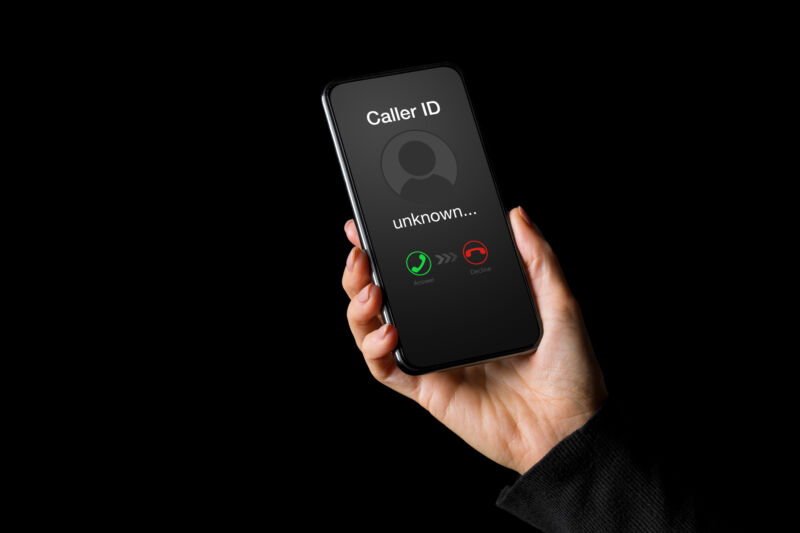
Person's hand holding a smartphone that is receiving a call from an unknown caller.
Getty Images | grinvalds

The Federal Communications Commission today said it closed a robocall loophole by requiring small phone companies to implement the caller ID authentication technology known as STIR and SHAKEN.

Large voice providers were required to implement STIR/SHAKEN a year ago. But there was an exemption for carriers with 100,000 or fewer customers that would have given those smaller companies until June 30, 2023, to comply.

The FCC voted in December to move that deadline up to June 30, 2022, because small phone companies were apparently carrying a disproportionately high number of illegal robocalls.

“Starting today, certain small phone companies must comply with FCC rules to implement caller ID authentication tools on their networks, just as large voice service providers are required to since June 30, 2021,” an FCC announcement said. “These small phone companies are suspected of facilitating large numbers of illegal robocalls and, as a result, the FCC rolled back an extended caller ID authentication implementation timeline granted to them in its original 2020 rules.”

Robocallers have relied more on small companies

In the year since large carriers implemented STIR/SHAKEN, “robocallers have sought to maintain anonymity and avoid enforcement and blocking tools by routing or originating their call traffic on the networks of these largely IP-based small providers that have not yet implemented STIR/SHAKEN,” the FCC said today. “This has allowed robocalls to pass from these networks to terminating provider networks without carrying forward accurate and standardized caller ID/traceback information.”

That should change going forward as the small carriers are now required to implement the Caller ID authentication technology on the Internet Protocol portions of their voice networks. STIR/SHAKEN “provides a common information sharing language between networks to verify caller ID information which can be used by robocall blocking tools, FCC investigators, and by consumers trying to judge if an incoming call is likely legitimate or not,” the FCC said.

The FCC maintains a Robocall Mitigation Database in which voice providers are required to “certify whether and to what extent they have implemented the STIR/SHAKEN caller ID authentication framework.” Phone companies must reject any calls from voice service providers that are not listed in the database, and the FCC can issue fines to providers that don’t file certifications. The FCC explained that companies “certifying to anything short of full STIR/SHAKEN implementation must describe the new steps they are taking to ensure they are not the source of illegal robocalls.”

Because of technology limitations, STIR/SHAKEN requirements haven’t applied to the older TDM-based networks used with copper landlines. The FCC says its rules “require providers using older forms of network technology to either upgrade their networks to IP or actively work to develop a caller ID authentication solution that is operational on non-IP networks.”

Gateway providers must use STIR/SHAKEN by June 2023

Of course, the now-closed exemption for small carriers was far from the only loophole that made it possible for illegal robocalls to proliferate. Many illegal robocalls originate from overseas through so-called gateway providers, for example. The FCC defines a gateway provider as “a US-based intermediate provider that receives a call directly from a foreign originating provider or foreign intermediate provider at its US-based facilities before transmitting the call downstream to another US-based provider.”

The FCC issued an order in May that requires each gateway provider to submit a certification and mitigation plan to the Robocall Mitigation Database. The order also requires gateway providers to authenticate calls with STIR/SHAKEN by June 30, 2023.

https://arstechnica.com/?p=1863835


Amazon blocks LGBT products in UAE, says it “must comply with local laws”

The United Arab Emirates flag blowing in the wind on a flagpole.
Enlarge / The United Arab Emirates flag.
Getty Images | Tim de Waele

Amazon has started blocking LGBT-related products and search results in the United Arab Emirates to comply with a government demand in the country, which bans homosexuality.

The new restrictions are spelled out in internal Amazon documents, according to The New York Times. “The Emirati government gave Amazon until Friday to comply under threat of penalties, the documents show. It was not clear what those penalties would be,” the NYT story said.

Amazon’s “Restricted Products team” removed individual product listings, “and a team that manages the company’s search abilities hid the results for more than 150 keywords,” the NYT wrote. Searches for terms such as “lgbtq,” “pride,” “closeted gay,” “transgender flag,” “queer brooch,” and “chest binder for lesbians” now turn up zero results in the UAE. Removed products include books such as My Lesbian Experience With Loneliness by Nagata Kabi, Gender Queer: A Memoir by Maia Kobabe, and Bad Feminist by Roxane Gay.

Amazon: “We must comply with the local laws”

We asked Amazon for more details on the restrictions, but the company merely confirmed that it has restricted search results on the Amazon.ae store to comply with local laws. Amazon has operated in the UAE since 2017, when it bought the e-commerce site SOUQ.com.

“As a company, we remain committed to diversity, equity, and inclusion, and we believe that the rights of LGBTQ+ people must be protected,” Amazon said in a statement provided to Ars and other news organizations. “With Amazon stores around the world, we must also comply with the local laws and regulations of the countries in which we operate.”

As a US State Department travel advisory says, “Consensual same-sex sexual relations are criminalized in the UAE,” with potential punishments including fines and imprisonment. “Under interpretations of sharia, the punishment could include the death penalty,” the State Department says. “Although the US Embassy and US Consulate General are not aware of any recent arrests or prosecutions for such activities, they remain illegal. Cross-dressing is also a punishable offense and there have been reports that the government took action against cross-dressing individuals.”

In addition to same-sex relations being illegal, “expressing support for LGBT rights could also be deemed an offense” in the UAE, the BBC wrote.

https://arstechnica.com/?p=1863754


Until demand drops, Amazon limiting Plan B purchases to 3 per week

Until demand drops, Amazon limiting Plan B purchases to 3 per week

With abortion access becoming more limited throughout the US, demand has spiked for emergency contraceptive pills that can help prevent pregnancy up to 72 hours after sex. This week, in an effort to maintain supply, Amazon joined retailers like CVS and Walmart by placing temporary limits on the number of “morning-after pills” that can be purchased.

CNBC reports that Amazon customers will be capped at a maximum purchase of three units each week of emergency contraceptive brands like Plan B, which is the most widely available option. However, if you shop around, you can find “varying quantity limits” for different brands. A generic option like My Choice can still be purchased in higher quantities, up to 30 units at once.

At CVS, temporary limits are no longer in place because demand dipped back down to normal levels. Walmart said that purchase limits can fluctuate with demand in its online stores, but the company has no policy to limit sales of emergency contraceptive pills.

Unlike abortion pills—medically prescribed drugs used as an alternative to surgical abortions—emergency contraceptive pills prevent a pregnancy from starting. CNBC notes that the pills “typically work by stopping the release of an egg from the ovaries, preventing a sperm from fertilizing an egg, or, if fertilization has already occurred, stopping a fertilized egg from attaching to the womb.”

Many “morning-after pill” brands require one dose, and most require no prescription. According to MarketWatch, Google searches for Plan B grew by “more than 5,000 percent” immediately after the Supreme Court’s decision overturning Roe v. Wade was leaked. Many were concerned that after the restrictions on abortion access, emergency contraceptive access would also be threatened. Soon, searches for “Is Plan B going to be illegal” also rose, by 1,500 percent.

In a statement to CNBC, Amazon said the cap on morning-after pills would be temporary. Amazon did not immediately respond to a request for comment on this story to clarify any projected timeline to remove the limit.

Part of the rush to purchase emergency contraceptive pills is driven by the fear that there will be shortages. CVS told CBS News that this is not the case in their stores. Instead, the limit has been placed to ensure equitable access. It’s a way for the company to maintain stock for those in need of morning-after pills now—not just those stocking up on emergency supplies.

https://arstechnica.com/?p=1863721


Supreme Court severely limits the EPA’s ability to regulate carbon emissions

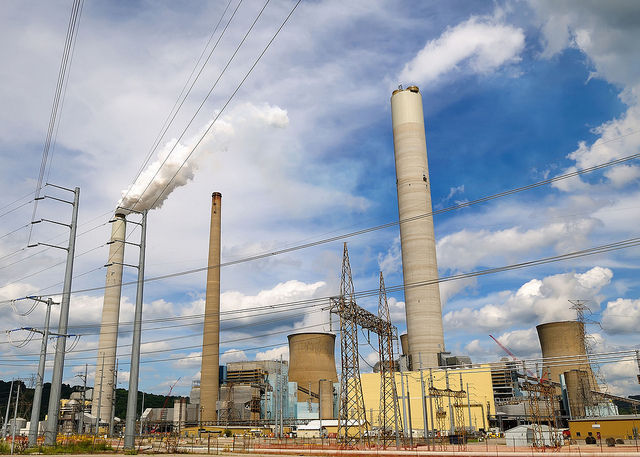
The sulfer-coal-burning John E. Amos Power Plant in West Virginia.

On Thursday, the US Supreme Court issued a ruling in a case that will severely hamper the ability of the US to limit its carbon emissions under the Clean Air Act. In an unusual move, the court kept a case alive that was focused on an emissions plan formulated by the Obama-era Environmental Protection Agency—even though that plan was discarded and replaced by both the Trump and Biden administrations.

In its ruling, the Supreme Court determined that the EPA has only been granted the power to control emissions from existing facilities—it cannot force utilities to shift to different, cleaner-generating technologies. This will make it extremely difficult to use the Clean Air Act to compel a shift from coal to renewables, and it raises questions about whether the Clean Air Act can be used to set effective climate policy at all.

Twists and turns

The case is a product of a legal back-and-forth that started nearly two decades ago. During the Bush administration, the EPA decided that the Clean Air Act did not give the agency the authority to regulate carbon dioxide emissions. A number of states sued, and the case eventually made it to the Supreme Court, which ruled that the EPA’s claim was incorrect: The Clean Air Act required it to determine whether greenhouse gas emissions posed a threat to the US public.

Bush’s EPA was forced to rely on the science and crafted a document called an “endangerment finding” that concluded that greenhouse gasses do, in fact, pose a threat. But the administration ran out the clock on its second term without issuing the finding, leaving it to the Obama administration to issue one and begin the process of releasing regulations. It did so, only to end up in court long enough to have the Trump administration rescind the regulations and issue a plan that would “address” carbon dioxide emissions without requiring any emissions cuts.

That non-plan also ended up in court long enough to allow Biden to be elected, at which point the new EPA withdrew it. Normally, this would be where courts would declare the suits against the Trump plan moot since the plan had been withdrawn, and the EPA would begin the process of formulating new regulations. And in fact, a district-level court vacated the suit against the EPA. But in an unusual move, the US Supreme Court kept the case alive to address questions brought by a coalition of states and coal companies regarding the plan formulated by the Obama-era EPA.

The issue there concerned which methods the EPA could use to lower national carbon emissions. The Clean Air Act directs the agency to identify the “best system of emission reduction… that has been adequately demonstrated.” This rules out the use of carbon capture on fossil fuel plants, as that technology has not been anywhere close to adequately demonstrated. In its absence, there’s no way to bring coal plant emissions down significantly; as such, the Obama-era EPA devised regulations that encouraged a shift to cleaner generating sources.

This convoluted history ultimately resulted in West Virginia vs. EPA, which asked the courts to keep use cases that were otherwise moot to serve as a vehicle to determine whether the EPA has the power to formulate regulations that would result in changes to the generating technologies used on the power grid.

In a decision authored by Chief Justice John Roberts and joined by his fellow conservative court members, the Supreme Court has now formally revived the case and sent it back to a lower court. The Supreme Court has also determined that the EPA overstepped the powers it had been granted by the Clean Air Act. This means that the EPA can only address carbon emissions by establishing limits on existing generators that can be met via established technology. This will make it very difficult, if not impossible, to bring emissions from coal plants down and thus harms a key component of the Biden climate policy.

We’re currently reading the decision and will update this story with details shortly.

https://arstechnica.com/?p=1863703


Avoiding USB-C on iPhones may get harder for Apple as Brazil considers mandate

Close-up shot of USB-C cable plug.

Brazil is the latest country to consider making USB-C charging a requirement for smartphones. On Tuesday, Anatel, Brazil’s National Telecommunications Agency, announced a public consultation for a proposal to make USB-C charging a requirement for all cell phones sold in the country.

Anatel’s announcement said it was following in the European Union’s footsteps. The EU’s USB-C policy will require all smartphones, tablets, digital cameras, and some other consumer electronics with wired charging to receive power over USB-C in order to be sold in the region. Laptops will eventually have to meet the requirement, too. Anatel is currently only discussing a mandate for phones in Brazil.

The regulator also noted that some US senators are seeking a universal charger strategy similar to the EU’s policy.

In documents supporting Anatel’s proposal and spotted by The Verge, Anatel said that a USB-C policy could reduce e-waste, be more convenient for consumers, and help Brazil accommodate standards being adopted globally. It noted, however, that such a requirement could deter innovation around charging standards and cause higher costs for Anatel and the companies it regulates.

The documents describe a policy that would require phones and phone chargers that support charging at over 5 V, 3 A, or 15 W to support USB-C charging. Anatel is also considering two other proposals: one that would require any alternative charging method to not impede USB-C charging and one that would require phone packages and manuals to state a minimum power requirement for charging.

Anatel isn’t looking into standardizing wireless charging, but the documents note that “adoption will continue to be the subject of studies both nationally and internationally in order to assess the need to define the standardization of this category of charging interface,” according to a Google translation.

Anatel’s public consultation is open until August 26.

Another reason to consider a USB-C iPhone

USB-C is the charging standard under consideration because this is the route the EU is taking and that US politicians have highlighted, and the connector is already widely used, Anatel noted. In the case of phones, most Android devices already charge over USB-C. The obvious holdout is Apple’s iPhone, which charges over Apple’s proprietary Lightning connector.

This week’s announcement puts more pressure on Apple to consider delivering a USB-C iPhone sooner than later. Apple will already have to devise a solution to comply with the EU’s upcoming requirement. With the US in North America and now Brazil in South America showing interest in similar rules, it’s not hard to imagine other governments following suit.

Apple’s iPhone could go completely wireless, but it’s still early for that technology in terms of data transfer and power delivery efficiency. And offering both USB-C and Lightning would be cumbersome and could lead to a clunkier device.

A May report from Bloomberg claimed that Apple is already testing USB-C iPhones and could launch them as early as next year. Should that alleged testing be successful, we expect a USB-C iPhone to be sold globally, not just to markets with USB-C charging requirements, for logistical and cost reasons.

https://arstechnica.com/?p=1863422


Couple bought home in Seattle, then learned Comcast Internet would cost $27,000

Couple bought home in Seattle, then learned Comcast Internet would cost $27,000
Aurich Lawson | Getty Images

When Zachary Cohn and his wife bought a house in the Northgate neighborhood of Seattle, Washington, they didn’t expect any trouble getting home Internet service. It was only after closing on the house in July 2019 that they learned the bad news. “All six neighbors I share a property line with are wired for Comcast, but our house never was,” Cohn told Ars.

Comcast had wired up the neighborhood with cable decades earlier and provides high-speed broadband to the abutting properties. But the cable TV and Internet service provider never extended a line to the house purchased by Cohn and his wife, Lauryl Zenobi.

Cohn spent many months trying to get answers from Comcast on how he and Zenobi could get Internet service. Eventually, he contacted his City Councillor’s office, which was able to get a real response from Comcast.

Comcast ultimately said it would require installing 181 feet of underground cable to connect the house and that the couple would have to pay Comcast over $27,000 to make that happen. Cohn and Zenobi did not pay the $27,000, and they’ve been relying on a 4G hotspot ever since.

“I was just flabbergasted”

“I was just flabbergasted that a house like this, in an area like this, could possibly have never been wired for Internet,” Cohn said in a phone interview. Because the house is “in the middle of Seattle, it didn’t even dawn on me that that was possible,” he said, adding that the lack of Internet service would be “more understandable if I was two miles from my nearest neighbor.”

The Seattle Kraken hockey team’s $80 million practice facility is in the same Northgate neighborhood, about a half-mile from the house. There’s a major bus station in the area, a light rail station that recently opened nearby, and an elementary school within about a 90-second walk, Cohn said, noting that the property is “well within the Seattle city limits.”

The house, built in 1964, is also about 10 miles from both T-Mobile Park, where the Seattle Mariners play, and Lumen Field, the Seattle Seahawks stadium named after CenturyLink’s Lumen brand. T-Mobile doesn’t offer its new home Internet service at the house. CenturyLink offers Internet service at Cohn’s address—but only its ancient DSL with download speeds of up to 3Mbps and upload speeds up to 500kbps. Cable and fiber just aren’t available at the house.

Not our first Comcast horror story

We’ve written about other people who bought houses without realizing there was no home Internet service, but those stories generally took place in small towns or rural areas. In some cases, Comcast’s website and customer service employees falsely told home buyers that service was available due to errors in the company’s availability database.

Zachary Cohn and Lauryl Zenobi.
Enlarge / Zachary Cohn and Lauryl Zenobi.
Zachary Cohn

Comcast availability data wasn’t a problem in this case, as Cohn said he didn’t think to check that there was a Comcast connection before closing on the Seattle house. “Honestly, I didn’t even think to look. What house in the middle of Seattle wouldn’t be wired for reasonable Internet?” Cohn said.

Cohn contacted Ars after reading one of our previous Comcast horror stories, hoping to get the word out to others that an Internet connection is no guarantee even in densely populated cities—and even when all your neighbors have service.

Government broadband programs generally focus on “connecting neighborhoods in particular underserved communities, which I think is great,” Cohn said. But he wants people to know “there are large swaths of people, both in large geographic areas and in small individual cases, that just never got connected to high-speed Internet, and how difficult it is to go through life without that sort of connection.”

While Cohn’s situation is unusual because all the surrounding houses have broadband, he’s far from the only urban dweller without modern service. It’s particularly a problem in lower-income areas where ISPs have chosen not to upgrade old telephone lines.

Comcast junction box across the street

With the properties abutting Cohn’s, there are overhead power lines that Comcast used to extend cable to the houses. But “our power is underground and so… there are no poles to ride off,” Cohn said.

The block is shaped like a triangle, Cohn said, adding, “We’re the only house on our side of the triangle, and the other two sides each have three houses.” On the side of the house that doesn’t face its neighbors, there is an arterial road. The nearest Comcast junction box is across that road, “so they would have to dig under the arterial to connect our house to that junction box.”

Cohn told us the sellers disclosed in documents before the sale that Internet wasn’t connected at the home, but he didn’t realize it wouldn’t be possible to get service at all. After the failed attempts to get service, “we had our agent reach out to the sellers to figure out what actually is going on here,” Cohn said.

They learned that the previous homeowners struck a deal with a neighbor who ran a cable “from his Comcast hookup, across his property, across our property, and then into this house,” Cohn said. The previous owners were renting out the house, and “they sort of made this last-minute deal with the neighbor to appease the renters,” Cohn said.

But “when we talked to [the neighbor], he made it very clear that he was pretty unhappy with that arrangement in the past,” Cohn said. “I basically convinced our neighbor to continue that arrangement until we could come up with some alternative.”

https://arstechnica.com/?p=1862620


Facebook removed posts on abortion pills even when they didn’t break any rules

Facebook removed posts on abortion pills even when they didn’t break any rules

The status of legal access to abortion is now prohibited, restricted, or uncertain in more than half of the US. However, abortion pills are still deemed safe by the Food and Drug Administration, and it’s still legal for consulted certified prescribers to mail abortion pills to patients in any state. Thousands took to social media to post and raise awareness of options for mail-ordering abortion pills, only to have their posts deleted within minutes, sparking user protests of censorship.

Facebook and Instagram confirmed in an Associated Press report that posts offering to mail abortion pills to people in states suddenly without access would continue to be removed.

These posts violate company policies that prohibit the gift or sale of pharmaceuticals or drugs on the platforms, a Meta spokesperson told AP.

On Instagram, Community Guidelines say that buying and selling pharmaceutical drugs is not allowed but do not directly state that posts offering pharmaceutical drugs as gifts or donations are banned.

That’s different from Facebook’s Community Standards, which state that only “legitimate healthcare e-commerce businesses” can make “attempts to buy, sell or trade pharmaceutical drugs.” And nobody is allowed to post “attempts to donate or gift pharmaceutical drugs.”

The only exceptions are made for Facebook posts asking to discuss “affordability, accessibility, or efficacy of pharmaceutical drugs in a medical context.” Those are currently permitted. So, theoretically, posts telling others how to order abortion pills in the mail should remain visible.

However, a tweet from Meta spokesperson Andy Stone has confirmed that the company is investigating why some permitted posts have been incorrectly removed. Meta did not immediately respond to Ars’ request for comment to clarify which kinds of posts have been incorrectly removed or when that issue will be resolved.

What triggers removal?

It’s unclear what triggers the removal of Instagram or Facebook posts, but reports suggest enforcement of community standards is inconsistent, and sometimes consequences are severe. Vice conducted tests on posts using varied references to abortion pills and reported that posting about abortion pills can lead to 24-hour account bans.

A major point of contention for social media users has been Meta’s inability to consistently distinguish between posts that say “abortion pills can be mailed” and posts directly offering to mail abortion pills. This means that sometimes perfectly allowable posts following community standards and discussing the accessibility of abortion pills are being flagged for removal.

The AP conducted tests similar to Vice, posting on Facebook, “If you send me your address, I will mail you abortion pills.” That post was removed within a minute, but when AP changed from mentioning “abortion pills” to other regulated goods that Community Standards also ban—like “I will mail you a gun” or “weed”—those posts stayed up. The inconsistency in what phrasing prompts immediate removal leads to an impression that Meta more expediently removes posts regarding abortion pills.

When Facebook flags posts for removal, users have a choice to disagree or agree with the decision. Some users have disagreed and had their posts removed anyway, without experiencing temporary account bans, while Vice reported that some users who disagreed experienced 24-hour account bans.

Where Meta stands on abortion access

The sale of abortion pills in the US seems unlikely to be threatened by new state laws. Attorney General Merrick Garland stated clearly that “States may not ban mifepristone”—the medication used to induce an abortion—”based on disagreement with the FDA’s expert judgment about its safety and efficacy.”

As abortion procedures become less accessible across the US, advocates will likely continue to turn to social media to raise awareness of how to access abortion pills. A New York Times tracker shows nine states currently signaling interest in enacting new abortion restrictions, and The Washington Post recently reported that conversations around abortion are playing a significant role in the next election. Whether social media posts on abortion will be subjected to further restriction is a topic of concern.

This week Meta joined many companies in pledging to protect abortion access for employees by funding any out-of-state travel expenses. However, the company also came under fire for restricting employees from discussing abortion openly in the workplace. That introduces a seeming tension for any employees seeking to discuss out-of-state travel expenses and suggests at Meta, on the issue of abortion, inconsistency remains the rule.

https://arstechnica.com/?p=1863251