On the brink of ruin, Juul files emergency petition to fight FDA ban

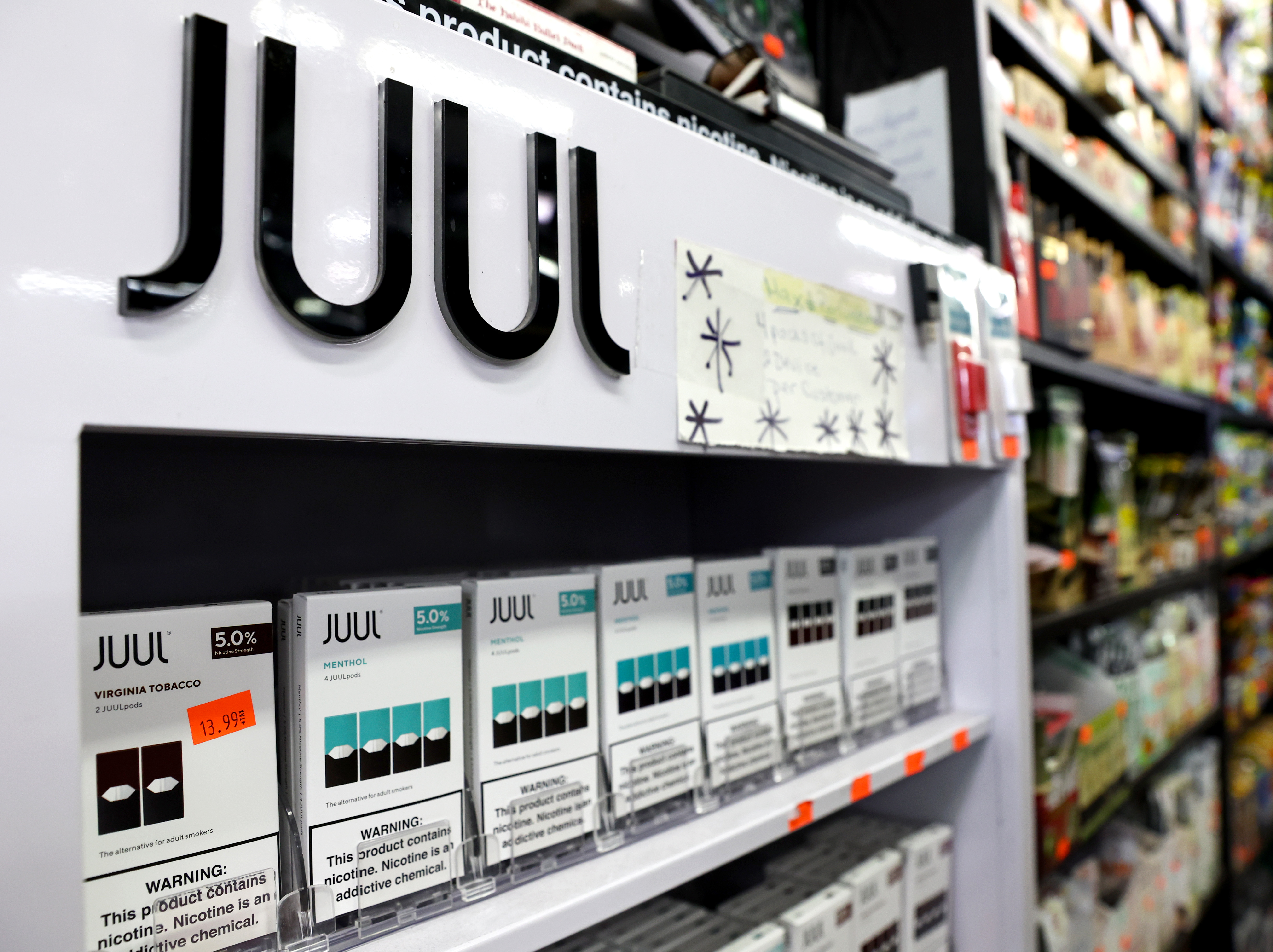
Packages of Juul e-cigarettes are displayed for sale in the Brazil Outlet shop on June 22, 2022 in Los Angeles, California.
Enlarge / Packages of Juul e-cigarettes are displayed for sale in the Brazil Outlet shop on June 22, 2022 in Los Angeles, California.

With its business going up in smoke, e-cigarette giant Juul filed an emergency motion Monday to halt the Food and Drug Administration’s decision to deny the company authorization to market any of its products in the US, effectively forcing it out of business.

The decision was leaked to The Wall Street Journal last Wednesday, June 22, and the regulator publicly announced the decision Thursday. On Friday, a panel of federal appeals court judges granted Juul a temporary administrative stay, allowing the company to continue to sell its products while the court reviews Juul’s emergency petition to halt the FDA’s decision. Juul had until noon Monday to submit its petition. The administrative stay is not based on the merits of Juul’s argument in any way, the judges noted.

Meanwhile, The Wall Street Journal reported Friday that in addition to fighting the FDA denial, Juul is also considering filing for bankruptcy. The report cited unnamed people familiar with the matter. Juul did not immediately respond to Ars’ request for comment regarding a possible bankruptcy filing.

On Monday, minutes before its noon deadline, Juul filed an emergency petition requesting a stay of the FDA marketing denial, pending further review. The FDA now has until July 7 to submit a response to Juul’s petition before the court will decide on its fate.

Process in question

In its petition, Juul argued that it was wrongfully vilified for sparking the youth vaping epidemic and that the FDA denied its authorization while under political and financial pressure to do so from multiple lawmakers. Though the FDA said that its denial was based on insufficient toxicology data, Juul argued that the data the FDA was requesting was “right there in [Juul’s] original submission,” though all of the details related to the data in question were redacted from the petition.

Juul also claimed that the FDA reviewed its over 125,000-page authorization request differently than it did competitors’ requests. Lastly, Juul complained that the FDA did not give the company a chance to respond to concerns about insufficient data before revealing its decision. The company said that it learned of the FDA’s decision through The Wall Street Journal leak last Wednesday and that the news created chaos for its business and customers.

Overall, the company argued that the FDA overlooked its data and denied it authorization based on a “haphazard regulatory process,” which will cause the company irreparable injuries and “ultimately shutter [Juul’s] business.”

The FDA has until July 7 to submit a response. In a comment to the Journal, Mitch Zeller, former director of the FDA’s Center for Tobacco Products, who retired in April, said the regulator’s decision was based solely on the strength of Juul’s application, not political pressure. “This was a scientific review conducted by subject-matter experts,” he said. “That’s the way the system is supposed to work.”

https://arstechnica.com/?p=1863071


Spurred by Roe overturn, senators seek FTC probe of iOS and Android tracking

A Illustration of a smartphone at the center of a target.

Four Democratic US senators today asked the Federal Trade Commission to “investigate Apple and Google for engaging in unfair and deceptive practices by enabling the collection and sale of hundreds of millions of mobile phone users’ personal data.”

“The FTC should investigate Apple and Google’s role in transforming online advertising into an intense system of surveillance that incentivizes and facilitates the unrestrained collection and constant sale of Americans’ personal data,” they wrote. “These companies have failed to inform consumers of the privacy and security dangers involved in using those products. It is beyond time to bring an end to the privacy harms forced on consumers by these companies.”

The letter cited the Supreme Court decision overturning Roe v. Wade, saying that women “seeking abortions and other reproductive healthcare will become particularly vulnerable to privacy harms, including through the collection and sharing of their location data.” It continued:

Data brokers are already selling, licensing, and sharing the location information of people that visit abortion providers to anyone with a credit card. Prosecutors in states where abortion becomes illegal will soon be able to obtain warrants for location information about anyone who has visited an abortion provider. Private actors will also be incentivized by state bounty laws to hunt down women who have obtained or are seeking an abortion by accessing location information through shady data brokers.

iOS, Android “fueled unregulated data broker market”

The letter was sent to FTC Chair Lina Khan by Sens. Ron Wyden (D-Ore.), Elizabeth Warren (D-Mass.), Cory Booker (D-N.J.), and Sara Jacobs (D-Calif.). Apple and Google “knowingly facilitated these harmful practices by building advertising-specific tracking IDs into their mobile operating systems,” the senators wrote.

“Apple and Google both designed their mobile operating systems, iOS and Android, to include unique tracking identifiers which they have specifically marketed for advertising purposes,” the letter said. “These identifiers have fueled the unregulated data broker market by creating a single piece of information linked to a device that data brokers and their customers can use to link to other data about consumers. This data is bought or acquired from app developers and online advertisers, and can include consumers’ movements and web browsing activity.”

While Apple has stopped enabling the tracking identifiers by default, the senators wrote that both companies harmed consumers:

Both Apple and Google now allow consumers to opt out of this tracking. Until recently, however, Apple enabled this tracking ID by default and required consumers to dig through confusing phone settings to turn it off. Google still enables this tracking identifier by default, and until recently did not even provide consumers with an opt-out. By failing to warn consumers about the predictable harms that would result by using their phones with the default settings that these companies chose, Apple and Google enabled governments and private actors to exploit advertising tracking systems for their own surveillance and exposed hundreds of millions of Americans to serious privacy harms.

Last week, Warren proposed legislation that would prohibit data brokers from selling Americans’ location and health data.

“Anonymous” identifiers can be linked to people

The advertising identifiers are “purportedly anonymous” but in reality “are easily linkable back to individual users,” the letter said. “This is because some data brokers sell databases that explicitly link these advertising identifiers to consumers’ names, email addresses, and telephone numbers. But even without buying this additional data, it is often possible to easily identify a particular consumer in a dataset of ‘anonymous’ location records by looking to see where they sleep at night.”

We asked Apple and Google for comment on the letter and will update this story if we get any response.

Update at 2:55 pm ET: Google responded to Ars, touting its efforts to block apps that violate Google Play policies and the bans it has imposed on companies that apparently sold user data. “Google never sells user data, and Google Play strictly prohibits the sale of user data by developers,” the company said in a statement. “The advertising ID was created to give users more control and provide developers with a more private way to effectively monetize their apps. Additionally, Google Play has policies in place that prohibit using this data for purposes other than advertising and user analytics. Any claims that advertising ID was created to facilitate data sale are simply false.”

Google also said its Android Privacy Sandbox will “enable new, more private advertising solutions that limit sharing of user data with third parties and operate without cross-party identifiers, including advertising IDs.” Ars reporter Ron Amadeo’s coverage of that initiative called it “toothless.”

EFF calls for action by Congress and tech companies

The senators’ letter was prepared before the official release of the Supreme Court’s abortion decision, which came out today after a draft was leaked in early May. Reacting to the court ruling today, the Electronic Frontier Foundation said it “underscores the importance of fair and meaningful protections for data privacy.”

“Everyone deserves to have strong controls over the collection and use of information they necessarily leave behind as they go about their normal activities, like using apps, search engine queries, posting on social media, texting friends, and so on,” the EFF said. “But those seeking, offering, or facilitating abortion access must now assume that any data they provide online or offline could be sought by law enforcement.”

The EFF urged state and federal lawmakers to “pass meaningful privacy legislation” and said companies should protect privacy “by allowing anonymous access, stopping behavioral tracking, strengthening data deletion policies, encrypting data in transit, enabling end-to-end message encryption by default, preventing location tracking, and ensuring that users get notice when their data is being sought.”

Last month, more than 40 Democratic members of Congress called on Google to stop collecting and retaining customer location data that prosecutors could use to identify women who obtain abortions. Lawmakers have also been working on comprehensive data privacy legislation, but no proposal is close to being passed.

https://arstechnica.com/?p=1862757


In Russia, Western planes are falling apart

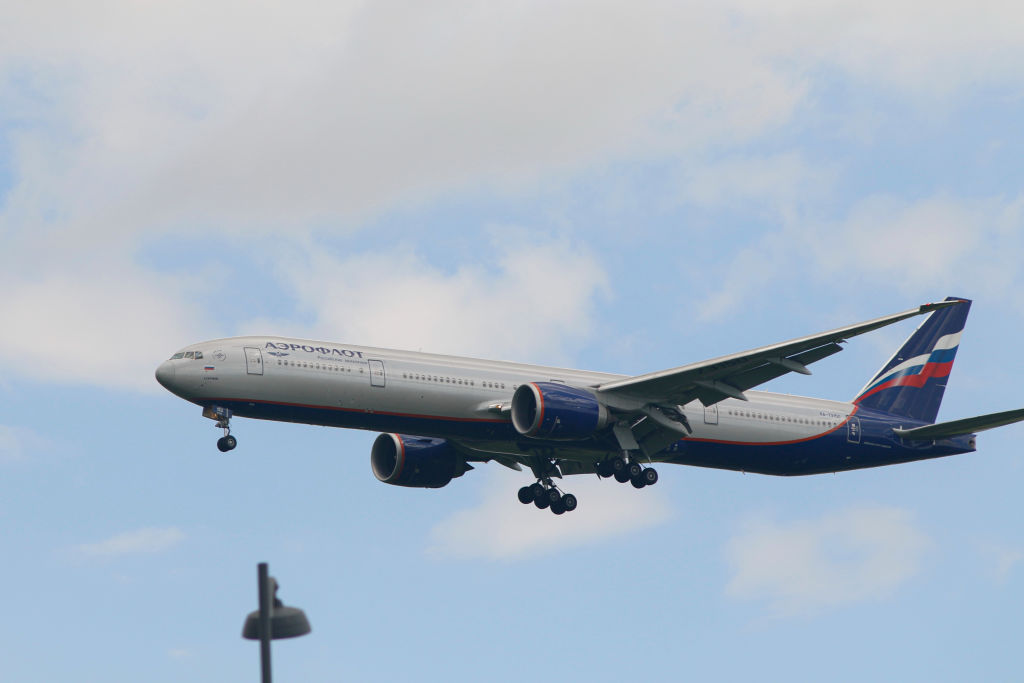
An Aeroflot Boeing 777-300ER aircraft is preparing to land at Pulkovo Airport in St. Petersburg, in the Russian Federation in June 2022.
Enlarge / An Aeroflot Boeing 777-300ER aircraft is preparing to land at Pulkovo Airport in St. Petersburg, in the Russian Federation in June 2022.

An Airbus A320-232 with the tail number YU-APH made its first flight on December 13, 2005. Since then, the aircraft has clocked millions of miles, flying routes for Air Deccan, Kingfisher Airlines, Bingo Airways, and Syphax Airlines before being taken over by Air Serbia, the Eastern European country’s national flag carrier, in 2014.

For eight years, YU-APH flew without any issues—until it landed at 10:37 pm on May 25, 2022, at Moscow’s Sheremetyevo International Airport. It had flown in from Belgrade and was due to take off again on a late-night return within the hour. But there was a problem: The pilot had reported an issue with the plane’s engine casing that needed to be fixed. The supplier of the broken part, Charlotte, North Carolina-based Collins Aerospace, reportedly refused to fix the problem, citing sanctions against Russia resulting from its February 2022 invasion of Ukraine. The plane was stuck. (Collins Aerospace did not respond to a request for comment.)

It took six days for the problem to be fixed and the A320 to depart Moscow for Belgrade. Air Serbia also did not respond to a request for comment about how the engine casing was replaced or fixed and who manufactured the part. YU-APH managed to remedy its fault, but there are increasing international concerns that planes flying into, from, and around Russia could become a safety risk as sanctions prevent them from being maintained properly. Patrick Ky, executive director of the European Union’s Aviation Safety Agency, said at a recent conference that he felt the situation was “very unsafe.” “In six months—who knows? In one year—who knows?” he said.

As of the end of May, there were 876 aircraft in the Russian commercial jet fleet, according to data provided by Ascend by Cirium, an air industry consultancy—down from 968 aircraft in late February. Most of these were made by Airbus or Boeing planes, both of which stopped supplying spare parts to Russian airlines in order to adhere to sanction rules. “They’re not allowed to get any type of part from Boeing or Airbus,” says Bijan Vasigh, an economics professor at Embry-Riddle Aeronautical University. “The transfer of any part or technical expertise to Russia is prohibited.” The problem is that aircraft need constant maintenance, repairs, and replacements.

Planes aren’t simple things, with a cornucopia of parts coming together to keep passengers in the air. And because of the high-stakes nature of flight, some parts need to be changed very regularly. Anyone who’s ever watched a plane land from the ground or a viewing observation deck will know that bringing a heavy metal tube to a halt is a challenge. Tires are among the hardest-hit parts of a plane, burning rubber as the brakes are applied, with puffs of smoke often coming from wheels—and plenty of slick, black trails left on the tarmac. Tires are changed every 120 to 400 landings a plane makes. Internal flights running short domestic routes could make four journeys a day, meaning the wheels need to be swapped out every one to three months. Boeing stopped supplying the Russian market on March 1. Airbus followed a day later. “They’re going to wear down,” says Max Kingsley Jones, senior consultant at Ascend by Cirium, of the wheels. “They can’t source replacement tires: That’s a potential risk.”

https://arstechnica.com/?p=1862587


How hiring the wrong medical “expert” derailed US pandemic response

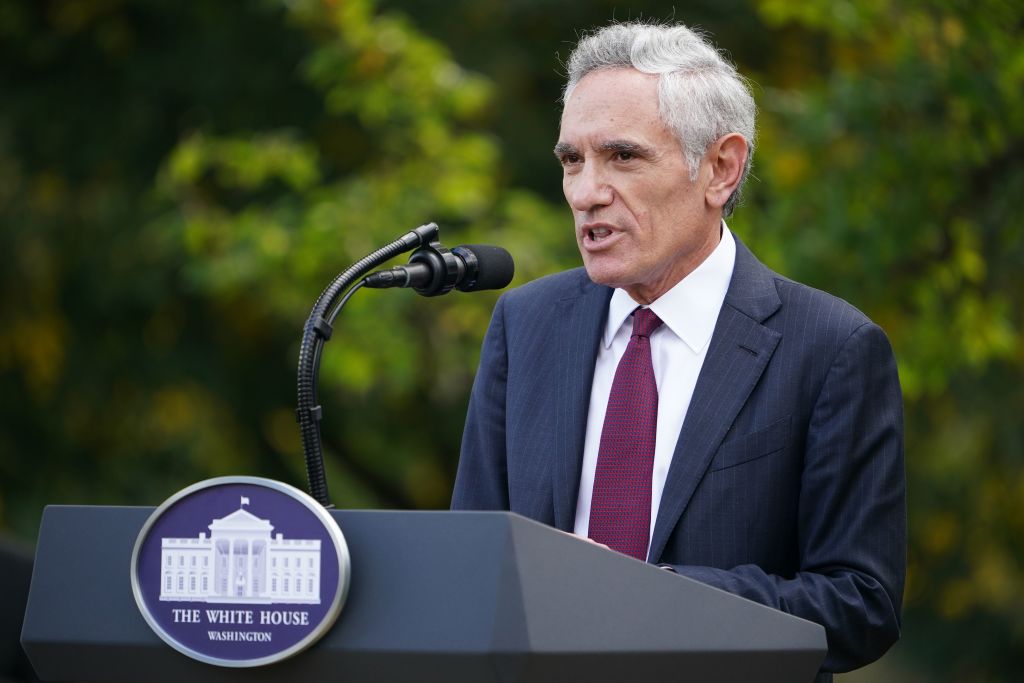
Image of a man speaking from behind a podium.
Enlarge / Scott Atlas, a White House adviser, used his position to advocate for allowing the SARS-CoV-2 virus to spread and tried to block testing for it, which would further that goal.

While one congressional committee seems to be grabbing all the headlines recently, other investigations of the Trump administration have continued in the background. One of them is trying to determine how the US’s response to the coronavirus pandemic went so wrong that the country ended up with over a million deaths and one of the worst per-capita death rates in the world. In its own words, the committee’s goal is “to ensure the American people receive a full accounting of what went wrong and to determine what corrective steps are necessary to ensure our nation is better prepared for any future public health crisis.”

In its latest report, released on Tuesday, the committee details the White House career of Scott Atlas, a neuroradiologist with no infectious disease experience. Atlas’ hiring by the White House was expected to be so controversial that he was initially instructed to hide his staff ID from the actual government public health experts. Yet he quickly became a driving force for the adoption of policies that would achieve herd immunity by allowing most of the US population to be infected—even as other officials denied that this was the policy.

How’d this guy get here?

Atlas’ lack of relevant expertise raises questions as to why he was hired in the first place. The new report details that he wasn’t shy about voicing his opinions about the pandemic response, making multiple TV appearances to complain about the policies advocated by actual public health experts. He also directly reached out to a senior government official, calling the US’s response “a massive overreaction” to a virus he estimated “would cause about 10,000 deaths.”

This eventually got him meetings with a number of White House officials, including Trump and his son-in-law, Jared Kushner. After that meeting, Kushner hired Atlas as pandemic adviser but knew that the hiring would not go over well with the government’s public health experts. As a result, Atlas was told to continue working remotely from California, not to introduce himself on conference calls, and to hide his White House ID card when he met with Coronavirus Response Coordinator Deborah Birx. Atlas exited stealth mode when he switched to working in the White House.

Once there, Atlas began participating in the activities of the White House Coronavirus Task Force, meant to formally coordinate the government’s pandemic activities. But Atlas also sat in on less formal meetings with mostly political figures within the Trump administration, such as Kellyanne Conway and Hope Hicks. These meetings were referred to as “China Virus Huddles,” and provided Atlas with a route to influence policy that avoided disagreements with public health specialists. Birx suspected that this allowed Atlas to craft what she called “parallel data streams” for the president that didn’t reflect official government pandemic figures.

According to testimony and documents received by the committee, Atlas used this to promote the idea of reaching herd immunity prior to the availability of vaccines—a route that would see most of the US population infected at a time when there was little in the way of effective treatments. This approach received some backing from political figures in the Trump administration but was vigorously opposed by public health experts. The net result was a set of contradictory public statements and some rapid reversals of official government policy.

Don’t follow the herd

The idea behind herd immunity as promoted by Atlas is to allow most individuals to go about their normal lives, while steps are taken to avoid infections of vulnerable populations such as the elderly and immunocompromised. Almost all public health experts dismissed this idea, recognizing both the risks COVID-19 posed to the otherwise healthy, and the near impossibility of keeping the at-risk populations from being exposed.

To get his ideas adopted over these objections, Atlas took a two-track approach: bring in other herd immunity advocates to influence political figures and sideline public health experts on policy decisions.

Advocates for herd immunity made their arguments in favor of it public through a document called the Great Barrington Declaration, named after the town that hosts the libertarian think tank where it was drafted. Atlas invited many of the documents’ signatories to brief White House figures, including Joseph Ladapo, who went on to play a key role in limiting public health efforts in Florida.

Birx, supposedly in charge of the coronavirus response, dismissed these figures as “a fringe group without grounding in epidemics, public health, or on-the-ground common sense experience.” But the committee found that Atlas began sending ‘opposite opinions’ that contradicted Birx’s daily coronavirus reports to members of the White House staff. He also issued a public statement indicating that the herd immunity approach was formal policy, saying, “targeted protection of the vulnerable and opening schools and society policy matches the policy of the President and what I have advised.” And two White House officials gave an anonymous background briefing to the press that indicated the Trump administration had adopted herd immunity as a policy.

Faced with this, at one point, Birx sent an email to then-Centers for Disease Control and Prevention director Robert Redfield and Anthony Fauci that simply said “I just can’t.”

Despite team herd’s apparent success, when questioned directly, Atlas denied he ever suggested the idea. Alex Azar, who served as secretary of Health and Human Services, also appeared to promote herd immunity publicly but denied it when questioned. (The committee suggests this contradiction “raises serious questions about the veracity of Secretary Azar’s representations to Congress.”)

https://arstechnica.com/?p=1862565


Comcast and Google emerge as top contenders to serve ads on Netflix

A person's hand holding a remote control in front of a TV screen with a Netflix logo.

Comcast’s NBCUniversal subsidiary and Google are the “top contenders” to serve advertisements on Netflix when the streaming service rolls out its planned ad-supported tier, The Wall Street Journal reported on Wednesday. Netflix “is still in the early stages of developing the strategy and has explored a range of tie-ups in recent weeks,” the WSJ wrote, citing people familiar with the matter.

A deal with NBCUniversal would likely mean that “Comcast’s video ad unit, FreeWheel, would supply technology to help serve up ads, while NBCUniversal’s ad-sales team would help sell ads in the US and Europe,” the report said. The Alphabet-owned Google, of course, has plenty of experience serving ads, including on its own YouTube and YouTube TV video platforms. Netflix already uses Google’s ad-buying tools.

A deal with either NBCUniversal or Google would likely be exclusive, the WSJ report said. Comcast/NBCUniversal and Google aren’t the only contenders, as “Roku has also had early talks with Netflix about ad partnerships,” the report said. The Information reported last week that Netflix executives recently “met with representatives of both Roku and Comcast to discuss arrangements under which those companies would handle either the ad sales or the technical infrastructure for Netflix’s forthcoming ad-supported tier of service.”

Netflix “is looking to start doing some pre-roll ads, which run before a show starts, in the fourth quarter,” The Information report said. Netflix is also negotiating with entertainment companies to put ads into shows that Netflix doesn’t create itself. Licensing TV shows and movies for both ad-free and ad-supported streaming will cost Netflix about 20 percent more than for ad-free streaming alone, The Information report said.

A Netflix spokesperson told both the WSJ and The Information that the company is “still in the early days of deciding how to launch a lower-priced, ad-supported option, and no decisions have been made.”

Netflix resisted ads for years

After many years of resisting ads, Netflix CEO Reed Hastings announced the plan for an ad-supported tier in April. Netflix’s stock price dropped 35 percent the day of that announcement, and Netflix revenue growth has been slowing amid a loss in subscribers.

Netflix says it will continue offering ad-free streaming alongside a cheaper ad-free option. Netflix prices in the US currently range from $9.99 to $19.99 a month.

While Hastings initially said an ad-supported tier is something “we’re trying to figure out over the next year or two,” Netflix subsequently told employees that it plans to roll out the ad-supported tier by the end of this year.

Netflix will reportedly widely roll out an extra fee for sharing accounts with people in other households around the same time. That fee is already being charged in Chile, Costa Rica, and Peru, but not in the rest of the 190 or so countries where Netflix offers streaming.

https://arstechnica.com/?p=1862497


Broadcom takeover of VMware could be derailed by EU antitrust probe

Broadcom’s $69 billion acquisition of cloud software company VMware is set for a lengthy antitrust investigation in Brussels over regulatory concerns that the deal will harm competition across the global technology industry.

Broadcom is already in preliminary discussions with EU officials who will be looking into worries that the merger may lead to abusive behavior, including potential future price rises by the US chipmaker, three people with direct knowledge of the transaction said.

Many large acquisitions receive similar interrogation, known in EU circles as a “phase 1” investigation, which typically takes a few months to complete.

But those close to the situation suggest that EU authorities plan to push forward with a more detailed “phase 2” investigation, which could take well over a year and may ultimately derail the deal altogether. Nvidia eventually walked away from a proposed $66 billion purchase of chip designer Arm after being subject to a lengthy EU antitrust probe.

Broadcom did not immediately respond to requests for comment.

The company’s acquisition of VMware is among the largest in the history of the technology industry, second only to Microsoft’s proposed $75 billion purchase of games maker Activision Blizzard.

Opponents of the deal, which include some existing VMware clients, have written to the EU to argue VMware’s customers could in the future be tied into buying Broadcom services.

They point to two recent transactions led by Broadcom, its $18.9 billion takeover of CA Technologies in 2018 and its $10.7 billion deal to buy Symantec’s enterprise security business a year later as recent examples of how the US chipmaker risks undermining competition. In both deals, they claimed, Broadcom raised prices.

These concerns are being aired before senior EU officials, including competition chief Margrethe Vestager, even though Broadcom is unlikely to formally file the acquisition for review by antitrust authorities until after the summer break, according to people with knowledge of the process.

Further regulatory scrutiny is expected to come from the US, while the UK and China could still launch probes.

The chipmaker has already fought cases against the European Commission for alleged anti-competitive practices. In October 2020, Brussels accepted commitments by the US group to ensure competition in the chipset market for modems.

Broadcom has emerged as one of the largest chipmakers in the world on the back of a roll-up spree led by Hock Tan, its deal-hungry chief executive for more than a decade.

The Malaysian-American executive was blocked from further consolidating the semiconductor industry in 2019. The Federal Trade Commission accused Broadcom of being a monopolist in the sector.

The regulatory attack led Tan to shift his buying attention to software and cloud services companies, a move that aims to turn Broadcom into a broader tech conglomerate.

Last November, the FTC prohibited Broadcom from asking for customers to buy bundles, called “exclusivity” or “loyalty” agreements, in its sale of semiconductors for Internet devices. It also prohibited Broadcom from “retaliating against customers for doing business with Broadcom’s competitors.”

“The regulators are going to take a hard look at [the VMware deal] just because this is Broadcom and a large tech transaction,” said Andy Li, a senior analyst at research firm CreditSights.

Broadcom will push back on these fears, according to people close to the company, by arguing that it is not a merger between competitors so will not lead to increased market power. It will also argue the deal is unlikely to raise prices or undermine the quality of the service or have any negative impact on innovation.

Broadcom will also dismiss any comparison to Nvidia’s failed acquisition of Arm, where Nvidia’s competitors were dependent on licensing arrangements for Arm’s chips.

But trade associations, representing hundreds of companies that are clients of VMware, including France’s Cigref, sent a letter this week to regulators in Brussels asking them to act preemptively to block the deal due to concerns over anti-competitive practices.

Additional reporting by Harriet Agnew in London and Richard Waters in San Francisco.

© 2022 The Financial Times Ltd. All rights reserved Not to be redistributed, copied, or modified in any way.

Listing image by Bloomberg | Getty Images

https://arstechnica.com/?p=1862478


Ex-Tesla worker who suffered racist abuse rejects $15M award, seeks new trial

Illustration of a stamp that prints the word
Getty Images | Bet_Noire

A former Tesla worker who won a racial discrimination case against the company has rejected a $15 million payout and will seek a new damages trial.

A jury had awarded plaintiff Owen Diaz $137 million in October 2021, but in April, a federal judge reduced the payout to $15 million. In that ruling, US District Judge William Orrick rejected Tesla’s claim that it is not liable for the “disturbing” racist abuse suffered by Diaz, who is Black, but found that the jury overreached in its damages calculation.

Diaz had the option of accepting or rejecting the lower payout, and he rejected it in a court filing on Tuesday. The case is in US District Court for the Northern District of California.

“In rejecting the court’s excessive reduction by asking for a new trial, Mr. Diaz is again asking a jury of his peers to evaluate what Tesla did to him and to provide just compensation for the torrent of racist slurs that was directed at him,” Diaz’s lawyer, Larry Organ, said in a statement to Bloomberg. “Mr. Diaz seeks to restore a fair and just punitive damages award that will punish and deter Tesla for the racist conduct to which Mr. Diaz was subjected and to prevent future harassment from occurring.”

Judge: $137M award wasn’t supported by the evidence

The jury awarded Diaz $6.9 million in compensatory damages and $130 million in punitive damages, and Orrick reduced that to $1.5 million in compensatory damages and $13.5 million in punitive damages. The judge wrote that $1.5 million in compensatory damages is “the highest award supported by the evidence” and that the punitive damages can be nine times that amount based on US law.

In rejecting Tesla’s claim that Diaz suffered only “garden variety” emotional distress that was “fortunately mild and short-lived,” Orrick wrote that the evidence of racist abuse “was disturbing.”

“The jury heard that the Tesla factory was saturated with racism. Diaz faced frequent racial abuse, including the n-word and other slurs,” Orrick wrote. “Other employees harassed him. His supervisors and Tesla’s broader management structure did little or nothing to respond. And supervisors even joined in on the abuse, one going so far as to threaten Diaz and draw a racist caricature near his workstation.” Diaz operated a freight elevator and worked at Tesla’s Fremont factory for nine months starting in June 2015.

Orrick held firm in his decision to lower the award in an order on June 7. Diaz had filed a motion seeking certification of the post-trial order for an interlocutory appeal, but Orrick wrote that Diaz “has not identified a controlling question of law appropriate for immediate appellate review.”

“My analysis of the compensatory damages zeroed in on the particular facts elicited at trial,” the judge wrote. “The analysis of future damages, in fact, was entirely focused on the (lack of) evidence at trial.” The jury’s award of $6.9 million in compensatory damages included $4.5 million in past compensatory damages and $2.4 million in future compensatory damages.

New trial is risky for Diaz

Orrick’s order also warned that an appeal would delay the resolution of the case without much chance of changing the outcome:

I am firmly convinced that the damages award (compensatory and punitive) was excessive. If I saw substantial grounds for a difference of opinion, I would not have issued the remittitur [that reduced damages]. And I have no doubt that certifying this issue would further delay resolution of a case that is already five years old. No factor suggests that interlocutory appeal is appropriate.

Diaz’s motion seeking certification for an interlocutory appeal also pointed out that his other options are risky and time-consuming. “[I]n the absence of certification by this Court and the Ninth Circuit, the only way Diaz can appeal the Court’s compensatory damages remittitur (other than by writ of mandamus) is to demand a new trial on damages, conduct such a trial, litigate a second round of post-trial motions, and then appeal upon entry of a final judgment (after running the risk of another remittitur),” Diaz’s motion said.

Tesla is separately facing seven lawsuits from women who allege the company failed to stop rampant sexual harassment at factory facilities in Fremont, California, and service centers in the Los Angeles area. In the first of those cases, an Alameda County Superior Court judge ruled in May that Tesla can’t force plaintiff Jessica Barraza into arbitration.

In another lawsuit filed Sunday, laid-off Tesla workers accused the company of violating US law by failing to provide notice before a mass layoff. The former employees say they are entitled to 60 days of pay and benefits under the requirements of the Worker Adjustment and Retraining Notification (WARN) Act.

https://arstechnica.com/?p=1862278


Lawsuit: Tesla broke US law by not providing 60-day notice before mass layoff

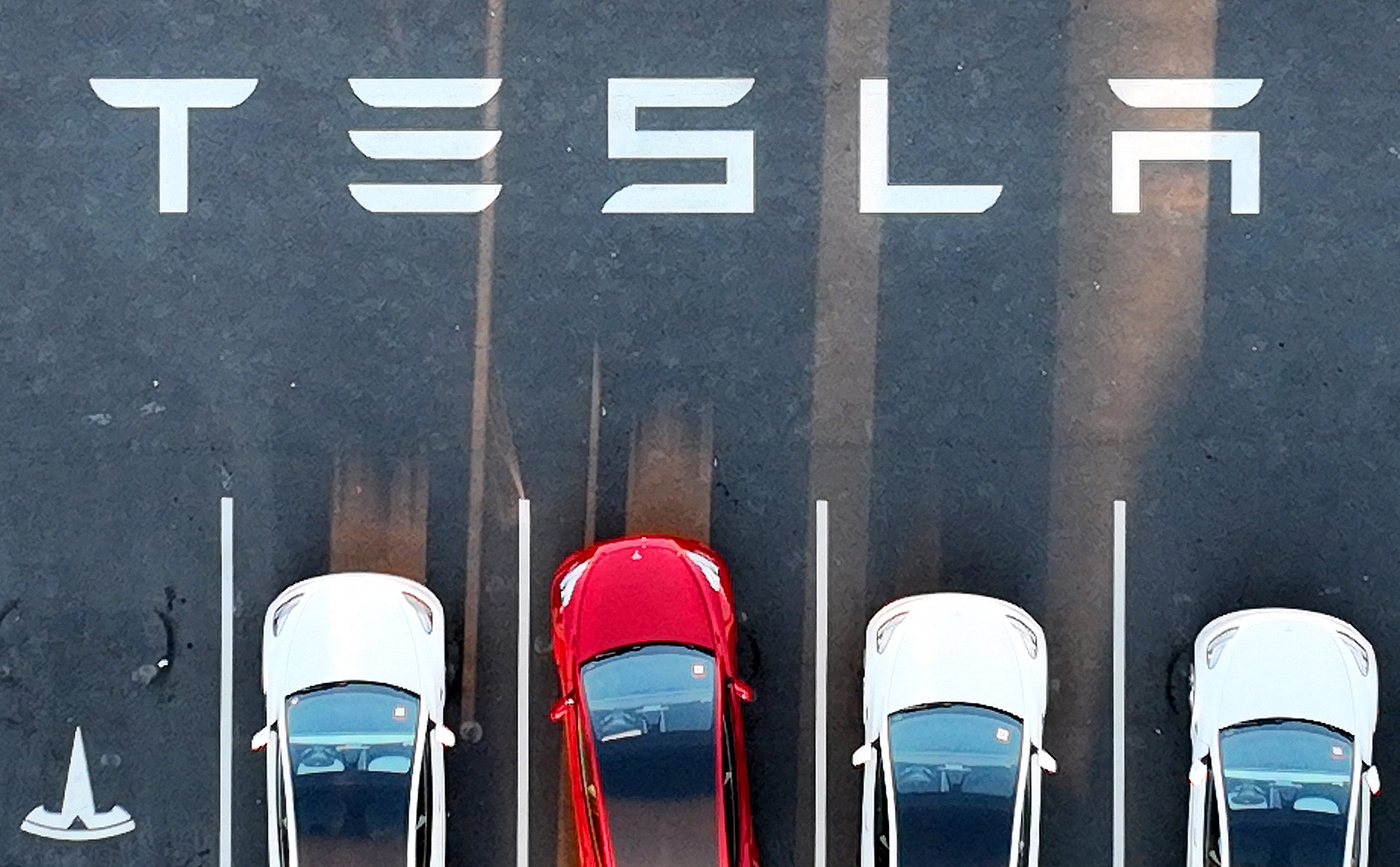
Aerial view of cars parked in a Tesla factory parking lot. A Tesla logo is painted on the concrete.
Enlarge / Cars parked at the Tesla Fremont Factory in Fremont, California, on February 10, 2022.
Getty Images | Josh Edelson

A lawsuit filed by laid-off Tesla workers accused the company of violating federal law by failing to provide notice before the layoffs and said the former employees are entitled to 60 days of pay and benefits. Tesla’s actions violated the Worker Adjustment and Retraining Notification (WARN) Act, claimed the lawsuit filed Sunday in US District Court for the Western District of Texas.

“Pursuant to the WARN Act, Tesla is required to provide Plaintiffs and Class Members with the required sixty (60) days advance written notice of a mass layoff,” the lawsuit said. “However, in connection with the recent mass layoffs… Tesla has failed to give Plaintiffs and the Class Members any advance written notice of their terminations.”

“Instead, Tesla has simply notified the employees that their terminations would be effective immediately,” the lawsuit continued.

The WARN Act was enacted in 1988. It requires companies with 100 or more employees “to provide at least 60 calendar days advance written notice of a plant closing and mass layoff affecting 50 or more employees at a single site of employment,” according to the US Department of Labor. The law “makes certain exceptions to the requirements when layoffs occur due to unforeseeable business circumstances, faltering companies, and natural disasters.”

The WARN Act’s notice requirement covers managers, supervisors, hourly workers, and salaried workers, excluding “those who have worked less than six months in the last 12 months and those who work an average of less than 20 hours a week,” the DOL says. The law’s text says that laid-off employees who don’t receive required notice can sue to obtain 60 days’ worth of back pay and benefits.

Tesla Gigafactory layoffs

Lead plaintiffs John Lynch and Daxton Hartsfield worked at a Tesla Gigafactory in Sparks, Nevada. The lawsuit seeks class action status on behalf of all former Tesla employees nationwide who were laid off in May or June 2022 without the required notice.

Class members should receive “damages in the amount of sixty (60) days’ compensation and benefits for each of them by reason of Tesla’s violation of their rights under the WARN Act,” the lawsuit said. That includes “their respective wages, salary, commissions, bonuses, and accrued pay for vacation and personal days,” plus fringe benefits and medical expenses, the lawsuit said.

The lawsuit said that “Tesla terminated more than 500 employees alone at its Gigafactory 2 plant in Sparks, Nevada,” and has laid off thousands of other employees worldwide. The 500 number is important because, under the WARN Act, a layoff of 50 to 499 employees at a single site is only considered a mass layoff if at least 33 percent of all workers at the site are laid off. When 500 or more employees are laid off at a single site, no specific percentage is necessary to trigger WARN Act obligations.

Tesla CEO Elon Musk in early June revealed a plan to cut 10 percent of jobs at the electric carmaker, which had over 99,000 employees at the end of 2021.

Musk: Lawsuit is “trivial”

Musk dismissed the lawsuit as “trivial,” according to a Reuters article. “Let’s not read too much into a pre-emptive lawsuit that has no standing,” Musk said at Bloomberg’s Qatar Economic Forum. Musk further called it “a small lawsuit of minor consequence,” according to a CNBC article.

“I find it very concerning that the richest man in the world considers it ‘trivial’ that his company is blatantly violating federal labor law [enacted] to protect workers,” the plaintiffs’ attorney, Shannon Liss-Riordan, told WRAL TechWire. “While two months [of] pay certainly doesn’t matter to him, it matters a lot to the employees who made his company what it is.”

According to Reuters, Liss-Riordan said that “Tesla is offering some employees only one week of severance, adding that she is preparing an emergency motion with a court to try to block Tesla from trying to get releases from employees in exchange for just one week of severance.”

“There is a reason we have worker protection laws in this country—because billionaires and company heads will not do right by their workers when left to their own devices,” Liss-Riordan said, according to WRAL TechWire.

Tesla separately faces seven lawsuits from women who allege the company failed to stop rampant sexual harassment at factory facilities in Fremont, California, and service centers in the Los Angeles area. Tesla was also recently ordered by a judge to pay an ex-worker $15 million for the “disturbing” racist abuse he experienced.

Musk predicts higher head count in one year

Musk clarified Tesla’s layoff plans at the Bloomberg forum. “Musk said Tesla would reduce its salaried workforce by 10 percent in the next three months, while at the same time growing the number of hourly employees,” CNBC wrote.

Musk said the layoffs will affect about 3.5 percent of Tesla’s overall workforce but that “a year from now, I think our head count will be higher in both salaried and obviously in hourly,” according to CNBC.

Tesla is reportedly laying off both hourly and salaried workers. A Friday report by Electrek citing anonymous sources said: “Tesla started another wave of layoffs yesterday that included many hourly employees in its sales and delivery teams across North America.”

https://arstechnica.com/?p=1862058


FAA: Airlines must retrofit faulty altimeters “as soon as possible”

An airplane cockpit seen during flight.
Enlarge / Airbus 320 cockpit.

The Federal Aviation Administration says it finally has a plan for the industry to replace or retrofit airplane altimeters that can’t filter out transmissions from outside their allotted frequencies. The altimeter problem has prevented AT&T and Verizon from fully deploying 5G on the C-Band spectrum licenses the wireless carriers purchased for a combined $69 billion.

The FAA was urging airlines to retrofit or replace altimeters in recent months and now says it has finalized a plan. An FAA statement on Friday said that “airlines and other operators of aircraft equipped with the affected radio altimeters must install filters or other enhancements as soon as possible.”

AT&T and Verizon said they will be able to accelerate 5G deployments near airports in the coming months, but the carriers agreed to continue some level of “voluntary mitigations” in the airport areas until July 2023.

Altimeters are used by airplanes to measure altitude. The FAA said a new “phased approach requires operators of regional aircraft with radio altimeters most susceptible to interference to retrofit them with radio frequency filters by the end of 2022. This work has already begun and will continue on an expedited basis.”

Filters can be installed in a few hours

Additionally, “filters and replacement units for the mainline commercial fleet should be available on a schedule that would permit the work to be largely completed by July 2023,” the FAA said, continuing:

The radio-altimeter manufacturers have worked at an unprecedented pace with Embraer, Boeing, Airbus and Mitsubishi Heavy Industries to develop and test filters and installation kits for these aircraft. Customers are receiving the first kits now. In most cases, the kits can be installed in a few hours at airline maintenance facilities.

Throughout this process, the FAA will work with both industries to track the pace of the radio altimeter retrofits while also working with the wireless companies to relax mitigations around key airports in carefully considered phases.

FCC said 220 MHz guard band should be enough

The Federal Communications Commission in February 2020 approved mobile use in the C-Band, specifically from 3.7 to 3.98 GHz. As airplane altimeters rely on a spectrum from 4.2 GHz to 4.4 GHz, this left a 220 MHz guard band to protect altimeters from 5G transmissions.

The FCC found that harmful interference to altimeters was unlikely to occur “under reasonable scenarios” given the size of the guard band and power limits the FCC required for C-Band transmissions. The FCC also urged the aviation industry to conduct more research “on why there may even be a potential for some interference given that well-designed equipment should not ordinarily receive any significant interference (let alone harmful interference) given these circumstances.”

The FAA and aviation industry were nonetheless unprepared for the C-Band launches originally scheduled to begin in December 2021. AT&T and Verizon agreed to a nationwide delay for about six weeks and to limits on deployment near airports until mid-2022. The carriers last week agreed to keep some restrictions near airports in place for another 12 months.

“During initial negotiations in January, the wireless companies offered to keep mitigations in place until July 5, 2022, while they worked with the FAA to better understand the effects of 5G C-band signals on sensitive aviation instruments,” the FAA said Friday. “Based on progress achieved during a series of stakeholder roundtable meetings, the wireless companies offered Friday to continue with some level of voluntary mitigations for another year.”

https://arstechnica.com/?p=1861962


The race to produce green steel

The race to produce green steel
Monty Rakusen/Getty

In the city of Woburn, Massachusetts, a suburb just north of Boston, a cadre of engineers and scientists in white coats inspected an orderly stack of brick-sized, gunmetal-gray steel ingots on a desk inside a neon-illuminated lab space.

What they were looking at was a batch of steel created using an innovative manufacturing method, one that Boston Metal, a company that spun out a decade ago from MIT, hopes will dramatically reshape the way the alloy has been made for centuries. By using electricity to separate iron from its ore, the firm claims it can make steel without releasing carbon dioxide, offering a path to cleaning up one of the world’s worst industries for greenhouse gas emissions.

An essential input for engineering and construction, steel is one of the most popular industrial materials in the world, with more than 2 billion tons produced annually. This abundance, however, comes at a steep price for the environment. Steelmaking accounts for 7 to 11 percent of global greenhouse-gas emissions, making it one of the largest industrial sources of atmospheric pollution. And because production could rise by a third by 2050, this environmental burden could grow.

That poses a significant challenge for tackling the climate crisis. The United Nations says significantly cutting industrial carbon emissions is essential to keeping global warming under the 1.5° Celsius mark set under the 2015 Paris climate agreement. To do so, emissions from steel and other heavy industries will have to fall by 93 percent by 2050, according to estimates by the International Energy Agency.

Facing escalating pressure from governments and investors to reduce emissions, a number of steelmakers—including both major producers and startups—are experimenting with low-carbon technologies that use hydrogen or electricity instead of traditional carbon-intensive manufacturing. Some of these efforts are nearing commercial reality.

“What we are talking about is a capital-intensive, risk-averse industry where disruption is extremely rare,” said Chris Bataille, an energy economist at IDDRI, a Paris-based research think tank. Therefore, he added, “it’s exciting” that there’s so much going on all at once.

Still, experts agree that transforming a global industry that turned over $2.5 trillion in 2017 and employs more than 6 million people will take enormous effort. Beyond the practical obstacles to scaling up novel processes in time to reach global climate goals, there are concerns about China, where over half the world’s steel is made and whose plans to decarbonize the steel sector remain vague.

“It’s certainly not an easy fix to decarbonize an industry like this,” said Bataille. “But there’s no choice. The future of the sector—and that of our climate—depends on just that.”

Modern steelmaking involves several production stages. Most commonly, iron ore is crushed and turned into sinter (a rough solid) or pellets. Separately, coal is baked and converted into coke. The ore and coke are then mixed with limestone and fed into a large blast furnace where a flow of extremely hot air is introduced from the bottom. Under high temperatures, the coke burns and the mixture produces liquid iron, known as pig iron or blast-furnace iron. The molten material then goes into an oxygen furnace, where it’s blasted with pure oxygen through a water-cooled lance, which forces off carbon to leave crude steel as a final product.

This method, first patented by English engineer Henry Bessemer in the 1850s, produces carbon-dioxide emissions in different ways. First, the chemical reactions in the blast furnace result in emissions, as carbon trapped in coke and limestone binds with oxygen in the air to create carbon dioxide as a byproduct. In addition, fossil fuels are typically burned to heat the blast furnace and to power sintering and pelletizing plants, as well as coke ovens, emitting carbon dioxide in the process.

As much as 70 percent of the world’s steel is produced this way, generating nearly two tons of carbon dioxide for each ton of steel produced. The remaining 30 percent is almost all made through electric arc furnaces, which use an electrical current to melt steel—largely recycled scrap—and have far lower CO₂ emissions than blast furnaces.

But because of the limited scrap supply, not all future demand can be met this way, said Jeffrey Rissman, an industry program director and head of modeling at the San Francisco-based energy and climate policy firm Energy Innovation. With the right policies in place, recycling could supply up to 45 percent of global demand in 2050, he said. “The rest will be satisfied by forging primary ore-based steel, which is where most emissions come from.”

So, “if the steel industry is serious” about its climate commitments, he added, “it will have to fundamentally reshape the way the material is made—and do so fairly quickly.”

https://arstechnica.com/?p=1861360